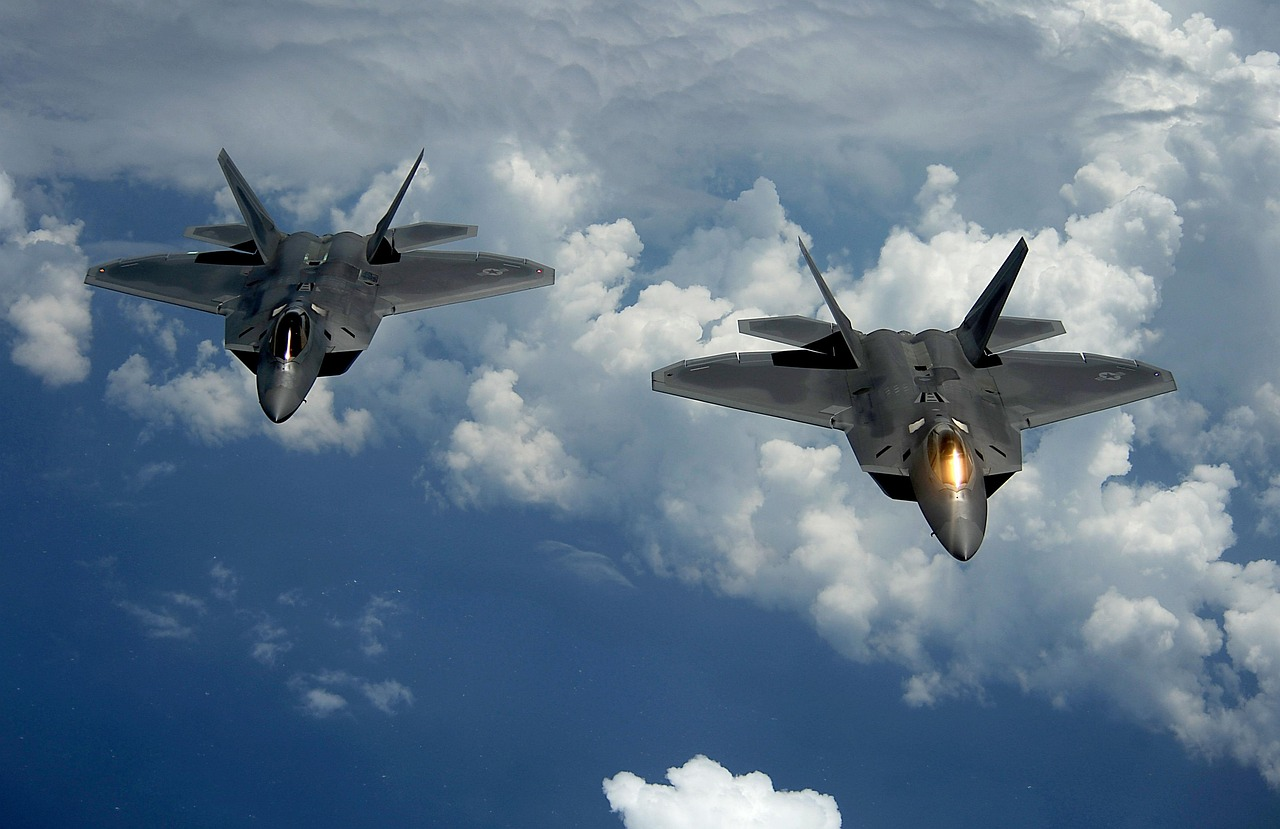
The Trojan Ceasefire: Naval Encroachment and the Prelude to Amphibious Escalation

By Brig Azad Sameer (Retd)
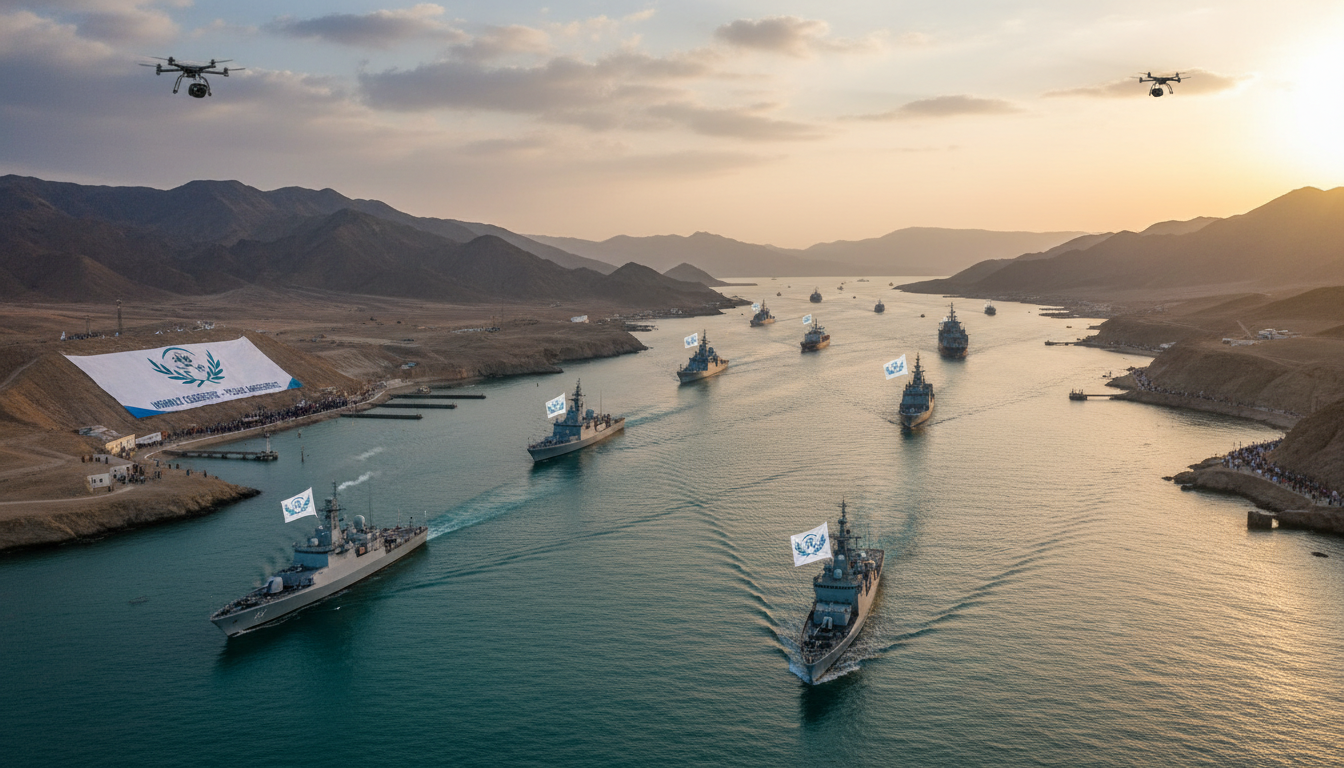
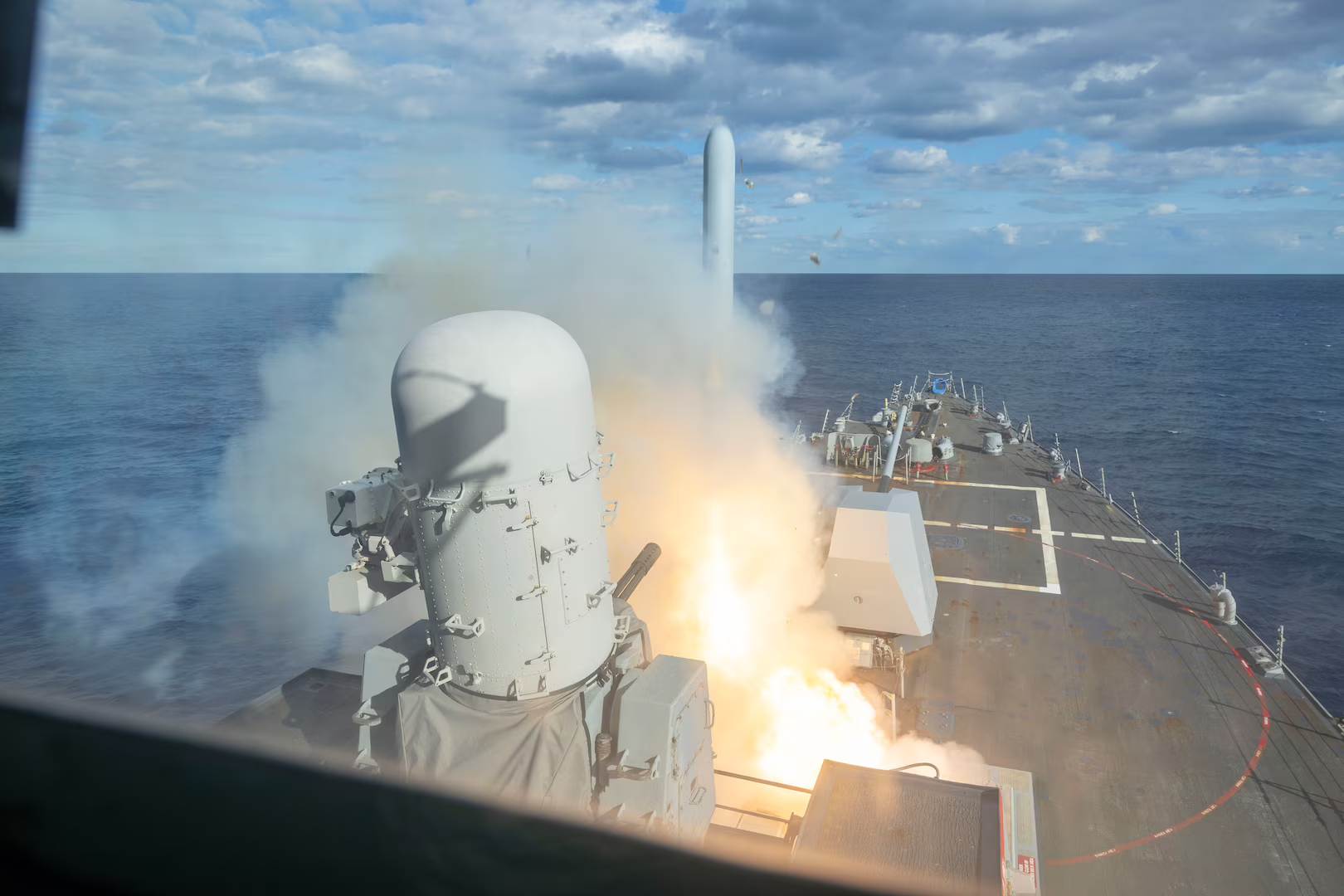
The chronicles of military history are awash with peace periods used not for de-escalation, but for the strategic repositioning of offensive assets that would be too vulnerable during active hostilities. As of 11 April 2026, the transit of U.S. guided-missile destroyers into the Persian Gulf under the mantle of a humanitarian mine-clearing mission appears to be a classic war college case of this maneuver. While the Islamabad talks superficially aim for a diplomatic exit to the conflict, the physical movement of the USS Frank E. Petersen Jr. and USS Michael Murphy into the heart of the Gulf suggests that the United States is not preparing for peace, but may well be instead maximizing it’s configuration for the failure of talks and more lethal phase of Operation Epic Fury.

​A ceasefire, by definition, is a standstill agreement intended to freeze the tactical map to allow for negotiation. By moving high-value combatants through the Strait of Hormuz and into what Iran considers its territorial waters the U.S. has fundamentally altered the military status quo. If the introduction of front-line warships into a contested combat zone during a cessation of hostilities does not constitute a violation, the term ceasefire loses all functional meaning and will need to be redefined. It is a confrontational act of naval encroachment that weaponizes the diplomatic process to bypass the very A2/AD (Anti-Access/Area Denial) barriers that kept the U.S. fleet at bay during the height of the kinetic exchange.

​The skepticism surrounding the mine-clearing narrative is justified. Heavy destroyers are not the tools of maritime sanitation; they are the tools of power projection. The reality is far more clinical: the U.S. is possibly shaping the battlefield. By establishing a permanent naval presence inside the Gulf now, they get rid of the bottleneck risk of the Strait of Hormuz for the future. These warships serve as the vanguard for a much larger logistical build-up. With the Iranian fast boat threat suppressed by the ceasefire terms and the coastal missile batteries momentarily silenced by diplomacy, the U.S. is free to conduct the hydrographic surveys and coastal reconnaissance necessary for terrestrial operations. It is also a high stake method of testing Iranian resolve.

​The true objective likely lies in the preparation for full-scale amphibious operations. An invasion of the Iranian littoral requires more than just air superiority; it requires a sanitised Gulf where amphibious assault ships (LHAs) and transport docks (LPDs) can operate without the incessant threat of a closed door behind them. By this maneuver now, the U.S. is in essence pre-staging the heavy lifters. The current destroyers are the scouts ensuring that when the ceasefire inevitably collapses – or is deemed expired by Washington – the heavy iron of the Marine Expeditionary Units will already be in position to strike the Iranian mainland.

​In conclusion, the U.S. naval movement is possibly a classic example of strategic opportunism. By taking cover under the ceasefire, the U.S. has achieved through a peaceful transit what may have been far more dangerous during active war. This is not the behavior of a nation seeking a durable exit; it is the behavior of a superpower positioning its pieces for a final, knockout blow on the terrestrial plane. Operation Epic Fury is not ending; it is possibly just reloading. What we cannot figure out now is whether the ceasefire is entirely an eyewash or some serious effort towards peace during which the pawns are being moved quite unfairly, to prepare for the contingency of failure of talks.
The Isfahan Rescue : A Classic Military Overkill or a Cover for Something Bigger?

Brig Azad Sameer (Retd)

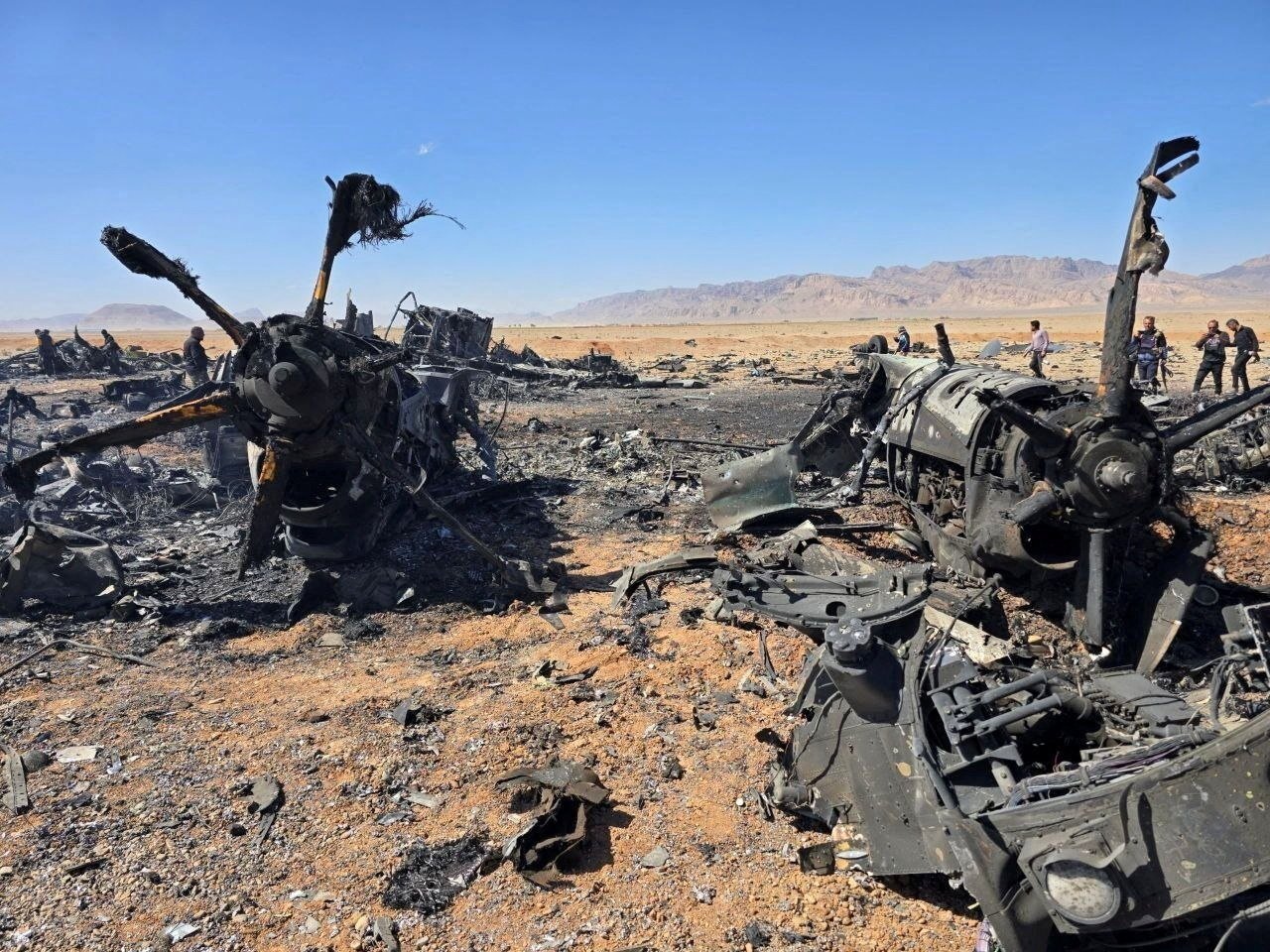
According to the official Pentagon narrative, the rescue of DUDE 44 B was the most devoted act of camaraderie in human history. After an F-15E Strike Eagle went down on April 1, 2026, the pilot (DUDE44A) was whisked away within hours. However, the Weapons System Officer (WSO: DUDE44B) took a bit longer, leading to a mission that can only be described as a tactical overkill. To save one man, the U.S. launched an armada of 155 aircraft and landed two $100-million MC-130J Commando II transports on a wet, sandy farm field. It’s a touching story, provided you don’t look at a map—or a balance sheet.

Holes in the Narrative

In the world of standard Search and Rescue, you send a couple of agile HH-60W Jolly Green II helicopters or maybe a CV-22B Osprey. You do not land two massive, 70-ton fixed-wing transports in the mud 100 miles away from the guy you’re looking for. Using an MC-130J to rescue a single airman is like using a cruise ship to pick up a stranded jet-skier: it’s flashy, but it’s a logistical nightmare that puts hundreds more people at risk. By putting 96 personnel on the ground in the heart of Iran, the Pentagon didn’t just plan a rescue; they accidentally invited a hundred people to a potential hostage crisis party.

The geography of the mission is where the official story really starts to sink – much like those MC-130Js in the Isfahan mud. The landing site was uncomfortably close to Iran’s primary underground nuclear facilities and missile infrastructure. Furthermore, the cargo involved—four MH-6 Little Bird helicopters that had to be offloaded and reassembled – is the textbook signature of a Direct Action raiding party. You don’t bring an assembly-required helicopter kit to a time-sensitive rescue mission unless you were already heading there to kick open a very specific, very nuclear door.

Strategic Mission

The logical conclusion is that the rescue of DUDE 44 Bravo was a mission of opportunity. The 96 personnel and their heavy-lift aircraft were almost certainly on a primary strategic mission – likely a counter-proliferation raid or a high-value target seizure near Isfahan. That also explains the use of 155 combat aircraft for the rescue mission. The Iranian airspace had to be sanitised for a strategic mission which involved the move of two clumsy, elephantine transport aircraft. When the F-15E crashed nearby, the Pentagon pivot was swift: if the secret raid failed (which, given the stuck in the mud outcome, it seemingly did), they could blow the sensitive gear to smithereens and tell the world it was all a heroic, albeit a bit expensive, effort to leave no man behind. It’s much easier to explain losing $300 million in hardware as saving a brother than as getting the tyres stuck during a botched nuclear heist. Also, a new word got added to our glossary of military terminology: scuttle. To be used when the getaway car gets stuck in the mud.

The Great Escape

However, we must give credit where it is due: the eventual extraction of those 96 personnel was a genuine feat of professional airmanship. When the heavy-hitters failed, the U.S. successfully pivoted to three lighter CASA CN-235 aircraft. These nimble turboprops did what the massive Commandos couldn’t – they landed on that same soggy strip, packed in nearly a hundred elite soldiers, and hummed their way back to safety. While the Official Version might be a tall tale, the fact that all the personnel returned home without a single casualty remains the highlight of the story that holds water. It is tactical brilliance that really needs a standing ovation. Someone took a very smart abort mission decision, early enough to make the great escape possible. It’s a bit funny though, 96 went in to save one and then the 96 had to be rescued!

The Concluding Question

One odd question remains.  Why were the CASA CN235 aircraft not used for the special mission in the first place, when it was evidently clear that these were more suited for the sticky airstrips available? They could not obviously carry the Little Bird choppers, necessary for the onsite move.Logically, it appears that ONLY MC130Js had a mission appropriate pay load capability. Something really heavy had to be brought in or taken out or probably both ways. We generally know that enriched uranium is normally carried in very heavy lead lined steel containers. It’s also a probable reason why the aircraft refused to take off from the sand after they landed. It’s a different matter that these special containers, now melted and mangled, maybe somewhere amongst the aircraft wreckage.

The Sacking of an Army Chief

By Brig Azad Sameer (Retd)

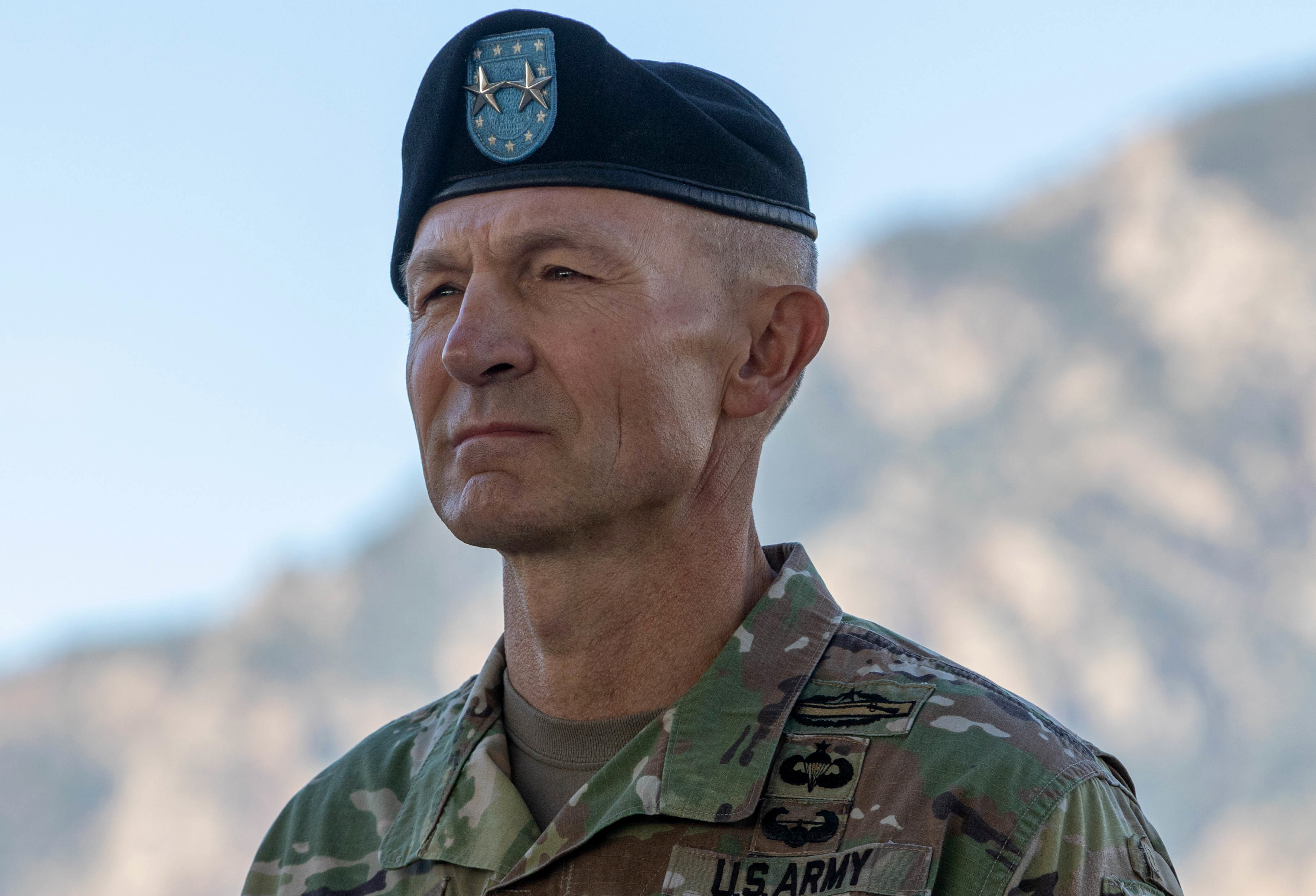
Maj. Gen. Randy George, outgoing commanding general, 4th Infantry Division and Fort Carson, prepares to receive the Distinguished Service Medal prior to a retreat and farewell ceremony on Founders Field, Fort Carson, Colorado, Oct. 4, 2019. Maj. Gen. George was awarded a Distinguished Service Medal for his service as the 4th Inf. Div. commanding general. (U.S. Army photo by Sgt. Daphney Black)

On the day after April Fool’s, as if in a lingering extension of the absurd, the United States Army was rocked by the abrupt sacking of its Chief during Operation Epic Fury. On April 3rd, the Army woke to find its top general Missing in Action. While some initially dismissed the news as a belated prank, the reality was sobering. This was no upheaval in a distant banana republic; it was happening in the United States, the self-proclaimed center of the civilized world. General Randy George was simply told to go home, ushered into the convenient euphemism of early retirement without explanation.

Rumors quickly went viral that George was the 24th high-ranking officer fired by Secretary of Defense Pete Hegseth since taking office. While the exact tally remains debated, the number of verified departures is staggering – at least 14 top officials, including a member of the Joint Chiefs of Staff, the Naval Chief, the head of the Defense Intelligence Agency, and the Commandant of the Coast Guard, have been cleared out. To understand this latest dismissal and its potential fallout, one must first look at the unprecedented context of the current Pentagon.

Purge in the Pentagon

The phrase Purge in the Pentagon feels surreal, carrying echoes of totalitarian regimes like Stalin’s Russia or Mao’s China. Yet, it has become the reality for the world’s oldest democracy. Upon taking office in 2025, the Trump administration, with Hegseth at the helm, initiated a sweeping overhaul of the Department of Defense. The mission was clear: eliminate woke ideology and partisan influence.

This purge targeted leaders who supported Diversity, Equity, and Inclusion (DEI) programs or were perceived as insufficiently loyal to the President’s agenda. Central to this effort was the Warrior Board, a panel of retired senior officers empowered to review the performance of three- and four-star generals. Those found wanting in strategic readiness – often a shorthand for ideological alignment – were recommended for immediate retirement, creating a massive leadership vacuum at the top.

The scale of these dismissals has ignited a fierce national debate. Supporters call it a necessary house cleaning to restore a focus on lethality and merit. Critics, however, view it as a political vendetta that shatters the tradition of a non-partisan military. By early 2026, this friction had escalated into a constitutional crisis, with several state governors refusing to allow similar ideological screenings for their National Guard units.

The Sacker-in-Chief

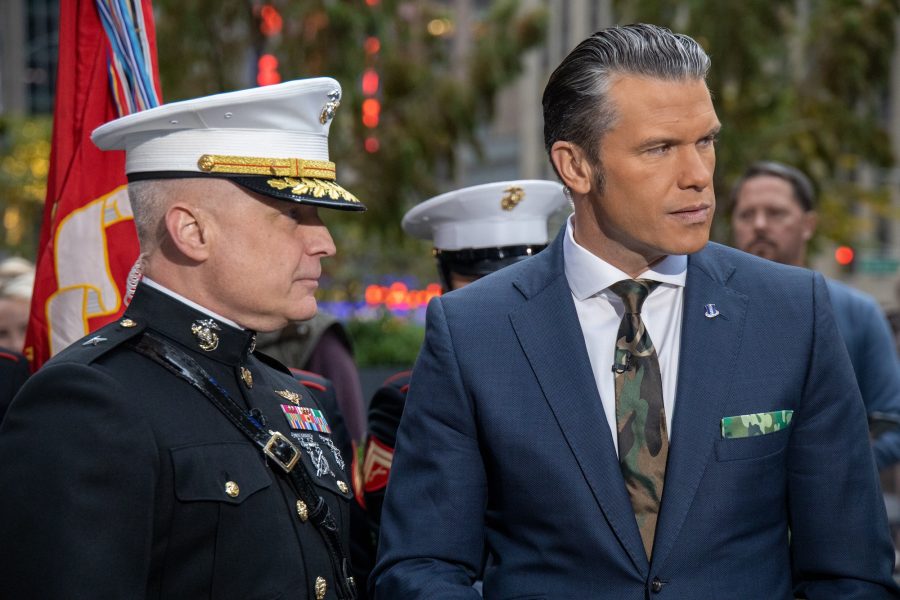
Pete Hegseth’s rise to power – and his rebranding of the Pentagon as the Department of War -has earned him the moniker The Sacker-in-Chief. A former infantry officer in the Army National Guard, Hegseth volunteered for tours in Guantanamo Bay, Iraq, and Afghanistan before leaving the service as a Major. While he holds two Bronze Stars and a Combat Infantryman Badge, critics often point out that his medals were for meritorious service rather than valor, suggesting his warrior persona is more a media creation than a product of battlefield heroism.

His credentials were further scrutinised during his 2025 confirmation due to his Jerusalem Cross and Deus Vult (God Wills It) tattoos. Though Hegseth defends them as symbols of faith, military security officials once flagged them as potentially extremist – leading to the revocation of his orders to guard President Biden’s 2021 inauguration. We now know that his far-right symbolism is for real.   At 44, the retired Major systematically ousted the very Generals and Admirals who once sat far above him in the chain of command.

Hegseth’s path to the Pentagon was paved in the studios of Fox News. As a decade-long co-host of Fox & Friends Weekend, he championed America First policies and successfully advocated for the pardon of service members accused of war crimes. Thus, he also made strides first into President Trump’s living room and then his coterie.  After being appointed Secretary in January 2025, he quickly moved to replace the old guard. In the wake of General George’s dismissal, Hegseth elevated his own former aide, Gen. Christopher LaNeve, to the position of Army Chief, ensuring a loyalist was in place to execute a radical cultural overhaul.

Perilous Portents

The timing of General George’s removal – five weeks into Operation Epic Fury – is virtually unprecedented and has sent shockwaves through international defense circles. While the Department of War issued a perfunctory note of thanks, they offered no reason for truncating a term intended to run until 2027.

Insiders point to a bitter fallout between George and Hegseth over promotions. George reportedly refused to block the advancement of women and minority officers whom Hegseth wanted purged. Furthermore, as a Biden appointee and former aide to Lloyd Austin, George was viewed as ideologically incompatible with the new administration’s warrior ethos.

However, there may be a more urgent, tactical reason for this sudden vacancy. As a member of the Joint Chiefs of Staff, the Army Chief is a primary military advisor to the President. It is highly probable that George either objected to pending decisions regarding Operation Epic Fury or was expected to do so. In politics, it is often easier to replace the advisor than to overrule reasoned professional advice.

The heart of the disagreement likely lies in the boots on the ground controversy. Many analysts warn that any terrestrial operation in Iran is inherently perilous. While a strike and extricate mission is feasible, US forces are not currently logistically prepared for sustained ground combat, which threatens to drag the nation into another forever war. While the exact nature of George’s counsel remains classified, one conclusion is clear: the sacking of the Army Chief and the looming threat of a ground invasion are inextricably linked. The next phase of the war may be only days away.

The West Asia Chessboard: Why Operation Epic Fury is a Masterclass in Diplomatic Bluffs

By Brig Azad Sameer (Retd)

Date: March 25, 2026

The drums of war are beating louder than ever in West Asia, but a closer look at the tactical map suggests we might be watching a high-stakes theatrical performance rather than the opening salvo of a world-altering invasion.

As of today, the indicators for a U.S.-led terrestrial operation—part of the much-discussed Operation Epic Fury – remain Critical High. Major General Brandon Tegtmeier and the 82nd Airborne’s Immediate Response Force are on the ground in Kuwait. Global oil markets have already reacted, with prices sliding below $100 per barrel following President Trump’s 5-day ceasefire offer and a 15-point peace plan sent via Pakistan. However, if you look past the headlines, the military reality tells a different story.

The Fist Without an Arm

The 82nd Airborne is a formidable fist, capable of rapid vertical envelopment. But in modern warfare, a fist needs an arm to provide reach and sustained power. In this case, that arm is missing.

Despite the hype surrounding the potential seizure of Kharg Island, the U.S. currently lacks the San Antonio-class mother ships inside the Persian Gulf. Without these LPDs (like the USS San Diego or USS New Orleans, which remain outside the Strait of Hormuz), an amphibious assault to link up with paratroopers and provide the sea to shore logistic support, does not seem probable as of now. You cannot hold territory you cannot resupply from the sea. Logistic sustenance of a force launched via vertical envelopment is possible temporarily, even up to week or so through an Air bridge operation. But by itself it is inadequate and fails the requirement for a longer-term outlook. Normally you do not launch forces by vertical envelopment when land link up or shore to land link up does not seem probable in the short term

The Kharg Island Ruse

While the media is in a frenzy over Kharg Island – the terminal for 90% of Iran’s oil exports – strategic analysis suggests this is likely an operational ruse. By fixing Iranian defensive attention on their oil infrastructure, the U.S. is forcing Tehran to overextend its posture, while the real battle is being fought in the halls of diplomacy and on the floors of stock exchanges.

A Diplomatic Smokescreen

The 15-point plan, demanding the total dismantling of Iran’s nuclear facilities and an end to regional proxy funding, isn’t a traditional negotiation. It is a Shaping Operation.

  • The Goal: Create a Negotiate or be Invaded ultimatum.
  • The Reality: Tehran has already dismissed the offer as fake news, and the recent Iranian drone strike on Kuwait International Airport shows they are calling the bluff by attempting to crater the runway for U.S. C-17s.

Conclusion: The Grand Illusion

The alignment of the 82nd Airborne, the 5-day tactical pause, and the aggressive peace proposal are pieces of a massive diplomatic bluff.

The U.S. is projecting the image of an imminent invasion to force a collapse in Iranian resolve and stabilize global energy markets. But without the heavy lift of amphibious support inside the Gulf, Operation Epic Fury remains a paper tiger. We aren’t seeing the start of a ground war; we are seeing the ultimate exercise in Armed Diplomacy.

The Hormuz Dilemma: Will the Boots Ever Land on Ground?

Veteran Brigadier Azad Sameer

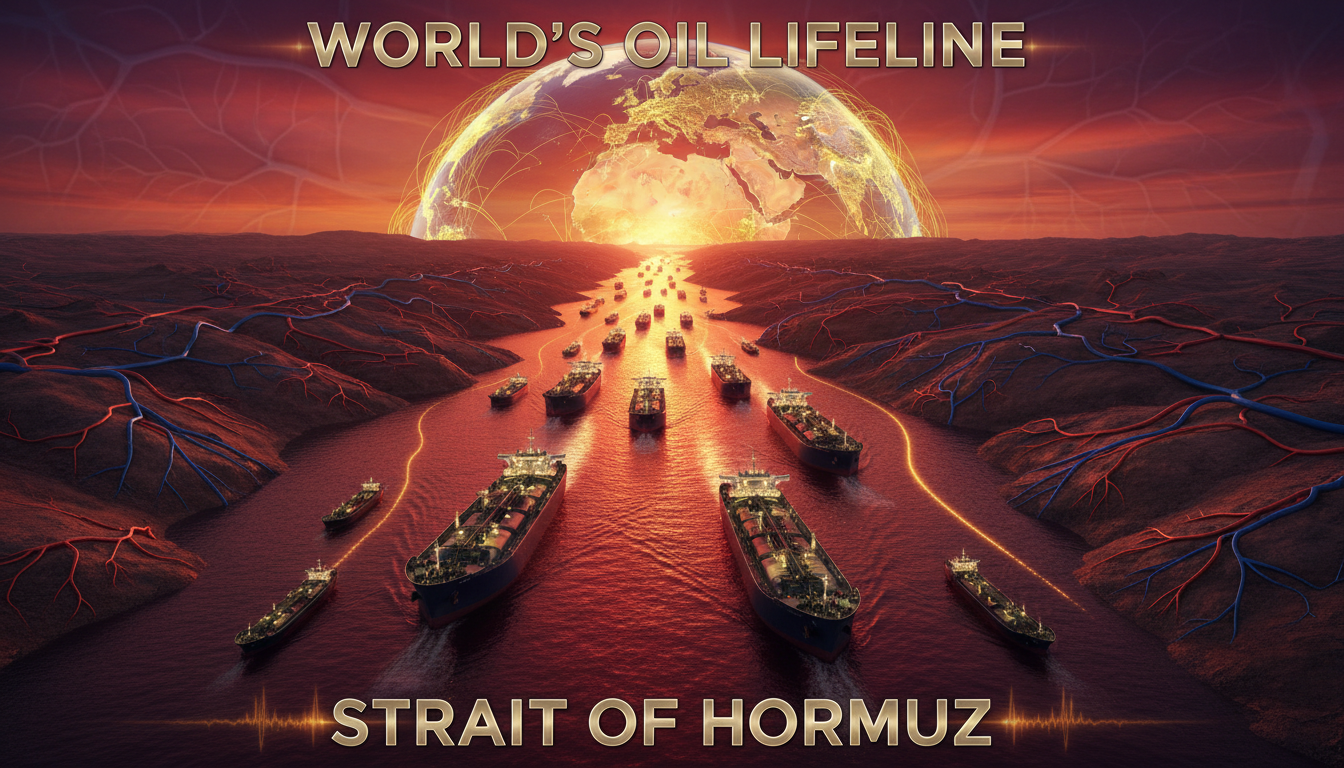
Following the blockade of the Strait of Hormuz by Iran, the Global economy is indeed reeling and pretty badly at that. In the meantime a heated debate has possibly ignited within the Pentagon and among Allied planners: Is a terrestrial intervention on Iran’s northern coast to secure the dominating costal high grounds, the only way to permanently break the blockade on the world’s most vital oil artery?

For a long time, strategic thinkers have described the Strait of Hormuz as the world’s jugular vein. For the effective blockade, the Iranians are known to be using comparatively cheap tactics, utilising anti-ship cruise missiles (ASCMs), smart mines, and swarming drone technology. The U.S. military doctrines boasts of Command of the Seas and Command of the Air strategies and capabilities. While the USA does seem to enjoy command of the air, the ‘command of the seas doctrine’ has been tested severely as never before. Carrier-based airstrikes can degrade Iranian capabilities, and possibly even remove the blockade temporarily. Even this will take some doing. However, there is near unanimity among military analysts that as long as Iranian forces control the rugged, mountainous terrain of the Hormozgan Province, the blockade can be made effective once again, within hours.

The Case for Terrestrial Operations

The rationality for land-based buffer zone is rooted in what is called as the Whack-a-Mole problem. Iran’s mobile missile launchers, such as the Noor and Ghadir systems, are skillfully camouflaged within the limestone cliffs and complex of coastal caves overlooking the shipping lanes. They can emerge from a hidden cave or hardened bunker, fire a missile and relocate within minutes. By the time the launch is located and counter measures considered, the mole is back in its hole. The problem is complicated by the fact that sinking of even a single vessel in the narrow passage may cause a permanent blockade.

To anyone familiar with basic military tactics, it is abundantly clear that to effectively clear the strait, one must seize and secure the following:

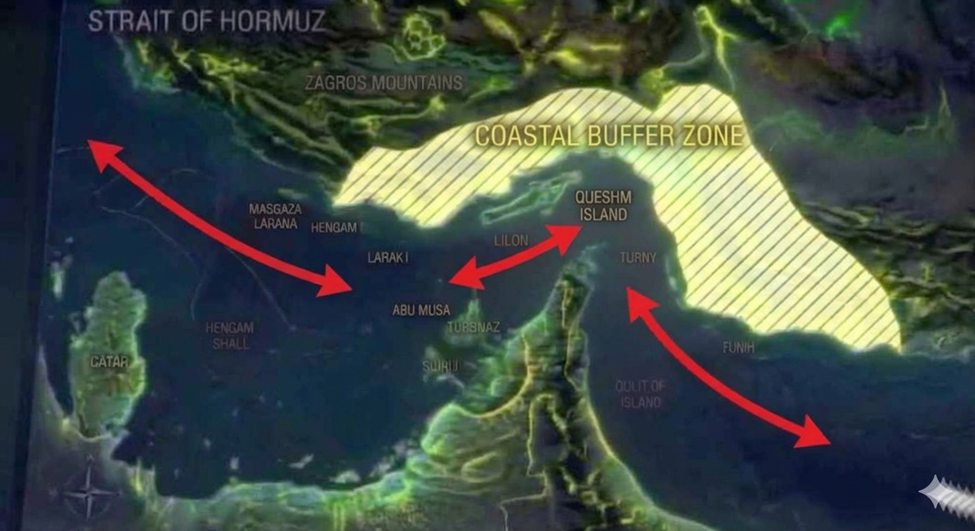
  • The Island Chain to include the islands of Queshm, Larak, Abu Musa, Tunbs and maybe Hormuz.
  • Tactical high grounds on the northern coast line. A terrestrial operation to occupy the high grounds extending from Bandar e Lengeh and running east for about 250 km will be needed to clear the threat and physically displace the weapons that currently hold global energy markets to ransom.  The depth of this zone is about 70 to 200 km Northward from the coast line and include all the lower ridge lines that dominate the water way and at least some points on the main Zagros mountain ridge lines. 

This is not an easy task, the hostile terrain extending over a vast area of approximately 2500-3000 sq km.  The contours of such an operation if undertaken will primarily hinge around vertical envelopment employing very large sized heli-borne and air-borne forces in conjunction with special operations, to seize the tactically important high grounds overlooking the coast line as well as the island chain. This necessarily may have to be followed up with frontal assaults to link up with forces landed in depth. In addition may an extensive Air Bridge operation may have to be established for logistic sustenance of a large force, at least for initial phase of the operation until the land link up completed.

Minimum Estimated Force Levels

  • Amphibious Assault Force consisting of 2 to 3 Marine expeditionary Units (5000 to 7000 marines).
  • Special Operations Command. 2-3 seal teams and Army rangers for silent insertion.
  • Air Superiority and Suppression. 2/3 Carrier Strike Groups together with land based  A-10s and AC 130s operating from bases in UAE and Oman for close air support
  • Seizing and Holding the coastal buffer. 1 Army Airborne Division and 2 infantry Divisions.

Time Frame

Initial operations to clear the blockade may take about 2 to 3 weeks. To fully sanitise the coast line, many months of counter insurgency operations will be required, difficult to estimate or define.

Financial Implication

All the above add up to a full scale invasion which according expert estimates may involve a financial implication of roughly 5 billion dollars per month if successfully executed.

The Challenge of Fortress Iran

However, the feasibility of such a campaign is fraught with extreme danger. The northern coast of the Strait is a defender’s dream. In essence, for the attacker to win in this kind of terrain, the defender must flee. Any attacking force must face the tyranny of the terrain which is characterised by jagged mountains that rise abruptly from the sea, leaving little room for the kind of large-scale amphibious landings seen in the 20th century.  Key assets of the US Mechanised Forces are of little use in this kind of terrain. More hostile than the terrain will be the weather. Not all troops are accustomed to operating in temperatures over 40 degrees combined with extreme coastal humidity. While the US military may well have adequate forces trained for such vertical envelopment and amphibious operations, it’s a moot question whether they are trained to operate in harsh mountainous terrain and very hostile weather conditions.

U.S. forces will face the Islamic Revolutionary Guard Corps (IRGC) Mosaic Doctrine – a decentralised, asymmetric defense designed to bog down high-tech invaders in a war of attrition. Any landing force will be met with pre-positioned, motivated insurgent cells, man-portable air-defense systems (MANPADS), and a civilian population likely to view the intervention as a violation of national sovereignty, potentially sparking a decades-long insurgency. More than three weeks of the operation comprising ruthless air and missile attacks by the combined forces of USA and Israel have resulted in almost 70% of the Iranian surface missile force being destroyed. But even the Pentagon has admitted that the even the island chain is far from neutralised, despite an almost complete air superiority of the attacking force.

The Logistics of an Impossible Shoreline

Logistically, sustaining even brigade-sized force on the Iranian coast will indeed be a herculean task. Capturing and holding a coastline of 250 km may well require beyond a Corps size force. The humongous nature of the logistics involved is indeed a never ending nightmare.

Furthermore, a terrestrial invasion might almost certainly escalate the conflict beyond a localised maritime dispute. It will likely trigger a total mobilisation of the Iranian state and could draw in regional proxies, and perhaps other global players turning a mission to open the taps into a full-scale theater or global war.

The Verdict

 A limited raid-and-destroy mission by Special Operations Forces to hit specific batteries is highly feasible, especially involving an aerial insertion and exfiltration. But a sustained terrestrial occupation to control the choke point remains an operation in the realm of very low probability, an operation of last resort. A large scale terrestrial operation of sort is far too expensive, far too dangerous involving unacceptable casualties in the long run and the probability of successful execution not very high.    For now, Washington appears to be tethered to a strategy of maritime escort and aerial suppression. But as oil prices climb and the blockade holds, the pressure to take the coast and islands may soon enter the realm of active consideration.

This is how the Kaliyug Ends

Veteran Brigadier Azad Sameer

Bloated vanity transforms into a hurricane
And plays a second innings.
Remember the shadows that scorched the stones of 1945?
The ego is a heavy, inflated thing—a lung filled with warm air,
Or toxic ash perhaps, swelling until the earth begins to crack.

Now the hurricane, a screaming, mindless force,
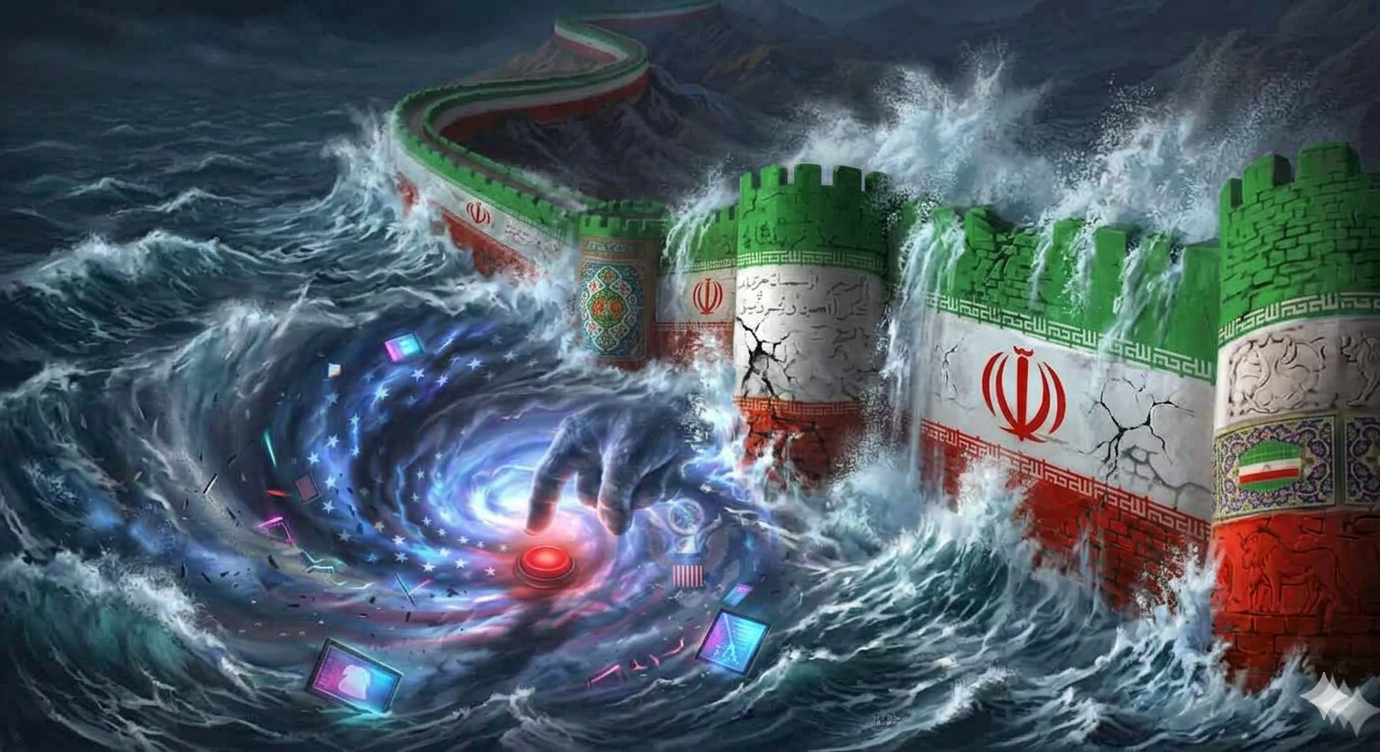
Lashing out at the silence of the Great Stone Wall.
The ancient wall begs not for mercy;
It holds the line with a quiet, terrifying dignity;
The storm demands the world acknowledge its righteous rage.

Hidden in the bunker of frustration, the bully broods;
The map of relevance shrinking by the day.
Maddened by fury, the finger moves
His finger—a pale, trembling worm—begins its move.
It moves across the console, as in a slow funeral march.

We can see the finger move
Slow and steady, sure and certain
We feel its vibrations in our very teeth,
A low-frequency hum of a world preparing to sublimate.

There is no impulsive strike,
Only the unbearable crawl,
Across the metal, toward the red, unblinking eye of the button.
We read the chronicle of extinction written in the red dust,
We read the final pages of history in real-time, breathless and numb.
Yet we are the silent spectators; in silence is our strength.
We turn to the floodlights of the field so green,
Oh, that glorious drive through extra cover,
That arc of a curving free kick into the net!
Our eyes are fixed on the scoreboard, tallying trivial triumphs,
While the finger crawls, the finger crawls.

We wait for a David and his sling of truth,
Or a Prophet to part the sea of our collective inaction.
But the stadium is a temple of indifference.
The air grows thin; the shadow of that creeping finger reaches the button.
We are not victims of a sudden lightning strike,
We are the architects of a preordained fall painfully slow.
Oh, shall we not shatter the glass and seize the hand,
Or shall we simply wait for the telecast cut to a silent black?

This is how the Kaliyug ends.
Not in a frenzy but in slow motion.

The Author’s Notes

The Hurricane of Hegemony (The USA)

The bloated vanity and hurricane: Represent the expansive, often chaotic nature of a global superpower.

The Second Innings: This suggests a resurgence of interventionism or a sequel to past conflicts (like the World Wars or the Cold War).

Shadows of 1945: This is a chilling reminder that the US is the only nation to have used nuclear weapons. The toxic ash refers to the literal and political fallout of that hegemony, now swelling to a breaking point as it faces a world it can no longer fully control.

The Ancient Stone Wall (Iran)

In this reading, Iran represents the Great Stone Wall—a stand-in for a 5,000-year-old Persian civilization that views the US as a screaming, mindless force of modern history.

Quiet, Terrifying Dignity: This describes the posture of a nation that refuses to bow to sanctions or military threats. The wall holds the line, representing a defensive, immovable ideology that infuriates the hurricane because it cannot be blown away or easily broken.

The Bully in the Bunker

The bully brooding as his map of relevance shrinks represents a fading superpower’s frustration.

The Pale, Trembling Worm: This metaphor suggests that despite the massive military industrial complex (the hurricane), the actual decision-making power rests in the hands of a fragile, fallible human being in a command center.

The Slow Funeral March: The movement of the finger toward the console symbolises the slow-motion escalation toward a regional or global conflict. It isn’t a sudden mistake; it is a calculated, agonisingly slow crawl toward a red, unblinking eye

Global Indifference (The Spectators)

While the US and Iran engage in this high-stakes standoff, the rest of the world is portrayed as a Temple of Indifference.

The Scoreboard: While the finger crawls toward the button in the Middle East, the global public is distracted by extra covers and free kicks – a critique of how we consume news and entertainment simultaneously. We watch the chronicle of extinction as if it were just another sports highlights reel.

Trivial Triumphs: This suggests that international diplomacy has become a game of scoring points rather than saving lives.

The Failed Saviors

The wait for a David with a sling of truth or a Prophet represents the world’s reliance on some unknown miracle. However, the poem suggests these figures are absent. Instead of a heroic David stopping the Goliath (the US hurricane), there is only the silent black of a cut transmission.

The Slow-Motion Kaliyug

In this geopolitical context, the End of the Kaliyug is the collapse of the modern world order.

It doesn’t end with a sudden lightning strike, but through the preordained fall – refusing to blink until the telecast finally goes dark. The tragedy is that we see it coming in slow motion and do nothing to seize the hand.

Liberation

By Veteran Brigadier Azad Sameer

Between the target
And the impact
Between the coordinates
And the crushed little skulls
Falls the Shadow
                       Oh! Life is yet to bloom and still so short

Between the mission
And the massacre
Between smart bombs
And the severed limbs
Falls the Shadow
                       For Thine is the Empire

Between the precision
And the primary school
Between the seven year olds
And the concrete rubble
Falls the Shadow
                       For Thine is the Sovereignty

One hundred eighty souls,
Gathered on this brink of the swollen Jajrud,
In this valley of dying stars.
They are not targeted,
Just collateral liberation.

The world’s most incisive eyes
Are hollow, stuffed with straw,
Leaning together,
Looking but not seeing,
Or just not wanting to see
The ribbons in the red dust
And the satchels with the little books.

Ninety more must carry the weight,
In this hollow land,
This cactus land.
They carry the weight of the missing limb,
The shattered eyes
And the silence that screams.


No apology is whispered,
No head is bowed in the wind.
Between the liberation
And the butchery
Between the error
And the rage
Falls the Shadow
                       For Thine is the kingdom of Tyranny

This is the way the childhood ends
Not with a prayer but a blast.​

(With profound apologies to T.S. Eliot—adapted from The Hollow Men and with a silent prayer for the hundreds of little girls who lost their lives or limbs when the bombs came down on them on 28 February 2026)

The Murder of Sovereignty: A Moment of Global Reckoning

By Veteran Brigadier Azad Sameer

As of today, the world stands on the precipice of a contrived calamity. The joint U.S.-Israeli attack on Iran represents a profound breakdown of the international rules-based order. By targeting sovereign leadership and infrastructure during active diplomatic negotiations, these actions do more than ignite a regional war; they dismantle the very concept of Just War Theory and the sanctity of the UN Charter.

​​A Violation of Law and Logic

​Under the pretext of preventing nuclear proliferation, the aggressors have sidestepped the International Atomic Energy Agency (IAEA) and the UN Security Council. It is a bitter irony that the United States—the only power to have ever deployed atomic weapons and a nation currently retaining a stockpile capable of ending civilization multiple times over—is now the primary actor in an unprovoked assault to prevent a hypothetical threat.

​Just war theory requires last resortlegitimate authority, and proportionality. None of these pillars are present here. To attack while diplomats are at the table is to acknowledge that force is the first choice, not the last. To carry out political assassinations is to engage in extrajudicial state-sponsored violence that invites a cycle of retaliation, which we are now witnessing as the Middle East descends into chaos. Historically we have seen that this type of unilateral use of force has been the cause of breeding and growth of terrorism. The current situation only aggravates that problem.

The Fallacy of the Global Policeman

​A dominant rationalization offered by the aggressors is the tyrannical nature of the Iranian government and its history of internal oppression. However, this argument is primarily inconsistent and legally hollow. The in-house political struggle of a nation belongs solely to its people; it is not a mandate for foreign powers to act as global judge, jury, and executioner. By initiating a military operation for regime change under the facade of liberation, the U.S. and Israel have unilaterally appointed themselves as global policemen—a role that violates the foundational principle of state sovereignty.

​The idea that a state can be bombed into democracy is a historical absurdity. If the Iranian people seek to challenge or change their leadership, that is their inherent right and their struggle to wage. When external powers interfere through high-altitude strikes and political assassinations, they do not bring freedom; they bring chaos, martyrdom, and the destruction of the very civil society required for internal reform. International order cannot survive if tyranny becomes a subjective thumbs up for any nuclear-armed power to dismantle a sovereign neighbour.

Historical Amnesia

This historical pattern of interventionism is not an anomaly, but a continuation of a destabilizing doctrine. From the decades-long morass in Afghanistan to the 2003 invasion of Iraq—launched under the false pretences of weapons of mass destruction—the United States has repeatedly bypassed international law to pursue regime change. The 2011 intervention in Libya further illustrates this catastrophic cycle; what was framed as a humanitarian mission to protect civilians quickly devolved into the state-sponsored assassination of its leader, leaving a power vacuum that turned the nation into a failed state, a civil war and a marketplace for modern slavery. The western intervention in Iraq resulted in the country being fractured to pieces and the establishment of the dreaded Islamic state and organizations like the ISIS. Until the sanctions hit hard Iraq was near ideal secular state. What a demonic transformation? Afghanistan marked the return of the Taliban. Dreaded Terrorists have returned to power in Syria too. In every instance, the forced dismantling of sovereign structures did not yield the promised democracy. Instead, it fractured civil society, displaced millions, and created fertile breeding grounds for extremist groups like ISIS and Al-Qaeda. By ignoring the lessons of these ruins, the current aggression against Iran risks repeating a history where liberation serves only as a precursor to enduring regional chaos and the global proliferation of terror.

The BRICS Response: Rhetoric without Resolve

​The expanded BRICS+ bloc has issued a joint statement strongly condemning the violation of Iranian sovereignty. However, this response remains strategically way too insufficient. While China and Russia have categorized the attacks premeditated aggression, they have stopped short of offering any material or military deterrent. By limiting their intervention to diplomatic notes and calls for dialogue at a toothless UN, BRICS has apparently highlighted its inability to propose a functional security alternative. This disinclination signals to the aggressors that while the Global South may dissent morally, it lacks the resolve to stop the dismantling of sovereign states by force.

The Connivance of Continental Silence

Simultaneously, the response from the European Union has been characterized by a lukewarm, strategic ambiguity that borders on moral bankruptcy. Rather than acting as a principled mediator or a champion of the international legal framework it claims to uphold, the EU has issued hollow pleas for de-escalation that fail to name the aggressors or acknowledge the illegality of the strikes. This paralysis stems from a deep-seated reluctance to break ranks with Washington, yet such subservience effectively signals that the rules-based order is a selective privilege rather than a universal right. By offering only bureaucratic hand-wringing in the face of a sovereign nation’s dismantling, Brussels is setting a catastrophic precedent that erodes the security of all mid-sized and smaller states. This collective silence is not merely a diplomatic failure; it is an invitation to future lawlessness. If the sanctity of borders and the immunity of leadership can be discarded today in the Middle East without a forceful European rebuke, there is no logical or legal barrier to prevent similar military adventurism in other strategic territories. Today the target is Tehran, but a world without enforceable sovereignty is a world where even the quietest corners of the globe—perhaps even the resource-rich expanses of Greenland—could tomorrow find themselves in the crosshairs of a nuclear power’s unilateral security interests. Failure to act now transforms the EU from a bystander into an architect of a new era of global anarchy.

​The Need for Urgent Action

​The retaliation from Iran and its allies is the predictable result of a sovereign state being pushed to the brink. When the world allows one or two nations to dictate the internal politics of others through fire and steel, it signals the end of global stability.

The rest of the world must react. If the international community does not move beyond urging restraint to an explicit condemnation and active diplomatic isolation of the aggressors, we are effectively endorsing a world where might is the only right. We must demand an immediate cessation of hostilities. The alternative is a total war where the primary casualties are the innocent millions who have no say in the games of nuclear-armed titans. Are we heading into global anarchy? Time is running out.