After the Argentina – Netherlands Semi-Final – FIFA World Cup 2014

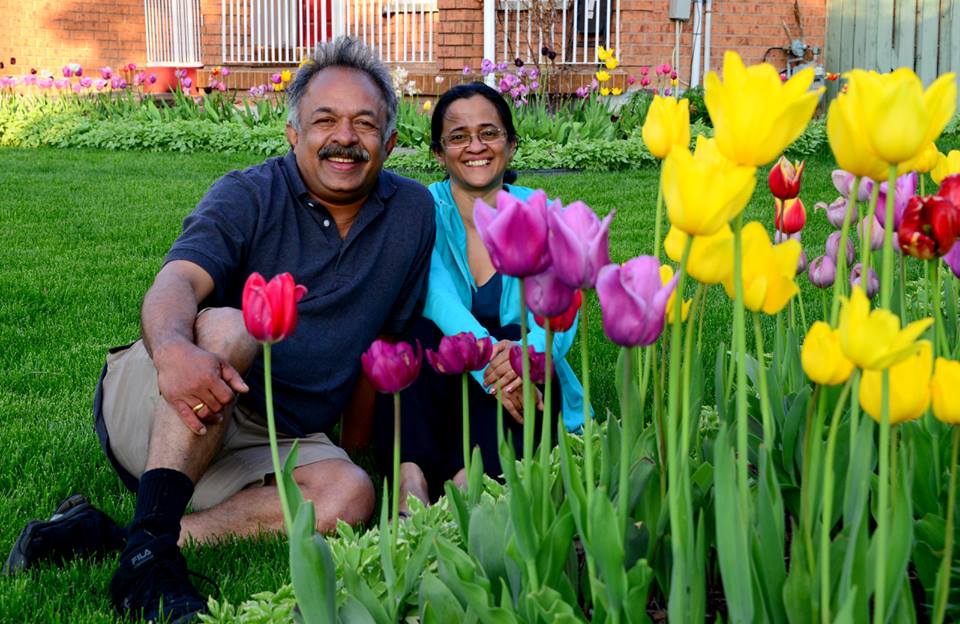
Penalty shoot out decided the finalist after two hours of play that day and it was past 6 PM here in Toronto. Our dog Maximus was getting restless as this evening walk was getting delayed.  I took out a plastic bag, leashed Maximus and off we went on our regular walking trail to the city center.

The city center of Mississauga (Canada) has Celebration Square in front of the City Hall (Office of the Mayor,) where many community events like musical shows, yoga classes, aerobics, demonstration of city’s upcoming projects like the light rail etc are held in summer evenings.  All FIFA World Cup matches were projected on two huge screens on either sides of the stage and being vacation time for schools, many parents and children congregated there to enjoy the matches (stadium effect.)  In winter it gets converted into a skating rink.  The Celebration Square is about five minutes walk from our home.

I expected that the crowd must have vanished by the time we reached the Celebration Square as it was fifteen minutes after it was decided that Argentina will meet Germany in the final.  To my surprise I found a gathering of about 250 people of all ages in front of the stage.  The Sergeant from the City’s Paramedics was conducting a lecture cum demonstration on Cardiopulmonary Resuscitation (CPR).  We stood there to watch the proceedings.

mk

There were school kids and adults practicing CPR on manikins (one shared between two or three) provided by the St John’s Ambulance team.  The staff and volunteers from the St John’s Ambulance were assisting the participants to practice CPR on their manikins. There were many little kids who might have had no interest in CPR, gathered around Maximus and started petting him and playing around with him while their parents and siblings practised CPR.

My mind went back to my days as a Team Leader in the call center I worked after landing in Canada.  All team leaders are required to be certified in CPR and First Aid as per the company policy and I also had to attend the class.  I presumed I had some knowledge about it, but after the class I felt ashamed about my shallow knowledge of CPR was (after commanding a unit of the Indian Army) and that I did not know the use of a defibrillator, which are placed at all public places in the city like offices, malls, movie halls, swimming pools, etc.

Our children have undergone training on CPR and First Aid while at school.  Our son Nikhil, working as a life guard and swimming instructor with the city had to qualify the third level of CPR and First Aid.  My wife Marina, being a Pharmacist also had to qualify in CPR and First Aid.  They have to re-qualify every two years to maintain the validity of their certification.

The final match of any Regimental or Formation level tournament is attended by all ranks, their wives and children.  After the prize distribution we generally hold a High Tea.  It would be good idea to have a fifteen minute class on such subjects after the game.

Human life is very precious and a very small action or effort can save a life provided you have knowledge of how to administer CPR and First Aid.

Pet Emergency

mxMaintaining a pet in Canada/USA is a serious matter and needs lot of effort and care by the pet owners.  The Municipal laws requires that all dogs and cats owned must be licensed and wearing a tag.  Licensing helps prevent against rabies outbreaks by requiring a certificate of vaccination for all dogs over the age of 4 months.  All the animals must be neutered/spayed prior to licensing in order to ensure population control.  By licensing your dog or cat, Animal Services will make every effort to reunite you with your pet if it gets lost.   There is a normally a limit laid down for the maximum numbers of pets that you can own.

The laws also specify that while on any private or public property, you got to pick up after your pet and the dog must be kept on a leash no more than two metre long and you must be holding onto the leash.   The owner of a dog is liable for a bite on another person or animal.   If your dog is continuously barking or whining and disturbing your neighbours, you can be fined under the Noise Bylaw.

There are many veterinary clinics dotting the city and there is a pet emergency hospital providing services 24 hours.  The Canadian government provides medical cover for all the citizens, but not for your pets and hence every visit to the veterinarian will ease a few hundred dollars.

The veterinary clinics will maintain all health records of the pets and the pharmacy will maintain all the medications dispensed.  To facilitate searching the database for the pet’s record, it is practice to give the pet also a last name, which is your family name.  Hence our dog is named Maximus Koduvath.  In case the pharmacy pulls up records of Koduvaths, the dog’s name will also popup.  Why not? He is also a member of the family.

Once Maximus ingested some poison and had to be taken to the pet emergency hospital.  We called up the hospital and the moment we reached there with Maximus, there were two attendants waiting with a stretcher to roll him in.  They carried out a stomach wash and the entire event made me poorer by $400.

While waiting for Maximus at the hospital, there was an elderly couple also sitting there.  I got into a conversation with them and they told me that their ten year dog had developed some kidney complications and is being operated upon.  I casually asked them about the cost of the procedure and behold – they were expecting anything to the tune of $6000 upwards.

Due to constant pestering by the children for a dog (we got Maximus because of the same), a friend of ours settled the deal with the children for a cat, being less costly and easy to maintain.  It takes much less effort to maintain a cat as unlike a dog, one does not have to take the cat for a walk in the morning and evening (a pretty difficult task during the freezing Canadian winter).  One day a car ran over the cat, and the car driver called the Animal Services and they immediately dispatched a blue-cross ambulance, which picked up the injured cat and moved it to the pet emergency.  The Animal Services called up the owner (based on the information retrieved using the license tag) and informed him about the condition of the animal and the hospital where it was.

The owner rushed to the hospital and he was informed that the cat needed urgent life saving surgery which would cost a minimum of $3000.  The owner thought if it was back home he would have buried the cat by now and would never cost him a penny.  He did not want to part with $3000, that too for a cat.  He wanted a cheaper option and the hospital offered to carryout euthanasia and would cost him $500.  He immediately settled for the second option and made the payment and drove back home.

Say Thank You

tuDuring my visit to India in 2012, I traveled from Thiruanathapuram to Kollam in Kerala on the State Transport bus.  The ticket was for Rs 9 and I handed over a Rs 10 currency note to the conductor.  I requested the conductor to drop me off at a particular stop and when the bus reached my stop, the conductor stopped the bus and nodded me to get off.  I went to the conductor, and he put his hand into to his bag, may be to return Re 1 which he owed me.  I said “Thank You” for his service of dropping me off at the correct stop.  The conductor gave a flabbergasted look – Is it that he never expected someone to thank him for a such service?

After landing in Canada, one day I asked our son to make me a cup of coffee, which he did immediately.  He brought it to my table, and I took a sip, continuing to read the book I was immersed in.  Our son waited for a few seconds and said “Welcome”.  It really knocked me down.  Then our son said – “What does it cost you to say THANK YOU?

I learnt this value from the Canadian society, as they always express their gratitude for any little service or help one does for someone else, even if it may not be from the bottom of one’s heart. Canadians are well known for their courteous behaviour.  Modern Canadian children are usually permitted to be relatively outspoken and independent from a young age.  They may speak to adults, even teachers or parents, in the same casual style they use for friends. The same is mostly true for employer-employee relations, and maintaining a friendly workplace where everyone acts as if they are on the same level.

I for one hardly ever thanked anyone during my days working in India; mainly subordinates for any help they rendered.  I hardly appreciated anyone for any work done by them.  We are very poor at appreciating our children and subordinates – may be thinking that it will spoil them.  It does not cost anything; but may make a day for the person who gets appreciated.  Everyone wants to be appreciated.

When our son graduated from Grade 8 (Middle School, they have a graduation ceremony – to instill in the students that they are going to High School next and got to be more serious about it and that the fun time is over.  He was the valedictorian and after he gave his valedictory address all the Canadian parents stood up and gave a standing ovation and all parents from our sub-continent kept slitting.  We even ration appreciation for a small kid.

This ‘rationing’ approach to appreciation for our children, I feel has come from the society back home.  Recently my wife confessed that she realised how incorrect she was in bringing up our daughter when back home; how she used to castigate our daughter for the 8% marks she lost in her test, rather than appreciating her for the 92% she scored.  This may be the result of my wife’s upbringing back home that one must get 100% in all tests, whether the child has interest in that subject or the child is capable of achieving it.

Many children had to hide their interests in non-academic activities like poem writing, story writing, arts, sports etc because the parents never encouraged any distractions from their academic goals.  Any inclination to a non-academic activity was severely condemned and brutally nipped in the bud.  Had the parents and children followed the academic model in North America, we would have surely produced many a great in all fields of life.

The major impediment back home is the way the marks of all tests are announced publicly in the class and to make the situation worse, the teachers tend to pass unwarranted comments along with it.  This is further complicated by the boastful parents who announce to the world as to how their child scored high marks and what the scores of other children were.  In the Canadian schools, test results are never displayed or announced and are kept confidential.

Attending the Parent-Teacher interviews used to be very scary back home as one often heard only complaints about our wards and hardly any words of appreciation.  The Parent-Teacher interviews in Canada, one experienced the opposite.  It was more of a celebration of the hard work and achievement of the child, and it always begun with “Your son is doing really well ...”

The Canadians are stereotyped as being excessively, or even absurdly polite, even if not entirely warranted.  They never miss an opportunity to appreciate or compliment while Canadians deal with one another.  Mrs Lalita George, wife of Late Colonel Raju George, while on her visit to Niagara, was really taken aback when a girl at a ticket counter appreciated the handbag she was carrying.  The girl asked her about the source and when informed that it was from India, she expressed her dream of visiting India after her graduation.

On receiving the progress report of our son, I (may be because of my upbringing back home), enquired from our son as to how others in their class had performed.  He said that it was indecent to ask others in the class what their grades were and in case I had to see the class performance, the mean and median for each subject is given in the report card.  That was when I realised the application of those statistical terms we were taught in school.

Every year for Christmas, I fly to India to spend a few days with my mother.  On arrival in India, the first person one mostly deals with is the immigration authority at the counter.  Almost all the countries I have been, these immigration authorities are mostly pleasant and very courteous.  The interaction with them generally culminates with “Welcome to (their country)”.  Anyone who has ever passed through the Indian Immigration counters will always have the opposite story to narrate.  I often felt that the Ministry of External Affairs has imparted special training to all those who man the immigration counters, to be putting up with such morose faces and least courteous conversation.  The final look they give you while returning the documents almost conveys ‘Why the hell are you back?’

So please think it over and make small efforts at your level – it may make a difference to someone, and it does not cost you anything.

Koduvath the Meat Basket

A typical Syrian Christian family history will forcefully trace its roots to the to the 31 Brahmin families supposed to have been converted to Christianity by St Thomas, one among Jesus’ 12 disciples or to Pakalomattom, Kali, Kaliyankal, Shankarapuri Namboothiri (Brahmin) families, even though no documentary evidence exists to prove the connection.

After Jesus descended to heaven, all ten disciples moved Westward to spread the message of Christ and establish churches. Only St Thomas was sent Eastward (East must be a punishment posting then also as prevalent in the Indian Army.)  This could be because St Thomas was known as the Doubting Thomas who refused to believe that the resurrected Jesus had appeared to the ten other disciples (Judas had committed suicide by then,) until he could see and feel the wounds received by Jesus on the cross. From this originated the English idiom of Doubting Thomas as a skeptic who refuses to believe without direct personal experience.

In the earlier days, the Syrian Christian  priests could only be ordained from the Pakalomattom family (an effect of the Hindu caste system prevalent then.)   Vasco da Gama landed in Kerala in 1498 and was surprised to find local Christians, involved in spice trade.  In those days the Christians followed most customs of the local Hindus (some of it even continues today) and used Syriac as the liturgical language because of the association with Persia due to the spice trade.  Hence the Portuguese called the local Christians as Syrian Christians and the Christians they converted as Latin Christians as they used Latin as their liturgical language. 

The Portuguese after landing in Kerala realised that the princely priesthood of the Pakalomattom family had to be broken to have a hold on the local Christians and so ordained priests from other rival families. By 1660 they weaned away 84 of the 116 churches who aligned with Rome and became the Syro Malabar Catholic Church and the rest thirty-two churches and their congregations formed the Syrian Orthodox Church.  The purported aim of the Portuguese was to wean away the local traders, mainly Christians, from the Muslim Arab traders.

It would be foolish on my part to do the same mistake others did and hence would limit to the details I had obtained by way of many discussions I had with our grandfather Karottu KT Varkey (he lived to the age of 104 and died in 2002.)  Surely some of these would have been his figment of imagination and he also must have added enough spice to make it interesting for a hyper-active young boy.

In the nineteenth century Koduvath Easo (in those days the family name preceded the christen name) came with his daughter Eli and occupied Malamelkavu (in Malayalam meaning hillock with a temple on top,) in Kolladu village, about eight kilometer from Kottayam and settled there.  Nothing is known about the other family members and from where Koduvath Easo came.  Thomas married Eli and moved into Koduvath family as the Adopted Son (Jamai जमाई) (DathuPuthran ദത്തുപുത്രൻ.)  From then on it is said that the ladies of the family have been more dominating and I can see it in today’s generation in the form of our daughter and her cousin sisters.   Thomas and Eli had nine sons and two daughters with our grandfather being the eleventh.  The nine sons and their further generations continue to live in and around Malamelkavu and some moved out in search of better jobs and opportunities.

The family belongs to the parish of St George Syrian Orthodox Church, Puthuppally (ex-Chief Minister of Kerala, Late Oommen Chandy’s family also belongs to the same church.)  Kolladu village is located West of Puthuppally village and is separated by a river.  Crossing the river up to 70’s was by means of a ferry, now by a bridge.   The annual festival of the church is celebrated in first week of May and is like the annual festivals of the Hindu temples in Kerala.   Vechoottu (a ceremonial feast), adya choroonu (a ritual in which children get their first rice feeding by priests,) etc. are some of the rituals associated with the festival.  Later  Raza, the grand festival procession taken out with the holy golden cross from the church, accompanied by Chenda Melam (drums of Kerala) and caparisoned elephants.  The Raza is received by every household which falls on its route, irrespective of their religion, with a lighted lamp.   In the evening the entire church is illuminated with lamps like any Hindu temples of Kerala.

The main offering to the church on the annual festival is fowl (preferably a rooster) as St George the patron saint of the church was a soldier and is believed to enjoy chicken.  In the earlier days the fowls offered were slaughtered on the church premises and the fried chicken was served as Prasad to the devotees.  This cruel practice was terminated by the 70’s being cruelty to animals.

I had heard a myth about the fowl slaughtering at the church from my grandfather.  In the earlier days, there was a Kali (Hindu Goddess) temple situated atop the hill adjacent to the church.  The fowls were offered there also on the annual festival day of the temple, which coincided with the festival day of the church.  One day both St George and Kali came together in a dream of the village chieftain and they came to a compromise that the fowls are to be slaughtered at the church and meat prepared there (St George enjoyed the meat,) but the blood had to be collected and offered to Kali in the evening (Kali seemed to be interested only in blood) and that way only a few birds had to be sacrificed.

The next day the Holy Mass is offered at the church.  At the end of the festivity, the Chicken Prasad is distributed to the devotees at the East and West gates of the church.  The chicken pieces are carried to the gates in bamboo baskets.  The teenagers from the Koduvath family now come into action and they snatch the chicken baskets and run as a relay race handing over the basket from one to another and swim across the river.  The prasad thus snatched is distributed among the family members.  The taste of the fried chicken will give run for the money to today’s Kentucky Fried Chicken (KFC.)This practice continued for some years and all our family members, whether barristers, teachers, government officials of those days were all nicknamed ഇറച്ചിക്കൊട്ട (Irachi Kotta)’ (in Malayalam meaning Meat Basket) and many of us still carry the same nickname, especially while studying in schools and colleges in Kottayam.

Set an Example

fmlIn December 2012 our son Nikhil wanted to accompany me on my trip to Kerala as he had two weeks of Christmas vacation.  I asked him the reason behind such a decision and he said that it was to spend a few days with his grandmother, uncles and cousins.  He also wanted to visit all the old temples and churches in Kottayam and what interested him the most was Sree Padmanabha Temple at Trivandrum as he had read a lot about the billions worth of treasure the temple had.

Accordingly and we landed early morning in Trivandrum and checked into the Taj Hotel.  He was really flabbergasted by the services rendered by the darwan (Person guarding the main entrance and receives the guests), the bell boy and the room service, which he had never experienced in all our travel across North America.  After visiting the temple we headed to Kottayam and stayed with my eldest brother, with whom my mother lived.

During every Kerala visit, I make a trip to Kochi to meet my Sainik (Military) School classmates, Veteran Commander Reginald and Mr Roy John (Collector, Customs) and this time too Reginald was gracious enough to arrange an evening at the Naval Institute.  Nikhil was again surprised that once he was about to empty his Coke glass, it was refilled by the waiter, a privilege he had never enjoyed.

On our way back, we came through Chennai as we had planned to spend an evening with Major General Ramachandran, who was our Commanding Officer and at that time serving with the Area Headquarters at Chennai.  On reaching his residence, the sight of the guards, the way the lawn was manicured and the fabulous garden, the way he was looked after by the General and his wife and all the services he received from the staff at the General’s home seem to have touched a nerve or two in the teenager.  When we went to bed, Nikhil asked me as to why did I leave all these luxuries behind and quit the army and whether I missed these.  To this I said that I really miss all these, but had to make a choice between the family and the army and hence I migrated to Canada to join the family.  Had I continued in the army, they would have visited me during their vacations for few weeks and I would have visited them for two or the most three months (including furlough) an year.  I was touched by his reply “That is a real sacrifice for our sake.”

One day at Kottayam, we decided to set off on foot to visit the old temples and churches around my elder brother’s home.  Nikhil was finding it difficult to keep up with me and I asked him whether he was feeling good to walk or should we hire an auto-rickshaw.  He said that he had a heavy breakfast as his grandmother wanted him to put on a few kilos and hence piled up his plate.  He was upset that the granny did not realise that his body structure and metabolism did ensure that he remained thin and it was not that he did not eat enough and he added that granny being a school teacher, who is well read and well travelled should realise it.  “You could have always refused her and could have left the meal half eaten,” I said.  “Your mother is too powerful and I can never say ‘no’ to her.  Look at your eldest brother who is four years elder to you and your elder brother, the city’s public prosecutor, they never said ‘no’ to her and instantly obeyed all what she said.  When she was in Canada with us, you never said ‘no’ to her.  How do you expect a little boy like me stand up to her and ever say a word,” said Nikhil.

Then I realised that this trip was worth more than a thousand times its cost.

Garbage Disposal 

It was heartening to see the Japanese fans, after witnessing their team lose to Greece in the FIFA World Cup Match in Brazil on 19 June 2014, and also in Russia 2018, set an example of true sportsmanship by cleaning up the stadium of all the garbage left there.  This habit of correct disposal of garbage got to be nurtured at home – a habit that needs to be inculcated in all the citizens – irrespective of age.  In India, you keep your home clean, but throw the garbage in the street or in any vacant area and the cities do not have a garbage collection policy or methodology.

gbg

In Canada and USA, this habit begins at home (some exceptions –especially from the immigrants from the sub-continent), and is further firmed up at the school.  This is where the children are made aware of their responsibility to ensure a clean environment and also respect the mother nature.  The children are taught the correct procedures for sorting and disposing garbage.

Garbage collection in Canada is the municipal responsibility and is collected on a weekly basis.  The limits are laid down by the city.  In our city the limits per home are two bags (each not more than 20 kg) of general unsorted garbage, recyclables – unlimited (Blue Box), compostable (Green Box)- unlimited and yard waste (Brown Paper Bag) – unlimited, but collected on seasonal basis.  Only catch is that one got to segregate the garbage according to the above classes and put them in separate special bins provided by the city.  Do not worry, nothing comes free in North America (there is no “raddiwala” who will ever pay for your garbage). We pay a heavy house tax to the municipality for these services.  Any hazardous goods, or any heavy garbage is to be taken to the recycling centre and they charge you for accepting your garbage.

Studies in the City of Mississauga, where we live,  indicate that the average household generates 567 kg/year of waste, of which 34 percent is garbage, 13 percent is recyclable  and 45 percent is organics.

The general garbage is incinerated and the heat produced runs a steam turbine and electricity is generated.  Some cities use landfills too.  The recyclables are recycled and the compost is sold to the residents at a minimal cost, after due decomposition.

At every school, mall, park, bus shelter, restaurant etc, where ever garbage may be generated, you will always see garbage bins – with different buckets for waste and recyclables.  Anyone depositing garbage are expected to do so in the specific bins (here again people from the sub-continent are the culprits).

Only problem of applying the same in India is that the general garbage and the compostable will have to be picked up on a daily basis as the day temperatures are much higher when compared to Canada.  It may also put some raddiwalas out of business too.

Goodwill Stores.    Reducing the amount of waste we generate by reusing and recycling items instead of discarding them helps save natural resources, conserves energy and decreases the need for landfill.  Any household items that are gently used and in working condition, consider giving them a new home instead of throwing them in the garbage.  We drop off our reusable old clothes, books, toys, household appliances and furniture at a store run by the city or at the Recycling Centers.  They clean them and in case found fit for reuse, will sell them at a very cheap price to the needy – and the name of the store is “GOODWILL”.  When we landed in Canada we stayed in the basement apartment of a house and all our furniture came from the same “GOODWILL” store. It was a real GOODWILL.

The 5Rs Waste Hierarchy.

  • RETHINK – your waste and adopt environmentally-friendly practices!
  • REDUCE – the amount of waste you produce.
  • REUSE – materials repeatedly.
  • RECYCLE – materials through the Blue Box or Green Bin Programs or donate them to a Community Recycling Centre so that others can create new uses for them.
  • RECOVER – refers to generating energy-from-waste (e.g. through landfill gas-to-energy).

Organics Recycling.    Organic material includes such things as food waste and used tissues or paper towels.   Organics recycling diverts this material from landfill by converting it into a useful end product – compost.  In 2012 the city diverted almost 51 per cent of waste through the first 4Rs and recovered an additional 25 per cent by converting waste to energy.

About two-thirds of the solid waste collected in Mississauga is incinerated at the Algonquin Power Energy-from-Waste facility  – a 15 Acre complex located within the city limits.  A clean and efficient operation that not only gets rid of the waste but also generates 9 megaWatt of electricity, enough  to provide power for up to 6,000 homes. At temperatures in excess of 1,000ºC, most of the waste is vaporized but, just like burning wood in a fireplace.  There is always some ash created in the combustion process. Not too much of a problem for a wood burning stove but a considerable problem when you are incinerating 18,000 truckloads of waste a year.   The by-products include 40,000 ton bottom ash and 3,000 ton fly ash.  Bottom ash is a non-hazardous by-product of combustion, a glassy, sand like material of melted sand and lime, with smaller amounts of oxides.   It is disposed in the local landfill or used as an aggregate in hot mix asphalt or is blended with other aggregates, but is usually less durable than conventional aggregates.

The exhaust gas leaving the boilers is directed to two parallel air pollution trains which are designed to absorb 90 per cent of the acid gases by the injection of hydrate lime and to remove 99.9 per cent of all particulate using fabric filter bag houses.  Continuous emission monitors are utilized both for control and monitoring of the flue gases. These units are calibrated automatically each day and quarterly audits and annual relative accuracy tests are conducted.

Poor Banian or a Wife Beater

One day our teenaged son came up to me and asked me if he could borrow my ‘Wife Beater.’ I lost all my balance and composure and I told him that I neither ever had beaten their mother nor ever intend to do so. I stopped short of telling him that the idea did sprout in my mind a few times, but good senses always prevailed over my impulse. Our son understood my predicament and explained that he wanted the sleeveless white vest I used to wear while in India. Hardly seen anyone wearing it in Canada; could be something to do with the weather and reduced perspiration level.

Our son explained that in the TV show ‘COPS‘ had a lot do with the creation of this word. Every time they showed a guy getting arrested for beating his wife, he was shown wearing one of those sleeveless vests.

Some say that in 1947 in Detroit, Michigan, when police arrested a local man (James Hartford, Jr.) for beating his wife to death, the local news stations aired the arrest and elements of the case for months after, constantly showing a picture of Hartford, Jr, when he was arrested, wearing a vest and constantly referring to him as ‘the wife beater.

I always marveled the simple in design white sleeveless vest for all the services it rendered. It never even cared where it ended up after its owner threw it out after clinging to his skin and exploiting it to the hilt. They mostly ended up as a shoe-shining cloth, a mop, a duster, etc. Why should someone discard such good quality pure white cotton cloth?

I never understood why any more layers than absolutely necessary are worn in a hot climate, but I always felt that it absorbed the sweat. It absorbed the sweat, got wet, making me feel a bit uncomfortable at times, but it always stopped the passage of the sweat to the outer layer of the Olive Green (OG) Uniform. The white salt left on the shirt after the sweat dried up was rather un-soldierly. My skin never felt comfortable touching the thick clothed OG shirt. The poor banian maintained an impregnable gap between my skin and the thick shirt.

Some of my friends in the Army wore a banian with sleeves. I always preferred the sleeveless version to avoid ‘Sunday is longer than Monday‘ syndrome. This happens when you wear a short sleeved shirt or T shirt, under which you have worn a sleeved banian and the sleeve of the banian creeps out of the shirt sleeve.

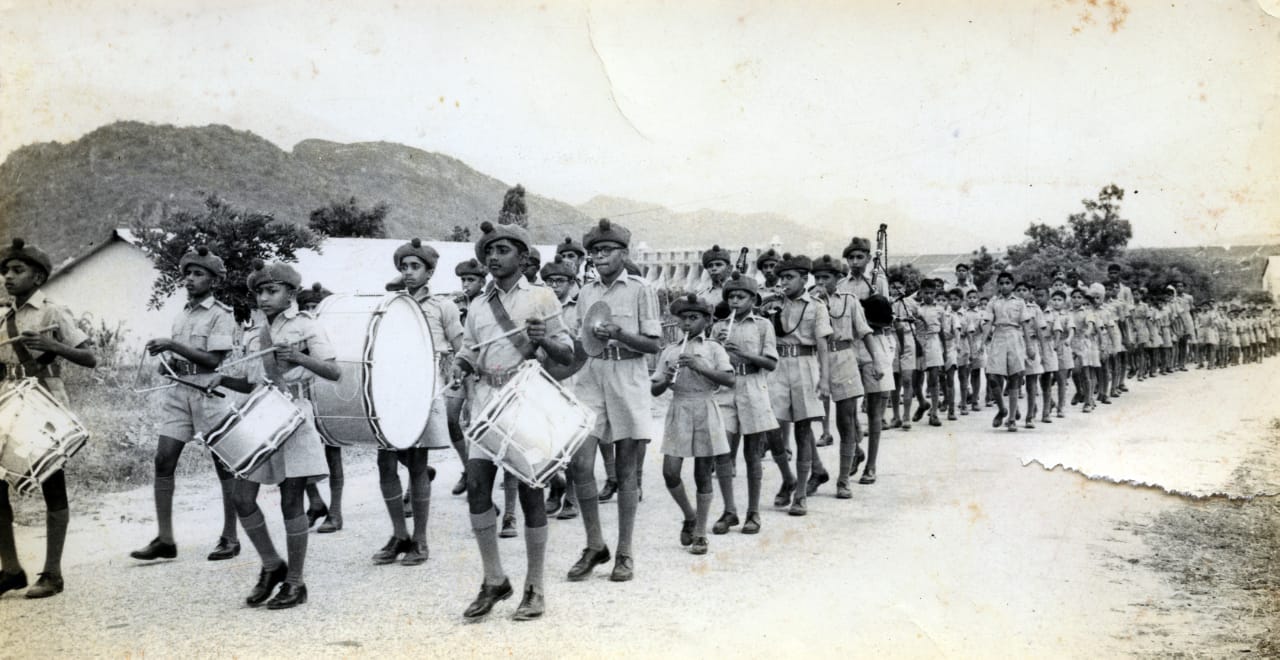
On joining Sainik School Amaravathinagar (TN) at the age of nine, my box had a dozen banians. We had to wear the banian for the morning Physical Training (PT). The aim was to observe the physical development of the body and to ensure that there were no skin infections. This practice of wearing the banian for PT continued on to the National Defence Academy (NDA) and the Indian Military Academy (IMA), till I was commissioned as an officer, after which I started wearing the white T-shirt as was the practice for all officers. The men still wore the faithful banian for PT. I still enjoyed the banian clinging to my skin and ensured that I had it on at all times.

My sahayak (helper) in the regiment was Sepoy Hukum Chand, who served me with at most dedication, love and care. He was my accountant, my personnel assistant, my bodyguard, my radio operator, my buddy in all aspects. He ensured everything for me – from when I got up, my morning tea, my cigarettes, my uniform, my room, my wardrobe, my outfit for the evening party etc. This continued for long seven years until seven year itch erupted – I got married and Hukum Chand refused to be dictated to as to what dress I wore for the evening party. My wife did not approve the suit Hukum Chand had chosen for me to wear that evening as it did not match her saree. My wife won and Hukum Chand lost.

Sepoy Hukum Chand had observed my keenness to wear the banian at all times and every six months he bought a dozen of them from the regimental canteen (he paid for it with my money as he was my accountant and I had no clue about the expenses). On enquiring as to why he bought new banians every six months, he told me that they become yellow on washing repeatedly in brackish water used by the washerman. He used to snip off the shoulder straps and cut open the trunk and it became a shining cloth for him to polish the leather boots and the belt and also the brass badges of rank. He said that the yellow shining-cloth available at the regimental canteen left yellow lint on the OG uniform and the black boots and looked awesome and he had to put in extra effort to clean-up after polishing. Used and many-time washed white banian was best suited for it and one did not have to pay to buy the shining-cloth – What a costly saving?  He had the thin cloth for the leather boots and belt and the thicker ones for the brass.

After five years of postings on staff and various long courses, I returned to the regiment at Sikkim as a Battery Commander. Sepoy Sri Chand was this time assigned as my Sahayak and Hukum Chand was by then promoted to the rank of a Havildar. A few days after I rejoined the unit, Havildar Hukum Chand came to my bunker while I was having my afternoon siesta and started admonishing Sepoy Sri Chand as he had not maintained the Saheb’s bunker as per standard. Hukum Chand started advising Sri Chand about my likes and dislikes, my preference of tea, food, clothes, cigarette, etc. At the end he said “Saheb likes wearing a banian at all times, even while he is sleeping.” That was the time I observed that I was sleeping in my favourite lungi-banian. He added that I preferred wearing the thick banian under the uniform and the thin ones under the civil dress. A preference I never had and may have been cultivated by Hukum Chand to ensure that he had a constant supply of thin and thick cloth for polishing the leather and the brass.

Many a times your preferences and habits are not self-developed, but thrust upon you by the environment.