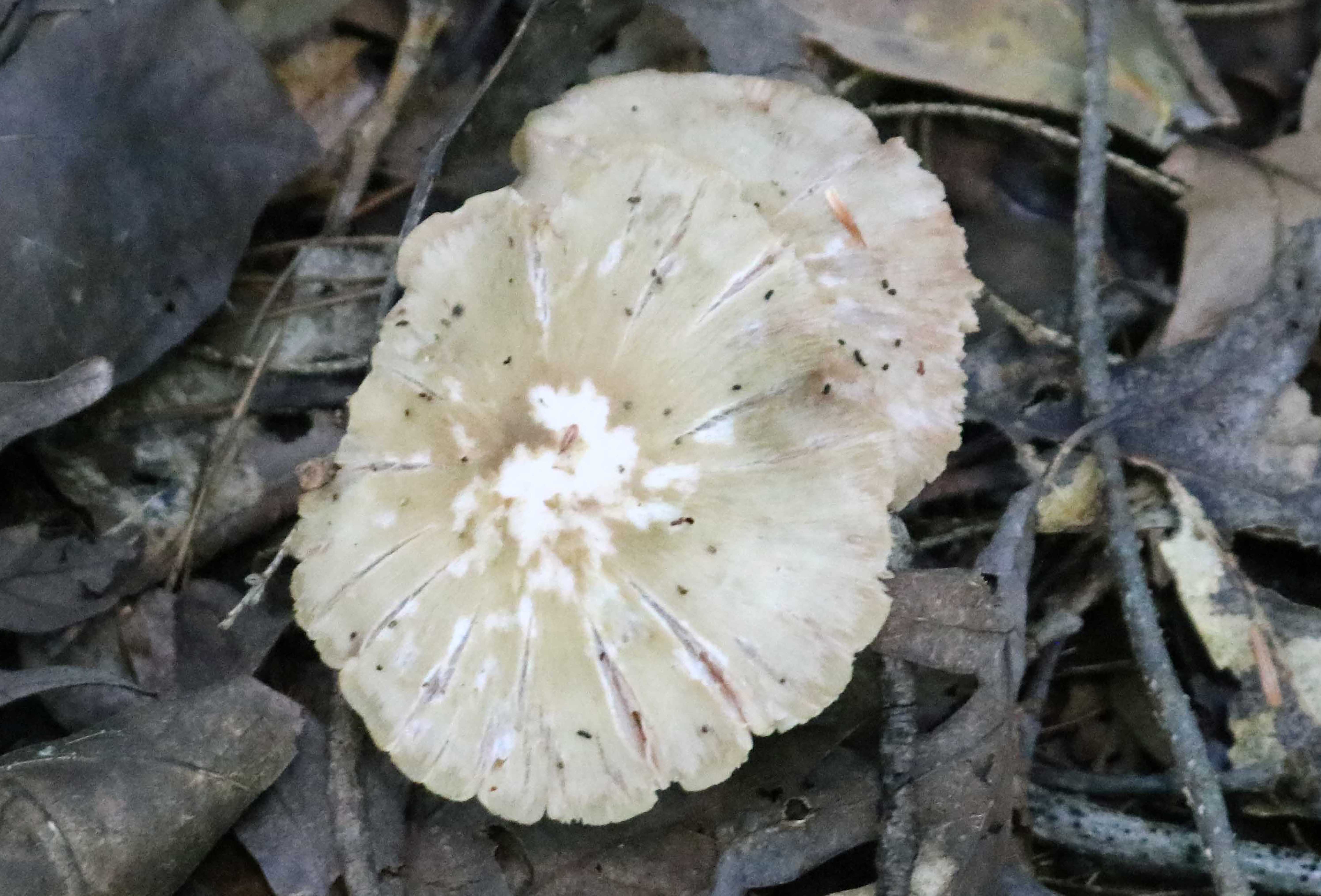
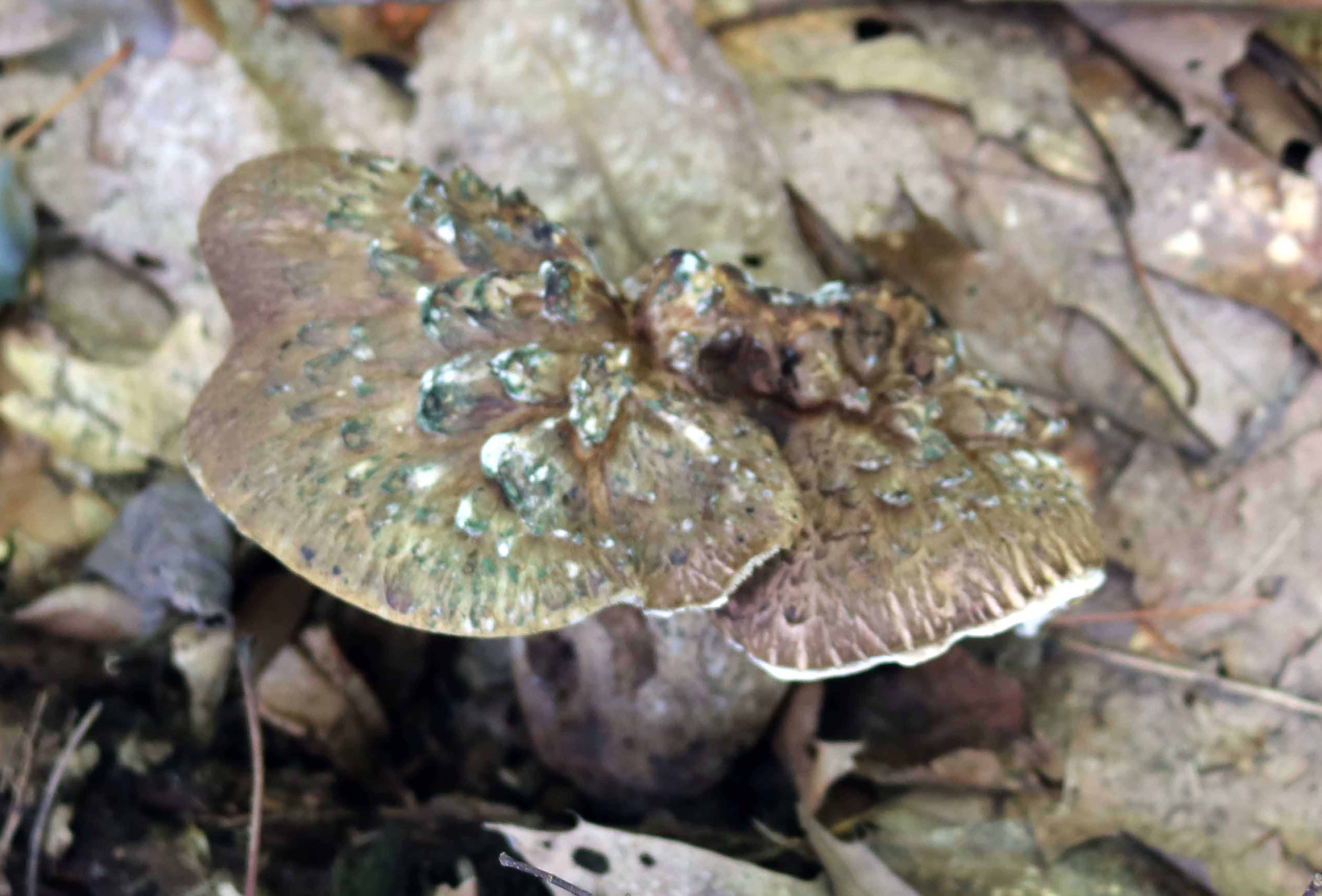
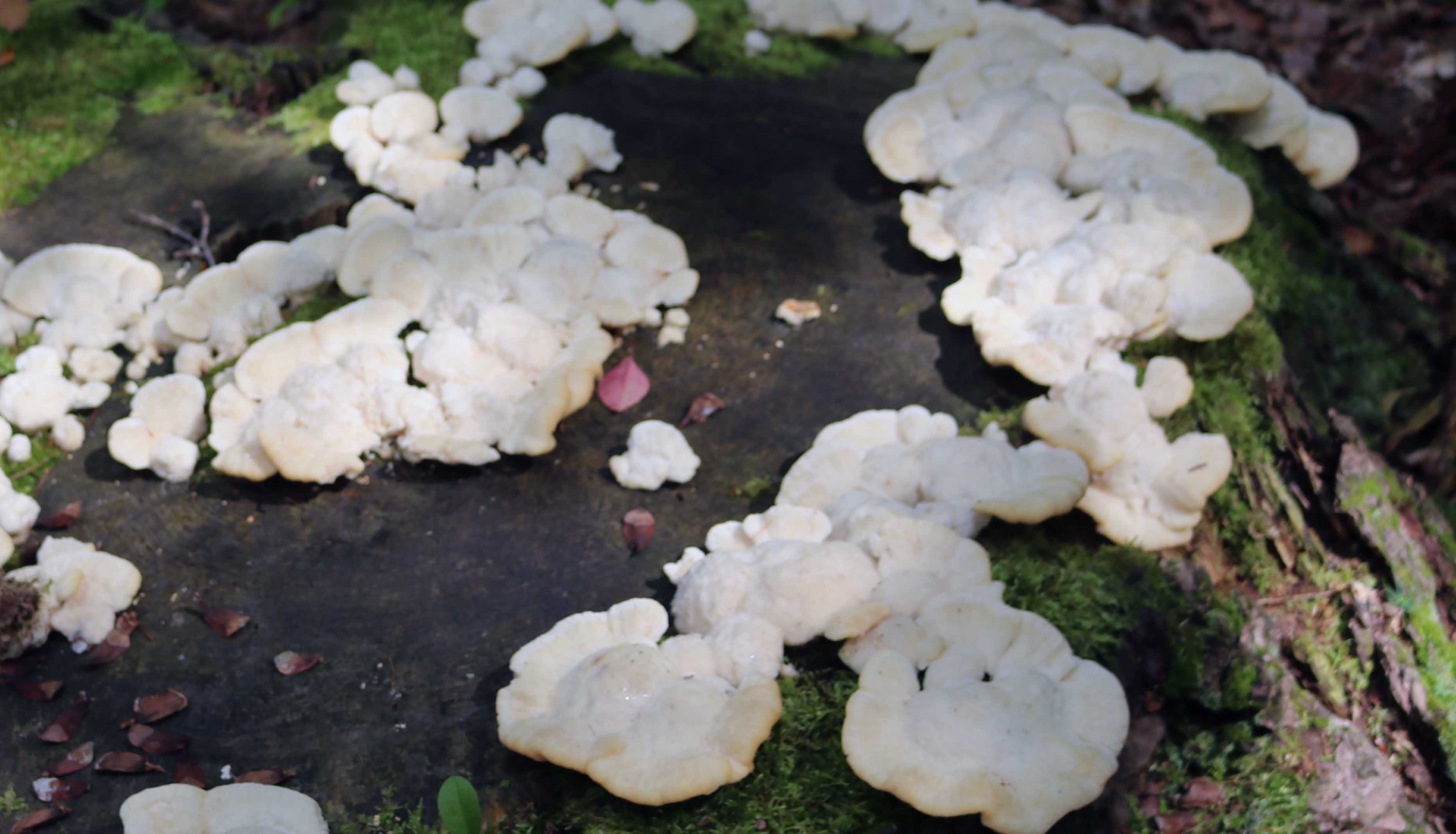
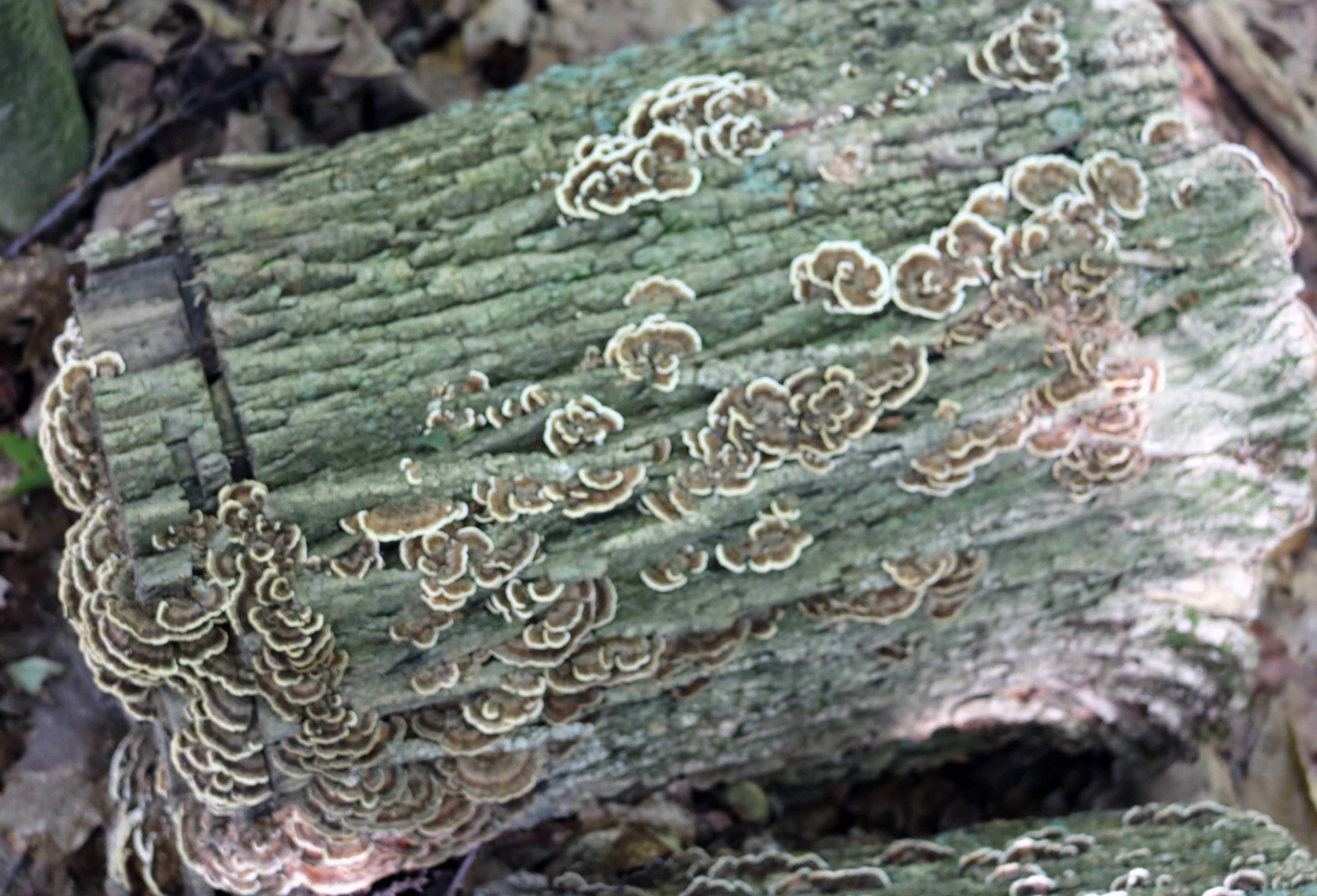
During our trek to the Taughannock Falls in the Finger Lake area of New York State, I came across some very interesting mushrooms. Roughly 75 people in North America are poisoned each year by mushrooms, often from eating a poisonous species that resembles an edible species. The advice to all is Don’t eat any mushroom in the wild! Avoid touching them too!!!
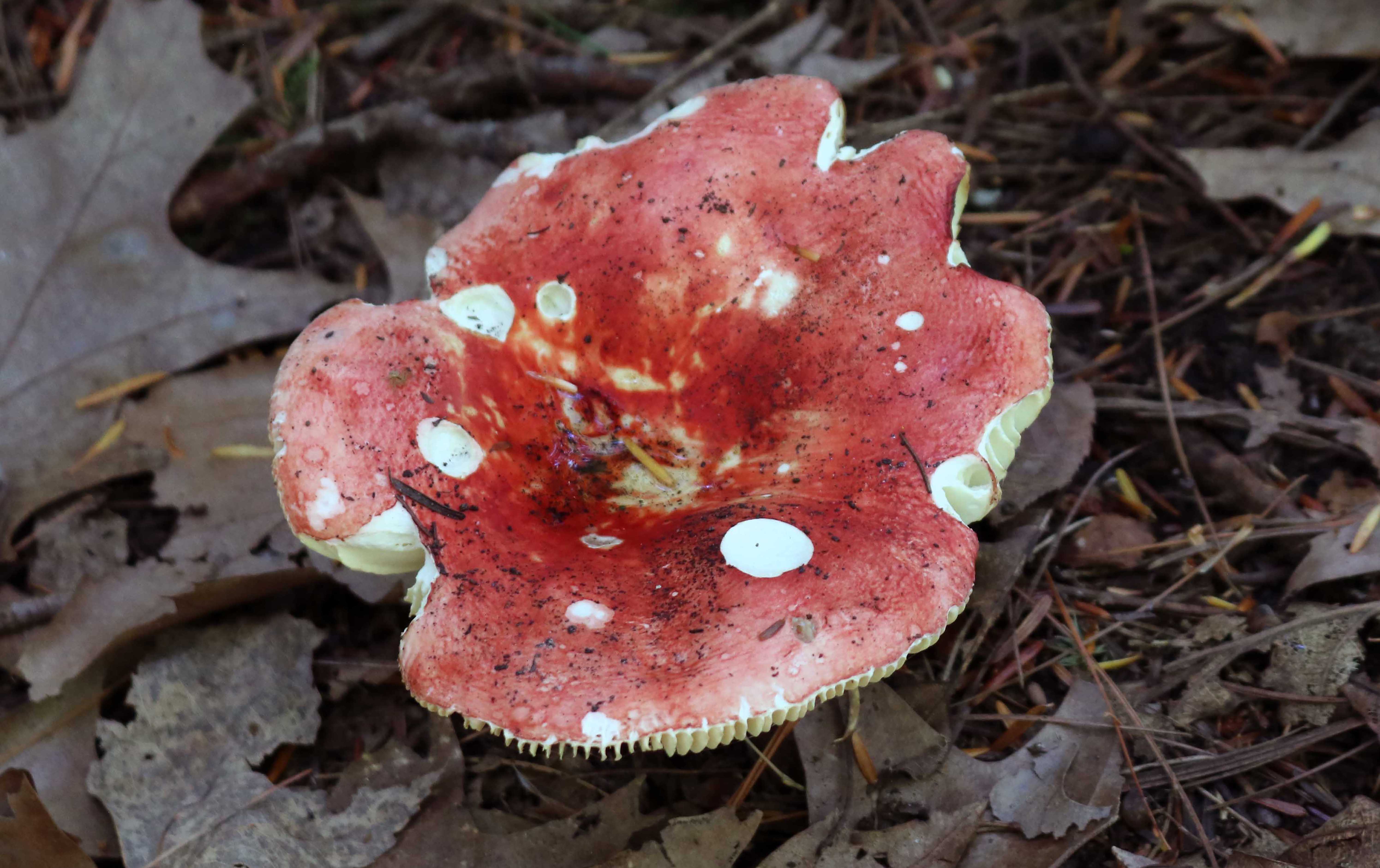
This is Russula cystidiosa, an oak-loving red mushroom with a bright red cap, a white stem, and a creamy to yellowish spore print.
Megacollybia Platyphylla is a medium-sized mushroom that grows mainly on coniferous deadwood. It can be identified by its white spore print, brown to gray-brown cap, and a stem base often attached to white cords.
Albomagister – meaning Mr White in Italian – the name comes from its texture – is a genus of fungi in the family Tricholomataceae and this family has only one species.
Polyporus Squamosus is an edible mushroom and is also known as Pheasants Tail as the pattern on the top of the cap that resembles pheasant’s feathers.
Leucocoprinus is a genus of fungi in the family Agaricaceae, an yellow mushroom with white spore prints.
Powder-puff Bracket (Postia Ptychogaster) is a species of fungus in the family Fomitopsidaceae. The fungus resembles a powdery cushion that grows on stumps and logs of rotting coniferous wood.
Turkey Tail fungus (Trametes versicolor ) grows on dead logs with concentric brown rings akin to a turkey’s tail. The fungus has been used in traditional Chinese medicine for many years to treat pulmonary diseases.
Ramaria Stricta, commonly known as Coral Mushroom. The name Ramaria is derived from Ram– meaning branch –aria meaning furnished with – as these mushrooms are furnished with numerous branches.
Frosted Lichens grows on hardwoods and requires bark with high pH and high moisture holding capacity. The lichen appears to have suffered a dramatic population decline due to air pollution and timber harvest.
Nature alone is antique, and the oldest art a mushroom. – Thomas Carlyle, Scottish essayist, historian, and philosopher
‘Art is contemplation. It is the pleasure of the mind which searches into nature and which there divines the spirit of which nature herself is animated.’ –Auguste Rodin (French sculptor)
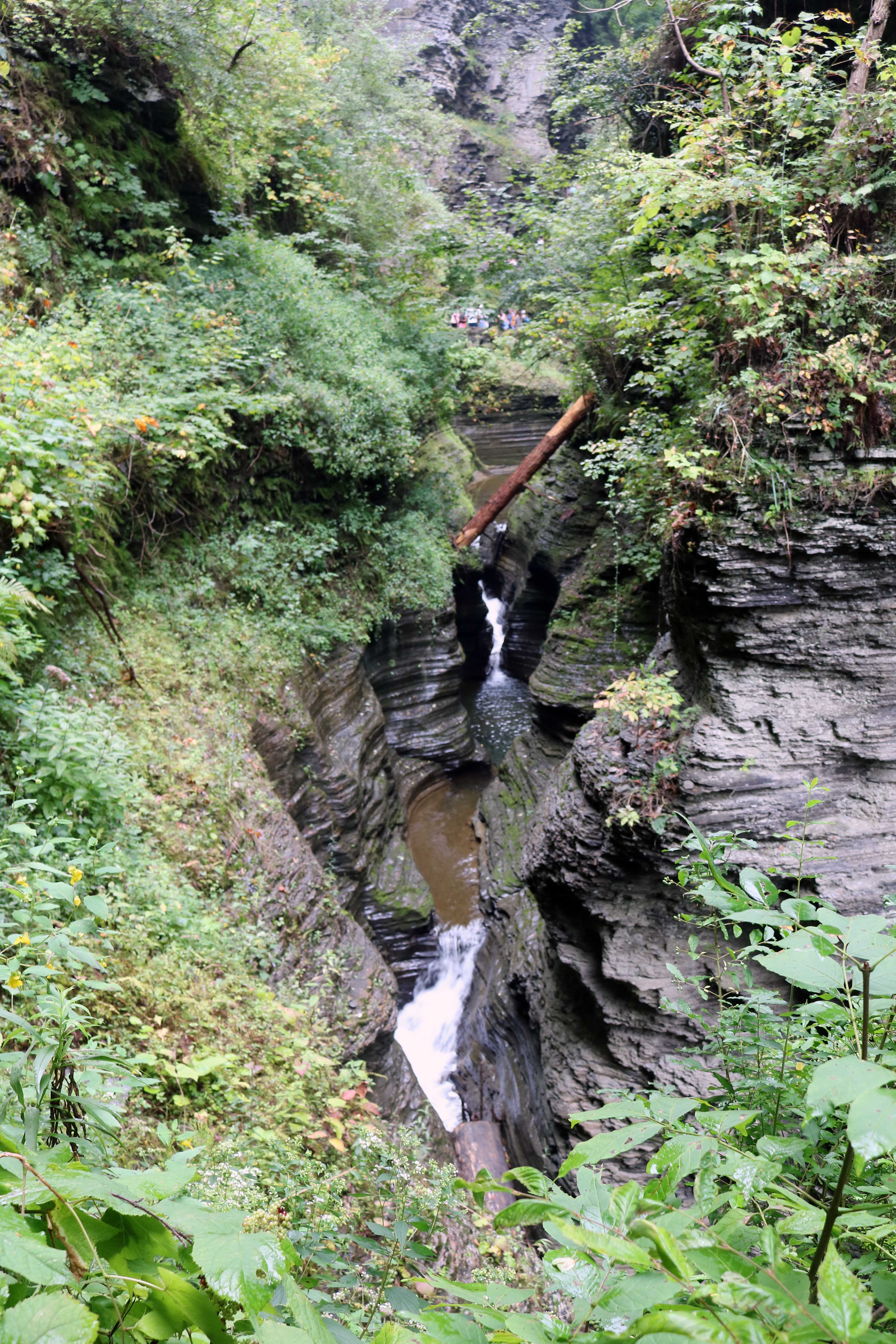
The trail through the gorges at Finger Lake area is a display of nature’s work of art of stone sculpting by water, snow, wind, natural fractures in the rock, type of bedrock, and winter climate.
In addition to the carving of the gorge by water, much of the erosive forces fractured the rock along joints and natural cracksWater filled these cracks and expanded when it froze. This pried the rock apart, creating massive gorges over thousands of years.
Beginning about two million years ago, glacial periods blanketed New York state in thick Laurentide Ice Sheet . The ice advanced and melted in cycles. The most recent glacial period took place about 21,000 years ago during the Wisconsin Era. This was when ice sculpted the region’s lakes, hills, and other landscape features. The gorges began to flow into the deep trough of Seneca Lake and has been shaping the gorges ever since. While we do not know its exact depth, scientists estimate the Laurentide Ice Sheet was a mile thick.
The long and narrow shape of the gorges is due to the ancient rivers, widened and deepened by glaciers flowing south. Before receding, the glaciers dammed the flow of water with debris, creating the lakes we have today.
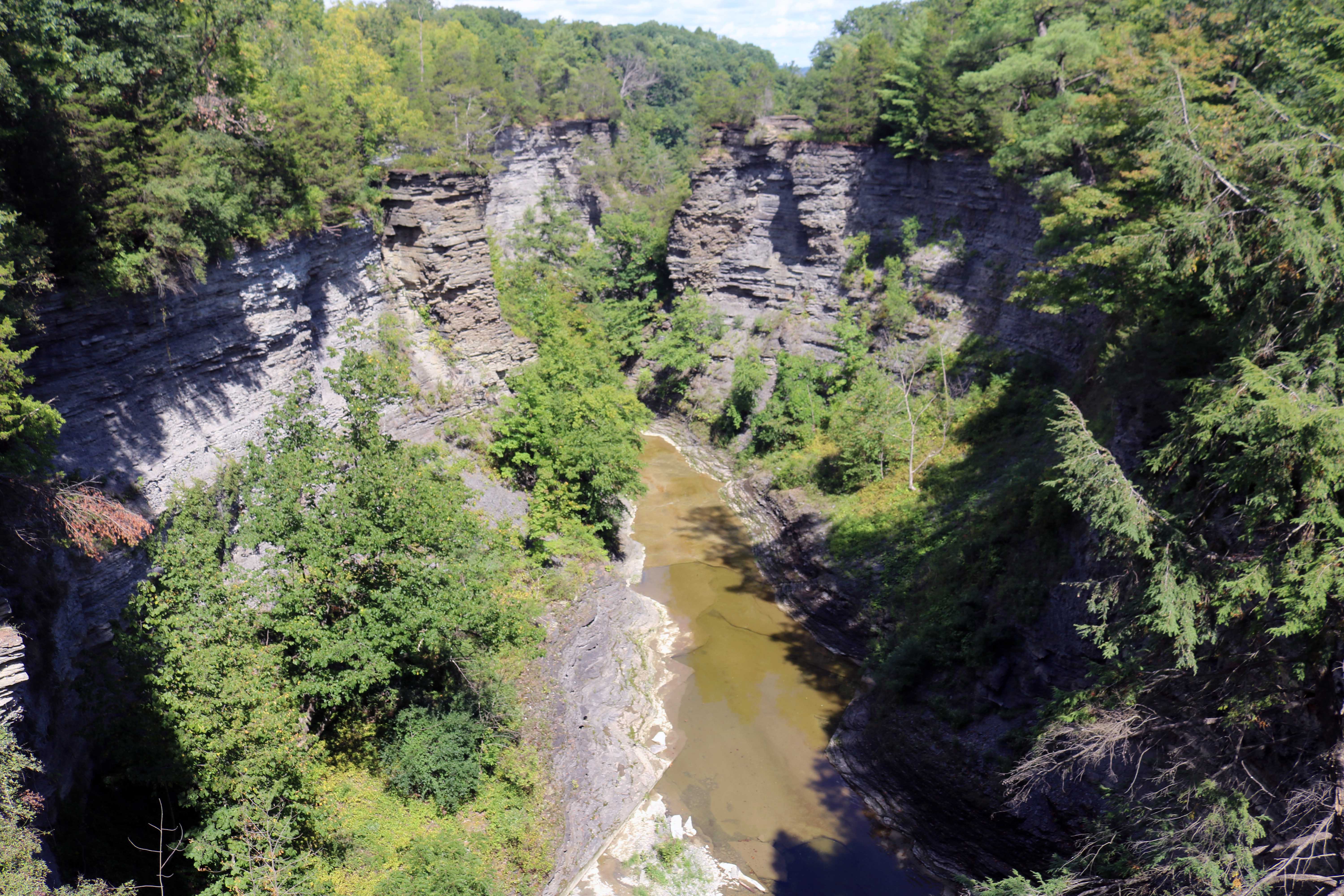
Look at the rim of the gorge. Twelve thousand Years ago the river flowed up there. The gorge did not exist. and this chasm was full of solid rock. Since then, the creek has gradually eroded into a canyon.
Since then, thousands of floods have cut the gorge, seeping away fallen rocks, tumbling boulders and prying slabs from stream-bed. Each passing torrent deposited mud, sand and stones at the bottom of the gorge.
Rocks loosened by ice eventually fell from the cliffs, gradually widening the gorge. Over time, floods have washed the rocks of the gorge into the southern end of gorge.
These Fractures tell a story. Look at the cracks, called joints, that run up the walls. They begin from the creek-bed and go up the wall. These cracks are from the great continental collision that pushed up the Appalachian Mountains in the Finger Lakes region.
The gorge pours over light gray limestone and weaker, dark shale beneath it. As the shale erodes, limestone blocks break off, causing the waterfall to move slowly upstream. The falls in the gorges have eroded nearly a mile into the hillside since the end of the Ice Age.
The waterfalls in the gorges have has crated many natural pools due to erosion.
A sea covered much of New York State during the Devonian Period, long before the dinosaurs. The ancient Acadian Mountains slowly eroded to become sand, silt, and clay that rivers carried to the sea, eventually filling it in. Millions of years of pressure from overlying material and natural cementing eventually hardened the sediments into rocks.
This area formed the bottom of an ancient sea. Marine invertebrates, including species of corals, which once lived here. These rocks were formed at the bottom of an ancient sea 380 million years ago.
The gorge floor is made of light-gray limestone that once was lime mud made from the skeletons and shells of algae and other marine organisms. Above the limestone, the crumbly rock on the gorge’s walls is called shale. This shale was clay and silt that settled on top of the lime mud and eventually hardened into rock.
These pits are formed by rainwater which is naturally a little acidic. The water in the puddles dissolved the limestone due to chemical weathering.
Physical weathering occurs on the gorge walls when freezing splits shale into thin fragments that eventually fall. It is for the observers to decipher the art from their perspective.
‘Look deep into nature, and then you will understand everything better.’ – Albert Einstein
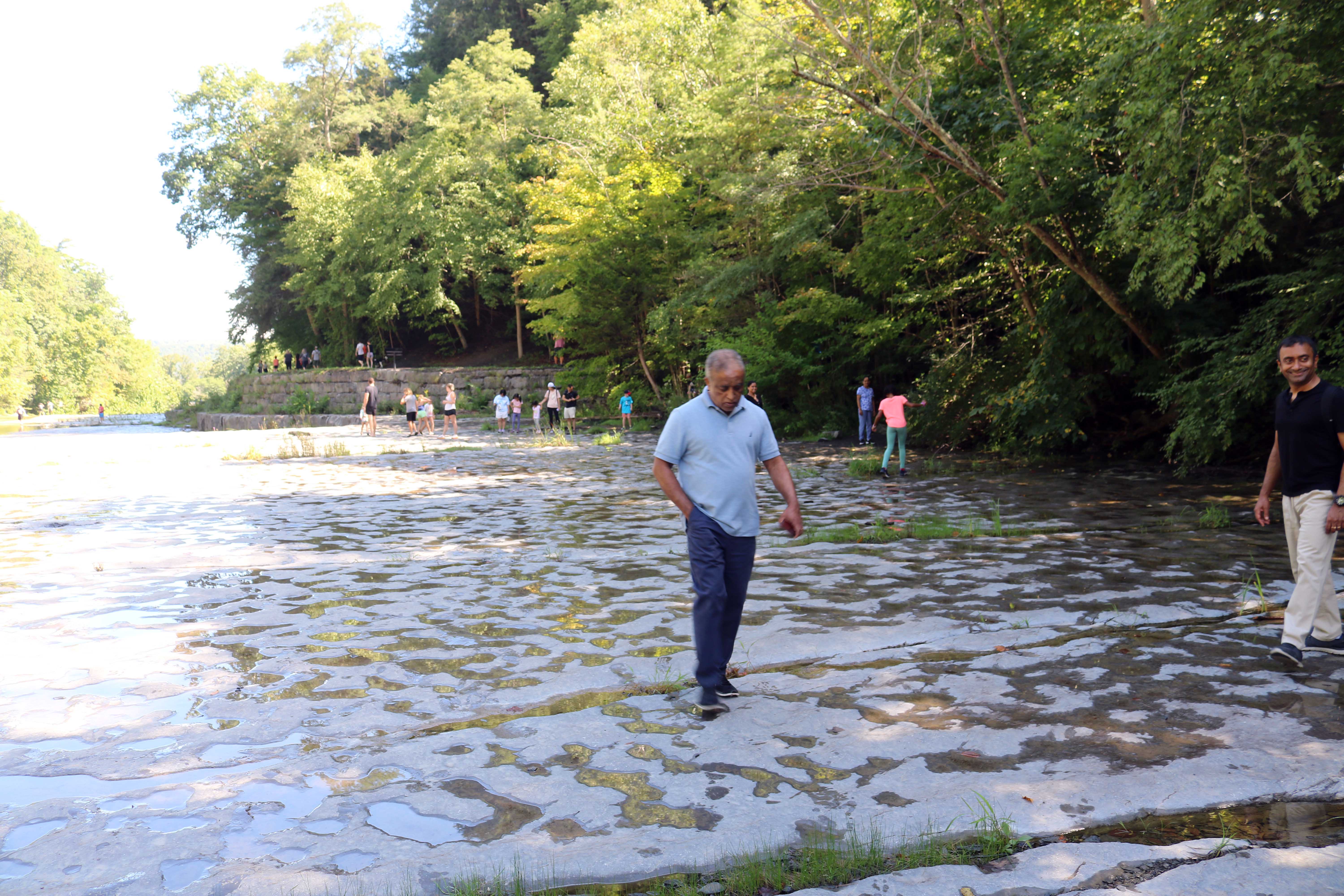
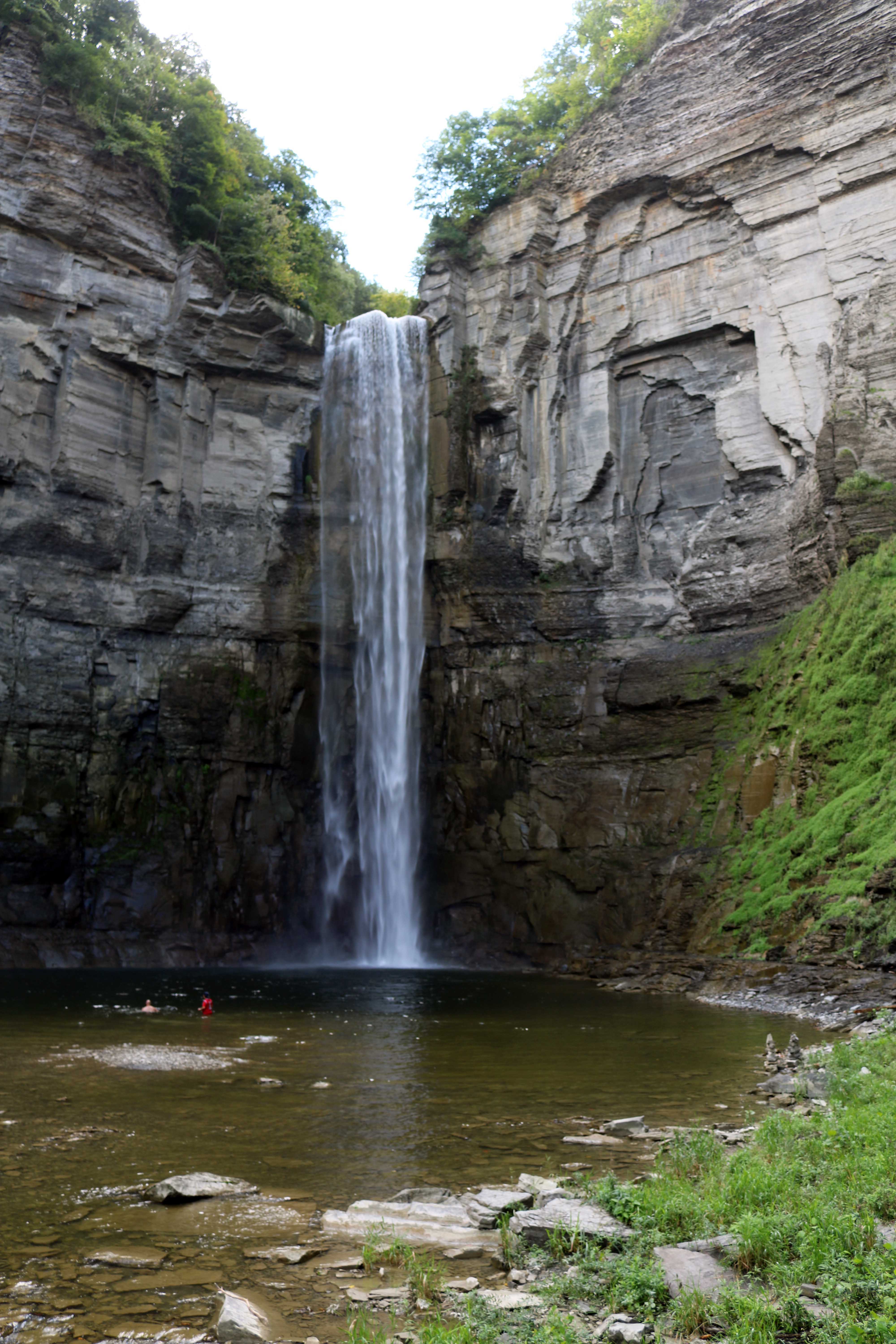
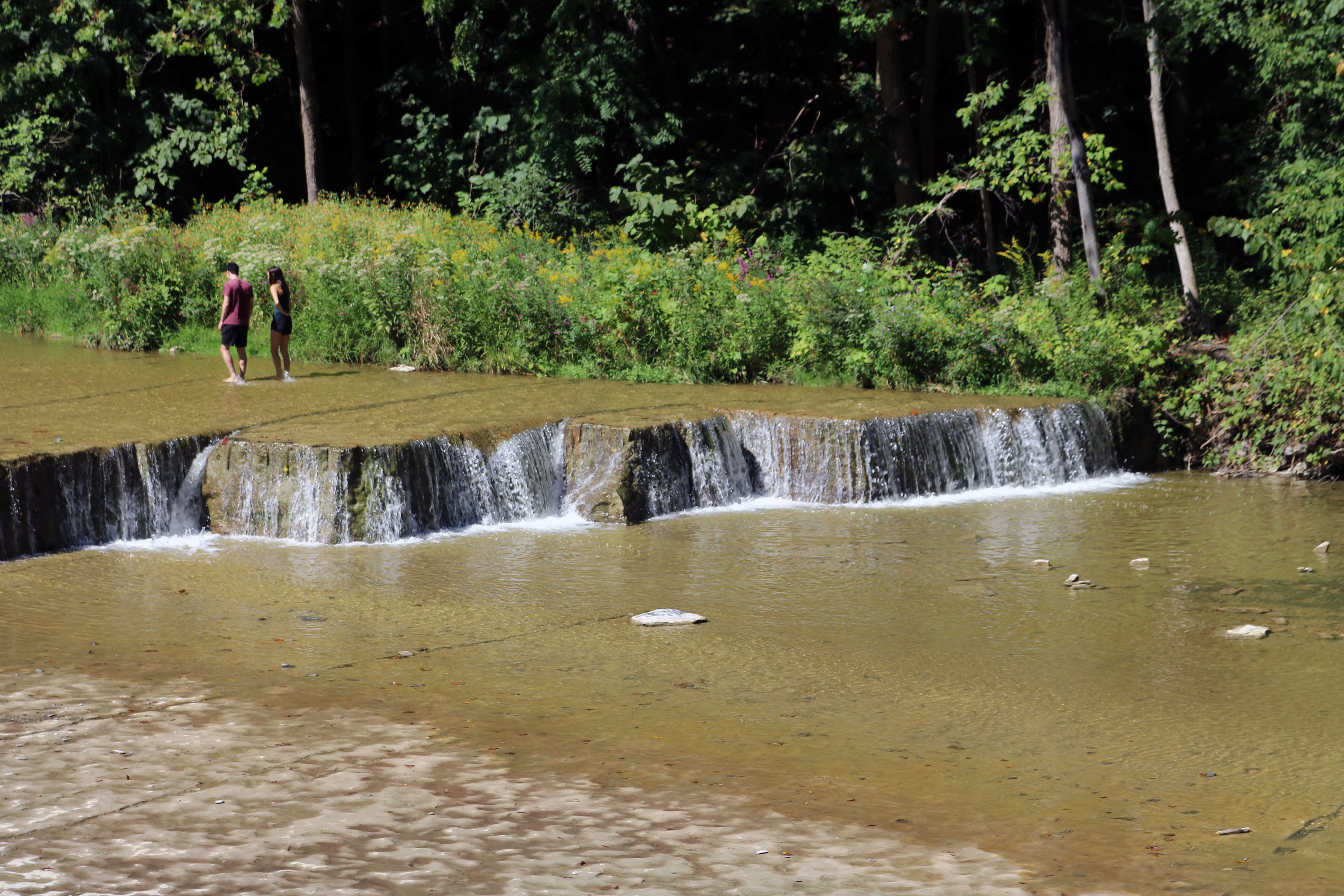
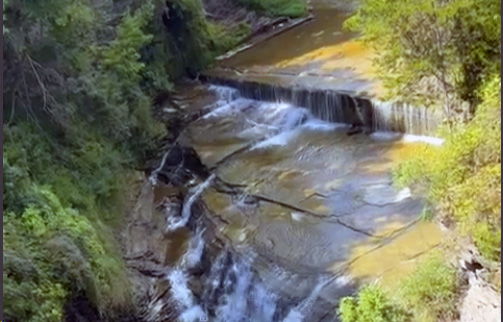
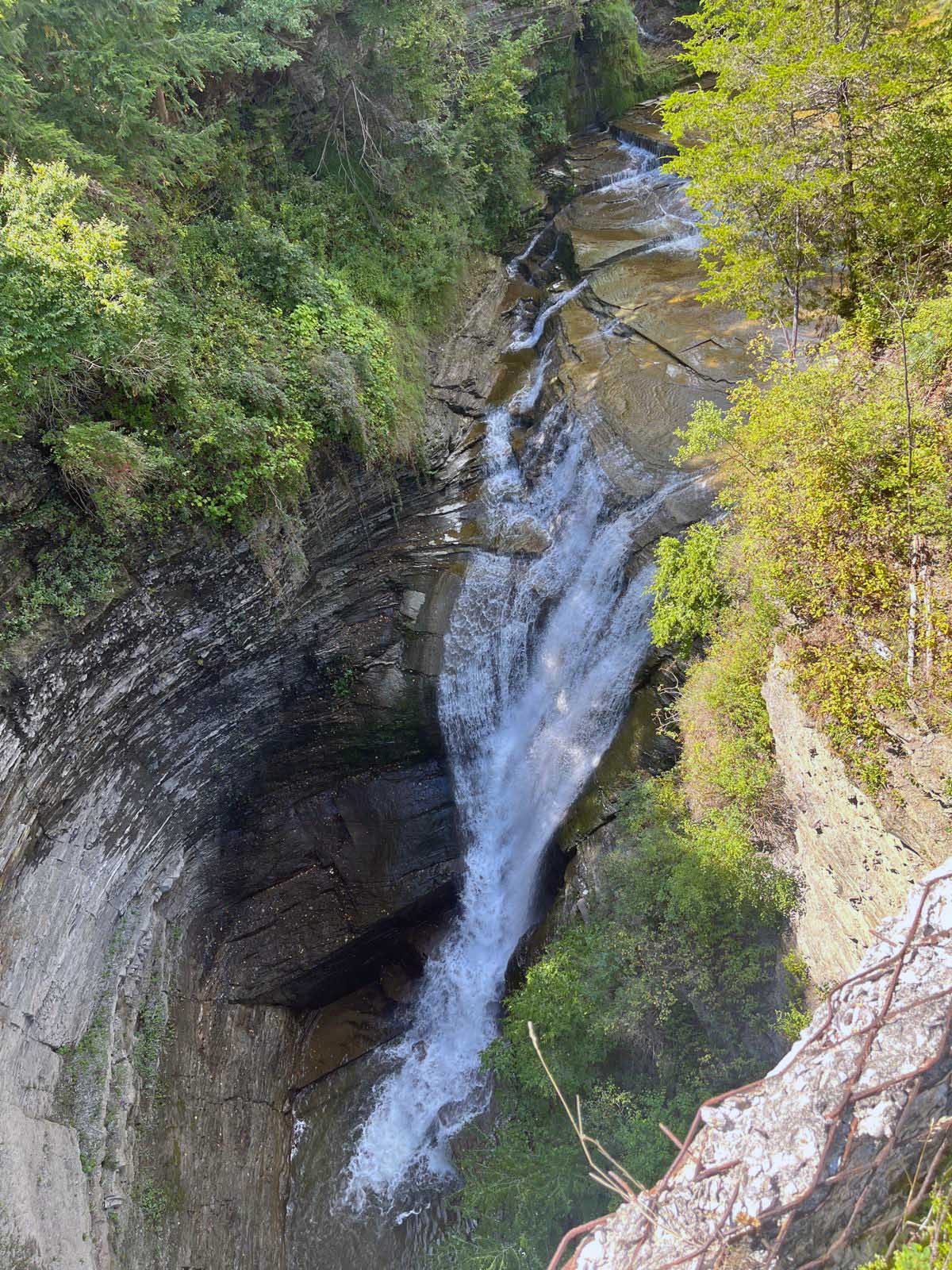
On 01 September 2024, we visited the Taughannock Falls in the Finger Lake area of New York State. The falls roars down a hanging valley, drawing thousands of visitors who hike the wide winding canyon to the viewing area at its base. In summer, it dries considerably, offering visitors a less wet experience walking up the creek bed. Behold! This fall is 215 feet – about 33 ft higher than Niagara Falls.
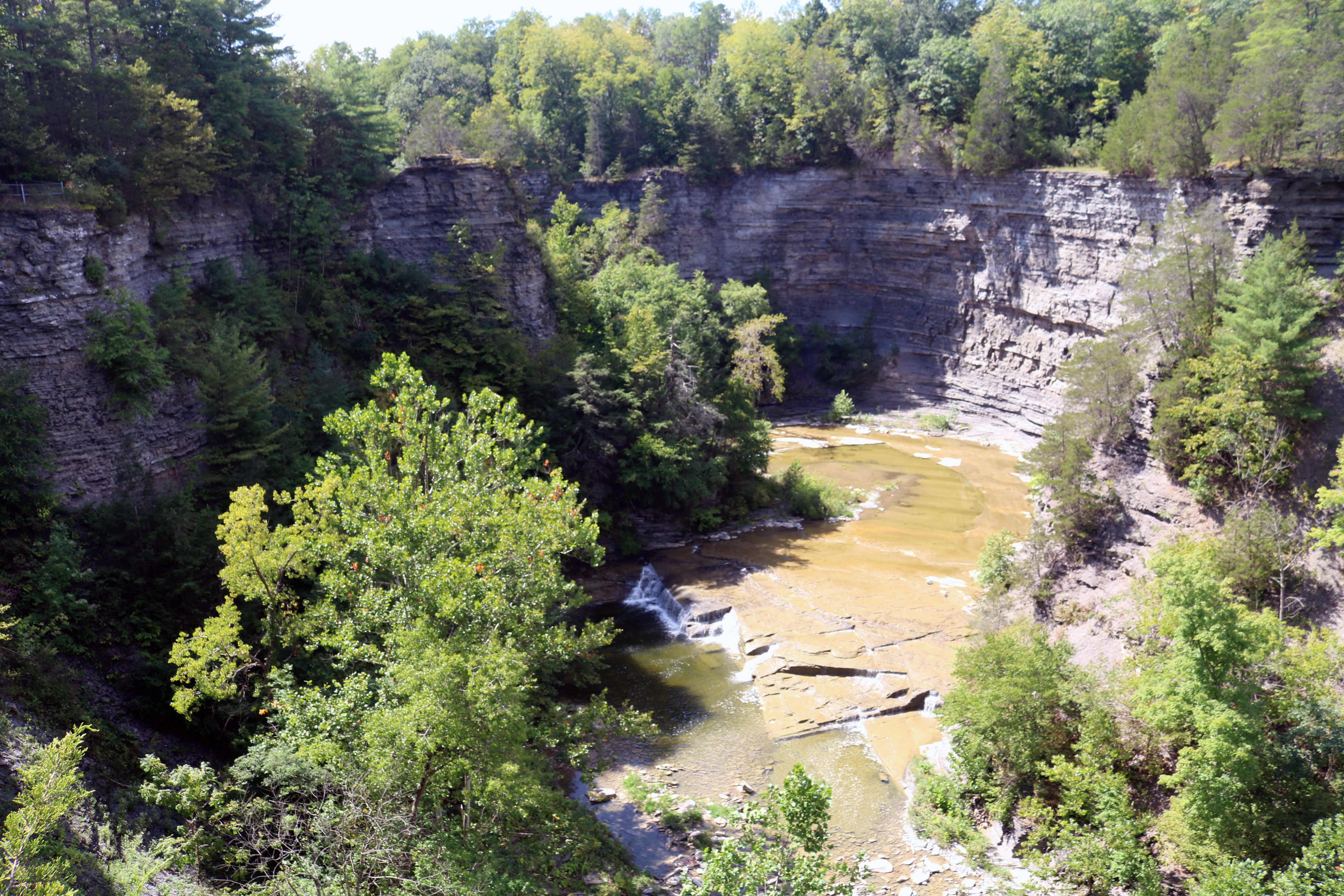
Erosion from water and ice has carved out 400 ft high cliffs over thousands of years. The pool at the base of the falls is deep and littered with gigantic boulders from rock falls akin to the Niagara Falls. This area has recorded many rockfalls which killed and maimed few tourists. This canyon is most active as far as erosion. It is also one of the most beautiful gorges filled with waterfalls.
The name Taughannock comes from Native American language meaning The Great Falls of the Woods. The Gorge Trail runs from the main park entrance, past the Lower Falls, and along the gorge all the way to Taughannock Falls.
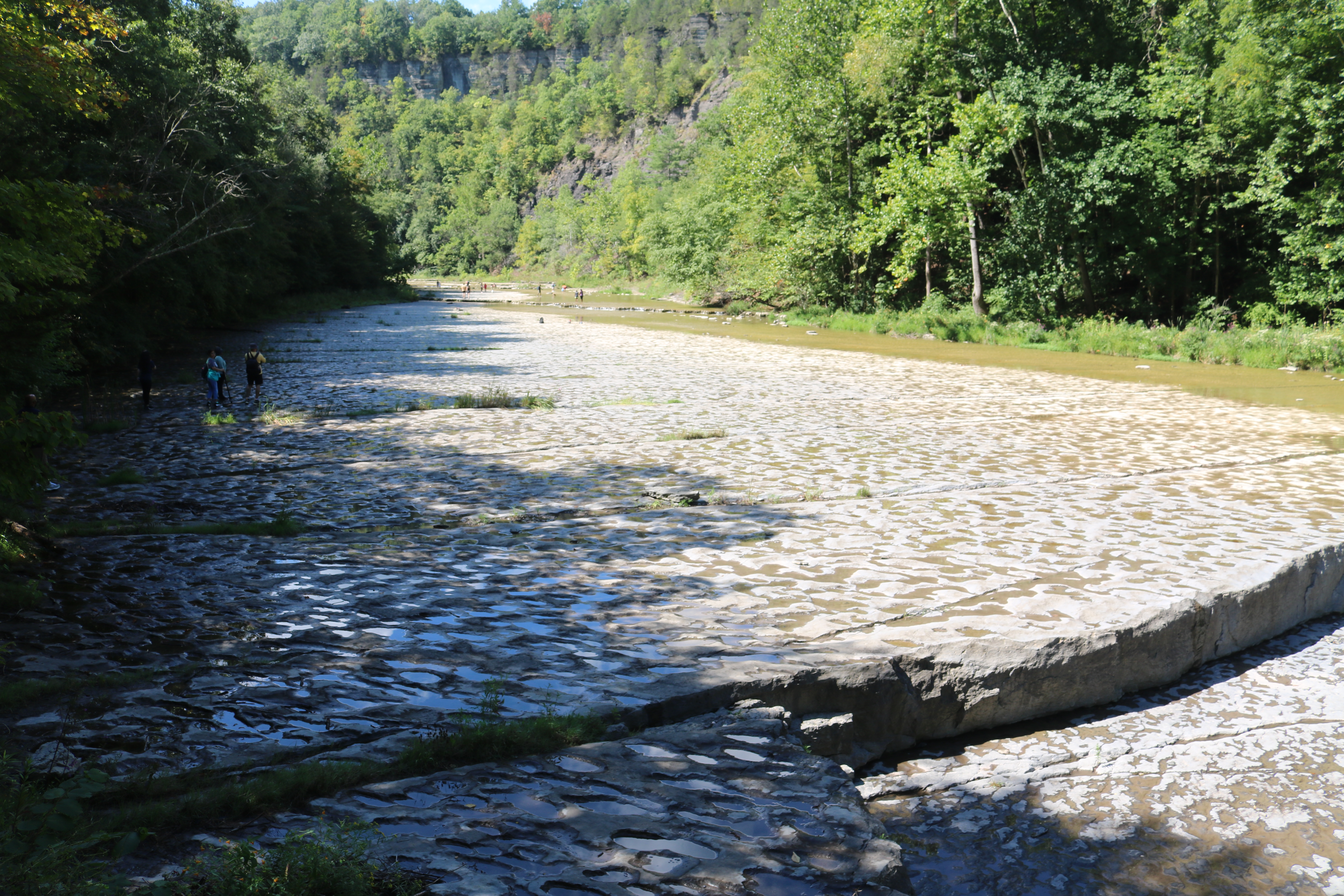
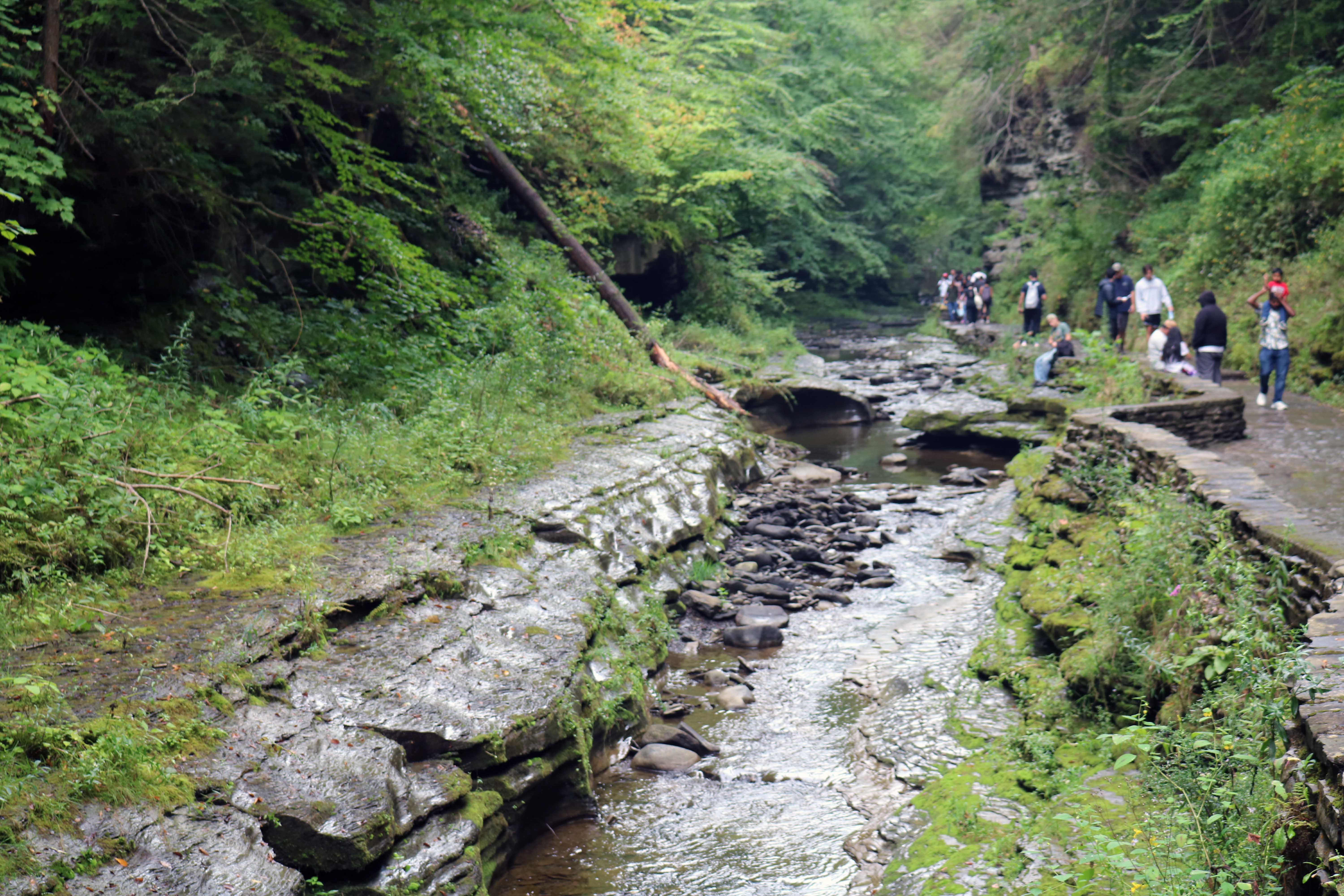
When we visited the area at the end of summer, the water level was low, and it facilitated us to walk in the creek bed. Throughout the trail, there are many information boards placed, some about the history, geology and the landscape.
As we entered the park, the lower falls -19 feet tall falls on average stretch to about 50 feet in width, that tumble over a blocky ledge – welcomed us. During floods, the creek will swell to cover the entire creek – over 100 feet wide.
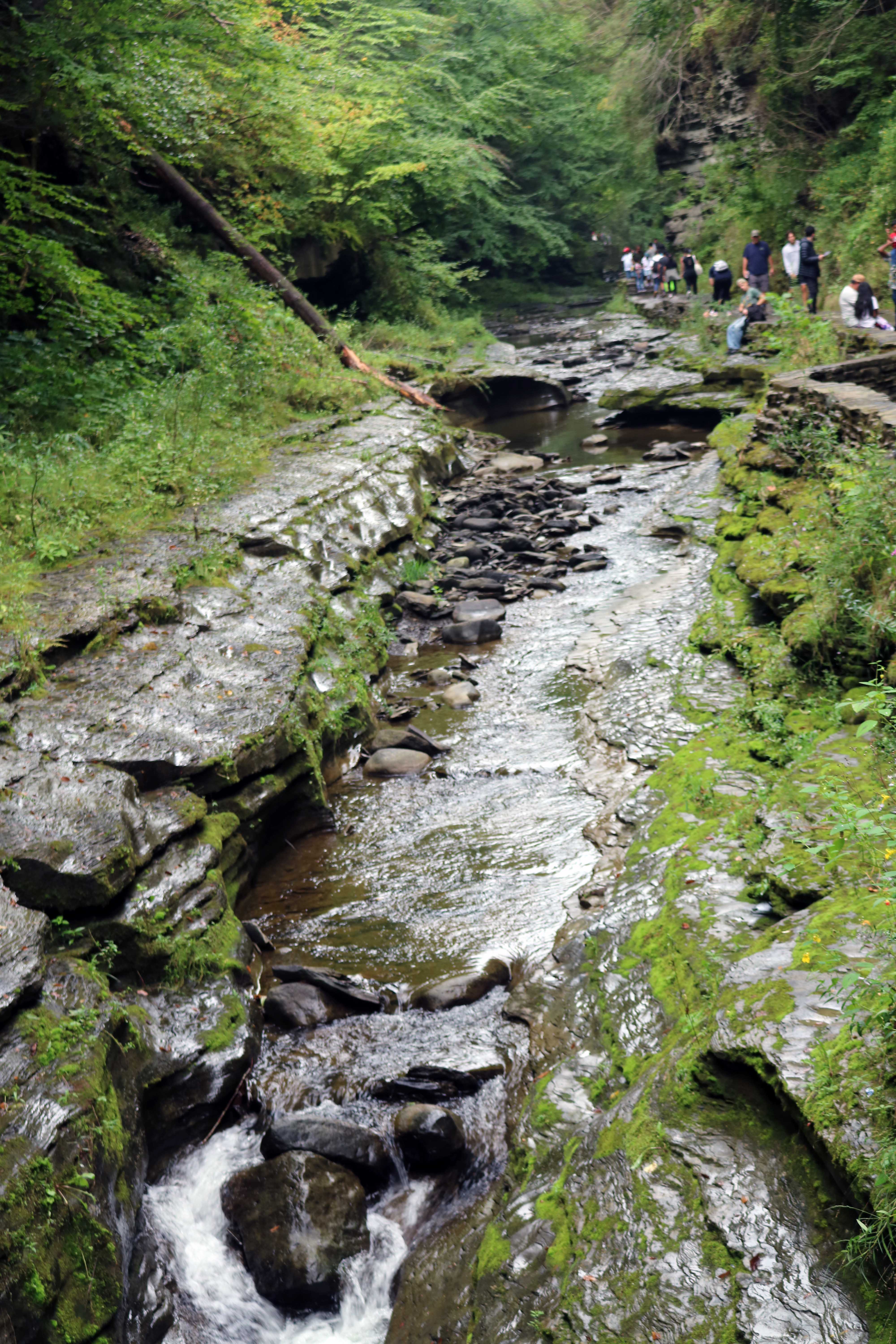
We began our hike along the ripple-like pattern on the limestone creek bed which was once an ocean bed. It features symmetrical cracks in the rock, sometimes at very distinct 90-degree angles. The ripple pattern in this area is the result of erosion from acidic rains and abrasive effect of flowing sand. Acidic rain puddles in the creek bed dissolves the limestone and the sand particles will swirl around in these dimples, further carving them out over millions of years.
We walked through the gorge trail, and it culminated about 300 ft from the falls, a perfect distance for photography.
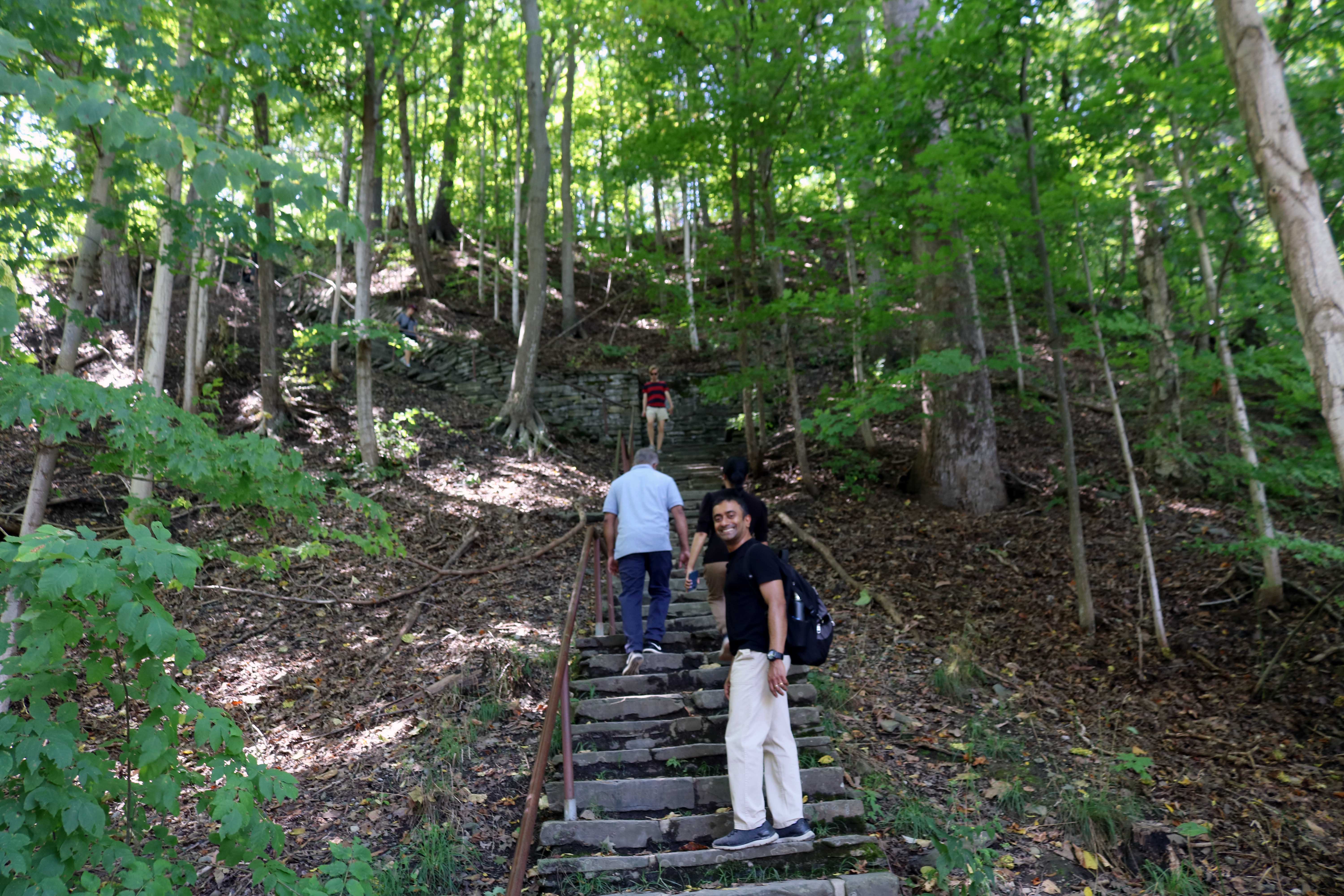
Photography session completed, we set out we commenced our trek to the Upper Taughannock Falls.
As we trekked ahead to the Upper Taughannock Falls, we entered the V-shaped notch in the streambed.
Over the years numerous rock falls have occurred at the falls e. The cliffs surrounding the falls are quite unstable and is prone to rockfalls.
Upper Taughannock Falls is significant in stature, and especially unique in appearance. It is overshadowed and overlooked by its much larger downstream sibling. The Upper Falls marks the point where the creek plunges into Taughannock Gorge, which is considerably narrower here than at the larger falls downstream.
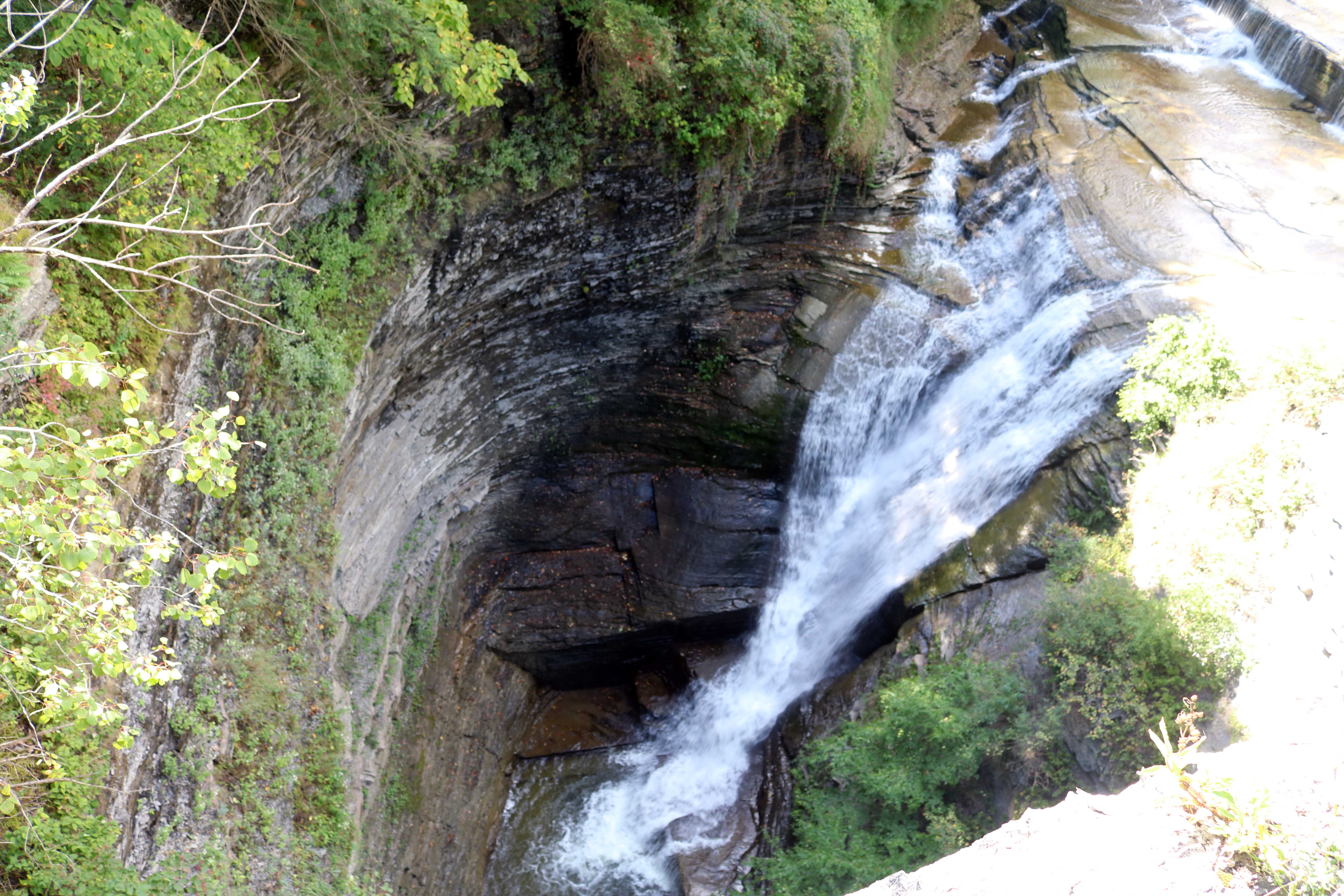
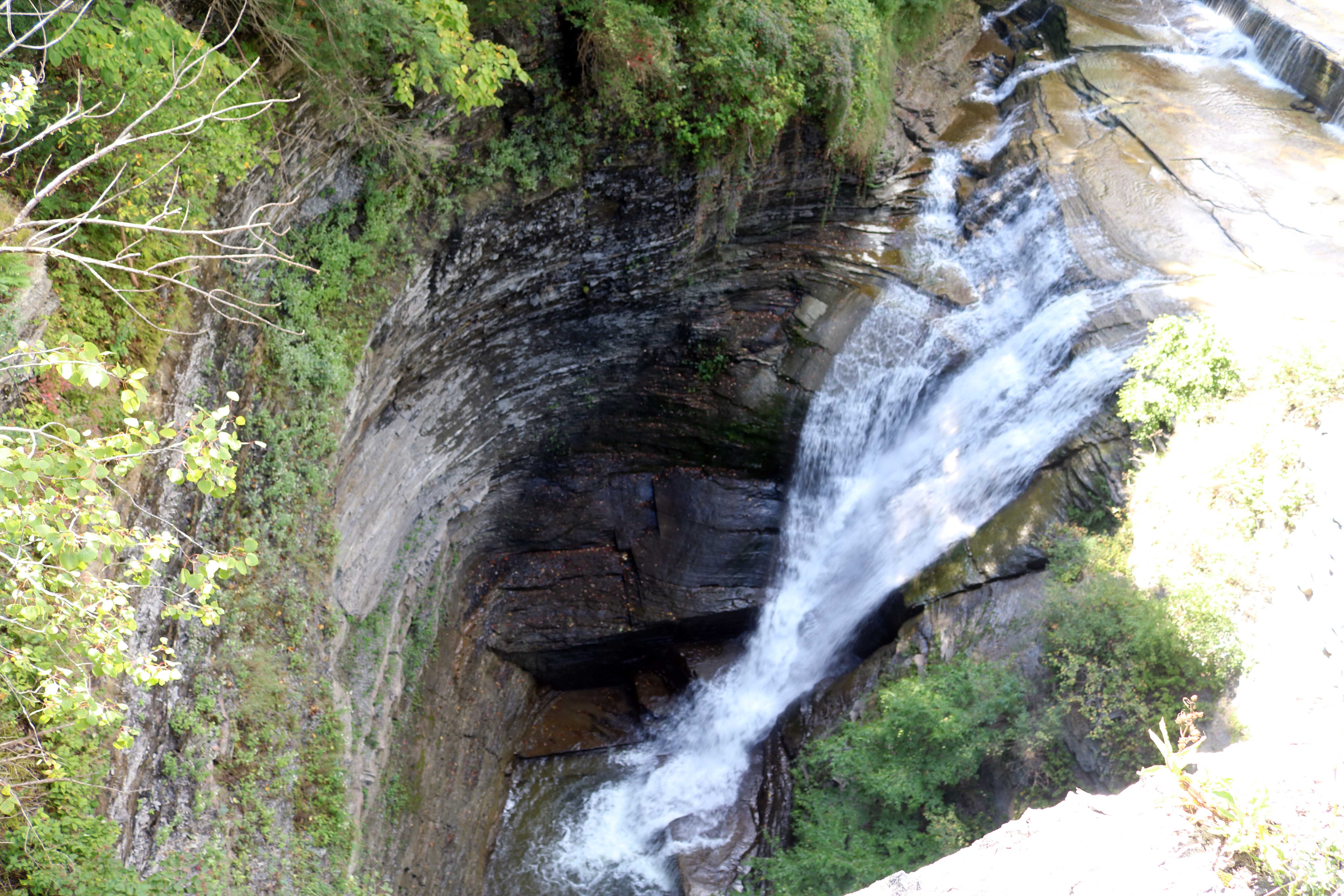
The upper falls drop 58 feet where the creek transitions from sheeting across a broad smooth bedrock shelf, plunging over a small 3-foot ledge which is so uniform that it looks like a dam.
The water then funnels into a booming horsetail type fall, transitioning from a broader breadth at its top to a narrow plunge of water at its base. As we viewed this fall from a bridge looking nearly straight down, it appeared much taller. Thus culminated our long-weekend of adventure.
“I go to nature to be soothed and healed, and to have my senses put in order.” – John Burroughs – American naturalist and nature essayist.
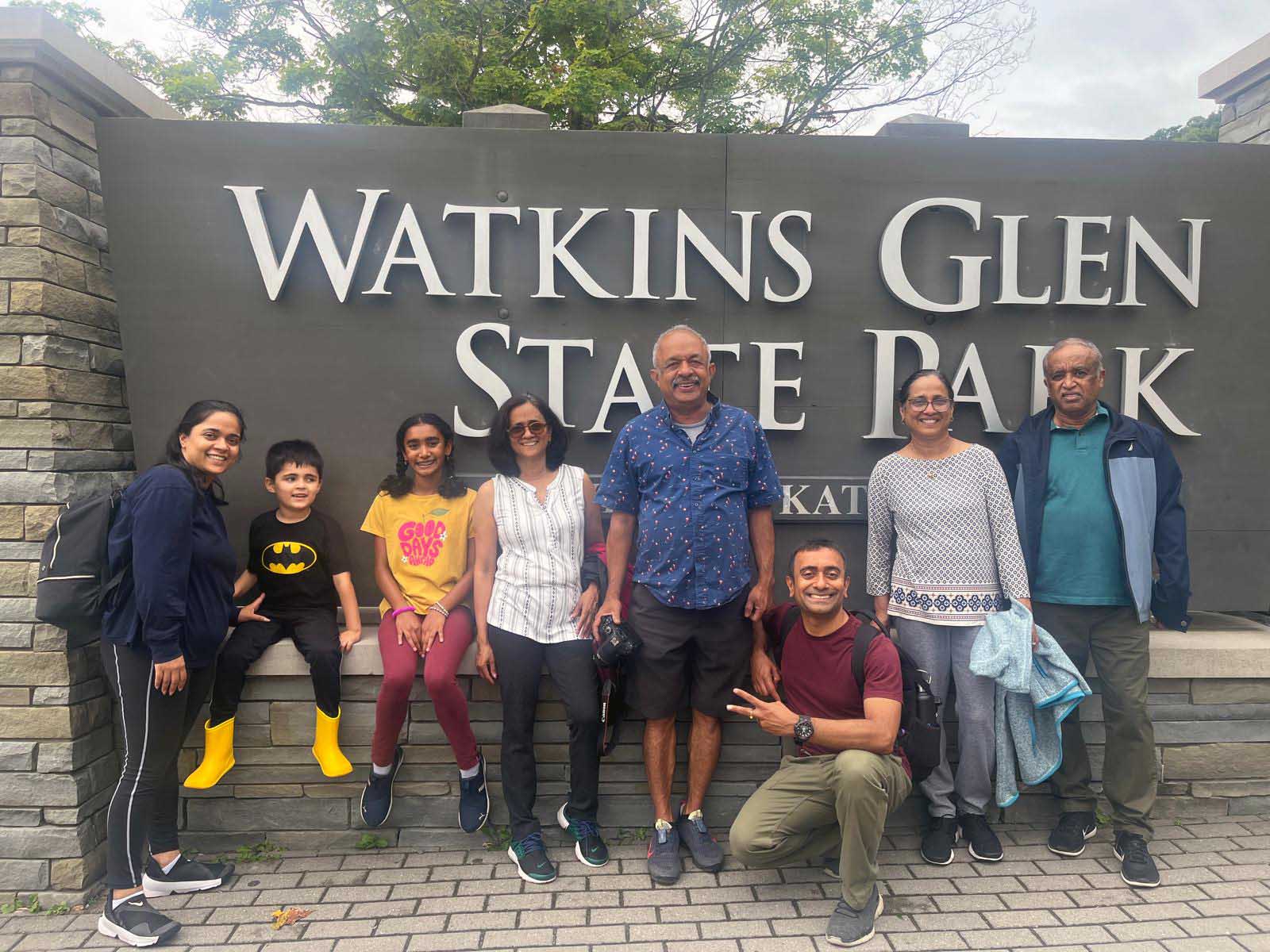
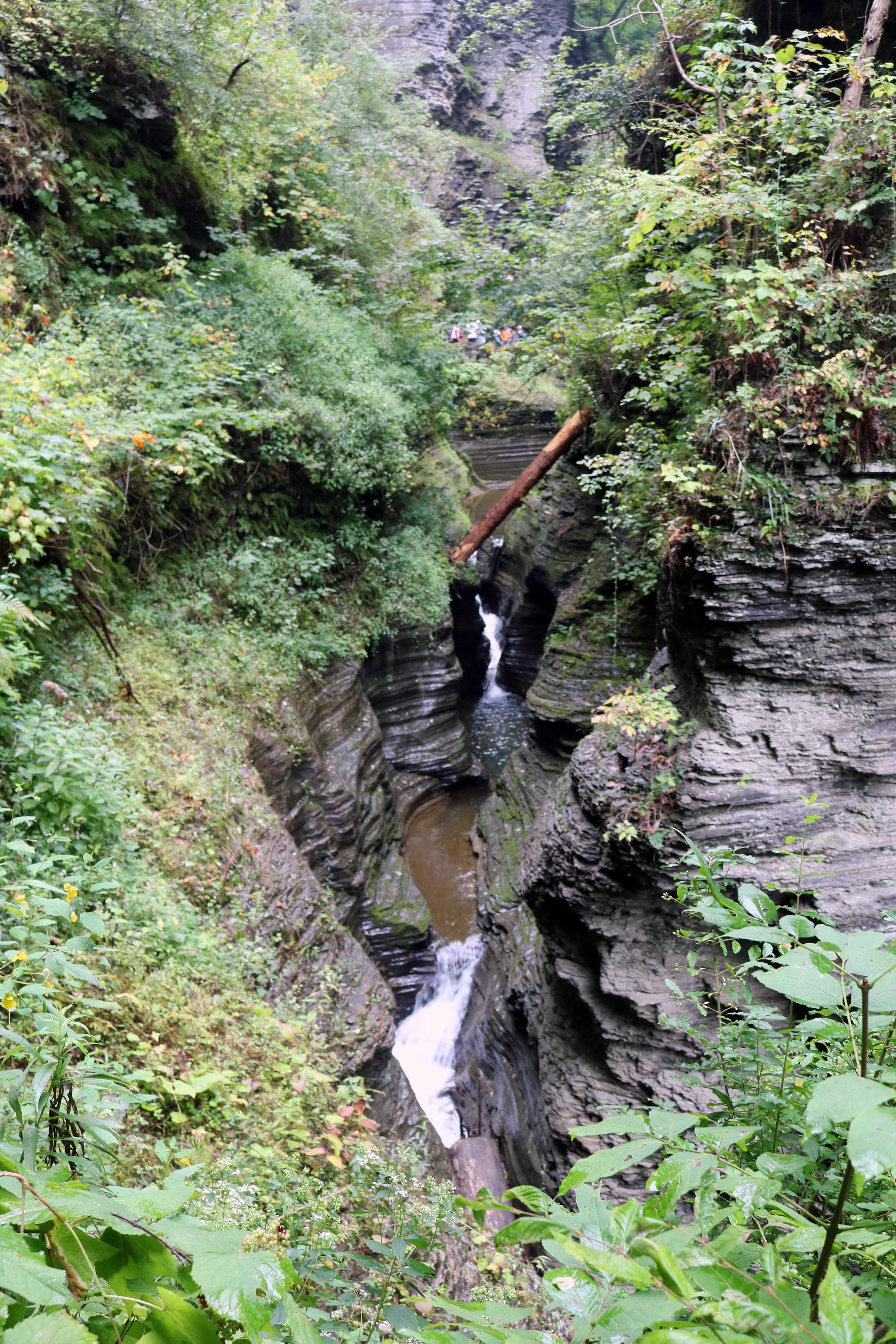
For the long weekend of September 2024, we organised a family trip to Watkins Glen State Park on Finger Lakes in New York State.
The park with stunning waterfalls, dramatic flumes, and picturesque potholes combine to make a gorgeous waterscape. The park’s landscape encompasses stone staircases, arched bridges, and winding tunnels that weave up and through the scenic gorge.
About 400 million years ago (Devonian Period,) this area was covered by a shallow sea. The erosion of the nearby Arcadian Mountain Range filled this sea with layers of sand and silt. This led to the formation of the sandstone and shale bedrock that characterises the Finger Lakes Region.
300 million years ago (Permian Period,) the supercontinent Pangaea was formed causing uplift in the northeast of what is now North America. The inland seas that once covered the area become land. Streams began to cut their way through the newly uplifted bedrock.
2.5 million to 12,000 years ago (Pleistocene Epoch,) deep valleys were cut along what is now the Finger Lakes and Great Lakes. The global climate began to cool, marked by mass extinctions, repeated cycles of glaciations and melt (probably more than 40 times). The five Great Lakes and Finger Lakes are remnants of those massive glacial lakes.
12,000 years ago to date (Holocene Epoch,) the massive lakes that engulfed the present-day Finger Lakes receded. They left large basins and valleys behind, exposing enormous sheer cliffs along its southern half. Some of these cliffs still hang directly over the lake today. Others have receded away from the lake due to erosion.
Watkins Glen State Park comprises of a series of waterfalls and gorges that are too beautiful to be missed. A two-mile hike took us past 19 waterfalls and up over 800 stone steps. There are several small trails leading off the Gorge Trail, a hiker’s dream.
Enroute the trail, such markers are placed to facilitate dealing with any emergency.
We entered the Trail through a tunnel chiseled into the rock face.
The first falls that welcomed us into the gorge was aptly named the Entrance Cascade The falls drop a total of 43 feet in two distinct sections; first down a swishing flume-like slot which drops 17 feet and the second a sheer 26 feet out of the canyon.
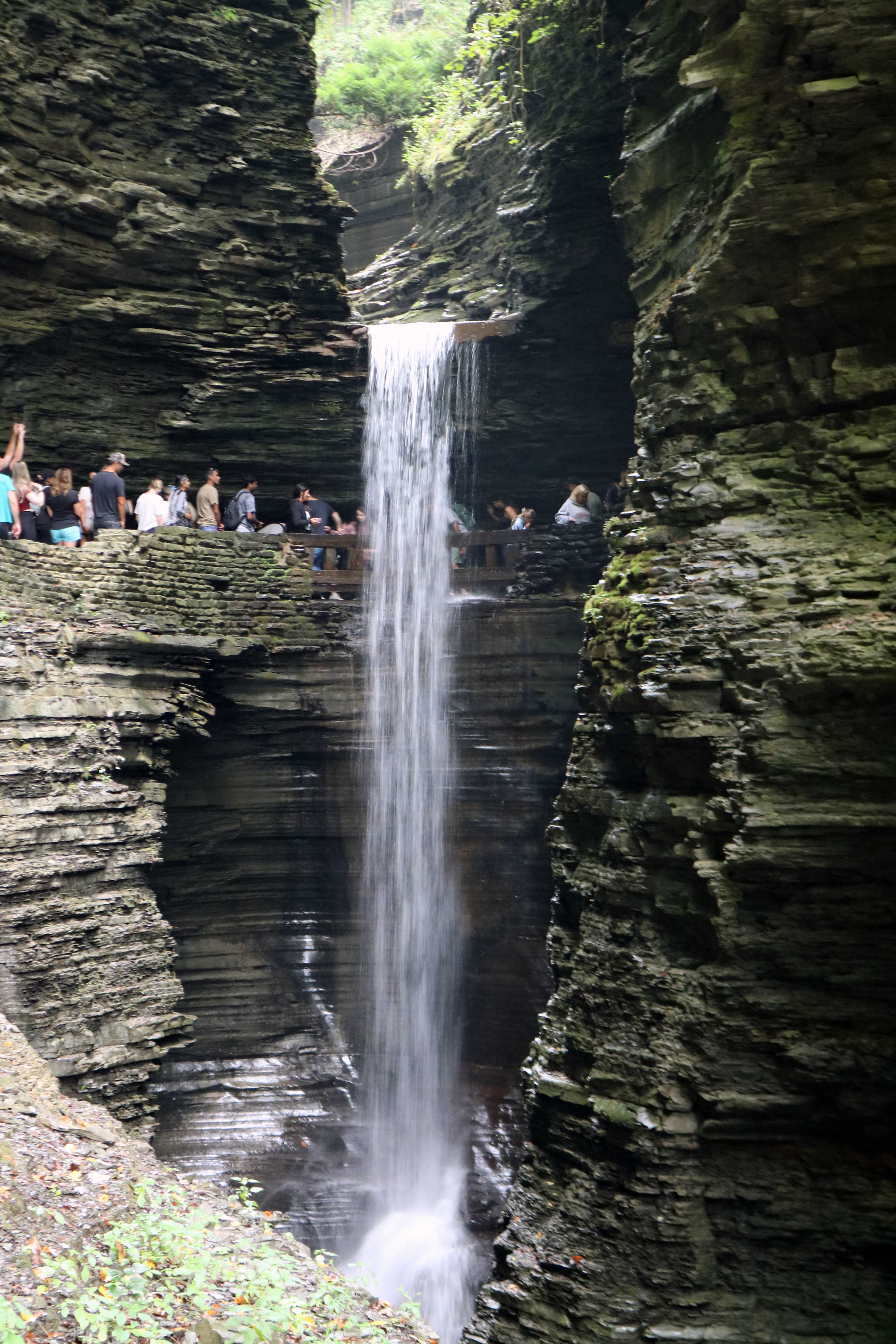
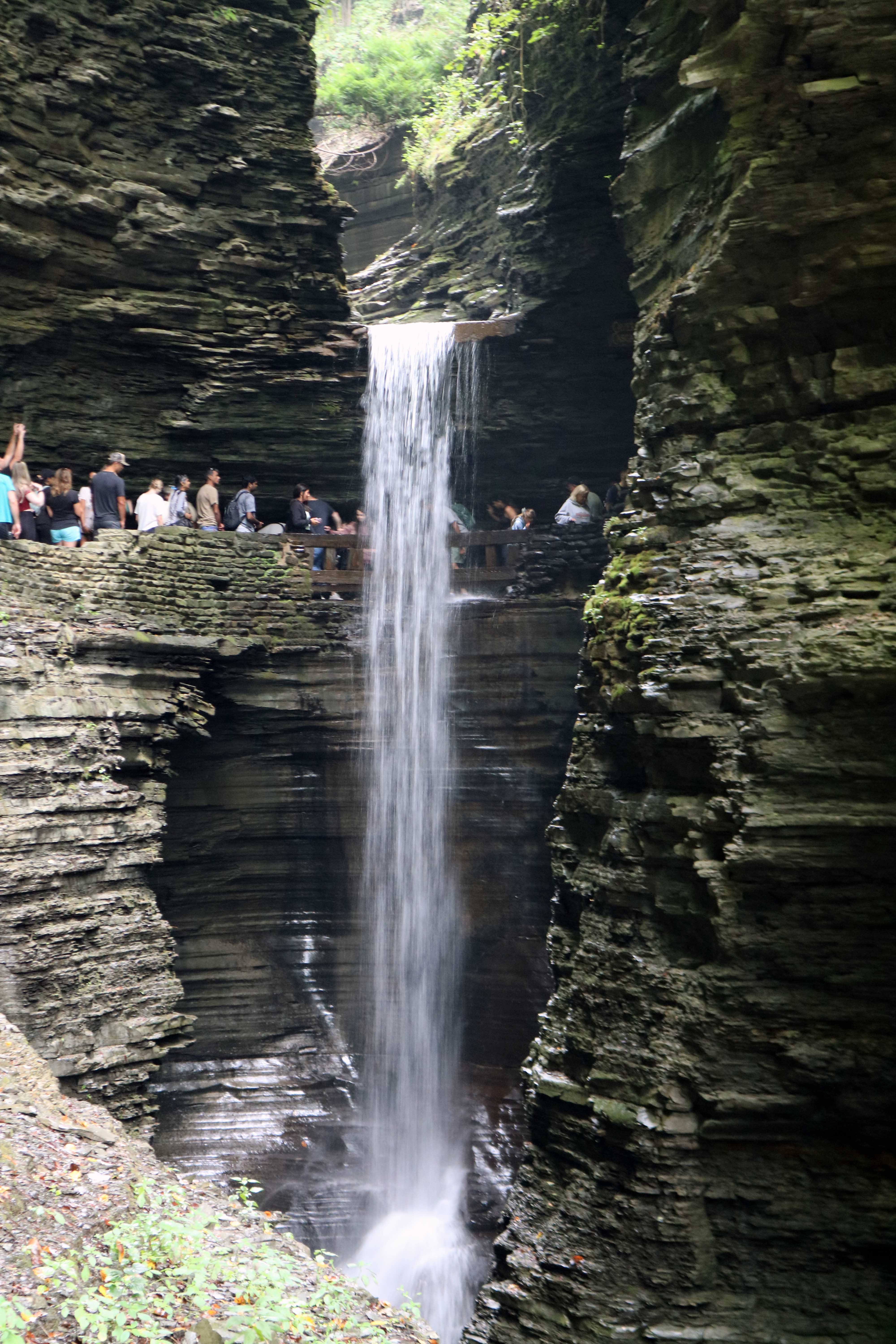
Cavern Cascade was the next waterfall we encountered and is the tallest waterfall along Glen Creek and is almost certainly the most unique waterfall in the canyon (52 feet.) The Trail passes behind the falls, and we reached out and touched the falling water.
This is the Triple cascade aka Glen of Pools, a very pretty chain of pothole pools separated from one another by small tumbles ranging from 6 inches to about 3 feet in height.
Central Cascade is the third major waterfall we encountered, halfway up the gorge – hence its name – drops 41 feet in a narrow horsetail-type fall with the stone arch bridge above.
The Triple Cascade with its triple stair-step form is certainly eye-catching. The waters tumble a total of twelve feet in three steps. Adjacent to it is the Rainbow Falls with its stone arch footbridge above.
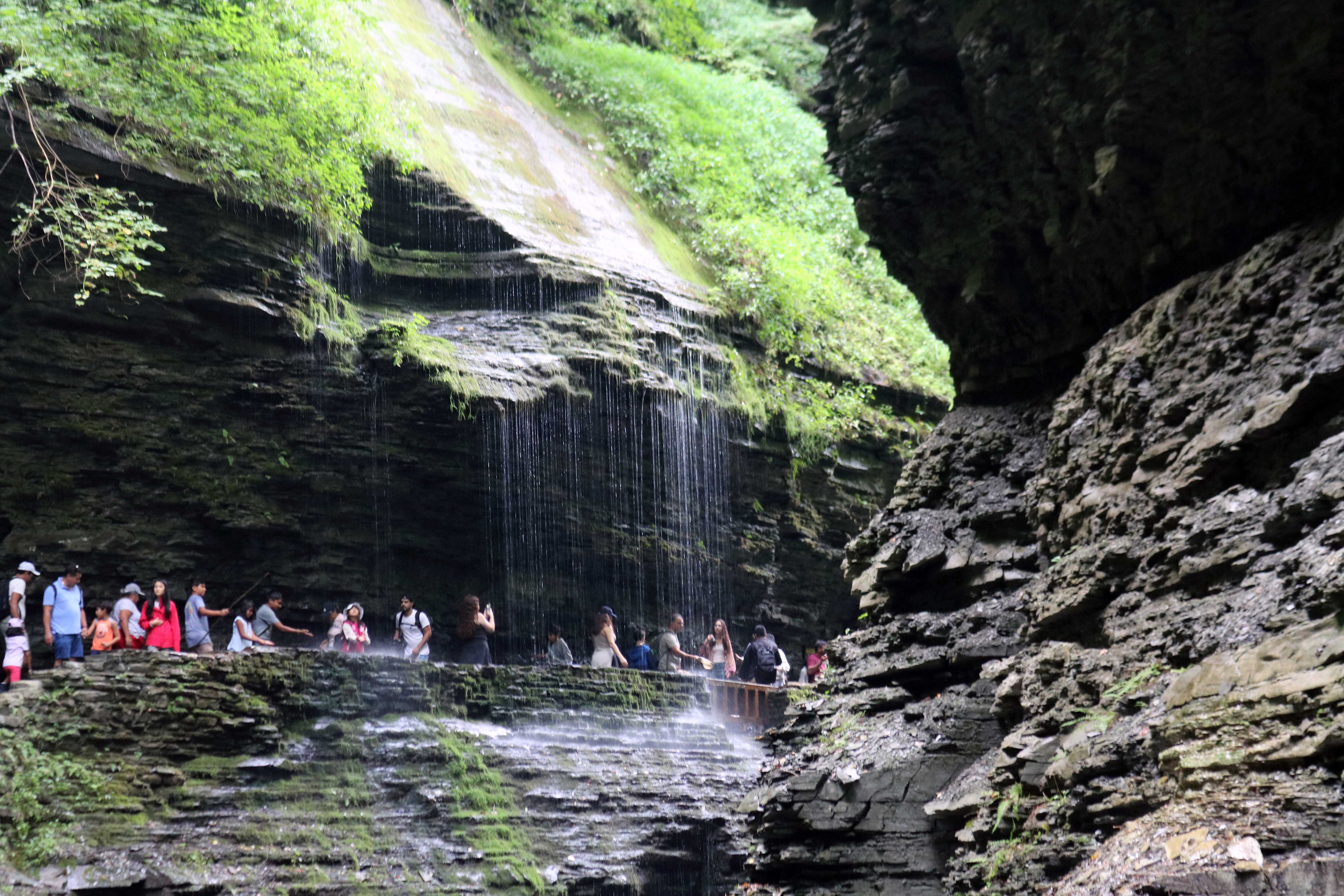
Rainbow Falls first slides over an angled pitch of moss-covered rock, then plunges over an undercut cliff in dozens of tiny rivulets which bead down onto the stone railing lining the trail as it passes directly beneath the falls.
Pluto Falls is in the Spiral Gorge, where the creek squeezes through and narrows to two feet wide, dancing between potholes with small falls in between.
Jacob’s Ladder was the final ascent of 180 stone steps to the Upper Entrance to the park to the Gorge Trail along Glen Creek. This marked the end of our hike.
General Sundararajan Padmanabhan PVSM, AVSM, VSM (General Paddy) (5 December 1940 – 18 August 2024) –was our Artillery Brigade Commander in 1986 and I, a Lieutenant with 75 Medium Regiment (BASANTAR RIVER,) then located at Gurgaon.
Our first interaction was during the Administrative Inspection of the Regiment. I was positioned at the Radio store that day. Brigadier Paddy walked in and asked me to demonstrate measuring the resistance of the cable drums in the store. I took out the multimeter, positioned the switch to 1000Ώ, connected the probes to the cables and read off the resistance.
Brigadier Paddy asked me the principle on which the resistance was measured. I explained, “Multimeters measure resistance by injecting a small current into the circuit, and then measuring the voltage drop across those points in the circuit. The known current, and the resulting voltage drop are then used to calculate the resistance using Ohm’s Law, V = I × R.”
“What principle is it based on?” queried Brigadier Paddy.
“Ohm’s Law, Sir” I replied.
“Isn’t it based on Post Office Box?” asked Brigadier Paddy.
“A Post Office Box is used to measure an unknown resistance. It works on the principle of Wheatstone bridge to identify the resistance of wire connected and then by using wire resistivity and cross section calculating length of wire and thus determining where the cable had broken. This is based on the Ohms Law, Sir” I stood my ground, having faith in the basics of physics taught to us by Mr. PT Cherian at Sainik School Amaravathinagar. (To read more about Mr. PT Cherian, please click here.)
“Well done young man, I need to go back and revisit my basic physics,” said Brigadier Paddy patting my back as he left the store.
After the inspection, Colonel Mahaveer Singh, our Commanding Officer while debriefing all the officers said, “Reji, I must compliment you for your confidence and knowledge. I did not understand a word of what you discussed. I thought you both were conversing in Thamizh.”
“Thank you, Sir,” I said.
“It is not easy to engage in a conversation with Brigadier Paddy. You got him confused,” said Colonel Mahaveer in his innocent way.
With Veteran Colonel Mahaveer Singh during Golden Jubilee celebrations of 75 Medium Regiment in 2018
Fast forward and our next encounter was during the Gunners’ Day celebration at Delhi in 2001. General Paddy was the Chief of the Army Staff, and I was a Lieutenant Colonel posted at the Army Headquarters. I wished him good evening and went on to thank him for all the support he gave our Commanding Officer Colonel Mahaveer Singh on quite a few issues that I had had with the local police. (Click here to read more about it.)
“You were the young man who made me re-visit my basic physics when I visited your regiment. On your issues with the Police, it was your Commanding Officer who took a strong stand supporting you and I had to follow suit. I did hardly anything other than backing your Commanding Officer,” replied General Paddy.
After that I met Mrs. Angela Rajan conversing in Thamizh with an elegant woman, gracious and stylish. Mrs. Rajan is the wife of Major General Daniel Rajan from our school – he was the Military secretary to General Padmanabhan. They both had commanded 7 Field Regiment (GAZALA.)
On seeing me, Mrs. Rajan greeted me in Thamizh and said, “haven’t met you for a long time since our meeting at Udhampur in 1991. How is the family?”
Our conversation in Thamizh went on for a few minutes and the other lady joined in. After five minutes I asked, “We haven’t been introduced, Madam, you are….”
Mrs. Rajan promptly said, “Reji, what!!! You do not know her? She is the Chief’s wife?”
I realised that the brick that I dropped had actually landed on my toes. Flustered a bit, and apologising, in a jiffy I evaporated from the scene to condense among our course mates in the party.
A few years later I was in command of my unit and we were deployed in Op Parakram. The Gujarat Riots had broken out. When the army was called out, General Paddy tasked the Bison Division, then Commanded by General Zameer Uddin (Zoom) Shah for the task of quelling the riots. The task of course was executed with typical military efficiency in 48 hours. But it was the decision then that I had contemplated with great admiration. Years later, General Paddy said that many eyebrows were raised at the choice of the formation for the task and that he had to hold his ground, entertaining no debate on a military decision.
That was the quintessential General Paddy. Brilliant, witty, extremely generous and a true leader of men. Adieus General, we pray your legacy will live on and flourish.
Recently I received a video on social media about a disused Turntable at a railway depot. My journey with the Indian Railway commenced with my first travel way back in 1966 when I was in Grade 1. Little did I realise as a toddler then that I will serve in the Indian Army and travel the length and breadth of the country on trains. It was the beginning of a long and cherished association with the Indian Railways.
During the steam-engine years of the railways, the turntable was located at most terminals and at depots. It was used to change the direction of the steam-engine. These engines operated most efficiently in the forward direction and thus had to be turned every time. They could run in the reverse direction, but at a lower speed. The turntables were operated manually or by hydraulics.
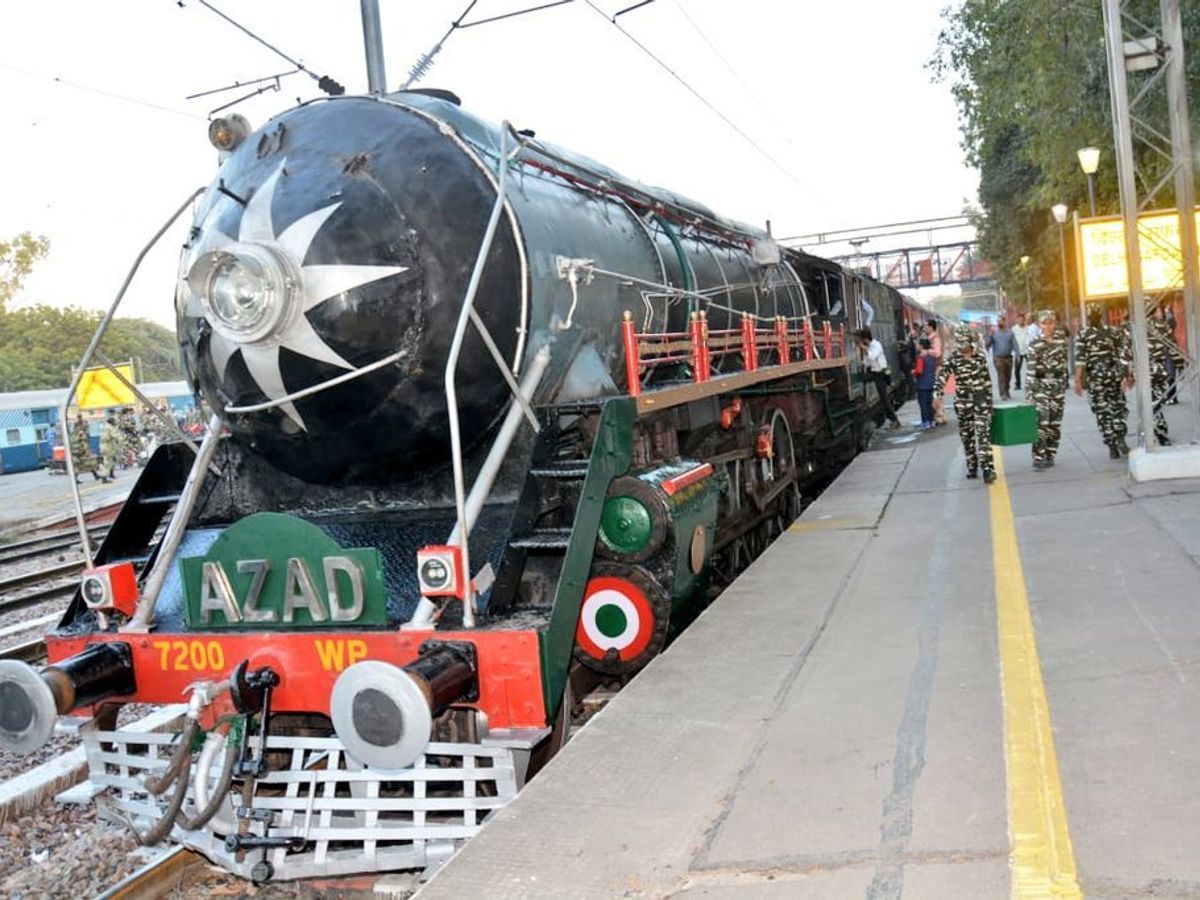
Steam engines are not extinct. The Indian Railways currently runs a luxury heritage train from Delhi to Alwar, renamed The Palace On Wheels, powered by a 70-year-old renovated steam engine, named Azad – engine number WP 7200, built in 1947 in the US. Indian Railways is still maintaining its oldest working steam locomotive named Fairy Queen at New Delhi.
With the arrival of diesel locomotives, which could run equally well in either direction, the need for turntables waned. By the 1990s, most steam engines were replaced by diesel/ electric engines and the turntables became obsolete.
Aerial view of Roundhouse Park
In North America, many turntables have been restored and now find a place of pride in many rail museums – Roundhouse Park at Toronto, B&O Railroad Museum at Ohio, etc. Roundhouse Park, Toronto, created in 1997 features the original, fully restored and operational 120-foot-long locomotive turntable and a collection of full-sized railway equipment.
Early turntables were very small, sometimes just six feet in diameter since nothing larger was needed with the relatively small steam-engines and wagons in use during much of the 19th century. As the size of the steam-engine grew larger, heavier, and longer – the size of the turntables too increased. During the 20th century most roundhouse terminals featured turntables of at least 70 feet, with some as large as 120 feet or more in diameter.
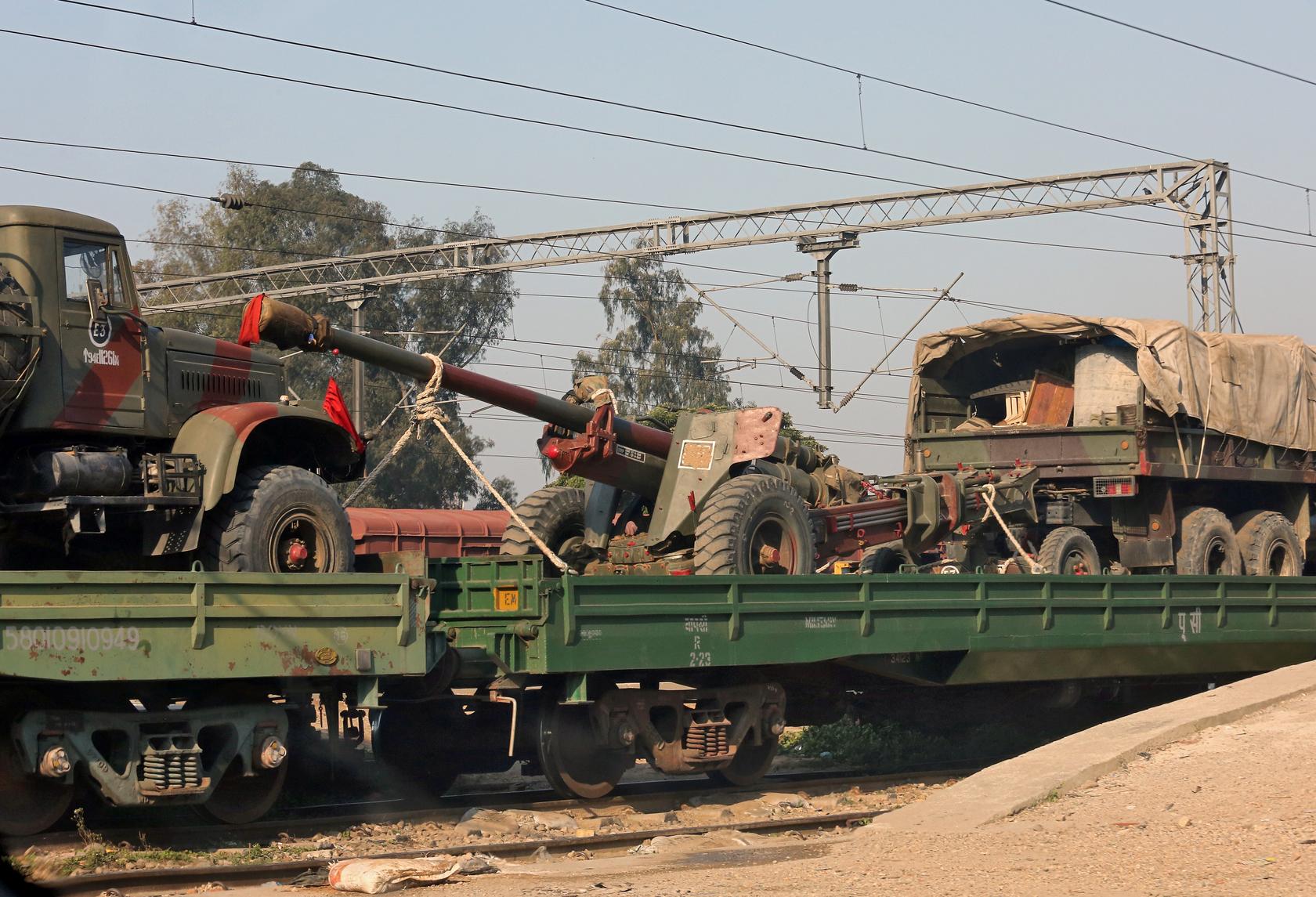
I had my first experience of travelling with our Regiment by a military special in 1983, a move from Delhi by a meter gauge military special for firing practice of 130mm medium guns at Pokaran Ranges in Rajasthan.
A 24-wagon rake for loading of the medium guns – MBFU – (M – Meter Gauge, B – Bogie Wagon, FU – Well Wagon) was placed at the military siding ramp at Delhi Cantonment Railway Station -12 for loading guns and 12 for Russian Kraz towing vehicle. The gun weighs over 8 tonnes and the wheelbase just about narrowly fit on to the meter gauge rake. Today with broad gauge rakes, the wagons offer sufficient width to maneuver the guns.
On reaching Pokaran railway station siding, we realised that the guns were facing the opposite direction of the ramp. It was indeed a great ordeal to load these guns in the forward position, getting them out in the reverse was near impossible.
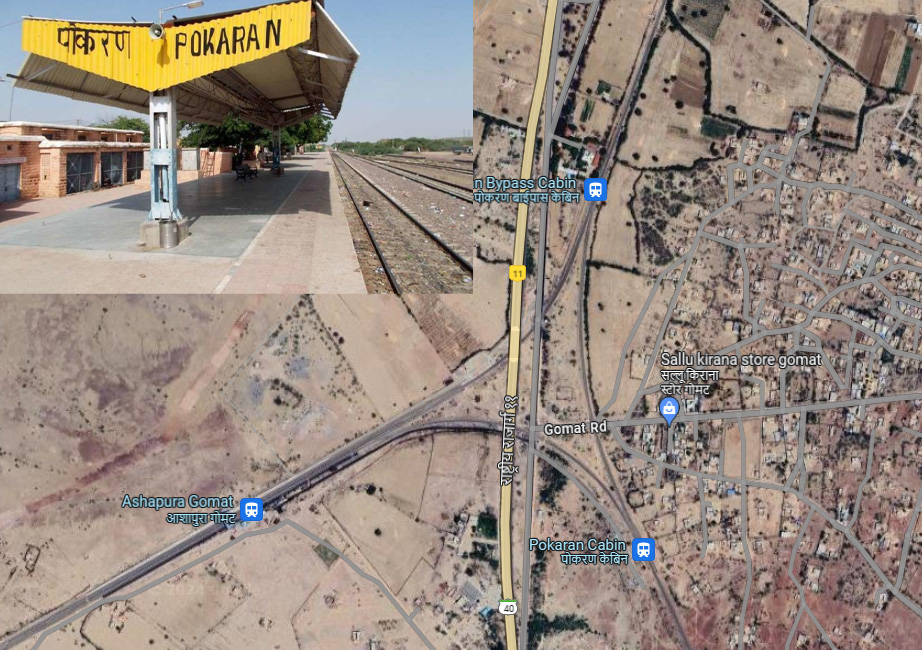
The Yard Master at Pokaran railway station came to our rescue. He ordered the train to be put through a Triangle to change the direction the train faced. I had until then seen only turntables at many railway stations but was unaware of a triangle.
A Triangle in Indian Railway parlance (Wye Junction in North America) is a triangular shaped arrangement of rail tracks where two rail lines join to allow trains to pass from one line to the other line in two directions and/or is used for turning railway equipment.
I jumped on to the steam-engine used for shunting along with the Yard Master to watch the operation. The engine was connected to the rear of the rake and was pushed forward, crossing the Pokaran Cabin, until it crossed Ashpura Cabin. Then it was a reverse travel until the entire rake crossed the Bypass Cabin. Then the train was pushed to the railway siding, and we were now facing the forward direction. We then unloaded the guns and vehicles with ease.
After several decades, the turntables have made a reappearance – in a much more technologically advanced avatar on many metro rails across the world. Three turntables are in operation at Chennai Metro’s Koyambedu depot. With the help of digital technology, the turntables will help turn bogies, wheel sets and axles of metro rail trains for maintenance.
The bogies are pulled on to the turntable using a mini engine and then turned in the direction to which it must be taken. Two pairs of rails are mounted and positioned perpendicular to each other across diameter on the deck of each turntable to accommodate the bogies. Once the turntable completes the required turn – 90 or 180 degrees, the bogie is pulled out. This mechanism helps move bogies from one section of the depot. This equipment saves space, says an official, as otherwise lengthy tracks must be laid for trains or bogies to be turned around.
Our most valuable resources – creativity, communication, invention, and reinvention – are, in fact, unlimited – David Grinspoon (American Astrobiologist)
One rule of invention: before you can invent it, you have to imagine it – James Gunn (American filmmaker and studio executive)
During my Indian Army days, colour pink raised curiosity as it referred to the instructors’ notes during various courses and assessors’ notes during various military exercises. These notes were printed on pink sheets and was a prized possession for the students and assesses.
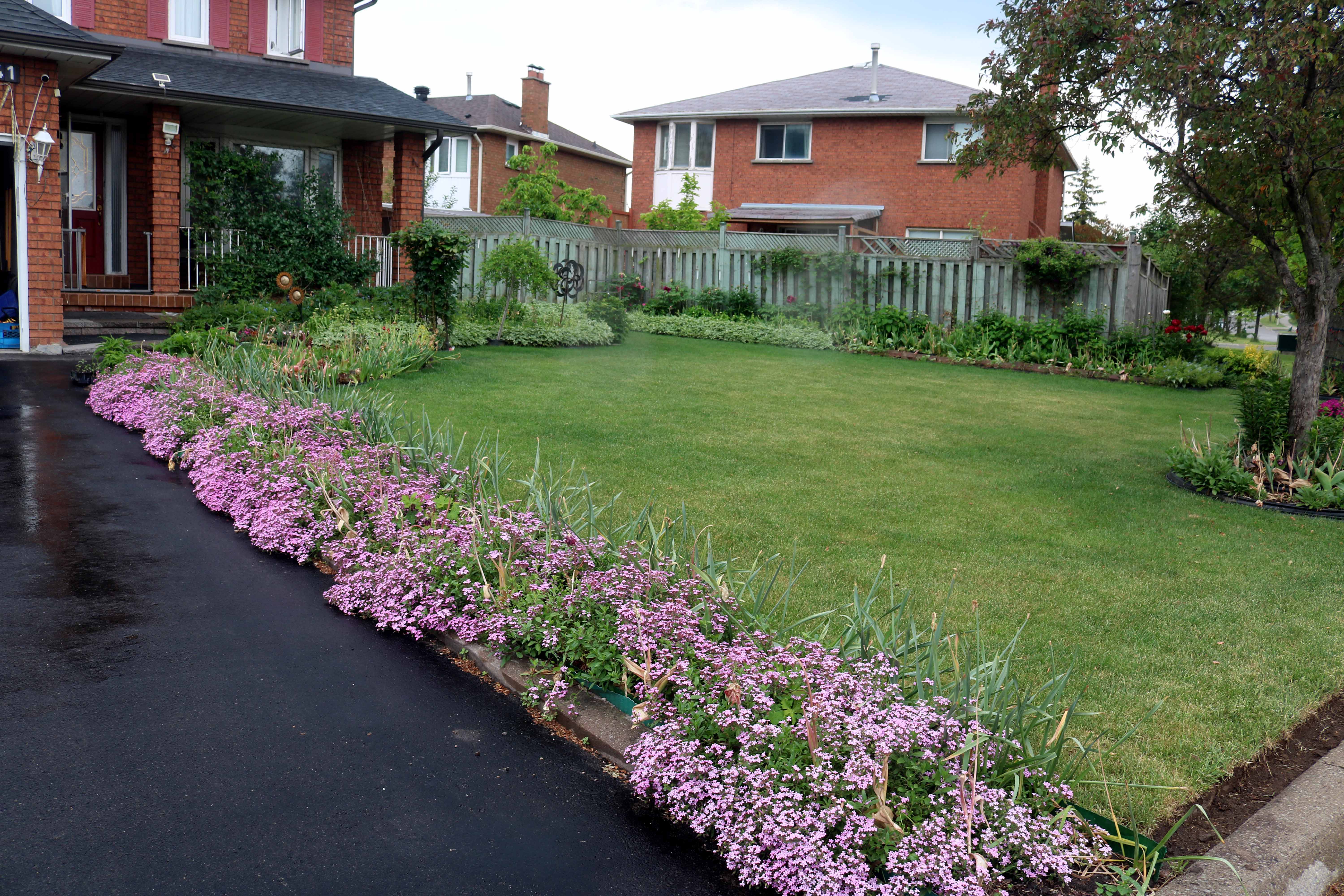
June marks the end of the Tulip season in our garden and is the month of Pinks. The pink colour stands out on the lush green background of the lawn.
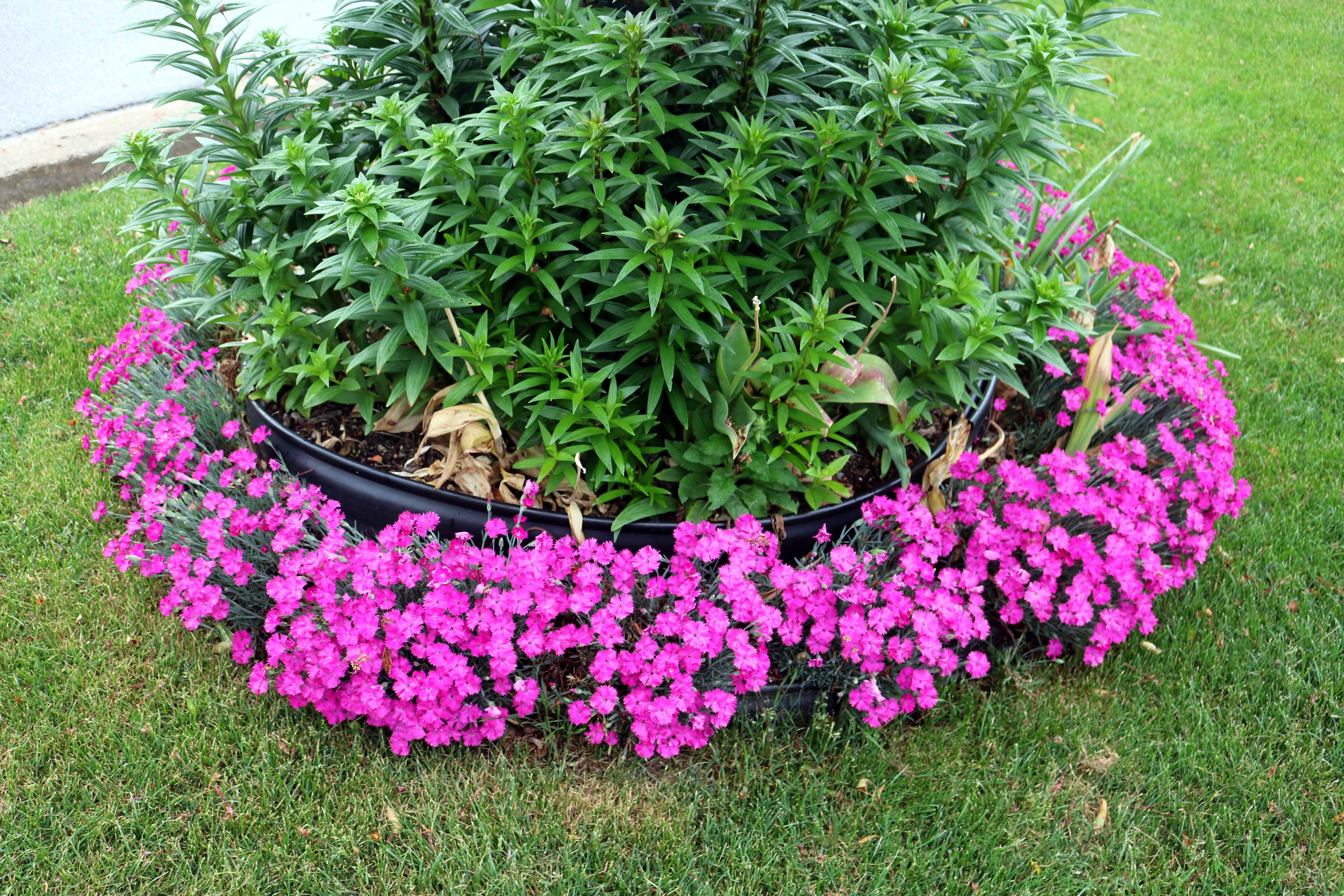
Neon Star- characterised by their fragrant fluorescent pink blooms, used as edging plants in our garden. The vibrant pink flowers cover the evergreen, blue-grey foliage.
Pink was first used as a color name in the late 17th century by a Greek botanist for the ruffled edges of carnations. and is the color most often associated with charm, politeness, sensitivity, tenderness, sweetness, childhood, femininity, and romance. In the 21st century, pink is seen as a symbol of femininity, though in the 1920s, pink was seen as a color that reflected masculinity.
Rock Soapwort is a vigorous, low creeping plant. Plants form a low mound of bright-green leaves, smothered by starry bright-pink flowers.
Former first lady Mamie Eisenhower loved pink and had pink decor throughout the White House. Elvis Presley had a pink 1955 Cadillac.
Clematis is one of the showiest vines you can grow. With many types of shapes and colours, these plants dress up any kind of structure they climb.
Thyme flowers are typically lavender-colored and edible. They grow at the top of the stems in a sphere-shape with elongated vertical spikes.
Pink makes us crave sugar, so it is often used by shops selling ice-cream or other sweets.
Peony is named after Paeon (also spelled Paean), a student of Asclepius, the Greek god of medicine and healing. Marco Polo described Peonies, when he first saw them as Roses as big as Cabbages.
Jaipur City is called The Pink City, because of its giant forts, palaces and its distinguished pink colour.
Foxgloves are eye-catching tall, slender flowering plants with flowers in clusters of tubular shaped blooms in colors of white, lavender, yellow, pink, red, and purple.
Astilbe, a shade loving plants and it symbolises patience and dedication. In Greek, the name Astilbe means “without brilliance” or “without sheen” and alludes to the fact that the individual flowers of this species are small and inconspicuous.
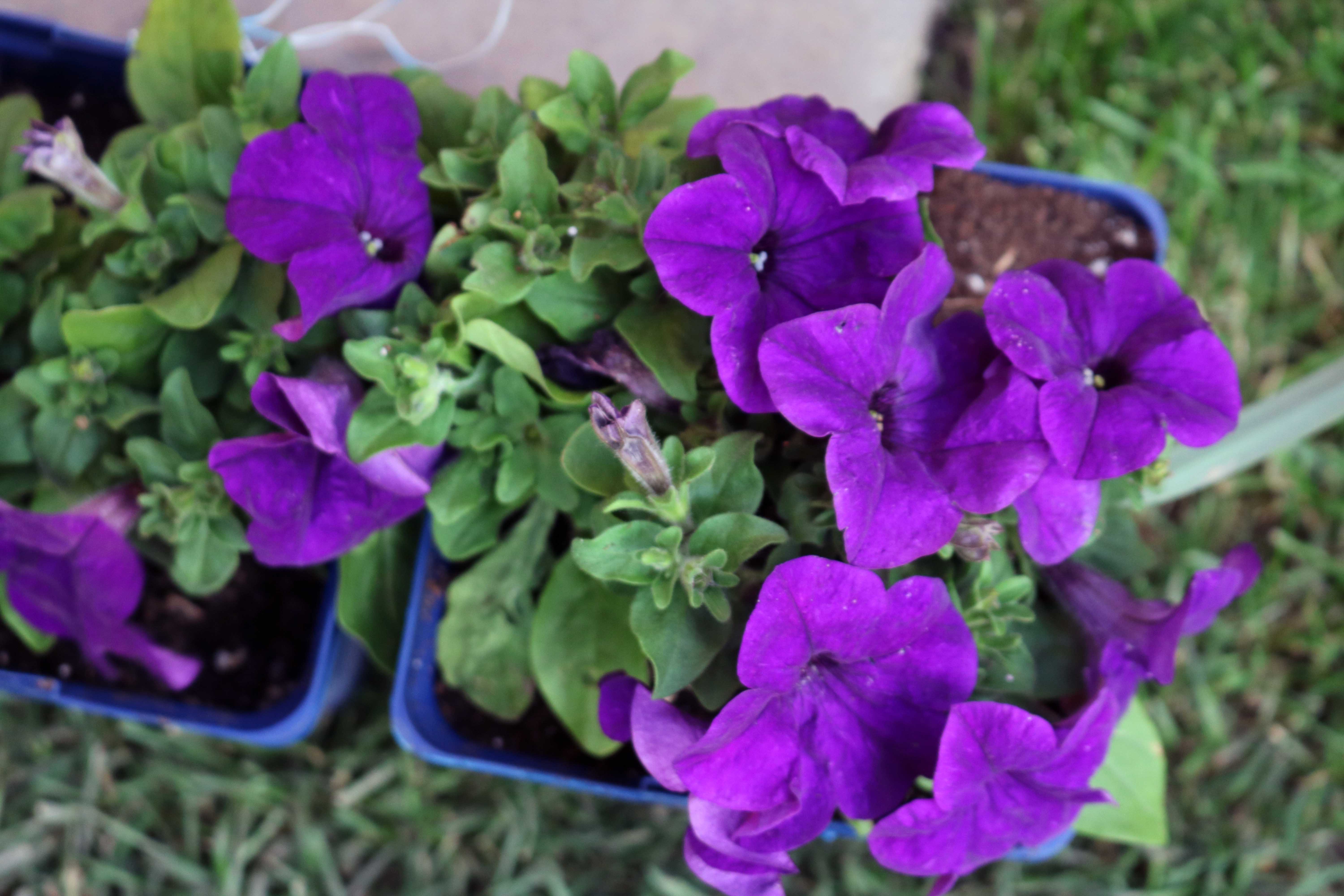
Petunias are from the tomato, potato and tobacco plant family. And they drive their name from the South American word Petun, which is another name for Tobacco.
Lily has been a symbol of life, creativity and good luck they are also known as are known as the Flower of Good Fortune. More than a beautiful flower; it expresses emotions – love and appreciation to offering sympathy and support.
With the advent of ultrasound came Gender Reveal Parties or Baby Showers with Pink for Girls and Blue for Boys. Assigning colours to babies enforces a belief that they are supposed to grow and fit into. If you’re a girl, you must like pink, and that also means you’re girly. If you’re a boy, you must have blue, and no pink, or else you aren’t manly enough. If you’re a girl and you like blue, you’re a tomboy.
Gendered colors are totally outdated, and we should stop pushing colours on children if we want a world with less stereotypes, less sexism, and less prejudice.
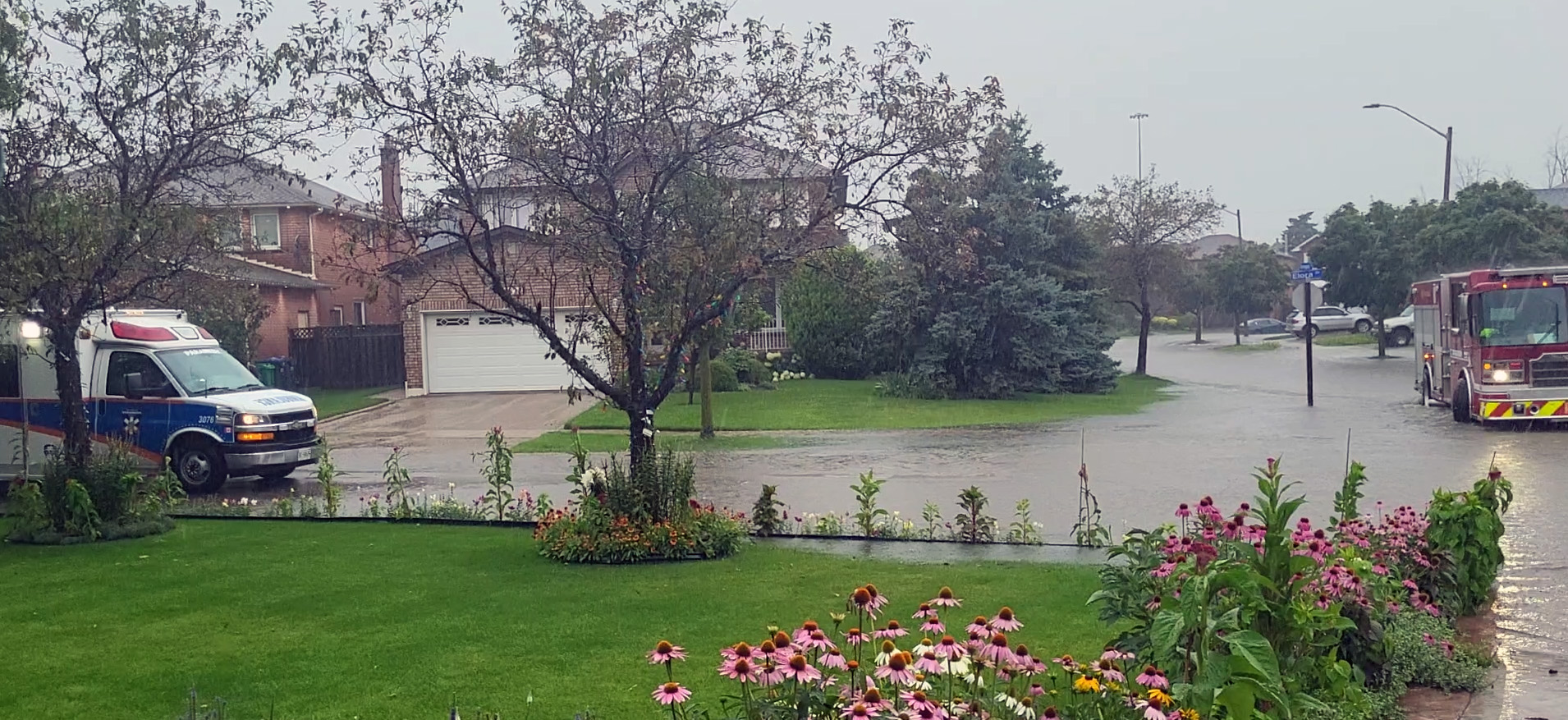
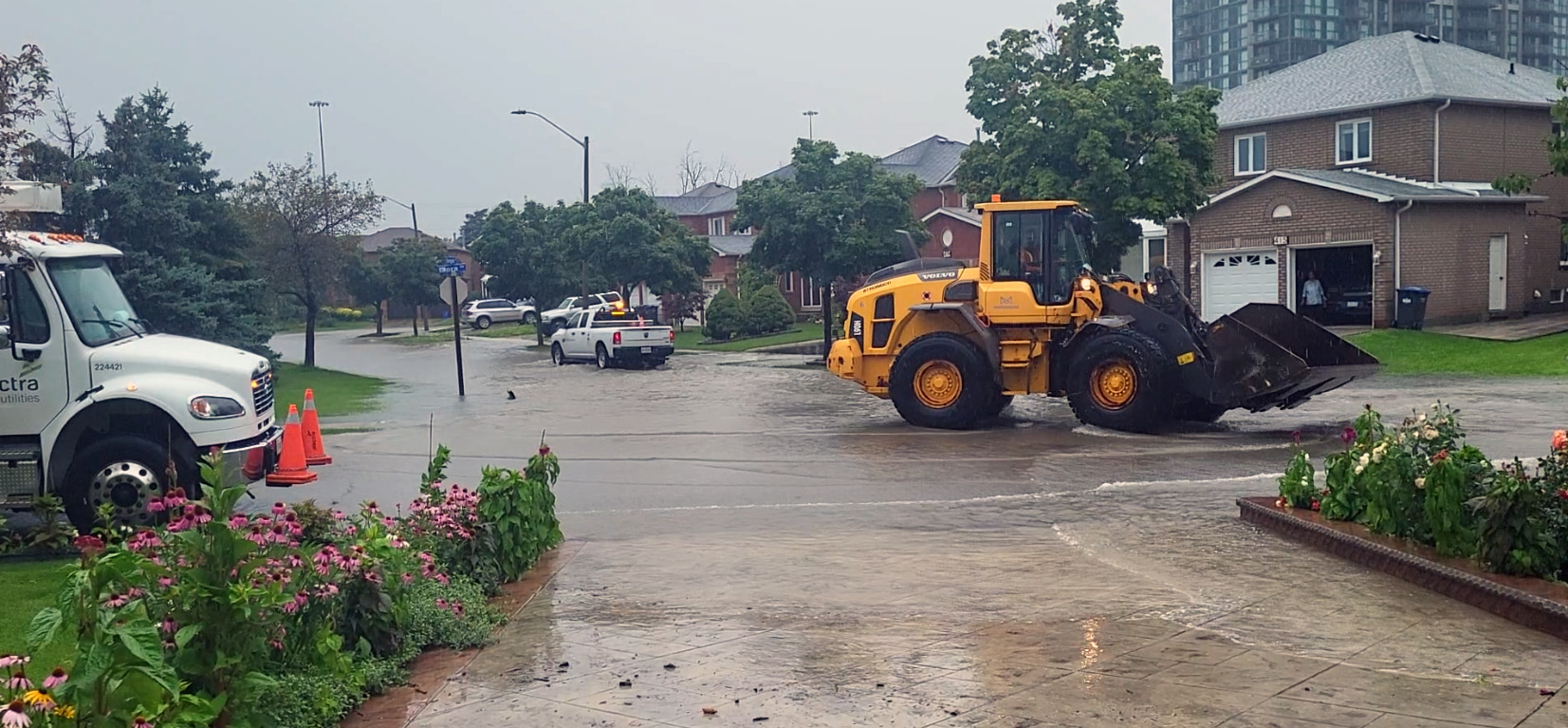
On 16 July 2024, City of Mississauga, where we live, recorded 97.41 mm of rain in a three-and-a-half-hour period. The torrential rains were result of a pipeline of moisture from the Gulf of Mexico that moved into Canada in the aftermath of Hurricane Beryl. It began on 15 July, when the remnant of Hurricane Beryl arrived in Toronto Area, bringing torrential downpours that resulted in some ponding on some local roads.
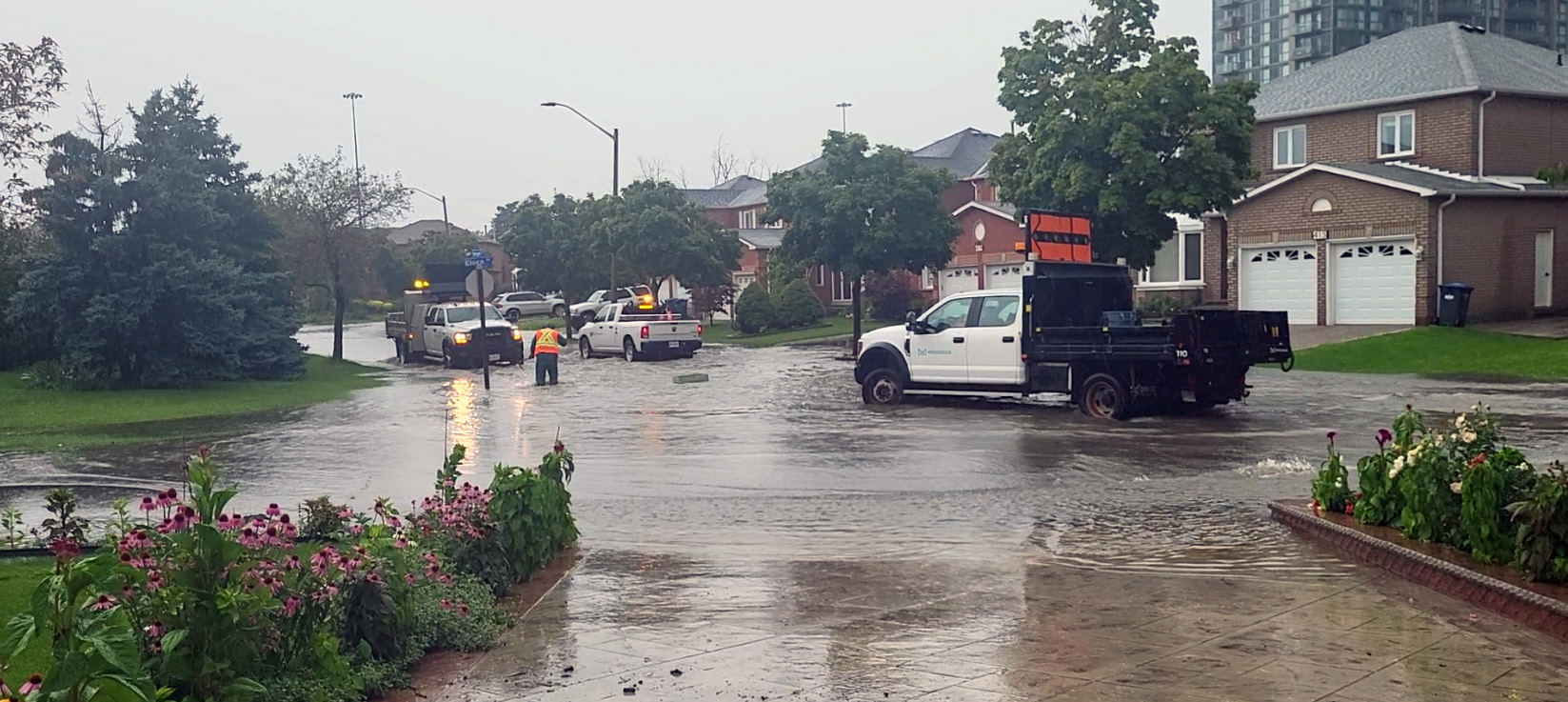
The water level in the street across our home rose steadily, engulfing our driveway. It began just before 9 AM and in about 45 minutes there was a deluge.
The First-Responders – Fire fighters and Ambulance – sprung into action and were outside our home to help anyone needing any help in the neighbourhood.
By 10 AM, many parts of the city got flooded and the Fire Fighters and Police launched boats to rescue people submerged in their cars.
City’s crew swung into action immediately to clear all the storm drains to facilitate fast draining of water into Lake Ontario, about three kilometer away.
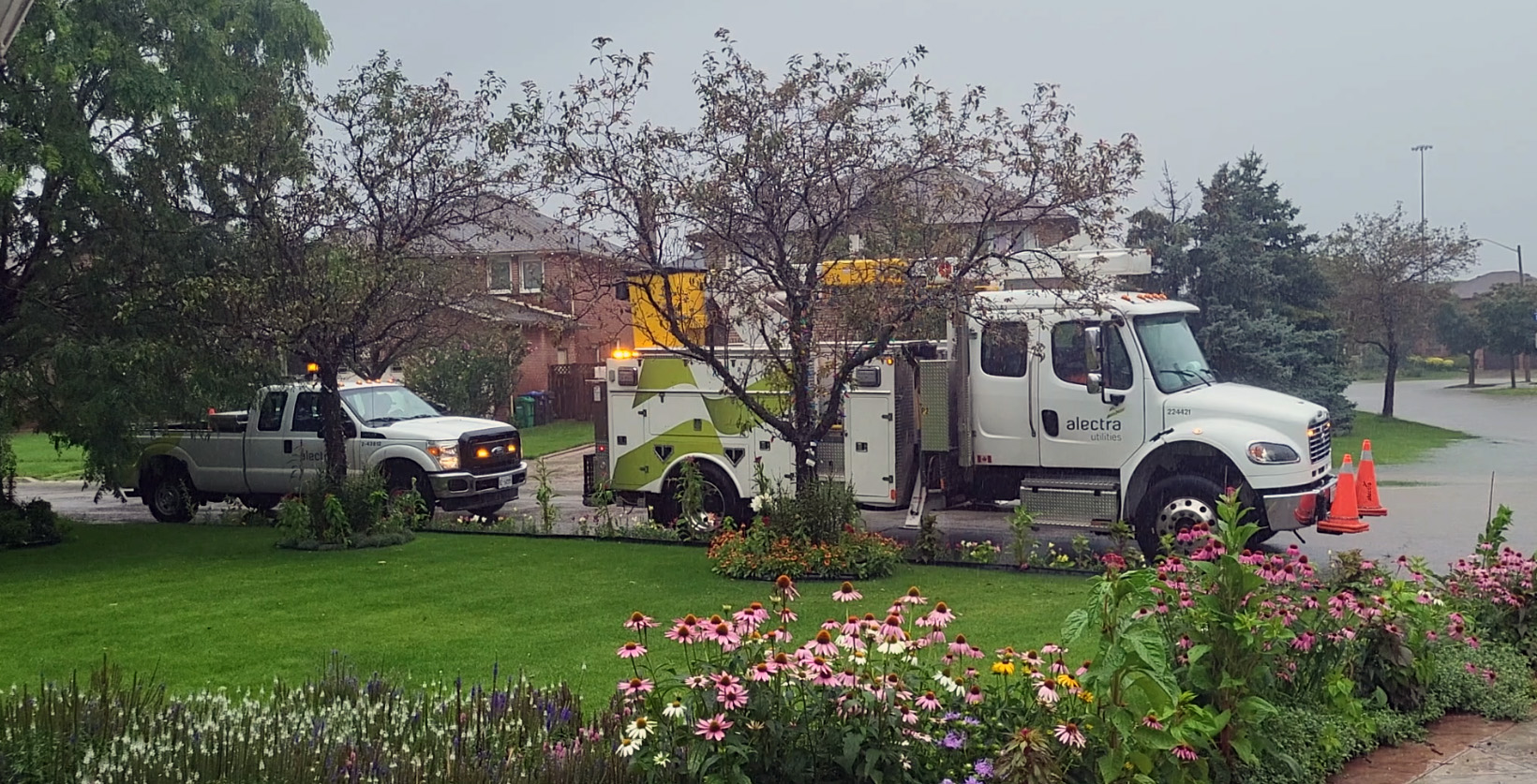
The electrical utility company came and parked their vehicles in front of our home to disconnect power to the homes in case the water levels rose over their transformers on ground. Luckily for us, it did not – thus ensuring continous power supply to the neighbourhood.
City employed all equipment on hand like dozers and pumps to ensure fast drainage of water.
The City’s crew with volunteers from the community helped everyone in need.
Many cars parked on the roadside were submerged and were written off.
All the basements of the homes in the neighbourhood got flooded due groundwater pressure. The ground absorbed the water from the heavy rains and became fully saturated and the water found its way into the basements. Our basement too began to flood by about 10 AM.
By 3 PM, it was all dry – as if nothing happened. Large-scale developments around our home—such as apartment and office complexes, shopping malls and roads—have added vast stretches of pavement to our area. These expanses of concrete and asphalt inhibited drainage and worsened flooding. The water flowed into the neighborhood’s streets rather than seep into the soil or flow into Lake Ontario.
What’s in a name? That which we call a rose by any other name would smell as sweet. William Shakespeare
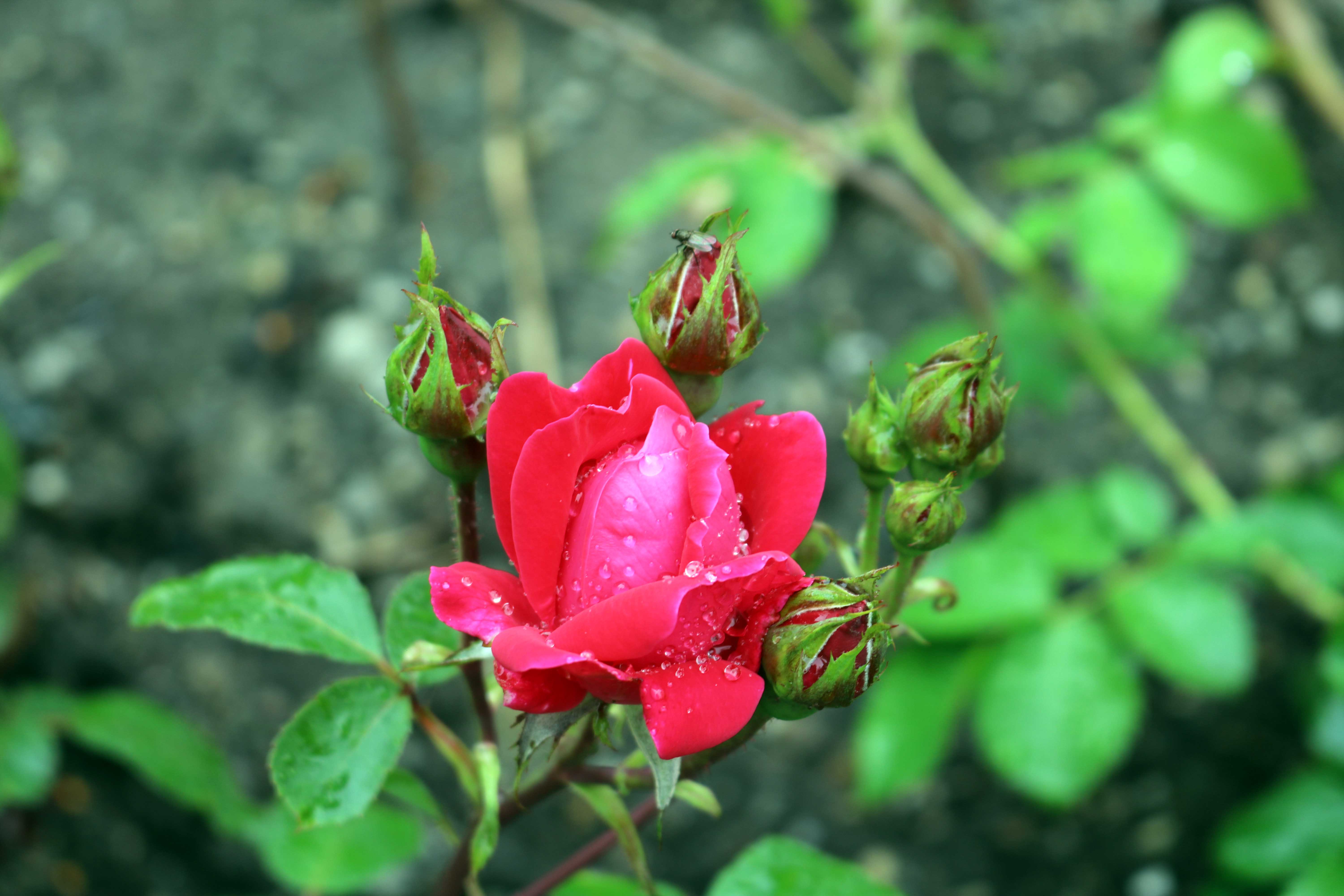
For centuries, roses inspired love and brought beauty to those who received them. The rose’s rich heritage dates back thousands of years. We have over fifty bushes in our garden.
Jawaharlal Nehru, the first Prime Minister of India, was fond of red rose that he wore a red rose on his jacket until his last breath.
It is said that the floors of Cleopatra’s palace were carpeted with delicate rose petals. Shakespeare refers to roses more than 50 times throughout his writings. It is also New York’s state flower.
Age the world’s oldest living rose is believed to be 1,000 years old. Today it continues to flourish on the wall of the Hildesheim Cathedral of Germany. Roses are truly ageless. Recently, archaeologists discovered the fossilised remains of wild roses over 40 million years old.
Black and blue Roses don’t exist. Black Roses are very dark red, and blue pigments don’t occur naturally – the blue colour can only be achieved through genetic modification in a lab.
The largest rose bloom ever bred was a pink rose measuring approximately 33 inches in diameter, bred by Nikita K. Rulhoksoffski from San Onofre, California.
A red rose is an expression of love. Red roses can also be used to show respect, admiration, or devotion. A deep red rose can be used to show regret and sorrow. The number of red roses given has a special meaning as well. 12 red roses are the most popular number to give; it means Be mine and I love you.
There are a lot of variations of the pink rose. Usually, pink roses are used to express gentle emotions such as admiration, joy, gratitude and deep or endless love.
Dark pink rose blooms may mean deep gratitude and appreciation. They also express elegance and grace.
Light pink rose blooms are symbols of pleasantness and innocence.
White is the color of purity, innocence and sacred love. It represents love that is eternal and endures beyond death. White roses usually may symbolise a new start, and it is a custom for brides to hold them when she walks down the aisle at her wedding. In certain faiths, the white rose can represent the sanctity of a marriage. White roses can be used to show sympathy or humility. They also may be about spiritual things.
Yellow roses are usually used as an expression of exuberance. Yellow roses show feelings of joy, warmth, and sometimes welcome. They are symbols of friendship and caring. The yellow rose, unlike some of the other roses, does not mean or express any romance.
Orange roses remind most people of a fiery blaze. These fiery blooms are symbols of passion and energy. Orange roses can be used to show desire and pride.
The color of burgundy is a symbol of beauty.
Green roses (these are sometimes white roses with shades of green) can symbolise best wishes, luck, and blessings for a good life or recovery of good health.
A violet or purple rose may show protection, and also a sense of majesty, royalty, and splendor. These roses are used to show adoration.
A lavender rose, like its color, shows enchantment. It also expresses love at first sight.
Peach-colored rose is gifted when you are grateful for someone or just want to show your appreciation. It shows appreciation and gratitude or a different way to say, Thank You! They symbolise innocence and purity.
Cream roses are indicative of charm and thoughtfulness. Gifting a bunch of cream roses is an ideal way to show someone that you care – but without any romantic intentions.
The rose is one among the only three flowers mentioned in the Bible. The others are lilies and camphire – akin to henna.
The rose also grows into some fruit. The fruit is called a Rose Hip. It is shaped like a berry, and most are red in colour, but you can find black and dark purple versions.
In 2002 a miniature rose, named Overnight Scentsation, was taken to space to assist in studies that aimed to show effects of low gravity on the smell of roses. The study also aimed at learning how to improve the fragrances of several consumer products.
Due to the heavy blooms, staking the stem is essential, as the flower is top heavy and will bend, break or fall over
After a heavy downpour, the petals of old flowers carpets the ground beneath.
How did it happen that their lips came together? How does it happen that birds sing, that snow melts, that the rose unfolds, that the dawn whitens behind the stark shapes of trees on the quivering summit of the hill? A kiss, and all was said. Victor Hugo
In Canada, almost half of the food we waste occurs at a household level. To address this, Too Good To Go, a social impact company behind the world’s largest marketplace for surplus food, launched of a new-to-Canada initiative, called Look-Smell-Taste.
According to Too Good To Go research, 92 per cent of Canadians check best-before dates on foods before consuming them. Not consumed before the date is the second most frequent reason people throw away food at home. Forty per cent of Canadians toss past-dated items at least once per week, even though 50 per cent don’t understand what a best-before date means and how it differs from an expiration date.
Reducing food waste is the number one action you can take to help tackle climate change. The UN Food Waste Index Report 2024 revealed that at least one billion meals are wasted by households globally, every single day.
It is the responsibility of a food business to ensure that the food provided to customers is safe to consume. Different types of date markings on packages are used depending on the product are: –
Best-Before Date. States when the durable life period of the food ends. According to the Canadian Food Inspection Agency, durable life means the anticipated amount of time that an unopened food product, when stored under appropriate conditions, will retain its freshness, taste, nutritional value, or any other qualities claimed by the manufacturer. Failure to adhere to the guidelines for handling and storing a particular product will affect its quality by the best-before date. Remember that the best-before date no longer applies if a package is opened.
Packaging Date. Displayed on retail-packaged foods with a durable life period of 90 days or less. The packaging date must be displayed in combination with the durable life period. The durable life period can either be a best-before date or the number of days that the product will retain its freshness. The purpose of the packaging date, in combination with the durable life information, is to inform the user of how long the unopened product will retain freshness.
Expiry Date. This is not the same as a best before date. These dates are required on certain foods that have specific nutritional compositions that could falter after the determined expiration date. In other words, after the expiration date has passed, the food may not have the nutrient content as described on the label. Expiry dates are required for formulated liquid diets, foods sold by a pharmacist, meal replacements, nutritional supplements and infant formula.
There exists a popular misconception that the best beforedate signify expiry. You can buy and eat foods after the best beforedate has passed. It may have lost some of its freshness, flavour and nutritional value, and its texture may have changed. Best before dates are not indicators of food safety. They apply to unopened products only. Once opened, the shelf life of a food may change.
Too Good To Go, since its launch in 2016 in Denmark, has helped to save over 330 million meals from going to waste, the equivalent to avoiding 891,000 tonnes of CO2, 267 billion litres of unnecessary water use and 924 million m2 of land use per year. With 95 million registered users and 160,000 active partners across 18 countries across Europe and North America, Too Good To Go operates the world’s largest marketplace for surplus food.
The Look-Smell-Taste label, an initiative by Too Good to Go, will be on the packaging of 15 different food brands found at the Canadian grocery stores to remind consumers they may still be able to enjoy their products past the best before date. Cracker Barrel, Epic Tofu, Greenhouse, Kopi Thyme and Ristorante are among the brands slated to begin brandishing the Look-Smell-Taste label.
For generations, people trusted their senses – mostly look, smell and taste – to tell if food was good to eat or not. Some food items containing seeds, nuts, vegetable oils turn rancid and tastes and smells differently. This rancidity is due to oxidation of fat. Oxygen in the air attacks fat molecules and causes a series of chemical reactions that lead to the formation of new and decidedly smelly molecules. These reactions occur even more quickly in the presence of light and heat. The new molecules that form as oxidation occurs may lead to digestive issues. Rancid foods are also less nutritious because oxidation destroys the good fats and some of the vitamin content.
Our sense of smell in responsible for about 80% of what we taste. Without our sense of smell, our sense of taste is limited to only five distinct sensations: sweet, salty, sour, bitter and the newly discovered “umami” or savory sensation. All other flavours that we experience come from smell. This is why, when our nose is blocked, as by a cold, most foods seem bland or tasteless. Also, our sense of smell becomes stronger when we are hungry.
Researchers have found that when volunteers wore nose plugs, their sense of taste was less accurate and less intense than when they tasted the food without the nose plugs. Smell did appear to make a difference. However, nose plugs did not completely block all ability to taste. Because the nose and throat essentially share the same airway, chewing some foods allows aromas to get the nose through the back of the mouth even when the nostrils are closed.
Peonies are outrageously beautiful in bloom, with lush foliage. They bloom from late May through June in Toronto.
Peony is named after Paeon, a student of Asclepius, the Greek god of medicine and healing. They are also the 12th anniversary flower. The peony symbolises honour, fortune, and a happy relationship. It is the state flower of Indiana.
No wonder Marco Polo described Peonies, when he first saw them, as: Roses as big as Cabbages. Their stems are not strong enough to support the heavy blossoms, hence they need support. Peony cages are placed in spring around the plant as they grow.
Peonies – native to China – Chinese name for the peony is Sho Yu meaning Most Beautiful.
Peonies of three types grow in our garden- Tree Peonies, Herbaceous Peonies and Itoh peonies.
Herbaceous peonies (also known as bush peonies) die to the ground in Winter. They re-emerge in March, or when the snow melts. Many find that they are deer resistant, but not always. Peonies are long lived, minimal care plants.
Tree peonies with their woody stems that t defoliate in the fall, but the woody stems stay intact, above the ground. They tend to bloom earlier and with larger flowers than the bush peony.
Itoh or Intersectional peonies are a cross between the herbaceous (or bush) peony and the tree peony. These crosses have produced new, exciting colors. The plants have the lovely leaf form of the tree peonies, but die to the ground in the Winter.
Itoh Peonies derive its name from Japanese horticulturist, Dr. Toichi Itoh, who successfully created seven peony hybrids from a tree peony bred with an herbaceous peony. Dr. Itoh passed away before ever seeing his creations bloom. Years later, American horticulturist, Louis Smirnow bought some of these original Itoh peonies from Dr. Itoh’s widow and continued Itoh’s work.
Peonies come in yellow, red, pink, and white colours and there are neither blue nor black peonies. Peonies can live up to a hundred years.
The irony with peony flowers is that the flowers last only two weeks and if there is a shower, even lesser.
During my military service, we were periodically detailed as Field Officer of the Regiment for the week during which one was required to carryout many checks and procedures. One of the many laid down tasks was to carryout a practice Fire-Fighting drill and record how effective the effort was. The Regimental Havildar (Sergeant) Major (RHM) lighted a fire and shouted “Fire, Fire, Fire!!” at the top of his voice. The sentry on duty at the Regimental Quarter Guard rang the bell continuously denoting all ranks to assemble with all fire-fighting equipment they could get hold of. Some soldiers came with buckets filled with sand or water; some with the Soda-Acid/ Foam fire-extinguishers; some with rods; some with hooks; some bare handed. The RHM dutifully made a list of the number of soldiers present and the equipment they brought. No one ever asked the soldiers whether they knew what to do with the equipment they carried in case it was a real fire.
Although the routine orders for the week specified which sub-unit should carry out the duties of the firefighting party, the cordon party and the salvage party, rarely did the soldiers knew what they were required to do and how they were to execute the task. Theirs is not to question how,theirs is not to make reply and theirs is not to reason why!!I and that’s what the military is all about.
It may be deemed as a catch 22 situation of sorts, yet a rudimentary system was in place to cope with an accidental fire and that was vitally important. In many cases of the infamous Bukhari (Kerosene or Coal fired room heaters) fires during the harsh Himalayan winters, such a system at least occasionally saved lives and prevented damage. Please click to read Fire! Fire! Fire!
In Canada we have an elaborate system to respond to an accidental fire. During the freezing winter months, one of the most common emergencies experienced by Canadians is a fire in their home. They are most likely to occur between December and March. Heating equipment like portable heaters are the leading cause of home fires. In as little as 30 seconds, a small flame can grow into a dangerous fire. Within minutes, an entire home can be filled with black smoke and large flames. Other common causes of home fires are cooking (leaving the stove unattended,) improperly extinguishing cigarettes and candles left unattended. The recommended way to protect yourself and your family from a home fire is to follow these steps:
Know and practice your evacuation plan.
Get out and STAY OUT – never return to a burning building.
Install smoke alarms and carbon monoxide detectors on every level of your home.
Test the alarms every month and replace the batteries twice a year, at Daylight Savings Time (March and November).
Sometimes accidental fires are caused by gas leaks. Sometime back when I compared the sense of sight with that of hearing in my previous post, I couldn’t help but reflect on how vital the sense of smell is to detect such a gas leak.
How do we test the smoke alarms at our home?
We fry fish, meat cutlets, etc. on the deck in our backyard in summer. In the cold Canadian winters, we got to do it in our kitchen. At least once a month, this operation triggers the fire alarm. We got to switch the alarm off in 30 seconds, else the Monitoring Centre will call to check. In case there is no response, they will activate the emergency centre to dispatch the fire tenders, ambulance and the police cruiser.
A False Alarm is when an alarm call where the emergency services responded and were not required; or where an alarm response cancellation request was received after dispatch from the Monitoring Station, advising the emergency services response was not required. In case of a false alarm, the caller is charged around $175. The emergency services reserves the right to suspend response at any time at their discretion. Those under such suspension may be subject to cost recovery fees.
When a user dials 9-1-1, the call goes directly to the Regional Police 9-1-1 Communications Center. The caller is connected immediately to an experienced 9-1-1 operator. The operator will dispatch the appropriate emergency service required and will stay on the line to aid you until help arrives.
On the long weekend of February 2024 coinciding with the Family Day, our children were home. Marina was frying fish for lunch and it triggered the fire alarm. Our son Nikhil dashed downstairs and switched it off and said, “Why don’t you ensure that the chimney exhaust fan is rung high when you fry fish?”
“That’s the way we test our smoke alarm!” I replied.
THREE minutes — that is the time people must get out of their home in Canada if it catches fire. It used to be 17 minutes, but because of modern building materials and the proliferation of inexpensive, inflammable products, a home could be destroyed in a few minutes. Quick evacuation therefore becomes vital.
A typical modern Canadian home with newer, synthetic furniture made with chemicals like polyurethane, the backing on the carpets, the drapes, the stuffing in the mattress and pillows, are all highly inflammable and they burn hotter and faster as they contain hydrocarbons. A fire triggered in such homes results in flames raging in less than TWO minutes – what the firefighters call a flash-over. The old furniture burns more slowly. It takes more than 13 minutes to flash-over.
The first Christmas we celebrated in Canada was on 24 December 2005. We had invited all our friends and acquaintances. The party was planned in our basement with a wood-burning fireplace. A week before the party, I called the chimney cleaning service and got the chimney cleaned and they tested the safety aspects of the fireplace.
On the eve of the party, I activated the fireplace by burning logs. A sudden downdraft of wind filled the basement with some fumes, though not much it was sufficient to trigger the fire alarm. I rushed and before I could deactivate the alarm, the telephone rang. It was from the Monitoring Centre and I explained the cause of the alarm and confirmed everything to be safe.
Marina advised that I should give up my plans on lighting the basement fireplace. The soldier in me was not giving it up just as yet. I tried again and the result was much the same. I profusely apologised to the Monitoring Centre associate for my gaffe.
Soon the first set of guests arrived and one of them reported “There is a long queue of Fire Tenders, Ambulances and Police Cruisers outside your home with all their lights flashing. Is Anything serious?”
“They might have come to some other home in our vicinity!” I calmed their nerves.
In a minute the doorbell rang and I opened the door to find the Fire Marshal. My immediate response was “I had informed the Monitoring Centre that we are all safe!!!”
“We had that information, but we are here to practice our emergency response drills. I have listed out the Emergency Vehicles here and you are requested to sign at the bottom,” replied the Fire Marshal. I heaved a sigh of relief. Not much different from signing the Field officers report form.
Signing the document, I asked “How do I know if it is real emergency response or a practice one?”
“If it was a real emergency response, the sirens would be blaring. Now only the flashers are on,” replied the Fire Marshal.
A subtle difference. I was wondering how the boys in the Regiment would know the difference between real and practice. Remember theirs is not to make reply.
Fire marshal gracefully thanked me and departed. We then had a ball. It was time for a different sort of fire…. fire in the belly.
Any type of plant with blue flowers is always worth a closer look because the color blue is not always easy to find in any garden. Blue is a relatively rare colour in nature. This post is about the blue flowers in our garden that bloomed this spring.
Lungwort with its lung-like leaves, a kind of heart-shaped leaves are slightly hairy on the upper side and marked by several white or pale spots. Any plant whose name refers to a body part, it mostly resembles a human organ and was believed that the plant can be used to treat diseases on that organ. This is the case with the common lungwort, which modern science proved to be a mere myth.
In spring, the little blue flowers appear on elongated stems . Each inflorescence has 5 to 15 flowers with five petals. The flowers start red and as they age, they change color to purple and finally blue. This change in colour occurs because the pigments are affected by pH, being red in acidic environments and blue in alkaline ones.
Brunnera macrophylla ‘Jack Frost’ has hairy heart-shaped frosty silver leaves and sprays of blue flowers in spring.
Bugloss comes from Greek meaning Ox Tongue with reference to the roughness and shape of the leaves.
The leaves are intricately detailed with narrow green veins.
Clematis native to China and Japan, the name Clematis comes from the Greek word klematis, meaning vine, is known as the queen of climbers.
Large double purple-blue flowers adorn our garden in late spring. With the summer setting in, white, pink, red, and purple clematis bloom. The silver center of the petals expands as the flowers open.
Petunias are from the tomato, potato and tobacco plant family. The name comes from South American word Petun, which is another name for Tobacco. Back in the old days it was a huge insult to gift Petunia’s as it was believed that they carried the message – I don’t like you.
Veteran Colonel Jose Vallikappan of 18 Cavalry Regiment of the Indian Army magnanimously sent me a copy of his book Nonsense File by the Colonel through his nephew who lives in Canada. I immediately sat down to read it. I was familiar with Colonel Jose’s writing as he has been a columnist of note in The Week for a very longtime. It was lighthearted, humour-based reminiscences of his experience in the Indian Army. He ran the column for 15 years.
In the book, Colonel Jose writes, “I had always thought that eyes are more important than ears and that seeing is more critical than hearing. It was from the kind and angelic Sister Resella of Karuna Speech and Hearing School at Kozhikode that I learned that hearing is indeed more critical than seeing. Without hearing you cannot speak, without speech there is no language and without language there is no concept of ideas and what is life without ideas?”
On reading this, I paused and analysed the paragraph. I too, until reading this line, thought that seeing is more critical than hearing. It is quite natural to think that with critical loss of vision, one is perpetually in a traumatic dark world. But surprisingly, many people with vision loss are able to lead successful lives as compared to those with hearing loss, congenital or otherwise. There are many visually impaired PhDs, professors, doctors, musicians and so on. Hearing loss is a global disability of gigantic proportions. According to a UN report, a quarter of all people in their sixties, half of those in their seventies and eighty percent of those in their eighties suffer from serious hearing loss. Age related hearing loss (Presbycusis) is indeed a serious widespread problem. In addition to being deprived of the world of ideas as pointed out by Sister Rosella, loss in ability to communicate often leads to social distancing, loneliness, depression and other mental health issues.
For far too long hearing loss has been relegated to the sidelines of health care. It is unimaginable to think that in a country like the US, legislation was required to make available over- the -counter hearing aids. This came about only as late as October 2022.
A few weeks back, I rented a chainsaw from the store to cut a tree. Along with the chainsaw came the ear protection mufflers. On inquiry the store man said, “it is mandatory that the ear mufflers be issued with the equipment whose noise levels are higher than the prescribed limit, but it is up to you to use it or not.”
My mind raced back to my young officer days in the Indian Army. It was considered not manly enough to wear the ear plugs while firing the heavy caliber guns. After every firing practice, we heard a thousand bees buzzing in our ears for the next few days. We all got used to this sound as we got used to the firing, without realising that we were getting into a world of Noise Induced Hearing Loss. The effects of it continue and I have a hard time listening to whispers or soft noises.
The store man gave me protective goggles too – to protect my eyes from the flying debris while operating the chainsaw. I reminisced about our workshop lessons at the National Defence Academy. Other than wearing the thick military dungaree, we had no protection for our faces while operating the lathe, milling and cutting machines. Luckily during our time at the Academy, no Cadet suffered any injuries while operating these machines. By Western standards, it may be criminal negligence!!!
Of the five human senses, sight, smell, hearing, taste, and touch, if you had to go without one of your senses, which would it be? Aristotle proposed a hierarchy of senses in the fourth century BC. He ranked sight first, followed by hearing, smell, taste and then touch.
Research has shown that people rate sight loss as a greater concern than loss of memory, loss of speech/hearing. A clinical study with patients experiencing sensory loss has shown that loss of sight and touch cause the greatest decreases in quality of life before loss of hearing, taste, and smell.
People with hearing loss can often hear what other people are talking but cannot make out what they are saying. They can hear, but their ability to listen and communicate with other people is curtailed. When our sense of hearing is impaired, misunderstandings emerge. The frustration experienced by the speaker and the listener can lead to both parties avoiding social interactions and exchanges.
It is akin to travelling to a foreign country where nobody speaks or even understands your native language. You are frustrated when people do not respond to you asking for directions or trying to order from a local menu.
While in a dense forest on a dark night, all you can see are trees and shadows. Nature’s sounds tell you what is happening around you. Here our brain meshes with our vision and hearing to create an image of what is happening around us. What you see can influence what you hear, and likewise hearing can affect vision.
Adequate vision and hearing are paramount to educational performance. Impaired vision and/or hearing in children can seriously impede learning and result in development of educational, emotional and behavioral problems. Early discovery and treatment can prevent or at least alleviate many of these problems.
Children with hearing or vision loss often are not aware they do not hear or see as they should. For this reason, it is up to the parents to identify if their children have hearing or vision problems. Hearing and vision screening must be provided annually to children from the age of three years up to third grade. Equally important is age related hearing /vision loss which we need to address as individuals. Loved ones play an equally important role in this aspect as often the affected older adult is unaware of the problem or reticent to address it
An interesting aside on the power of hearing. On September 8, 1941, the German Army laid siege to Leningrad and the Luftwaffe subjected Leningrad to massive bombing. Special non-sighted soldiers – Eavesdroppers – were recruited into the Russian Army. They picked out the noise of the approaching enemy aircraft and warned their comrades. Their device consisted of a system of tubes of various sizes that made it possible to hear the hum of approaching enemy aircraft at a great distance. These eavesdroppers could detect enemy aircrafts long before they came close to the front line. They could identify the type and model of approaching German aircraft and, sometimes, the approximate number of planes in a group.
It is heartening to note that the world’s biggest cricket event, the Indian Premier League (IPL,) have joined hands with the India Signing Hands (ISH) News to curate and create a commentary feed for the hearing impaired and the visually impaired. It provides ball-by-ball updates using the Indian sign language, and the regular verbal score updates. There is no denying that the unique thrill of a live game is a mix of visual drama and sound dynamics. For those with vision or hearing loss, the experience might become a bit challenging, but that doesn’t mean they can’t soak in the energy and excitement of the game.
Can you decide whether Vision or Hearing – which is more important?
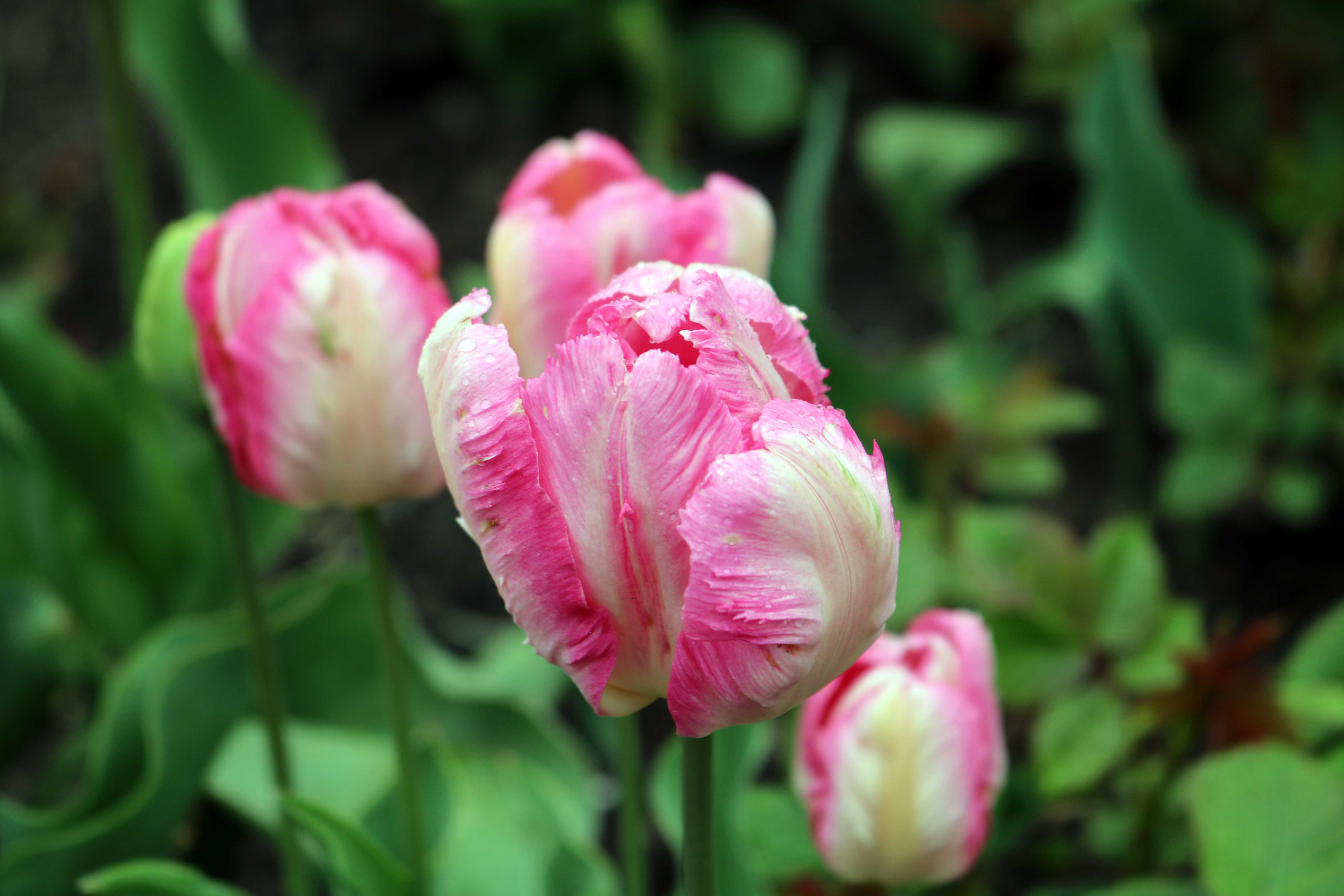
April rains bring in May flowers is a famous Canadian saying. In May, Tulips announce the arrival of Spring at our garden.
Tulips are wildflowers native to central Asia in the Tien Shan Mountains near the Russian-Chinese border but didn’t really become popular until reaching the Netherlands.
They spread west and were cultivated in the Ottoman Empire (modern-day Turkey) by 1000 AD, when the sultans introduced huge beds of tulips to parks and palace gardens.
Tulips are known for their bold colors and beautiful shape, and most varieties are indeed almost perfectly symmetrical.
The word ‘tulip’ comes from ‘tülbend,’ a Turkish pronunciation of the Persian word ‘dulband,’ which means turban.
Tulips are known for their bold colors and beautiful shape, and most varieties are indeed almost perfectly symmetrical.
The blooms have three petals and three sepals, but since the sepals are almost the same size and shape as the petals, tulips appear to have six petals to a bulb.
Striped tulips were originally created from a virus. In 1931, scientists discovered that the coloring was caused by a virus spread by aphids (sap-sucking insects). The virus is still used to alter the DNA, but it’s done without aphids.
Tulips symbolise love but there is a different meaning based on the color tulip. For love and romance, red tulips are the way to go.
If you want to convey an apology, white tulips are the flowers that you seek.
Orange Tulips represent sense of compassion, understanding, and sympathy.
Pink tulips symbolise happiness and confidence.
Purple tulips are associated with royalty.
Yellow tulips are great for cheer and happiness.
Although there are no true black flowers that occur in nature, because of their deep purple petals that almost look black. ‘Queen of the Night’ tulips are one of the most popular varieties because of their deep purple petals that almost look black.
True Blue is one of the few colours with Black that has remained absent from tulip’s impressive colour palette.
The flower is the symbol of the Parkinson’s Disease Foundation. A variety of tulip was named after Dr James Parkinson, the doctor for which the degenerative disease is named.
Currently tulips are the third most popular flower in the world, with roses coming in first and chrysanthemums coming in second.
On Valentine’s Day the tulip is the second most gifted flower (after the rose) – obviously only Red.
Tulip blooms only last a week or two, and we await the tulips to bloom next year.
Recently, on social media, there was an image of the calendar page of August 1947. The Forwarder pointed out that 15 August 1947 was not printed as a holiday. This of course was quite natural as the calendar was printed prior to the beginning of the year at which time nothing was known about the epoch-making events which were to follow during the year. What struck me however was that the calendar was of Mr PC Mathew of Ettumannoor, Kottayam and that he was a Jaggery Merchant. In those days besides the Malayala Manorama newspaper only a few rich businessmen printed calendars. So one can surmise that Mr. Mathew had a flourishing Jaggery business in Kottayam.
The Central Travencore prior to independence had extensive sugarcane cultivation, in the areas watered by Pampa, Manimala, Achenkovil and Meenachil rivers. The area mainly comprising present day Kottayam and Patthanamthitta districts, was ideally suited for Sugarcane cultivation as the climate and soil conditions of the area is suitable for the crop. Areas like riverbanks, waste lands etc. where other crops could not be cultivated were profitably utilised through sugarcane cultivation. Moreover, sugarcane could tolerate heavy rainfall and short duration water-logging. The golden brown, sweet Central Travencore Jaggery was famous all over India. This is history and the area has very little sugar cultivation now. Recently there have been some reports of individual attempts to revive sugarcane cultivation in the area but largely to no avail.
Up to late 1960’s areas around Kottayam cultivated sugarcane, more than rice and tapioca. In our young days, children often sneaked into the sugarcane fields to enjoy the ripening cane. The landowners or their sentries shooed us away, but we were quite successful more often than not. During our National Defence Academy (NDA) days, the fields around NDA too had sugarcane. Cadets did the famous गन्ना Ganna (sugarcane) Raids. In 1996 when I visited the NDA, I found no sugarcane cultivation in the area. It was sad to see a concrete jungle instead of the rolling sugarcane landscape.
By late 1960s, the sugarcane cultivation stopped in our area and entire Kottayam as there were some pests infesting the crops and the canes turned red. The pests sucked away all the juices and left the canes to wilt. Advent of Rubber was also another reason which dealt a deathblow to sugarcane cultivation in the areas around of Kottayam. Please click here to read about introduction of Rubber plantations in Kottayam.
Non-availability of sugarcane led to the closure of the sugar division of The Travancore Sugars & Chemicals Ltd. (TSCL) in 1998. The company was incorporated in 1937 with the factory at Thiruvalla in Pathanamthitta District, which commenced commercial sugar production on November 1948. The Company was originally owned by M/s Parry & Co. Government of Kerala took over the company in 1974. Now its distillery division produces Jawan brand Rum. Thiruvalla is also home to the Sugarcane Research and Development Centre. Like many research centres in the country, it is a white elephant milked by its employees. Their website shows no research paper ever published and has hardly contributed to the reintroduction of sugarcane in the region.
The sugarcane farmers crushed the sugarcane on a ചക്ക് Chakku. The Chakku had two vertical metallic cylinders rotated by a bull going around. The sugarcane was passed between the two metallic cylinders and the juice collected at the bottom.
The metallurgy of the cylinders was not that well developed, and they got worn out over prolonged use, especially in the middle, due to the extensive pressure the passing sugarcane exerted. As the rollers lost their cylindrical shape, their effectiveness reduced drastically and had to be turned on the lathe, especially at the two ends to make them cylindrical.
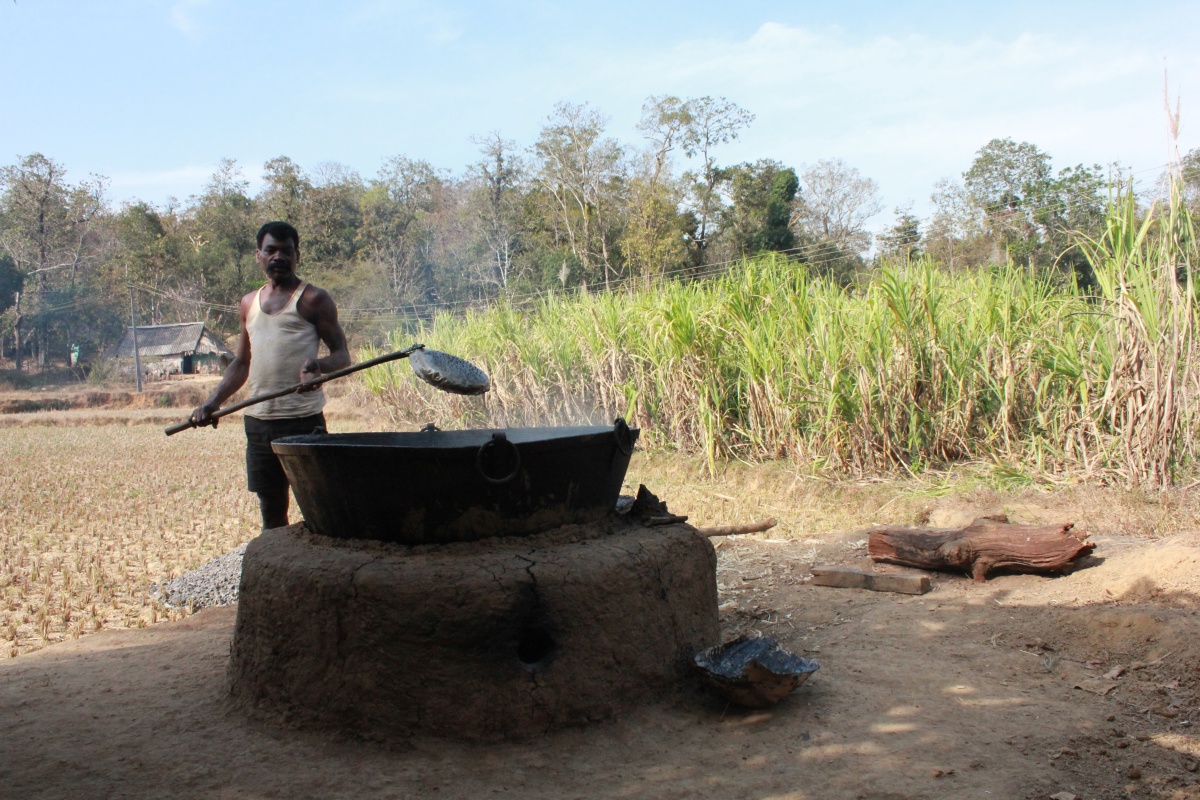
The sugarcane juice was boiled in a huge വാർപ്പ് (Vaarppu,) a flat iron boiling pan of about three-meter diameter. During boiling, chemical bleaching agents or vegetables were added to clean the juice and the extraneous matter was constantly removed to give a bright golden colour. The boiled juice was then left to cool in pots to form the jaggery blocks.
Our village blacksmith, Shankara Panickan lived across the street. He manufactured and sharpened farm implements and knives. The main source of income for Panickan was not from sharpening tools, but from his lathe, housed in a shed between his house and the foundry. To turn the lathe there was a wheel of a bullock cart attached at one end, which had to be rotated manually at a particular speed. Panicking’s elder son Thankan, was an expert at the task.
The customers at the lathe were mainly the sugarcane crusher owners. They had to turn their worn out vertical metallic cylinders on a lathe. Panickan charged 20 rupees per roller he turned on his lathe, but this bonanza came to Panickan only on a few days, limited to the crushing season.
The day Panickan got his bonanza, the evenings were more entertaining, especially for the neighbourhood (no one had a radio then.) Panickan that evening visited the കള്ളു ഷാപ്പ് Kallu Shappu (Toddy Bar). (Toddy is an alcoholic beverage made from the sap of palm trees by fermentation). He returned home drunk by nightfall and sang folk and devotional songs with such endearing passion that I can still feel the melody wafting through the still air. The way he used to sing will put some of today’s professional singers to shame. His favourite songs were the one he sang in praise of Lord Aiyyappa of Sabarimala.
For the current generation, sugarcane cultivation in Kottayam is history.
Daffodils, also known by their botanical name Narcissus, are the first flowers to bloom in our garden. The name originates from the Latin word affodill which comes from the Greek word asphodelus, which refers to a genus of flowers that emerge from fleshy rhizomes. It is believed that the Dutch put de, meaning the, in front of the word affodill, which eventually led to the name Daffodil.
Daffodils symbolise rebirth, new beginnings, hope, joy, and good luck. This symbolism could be because daffodils emerge first every spring to light up barren landscapes with their cheerful yellow, orange, and white flowers.
The centre of a Daffodil is a crown-like structure called a trumpet and is also known a Corona!
Daffodils are the official tenth wedding anniversary flower. Chinese believe that if the Daffodils bloom for the Chinese New Year, it will bring luck to the whole household.
The Hyacinth bloom early spring accompanying the Daffodils and is a member of the asparagus family.
According Greek mythology legend, a young Hyacinth was killed when Apollo and Zephyrus were fighting over his affections. It is said hyacinths sprung up from his spilled blood.
The Hyacinth flower symbolises sport or play. Different coloured hyacinths carry different meanings. The blue Hyacinth signifies sincerity.
Pink hyacinths mean ‘playful joy’ while the purple flowers symbolise deep regret and white represents love and prayer.
When proud-pied April, dressed in all his trim, April hath put a spirit of youth in everything, – Sonnet 98: From you have I been absent in the spring by William Shakespeare.
That is what the spirit of spring brings to each one of us. In Spring, the earth laughs in flowers. It brings in cheer and happiness. It is a reminder to us about the warmer days ahead. If we did not have the freezing winter, the spring will never be so pleasant.
We enjoy everyday of Spring more because it is the weather of birds chirping; bees flying from flower to flower collecting nectar; butterflies fluttering showing off their colourful wings.
The first blooms of spring always make my heart sing as the flowers never worry about how they are going to bloom. They bloom and turn toward the light and that makes them beautiful.
To plant a garden is to believe in tomorrow and at the end of the day in the Spring, I smell like dirt. The very first flowers that appear in our garden at the onset of Spring are on the Weeping Pussy Willow. The Salix Caprea ‘Pendula’ is commonly known as the Goat Willow or Weeping Pussy Willow, which belongs to the Caprea genus of flowering trees.
The soft coating of hairs acts as insulation to protect these early bloomers from cold temperatures. Most other willows make similar flowers, and since they’re among the very first to bloom, they’re especially delightful—they signal the onset of spring. The tree derives its name from these soft silver tufts that resemble tiny cats’ paws, feeling so much like fur.
Among the fruit trees in our garden, the first to bloom are the apricots.
The pale pink and fragrant flowers are 5-petaled and appear singularly or in pairs. Cultivation of apricot trees in China dates back 3000 years. From there apricot trees spread west throughout central Asia into Armenia. The Romans introduced apricots to Europe in 70-60 BC through Greece and Italy. Apricot trees probably moved to the US through English settlers on the East Coast,
Eclipses and transits are astronomical events where a celestial body partially or totally covers another celestial object. The term eclipse also finds its roots in ancient Greek—it comes from the word ékleipsis, meaning to fail or to abandon.
Eclipses, solar and lunar, have fascinated scientists and laypeople for centuries. In ancient times, eclipses were seen as phenomena to be feared – many cultures came up with stories and myths to explain the temporary darkening of the Sun or the Moon.
The story of eclipses in Hindu mythology dates to the Samudra Manthan (churning pf the ocean,) as described in both Bhagawat and Vishnu Puranas. After the Amrit or elixir of immortality was churned out of the ocean, the Devas (Gods) used the Apsara Mohini to trick the Asuras (Demons) out of its share. One of the Asuras, Svarbhanu, disguised himself as a Deva, and sat between the Sun and the Moon for a drink of the elixir.
When Vishnu came closer, the Sun and the Moon revealed that Svarbhanu was a demon. By this time Svarbhanu had already sipped on the drink. Vishnu immediately cut off his head. Since the demon had already swallowed a bit of the nectar, his head became immortal. The head became Rahu and the body became Ketu. It is believed that from time to time, Rahu catches up with the Sun and the Moon, and swallows them. The incident doesn’t last long because Rahu has no hands to grab onto these two celestial Gods.
Rahu and Ketu denote the points of intersection of the paths of the Sun and the Moon as they move on the imaginary celestial sphere with the earth at the centre and are respectively called the North and the South lunar nodes. Eclipses occur when the Sun and the Moon are at one of these points, giving rise to the understanding of swallowing of the Sun and the Moon by Rahu and Ketu.
The Gospel of Luke 23:45 for the sun stopped shining and the curtain of the temple was torn in two. Mark 15:32 Let this Messiah, this king of Israel, come down now from the cross, that we may see and believe. Those crucified with him also heaped insults on him. 33 At noon, darkness came over the whole land until three in the afternoon.
However, the biblical details do not accord with an eclipse: a solar eclipse could not have occurred on or near the Passover, when Jesus was crucified. A solar Eclipse lasts for around seven minutes and is too brief to account for three hours of darkness.
A solar eclipse can only happen during the New Moon when the Moon passes between the Sun and Earth. Similarly, a Lunar Eclipse during the Full Moon. Although there is a New Moon every 29 ½ days, there are usually only two or three solar eclipses each year. That’s because the Moon’s orbit is tipped 5 degrees to Earth’s, so the Moon’s shadow misses Earth during most New Moons. Though the diameter of the Sun is 400 times that of the Moon, but it is also 400 times further away, which results in the Path of Totality. This path is typically 16,000 kilometers long but only 160 kilometers wide. To witness the Sun totally eclipsed by the Moon you must be in the path of totality.
The total solar eclipse in Niagara Falls, was ranked #11 on National Geographic’s Best of the World list for travel adventures. The mayor of Niagara Falls declared a state of emergency in the region as a precautionary measure ahead of an expected large influx of people who came to observe the total solar eclipse. Officials were concerned that the large congregation could overwhelm traffic, emergency services and cellphone networks. More than half a million people flocked to the border city, home to the iconic waterfall, to witness the wonder.
Mississauga and the Greater Toronto Area, we are a few kilometres outside the Path of Totality, where the eclipse was about 99.86%. It was a cloudy day; hence we could not observe the eclipse in full. The eclipse began around 2:00 PM, with totality at 3:18 PM and lasted around three minutes.
At 2:00 PM, slowly and laboriously, the moon’s shadow ate into the sun during the next hour. It was a gradual darkening of the sky as a second sunset began around 3:15 PM. At 3:18PM, nearing totality, the diamond ring effect was seen, when all but a tiny glaring dot of sunlight was visible, accompanied by a ring of light around the moon’s darkened face. After three minutes, the moon’s shadow slowly receded and the sun slowly began to reappear. After another hour, the sky had brightened again,
Reminising about the Total Solar Eclipse of16 February 1980, during our Third Semester at the national Defence Academy (NDA,) where many Cadets and Officers took it as an unwelcome and evil event which they presumed affected their lives negatively and they had to be protected from its evil effects. It was a Saturday but was declared a national holiday as many feared that even the residual light entering the rooms may have adverse effects on the human body, especially the eyes.
To ensure people remained indoors, Doordarshan -the only TV channel then – screened the popular Hindi movie Chupke Chupke. The England Cricket Team was playing the Bombay Test and due to the Solar Eclipse, both cricket boards decided the Second Day as the Rest Day.
We were all ordered to make our cabins into total blackout by placing our blankets on the windows. We were ordered to lock ourselves in the room until the evil receded. Special Duty Officers were posted in the Squadrons to ensure that the orders were strictly adhered to. The Academy for the first time in its history came to a near standstill. All roads were deserted; Gole market closed; there were no humans sighted anywhere.
Only a few diehard Cadets, immune to superstitions and blind beliefs, ventured to sneak a view of the eclipsed Sun through the side of their cabin windows. I managed two sheets of blank X-Ray sheets from the Mallu X-Ray Technician at the Military Hospital, folded it as my suns-hield to view the eclipse. Our classmate Late Commander VS Ranganathan and our senior Commander Rangarajan from Sainik School Amaravathi Nagar (TN) were members of the Astronomy Club. They were lucky to view the eclipse through the telescope atop the Science Block and photograph the event.
When our son Nikhil was commissioned to the Canadian Army, I asked him, “What is the contribution of the Canadian Education system in turning you into a leader?”
Nikhil answered, “It all begins at home and is nurtured at home. We go to school to gain knowledge, fight, resolve issues, refine our social and communication skills etc. Ultimately it is the family that defines what a person is. “
The ideas suggested below have worked with our family, earlier in the Indian Army environment and now in the Canadian environment. It is neither a remedy nor a pill for success nor Dummies for Good Parenting. You may accept some, modify some and reject some based on your judgment.
Parenting. We all want to raise children who will be able to raise even better children than we were able to. This incremental improvement in parenting will lead to better societies, to more progress and better understanding between the people.
Decision Making. Children must be allowed to make decisions at a young age. It could be the colour pattern of the home, plants for the home garden, selection of a restaurant for the family outing, movie to be watched, etc.
Adventure Activities. Parents must take children for as many adventure activities as possible. We participated in Marathons and climbed CN Tower as a family. Please click to read Climbing the CN Tower.
We went on camping trips to the wilderness of Ontario. Some of the lessons we learnt during our camping activities are: –
Be prepared to cope with inconvenience, especially washrooms. The parents must lead by example with a positive can-do attitude.
Ensure that all children are involved in meaningful camp chores like gathering firewood, collecting water from the tap, etc.
Teach the campers about the knots, hitches, and lashings as it will save a lot of time in tent pitching.
Pitch the tent in your backyard the previous weekend. This will teach the campers about tent pitching, managing space inside the tent, entry and exit without letting insects in.
Basic survival skills—such as building a simple shelter, making a fire, tying a knot, fishing, and berry picking—are all useful skills that may come in handy one day. Such activities are great for teaching cooperation, empowerment, and leadership.
Encourage Risky Play. Children must be encouraged to take risks. Not taking any risks is today’s risk. Please read Risky Play.
Play Chess with the Children. It teaches children the art of planning and forethought. Fit for all ages. Please click here to read.
Personal Finance. Include children while planning family finances. They must be aware of how much the parents earn and how that money is spent. How to make and stick to a budget, how to save, how to invest, how to establish credit, how to manage bill payments, how to fill a tax return – these essential skills children will only learn if they participate in the family financial planning. When our children began to work from high-school days, every hard-earned penny was important to them, and they had to file their tax returns.
Employment and Networking. Teach the children how to write a resume and cover letter. Teach them the importance of social and professional networking and give them the tools to make those connections. Remind them that their social media posts will probably be seen by the hiring manager googling your name.
Sex Education. The most difficult subject for many parents to broach with their teenage children, but once you take the first bold step towards it, it becomes easier and will be a rewarding experience. Studies indicate that adolescents whose parents talk to them about sex tend to be less sexually active and more likely to use an effective means of contraception. Many parents are not able to provide all the information about sex that young people need. Only a few ever got a good idea from their parents that helped them talk about sexual issues with their girlfriend/ boyfriend. Parents must be the primary source of information about sexual and reproductive health for their children and not what they learn from their friends or through media or from the internet. Our son’s favourite line being “All my thirst for sex was quenched the day I discussed it with my dad.”
Consent. It is about teaching respect, to be aware of personal boundaries, the body, space, and touch. For older students, discussions can delve into sexuality, relationships, and communication.
Mental and Physical Health. Healthy Mind in a Healthy Body is an age-old adage which to date stands good. While physical education is often covered, many schools ignore students’ mental health. Mental health issues often develop during the school-age years. Children must be helped in coping techniques for stress and depression such as meditation and mindfulness. At home, talk about taboo topics like addiction and suicide, and make them destigmatise mental health issues.
Behavioral Sciences. A must to make our children understand their minds better. Discussions at home about behavioral science can help them understand what motivates them, why they make the decisions they do. Helping them to set their aims and goals based on their dreams and aspirations is a parental duty. Please click here for Dreams, Aims and Goals

Stress Management. “What is the most important aspect of growing up as a high-school student?” I asked Nikhil. “Stress management,” came a prompt reply. “High-school life is all about managing stress – academic stress, parental stress, peer stress. Thank you, Dad, I did not have any stress from my parents.”
How to Speak in Public and Sell an Idea. Confident children will make quality friends, gain the trust of partners or employers. They must articulate in such a way that it makes sense to the listeners. Voice modulation is an important aspect of it and the children must be trained at it. Please click here to read about it.
Time Management and Discipline. Both our children said their time management skills helped them to be successful high-school and university students. One got to be on time for the class, for your submissions etc; otherwise, one is sure to lose marks. They had to ensure on-time submission, even if the work was incomplete and may not be of the standard wished – this fetched them some marks than getting none.
First Aid. First-aid training is a lifesaving skill that children can use throughout their lives. If taught at home, it will prepare students to help their classmates and family members in the event of an emergency. Please click here.
Voting. Low percent voter turnout in recent elections all over the world can be attributed to lack of awareness among voting-age children. Parents must teach children about citizenship and participation in the democratic process, history of voting and as to how each one’s vote counts.
Cooking. Joint cooking sessions at our home were both chaotic and fun. Cooking taught them about food, nutrition, and diet. For further reading, please click here.
Gardening. Growing food is a hands-on experience for children to learn about where food comes from, develop healthy eating habits, get some outdoor exercise, and work together to accomplish a goal.
Home Maintenance. Children must be taught the basics of home maintenance. They must be capable of changing a light bulb to driving a nail on the wall. This will arm the children with practical, empowering skills that they can use for a lifetime.
Car or Bike Maintenance. As they grow up, our children will drive a car or ride a bike. It will be a good idea to learn how to maintain them. Practical skills like learning how to change a flat tire, change the oil in the car, or replace the brake pads on your bike will foster a sense of empowerment, self-confidence, and accomplishment. Who other than parents can impart such training?
Religion. Religion must be discussed at home. Both evolution and creation of humankind must be discussed. Meditation must be practised as a calming mental exercise, not a path to enlightenment. Teaching about world religions is the better approach, as it erases stereotypes of religious minorities and fill a pressing need to reduce ignorance about religion.
Human and Animal Rights. Incorporating human and animal rights during discussions can be a good way to prevent bullying, discrimination, and promote inclusion and respect for diversity. Make children aware that no matter our ethnicity, gender, colour, religion, language, sexual orientation, or any other status, we are all equally entitled to our human rights without discrimination. Having a pet or two at home will encourage children to be empathetic to animals.
Gender Identity. Children should know whether you identify as male, female, transgender, non-binary, gender-neutral, or anything else, gender identity affects us all. Tackling issues head-on can help the next generation learn to be more kind, open, and understanding.
Media Literacy. In the era of fake news, teaching critical thinking and media literacy at home is more important than ever. Children must be capable of sifting through it all with a critical eye. Please read To Post or not to.
Digital Etiquette. So much of Childrens’ lives are spent online, making it essential to teach digital etiquette at home. From protecting their privacy to avoiding digital drama, children need to learn how to treat others with respect online, avoid cyber-bullying, and safeguard themselves from online predators.
Alcohol and Marijuana. Countries like Canada have made both legal with strict Minimum Legal Drinking Age (MLDA.) In Canada MLDA is 19 years, but children device dubious means to get around it. How we trode through it, Please click here.
A family is not a private limited company of the parents but is a public company where the parents and children all have equal stakes. Along with the stakes comes duties and responsibilities. It is mandatory for the parents to ensure that they do their bit and that the children do theirs. Making the children do chores at home, making them participate in all family activities, ensuring that their academic pursuits are successful, encouraging them to pursue their hobbies and interest and their sporting interests and above all communicating with them to achieve the aforesaid is what the parents got to do.
A home should be a safe place where the children can mess up. It is not a place for perfection. The parents must guide the children to come out of the mess they create so that they are better prepared to face the world outside full of hatred, judgment, sarcasm, and violence.
A home should be a retreat where the members can find comfort, rest, and healing. A place where children can return after a difficult event or a failure, where they will not be rebuked or made fun of.
A decade and a half ago, Veteran Major General Jambusarwalla and Mrs. Hufreez Jambusarwalla visited Niagara Falls, US side. We all decided to meet them there as they did not have a Canadian Visa. Our children were very excited to meet the General as they had heard from their dad a great deal about the wonderful human being and adorable military leader worthy of emulation. It is believed that on the first day of raising the Artillery Division, the General called his two principal staff officers and said to them, “To be efficient the formation must first be happy. You look after the happiness part and I the efficiency part.”
Much as the General requested us not to bother, I wasn’t going to miss this opportunity to meet someone whom I so admired and more so I wanted the children to meet him. On the appointed day, we set out from home, crossed the international border and reached the hotel where the couple were to check-in. We received them there, and on meeting us, the General quipped with characteristic humour, “What better can a retired General from the Indian Army ask for at the Niagara Falls than a General Salute from a Colonel and family.” We then had dinner and shared a couple of wonderful hours together. The children were overwhelmed by the couple’s warmth and love.
One anecdote that he narrated particularly warmed the cockles of my heart. Interacting with Nikhil the General said, “Your Dad was arrogant and a bit of it did rub on his soldiers.”
“You can’t be serious Sir!” I interjected.
“In a positive way, I must add,” said the General and he narrated an incident that occurred while he was the Commandant at the School of Artillery and our Regiment – 125 SATA Regiment – a cooperating unit with the School.
“Most evenings Hufreez and I went on a long walk in the cantonment. Generally, the soldiers walking in the opposite direction conveniently turned left or right as they understandably preferred not to confront a General. Few soldiers with a bit of instilled confidence walked past us smartly with a greeting. One evening, when two soldiers crossed us with a smart greeting, I said to Hufreez, ‘They are from 125 SATA.’ She wasn’t convinced and said that possibly I was needlessly over-impressed with the Commanding Oficer. The next evening a similar event occurred. When two soldiers crossed us, I summoned them after they greeted us and I asked them, ‘Which Regiment are you from?’
Both said in unison ‘Sir, 125 SATA Regiment,’ visibly proud and confident.”
While driving back, our son Nikhil said that the General was so down-to-earth and that he did not fit into the frame of a General that he had in mind. He was expecting a rigid, tall and a perfect military figure from what he had heard about him, but what he experienced was a simple human being full of energy, warmth and lots of humour, who came down to a kid’s level to enable a smooth and easy interaction. Nikhil summed up his final opinion with a statement – He is very Napoleonic.
“Great things in your life will mostly come in short packets. One’s got to look for them, identify them, explore them, imbibe them and learn from them,” was my reply.
As I continued to drive homeward, I reminisced about the unit I commanded and my effort to transform the outlook of the boys. On assuming command of the Regiment while we were deployed in Rajasthan in 2002, my first command order was a somewhat quixotic one about dress code for soldiers. Please click here to read.
On returning to Devlali after the operational deployment, I was irked by the number of worthless documents/registers that the unit maintained. The first to be thrown out the window was the Out Pass Register. To my mind, Out Pass is the vestige of the British Indian Army where the officers – mostly British – did not have the requisite faith in the Indian soldiers. They had to instill checks and procedures to reduce their movements in civil areas, particularly with a view to minimise the effect of any possible subversive influence.
We did away with the Out Pass Register as I had complete trust in our soldiers that they will abide by orders and instructions and will conduct themselves in a soldierly manner when outside the Regiment, more so under the pressure of such a trust. The need to treat them as soldiers worthy of trust rather than as jail inmates was foremost in my thoughts. The soldiers’ trust in the command echelons too increased manifold by this action that they realised their actions should not bring any blot on the Regiment. Instructions were passed that any soldier leaving the Regimental area only needed to inform his Section/ Platoon Commander about his going out and the likely time of return. It was a little thing with a big impact.
The only covenant was that they should all be smartly turned out in their Sunday best – pants, full-sleeved shirt tucked in, belt and leather shoes, well groomed hair, aptly perfumed.
One morning when I complimented the Stick Orderly – Gunner Deepak Pathak on his turnout, he replied, “Sir your orders on out-pass and soldiers’ turnout have gone down well with everyone. Even Havildar Dharambir (Kabaddi Team Captain and Soccer Team Vice Captain – Please click here to read more about Havildar Dharambir) has shed his favourite Kurta-Pyjamas and now wears full-sleeved shirts and pants.”
Are the Indian Navy’s sonars and radars switched On?
Watched the Malayalam movie മഞ്ഞുമ്മൽ (Manjummal) Boys in Canada. It was released world over on 22 Feb 2024. The movie was received well all over Kerala, but everyone was surprised by the response from the viewers in Tamizh Nadu.
The release of the movie coincided with the release of a Thamizh movie with a superstar. Still, the movie did very well. It was because the movie is based on a cave in Kodaikkanal in Thamizh Nadu, known until the release of Kamal Haasan’s 1991 film குணா (Gunaa) as Devil’s Kitchen. Post Gunaa’s release, the cave became known as Gunaa Caves and it attracted many adventurists. Today, the Forest Department has fenced the area off.
The movie is about a real cave rescue when one of the 11 in the group accidentally fell into the cave. It is reported that over 15 people have fallen through this cave and only one was rescued. The movie is about that rescue.
A group of 11 young men, belonging to a sports club in a sleepy hamlet of Manjummal in Kerala set out on a trip to Kodaikkanal. En-route, they buy a CD containing the theme song of Gunaa and plays it in their van. This song becomes the backdrop of the movie.
The Arts & Sports Clubs in Kerala is an association of the youth of Kerala and every village in Kerala has two or more such clubs. They survive on contributions from the locals and there is no government funding. The Clubs promote games ranging from Cricket, Soccer, Volleyball, Native Ball (A game limited to only Kerala,) to Boat Race teams. These clubs stand as an icon of communal harmony of Kerala with members who are Hindus, Christians and Muslims.
Tug-of-War teams are the pride of these Clubs and there are many competitions held all over Kerala and these Clubs fight it out there. The competitions are sponsored by local businesses and people. Here too, there is no government funding. Keralites in USA and Canada too have raised such Arts & Sports clubs.
Theses Arts & Sports Clubs are mostly subscribed by men, but generally have a female name. In this movie it is ദർശന (Darshana.) The club members are generally around 25 years of age, but there will be a patron who is the leader and mentor and he is generally around 35. It will also have a set or two of siblings or cousins.
As per the season or when an event where they are to participate approaches, they conduct daily practices. The patron is the coach and at times call in for an experienced old-time player from the village as a coach. The uniform and expenses for training again comes in as voluntary contributions.
The movie begins with a Tug-of-War between two teams. It is between the Reel Manjummal Boys and the Real Manjummal boys. The Reel Manjummel boys now set out on their adventure trip to Kodaikkanal with the Gunaa Song in the background.
On their journey to Kodaikkanal, the opening stanza of the song plays. I wondered as to how the director will connect it with this movie. The original song in the movie Gunaa is between a man madly in love with a woman, but in this movie, the director has successfully integrated the song to depict love between friends – which mortals cannot understand, which is much beyond that – both pure and holy.
கண்மணி அன்போட காதலன், நான் எழுதும் கடிதமே, Kanmani anboada kaadhalan,Naan ezhuthum kadithame, Apple of my eye, with great affection and love, I write this love letter.
பொன்மணி உண் வீட்டில் சௌக்கியமா? நான் இங்கு சௌக்கியமே. Ponmani un veetil sowkiyamaa? Naan ingu sowkiyamae. Oh love, are you fine in your house? Don’t worry, I am fine here.
உன்னை எண்ணி பார்க்கையில் கவிதை கொட்டுது, Unnai enni paarkkaiyil kavithai kottuthu, The anticipation of seeing you, pours poetry,
அதை எழுத நினைக்கையில் வார்த்தை முட்டுது, Adhai ezhutha ninaikkaiyil vaarthai mouttuthu, When I think of writing it, words are stuck.
The next stanza is played after the victim is saved from the cave.
உன்தான காயம் யாவும், தன்னாலே ஆறி போகும், Unthaana kaayam yaavum, Thannaalae aari poagum, My wounds heal themselves,
மாயம் என்ன பொன்மானே பொன்மானே, Maayam enna ponmaanae ponmaanae, What magic is this, my love my love,
என்ன காயம் ஆன போதும், என் மேனி தாங்கி கொள்ளும், Enna kaayam aana podhum, en maeni thanki kollum, My body can bear all wounds,
உந்தன் மேனி தாங்காது செந்தேனே, Unthan meni thaankaadhu senthene, Honey, you can’t bear them,
எந்தன் காதல் என்னவென்று சொல்லாமல், ஏங்க ஏங்க அழுகை வந்தது, Enthan kaathal ennavendru sollaamal, enka enka azhugai vanthathu, I cry because I didn’t express my love to you,
எந்தன் சோகம் உன்னை தாக்கும், Enthan sokam unnai thaakkum, I do not want my sorrow to hurt you,
எண்றேனும்போது வந்த அழுகை நின்றது, Endrenumbothu vandha alugai nindrathu, My tears stop at that moment,
மனிதர் உணர்ந்து கொள்ள, இது மனித காதல் அல்ல, Manithar unarndhu kolla, Idhu manitha kaathal alla, Humans will not understand this mortal love,
அதையும் தாண்டி புனிதமானது. Athaiyum thaandi punithamaanathu, This is beyond that, pure and holy.
Gunaa was released in 1991 and like most Kamal Hasan movies, it was much ahead of its time. Manjummal Boys has prompted the trade for a re-release of Gunaa – after 33 years of its making. Manjummal Boys’ is a tribute to Gunaa.
The Canadian Paediatric Society has released new guidance for unstructured, outdoor play for children, emphasizing how important risky play can be for their health and well-being.[1] The report finds risky play can improve physical, mental, and social health, and help prevent or manage health conditions like obesity, anxiety, and behavioural issues.
During our vacation to our native place in Kerala in October 2019, standing next to our ancestral home, I could see in my mind’s eye the front courtyard where once a Guava tree stood, leaning on to the roof. I narrated to Marina as to how we as kids – I was less than ten years old – used to climb the Guava tree to leap on to the roof, may be to pick up a ball that had got caught on the roof tile or just for fun. Marina then came out with a story of a similar Guava tree in her ancestral home and how she executed many similar monkey tricks.
The mere sight of the high roof sent a chill up my spine as I could not even fathom my climbing it now. The thought struck me that perhaps I would never even have permitted our children the fun of climbing on such a tree and get on to the roof. The question that intrigued me was ‘How come parents of those days allowed their children such (mis)adventures?‘ After we children grew up into our teens, our father cut the guava tree in 1976 as it was posing a threat to the very existence of the tiles on the roof. Moreover, we children had grown too old to climb on the rooftop to clear the fallen leaves, a periodic ritual.
Opportunities for children to engage in outdoor free play have declined significantly in recent years due to parental worries about play-related injuries. Television, Internet, electronic gizmos – all have turned the children into lazy people. During our childhood, we never reported any minor play related injuries to our parents, else it invited harsh punishments and restrictions. The fun of our childhood pranks was all about the thrills of beating the hazards & risks and reducing the chance of getting caught by our parents or neighbours.
United Nations Convention on the Rights of the Child has listed children’s right to play as a fundamental right[2].
It is the duty of the parents to ensure that the safety of their children only as much as necessary. They must be aware of the child’s abilities and confidence but the thrill and uncertainty of playing at heights, speeds, wilderness, dark nights, etc are beneficial, so are supervised activities like wall climbing, animal petting, camping, trekking, etc.
What is risky play?
Risky play is defined as thrilling and exciting forms of free play that involve uncertainty of outcome and a possibility of physical injury. It includes: –
Playing at Height : Climbing, jumping, balancing at height
Playing at Speed : Bicycling at high speed, sledding, sliding, running
Play Involving Tools : Supervised activities involving an axe, saw, knife, hammer, or ropes
Playing near fire or water
Rough-and-tumble play, Wrestling, play fighting, fencing with sticks
Exploring play spaces, neighbourhoods, or woods without adult supervision, or in the case of young children, with limited supervision
Risky play is essential for children’s development and for their physical, mental, and social health. Restrictive rules about play at home, daycare or school have impacted children’s health. During risky play, children learn to recognise and evaluate challenges, which will in turn help them develop confidence in their decisions and abilities. Risky play can also help children with disabilities develop autonomy and reduce social exclusion.
The children got to experience and recognise the risks while outdoors, near water and fire. Trekking through the forests, camping overnight at camp sites will teach them to recognise such risks and learn how to manage it – all under parental supervision.
It does not mean that parents must push their children ignoring safety measures and leaving children unsupervised in hazardous areas. The parents must be aware of the hazards and be ready to intervene if there is any potential harm.
Risk is inherent to free play. When children play spontaneously, they may choose to push boundaries and test limits. Risky play encourages creative, spontaneous play, first by eliminating hazards, then by supporting risk-taking that is chosen and controlled by the child and appropriate to her/his experience and ability.

The biggest risk is not taking any risk… In a world that changing really quickly, the only strategy that is guaranteed to fail is not taking risks. – Mark Zuckerberg Only those who will risk going too far can possibly find out how far one can go.” – T. S. Eliot
2024 began with incidents involving aircraft doors in North America. On 07 January 2024, the door plug from an Alaskan Airlines Boeing 737 Max came off about 10 minutes after it took off from Portland International Airport. The aircraft was at about 16,000 feet when the incident occurred. After about 20 minutes, the aircraft made an emergency landing at Portland Airport safely.

The door plugs are inserted where emergency exit doors would be located. The plug is secured in place by bolts that prevent the mechanism from moving upward on rollers when the plane is in flight.
The blowout created a partial vacuum inside the aircraft that twisted the metal of the seats nearby, and snatched cellphones, headsets and even the shirt off the teenager’s back. Luckily, the two seats closest to the blown-out hole were unoccupied.
The Fasten Seat-belt sign was on at the time of the incident and the seat-belt saved the teenager. The pilot generally keeps the sign on until reaching cruising altitude. Different airlines have different policies on turning off the sign – some until reaching cruising altitude, some at 18,000 feet and some at 10,000 feet – if the pilots feel it safe.
The oxygen masks dropped immediately, and the flight attendants moved passengers from the area where the blowout occurred. The roaring wind was so loud that passengers could hardly hear the captain’s announcements.
The pilot immediately descended to 10,000 feet, where there is enough oxygen for everyone onboard to breathe. If the blowout had happened a few minutes later, after the plane reached cruising altitude, the accident might have become a tragedy.
A passenger on an Air Canada flight from London, UK, to Toronto allegedly tried to open the aircraft doors mid-flight on 21 January 2024. He had to be restrained by the crew as part of their flight and safety protocols, which allowed for the flight to continue normally to Toronto.
Police entered the aircraft once the plane landed and found the passenger, an elderly man, in a state of crisis and confusion. The Police said, “It does not appear that his actions were intentional.” The Police did not lay any criminal charges.
Is it possible to open the doors of an aircraft mid-flight?
It is not possible to open aircraft doors at high altitude as the doors are designed to act as a plug that takes advantage of the differences in internal and external air pressure to create a secure seal. Try opening the pressure cooker at home when it is under pressure!!!
“Cabin crew – arm doors and cross check” – You will hear this from the cockpit, over the aircraft’s Public Address System at the start of every flight as the aircraft starts to push back from the gate. It means that the door is ready for use in an emergency evacuation. Once armed, if the door is opened, the escape slide or raft will deploy and inflate – in less than six seconds.
An aircraft is pushed back from the gate by a tractor to avoid the need for reverse thrust from the engines. Reverse thrust requires high engine power and creates a high-speed jet blast. This blast can distribute debris that can cause injuries to ground crew and may damage airport terminals, aero-bridges, and ground vehicles.
After landing, you will hear the pilot ask the crew to “Cabin Crew – disarm all doors,” (there is no Check Back here) meaning that the emergency slide has been deactivated.
On 08 January 2024, a passenger with Air Canada was injured after he opened the cabin door and fell out of the plane onto Toronto Airport’s tarmac on a flight to Dubai, resulting in a six-hour delay. The man boarded the aircraft, but instead of going to his seat, opened the cabin door at the opposite end of the plane and jumped on to the tarmac. He sustained minor injuries and was attended to by the emergency services. As per Police, the man was in a state of crisis when the incident occurred and suffered relatively minor injuries. He was apprehended by police and transported to a local hospital for treatment.
Confrontations on flights have increased since the pandemic started, with some altercations captured and replayed on social media.
Passengers do become anxious with the onset usually prior to boarding and continues throughout the flight, with more reports of anxiety on longer flights. In one unusual case, a man complained of physical ill-health, which resulted in diversion of the plane for his hospitalisation. He was diagnosed with ‘Jet-set Munchausen Syndrome.’
Munchausen’s syndrome is named after a German aristocrat, Baron Munchausen, who became famous for telling wild, unbelievable tales about his exploits and past. Munchausen Syndrome is when someone tries to get attention and sympathy by falsifying, inducing, and/or exaggerating an illness. They lie about symptoms, manipulate medical tests, or harm themselves. Diagnosing and treating Munchausen syndrome is difficult because of the patient’s dishonesty. In simple military terms – it is Shamming.
As per a study by Miller, Warren & Zarcone, Vincent. (1968), Psychiatric Behavior Disorders at an International Airport – suicidal ideation – may occur during flight in people who are mentally unwell. On rare occasions, the aircraft itself is used as the means of suicide.
Lester, D (2002) in an article Suicide and Aircraft Crisis in The Journal of Crisis Intervention and Suicide Prevention, describes two instances of commercial aircraft crashing because of a suicidal passenger killing the pilot and co-pilot, resulting in the death of all the passengers. In each case the perpetrator had purchased life insurance, presumably to benefit his family. Disappearance of Malaysia Airlines Flight MH370 on 08 March 2014 will arise in the reader’s mind.
Another psychotic behaviour is Airport Wandering. In certain psychotic patients whose conflicts relate to separation and reunion demonstrate a causal relationship between airport settings and ideas relating to abandonment and reuniting with family. They may be found wandering in various airports around the world.
Although the frequency of psychiatric emergencies is much lower than that of other medical emergencies in-flight, the public is likely to be less tolerant of such incidents. Control of disturbed behaviour in an aircraft poses much greater potential hazards than on the ground. Seriously dangerous incidents in the air are fortunately statistically rare but have a high public impact.
In future, Will there be a need to prove psychological stability prior to boarding an aircraft? Or Will the airlines screen the passengers for psychological stability?
This Christmas vacation, we travelled to the United States to visit our relatives. Christmas was as usual celebrated at our daughter Nidhi’s place on 25 Dec. We gave thanks to the God for ensuring that we had a fruitful year. Early morning of 26 Dec, we set out from Toronto Airport to Washington.
As we were packing our bags, our son Nikhil said that he will take care of the baggage. He said that as a member of the Canadian Armed Forces, he is allowed three pieces of baggage. Thus, Marina and I packed one suitcase; Nidhi, her husband Jay and our grandson James packed one suitcase; Nikhil and his wife Rain packed one.
Immediately, I checked the Air Canada website and it said ‘Members of the Canadian military benefit from an enhanced baggage allowance whenever they travel on a flight operated by Air Canada. Eligible active and retired members of the Canadian military are entitled to check up to three pieces of checked baggage, each weighing up to 32 kg (70 lb) each. The allowance is applicable to the member of the military and is valid for both personal and duty travel.’
WestJet, a private Canadian airline also offers military baggage allowance for active and veteran Canadian military personnel for personal or business reasons. Canadian Armed Forces members are allowed to travel with up to four bags. They also do not charge overweight/and or oversized bag fees.
Porter, another Canadian private airline also offers baggage allowance. Canadian military personnel are eligible for an enhanced baggage allowance. Baggage fees will be waived for up to three pieces of checked baggage.
Another Canadian ultra-low-cost airline, Swoop, also offers exemptions for military baggage. According to Swoop’s website, any active or veteran Canadian military personnel are entitled to two checked bags free and one carry-on bag free.
“Canada’s women and men in uniform have made an unwavering commitment to defend Canada and Canadians, and they deserve the same solid support from their government. Canada’s new defence policy provides the resources and capabilities our members need to succeed in their missions both at home and abroad.” Parliamentary Secretary Sherry Romanado