Selections @ Devlali

Those were the days when Selections ruled the roost at School of Artillery Devlali.  It was skimming at the highest level of the Regiment of Artillery.

When we passed out of Indian Military Academy in 1982, we were forced to return our Blue Patrols for mere Rs 100 – all because the Artillery version had a red stripe on the trousers’ side which was half an inch thicker than what was provided by Kapoor & Co at the Indian Military Academy, Dehradun. While officers commissioned to all other arms/ services retained their Blue Patrols, we the Gunners had to return them to Kapoor & Co.

On joining Young Officers Course at School of Artillery, Devlali, every student officer had to get a new pair of Blue Patrol and winter ceremonial uniform or Service Dress (SD) stitched – costing over a thousand rupees those days – only from Selections.  The reasons – obvious. A Second Lieutenant’s pay was much less than a thousand rupees a month then. Free rations was not entitled then and monthly mess bill ate into over half a month’s salary.

Service Dress is the style of khaki serge dress uniform introduced by the British Army for use in the field from the early 1902, following the experiences of a number of imperial wars and conflicts, including the Second Boer War. The uniform was originally issued as a field uniform, later designated as SD. Variant of this uniform continues to be worn today, although only in a formal role, as No. 2 Pattern dress by the British and the Commonwealth Armies. Indian Army too continued with a similar winter SD for the officers until 1990s. Today the Indian Army officers wear a similar uniform designated as Dress No. 5SD.

No. 1 Dress , sometimes referred to as ‘blues’ or ‘blue patrol,’ is a universal ceremonial uniform which is almost consistent throughout the Commonwealth Armies. For most regiments and corps, this No. 1 dress consists of dark blue tunic and trousers. Different units are distinguished by the colouring of the cap, piping on the tunic and of the welts or stripes on the trousers, as well as badges and in certain Cavalry Regiments by the colour of the collar.

Indian Army Blue Patrol consists of a ‘bandgala’ tunic and a trouser. The shoulder pips are embroidered along with ranks on the coat except for Armoured Corps officers who wear a chain mail along with their ranks on the shoulders.
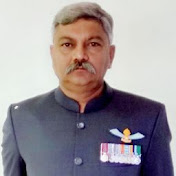
Veteran Colonel SP Mudholkar. He now leads a retired life at Pune

It was not until 1981 when Second Lieutenant SP Mudholkar issued a show-cause notice and raised the issue with the School of Artillery against the order of getting the SD and Blue Patrl stitched only from Selections, inclusion of a private firm in the Offices’ Mess Bills for recovery .  In those days, Mess Bills of various messes at School of Artillery had a serial dedicated to Selections.  You can well imagine as to the patronage Selections enjoyed from the highest levels of the Regiment of Artillery – mostly occupied by officers belonging to the Khlan.

By the time we went to Devlali to attend our Young Officers’ Course in 1983, Blue Patrol and SD procurement was done away with – thanks to Second Lieutenant SP Mudholkar – else I too would have succumbed to the pressure from the Chief/ Senior Instructor.  In those good-old days, any Young Officer refusing to procure their SD and Blue Patrol were marched up to the Chief/ Senior Instructor until they relented. Another tactic was to blackmail the Young Officer with a poor grading, though most ended up with a C grading. The Great Good-Old Days!!! Who wants to begin their military career on the wrong foot?

Selections appeared on the Mess Bills during our course- luckily for us it remained at zero value.

Three years later, Lieutenant General Sood, Commandant, School of Artillery, was appointed the Director General of Artillery – and away went Selections.  The ‘baby‘ of the erstwhile higher-ups of Regiment of Artillery was thrown out with the tub, water, soap, and loofah to land in Devlali market. 

Parade State

A Different Kind of Command

While commanding our Regiment – 125 Surveillance and Target Acquisition (SATA) Regiment – I attended office mostly on Friday afternoons. That was when I signed the official documents requiring the Commanding Officer’s signature, most notably the Daily Parade State.

At the time, I was a single parent CO. Marina had already migrated to Canada, and the responsibility of bringing up our two primary school–going children – feeding them, sending them to school, ensuring homework was done, making them bathe – all fell on my shoulders. Command had to coexist with parenthood.

What Is the Daily Parade State?

For the uninitiated, the Daily Parade State is a large table detailing every officer and soldier authorised and posted to the Regiment, along with their daily whereabouts. Compiled each evening by the Regimental or Battery Havildar Major (RHM or BHM), it shows the status of all personnel as of 8 AM the following morning.

The Detail Master, the understudy to the RHM or BHM, is responsible for compiling the Parade State. Typically a soldier with good handwriting and skill at mental arithmetic, he provides all secretarial support to the RHM and BHM. Battery Detail Masters prepare their Battery’s Parade State in the evening and hand it over to the Regimental Detail Master, who then compiles the Regimental Parade State.

The Challenge of Cooperation

Our Regiment was then a cooperating unit with the School of Artillery, Devlali, carrying both station commitments and training commitments – collectively called Range Detail. Unlike at many other Schools of Instruction in the Indian Army, at the School of Artillery, student officers and soldiers do not draw, clean, or maintain equipment. That responsibility falls entirely on cooperating Regiments.

Details of manpower and equipment to be provided – along with administrative arrangements such as pitching tents and preparing Observation Posts – were issued a week before the beginning of each month. Soldiers were thus well aware of their commitments and duties.

We were always short of manpower, as soldiers also needed to avail their leave. Yet our Section and Platoon Commanders managed the show admirably, often with radio operators or drivers doubling as radar operators or surveyors. Clerks were utilised as radio operators, surveyors, or kitchen assistants. Tradesmen pitched in. Even the Religious Teacher was not spared.

Failure or shortfall in Range Detail resulted in the CO being summoned by the General – the Commandant of the School of Artillery. Our RHM and BHMs ensured that all Range Details were executed flawlessly. They had their own methodologies for dealing with shortcomings. Whatever they did, I was never summoned by the General.

The Daily Ritual

Every morning, BHMs presented their Parade State to their Battery Commander, while the RHM presented the Regimental Parade State to the Adjutant, then to the Second-in-Command, and finally to the CO. The Daily Parade State is an auditable document used to account for rations drawn from the Supply Depot for the soldiers. Hence, the CO’s signature is mandatory.

Three months into command, RHM Kaptan Singh summoned enough courage and asked, “Sir, how come you do not ask any questions while you sign the Parade State? You simply tell me to turn the pages and place my finger where you are to sign. You do not even look at it.

Why this question now?” I asked, knowing the answer well.

Your predecessor used to grill me for over ten minutes every morning about various figures in the Parade State – number of soldiers on leave, soldiers on various out-station duties, and so on. I know that you know about every soldier,” RHM Kaptan Singh explained.

Thank God! You had to suffer this agony for only ten minutes; I had to endure over thirty,‘ I thought.

A Painful Memory

My mind raced back to my Battery Commander days. Even then, I had hardly paid attention to the figures on the Parade State. But our CO then was not of the same disposition. He believed that every figure on the Parade State was gospel truth.

He summoned each Battery Commander and questioned us about the number of soldiers on leave or on out-station details. I always rattled off some numbers. Then he summoned our BHM and asked the very same questions. What a pathetic example of command!

Our BHM’s figures never tallied with mine, and the thirty-minute ordeal ended with our CO’s remark: “You do not know what is happening in your Battery.”

This continued daily, and my figures never matched our BHM’s. Other Battery Commanders, I later learned, coordinated their figures with their BHMs before being summoned. I had no such coordination. Fortunately for me, I moved out of the Regiment within two months to attend the Staff College Course.

The Explanation

Now I had to justify my blind signing of the Parade State to RHM Kaptan Singh.

This document is a proverbial elephant’s teeth – for show only,” I began. “This Parade State was prepared by your Detail Master the previous evening, giving out the likely state of all personnel of our Regiment, including me, the next morning. He put in herculean effort, with much erasing and rewriting, to tally all the figures.

If this is accurate, then your Detail Master must be a genius – hell of a Prediction Master. Last evening, I did not know where I would be this morning. Hence these figures can never be accurate. If they are accurate, then the Detail Master must be sitting in my chair.

Do you want me to grill you on it now?”

RHM Kaptan Singh broke into his characteristic smile, saluted, and walked away – fully convinced. The Parade State continued to be signed on Friday afternoons, and our Regiment continued to function without I ever being summoned by the General.

Z – The Commanding Officer’s Jeep

The Sacred Vehicle

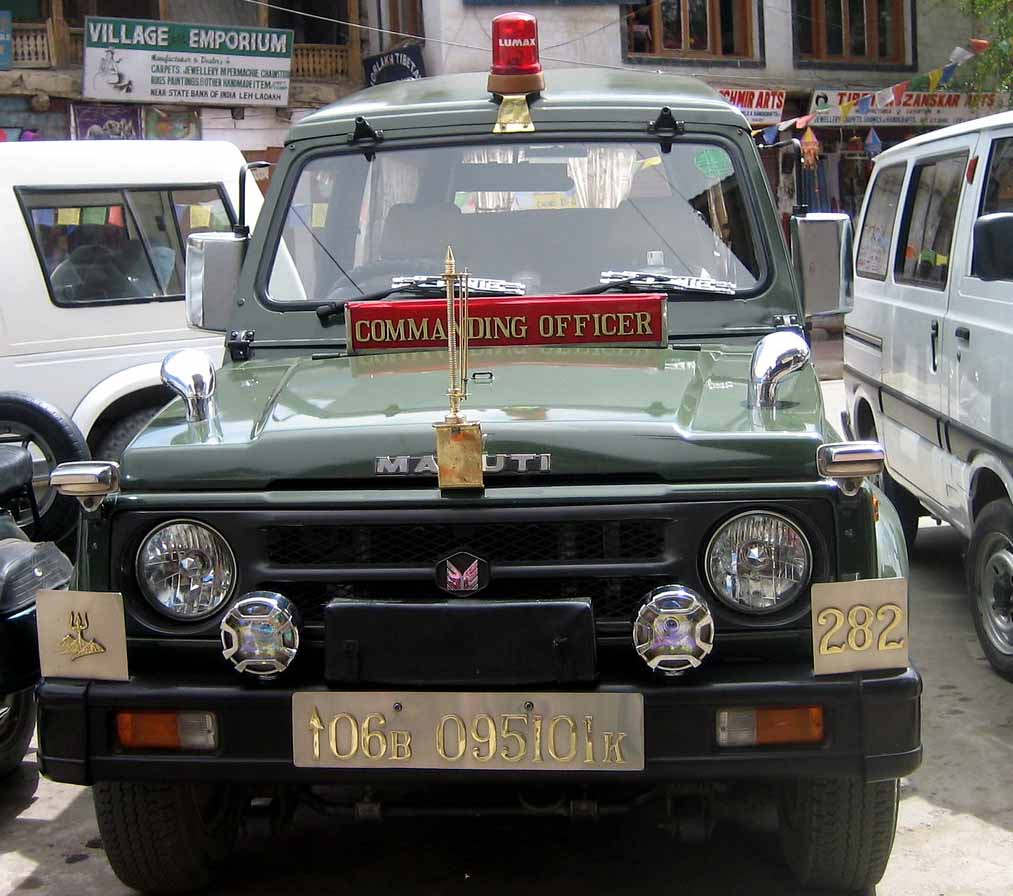
Commanding Officers (CO) of all Artillery Regiments travel in a Jeep – a light vehicle identified by the alphabet Z painted prominently on all sides. Most other arms and services have COMMANDING OFFICER written on the front of the CO’s vehicle. Needless to say, it is the most decked-up and mechanically fit vehicle in any unit, driven by the most competent and disciplined driver. It carries with it an air of sacred and infallible exclusivity – an object of reverence bordering on mythology.

A Single Parent CO

Our unit was a cooperating unit of the School of Artillery, Devlali. We provided equipment and soldiers to ensure the smooth conduct of training for students of various courses. This was at a time when I was a single parent CO – Marina had already migrated to Canada. The responsibility of bringing up our children rested solely on me.

My residence was about 400 metre behind the unit, with the Officers’ Mess in between. I could walk to the unit or the Mess at any time, and hardly ever used the Z.

A Daughter’s Doubt

One day, our daughter Nidhi, a Grade 6 student, returned from school with a question. “Dad, are you a CO?

Yes,” I replied. “What’s the matter?

Everyone in my class tells me that you cannot be a CO,” she said.

But why?” I queried, genuinely curious.

Her reason left me taken aback. “They say that if I am a CO’s daughter, I would be dropped at school on a Z, and not cycling down to school,” she replied, with the innocence only a child can possess.

OK. I am not a CO, then. You continue to cycle to school,” I said, offering a justification that satisfied her young mind.

A Call from the School of Artillery

One morning, I received a call from a senior Staff Officer at the School of Artillery Headquarters. His concern was delicate but pointed: our Regimental officers were travelling in jeeps while Colonels of the Tactical and Field Wings – many approved for Brigadier rank – were travelling on their scooters. It was not just the officers; even their ladies used the vehicles. This was evidently an eyesore for those Colonels who had commanded their regiments well – else they would not have been posted to the School of Artillery.

I did not mince words in my response. “When some of these Colonels were commanding their regiments, they had five jeeps – one for the CO, one for his wife, one for his daughter, one for his son, and one for his dog. I have only one, and the rest are shared by other officers. This is my command, and I will decide what to do with my jeeps. Henceforth, please keep away from my command functions.

The matter was not raised again.

A New Officer’s Dilemma

On a Saturday, our Adjutant informed me that the in-laws of Captain Vikrant – who had joined us just a week earlier – were in station.

Then let us have a get-together in the evening at the Officers’ Mess. Please invite them too,” I suggested. The CO’s mild suggestions are invariably directions to be implicitly followed.

During the evening gathering, I asked Captain Vikrant, “What are you doing tomorrow? It’s a Sunday.”

My in-laws want to visit Shirdi,” he replied.

How are you going?” I enquired.

I have booked seats on the School of Artillery bus leaving from the Club tomorrow morning.

I paused, then said, “When our officers’ parents or in-laws visit Shirdi, they take the Z. Havildar Suresh, my driver, will report to you tomorrow morning.”

Hearing this, our Quartermaster, Captain Subhash, passed the customary instructions to Havildar Suresh: carry adequate water, soft drinks, sandwiches, and a spare jerrycan of petrol.

The Call Before Dawn

Sunday morning at five, I was quite rudely awakened by the telephone ringing. It hardly ever rang unless there was some very, very important information to be conveyed to the CO – which was indeed a rarity.

It was Captain Vikrant on the other end. “Good morning, Sir. Sorry to disturb you at this hour. Your vehicle is standing in front of my residence.”

It’s there to take you all to Shirdi,” I confirmed.

I thought you were not serious when you told me that,” he said, his voice a mixture of embarrassment and apology.

I shot off a volley of the choicest profanities in my vocabulary, ending with, “Now you take the vehicle to Shirdi, and on Monday morning, see me in my office.”

The Explanation

On Monday morning, Major Suresh Babu, our Second-in-Command, escorted Captain Vikrant to my office. “Sir, please don’t get angry with him,” he said. “He is only a week old in our unit. He is yet to know you.”

I looked at Captain Vikrant, and he spoke. “This is my second unit. Before this, I served only in a Field Regiment for five years. There, the Z was regarded as something holy—something of an institution. I have never travelled in a Z till now. That is why I called you early in the morning to reconfirm.”

I dismissed them both with words that summed up my philosophy: “The Z did not come as a dowry to me when I got married to the Regiment.”

The Elusive Diamonds

IdliVada
Our Regiment was equipped with the Russian made 130 mm M46 Guns when I was commissioned to the Regiment in 1982.  130 mm Gun was manufactured in erstwhile Soviet Union in 1950 and entered service with the Indian Army in 1965.  The gun boasts of having achieved longest range of 27.5 km with conventional munitions.  It traces its origin back to its predecessors used in ships and coastal defence by Russians during World War II.  The gun was in the equipment list of many countries and some even produced their variants.  The gun saw action during many conflicts across the globe – from Vietnam War to the recent civil war in Syria and Iraq. 

To be fair to the Russians, it must be said that indeed the gun was good and extensively used in the 1965 and 1971 Indo-Pak Wars. The problem however was with the accessories that came with the gun. When Indian Army procured the 130 mm Guns, a plethora of accessories were supplied by the Russians.  Most appeared to be tried, tested and failed – hence the Russians wanted to somehow palm them off to others.  India must have paid a hefty sum for these accessories.  Most of them found their due place in the technical stores of the regiments, and hardly ever used

The biggest of them was the PPL Periscope – the wooden box for storage of the periscope looked more like a coffin.  The periscope must have had its origin from the gun being used as a Naval Gun.  Thankfully, no one in the regiment appeared to have even unpacked them or set them up for training or operations.  No Observation Officer would have bothered to carry it to war as it needed at least six men to lift.   On a ship, the carriage problem would not have been there and a need for a high periscope to observe the horizon was the requirement for any Observation Officer deployed on a ship in the high-seas.

The next biggest was the Range Finder DS1.  From its looks and make, it also appeared to have its origin from the days of the gun being used in its naval version.  It seems that someone in the Indian Artillery hierarchy of the 60s took a liking for this cumbersome piece that a chapter for observing and engaging targets with this monster was incorporated in the Gunnery Technical Hand Book (fortunately it has been removed  from the recent editions).

The technique of employment was that the observation post officer measured the distance to the spot where a round fell and ordered the required correction in terms of ‘ Left/Right or Add/Drop’, having already made a similar measurement to the target, to make the round hit the target.  

For measuring the distance with the DS1, one needs to manipulate a knob and make five ‘diamonds’ that appeared on the viewfinder so as to position the center one on the object to which distance is to be measured  and two each equidistant in front and behind it. This needed a high degree of practice and skill.

Whenever I tried to operate the DS1, I could either see the object or the diamonds and never both, however hard I tried.  I requested our Technical Section Commander – Subedar Bidappa – for help and he excused himself from the task owing to his poor vision.  He suggested Havildar (Sergeant) Nahar Singh of the Survey Section as he had undergone a four-week long course at School of Artillery in operating the Range Finder.  Havildar Nahar Singh agreed to transfer some of his skills and the art of manipulating the diamonds. 

On the set day, I got the Range Finder set up at the training area next to the Survey Section and Havildar Nahar Singh commenced his lessons.  We got struck at the stage where the elusive diamonds are to be manipulated –  as usual  I could either see the diamonds or the object and not both.  Havildar Nahar Singh demonstrated his skill with the range Finder and measured distances to many objects around the training area.  He read out the distances nearest to a meter and to verify it, he read the distance to a telephone pole to be 376 meters and asked me to pace it.  Great! it was indeed about 375 meters.

I felt very small about my inability and kept trying to catch the elusive diamonds.  Now came a warning from Havildar Nahar Singh – in case one operates the DS1 for a long period, one’s eyesight will deteriorate.  He padded his comment with a line that soldiers operating the DS1 in the earlier days were authorised an extra egg in their rations to compensate for the struggle their eyes went through.

 Never to accept a failure in front of the soldiers, I tried with all my efforts to catch the elusive diamonds for the next two hours despite Havildar Nahar Singh’s warning.  Seeing my resolve Havildar Nahar Singh must have felt bad and he came to me and requested me to pack up the DS1.  He now gave me his piece of wisdom.

He said that he too had never seen the elusive diamonds ever in his life.  How the hell on earth did he measure the distances to various objects so accurately?  He disclosed the secret that in the training area he knew the distance to all the visible objects as he had been conducting training for his section there.  Whenever he measured the range to an object, he would focus the Range Finder on the object and set the distance on the scale. 

How did he manage it during the training at the School of Artillery?  There too all the students carried a small notebook with the accurate distances to various objects from various training areas.  He claimed that hardly any student ever caught the glimpse of the elusive diamonds.

Guruji and Bhagawan (God) Shoot follows.