Running Away From Studies

The Arrival: Twenty Cadets from Kerala

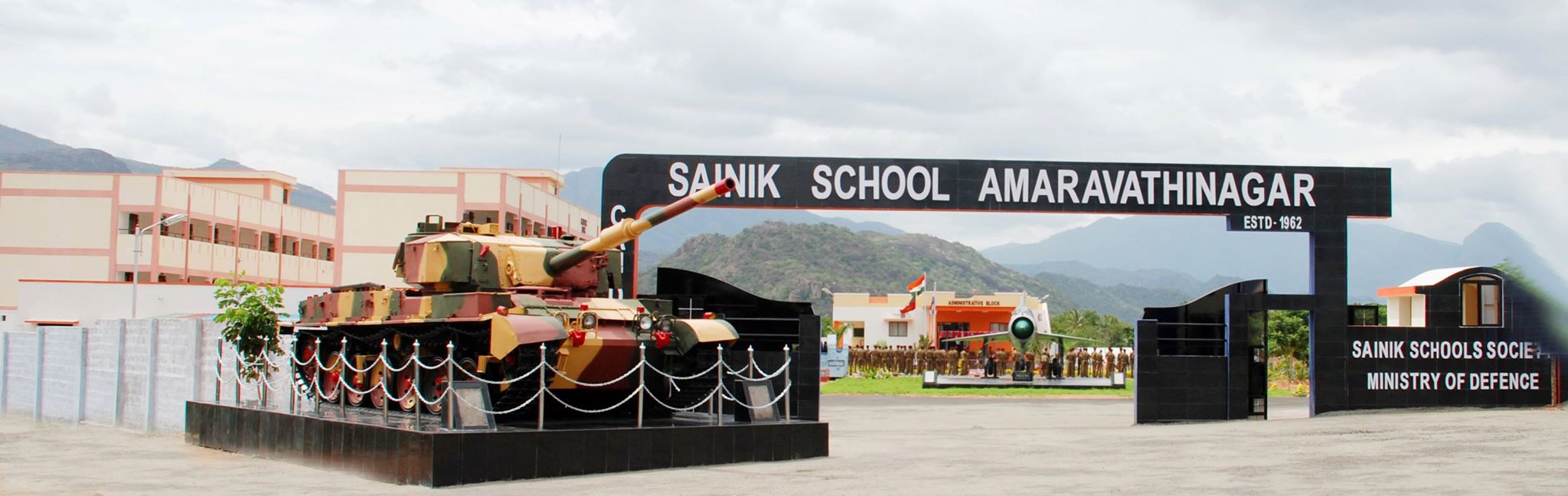
In July 1971, about twenty of us landed at Sainik School, Amaravathi Nagar, in Tamil Nadu. We arrived armed with little more than our mother tongue, Malayalam. English, Hindi, and Tamil were entirely alien to us.

Our medium of instruction was English. We began with the English alphabet under Ms. Sheila Cherian, gradually progressing to Wren & Martin’s grammar and Ridout’s English Today. It was a slow, painstaking journey into a new world of words.

The Language Gauntlet

Tamil as a second language was out of the question – it would have required us to cram Thirukkural and ancient poetry from the start. Tamil literature is not easily grasped by beginners. So we were assigned Hindi as our second language.

We fared predictably badly. Hindi became our nightmare, especially during the Grade 10 public examination. Only the Almighty and the examiner who evaluated our papers know how we managed to pass. Our method was simple: cram until the last alphabet and reproduce everything on paper. Fortunately, Grade 11 and 12 required no second language.

Tamil remained our third language, taught by Mr. M.V. Somasundaram and Mr. K. Ekambaram. We began with the Grade 1 Tamil textbook in Grade 5. The only saving grace was that our agony ended in Grade 8 with a Grade 4 textbook – four years of effort condensed into four grades of progress.

The 10+2 Revolution

Our 1979 batch became the first to face the newly introduced 10+2 education system under the Central Board of Secondary Education (CBSE) – an extra year of studies. The previous batch had graduated in 1977 after Grade 11.

Grade 12 loomed as a particular terror for those like me, academically undistinguished, never having achieved any scholarly glory throughout school.

The Escape Plan

Why did I join the National Defence Academy (NDA) and subsequently serve the Indian Army for over two decades?

The honest answer: I ran away from studies.

The bonus of clearing the NDA entrance examination was immediate: we joined after Grade 11. No Grade 12. No culminating public exam. What relief!

School had led us to believe that NDA training was predominantly outdoor activities – Physical Training, games, drill, weapon training, equitation, military tactics – with minimal academic demands.

Reality dawned upon arrival.

The Reckoning

We had to complete a Bachelor’s degree programme covering over thirty subjects, from Engineering Drawing to International Relations, culminating in a degree from the prestigious Jawaharlal Nehru University (JNU) – the only Bachelor’s degree this premier research university confers.

The Gods had not forgotten my academic transgressions, particularly in linguistics. How could they spare me from Hindi and Tamil?

Commission and Consequences

I was commissioned into the Regiment of Artillery – 75 Medium Regiment (Basantar River). The Regiment then had an intriguing class composition: one battery of North Indian Brahmins, another of Jats primarily from Haryana and Uttar Pradesh, and a third manned by soldiers from the four Southern states.

Now I had to master Hindi as spoken by Brahmins and Jats, and Tamil as the medium of communication for South Indian soldiers. The languages I had fled returned to haunt me.

The Irony of Escape

I had joined the military to escape studies. Two decades later, I retired having never stopped studying -and having never stopped running.

Even while commanding the Regiment, learning continued unabated. Modern high-tech radar systems, survey equipment, Unmanned Aerial Vehicles (drones) – all unfamiliar, all demanding mastery. Command required understanding, and understanding required poring over volumes of operational and maintenance manuals.

The Lesson That Lingers

My studies did not end when I hung up my military boots. They continued. They continue still. They will continue forever.

The boy who fled from textbooks discovered that learning cannot be outrun. It follows. It pursues. It eventually catches up, transforming the runner into a reluctant but perpetual student.

Perhaps that is the ultimate irony – and the ultimate gift. The escape artist became, despite himself, a lifelong learner. And in that transformation, discovered that the running itself was the education.

Anyone who stops learning is old, whether at twenty or eighty. Anyone who keeps learning stays young – Henry Ford.

Linguists

madras

In 1971, after the anti-Hindi agitation that raged through Thamizh Nadu, I joined Sainik School Amaravathinagar in the state then known as Madras.   The school almost resembled any British Military School as all the military words of command were in English like “Attention” and “Stand-at-Ease”. There I started to learn Thamizh and also English and Hindi.

Thamizh is one of the longest surviving classical languages in the world and the script has only 18 consonants unlike Devnagari script which has about 37 consonants. When Devnagari script has क, ख, ग, घ (ka, kha, ga, gha), Thamizh has only க (ka) and similarly for the other corresponding consonants. All the other South Indian languages namely Malayalam, Kannada and Telugu follow their own script similar to the Devnagari script. Further these three languages unlike Thamizh, have a lot of Sanskrit vocabulary. Hence learning of Hindi or any Devnagari script based language becomes difficult for a Thamizh in comparison to the people from the other states.

After the anti-Hindi agitation in Thamizh Nadu, the Official Languages Act was amended in 1967 by the Indian Government to guarantee the indefinite use of Hindi and English as official languages. This effectively ensured the current bilingualism and use of English in education in India. This bilingualism has helped the Indians to a great extent in ensuring acceptance all over the world.

Hindi as a national language was not accepted all over India due to the implementation issues. The Hindi Pundits coined many a difficult terms to replace commonly used English terms. Many of the terms coined were not even accepted by the Hindi speaking population. Lot of money and efforts were pumped in by the government for the enhanced use of Hindi as an official language, but it never had any results other than a few Members of Parliament making a foreign sojourn to study the use of Hindi in some country or the other and the practise still continues.

To further make the matter worse, all forms were printed in both Hindi and English and so also all the government publications. This resulted in higher production costs without serving any purpose. While serving in the Indian Army, I recommended all my subordinates to read and understand the pamphlet ‘Glossary of Military Terms’. The pamphlet was printed in Hindi on the left page and English on the right. I also used to advise them to read the Hindi side whenever they got bored – the Hindi equivalents were hilarious and many a times grossly incorrect.

In our school the English department was headed by Mr KG Warrier and the Thamizh department by Mr M Selvaraj. Both of them were strong linguists and always ensured that they spoke the language with purity in that when they spoke, they always used only one language. Both had excellent communication skills and were near perfect in their pronunciations. Both of them never taught me at school, but I had extensively interacted with them during various extra-curricular activities.

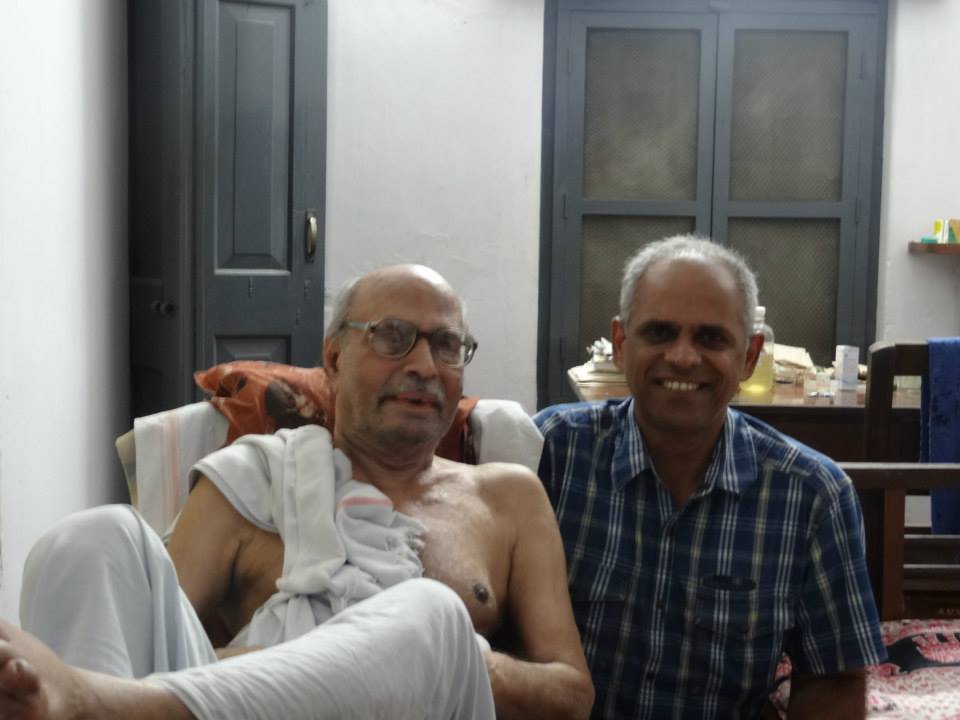
KGW

(Mr KG Warrier with our Class-mate AP Sunil Kumar at Kottakkal.  The photo is of 2013 when Mr Warrier turned 90)

Mr KG Warrier hails from the family of world renowned Ayurveda Physicians of Kottakkal in Kerala. He is currently enjoying his retired life at Kottakkal. He is staying with his daughter, Rathi. The Warrier community connected to the Vaidya Sala stay at ‘Kailasa Mandiram’ in the Vaidya Sala premises at Kottakkal, Malappuram District, Kerala.

His specialty was that he dressed in his starched and pressed cotton pants and shirt, wear a felt hat and hold a pipe in his hands. I was always intrigued as to how he managed to maintain the crease of his pants perfect even at the end of the day.

A few days before leaving school to join the National Defence Academy I met Mr KG Warrier and he asked me in Thamizh as to when I was joining the academy and how the preparations were progressing. My answer was in the usual ‘mixed language’ of Thamizh, Malyalam and English. To this he said “உனக்கு தமிழும் தெரியாது, மலையாளவும் தெரியாது, ஆங்கிலவும் தெரியாது. உனக்கு என்ன தெரியும்? (You do not know Thamizh or Malayalam or English. What do you know?)”.

I still recollect a few words of advice Mr KG Warrier had given us.  He said that everyone should always carry and use three books – a Dictionary, an Atlas and a Wren & Martin Grammar book.  At the beginning of each year at the school, these were the first set of three books we were issued with.  Later on during my army service I did carry these three books.  Nowadays with the power of the internet with browsing tools like the Google, most information is at one’s fingertips and these three books have become almost extinct.

Mr M Selvaraj was well known for his voice and his oratory skills which were showcased during all the cultural programmes at the school. His orations in both Thamizh and English will be remembered by all his students. I was very curious as to how he managed to handle the two languages independently and so effectively. During my final year in school, I did manage to summon enough courage and asked Mr M Selvaraj about the secret.

Mr M Selvaraj said that when he joined the school he had very little grasp of English having done his Masters degree in Thamizh. Major MMR Menon, then Headmaster of the school had advised him that to be a successful teacher in a school like this, mastery over English would go a long way. So with reluctance he approached Mr KG Warrier, but was surprised when Mr KG Warrier accepted to be his Guru and thus he started to learn English. He ended the chat by saying “the English I speak is all what Mr KG Warrier and Ms Sheela Cherian had taught me like any student who graduated under these great teachers.

Mr M Selvaraj left our school in 1987 to be the first Principal of Navodaya Vidyalaya at Mahe. After establishing the school, he moved as the Principal of Navodaya Vidyalaya at Pondichery and now leads a retired life in Trichy.

After leaving the school, I always tried to complete a sentence in one language and many a times I did fail. After joining the army, I picked up Hindi. Luckily for me, I served mostly with the Brahmin soldiers from North India and that helped me improve my Hindi to a great extent. Now with Hindi also joining the bandwagon of languages in my mind, maintaining purity of language became near impossible.

Hats-off to all those Thamizh news readers in any television channels, they speak pure Thamizh only and would use another language vocabulary only in case it is unavoidable.

madras1