Carrying a Burden of Guilt

Our Regiment was deployed in our operational area in  Rajasthan deserts for Op PARAKRAM when I assumed command.

In the first week I passed directions regarding day-to-day administration of the Regiment.  For sure, a Havildar (Sergeant) Clerk was the first one to flout one of my directions.

I instructed the Adjutant, Capt Subhash, that  the Havildar Clerk  be chargesheeted.

Subhash came to my office in the CO’s Caravan with the charge sheet which I approved.  He asked me ” Sir,Can I march him up tomorrow morning?  It’s already 8 PM now.”

No.  March him up now,” I replied.

Now Sir? At night Sir?” He asked.

Yes. Now. Remember we are in our operational area, ready for a war any minute,” I affirmed.
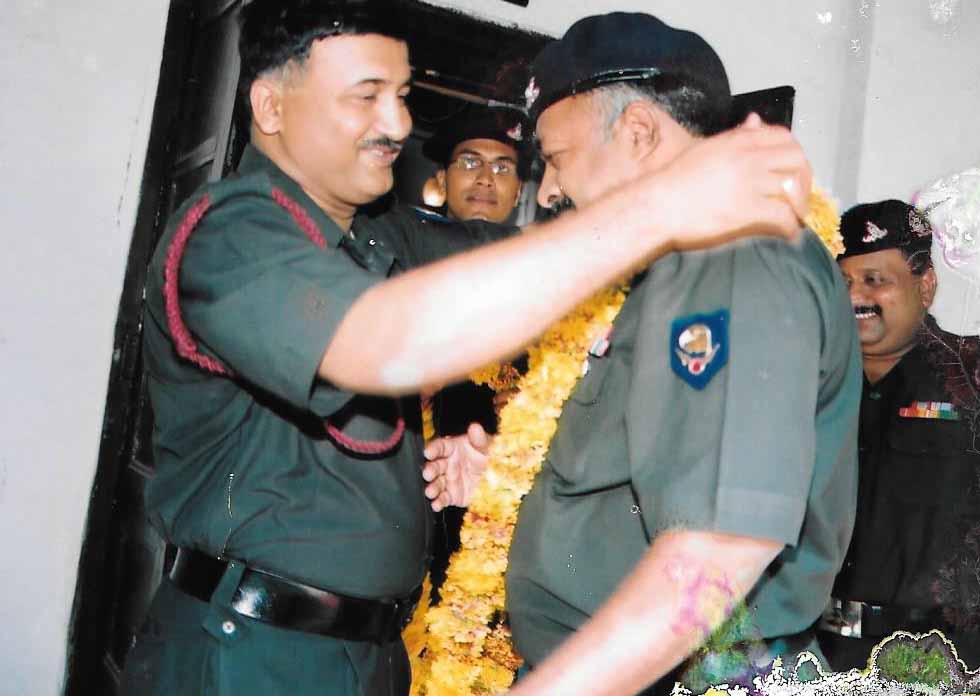
On taking over command, I realised that there were lots of gaps in the documentation of our soldiers.  Most data was either outdated or was missing.  I got into designing and coding a software for capture and analysis of soldiers’ information, soon after I took over command.  My initial two weeks were fully devoted to automating the entire system.

During the designing and coding stage, I used to work day and night, mostly sitting in my comfortable Lungi.  That evening too I was dressed in my Lungi and vest.

Subhash looked at me and said “Sir, if you want him to be marched up now,  you need to change into uniform.

Give me five minutes and I will be back,” I said, and walked into the bedroom space of the Caravan and changed into uniform.

The Havildar was duly reprimanded for his minor offence.  It had a great impact on the soldiers – not because it was the first punishment I awarded, but more because the recipient was a Havildar Clerk.

After two years in command, I hung up my boots, to migrate to Canada.  During my dining out, Subhash narrated what happened in the five minutes I took to change into uniform that day.

“After you said ‘Give me five minutes,’ I went out of your office and realised the gravity of what I said to you.  I rushed to Major Suresh, our Second-in-Command and narrated what happened. 

Major Suresh gave a smile and said ‘Don’t worry. The old man will never take you wrong.  I know him very well from our Academy days.‘”

Now Subhash’s question to me was “Why did you not admonish me for what I said?  Before coming to this Regiment, I served in a Field Regiment for four years.  There if I had said so, you can well imagine my plight.  Even Major Suresh didn’t seem perturbed over my conduct with our CO.  That hurt me even more and I have been carrying this guilt with me for the past two years.”

Looking at Subhash I said “If you felt guilty for something you did in good faith, you should have confided in me then and there.  You would not have had to carry the burden this far.”

But that day why did you act the way I told you to, and not admonish me,” was his next question.

If I had said anything to you or admonished you for an act done in good faith, you would have lost your self-confidence and self-esteem.  Later, you would not have had the courage and conviction to advise the Commanding Officer and point out any error or folly in my decisions or directions,” I philosophised.
Z – The Commanding Officer’s Jeep

The Sacred Vehicle

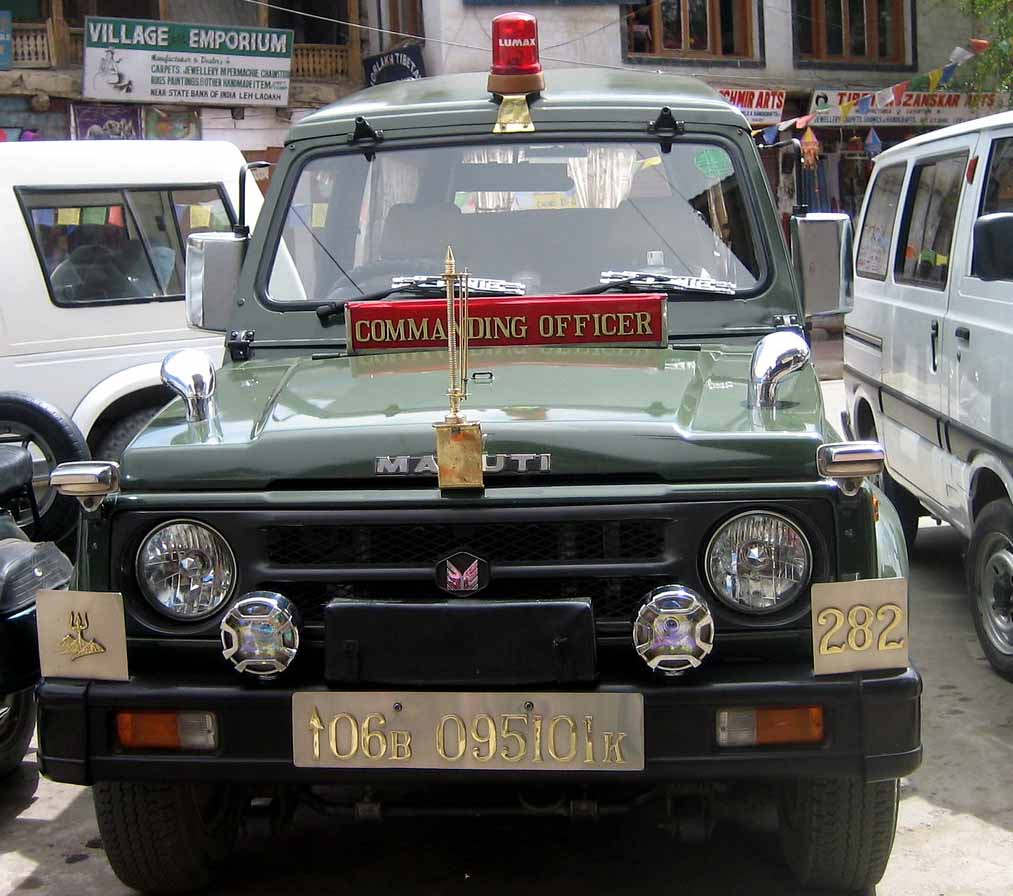
Commanding Officers (CO) of all Artillery Regiments travel in a Jeep – a light vehicle identified by the alphabet Z painted prominently on all sides. Most other arms and services have COMMANDING OFFICER written on the front of the CO’s vehicle. Needless to say, it is the most decked-up and mechanically fit vehicle in any unit, driven by the most competent and disciplined driver. It carries with it an air of sacred and infallible exclusivity – an object of reverence bordering on mythology.

A Single Parent CO

Our unit was a cooperating unit of the School of Artillery, Devlali. We provided equipment and soldiers to ensure the smooth conduct of training for students of various courses. This was at a time when I was a single parent CO – Marina had already migrated to Canada. The responsibility of bringing up our children rested solely on me.

My residence was about 400 metre behind the unit, with the Officers’ Mess in between. I could walk to the unit or the Mess at any time, and hardly ever used the Z.

A Daughter’s Doubt

One day, our daughter Nidhi, a Grade 6 student, returned from school with a question. “Dad, are you a CO?

Yes,” I replied. “What’s the matter?

Everyone in my class tells me that you cannot be a CO,” she said.

But why?” I queried, genuinely curious.

Her reason left me taken aback. “They say that if I am a CO’s daughter, I would be dropped at school on a Z, and not cycling down to school,” she replied, with the innocence only a child can possess.

OK. I am not a CO, then. You continue to cycle to school,” I said, offering a justification that satisfied her young mind.

A Call from the School of Artillery

One morning, I received a call from a senior Staff Officer at the School of Artillery Headquarters. His concern was delicate but pointed: our Regimental officers were travelling in jeeps while Colonels of the Tactical and Field Wings – many approved for Brigadier rank – were travelling on their scooters. It was not just the officers; even their ladies used the vehicles. This was evidently an eyesore for those Colonels who had commanded their regiments well – else they would not have been posted to the School of Artillery.

I did not mince words in my response. “When some of these Colonels were commanding their regiments, they had five jeeps – one for the CO, one for his wife, one for his daughter, one for his son, and one for his dog. I have only one, and the rest are shared by other officers. This is my command, and I will decide what to do with my jeeps. Henceforth, please keep away from my command functions.

The matter was not raised again.

A New Officer’s Dilemma

On a Saturday, our Adjutant informed me that the in-laws of Captain Vikrant – who had joined us just a week earlier – were in station.

Then let us have a get-together in the evening at the Officers’ Mess. Please invite them too,” I suggested. The CO’s mild suggestions are invariably directions to be implicitly followed.

During the evening gathering, I asked Captain Vikrant, “What are you doing tomorrow? It’s a Sunday.”

My in-laws want to visit Shirdi,” he replied.

How are you going?” I enquired.

I have booked seats on the School of Artillery bus leaving from the Club tomorrow morning.

I paused, then said, “When our officers’ parents or in-laws visit Shirdi, they take the Z. Havildar Suresh, my driver, will report to you tomorrow morning.”

Hearing this, our Quartermaster, Captain Subhash, passed the customary instructions to Havildar Suresh: carry adequate water, soft drinks, sandwiches, and a spare jerrycan of petrol.

The Call Before Dawn

Sunday morning at five, I was quite rudely awakened by the telephone ringing. It hardly ever rang unless there was some very, very important information to be conveyed to the CO – which was indeed a rarity.

It was Captain Vikrant on the other end. “Good morning, Sir. Sorry to disturb you at this hour. Your vehicle is standing in front of my residence.”

It’s there to take you all to Shirdi,” I confirmed.

I thought you were not serious when you told me that,” he said, his voice a mixture of embarrassment and apology.

I shot off a volley of the choicest profanities in my vocabulary, ending with, “Now you take the vehicle to Shirdi, and on Monday morning, see me in my office.”

The Explanation

On Monday morning, Major Suresh Babu, our Second-in-Command, escorted Captain Vikrant to my office. “Sir, please don’t get angry with him,” he said. “He is only a week old in our unit. He is yet to know you.”

I looked at Captain Vikrant, and he spoke. “This is my second unit. Before this, I served only in a Field Regiment for five years. There, the Z was regarded as something holy—something of an institution. I have never travelled in a Z till now. That is why I called you early in the morning to reconfirm.”

I dismissed them both with words that summed up my philosophy: “The Z did not come as a dowry to me when I got married to the Regiment.”

Building a UAV Base


In 2002, our SATA Regiment was designated to be equipped with Unarmed Aerial Vehicles  (UAV).  Having experienced as to how our Medium Regiment was equipped with Bofors Gun, I realised that there is a critical need for complete infrastructure to house and operate the UAV and the crew.

In 1987, our Regiment received Bofors Gun while located in the Kashmir Valley.  The Guns and the Gun Towing Vehicles were parked in the open, with these costly and high-tech equipment wizening in the vagaries of weather.  It was in true sense proving an old Malayalam adage ആനയെ മേടിക്കുവാൻ കാശുണ്ട്, തോട്ടിമേടിക്കുവാൻ കാശില്ല  meaning ‘You have enough money to buy an elephant, but not enough to buy a hook (ankus) to control the elephant.’  It was a similar case – Indian Army had spent crores for procuring the equipment, but did not have a few lakh to build the sheds to house them.

Copy of THE ELEPHANT AT WORK !. HD...avi - YouTube
Whatever it was, I got down to working out the infrastructure requirement as specified by the manufacturer- that too by someone who had hardly any clue of aircraft operation and avionics.  The UAV Base was to come up in Rajasthan, which already had an Aviation Squadron operating from a small airbase.  The UAV infrastructure was to be created there which involved extending the existing runway – both in length and in width and also reinforcing it to facilitate UAV operation.

Luckily for me, the Commanding Officer of the Aviation Base was our course mate from NDA – Colonel Kesar Shekhawat.  He provided all technical and aviation inputs and extended all out cooperation in planning the UAV base.  I made many trips to his Base and he always provided me transport and accommodation and also looked after me very well.

I visited many UAV Bases in all corners of the country – operated both by Indian Army and Air Force – interacted with the crew operating the UAVs and learnt their needs and the deficiencies they had.  They suggested many modifications to the existing infrastructure they had and also provided lot of valuable inputs.  Most of these bases operated UAVs with existing infrastructure the base had and they had very few of the infrastructure as specified by the equipment manufacturer. 

After two months of detailed planning, we came out with an extensive document regarding the layout of the augmented Base, buildings, accommodation for crew, housing for all technical equipment, hangars for UAVs, and so on.  The entire project cost ran over ten Crore.

Project report did raise shackles of the higher Headquarters who wanted me to scale down the project so that the project could be sanctioned by the Army Headquarters.  With this high-cost project, sanction of Ministry of Defence was needed.  I refused to budge and held on and advised them to scale it down if they felt so.  The other option offered was to phase out the entire project, which I again refused and advised the higher Headquarters  to do so if they deemed so.

No one wanted to bell the proverbial cat.   The file moved at a snail’s pace through the corridors of power to be ultimately sanctioned.  Now Indian Army had enough money to buy the hook for the elephant.

Immediately on sanctioning of the project, work commenced in full swing.  Every month I had to fly to Jodhpur from Devlali for a day or two to oversee the progress of the  work.  

Why did the Commanding Officer had to travel every month for a task that could have been executed by any Major in the Regiment?  It was all because in those good old days, Majors were not allowed to fly even on Temporary Duties.  The backchat (apparently emanated from our Second-in-Command) among the junior officers were that in case someone displayed a sad face early in the morning, the Commanding Officer will send him to Agolai to oversee the progress of the work.   The officer detailed will end up spending at least three days on the train – from Devlali in Maharashtra to Jodhpur in Rajasthan.

I took a cue from it and during a Regimental Officers’ Mess event declared that in case I see any officer with a long face, I will despatch him to Agolai.  Our Regimental Ladies understood what it meant.  After that the mere mention of the word Agolai by me to any officer of the Regiment  would be followed by the officer’s reply “Sir, She is really taking care of me.  There is no problem.

I hung my boots a year after the project commenced in full swing, duly supervised by Colonel Kesar Shekhawat.  A complete UAV Base as envisaged in my project report was completed in two years.   Then only our Regiment took over the UAVs and made them operational. 

This must be the first time in the history of the Indian Army that the complete infrastructure as specified by the equipment manufacturer,  including air-conditioned living accommodation for the crew came up well before the induction of high-tech UAVs. I am told that this base is the best UAV Base of the Indian Army today.