
The Sacred Vehicle
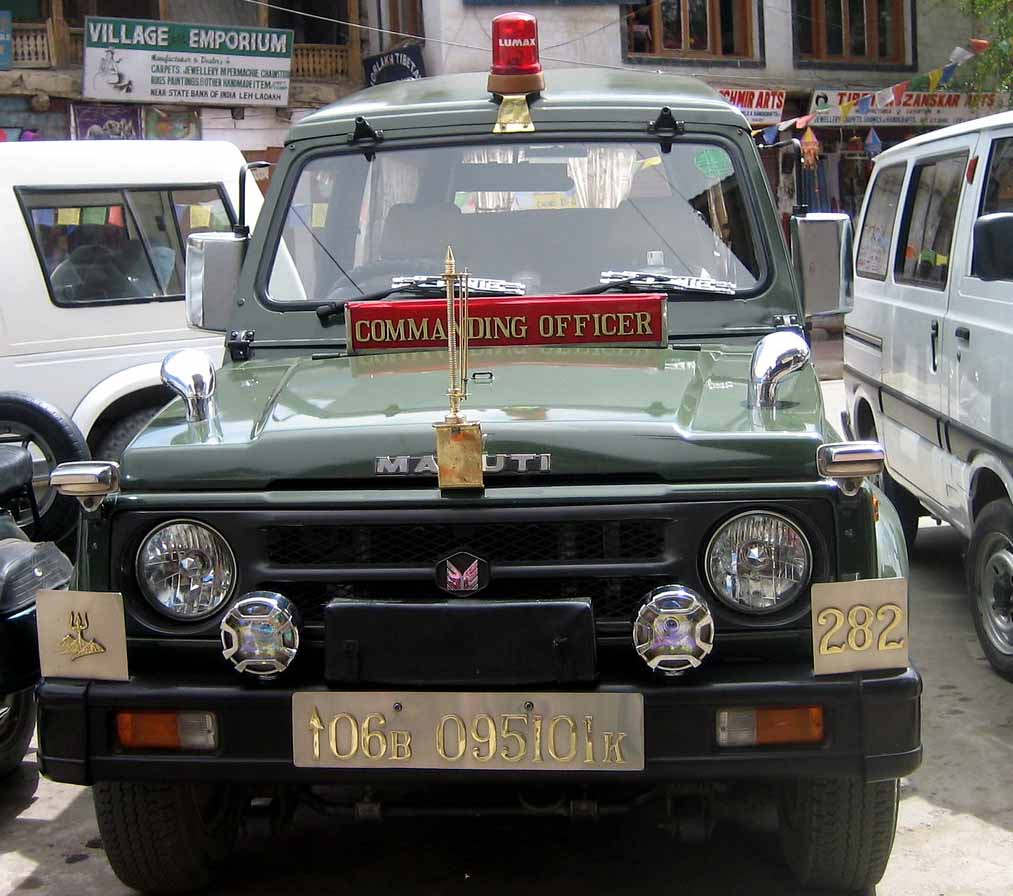
Commanding Officers (CO) of all Artillery Regiments travel in a Jeep – a light vehicle identified by the alphabet Z painted prominently on all sides. Most other arms and services have COMMANDING OFFICER written on the front of the CO’s vehicle. Needless to say, it is the most decked-up and mechanically fit vehicle in any unit, driven by the most competent and disciplined driver. It carries with it an air of sacred and infallible exclusivity – an object of reverence bordering on mythology.
A Single Parent CO
Our unit was a cooperating unit of the School of Artillery, Devlali. We provided equipment and soldiers to ensure the smooth conduct of training for students of various courses. This was at a time when I was a single parent CO – Marina had already migrated to Canada. The responsibility of bringing up our children rested solely on me.
My residence was about 400 metre behind the unit, with the Officers’ Mess in between. I could walk to the unit or the Mess at any time, and hardly ever used the Z.
A Daughter’s Doubt
One day, our daughter Nidhi, a Grade 6 student, returned from school with a question. “Dad, are you a CO?“
“Yes,” I replied. “What’s the matter?“
“Everyone in my class tells me that you cannot be a CO,” she said.
“But why?” I queried, genuinely curious.
Her reason left me taken aback. “They say that if I am a CO’s daughter, I would be dropped at school on a Z, and not cycling down to school,” she replied, with the innocence only a child can possess.
“OK. I am not a CO, then. You continue to cycle to school,” I said, offering a justification that satisfied her young mind.
A Call from the School of Artillery
One morning, I received a call from a senior Staff Officer at the School of Artillery Headquarters. His concern was delicate but pointed: our Regimental officers were travelling in jeeps while Colonels of the Tactical and Field Wings – many approved for Brigadier rank – were travelling on their scooters. It was not just the officers; even their ladies used the vehicles. This was evidently an eyesore for those Colonels who had commanded their regiments well – else they would not have been posted to the School of Artillery.
I did not mince words in my response. “When some of these Colonels were commanding their regiments, they had five jeeps – one for the CO, one for his wife, one for his daughter, one for his son, and one for his dog. I have only one, and the rest are shared by other officers. This is my command, and I will decide what to do with my jeeps. Henceforth, please keep away from my command functions.“
The matter was not raised again.
A New Officer’s Dilemma
On a Saturday, our Adjutant informed me that the in-laws of Captain Vikrant – who had joined us just a week earlier – were in station.
“Then let us have a get-together in the evening at the Officers’ Mess. Please invite them too,” I suggested. The CO’s mild suggestions are invariably directions to be implicitly followed.
During the evening gathering, I asked Captain Vikrant, “What are you doing tomorrow? It’s a Sunday.”
“My in-laws want to visit Shirdi,” he replied.
“How are you going?” I enquired.
“I have booked seats on the School of Artillery bus leaving from the Club tomorrow morning.“
I paused, then said, “When our officers’ parents or in-laws visit Shirdi, they take the Z. Havildar Suresh, my driver, will report to you tomorrow morning.”
Hearing this, our Quartermaster, Captain Subhash, passed the customary instructions to Havildar Suresh: carry adequate water, soft drinks, sandwiches, and a spare jerrycan of petrol.
The Call Before Dawn
Sunday morning at five, I was quite rudely awakened by the telephone ringing. It hardly ever rang unless there was some very, very important information to be conveyed to the CO – which was indeed a rarity.
It was Captain Vikrant on the other end. “Good morning, Sir. Sorry to disturb you at this hour. Your vehicle is standing in front of my residence.”
“It’s there to take you all to Shirdi,” I confirmed.
“I thought you were not serious when you told me that,” he said, his voice a mixture of embarrassment and apology.
I shot off a volley of the choicest profanities in my vocabulary, ending with, “Now you take the vehicle to Shirdi, and on Monday morning, see me in my office.”
The Explanation
On Monday morning, Major Suresh Babu, our Second-in-Command, escorted Captain Vikrant to my office. “Sir, please don’t get angry with him,” he said. “He is only a week old in our unit. He is yet to know you.”
I looked at Captain Vikrant, and he spoke. “This is my second unit. Before this, I served only in a Field Regiment for five years. There, the Z was regarded as something holy—something of an institution. I have never travelled in a Z till now. That is why I called you early in the morning to reconfirm.”
I dismissed them both with words that summed up my philosophy: “The Z did not come as a dowry to me when I got married to the Regiment.”






 REJINCES