
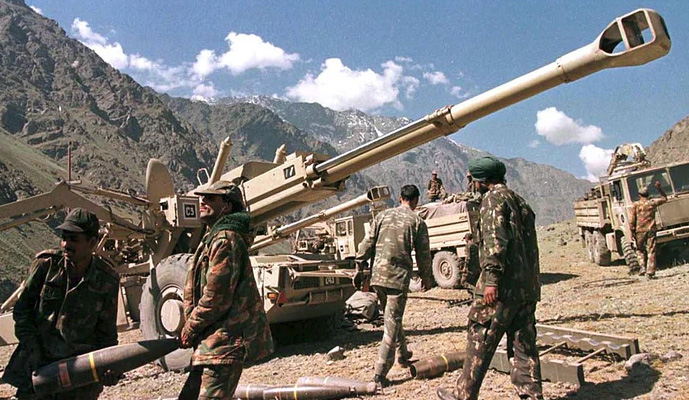
In 1997, after surviving an 18-month Technical Staff Course, I was posted back to my parent unit, the 75 Medium Regiment (Basantar River). Back then, the Regiment was a fascinating cultural mosaic. Unlike today’s all-India mix, our three artillery batteries were divided strictly by class composition. One battery consisted of Brahmins (excluding those from the South and East), the second was made up of Jats, and the third was manned by soldiers from the five Southern states.
Managing these three sub-units required three entirely different playbooks. Their languages, temperaments, dietary demands, and reactions to crises were worlds apart.
As a Young Officer, I had dutifully rotated through all three batteries to learn the ropes. After returning from the 13-month Long Gunnery Course in 1990, I was handed command of the Brahmin Battery. Two years later, I left for a staff posting, returned, and was promptly given the Brahmin Battery again.
So, when I walked into the Officers’ Mess in 1997—now deployed at a chilly, family-free 10,000 feet in Sikkim—I was ready for a fresh challenge. After the customary welcome Dining-in, our Commanding Officer, Colonel PK Ramachandran, raised his glass, welcomed me back to the fold, and cheerfully announced that I was taking over as Battery Commander (BC) of the Brahmin Battery.
“Oh, not again!” blurted out of my mouth before my brain could engage the clutch.
The CO looked understandably puzzled. Later, in private, I pleaded for a change of scenery. I wanted to experience commanding one of the other batteries. Colonel Ramachandran, however, had spent his entire career in an all-Brahmin regiment. He calmly laid out his logic, and I had to concede defeat. The man knew his horses for courses, and apparently, I was permanently saddled to this one.
My first week was spent at Regimental Headquarters (RHQ) doing mandatory high-altitude acclimatisation—which mostly involves walking very slowly and pretending you aren’t out of breath. Our battery was stationed three kilometres away, and the CO wanted me at RHQ to assist him. Thankfully, I had two phenomenal, energetic junior officers: Captain Samya Saurav (Second-in-Command) and Lieutenant Manish Wahi (Gun Position Officer)—both of whom went on to become Colonels commanding their own units. I delegated everything to them, and they ran the show so seamlessly that I barely needed to show my face.
Once my week of acclimatisation was over, I finally strolled over to inspect my battery. Walking past the kitchen area, I stopped dead in my tracks. Grazing peacefully near the cookhouse were six live sheep.
In high-altitude areas, fresh dressed meat isn’t supplied; instead, the Army issues live sheep, officially termed Meat on Hoof (MOH). In reality, after surviving a nauseating, multi-day truck ride up treacherous mountain roads from the plains, these poor creatures arrive completely traumatized and exhausted earning them the unofficial title of Meat on Knees. Usually, the soldiers pamper and fatten them up for a week to bring them back to life before sending them to the pot.

Yet, here were six healthy sheep looking practically like permanent residents. Upon inquiry, I uncovered a hilarious theological bottleneck. My Brahmin soldiers were fiercely loyal to their heritage and flatly refused to slaughter the animals. However, being hardy soldiers freezing at 10,000 feet, they had zero objections to eating the mutton once someone else did the dirty work. They were stuck in a standoff between spiritual purity and a craving for curry.
Seeing an opportunity for decisive leadership, I summoned the Battery Havildar Major, Kanti Prasad.
“Assemble the entire battery in front of the cookhouse at 12:00 sharp,” I ordered crisply. “The Battery Commander will personally slaughter the animal in front of everyone.”
With that dramatic proclamation, I marched back to my bunker at RHQ to prepare.
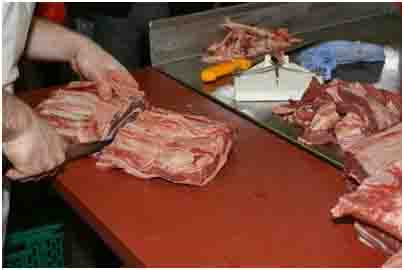
What the soldiers didn’t know was that I was uniquely qualified for this mission. Growing up, our household raised fowls and livestock, and whenever I came home on vacation, my brothers happily outsourced the butchering duties to me. My mother—a formidable perfectionist when it came to how meat was dressed and cut—was always thoroughly satisfied with my handiwork. I figured if no fault could be found by my Amma, no soldier on earth would dare critique my technique.
I sharpened my resolve and waited for noon.
At 11:00 AM sharp, there was a brisk knock on my door. Standing outside was Havildar Major Kanti Prasad, snapping a smart salute.
“Sir,” he reported with a straight face, “the sheep is already stewing in the pressure cooker. You need not come down at 12:00.”
It turns out, nothing motivates a soldier to overcome a crisis of conscience quite like the threat of the Old Man stealing the spotlight—or the fear of missing lunch.
The Regiment then had an intere

