
Roman Charity was a popular story in 17th-century Italy that many writers, thinkers, painters and sculptors depicted in their work of art, literature, and philosophy as a testament to human compassion.
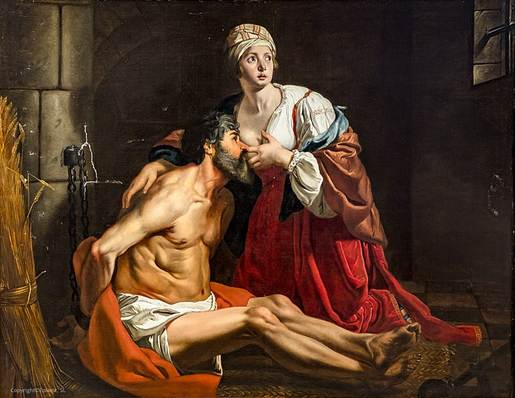
This is based on an exemplary story of a woman Pero who secretly breastfed her imprisoned father Cimon. The poor man was sentenced to death by starvation for stealing a loaf of bread during the reign of Louis XIV in France. Pero was his only daughter and the only visitor to his cell. She was allowed to visit him daily but was searched thoroughly so that no food was taken in.
The selfless devotion of Pero to nourish her father Cimon at her own breast is called Roman Charity. It is history’s most altruistic story of honouring one’s father. The kindness of Pero towards her starving father depicts mercy – To feed the hungry.
This story of Pero and Cimon finds a place in Factorum ac dictorum memorabilium by Valerius Maximus – an ancient Roman historian. It is believed that this story is related to the mythological story of Juno, the goddess of Wisdom, the daughter of Saturn, wife of Jupiter and mother of Mars, breastfeeding of the adult Hercules.
The God Jupiter wished to immortalise his son Hercules, whose mother was the mortal Alcmene. For that he held him to the breast of his sleeping wife, the Goddess Juno, to drink her milk. Juno woke immediately and pushed Hercules aside. The milk which spurted upwards formed the Milky Way, while that which fell downwards gave rise to lily flowers.

When after four months the man still lived on with no weight loss, the prison guards were perplexed and started spying on her. To their astonishment found she breastfed her father, sharing her baby’s milk.
A case was initially filed against her but realising the love and compassion of a daughter towards her father softened the judge’s heart and eventually he pardoned the father and released him free. It was considered a noble act worthy of honour.
In all its various depictions, the image is intended to be seen as a horrific act against nature, but an example of human survival – the most natural, innate instinct. It also depicts love and care for the father. Pero’s outward gaze depicts her nervousness and fear of repercussions from the society of a daughter breastfeeding her father.
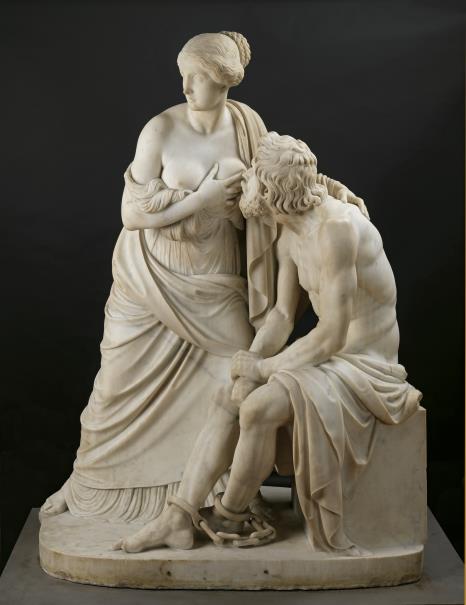
The story serves as a reminder of the sacrifices people make for their loved ones and the power of human kindness. In a world often driven by self-interest, the story encourages individuals to act with empathy and moral strength. It also highlights the importance of care-giving, whether in family relationships or professions like healthcare, nursing and social work.
The works of Hans Sebald Beham, Peter Paul Rubens, Charles Mellin and countless other classical artists who portrayed the Roman Charity story, there exists an uncomfortable testament to female sacrifice. It could well be because it was considered as an unnatural act based on social taboos of the time. The story raises moral dilemmas about breaking societal norms for the sake of love and duty.
Roman Charity is a powerful narrative of devotion, love, and moral courage. It transcends time and culture, inspiring generations with its message of selflessness. The story of Pero and Cimon reminds us that acts of compassion, no matter how unconventional, have the power to move hearts and change lives.
In an era where personal sacrifice is often overlooked, Roman Charity remains a beacon of true altruism and humanity.




 REJINCES