The Razor’s Edge: A Military Tradition of Shaving and Self-Discipline

The First Task of the Day

In 2014, Admiral William H. McRaven, the retired United States Navy Admiral who served as the ninth commander of the US Special Operations Command, delivered the commencement address at the University of Texas at Austin. His words that day resonated far beyond the graduating class: “If you make your bed every morning, you will have accomplished the first task of the day.

For cadets at Sainik School, where I spent my formative years from nine to sixteen, the ‘making the bed’ ritual was precisely that – the first accomplishment of each morning. At the National Defence Academy (NDA), however, the first task evolved. Morning shave became the ritual that set the tone for the day ahead.

During early school years, facial hair was not a concern. Shaving was a weekly ritual accompanying the barber’s haircut. At NDA, shaving became mandatory for all cadets – a discipline that would continue through over two decades of service in the Indian Army.
A Winter Morning Lesson

One winter morning in the eighties, I was a young Lieutenant serving as Senior Subaltern of the Regiment. Word arrived that an important political leader had passed away, and the day was declared a holiday. I had already shaved and was changing into my PT whites. Stepping out of my room, I found all the other Lieutenants similarly dressed and ready for physical training.

We have already shaved and put on our PT dress,” I said. “Let us go for a run. Once you have shaved early morning, holiday or not, it makes no difference.”

That morning run became more than exercise. It was a lesson in discipline that transcended circumstance – a reminder that self-respect and routine should not be dictated by calendar or convenience.

The Foundation of Soldierly Pride

In the Army, a uniformed service, discipline is judged partly by how a soldier wears prescribed dress, and partly by personal appearance. A well-groomed appearance is fundamental to military life, contributing to pride and esprit-de-corps. Every soldier must be self-disciplined and proud of belonging to a noble profession.

Commanders bear primary responsibility for ensuring that soldiers under their command present a smart, soldierly appearance – at all times, in or out of uniform, on or off duty. A properly shaved soldier, sporting a mustache if preferred, embodies that soldierly bearing.

The Origins of the Clean-Shaven Face

The tradition of clean-shaven soldiers traces back to Alexander the Great. Legend holds that he ordered his troops to shave so that enemy combatants could not grab them by their beards and throw them to the ground.

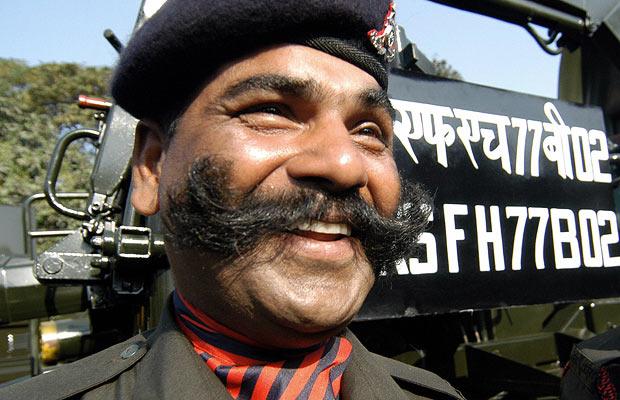
In the Indian Army today, soldiers are expected to be clean-shaven, with Sikhs as the exception, permitted to grow their beards as part of their religious practice. Mustaches, if worn, must remain above the upper lip.

Sir Douglas Haig with his army commanders and their chiefs of staff – World War I – (Image Courtesy Wikimedia)

British Military Tradition

Many of the Indian Army’s traditions and regulations derive from the British Army, whose orders regarding shaving date back to the eighteenth century. Until that time, British soldiers were clean-shaven and did not wear mustaches. Soldiers of the Hussar Cavalry Regiments adopted mustaches specifically to intimidate their enemies. The trend spread across the British Army, with the mustache serving as a distinguishing mark separating soldier from civilian.

Influence from Indian royalty and the Indian belief that mustaches signified manliness may also have played a role. By the late eighteenth century, mustaches had gained popularity among British civilians, as did sideburns.

The Great Mustache Revolt
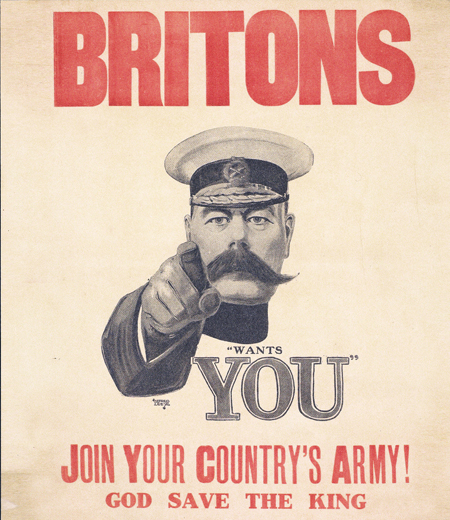
The iconic World War I poster featuring Lord Kitchener – sporting a formidable handlebar mustache – urging citizens to join the army remains an enduring image from that era

During World War I, Commonwealth soldiers found mustaches cumbersome to maintain while fighting trench warfare. Many soldiers and officers preferred to shave them off, leading to what amounted to a quiet revolt. Some soldiers faced court-martial for failing to comply with the mustache order.

In 1913, General Nevil Macready investigated the matter and submitted a report recommending that mustache orders be withdrawn. No action was taken. In 1915, King George reinforced the necessity of mustaches for soldiers. Macready resubmitted his recommendations in 1916, and on 8 October of that year, an order was finally passed abolishing the mandatory mustache requirement.

Debunking the Myth

It is a common myth that hair grows thicker and darker after shaving. Forensic anthropologist Mildred Trotter debunked this belief in 1928. She asked three college students to shave their legs, from ankle to knee, twice weekly for eight months. Using a microscope, she compared each student’s hair growth rate, colour, and thickness. Her conclusion: shaving had no impact on hair’s texture or growth.

Shaving Beyond the Military

Wrestlers are predominantly clean-shaven – Olympic rules require either a full beard or a clean-shaven face, as stubble can irritate an opponent’s skin. Swimmers often remove all body hair, believing that even minimal resistance can affect performance.

Among married Amish men, beards are worn with trimmed mustaches, substituting for wedding rings.

A Curious Footnote

For reasons still unclear, Parliament once dismissed the personal barber of Charles I of England. Famously slow to trust others, King Charles never shaved again – fearing that a new barber might attempt to kill him. History offers no evidence for the suspicion, but the king’s caution speaks to the intimate trust placed in those who hold a razor to one’s throat.

Conclusion

From Alexander’s battlefield strategy to trench warfare’s practical demands, from regimental discipline to personal pride, shaving has remained a constant thread in the fabric of military life. The morning ritual that began each day with a clean face taught lessons that extended far beyond grooming: self-discipline, attention to detail, and respect for oneself and one’s uniform. Admiral McRaven’s first task of the day may have been making the bed, but for generations of soldiers, the razor’s edge has served the same purpose – a small accomplishment that sets the stage for all that follows.

Psalm 91 : The Soldiers’ Psalm

SoldiersPsalm91jpg

During our childhood, we recited Psalm 91 as part of the evening Family Prayer (Click Here to Read More about it).  In those days I never realised the meaning of the words we recited and did not visualise that it will impact my life. During my first stint at the Kashmir Border, sleeping alone in my bunker, the very same words rang in my ears.  These words I realised helped me tide over the difficulties and uncertainties that lie ahead for any soldier in  high-altitude terrain, mostly snow covered icy heights, prone to avalanches and blizzards and  bone chilling cold.  I recited Psalm 91 every evening, (in Malayalam, the language in which our father taught us the Psalm,) before I retired to bed.  Psalm 91 has for ever been one of my inspirations and a prayer.

There is a story in circulation by the modern evangelists that during World War I, 91 Infantry Brigade of the American Expeditionary Force (AEF) was preparing to enter combat in Europe. Because their commander was a devout Christian, he assembled his men and gave each of them a little card on which was printed the Psalm 91, the same number Psalm as their brigade. They agreed to recite that Psalm daily. After they had begun praying the Psalm, 91 Brigade was engaged in three of the bloodiest battles of World War I – Chateau Thierry, Belle Wood and the Argonne. Other American units that fought in the same battles had up to 90 percent casualties, but 91 Brigade did not suffer a single combat-related casualty.

The truth about this story of 91 Infantry Brigade and the Psalm 91 has been cleared By Mary Jane Holt in an article ‘The truth about the 91st Psalm.‘  The article refers to a communication the author received from Mike Hanlon, Research Editor of Relevance, the Quarterly Journal of The Great War Society: “There was no 91 Brigade with the AEF in World War I. The Brigades’ highest number was 84.”  This story appears to have been churned out by an evangelist with a view to cash in on the sympathy the soldiers world over enjoy.

The Bible historians believe that Psalm 91 might have been written by Moses, even though most Psalms are authored by King David.  Moses might have written it to inspire the enslaved Israelite soldiers to fight against their Egyptian masters.  Hence, Psalm 91 is known as the Soldiers’ Psalm and is also referred to as the Psalm of Protection.

There are many testimonies of NATO soldiers keeping a card size print of Psalm 91 in their pockets and also reciting it during their deployment in Iraq and Afghanistan.  The Psalm as is, will be applicable to all soldiers irrespective of their faith or religion.

The Psalm begins by stating that there is no need to fear because of who He is. Then is a more personal relationship to God as the Almighty is referred to as ‘My refuge, My fortress, My God in whom I trust.’  Thus the personal relationship we have with our God enables us not to fear at all.  It follows with an affirmation that He will come to your rescue in case of any difficulties and that He will protect you as He will cover you under His wings like a mother bird.

Then is the declaration of guarantee by  God that He will protect you from all that a soldier may confront in a battlefield like ‘the terror of night‘,  ‘arrow that flies by day,’ ‘the pestilence that stalks in the darkness,’ and ‘the plague that destroys at midday.’  He also provides you the protection while you rest that no disaster would come near your tent.  The God vows to protect the soldier even though thousands may fall on either side.  God has commanded the angels to guard you so that you will not strike your foot against a stone.

The Psalm further says that you will tread upon the lion and the cobra; you will trample the great lion and the serpent.  This act can only be done by a soldier in a battlefield and the soldier has to move ahead facing the enemy’s bullets and nothing can stop him from carrying out his divine duty.  For God’s sake, don’t even let the thought about these actions come to anyone else’s mind or even in the mind of a soldier in peacetime, as the wild life protection laws of no nation will ever spare you and please do not expect God to come to your rescue!!

The Psalm concludes with a God’s promise to a soldier ‘He will call upon Me, and I will answer him; I will be with him in trouble; I will rescue him, and honour him.  With a long life I will satisfy him, and let him behold My salvation.’

In Bhagawad Gita, Lord Krishna exhorts Arjuna to fight by saying “O son of Kuntī, either you will be killed on the battlefield and attain the heavenly planets, or you will conquer and enjoy the earthly kingdom. Therefore get up and fight with determination.”  Here again the Lord guarantees a soldier the grand honour of the right to heaven.

The Invictus Games

Inectus01
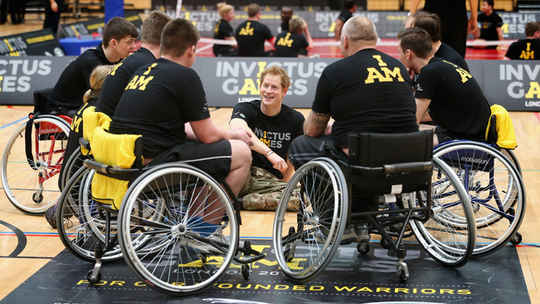
The word ‘Invictus’ means ‘unconquered’. It showcases the fighting spirit of the injured military personnel and what these tenacious men and women can achieve, post injury. The Games harness the power of sport to support recovery and rehabilitation.  It has helped to generate a wider understanding and respect for those who serve their country.

The Invictus Games was the brainchild of Prince Harry, a former Apache helicopter pilot who served with the British armed forces in Afghanistan.  He was inspired to launch an event after seeing three young soldiers badly injured in Afghanistan in 2008.  At the time, Harry was being sent home after the news of his presence in Afghanistan as a British army officer was flashed by the media.  This endangered his fellow officers, forcing him to leave, even though he wanted to stay with his soldiers.

While sitting aboard his flight home, Harry saw a coffin of a Danish solider loaded aboard. Also on that flight were three young British soldiers on stretchers in induced comas, wrapped in plastic, with missing limbs and tubes coming out of them.

Inectus02
On a trip to the Warrior Games in the USA in 2013 he saw how the power of sport could motivate the injured soldier physically, psychologically and socially. He formed the Invictus Foundation and hosted the inaugural Invictus Games at London from 10-14 September 2014 which was attended by over 400 competitors from 13 nations.  Across four days of intense sporting action, they competed in nine sports in five venues.

Thus was born the Invictus Games, the only international adaptive sporting event for wounded and sick soldiers and veterans.

The Games started with a spectacular Opening Ceremony, with an audience of 5,000 gathering on Queen Elizabeth Olympic Park for the special military themed opening event. With a fly past from The Red Arrows, displays by The King’s Troop Royal Horse Artillery and the Queen’s Colour Squadron and performances from bands in the Royal Marines, Army and RAF, the Games kicked off with all pomp and ceremony.

Prince Harry on conclusion of the first Invictus Games said “These Games have shone a spotlight on the ‘unconquerable’ character of service men and women and their families and their ‘Invictus’ spirit. These Games have been about seeing guys sprinting for the finish line and then turning round to clap the last man in. They have been about teammates choosing to cross the line together, not wanting to come second, but not wanting the other guys to either. These Games have shown the very best of the human spirit.”

Inectus03
According to Prince Harry, the 2014 Games were just the beginning of the Invictus story. The competitors showed grit, determination and humour with an absolute refusal to be beaten or be defined by their injuries.  There the Invictus spirit was born.  He was excited to see the American public supporting these inspirational men and women at the 2016 Invictus Games.  Seeing so many men and women competing against each other with huge beaming smiles, made him realise the power of the concept behind Invictus Games.  He is of the opinion that sports can make a huge difference and help the injured soldiers fix their lives and those of others around them.

The Invictus Games 2016 was held at Orlando, USA from 08 to 12 May 2016.  The games featured 500 competitors from 15 nations: Afghanistan, Australia, Canada, Denmark, Estonia, France, Georgia, Germany, Iraq, Italy, Jordan, Netherlands, New Zealand, United Kingdom and the United States of America.  First lady Michelle Obama, Britain’s Prince Harry and Academy Award-winning actor Morgan Freeman delivered stirring speeches during the opening ceremony.

Freeman powerfully orated the Invictus Pledge to the crowd to help conclude the ceremony:
Your service sets an example
Your bravery inspires me
It is my honor now
To support and give you courage
To fight for you as you fought for us
To keep your family close beside
To take the steps you need to take
I am here for you.

President George W Bush is the Honorary Chairman of the Games.  He said “I have dedicated the rest of my life to honoring the service and sacrifice of the men and women with whom I served as Commander-in-Chief.  Those who wear their Nation’s uniform, some of whom have overcome both visible and invisible injuries, deserve our support.  I am proud to serve as honorary Chairman of the Invictus Games Orlando 2016, and to shine a spotlight on the unconquered spirit of these men and women, not just from the American team but from 15 coalition nations.”

The George W Bush Institute conducted an international symposium at Invictus Games Orlando 2016 on May 8, to discuss solutions aimed at helping returning servicemen and women improve outcomes for their transition back to civilian life.

The Invictus Games 2017 would be hosted by Toronto, Canada, from September 26­ to 30.  It coincides with the  celebrations of the 150th anniversary of its Confederation and 100th anniversary of Canada’s defining rolein the Battle of Vimy Ridge in World War I.  It will provide a unique opportunity for Canadians to commemorate and honour its injured soldiers and their families.  Ontario has committed up to $10 million in support of the Invictus Games 2017.   It is expected to feature more than 600 competitors from 16 nations.

Inectus04
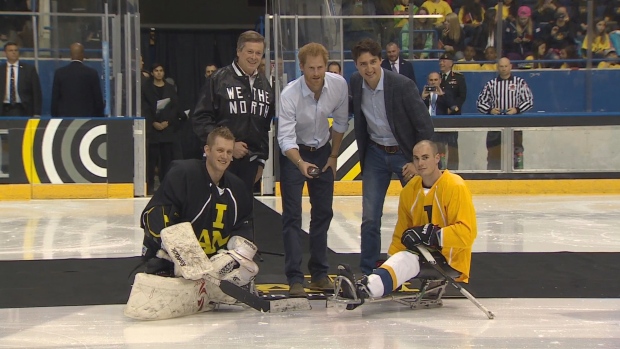
The kickoff for the Invictus Games 2017 was held on 02 May 2016, by way of an exhibition sledge hockey game at Toronto.  Prince Harry joined Prime Minister Trudeau and Toronto Mayor John Tory were in attendance.

Paraplegic rehabilitation Centre (PRC), Kirkee, is a pioneer in introducing sports on wheelchair for the Indian wounded soldiers. The First National Games for disabled were also organised by PRC and were held at the Centre. Inmates of the Centre are undisputed champions in wheelchair sports at National level. At the international level, inmates from PRC have won many medals.

Will India ever hold an Invictus Games?  Will someone sponsor the Games? It is ironic that the sponsor for the Invictus Games 2014 and 2016 was none other than Indian owned Jaguar Range Rover.