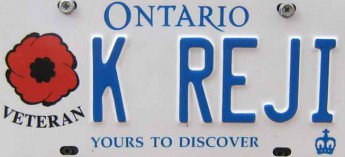
In school and during my service in the Indian Army, my name was recorded as Koduvath Reji—Koduvath being our family name. (Please click here to read more about Koduvath family).

Among the Syrian Christians of Kerala, names traditionally consist of three parts: the family name, the father’s name, and the christened (given) name. However, my siblings and I had only two—the family name and our christened names. As a curious teenager, I once asked my father why our names were so short. Being a headmaster, he gave a characteristically practical reply: the most common question in primary language classes is “What is your name?” He didn’t want his children struggling with lengthy responses, so he kept our names simple. I often wonder how I’d have managed with a typical Syrian Christian name like Kuruvilla, Philipose, Punnoose, or Zachariah!
The Many Reasons for Name Changes

In Kerala’s Malayala Manorama newspaper, classified columns frequently feature name-change advertisements—mostly women altering their surnames post-marriage. Some adjust the order of their names, while others cite astrological or numerological reasons.
But motivations for name changes vary widely. Some dislike the name their parents gave them. Couples may hyphenate surnames, creating a double-barrel identity. Others anglicize their names to avoid mispronunciation or unintended meanings in foreign languages. Occasionally, a name becomes a professional liability, or a change is needed to counter identity theft.
A Family Tradition: Keeping One’s Name
My mother, Pallathettu Kurian Sosamma, married my father, Koduvath Varkey George, in 1956. Both were teachers, and neither changed their names. My father believed marriage shouldn’t demand the sacrifice of one’s identity. He also considered the bureaucratic hassle unnecessary. This principle extended to his daughters-in-law—my wife, Marina Mani, retained her name, derived from her father’s.
In the Indian Army, it’s common for officers to change their wives’ surnames post-marriage through Part II Orders (official documentation). Many were surprised when I insisted Marina keep her maiden name. Most officers didn’t realize that marriage alone doesn’t legally authorize a name change—proper legal procedures must be followed. Soldiers, too, often bypassed the process, relying on uninformed officers to approve their paperwork.
Naming Our Children: A Deliberate Choice
After marriage, Marina was often addressed as Mrs. Reji – a natural assumption in the Army, where Reji was mistaken for my surname. She disliked it but eventually accepted it. When we named our daughter Nidhi, Marina felt a single name seemed incomplete. I argued against adding my name to hers, avoiding future change of name complications.
Eventually, Marina named her Nidhi Susan—Susan being the anglicized form of my mother’s name, Sosamma. Today, she goes by Nidhi Parkinson-Watson, adopting a hyphenated surname. When our son was born, Marina chose Nikhil George Koduvath, giving him a complete name.
The Passport Predicament: Two Identities
While emigrating to Canada, I swapped my first and last names for the passport, becoming Reji Koduvath instead of Koduvath Reji. This left me with dual identities—Indian and Canadian. Our daughter faced minor issues in Canada, where Susan (her last name) is typically a first name, often prompting double-checks during documentation.
Correcting Documentation in the Army
As a commanding officer, I noticed gaps in soldiers’ documentation, especially regarding marriage and children’s birth records. During a Sainik Sammelan (monthly address), I explained the legal name-change process in India (similar to many developed countries):
- Affidavit: File before a District Court or Magistrate.
- Newspaper Advertisements: Publish in two local newspapers.
- Gazette Notification: Finalize in the state’s Official Gazette.
One soldier from Rajasthan raised a concern: in his community, unmarried women used Kumari (virgin) as their second name, which changed to Devi post-marriage (e.g., Ritu Kumari → Ritu Devi). I quipped, “Until legally changed, she remains ‘Kumari’ for life!” I instructed all personnel to regularize any unofficial name changes.
The Canadian Quirk: Searching by Last Name
In Canada, medical searches often use last names. Since Nikhil and I share Koduvath, while Nidhi and Marina have different surnames, I ask clinics to search by our home phone number instead.
Once, a pharmacy technician pulled up five names under our number and remarked, “All three males share a last name, and the two females have different ones.” Puzzled, she asked who the third male was. The answer? Maximus Koduvath—our dog, who also gets his meds under our family file!

 REJINCES
Good one Reji. I am a Tam Brahamin – Iyer. As lot of Brahmin bashing was going in 60-70 thanks to the Dravidian movement inTN we stopped using our surname Iyer. !
LikeLiked by 1 person
I fully agree, lot of people dont know the procedure to change the name.
In Canada no one knows what is the middle name. This caused some difficulty for the south asian people.
Both of my daughters ( Ann Susan & Angel Serah) have only 2 names and no strings attached to either side.
Only in middle east the electronic Visa application was not accepted as they dont have 3rd name. So the Arabic typist in Dubai ( Obviously from Malapuram) added a part of my name (With out even informing any one of us) and solved the problem. We came to know this at the time of visa cancellation counter)
LikeLiked by 1 person
poor maximus, if he wants to change his name?
LikeLiked by 1 person
Nice read Reji K. Looking forward to more of it.
LikeLiked by 1 person
A good one, Reji. Enjoyed reading.
Surya
LikeLiked by 1 person
wonderful reading…keep it up
LikeLiked by 1 person
Your article is very informative yet it has a sprinkling humour throughout the write up. It was a double benefit scheme reading it, knowledge n humour. I like it
LikeLiked by 1 person
Brilliant writing sir. Loved it to the hilt.
LikeLiked by 1 person
NICE READ SIR.
MY DAD WAS A WARRANT OFFICER IN THE IAF HIS NAME WAS P.VASUDEVAN OR PRAKKATTE VASUDEVAN. PEOPLE /FRIENDS/AND RELATIVES USED TO CALL HIM VASU.
UNFORTUNATELY , HE NAMED ME RAMACHANDRAN AFTER MY GRANDFATHER RAMAN.TO MY HORROR, MY SCHOOL RECORDS HAD IT AS P.V.RAMACHANDRAN, U CAN IMAGINE…PRAKKATTE[ANCESTRAL HOUSE SOMEWHERE IN MALAPURAM] VASUDEVAN [FATHER’SNAME]RAMACHANDRAN. I WAS ONLY HAPPY TO SHARE MY INITIALS P.VWITH A FORMER PRIME MINISTER OF INDIA ,BUT I WAS DETERMINED TO PUT A STOP TO IT..
I NAMED MY DAUGHTER AS P.RAMYASREE ,AT HOME WE CALLED HER ROMA…AND SON AS P.ARJUN..SHORT AND SWEET. NOW MY DAUGHTER IS MARRIED AND GOT TWINS.SWEET NILAY AND RIDHI….THAT IS ALL FOR SHORT NAMES.
LikeLiked by 1 person
Sirji great one again though most of it I know but love the way you put it across …..
Humorous and educative …..
LikeLiked by 1 person
The importance of using full names in digital marketing cannot be overstated. Using first, middle, and last names helps build trust and authenticity with your audience. It also aids in personalizing communication and enhancing customer relationships. Overall, leveraging complete names can significantly improve engagement and brand loyalty in Brampton’s competitive landscape.
Brampton Digital Marketing
LikeLike