Indian Cricket Team Honours Soldiers

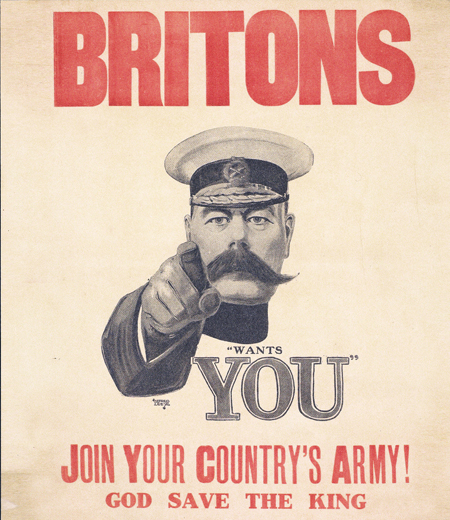
Indian Premier League cricket matches were suspended in the wake of the recent standoff between India and Pakistan.  Sunil Gavaskar, legendary Indian cricket player, has suggested that the remaining 17 matches be played without cheerleaders and DJs- as a respect to those who lost their lives in the recent conflict.

What about the soldiers??


On 08 March 2019, during India-Australia One Day Cricket match at Ranchi, the Indian players were wearing  disruptive pattern Indian Army caps with the BCCI logo in front and the manufacture’s Nike logo at the back.  I scurried through the internet to catch the news about the new headgear Indian players were wearing.

It was Lieutenant Colonel MS Dhoni, a legend from Ranchi, the wicket keeper, who came up with the novel idea.  He handed over the cap to Virat kohli, the Indian Captain, and also to all team members and support staff before the start of the match.  Captain Kohli at the toss said “This is a special cap, it’s a tribute to the Armed forces. We’re all donating our match fees of this game to the National Defence Fund. I urge everyone in the country to do the same, donate to the families of our armed forces.”

This must be the first time the Indian Cricket team must have shown such a gesture to the soldiers.  Obviously, it had complete support from BCCI.


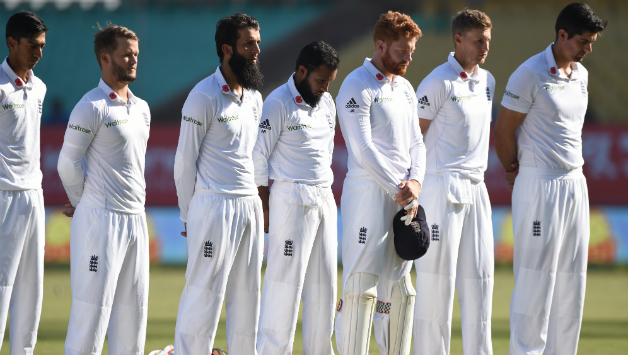
English Cricket Team that played a test match at Rajkot (November 9-13, 2016) were seen wearing the Red Poppy in honour of fallen soldiers to commemorate Remembrance Day (11 November).  Will the Indian Cricket Team ever do so for the Armed Forces Flag Day (07 December)?

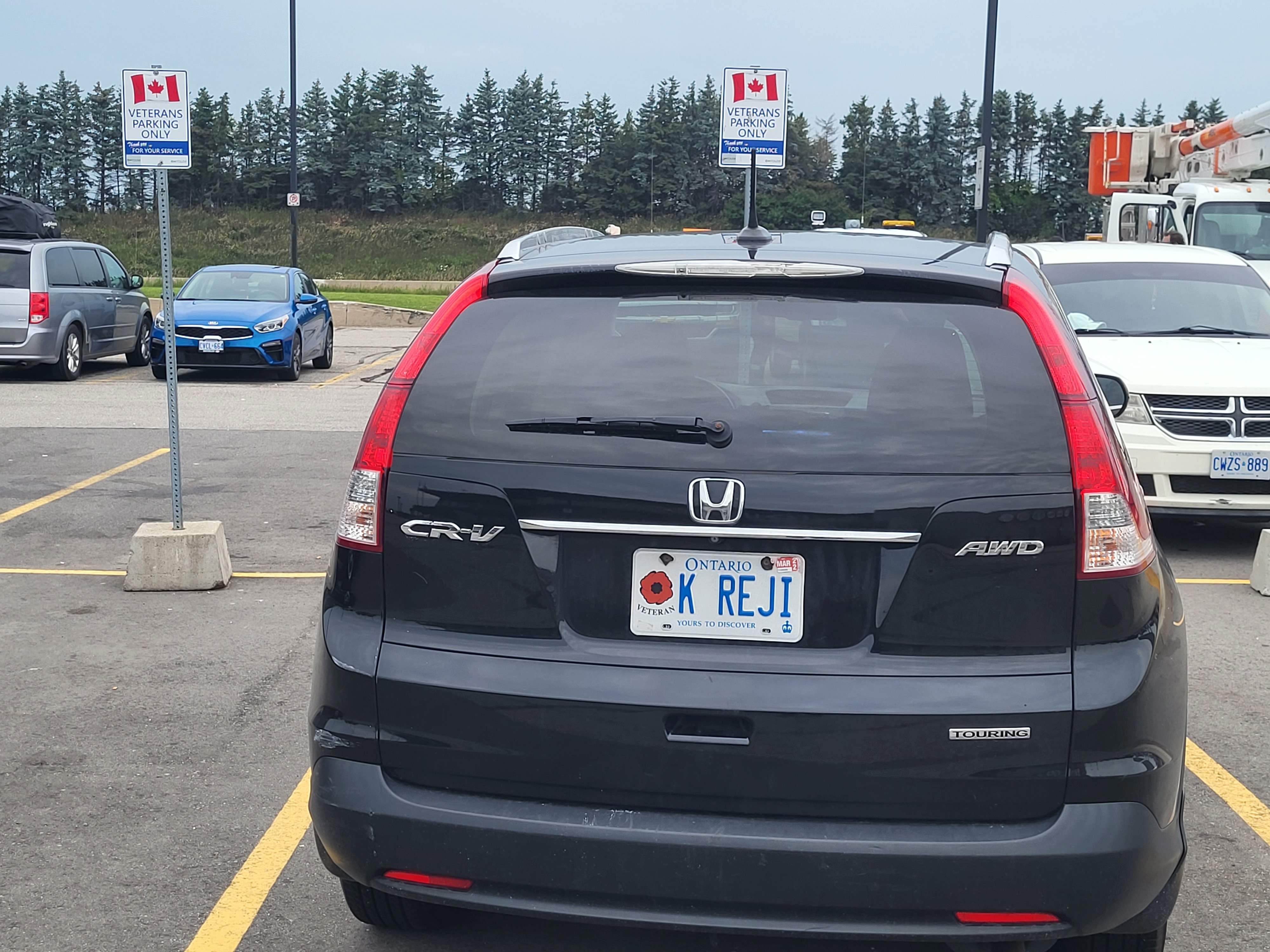
Few years ago, we watched a baseball game at Toronto between the Toronto Blue Jays and the Tampa Bay Rays. The Rogers Centre is the home-ground of the Blue Jays. The atmosphere was as electric as that of any cricket matches of the Indian Premier League.

During the  innings interval, a sixty year old Veteran from the Canadian Army who was a Captain and had served in many UN assignments was called on to the centre and the Team Management of the Blue Jays presented him with a team shirt with his name printed at the back and with the team captain’s signature in the front. The entire stadium stood up to give the veteran a standing ovation – no one instructed anyone to do it, but was spontaneous. This is what is called patriotism.

Our son then said that during all the matches, a veteran from the armed forces or the police forces, who is a registered fan of the Blue Jays, is honoured this way.

Can we ever expect such a gesture at Mohali from the Kings XI Punjab or at Chennai from the Chennai Super Kings? Why one veteran, we can always honour a dozen at every match.

Will this ever happen in any Indian city? Will this remain a distant dream?


Remembering a Valiant Soldier


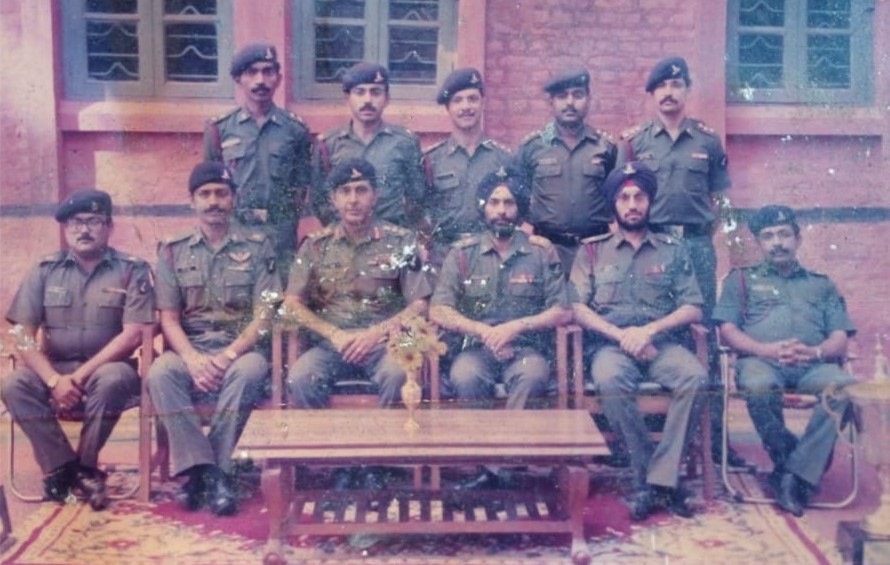
(Regimental Photograph of 1990 with Colonel Rajan Anand, Commanding Officer.  Captain KM Mistry standing in the centre and I seated extreme right.)

Major Khushru Meherji Mistry, a Parsi from Bombay (now Mumbai) was my subordinate at 75 Medium Regiment (Basantar River.)  He saw action in the Kashmir Valley for over a decade.

When Mistry joined our Regiment in 1988 as a young subaltern, my first question to him was whether he was related to Late Colonel KM Mistry, widely regarded as the first great Indian all-rounder and acclaimed by none other than the legendary Ranjitsinhji, who called him the ‘Clem Hill of India’.  In the 1894-95 Presidency fixture at Bombay, he showed what he was capable of with the ball as he recorded figures of 5/11 in the second innings to help the Parsis beat the shell-shocked Europeans – who were bowled out for just 24 – by 120 runs.  Second Lieutenant Mistry was a bit taken aback by my question but he confirmed that he was indeed his great-uncle.  Our journey together as soldiers began that day.


Recently, I came across this photograph of Lance Corporal William Kyle Carpenter who was awarded the United States’ highest military honor, the Medal of Honor.  His citation read For conspicuous gallantry and intrepidity at the risk of his life above and beyond the call of duty while serving as an Automatic Rifleman with Company F, 2d Battalion, 9th Marines, in Helmand Province, Afghanistan in support of Operation Enduring Freedom on 21 November 2010. Lance Corporal Carpenter was a member of a platoon-sized coalition force. Lance Corporal Carpenter and a fellow Marine were manning a rooftop security position when the enemy initiated a daylight attack with hand grenades, one of which landed inside their sandbagged position. Without hesitation, and with complete disregard for his own safety, Lance Corporal Carpenter moved toward the grenade in an attempt to shield his fellow Marine from the deadly blast. When the grenade detonated, his body absorbed the brunt of the blast, severely wounding him, but saving the life of his fellow Marine. By his undaunted courage, bold fighting spirit, and unwavering devotion to duty in the face of almost certain death, Lance Corporal Carpenter reflected great credit upon himself and upheld the highest traditions of the Marine Corps and the United States Naval Service.”

Acts such as the one above fully illustrate the expression “raw courage” Thoughts of Mistry came before me on reading about Corporal Carpenter. It was another time and another Kyle Carpenter. Mistry was a professional soldier who loved the men who served under his command.  When we were serving in the valley in 1988, his helper, a soldier from Thamizh Nadu, reported that his mother was admitted to a hospital in a medical emergency and that he wanted to rush home.  The Srinagar-Jammu highway was closed due to heavy snowfall and landslides and the only way to reach Delhi was by air. Mistry immediately bought an air ticket for the soldier from Srinagar to Chennai from his own pocket and saw him off.  Yes, he was rich in a monetary sense but far richer at heart.

Mistry was a great orator with exceptional command over the English language.  His English language skills, he owed it to Rishi Valley School.  He was tough, bold, honest and straight forward. We took a spontaneous liking for each other maybe because of our open hearted nature.

On a summer morning in 1995, I got the news that Captain Mistry had been evacuated to the Army Hospital, New Delhi due to injuries suffered by him in a grenade attack. At the time he was serving with a Rashtriya Rifles (RR) Battalion in the Kashmir Valley.   A terrorist had lobbed a grenade in front of the section of men he was leading.  Mistry dived forward and scooped the grenade with his right hand.  The grenade burst mid-air, taking the top two elements of the three fingers of his right palm.

I rushed to the Hospital to look him up and I found a cheerful Mistry sitting in the Veranda of the officers’ ward, reading a book. I enquired as to what happened and he said “Let me explain to you in the very same words that I used to tell my mother about the incident, Like Mom prunes her Bonsai collection at home, God did a Bonsai on my Hand. By the way, I have already sent my motorbike for modification so that I can drive it with my Bonsai Hand.”

I was shell-shocked by his reply and we both really laughed it out.

After 30 minutes, while we were having a cup of tea at his bedside, a senior General walked in to meet Mistry to enquire about his welfare. The General commended Mistry stating that it was indeed a brave act which saved the men under his command. Mistry, as curt as he could be, replied “Sir, I did it to save myself.” The General gave a stare and walked off and with that evaporated any possibility of a citation for any award! Obviously, Mistry did not get any award or commendation for his brave act.

On 12 December 1997, while I was posted at Sikkim, Mistry re-joined our Regiment from another one.  He straight away moved into my room and left his belongings there.  In the evening I got my wisdom tooth extracted and due to anesthesia, went to bed early.  At about 8PM, while all officers were at the Officers’ Mess for dinner, my neighbouring room caught fire and in no time my room too was engulfed in fire.  Our exchange operator was the first to react and he took me out of my room.  Everyone assembled to put off the fire.  Mistry and I lost most of our belongings other than my computer and TV which our exchange operator managed to salvage.

Next morning as everyone was rummaging through what the fire had not managed to engulf, I hit upon a few currency notes of Rs100 denomination.  They appeared to have been forming a bundle.  I never had that money on me and my brain went into overdrive trying to fathom as to from where it came.  My take-home-salary then was much less than a wad of Rs100 currency notes.   Suddenly I realised that Mistry had left his belongings in my room.  I summoned Mistry to enquire and he nonchalantly replied that it was a bundle of notes which his mother had given him as a birthday gift before he left Bombay for Sikkim.  “My mother will send me another bundle if I say I lost it.  I am not going to tell her about the fire so that I don’t have to lie to her about her gift

He passed away a decade later due to cardiac arrest. RIP my friend.

PS:  Have you noticed that both the heroes are ‘Carpenters‘; they share a common last name – the Indian ‘Mistry‘  translates to ‘Carpenter.’

Chai –My Favourite Brew


Recently I came across a video clip about TWG’s Yellow Gold Bud Tea.  This tea is believed to have been once the favourite of Chinese emperors and as precious and costly as gold.  In fact, each tea bud is lavished in 24-karat gold, which once infused, yields a delicately metallic and floral aftertaste.

In the Sixties, during our childhood days, back home in Kottayam, the regular morning brew was coffee.  Ripened red coffee beans were plucked from the coffee trees that grew in our homestead and after being sun dried their outer covering was removed.  The beans were then fried until they turned black and ground to a powder at the nearby mill, to be stored in airtight containers. The coffee powder was put into a copper vessel with boiling water and was left for a few minutes for the coffee to be infused and the thick powder settled at the bottom of the copper vessel.  The extract or decoction was now mixed with milk and sugar and then served to all. Just thinking about it makes one salivate.

The taste of that home-made coffee is now history.  With the advent of rubber plantations, all coffee trees were cut to make way for rubber. Thus, the end of home-made coffee powder. We now source our coffee powder from various commercially available brands in the market. Sad change.

Happy change. I took to drinking tea on joining Sainik School, Amaravathinagar, Thamizh Nadu, at the age of nine in 1971.  Tea was served to us early in the morning prior to Physical Training, at 11 o’ Clock between classes and in the evening prior to games.  Every cadet took a liking to this tea as everyone looked forward to it.  For many it served as a clock as none of us wore a wristwatch.  The tea had some magic in it as it had the innate quality to kick start all the important events in a cadet’s life!

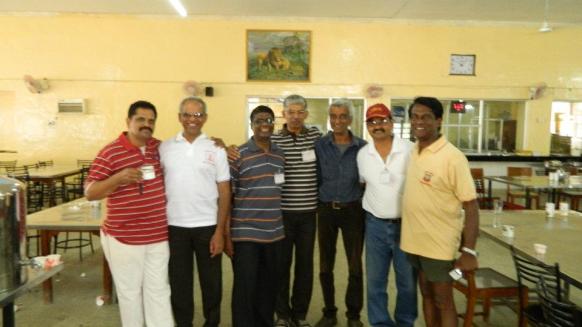
CadetMessAmar22
What was so special about this magical concoction?  The taste of this tea is beyond words, and could never be replicated.  We tried hard to analyse the secret of this addictive tea. What was special about it? It could be the special blend of the tea leaves or the way in which it was cured. Or perhaps it was the sublime effect of the Amaravathi River waters, the vessel in which it was brewed, or the cloth used to filter it – the possibilities were endless.  It remains a mystery to all of us, but it attracts most alumni to the school every year and they gleefully indulge in consuming steaming cups of this divine tea. Some Cadets even claimed that it was made with donkey’s milk.

Another most memorable cup of tea that I have had was the tea served by soldiers at the Sadhna Post at Nastachun Pass.  This pass is located at about 10,000 feet Above Sea Level at the entrance to the Thangdhar Valley on the Indo-Pak border.  The narrow one-way road from Chowkibal (about 100 km from Srinagar) was cut along the mountains to Nastachun Pass and then down into Thangdhar Valley.  The road being narrow could only accommodate one vehicle either way.  To ensure a smooth flow of vehicles, all traffic was regulated by a convoy system. The up and down convoys left from Thandhar and Chowkibal at about 8 in the morning and 2 in the Afternoon respectively.  The vehicles on reaching Nastachun Pass parked there, awaiting all vehicles to fetch up from either side.

During this wait, soldiers manning Sadhna Post served tea to all.  It was real refreshing cup of tea as one was both physically and mentally tired traversing up through the treacherous roads with many hairpin bends. It was a magic potion that invigorated tired limbs and ebbing spirits.


During winter, the road and the mountains got covered with over ten feet of snow.  The only way to cross over was by foot columns.  The foot columns operated at night, two days after a heavy snowstorm to avoid avalanches.  The foot column consisted mainly of soldiers proceeding or returning from leave from their homes, porters carrying essential supplies – fresh vegetables and milk, mail, etc.

It took about four hours of strenuous climb to Sadhna Post and was a sure test of anyone’s mental and physical abilities. It was a kind of surreal experience.  On reaching Sadhna Post, everyone was welcomed by the soldiers with a hot ‘cuppa,’ a cup of tea that was the most refreshing and tasty – it simply was the best . To my mind, it could very well be compared to Amrit – the nectar of immortality in Hindu mythology. The climb down from the Sadhna post appeared easier but was just as treacherous, if not more, due to the tendency to slip and fall.

I have never tasted the Yellow Gold Bud Tea, the specialty of the Chinese emperors. But I am certain that it will pale into insignificance when compared with the Amravathi Special or the Sadhna Post Amrit!

Brigadier KN Thadani, VSM : An Accomplished Mountaineer


Brigadier KN Thadani and Mrs Sneh Thadani used to take me to the Defence Services Officer’s Institute(DSOI) at Dhaulakuan, Delhi every Sunday and we used to play cards and tambola (housie or bingo).  The evenings would invariably wind up with dinner in some classy restaurant in Delhi.

I also had some interaction with their two sons – Akash and Kailash. I remember signing the documents for Kailash for his adventure training at the Himalayan Mountaineering Institute, Darjeeling.  That was the day when Brigadier Thadani taught me as to why the old rubber stamps had a drawing pin on one side – One needs to always ensure that that correct side faced the document when you stamped one, lest it would turn out upside down!

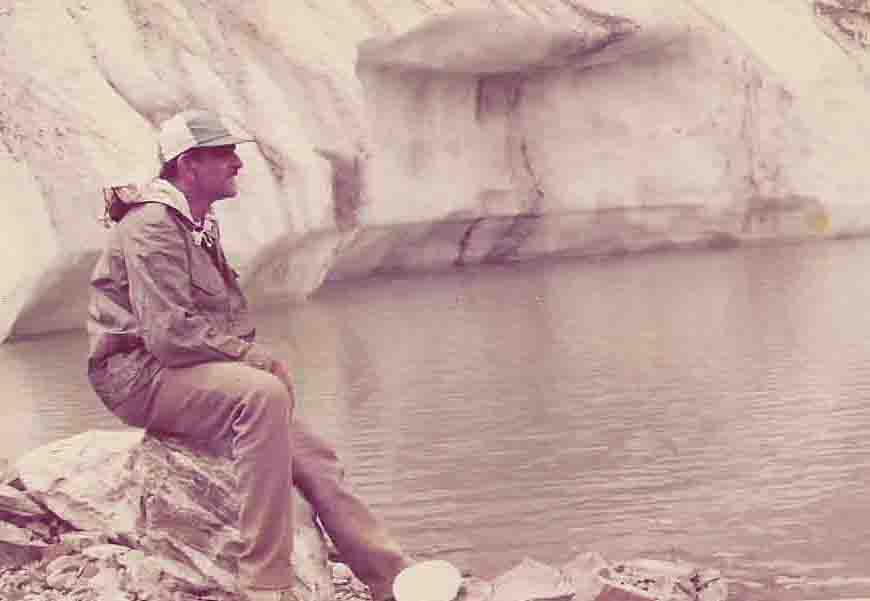
Brigadier Thadani was also a skilled mountaineer and both passionate and knowledgeable about his craft.  Many years later, while he was commanding 3 Artillery Brigade in Leh, he led the very first expedition of 16 soldiers to conquer Apsarasas I peak. The Apsaras group of mountains lies to the North of Teram Shehr Glacier and consists of a large massif with the ridge line running from West to East. The highest point is Apsarasas I, height 7245 m with Apsarasas II (7240 m) and Apsarasas III (7230 m).


The expedition left Leh on 25 July 1980 (four years before the Indian Army occupied Siachen Glacier), moved across the Khardung La, 18,360 ft (which is reputedly the highest pass in the world over which a road has now been built), and thereafter descended, to the Shyok river and on to the Nubra valley in Ladakh.  The team set up four camps with the base camp at the snout of the Siachen glacier.  The advanced base camp was sited near the confluence of three glaciers, the Siachen, Teram Shehr and Lolofond at a height of about 5180 m (12,000 ft).


A number of parties were sent out on various approaches to determine a suitable route to Apsarasas I. The Western approach along the ridge line was found unsuitable as it had a formidable overhanging glacier on the route to the ridge line. The South-Eastern approach was selected and summit Camp 1 was established on 7 September and summit Camp 2 the next day.

At this stage the expedition was struck by bad weather; heavy snowfall with occasional blizzards prevented further progress on the mountain. The fixed ropes between the two summit camps were buried in the fresh snow and the members had to remain firm in their respective camps. For almost a week, they had to endure extreme privation in the sub-zero environment. Meanwhile, the route to these camps was obliterated by avalanches.

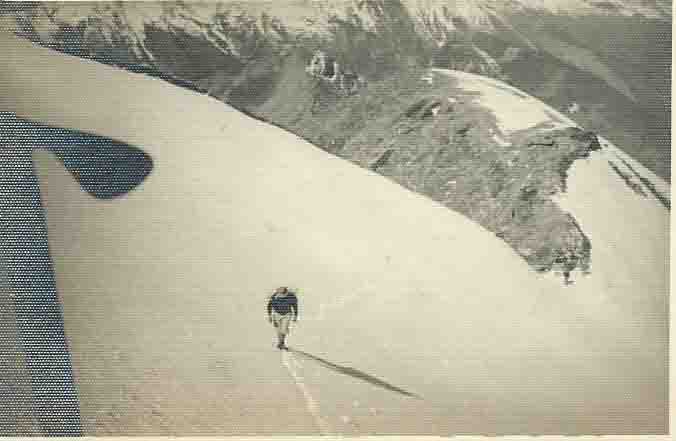
A party of eight moved up to summit Camp 3 having used 15 fixed ropes to secure the route. The following day they reconnoitred the route to the summit and on 18 September, seven of them made an early start and reached the summit of Apsarasas I at 11.12 a.m. They hoisted the Indian tricolour and the expedition flag. They stood in prayer, expressed their gratitude to the Gods of the mountains for having given them the strength to reach the summit and offered oblation. The second summit party of nine members, seeing that the weather was clear and the route to the summit had already been secured, climbed 3000 ft at that altitude. They were fully aware that they could at best return to the security of a camp only after nightfall. They reached the summit at 3.30 p.m., took a few photographs and as the clouds were gathering fast, they hurried back and reached the camp at 9 p.m.


This added another glorious chapter to the history of mountaineering by these 16 gallant men of the Indian Army led by Brigadier KN Thadani. These peaks are now in the enemy held areas of the Glacier. When the line of control was delineated it was not clearly defined in these areas and so the Indian and Pakistani perceptions of the LOC were quite divergent. In those days the ground was not occupied by either army and both countries allowed in mountaineering in these areas. Despite all these circumstances, it was still no mean feat for him and his team to enter what was then palpably Pakistani held territory.  What happened in the years to come with the Indian Army occupying most of the Siachen Glacier is etched in golden letters in the annals of Indian military history.

Even though both his war experience and mountaineering took a toll on his body and mind, like a true soldier, he rarely spoke about it and when he did it was in bits and pieces. He was a man of few words and I used to be ever on the lookout when those pearls of wisdom came from his lips.

Brigadier Thadani loved sports and was a passionate follower of Cricket.  I fondly remember the days when we together watched the Benson & Hedges World Championship of Cricket, a One Day International tournament held from 17 February to 10 March 1985 in Australia which India won.  The most crucial match was the semi-final with New Zealand – India had to make 207 runs in 50 overs.  In the 32nd over, India was 102 for 3 and needed 105 runs to win in the remaining 18 overs – a difficult task then.   It was Vengsarkar and Kapil Dev who took the team to victory, both scoring half centuries.  The match was nail-biting and intense, and caused Brigadier Thadani and I to smoke two full packets of Wills cigarettes. By the way, Brigadier Thadani, stylish as ever, in those days only smoked his pipe.

As Brigadier Thadani sitteth on the right hand side of God, let me reveal an incident that always remained a fascination with me. Brigadier Thadani, while commanding 3 Artillery Brigade in Leh, had been close to His Holiness Dalai Lama.  In April 1985, His Holiness came to our Officers’ Mess to meet his old friend.  I too had the opportunity to interact and dine with His Holiness and I will always cherish the meeting till my grave.  I was destined to witness this meeting of two great personalities and two best friends who ardently admired each other.

A Peerless Soldier : Remembering Late Brigadier KN Thadani, VSM


In 1985, Brigadier KN Thadani and Mrs Sneh Thadani moved into the Officers’ Mess of our Regiment, then stationed in Gurgaon. He had retired from the Army a few months earlier.  Our Mess was a hired house in DLF Colony in Sector 14, Gurgaon. Many years earlier in 1971, as the Commanding Officer (CO) of our Regiment, he had led the unit into battle.  They were getting their house constructed in Gurgaon and it was only natural they moved into our Officers’ Mess.  That was the first time I met this wonderful couple.


Mrs Sneh Thadani cutting the cake during the Golden Jubilee Celebrations of our Regiment – February 2018

In the army it is extremely rare that subalterns get an opportunity to closely interact with Brigadiers, retired or serving. I, then a Lieutenant, and the only bachelor, was the sole dining-in member of the Officer’s Mess. So, as mess mates, I therefore had a lot of interaction with Brigadier and Mrs Sneh Thadani. I really cannot fathom how or why I became an object of their benign indulgence. But oh, I was relishing it so much. They were excellent human beings; erudite, lively and animated conversationalists.  I learned a lot from them about soldiering, spirituality and myriad other facets of life. I fondly recall those days and reminisce about the couple  and their times.


Second Lieutenant Arun Khetrapal, Param Veer Chakra (Posthumous)

During the 1971 Indo-Pak War, Lieutenant Colonel KN Thadani had commanded our Unit – 75 Medium Regiment, which provided Artillery fire support to the legendary 17 HORSE, The POONA HORSE, in the famous Battle of Shakargarh.  This battle reminds everyone of the supreme sacrifice of Second Lieutenant Arun Khetrapal of this Regiment who was honoured by the nation with its highest gallantry award, the Param Vir Chakra. 

During the same battle, Captain Satish Chandra Sehgal of our Regiment, who was the Observation Post (OP) Officer (for direction of artillery fire) with POONA HORSE, also made the ultimate sacrifice. He was honoured with a Vir Chakra.


Mrs Sneh Thadani with Veteran Brigadier MS Brar, Sena Medal, during the Golden Jubilee Celebrations

Captain Madhu Mehububani, now a Veteran Brigadier, was the Observation Post Officer with 4 (HODSON’s) HORSE during the war.  He was Mentioned-in-Dispatches for his heroic actions and display of valour in the face of enemy.  Major MS Brar, his Battery Commander, was awarded Sena Medal for his gallant actions and his professional acumen in providing close artillery fire support for our armoured columns during their advance and the consequent battle with the enemy.


Brigadier Madhu Mehbubani remembers: “Colonel Thadani was our Commanding Officer, a thoroughbred gentleman, a saint at heart and a father to all young officers of the Regiment.  During the war I used to be an energetic young Captain with soldierly adrenaline pumping through all my veins, ready to bash on ahead, engaging enemy tanks with artillery fire.  I used to be very ‘vociferous’ on the radio net when calling for artillery fire.  Colonel Thadani would always come on the net, night or day, take over the net with his ‘cool’ demeanor and ensure that the guns fired as per my orders.”


Major Hoshiyar Singh, Param Vir Chakra
Our Regiment under then Lieutenant Colonel Thadani’s command was also involved in another famous battle, providing Artillery support for the Battle of Jarpal, where Major Hoshiyar Singh of 3 Grenadiers was awarded the Param Vir Chakra. In a gallant action, his C Company of 3 GRENADIERS captured Jarpal along the Basantar River inside Pakistan and then successfully repulsed many counterattacks.  It resulted in the enemy retreating, leaving behind 85 dead including their Commanding Officer and three other officers. Though seriously wounded, Major Hoshiyar Singh refused to be evacuated till the ceasefire.

Throughout the operation, C Company led by Major Hoshiyar Singh was provided with effective fire support by our Regiment. The artillery fire was directed  by Captain Mohan Krishnan who fought alongside Major Hoshiyar Singh as the Observation Post Officer.  Captain Mohan Krishnan was  Mentioned-in-Dispatches for displaying  conspicuous gallantry during the battle.


Veteran Colonel Mohan Krishnan  has this to say about his Commanding Officer.   “During my very first meeting with our new Commanding Officer, I realised that here is a leader who would stand by his command come hell or high water.  I soon realised that he encouraged his subordinates to take initiative and most importantly he taught us the value of morale.

His innovative thinking during the actual operations and his directions to us as – Forward Observation Officers (FOO) was instrumental in  our Regiment being conferred with the Battle Honour ‘BASANTAR RIVER.’

During the war I was attached to 47 Infantry Brigade of 54 Infantry Division as the  OP Officer.   On 4th Dec 1971, I was instructed to link up with 16 DOGRAS. While I was making preparations along with our soldiers, I decided to carry the wireless set, the heaviest equipment on my back and was trying it on and walking around to adjust to its weight.  In those days the radio sets were powered by a super-heavy Lead-Acid battery.  That was when Colonel Thadani landed up with a huge smile and handed over two newly introduced, much lighter ANPRC radio sets, batteries, ammunition and a few grenades. We heaved a great sigh of relief because carrying a heavy radio set and  moving about during the thick of battle was going to be extremely cumbersome to say the least. He then shook hands with all of us and bid us God speed and watched us go off into the night.  His timely action of handing us the lighter radio sets  and personal words of encouragement and advice really boosted our morale. It speaks volumes about this leader and his dedication and support for his subordinates.

Col Thadani initiated a novel method of counter bombardment. He instructed OP Officers who were up front, facing the enemy, to take bearings of the gun flashes whenever the enemy artillery opened up  and to record the time interval between the detection of the flash and the sound of the guns. With this data,  by triangulation, the  Gun Batteries of our Regiment were given fire orders which resulted in accurate and rapid engagement  of the enemy gun positions.  After the cease fire, during one of the flag meetings with the Pakistani officers they acknowledged that our Artillery fire was very effective. I am absolutely certain that this acknowledgement by our adversary was a result of our CO’s initiative, clear, precise instructions and outstanding  coordination of our Artillery fire.

Just before the Battle for Jarpal, I was with C Company of 3 Grenadiers as  their Forward Observation Officer.  Our CO came in person to bid farewell to me and my team as we launched into battle.  I was surprised as to how he could manage to locate us in the midst of the hectic activities and frantic troop movement that preceded the launch of such a major offensive.

He again had a wonderful and encouraging smile for all of us and said ‘Son, this battle that you are going into will be written in the annals of coordinated assaults by infantry and artillery and will also be written in our Regimental History. I wish you and your team all the best!’  He then shook our hands and watched us disappear into the night along with our Infantry comrades who were moving into the Assembly Area prior to the launch of the attack. This gesture of his made all of us very proud of him and our Regiment. It also brought a lump in my throat.

There was no need for our CO  to come personally to see us off. He could have wished us good luck over the radio net, but he chose to meet us in person negotiating  mine fields and braving enemy shelling.    HE WAS A TRUE WARRIOR.”


Lieutenant Colonel KN Thadani (extreme right) with Brigadier Ujagar Singh (Commander 74 Infantry Brigade), Major General WAG Pinto (General Officer Commanding 54 Infantry Division) and Brigadier AS Vaidya (Commander 16 Independent Armoured Brigade) during the war.

Then Lieutenant Colonel KN Thadani was the Artillery Advisor to Brigadier AS Vaidya, Maha Vir Chakra (later General and Chief of the Army Staff), Commander 16 Independent Armoured Brigade.  For his professional acumen in providing artillery fire support, planning of the operations, leadership and courage, Lieutenant Colonel KN Thadani was awarded the Vishishta Seva Medal.


Honorary Captain Mohinder Singh, our then Subedar Major  was also Mentioned-in-Dispatches for his dedication to duty and ensuring high morale of the Regiment during the war.  Gunner Premachandran, our Despatch Rider also laid down his life fighting for the motherland.

I joined our Regiment in January 1983 just after the Regiment was conferred the Honour Title ‘BASANTAR RIVER’ for the efforts of all officers and soldiers of this great Regiment during the war. It took over a decade of persistent effort by our Regiment and due to seven years of toil of our then Commanding Officer, Lt Col A N Suryanarayanan (now Veteran Brigadier), that it fructified and our Regiment was bestowed the Honour Title it aptly deserved.

Best Wishes to all readers on the occasion of  ‘VIJAY DIVAS’ and ‘BASANTAR DAY’.

Brigadier KN Thadani, VSM : An Accomplished Mountaineer follows

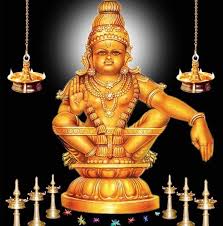
Swamiye Sharanam Ayyappa (Lord Ayyappa is the Only Hope)


Swamiye Sharanam Ayyappa
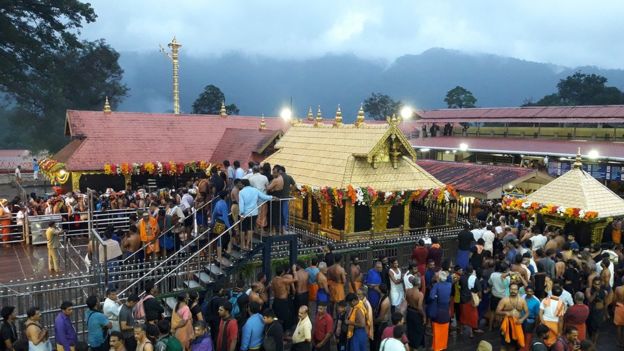
  – this is the chant every Lord Ayyappa devotee utters, especially on pilgrimage to Sabarimala, on the Western Ghats of Kerala, India, the abode of the  Lord Ayyappa.  He is revered by most Hindus of South India.  He is believed to be the son of Shiva (God of destruction) and Mohini – the female avatar of Vishnu (preserver and protector of the universe).  Any devotee undertaking pilgrimage to Sabarimala is expected wear a Rudraksha chain,  observe 40 days of fasting, penance and continence, walk barefoot, wear black dress, etc.

Another name of Lord Ayyappa is Sastha which means Buddha. Buddhism is believed to have entered in Kerala by 3rd Century BC.  The constant and repeated chants, especially the word Sharanam  is that of the Buddhists.  The chain the pilgrims wear comes from the Rudraksha chain of the Shaivites. The strict fasting, penance and continence is taken out of the beliefs of the Vaishnavites. Ahimsa is taken from the Jains.


Myth has it that the King of Pandalam, childless, got a baby from the forest and took him to his palace and called him Manikantan. Later, the Queen delivered a baby and the she wanted the adopted son to be thrown out. Conniving with the Minister, the Queen pretended to be ill with the royal doctor prescribing Tigress’ milk as cure.  Manikantan was tasked to procure Tigress’ milk from the forest.  Knowing the intent of Manikantan’s visit, the King of the Gods, Indra, transfigured into a Tigress.  Manikantan climbed on top of the tigress and led the way back to the Palace.  Manikantan pardoned everyone who plotted against him and nominated his younger brother to the throne.


He then took the King to the forest ,  blazed an arrow toward a hill and asked the King to construct a shrine for him where the arrow landed. He also requested his father to come annually to visit him at the shrine.

It is believed that the Pandalam Royal Family are descendants of the Pandya dynasty of Madurai, Thamizh Nadu. The Pandya King fled to Kerala after losing the battle against Malik Khafer, General of Delhi Sultan Alauddin Khilji and settled in Pandalam in 1202 AD.


There is an Islamic angle also to the belief in Lord Ayyappa.  Vavar, a Muslim forest brigand was shown the path of righteousness by Lord Ayyappa and he became the trusted lieutenant of the Lord.  When Lord Ayyappa took to his abode at the hilltop of Sabarimala, Vavar took up his position at the foothills in a Mosque at Erumeli.  Ayyappa devotees on pilgrimage first pay their respects to Vavar at the mosque before undertaking the trek uphill to the Temple.

What is the significance of Lord Ayyappa to me, a Syrian Orthodox Christian and an Indian Army Veteran?


In December 1982, I was commissioned as a Second Lieutenant to 75 Medium Regiment of Artillery.  A regiment in Artillery is divided into three gun Batteries.  A Battery operates six guns, manned by about 150 soldiers.  The Regiment then had an interesting class composition. One battery was of Brahmins (other than those from the Southern and Eastern States of India), the second had Jats and the third was manned by the soldiers from the four Southern States.  In those days, any Young Officer posted to the Regiment would serve with each of the batteries for one or two years in order to make them familiarise with the soldiers. I too went through this rotation beginning with the Brahmins, then with the South Indians and then with the Jats.  On promotion to the Rank of Major, I took over command of the Brahmin Battery with Major Joginder Singh, a Sikh, commanding the South Indian Battery.


The War Cry of the South Indian Battery was ‘Swamiye Sharanam Ayyappa.’  It is believed to have been introduced by Captain AN Suryanarayanan, who was the Adjutant of the Regiment in the early days of the Regiment.  He later rose to command the Regiment and is now a Veteran Brigadier.

‘Sawmiye Sharanam Ayyappa’ reverberated on the battlefield when the Regiment saw action during 1971 Indo-Pak war during the Battle of Basantar River.  Our Regiment was honoured with the Honour Title ‘Basantar River’ based on the Regiment’s performance in war.

Lord Ayyappa is a warrior deity and is revered for his ascetic devotion to Dharma – the ethical and right way of living, to deploy his military genius and daring yogic war abilities to destroy those who are powerful but unethical, abusive and arbitrary.  Hence ‘Swamiye Sharanam Ayyappa’ is an apt Regimental Battle Cry.  We said it loudly before we undertook any mission, before commencement of engaging the enemy with our guns, while on training, while on the playing fields, at any competitions, and so on; why it reverberated whenever we got together, while in service or post retirement.


Our Regiment might be the only Indian Army entity to have the War Cry ‘Swamiye Sharanam Ayyappa.’  Hindus, Sikhs, Christians, Muslims, Jains, Parsis – irrespective of our religious faiths, we all cried out loud  ‘Swamiye Sharanam Ayyappa.’

Newlyweds Do Fight

Almost all married people fight, although many are ashamed to admit it. Actually a marriage in which no quarreling at all takes place may well be one that is dead or dying from emotional undernourishment. If you care, you probably fight” said noted American author Flora Davis.

Captain Deepak Malik (name changed), a young officer, newlywed, once sought my interview as he had some pressing private issues.  I ordered him to meet me next morning at 11 AM.  All the while I tried to fathom as to what could be the problem he might be facing.  Is it that his young wife has not been able to adjust to the Indian Army’s way of life?  Is it that she is scared of me as the Commanding Officer?  Is it that she felt that some officers or soldiers misbehaved with her?  My mind went into an overdrive, searching for all possible problems a young couple could face.  Surely, I was preparing myself as to how to deal with it.

Next morning at 11 AM, Captain Malik showed up at my office.  I asked him “What is the pressing issue?“.  Taking a long deep breath, he answered “Sir, everyday there is a fight between my wife and me.  It is becoming too much for me to handle.

How many times do you fight?”  I questioned.  “Once a day” was his prompt reply.

Oh! that is not an issue at all.  When we got married, we fought twice on a working day and four times on a holiday.  Young man, you are doing pretty well.  Remember, your wife is an individual, she comes from a different family and background.  It is natural to have differences of opinion and at this age and it got to end up in a fight.  If you do not fight, then there is a problem – either of you are faking it.  Now get off from my office and attend to your work”  I said to him, feeling relieved.

After a month, I met the couple at the Officers’ Mess function and I enquired about their well being.  Captain Malik said “I asked for the Commanding Officer’s interview thinking that after hearing my sob story, he might excuse me the morning Physical Training, instead he gave me kick and threw me out.   Now I realise what married life is all about.”

Marriage is all about communication – honest, frank, open, accepting and respecting.  It must be full of love for each other.  It should neither be sarcastic nor hurtful.

It is an art as to how newlyweds deal with arguments, big and small.  They end up causing heartburn and a lot of tension in marriage. Both partners need to find a communication style that works for both and respect the boundaries mutually set.

It is mostly small and pretty issues which end up in arguments, at times running out of hand.  It could be about the ‘mess’ in the bedroom, clutter in the washroom,  what to watch on TV, what to eat for dinner, which movie to go, visiting family members, how often you spend time with each other’s friends – the list is endless, even though very small.

Life of a newlywed is challenging – it is all about adjustments and at times compromises – many were least expecting these. Reality dawns on the couple  when they live together, away from their parents.  It is all the more challenging for an Army wife who hails from a non-Military background.  It is going to be a roller coaster ride for the bride and she is bound to be scared at each step.  The husband got to explain everything in detail to her and provide more than needed support for her to adjust to the military environs.

Taking a holiday and travelling to a place of interest to both will do a lot good.  Sometimes this may also lead to a fight, but the thrill of the first holiday together will much outweigh the fight.   This time can be utilised to review your progress together and also plan for future.

His money – Her money – Our money‘ – especially when both spouses are earning – is another point for a fight.  Now you got to row the boat together, hence the need for proper budgeting after mutual discussions.

When you marry someone, you marry into a family. Learning how to live with each other’s family needs ‘diplomatic’ skills many a time. Always keep the interest of your spouse ahead of everyone else.

Each of you are individuals and hence need ‘my time’.  Allow your spouse this benefit too- to pursue hobbies or interests or even lazing around doing nothing.  You both will have many interests common and many divergent.  You got to accommodate each other.

Sex is an important part of married life.  Both got to be expressive and enjoy the pleasure.  It is not all about the ‘physical sex’ on which you spend no more than five minutes.  It is all about foreplay, caressing, speaking those lovely lines and so on.  Go as far as your imagination can take you, but be equally careful not to make it a nightmare for your partner.  When one partner feels there isn’t enough sex, it will cause issues. Both need to be open and respectful about how you are feeling and your needs.

Everyone has different plans in life. The husband may want a child whereas the wife may not. It could be the in-laws who are more in a hurry to see a grandchild. Either way, having children is a huge decision and can cause tensions if both are not on the same page.

I’ve learned that just because two people argue,
it doesn’t mean they don’t love each other.
And just because they don’t argue,
it doesn’t mean they do.     
Omer Washington

Ship On Fire


During the term break at the Indian Military Academy, I paid a visit to the Indian Naval Ship anchored at Kochi Naval Base, which housed the Midshipmen from our course. I boarded the ship at about 9 AM and was received by our course mates and was taken to the bunks where they stayed.

As the Midshipmen were to attend to their daily training, I was ‘ordered’ to sleep on Saurav’s bunk and stay put until they returned for lunch break. I was also ordered not to come out of the bunk as an ‘alien’ in the ship would attract the wrath of the senior officers of the ship. What a great place to sleep – for a Gentleman Cadet on a term break from the Academy, even a hard rock becomes a soft bed the very moment he gets an opportunity to sleep.

Suddenly the fire alarm in the ship went off. I first thought I was dreaming, but the commotion with many boots striking the metal decks of the ship made me realise that it was indeed a fire alarm. I looked out through the port holes and I could see three fire-tenders parked alongside the ship.

As an Army Cadet, I took the orders seriously – that too to stay put at the post and not to abandon it until last man and last bullet. So I decided to roll over and continue sleeping. Midshipmen came down for lunch and that is when it dawned on them that I was still asleep – like a good Army Cadet.

It seems someone reported some smoke somewhere on board and Pixie was the Officer on Duty and he immediately raised the fire alarm, called the Fire Station and they promptly dispatched the fire tenders. As I did not know the procedure to be adopted and also not to disclose my alien-on-board status, I thought it wise to continue sleeping, even if the entire ship caught fire.

Colonel KPR Hari, Vir Chakra

The battle of Waterloo was won on the fields of Eton is a famous British Army quote after they trounced a much stronger French army.  After the battle of Kargil, especially with Major KPR Hari’s action, leading his company of 1 Bihar Regiment to capture Jubar Top, and also gallantry actions of many young officers of Indian Army during the battle of Kargil, I was tempted to rewrite the quote as “The battle of Kargil was won on the fields of Khadakwasla.”

When we moved in to the National Defence Academy (NDA), Khadakwasla, in our second semester, Hari was there to welcome us to the E Squadron (61st Course) in June 1979.  In those days, E Squadron believed more in moulding youngsters into ‘men of steel.’  That obviously meant rigorous Physical Training (PT) by day and by night, and practising heavily for cross-country, boxing and sports competions – football, hockey and basketball.  Our Squadron earned the nickname of ‘PT Squadron.’

In all the events that E Squadron excelled in, Cadet Hari was the champion.  His agility and skill was proven beyond doubt and we ended winning the Commandant’s Banner as Champion Squadron in 1979.

Hari always sported his bright smile – characterised by a broken incisor – a loss he suffered during a boxing bout.  We used to undertake cycling tours around Khadakwasla (obviously the unofficial ones) to Sinhagarh Fort, Munshi Dam and Panshet Dam.

Nothing could deter Hari during our NDA days, whatever difficulty he faced, he always took it with a smile.  It appeared that neither success nor failure had any impact on him – he kept going ahead, without ever looking behind.  The very same quality he carried with him during his service as an officer.

Hari was commissioned in to Bihar Regiment – Infantry – and I to the Regiment of Artillery.  We never served together during our Army days, but did meet many times, especially while travelling to our hometowns in Kerala from Delhi.

While I was posted at the Military Intelligence Directorate during the Kargil war of 1999, situation (sitrep) of 06 July caught my eye.  It described action of Major KPR Hari and 1 Bihar in capturing Jubar Top.  I was not surprised – Hari had it in him and he would have done it that way only.

The sitrep said that Hari, disregarding his own personal safety crawled through the boulders over a stiff cliff and destroyed the enemy Heavy Machine Gun bunker and killed two enemy personnel.  I knew his gallant act would be recognised and glorified.

Major KPR Hari was awarded Vir Chakra – a well deserved honour – for his gallant action.  His citation read:-

“On 06 July 1999, Major KPR Hari attacked Jubar Top, an enemy stronghold at a height of 16,800 feet Batalik Sector of Jammu and Kashmir.

Major KPR Hari launched a two pronged attack under heavy enemy artillery and small arm fire.  He crawled through the boulders over a teep cliff leading towards Jubar Top avoiding enemy fire.  He reached 50 meters short of the enemy bunker and in a swift and bold manoeuvre closed in with the enemy bunker along with six soldiers continously firing and lobbing grenades.

Major KPR Hari with utter disregard for personal safety destroyed the enemy Heavy Machine Gun bunker and killed two enemy personnel who were engaging the advancing troops.  The enemy sensing immediate capture withdrew leaving huge quantity of arms, ammunition and equipment.  The post was captured at 0500 hours without any casualty.  Major KPR Hari then along with another officer kept the momentum of attack and captured Jubar Top by 1800 hours.

Major KPR Hari displayed initiative, bold action, indomitable courage, strong determination and exceptional leadership in the face of extreme danger from the enemy.”

After I bid goodbye to Indian Army and moved to Canada, I met Hari only once.  That was during our course-mate Commander Vinod Kumar’s (Indian Navy) daughter’s wedding in December 2015.  He was as cheerful and smiling as he always was.

Last year I heard the sad news that Hari was battling pancreatic cancer.  I thought that he will beat this ordeal too.  He fought like a good boxer of E Squadron, but breathed his last on 17 August 2018.  I am sure he will now be smiling and thanking his Creator for a great meaningful life that the God had bestowed on him.

“Soldier, rest! thy warfare o’er,
Sleep the sleep that knows not breaking;
Dream of battled fields no more,
Days of danger, nights of waking.”    Sir Walter Scott, Scottish author and playwright

The Gorkha Brave-Heart Who Killed Death

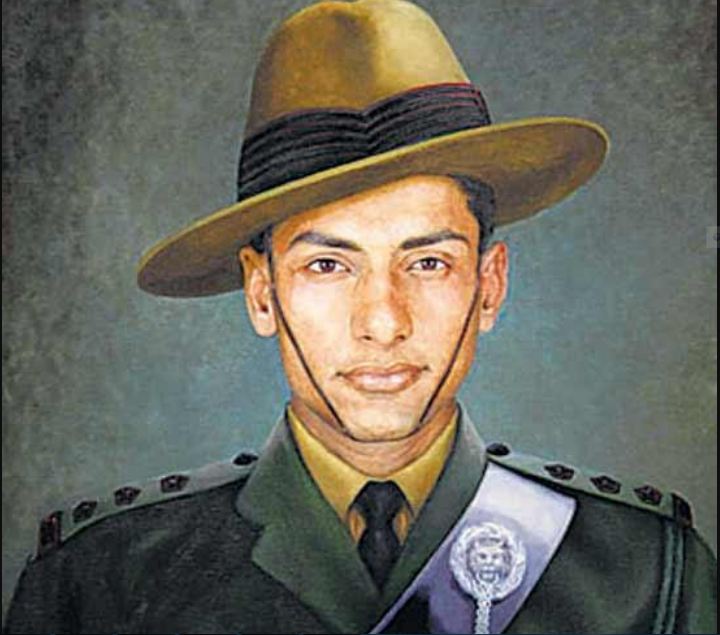
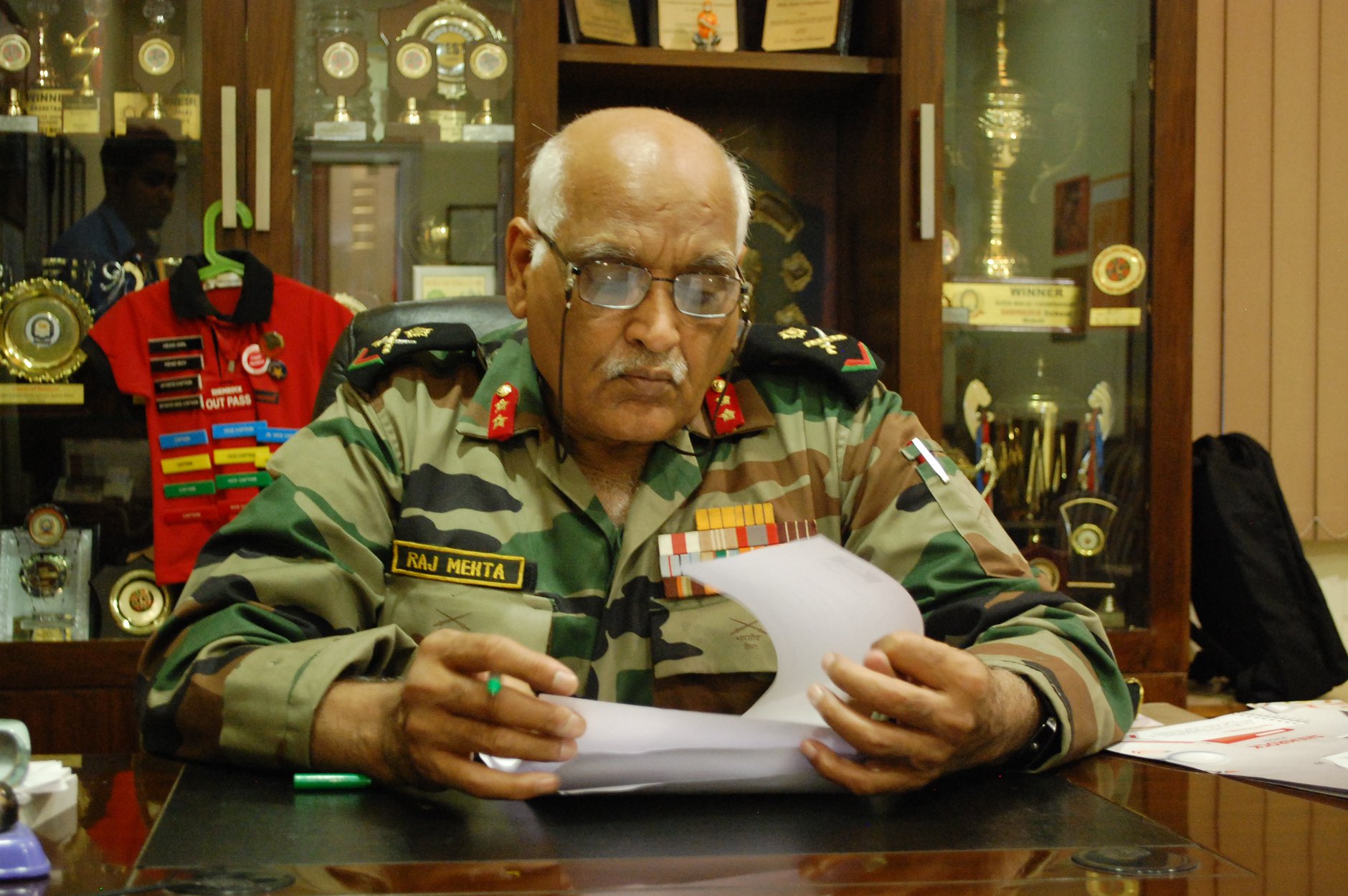
A heart rendering article on Captain Manoj Kumar Pandey, Param Vir Chakra, (25 June 1975 – 3 July 1999) of 1/11 Gorkha Rifles (GR), beautifully penned by Major General Raj Mehta, Param Vishisht Seva Medal, Vishisht Seva Medal, my Guru and mentor from my early military days at the National Defence Academy.
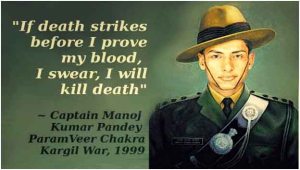

Capt Manoj Pandey, PVC (Posthumous), 1/11 GR, challenged death at alpine heights during the Kargil War – and won

When brave-hearts are martyred in India, we invariably compensate for the loss by naming residential colonies, roads, airports, auditoriums, tournaments after them. We rarely reflect over the intent that drove them to martyrdom. We do not understand why, when living was an option, they chose to die, fiercely upholding the timeless  ethic of Naam, Namak, Nishan  (नाम, नमक, निशान) [Honour, Integrity, Flag]  that has been in the Indian soldiers DNA since the ancient killing battlefields of Kurukshetra (कुरुक्षेत्र).

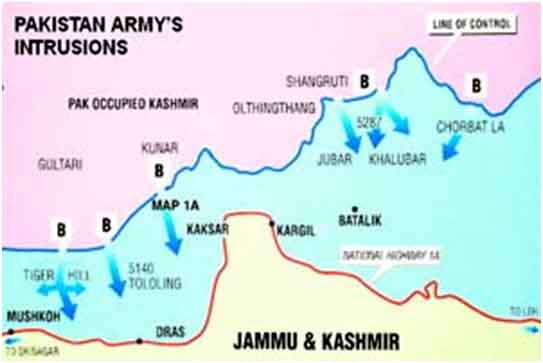
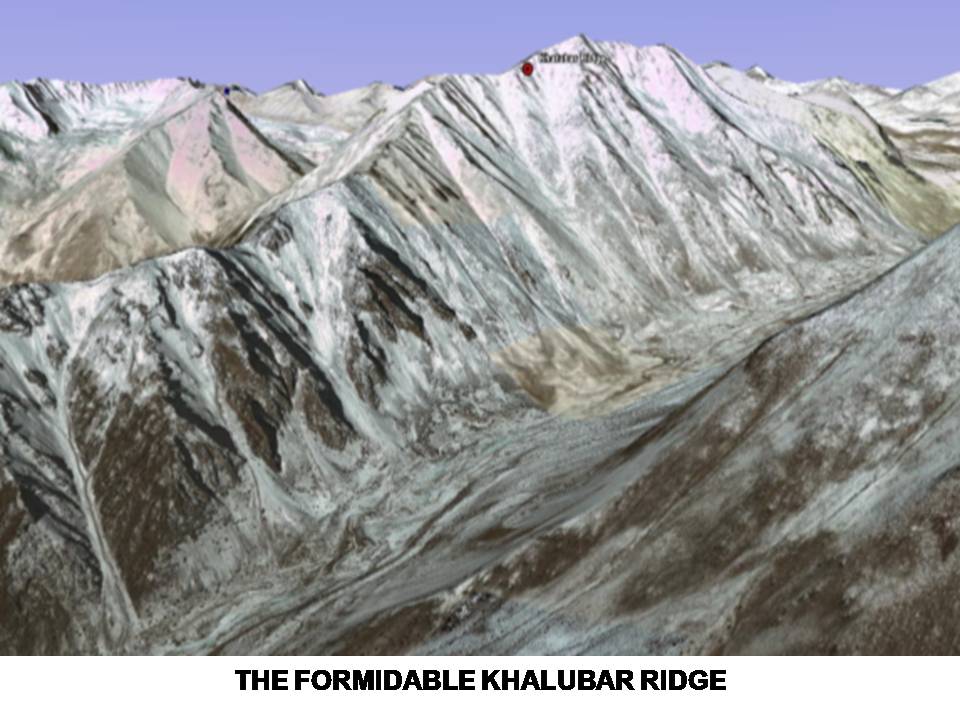
Capt Manoj Pandey, PVC (P), 1/11 GR was one such driven officer who died at Bunkers Area en route to Khalubar Top at 5287m (17346ft)  sacrificing his life for sustaining the Idea of India. This story is about his selfless sacrifice on night 2/3 July 1999, his bloodied Khukri (खुकुरी) [inwardly curved traditional knife of a Gorkha soldier] flashing as he exhorted his charged Gorkhas with Naa Chhodnu!” (I will not spare you) as he fell. They did, several of them dying with him but neutralizing the entrenched Pakistanis with bullets, khukris, grenades – and grit.

The story of Manoj’s heroism is available on the internet in narrative and video formats. A mainstream Hindi film covers his martyrdom. Nothing could, however, be better than hearing about him first hand from his then Commanding Officer, Colonel Lalit Rai, Vir Chakra. I was privileged to do just that because Lalit is a colleague of old; a bold, brave and courageous third generation 11 Gorkha Regiment officer of pedigree and conviction. A Bishops Cotton, Bangalore product, his grandfather and father preceded him in the Regiment. Commissioned in 7/11 GR, he was commanding newly raised 17 Rashtriya Rifles (RR) (Maratha) in Doda, J&K, in 1997 when I came across him as the Deputy Commander of the RR Sector Headquarters which operationally controlled his Unit. He led from the front in an intense Counter-Insurgency deployment grid where I was as much in operations as our Units; the Deputy’s being a command not staff assignment when deployed on the Counter Insurgency grid. This is where I saw Lalit repeatedly leading his command in encounter situations.

In June 1999, when the Kargil War had commenced, he was offered a chance to command 1/11 GR by his Colonel of the Regiment. This Battalion had decades earlier been commanded by his Father and urgently needed a replacement Commanding Officer (CO). Lalit accepted the challenge despite not having served in 1/11 GR. He was landed by helicopter 48 hours later, when the Unit, looking forward to some respite after a tough Siachen tenure, was pitch-forked instead into alpine war.

A crisis was unfolding in the strategic but primitively developed Yaldor Sub-Sector. Ordered to retake Khalubar Top from infiltrating Pakistani Pathan troops and with non-existent road communications, his immediate task was to lead a 14 hour forced march into war with all equipment/ammunition carried back-pack  with whatever troops he could muster even as his Second-in-Command (2IC) marshaled the balance men.    This was on 2 July 1999 and this is where young Manoj enters the narrative. A word about him is necessary before the daunting terrain where his bravery – and Lalit’s – manifested, becomes our point of focus.

IC-56959-W Capt Manoj Pandey was born on 25 June 1975 in Rudha, Sitapur District, Uttar Pradesh, to Gopichand and Mohini Pandey. Gopichand was a man of very modest means, but Manoj, the family elder, never put a financial burden on his parents as he blazed through Sainik School and Laxmi Bai Secondary School, both in Lucknow with a brilliant all-round performance in academics, National Cadet Corps and sports.  Asked during his Services Selection Board interview on why he wanted to become an officer, his convincing “To win the PVC” response saw him selected for the National Defence Academy (NDA). Commissioned into 1/11 GR, a famous Battalion raised in 1918 in Mesopotamia, Manoj served in the Kashmir valley and Siachen before Kargil happened.

In the remote, near inaccessible Batalik sector, the infiltrators had occupied a number of ridges whose recapture was a must as these dominated the Batalik-Leh route. It took some time before the ingress routes to the four roughly parallel ridges were blocked by India. General VP Malik, then Army Chief in his book, From Surprise to Victory, recalls that a direct note to him by then 2IC Lieutenant Colonel Asthana brought out to him the importance of retaking Khalubar Ridge on priority. It had a Pakistani helicopter- supplied dump behind and clearly had to be recaptured and it was the Gorkhas led by Colonel Rai and, on his vulnerable flank, Manoj, who did it.
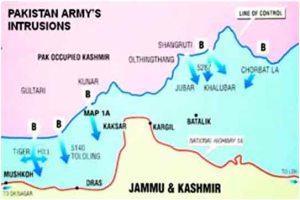

Lalit recalls that it was night 2 July that he chose to head for Khalubar Top with 40 odd men. Directly under observation of the entrenched Northern Light Infantry (NLI) Pakistani troops (Pathans among them), very effective fire was being brought on his column from Khalubar Top and flanks, causing severe casualties. To prevent getting day-lighted before he reached his objective and getting decimated, he ordered Capt Manoj Pandey to take his 5 Platoon, Bravo Company to neutralize “Pehalwan Chowki”, later named as “Bunkers Area”.  The CO had by now sustained a bullet wound in his leg and splinter wounds in his calf but slogged on.


Capt Manoj Pandey, with experience of the successful, gut-wrenching attack on Jubar Top behind him, rushed to carry out his CO’s directive. Ordering Havaldar Bhim Bahadur Diwan to encircle the Bunkers Area with his section from the right, Manoj took on the main bunkers from the left with  the battle-cry “Jai Mahakali, Aayo Gorkhali”  on his lips. He cleared the first two enemy bunkers with dispatch. While clearing the third, he was hit on his shoulders and legs but continued to lead the assault on the fourth bunker, neutralizing it with a grenade. “Naa Chhodnu” he commanded his men, but, at that instant, got hit in the forehead by an MG bullet. His furious Gorkhas captured all six bunkers, killing 11 Pakistanis but sustaining serious losses in the brutal close-quarter combat.  Several Gorkhas were found dead with frozen fingers on rifle triggers, all weapons pointed towards the enemy bunkers with bloodied Khukris nearby and several decapitated Pakistani soldiers heads lying around. The brave young officer had led his men from the front. A compulsive diarist, he had lived up to his own hand-written prophecy that he would “kill death” before death overtook him. He was just 24 and had fully lived up to the timeless ethic of Naam, Namak, Nishan.
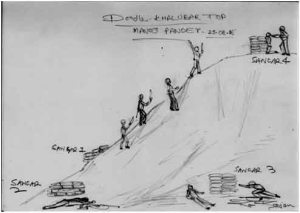

Doodle of Capt Pandey’s PVC act created after interaction with Col Lalit Rai, VrC. Made by Chief Designer, Ravi Ranjan. The doodle can be seen in Gallery 8 of the Punjab State War Heroes Memorial and Museum, Amritsar, curated by the author and his 10 researchers, then working under Department of Soldier Welfare, Government of Punjab.

The narrative does not of course, end here. Colonel Rai, with his right flank secured by Manoj, went up the 80 degree gradient, still under withering enemy fire. He was wounded but soldiered on despite losing men all around him, besides the grievous loss of young Manoj and many of his men. Nearing the top, he knew that his ammunition was about to finish and after that it would just be Gorkha grit and Khukris…nothing more. He personally knew he had two rounds left…One for the enemy who confronted him and one for himself. He was able to contact his Forward Observation Officer (FOO) who was on Kukarthang Ridge and asked him if he was indeed headed on Khalubar Top. On confirmation of the same, he asked the FOO to bring own Artillery fire on his position as only a few yards now separated him and the enemy. The stratagem of Defensive Fire Save Our Souls (DFSOS) literally means just that…The last recourse of a courageous soldier to break enemy cohesion. It was a desperate gamble that paid off. The marauding Pakistani Pathans suddenly received a barrage of deathly accurate Bofors 155mm High Explosive shells on them and were decapitated. When the Gorkhas took out their khukris in the brutal hand-to-hand combat that followed, Pakistani heads rolled and there were many…After capturing what was indeed a near impossible objective to capture, the CO did a head count…He had just 8 of his 40 men left and had lost his bravest-of-brave officer, Capt Manoj Pandey along with over half of No. 5 Platoon…1/11 GR had won yet again but at cost…Col Lalit Rai was awarded a Vir Chakra for his outstanding ‘follow me’ leadership and Capt Manoj Pandey a very richly deserved posthumous PVC.


His PVC citation read:  Lieutenant Manoj Kumar Pandey took part in a series of boldly led attacks during Operation Vijay, forcing back the intruders with heavy losses in Batalik including the capture of Jubar Top. On the night of 2/3 July 1999 during the advance to Khalubar as his platoon approached its final objective; it came under heavy and intense enemy fire from the surrounding heights. Lieutenant Pandey was tasked to clear the interfering enemy positions to prevent his battalion from getting day lighted, being in a vulnerable position. He quickly moved his platoon to an advantageous position under intense enemy fire, sent one section to clear the enemy positions from the right and himself proceeded to clear the enemy positions from the left. Fearlessly assaulting the first enemy position, he killed two enemy personnel and destroyed the second position by killing two more. He was injured on the shoulder and legs while clearing the third position. Undaunted and without caring for his grievous injuries, he continued to lead the assault on the fourth position urging his men and destroyed the same with a grenade, even as he got a fatal burst on his forehead. This singular daredevil act of Lieutenant Manoj Kumar Pandey provided the critical firm base for the companies, which finally led to capture of Khalubar. The officer, however, succumbed to his injuries.

Lieutenant Manoj Kumar Pandey, thus, displayed most conspicuous bravery, indomitable courage, outstanding leadership and devotion to duty and made the supreme sacrifice in the highest traditions of the Indian Army.


The award was received by his Father on the Republic’s 52nd anniversary on 26 Jan, 2000.

As mentioned earlier, Manoj was a compulsive diarist and wrote eloquently about things dear to him. A poem on his Mother states: “She is the star which shines brightly in the darkness, someone who will always give and bless.”  Poignantly, just under this poem, he had written his own epitaph: “If death strikes before I prove my blood, I promise (swear), I will kill death.”

Elsewhere in the diary, he had again reflected:  “Some goals are so worthy, it’s glorious even to fail”.  Such thoughtful statements from a young man deployed in a war zone with death always lurking around go a long way to show that Manoj was a young man of great substance and courage both mental and physical…A young man who had adapted to whatever hand destiny would deal out to him. His writings stated that this officer would contest whatever God had in store for him and put infinite value on his life before fate took over. He was a true, proud Indian and someone who in death has become deathless…


Younger brother Manmohan says on visiting the Dras Kargil Memorial: “I had come here to pray at the place where my brother sacrificed his life in the line of duty. This place is a temple for me”. My father and mother have visited the memorial several times and it was my dream to visit the place,” he said. I am so glad I have been able to visit it and remember my hero, my brother…”

In 2004, Col Lalit Rai had arranged a visit by the parents and siblings of Capt Manoj Kumar to the NDA. It was a dedication ceremony during which a portrait of the brave-heart was presented to Mike Squadron, the squadron where he spent three learning years. Lalit spoke with pride and deep respect for his officer. His father made a brief, poignant address, asking the seated cadets to follow the path of Manoj and, if needed, sacrifice their lives for the Idea of India. The program left the family in tears of pride – and the cadets with an irresistible urge to “do a Manoj” when and if destiny called.
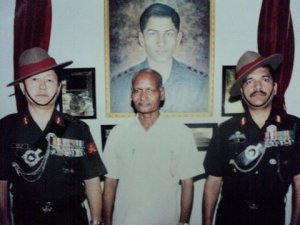

Dedication Ceremony at NDA. Col Lalit Rai, VrC, is on the right of Mr Gopichand Pandey.

The sacrifice of Manoj has impacted on aam aadmi (आम आदमी) [common man] in different but positive ways. One example worth narration concerns a re-employed fellow officer and the father of Manoj.  Col AK Jayachandran, 12 ASSAM, who became a senior Bank Executive post his retirement writes that “In life there are some days when one feels terrible and some days, when one feels really good from within. One such thing happened on a Friday evening at around 7 PM last year in Sep. I was set to go home from the Bank. One clerk and an officer were all who remained. The phone rang. An old man was on the other side. He was irate & quite fed up. To cut a long story short, he’d approached his bank’s branch to settle his dues from his son’s pension, which had not been correctly calculated. They’d kept fobbing him off.

He could rarely get through and couldn’t explain his problem properly either. Finally he got my number from someone and called. I took his details – told my guys to take a look at it and tell me if he was really due. They did that and yes – there were arrears due to him. Looking at the printout, I saw the name, Capt Manoj Pandey …no wife… …pension to parents …date of death- Kargil war days. Speaking to the old man at 7:30 PM, I asked him if he was the father of PVC Capt Manoj Pandey. He confirmed.

I said I would call again. Meanwhile, my staff had closed their systems…both youngsters…ready for a weekend. I sat them down and told them that we had a “PVC”, who hadn’t been paid his dues by the bank. I gave them a short brief on what Kargil was all about; told them that we had to credit the dues tonight.

They quietly went and switched on their system. They worked out his dues and arrears, which was around Rs 8 Lakh. This amount was credited into his father’s account at about 9 PM. I called up the father and told him that his account had been credited…he was very surprised, said it could’ve waited till Monday. I apologized for the banks delay and told him that having come to know, waiting till Monday would have been the biggest disrespect/dishonour to the PVC, so we had to do it tonight. I then asked the father to speak to both my subordinates. They paid their respects to him. The old man thanked us and broke down…he said that this one act had accorded more respect to the memory of his son, than any other civilian award. It was an emotional moment. One of these days, you look in the mirror and like the mug that looks back at you…!

Capt Manoj Pandey, PVC (P), 1/11 GR deserved that kind of rare respect – in life and in death.
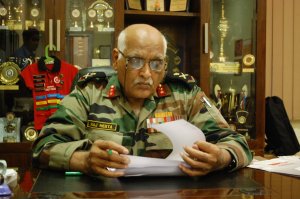

Major General Raj Mehta, AVSM, VSM.   The officer is Chief Mentor, Sarthi Museum Consultants, Mohali, Punjab.
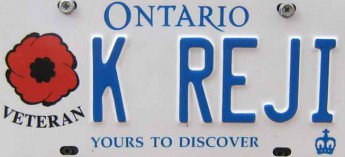
Brigadier GM Sankar – A Friend in Deed


I have had the fortune of associating with Sankar from our NDA days from 1979 onward.  Being course-mates  at the NDA and IMA and commissioned to the Regiment of Artillery in 1982, our Army careers ran nearly parallel.  But unlike parallel lines, we met often, especially undergoing army training courses at the Mecca of Gunners  – School of Artillery, Devlali, Maharashtra.

We also enjoyed our Army Headquarters, Delhi, tenure  at the turn of the millennia  – Sankar with the Military Operations (MO) Directorate and I with the Military Intelligence (MI) Directorate.

We did the Young Officers’ course at the beginning of our officer life, Introductory Surveillance and Target Acquisition Course, Long Gunnery Staff Course (LGSC)  and Automated Data Processing [ADP] (Computer) Course at Devlali.  It was a great association through all these courses as we shared one table – obviously the one at the last row – reserved by God especially for the intellectuals who were least interested in the grades we got, but only interested in real learning.

Our main pass time during the courses  was smoking (in those days smoking was permitted during lectures), but we listened attentively to the lectures.  We both were very much liked by some of our instructors – only those who smoked – as our last bench seats facilitated them to pinch a cigarette off us.  We did oblige our smoker course officers too, even though some took advantage of our magnanimity.

When we came to Devlali for LGSC in August 1989, Sankar was a bachelor and I was married.  My wife Marina was doing her final year of Pharmacy graduation at Gulburga.  She used to come to Devlali during weekends when she could manage off for a day or two.  It was a monthly ritual and I did not attend classes whenever Marina joined me.  It was my dutiful friend Sankar who ‘managed’ my absence in those days.

After Marina graduated in April 1990, she conceived our daughter Nidhi.  Her monthly appointment with the gynaecologist was on Saturdays and whenever I could not spare myself due to training commitments, it was Sankar who took Marina on his scooter to the Military Hospital.  He was always a bit scared to carry pregnant Marina on the pillion of his scooter and that must have been the only time he would have observed speed-limits in Devlali.

Towards the end of LGSC, there was a group innovation project to be executed.  The core idea for the innovation was mooted by Sankar and I (remember -Innovations always germinate from the last-benches).  Sankar worked very hard for the fructification of the project and at the end of it we never got any mention in the credits.   Obviously, the instructor officers never took us ‘seriously.’

As LGSC was coming to a close, Sankar got engaged to Rohini.  Brave and thoughtful of Rohini, she accompanied by her little younger brother Rajesh to  visit Sankar at Devlali on a weekend, to familiarise with the military environment and culture.  For sure, Saturday’s dinner was scheduled at our home.

Rohini , Rajesh and Sankar reached our home by dot 7 PM.  After customary introductions, I asked Rohini to take a tour of our home and make a note of all the appliances and other accessories, which she dutifully did.  Now I said to her that when she gets married to Sankar, she got to get these from her home as it is the minimum standard to be maintained by an army officer.  Rajesh exclaimed that it would not be possible for his poor Appa to procure all these before the wedding.

Marina ‘briefed’  Rohini about the ‘training’ she had to undergo on becoming an army officer’s wife.  To make the ‘story’ palatable. Marina showed some photographs of her when we were at  the Indo-Pak border in Kashmir prior to LGSC.  By midnight after dinner we broke off.

On Sunday morning they were invited to another friend’s home for breakfast.  Our friend on seeing the gloomy faces of Rohini and Rajesh asked Rohini as to where they went last evening.  On hearing her reply he knew what would have happened.  He came running to our home and took Marina and I to his home.  Now we told Rohini that it was a ‘prank’ being played on her.  All this while, Sankar, my true friend remained silent (he must have enjoyed the fun at Rohini’s expense).

A week before the end of LGSC, we had to travel to Pune to write the computer aptitude test.  We had no clue as to  what it was all about and so travelled merrily to Pune – all to enjoy three days of absence from the course.  Many other officers were also there and all of them barring two of us were all serious about the test.

The test was for three hours and it was all about logic, analysis and intelligence tests.  Who can beat the last-bench intellectuals in such a  test – we were the only two who qualified in the test.  This resulted in us rejoining at Devlali for the ADP Course  in January 1990.

That was when the wedding of Rohini and Sankar was  – before the commencement of ADP Course.  I took two weeks leave prior to the course to attend their wedding at Vashi, Mumbai.  After that it was a journey together as a family, especially at Delhi.

Marina migrated to Canada in February 2002 and I was posted out forthwith to command  125 SATA Regiment as the Indian Army was mobilised to the Western Sector in the aftermath of militant attack on Indian Parliament in December 2001.  Our son Nikhil was despatched to my parents in Kerala and Nidhi had to write her final examination of Grade 5 in April.  For sure, without winking an eyelid, we left her in the loving care of Rohini and Sankar.  We are all very indebted to the family for this great gesture.

When I released my book ‘Suit, Boot & Tie’ in March  2017, I had invited Rohini and Sankar to grace the occasion.  As Sankar had some important military commitment, he could not attend.  Rohini travelled all the way from Mumbai to Bangalore to grace the occasion.  We reminisced a lot about our life together throughout the two days.  Thank you Rohini for this great gesture.

God has been magnanimous with Rohini and Sankar as they have been blessed with Roshan and Nisha – two extremely intelligent, smart and humane kids – who will surely carry on ahead – much ahead of what Rohini and Sankar have achieved.

Today, Sankar is hanging up his boots – after 36 years of dedicated service to the Indian Army.  I wish him all the best in his second innings.  I also need to acknowledge just how much I have been shaped by Sankar. I have a myriad of experiences, too many to mention, that have impacted me in a memorable and meaningful way.   What I have written is  barely scratches on the surface of all that I have learned from Sankar over the years.

We, the Koduvath family, are extremely grateful for the role that Sankar and his family have played throughout our happy years and these years that we will always cherish fondly.

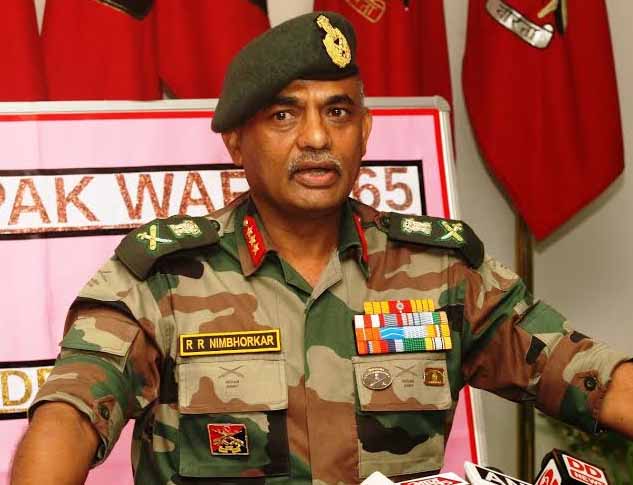
Lieutenant General Rajendra Ramrao Nimbhorkar, PVSM, UYSM, AVSM, SM**, VSM- A Soldier Par Excellence

As I received a letter from General Nimbhorkar about his impending adieu to the profession of arms on 30 April 2018, after over five decades in uniform, I was struck by the thought that I was indeed fortunate to have been associated with one of the finest soldiers and an excellent human being. Our first meeting was in 2002, when I took over command of the Regiment in Rajasthan.  Our Regiment had mobilised as part of the general mobilisation ordered in the wake of the terrorist attack on the Indian Parliament (Op PARAKRAM). We were deployed as part of the newly raised 41 Arty Division, and I met then Col Nimbhorkar as the Colonel Administration of the formation during its raising.

There he was, an Infantry Officer, heading the administrative and operational logistics organisation of an Artillery Division.  He introduced himself in his soft and calm voice with a pleasant smile.  I was pretty sure that behind the smile was a smart, intelligent, tough and a chivalrous officer, who knew his beans pretty well, else he would not have been handpicked for the prestigious and difficult appointment.

General Nimbhorkar is a product of Sainik School, Satara (Maharashtra), National Defence Academy (NDA), Indian Military Academy (IMA).  Like most Sainik School graduates, he too came from a humble family background.  He was commissioned to 15 Punjab Regiment in 1979, which he commanded in Kashmir.  He graduated in courses at Defence Service Staff College,  and Higher command courses in India and the National Defence College, Dhaka.

As I look back over my two decades with the Indian Army, I observe that few military leaders are equally well admired by their superiors, subordinates, and peers and the admiration continues far beyond the years of association. The spoken reputation simply cuts across the hierarchical rank and file. I can say without hesitation that Gen RR Nimbhorkar belonged to this select few. There are a number of remarkable military facets about Gen Nimbhorkar. Some of them are worth mentioning.  During his long years with the Army, he was destined to be part of almost every major operation that was launched by the Indian Army. In his younger years up to command of his unit, he has walked on foot almost every inch of the line of control in Jammu and Kashmir. His command assignments at the Unit, Brigade, Division and Corps levels were all in operational areas. To say the least, he was someone who rose to the top through sheer hard core soldiering.

So we knew him as a hard core Infantry soldier. But during his tenure with the Artillery Division, he became a Gunner in letter and spirit and the Gunners accepted him as one of their own. When he spoke about artillery ammunition planning (a nightmare for most Gunners), one wondered whether he was wearing the wrong lanyard and beret! As he rose through the military hierarchy, many of the Gunners continued their association with him and to them he always remained a sort of a benevolent Colonel Commandant.

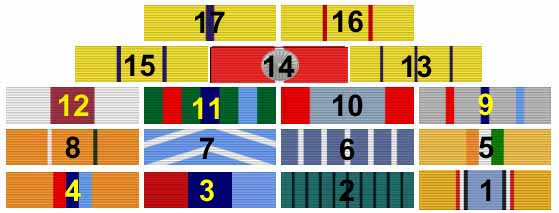
The most prominent part of his uniform were the rows of ribbons of the medals he had been awarded and they were plenty and they speak a lot about his military career.


Today, he stands tall as the most decorated officer of the Indian Army.  The above ribbons adorn his uniform, over his left chest and he surely holds them close to heart as he deserves much more for all his actions during his military service.  For the benefit of non-military readers, let me explain these ribbons.
1.     United Nations Angola Verification Mission Medal for his service as a Military Observer.
2.     Nine Years Long Service Medal
3.    20 Years Long Service Medal
4.    30 Years Long Service Medal
5.    50th Anniversary of Indian Independence Medal
6.    Videsh Seva Medal for service in a foreign land.
7.    High Altitude Service Medal for serving in areas above 9000 feet altitude.
8.    Samanya Seva Medal awarded for active service
9.    Operation Vijay Medal awarded to all participants of Operation Vijay – better known as Kargil War
10.  Special Services Medal.
11.   Samanya Seva Medal awarded for active service in Eastern Theatre.
12.   Wound Medal or Parakram Padak is awarded to those who sustain wounds as a result of direct enemy action in any type of operations or counter-insurgency actions.  The General was critically wounded while commanding his Battalion during Operation Vijay.
13.   Vishisht Seva Medal (VSM) awarded for distinguished service of an exceptional order.
14.  Sena Medal (SM).  The General was awarded Sena Medal twice(SM**) – once for gallantry as Captain commanding an Infantry  Company in Dras sector and for distinguished service as a Brigadier commanding an Infantry Brigade.
15.    Ati Vishisht Seva Medal (AVSM) awarded in recognition for distinguished service of an exceptional order.
16.    Uttam Yudh Seva Medal (UYSM) awarded for a high degree of distinguished services in an operational context of war, conflict, or hostilities.
17.    Param Vishisht Seva Medal (AVSM) awarded in recognition for peace-time service of the most exceptional order.

General Nimbhorkar is a great leader, a true and gallant soldier, an outstanding administrator, a voracious reader, and above all a great human being.

My salutes to him from Canada – thousands of miles away -on the eve of his retirement.  I am sure he will remember David Frost’s lines: –
The woods are lovely, dark and deep,
But I have promises to keep,
And miles to go before I sleep,
And miles to go before I sleep.

(Written in collaboration with Veteran Brigadier Azad Sameer)

Golden Jubilee – 75 Medium Regiment (Basantar River)


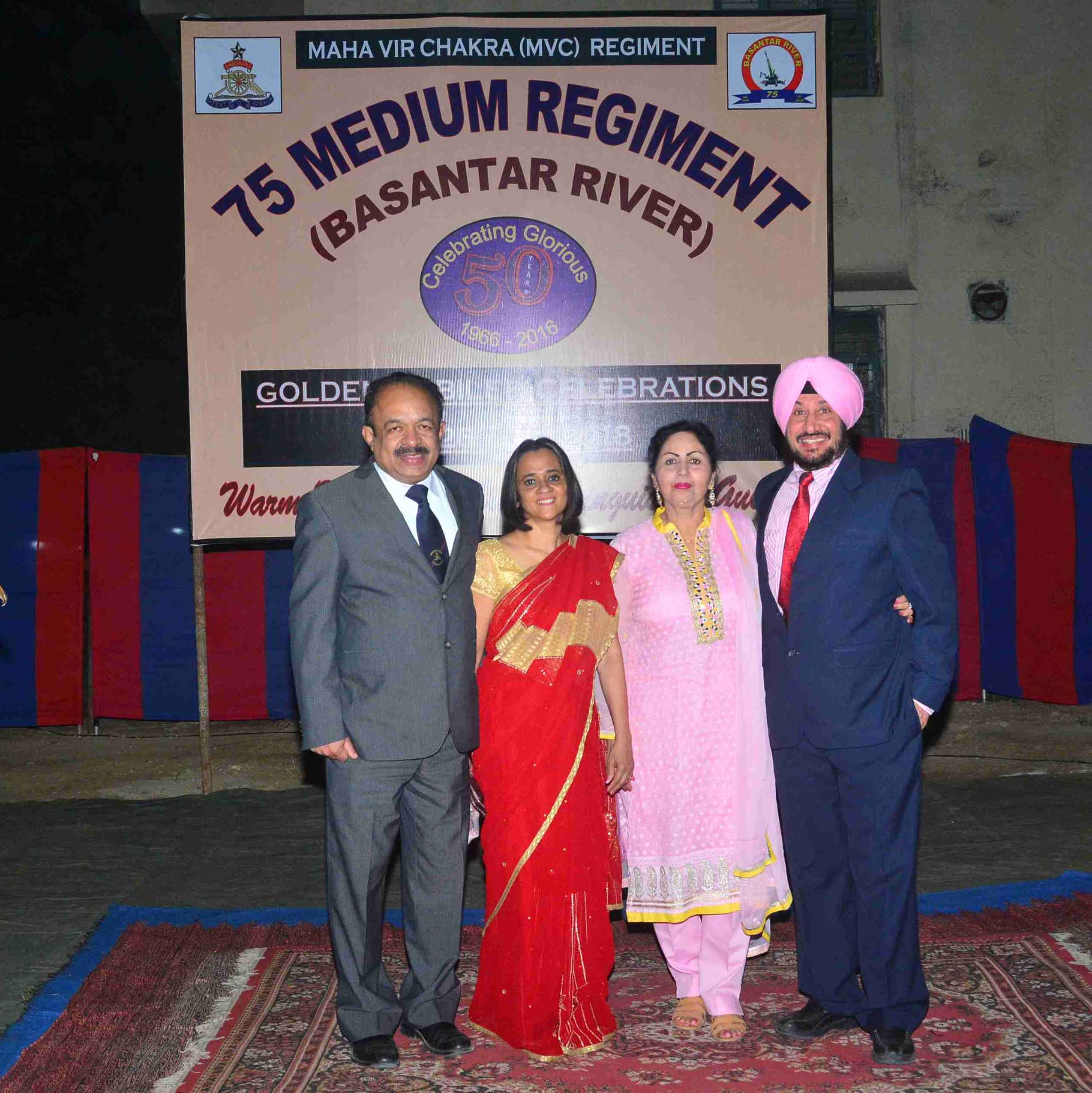
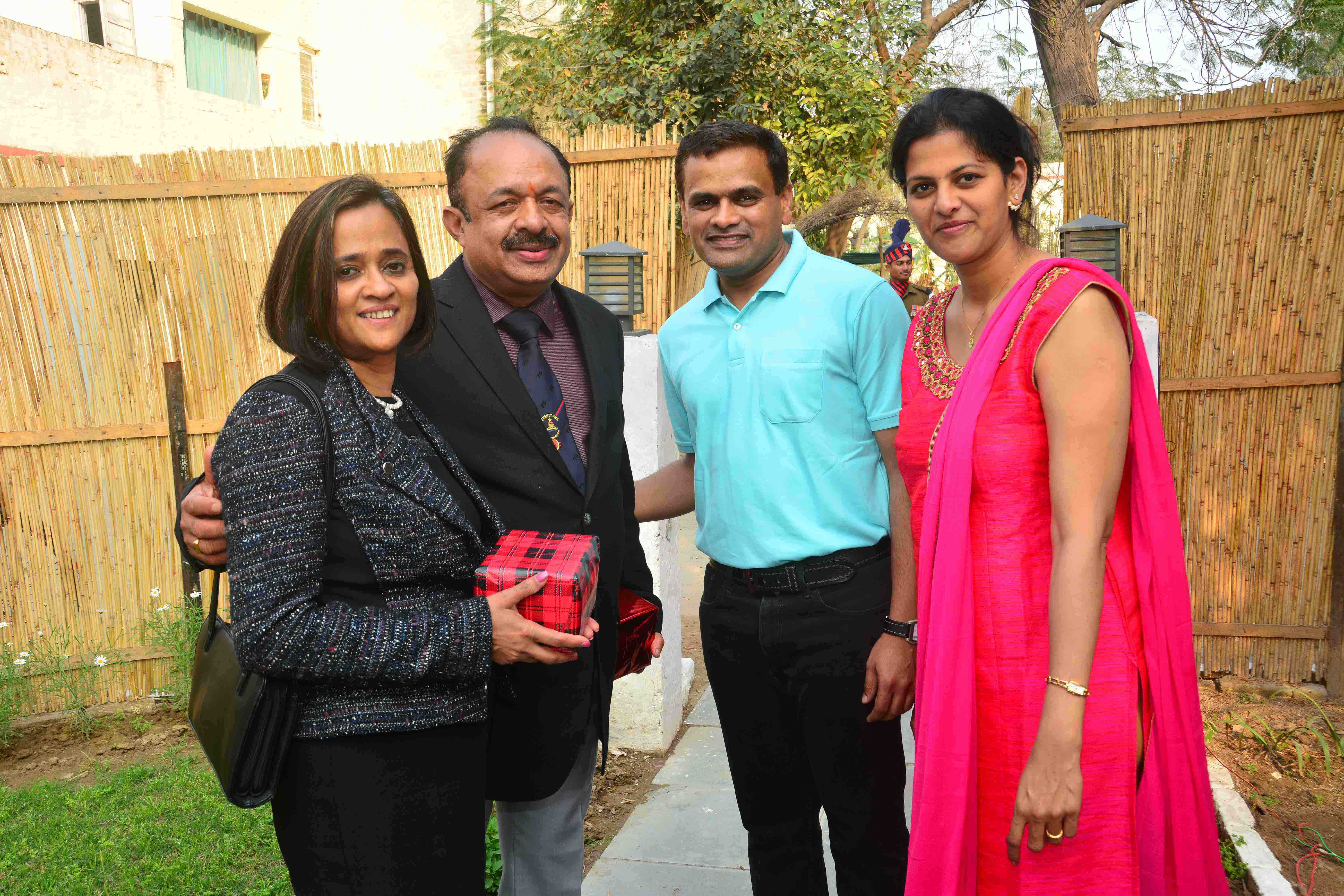
Veteran Colonel Joginder Singh, Mrs Kiranjit, Marina and I – we all travelled from Toronto, Canada to Faridkot, Punjab, India – to celebrate the Golden Jubilee of the raising of our regiment – 75 Medium Regiment (Basntar River).  A reunion, is a gathering of people who have shared a past, and the joy of reuniting is to see the individuals with whom the past was shared. Here we were reuniting to  share our past, the good old regimental days, with those brave officers and soldiers, who now carry the mantle, history and traditions.

Our Regiment was raised in 1966 at Delhi and was equipped with 130 mm Russian Guns.  It had three batteries – one battery was of Brahmins (other than those from the Southern and Eastern States of India), the second had Jats and the third was manned by the soldiers from the four Southern States.  By the turn of the century, the Regiment was reorganised with soldiers from all over India, from all castes and religions.

The Regiment was awarded Honour Title “BASANTAR RIVER” in recognition of  outstanding contribution by all Officers and soldiers during the 1971 Indo-Pak War.  The Regiment provided fire support for the most  famous battle of Zafarwal  in that the two Param Vir Chkra (Highest Gallantry Ward) winners – Second Lieutenant Arun Khetrapal of 17 Poona Horse and Major Hoshiar Singh of 3 Grenadiers – both were supported by the Regiment’s Observation Post (OP) Officers – Captain SC Sehgal and Captain Mohan Krishnan.  Captain Sehgal was awarded Vir Chakra posthumously for his gallant actions and Capt Mohan Krishnan was awarded Mention-in-Despatches.


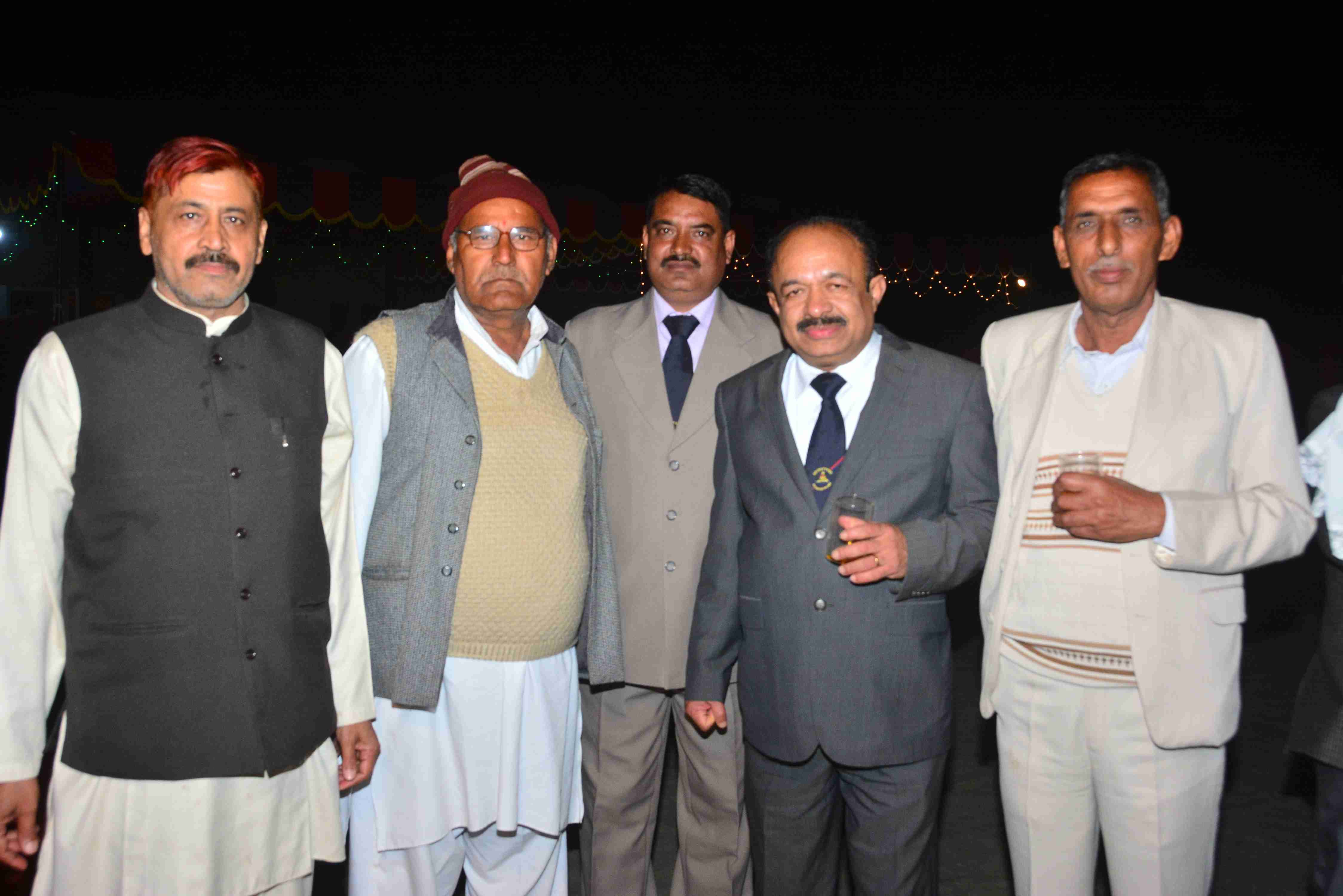
As we landed at New Delhi Railway Station – there was an impromptu get-together.  We were met by Veteran Major General PK Ramachandran, Brigadier Madan Sheel Sharma,  Veteran Colonel Ashok Arora  and Veteran Colonel Ranjan Deb.  We were received at Faridkot Railway Station with all the fanfare and were escorted to the Officers’ Mess
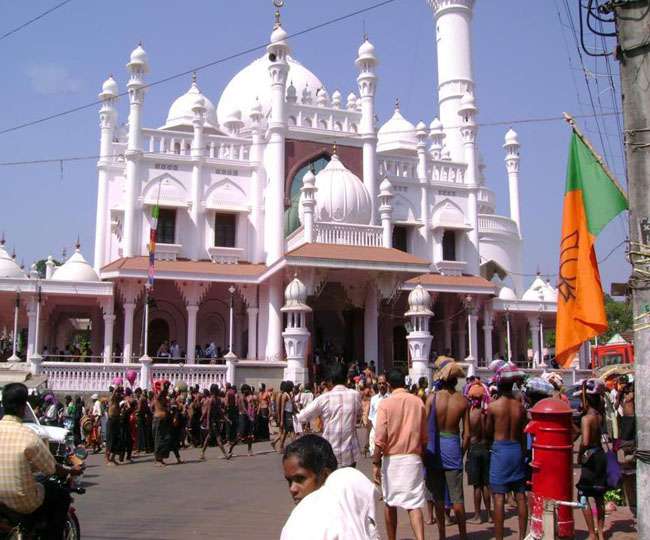

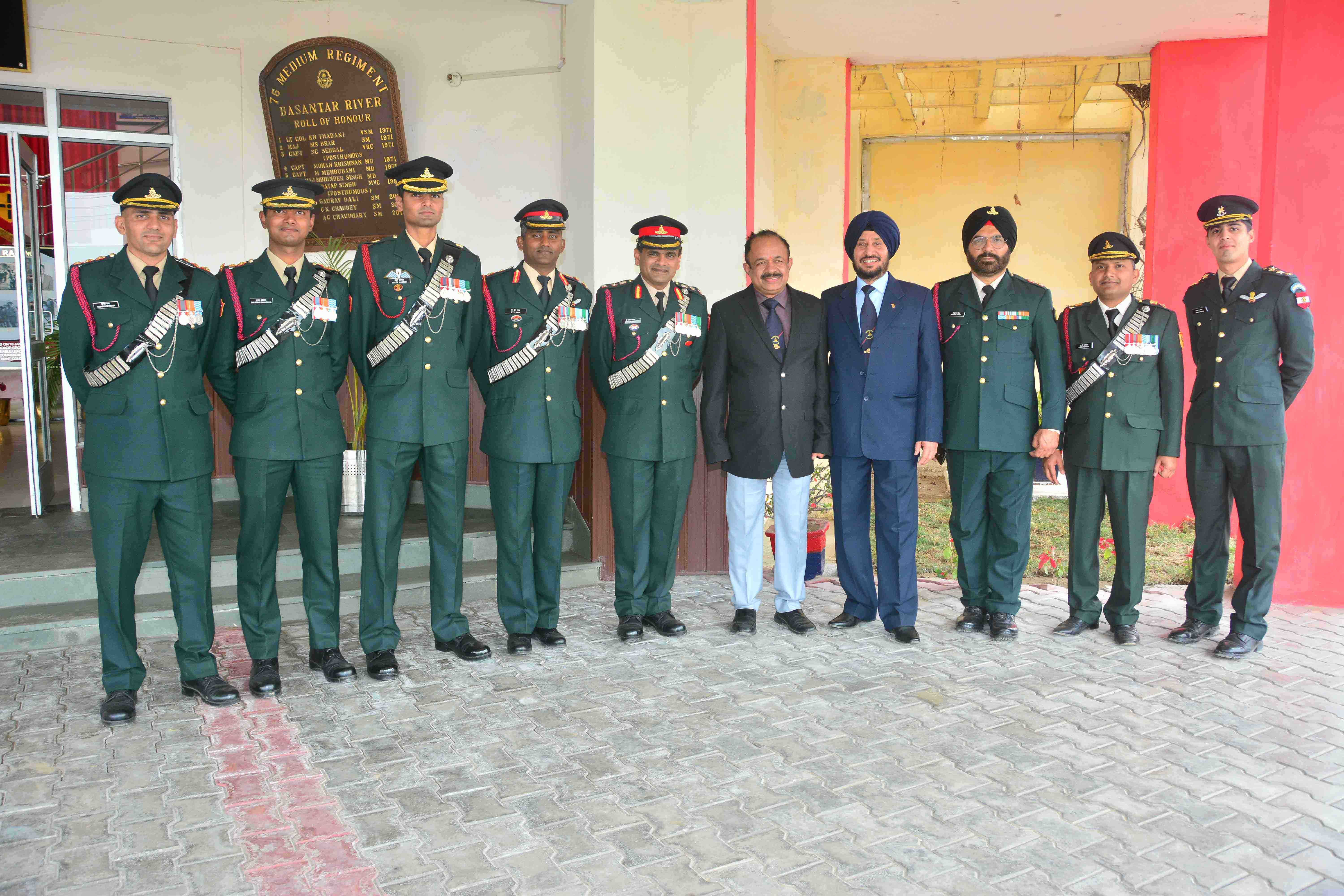
With the present team of officers of the Great Regiment – ably commanded by Colonel DR Jadhav – They made the event come alive and memorable.  They surely left no stone unturned to make the event a grand success.


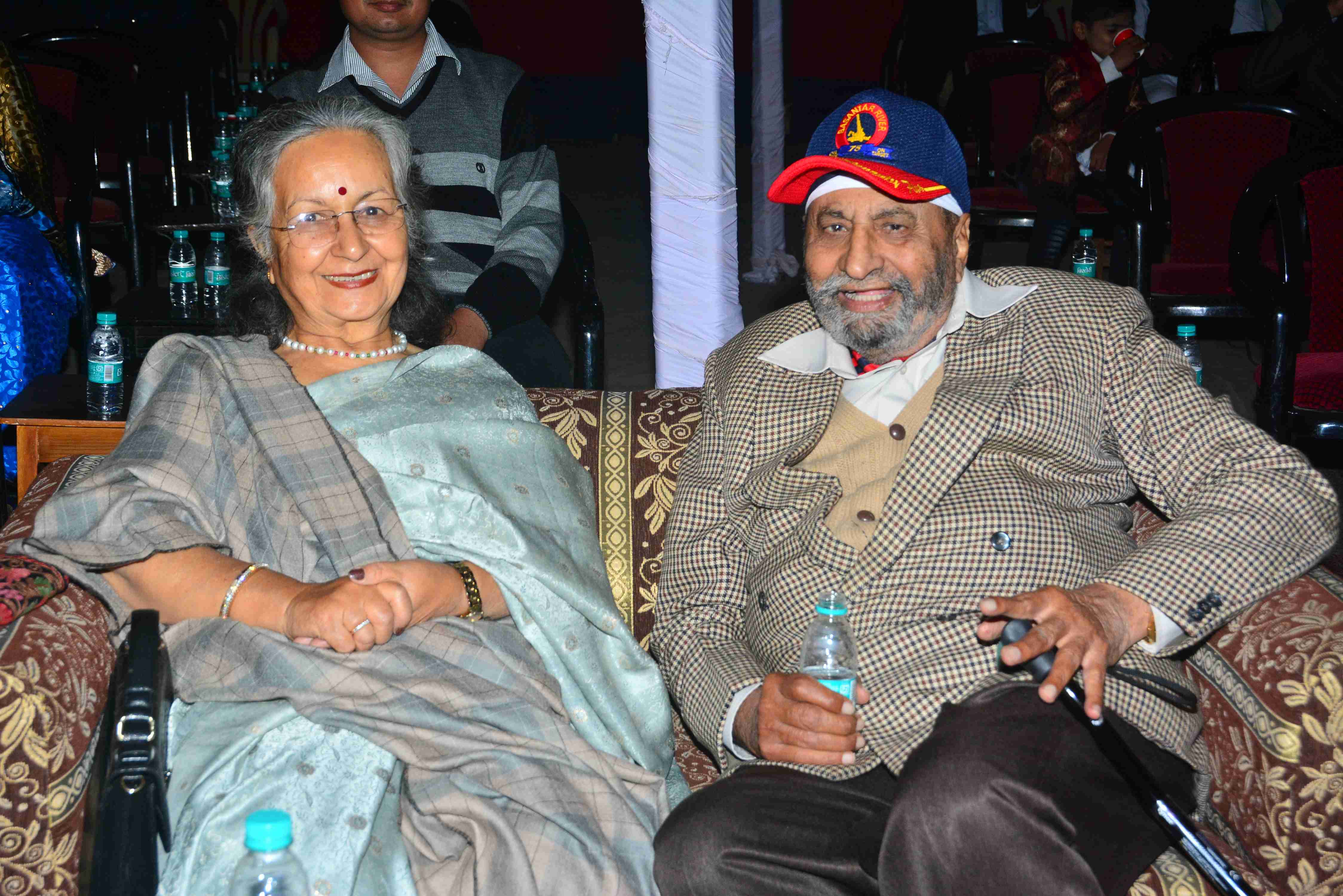
During lunch at the Officers’ Mess, we met Mrs Sneh Thadan, wife of Late Brigadier KN Thadani.  Lieutenant Colonel Thadani commanded our Regiment during the 1971 Indo-Pak war and was awarded Vishisht Seva Medal for his exemplary leadership and planning.  There was Veteran Brigadier MS Brar VSM, SM. He was the Battery Commander with Hudson Horse during Battle of Basantar River of the Indo-Pak conflict of 1971.


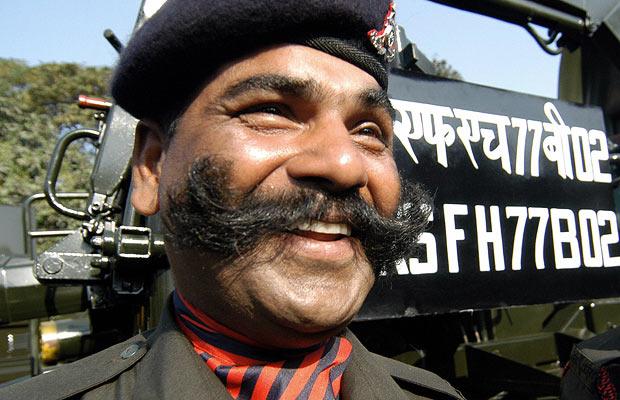
Veteran Brigadier AN Suryanarayanan – our Commanding Officer when I joined the Regiment in December 1982 – was there in his smart and erect posture with his signature mustache..


Veteran Colonel Mahaveer Singh – the Commanding Officer under whom I served the longest – 1983 to 1988 was at his cheerful best as expected.


The Stalwarts here – From Left – Veteran Brigadier JPS Ahluvalia (Commanding Officer 1990 -93), – Veteran Brigadier AK Sikka (first Battery Commander under whom I served), – Veteran Brigadier AN Suryanarayanan – Veteran Colonel Mahaveer Sing and – Veteran Brigadier Rajesh Kumar – Adjutant of our Regiment during Indo-Pak War of 1971


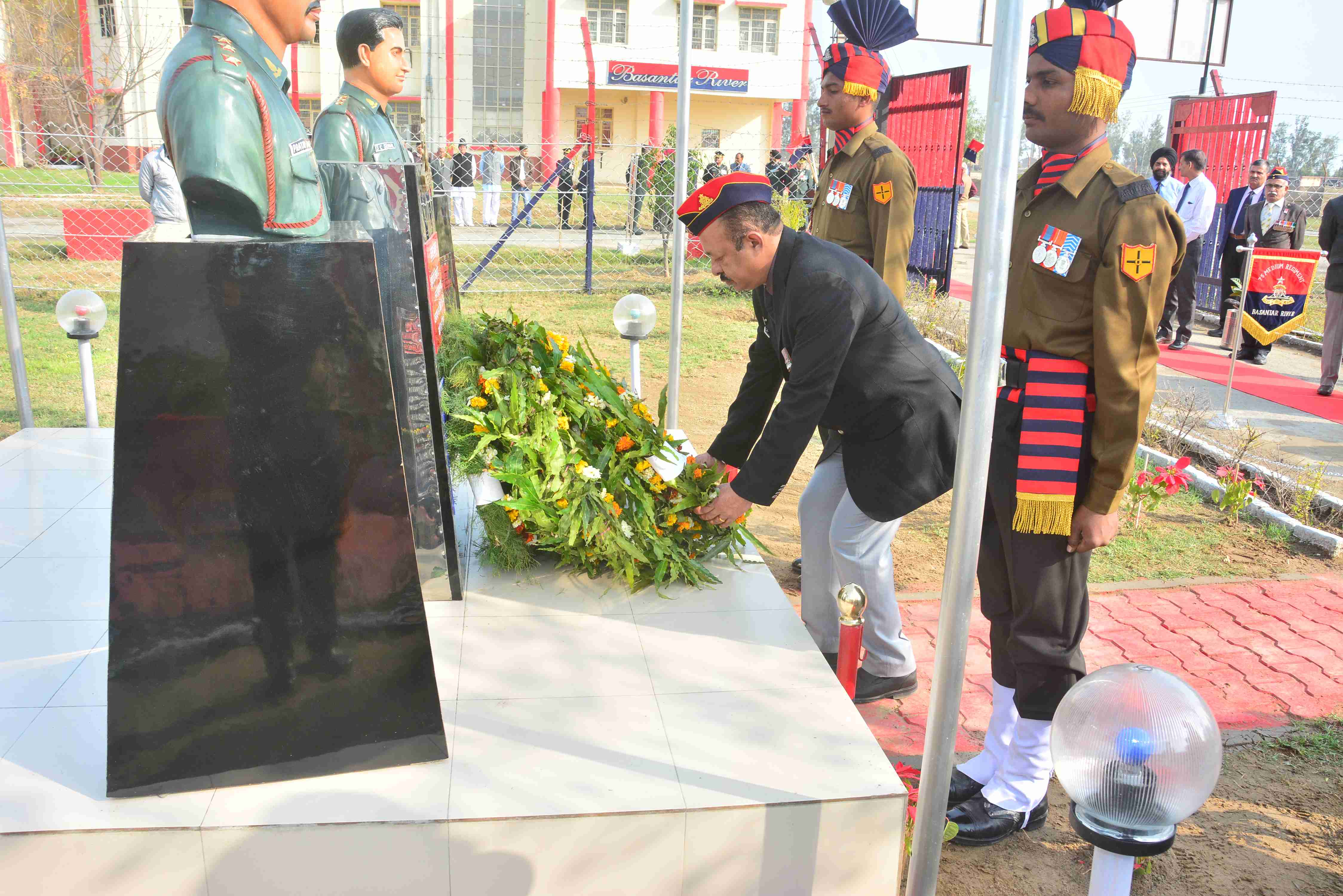
There was a Wreath Laying a wreath at the War Memorial of the Regiment, where all veterans and serving soldiers paid their respect to all those who laid down their lives, serving the motherland.  The bust of Captain SC Sehgal, Vir Chakra  and Captain Pratap Singh, Maha Vir Chakra aptly adorned the memorial.

Captain Pratap Singh and I served with the Regiment from 1984 to 1988.   During his deployment in Siachin Glacier in 1988, Capt  Pratap Singh was performing the duties of OP officer at Bana Post, the highest post in the glacier.  On 26 May 1988 he volunteered to cut the ropes tied by the enemy to launch assault on Bana Post and hence prevented its capture.  While he went on to accomplish this task, a booby trap laid by enemy exploded causing severe injuries, yet this brave officer, with cold courage and determination, completed his task before succumbing to injuries. For his outstanding, exemplary and gallant act in the best traditions of Indian Army he was awarded Maha Vir Chakra posthumously.


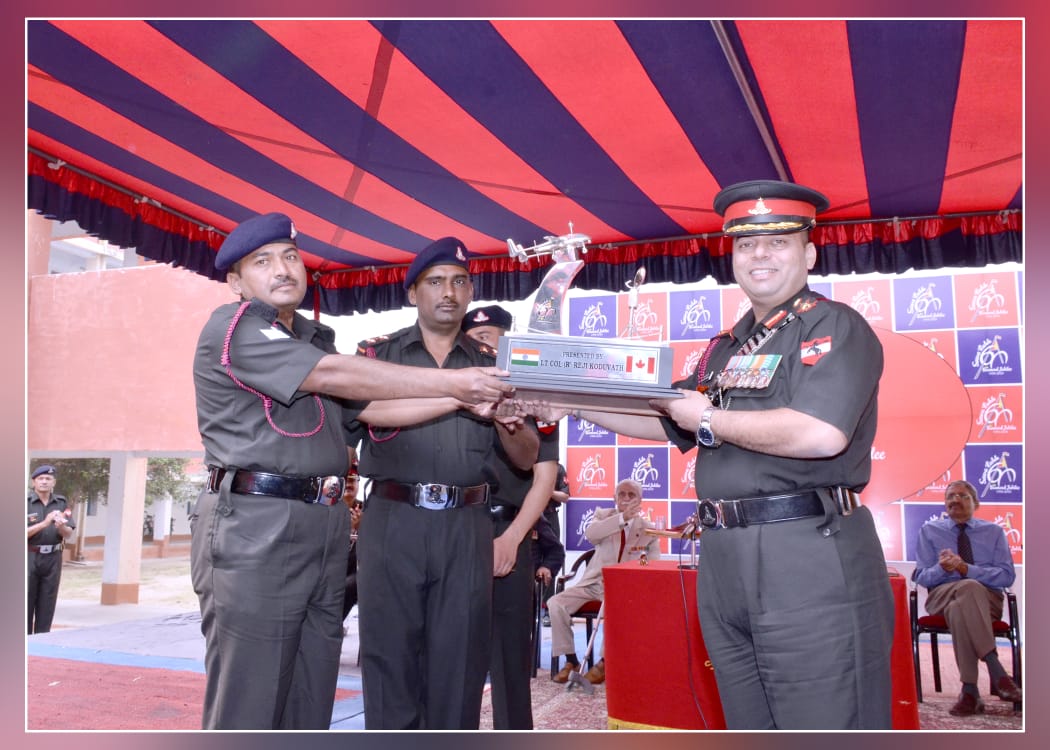
We presented a Silver Trophy to the Regiment on the occasion – replica of a Bofors Gun the Regiment is currently equipped with.


There were many occasions for us to interact with Veteran Soldiers who served under our command and it I had many a goose bumps as they recounted and reminisced various events, sports competitions, operations, etc.


I was lucky to  meet and interact with Colonel PR Ravikumar and Colonel UV Rao – the smart Young Officers who served with me.  Colonel Ravi commanded our Regiment  and Colonel Rao is commanding a newly raised Medium Regiment.


During the Golden Jubilee party at the Officers’ Mess, Mrs Sneh Thadani cut the cake.


It was indeed a moment of pride for me as I sat down to sign the Visitors’ Book at the Officers Mess as the  table on which I was signing had the photograph  of Major General BK Guha, Colonel of Regiment.  He was the Senior Subaltern when I joined the Regiment in December 1982.


As I bid goodbye to the Regiment, I spoke to Colonel Jadhav “The Regiment was good –  that is why so many Veterans turned up; the Regiment is good – that is why you could put up such a great show; and the Regiment will surely remain good for the times to come.”  , We all enjoyed every bit of the moments we shared and will ever be etched in our memory.

Morning Shave

Delivering the Commencement Address at University of Texas at Austin in 2014, Admiral William H McRaven, a retired United States Navy Admiral who last served as the ninth commander of the United States Special Operations Command from August 8, 2011, to August 28, 2014 said “If you make your bed every morning you will have accomplished the first task of the day.”

Making the bed’ ritual was all important first task of the day one accomplished as a Cadet at Sainik (Military) School, from the age of nine to sixteen.  On joining the National Defence Academy (NDA), morning shave became the first important task of the day.  During early school days, one did not have any facial hair and in senior classes, shaving was a ritual only during weekly haircut, executed by the barber.  On joining NDA, morning shave became  mandatory  for all cadets and it continued through my over two decades of service with the Indian Army.

One winter morning in the eighties, I, a young Lieutenant and Senior Subaltern of the Regiment, received a message that an important political leader had passed away and the day was declared a holiday.  I had by then shaved and was changing.  I came out of my room, dressed in whites for physical training (PT) and I found all other Lieutenants also ready for PT.  “We have shaved and put on our PT dress.  Let us all go for a run.  Once you have shaved early morning, holiday or not, it makes no difference ,” I said.

In the Army, being a uniformed service,  discipline is judged partly by the manner in which a soldier wears a prescribed uniform or a dress, as well as by the individual’s personal appearance.  Thus a well-groomed appearance by all soldiers is fundamental to the Army and contributes to building pride and esprit-de-corps.  There is a need for every soldier to be self-disciplined and also be proud of being part of a noble profession.   It is the prime responsibility of all commanders to ensure that soldiers under their command present a smart and soldierly appearance. All  commanders have to ensure that soldiers take pride in their appearance at all times, in or out of uniform, on and off duty.  A properly shaved soldier, sporting a mustache if preferred, will surely give a soldierly appearance.

Soldiers sporting a clean shaven face can be attributed to  Alexander the Great.  It is believed  that he ordered his soldiers to be clean shaven so that the enemy might not grab them by their beard and throw them to ground.

In Indian Army, soldiers are expected to be clean shaven other than the Sikhs, who are allowed to grow their beard.  Mustache if worn must remain above the upper lip.  British Army, from where most traditions and regulations came for the Indian Army, orders regarding shaving can be traced back to the Eighteenth Century.  Until then, British soldiers were all clean shaven and did not wear a mustache.  Soldiers of Hussar Cavalry Regiments wore mustaches to intimidate their enemies. This mustache trend spread across British Army.   At this time, a mustache differentiated a soldier from a civilian.  Influence of Indian Royalty and Indian belief that mustache indicated manliness could have also played a role.  By late Eighteenth century, mustache became popular among British civilians, so also sideburns.


Sir Douglas Haig with his army commanders and their chiefs of staff – World War I – (Image Courtesy Wikimedia).

During World War I, Commonwealth soldiers found it cumbersome to maintain their mustache, while fighting trench warfare.  Many soldiers and officers preferred to shave off their mustaches and it even led to some sort of a revolt.  A few soldiers were even court-martialed for not complying with the order of a mustache.  In 1913, General Nevil Macready investigated the matter and submitted a report that orders regarding mustaches be withdrawn.  No action was taken on this report and in 1915 King George reinforced the necessity of a mustache for a soldier. General Macready resubmitted his ‘mustache’ recommendations in 1916 and on 8 October, order was passed, doing away with a mandatory mustache for a soldier.


Iconic poster of World War I with Lord Kitchener, sporting a handlebar mustache, persuading everyone to join the army still stands out (Image Courtesy Wikimedia).

It is a myth that hair tend to grow thicker and darker than before due to shaving.  Mildred Trotter, a forensic anthropologist debunked this myth back in 1928, when she asked three college students to shave their legs, ankle to knee, twice weekly for eight months. Using a microscope, she compared each student’s hair growth rate, color and thickness. She concluded that shaving had no impact on hair’s texture or growth.

Wrestlers are mostly clean shaven as Olympic rules require them to have either a full beard or none at all, as stubble can irritate an opponent’s skin.  Swimmers are mostly clean shaven – they remove all possible body hair – as body hair can slow them down a bit.

Married Amish men sport a beard with a trimmed mustache in place of wearing a wedding ring.

For reasons still unclear, Parliament fired the personal barber of Charles I of England. Famously slow to trust others, King Charles never shaved again, for fear that a new barber would try to kill him.

Retreat Ceremony at Hussainiwala

During our visit to India to attend the Golden Jubilee celebrations of raising of our regiment – 75 Medium Regiment (Basantar River) – we watched the Retreat Ceremony at Hussainiwala Border Post.  Unlike most international borders, where no such daily ceremonies are held, retreat ceremonies are held on Indo-Pak border at dusk.

Canada and USA share the longest International Boundary in the world, which is mostly unmanned, except at crossing points.  The border came into existence at the end of bitterly fought American Revolutionary War between Great Britain and the United States with the Treaty of Paris of 1783.  In 1925, the International Boundary Commission came into being with the task of surveying and mapping the boundary, maintaining boundary pillars and buoys and keeping the boundary clear of bush and vegetation for six meters.

Ontario province has 14 road border crossings, one truck ferry, and four passenger ferries with the United States.  The most popular crossing is the Rainbow Bridge (above) near Niagara Falls.  This is a popular border crossing for pedestrians, however, trucks are not permitted to use this bridge.  The boundary runs through the centre of this bridge.  Surely, the two countries hardly ever hold any border ceremonies.

There are only three trading posts, Wagah (Punjab), Chakan da Bagh (Rajouri, Kashmir) and Kaman (Uri, Kashmir) on the Indo-Pak border through which people and goods move.  Chakan da Bagh Post and Kaman Post is manned by Indian Army soldiers and they do not hold any ‘retreat’ ceremonies.  However, they exchange sweets on important national and religious days.

A ‘retreat ceremony’ in military parlance signals the end of duty day and when the national flag is brought down.  The band if present or the bugler will sound ‘retreat’.  The lowering of the flag is coordinated with the playing of the music so the two are completed at the same time.  It is a ritual in every military unit and often coincides with the change of guard for the night.

Retreat ceremonies are held on the Indo-Pak border in Punjab at Wagah (Amritsar), Hussainiwala (Firozepur and Sadiqi (Fazilka) by the Border Security Force (BSF) of India and Rangers of Pakistan.  Neither the Indian Army nor the Pakistan Army is involved in this heavily choreographed flag-lowering ceremony.  The drill movements are over exaggerated and at times is near ridiculous and mostly absurd.  One would even wonder as to whether such ceremonies hold any value in modern civilised world.  Whatever it may be, the ritual has endured through half a century despite many diplomatic upheavals, border skirmishes, economic warfare and mutual misunderstandings.

Hussainiwala Border served as the major road crossing between Indian and Pakistan till 1970. At that time, it acted as a trade route for truckers, mainly to import Kandahari Angoor (dehydrated grapes) as well as other fruits and food products from Pakistan and Afghanistan.   The post was closed for trade in 1970 as tensions rose between India and Pakistan.  The retreat ceremony commenced in 1972 after the Indo-Pak War.

We were all seated in the Amphitheatre to witness the ceremony.  On the Indian side there was no segregation of. men and women.  The only concern was the glare of the setting sun as we faced Westwards.

On the Pakistan side, there were separate enclosures for men and women.   The only commonality was most women and men including the Rangers – all wore Salwar Kameez.

As the seats were getting filled up, the audio systems from both sides begun belching out ‘patriotic’ songs with as much volume they could muster.  At the auspicious time of 5 PM, the soldiers from both sides ‘enacted’ their choreographed drills.

They marched ‘Goose Stepping’, throwing their legs as high as they could.  This was a form of extreme marching held by German, Prussian, and Russian military to be an ultimate display of the unbreakable will and discipline of its soldiers.  Most modern armies have done away with this ‘fascist’ approach to marching as being extreme.  Only a few countries use it as a powerful display of military discipline.

Foot drill is a fundamental activity of the military and is practised regularly during initial military training.   Foot drill involves marching with an exaggerated heel strike, and regimented manoeuvres performed while marching and standing characterised by an exaggerated stamping of one foot into the ground.

The soldiers were wearing leather soled boots with heavy metal attached to them.  It made ‘metallic’ sound when they came in contact with the concrete floor every time the a soldier stamped his foot, that too much higher than needed.

The soldiers from both the sides pose showing their aggression and fearlessness.  They widen their chests, twirl their mustaches, thrust open their  eyeballs, and what not – all to invite applause and cheers from the audience on either side.

After enacting all these choreographed caricature of a drill, soldiers  cross the white line to come to the other country and form a beautiful cross X with the flag threads. Both the flags are held together at the junction and then are brought down at speed and folded neatly.  Throughout the ceremony sloganeering and clapping many a times reached frenzied levels.  The only saving grace during the entire routine was the exchanges of sly smiles between the soldiers of both nations.

The question here is as whether we need such exaggerated drills to incite national passion and fervour among the citizens?  How long can a country sustain such a fervour?  What about the soldiers who are enacting this routine?  Have you considered the unwanted  physical and mental stress they undergo?

High levels of bone strain caused by such exaggerated drills will surely result in stress fracture.  It may also cause micro-damage to bones.  Digging down of heels, especially with the foot raised over the head may cause severe strain to the neck and spine and also brain damage.  These soldiers may also end up with joint pains, migraine and headaches

Ultimately who cares?  The show must go on.

Hussainiwala – A Village on Indo-Pak Border


During our visit to India to attend the Golden Jubilee celebrations of raising of our regiment – 75 Medium Regiment (Basantar River) – we watched the Retreat Ceremony at Hussainiwala Border Post.


Railway line connecting Peshawar to Mumbai was built in 1885, passing through Hussianiwala.  During the Pre-Partition days, Punjab Mail connected the cities of Mumbai, Delhi, Ferozepur, Lahore and Peshawar. In those days, most British troops and businessmen arrived at Mumbai and made their way to their destinations in the North-West Frontier Province by train. The train track from Ferozepur to Hussainiwala was an engineering fete, with Qaiser-e-Hind bridge, which stood over several round pillars (all of them intact even today, as depicted in the image above).


When Pakistan was carved out of British India, the border was drawn along the Sutlej River in Punjab and it passed through Hussainiwala Village.  Now, Sutlej River has changed its course over the years, running further East in Indian territory.  This made Hussainiwala an enclave into Pakistan, with the Sutlej River behind it.


Hussainiwala is named after a Muslim Peer (Saint), Hussaini Baba, whose shrine is located at the entrance to the Border Post.  This small hamlet came into prominence on the evening of 23 March 1931 when British soldiers tried to cremate the bodies of three young Indian freedom fighters – Bhagat Singh, Sukhdev and Raj Guru – who were hanged at the Lahore Central Jail.  The hanging, scheduled for 24 March was rescheduled a day earlier as the British feared a revolt in Lahore as the situation had become very tense.  They  secretly transported their bodies to Hussainiwala and while cremating them on the banks of the Sutlej, the locals got wind of it.  They assembled near the cremation site.  Fearing repercussions, British soldiers fled the scene, leaving behind the dead bodies which were cremated by the villagers.  This site today is a memorial – aptly called ‘Prerana Sthal‘ (Motivation Site).


Later Bhagat Singh’s mother, Vidyawati, and freedom fighter BK Dutt were cremated at this site as per their wishes. The cremation site is called ‘Shaheedi Sthal’ (Martyrs’ Place).   This is where Indians from all over the country make an annual pilgrimage to honour the martyrs on March 23 as they observe ‘Shaheedi Diwas’ (Martyrs’ Day).


(Defences on the Indian side on Bund (wall) with a bunker as inset)

This enclave has witnessed three bloody battles between India and Pakistan,  with the very first one fought on 18 March 1956.  At that time, heavy floods had damaged Bela Bund and Sulaimanki Headworks at Hussainiwala and as the Indian engineers were repairing the damage, Pakistan Army launched an unprovoked attack at 9 PM.  4 JAK RIF was guarding the bund, and they fought  gallantly causing heavy causalities on the enemy.  This resulted in a hasty withdrawal by the attackers.


During partition of British India in 1947,  Hussainiwala, an enclave of 12 villages went to Pakistan. The railway line no more had trains running through Hussainiwala.  The railway station at Hussainiwala as it exists today is depicted in the image above.  Now Punjab Mail connects Mumbai to Ferozepur via Delhi.  Pakistan destroyed  Qaisere- Hind Bridge leaving behind the round pillars across the river. The Shaheedi Sthal was in a dilapidated state without any maintenance. In 1961, Jawaharlal Nehru, then Prime Minister, brokered an exchange deal and Hussainiwala came to India while Sulaimanki Headworks –  from where three major canals which supply irrigation water to a large area in Pakistan  Punjab originate –  went to Pakistan. India immediately restored Shaheedi Sthal to its due dignity and reverence.

During Indo-Pakistan War of 1965, 2 Maratha Light Infantry (Kali Panchwin) was deployed to defend Hussainiwala. The battalion fought valiantly to thwart a  frontal attack resulting in two enemy tanks destroyed and two captured, with several enemy killed. The Commanding Officer Lieutenant Colonel Nolan was killed in enemy artillery shelling. The unit ensured that the Samadhi of Bhagat Singh was not desecrated by Pakistan Army. The battalion was visited by then Prime Minister Lal Bahadur Shastri, Defence Minister YB Chavan, Congress Party President  K Kamraj, the Chief of Army Staff and other senior officers. Kali Panchwin was awarded the battle honour ‘Hussainiwala’ for its role in the 1965 War. The citizens of Firozpur, in honour of the Battalion’s contribution in defending the bridge and Firozpur town, presented a silver replica of the Hussaniwala Bridge.

During the 1971 War, it was 15 PUNJAB defending Hussainiwala enclave and the Memorial.  On 03 December, Pakistan Army launched a heavy attack.  The valiant Punjabis withstood the attack gallantly despite suffering heavy casualties until withdrawing on 04 December night.


Did the three freedom fighters, who laid down their lives for Indian independence in their wildest dreams ever visualise that post independence, there would be a partition on religious lines and it would all end up in three bloody wars at the very same site their ‘Samadhi’ stood?

Wind Can Blow Either Way

Great experiences make military life marvelous – even for the family members of soldiers. It lasts a long time, much after we hang our boots and even after we migrate to another continent.

Marina emigrated to Canada in March 2002 and I took over command of the Surveillance and Target Acquisition (SATA) Battery in June 2002. For someone who served his entire regimental life in a Medium Regiment operating Bofors guns to suddenly land in a Surveillance Regiment equipped with radars, drones and survey gadgets – it was an altogether different experience. I had to learn everything from scratch and had to familiarise with the officers and soldiers.

The regiment was an excellent outfit.  I set off with training on various surveillance equipment, starting with radars.  I had to convert from a Medium Gunner to a Surveillance Gunner. The officers and soldiers helped me to imbibe both the art and the science of surveillance, many a times explaining the procedures and drills repeatedly.  I read all the operator and training manuals of all  equipment and in two weeks time, I was proficient enough to handle them.

(With Santosh the evening I  hung my boots in July 2004)

My Radio Operator Santosh Kodag a Maratha, took charge of the household, but was surprised that my family had not come along.  Commanding Officer living alone in a fabulous peace station like Devlali – Santosh realised something was wrong.

Devlali is one of the most relaxed military stations located near Nasik city – about 150 km from Mumbai.  It has a colonial charm and is clean with fresh air and lots of greenery and open spaces.  The climate is fabulous all through the year.  The schools in the area are well known for their educational standard.  The Cantonment offers all recreational facilities like horse riding, swimming, squash, tennis, golf, club, etc – all that goes with a good military station.  The School of Artillery is located here where all Gunner officers are trained.  Hence, it is always abuzz with Young Officers and also newly married young couples.

A week after landing in Devlali and when Santosh felt that I was well settled, one evening, handing over a glass of whisky to me said “I know your wife is away in Canada and your children are in Kerala. Why don’t you get the children here?

Our daughter is in Grade 4 and our son in LKG. I will not get adequate time to take care of them. My mother is taking care of them well in Kerala,” I replied.

To this Santhosh said “Why don’t you get your mother and your kids here. I will take care of everything. I know your mother is pretty old. You do not have to worry.”

I thought for a while and then called up my mother about my plans to shift her and children to Devlali. She said “I was also thinking about it. My duty is to take care of the children and it would always be better that you are around.

I booked the tickets for my mother and children to travel to Devlali and Santosh went to Kottayam, Kerala to accompany them.

Santosh now took over everything – handing over the medications to my mother and also taking her for her regular medical  appointments with the Military Hospital – getting our son Nikhil ready for school (Nidhi was independent by then)- serving breakfast for all, packing up lunch boxes, etc.

After two years, I relinquished command and also hung up my boots and migrated to Canada.

Now Santosh is married with two kids, serving in the regiment as a Havildar (Sergeant). Every year when we visit India, we send a parcel of gifts for him, his wife and children.

February 2018, we travelled to India to attend the Golden Jubilee celebrations of my parent unit – 75 Medium Regiment. The SATA Regiment  deputed Havildar Santosh to receive us and accompany us to the Medium Regiment.

Marina was busy shopping for gifts for Santosh and his family. Marina had met Santosh only twice – when we traveled to India – and she has been ever thankful to him for taking care of the children in her absence.

I recently asked Nikhil as to whether he remembered anything of Devlali days and he said “The only person I remember is Santosh Bhaiyya – the poor guy, I gave him a difficult time – especially when he tried to feed me and get me ready for school.

On 01 November 2018, our SATA Regiment celebrated its Diamond Jubilee. We could not travel to India for the occasion as our daughter Nidhi was expecting our grandson’s birth. I got a silver trophy made for the occasion and it was presented to our Regiment on my behalf by Havildar Santosh.

Wind can blow either way in the Indian Army. A soldier can soothe the pains of his Commanding Officer too.

Training Young Officers to be Leaders

Field Marshal Helmuth von Moltke the Elder of Prussia, who considered himself a disciple of Clausewitz, was posted to command a cadet school in Frankfurt called Kadettenschule.  He is credited as the father of the modern concept of war games, which he adapted from chess.

Moltke was known for his dependence on decentralised style of command in the army termed ‘Auftragstaktik‘.   In this concept, the junior officers were required to take crucial decisions and that necessitated a drastic change in officer training.   He was of the opinion that in the war front, rapidly changing scenarios will surely make a senior commander’s decision obsolete in no time.  Here, the subordinates have to take independent decisions  as the situation evolved.  It may sometimes result in defiance of orders, without impeding discipline.

Moltke ensured that ragging was stamped out in Kadettenschule  and he stressed on the cadet’s achieving self-confidence and independent thinking.  He had a promotion policy in place where he rewarded junior cadets excelling with promotions where they could overtake their seniors.  The instructors were specially selected and trained to motivate and train the cadets and with their exemplary conduct could wipe out ragging.  This resulted in cadets turning into officers who were decisive.

The need for ‘ragging’ in cadets‘ training is to break the cadet’s ‘individuality’ and make him ‘fall in line‘.   This has in fact resulted in inability of junior commanders at various levels to act as the situation demanded, based on their judgements.  What we need to do at our Academies is to encourage youngsters to speak up against cheating, stealing, etc; but the toughening aspects, including group ragadas (punishments) strengthen one mentally and physically.  What we need to do is to adapt and reinvent to empower the cadets with better all-round knowledge.

Army courses conducted at various schools only teach a standard baseline aspect.  In most cases, there is hardly any real soldier involved, which means only the science of warfare and military leadership is taught, but never the art.  The courses are structured around ‘What to think’ than ‘How to think‘.  All training must be to create critically thinking junior commanders with ability to think and execute plans well ‘outside the box’.  Promoting adventure activities to be taken up by young officers in their fields of interest, unsupervised and un-assessed, duly supported by the army, will surely develop self-confidence and independence of judgment among junior leaders.

Here is a story- purely a figment of imagination – I told our officers to analyse various levels of training- regarding planning a raid by a section to capture two hidden militants – each officer to work out their individual solutions.  The first group is of 10 young officers, fresh out of the academy, then 10 Junior Command (JC) Course qualified officers – Captains with about six to nine years of service, followed by 10 Staff College qualified officers – Majors with 10 to 12 years of service. Ten young officers will come out with about eight solutions, but the staff work would not be complete, out of which seven will work and one may fail. Ten JC officers will come out with five solutions, the staff work may not be all that good, of which three will work, one may work and one likely to fail. The 10 Staff college officers will all come out with one or two solutions, complete with all staff work, and the likelihood of success, you can guess. That is what the structured training (with pinks) has resulted into.

A friend asked me to suggest methodology to make the training at Staff College creative. I suggested that for one exercise, provide just a map with minimum guidelines on force levels and resources. Let the students mark the International Boundary, deploy troops including the enemy, assume additional resources, etc and come out with a complete package. Run one exercise found suitable for a group. Idea was well received and was presented to the faculty and for the most unthinkable reason, it was thrown out. One senior officer asked only one question – “How will we assess the students?” It appears that the essence of all Army courses is to assess and neither to teach nor to learn.

Coming to the physical training, the current one is archaic.  All cadets want to put in their best in physical training and want to pass all the tests as early as possible.  No two cadets are alike, and some will lag behind.  The aim of the instructors must be to motivate them and not belittle or humiliate them, especially in front of their peers and they will surely achieve the desired results in most cases.

Modern sports medicine has developed much beyond, and the nation has adequately trained doctors in this field. In the Academies, it tends to be an overdose of unscientific physical training.  The Army Physical Training Corps (APTC) has to get more Sports Medicine trained Doctors. The Physical Training Officer at the Academies got to be Sports Medicine trained.

Cadets’ training at the Academies and Officers’ training in the Army, both in the Regiments and during various courses need to be scientifically analysed, mainly to impart application-oriented education, develop decisiveness and remove ‘over standardisation.’

Projecting Hard Military Power the Soft Way in the Indian Context

As per the US Department of Defense (2013) Dictionary of Military Terms, Power Projection is a term used to refer to the capacity of a state to apply all or some of its elements of national power – political, economic, informational, or military – to rapidly and effectively deploy and sustain forces in and from dispersed locations to respond to crises, to contribute to deterrence, and to enhance regional stability.

Projection of Hard Military Power paid dividends up to the end of old War era. With the breakup of USSR and change in the world order, even the US military was not successful in projecting Hard Military Power as was seen in Somalia, Afghanistan, Syria and Iraq.

Soft Power Projection can be defined as ability of a state to project its influence other than through military combat into an area that may serve as an effective diplomatic lever, influencing the decision-making process and acting as a potential deterrent on other states’ behavior. Deployment of various countries’ militaries during the humanitarian response to the 2004 Indian Ocean Tsunami is one of the best examples.

Hard Power facilitates India’s use of military, economic and political means to influence other States; Soft Power has, through our cultural or ideological means, the ability to indirectly influence the behaviour of other States. ‘Soft Power’ also enables us to distinguish the subtle effects of our culture, values, societal ideas, developmental assistance programs and other forms of influence on the behaviour of other States, from the more direct coercive measures such as, military action or economic incentives or sanctions. A potent form of soft power is ‘intellectual power’, which entails ‘the knowledge and insight of the populace and their leaders’. The strength of India’s soft power has been the power of assimilation. India’s unique ability to embrace different cultures and the philosophy of tolerance and peaceful co-existence continues to be a source of strength for our Nation and a shining example to the world community. Smart Power would be our evaluative ability to combine Hard and Soft Power resources into effective strategies.
The Indian Armed Forces have been in the lead in projecting the nation’s Hard Power the soft way. The political leadership, bureaucracy and media have not played up these achievements many a times, resulting in the soft power projection not achieving its full potential.

Humanitarian Aid. Indian Armed Forces have an enviable track record in providing humanitarian aid whenever needed, within the country and also in the neighbouring countries, especially in the aftermath of a natural disaster. In many cases, the armed forces moved its troops and resources, without awaiting a formal request from the civil administration or from the higher headquarters.
In the aftermath of the Tsunami that hit the Indian Ocean countries including India, the Indian Armed Forces provided assistance to Sri Lanka and Maldives and was able to reach out to Indonesia as well. India provided humanitarian aid in the aftermath of earthquake that devastated Pakistan Occupied Kashmir in 2005 providing relief materials of medicines, blankets, and food packets. When a severe-cyclonic storm, Nargis, struck Myanmar in 2008, the Indian Air Force and Navy transported more than 100 tonnes of relief material. The 2015 Nepal saw the Indian Army and Air Force commence relief operations on the first day itself, which was scaled up in the subsequent days.

Non-Combatant Evacuation Operations. The Indian Air Force has come out with flying colours in the evacuation of Indian citizens and people from other countries from a third country when they were endangered by war or civil unrest (Operation Rahat in April 2015, Yemen). During the evacuation operations during the Yemen crisis of 2015, the Indian Air Force took a lead in rescuing Indian citizens as well as foreigners trapped in Yemen, evacuating more than 550 foreigners from 32 countries, including a dozen Americans and three Pakistanis.
The 1990 airlift of Indians from Kuwait post Iraqi Invasion of Kuwait by Air India, the national carrier, with support of the Indian Air Force finds a place in the Guinness Book of World Records for the most people evacuated by a civil airliner. They evacuated 175,000 people. This stands out as a prime example of the nation’s Hard Power, projected the soft way in a foreign land. The Indian Armed Forces repeated this act in Iraq (2003), Lebanon (2006) which included Sri Lankan and Nepalese nationals, Libya (2011), Nepal (after the 2015 earthquake- Indian and foreign nationals) and South Sudan (2016).

United Nations (UN) Peacekeeping. A state that wants to project itself in the international arena as a major power needs to have strong presence in UN Peacekeeping efforts. Indian Armed Forces have had a fair share in the UN’s commitments and always accredited themselves with their great deeds. India is the largest cumulative troop contributor, having provided almost 200,000 troops in nearly 50 of the 71 UN peacekeeping missions over the past six decades. India, with its demand for a permanent seat on the UN Security Council (UNSC), has to prove to the world through its Peacekeeping that our demand is fully justified. Such actions will surely ensure that India projects its hard military power the soft way, resulting in the nation having a greater say in international decision-making process.

Securing Sea Lanes of Communication (SLOC). For India, a peninsular state with a coastline of about 7500 km and with Lakshadweep and Andaman & Nicobar Islands, it is imperative to have a powerful navy. The Indian Navy is a three-dimensional force, capable of operating above, on and underwater, ensuring the safety and security of the Eastern sea board and its assets and India’s Exclusive Economic Zone (EEZ). The oceans in Indian Navy’s area of influence has witnessed an increase in maritime terrorism and piracy coupled with illegal narcotic trade, unregulated fishing, dumping of pollutants and natural disasters. Also, there must have been many SOS calls made by the ships and fishing boats.

In order to project hard naval power the soft way, the Indian Navy along with the Coast Guard should possess sufficient resources to mount round-the-clock, all-year-around maritime surveillance in the SLOC. Indian Navy has been an active part of the anti-piracy ops in the Gulf of Aden and in the Arabian Sea. There are quite a few success stories of interceptions by the Indian Navy, but they have not received adequate global publicity. The Navy and the Coast Guard got to be well equipped to respond to the distress calls of ships and got to pursue cases of illegal and unregulated fishing. They got to be vigilant enough to prevent illegal dumping of pollutants in the oceans around us.

Developmental Activities. The Indian Military has proved time and again that it can take up any task that cannot be executed by their civilian counterparts. Run-up to the Commonwealth Games in Delhi in 2010, it took seven years for a company to build a Foot Over Bridge (FOB) near the Jawaharlal Nehru Stadium, which then collapsed. The Indian Army, which was called in to salvage Delhi’s pride executed the same job in four days flat and at a fraction of the original cost. In the aftermath of the tragedy where 23 people were killed in a stampede on a bridge at Mumbai’s Elphinstone railway station, the government has turned to the army for a new bridge. This will help in projecting the Hard Power of the Indian Military in a soft way.

Parades and Pageants. The Republic Day Parade at Delhi is the best example for projecting the nation’s Hard Power the soft way. It is the culmination of synergy between all the departments of Indian Government and is telecast worldwide as a great show. There is a need to encourage military formations in other cities and towns to facilitate the general public to view such parades/ pageants and also telecast them for wider viewership.

Military Facilities. Most American airports have ‘Military Lounges’ and the signage for the same is placed everywhere in the airport. The airlines board the serving soldiers even prior to the Business class passengers. This surely projects the power of the American Military, especially to the travellers from other countries. Many Indian railway stations have ‘Movement Control Office (MCO)’ for the military with a lounge, but is not signaged so. Leave alone foreign travellers, even the Indian travellers are unaware of such facilities. By doing so, it is sure to project the Hard Power.

Home Coming Videos. The internet and social media is filled with ‘Home Coming’ videos of American soldiers. Indian soldiers also do ‘Come Home’, but there are hardly any clips on the internet. The same can be orchestrated well by incorporating various videographers available in Indian towns and villages and compensating them well for the clips they provide. Many would even execute the task without charging as most Indians are devout patriots who hold their Defence Forces in high esteem.

Recognition to Soldiers, Martyrs and Veterans. In Canada, almost every city and town has war memorials and museums. During the innings break of baseball games, the two team captains present a signed shirt of their teams to veterans and serving soldiers. During the cricket matches in India, a similar act will pay rich dividends in projecting Hard Military Power.

Military History. India has had a chequered and colourful military history, but the reality is that many Indians are unaware of it, forget about projecting it to the world. Many European countries celebrate and recognise the service of the Indian soldiers during the World Wars in grand scale, but there is hardly any such celebrations in India. This year for the Armed Forces Flag Day (07 December 2018) was observed throughout the country to honour the martyrs, veterans and the men in uniform. The media came out with clips of the political leadership urging everyone to wear the Flag on the day, but the political leadership did not wear the Flag as seen from various news clips.

In Canada, during the week prior to the Remembrance Day (11 November), almost everyone appearing on the media are seen wearing the Red Poppy.

The English Cricket Team that played a test match at Rajkot (November 9-13, 2016) were seen wearing the Red Poppy. Will the Indian Cricket Team ever do so?
In order to make the Indian youth aware of the great Military History, there is a need to infuse the same into the school curricula. The Union Public Service Commission (UPSC) and the state Commissions must include at least 5% questions from Indian Military History in their examinations. This will ensure that the candidates study India’s Military History in detail, to a certain extent to answer the questions.

The Government of Ontario, Canada, in recognition of my service with the Indian Army has given me a new plate. My gratitude to Canada for honouring a Veteran from another county. Another example of projecting soft power.

If India is to prove that it is a major Military power and also stake its claim for permanent membership in UNSC, there is a lot to be done to project its Hard Military Power. Doing it the soft way will be cost effective and will also enthuse the nation.

Radicalisation of Indian Veterans

It is an irony that a few veterans – surprisingly many who held senior ranks in the Indian Armed Forces – having radicalised thoughts and many times seen spewing venom on the media.  The malice appears to have spread to officers who held junior ranks and also among soldiers.

There are two types of radicalised Veterans all over the world.  The first category is a minuscule – the ones who have been through intense combat and have seen their comrades in arms die or maimed.  They mostly suffer from Post Trauma Stress Disorder (PTSD) and there is no care or support for these cases, even from the Military Hospitals.  Why, many in the Indian Armed Forces do not even accept that PTSD exists among serving soldiers who have been through intense combat.  One can very well imagine the plight of the Veterans, especially those below officer rank.  Some of these persons tend to recoil and spend their life mostly in solitude and hardly ever communicate, even with their dear and near.  Some also have taken the spiritual path to fight PTSD.  They tend to carry their emotions within them.

They generally appear well in public and say nothing to offend anyone. They are always a gentleman on the surface and treats everyone with respect.  In private, they may occasionally make off-handed comments when discussing politics, or society.  One feels disenchanted  to hear someone of such intelligence and valour, someone who everyone respected and cared for immensely, have such a distorted view, and to speak in generalisations about an entire religion or community.

This group cannot be categorised as radical, but may well be called prejudiced.  This could well be attributed to their years of dedicated service in the worst parts of the country, and having to deal with corrupt politicians and bureaucrats on a regular basis.  This is bound to take a toll on anyone’s faith in humanity.

Now comes the second group – the most dangerous ones and are in majority – the so called ‘Poodle Fakers‘ of the Armed Forces.  They may have been in the battlefronts, but have hardly seen intense combat.  They were the arm-chair Generals who pushed their soldiers into combat situations, presuming themselves to be ‘Guderians,’ but with hardly any practical knowledge of tactics or the real ground situations.

Post retirement, they try to cover up all their shortcomings through their ‘verbal diarrhea‘ in the media or with their articles or books in print.  They find everything wrong with the current setup in the Defence Forces and are ever ready with their answers for all the troubles the Defence Forces are going through.  They never realise that they were the ones who laid the foundation for such troubles.

In the present Indian political environment, they have found a place to air their Gyan – the so called nationalists or patriots – who believe that to be patriot one got to believe in the party that has created an image of being the only patriotic one.  They also believe that all the history of the nation are all wrong and only the ones espoused by the current bunch is the most appropriate version.

They appear to have  forgotten all the ethos the Defence Forces taught them while in service.  They claim that the Indian Muslims and Christians can never be nationalists and are only there to convert the poor Hindus.  They never remember the sacrifices and valour of the non-Hindu soldiers who served under their own command.

They tend to paint everyone as non-nationalist in one stroke.  Most of them obviously are faking it to remain relevant in the current religio-political turmoil the nation is going through.  They will never miss an opportunity to cash in by giving their sermons on various television channels, which are ready to pay them for their most grotesque comment.  It appears that every evening they wear their suits, armed with some venom spewing statement and await a call from a news channel.

These Veterans employ theatrics – they are ever ready to shed a few crocodile tears – and many viewers believe what they say.  The viewers do not know the antecedents of the person, but they only know him as a Veteran.

Have you ever seen a General who was a professional soldier ever deliver such Gyan?  Is it time that the Government  come out with some regulations to quieten or soften up such diatribes?

Our son Nikhil went to the recruiting office in Toronto to collect the application form for Canadian Army. The office was manned by a very senior Sergeant Major who had seen action in Afghanistan and Iraq. He asked our son the reasons for joining Canadian Army.  One of the reasons listed out by Nikhil was that his father had served the Indian Army.

The Sergeant Major asked “Did he see combat?

“Yes he did two or three times to the best of my knowledge,” said Nikhil.

Does he talk about it?” queried the Sergeant Major.

Never,” replied Nikhil.

To this the Sergeant Major said “Then he has been into combat.

Tourniquet

On returning from his orientation programme from the city’s swimming pool, where he works as the Swimming Instructor and Life-Guard, I asked our son Nikhil, “What’s new this time?” 

The Swimming Instructors have to undergo an orientation programme prior to commencement of any teaching session –  a ritual once in three months.  They are assessed for their swimming ability and life saving techniques.  The incidents that occurred during the quarter in all the swimming pools are discussed in detail and the correct methodology to deal with them are brought out.  Any changes to the existing protocols of First-Aid, CPR, Child Psychology, etc are also covered during this programme.

The age old tourniquet is back in,” was his reply.

His reply made me dwell back into my memory of the Cadet days at the National Defence Academy (NDA) where the tourniquet and a blade adorned our Field Service (FS) Cap.  The tourniquet was in fact two pencils, four inches long, wound neatly by a shoelace.  The ends of the shoelace were neatly tied on to the two holes on the left side of the FS Cap.  Luckily never heard of anyone untying the knot and using it during the Academy days.

On commissioning as a Second Lieutenant, I still carried the blade and the tourniquet as an integral part of my FS Cap.  The blade was the first to go as the Indian Army found that the blade had a great chance of infecting the wound rather than saving a person from a snake bite.

By the late Eighties, Indian Army recommended doing away with tourniquets.  The tourniquet meant to stop circulation of blood through the limb where a poisonous snake might have bitten was found to be more damaging than allowing the poison to spread across the victim’s body. In case a limb that had a tourniquet applied for hours, with no blood or lymph flow, caused a huge buildup of toxins in the limb.  When the tourniquet was released, all those toxins spread into the victim’s entire body.

The simple tourniquets were employed as an effective means during many wars to stop serious bleeding wounds.  It saved many a life that would have been lost due to blood loss.  The tourniquet, in case applied over a prolonged period of over two hours, may damage tissues due to a loss of circulation.  This may result in permanent nerve injury, muscle injury, vascular injury, etc.

Periodic loosening of a tourniquet in an attempt to reduce tissue damage may often lead to blood loss and death.  Further, the victim suffers immense pain when a tourniquet is applied and may need heavy dose of pain killers.  For the tourniquets to be effective, the person applying the tourniquets must be well trained and must be aware as to what he is doing, how to do it and why.

In today’s world where the threat of a militant attacks, industrial accidents, natural disasters, man-made disasters like stampedes, etc may result in mass civilian causalities with serious limb injuries.  The first responders and medical aid, even if available, may not be sufficient enough to treat all casualties.  Hence there is an urgent need for all responsible citizens to be trained in First-Aid and in use of tourniquets.  A casualty with multiple injuries, including serious bleeding limb injuries may be effectively managed by the immediate application of a tourniquet as a temporary measure to stop bleeding.

In most cases there is a need to improvise a tourniquet.  One must use a broad band to provide adequate compression.  A shoelace is a last resort, being thin, may not provide adequate compression.  The tourniquet must be applied just above the injury, onto bare skin to prevent slipping.

The first tourniquet may be applied ‘high and tight’ over clothing until a more considered assessment and reapplication may be considered.  The tourniquet should be tightened until bleeding stops.  Insert something rigid under the tourniquet and next to the knot to keep the tourniquet taught.  In case it is ineffective, the tourniquet should be tightened or re-positioned.  One may even consider applying a second tourniquet above the first if required.  Always write the Time and Date on the tourniquet.

Releasing the tourniquet once the casualty has been stabilised will theoretically avoid or limit the complications of prolonged use of a tourniquet.  Release the tourniquet, observing the wound and If bleeding continues, tighten the tourniquet until bleeding stops.

The tourniquet should remain in place if:-

  • The transit time to medical care is less than one hour.
  • The casualty has other life-threatening injuries.
  • The casualty has unstable vital signs.

Tourniquets are an effective method of controlling serious bleeding which may not otherwise be controlled by simple measures but only if applied effectively.  The greatest risks of serious complications are due to inappropriate or incorrect application of tourniquets, not the tourniquet itself.

Sgt Dakota Oklesson, senior line medic with Apache Troop, 1st Squadron (Airborne), 40th Cavalry Regiment, helps an Indian Army soldier apply a tourniquet during their first day of joint training for Yudh Abhyas 2010 Nov 1 at the Battle Command Training Center and Education Center on Joint Base Elmendorf-Richardson, Alaska.

Musings in the Mist – A Journey of an Indian Army Brat – from Childhood to an Army Officer


This book is authored by Major Shona George, Regiment of Artillery, Indian Army, a personal friend.  Rather, his father Late Colonel Raju George, again from Artillery and I shared many hours  discussing various subjects ranging from military, history, religion, faith, parenting, philosophy, etc.

The book is fast paced and gripping.  It is a about 160 pages –  short enough hold your interest and cover the essentials, but long enough to get into your mind with a detailed account of what an Indian Army Officer – Sam Kapoor goes through.

The language used is simple, with adequate explanations about other language words and also military terminologies.  The book is as expected, divided into three sections.

The first dealing with Sam’s childhood of growing up in the Military Cantonments – a gypsy life – natured in Assam and nurtured in Gujarat, Maharashtra, Bengal, Rajasthan, Delhi, Nagaland – rather most Provinces of India Union.  The life of a kid maturing to an adult through his teens is well etched. The language and narration keeps up with the innocence of a kid, with all the pranks, comical situations and activities the youngsters indulge in.  This chapter depicts the growth of Sam into a leader, through his various childhood activities.    Turning into adolescence –  a university student in Delhi  – and the hiccups everyone faces, interaction with friends, crushes, infatuations and ultimate love for a girl has been essayed out with its essence intact.  Ultimate dilemma of Sam to choose between his dream of becoming an Army officer like his dad and his love gives a cinematic twist to the narration.

Sam as a newly commissioned Lieutenant serving in Siachen Glacier – the highest and coldest battlefield in the world – forms the second part.  It is real fast paced, fascinating and will surely touch your inner cord.  What goes through Sam’s mind, without any dilution has been well explained, especially what Sam goes through losing the soldiers under his command.  The irony every Army Officer faces while breaking the news of loss of a soldier to his parent, carrying out the last rites  of an officer whom he met briefly, digging out a soldier trapped under an avalanche  – could not have been explained better.  At least I can vouch for it having been through similar situations.

Third part of the book deals with the operations in Kashmir Valley, dealing with terrorists.  Here again the author has done justice bringing out what goes through Sam’s mind as a military leader.  This I am sure is an experience most Officers of the Indian Army in the last three decades would have been through.

This book is a must read for all those who follow the Indian Army, its Officers and Soldiers.  The reader will surely end up with a feeling of patriotism and leave you with a hair-raising and spine-chilling sensation.

A prescription for sure of all those self-claimed Desh-Bhakths.

The book is available on Amazon.in, eBay and Flipkart. The ebook version is available on readwhere.com and the international edition is available on Amazon.com.

Legendary Lungi

For me, undoubtedly most comfortable evening home wear has always been the down to earth ‘Lungi’.  It is extremely comfortable and is an all season wear.  It is unisex – wearable by both men and women.  It is easy to wear without any hassles of zips, buttons or laces.  One got to  just tie at the waist.  Tying a Lungi at the waist is surely not any rocket science, but to ensure that it remains there is surely an art by itself.  Lungi provides free movement for the lower limbs and also air circulation, especially ideal for the hot and humid climate of Kerala.

A Lungi is a cotton sheet about 2 meter in length and over a meter in breadth and is characterised  by its plain, checkered, floral or window-curtain patterns.  By design, one-size-fits-all, both males and females and surely does not have any caste, creed or religion.  The only variation is that Muslims of Kerala wear it right to left, whereas others wear it left to right.  It is very difficult for a normal eye to make out this subtle difference.  Lungi is worn in India, Sri Lanka, Bangladesh, Pakistan, Nepal, Cambodia, Ethiopia, Myanmar and Thailand. ‘Mundu’ is its white cousin and is worn mostly outdoors in Kerala- to church, family functions and even to office.

While serving in the Indian Army, I wore a Lungi to bed, even in remote border posts – at altitudes above 10,000 feet when the mercury dipped to nearly 30 degrees below the freezing mark.  I wore it while serving in the North in Kashmir, in the West in the deserts of Rajasthan and in the humid jungles of Eastern India. It had no combat or camouflaged design or pattern as it was not an Army ‘issue’ item and did not figure in the ‘Dress Regulations for the Army.’

Once on my trip home on vacation from Sikkim, I called on Colonel Baby Mathew who was commanding an Artillery Regiment located near the airport from where I was to board the flight home.  On reaching the main gate of his regiment, the sentry on guard saluted me smartly and said, “Our CO (Commanding Officer) is waiting at his residence for your arrival” and he then gave directions to the driver about the route.  On entering Colonel Mathew’s residence, I heard his voice saying, “Head straight to my bedroom.”  There was Colonel Mathew, sitting on his bed, adorned in his favourite Lungi.  He ordered me to change into my Lungi and join him for a hot lunch of Kappa (Kasava or Tapioca) and fish curry – a Kerala Christian favourite.  While partaking the meal, Colonel Mathew said “I have placed my residence out of bounds for all ranks for the next 24 hours” – meaning no one to come near his house until I was there.  Obviously, the Commanding Officer did not want his command to see him and his friend in their Lungi.

In June 2002, I took over command of our Regiment in its operational location on the India-Pakistan border in Rajasthan.  The Regiment was mobilised from its peace location in Devlali (Maharashtra, near Mumbai) on that year’s New Year Eve.  The entire Indian Army had moved into their operational locations after the attack on the Indian Parliament building by terrorists believed to have come in from Pakistan.  The Indian Railways ensured that our Regiment, like all the other units of the Indian Army, were transported to their operational locations at super-high priority in two days.  The Military Special trains moved at speeds greater than that of many express trains and were accorded the highest priority.

The move back to Devlali from Rajasthan was the opposite.  An Army which did not even fire a single bullet, an army which did not fight a war surely  had no priorities in anyone’s mind.  The Military Special trains stopped at every possible station, even to give way to the freight trains.  Now we were the lowest priority in the eyes of the Indian Railways.  The onward move executed in less than two days now was sure to take a week.

On the day of our train’s move from Jodhpur (Rajasthan,) the soldiers loaded all the vehicles and equipment on the train.  After accomplishing the task, the Subedar Major (Master Warrant Officer) Thangaswamy had a rollcall to ensure everyone was present and also to brief the soldiers about the return journey.  As I looked out of my railway coach’s window, I saw the entire regiment standing.  I had a brain wave – Why carry all the soldiers on the train?  About a hundred of them is all what I require, mainly to ensure the security and safety of the train and the equipment.  Why not the rest of the soldiers be sent on leave as many had not met their families for a prolonged time due to the operational commitments?  Also, less of a trouble for the chefs to cook meals on a running train and less of administrative issues.

I stepped out of my coach wearing my Lungi and ordered Subedar Major Thangaswamy to only keep about a hundred soldiers and disperse the rest on leave for a week to rejoin at Devlali.  Everyone’s face suddenly brightened up but with that I was christened ‘Lungi CO.’

After moving to Canada, on a warm and sunny summer morning, I was watering the garden wearing my all time favourite Lungi.  There appeared our neighbour, Mr Win of Chinese descent and on seeing me wearing a colourful and comfortable costume enquired “Reji, what skirt are you wearing- looks really colourful.  Sometimes it is a full-skirt, sometimes half-skirt and sometimes mini-skirt.” –That was it! I discarded my favourite Lungi forever.

Hindi Minimum or Maximum Hindi

Hindi Minimum Test, a test to assess the linguistic ability of cadets, used to be conducted  at the National Defence Academy (NDA) for all cadets in their second semester.  It was a well known fact that for most cadets who graduated from Sainik School Amaravathinagar (Thamizh Nadu) – known as Amaravians, it was a hurdle too high to clear.  So, we all had extra classes on Thursday evenings and all those Hindi Pundits at the Academy tried their level best to make us imbibe the national language.  Thus Thursday evenings became more of a school social at the NDA.  At the Indian Military Academy (IMA) the very same test was called Compulsory Hindi Test.

hindi1

The move by the Congress government at  the Centre in 1965 to impose Hindi on Thamizh population was the root cause of Congress being wiped out of Thamizh Nadu.  Rise of Dravida Munnettra Kazhakam (DMK) was also due to this imposition of Hindi.

Many argue that the agitations against Hindi have had an impact on the Thamizh psyche.  It is often claimed by the political commentators that the people from other Southern States learn Hindi along with their native language, but the Thamizh are fanatical about their language, cultivated by the Dravidian political parties.

It was bit easier for Mallus as the language Malayalam has nearly all the alphabets as the Devanagari script of Hindi Language.  Malayalam language is closer to Thamizh, but has borrowed its vocabulary and grammar from Sanskrit.  For a Thamizhan it is a nightmare to learn Hindi as Thamizh, being the oldest Indian language has limited consonants – only one ‘ka’ (க) in place of ka (क), kha (ख), ga (ग), gha (घ) and similarly for all other sets of consonants.  The Hindi Pundits never understood this very basic issue (and till date they do not seem to understand this fact or try and gloss over this fact) – else they would have to accept that Thamizh is older and more sacred than Sanskrit.  Where would the ‘Indian Nationalists’ hide their faces then?

Hindi propagated in the seventies and eighties by various governmental organisations also had its effect.  Hindi terms coined by them to replace commonly spoken English words were so confusing that even Hindi speaking population of North India would have had a run for their money.  National Television – Doordarshan – and All India Radio spewed out those tough Hindi words with venom.  This resulted in many homes in South India switching off their TV sets at 8:45 PM – on commencement of Hindi national telecast.

In the eighties,  opening up of media space for private players resulted in new channels using a medium – a mix of Hindi and English – which was better understood by everyone.

With globalisation and advancement of IT, the luck Indians rode on, mainly for maintaining English as a national language, was that many found jobs in the world market.  India ended up having a reservoir of English speaking educated mass, which attracted global players to establish business, especially in the IT field.

I do not even remember how I managed to pass the Hindi minimum test.  For using  idioms in sentences for पानी पानी होना I wrote –  जब मैं स्विमिंग पूल में गया, वहां पानी पानी हो गया and for पांचों उंगली घी में होना  I wrote –  जलेबी खाते वक़्त मेरा पांचों उंगली घी में था and the list of bloopers went on.  This was done knowing well that they were howlers, but it resulted in annoying the Pundits who tried their level best to ram Hindi down my throat and I really derived some sadistic pleasures from it.  With vengeance, (more than the keepers of the Thamizh culture, language etc as displayed during the Jallikattu demonstration) I coined new sentences and helped the Hindi Pundits in coining new words to enhance their vocabulary.  I was even successful to a great extend in creating new rules for Hindi grammar -the least it did was to put some doubt in the minds of the Hindi Pundits at  NDA.

Whatever it was, I managed to pass the Hindi Minimum Test in my Fifth Semester.  Some of the Amaravians struggled with it during their entire three year stay at the NDA and did not pass until their Final Sixth Term and special tests were conducted for them.  After three years of NDA and a year of training at the Indian Military Academy (IMA), I was commissioned to 75 Medium Regiment of Artillery.  The Regiment then had three sub-units -Batteries – manned by Jats, South Indians and North Indian Brahmins (Pundits).  For all the ‘fun‘ I had with the Hindi Pundits at the NDA, Gods must have been very unhappy with me or was it that Lieutenant Colonel AN Suryanarayanan, our then Commanding Officer (now a Veteran Brigadier) decided it wisely that I must go to the Brahmin Battery.  I ended up at the right place, I thought.  This resulted in me learning to speak proper Hindi for the first time in my life.  I learned Hindi from our soldiers and many spoke chaste Hindi.

In the Indian Army, the official publications and forms were bilingual – with English and Hindi.  It did not achieve much other than making the publications double their weight and increasing production cost.  I used to advice young officers in the Regiment to read the publication – Glossary of Military Terms –  because of the need to use and understand military terminologies is very important for a young officer, especially during training courses and also during tactical discussions.  This book was bilingual – with Hindi on the left pages and English on the right pages.  I would often suggest to the officers to read the Hindi side when they got bored of reading the English pages as they would find many of them totally out of place and some really humorous.

Nowadays, the Indian Army has done away with the Officer’s Hindi Minimum Examinations – to the delight of all Amaravians joining the NDA.