My First Command Order

The posting order for me to take over command of 125 SATA Battery (now a Regiment) was issued on a Friday evening in June 2002 by the Military Secretary’s Branch of the Army Headquarters.  The first to come to know of the posting order was our Second-in-Command (2IC) Late Colonel Suresh Babu who knew me from the Indian Military Academy (IMA).  He called me up and said  “Sir, please do not get this posting cancelled.  This is an excellent unit and you will enjoy commanding it.  We are now deployed in our operational area in Rajasthan.”

fco

That time I was serving with the Army Headquarters and on Monday morning I was called by our boss, General Mohinder Puri.  He said “Reji, it is matter of pride and a God send opportunity for you  to command a unit.  You must move immediately as the posting is ‘forthwith.’ Please look after the soldiers under your command.  There is a lot of hype going around in our field formations.”

After that meeting I called up General Raj Mehta, (my Guru from the National Defence Academy [NDA] days and my mentor during my Army service), who was then serving with the Army Headquarters.  His advice was no different and he said “The soldiers of the unit you are going to command are lucky.  You should not deny them an opportunity to serve under you.  You got to ease the hype and pressure the soldiers are undergoing in their operational area.”

I realised what the Generals said soon after reaching our unit in the operational area.  It appeared that most Commanding Officers (CO) and Brigade Commanders were in an overdrive to prove the ‘combat readiness’ of their Battalions/ Regiments.

There was a total makeover in the Regiments – everything and anything – movable or immovable – all had a disruptive covering.  Soldiers were always (24×7) dressed in their disruptive coloured combat dress.  The chairs all had a disruptive coloured covering on their fine velvet tops.  The dining table had a new table cloth with table mats – all disruptive coloured.  The tea-cosy and the coasters – all had disruptive coloured coverings on them.  Some Battalions even had their teacups and glasses covered with disruptive coloured cloth.  If they could, many would have even procured disruptive coloured crockery and cutlery. The pencils and pens in the pen-holders were all disruptive coloured and the list of disruptive coloured items was endless.

Some would have even contemplated issuing their men with disruptive coloured under-wears (disruptive coloured vests were being issued).  That was the height of ‘combat readiness’ in vogue at that time.

The evening after assuming command, our 2IC took me on an evening walk to familiarise me with the area around.  He showed me the unit layout, neighbouring units, roads and tracks being used, various hutments of the villagers, flora and fauna, especially deer and peacock, etc.  At the end of the walk at the Regimental Headquarters we saw the unit roll-call being conducted.

The roll call was being conducted by Subedar Major (SM) Thagaswamy and on seeing us, came running and reported.  I asked him “Do you conduct the evening roll-call with our soldiers dressed in  in disruptive combat uniform?” 

Our unit is all set to move into combat any moment.  Our soldiers even sleep in combat dress,” replied SM Thangaswamy.

That was when I realised the depth of the ‘hype’ as explained to me by the Generals before I left Army Headquarters.

Out of the blue, I told our SM “After 48 hours I want to see the roll call with all ranks wearing most colourful T-Shirts and Bermuda shorts.”  After I passed the order I realised that it was the first order I had passed after assuming command.

After the walk, I retired to my caravan and had a bath and took out a book to read.  I could see the commotion my first command order had created.  All section commanders (Havildars/ Subedars) were already closeted with their troop commanders (Captains) outside their tents, mostly discussing how to execute the order.  2IC was busy arranging transport for the men to visit the nearest city to procure the new outfit.

In the evening get-together of officers at the Officers’ Mess, I said “This evening you are all dressed in disruptive combat uniform. Tomorrow onward, we will have dinner in civvies.”  Our officers wanted to know the reason for my order and I tactfully dodged all their questions on the subject.  This effort by the officers continued for the next two days.

After two days, in the evening SM Thangaswamy came to my caravan wearing a yellow T-Shirt with red and blue flowers printed on it and a bright blue Bermuda shorts.  He reported “Sir, the entire unit is assembled for roll-call in this dress as per your orders.”

I complimented him for his attire and said “Rajanikanth, the Thamizh movie hero will have a run for his money on seeing you now.”  SM Thangaswamy blushed.

I explained to the SM “Though my order might sound illogical, my aim is to ease the pressure and the hype.”

I further added that “In case you sleep in your combat dress, you will only have a combat dream; in case you sleep in colourful clothes, you will most likely have a colourful dream.”

SM Thangaswamy left my caravan, trying his level best to control his laughter. I achieved what I wanted, even though my first command order would sound most quixotic.

Canadian Woman on Banknotes

Canwomen111

Canadian Prime Minister Trudeau, on the Women’s Day –  08 March 2016 – announced that the image of an iconic Canadian woman will appear on the next issue of banknotes, on the very first of the next series of bills expected in 2018.

The Bank of Canada is taking the first step by launching public consultations to select an iconic Canadian woman to be featured on this new bill.  The government and the Bank of Canada did not indicate which denomination would showcase the iconic female Canadian.

Over the next several weeks, up to 15 April 2016, the public can nominate possible female candidates to be the newest face of a banknote, but there are a few stipulations: The individual must be a Canadian citizen who has demonstrated outstanding leadership, achievement in any field, benefiting the people of Canada, or in the service of Canada; the individual cannot be fictional; and the individual must have been deceased for at least 25 years, that is, prior to April 15, 1991.  An Advisory Council comprised of Canadian academic, cultural, and thought leaders will review the submissions and create a short list of qualified candidates for the Bank of Canada to choose from.

Banknotes are cultural touchstones, and are being used to celebrate and reflect the diversity of the Canadian society. With this proposed note, Canadians can honour the achievements of Canadian women and inspire future generations to learn more about the significant contributions women have made to Canada.

In 2011, the Bank of Canada began releasing a new series of polymer bills. In these banknotes, portraits of five former Prime Ministers are featured in the following denominations: $100 (Robert Borden), $50 (William Lyon Mackenzie King), $10 (John A. Macdonald), and $5 (Wilfred Laurier). Queen Elizabeth II appears on the $20 note.

When the new polymer notes were issued, the popular $50 bill featuring five women from Canadian history was replaced by a new polymer depicting a coast guard icebreaker. The old $50 bills were the only ones depicting women other than $20 bills Queen Elizabeth II.

On October 13, 2004, the Bank of Canada unveiled a new $50 banknote on the theme of nation building. For the first time in Canadian history, Canadian women were featured on the note. The bill featured images of the Alberta women known as the Famous 5, as well as the renowned activist Thérèse Casgrain.  The Famous 5 were petitioners in the groundbreaking Persons Case, a case brought before the Supreme Court of Canada in 1927 and later decided by the Judicial Council of Britain’s Privy Council (1929), Canada’s highest court at that time. Led by judge Emily Murphy, the group included Henrietta Muir Edwards, Nellie McClung, Louise Crummy McKinney and Irene Parlby. Together, the five women had many years of active work in various campaigns for women’s rights dating back to the 1880s and 90s.

The Persons Case was a constitutional ruling that established the right of women to be appointed to the Senate.   In 1928, the Supreme Court of Canada ruled that women were not ‘persons’ according to the British North America Act and therefore were ineligible for appointment to the Senate. However, the Famous 5 appealed to the Privy Council of England, which in 1929 reversed the Court’s decision. The Persons Case opened the Senate to women. Moreover, the legal recognition of women as ‘persons’ meant that women could no longer be denied rights based on a narrow interpretation of the law.

At the time of their victory, the media dubbed the group the ‘Alberta Five’ as they hailed from the Province of Alberta.  Over time, as the case took on a privileged position in Canadian women’s history, the group became popularly known as the ‘Famous 5.’ They have come to represent an entire generation’s political activism, including an earlier, nationwide campaign for women’s voting rights.

Canadian women, aged 21 and over, obtained the right to vote in the  Federal elections in 1918, more than two years after the women of Manitoba became the first to vote at the provincial level in 1916.  Other Provinces then followed suit.  Saskatchewan on 14 March and Alberta on 19 April 1916 gave voting rights to women. British Columbia approved women’s suffrage on 5 April 1917 and Ontario a week later on 12 April 1917.

The provincial franchise for Nova Scotian women came on 26 April 1918.  New Brunswick  approved women’s suffrage on 17 April 1919. Prince Edward Island (PEI) amended its Election Act to include women on 3 May 1922, and Newfoundland women gained the vote on 13 April 1925. In Nova Scotia, PEI and Newfoundland, the right to stand for provincial office accompanied voting rights, but New Brunswick avoided that radical step until 9 March 1934. In Québec, under the courageous leadership of Thérèse Casgrain, the struggle continued until 25 April 1940, when women finally achieved the provincial counterpart to the federal vote they had been exercising for over 20 years.

Reactions to the Famous 5 have varied widely, but the significance of their contribution to the development of women’s rights in Canada was underscored in 2000 with the dedication of a bronze statue called “Women Are Persons!” by Edmonton artist Barbara Paterson in Ottawa and Calgary (1999). The Famous 5 Foundation was established in 1996.

As on the Women’s Day of 2016, as a testimony to women power in Canada, the country boasts of 26% of elected women members of the House of Commons – 88 women out of a 338 total members.  For the first time the greatest number (15 out of 30) of women have been appointed as Cabinet ministers, 50 per cent of Cabinet. On the very Women’s Day,  three provincial premiers are  women –  Kathleen Wynne of Ontario, Rachel Notley of Alberta and Christy Clark of British Columbia. 

In Canada’s nearly 150 year history, women, with the notable exception of the Queen, have largely been unrepresented on the banknotes.  2018 will usher in real change to a new generation of women who will carry with them constant reminders that they are not only Canada’s future, but a celebrated part of history.

Stone Age Days of My Life

When our son had accompanied me  on our trip to India in 2012, we stayed at our ancestral home, inherited by my younger brother (a Syrian Orthodox Christian tradition, also followed by most Christian households in Kerala), wherein the youngest son inherits the ancestral home and along with it the responsibility to look after the aging parents.  This could be because he is the one most likely to outlive the parents as in the olden days marriages were consummated at an early age and the prevalence of deadly diseases with poor healthcare, in some cases the parents outlived their children.

We spent a few days there and our son, prowling around the backyard, was trying to place the tamarind trees, jack-fruit trees, breadfruit tree, chicken pen, cow shed etc (almost all of them have disappeared now), based on all the stories I had narrated to him about our growing up days.  He suddenly found a stone, looking more like a ‘Shiva Ling‘ as per his perception and knowledge of Hindu mythology.  He imagined that the earlier owners of the property could have been Hindus and they must have left the stone and our family might have stowed it away safely in the backyard.

He called me out and sought my explanation about the origin of this stone.  I explained to him that it was the ‘Aattu Kallu’, a circular base stone with a hole, six inch in diameter and depth, chiselled out to make space to put in soaked rice and lentils to be ground for making batter for Dosa and Idli.  The cylindrical stone applies pressure while being manually churned around in the hole on to the rice and lentils, thus crushing it into a smooth paste.

The kid could not grasp the entire operation as I could make out from his expressions.  The only way to make him understand was to hold a demonstration (experiences in conducting lecture-demonstrations while in the army came handy).  I requested my sister-in-law to soak some rice and lentils overnight for the demonstration scheduled next morning.

Seeing his curiosity, I decided to introduce  a few more items of interest.  Outside the kitchen in the work area, there was the ‘Ammi Kallu’. I took him there to explain as to how the wet-grinding of shredded coconut and spices was done on a two feet by a foot rectangular stone platform with the help of stone cylinder of about six inches diameter and a foot in length.  It is an art to move the stone cylinder over the platform without rotating it.  Rotating the stone cylinder meant less pressure on the material to be ground and hence additional time spent.  My sister-in-law was gracious enough to conduct a demonstration of its utilisation (after she kept aside the Sumeet Mixie), and I conducted the accompanying lecture.

StoneAge115

There is also an interesting cultural association.  The Thamizh Brahmin groom inserts the toe ring (Metti) on the bride’s toes when the bride places her foot on the Ammi Kallu.  It is believed that as per the Indian myths that the Ammi Kallu is a magical stone, and the coconut and spices ground on its surface is believed to be healthier than the ones done in an electric grinder.

Ural

In the corner of the work area was the ‘Ural‘, unused for many years, given way again for the more efficient modern electric mixer grinder.  Ural is again a stone cylinder about two feet tall and two feet in diameter.  On the top surface, similar to the Attu Kallu, a hole, six inch in diameter and depth, chiselled out to hold rice, or coffee beans.  De-husking of raw or boiled and sun-dried rice was done in the Ural.  Powdering of rice or the coffee beans or spices was also executed here.  It was strictly meant for dry grinding only.  There is a five feet tall baton made of hardwood, with a metallic cover at the base, which is lifted up and pounded on the material inside the hole.  Perfecting the art of not spilling the contents while pounding is developed over time – to start with for any learner, the speed of pounding is a bit slow, but with practice, the speed really picks up.  In my younger days I have seen two ladies doing this in tandem.  Real precision timing and coordination is required for each pounding, else it could spell disaster.  With a small quantity of rice, I did a demonstration, but the contents did spill out.

StoneAge22

According to the Hindu mythology, one day Yashoda,   lost her motherly patience after a few pranks by little Lord Krishna.   To keep him quiet, she tied him to an Ural and went into the kitchen to attend to her chores.  Now alone, Krishna dragged the Ural and passed between two large trees. The Ural got stuck between the trees and with one yank, he succeeded in freeing himself and also in bringing down the trees. The trees were in fact two Gandharvas (male spirits with superb musical skills, husbands of the Apsaras [beautiful, supernatural female beings]), who were transformed into trees by a curse by the sage Narada, with a condition that they would be reincarnated by the touch of Krishna.

Next morning, we did the wet grinding practice; I demonstrated the activity and our son followed it up.  Here again coordination is required to rotate the stone cylinder with one hand and push the material into the hole with the other.  We used to take turns, in teams of two, one doing the cylinder rotation and the other pushing the material.  I explained to our son that the secret behind the well toned arm muscles of his dad and the three uncles were courtesy these stone implements.

Marina’s Canadian Journey

We got married in 1989 and Marina, my wife was on the third year of her Pharmacy degree at Gulbarga, Karnataka.  I a young Indian Army Captain, was undergoing the Long Gunnery Staff Course (LGSC) for a year at Devlali near Nashik, Maharashtra. She always came over to Devlali whenever she could manage a few days off, often travelling in trains without reservations. That used to be a monthly affair and I think the entire course knew when she came over as I invariably managed to skip classes on those days.

Marina111

In those days there were no cell phones and mind you, no (Subscriber Trunk Dialing) STD or long distance dialing facilities too at Devlali. One had to wait for 9 PM as thereafter the rates came down to a quarter, else it was expensive to make long distance calls. Whenever I thought I missed her, I sat outside the Telephone office next to the railway station, booked a call to the ladies hostel at Gulbarga and waited for the call to materialise. It took an hour for sure and the wait many a times seemed much longer, especially with the mosquitoes buzzing into one’s ears; their bites I did not seem to mind too much (created by the almighty, perhaps they too had a right to live), but never their music. At times there was some company.  A Young Officer trying to call up his girl friend/ fiancé or another officer missing his wife who had gone home for a few days, may be for a marriage in the family or to look up her parents.

Marina was the University topper and after completing her B Pharm degree, we got into ‘family’ life. Marina enjoyed the army wife’s life for a few years. Once the initial fun was over after getting too used to the army life, over the years she got really fed up with it. She found that the wives of many senior officers real dumb who had no interests other than making a career for their husbands.

One day, she decided that she had had enough and said “What use is my B Pharm Degree, for which I slogged for four years?” That is, after eight years of marriage and Army life, she decided to leave me and move to Delhi and try her hand at a business. The business, a joint venture with another Army lady, did not go the way Marina wanted and hence she applied for immigration to Canada.

After applying for immigration, she left the business to her partner and joined a Pharmacy College in Delhi to teach. The main aim was to get back to the subject proper, which she had not been in touch with for eight years. That was when I was posted to Delhi.

She got the books for the licensing exam for a Pharmacist in Canada from her sister in the US. Thus began her battle with the books all over again and I must say she slogged her way out. She got her Canadian Visa as a Permanent Resident in February 2002. At that time, coincidentally I was posted overnight to take over command of a Surveillance and Target Acquisition Regiment in the field during Operation Parakram  – an India–Pakistan military standoff that resulted in the mass mobilisation of both nations’ military forces along the India-Pakistan border and the line of Control (LOC) in Kashmir. This was the second major military standoff between the two countries since they both publicly declared their nuclear capabilities. The standoff was initiated by India after Pakistan sponsored militants attacked the Indian Parliament and as usual Pakistan rejected India’s allegations

A decision was made – to splinter the family- our son Nikhil, an LKG student, off to my parents in Kerala; our daughter Nidhi Grade 5 student to stay at Delhi with Brigadier GM Sankar, our family friend, until her final examinations in March and then off to Kerala; myself to Rajasthan and Marina to Canada, that too in February when the winter is at its worst in Canada. There was no other option and it had to happen and we simply had to cope.

After the operational deployment, our unit returned to Devlali in November 2002. Our children moved in with me and I became a single parent Commanding Officer.  By then I had established myself well in the Regiment.  All officers and soldiers were outstanding individuals with a lot of self-confidence.  They understood their tasks pretty well and executed them with finesse.  The unit was indeed a well-oiled machine.  Late Colonel Suresh Babu was the Second-in-Command, who along with other officers ran the Regiment exceptionally well. Our Regiment was clearly the best outfit in town.

Soon thereafter, I was in for a shock as Nikhil, then in Kindergarten, came back to me speaking only Malayalam as he lived in Kerala for six months.  He had completely forgotten Hindi and English, which he spoke very fluently while at Delhi and his brains were now reformatted in Malayalam.  It took a month and some special effort from me and the unit staff to teach him Hindi and English.

On landing in Canada, Marina worked eight hours a day and studied 10 hours a day and in a year cleared all the licensing exams in one go. A herculean effort. There are two written and a practical examination to be cleared and only about 5% of international pharmacy graduates clear it.

After two years of her landing in Canada, Marina obtained her license as a pharmacist after completing her studentship (four months) and internship (six months). Children joined her in March 2004. I bid farewell to arms six months later and moved to Canada in July 2004. Thus began the reunion of a splintered family. What began as a stray thought in Marina’s mind had eventually developed into a passionate endeavour resulting in a cataclysmic change for each member of the family.

Are we happy today as a family?  Mostly, it’s an emphatic YES. But sometimes we do miss our people, Kerala and above all the Indian Army environs.

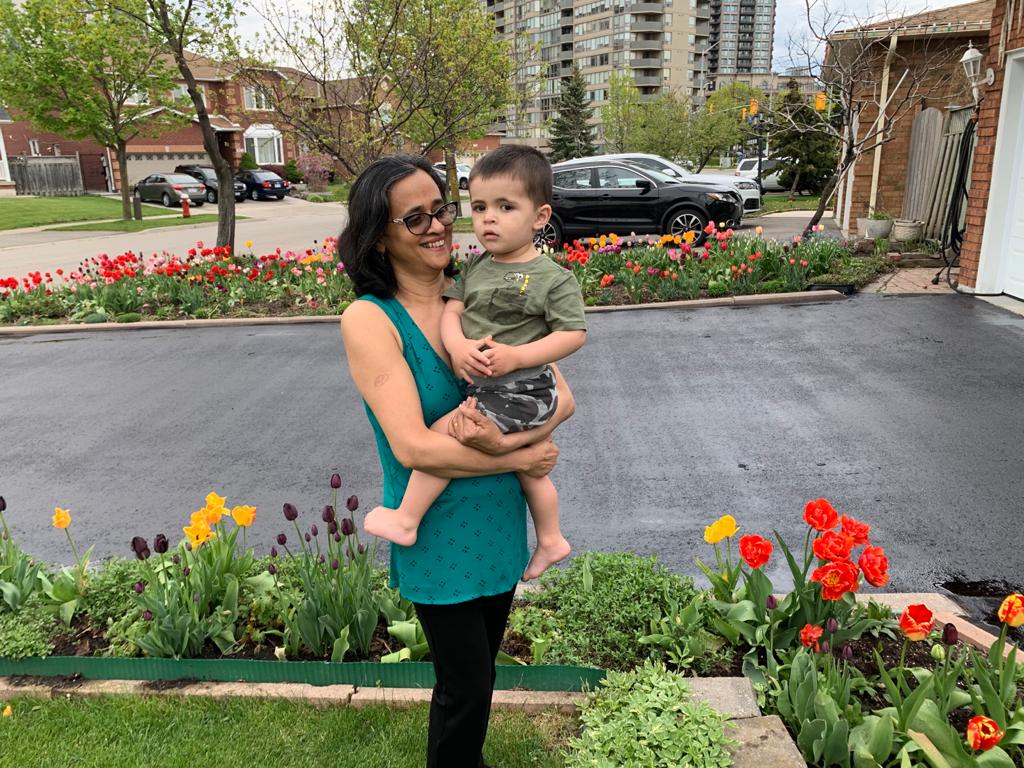
Marina with our grandson James

At that time, I asked Marina as to how she managed to pass all her licensing exams in a year when most people take a minimum of three years and many up to six. She said it was all hard work as she wanted to get children and me as fast as possible to Canada. Being alone in Canada facilitated her to put in those extra hours of hard work. Further, as she was an Army Wife, she was tough and ready to take on all challenges.  She said she was lucky that she never worked as a pharmacist in India and hence did not learn the ‘wrong’ things.  Thus, no unlearning was required prior to learning the Canadian way of pharmacy management. In her view, she started her studies as if she had not even done her B Pharm and hence could clear all the exams in one go.

Helping Teens to Overcome Profanity

rrr

Picking up our son Nikhil one afternoon from school (he was in Grade 12), I noticed that he did not look his normal self.  After driving for a few minutes, I enquired as to what went wrong at school.  A bit surprised with my question and being in no mood to give the answer, he said it was OK.  The answer by itself was evidence enough that it was not all that good.

After a few minutes he came out with the agony he had to face during the group presentation that morning.  Two of the students in the group came unprepared and they had a bad presentation.  He was not feeling good about the entire incident.

There were four students in the group and two of them had really put in a lot of efforts and two had not.  During the lunch break, after the presentation, the boy who had put in a lot of effort literally had the unprepared two on the mat and Nikhil said he did enjoy the show, but did not speak a word.  He added that he wanted to see how silence is golden and also to accept a failure, (even though not due to his fault) with all the humility and also enjoy the way the other student was castigating the other two.

He explained all these with a lot of North American teen adjectives and prepositions – all those spicy words which most sons would not throw at their dads.  I listened patiently and did not utter a word.  I was not all that happy about the coarseness of the language being used, but decided not to react.  I try and avoid immediate reaction as the children at that stage are never ready to listen and see any logic in what we say and will only help to push up our blood pressure and leave a bad after-taste.

While having lunch on reaching home, I said to him that yes, he did not have all that a good day at school and he had been wise enough to accept the failure, but the language he used to explain the same should be avoided as much as possible.  I explained to him that bad language is never a problem solver, but will always end up as a frustration enhancer.

To this he said “Dad, the hormones are kicking in, and as a Teen, I have no control over it”.  My mind went back to the National Defence Academy (NDA) days, where we used the same expressions with our friends to vent out all the frustrations we had after a horrible event or a bad day.

As children grow up, they tend to experiment with inappropriate language and dirty jokes. In most cases, it is an imitation of an adult whom these children have seen at home, in movies, in television shows, or in the community. The need of the hour is to make the children realise the appropriateness of language they use and its impact on the listeners.

Many teens resort to inappropriate language to demonstrate that they  have turned into a matured adult. Parents have to explain to the children that inappropriate language is never an impressive trait and would never fetch any credit, but only disrespect. It is very easy to preach, but when a careless driver cuts you off or when a heavy object falls on your foot, some profanity is sure to slip out of your mouth. As a matured parent, it is one’s duty to acknowledge that one used an inappropriate word and must have avoided it in itself is a good learning for any kid.

Over-bearing and over-controlling of teenagers by the parents results in the children wanting to break the rules and to release the parental pressure. Also to prove that they are ‘cool’ in front of their peers, these children mostly end up using swearwords.

It is the parent’s duty to train their kids in appropriate and correct language use. Some tips which I effectively used are:-

  • Listen, Listen and Listen.  Always make it a point to give a patient listening to your children.  Show keen interest in what they are speaking and provide them with feedback.  If you do not listen to your children, please do not expect them to listen to you when they are teens or youths.
  • Never Laugh it Off. Most children would take it as an approval and will ensure a repeat when the child wants to steal the spotlight.
  • Do Not Over-React.   Your over-reaction will only help to reinforce the behaviour. The child is most likely to use it again to gain attention or to irritate you.
  • Do Not Confront. Anything said to an angry person will only upset him further. Hence it is advisable to explain to the kid an alternative to inappropriate language at a calmer time.
  • Watch Your Words.   When at home or while going out with kids, ensure that you use the most dignified language. Always remember that your kid will pick up your one swearword a thousand time faster than a hundred good words you uttered.
  • Beginners Do Not Realise.   Any kid beginning to talk, often does not realise the meaning or inappropriateness of a swearword. Scolding them or punishing them would serve no purpose. It would be prudent to ignore it and generally they do not repeat.
  • Explain to a Grownup. A simple explanation to a middle or high school kid about the inappropriateness of the word would often ensure good results.
  • Punish Only When Needed. Award of a time out, suspension of certain privileges or grounding for profanity will surely reduce the use of swearwords, especially by the teens.
  • Create Expressions. Encourage the teens to develop a collection of effective expressions to use in place of swearwords and apply it to inescapable situations.

Parents got to set examples for the children at home and help them overcome the need to use swearwords.

Under certain circumstances, profanity provides a relief denied even to prayer.” Mark Twain

Reposing Trust

A few months into the command of our Regiment at Devlali, Maharashtra, I had an interview scheduled in the afternoon with Naik (Corporal) Ranjit Kumar. My interviews with the soldiers were mostly scheduled in the afternoons as I was a single parent, bringing up our two children aged 11 and five as my wife had already migrated to Canada. As a Commanding Officer I interviewed only those soldiers who proceeded on or returned from courses of instruction, posting in/out and those deputed on important missions.

Repose

Ranjith, an accomplished Radio Operator, was selected to undergo the Regimental Signal Instructor (RSI) course at Military College of Telecommunication Engineering (MCTE), Mhow. Now, Ranjith was sitting in front of me, at 3 PM, waiting to be spoken to by his Commanding Officer. On speaking with him, I realised that he wanted to attend Long Gunnery Staff Course and getting a good grade at an Army course would enhance his chances of getting selected for the prestigious course.  Hence, he had put in a special request to be detailed for the course.

The problem I visualised for a Naik attending such course is that the solders below the rank of a Havildar (Sergeant) are given many additional tasks like area cleaning, sentry duties, etc at most Army Schools except at the School of Artillery. The common saying amongst the soldiers of our Regiment at that time was that at MCTE and Army School of Mechanical Transport (ASMT), the soldier students are issued with a broom along with their books. While doing the Regimental Signal Officers Course at MCTE in 1985, I have witnessed it as one Naik from our Regiment was attending the RSI course at the same time and in the evenings, he was often seen doing mundane tasks.

How to get over this dilemma? I looked at Ranjith for about half a minute and did not utter a word. In effect my mind went blank as I had no solution at hand. I visualised Ranjith spending more time in cleaning the area around and on sentry duties and not getting adequate time to study and do well in the course. I was literally feeling helpless.

Eureka! A brainwave stuck me suddenly and I said “Ranjith, I appoint you as an Acting Lance Haviladar. In case you return from the course with an ‘A’ grading, you can continue wearing the rank, else, on termination of the course, return to the unit as a Naik.” Lance Havildar is an appointment given to a Naik who discharges the duties of a Havildar and in the Indian Army, there is no rank or appointment called Acting Lance Havildar. It was indeed a creation of my mind. The said notional promotion had no effect on his seniority or his pay, but he would wear the rank badge of a Havildar on his right sleeve. A Havildar in the Regiment of Artillery wears a white dot – depicting a bursting shell – in addition to the standard three stripes of a Havildar. It is known among the Gunners as the three and a half stripes.

I summoned the duty clerk and ordered all documents – course nominal roll, movement order, last ration certificate etc – to be retyped showing Ranjith as a Lance Havildar. I instructed Ranjith to take all his uniforms to the Regimental tailor and affix the three and a half stripes on them.

After about two months, I got a call from our then Second-in-Command – Late Colonel Suresh Babu – at my home at about 11 AM that Havildar Ranjith has returned from his course not only with an ‘A’ grading, but also has topped the course. I immediately rushed to the office and there I found Havildar Ranjith proudly holding the best student trophy and smiling at me. I called him into my office and complimented him for his achievement. I asked him as to how he achieved such a great result.

Ranjith said that the moment he left my office after the interview, he was determined to top the course, come what may. The Havildar stripes ensured that he did not get any of the mundane duties and hence got much more time to study. He studied till late night every-day and after a few hours of sleep, he woke up to find the three and a half stripes on the uniform staring at him. This made him leave his bed and resume his studies. He did not go out of his living lines, even on weekends and never saw any movie. The only entertainment for him was watching the Television while partaking his meals in the dining hall.

He concluded his narration by saying “How could I ever let down the trust reposed in me by my Commanding Officer? Hence whenever I felt tired, I looked at the three and a half stripes and I was back in action.

I asked Ranjith as to why he did not request for his two months annual leave at the end of the course as he would be very tired. He said that he wanted to show to everyone that he had achieved and then only would proceed on annual leave.

Ranjith set the trend and many other soldiers of the unit followed suit.  In two years, six soldiers from our unit attended the prestigious Long Gunnery Staff Course.

In order to repose faith in others, whether its your children or your subordinates; you got to have faith and belief in yourself.

PRIDE Parade of Toronto

Trudeu1

Indian Parliament, on 10 March 2016, voted against the introduction of Shashi Thraoor’s  private member’s bill to decriminalise homosexuality.  The Parliament thwarted Thraoor’s  second attempt in three months to introduce the measure. Tharoor said it was ‘religious bigotry’ of the ruling party that had disallowed discussion on his private bill to amend the ‘colonial era’ section 377 of the IPC which criminalises homosexuality, marking ‘a low in the proud annals of Indian democracy.’

Now, Toronto City is all set to celebrate its annual ‘PRIDE Week’ in July 2016.  PRIDE is the acronym for People Recognising Individual Difference Equally.  Toronto’s Pride Week is an arts and culture festival that celebrates diverse sexual and gender identities, and the lives of Toronto’s Lesbian, Gay, Bisexual, Transsexual, Transgender, Queer and Questioning (LGBTQ) communities. The theme of the 2016 Pride Parade, to be held on July 03, is ‘belonging and inclusion’. Along with the Canadian Prime Minister Justin Trudeau, Finance Minister Bill Morneau, Ontario Premier Kathleen Wynne (who is openly gay) and Toronto Mayor John Tory are also expected to participate in the festivities.

Since the late 1960s, the LGBTQ community in Canada have seen steady gains in their rights/status. While discrimination against LGBTQ people persists in many places, major strides toward mainstream social acceptance and formal legal equality have nonetheless been made in recent decades.

Canada is internationally regarded as a leader in granting rights to the LGBTQ community. Today, the LGBTQ community have government health care, right to adopt, equality for employment (including military service), and enjoy all rights as applicable to opposite-sex married couples and common-law couples. In 2005, Canada became the fourth country in the world to legalise same-sex marriage.  Thousands of LGBTQ couples, who could not marry in the country where they live, have travelled to Canada seeking a legal marriage.

That was the Canadian side of the story. The Indian Law (Section 377 of the Indian Penal Code [IPC]) is a study in contrast. Unfortunately, it does not guarantee individual choice in matters of sexual preferences, sexuality, and sexual partners. This Section gives the state the authority to even investigate what is happening in your bedroom. It also makes any sex apart from penile-vaginal intercourse between a man and a woman, an illegal act. This severely impacts the LGBTQ community; why, it may also impact married heterosexual couples.

Section 377 of the IPC is a British relic, drafted in 1860 and based on outdated Victorian morals. It has no place in a modern nation like India. It is not even followed by the British today. The British laws now grant equal rights in all aspects to the LGBTQ community and have legalised same sex marriages from 2013.

Section 377 of the IPC is a law that was and can be used to oppress and harass the minority that have different sexual pereferences. The Indian Parliament is reluctant to amend the law. MP Shashi Tharoors’s Private Member’s Bill to decriminalise homosexuality and consensual sex between consenting adults was defeated in Parliament in December 2015. Tharoor’s bill was rejected at the introductory stage itself with 71 ‘Noes’ against 24 ‘yes’. There was one abstention. Tharoor, the lone fighter in this regard, appears to be in no mood of giving up and has promised that he will continue with his fight.

As per Tharoor, Section 377 of the IPC should be amended so that all consensual sex between consenting adults irrespective of gender and sexuality is made legal. It should ensure that forced sex, pedophilia or pederasty is not legalised and is dealt with in a severe manner.

There is an urgent need to amend Section 377 of the IPC as the Constitution of India guarantees Right to Privacy and Dignity under Article 21, Right to Equality under Article 14, and the Right against Discrimination under Article 15. Then why not the right to privacy, dignity and equality and also right against discrimination be guaranteed to LGBTQ people.

Now let us examine as to why there is so much of opposition from the Members of Parliament in making any changes to Section 377 of IPC.

Erotic desire or Kama in Hinduism was deemed as one of the most legitimate pleasures on earth. Premarital sex in Hinduism is frowned upon and extramarital sex is prohibited. Sex was promoted within the context of a loving couple – usually heterosexual. Marriage in Hinduism is said to fulfill three functions: Prajaa, Dharma, and Rati. In marriage, Prajaa is progeny for perpetuation of one’s family, Dharma is fulfillment of responsibilities, and Rati is companionship as friends and mutual pleasure as lovers. There are some references to the ‘Third Gender’ (Trtiya prakrti) in Hindu mythology. The term is loosely defined, referring in general to hetero-sexually dysfunctional men or women, who may be, according to the context, impotent, homosexual or transvestite or even having abnormal genitalia.

Attitude towards homosexuality in Western culture derives from the Biblical teaching on the subject. The Bible claims that homosexuality as a chosen sexual behaviour, is unnatural, sinful, amoral, and against God. Hence, most laws in Western countries, dealing with the LGBTQ community were codified based on it.

“Do not lie with a male as one lies with a woman; it is an abomination.” (Leviticus 18:22)
“Do you not know that the wicked will not inherit the kingdom of God? Do not be deceived: Neither the sexually immoral nor idolaters nor adulterers nor male prostitutes nor homosexual offenders.” (1 Corinthians 6:9)

The New York Times is the first major publication to use the word “homosexuality” in 1926. In 1933, when the Nazis came to power in Germany, they rounded up homosexuals and send them to the concentration camps along with Jews. Gay men had to wear a pink triangle on their camp clothes. Switzerland in 1942 became the first country to decriminalise homosexuality, with the age of consent set at 20. In 1954, Mathematical and computer genius Alan Turing, one of the World War II code-breakers, committed suicide by cyanide poisoning, 18 months after being given a choice between two years in prison or libido-reducing hormone treatment for a year as a punishment for homosexuality. Tennis player Billie Jean King in 1961, became the first prominent professional sports-person to come out as a lesbian.

Sexuality is a very complex issue with many theories but very little verifiable evidence. It has been demonstrated by research that everyone is found somewhere along a bell-curve. To one side there are the resolute heterosexuals and on the other side the resolute homosexuals. The vast majority of men and women are found somewhere along the bell curve in the grey area. When deprived of female company some men will engage in homosexual acts, while others will not. Research has proved that women are more likely to experiment with homosexuality than are men.

British-American Neuroscientist. Simon LeVay said “Yes, we have a choice in life, to be ourselves or to conform to someone else’s idea of normality, but being straight, bisexual or gay, or none of these, is a central part of who we are, thanks in part to the DNA we were born with.”

I wish MP Shashi Tharoor all the best in his drive to cleanse the inequalities in our laws.

An Emergency Travel to India

Emergencytraaa

On 03 March 2016, at about 4 PM, I received a telephone call from my friend Jose. He is generally at work at in the evenings and would never called me this time. My question to Jose was “Anything wrong?”  He said “I lost my Dad about an hour ago.” I asked him as to where he was and he said he was back home from his work place. I said that I would be there in the next ten minutes.

Jose hails from my village in Kerala and was my mother’s student in the village high school. The first time I met Jose was after landing in Canada. There was no occasion to meet him in India as I joined Sainik School at the age of nine, then moved on to the National Defence Academy and then 25 years service with the Indian Army. Jose knew my three brothers very well. Jose, being a lawyer, was a colleague of my elder brother at the Kottayam District Court. He until then was of the impression that my mother, his teacher, had three sons and not four.

During my annual visits to Kerala, Jose would always send some gift for his Dad and Mr Abraham would come home on my arrival to pick it up. He would also visit us on my return to hand over some gift for his grandson Kevin in Canada. Hence, it became a ritual for me to meet him during all my Kerala trips.

I reached Jose’s home and obviously he was heartbroken. I consoled him with a few words and in a minute I was off to coordinating his travel to Kerala. I immediately asked for the travel plans. Jose’s son Kevin, a Grade 10 student, was having his semester examinations and the feasibility of him accompanying his Dad was ruled out. Jose’s wife Pauline now had no option other than to stay back and take care of Kevin. Thus it was finalised that only Jose will travel to Kerala for the last rites of his father.

Jose was advised by me to call up his workplace and request for three weeks off. It was granted promptly by his supervisor. I now asked for Jose’s Canadian Passport and got on to the internet to fill up the Indian Visa application online. There is a need to upload a passport size photograph along with the application. I shot a photo of Jose on my Iphone, edited it and uploaded it.

Meanwhile, I requested Pauline to call up two travel agents to arrange the flight tickets. The options for travel zeroed down to travel by Air Canada – Air India via London and by Ethihad via Chicago. The option of a return trip from India through USA to Canada was rejected as one has to pick up the luggage at Chicago, go through the customs and immigration process, move to a different terminal with all the bag and baggage, recheck in with Air Canada, go through security and then board the flight. The rule in North America is that any passenger landing at any North American port has to get the customs and immigration check done there and then only proceed to their destination, even if it is in a different country. Considering all these factors, we finalised the travel by Air Canada – Air India, leaving Toronto at 6 PM on 04 March and bought the tickets.

When applying for an emergency Visa with the Indian Consulate, there is a need to prove the emergency. For that a booked air ticket for the journey to India and a letter from the hospital or local government authorities regarding the demise of a person is required. Now we called up Jose’s cousin in Kerala to obtain a letter from the hospital regarding the demise of Mr Abraham, indicating him as the father of Jose.

The online Visa application, the eticket from the airline, the letter showing the demise of Mr Abraham and a copy of a passport size photo were all printed and we were ready to proceed to the Indian Consulate at Toronto. Meanwhile, I rang up our neighbour and a close family friend Mr Thomas K Thomas for his help with the Visa application. Mr Thomas is our community leader and is well known to the Indian Consulate staff. He did the liaison with them and instructed us to meet Mr Sharma at the reception and he would do the needful. He also advised me to call him in case of any difficulties or delay.

Meanwhile there were many well wishers calling up Jose to express their condolences. They seem not to realise what was going on at the other end and kept the telephone line busy with their sympathetic conversation. Most wanted to know ‘How did he die? Which vehicle hit him? Have they filed an insurance claim? Are you going to Kerala? When are you going?, etc.’ Obviously, everyone wanted to know everything, but hardly anyone offered any assistance. Everyone wanted to be sympathetic rather than being empathetic and helpful at a time of need. In effect they were only tying down the telephone line, the most wanted resource at that time to arrange for Jose’s travel.

On 04 March morning we reached the Indian Consulate at Toronto by 10 AM. We obtained a Postal Order for $119 from the Canada Post Office located at the ground floor of the building. One got to have either a Bank Draft or a Postal Order as the Indian Consulate does not accept cash or debit/credit cards.   We met Mr Sharma at the reception and then handed over the Visa Application at the counter. After half an hour, Jose was called and his Passport with the Visa was handed over. The entire process was real fast and efficient.

We reached Jose’s home by midday. I now contacted our family friend Mr Johnson, who works as a supervisor with Air Canada. He advised me to drop off Jose at the airport by 3:30 PM as he would be off duty by 4 PM.   We drove off to the Toronto airport and were received by Johnson, who in no time completed all the ticketing formalities and checked in the luggage and I saw off Jose at the security gate.


Emergencytravel

Dogs and the Fire Hydrants

While walking our dog Maximus, a black Labrador, every morning and evening on a 5 km route through the City of Mississauga, Canada, it was intriguing to see him stop at nearly all fire hydrants (non-existent in India) and expel a part of the contents in his bladder.  Maximus it seems has developed an art of dispensing a small quantity each time so that he can cover all the fire hydrants dotting the entire route.  I observed other dogs also doing the similar act and hence concluded it as a canine act.

ddff

Why do dogs get attracted to the fire hydrants?  As the fire hydrants are located is most likely closer to the sidewalk, all it takes is one dog peeing on it to get it to be a popular spot.  Once one dog marks it, the rest follow.   Dogs like something that extends above the ground level to mark their scent on.

Male dogs are attracted to pretty much anything they can lift their leg up and pee on. Urine is a dog’s visiting card. They will mark their territory on pretty much anything. A fire hydrant is no different than a telephone pole, light pole, or a sign pole. That is how they tell the other dogs who has been there and who is the boss.

Females aren’t much different except they are less dominant and obviously don’t lift their leg to pee, making it harder to aim.   Dogs urine-mark in a number of situations, including while on walks, when in their own homes and yards, and during visits to other locations. A dog must be at least three months of age to urine-mark.

What makes fire hydrants so special?  It cannot be the bright red colour as like all other animals, the canines see in different shades of grey and not in colour.  Height! The three feet high fire hydrant appears ideal for the canine act.  The higher a dog can lift his leg to urinate, the bigger the dog they must be, and the stronger probability they have in making their mark last. A small dog is no match when it comes to masking the smell of urination from a bigger dog.  The shape of the fire hydrants and they being placed at a near constant interval of about 50 meters may also be the cause of attraction.  The association between the dogs and the fire hydrants are more a media creation and also a marketing gimmick by dog toy and treat manufacturers, who make these in the shape of a fire hydrant.

A fire hydrant is an active fire protection measure, and a source of water provided in most urban, suburban and rural areas with municipal water service.  This enables firefighters to tap into the municipal water supply to assist in extinguishing a fire.

In areas subject to freezing temperatures like Canada, only a portion of the hydrant is above ground. The valve is located below the frost line (about 10 feet deep) and connected by a riser to the above-ground portion. A valve rod extends at the top of the hydrant, where it can be operated with the proper wrench. This design is known as a ‘dry barrel’ hydrant.  In this model, the barrel, or vertical body of the hydrant, is normally dry.   It is only in movies you see the fire hydrants spewing out water when hit by a car in a chase.  It is unlikely to happen as the control valve and the water is at least 10 feet below and it would be difficult for any known car of the day to break the cast iron column.

The invention of a post or pillar-type fire hydrant is generally credited to Frederick Graff Sr, Chief Engineer of the Philadelphia Water Works around the year 1801. It had a combination hose/faucet outlet and was of ‘wet barrel’ design with the valve on top. It is said that Graff held the first patent for a fire hydrant, but this cannot be verified because the patent office in Washington DC caught fire in 1836 destroying many patent records from that period.

In the earlier days, at least the 17th century, when firefighters responding to a call would dig down to the wooden water mains and hastily bore a hole to secure water to fight fires. The water filled the hole creating a temporary well, and be transported from the well to the fire by bucket brigades, or later, by hand-pumped fire engines. The holes were then plugged with stoppers, normally redwood, which over time came to be known as fire plugs. The location of the plug was recorded or marked so that it could be reused in future fires. This is the source of the colloquial term ‘fire plug’ used for fire hydrants today. After the Great Fire of London in 1666, the city installed water mains with holes drilled at intervals, equipped with risers, allowing an access point to the wooden fire plugs from street level.

FireHyd11

In most jurisdictions it is illegal to park a car within a certain distance of a fire hydrant. In North America the distance is commonly 3 meters or 10 ft. In the UK, yellow lines are used to keep cars from parking over underground hydrants. The rationale behind these laws is that hydrants need to be visible and accessible to the fire engines in an emergency.  The fine for breaking the rule can be anything from $25 upwards in Canada.

In India we have no fire hydrants and hence no such laws and so no fear of fines.

Canadian Report Card

Competition we faced back home always prompted us to cross-examine our children when they came home with a report card or a test result.  We always wanted to know as to who got the maximum marks, where does our child stand in the class, etc.  At the end of Grade 3 of Nikhil, when he came home with the report card, he declared “Do not ask me how others did as I have no clue as I did not ask anyone about it.”

repc

It is indecent to ask someone their marks in Canada and the marks are confidential and is never announced in public.   The report cards are handed over to the students in a sealed envelope, obviously to ensure confidentiality.

The aim of a progress report in Canada is to enable the students to reach their potential, and to succeed. It is a real challenge for the school as every student is unique and they got to ensure each student gets adequate opportunities to achieve success according to his/her interests, abilities, and goals. The reporting is fair, transparent, and equitable for all students. It supports all students, including those with special education needs and all those learning the language of instruction (English or French). The curriculum is carefully planned to relate to the expectations, learning goals and cater to the interests, learning styles and preferences, needs, and experiences of all students.

All aspects of learning are communicated clearly to students and parents at the beginning of the school year and at other appropriate points throughout the school year or course.   The reporting provides a descriptive feedback that is clear, specific, meaningful, and timely to support improved learning and achievement. It also develops students’ self-assessment skills to enable them to assess their own learning, set specific goals, and plan next steps for their learning.

The high school report card looks more like the Annual Confidential Report (ACR) in the army – it appears as if it leaves no aspects of learning skills and work habit of the child uncovered.  The aspects covered in the report are Responsibility, Organization, Independent Work, Collaboration, Initiative and Self-Regulation.  Strengths and Steps for Improvement are listed out for each subject separately.

RepotCard33

My mind raced back to our Sainik School days and even our army course days, where no marks were ever kept confidential and were mostly put up on a notice board.  I always looked at the mark list on the notice board to make sure that I was not the last.  What an injustice, especially to those who did not fare well!

Once I perused his report card in Grade 11, I asked him a few questions to find out some details about the steps for improvement and we discussed in detail as to how he is going to prepare for his Grade 12.   After discussing the same, I casually asked our son as to how his friends did.  Our son theorised that students want to either show off their marks or feel a bit good when they have really done well or in case they haven’t, they are looking for someone who did worse.  He was not in either and hence did not find out how others did.  I realised that what he said was what I had been doing all throughout my life, either blow the trumpet, or look for someone who did worse to feel happy that you are not the worst.

Our son had done exceptionally well in French and the teacher rewarded him with a recommendation for a cultural and educational exchange program in France.  He went to  Paris (01 July 2014) and returned  on 31 Jul with a French Grade 11 Student, Guillaume Le Floch.  Nikhil stayed with the Le Floch family for a month in France.  Guillaume stayed with us and returned to France on 31 Aug.

While Nikhil was away for a month, I felt a vacuum, both in my mind and at home.  Our dog Maximus seemed pretty depressed and had been running all over the house looking for Nikhil.

We all got to get used to such absence of the kids and this will prepare us to learn to live without them in times to come.

Academy Drill Instructors

Drill is the bedrock of discipline and the Drill square is often compared to a potter’s yard, wherein clay of various hues and textures are shaped into commendable works of art; each piece unique in itself and yet part of a whole. Passing the Drill Square Test (DST) entitles every cadet to the two ‘Ls’ he craves for; the Lanyard and Liberty. Here the Liberty is a pass to go out of the Academy on a Sunday.

DI11

Every Defence Service Officer would always remember their Drill Instructors – the Havildar Majors (Sergeant Majors) and Subedars (Warrant Officers) – who taught them the basics of drill. These Drill Instructors have to constantly maintain a high standard of military bearing and a super intense level of performance while they are training Officer Cadets. They are always under the microscopic eye of the Cadets.  They are in a competitive environment against other Drill Instructors of other Squadrons/ Companies to ensure that their Squadron/ Company emerge as champions at drill in the Academy competitions.

Above all, they take on a huge challenge to accomplish, making soldiers out of raw teenagers, coming from different parts of the country, speaking different languages (I could hardly understand Hindi when I joined the Academy,) from different family/educational backgrounds.

There is a lot of prestige associated with being a Drill Instructor at the Academy. The training to become a Drill Instructor is tough and the job has long hours and can be extremely demanding. These Instructors, mostly from the Infantry Battalions, are real go-getters and are always looking for opportunities to push themselves. It is one of the highest honours a Non-Commissioned Officer (NCO) of the Indian Army can get. Only the most qualified NCOs are chosen to attend Drill Instructor Course and from them the cream is selected to be appointed at the Academies.

The Drill Instructors train the Cadets under the watchful eyes of the Drill Subedar Major (Master Warrant Officer) and the Adjutant of the Academy has the overall responsibility for the Drill Training.

DI22

Our course-mates stationed at Mumbai organised a get together on 26 February 2016, to honour our Drill Subedar Major (SM,) now Honorary Captain Ghuman Sinh. He was the first Drill SM when we joined the Academy and he was the best Drill SM I have come across in life. As a cadet both at the National Defence Academy (NDA) and at the Indian Military Academy (IMA,) I had seen a few more, but he was easily the best. He had a roaring thunderous voice at the Drill-Square, but had the softest tone elsewhere. He had mesmerisingly penetrating blood-shot eyes at the Drill-Square, which metamorphosed into large pools of kindness when outside the square. He was surely a soldier to the hilt, perfect with his drill and above all a great Guru.

SM Ghuman Sinh never believed in punishments. At times we got late for the Drill class by virtue of previous class getting delayed and our drill instructors got into the act of punishing us for being late. SM Ghuman Sinh would reprimand these drill instructors saying “These Cadets do not deserve punishments as they are not responsible for the delay. Treat them like your sons and teach them Drill.”

DI22a

One Sunday morning, cycling my way to the Church, (the route was through the Drill Instructors’ Quarters,) I met a soft-spoken, humane person, dressed in his civvies, waiting with the NDA cycle near the church. He inquired as to where I was off all alone in a hurry. I said I was off to the church and the mass was to commence in about ten minutes. This person I knew from his bearing and being with the NDA cycle was a Drill Instructor and he spoke to me with a lot of compassion, care and love (for NDA Cadets, it’s a rare experience.) At the end of the conversation, I bid goodbye to him and assuming that he might be a recently posted Drill Instructor, my last question  was – “By the way who are you?” The man said “I am your Drill SM Ghuman Sinh.” I just could not believe my ears and eyes, as the man in the civvies was really humane and I had seen him only in his military uniform until then.

At the NDA, in Echo Squadron, we had Subedar Kalyan Chand from the Dogra Regiment as the chief Drill Instructor with Regimental Havildar Major Karnail Singh Chauhan from the Para Commandos as his deputy. They were really good at their job, thoroughly professional and real hard-task masters.

Two years after my Academy Training, as a Lieutenant, I was leading the Artillery Brigade Athletic team for a competition at Dehradun. On reaching the ground for the march-past, I realised that a button was about to come off my blazer and I needed a needle and thread to fasten it. I looked around and saw SM Kalyan Chand there. He, a roaring salute, me, a bear hug! I then requested him for the much needed needle and thread. The service came in no time, but SM Kalyan Chand insisted on fixing the button himself. He said that it would be a matter of honour for him to do the favours for his cadet. I was pleasantly taken aback by his kind gesture.

In 1990, our Regiment moved to Udhampur and was co-located with a Para Commando Battalion. An officer from the battalion was my neighbour and while conversing with him he said that their SM was Karnail Singh Chauhan. Next day I walked into the SM’s office and he could immediately recognise me. He introduced me to all the Havildar Majors of his battalion who had assembled there as “My Cadet at the NDA, now a Major in the neighbouring Artillery Regiment.” After that the two units developed such a great rapport that they would help each other with troops, vehicles and other resources whenever needed.

Our classmates’ from the 1979 batch of Sainik School Amaravathinagar had a reunion at the NDA on 22 December 2015.  It  commenced with the wreath laying ceremony at the Hut of Remembrance, to pay homage to the martyred officers, who had passed out of NDA. The solemn ceremony was an acknowledgement of the courage, valour and sacrifice of those who served the country. The ceremony had a patriotic impact on everyone present, especially the children.

DI33

The Drill Instructors (Havildar Majors) provided an excellent ceremonial guard for the occasion. At the end of the ceremony, I thanked them and spoke to them to say that the Drill Instructors at the Academies are the most blessed lot of Gurus as they are the only ones to see their wards placed above them on completion of training under them. Hence, they are doing the most divine job and must always strive to impart the best Drill education to the cadets.

Bringing Up Our Daughter Nidhi

On 20 March 1991, we were blessed with our daughter and we named her “Nidhi” and she was a treasure in the real sense.  She was christened “Susan” after my mother, in accordance with the customs of the Syrian Orthodox Christians of Kerala.

Nidhi22

After my tenure as a Brigade Major and prior to joining the Technical Staff Course at Pune, there was a three months gap and hence in September 1995, I moved to our parent regiment – 75 Medium Regiment, then located at Udhampur (Jammu & Kashmir.)  Marina, who was running a small business then and our daughter who was attending pre-school were stationed at Delhi.  During the Dushera holidays, Nidhi wanted to visit me and spend a week with me and so she was put on the Air India (then Indian Airlines) flight to Jammu as an unaccompanied minor.  Marina was not scared at all to send her all alone as Nidhi was pretty confident and Marina was pretty sure that Nidhi could handle herself well.  She felt butterflies in her stomach only after seeing her off with the airline ground-staff.

I was waiting at the Jammu airport and when Nidhi came out I asked her as to how the flight was and she said that she had put up an ‘about to cry‘ face and the air hostess got scared and stuffed her with lots of chocolates and cookies.  I was then staying in the single officers’ accommodation in the regimental premises and we dined in the Officers’ Mess.

How to keep a four year old daughter busy all day? That was the intriguing question that came to my mind.  Two people in the regiment came to my rescue.  The first was the Religious Teacher, who would take Nidhi to the Regimental Mandir and narrate all the Hindu mythological stories to her.  The next was the (RHM) Regimental Havildar Major (Sergeant Major) Sengole, who would take Nidhi around the unit with him.  She enjoyed watching the gunners carryout their gun drill practices on the Bofors Guns, the chef in the kitchen rolling out ‘Rotis’ in hundreds for the soldiers, the drill at the Quarter Guard, men maintaining their rifles in the armoury, vehicles being repaired in the workshop, etc.

A word about RHM Sengole.  He is six feet tall, dark and well built soldier with an imposing personality who hailed from Madurai in Thamizh Nadu.  As a Sepoy, he was the Light Machine Gun (LMG) handler when I was a young Lieutenant performing the duties of Gun Position Officer (GPO).  When he became a Naik (Corporal) he was the Commanding Officer’s stick orderly when any VIP visited and when he was promoted to a Havildar (Sergeant) he was special guard commander – all because of his blood red eyes and the moustache he had painstakingly grown, which would easily put forest brigand Veerappan to shame.  Sengole was initially a bit surprised to see a four year old girl smiling at him as all kids were literally scared at the sight of him.  He once confided that even his twins were also scared of him when he visited them during his vacations.  The secret was that after having spent over a decade with Sengole, I knew how soft at heart and calm this God-fearing and fierce looking person was.

Having grown up in a family of four sons and educated at the Military School and later at the Military Academies and having served all the while in a male only environment of the Indian Army, the only issue I had was to comb and set Nidhi’s hair.  She had long and thick tresses and when I tried to run the comb through, I realised how difficult it was to even get the comb down the thick growth.  That was when Mrs Jadeja, wife of Captain Vikram Jadeja, who was our Battery Second-in-Command, came to my rescue.  I would dispatch Nidhi to her house whenever she wanted her hair  done and she could also play with their two lovely daughters Rachna and Archana.

After a few days Nidhi walked up to me and asked “What is the difference between a Gola (गोला) and Goli (गोली)?”  I had no answer and she said that the Gola is as big as what she is and is fired from the Bofors Gun and Goli as big as her middle finger and is fired from a rifle.  After spending two weeks with me, she went back to Delhi, again as an unaccompanied minor with an ‘about-to-cry’ face.  That was my first experience of single-parenting.

Marina migrated to Canada in February 2002 and I moved to take over command of 125 (Surveillance and Target Acquisition (SATA) Regiment which was then operationally deployed in the Rajasthan Sector.  The children were sent to Kottayam, Kerala, to live with their grandparents and study there.  Nidhi immediately picked up Malayalam and started to read and write the language as Malayalam was the third language for her as part of the Grade 5 curriculum.

The children along with my mother moved in with me to Devlali, Maharashtra, as the regiment had moved back to its permanent location after the operational commitments.  There started my second round as a single parent.  Nidhi immediately readjusted to the military environment and she had continued with her fluency in Hindi language.  Our son Nikhil, then in Kindergarten, had completely forgotten Hindi and his brains were reformatted to Malayalam.

The regiment was real well oiled machinery and Late Colonel Suresh Babu was the Second-in-Command, who along with the other officers ran the regiment exceptionally well and was the best unit in town.  The soldiers in the regiment were totally self-disciplined and needed no supervision or ‘spoon feeding’.  It appeared that all they needed was directions with clean and trustworthy leadership.  This ensured that I could spend more time with the children as I had to spend under 10 hours a week in the regiment, and I had mastered the art of total delegation.

Preparing Nidhi for the life ahead in Canada, I wanted to make her totally independent.  She had to polish her shoes, press her school uniform and make her bed.  My helper Naik Santhosh would always help her out after ensuring my absence.  Nidhi had to cycle to and fro her school.  Our home was situated on a hillock and hence going to school on a cycle was bit easy, but the return trip on a warm afternoon was bit difficult.  She would at times call up the regiment to say that the cycle is punctured or the chain had come off and the soldiers in the regiment would gladly send her a truck to pick her up and the cycle and drop off at the home.  One day Nidhi asked me as to whether I was commanding a regiment or not.  I enquired as to from where that doubt had arisen.  “All the kids in the class say that you are not the Commanding Officer, otherwise I would have been dropped off to school in the Commanding Officer’s Vehicle,” she said.  I kept mum for a minute and told her that for the entire world I may not be commanding a regiment, but you know the truth.

That was the days when I got a jolt of my life.  Nidhi had attained puberty and as a dad who had all along lived in a male only world had no clue as to how to deal with the situation.  I immediately rushed to my mother for some tips and was in for a rude shock when she said she too had lived in a man’s world for the past fifty years – with my dad and four sons – and she had never dealt with such a situation and had fully forgotten how it was when she was a teenager.  I called up my wife and she spoke to Nidhi and gave all the motherly advise and how to cope with the changes.

The children joined their mother in Canada in 2004 and Nidhi went to join the school in Grade 8.  She was the fastest among all to adapt to the Canadian culture and environment (even faster than her mom who had spent two years in Canada by then).  During her Grade 9, she bagged a plum role in the high school musical drama ‘Leader of the Pack’ which involved rendering four solo songs and six group songs with over 16 costume changes.  Nidhi kept up with her linguistic skills in Hindi and Malayalam, but Nikhil who joined in Grade 1 has fully reformatted his brains to the Canadian English mode, overwriting all the Hindi and Malayalam.

Nidi11

Nidhi came out with flying colours from her high school and completed  her Bachelor of Sciences degree and is currently runs an event management company in Toronto.  I pray to God to ensure her success in life.

Eyesore at Military Funerals

Eyesore1
Siachen Glacier region in the Eastern Karakoram Range of Himalayan Mountains has been the site of intermittent conflict between India and Pakistan for several decades. The area has come to be known as the world’s highest battlefield. Although Siachen means land of wild roses but in reality this place is barren and icy cold. It has minus 14 to minus 34 degrees temperature in summer and minus fifty degrees in winter and at these temperatures almost everything with life, and the things that sustain life simply collapse. India controls two thirds of the glaciated area and the balance has been encroached by Pakistan.

On 03 February 2016, ten brave soldiers of 19 MADRAS Regiment were trapped under a mass of snow after an avalanche hit the Sonam Post, situated at 19,000 feet on the Siachen Glacier. Nine brave soldiers made the supreme sacrifice in defence of their motherland that day.

Lance Naik Hanumanthappa survived the massive avalanche for six days. He was found during the post-disaster avalanche rescue operations by the Indian Army, six days after the disaster.   He was rescued from 35 feet beneath the snow in minus 45°Celsius temperature. His health was critical but survival news gave a chance to family members and the nation to celebrate.  The celebration was short-lived as he eventually died at the Army Hospital due to multiple organ failure on 11 February 2016

Under almost 30 feet of ice, all that Lance Naik Hanumanthappa had going for him was a small air pocket and a lot of grit. Outside, a group of well-trained Army men, two dogs, a small team of medical professionals and military pilots carried out a relentless, almost death-defying rescue act under the most inhospitable conditions the world can ever imagine. The rescue of Lance Naik Hanumanthappa personified the triumph of the indomitable spirit of human resilience against all odds, including the might of Mother Nature, and the determination of man to never give up on his fellow men.

The nation paid homage to these brave-hearts and military funerals with all respects was conducted at the hometowns of these martyrs.

Military funerals are solemn affairs and everyone in attendance, with the exception of the immediate family remain standing for the duration as a mark of respect to the departed soul. Everyone including non-military personnel attending the funeral are expected to wear respectable mourning attire. As per the Flag Code of India, the Indian National Flag is draped on the caskets of the military martyrs with the saffron towards the head of the coffin. The Flag is folded and with the uniform of the martyr, is handed over to the next of kin after the ceremony.

A Military Funeral is an elaborate ceremony, mainly to pay respect to the sacrifices of the martyred soldier and also to celebrate the life of the soldier. One of the key differences in a military funeral is that the uniformed mourners salute the fallen soldier at the following different points during the solemn ceremony:-

  • When the hearse passes.
  • Whenever the casket is being moved (from the place of ceremony to the hearse and from the hearse to the gravesite)
  • During rifle volleys.
  • While the bugle plays the ‘last-post’ and the ‘rouse’.
  • While the casket is being lowered into the grave.

Non-military people and family of the departed soldier are expected not to salute, but remove hats and such other head-wear and place it over their heart during the salute by military personnel. If they are not wearing hats, they should just fold their hands in ‘Namaste‘ or cover their heart with their right hand.

Having said so much about military funerals and the solemnity of the occasion, let me draw the reader’s attention to a common malaise observed during these ceremonies.

Eyesore2
The image above was taken at the Begumpet Airport on 15 February 2016 when the mortal remains of Martyr Sepoy Mushtaq Ahmad reached there and was received with full military honours. The body was later taken in a special ambulance to his native village in Kurnool district.

The deplorable eyesore in the image is obvious to all. The military personnel are all standing in attention, while the pall bearers carry the casket on to the waiting ambulance. The journalists and their photographers were jostling for space to get the best shot for their media house. They paid scant regard for the martyr, the sentiments of the family members and for the sensitivity of the soldiers standing guard and performing the drill of the military funeral. In all the military funerals that I have conducted or attended while in service, these ‘jurnos’ were invariably a serious hindrance to the smooth conduct of the solemn event. So, now you well understand why one cannot blame the former Chief of the Army Staff and now a current central minister, for having chosen to collectively tag the ’jurnos’ with a rather apt appellation, to much furore.

Amateur journalists often believe that their dharma of “the best coverage possible” takes precedence over everything else. They need to be educated about the need to care for peoples’ sentiments and the required respect for such solemn occasions.

Eyesore3
This is the image of the last rites of Martyr Lance Naik Sudheesh B at Kollam, Kerala. Here, the military funeral is being conducted in a very befitting manner. Obviously, the jurnos have kept away from the scene. The Army Officers responsible for the conduct of the funeral and the Kerala Police appear to have got their act together and kept them at a safe distance.

There is an urgent need to formulate a policy guideline for the journalists, newspapers and media houses about their actions and conduct during military funerals. The Information Ministry must initiate procedures to coordinate the efforts of various agencies for such occasions. The national broadcaster- DoorDarshan – must take on the live streaming of the event as they are best equipped for the job and also have better commentators on their rolls, as compared to the vernacular media. A single feed can be provided to all the other channels, as being done during the Republic Day Parade, thereby ensuring better quality transmission across the globe. The still images for the print media can always be provided by the military unit conducting the funeral. They can appoint an official photographer who will in turn provide the images to the various media houses.

One can only pray that in future there would be no such eyesores during similar solemn occasions.


Sympathy & Empathy

mp1

Flying Officer MP Anil Kumar, fondly called MP by friends like us soared to the greatest heights to be with his creator, the God Almighty on 20 May 2014, at the age of 50 after battling cancer – chronic myeloid leukaemia. Marina and I, on our trip to India in February 2014, landed at Mumbai and we drove to Pune to meet MP.  At that time none of us knew that such a tragedy was awaiting MP.

MP was paralysed neck below due to a motorcycle accident on his way back after night flying on June 28, 1988. The accident confined him to a wheelchair for life, and became a permanent resident of Indian Army’s Paraplegic Rehabilitation Centre at Khadki, Pune.

I had heard about the accident from my friends, but as I was busy with my own military career and could never visit him. I went to Pune in 1996 for a long course for 18 months and Colonel Raju George, a common friend and course mate of MP at the National Defence Academy, was posted at Pune. We decided to pay a visit to MP after attending the church services at Khadki – this weekly ritual continued until I was posted out from Pune.

Colonel Raju had briefed me not to show any sympathy and only be empathetic towards MP. I explained my predicament that I could never differentiate between ‘sympathy’ and ’empathy’ and that the word ’empathy’ I had heard many a times in all the beauty pageants, but never understood what it meant. Colonel Raju promptly confessed that his case was no different until he met MP. Colonel Raju did attribute it to the rigours of military life and training where we had time for neither ‘sympathy’ nor ’empathy’ and we had to move on.

On the appointed Sunday we arrived at the Paraplegic Rehabilitation Center carrying a few bars of chocolates – Col Raju, like a good army officer, had advised me to carry a few bars of chocolates as MP relished them. We entered the Paraplegic Rehabilitation Center and MP was sitting on a wheelchair in the corridor. I saw the smiling face of the same MP who used to spend his Sundays in my cabin at the National Defence Academy in 1981. The smile I thought had remained intact despite so many pitfalls and agonies he had faced. As usual I moved my hand forward for a shake hand and suddenly the reality dawned on me that he is quadriplegic and has no control over his limbs. Without showing any expressions, I managed to convert that action into a hug and I planted a kiss on his forehead. The chocolates in my hand I realised cannot be eaten by MP, but had to be fed to him. I broke off a piece and placed it in his mouth and his expressions showed that he really relished it and appreciated it. Now the meaning of the words ‘sympathy’ and ’empathy’ started to sink in my head.

In his journey of self discovery after becoming a quadraplegic, MP taught himself to write, initially by holding a pen with his teeth and subsequently on computer. MP was a prolific writer. His life story, “Airborne to Chairborne”, is part of the syllabus for Class X in Maharashtra and Kerala. In the piece he writes how he conquered the bouts of depression and began the second phase of his life in the paraplegic home, thousands of miles away from his native Chirayinkiizh in Kerala.

After about two hours of reminiscing about the good old academy days, MP wanted to be moved to his computer station in his room. Colonel Raju and I pushed the wheelchair and placed it at the earmarked place. MP asked me to pick up the stylus and he opened his mouth and I placed it between his teeth. He bit the stylus and with expertise started operating his computer, replying all emails he had received. MP was very prompt at replying to emails, and he received plenty from all his “fans”.

At that moment a few young girls walked in, flowers in their hands and greeted MP. They were the students at a local school, who were inspired by his article ‘Airborne to Chairborne’. Sometimes, we are wary of meeting people with disabilities because we don’t know where to begin and what to say to them. During any meeting with MP, one would realise that it was he who took the initiative to make you comfortable and at ease with his scintillating conversation. His positive attitude, his zest for knowledge comes forth within minutes of meeting him and anyone would be impressed with his confidence, determination and most of all, his humour and wit.

After the girls left, the attendants at the Rehabilitation Center moved MP to his bed. A neatly laid out bed and MP was tucked in. There was a board at the bedside and the day’s newspaper was clipped on to it for MP to read. After every five minutes, the attendant would come and flip the pages and re-clip them on to the board. In those days we did not have any online versions of the newspapers.

Now think of a predicament that you have to depend on others for those very little things in life, like combing your hair, scratching your head, swatting a fly sitting on your face, wear a shirt or what today’s youth do – put their hands in the pockets. Despite all these MP with his will to survive is a lesson for all of us who tend to wilt under pressure – far much lesser than what this man has undergone. He will always be a source of inspiration to all of us.

A few lines from MP’s piece Airborne to Chairborne is a proof of this ‘Believe it or not, every cloud has a silver lining. To surmount even seemingly insuperable barriers one has to shun the thought of disability and muster the remnant faculties and canalise ones energies purposefully and whole-heartedly.  It isn’t just physical ability and intelligence but an insatiable appetite for success and unstinted will power that would texture the warp and woof of fabric called human destiny. Greater the difficulty, sweeter the victory.’

His friends have made a short documentary film ‘And the fight goes on’, that in 30 minutes told the tale of the real-life fighter.  To obtain a copy of the DVD (English or Malayalam), please contact Cosmos Institute of Information Technology,  email: AndTheFightGoesOn@gmail.com.

I would be failing in my duty if I fail to appreciate the Director and his team at the Army Paraplegic Rehabilitation Center for looking after MP. In any other place anywhere in the world, MP would have suffered bedsores, depression and pain. Paraplegic Rehabilitation Center houses about 75 paralysed soldiers. Some of the soldiers go to visit their native towns and return dejected because they feel nobody wants them, as they are no more earning any pay, but living on a meager pension. These were men who were strong and healthy once upon a time and they had sacrificed for the safety and security of their motherland. They need a lot of love and understanding. They don’t need sympathy. Just an opportunity to live like other men and that’s what Paraplegic Rehabilitation Centre provides. The aim of Paraplegic Rehabilitation Center is to ensure that paraplegics/ tetraplegics have a positive outlook in life and they should remember that “it is not their disability but ability that counts”.

A Memorable Reunion

Our Son Nikhil during his valedictory address to his classmates on graduating from Grade 12 in October 2015, concluded by saying “Hey! There is an individual who came up with a brilliant idea. Have you heard of him? I am going to reply with pride in my voice – and say – I know him; I went to High School with him“.

Ashok01

When I heard his speech, I never, ever visualised that the import of those words would come true in my life, and that too, within a short span of three months. Our classmates from the 1979 batch of Sainik School Amaravathinagar, Thamizh Nadu, were invited by Vice Admiral Ashok Kumar, AVSM, VSM, Commandant National Defence Academy (NDA) for a get-together at the NDA on 22 and 23 December 2015. That was when the meaning of our son’s words gleamed into my head and with pride I felt “I went to Sainik School with Ashok”.

It was not an occasion to be missed and so I booked my ticket for travel from Toronto, Canada to Pune, India. Apart from meeting many of my classmates, it was also a once in a lifetime event for anyone who graduated from NDA to be invited by the Commandant to be his personal guest at the NDA for two days.

Ashok02

The two places I looked forward to entering were the Commandant’s Office and his residence. Both the places, I never had an opportunity to venture into, either as a Cadet at the NDA or as a Major in the Indian Army attending a yearlong course at the Institute of Armament Technology across the NDA Lake.

Ashok03

On the evening of 21 December, about 25 of our classmates assembled at the Aquarius Resort, near NDA. Hats off to Veteran Group Captain R Chandramouli who made it for the event, ignoring his poor health. Some of us were meeting for the first time since leaving the school in 1979. For all of us, nothing much changed other than the age, marriage and children. It appeared that we were all back at the school in 1979. Everyone appeared to make the most of the time in celebrating the togetherness. Children, most of whom had known each other in their previous meetings, welcomed the new entrants into their fold and appeared to be busier than their fathers in exchanging notes.

Ashok04

The event commenced on 22 December, the day of the Winter Solstice, by paying homage to the martyred officers, who had passed out of NDA at the Hut of Remembrance. The solemn ceremony was an acknowledgement for the courage, valour and sacrifice of those who served the country. It kindled a thought in everyone’s mind on the sacrifices of these officers for the peace and welfare of the country. The ceremony had a patriotic impact on everyone, especially the children.

Ashok05

Then was the sumptuous breakfast at the Cadets’ Mess. Obviously, nothing had changed from our Cadet days in 1979. It appeared that the clock had frozen in the Cadet’s Mess. Those were the days when over 2000 cadets finished their breakfast consisting of cereal, two eggs, over a dozen toasts and coffee – all under 20 minutes flat. Possibly they still did so.

Ashok06

After breakfast, we moved to the Ashoka Pillar, at the main intersection opposite the Sudan Block. It was photography time for all and obviously the traffic was held-up. Luckily for us, the cadets were on vacation and we being the Commandant’s personal guests, took priority over everything at the NDA – a right normally enjoyed only by the cadets.

After that was the visit to the Salaria Square, known for its well-kept lawns, gardens with exotic plants and flowers throughout the year, fountains and war trophies in terms of captured tanks. The square is named after Captain GS Salaria, the first alumnus of NDA to be decorated with Param Vir Chakra – nation’s highest gallantry award.

Then we moved on to the Sudan Block, with its massive pink dome, the most remarkable and dominating piece of architecture in the 8000-acre campus of the NDA. Money for the building had come from a corpus donated by Sudan in recognition of the sacrifices of Indian troops in the defence of Sudan during World War II. It houses the administrative offices, non-science academic departments, the Commandant’s Office and the Deputy Commandant’s Office.

Ashok08

We entered the Sudan Block and headed straight to the Commandant’s Office. This was the first time in my life I entered the Commandant’s office, all courtesy Ashok. One of the ladies in the crowd wanted to know whether I had ever been to the Commandant’s Office and my reply was “I did my training at the NDA in three years“. All the defence officers laughed out loud and the civilian friends and ladies wanted an explanation. Veteran Colonel AC Cherian came to my rescue and explained that the only time a Cadet entered the Commandant’s Office was when he had to be relegated to the next course on academic, physical fitness or disciplinary grounds and such cadets ended up completing their training in over three years. Ashok was prompt to point out that I must have narrowly missed the ‘honour’ as I had over 100 restrictions (punishments) to my credit.

After a cup of tea with the Commandant and his wife Geetha, we drove off to visit the equestrian lines, the Air Force Training Team and the Naval Training Team. Then was the visit to E Squadron to see the cadets’ accommodation. E Squadron was chosen as Cherian, Veteran Commander Reginald and self had graduated from this Squadron. Here again, everything appeared to be same from the time we had left. The only notable change was the grill atop the doors of each cabin. The vertical mesh had been replaced by a diagonal one and I am sure with it the ‘Seventh Heaven‘ would have disappeared too (the ex-NDAs would understand).

Ashok09

We were then treated to a splendid lunch at the Cadets’ Mess, with Ashok and Geetha in attendance. In the afternoon was the visit to the Habibullah Hall (named in honor of the first Commandant of NDA) for the screening Discovery Channel Documentary ‘Revealed: National Defence Academy’. The documentary charts out the history of military leadership; and explores the journey of young cadets through the tough three-year NDA course. The documentary was to be followed by a Hollywood movie and that was when Reginald came out with the idea of a drive to the Sinhgarh Fort. Obviously, old habits die hard, that too while back at the NDA.

Sinhgarh Fort, a site of many historic battles, the most famous one being the capture by Tanaji, Shivaji’s General, in March 1670. The Fort, located about 15 km from NDA, overlooks the NDA campus and the surrounding areas. Reginald, his wife Emy and I drove off to Singarh Fort to return by evening to join the crowd for the dinner at the Commandant’s residence.

Ashok10

The NDA Commandant’s residence is named ‘Kondana‘. The name is derived from the earlier name of Sinhgarh Fort. It was called ‘Kondana’ after the sage Kaundinya. Geetha and Ashok were waiting at the gate to receive all of us and obviously, it was the first time ever I entered the sprawling compound. A red-carpet reception was awaiting all of us with the NDA band in attendance. Geetha took the ladies and children on a conducted tour of the residence and the surrounding garden and Ashok took the gentlemen around. After an hour into the cocktails, Ashok ‘secured’ (Naval terminology for dismissing) the band. Now Ashok took on the mic and sang songs which each one of us either sang or liked while at school, bringing in a lot of nostalgia.

Ashok11

On the morning of 23 December, we were dropped at the main entrance to the NDA by bus to walk three km along the picturesque periphery road. The road snakes its way through the main training area and the firing ranges to the Army Training Team’s Grandstand. We were received by Ashok at the stand and hot breakfast awaited us there. Ashok took this time to bring out as to how Sainik School Amaravathinagar changed his life, from being a rustic nine-year-old in 1971 to a teenager in 1978, who was selected to join the NDA. He paid tributes to the school, the teaching staff and all the employees of the great school who had a role in morphing each one of us into worthy citizens of the country.

Ashok12 copy

After breakfast, we returned to the resort to pack our stuff and checkout. Then we moved to the Peacock Bay of NDA. Peacock Bay derives its name from the abundance of peacocks found in the area. The bay is also home to other fauna such as the deer, lion-tailed monkeys and civets. The facility at the picturesque bay is used to train the cadets in seamanship and sailing. Everyone enjoyed a boat ride in the lake and was followed by a gorgeous lunch. After lunch everyone dispersed, some on a trip to the temple town of Shirdi and some like me, to their homes in time to celebrate Christmas.

Ashok13

The red-carpet treatment we received at the NDA, various events we were part of, and the many places we could access at the NDA where all possible only because of Ashok. Someone in the crowd aptly summed up by saying “We all felt like Vice Admirals at the NDA during the two days.”

I take this opportunity to extend our wholehearted appreciation on behalf of all Amaravian 79ers to Ashok and Geetha for their efforts in making the event a grand success. Alex Manappurathu, V Vijayabhaskar, V Mohana Kumar and Veteran Commander VS Ranganathan need a special mention for their efforts in organising such a memorable get-together. Thanks to G Natarajan for the special T-Shirts, he designed and procured to commemorate the event.

A special ‘Thank You’ from all Amaravian 79ers for the efforts of two Amaravians posted at NDA – Flight Lieutenant Sathish Kumar (2006 Batch) and Wing Commander S Jayashankar (1982 Batch) – for their herculean efforts in making the reunion a grand success. They coordinated each and everything regarding reception, transport, meals, menus, accommodation, schedules, etc.

Ashok14

With pride in my voice, I would forever say “I went to Sainik School Amaravathinagar with Ashok”.

Billy is Right With His Weather Prediction

Billy

Wiarton Willie, the groundhog who lives in Wiarton, Ontario is the primary groundhog predictor of Ontario Province, who has been making his predictions since 1956. On 02 February 2016, the Groundhog Day, Billie predicted six more weeks of Winter, whereas Nova Scotia’s groundhog, Shubenacadie Sam called for an early spring.

On 03 February 2016, the Toronto area recorded the highest ever temperature of 15.5oC. Normally, at this time of the year, there would be about six to 12 inches of snow with the mercury around the freezing mark. The warmest temperature ever recorded on the day was 9.3oC in 1991.

Everyone presumed that Billy may be proved wrong this time, but not Weather-Canada. They also predicted that the winter season would continue for another six weeks.

The above image of our home was shot on 09 February 2016 morning, with about 10 cm of snow and the temperature at 0oC. This indicates the weakening of the El Niño effect. The temperatures in the coming few days is expected to be well below minus 15oC as per Weather-Canada.

The unusual warm temperatures in the first week of February had its effect on the tulip bulbs in our garden. The bulbs were reacting to the warm weather around them and sprouted. Now with the snowfall, they got buried under the snow cover. The foliage that sprouted will turn yellow and die back, returning the bulb to its ‘dormancy’ period. This way, the nature takes care of itself and in Spring (April), these same bulbs will sprout again and bloom.

“When spring came, even the false spring, there were no problems except where to be happiest. The only thing that could spoil a day was people and if you could keep from making engagements, each day had no limits. People were always the limiters of happiness except for the very few that were as good as spring itself.”  ― Ernest Hemingway, A Moveable Feast

Groundhogs and Canadian Weather Prediction

Grndhgday1

What has groundhogs to do with Canadian weather predictions? It is believed that the groundhogs can predict the arrival of Spring on 02 February and is celebrated as the Groundhog Day in Canada and the US. According to legend, the groundhog emerges from its burrow at noon on that day to look for its shadow. If it is a sunny day and the groundhog sees its shadow, according to folklore it gets frightened and returns to its hole to sleep, and winter continues for six more weeks. If it does not see its shadow, it remains outside because the worst of winter is over and the spring is on its way.

The origins of Groundhog Day lie in medieval Europe, where the day was known as Candlemas Day, a Christian festival named for the custom of lighting candles on that day. In case the day was bright and sunny, the Europeans believed that the winter would stay for another six weeks, else they predicted an early arrival of spring. Europeans had hedgehogs also predicting the beginning of spring on Candlemas Day. When European settlers came to North America, they brought the February 2nd legend with them. There being no hedgehogs in North America, they made the groundhogs do the prediction. For the early settlers, the onset of an early spring meant they could begin planting and and hence early harvest, especially with winter provisions dwindling. The major flaw with the groundhog prediction was that unlike in Europe, the long Canadian winters made the exit of the groundhogs from their burrows difficult on 02 February as the burrows were still buried in snow.

There is some truth to the shadow aspect of the legend. Sunny days in winter are generally associated with colder, drier arctic air and cloudy days with milder, moist maritime air. Given the tendency for weather conditions to persist for several days before changing, the weather on any 02 February may continue for a few days, but not necessarily any longer. Since seasons tend to follow a pattern, six more weeks of winter, rather than an early spring, is a statistically better option in Canada.

The North American tradition groundhogs predicting came from Europe with the German settlers. The first reported groundhog prediction is from Pennsylvania, USA in 1887.

Wiarton Willie, an albino groundhog who lives in Wiarton, Ontario is the primary groundhog predictor of Ontario Province, who has been making his predictions since 1956. The role of Willie has been played by several groundhogs over the years as their average life span is 4 to 6 years. Unlike the other groundhogs, Wiarton Willie does not live in a burrow in the wild; he lives in a special house, safe from predators. Other provinces have their own groundhogs to carry out the prediction on 02 February.

A study of weather data over several decades for 13 cities across Canada reveals that the groundhogs’ predictions were correct only 37% of the time and this also may be by mere chance. On 02 February 2016, two of Canada’s groundhogs have made clashing weather predictions. Nova Scotia’s Shubenacadie Sam is calling for an early spring while Ontario’s Wiarton Willie expects six more weeks of winter.

This year’s winters have not only left the groundhogs confused, but also has sent the meteorologists of Weather Canada on a leather-hunt; all courtesy the El Niño effect. This effect, in the first week of December 2015, swamped Chennai (India) with the heaviest rainfall in a century. The deluge resulted in about 250 people dead, several hundred critically injured, many houses and buildings destroyed or damaged, and thousands displaced.

Grndhgday2

This is the image of our home on 03 February 2016 and the temperature 15.5oC. Normally, at this time of the year, there would be about six to 12 inches of snow with the mercury around the freezing mark.   The warmest temperature recorded on the day was 9.3oC in 1991.

Where has the snow gone? Is it global warming? Is it the climate change in action? Is it the effect of El Niño phenomenon?

El Niño has a reputation of bringing mild winters across Southern Canada. It is associated with warmer than normal sea surface temperatures in the Pacific Ocean near the Equator, to the West of South America. During the two strongest El Niño events of the past (1982-83 & 1997-98), the warmest water was right next to the coast of South America. This year the warmest water has shifted to the West of Canada and during the winter it will continue to shift further to the East.

A unique feature of this year’s El Niño is the warmer than normal ocean water temperatures that are widespread throughout the North Pacific (to the West of Canada). Another key to upcoming winter is that it appears that El Niño is peaking at the beginning of winter and a steady weakening during winter. During the winter of 1997-98, El Niño remained very strong through the winter. A weakening El Niño has a different impact on the weather pattern than does a strengthening El Niño. However, if El Niño surprises us and continues to strengthen, then the mild temperatures would persist throughout the winter.

While the strength of this year’s El Niño is comparable to 1997-98, the numerous differences in the global pattern are why a repeat of the mild winter across all of Southern Canada cannot be predicted. It is expected that there would be some snow in the next two months, prior to the Spring in April.

Grndhgday3

The unusual warm temperature has had its effect on the tulip bulbs in our garden. The bulbs are reacting to the warm weather around them and have sprouted as seen in the image above. With the next snowfall, expected in a few days, the foliage will yellow and die back, returning the bulbs to their ‘dormancy’ period. This way, the nature takes care of itself and in Spring these same bulbs will sprout again and bloom.

“When all is said and done, the weather and love are the two elements about which one can never be sure.” – Alice Hoffman, Here on Earth

For your kind information and necessary action please

Thus ended most letters in the Indian Army.  During my young officer days, I asked a senior colleague as the need for ending all official correspondence with such a line.  He said that it padded up the letter and the letter will look incomplete without such an epilogue.

I never understood as to how the information could ever be kind to anyone and what was the need to send the letter in the first place in case no action was needed.  Someone told me that it was to be specific as to what the person at the other end must do.  If that person was ignorant of what is to be done with the letter, I never understood as to how that person could be educated about it with that very clichéd line.

The information asked for is attached herewith as Appendix to this letter.” This is another superfluous  epilogue I found in many letters written in reply to a query requesting data or information.  An Appendix means an attachment and is never mailed in a separate envelop, it is always placed in the same envelop (herewith,) and always with a covering letter (to this letter.)

As a Brigade Major and as a Commanding Officer were the only two occasions when I could get the staff and subordinate officers to doing away with these epilogues.  My reasoning was that it saved time, ink and paper (think of the number of trees that could have been saved.)

One clerk said that it had become an instinct and his fingers never stopped until he typed the epilogue.  One clerk said the idea was great, but will only be in practice until you are around and the next officer taking over from you will insist on the epilogue and hence the reluctance.

LOL, OMG, FTW etc are commonly used abbreviations in the cyber world in the age digital communications and text messaging.  These are understood by everyone across the continents and have been evolved over a period of usage and it still continues to evolve.  As young officers, we were given a book of abbreviations to be used in the Army called ‘Appendix C.‘  The introductory paragraph of the book said that use of abbreviations were to reduce time and effort and assist in assimilation and it will facilitate telegraphy (old analog methodology of transmitting text). 

We used to be summoned to the Adjutant’s office with the abbreviations book, to scan through every word in a document to be sent to the higher headquarters to ensure that any word that found a place in the abbreviations book had been abbreviated and in case the abbreviation used was correctly used.  In case of any errors, either the entire page was retyped or else the correcting fluid was liberally used.  One can imagine the amount of time spent on the task in place of the time it was meant to save.

When the entire world was using the word fax as an abbreviated form for facsimile (the current generation may not be aware of the origin of the word,),the abbreviation book called it fx.  Luckily it was changed to fax.  If you ask someone for a lap, it does not mean that you want to sit on their lap or rest your head on their lap, but it is understood that it is a request for their laptop computer.

There is an abbreviation DHPP and the very same Appendix C calls it as ‘Diesel High Power Point’ in place of ‘Diesel High Pour Point.’  It actually means that this type of diesel has a high pour point.   The pour point of a liquid is the temperature at which it becomes semi solid and loses its flow characteristics. In diesel, the pour point is the temperature at which the paraffin in the fuel has crystallised to the point where the fuel gels and becomes resistant to flow.  It is surely not a Power Point presentation the least.

World over uses left aligned format for all types of correspondence (all lines in the letter are aligned to the left.)  This facilitates easier reading on the hand held PDAs (Personal Digital Assistant) and cell (cellular) phones.  The Indian government for its official correspondence still continues to have subject line centered and some parts offset to the right side, the Indian Army also continues with the age-old practice.  You can imagine how someone using a PDA is to read such a letter and make sense of it.

We need to change with time and cater for all the developments taking place around us in all aspects of life and official correspondence is no different.

A Martyr’s Funeral

niranjan4

It was an emotional farewell for Lieutenant Colonel Elambulassery Kalarikkal Niranjan, who laid down his life in the terrorist attack at the Indian Air Force base at Pathankot. He was laid to rest with full military honours at his ancestral home at Elambulasserry village in the Palakkad district of Kerala state.

The Kerala Government was represented at the cremation by Home Minister Ramesh Chennithala. The Kerala Government give a solatium of Rs 50 lakh to the family of the martyr. The State Government also decided to give a government job to the martyr’s wife and to take care of the educational expenses of their daughter.

The State Government decided to name the Industrial Training Institute at Elambilassery, the martyr’s village, after him. The stadium being built on the Palakkad Medical College campus will also be named in his honour.

The State Government also directed that at 11 AM, the time of the funeral, all the schools in the state to observe a minute’s silence in memory of the martyr. Surely, the teachers at the schools would have explained as to why a minute’s silence is being observed. It was indeed a great step to create awareness among children about the sacrifices of Lieutenant Colonel Niranjan and other soldiers defending the country. These children would indeed grow up as patriotic citizens of the nation, with respect for the soldiers in their minds.

These steps by the Kerala state need to be commended. There was hardly any mention of the event in the national print and electronic media. One hopes that other states too would take a cue from this.

As seen during all the martyrs’ funerals, the public had turned up in large numbers here too. The last rites were delayed as there was a heavy rush of people to pay their respects to the martyr. Serpentine queues were visible outside the School where the body was placed before family members conducted the final rites.

It is felt that the Central and State Governments should have ordered flying the national flag at half-mast in honour of all the martyrs of the Pathankot terror attack. Some may opine that there is no need to go into mourning every time for a fallen soldier. Please remember what French Nobel laureate Albert Camus said “Martyrs, my friend, have to choose between being forgotten, mocked or used. As for being understood: never”. The least we can all do is to pay our respect to the fallen soldier and what better way than flying the national flag at half-mast. It does not cost anything, but will surely enhance our national esteem and pride.

OCnada

The image above showing flags flying at half-mast as a sign of respect for the fallen soldier, was taken in front of the McDonald’s outlet across the street from our home on 23 October 2014. Both the Canadian national flag and the McDonald’s flags are at half-mast. This was done to honour Corporal Nathan Cirillo, who fell to the bullets of a terrorist, at the National War Memorial. This brings out the real national character of the Canadians and exemplifies their regard for their soldiers.

The veterans need to be better organised, have to be present in large numbers and facilitate smooth conduct of the funeral proceedings. They were hardly visible during the live telecasts, or in case were present, they were not wearing their medals and cap and were not in any group or formation to be noticed. The only veteran I could make out was Major AK Ravindran of NSG (Sivarasan hunt fame and movie director).

The Malayalam print and electronic media gave ample coverage of the funeral with almost all the channels telecasting it live. Many a time, the camera crew were jostling for space to get the best angle. There is an immediate need for the Information Ministry to coordinate the efforts for such occasions. The national broadcaster is best equipped for the job and also have better commentators on their rolls, compared to the vernacular media. A single feed can be provided to all the channels, thereby ensuring better quality transmission across the globe.

After the funeral, Kerala Police arrested Anwar Sadhik, under Section 124A of the Indian Penal Code, for his Facebook post, seen as promoting enmity among people, insulting a martyr and undermining the Indian democracy. Claiming to be a journalist, Sadhik had posted derogatory comments about Lt Col Niranjan on Facebook. His post in Malayalam translated as “Good- there goes one more trouble. Now his wife will be given a job and financial aid. Ordinary folks get nothing. Stinking democracy!”

Section 124A of the Indian Penal Code stipulates that “Whoever, by words, either spoken or written, or by signs, or by visible representation, or otherwise, brings or attempts to bring into hatred or contempt, or excites or attempts to excite disaffection towards the Government established by law in India, shall be punished with imprisonment for life, to which fine may be added, or with imprisonment which may extend to three years, to which fine may be added, or with fine.”

In the light of the above, one needs to consider the editorial by the Indian Newspaper Telegraph, raising a question whether Martyr Niranjan’s last rites deserved state honours and thousands paying their respects to him. The writer dares to ask, “does he deserve to be honoured?” He even says “An officer like Niranjan should be taken to task even after his death, so that an example is set for others not to break discipline and risk lives.”

Now, shouldn’t the Government of India invoke Section 124A of the Indian Penal Code against The Telegraph?

When will the Government of India issue a policy guideline to the journalists, newspapers and media houses about their roles in similar situations?

Will the Government of India issue a policy regarding flying of the national flags at half-mast in honour of a fallen soldier as existing in most countries?

Will the Veteran community organise and turn up in strength to grace similar occasions in future?

niranjan3

The General Who Turned the Tide at Kargil in 1999

GenPuri1

Our classmates from the 1979 Batch of Sainik School Amaravathinagar, Thamizh Nadu, along with their family, were invited by Vice Admiral Ashok Kumar, AVSM, VSM, Commandant National Defence Academy (NDA) for a get together at the NDA. On 23 December 2015, during breakfast at the Army Training Area of the NDA, our classmate, Veteran Colonel AC Cherian from 16 Punjab briefed everyone about the army tactical training being imparted to the cadets.  The civilian classmates and their ladies, primed with the briefing on army training, wanted a brief on the Kargil War of 1999. They appeared to associate the army training with the Kargil War as it was beamed live into their drawing rooms. They seemed mesmerised by the “Dil Maange More” (The Heart Wants More) war-cry by Param Vir Chakra recipient, Captain Vikram Batra during the war. Cherian immediately pushed me forward and said “Reji will brief you on Kargil War.”

Collecting my wits after the surprise task thrown at me, I begun by saying that I was serving at the Army Headquarters during the war and my brief talk would be based on the information I gained during interactions with the officers who participated in the war, various presentations I attended and my reading on the subject. I also said that the only association I had with the Kargil War was that I served under Veteran Lieutenant General Mohinder Puri, PVSM, UYSM, architect of Kargil War Victory, when he moved in as our boss at Army Headquarters after the war. Everyone listened attentively to my talk of about 15 minutes and at the end there were many interesting questions raised, especially by the teenagers present. It proved a point that the nation still values the heroism, valour, bravery and sacrifices of our soldiers during the Kargil War.

On return to Canada after three weeks, I sat down to write my experiences during the event for my blog. While researching about NDA, I chanced to hit upon a link to the book “Kargil – Turning the Tide” by General Puri. I immediately downloaded it and read the 200 page book.

The book is a first-hand account of the war by the General who commanded 8 Infantry Division in the war. It follows a logical pattern and discusses historical events – from the genesis of Kashmir imbroglio – leading up to the Kargil War of 1999. The book also covers in detail the hitherto unknown facet of  Kargil War: the withdrawal of the enemy and restoration of the sanctity of the Line of Control (LC) upon declaration of cease fire.

The terrain analysis of the region and how it affected the conduct of the operations has been narrated in a simple and easy to understand form. I recommend the readers to familiarise with the terrain analysis prior to reading the chapters on conduct of the battle.

Similarly, while reading the accounts of various operations during the war, I recommend the readers to study the map of the operations and make a mental picture and correlate it with their reading. In case you are reading it on your computer or PDA, I would recommend you to open another window with the map and correlate as you read. Adding a chapter with explanations of various military symbols used on the maps would have surely helped better assimilation.

The book, more than being an authoritative account on the Kargil War from a military history and military doctrine point of view, I saw it more as a book on leadership. Of the many Generals under whom I served in the Indian Army, General Mohinder Puri is clearly one of the few whom I have admired as a leader and a thoroughbred professional. Over the years this respect and admiration have grown into a genuine fondness. I recommend this book as a must read for all officers and cadets of our armed forces.

General Puri, as I know him, is a very humane and compassionate General who would always give a lot of leeway to his subordinates. I have always seen him with a smiling face and a pleasant attitude. In the book he has brought out an instance when he did lose his cool. I wondered as to how he would have looked in that frame of mind and in spite of my best efforts, failed to juxtapose an expression of anger on the image of his face.

After he lost his cool, the General realised that he needed to see the problem from his subordinate’s point of view and apologised to him. He later reiterates that commanders at all levels have to have the conviction to stand up for their point of view, especially when it comes to the safety and well-being of their troops.

General Puri could easily assess the strengths and weaknesses of each of his subordinates and task them such that they would deliver optimum results. Various anecdotes during the battles clearly bring this out. He is forceful where required, but has a keen ear for the inputs and suggestions of his subordinates before he takes a critical decision. It is generally believed that a democratic leadership style in a military leader is not ideal, particularly in combat situations and at times may even be disastrous. Gen Mohinder Puri is perhaps an exception in this regard.

The General brings out a lesson that every leader has to take counsel of one’s fears and proceed with the task with a positive frame of mind. He further states that a military leader must be sensitive to casualties and must be prepared for it and that there should be no undue haste in progressing any operations.

The General throughout the book gives credit where due to all his subordinates, his superior officers and also to his wife Prita and daughter Ayesha. It brings out a lesson that it is imperative for a good leader to give credit to all those who helped him achieve glory. Further, the coverage of the operations of his neighbouring formation, 3 Infantry Division, in the book cements this trait of the General.

His respect for humanity and also for the enemy who inflicted heavy casualties on his soldiers is evident in the book. He describes the dead Pakistani soldiers of the Northern Light Infantry (NLI) whom his Division buried as gallant men who laid down their lives for their motherland. He further comments about Captain Kamal Sher, a Pakistani officer killed during the war as a soldier who fought most gallantly and was appropriately given the highest gallantry award by his country. He does not fail to give credit to the enemy for their skill in camouflage and concealment and their exceptional fire-control.

The book covers in great detail the planning and conduct of tactical battles with a micro perspective. The accounts of the operations for the capture of Tololing and Tiger Hill (which became household names, thanks to the media) and many other such battles, told the story of human endeavour, perseverance, grit and determination. The General describes the anatomy of a herculean challenge, the nuances of close quarter, hand to hand battles fought in challenging and hostile environment of extreme rugged high altitude terrain, inclement weather and an entrenched enemy.  The narrative gives an idea of the values associated with the honour of one’s ‘paltan’ (battalion), the army and the nation and what it means to fight for these values. It covered the emotions of soldiers who were stepping into an arduous task knowing very well that there may be no return. It tells the story of fortitude, of agony and ecstasy, of raw courage and exemplary leadership, particularly at junior levels.

From a macro perspective, General Puri describes in great detail, constraints of undertaking the task of evicting the enemy from our positions, while sticking to the political directive of not crossing LC. It was strategic constraint which severely affected tactical operations. As the gaps in defenses were tactically impenetrable, the only remaining option was invariably frontal assaults leading to much increased level of casualties. One wonders if this political directive was sound and sensible. If our political leadership/bureaucracy had had some experience in matters military, possibly such a directive would not have been issued to the military. Did the decision makers fully understand the consequences? Had the Ministry of Defence (MoD) been adequately staffed with defense experts, would there have been a difference? Was this decision under international pressure? What purpose did it serve? Was it simply fear of escalation? Falling prey to nuclear bluff? These are indeed unanswered questions. The General however makes it amply clear that while the decision did gain some strategic brownie points, it did severely affect planning of operations and resulted in greater casualties.

The book also brings out the need of the Indian Air Force to reorient their training to operate in high-altitude areas, especially keeping in mind the need for such limited scale operations. One hopes that the Indian Air force has learnt the lessons from the Kargil War.

The General has taken a lot of effort to bring out the role played by the Arms and Services of his Division.  Since the operations in Kargil were Infantry predominant, the book has a separate chapter on Infantry Operations, which immediately precedes the chapter on Supporting Arms and Services.  The role played by the Engineers, Signals, Army Service Corps, Army Medical Corps, Ordnance and Aviation has been given due recognition and credit in achieving the victory.

As a Gunner Officer, I am very much impressed and also envious about the methodology used by the General in employment of Artillery, especially using the Bofors Gun in direct firing mode. I suggest that the General’s account of Artillery in the book be appended to the book on Tactical Handling of Artillery, issued to all officers at the School of Artillery.

The role played by the Media, especially Ms Barkha Dutt, in bringing the battle into the living rooms across the globe has been acknowledged in the book. The media coverage ensured that the countrymen were aware of the battles of Tololing and Tiger Hill. It also ensured that the fallen soldiers were duly honoured when their mortal remains reached their villages. The book also emphasises the need for better synergy between the armed forces and the media and the need for an institutionalised interaction between the two, both during war and peace.

I sign off with an anecdote. One day Marina wanted to go for a movie with the children and hence planned to drop me off at the office and take the car. She drove me to the foyer of our office building and stopped and at that moment I saw General Puri’s car stopping behind ours. I jumped out of the car and signaled Marina to drive off and I waited with a sheepish face. General Puri alighted from the car and with his ever smiling face said “Lucky Man – Lady Chauffeur Driven” and walked off.

Buy Kargil: Turning the Tide Book Online at Low Prices in India | Kargil: Turning the Tide Reviews & Ratings – Amazon.in

‘Many Laughs and a Few Tears’ Without Any Tears

surya1

Our classmate, Chef Vijay Bhaskar, Le Meridian Hotel, Bengaluru, had a surprise guest. It was Veteran Brigadier AN Suryanarayanan, our Commanding Officer when I joined our regiment as a Second Lieutenant in January 1983. He handed Bhaskar a book authored by him ‘Many Laughs and a Few Tears’ for me. As the title suggests, the book is a fallout of humour in a soldier, especially when the going gets tough.

Yes, the book brings in laughs and it ensures that you end up reading it with no tears, but with lot of respect for the Indian Army and the author. The book from a soldier, well known for his elephantine memory and eye for details, is a great recall of various events in his life. The author has in fact put in his life and soul into his writing and for the reader, it is really captivating.

The well illustrated book elegantly portrays the journey of a soldier from his home at Tiruchirappalli to his retirement abode at Bengaluru, even though the book does not follow any pattern. Many soldiers would be able to correlate with all the incidents and all others would enjoy reading it.

Like in case of most soldiers, Appa (Dad) is the hero. Most soldierly and leadership qualities along with value systems have been embedded by the Dad. The author has brought out this aspect and has emphasised the need for good parenting to make good citizens. Further, the author has described through various anecdotes as to how he parented his two daughters to be valuable citizens.

The life in the Army is very unpredictable and it throws up many an opportunity for the soldier’s spouse to show her mettle. It also throws up many an interesting and comical situations and the anecdotes in the book are testimonies to them. I for one always wondered as to how these ladies, mostly from a civilian background with hardly any exposure to the Army, cope up with such stress.

The most obvious stresses on a military wife is when her husband is deployed on active duty in the field areas, during war and while moving on posting from one end of the country to another.  They are mostly worried about their husband’s safety while shouldering a large share of family responsibilities on their own.   They look forward to any communication they receive from their husbands in the form of phone calls and letters. Various reminiscences (with a humorous touch) brings out as to how the direct impact of war affects an active duty soldier and his immediate family members.

Most military narrators often come out with the clichéd tales about the ‘Good Old Days’ without realising that that it was not so ‘Good’. In this book, the author does not mince his words in bringing out the dire financial position of the army officers of the seventies and eighties. The account of the ‘failed mixie’ and ‘scooter without petrol’ aptly brings it out. It may be difficult for the present generation of army officers, armed with the best cars on offer, the best cell-phones, computers and modern home appliances to visualise it.

The author, well known for his mental mathematical skills and his mastery over the English language, has given an insight as to how he developed these soft skills. His recount of his childhood will surely bring in a lot of nostalgia. The author has recognised the role played by them – from the teachers to the postman – in making his childhood a memorable one.

The book is self published and all the money from the book goes towards helping a charity. Anyone buying this book will surely cherish it and would contribute to a great cause of educating a needy child.


Surya2

Canada : New Immigration Regulations – New Challenges

Recently, I have been receiving many a queries regarding immigration to Canada and also regarding the Student Visas.  Hence I am posting the very same article I posted on 15 February 2015.  There has been no major change in the Canadian immigration policies despite the new Liberal Party government taking office.

ImmigCan

Canada has the most educated and qualified truck and cab drivers and security guards in the world. Many of them are immigrants who hold postgraduate degrees in Medicine, Pharmacy, Engineering, Management and Law.  These are the ones who could not qualify through the strict licensing regimes of Canada in their disciplines. They are well qualified and many held important job positions back home, but are less conversant with the demands of their profession in Canada. Many who qualified through the licensing procedure had either succeeded in erasing their (bad or wrong) experiences back home or have worked hard and learnt the Canadian requirements of their profession.
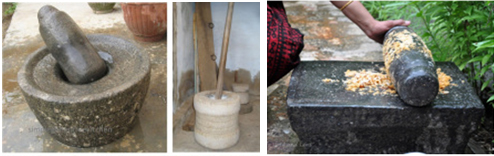
Canada’s education system produces enough highly educated and trained professionals to fill the entry level positions in engineering and applied sciences. There are some openings available in the Healthcare field like doctors, pharmacists and nurses, but the effort required to obtain a license is pretty herculean. The Canadian labour markets demand skilled trades (plumbers, electricians, and truck drivers), retail sector workers, and obviously caregivers to look after the very young and the very old. The engineers and doctors who immigrated in the past 20 years learned this bitter lesson after they landed in Canada.

Over the past 20 years, there are many cases of Canadian immigrants from Africa, Eastern Europe, and South Asia who claim to have been duped into immigrating to Canada. They found it extremely hard to find a job in any field, let alone pursue careers in which they were qualified back home. In fact, recent immigrants are the new face of urban poverty in Canada.

These immigrants themselves are to be blamed for their present status. Most of them applied for immigration to Canada without adequate research about their job prospects, licensing procedures, requirement of tests like IELTS, TOFEL, etc.  Many in the healthcare field landed without exploring the licensing requirements to practice in Canada. They are the most vocal group among the disgruntled immigrants.

The Canadian government also shares the blame for the archaic point system it used to qualify applicants for immigration. Even when Canada faced serious shortages for truck drivers (the most common profession among immigrant Canadian males), the government was busy admitting doctors and engineers. Instead of prioritising younger applicants, the system brought in middle-aged workers, who were educated, but not necessarily skilled for Canadian needs. In addition, they were set in their ways and found it hard to change habits and work ethics.

For many students who arrived in Canada, it was a sure-shot thing for foreign student to graduate with a degree or a diploma, obtain a job and apply for permanent residency. The new immigration regulations have changed this sure-shot occurrence into a game of chance.

Today, most immigrant students take huge loans to finance their studies in Canada in hope for a permanent residency later. Most of them were lured by the big promises their agents made and also paid a hefty sum as commission to these agents.  The catch here is that a student can only apply for residency and for those jobs for which no Canadian worker is available.  The employer has to prove this by advertising in two local newspapers and then certify that no suitable Canadian is available for the job.

Many of these students were carried away by the often heard statement by these agents that Americans and Canadians do not study, they do not attend universities. etc.  To add to this, in many countries there is a false propaganda that their people are doing real well in US and Canada. Please refer my earlier blog https://rejinces.net/2014/07/15/real-propaganda/

The parents of these students spread the ‘news’ around about the successful immigration of their wards to Canada and then about the job they are in and also claim that they did send a lot of money back. All these could be to improve their ward’s value in the marriage market. There are many students in Canada who married while being a student on a student visa and have brought in their partners too on a student visa. They make up a story that their residency application is nearly through and the only way to get their partner in is through student visa.

While the new regulations have added new challenges for foreign students in Canada, they have also improved the odds for highly-skilled professionals and trades.  Instead of a ‘first come, first serve’ basis, the new immigration regulations fast-tracks those prospects whose skills are more in demand in Canada.

As per the new system, prospective immigrants can file an online application and the Canadian government will draw names from this pool, based on the current needs of the labour market. This ensures that only those prospects who meet a certain criteria will be invited to submit a formal application for permanent residency, thus cutting the processing time and overload of applications. By prioritising those applicants whose skills are more in demand, the system improves the odds for new immigrants to succeed in Canada and not be a burden on the state.

Candidates applying for permanent residency would have a higher chance in case they can provide a job offer letter from a prospective employer in Canada.  Finding a job in Canada can take time and may be different from finding a job in one’s home country. Most employers look for Canadian experience and that can be achieved only by volunteering in a position in one’s field.  The students in Canada do so during their education by volunteering and also in the coop opportunity the university offers in conjunction with the businesses around.

Acceptance by the Canadian Government  for permanent residency in no way guarantees employment in one’s preferred profession or any other profession.  Most got to start all over by volunteering in their field, attending courses to upgrade their skills to be at par with the Canadian requirement and passing various regulatory and licensing examinations.
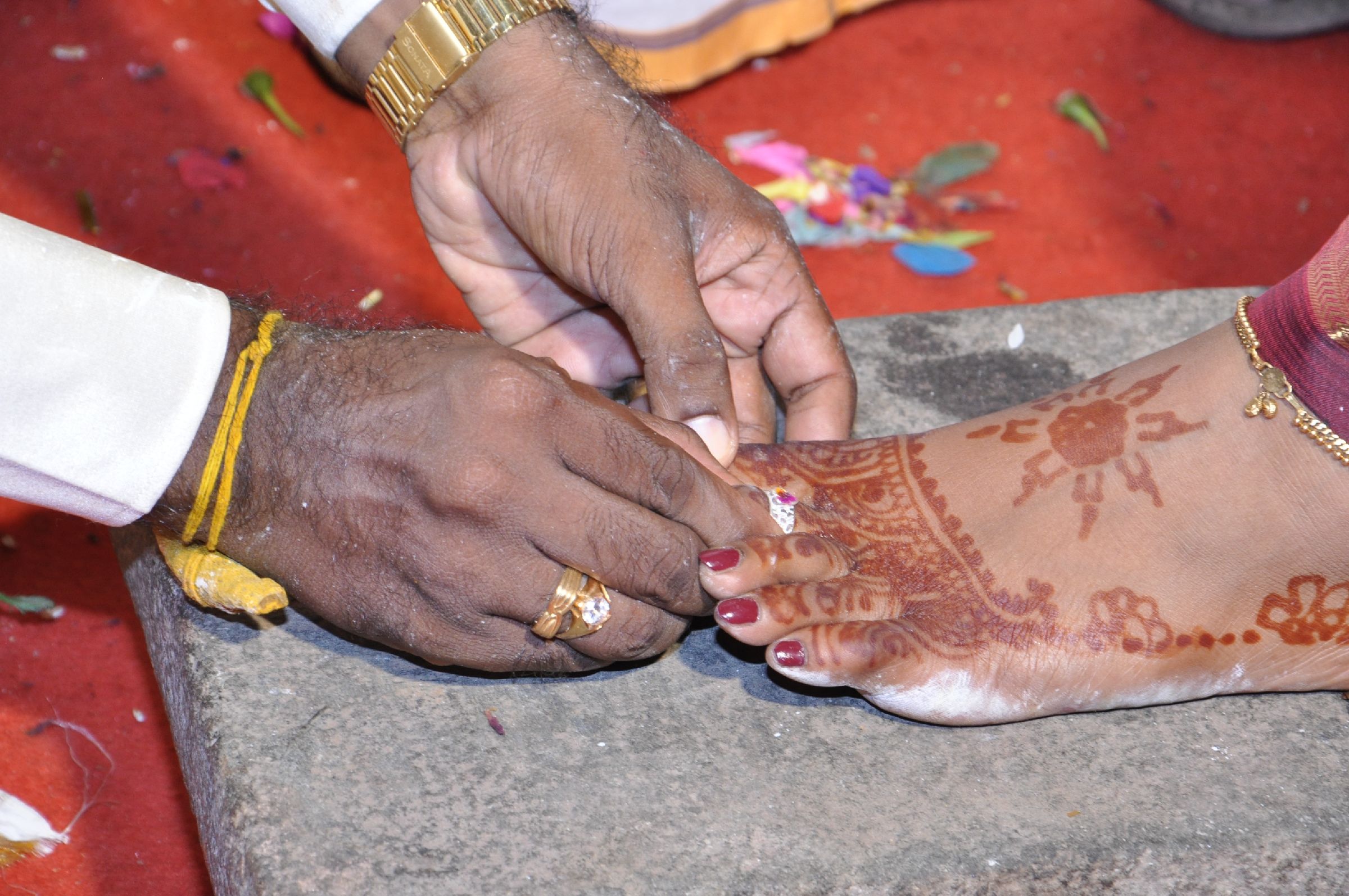
Even if one has the language skills in English or French needed to immigrate to Canada, those skills may not be strong enough to work in the preferred profession. Most professions and trades require one to be fluent in English or French and to have a strong knowledge of all work-related languages.
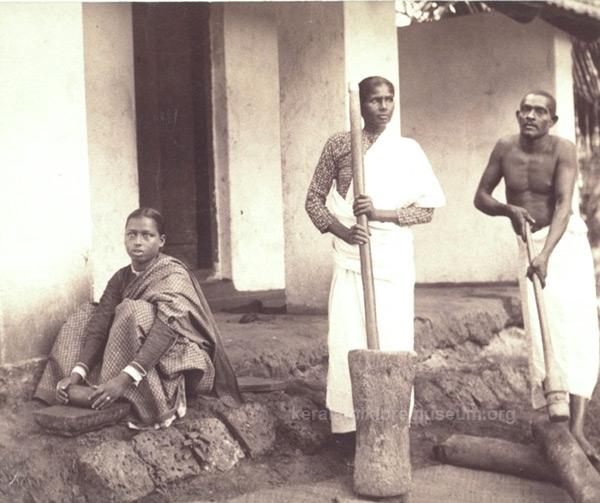
Canadian employers often do not know how to assess education and work experience from other countries. They might prefer one with experience working in Canada. Getting that experience is one of the biggest challenges for newcomers.

Life in Canada of an immigrant will be different than in their home country. They may have to take a job with lower pay while one upgrades their skills or get experience working in Canada. This may result in change of financial status and life-style. Even if one earns a higher salary in Canada than one was earning in one’s home country, the cost of living in Canada may be higher than one is used to. All immigrants to Canada as a skilled worker, investor, entrepreneur or as a self-employed person, will have to provide proof that of sufficient funds to support the family after arrival in Canada.

Police Brutality Against an Indian Grandfather

policebrutality

On 16 Jan 2016, A federal judge in the US acquitted Eric Parker, the policeman charged for assault on an Indian man.  The judge threw out the case against Eric Parker after his two previous trials ended in hung juries.  In the judge’s opinion,  evidence presented during the two trials did not eliminate the reasonable doubt that the policeman was guilty of a crime. Mr Parker had told jurors that Mr Patel’s actions and appearance were ‘in sequence’ with those of a burglar.  He added that Mr Patel tried walking away and wouldn’t answer questions when officers approached him, and that he was suspicious when the man reached for his pockets and when he pulled one of his hands free during a pat-down.

After President Barack Obama made two rather unfortunate speeches alleging religious discrimination in India, a Madison police officer seriously injured an Indian grandfather during a police stop on 06 February 2015. The incidents showed that the emperor is the one now without his clothes.

Sureshbhai Patel’s story is the reality of many South Asian immigrant families living in North America. His son Chirag Patel, immigrated from a small farming town in India and worked his way through and settled down and started a family in the suburbs of Madison, Alabama. Owning a home in the upscale area is the “American dream” most immigrants from India look to accomplish. After settling down in his new home, he invited his father to come to the US to look after his young son, hoping to mutually benefit from his stay. Thus Sureshbhai Patel began his life in the US.

On that morning, Sureshbhai Patel went out on a stroll in the locality of his son’s home. He was dressed in Indian clothes and as per reports, someone in the area called the police and informed that a skinny black man was walking on the street near his home, close to the garage. The caller said that he saw him yesterday too, walking very close to their home and that he lived in the area for the past four years and had never seen this man before. The caller added that he was about to go to work and was nervous to leave his wife alone while the man walked around outside. The caller said the Patel was acting suspiciously by looking into windows and going through the trash.

Two Police officers on patrol duty, trainer Parker and his trainee Andrew Slaughter, were immediately alerted. The officers reached the spot 8 AM. They approached Sureshbhai Patel, who walking and stopped him for questioning. As the officers were questioning Sureshbhai Patel, he repeatedly said “no English,” “walking,” and “India” as he pointed to his son’s house by repeating the house number. The officers claimed Patel put his hands in his pockets, which escalated into slamming him to the ground. The incident left Patel with a bloody face, and in need of cervical fusion surgery to fuse two vertebrae. Sureshbhai is on his way to recovery and regained feeling in his arms and legs.

This was obviously a case of police using excessive force. Some argued that the police officer had no cause to stop Patel on a public sidewalk and search him, which may be a bit farfetched, especially considering the security scenario around the world.

As usual the Indian media went full blast, criticising the American President and its police forces. Arnab Goswami (most vociferous Indian News anchor) was at his day’s best and his strained vocal cords and as if to pacify him, Alabama’s Governor Robert Bentley, apologized to the government of India for the actions of the Madison police officers. The Governor Bentley also ordered the Alabama Law Enforcement Agency to launch a parallel investigation — the Federal Bureau of Investigation had already begun its own probe — into the ‘excessive force’ that left Sureshbhai Patel, 57, partially paralyzed.

“I deeply regret the unfortunate use of excessive force by the Madison Police Department on Sureshbhai Patel and for the injuries sustained by Mr. Patel. I sincerely hope that Mr. Patel continues to improve and that he will regain full use of his legs,” Bentley said in a letter to India’s general consul in Atlanta, Ajit Kumar. “Finally, and most important, please accept our sincere apology for this tragic incident to your government, Mr. Patel, and the citizens of India who reside and work in our state,” the letter went on.

What are the lessons for the people visiting on staying with their children and grandchildren in US or Canada?

During the morning hours, especially in the summer, there are many such grandparents taking a stroll in the area. The children by then would have left for their work and the grandchildren to the school. One of the best use of this free time is to take a walk, enjoying the nature’s beauty and breathing fresh air, on a sidewalk, that too without the fear of dirt or garbage on the path and feeling safe that there would be no vehicle to hit you or dogs to bite or bark at you.

While walking our dog in the morning, one has observed some newly arrived folks with a tendency to look deep into the houses in the neighbourhood, with an inquisitiveness to record the proceedings. Some stare at the women, especially at those women who are dressed to beat the summer heat. Some inspect the garbage cans placed outside the homes, as they see many articles which would have never been thrown back home (most would have been sold to the scavenger for a few bucks).

These actions are sure to set some alarm bells ringing and also some uncivilised reactions. This is mostly so as people value their privacy and are sensitive about any breaches of their privacy. These reactions are immediately labelled ‘racial’ and claims are made that these reactions were because of the skin colour.

This is where the children or grandchildren have a role to play in educating the parents or grandparents about the society and culture of US/Canada. They need to be briefed in detail about the behaviour expected, especially when on a stroll on the road or the park or while visiting the malls or shopping centres. The educated folks must do a detailed study about it (the Internet is the best source), prior to their arrival in US/Canada.

Exceptions Always Prove the Rule

The phrase is derived from a legal principle of republican Rome: exceptio probat regulam in casibus non exceptis (the exception confirms the rule in cases not excepted), a concept first proposed by Cicero. This means a stated exception implies the existence of a rule to which it is the exception.

Co

Group  Captain (Retired) TB Srivastava with our classmates and their ladies- 02 March 2019

mmenting on my previous blog “Education and Punishment”, many of our school mates referred to Wing Commander TB Srivastava, our Principal and Late Mr C Madhavan Nair (CMN), our Physical Education Instructor. They both are the exceptions to the blog.

Mr CMN was a retired Havildar (Sergeant) Major from the Indian Army, who joined the school from its inception. The day started with his Physical Training (PT) class early in the morning and in the evening it was the games. Most students remember him for his love for his students and always addressed them as “Mone (മോനേ)” in Malayalam meaning ‘My Son.’ It caught on especially as majority of the students hailed from Thamizh Nadu and thus spoke Thamizh and not Malayalam.

The organisational capabilities and leadership skills of Mr CMN were on display when he conducted the “Massed PT” for the School Day, involving all students from grade 6 to 12. He trained everyone, coordinated all their movements from entry till exit and the choreography will surely put Chinni Prakash (movie choreographer) to shame. All these he achieved by motivating each student to put in his best and by blowing a few notes using his whistle. One has neither seen him losing his cool nor using any ‘difficult’ language to the students.

CMN Grndsmen
Mr C Madhavan Nair with his Groundsmen – from the left – Maria Das, Achuthan, Kuppan and I cannot recollect the fourth one

As a Captain, I was entrusted with the task of marking the ground for an athletic meet. The effort I had to put in to mark the 400M track, especially the curves, that too with about 200 trained soldiers under command, reminded me of Mr CMN. With half a dozen illiterate groundsmen, he executed the same task in six hours and I took two full days with 200 soldiers.

Mr CMN trained the students in swimming, diving and life saving (his core area while serving in the army) and also all the games – football, hockey, volleyball, basketball and boxing. His knowledge of each of these games was immense and refereed all the in-school competition matches. His skill in refereeing to ensure fair play and sportsmanship was exceptional.

CMN with Family
Mr C Madhavan Nair with his family

His treatment to all his students as his ‘Sons’ must have been because he was a great father. His two daughters and son studied in the same school (senior to us) and that also added to his attachment to the school and the students, despite the low salary he earned.

Wing Commander TB Srivastava was our Principal from 1972 to 1975. Another great teacher who brought in many changes to the school’s day-yo-day functioning and a great motivator. He was a cause for many of our school mates to join the Indian Air Force. The fruit of his effort was that our school won the Defence Minister’s trophy for sending the maximum number of cadets to the National Defence Academy (NDA) from all Sainik Schools.

The Principal was seen participating in all activities the students indulged in – from morning PT to the evening dinner. He was a great orator, real good horseman, played all games pretty well and spoke with love and poise with the students. Unluckily we never had any other officer from the armed forces who came anywhere near Wing Commander TB Srivastava (many were real pathetic expressions of humanity) and that is why many of us do not even recall their names.

Hence the rule stands proved.

tb Wing Commander TB Srivastava

Writing Skills

For the Canadian youth, armed with Cell phones, Blackberries and Ipods, texting has become the order of the day. The language skills have been relegated and new acronyms, shortcuts and smilies have taken over. Children are also not learning and enjoying social niceties like please, thank you, or it is a pleasure meeting you. They enjoy the anonymity of communicating through technology and tend to say things in text that they would never say face to face.

This phenomenon is not unique to our children. The parents are almost as guilty. They communicate with their children through text messaging. Parents mistakenly think that they are in better contact with their children when the children respond to their messages.

The use of shortcuts while texting hinders a child’s ability to switch between techspeak and the normal rules of grammar. Free flow while writing is hampered, adversely affecting a child’s ability to write a paper, prepare a presentation or write an examination, resulting in poor grades.

The children are not confident enough to speak face-to-face, especially with adults. In many Indo-Canadian homes, I have observed that the children shy away and retreat to their rooms at home when someone comes calling on. The parents need to educate the children the need to come down and meet the guests and exchange a few pleasantries and then retreat to their rooms in case they have any work.

Hence there is an urgent need to go back to the drawing board – that is to write. May be letters to grand-parents and relatives back home or their friends. Another methodology to improve the writing skills is to encourage the child to maintain a journal. In the journal, they can write about anything and everything, like any incidence at school, about a TV programme they watched and so on. Encouraging the child to maintain a diary will surely improve writing skills.

When we joined Sainik School, Amaravathinagar (Thamizh Nadu) at the age of nine (Grade 5) in 1971, the only medium of communication with the parents was the most trusted Post-Card. So we started writing letters at that young age. It was a great fete I thought for a nine year old to write a short letter to his parents and siblings, describing as to how good he felt for being enrolled in a premier school and how good the food was. This was my first attempt at creative writing, not being guided as to what to write, not being corrected and marked by teachers. At the end of each letter writing session, I thought I did accomplish something. The language was Malayalam to start with, but gradually converted to English as I became better at it and could express ideas and thoughts properly. To begin with, the lines I scribbled on the postcard would go up and come down; how good I tried I could never make the letters follow a straight line.

Once we left home and returned to the school after the vacations, we used to write our status reports of our safe arrivals and post it on Monday and would reach home may be following Monday. That was the only time our parents would know that we reached the school safe. They had the trust and confidence in us that we would reach safely, despite change of three trains and bussing to Amaravathinagar. Compare it with today’s children in Canada– not of Grade 5, but even university students – the number of times the cell-phones would have gone-off, even for a trip of an hour. Has the technology made us to lose confidence in our children?  Is it that our parents, with the technology available then, could have only prayed to their Gods and may be that gave then the power not to panic or get pressurised?

fl

Still remember the days I spent at a remote post in Kashmir, cut-off from rest of the world and the only link to civilization was radio and the letters. We used to get a lot of those “Forces Letter” which did not need any postage and that’s when I wrote letters to anyone and everyone, whose postal address I had. Some addresses were wrong and was dutifully returned by the Postal Department.

From our base, one could see the road winding down from the pass and the convoy used to take about two hours to reach the base camp. The convoy was always lead by the mail vehicle, could be that the driver was very experienced with the curves and dangers of the route, or could be that everyone wanted the mail to be the first to reach the base camp. Memories linger of our Soldiers and Officers literally “tracking” the convoy with an expectant gaze, until the convoy reached the base camp. Our Dispatch Rider who used to collect the Dispatches (letters), would be waiting outside the Field Post Office (FPO). Once the Dispatch Rider returned to the post and distributed the letters, the expressions of those who did and did not receive any Dispatches can well be guessed. The next half hour was an undeclared Private time for everyone. Mood of each Soldier who received their Dispatches would depend on the content of each Dispatch. This mood continued to be hidden under their smiles sometimes until he received his next Dispatch; sometimes until he went home on leave, sometimes for months to come. During the snow covered winter months (we used to get 10 to 15 feet of standing snow and the roads were closed), the truck was replaced by a helicopter which used to come once or twice a week carrying the same Dispatches. Rest of the story remained the same but for the difference that the tracking period reduced drastically to less than five minutes.

The art of letter writing may be dead and buried and with it the writing skills of our young generation. Many cannot sit and write a page, with logical thoughts and cannot describe on paper a situation, an event or an experience. Leave alone spelling and grammatical mistakes, even the main idea does not reach the target person. With this reluctance to write, many do not maintain any journals or diaries. Letters, journals and diaries are one of best and cost effective method to develop creative writing skills and you will feel the same sense of achievement what I felt when I wrote those letters at the age of nine.