For Want of a Nail

IndianSoldierFlood

Our son Nikhil wanted me to buy a whistle – Fox 40 ‘Sport & Safety’ Classic Whistle- to be used for his life-guard training at the city’s swimming pool. I went to the store and was a bit surprised when I looked at the price-tag on the whistle – it costs $5. Thinking that I may not have zoomed on to the correct product, I looked carefully at the label to reconfirm it. Out of curiosity, on reaching home I “Googled” the product to see its characteristics and why a simple looking whistle cost me so much. As per the manufacturer, this whistle is easy to use, very loud that it can be heard over a mile away, is waterproof and unbreakable. Being made of plastic one does not have to worry about rust. It works even after it is wet because it does not have a ball in it.

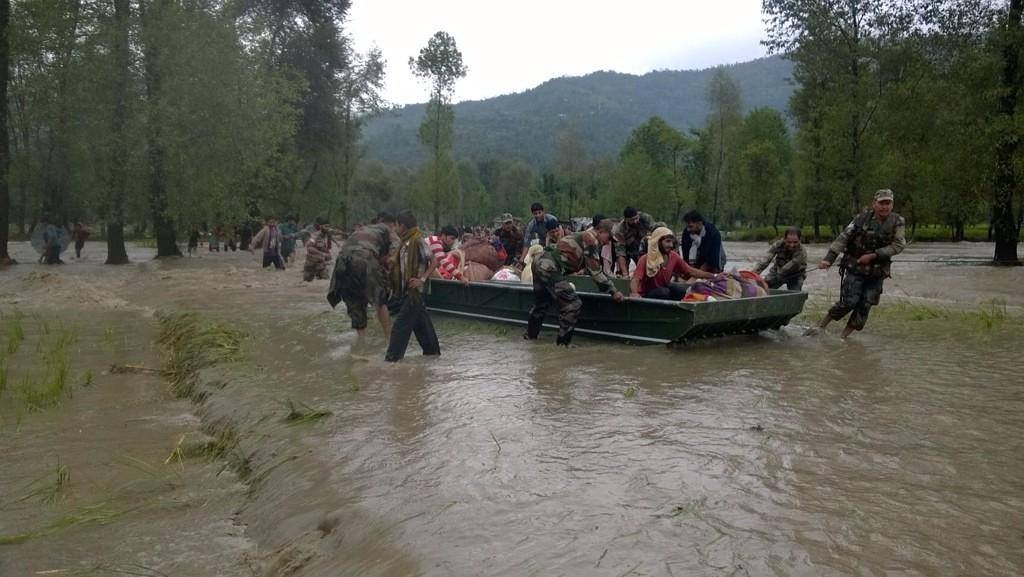
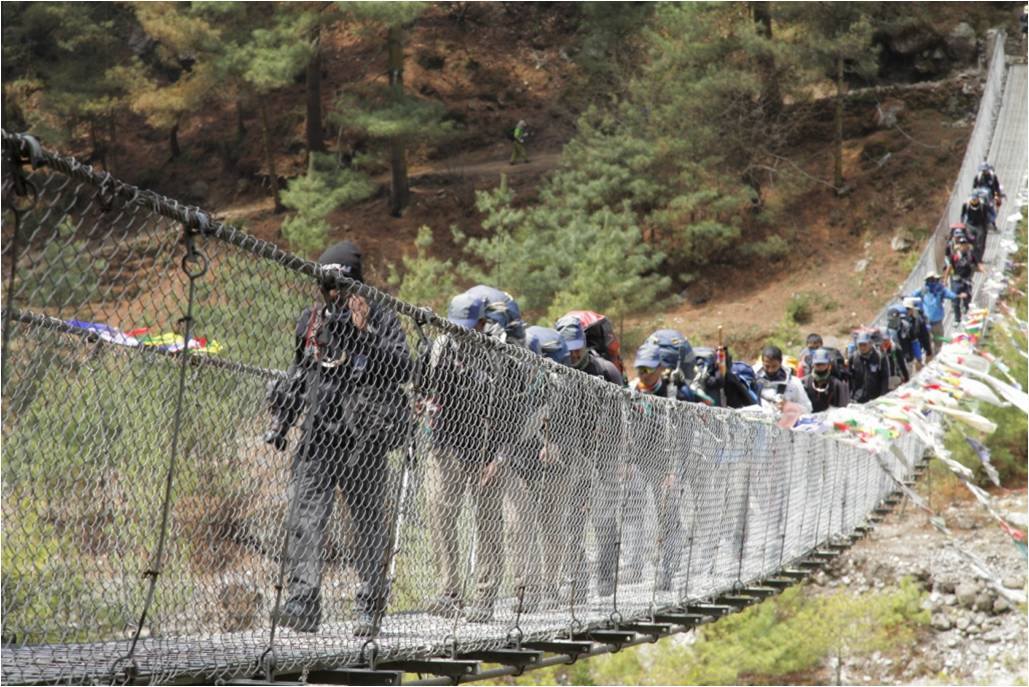
Aren’t such whistles required by our soldiers, especially those deployed on flood relief duties?

During my service with the Indian Army, we have been called out to help the civil administration many a times. On many occasions we were placed on high-alert for flood-relief duties. There are many standard operating procedures (SOPs) in the units for flood-relief, but there is hardly any equipment available to execute the tasks. The army heavily relies on the ingenuity of the officers and soldiers to execute the task.

Watermanship is an important aspect of military training. It comes handy while on war crossing water bodies, rivers and other obstacles. It becomes more important when dealing with natural disasters like Uttarakhand or Kashmir. There is hardly any attention paid to this aspect of training.  Many of our soldiers are non-swimmers and hence training in personal safety while dealing with fast flowing currents, floatation devices, rescue equipment, etc become very important. There is hardly any rescue equipment worth its name authorised to any army unit, but they are always called out to deal with such situations.

The biggest deficiency the army has is that there is no boats authorised to the army and our men are not trained in operating the outboard motors. Only some men from the Engineers are trained on it or those hailing from areas like the backwaters of Kerala have some experience.

The army units are not even authorised life-jackets and the risk we are forcibly putting our men to without the life-jacket is well known to all. There is no High-visibility safety apparel (HVSA) -clothing (e.g. vests, bibs or coveralls) that is worn to improve how well other people “see” them (their visibility). In any developed country, it is mandatory for anyone operating in these circumstances to wear them.

It is a pity to see our soldiers are without life-jackets and HVSA and all the personnel of the NDRF is fully geared. When will they equip all the soldiers of the Indian Army with these? Surely it does not cost much.

Hence it is suggested that all the army units (especially the Infantry, Cavalry, Artillery, Engineers and Signals) be scaled with inflatable boats, outboard motors (with about 50% as spare as the local boats will be much effective with one), ropes, winching equipment, harnesses, rope bridges, etc.

Further HVSA must be authorised as personal clothing for all ranks. This would be very useful for drivers, co-drivers and also passengers of military vehicles and also for anyone operating any plant or dozing equipment. This would also help while being deployed on aid to civil authorities for restoration of law and order.

It would be a pity that a soldier’s life is to be martyred because of our short-sightedness. No battle should ever be lost and we should never lose a soldier for want of a horseshoe nail (life-jacket).

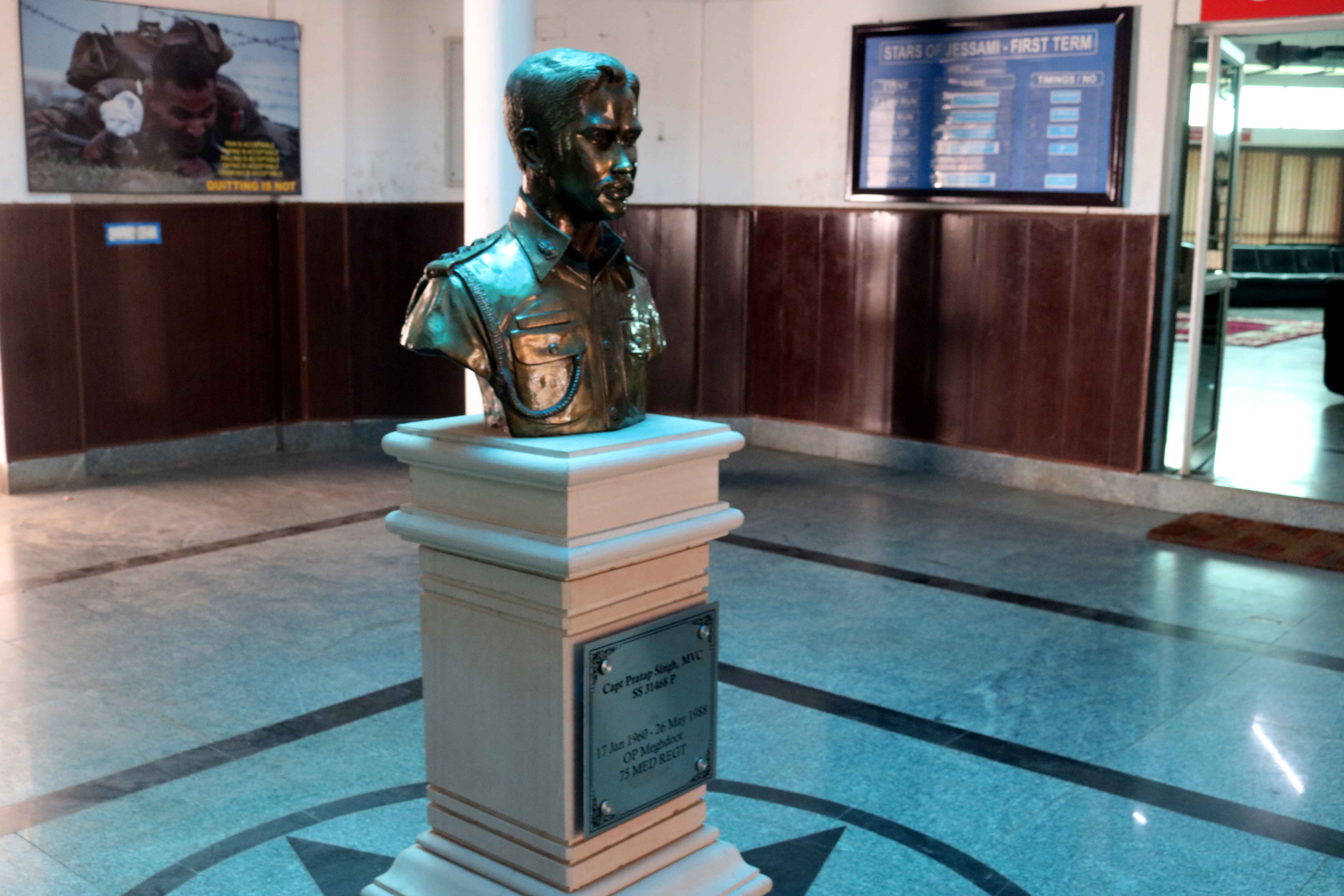
Late Captain Pratap Singh, Maha Veer Chakra (Posthumous)– My Hero

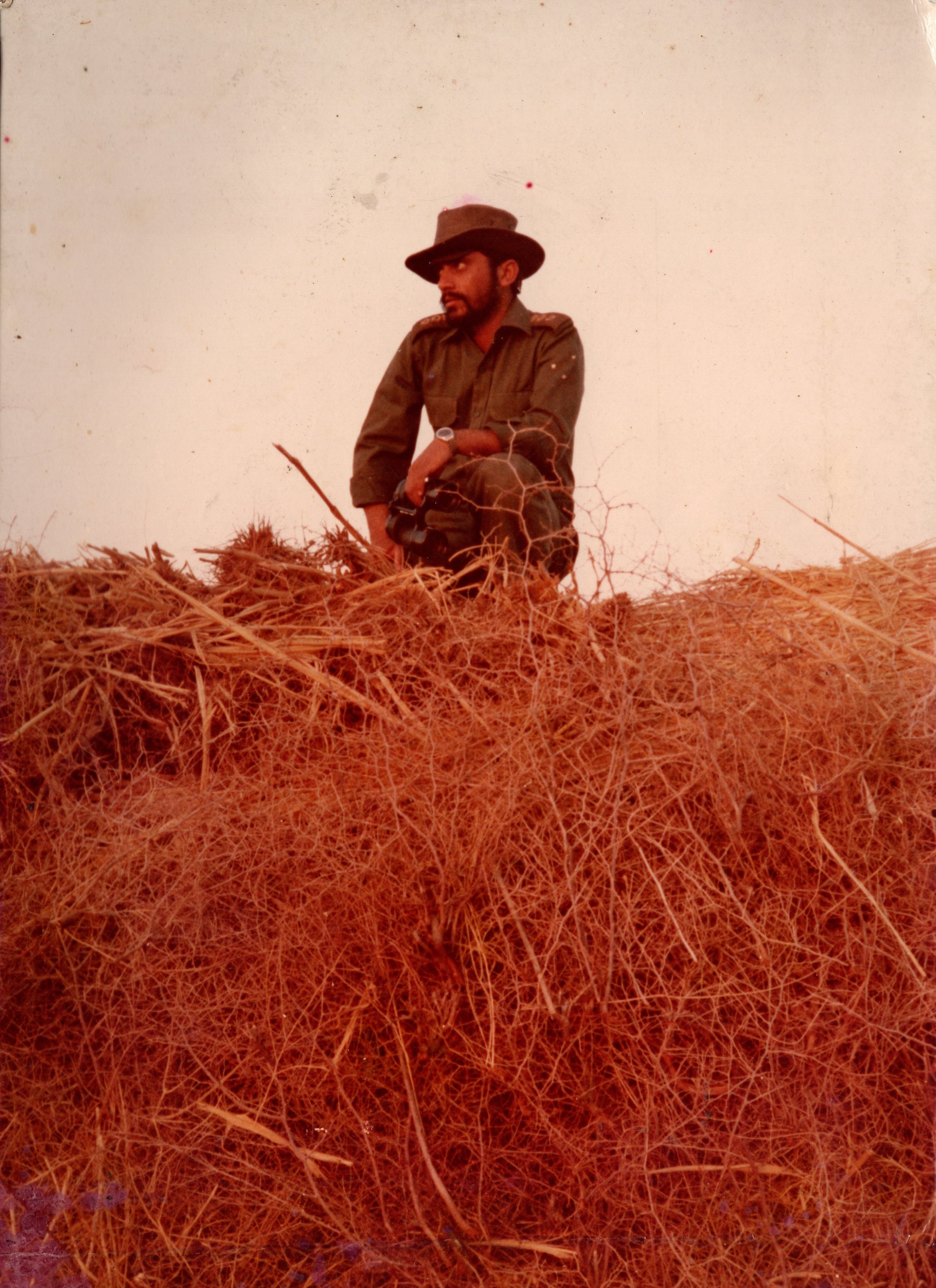
In August 1987, our regiment, 75 Medium Regiment (Basantar River) was about to move out from Delhi to the Kashmir Valley. Captain Pratap Singh, being posted on compassionate grounds and having spent two years, the time had come for return to his parent regiment as per the norms in the Army. Captain Desh Raj and I moved with the advance party to the Kashmir Valley.

https://rejinces.net/wp-content/uploads/2020/03/pop035.jpg

Captain Pratap called me up to say that he had walked up to our Commanding Officer (CO) Colonel Mahaveer Singh and had requested him that he liked to continue with our regiment and wanted his parent regiment to be changed to 75 Medium. He also said that he had enjoyed the two years he served with our Regiment and that he had developed a special attachment to the soldiers and officers. Colonel Mahaveer accepted Captain Pratap’s request and contacted the Army Headquarters and thus Captain Pratap’s parent regiment was changed to 75 Medium Regiment, and he moved with the regiment to the Kashmir Valley in November 1987.

Our Regiment was to induct its first Observation Post team in Siachen Glacier in March 1988. The choice was between Captain Pratap and I. Colonel Mahaveer briefed us in December 1987 to select our team and also to prepare and train for the impending task. At that time the Brigade Headquarters wanted an officer to be attached with them as an administrative staff officer for six months and so Colonel Mahaveer said, “One of you will go to the Siachen Glacier and the other to the Brigade Headquarters.”

Siachen Glacier, one of the world’s largest glaciers, is situated North of Leh. This land, the world’s highest battleground located at about 5,750 m (18,875 ft), will test human endurance against the rigours of high altitude and turbulent terrain. Ever since Indian forces occupied the Siachen Glacier in 1984, both India and Pakistan have fought intermittent artillery duels and many attempts were made by Pakistan to capture the territory. In winter, temperatures here can plummet to minus 70 degrees Celsius and winds of up to 160 km an hour can come without warning. Over the past several years, soldiers have seen amputation of limbs lost to frostbite and death by pulmonary edema. Many soldiers have lost their lives to avalanches or falling into crevasses during patrols. According to some estimates, 90% of the casualties in Siachen have been due to weather and altitude, rather than actual fighting.

Captain Pratap, a Short-Service officer, commissioned in September 1983, had not opted for a permanent commission and had decided to take release from the army after serving five years. Armed with his application for release from the army, Captain Pratap walked into Colonel Mahaveer’s office in January 1988 and told him that he wanted release from the army and hence wanted to participate in an operation prior to his release. He managed to convince Colonel Mahaveer that he would take on the duties in the Siachen Glacier in March. Thus, Captain Pratap started with his training for the operations and I moved to the Brigade Headquarters.

On 27 May 1988, Brigadier DS Chowdhary, our Brigade Commander called me to his office to break the news that Captain Pratap had laid down his life while performing his duties. Immediately I called up Colonel Mahaveer to break the sad news and he did not utter a word. I rushed to the regiment and straight went into Colonel Mahveer’s office and that was the only time I ever saw tears in his eyes.

On 26 January 1989, the nation recognised the supreme sacrifice made by Captain Pratap Singh and decorated him with Maha Veer Chakra (MVC). The citation for the award read as under: –

“Captain Pratap Singh was deployed as an observation post officer Siachen area in April 1985.

The adversary made repeated attempts to retake a key post vital for our defences of Siachen, without success. Their last attempt to take a post was on 09 May 1988, when they fixed four ropes and a ladder-system on the ice-wall below the post for the purposes. This attack was successfully beaten back by our forces. The ropes and the ladder-system fixed by the adversary, however, remained in position, making it possible for them to use it again in their fresh attempts to take the post. It was imperative that the fixed ropes were cut, and the ladder unfixed to prevent fresh attempts. On the 18 May 1988, Second-Lieutenant Ashok Choudhary was able to reach and cut four of the ropes. On the 26May 1988, it was decided to cut the remaining two ropes and unfix the ladder. Captain Pratap Singh undertook this mission with the help of a jawan, descending the ice wall. On reaching the location, Captain Pratap Singh found a large quantity of ammunition and grenades lying at the head of the ropes. While examining the same, a grenade booby-trapped him, severely wounding his right arm and chest. Despite being badly wounded the brave officer crawled forward to the fixed ropes and cut them with his knife. Then he unfixed the ladder system and let it fall down the ice wall. Then the gallant officer inched back to his own rope to come up the ice wall to return to the post but collapsed due to his severe wounds and made the supreme sacrifice of his life for the nation.

Captain Pratap Singh thus displayed conspicuous gallantry in eliminating a great threat to a key post of our vital defence of Siachen Glacier at the cost of his life.”

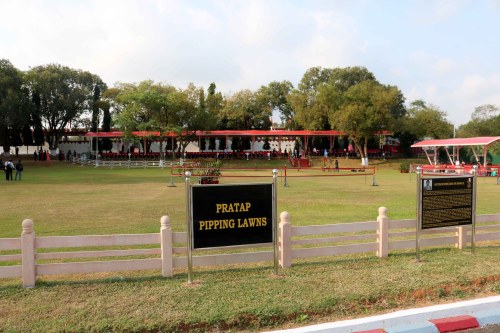
Officers’ Training Academy (OTA) Chennai honoured its alumni and this valiant soldier by naming the Pipping Lawns where the newly commissioned officers wear their first pips as Pratap Pipping Lawns.

After over 25 years, Captain Pratap Singh, MVC, continues to be my hero and always has a special place in my heart.

Captain Pratap’ younger brother Shakti Singh can be reached @ +91 98100 67777

Late Captain Pratap Singh, Mahaveer Chakra (Posthumous) – My Friend

During our recent visit to India, we stayed Colonel Pradeep and Dr Sridevi at Devlali and their house was located in Pratap Enclave.  The enclave was named after Late Captain Pratap Singh, MVC and at the main gate of the enclave there was a board with his photo and a brief write-up about his heroism.

Lieutenant Pratap Singh arrived on posting to our regiment, 75 Medium Regiment (Basantar River) in January 1985 when we were located at Delhi.  A few months prior he had lost his elder brother Late Squadron Leader Gaj Singh of the Indian Air Force in an air crash in Rajasthan.  Lieutenant Pratap had come on a posting on compassionate grounds to take care of his aging parents who lived at Basai Darapur village, near Punjabi Bagh, New Delhi.  At that time, his elder brother Colonel Ran Singh was serving with an Air Defence Regiment of the Indian Army.  Captain Khazan Singh, father of Lieutenant Pratap was a World War II veteran.

Ever smiling Lieutenant Pratap joined our regiment and in no time got amalgamated with the regiment.  He was a good sportsman and a great leader and won the admiration of all the soldiers.  Despite all the problems he faced, he always looked cheerful and was cool as a cucumber at all times.

Lieutenant Kaushik, Pratap and self, we became the ‘trouble shooting trio’ of the regiment, who could be sent on any missions anywhere.  As Lieutenant Kaushik was married, Pratap and I generally took on all out-station tasks – mostly going to Meerut to participate in sports competitions with the Brigade.  Colonel Mahaveer Singh, our Commanding Officer (CO), took utmost care of all of us as his sons and had a major role in developing us into good human beings and leaders.

Lieutenant Pratap and self being bachelor boys dined in the Officers’ Mess.  The mess and the bachelors’ accommodation were located in Sector 14, Gurgaon and some of the married officers also lived there.  The Regiment was about 10 km away and we all used to travel to and fro the Regiment in one vehicle.  Every day at 1:30 PM we all would assemble in the Adjutant’s office for our travel back to Officers’ Mess.  Captain Rahul Gowardhan (now a retired Colonel) was our Adjutant (assistant to the Commanding Officer) and once he was busy closing up for the day and he accidentally tore off an important sheet of paper assuming it to be trash.  The Lieutenants were all immediately tasked to assemble all the torn pieces of paper and solve the jigsaw puzzle to retrieve the original document.  After that whenever we assembled at the Adjutant’s office for our return journey, Pratap would pick up all the torn papers from the wastepaper basket and start solving the jigsaw puzzles with us until one day Captain Gowardhan asked us as to what we were doing.  Pratap said, “we do not know when you will tell us to recover a document, so why not utilise the time”.

Captain Desh Raj (now a retired Colonel) was a great sportsman and appointed himself as the commander of the bachelors (he always considered himself as a youngster).  He would mostly accompany us and always guided us in our day-to-day duties and also joined us in most of our adventures.  Then we had Late Colonel Avinash Chandra, affectionately called by all of us as ‘Guruji‘ as he always had something to contribute about anything and everything.  He was always forthcoming to save us from all our misdeeds and also resolve many difficult situations.

Every day at 1 PM, the Mess Havildar (Sergeant) used to ring up the office to find out whether Pratap and I were coming to the Mess for lunch.  The aim was to decide on the quantity of food to be prepared as we both were in our early twenties and were famous in the Regiment for our gluttony.  Hats off to Mrs Chandra, Mrs Desh Raj, Mrs Gowardhan and Mrs Kaushik for standing to our gluttony whenever we landed at their homes, especially at mid-night.  All the ladies welcomed us and served us excellent dinners.

Major Mohan Krishnan, a 1971 war veteran, was our Second-in-Command and was a simple and jovial person.  Once he called Pratap and me to his office and admonished us about our late night at the Officers’ Mess.  He ordered that for dinner, one had to reach the Mess by 9 PM and the Mess had to be closed by 10 PM.  After a few days we reached around 9:10 PM and the Mess Havildar expressed his inability to serve us dinner as we were late.  We decided to go for the movie in the town and we landed back at the Mess at 1 AM.  Now Pratap told the Mess Havildar, “the Second-in-Command has only stipulated the time for closing the Mess, but he has not laid down any timing for the opening; hence now serve us breakfast as a new day has dawned.”  That was the end of the Mess closing timing.

We both got promoted to the rank of Captains and were appointed Observation Post (OP) Officers.  Our duty in war was to direct the artillery fire to the target.  The guns fire from about 10 km behind and it is the duty of the OP officer to direct the fire on to the target.  In case the shells do not land on the target, a correction is ordered in terms of “Go Left/ Right” or “Add/Drop.”  During our operational training with live artillery firing, Captain Pratap very often confused between Right and Left and many a times ended up giving the opposite corrections.  Colonel Mahaveer Singh our CO came up with a solution – with a marker pen he wrote ‘LEFT’ on the inside of his left wrist and ‘RIGHT‘ on the right wrist. He told Pratap to look at it prior to ordering a correction and the simple trick worked.  At the end of the day, I even advised Pratap to tattoo it on his wrists, never realising what was in store…….

Captain Pratap’ younger brother Shakti Singh can be reached @ +91 98100 67777

Bishnois and Khojis of Rajasthan

RJ

Rajasthan, the land of kings and royalty, has been a mesmerising experience for me during my stay in India. The Western desert state of the Indian Union is vibrant, and exotic where tradition and royal glory meet in a riot of colors against the vast backdrop of sand and desert. It has an unusual diversity in its entire forms- people, customs, culture, costumes, music, manners, dialects and cuisine.. The landscape is dotted with invincible forts, magnificent palace havelis, rich culture and heritage, beauty and natural resources. It is a land rich in music, Dance, Art & Craft and Adventure, a land that never ceases to intrigue & enchant.

We in the Indian Army, visited Rajasthan mainly during operational deployments on the border, artillery field firing practices and various tactical exercises. One has seen the state progressing and developing in all fields – education, social matters, communication infrastructure, industrial output, exploitation of natural resources, etc. However two features will ever remain in my memory.

Bishnois

While media and scholars have celebrated Indian women environmentalists and activists such as Medha Patkar and Arundhati Roy, you may not have herd of Imarti Devi and Begu Bai of Khejarli (Barmer District), the first proponent of Indian ecofeminism. They led a massive sacrifice for the protection of trees in February 1730 in Jodhpur. More than 300 Bishnoi men and women, sacrificed their lives to protect the trees from the soldiers of the king Abhay Singh of Jodhpur, who wanted to fell the trees to treat the lime stones for constructing his palace.  The dead were buried, not cremated and there is a temple at that site.


Bishnoi temple as it exist today,  commemorating the Khejarli massacre.

All of you must be familiar with the episode of, Salman Khan’s shikar of deer in Rajasthan. Salman Khan together with friends undertook a hunting excursion in Rajasthan. In doing so they rushed blackbucks until their exhaustion, shot endangered and strictly protected animals. The locals protested and the actor with his entire entourage was put behind the bars.

These people are the Bishnois of Rajasthan. They are seen as an example by the global environment community for their deep devotion to conservation of nature. The Bishnoi sect was founded by Lord Jambheshwar believed to be an incarnation of Vishnu, the preserver, and is probably the only religion in the world that’s based on principles of conservation. Legend has it that Jambheshwar, born into the warrior clan of Rajputs but chose a different life. Instead of developing hunting skills, he learned to communicate with living beings. He came up with the 29 principles that would govern the lives of his many followers, who would be called Bishnois — derived from ‘bees’ and ‘noi’, which means 20 and nine.

Here are some of the unique Bishnoi practices that show how their lifestyles are in a complete fit with their environment: Bishnois do not cut trees; instead they use dried cow dung as fuel. They do not cremate their dead as Hindus normally do, because it involves the use of firewood; instead, they bury them. Agriculture is the mainstay of the people; they also carve wood during the time they are not busy on their fields. The required wood comes from trees that have fallen during storms. Each Bishnoi family creates a tank in their field to provide water for black bucks and antelopes in the arid summer months. They maintain groves for the animals to graze and birds to feed. Solar energy is used to extract underground water to irrigate the groves. The region where they live is a desert, and these groves help to recharge rain water in the aquifers in the desert.

Not only do the Bishnois protect the deer from poachers, they also allow them to graze freely on their farmlands. It’s the belief of every Bishnoi that the first right to the harvest goes to the deer. Many Bishnoi temples doubles up as rescue shelters and the priests take care of injured animals. Some of these go back into the wild after they recover, while others roam about in the compound.

Many Bishnois believe that their fore-fathers take rebirth as deer and that is why many are attached to these animals.   The Bishnoi women have deep maternal affection for the rescued fawns. It is not uncommon for a Bishnoi woman to breastfeed a newly born, orphaned fawns..

Adapting to the modern times, the Bishnois have become ‘active conservators’ pursuing poachers and capturing them to be handed them over to the forest authorities. They now have what they call the Tiger Force, a 1000-strong brigade committed to wildlife protection, spread across hundreds of villages. The Tiger Force came into the spotlight when they chased and caught Salman Khan and his gang red-handed with the blackbucks they had killed.

Prior to induction into Rajasthan, all troops of the Indian Army are made well aware of the sentimentality of the Bishnois to the wildlife and the trees. All out efforts are made by the Army to provide all assistance to the locals in their conservation efforts.

Khojis

During one of my area familiarisation trips in the Rajasthan borders, I stopped at a Border Security Force Headquarters for lunch. There I met a frail and old man – may be in his late eighties. The company commander introduced him to me as a Khoji.- the tracker. Every day at sunrise, the Khoji’ diligently examines a stretch of sand running alongside the wire- fencing border with Pakistan, for any telltale signs of infiltration. The slightest indentation or disturbance in the sand raises the alarm for the tracker. It tells him whether any human or animal has crossed the three-tiered barbed wire fence.

He utilises his uncanny ability, which includes recognising the footprints of individuals camels, cows, goats or sheep from amongst hundreds of others to track them down, however far they may have strayed into the desert wasteland. One glance at a broken twig, a bent blade of dried grass or even the hint of a footprint in the sand are all that he requires to catch his prey. For the Khoji, eEach footprint has subtle but distinct differences which only a Khoji’s trained eye can spot.

He even predicts as to the type of animal that crossed, the weight on its back, the direction where the animal is headed to, and also the likely place it would have reached by then. The Khojis learn their craft as children by tracking camels, sheep and cattle which stray far from home in search of food across the vast desert. It’s instinctive and the ability to successfully pinpoint footprints increases with experience. And, unlike other professions in tribal, superstitious and caste-ridden Rajasthan, the Khoji’s do not belong to any one community. They also worship no deity or special Gods.

The Khoji’s are employed exclusively by the BSF which have around 100 of them in the desert districts of Rajasthan and neighbouring Gujarat state, where they monitor the 1,500 km long sandy stretch of border with Pakistan for smugglers and illegal aliens. An asset to each BSF battalion, their services are also called upon by the local police to track down criminals or missing livestock. They also organise tracking courses for BSF personnel.

Their rivals in Pakistan, known as Pugees, are similarly employed by the Ranger border guards. But over the past years, fencing and flood lighting of the Rajasthan border has greatly reduced the Khoji’s workload. Earlier, they not only tracked illegal immigrants and smugglers but also herds of cattle, camels and sheep which frequently strayed across the open border.

I was astonished by the capability of these Khojis and many a times we employed them to track down infiltrators which our modern radar systems and the supersensitive cameras of the drones could not identify, mainly due to the lie of the sand dunes in the deserts.

Honouring a Veteran

vets

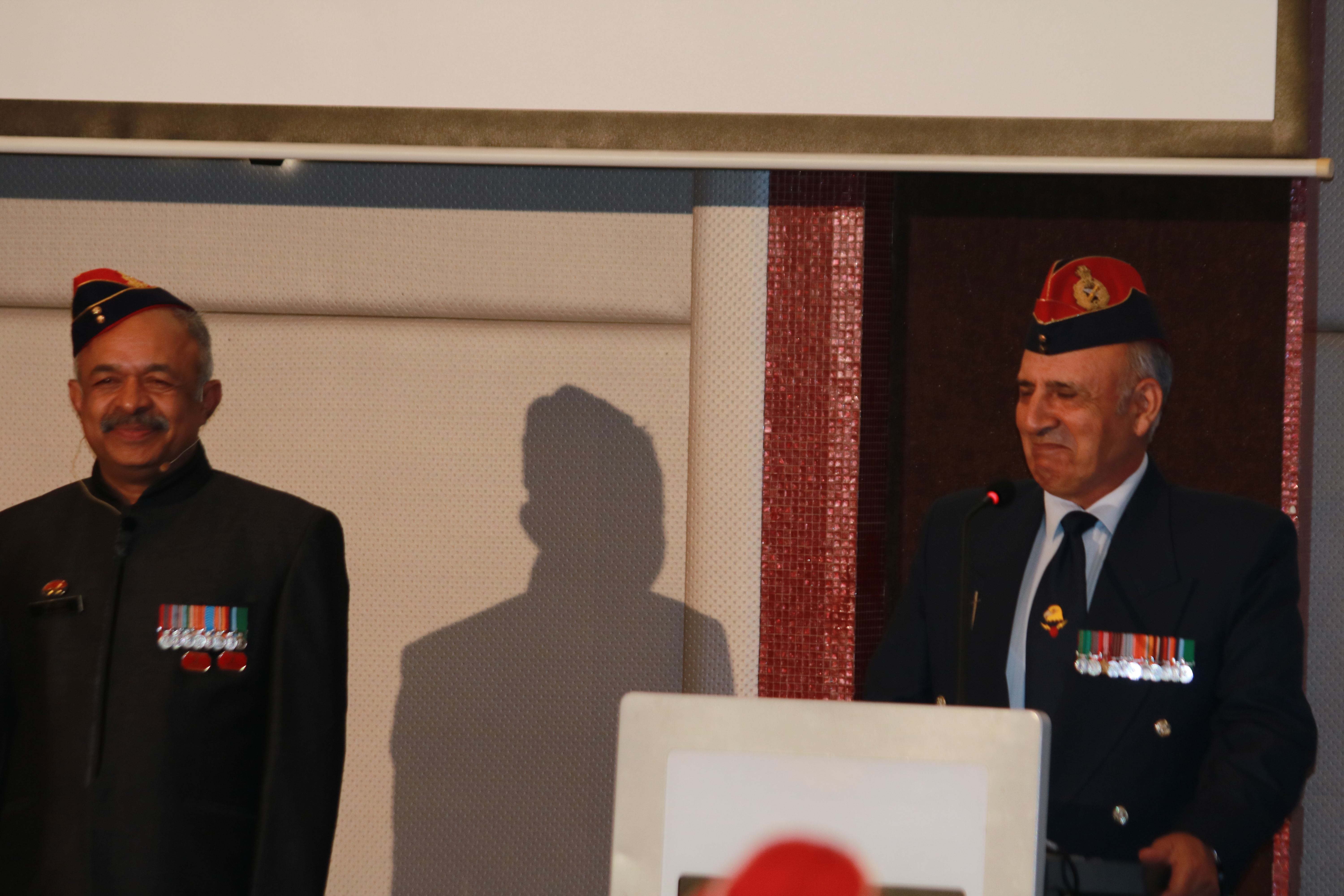
This photograph is from an Anzac Parade for the veterans of the Indian Armed Forces in Sydney. The marching contingent of Indian Veterans was received with cheers and the applause from the enthusiastic spectators lining the streets braving the wet and cold weather. The Indian banner stood high and proud, ably and graciously carried by a scout. Joined by their families and friends, the retired officers from Army, Air Force and Navy marched in unison, their suits adorned with their service medals. While they matched step with step, ‘stomachs-in, chest-out’ as instilled during their training days, the different berets symbolised the Corps or the Arm they represented.

Will this ever happen in any Indian city? Will this remain a distant dream?

A few weeks back there was a post on the Facebook where the author was unduly perturbed that India and its Asian neighbours did not figure in the top 25 patriotic countries, across the world, listed in the study of New York-based International Social Survey Program (ISSP). The study throws up interesting points like erstwhile colonies of the British and Spanish ranking higher than both Great Britain and Spain, respectively. According to the study, the most patriotic countries were the US and Venezuela, which were tied-up for the number one slot. The author was apparently more concerned about the ” holier than thou attitude” of Uncle Sam and that the conclusion has no rational basis other than their whims and fancies and prejudices.

It is true.  We do not fly the national flag at half mast when a soldier is martyred unlike US/Canada. We do not line up the streets to pay homage to a fallen soldier as their mortal remains pass through our city/village/town. Our airlines do not even bother to show any respect to the coffins of the soldiers and handle them as ordinary cargo. The Captain of the flight never announces that the mortal remains of a soldier is being carried by them. (Latest being Major Varadarajan’s case).

We do not commemorate any Remembrance Day to pay respect for a fallen soldier as in the case of most Commonwealth and Western Countries. Our National leaders or citizens never wear the flags pinned on them by the children on the Flag Day. How can we say that we are patriotic?

Every Indian cries when the ball hit Sachin Tendulkar’s chest, but none even stops to think about the bullets hitting our soldiers’ chests. We call out the Army every time the Indian Police Force fails, but all the promotions and pay is given to them and the Army is forgotten, especially during the pay commissions. We remember the Army only when a calamity strikes us or when a child falls into a bore well and forget about them immediately. Our Parliament passes bills to ensure better pension benefits for all its MPs – whether they did anything or not; whether they attended the sessions or not: but the same Government does not want to implement the One Rank One Pension scheme for its Soldiers. Now show me our patriotism other than during the cricket matches????

This weekend we went to watch baseball game at the Rogers Centre, Toronto between the Toronto Blue Jays and the Tampa Bay Rays. The Rogers Centre is the home-ground of the Blue Jays. The atmosphere was as electric as the cricket matches of the Indian Premier League.

The stadium was fully wheel-chair accessible and there were ramps made so as to facilitate the wheel-chair bound fans to enjoy the game. Even the latest stadium in Pune is not wheel chair accessible, so forget about the rest.  The fans at the Rogers Centre fanned across all ages – children, teens, youth, seniors. One event during the two minute interval between the first innings really stood out.

A sixty year old Veteran from the Canadian Army who was a Captain and had served in many UN assignments was called on to the centre and the Team Management of the Blue Jays presented him with a team shirt with his name printed at the back and with the team captain’s signature in the front. The entire stadium stood up to give the veteran a standing ovation – no one instructed anyone to do it, but was spontaneous. This is what is called patriotism.

Our son then said that during all the matches, a veteran from the armed forces or the police forces, who is a registered fan of the Blue Jays, is honoured this way.

Can we ever expect such a gesture at Mohali from the Kings XI Punjab or at Chennai from the Chennai Super Kings? Why one veteran, we can always honour a dozen at every match.

Will this ever happen in any Indian city? Will this remain a distant dream?

General Salute at Niagara Falls

niagara banner 3

With its incredible power and beauty, Niagara Falls stands out as one of the natural wonders of the world. It should be visited at least once before you die. Located on the Niagara River, at the Canada-US International Boundary, Niagara Falls is comprised of three gorgeous waterfalls – the huge Horseshoe Falls that are situated in Canada, the American Falls which are just across the border in America and the Bridal Veil Falls.

The Niagara Falls is a sight to behold for all your senses. The thundering roar of the falls mixes with the sight of the water and rising mist, and the smell of the fresh, crisp air cooled by the torrent of water relentlessly spilling over the edge of the falls.

Niagara Falls is the second largest falls in the world based on the width. More than 6 million cubic feet of water falls over the crest line every minute in high flow.  The waters in the river are owned partly by Canada and partly by the USA. The international border runs through the middle of the river. The verdant green colour of the water flowing over the Niagara Falls is a byproduct of the estimated 60 tonnes/minute of dissolved salts and rock flour (very finely ground rock) generated by the erosive force of the Niagara River itself.

Everyone visiting us always visit Niagara and having been there umpteen times, I have become an expert tourist guide and can take you through a thrilling experience at Niagara. Once I took acclaimed Malayalam music director Sharreth and his team of musicians to Niagara. When everyone went for a boat cruise to the falls, Sharreth stayed back and I did not know how to spend the next hour as I had no clue about music and had nothing much to discuss with him. So we strolled along the falls and suddenly I asked Sharreth to sing some Raga with the sound of the falling waters as a backdrop. A Raga uses a series of five or more musical notes upon which a melody is constructed. He stopped, paused for a few minutes and said he got a Raga and he started singing it and I captured it using his cell phone. I handed over his cell phone and said you must be the first musician to sing a Raga like this and hence must treasure it.

A few years back we came to know that General Jambusarwalla and Mrs Hufreez Jambusarwalla were coming to the Niagara Falls, US side and we all decided to meet them there as they did not have a Canadian Visa. Our children were very excited to meet him as they had heard many an anecdotes and references about a great human being and a military leader from their dad. The General kept insisting that we should not undertake such an effort, but the decision had been made and we decided to comply with it.

On that day we drove from home, crossed the Canada-US border and reached the hotel where the couple were to check-in. We received them there, and on meeting us, the General said “What better can a retired General from the Indian Army ask for at the Niagara Falls than a General Salute from a Colonel and family”. We then had dinner, spoke for about two hours, and we drove back home at midnight. The children were overwhelmed by the couple’s warmth and love and were really impressed.

While driving back, our son Nikhil said that the General was so down-to-earth and that he did not fit into the frame of a General which he had in mind. He was expecting a rigid, tall and a perfect military figure from what he had heard about him, but what he experienced was a simple human being full of energy, wit and humour, who came down to a kid’s level to converse with him. Nikhil summed up his final opinion with a statement – He is very “Napoleonic”.

Great things in your life will mostly come in short packets. One got to look for them, identify them, explore them, imbibe them and learn from them” was my reply.


It was indeed a great honour for me to have had General Jambusarwalla gracing the occasion of release of my book in Bangaluru in March 2017.


Wild Life and the Indian Army

Prior to the Second World War the Indian Army encouraged shikar (hunting) as a way to develop stalking and shooting skills, although this activity was controlled by game laws. When Pandit Jawaharlal Nehru became Prime Minister, his love for wildlife and nature caused the brakes to be applied, gently, to illegal hunting and cutting of trees. The Indian Wildlife Act was passed in 1972 and brakes applied strenuously. It was during this period that the military became increasingly conscious of their role in wildlife protection. All Cantonments became environmental friendly – banning use of plastic bags, tree plantation drive, water conservation, rain harvesting, etc.

WL

There are many instances of Indian Army men saving wild life. Raising the bar on dedication towards the nation, the Indian Army personnel of Tenga Garrison in Arunachal Pradesh ‘literally’ went out of their way and rescued a bear cub from the clutches of poachers. A group of elephants were crossing the area when the young elephant fell into the water tank and got stuck near Silliguri in West Bengal.   Soldiers rescued the elephant using a bulldozer. The three-year-old elephant was only able to clamber out of the sunken pit when the dozer destroyed some of the tank’s surrounding wall.

During our Sikkim Tenure, we were located at about 10,000 feet above sea level near an Alpine Sanctuary. The region holds some of the most beautiful oak, rhododendron, and coniferous forests and alpine meadows. Leopard cats, black bears, and the endangered musk deer are found here, in addition to many rare high-altitude birds.

In this area we wore our woolen clothes throughout the year as the temperature would never go above 10 degrees Celsius and could come down to minus 30 degrees.   Most of the time it was either snowing or raining and “dry” days were a few. Lightning strikes were rampant and we were advised not to carry anything metallic on us resulting in us never wearing our metallic articles of the uniforms. The terrain was treacherous, with narrow winding roads moving up the mountains. Driving on these roads was very risky, especially on snowy and foggy days.

We all lived without our families and officers would get together in the evenings at the Officers’ Mess for dinner. Most winter evenings we used to be visited by our friends – a family of bears – father, the mother and three cubs in tow. They exactly knew where the store room of the mess was and the Mess Havildar (Sergeant) would throw a bag of atta (wheat flour) at them when they came calling on. These bears would carry this bag of atta and disappear into the shrubs and would come over few days later when this stock finished.

These bears came as a gift to us being handed over to our regiment from the regiment we relieved. The Indian Army is very concerned about the “Wild Life” and about the role required to be played to ensure conservation. Colonel PK Ramachandran (now a retired Major General), our Commanding Officer, had passed strict orders that these bears were to be treated as “Guests of Honour” and were made as “comfortable” as we could. We all felt happy about our contribution in preserving the wild life and we felt happier that at least someone could live with his family at this altitude also.

There was no reported instance of these bears ever attacking any army person in the garrison. They all appeared to be friendly and were very calm. Sometimes these bears would stand up and pose for photographs as if they could recognise a camera. We were all aware of the grizzly bears in North America attacking humans causing grievous injury, even death. We educated all our troops about the behaviours of the bears and the “Dos” and “Don’ts” were briefed to all by the Commanding Officer.

Deforestation, poaching and human encroachment onto their living areas have forced these bears to move out of their natural habitats in search of food and water. During the winters in Sikkim, the upper reaches of the Great Himalayas are snow covered and these bears are forced to move to lower attitudes in search of food. In case they venture into human habitat they are sure to be chased away, hurt or sometimes even killed. Where else can they find a safe haven – with adequate protection, food and above all love in this inhospitable terrain – other than an Indian Army Camp!

Dinner at the Dhaba

While commanding the unit in Devlali in 2002, Colonel Azad Sameer the Colonel General Staff with our Divisional Headquarters visited us. After the discussions in my office, as I was leaving for lunch at the Officers’ Mess, Captian Mitra, our Adjutant (staff officer who assists the Commanding Officer and is in charge of all organisation, administration and discipline of a unit) came to my office and asked me “Sir, have you invited Colonel Sameer for the dinner at the Dhaba?  Do I need to prepare an invitation card for the dinner?” (Dhaba is a roadside restaurant mostly frequented by the passing truck drivers.)  I replied, “Send him an invitation card card for the evening cocktails at our Officers’ Mess.”

TN

Colonel Sameer is a great thinker and we had many discussions varying from military subjects to parenting and also our outlook towards religion and politics. We both believed in our God, and did not believe in wearing our God on our sleeves or placing the images of our God in our vehicles in that many in the army never realised that Colonel Sameer was a Muslim and I a Christian.

Handing over the invitation card to Colonel Sameer I said “Sir, you are invited for a cocktails at our Officers’ Mess at 7 PM.  It will be followed by a dinner at the local Dhaba.” From the facial expressions and body language of Colonel Sameer, it was evident that he did not like the idea of the dinner at a Dhaba.  Being a thorough gentleman, did not utter a word and accepted the invitation.

During many tactical discussions and exercises we had, I had the opportunity of accompanying Colonel Sameer. He was a ever smiling, soft spoken soldier who easily passed off as a young Lieutenant. After preparations for the next day, in the evening we visited the bar at the Officers’ Mess. He ordered his favourite Old Monk Rum and I a peg of Teachers Whiskey. The barman assuming that Colonel Sameer to be a young officer, served me first. At last I had to request him “Sir, whenever we are together, we both will always move around in our uniforms.

After the cocktails at the Officers’ Mess, the vehicles lined up and all officers with their ladies and children got into them. I drove Colonel Sameer and we headed towards Nashik with neither speaking a word for the next fifteen minutes until we entered the Taj Hotel. That was when Colonel Sameer asked, “So this is your Dhaba.” Captain Mitra explained “Dhaba is the code word for such dinners and our officers and their families know what it meant.”

Colonel Sameer always approached a military problem with an open mind in a logical manner and I was associated with him in proposing many concepts and theories.

One such discussion on the effectiveness of a type of ammunition resulted in a probability theory we proposed to assess the terminal effect of that ammunition. After a few discussions we put the entire theory on a PowerPoint slide and explained it to all the officers and was accepted as the most probable result of employing that ammunition.

Five years passed by, and Brigadier Sameer was an Instructor at the prestigious Staff College and there was a presentation by the commander of the formation where we had proposed our theory. The very same slide we had prepared five years ago was flashed – behold – there was no change in it – even the colours remained the same.

May be someone is still flashing the same slide even now.

 Nehru – Gandhi Family

ng

A Parsi, Not a Muslim

Feroze Gandhi was a Parsi, not a Muslim as some mistakenly claim. Born Feroze Jehangir Ghandy in Bombay to Faredoon Jehangir, he later adopted the spelling “Gandhi” after his involvement in the freedom struggle. A politician and journalist of considerable talent, he served as publisher of the National Herald and Navjivan newspapers from Lucknow, publications that became influential voices in India’s independence movement.

The Fateful Meeting

In 1930, while still a student, Feroze encountered Kamala Nehru and her daughter Indira among the women demonstrators picketing outside Ewing Christian College in Allahabad. When Kamala fainted under the oppressive heat, Feroze rushed to comfort her. The encounter proved transformative. The very next day, he abandoned his studies to join the Indian independence movement—a decision that shaped his life. That same year, he was imprisoned alongside Lal Bahadur Shastri in Faizabad Jail, where he spent nineteen months as a political prisoner.

A Proposal and a Promise

Feroze first proposed to Indira in 1933, when she was just sixteen. Both Indira and her mother rejected the proposal, citing her youth. Yet Feroze remained close to the Nehru family, particularly to Kamala Nehru. When her health deteriorated in April 1935, he helped arrange her treatment in Europe and visited her at the TB sanatorium, remaining at her bedside when she died. Kamala was so deeply impressed by his devotion that on her deathbed, she insisted that Indira marry him.

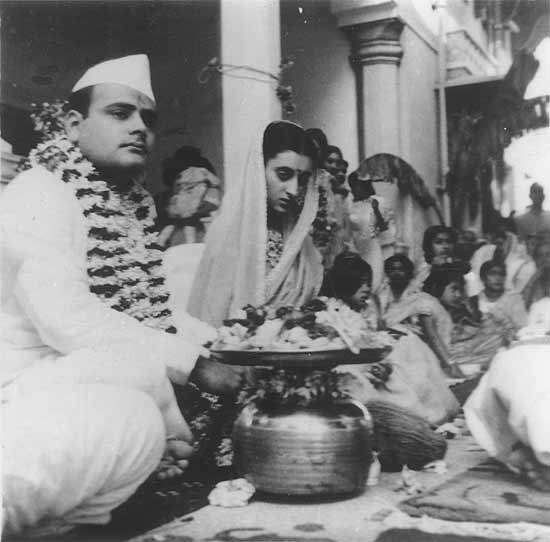
The marriage finally took place in March 1942, according to Hindu rituals. Indira wore a khadi sari that her father Jawaharlal Nehru had woven—a pale pink, not the traditional bridal red. This sari became a family heirloom, worn by Sonia Gandhi at her wedding in 1968 and by Priyanka Gandhi in 1996. The choice of pink over fiery red symbolised the family’s understated elegance and commitment to simplicity.

Political Rise and Independence

In 1952, Feroze Gandhi won independent India’s first general elections from the Rae Bareli constituency in Uttar Pradesh, with Indira serving as his campaign organizer. He quickly established himself as a formidable parliamentary force, unafraid to criticize his father-in-law’s government and champion the fight against corruption. Re-elected in 1957, he delivered his most significant blow in 1958 by exposing the Haridas Mundhra scandal involving the government-controlled LIC insurance company. The revelations severely embarrassed Nehru’s administration and forced the resignation of Finance Minister T.T. Krishnamachari.

Personal Turmoil and Separation

The narrative that Feroze and Indira lived separately after Sanjay’s birth contains some truth. Behind this separation lay the machinations of M.O. Mathai, Nehru’s personal secretary—a Syrian Christian from Central Travancore (like me) whose remarkable rise from cook’s helper to the Prime Minister’s secretary is a story in itself. Mathai successfully drove a wedge between Nehru and Feroze, exacerbating tensions that were already present.

Feroze had aligned himself with fiery young parliamentarians like Chandrasekhar (who later became Prime Minister) and Mohan Dharia, who frequently opposed Nehru’s policies in Parliament and party forums. The trio were known as Young Turks. To avoid confrontation with his father-in-law, Feroze maintained distance—he entered Teen-Murti Bhavan through the Right Flank to visit Indira upstairs.

A Personal Account

This remarkable history was narrated to me by two individuals who witnessed it firsthand. Ms. Bimla Behn, the gracious hostess of Teen-Murti Bhavan during Nehru’s premiership, shared intimate details of life within those walls. Mr. Sharma, the caretaker who served from Nehru’s time onward, corroborated her accounts.

I had the privilege of meeting them during the first week of November 1984, when our Regiment was deployed for VVIP security duties as Mrs. Gandhi’s body lay in state at Teen-Murti Bhavan following her assassination on 31 October. In the solemn intervals between duties, they spoke of the relationships they had observed—between Nehru, Feroze, and Indira—bringing history alive with their personal recollections.

The Brahmachari Connection

Bimla Behn also recounted how Indira, after Nehru’s death, was appointed Minister of Communications in Lal Bahadur Shastri’s cabinet. During those years, she suffered chronically from cold and a runny nose—a condition so persistent that photographs from the period invariably show her clutching a handkerchief. It was then that she encountered Dhirendra Brahmachari, who introduced her to yoga as a remedy. Regular practice not only cured her ailment but sparked a lifelong commitment to yogic discipline.

The Tragedy of Sanjay Gandhi

Regarding Sanjay Gandhi’s untimely death, I learned details from the President of the Delhi Flying Club in 1984, who was related to an officer in our unit. The aircraft involved had been imported as a Complete Knock-Down (CKD) kit, arriving in boxes. A week before the fatal flight, Sanjay ordered the club president to assemble the plane. Despite lacking test flights and certification from the Directorate General of Civil Aviation, Sanjay insisted on flying it. On 23 June 1980, near Safdarjung Airport, a malfunction caused the aircraft to crash, killing Sanjay Gandhi instantly.

Legacy

Feroze Gandhi’s life was marked by courage, integrity, and independence. Though often remembered primarily as Indira Gandhi’s husband and Jawaharlal Nehru’s son-in-law, he carved his own identity—as a freedom fighter, a crusading journalist, and a parliamentarian who dared to hold power accountable. His exposure of the Mundhra scandal remains a landmark in Indian parliamentary history, demonstrating that even within the confines of family, truth and justice must prevail.

So please do not get carried away by any propaganda taking rounds in the social media.

The Desert Fox

DF

A Ballad composed by Nikhil as part of Grade 10 English curriculum. Based on the North African Campaign of World War II.

The third hunter Monty he comes from the East
He has finally defeated the beast
Unaccustomed to desert sands and rocks
He has now whipped the desert fox
The desert fox he tests the king’s patience
He leads the king’s hunters a merry dance
Moving swift across deserts running tall
He had best fear Monty or face his downfall

The first hunter let the fox come to him
He waited with patience, his outlook grim
The fox in a flurry of speed and dash
Attacked the hunter in a move considered rash
The fox had beat hunter the first
But underestimated the hunter’s king’s thirst
So the king sent in bold hunter the second
The sands of the desert with blood would now redden
The desert fox he tests the king’s patience
He leads the king’s hunters a merry dance
Moving swift across deserts running tall
He had best fear Monty or face his downfall

The second hunter set traps and snare
The fox would die if an attack he dare
Though when the fox came the traps did fail
The second hunter oh did he go pale
The king’s patience was now truly wearing thin
He removed the second hunter for defeat is a sin
He then sent a hunter he long hated
His relation with the king quite complicated
The desert fox he tests the king’s patience
He leads the king’s hunters a merry dance
Moving swift across deserts running tall
He had best fear Monty or face his downfall

The third hunter not as dashing as his prey
He chose a position well sited in which to stay
He held his ground well near the sea
He gathered around him a vast hunter army
Once he gathered more hunters than needed
He attacked the weary fox who retreated
All we shocked that fox had lost
Then all were shocked at the cost
Several hunters maimed and so much expense
So many tools broken it makes no more sense
It makes one wonder who was the better
The defeated fox or his bankrupt hunters
The desert fox he tested the king’s patience
He lead the king’s hunters a merry dance
Once moving swift across deserts running tall
He should have feared Monty his final downfall

Education and Punishment

STThe rape of a first class student in school premises on July 17, 2014 in Bangalore added one more to the long list of child abuse cases, many of which remains unnoticed. It has brought back light on one of the worst perils that our country is facing today – child sexual abuse. It is a pity that most of such abusers are either close relatives or teachers of the children. In this case too, it was the physical education teacher. Most Principals let loose these physical education teachers (goons) on to the children to ‘discipline’ them, especially during assemblies or sports or cultural events. These teachers mostly end up misusing the ‘authority’ vested in them by the Principal and in many cases resulting into physical, sexual and mental abuse to the children. Majority of such physical education teachers have no qualification to be one.

Joshi Philip, our family friend, invited me to attend the prize distribution ceremony at their daughter’s primary school. Ann Maria, their daughter, a Grade 2 student, that day had the annual prize distribution ceremony at the end of the academic year. I accompanied Joshi to the school and at the reception we signed-in and were given a round yellow sticker which said “A Proud Parent”. I stuck it above my shirt’s pocket, close to my heart, as anyone will feel proud of it rather than hanging a visitor badge around the neck.

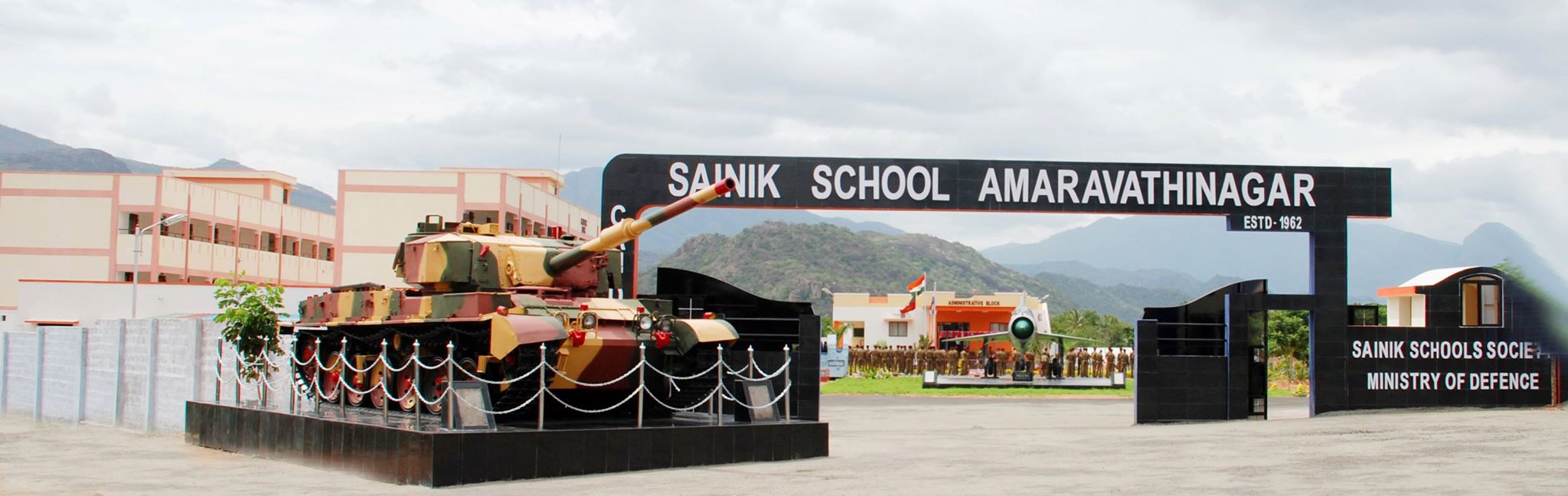
We entered the gymnasium where the award ceremony was to take place. Every primary school here has at least two such gymnasiums and we used to boast about the one we had at the National Defence Academy. We did not have one in the Sainik School. The gymnasium is a hardwood floored hall which serves as a basket ball court, assembly area, an auditorium and a lunch room or a cafeteria. At the end of the gymnasium was a stage where all the award winners were seated. The students marched in class wise with their teachers leading them and the students sat on the wooden floor while the teachers occupied their positions at the end near the wall. As expected of little children from Kindergarten to Grade2, they were talking and then the Principal appeared on the stage and raised her right arm. All children became silent and she said “eyes and ears towards me please” and introduced the two Masters of the Ceremony (MC) who were Grade 5 students.

The prize distribution ceremony went on beginning with the Kindergarten and any time when the children became noisy, the Principal would appear with her right hand raised and everyone became silent. During the entire proceedings not even a single teacher moved from their positions. At the end of the ceremony the Principal came on stage to thank everyone and to congratulate the prize winners and at the end wanted the children to do their usual “Silent Cheer”. I had no clue what it was. It was all the body and face expression of a cheer but done without a sound and was impressive and unique.

On leaving the school I realised that the self-discipline inculcated in these children will make them better citizens of the country and they do not need any “policing” to implement any laws or regulations.

Looking back to my Sainik School days, we mostly had the Principal and the Headmaster from the Education branches of the three services, and most of them one felt were the least ‘educated’. This was further reconfirmed during my training at the Academies and service tenures. Most of the Education Corps officers are masters in some discipline or the other and today we have many officers from the Arms and Services holding masters degree by virtue of undergoing the Staff College or the Long Gunnery or the Engineering degree courses. Some even hold Doctorates too. Academically these officers are many times better than their Education Corps counterparts.

Then why post such officers to the Military/Sainik Schools? Many of them behave no better than the physical education teachers of the Bangalore incident. Most are incapable of moulding and motivating the students to join the defence services and are pretty ordinary in teaching. Any officer in the Indian Army can conduct a better class than these Education officers. The only qualification these Education officers boast of is their Bachelor of Education (B Ed) degree. Most of the Haviladrs (Sergeants) who have attended any courses of instruction in various military training establishments (where they are luckily not trained by the Education officers) will beat them hollow in the art of teaching. Then why not even do away with the Education Corps, considering the education standards of the present recruits into the army.

Bharat Mata Ki Jai (Long Live Mother India)

After the Nirbhaya rape case most people of India were outraged and triggered protests demanding tougher laws to punish rapists. The parliament quickly passed the necessary laws, but mere bringing in of legislative changes will not likely to have an impact on the social causes of such incidents.

bm

As recommended by Justice Verma Committee, the executive, the legislature as well as the judiciary -all must respect women’s rights and must treat them in a non-discriminatory manner. In India, sexism begins at conception with parents’ preference for male children, especially if their first child was a girl. Girls suffer for the sake of their brothers. Boys tend to get more food, a better education, and more of the family estate. This has resulted in a skewed male to female ratio – Kerala having 1000 males to 1084 females the best and Delhi having 1000 males to 866 females the worst – among all Indian states as per 2011 census. So the reasons for such actions by Delhi men are obivious.

To compound the matters, we have our political leaders, rather than condemning such atrocities against women, make immature and uncalled for statements, supporting the miscreants. We have religious and spiritual leaders who exploit women and commit rape on their submissive devotes, and some even do not spare young boys.

The Indian society does not allow communication and inter-mingling of both sexes even in schools and at religious places. The boys and girls even in many co-educational schools are made to sit separately. In places of worship they are segregated and some religions do not believe in allowing the females into their places of worship. Even in North America, many places of worship of people of Indian origin follow this very strictly – as if to protect their cultural values. If these people have their way, they will never hesitate to pull a curtain to separate the sexes. Even in front of the Gods, the sexes are not treated equally. The godmen and their cronies ensure this.

Due to this segregation, many young boys conceive that a mere touch or a caress or a pinch or a poke would give them immense pleasure (mental orgasms). The pity is that some grownup men also feel the same, despite being married with children. This has resulted in the kind of ‘street harassment’ of women in India receive and the terror women face when commuting between their homes and their universities or jobs, threatening women for daring to leave their private spheres. Its a form of control over women’s ambitions and lives and such a culture is widespread and gets encouragement with tacit approval by the religions. This gives men permission to use women as the target for any excess anger or frustrations they might have.

In cities like Mumbai and Bangaluru, where boys and girls study, work, play and commute together, the incidents of ‘street harassment’ and incidence of terrorising women are the least. In the developed nations, there exist police forces which will swing into action the moment any such incidences are reported. There are systems in place to provide social support, shelter, counseling and care for the victim. India needs to develop such social security infrastructure to ensure that the women are safe on the streets or any public place.

India has a long history of treating women as property. Sati, an extinct tradition of wives being burned alive on their husbands’ funeral pyres and dowry killings are a few examples. All these because the women are not treated equally in the society.

The offerings from the temples or the Holy Communion are given first to men and then to the women. In the Syrian Orthodox Churches, prior to giving the communion, the priest says “…വിശ്വാസികളായ ദാസീ ദാസന്മാർക്ക് നൽകപ്പെടുന്നു (…visvasikalaya dasee dasanmarkku nalkappedunnu)” (being given to female and male devotees) and gives the holy communion first to all the male devotees.

Some political leaders and holy men are blaming the recent Delhi rape on women not wearing overcoats or sarees, women riding the bus, women using mobile phones, women wearing skirts, women going out with men who are not relatives, co-educational schools, moral character, being out late, fast food, the poison of western culture, and the stars being in adverse positions – the list goes on and on..

The only Indian society that treats women with respect is the Armed Forces. The General or any senior officer will always rise from their seats to receive a lady walking in – the lady may be a Sepoy’s wife of a Lieutenant’s wife. The only place in India where the ladies are served first – whether at formal or informal or at-home functions – is in the armed forces. Even in the military’s religious places of worship, women are offered ‘prasad’ or holy communion first. Officer on duty or the Captain of the Indian Navy ships will salute all ladies entering or leaving the ship irrespective of their social or military hierarchy. The ladies are always respected at home and outside by the defence service personal and the sexual discrimination is minimal in this society. That may be reason why we have defence service officers’ daughters performing extremely well in the society like Moushumi Chatterji, Sushmita Sen, Preity Zinta, Anushka Sharma, Celina Jaitly (Bollywood), Revathy (Malayalam/Thamizh Film), Renuka Chowdhary (Member of Parliament) – the list is endless.

In many Indian homes, women are expected to remain indoors and are never permitted to participate in any discussions or decision making process at home. They hardly have any say in their lives, their marriage, their education and their careers. Every aspect of the woman’s life is dictated by the males.

Sexual harassment of women – especially children (both boys and girls)– in Indian homes is well known. Many are afraid to even tell their mothers about the harassment they were subjected to, fearing social rebuttal. Many families hide such incidents fearing that no prospective groom will ever turn up for their daughter. To further complicate the situation, its a well known fact that the perpetrators of such sexual harassment are close relatives of the victim. There is an urgent need to educate children about sexual harassment and the steps to be taken to avoid it and actions to be taken in case one is subjected to it.

It must be made legally binding on school teachers, medical professionals and others who interact with the children to report cases of sexual abuse. Suppressing or hiding such facts must be made a criminal offence as is prevalent in many developed countries like Canada and US. The police must be mandated to register an FIR and the cases must be investigated as being recommended by the Justice Verma committee.

Until stricter laws are passed in the parliament, we will continue to hear of rape, sexual harassment and ill-treatment of women in India. Merely referring to India as “Bharat Mata (Mother India)” does not ensure respect to the women. The need of the hour is for a social and religious awakening to ensure equal status for women.

Leadership and Bible

(Based on Chapter 10 of the Gospel According to St John)
During our summer vacations while in school, we used to attend Vacation Bible School for 10 days. Every year the theme was based on one of the parables Jesus spoke. The theme for the summer after my Grade 6 was the ‘Good Shepherd’ parable as described in Chapter 10 of the Gospel According to St John.

GS

At that young age of eleven, the parable had a great impact and over the years I must have read it umpteen times and every time I read it, I interpreted it differently. The variations in my interpretations were caused by the varied experience one had serving the Army and the difficult situations one faced. I can now confidently say that the interpretations ‘matured’ with each passing day and with the experiences I gained.

The entire interpretations given below are solely personal and have no theological or religious connotations. I have selected verses 1 to 5 and 11 to 14 and have purposely omitted verses 6 to 10. I have clubbed a few verses being interconnected.

Verse 1.   Very truly I tell you, anyone who does not enter the sheep pen by the gate, but climbs in by some other way, is a thief and a robber.
Verse 2.   The one who enters by the gate is the shepherd of the sheep.

The leader got to face the team he leads from the front. He got to face up to each member of the team and must avoid the tendency to ‘sneak in’ from the side or the back. This applies more in case the team is facing an adverse or difficult situation.

The leader got to be confident and this confidence is the resultant of professional knowledge and integrity. Any leader with good intentions will always be accepted and such leaders will always enter from the main door.

Verse 3.  The gatekeeper opens the gate for him, and the sheep listen to his voice. He calls his own sheep by name and leads them out.

The team has to understand the voice of the leader and there by the leader’s intentions. The team will understand these only in case the leader is willing to communicate effectively with his team members.

Further, one has to know each member of the team and in case you know them well, you will always call them by their names. That could be the reason why in the armed forces everyone wears a name-tag. Earlier the Indian Railway staff and the State Transport staff used to wear their name-tags. In Canada, anyone who comes in personal contact with the customers is always seen wearing their name-tags. Who does not want to be addressed by their names than the “shoo – shooo” one often uses in the Indian Restaurants and public offices.

Leading from the front is the most important aspect of leadership. No one likes back-seat driving, even if the back-seat driver is the spouse or children.

Verse 4.   When he has brought out all his own, he goes on ahead of them, and his sheep follow him because they know his voice.

The necessity for the leader to take the entire team together and lead them from the front is the essence of this verse. Here again the importance of the team knowing the leader is stressed.

Verse 5.   But they will never follow a stranger; in fact, they will run away from him because they do not recognize a stranger’s voice.”

In case the leader fails to communicate well with his team and make his intentions clear, will become a stranger. The team will never accept a stranger and will never be confident to follow a stranger.

Verse 11.   I am the good shepherd. The good shepherd lays down his life for the sheep.
Verse 12.   The hired hand is not the shepherd and does not own the sheep. So when he sees the wolf coming, he abandons the sheep and runs away. Then the wolf attacks the flock and scatters it.
Verse 13.   The man runs away because he is a hired hand and cares nothing for the sheep.

The above three verses apply in literal sense to military leadership, where the call of duty takes one into life and death situations. This also applies to all leaders; the only difference could be that one does not have to lay down one’s life, but at times may have to pay for with his status, money etc.

Any leader who works for self-glorification and physical rewards is the hired hand. The famous saying that ‘in case you work you get more work else you get your pay‘ applies here. Such a person does not ‘own’ the team and is bothered more about his self-interest. They will be the first to sacrifice a team member in case something goes wrong. Often heard these ‘hired hands’ saying “I briefed him in detail about the task, but he goofed it up”. They never realise that their voices were not recognised by the team (sheep) as the briefing must have been ineffective or the leader did not know the ability of each team member (sheep) as to what they can deliver.

The hired hands will vanish from the scene when something goes wrong and will only surface to gobble up all the credit for the effort of the rudderless team to overcome the adverse situation.

Verse 14,   I am the good shepherd; I know my sheep and my sheep know me.

You got to know the team (sheep). You got to know every team member in depth. You got to know the strengths and weaknesses of each. A good leader who knows his team will always project the strengths of his team members while covering up their weaknesses.

Once the leader knows the team, the team will know their leader. In order to know the team, the leader got communicate, both formally and informally with the team members. Theses communications opens up the personality of the leader and based on it each team members makes an opinion or impression about the leader.

Everyone has to assume leadership sometime or the other; it may be at work, in your class, at home, during family or social events etc. Wishing all the leaders the grace of God to became a “Good Shepherd”.

What Do I Do Now?

This is the question everyone asks me when I call-up anyone back home in India. When I say I am enjoying my retired life, the immediate reaction has been “You just cannot sit idle and must be up to something.” Hence I decided to pen down all the activities I indulge in throughout the day.

rk

Saying good-bye to the army was very difficult, especially since one enjoyed the best of times and it’s the Army which has made you what you are this day. One could not have asked for anything better from God and the system – otherwise from being a primary school teacher’s son, I would not have retired as a Colonel. All what I am today is the result of the education of Sainik School, NDA, IMA and various Military Institutions. In sheer physical terms – from a 22 kg nine year old boy to a 78 kg 42 year old – all credit must belong to the Indian Army. So it was a painful good-bye to the arms.

Looking back, thirteen years since I hung my boots, I have no regrets or complaints. God and the Army Headquarters (MS Branch) was always kind to me that I served 10 years in Delhi (even though I had no interest in Delhi;) five years on various courses and to top it, had only two years of High-Altitude postings. Again nothing to complain.

The army made me a computer aware man despite being a BA. It made me a leader and a man. I never ended up working in the Army – as I enjoyed every part of it. Thanks to God, all my colleagues, my superiors and mainly to the men who really made me feel proud.

The journey out of the uniform had been different to what many of you experienced as I took the evening flight to Canada, the day I handed over command. I jettisoned into a new and unknown world, where my wife and children were waiting.  As promised, my wife had a nice, big home and a car waiting for me and as she was earning a good salary as a pharmacist. I had no pressures at all. My first step was to amalgamate with the Canadian society.

To my dismay, I found that all my perceptions of the Western world were totally misplaced. No racism, no shunning being a brown skin, and a very friendly lot of people who valued human aspects of life. I spent my first six months learning to speak English the way Canadians do and I found all the people whom I spoke to at the malls or coffee-shops or in the bus, very patient and friendly trying to make out what I was trying to communicate. These communications helped a lot and also corrections from our children got me into speaking Canadian-English.

After six months, I landed up with a job as a supervisor at a call-center and I enjoyed that too for a two year period until our children demanded that I be home when they were there.  They did not want to live in an empty home.   That’s it! I quit my job, to be a house husband. My wife who was doing a four-day week took to a five-day week as her 10 hours of extra work made up much more than what I earned in my 40 hour week and expenditure came down as I did not have to drive to work.

Having taken over as the house-husband, I felt I was busier than any time before as I woke up first, made tea for all, cooked breakfast, packed lunch and fresh-fruit-juice and dropped off the children to school and saw-off my wife to work. Then were the chores – washing dishes, laundry, vacuum cleaning the house, walking the dog (a very difficult aspect in Canada- especially in winters), preparing lunch, gardening, grocery and the list goes on. By afternoon, I picked up the children from school; some days in the evening  when they had any after school activities like drama club, environmental club, debating club etc. Then was dropping them off to their extra-curricular activities by 5 PM – for swimming, tennis, golf, music, dance, or voluntary service at the community old-age home. Got everyone back to home by 6 or 7 PM and helped them with their assignments and study and then cooked dinner and we waited for Marina to return to enjoy a family dinner at 9 PM.

Now with both our children moving out of home to stay in Downtown Toronto, pursuing their job and university, my busy schedule came to a near end.  That was when I found time to read more and write more.  I took to photography as a new hobby as I realised I needed quality images for my blogs.  I now get busy only on the weekends when children come home, normally preceded with a text message listing out all the groceries and other stuff they need.

The life has kept me busy and hence I presume in good health too. I never carried any baggage in my life. I never carried a brief-case to office as I did not believe in carrying office to home or vice-versa.  I recall a conversation with an NCO who met me while on vacation last year who said “You are the only Commanding Officer I’ve seen coming to command a unit with four boxes and leaving with only two.

Air-Canada only allows two pieces of baggage,” I replied.

Remembrance Day

pp

Remembrance Day is observed in Canada and most of the Commonwealth nations, (barring some countries like India), on 11 Nov (11/11).  At 11 minutes past 11 o’clock, all the buses and trains will stop, the fire engines will sound their sirens for a minute as a mark of respect to all the fallen soldiers.   Remembrance Day (also known as Red Poppy Day,) is a memorial day observed since the end of World War I to remember the members of the armed forces who have died in the line of duty.

In India we remember our soldiers only at the time of war and forget them soon after. Our governments over the time have been unfair to the Armed forces and have brought down the status of the Army Chief after every war fought by the Indian Army – . After the 1947-1948 war, the service chiefs were made junior to the Judges of the Supreme Court. They were made junior to the Cabinet Secretary after the 1962 war and junior to the Attorney-General after the 1965 war. After the 1971 war, they were made junior to the Comptroller and Auditor-General.

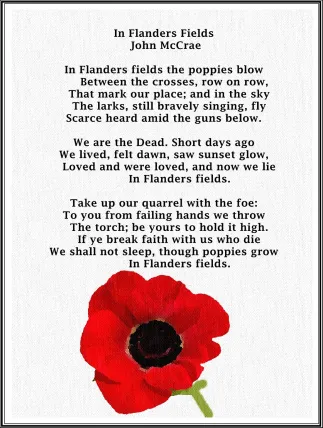
The red poppy has become the emblem of Remembrance Day due to the poem In Flanders Fields by Lieutenant Colonel John McCrae, a doctor of the Canadian Army during World War I.   During the war, he was treating injured men – Canadians, British, Indians, French, and .Germans. The poem was written to vent the agony felt by McCrae after he had performed the funeral ceremony in the absence of the chaplain, for his young friend and former student, Lieutenant. Alexis Helmer caused by a bomb.

In the poem McCrae describes about the poppies that bloomed across some of the worst battlefields of Flanders in World War I, their brilliant red colour an appropriate symbol for the blood spilled in the war. The poem speaks of Flanders fields, but the subject is universal – the fear of the ones who sacrificed their ‘today’ for our ‘tomorrow’, that they will be forgotten, that their death would have been in vain. Remembrance, as symbolized by the Red Poppy, is our eternal answer which belies that fear.

An American teacher, Moina Michael, in November 1918, read McCrae’s poem “In Flanders Fields”. She immediately made a personal pledge to keep the faith and vowed always to wear a red poppy of Flanders Fields as a sign of remembrance and as an emblem for keeping the faith with all who died.

Two years later in 1920, during a visit to the United States, a French woman, Madame Guerin, learned of the custom. On her return to France, she decided to use handmade Poppies to raise money for the destitute children in war-torn areas of the country.  Following the example of Madame Guerin, The Royal Canadian Legion officially adopted the Poppy as its Flower of Remembrance.

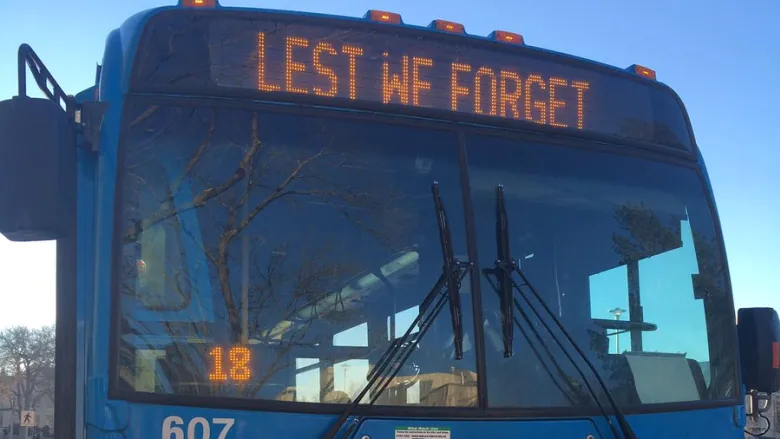
Thanks to the millions of Canadians who wear the Legion’s lapel Poppy each November, in memory of thousands of their countrymen who died in battles (except many who emigrated from the Indian sub-continent). During the Remembrance week, all the flags fly at half-mast; all the buses have “Lest We Forget” signboards, most of the shops, restaurants and malls display banners and posters to honour the soldiers and veterans.

On the Sunday of the Remembrance Week I attended the Holy Mass at the Canadian Catholic Church and the Orthodox Syrian Christian Church.  In the Catholic Church anyone and everyone including the clergy, all were wearing the Red Poppy, whereas in the Syrian Christian Church none were wearing.  You all can guess the reasons.

Mississauga, the city we reside, a notification at the Municipal Transport (MiWay) on Remembrance Day read as follows “The City of Mississauga’s MiWay Transit is offering free service for Canadian Forces veterans and a companion on Remembrance Day, Friday, November 11. To obtain a free ride on Remembrance Day veterans must wear their uniforms, medals or other items that clearly identify them as veterans to our transit operators. Veterans are respectfully asked to identify their companion to the transit operator so that he or she may also ride free. All MiWay buses will observe a minute of silence at 11 a.m. on November 11 to recognize the sacrifice made by our veterans. Transit operators will stop their buses during this tribute.”

One always passes by the veterans and cadets selling the Red Poppy in the malls, bus terminals, subway/railway stations, during the Remembrance Week.   The money collected is used for veterans’ welfare by the government. The public support for the event is always overwhelming where ever they have Remembrance Day ceremonies. People turn up in large numbers. The media support is also tremendous. All news presenters, anchors, all wear the Red Poppy for the entire week. Have you seen any Indian news presenters or any media person ever wearing the Flag on the Flag Day (Indian equivalent of Red Poppy Day)?

Canadian Prime Minister and the entire cabinet, appear on any media, wearing the Red Poppy. In India, on the Flag Day, children pin the flags on our President and the Prime Minister and Chief Minister, and for the next event you see them without the flags on their chests.

So, next time you see someone selling the Red Poppies or Flags, please pause and buy one and pin it with pride on your chest, to pay respect to those fallen soldiers all over the world who ensured your honour and safety and made sure that you live a life full of dignity.

Paying Homage to A Fallen Soldier

AJ

During the Democratic National convention for the US Presidential Election of 2012, Elaine Brye, a “Military Mom” introduced the American First Lady Michelle Obama. Elaine is a “Military Mom” as of her five kids, one each is serving in the Army, the Navy, the Air Force and the Marines.. Will this ever happen in India in the near future? Many a times the President of India remains seated while the widow/parent of a posthumous recipient of Paravam Vir Chakra is standing while her husband’s/ son’s citation is read prior to presenting the award,   No secret that America is the world leader.

A few years back, after an attack on NATO troops in Afghanistan, all the national flags in Canada and US were observed flying at half-mast, paying respect to the fallen soldiers. There were announcements on the media to fly the flags at half-mast and all citizens did it out of sheer respect for that unknown fallen soldier.

Some may claim that death is part of the job in the armed forces and there is no need to go into mourning every time for a fallen soldier. Please remember what French Nobel laureate Albert Camus said “Martyrs, my friend, have to choose between being forgotten, mocked or used. As for being understood: never”.The least we can all do is to pay our respect to the fallen soldier and what better way than flying our Tri-Colour at half-mast. It does not cost anything, but surely enhance our national esteem and pride.

Field Marshal Sam Manekshaw, the General who lead the Indian Army during the 1971 Indo-Pak conflict, and a hero of the young of that time, died at Ootty in June 2008. Only the Minister of State for Defence represented the Central Government at the funeral. The reason given – Field Marshal being a new appointment created after 1971 war – did not find a place in the warrant of precedence. While Manekshaw was in the hospital in Apr 2007, the Defence Secretary handed him over a cheque of Rs11.6 million in back wages from the time he assumed the rank of Field Marshal in 1973. Even though on his death bed, Manekshaw in his usual humorous way asked the Defence Secretary whether he would have to pay taxes on this. Manekshaw being a true soldier, never made any claims to his unpaid salaries and never came on the media to make it into any issue. What a shame – this can happen only in India.

One always wondered as to why we did not see the Tri-colour on Indian streets, atop homes, in the shopping malls etc like the Red Maple Leaf flag in Canada or the Stars and Stripes in the US. Our constitution was amended to cater for flying of the National Tri-Colour by one and all – (Courtesy Sushmita Sen and Sachin Tendulkar and Naveen Jundal). Have you ever seen the Indian Tri-Color fluttering in the schools, government offices, or at homes in India? Its pertinent to point out that the Indian Army units and Indian Naval Ships always fly the Tri-Colour, all Indian Air Force aircrafts have the Tri-Colour painted on them. It is sad to note that our national carrier has the Tri-Color painted very insignificantly, compared to the logo. If we do not fly the Tri-Colour, then there is no need to fly it at half mast for the fallen soldier.

May be the Common Man is still not aware of this aspect of flying the Tri-Colour, may be schools are not educating the students about the importance of flying the Tri-Colour, may be that out text books have not been amended. The reasons may be many, but the solution is simple – educate the common man, make him aware and teach him to develop national pride.

Recently I attended a Dolphin show at Los Angeles, and behold, the show begun by paying homage to all NATO fallen soldiers. Further they made all serving soldiers and veterans and their family members to rise in their stands, so that the crowds could pay their respects. The crowd spontaneously rose on their feet with a loud applause.

Why can’t we have such acts? I am sure that the Indian common man is much more patriotic and emotionally charged towards any national issues than anyone around the world. This aspect has been demonstrated time and again by the common man– during any aggression on our borders, national calamities and during the cricket matches.

Someone needs to tap this potential of the common man. Who else other than the visual, audio and print media who can do a better job? Even if ten percent of media time and newsprint wasted to discuss the issue of the political murders could have been used to highlight the sacrifices of our soldiers; we would have achieved wonders.

Nowadays many veterans are carrying out presentations, shows and talks across the country – from corporate boardrooms to educational institutions. It’s high time at least the veterans begin by paying respect to our fallen heroes and soldiers, like the presenter at the Los Angeles Dolphin show. May be for all you know, this presenter may also be a US veteran.

The cinema industry has contributed enormously towards educating the masses about various national, social and political issues. Some movies did justice in bringing forth the sacrifices and services rendered by our soldiers.

I conclude with the patriotic song from the movie Hakeekat करचलेहमफ़िदाजान-ओ-तनसाथियों,अबतुम्हारेहवालेवतनसाथियों (Kar chale hum fida jaan-o-tan sathiyon, ab tumhare hawale watan sathiyon) (Thus did we set off friends, having sacrificed life & limb, The freedom now, of this land, Is but within your hands).

Babuji Zara Dheere Chalo (Oh Dear, Please Go Slow)

bbj

Our Regiment in November 2002 moved to Devlali from our operational location (I assumed command in the operational location).  After the Regiment settled down, as was customary, our Second-in-Command (2IC) requested me to take a round of the Regiment.  We started with the office complex and headed straight of the Administrative Branch office.  On the entrance, as with the case of the Regiment I had served earlier, the sign read “Out of Bounds for All Ranks”.  I refused to enter the office as the Commanding Officer (CO) also was part of all ranks.  I ordered the sign to be removed with the reason that the Administrative office is to ensure proper administration of all ranks and everyone has the right to visit and the right to entry.  After visiting the other Regimental institutions, we came back to the office complex and by then the sign at the entrance had vanished.

On entering the office, there were about six clerks seated and a few Olive Green coloured cupboards placed there to hold documents.  As usual, like most cupboards in all the army units, the front of the cupboard had a white cross with the stenciling on the top that read “Remove First in Case of Fire”.  My query to the head clerk was as to which one I should remove first, as all the six cupboards had the same stenciling.  The white cross mark indicates that the cupboard held Secret documents, where as all Secret documents are in the custody of the CO.  All cupboards were ordered to be painted olive green, obliterating all the markings.

That was when I realised that I had developed a penchant dislike for all the clerks.  The mere sight of them put me off.  I tried to reason out with all logic and compassion and tried to look deep in me for the development of such hatred.

It all begun as a Second Lieutenant (2Lt) when I joined our Regiment, our senior officers advised me to handle the clerks with a ‘kid-glove‘.  I could not fathom the reason as I thought everyone in the Regiment was a soldier first and then a clerk or a gunner or a radio operator.  It could have been because in those days, most officers like me were handicapped in that one had to depend on the clerks to produce any document type written on the Remington typewriters.  When any junior officer approached the clerks for assistance they always came out with the same excuse – The Battery Commander (BC) or CO had given him an urgent task and hence one had to wait.

As the years passed by, I realised that the clerks were mostly the root cause of all the rumours that went around the Regiment discrediting the officers.  Some even claimed that they were better qualified than their CO or BC as they were Masters (some even claimed they were double Masters [MAMA]) where as the officers were graduates.  Once I told off a clerk that in case he was worth even half the value of the paper on which his degrees were printed, he would not have joined the Army as a clerk.  They were always a hindrance in communication between officers and soldiers and some even charged commission for the work they did for the soldiers.

Once as a BC – a Major in 1995, I had produced a Court of Inquiry (C of I) printed on the computer.  The CO was not impressed with it as I had not submitted a manuscript copy.  He called me to ask as to why I did not submit a manuscript copy as the C of I had to be in writing.  I reasoned out with him using the definition of writing as per Indian laws which said making of any mark or impression is to be considered as writing.  I further explained to him that in High Court and Supreme Court, the evidence is always type written by the steno as dictated by the judge.  In this case I had typed it and all pages have been initialed by all members of the court and the witness whose statement had been recorded.  Not being impressed by my justifications, the CO summoned the Head Clerk who ruled that in case all the pages were initialed, there was no need for a manuscript.

The CO then asked me as to why the witnesses were not duly warned prior to making the statement.   I said as C of I is not an evidence, there is no need to warn as in the case of recording Summary of Evidence.  That was when I remembered the case when a C of I was instituted to ascertain the circumstances under which I beat up a senior police official in Delhi when I was a 2Lt.  I refused to be warned and as usual, the Presiding Officer of the C of I summoned his Head Clerk and I was really impressed by his ruling that officers are not warned and the warning applies to Other  Ranks only.

This ‘Blind Belief’ in the head-clerk and not trusting an officer upset me on both the occasions.  Had the superior officers consulted the Head Clerk in my absence, I would not have felt so bad and it would not have scarred my mind.

On taking over the Regiment , I ordered the curtailment of the practice of addressing clerks as “Babu Ji”.  The same applied to “Pundit ji”.  Luckily we did not have a “Master Ji”.  This could be carry forward of addressing them from the uneducated belt of India.  In Kerala, babu is addressed as ‘Gumasthan‘, pundit as ‘Poojari‘ and master as ‘Aashan’.  I ordered that the suffix of ‘Ji‘ for all these VIPs be done away with.

After the Regiment reached Devlali, due to the heavy commitment being a cooperating units of School of Artillery, we were always short of manpower.  I ordered that all clerks will assemble with the Regiment at 7 AM and in case of any shortfall of manpower, the Regimental Havildar Major (RHM) could utilise the clerks, as the CO never gave then any tasks and they were all soldiers of the same status – Group Y.  The RHM employed them for everything from assisting the chef in the kitchen to assisting the radar detachments at the field firing ranges.

The RHM was the happiest as once he said that earlier when he went to the office, no clerk was ever respectful to  him.  Even a recruit clerk would show him eyes and now he gets a VIP treatment as the clerks are mortally scared that they would be teamed with the telephone line laying party.  The line laying party is the first to set out on any outdoor exercise and the last to come back after reeling in all lines after the exercise.

After the Argentina – Netherlands Semi-Final – FIFA World Cup 2014

Penalty shoot out decided the finalist after two hours of play that day and it was past 6 PM here in Toronto. Our dog Maximus was getting restless as this evening walk was getting delayed.  I took out a plastic bag, leashed Maximus and off we went on our regular walking trail to the city center.

The city center of Mississauga (Canada) has Celebration Square in front of the City Hall (Office of the Mayor,) where many community events like musical shows, yoga classes, aerobics, demonstration of city’s upcoming projects like the light rail etc are held in summer evenings.  All FIFA World Cup matches were projected on two huge screens on either sides of the stage and being vacation time for schools, many parents and children congregated there to enjoy the matches (stadium effect.)  In winter it gets converted into a skating rink.  The Celebration Square is about five minutes walk from our home.

I expected that the crowd must have vanished by the time we reached the Celebration Square as it was fifteen minutes after it was decided that Argentina will meet Germany in the final.  To my surprise I found a gathering of about 250 people of all ages in front of the stage.  The Sergeant from the City’s Paramedics was conducting a lecture cum demonstration on Cardiopulmonary Resuscitation (CPR).  We stood there to watch the proceedings.

mk

There were school kids and adults practicing CPR on manikins (one shared between two or three) provided by the St John’s Ambulance team.  The staff and volunteers from the St John’s Ambulance were assisting the participants to practice CPR on their manikins. There were many little kids who might have had no interest in CPR, gathered around Maximus and started petting him and playing around with him while their parents and siblings practised CPR.

My mind went back to my days as a Team Leader in the call center I worked after landing in Canada.  All team leaders are required to be certified in CPR and First Aid as per the company policy and I also had to attend the class.  I presumed I had some knowledge about it, but after the class I felt ashamed about my shallow knowledge of CPR was (after commanding a unit of the Indian Army) and that I did not know the use of a defibrillator, which are placed at all public places in the city like offices, malls, movie halls, swimming pools, etc.

Our children have undergone training on CPR and First Aid while at school.  Our son Nikhil, working as a life guard and swimming instructor with the city had to qualify the third level of CPR and First Aid.  My wife Marina, being a Pharmacist also had to qualify in CPR and First Aid.  They have to re-qualify every two years to maintain the validity of their certification.

The final match of any Regimental or Formation level tournament is attended by all ranks, their wives and children.  After the prize distribution we generally hold a High Tea.  It would be good idea to have a fifteen minute class on such subjects after the game.

Human life is very precious and a very small action or effort can save a life provided you have knowledge of how to administer CPR and First Aid.

Poor Banian or a Wife Beater

One day our teenaged son came up to me and asked me if he could borrow my ‘Wife Beater.’ I lost all my balance and composure and I told him that I neither ever had beaten their mother nor ever intend to do so. I stopped short of telling him that the idea did sprout in my mind a few times, but good senses always prevailed over my impulse. Our son understood my predicament and explained that he wanted the sleeveless white vest I used to wear while in India. Hardly seen anyone wearing it in Canada; could be something to do with the weather and reduced perspiration level.

Our son explained that in the TV show ‘COPS‘ had a lot do with the creation of this word. Every time they showed a guy getting arrested for beating his wife, he was shown wearing one of those sleeveless vests.

Some say that in 1947 in Detroit, Michigan, when police arrested a local man (James Hartford, Jr.) for beating his wife to death, the local news stations aired the arrest and elements of the case for months after, constantly showing a picture of Hartford, Jr, when he was arrested, wearing a vest and constantly referring to him as ‘the wife beater.

I always marveled the simple in design white sleeveless vest for all the services it rendered. It never even cared where it ended up after its owner threw it out after clinging to his skin and exploiting it to the hilt. They mostly ended up as a shoe-shining cloth, a mop, a duster, etc. Why should someone discard such good quality pure white cotton cloth?

I never understood why any more layers than absolutely necessary are worn in a hot climate, but I always felt that it absorbed the sweat. It absorbed the sweat, got wet, making me feel a bit uncomfortable at times, but it always stopped the passage of the sweat to the outer layer of the Olive Green (OG) Uniform. The white salt left on the shirt after the sweat dried up was rather un-soldierly. My skin never felt comfortable touching the thick clothed OG shirt. The poor banian maintained an impregnable gap between my skin and the thick shirt.

Some of my friends in the Army wore a banian with sleeves. I always preferred the sleeveless version to avoid ‘Sunday is longer than Monday‘ syndrome. This happens when you wear a short sleeved shirt or T shirt, under which you have worn a sleeved banian and the sleeve of the banian creeps out of the shirt sleeve.

On joining Sainik School Amaravathinagar (TN) at the age of nine, my box had a dozen banians. We had to wear the banian for the morning Physical Training (PT). The aim was to observe the physical development of the body and to ensure that there were no skin infections. This practice of wearing the banian for PT continued on to the National Defence Academy (NDA) and the Indian Military Academy (IMA), till I was commissioned as an officer, after which I started wearing the white T-shirt as was the practice for all officers. The men still wore the faithful banian for PT. I still enjoyed the banian clinging to my skin and ensured that I had it on at all times.

My sahayak (helper) in the regiment was Sepoy Hukum Chand, who served me with at most dedication, love and care. He was my accountant, my personnel assistant, my bodyguard, my radio operator, my buddy in all aspects. He ensured everything for me – from when I got up, my morning tea, my cigarettes, my uniform, my room, my wardrobe, my outfit for the evening party etc. This continued for long seven years until seven year itch erupted – I got married and Hukum Chand refused to be dictated to as to what dress I wore for the evening party. My wife did not approve the suit Hukum Chand had chosen for me to wear that evening as it did not match her saree. My wife won and Hukum Chand lost.

Sepoy Hukum Chand had observed my keenness to wear the banian at all times and every six months he bought a dozen of them from the regimental canteen (he paid for it with my money as he was my accountant and I had no clue about the expenses). On enquiring as to why he bought new banians every six months, he told me that they become yellow on washing repeatedly in brackish water used by the washerman. He used to snip off the shoulder straps and cut open the trunk and it became a shining cloth for him to polish the leather boots and the belt and also the brass badges of rank. He said that the yellow shining-cloth available at the regimental canteen left yellow lint on the OG uniform and the black boots and looked awesome and he had to put in extra effort to clean-up after polishing. Used and many-time washed white banian was best suited for it and one did not have to pay to buy the shining-cloth – What a costly saving?  He had the thin cloth for the leather boots and belt and the thicker ones for the brass.

After five years of postings on staff and various long courses, I returned to the regiment at Sikkim as a Battery Commander. Sepoy Sri Chand was this time assigned as my Sahayak and Hukum Chand was by then promoted to the rank of a Havildar. A few days after I rejoined the unit, Havildar Hukum Chand came to my bunker while I was having my afternoon siesta and started admonishing Sepoy Sri Chand as he had not maintained the Saheb’s bunker as per standard. Hukum Chand started advising Sri Chand about my likes and dislikes, my preference of tea, food, clothes, cigarette, etc. At the end he said “Saheb likes wearing a banian at all times, even while he is sleeping.” That was the time I observed that I was sleeping in my favourite lungi-banian. He added that I preferred wearing the thick banian under the uniform and the thin ones under the civil dress. A preference I never had and may have been cultivated by Hukum Chand to ensure that he had a constant supply of thin and thick cloth for polishing the leather and the brass.

Many a times your preferences and habits are not self-developed, but thrust upon you by the environment.