Sacrificing a Family Tradition

When we joined Sainik School Amaravathi Nagar (Thamizh Nadu) in Grade 5 in June 1971, there were many vegetarians amongst us.  Most Brahmin Cadets up until then had never ever eaten anything non-vegetarian in life.  As the school years went by, many shed their herbivorous status (other than the real hardcore ones) in favour of an omnivorous one.

We were served ground pork curry with bread for dinner on the first Friday of every month.  The meat came from the Yorkshire Pigs that the school farm reared.  Many cadets on joining the school were reluctant to eat pork due to religious reasons and also because they had never tasted it before.  Nowadays the very same pork curry, with all its flavours intact, is very fondly served to the members of the Alumni and their families during the Alumni meet.  Everyone, including little children of the Alumni look forward to this dinner.

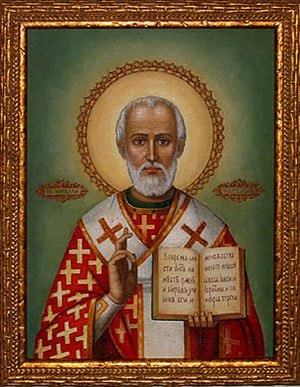
Like a true Syrian Orthodox Christian, I too had never tasted pork.  Our family tradition was based on Deuteronomy Chapter 14: Verses 3 to 8 which says “Do not eat any detestable thing.  These are the animals you may eat: the ox, the sheep, the goat, the deer, the gazelle, the roe deer, the wild goat, the ibex, the antelope and the mountain sheep.   You may eat any animal that has a divided hoof and that chews the cud.   However, of those that chew the cud or that have a divided hoof you may not eat the camel, the rabbit or the hyrax. Although they chew the cud, they do not have a divided hoof; they are ceremonially unclean for you.  The pig is also unclean; although it has a divided hoof, it does not chew the cud. You are not to eat their meat or touch their carcasses.”

This was the rule the Jews followed a thousand years before Christ in accordance with the Torah passages in Leviticus that lists the animals people are permitted to consume. It first notes what qualifies an animal that is absolutely permitted.   Muslims also follow a similar rule.  Chapter 6 Verse 146 of Quran says “ We prohibited every animal of uncloven hoof; and of the cattle and the sheep We prohibited to them their fat, except what adheres to their backs or the entrails or what is joined with bone.”

Although Christianity is also an Abrahamic religion, most of its adherents are permitted to consume pork. Since Christianity lost most of its roots from Judaism, Christians are not bound to most of the restrictions of Mosaic Law. However, Seventh day Adventists consider pork taboo, along with other foods forbidden by Jewish law. The Eritrean Orthodox Church and the Ethiopian Orthodox Church also do not permit pork consumption. The Syrian Christians of Kerala belong to this lineage of pork taboo. For many Scottish highlanders too, pork is taboo although the reasons are quite unclear.
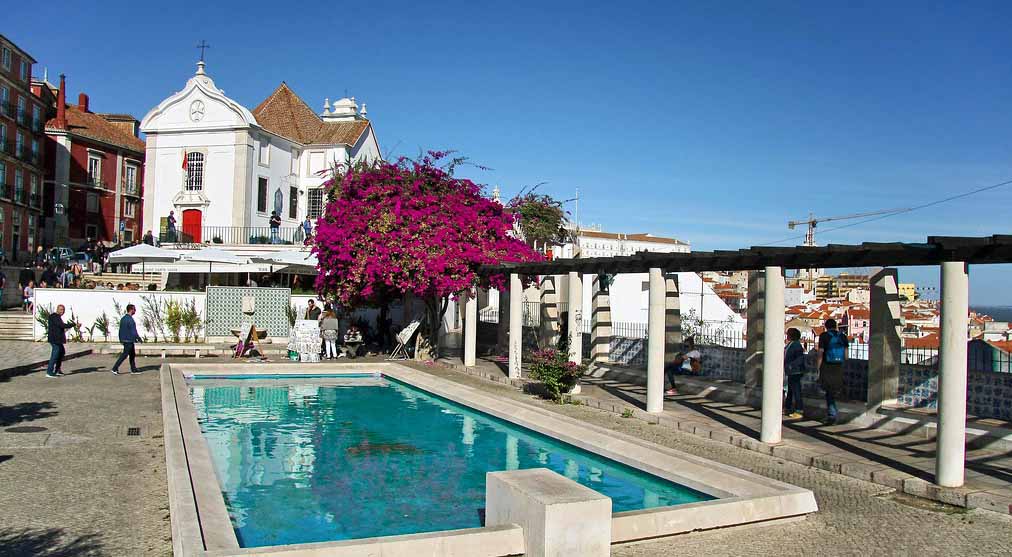
It is believed that St Thomas, an Apostle of Christ came to Kerala in 52 AD and converted local Hindus and some Jews to Christianity.  Cochin Jews (also known as Malabar Jews or Yehudey Kochin,) are the oldest group of Jews in India, with roots that are claimed to date back to the time of King Solomon (970 – 931 BCE).  St Thomas did not impose any changes to the pattern of worship, rituals and traditions of the locals.  This resulted in Malayali Syrian Christians with the Jews following Mosaic law.

It changed when the Portuguese colonised Kerala in the 16th Century.  Their concept of ‘the cross preceding the sword‘ resulted in forcible conversion of Malayali Syrian Christians to Catholicism.  Portuguese Inquisition used consumption of pork to distinguish between Jews and Catholics and accused the Malayali Syrian Christians of being Jews. Those Malayali Syrian Christians who refused to convert to Catholicism had to flee away from the coastal areas controlled by Portuguese to  the hills in the interior of Kottayam.  They today are further divided into Marthoma, Jacobite and Orthodox factions.

The first Friday of July 1971, we were served pork for dinner.  There were separate tables for all those who did not want to partake the ground pork, where they were served potato and peas curry.  I too joined this vegetarian section. So our taboos were at home. We learned about tolerance to eat what we eat, together, may be at separate tables though, but without hate and rancour.

Cadet Sunil Kumar, our batch mate, a Namboodiri (a hard core Kerala Brahmin) erroneously joined the wrong queue and ended up eating pork.  After eating it, he said it was so tasty that he even went for a second helping.  This motivated me to go for the forbidden pork on the first Friday of August 1971.  I sacrificed a family tradition of not eating pork in exchange for a mouth-watering dish on that day and from then on I never missed it on any first Friday of the month.

So, now I follow the New Testament of Bible (As do most Christians world wide) where in as per Gospel According to St Matthew 15:10, Jesus calls the people to him and says, “Hear and understand: it is not what goes into the mouth that defiles a person, but what comes out of the mouth; this defiles a person.” Minor mercies that religions do offer some flexible options!!

Despite the many health warnings that come with red meat in general and processed pork in particular, to this day I remain a happy and avid pork eater, thanks to Sainik School Amravathinagar and Sunil Kumar.

The Lesser Teachers

Teachers play an important role in our lives to become good human beings and valued citizens to society. Teachers are an extremely important part of any school society and at Sainik School, Amaravathi Nagar (Thamizh Nadu), it was no different. What Cadets at our school learned from our teachers at a young age has in most cases stayed with us and will continue to do so till our graves.

Here I am writing not about our great front line teachers, but about those lesser mortals, great human beings, who always worked in the background to make learning easier for us Cadets. They are the support staff who assisted with most activities that happened at our school.

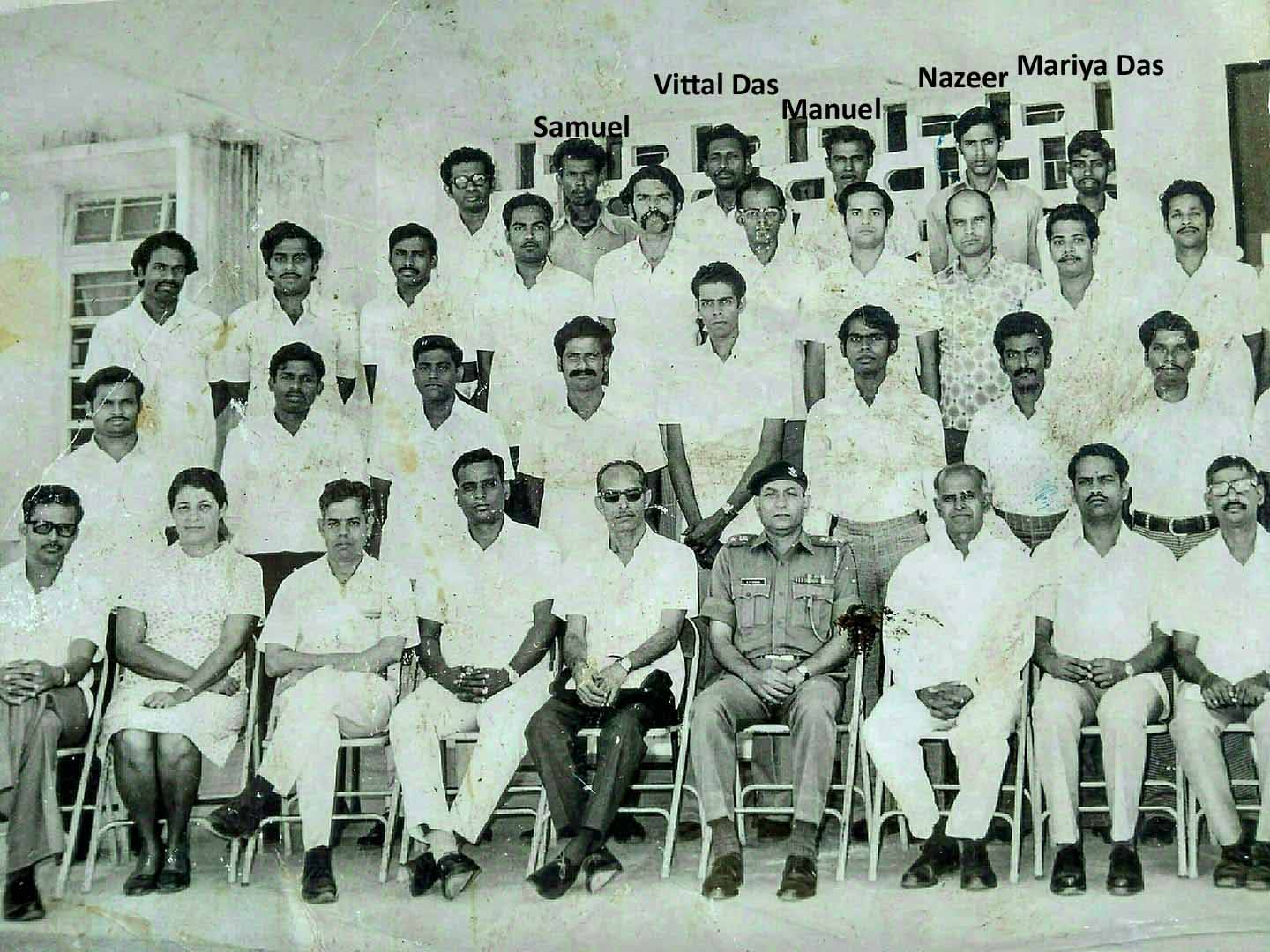
The oldest of the lab attendants was Mr. Vittal Das. He was at the Biology lab assisting Mr Paul and Mr George, our zoology and botany teachers. He made sure that we got frogs for our dissection classes, duly anesthetised with a heavy dose of chloroform. He was the most politically active among the support staff, even though they were not unionised. He was in the forefront fighting for their rights. He was a member of the Dravida Munnetra Kazhakam (DMK) who remained steadfast with the party and was always singing praises for his leader, Late M Karunanidhi. Despite the dismissal of Karunanidhi Government in 1976 and the drubbing DMK received in the 1977 elections, he remained loyal to the party.

Manuel, the Physics Lab Attendant was a man for all seasons, all because he was assistant to Mr. PT Cherian, our Physics teacher. Mr Cherian was an icon and was in the forefront for almost all activities at our school – cultural show, cinema projection, photography club, operating the public address system for all events and so on. Where ever Mr Cherian went, Manuel was there, like his shadow, to assist him.

Then there was Samuel, our Chemistry Lab Attendant who like any typical lab attendants at any school, posed as a ‘Mister Know-All’. Mr KM Koshy, our Chemistry teacher during a class session sent Samuel on a leather hunt. He asked Samuel to fetch dilute H2O from the Chemistry Lab. Samuel returned empty handed after about 15 minutes and dutifully reported “Sir, in our lab there is no dilute H2O, all we have is concentrated.”

Whenever we walked into the library, there was Nazeer, assistant to Mr Stephen, our librarian. He had a smile for everyone and was always on the double in the library – placing books back on the shelves, arranging periodicals and newspapers on the tables, setting the chairs right, etc. He was very particular that the cadets used the library to enhance their knowledge and insisted that we read newspapers, the only source of information in those days in remote Amaravathi Nagar. He delivered newspapers to us even on Sundays and Holidays at our dorms so that we never missed the day’s news. He was instrumental in my developing good reading habit, especially the attachment to ‘The Hindu’ newspaper.
Mariya Das, the younger sibling of Manuel had two roles to play. He was the attendant at the Academic Block whose main duty was to ring the bell at appropriate times. In those days Cadets did not wear watches (it was a super luxury item and was not permitted as per school rules) and when we saw Mariya Das rushing, we knew that it was time for the period to end. In the mornings during physical training and the evenings during the games hour he doubled up as a grounds-man.

CMN Grndsmen

(Late Mr C Madhavan Nair with his Grounds-men, from the left – Maria Das, Achuthan, Kuppan and I cannot recollect the fourth one)

It was a marvel as to how our Chief Grounds-man, Achuthan ensured that we Cadets were provided with all equipment needed for the morning Physical Training and evening games. He was assistant to our Physical Training Instructor, Late Mr C Madhavan Nair.

With his team of four illiterate grounds-men, they ensured that the gym with the boxing ring was always maintained meticulously well. Every afternoon, it was their duty to ensure that all fields were marked properly and all nets were in place. We had to draw the balls and other sporting kit from Achuthan every evening at 4 PM. He ensured that all kit handed over to us was serviceable and kept a track of them even if we left them on the ground.

The ultimate test of the team work of Mr CM Nair and his grounds-men was the conduct of the Annual Athletic Meet and School Day. How they accurately marked the 400 meters’ track, pits for the jumps and lanes for the throws – all still remains a mystery for me till date. This most important event of the school year culminated with the ‘Massed PT’ for the School Day, involving all Cadets from grade 6 to 12. There too the role of the grounds-men in providing us with various equipment and marking the spots for us to stand during the Massed PT was indeed commendable.

Regarding our dedicated and caring Mess Waiters, please Click Here.

School support staff play an important role in ensuring the students are nurtured in a safe and supportive environment. They foster positive, trusting relationships with students and improve school climate by encouraging students to actively participate in all school activities, especially in a residential military school.

Every Cadet who has graduated from Sainik School Amaravathi Nagar had an intimate connect with the school support staff, especially their positive behavior which had a great effect on us the Cadets. In a quiet sort of way, they had touched our lives in ever so many ways with tender care.

Military Ethics and Politics in Canada


The House of Commons of the Canadian Parliament voted unanimously on May 14, 2019 to apologise to Vice Admiral Mark Norman, Vice Chief of Defence Staff, for his legal ordeal  with a resolution that “ The House recognise Vice-Admiral Mark Norman for his decades of loyal service to Canada, express regret for the personal and professional hardships he endured as a result of his failed prosecution and apologise to him and his family for what they experienced during their legal conflict with the government.”

What was remarkable was that the resolution was moved by a member of the opposition Conservative party and passed by the house duly supported by the ruling Liberal party whose government was mainly responsible for the Admiral’s ordeals. Indeed, it was an unmistakable sign of a healthy democracy. The passage of such a resolution was a tacit admission of error on the part of the Liberal government, however, much one may argue that the investigation and subsequent procedure was carried out by independent agencies.

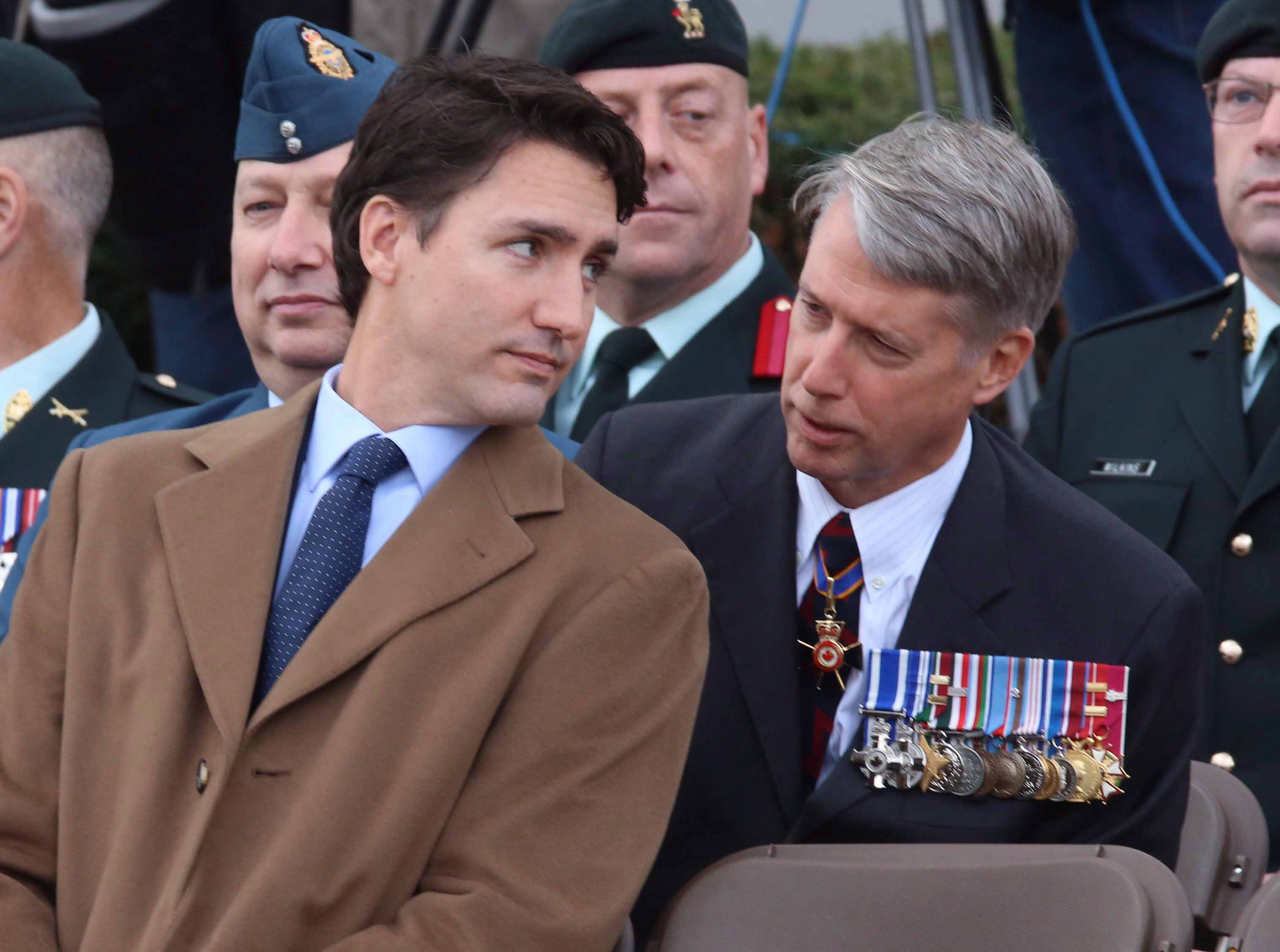
The Canadian Prime Minister Justin Trudeau had a hard time saying sorry to Vice-Admiral Mark Norman.  He refused to apologise when asked directly to do so by Conservative Leader of the Opposition, Andrew Scheer.  Trudeau’s response was to blame Stephen Harper, his Conservative predecessor, for awarding a defence contract, in which the admiral allegedly had an interest.

Scheer pointed out the double standard and launched a vicious attack on the Prime Minister for his willingness to spend untold millions of Canadian tax payers’ money for prosecuting a righteous public servant, Vice Admiral Norman who was a national hero.

When the resolution was put to vote, Prime Minister Justin Trudeau had already left the chamber and Defence Minister Harjit Sajjan was absent.

In stark contrast to the passage of this apology resolution, I was reminded of the several instances of senior officers of the Indian defence forces being convicted by court martial and cashiered/ dismissed from service in disgrace. In quite a few instances the higher courts of appeal have rejected the court martial verdicts and restored the lost honour of these officers. However, there was not a single case of an apology from anyone, not even the concerned service Headquarters to the individual.

At the time when charges were pressed against Vice Admiral Mark Norman, he was the Vice Chief of the Canadian Defence Forces, the Number 2 man in the military hierarchy. For a western democracy, it was perhaps a rare incident of such nature.

What was the case against Vice Admiral Mark Norman?

The Canadian Navy urgently needed a supply ship as HMCS Protecteur, Canadian Navy’s only supply ship was engulfed in a blaze in February 2014, rendering it unserviceable.  The ship had to be towed by a US Naval ship to Pearl Harbour.  The Conservative government in power then placed an order with Quebec-based shipbuilder Chantier Davie Canada Inc (Davie) to convert a civilian cargo ship into a military supply vessel at a cost of $668-million.

Prior to the award of the contract, the Conservative Government changed the federal procurement rules to allow a single vendor contract without competition, which was questioned by the incoming Liberals. The Conservative Defence Minister defended the decision to amend the rules to facilitate the single vendor deal, as the Canadian Navy wanted a supply ship urgently and the normal process would involve 30 to 36 months.

In November 2015, the new Liberal government apparently took a decision to pause and review the deal. The information was leaked to James Cudmore, then a CBC reporter. Following the leak, there was a public outrage in Quebec. The liberal Government then backtracked and quickly approved the deal.  However, furious with the leak, the government ordered the Royal Canadian Mounted Police (RCMP) to investigate the matter.

In January 2017, Vice Admiral Mark Norman was suspended from service and more than a year later subsequent to raids at his residence, the RCMP charged Vice Admiral Mark Norman with breach of trust, alleging that he leaked cabinet secrets to an executive at Davie and a journalist.   In its court brief, it was alleged that Norman ‘knowingly and deliberately‘ leaked this information and breached cabinet secrecy on 12 separate occasions between October 2014 to November 2015.

Norman vehemently denied any wrong doing pleaded not guilty to the charges and said that he acted with integrity, ethically and “in the best interests of the Royal Canadian Navy, the Canadian Forces and, ultimately, the people of Canada.”

Government’s case against Norman unexpectedly began to collapse in March 2019, partly under the weight of information from several former Conservative cabinet ministers and staffers. The new evidence, gathered by Norman’s lawyers and presented to the court on March 28 included some documents which were not uncovered during the investigation, something Norman’s lead defence lawyer blamed on government obstruction. The independence of the investigation carried out by the RCMP also came into question.


The case took a turn on its head the moment Liberal MP Andrew Leslie announced his retirement from the federal Liberal caucus and expressed his wish to testify for the defence in Vice-Admiral Mark Norman’s trial.  His testimony would have been politically embarrassing for the government, coming from the ruling party MP.  It was a political ‘hara-kiri’ for Leslie who said that he will not be running for re-election in 2019.

Who is Liberal MP Andrew Leslie?  Why was he defending Vice-Admiral Mark Norman?


Veteran Lieutenant General Andrew Brooke Leslie served Canadian Army for over three decades.   He was an artillery officer commissioned in 1981 and rose to the top of the hierarchy to be appointed as Chief of the Land Staff in Jun 2006.  He retired in September 2011 and was elected MP of Liberal Party in 2015. Prior to his retirement, he was assigned the task of making a ‘transformation report‘ of the Canadian Defence Forces. On this task Admiral Mark Norman was his deputy and part of the team that submitted the report. So Admiral Mark Norman was a subordinate well known to the General.

While appearing as defence witness, Leslie would have no specific knowledge about the allegations that led to the charge against Norman, but would have insight into how the case was treated by the Liberal government, both during the investigation and throughout the pre-trial phase. The Admiral’s legal defence had often often made the accusation of political interference which may well get substantiated by the General’s testimony. Also, knowing the nuances of the procurement process and probably having faced frustrations similar to the problem of procuring a supply ship may well state in testimony that the Conservative government decision to amend the procurement rules was well justified.  All these would surely have been politically embarrassing for the government.

The General acted like a General to defend the honour and well being of his subordinate, a comrade in arms, even at the cost of his political future. This is a classic case of military loyalty to the organisation and ultimately to the Canadian nation in a larger sense.  Notice that there was a personal cost involved and therefore becomes all the more praiseworthy

At the end of it, the government was forced to drop all charges against Vice Admiral Mark Norman.  What caused the prosecution to drop the charge is not yet known.  It is obvious that for the conviction to stand, the aspect of personal gain and damage to public interest would both require to be proved. There is no indication of any available evidence towards this.  In the face of mounting public statements from then Conservative cabinet ministers and staffers that the Admiral’s recommendations for single vendor deal with Davies was made only in the best interests of the Canadian Navy, the prosecution was probably left with no alternative but to drop the charges.

The Canadian public will come to know of the reasons that prompted the state to drop the charges only if Norman ever files a civil lawsuit against the government for the ordeal that he faced.  Norman said he has an ‘important story’ to tell Canadians, which he will be sharing in the coming days.

On being exonerated of all charges, Vice Admiral Mark Norman said “I am confident that at all times I acted with integrity, I acted ethically and I acted in the best interests of the Royal Canadian Navy, the Canadian Forces and, ultimately, the people of CanadaThe alarming and protracted bias of perceived guilt across the senior levels of government has been quite damaging and the emotional and financial impacts of the entire ordeal have taken a toll.”  Like a true soldier he did not blame anyone for his ordeal and was preparing to get back to work immediately.

Meanwhile, the supply ship that Vice Admiral Norman fought for, MV Asterix (It is not christened HMCS as the ship is only leased by the Canadian Navy.  It is not commissioned by the Navy and is manned by Naval and civilian crew), has been in service for more than a year, re-fuelling Royal Canadian Navy ships around the world. Many in the Canadian Navy say that conversion of the Asterix from a merchant vessel to a Naval supply ship is a rare example of a defence project that was delivered on time and on budget.

So, in the face of a decision which apparently went right all the way, pressing charges against a man who recommended the course of action probably seemed meaningless.  Was it simply a case of a political squabble between the Liberals and the Conservatives into which a man in uniform was unwittingly drawn? We shall probably never know!

Colonel Kizhakayil Kotiath Arun, Sena Medal


Cadets at Sainik School, Amaravathi Nagar (Thamizh Nadu) were divided into four houses named after four Thamizh Kingdoms – Chera, Chozha, Pandya and Pallava.  I was in Pandya House.  Reminiscing through the good old Sainik School days, a thought came to my mind about my many visits to Chera House dormitory in my Grade 11 days (1978), walking through the back alley of Chozha House  dorm.

The most prominent object that would catch my eyes was the wheel of a trolley that lay unmoved in the Chozha House back alley.  It was black cast-iron wheels, surely weighing over 80 kilos, from  one of the trolleys used during the construction of Amaravathi Dam.  It had a solid axle with two wheels, akin to the wheels of a railway wagon, but a bit smaller.  It obviously resembled the ‘Barbell with Plates’ used by champion weightlifters.   I used to try moving it and many a time realised that it has not moved an inch since  1975.

These trolleys used during construction of the dam found their resting place behind the old Cadets’ Mess, now the Gymnasium and Cinema Hall on completion of the dam.  The Gymnasium building was the workshop during dam construction days, hence these trolleys were abandoned there.

How did this barbell find its way to the back alley of Chera House dorm?

It was brought in by Veteran Commander Ponnar and his friends who managed to pick up the trolley-wheel from their ‘graveyard’ behind the gym and carried it over a kilometer long trail and brought it to its current resting place in the back alley of Chera House.

The toughest senior cadet I came across during my Cadet days at Sainik School Amaravathinagar was Cadet  KK Arun of 1975 Batch.  He was tall and well built, quiet and unassuming, always with a smile on his face.  I realised he too was a Malayalee who found his moorings at Amaravathinagar, Thamizh Nadu like me.  I hardly ever interacted with him – he was too senior and I belonged to a different House – the Pandyas.

It was a matter of pride, sense of achievement and a dream  for any Cadet at Sainik School to be selected to join the National Defence Academy (NDA).  It involved passing a written examination with a qualifying rate less than a percentile or two.  Then was the five day Services Selection Board (SSB) interview and then a stringent medical examination.  Cadets of the graduating  year (Grade 11 then) used to work out mentally and physically to qualify through this rigorous and grueling procedure.

Cadet KK Arun too had set his aim to join the NDA.  He found the weights and exercises at the gym and the morning Physical Training (PT) inadequate to stress and strain all his muscles.  One often found Cadet KK Arun lifting it with ‘Clean and Jerk’ or a ‘snatch’  in the evenings after the Games Parade.  Whenever I walked past this ‘Barbell’ during my NDA preparation days in 1978, the idea to lift it germinated in my mind.  Obviously, I could only lift it from a side, that too with both my hands. I always had a ‘Hero Worship’ for Arun as to how come he could lift this monster many a times at my age.

Arun joined NDA in 1975 and I followed suit in 1979 January.  We never met since our school days.  Arun remained a fitness freak throughout his Indian Army career.   He was an Instructor at the Commando Wing of Infantry School – an appointment any young officer will even trade his ‘girl friend’ for.

As a senior Major he landed in a coveted appointment – The Adjutant of NDA – an appointment any Cadet who passed out of NDA will sacrifice anything and everything for.  It was a reward for Major Arun’s soldierly qualities, his love for his soldiers, dedication to duty, physical fitness, gentlemanly qualities and so on.

Drill is the bedrock of discipline – thus goes an old saying and it is the Adjutant who meticulously oversees the Drill Training at NDA.  It culminates with  the Passing Out Parade (POP), a spectacular event which marks the  culmination of another successful semester.  POP parade held at the Khetarpal Parade Ground comprises over one thousand cadets bidding farewell to their senior colleagues and will remain etched in the memory of anyone who has witnessed it.  Passing Out Cadets march past the Quarter Deck to the  haunting strains of ‘Auld Lang Syne’.  The Adjutant on his charger accompany the passing out cadets to their Final Steps.

This entire spectacle is the culmination of five months of rigorous drill training imparted by the Drill Instructors under the watchful eyes of the Adjutant.  It is purely an Adjutant’s show.  Please click here to read more about the Academy Drill Instructors.

Who will ever forget the ‘Josh Pep-talk’ delivered by the Adjutant prior to the commencement of POP, exhorting all cadets to put in their best to make it as spectacular as possible.

A young Officer on commissioning  to our Regiment narrated an anecdote.  He was trained by Major Arun at the NDA.  He said “While delivering the customary Pep-talk by the Adjutant, his Charger, a well built white horse, delivered an anal salute.  Major Arun immediately said ‘SORRY’ and continued.  That was our Adjutant, an epitome of decency.”  I felt very proud of our Alma Mater and did not miss the opportunity  to declare with pride in my voice “I attended the very same school from where Major Arun graduated.”

Major Arun served as a Commando Instructor.  He was a real ‘tough’ instructor and was well known for his teaching abilities with love for his students – A real GURU in all aspects.  Some even say the Nana Patekar’s Hindi movie ‘PRAHAR‘ (please click here for more about the movie) was inspired by him. He was awarded Sena Medal for gallantry.


He rose to the Rank of Colonel and commanded a Rajput Regiment.  There are many anecdotes from his army life worth mentioning.  He hung up his military boots and is now settled with his family at Greater NOIDA near Delhi.

I was lucky to come in contact with him, courtesy Colonel TM Natarajan, our batch mate from Sainik School.  It was a rewarding experience sharing our journey experiences and also relent that we two never met after leaving school.

Pongoes

On 13 January 1979 I joined the National Defence Academy, Pune India as an Army Cadet.  National Defence Academy is a Joint Services academy of Indian Armed Forces, where cadets of the three services – Army, Navy and Air Force train together.   This is to ensure jointmanship amongst the three service

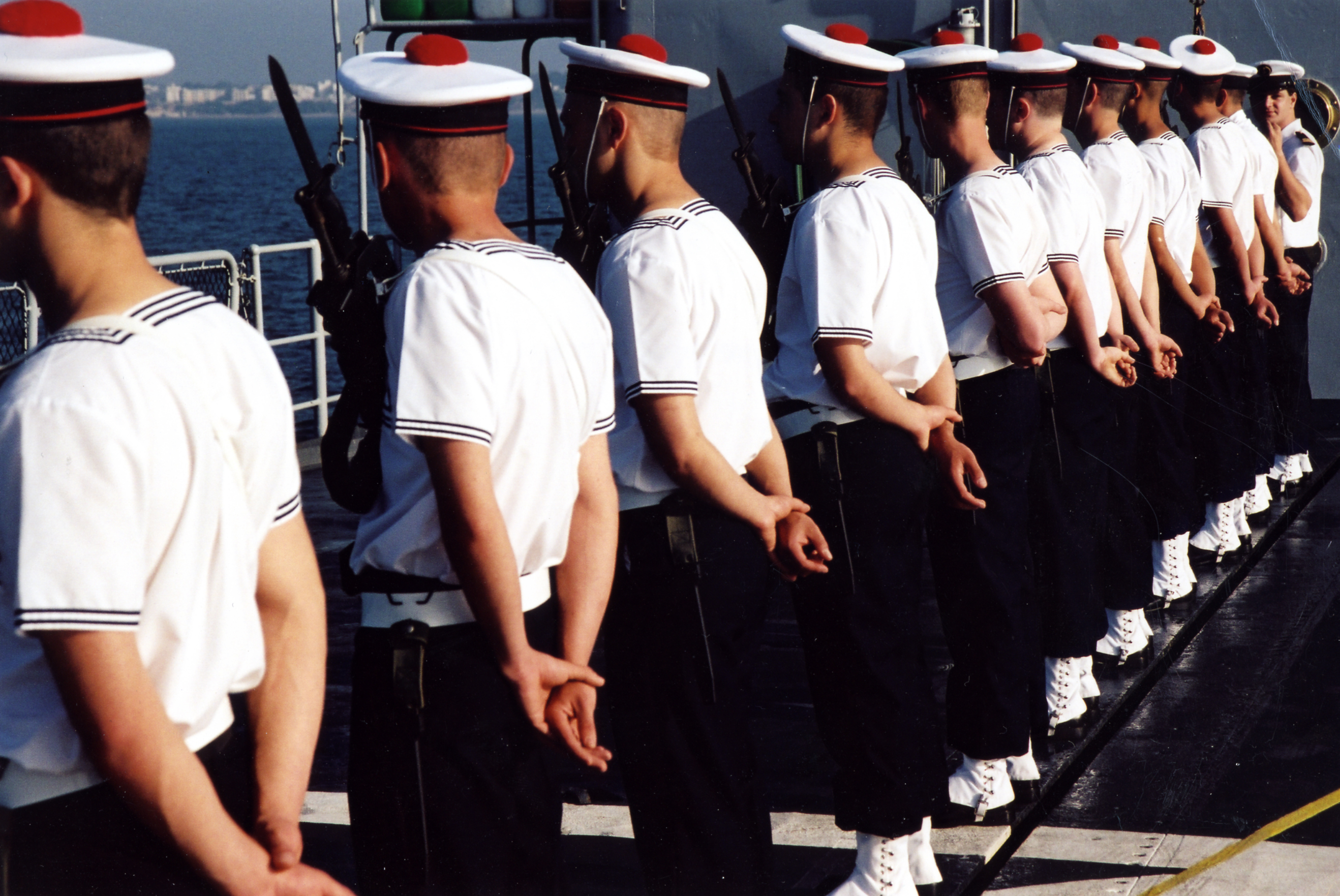
We, the Army Cadets, were often referred to as Pongoes or at times Grabbies, especially by the Naval fraternity – both officers and fellow cadets.  It often intrigued me as to from where these terms originated. In fact, I disliked it, like every other Army Cadet at the Academy.

The word Pongo is seemingly used in a somewhat derogatory sense evoking a sense of both stupidity and a bad smell, something like a Stinking Moron.  Although a bit derogatory, the word is often used by the Naval guys in a friendly manner when they referred to the Army guys.

It is interesting to go into the etymology of the word.

Pongo is a British slang dating from the mid nineteenth century meaning soldiers. The word itself stems from expressions used by comedians in theaters and music halls to get a cheap laugh. The two most common quotes were “where the army goes the pong goes”, or “when the wind blows the pong goes” – pong meaning stink. This quickly became Pongoes meaning soldiers (plural) and Pongo meaning an individual.

Another possible explanation is that the soldiers were being likened to a large, hairy, smelly ape called a pongo. The expression is still in use today although not common, confined mainly to those who saw service in World War II or in Korea or who did National Service in Britain while this was still compulsory.  (www.urbandictionary.com)

There is another explanation given in a blog post ‘Be Proud to be a Pongo’ at www.theobservationpost.com. During the Napoleonic wars, the British Army was based in Portugal from 1807-1814. The Portuguese word for bread is written pão (this could also be the origin of the Indian street bread – the Pav पाव,) and pronounced pong. British soldiers coined the term pongo as there is a letter from a soldier complaining about the lack of pong. One of the distinctive differences in service between the sailors and soldiers of the time was that sailors lived on biscuit while, the army lived on bread. So, a sailor meeting army soldiers and hearing them complain about the quality or quantity of pong might reasonably refer to soldiers as pong-goes – meaning bread eaters.

As per Appendix: Glossary of British military slang and expressions, an  Army soldier is referred to as Pongo meaning “Everywhere the army goes, the pong (stink) goes”; derived from the supposed inferior washing facilities in field compared to those on a navy vessel.

Pongo was also used by members of the Royal Navy or RAF.  Sailors noted the similarity of the sand-apes’ colour to the rough brown (khaki) uniform of the British Army.  They believed that a Pongo was an ape that when alarmed did not climb trees, but dug holes and hide itself on the ground reminding the onlooker of the infantrymen.  They said a pongo dug holes and filled it for no rhyme or reason.  However, the only mention of Pongo – the ape – I could find was in National Geographic website which refers to a new orangutan species, Pongo tapanuliensis, or the Tapanuli orangutanthe rarest great ape species on the planet – found in the high-altitude Sumatran forests.

The term Pongo comes from the days when soldiers were stationed on board ships to protect the Navy when sailing abroad. Usually, the first to be sent ashore when the ship docked, soldiers carried out all sorts of different tasks.  One important (the most important… surely) task being setting up of a brewery. The main part of it, the still (apparatus used to distill alcoholic spirits) being called a pongo. Hence the nick-name given to the soldiers who were sent to do the job “send the pongos ashore.” The name seems to have filtered down through the years and is used today by the Navy towards members of the Army.  (www.arrse.co.uk/wiki/Pongo)

Our childhood adventure series – Enid Blyton’s Famous Five – in its fifth volume, Five Go Off in a Caravan (1946,) has Pongo as a main character who is a circus chimpanzee.   David Foster Wallace’s novel – Infinite Jest – refers to Checkpoint Pongo, a border post of the Concavity near Methuen, Massachusetts.

That is all about the poor Pongoes, but how did they get their nickname Grabbie?

It is said that the poorly fed soldiers on boarding a ship scrambled to the Galley – the ship’s kitchen – and grabbed anything and everything edible.

Here I quote from The Sea Regiments published in The Navy and Army Illustrated MagazineOctober 1806, where it says ‘The Marines, in a word, are a military force maintained by the Admiralty for service in the fleet.  “What’s the good of ‘aving leather-necked grabbies aboard ship?”  said an ordinary seaman once to a private of the Royal Marines.  “To keep you flat-footed, ginger-whiskered swamp rats from eating one another!” was the prompt and unexpected reply.’

Another reference to grabbies I found was in the book The Cameronians – A Concise History by Trevor Royle.   ‘Amongst the officers of my Regiment, nice fellows as they were, only a few cared for the Army as a profession.  All were proud belonging to splendidly drilled Light Infantry Battalion – drilled according to the practice of War in the Peninsula, before the introduction of the rifled musket.  They thought themselves to be socially superior to the ordinary Regiments of the Line, which were always spoken of as grabbies.’

In the book Seven Sailors by Commander Kenneth Edwards ‘The history of British Empire is rife with examples of devotion of British sailors to their brothers in army.  These reached their zenith at Dunkirk, not only among the matelots and the grabbies, but all the way down from the Admiral and staff to the over tired infantrymen.

Matelots, a Naval slang, refers to a sailor and originates from 19th century from French, variant of matenot, from Dutch mattenoot meaning ‘bed companion’, because sailors had to share hammocks in twos.

Whatever you call a soldier, especially an Infantry Soldier, Victory is still measured on foot.

Arequipa – The White City of Peru


After the wedding at Piura, Peru, we flew to Lima, early morning on January 06.  We were joined by Stephens, our travel companions.  The party consisted of Vijas, Ranga, Aravazhi with their better-halves and Mrs. Anita Chandramouli.  Our trip was organised by JourneYou, a travel company founded in 2011 by a team of travel professionals.  Their agent received us at Lima Airport and facilitated our check-in for the Arequipa flight. After an hour, we landed at Rodriguez Ballon International Airport at Arequipa.


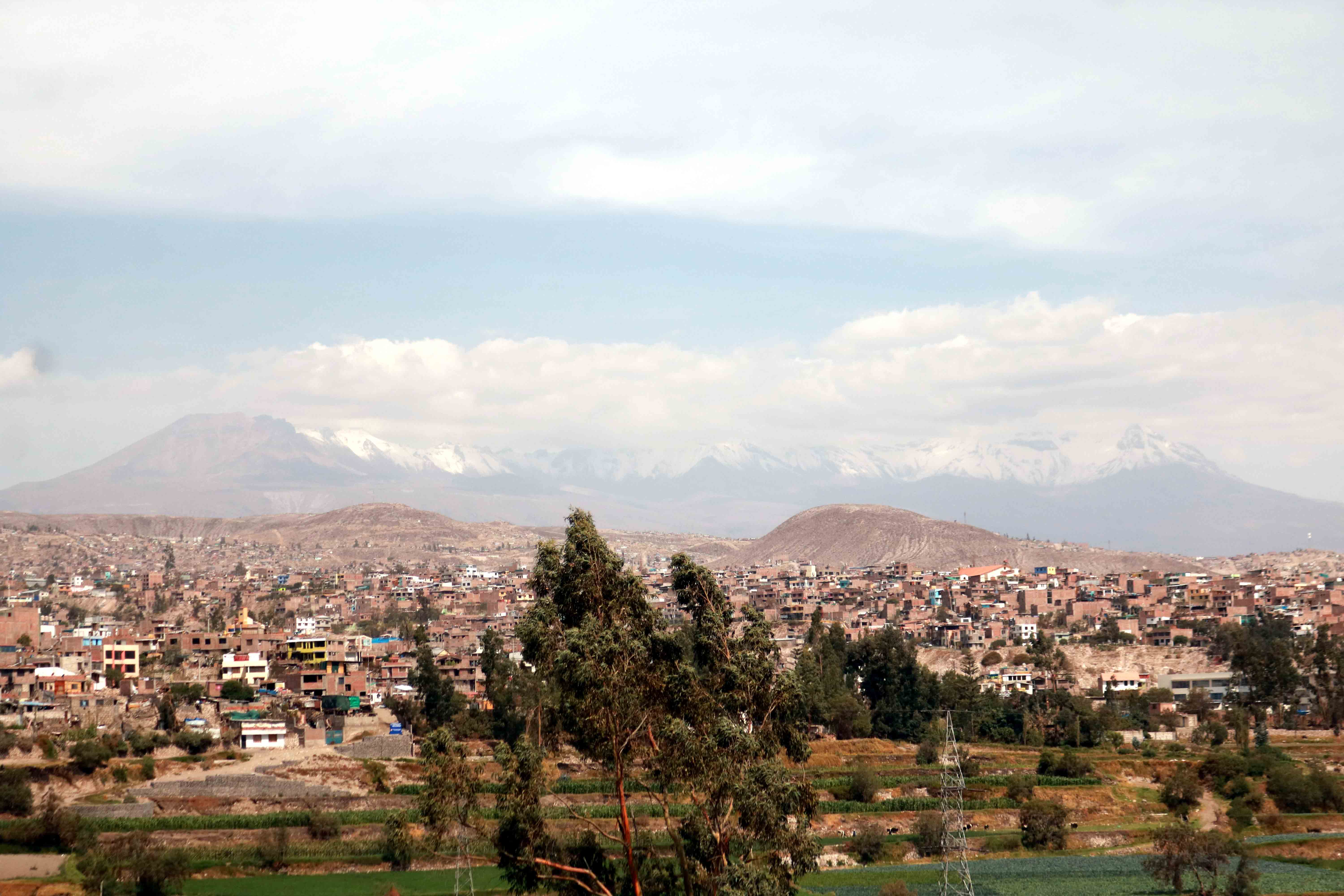
Arequipa in Southern Peru is the second most populated city in Peru. It is considered one of the most fascinating areas in the country, due to its architecture, varied gastronomy, impressive landscapes, imposing volcanoes, and the deepest canyon in the world. The most prominent feature of the landscape of Arequipa is undoubtedly the majestic Misti volcano, which sits at 5,825m above sea level. ‘El Misti’ comes from the Quechua language (language of Incan Empire), meaning ‘The Gentleman.’

Prior to exiting Arequipa Airport, all our baggage was thoroughly scanned by Animal and Plant Health Service of Peru to detect if we were in possession of any fruit – a rare inspection, that too when flying within the country!  It is to ensure that no fruit flies, its larvae or eggs are brought into this region.  Passengers who were in possession of any fruit had to either consume it or discard it there.

Southern Peru has managed to eradicate fruit flies by means of the area-wide integrated application of the Sterile Insect Technique (SIT), a nuclear technology package developed by a joint division of the United Nations Food and Agriculture Organization (FAO) and the International Atomic Energy Agency (IAEA).  These pests used to cause annual losses of up to US$12 million to the farmers and fruit growers in Peru.


Arequipa is named the “White City” (Ciudad Blanca) due to the whiteness of the houses and buildings made using white ashlar, a volcanic stone abundantly found in the area. In the background of the photograph above is the Misti Volcano on the Left and Pichu Pichu Volcano (5,669m) to the Right.

On arrival at the Airport, we were greeted by our travel guide from JourneYou, who escorted us to our hotel.  After lunch we set out to explore the city with our travel guide.  Our first stop was Santa Catalina Monastery.


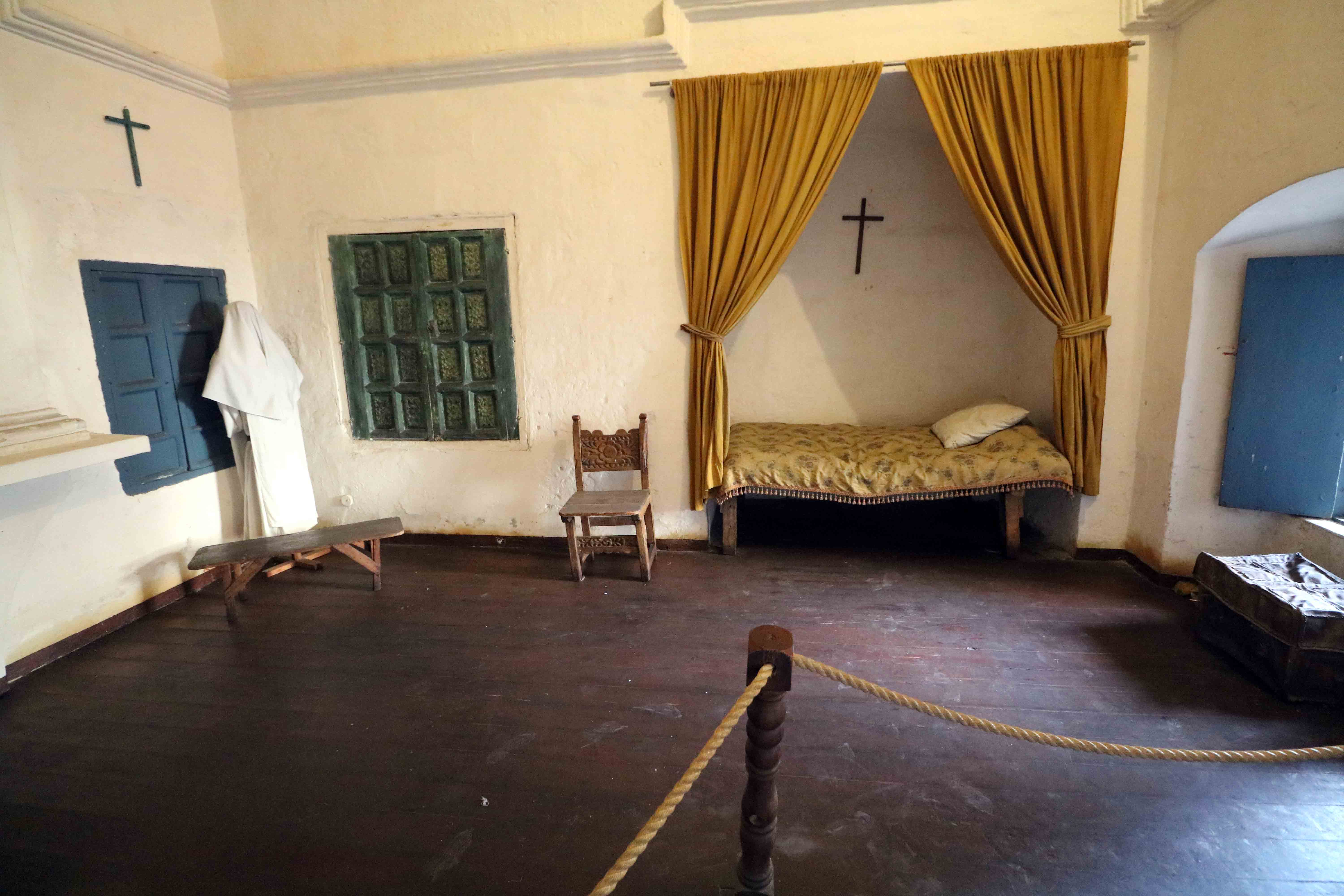
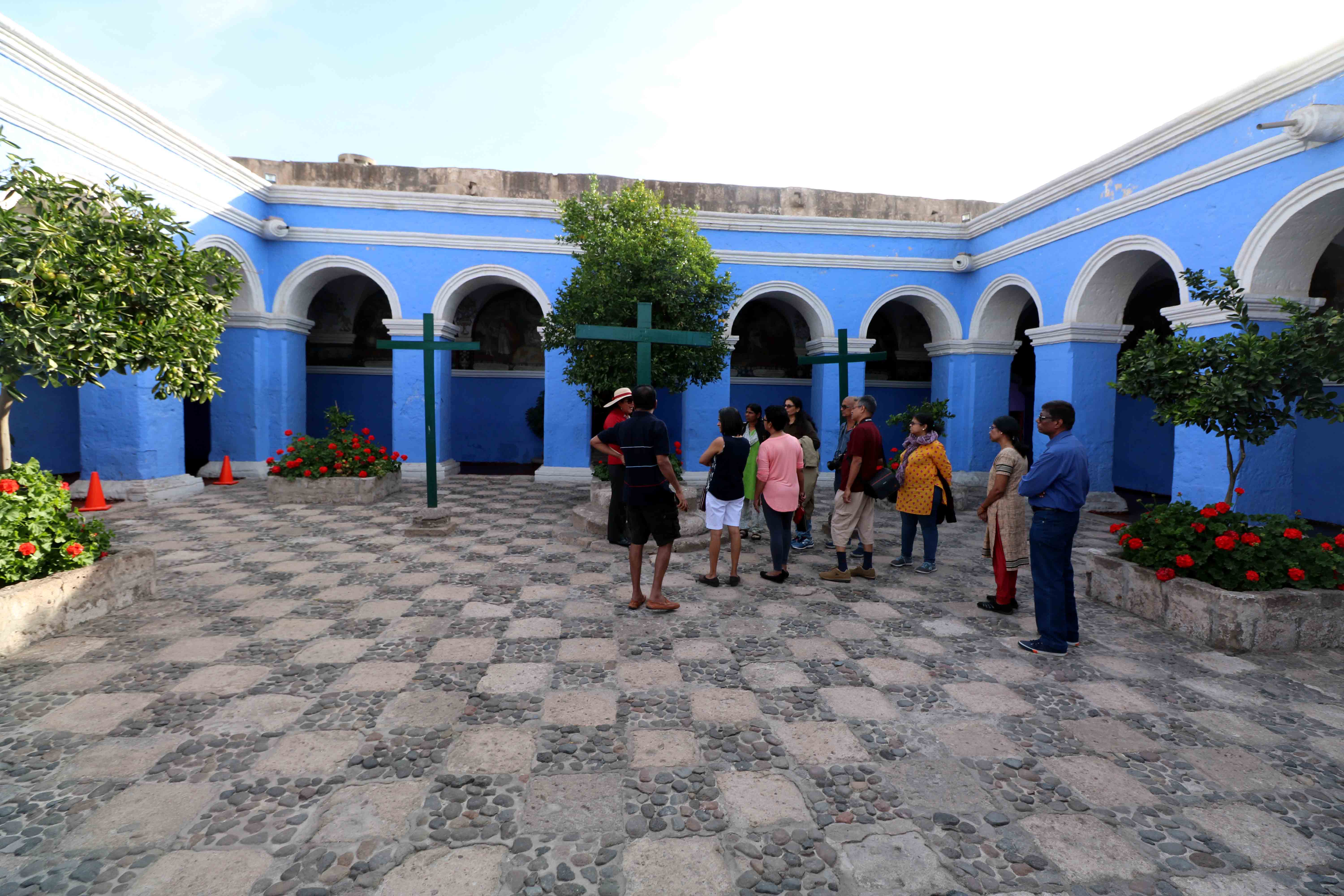
Convent of Santa Catalina de Siena was built in 1579 and it served as a cloister for Dominican nuns from the sixteenth to the eighteenth centuries, and it still houses a small religious community today. The complex is built from volcanic Sillar stone and is organized into cloisters, living quarters, a plaza, a gallery, and a chapel.  The Monastery was founded by Maria de Guzman, a rich widow, who only accepted nuns from the rich Spanish families. Traditionally, the second daughter of upper-class families entered a nunnery, supposedly to live in poverty and renounce the material world.  They had to pay a dowry on entry and they lived in luxury with servants or slaves.


In addition to the dowry, the nuns also had to bring 25 listed items which included a statue, a painting, a lamp and clothes. In the case of the wealthiest nuns, these included the finest English china and wonderful silk curtains and rugs.


The Orange Tree Cloister (Claustro los Naranjos) in the Monastery have three crosses set among the orange trees and these constitute the center of the Passion of the Christ ceremonies, a dramatic presentation of the trial, suffering and death of Jesus Christ, carried out during Lent.


Apart from daily prayer and meals, the nuns took time to bake (mostly bread) which was then either eaten communally or sold to the public.  This photograph depicts what was once their kitchen with a stone water filter on the Right.


We then visited an old chapel, now converted into an art museum with over 400 restored paintings.


This is Calle Toledo, a long boulevard with a communal laundry at its end, where the nuns (probably their servants) washed their clothes in halved earthenware shell like basins.  The laundry area is surrounded by a colourful garden.  Water was diverted from the channel in the center to the washing pot by blocking it with the hand.  Everyone tried their hand at this.


Walking out from the convent through its lanes and by-lanes, we headed straight to the city-center.


When the city was founded in 1540, it all begun with the square – Plaza de Armas.  Surrounded by the Cathedral and various portals.  In the center is a fountain with a beautiful bronze statue of a soldier.


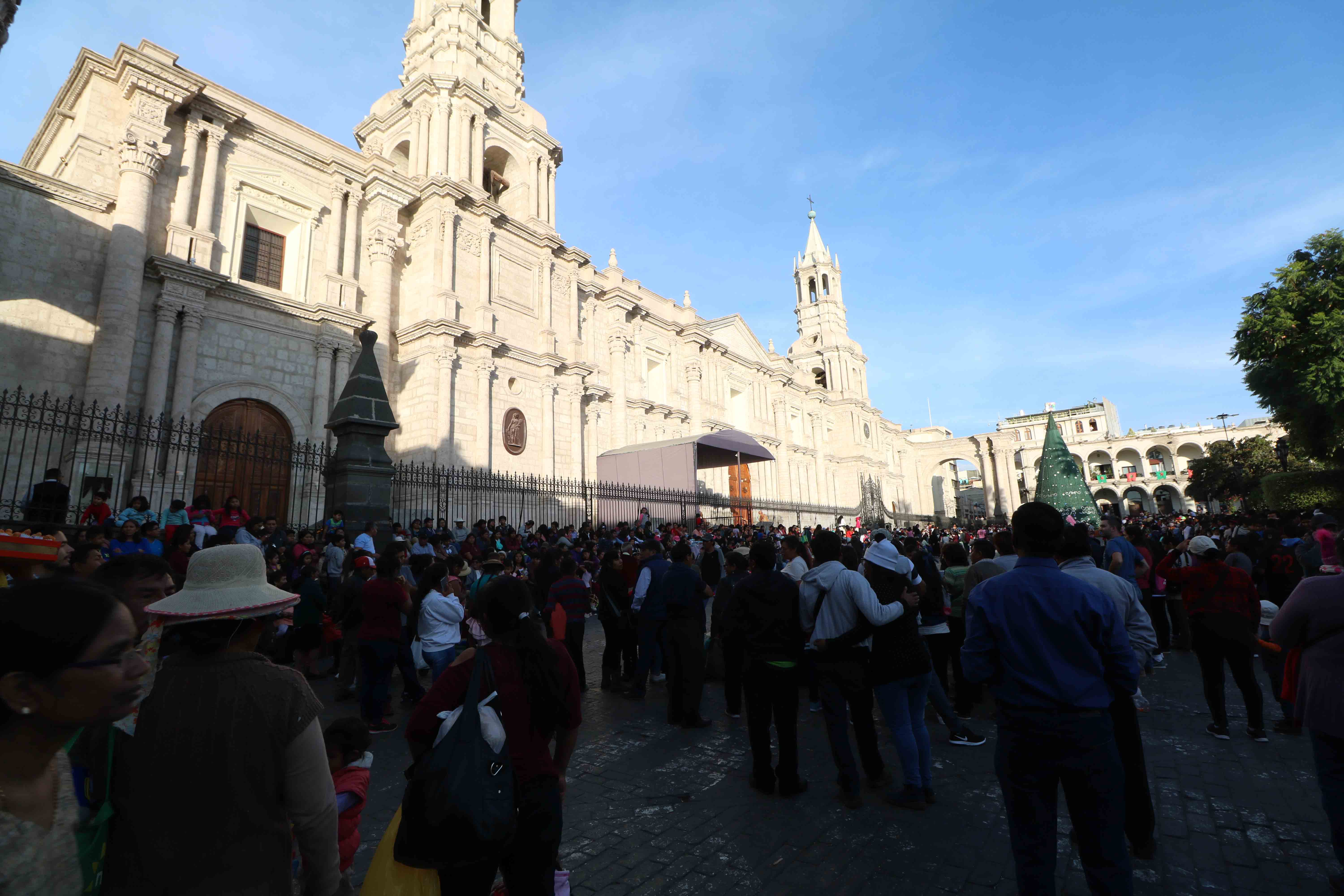
On the Northern side of the Square is the majestic Basilica Cathedral of Arequipa, the most important Catholic church of the city.  Its construction started in 1540, the same year that the city of Arequipa was founded, built in ashlars (white volcanic stone) and brick vaults.  Throughout its history the church was destroyed many times by fire, earthquakes and volcanic explosions, restored after each destruction, the latest in 2001.


On January 6 Peruvians, just as many other Christians, commemorate the arrival of the Three Wise Men or Three Kings at Jesus’ manger bearing gifts of gold, frankincense and myrrh.  A large crowd had assembled at the Cathedral, with many occupying the roads  to celebrate the event.  Thus we decided not to get into the church.


Our next stop was Jesuit Church of Company, located on the South-East corner of the Square.  Its facade is an intricately carved masterpiece in ashlars.  The design of the church is Spanish, but the carvings in these stones are filled with relief and the motifs which are mostly Incan.  Construction of this church commenced in 1578, but was destroyed many times over due to various earthquakes.


Inside the church is the high altar which houses a painting of Mother Mary with child Jesus by Italian painter Bernardo Bitti, who had come to Peru in 1575.


On the either sides of the main alter there are two more beautiful altars, carved with gilded wood. It is called the “Altar of the Founders,” as it holds many images of several founders of the Jesuit order.

After the long and tiring walking tour of Arequipa city, we had dinner and returned to our hotel for a well deserved rest.

Elephant’s Teeth

Our home state Kerala in India which the tourism department very glibly calls ‘God’s own Country’, has always had an enduring love affair with elephants. Children romanticise the elephant with several fairy tales, nursery rhymes and moral lessons with an elephant as the main protagonist.

The Indian elephant (Elephas Maximus Indicus) has been declared as the State Animal and the state emblem symbolises two elephants guarding the state  insignia –  the Shankh (conch shell) of Lord Padmanabha – and the national insignia – the famous Lion Capital.

It is estimated that Kerala has more than five hundred domesticated elephants.  They are used for religious ceremonies in and around the temples, and some churches and mosques also, and a few elephants work at timber yards.

For all the festivities in Kerala, Tuskers are in demand, obviously for their getup.  They are attired in all finery and caparisoned.  Nearly a hundred elephants are paraded during Thrissur Pooram (during the month of May), the largest annual temple festival in the state. Despite protests from several animal rights organisations and quite a few incidents resulting in human fatalities /serious injury, the love affair seems to continue.

Elephantine dentistry is of some interest. Elephants have a total of 26 teeth, their tusks counting for two. Unlike humans, elephants may erupt only two or three sets of molars at birth. When teeth that have erupted get worn out, another set will erupt behind the existing set. So perhaps it is impossible to find an elephant with all 26 teeth as they come out sequentially,  Each time they lose these teeth, the new ones that grow are larger, allowing them to chew even tougher vegetation like tree bark, palm leaves, roots, etc. A single molar in an adult elephant may weigh as much as a humungous 5 kg.

Like most mammals, elephants have teeth called incisors, which eventually become tusks as they grow into full-grown adults. Male Asian elephants have long tusks (hence called Tuskers), but for the females, the incisors barely protrude out. In the African species both males and females develop tusks.   As the tusks are made of ivory, wild Asian male elephants become a target for merciless poaching. The tusks are used as an offensive and defensive weapon in both intra-species and inter-species fights, for lifting weighs and for stripping bark of trees to be used as food. Elephants are also known to dig for water in dry river beds using their tusks, trunk and feet. Besides all this the tusks also serve to protect the sensitive trunk which is a multi-utility organ of great significance.

Perhaps the mistaken belief that the elephant’s tusk is not of much use to the animal, has given rise to the Hindi idiom ‘हाथी के दांत दिखाने के और, खाने के और – Hathi ke dant dekhane ke aur khane ke aur’. Literally translated it means, ‘Elephant has two set of teeth – one to show off and the other to chew with’. Figuratively it means that what is obvious may not be the truth.

I must narrate a story which brings out the full implication of this Hindi idiom. In January 2004, our Regiment located at Devlali, Maharashtra, was allotted a ‘Steam Jacketed Cooking System’ for the soldiers’ kitchen procured from special funds under the Army Commander’s Special Financial Power.

The Cooking System consists of four kettles used to prepare food items such as lentils, vegetables and meat. Each kettle has a capacity of about 60 litres.  About the lower two-thirds of each kettle is surrounded by a jacket that is offset from the main kettle body to provide space for steam to circulate and heat the contents of the kettle.

The kettles are permanently mounted on a pedestal and have a hinged lid or cover. They also have a tube at the bottom of the kettle with a faucet at the outer end for drawing liquids (used for cleaning the kettle) and a steam inlet connection, a steam outlet connection, and a safety valve.  They also have a handle on the side facilitating tilting the kettle to pour contents into a service container.  Kettles are made of corrosion-resistant steel.  At one end is the Steam Generator which generates steam for the system by heating water using normal cooking gas.  There are steel pipes that carry steam from the steam generator to the kettles.

Great! I visited five regimental kitchens in the station who already had the system installed.  Everywhere the system appeared hardly ever used. On inquiry the chefs revealed that the system was used for cooking only when there was any visit or inspection by a senior officer.  Their reason was that it consumed too much cooking gas, much more than the authorised quantity they could draw from the Supply Depot.  The Steam Cooking System was branded a ‘Gas Guzzler.’ Obviously it was only an elephant’s teeth to show off, with little or no utility.

After a lot of research, I realised that the equipment really had a lot of utility value if correctly used. I visited our Regimental Kitchen, summoned all the Chefs and announced the impending installation of the Steam Jacketed Cooking System.  During my interaction, I explained the following results of my research: –

  • Better Food Quality in Better Hygienic Conditions. Standard cook pots used in military kitchens over an open burner heat its contents from the bottom where as this heats from all sides, providing a gentle, uniform heat that allows you to cook with minimal labour. It also reduces the risk of burning or overcooking your product.
  • Better Productivity.   This system cooks faster as two thirds of the cooking surface comes into contact with the food being cooked at a much lower temperature, compared to cook pots that use a much higher temperature only at the bottom of the pot.
  • Less Labour.   As the system does not require constant monitoring, stirring, it will save on labour.  The kettles of the system are extremely quick and easy to clean.
  • Safety.   A standard 40 Litre cook pot partially filled will weigh more than 30 kg, creating a significant risk to the chefs when moving them manually.  Transferring product inside a stock pot of any size can be potentially very dangerous, whereas tilting the kettles of the new system allow for safe, hassle free extraction of its contents.
  • Energy Efficient.  This system uses on average 35% less energy than cook pots on an open burner whilst also keeping kitchens cooler.

I tried explaining to the chefs about conserving gas using the principle of latent heat of steam, that is water as it boils at 100° C absorbs heat without changing its temperature.  The heat absorbed is called latent heat.  Hence, by turning down the gas supply to the steam generator after the water has commenced to boil, one can conserve gas.

All my scientific explanation was a little too much for the chefs to digest.  They still held on to their belief that it was a gas guzzler and hence could not be employed for regular cooking.

I now called up the manufacturer to inquire as to whether they had an Electric Steam Generator, which they confirmed, but it costs about Rs 15,000 and so I decided to foot the bill from regimental funds and accordingly  placed an order for the item.

Prior to installation of the steam cooking system, the kitchen had to be modified and work was initiated with the Military Engineering Service (MES).  The Garrison Engineer, a young Major, was surprised to find a request for a three phase electric connection in the kitchen, much different from similar work he had executed in the station.  He paid a visit to the Regiment to study the requirement projected and our Quartermaster took him around.  He was generally impressed by various equipment the kitchen had – flour kneading machine, potato peeling machine, freezers, coolers, power washer, microwave ovens and so on.  He was also shown our near paperless office functioning on an automated computer network where every soldier could update his records and also carryout day-to-day administration tasks. Probably he had an irresistible urge to chip in.

At the culmination of his round, the Garrison Engineer came to my office and said “You need to have a dedicated power supply to your Regiment with so many gadgets functioning.  I request you to take up a work for a dedicated power line from the power house located two kilometers from the Regiment.  I will ensure that it is executed immediately. I must chip in with my bit to facilitate the automation in your unit.”

By the time the Steam Cooking System was setup in the kitchen, the Garrison Engineer had laid the new power line with a caveat to his power house staff that this line should be connected to the same feeder that connects the General’s Residence and power on this line will never be switched off without his express permission.

We changed our routine cooking to the new system. Now we had both Steam generators functional in the kitchen, one working on electricity and the other on gas.  This ensured uninterrupted cooking and saving on gas. I was gratified and pleasantly surprised at the remark of our Havildar (Sergeant) Chef “With the installation of the Steam Cooking System, life spans of all our chefs have enhanced by a minimum of ten years.

Thus the elephant now began to chew with the set of teeth that were meant only to show off.

Banning Cell Phones in Schools


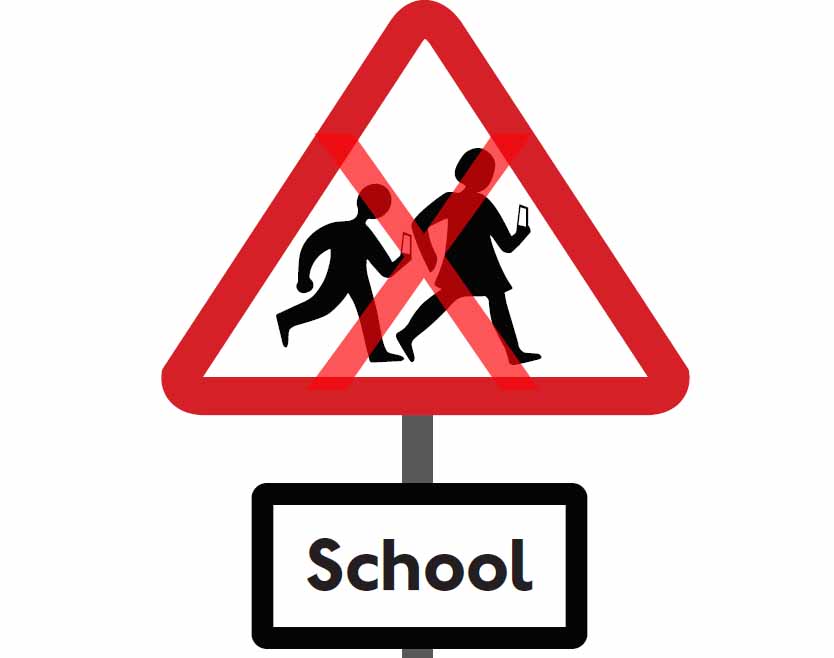
Ontario, Canada, is banning cell phones in classrooms during instructional time, starting next academic session – September 2019.  Education Minister Lisa Thompson said “Ontario’s students need to be able to focus on their learning — not their cell phones. By banning cell phone use that distracts from learning, we are helping students to focus on acquiring the foundational skills they need, like reading, writing and math.”

The cell phone combined with internet technology has undoubtedly revolutionised our lives in myriad ways. Perhaps there is hardly any facet of life untouched by this revolution. Increasingly, it has become difficult to be active members of our present day societies without the use of cell phones. Like all technologies that have revolutionised human life and behaviour, the cell phone too has its pros and cons. Along with its all too obvious beneficial uses, the cell phones have a number of disruptive influences particularly on children.

Research indicates that in developed countries, a majority of middle school children own cell phones. While some children own their first cell phones when they are 11, nearly 50-60 % of all children own cell phones by the age of 13. In many cases it is the parents who are instigators of the first cell phone purchase. For many families the safety factor along with an enhanced sense of being connected is the major motivator for children being cell phone owners at a tender age. Children from higher income groups tend to own a cell phone earlier than those from lower income groups. Both parents and schools resort to various methods to regulate the use of cell phones to a greater or less degree.

In developing nations, the problem seems to be less acute as it is only a small percentage of well to do children who own cell phones in middle school and majority of children even in high schools still do not own cell phones. While parents of children who own cell phones attempt some sort of regulation on their use, most schools simply adopt a policy of banning these devices within school premises. Just as school uniforms do, such a policy serves as a great leveler between the haves and the have nots. So the dynamics in the developing world seem to be quite different from those in the developed world.

Is the ban proposal a case of resistance to change? During our schooldays too, many such scientific gadgets that enhanced learning were banned and the bans were later withdrawn. It commenced with the slide rule, then it was the calculator. During our children’s schooldays it was the turn of the scientific calculator to be followed by the laptop and then the notepad computers. While it has to be admitted that the revolutionising impact of the cell phone is far different from that of the slide rule or scientific calculator, particularly on the social and behavioural planes, the bottom line is that it is still a new technology that must be incorporated into the learning process sooner or later.

Cell phones help improve Digital literacy, a critical aspect of young students learning. It will also help them to effectively participate in the workforce. The cell phones provide a link between students and their parents, which has an important role to play in ensuring their safety. Evidence indicates parents want this type of access. Students with special needs, such as managing diabetes, and other medical and physiological conditions may be required to access various apps during school(s) hours. Rather than banning cell phones all out, we need to find ways to educate the students to use their phones effectively and efficiently. Banning cell phones will likely lead to underground and hidden use by teens. Rather than reducing cyber-bullying, banning cell phones altogether may show an increase in cyber-bullying.

We know about the 3Rs of learning – reading, writing, and arithmetic. We now need to include ‘research’, thus making it 4Rs. Schools need to educate both the teachers and students about safely negotiating the virtual environment. This means all schools need to develop policies around the use of cell phones during school hours.

A 2015 study by the London School of Economics investigated the impact of restricting  Cell phone use in schools of four cities in England on student productivity. The results  indicated an improvement in student performance of 6.41% in schools that have  introduced a cell phone ban. These findings did not discount the possibility that  cell phones could be a useful learning tool if their use is properly structured. The study  found that cell phone bans have very different effects on different types of students. It  improved outcomes for the low-achieving students (14.23%), and had no significant  impact on high achievers. It showed that low-achieving students are more likely to be  distracted by the presence of cell phones, while high achievers can focus in the  classroom regardless of whether phones are present.

Another study was published in the Journal of Communication Education, Ohio University, based on impact of cell phone usage during class lecture, on student learning. Participants in three different study groups (control, low-distraction, and high- distraction) watched a video lecture, took notes on that lecture, and took two assessment tests after watching the lecture. Students who were not using their  cell phones wrote down 62% more information in their notes, took more detailed notes, were able to recall more detailed information from the lecture, and scored better on a multiple choice test than those students who were actively using their cell phones.

Research published by the University of Chicago found that even if cell phones are turned off, turned face down or put away, their mere presence reduces people cognitive capacity. The paper called the phenomenon “cell phone induced brain drain”.

University of Illinois conducted a study that examined students’ cell phone and Internet use and its relationship to their mental health. The study assessed two forms of escapism amongst students: one that arises from boredom and one used as a way to avoid negative emotional situations.

What are the likely drawbacks of students using cell phones?

  • It surely reduces face-to-face communication. Teenagers tend to message or  text, avoiding a more challenging conversation.
  • Smartphone apps, games and messages prompt dopamine release, creating addiction. Mere presence of a phone in the backpack can distract a student even though the student may not even be checking it.
  • It tends to reduce working memory capacity, mental mathematical ability, logical analysis and fluid intelligence.
  • It has surely reduced the students’ ability to cope with uncertainty and stress. In other words it reduces tolerance for ambiguity. Research shows being uncomfortable with uncertainty is associated with students feeling distracted and tense during difficult examinations or tests. The more uncomfortable young people are with uncertainty, the higher the number of co-occurring psychological problems they report experiencing. Smartphone use is associated with the current epidemic of anxiety and depression.

How can cell phones help in enhancing the learning process?

  • Students tend to carryout research using their cell phones off-campus, later in life in their higher education, and in their professional and workplace learning.
  • In case students want to investigate, collect data, receive personalised and immediate feedback, record media, create, compose, or communicate with peers, in and beyond the classroom, then using cell phones is ideal.
  • Cell phones allow students to learn at a place, time and pace of their choosing, for example, on excursions, or when working on group projects or assignments with friends in more informal spaces like home, while travelling, etc.

Banning cell phones in schools is not the solution as it is important to educate children to live well in the era in which they are growing up. Students must be taught how to use technology to learn, communicate, and work with ideas. Modern technology provides new learning opportunities and the ability for students to develop skills they will need for future careers. The ability to copy what is written on the blackboard or what is dictated by the teacher into a note book is not a particularly useful skill that will help learning in the modern age nor is it what prospective employers are looking for.

An outright ban on cell phone use will hardly ever yield the results intended. Students will always find a way to smuggle it in, even if banned. That said, there is also an overarching need to perhaps severely regulate its use during classes.

Is there a need to regulate the minimum age for ownership of cell phones?

The rules formulated must be implementable at school level without hindering learning and development while at the same time minimise the disruptive effects on tender minds at the social and psychological plane.

Is it worthwhile to ban cell phones in schools? Will the ban be later overturned?

Indian Cricket Team Honours Soldiers

Indian Premier League cricket matches were suspended in the wake of the recent standoff between India and Pakistan.  Sunil Gavaskar, legendary Indian cricket player, has suggested that the remaining 17 matches be played without cheerleaders and DJs- as a respect to those who lost their lives in the recent conflict.

What about the soldiers??


On 08 March 2019, during India-Australia One Day Cricket match at Ranchi, the Indian players were wearing  disruptive pattern Indian Army caps with the BCCI logo in front and the manufacture’s Nike logo at the back.  I scurried through the internet to catch the news about the new headgear Indian players were wearing.

It was Lieutenant Colonel MS Dhoni, a legend from Ranchi, the wicket keeper, who came up with the novel idea.  He handed over the cap to Virat kohli, the Indian Captain, and also to all team members and support staff before the start of the match.  Captain Kohli at the toss said “This is a special cap, it’s a tribute to the Armed forces. We’re all donating our match fees of this game to the National Defence Fund. I urge everyone in the country to do the same, donate to the families of our armed forces.”

This must be the first time the Indian Cricket team must have shown such a gesture to the soldiers.  Obviously, it had complete support from BCCI.


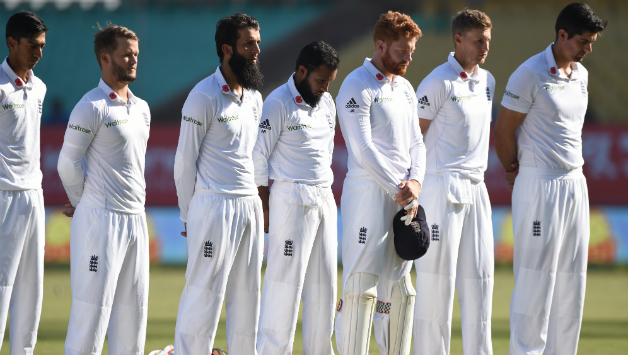
English Cricket Team that played a test match at Rajkot (November 9-13, 2016) were seen wearing the Red Poppy in honour of fallen soldiers to commemorate Remembrance Day (11 November).  Will the Indian Cricket Team ever do so for the Armed Forces Flag Day (07 December)?

Few years ago, we watched a baseball game at Toronto between the Toronto Blue Jays and the Tampa Bay Rays. The Rogers Centre is the home-ground of the Blue Jays. The atmosphere was as electric as that of any cricket matches of the Indian Premier League.

During the  innings interval, a sixty year old Veteran from the Canadian Army who was a Captain and had served in many UN assignments was called on to the centre and the Team Management of the Blue Jays presented him with a team shirt with his name printed at the back and with the team captain’s signature in the front. The entire stadium stood up to give the veteran a standing ovation – no one instructed anyone to do it, but was spontaneous. This is what is called patriotism.

Our son then said that during all the matches, a veteran from the armed forces or the police forces, who is a registered fan of the Blue Jays, is honoured this way.

Can we ever expect such a gesture at Mohali from the Kings XI Punjab or at Chennai from the Chennai Super Kings? Why one veteran, we can always honour a dozen at every match.

Will this ever happen in any Indian city? Will this remain a distant dream?


A Wedding in Peru

Vijayabhaskaran (Vijas), our classmate from Sainik School days, my partner in most teenage crimes at school (we took the resultant punishments too together,) called me up in June 2018 to announce that their daughter Sandhiya, pursuing her engineering education in Germany had found her ideal life partner in Ernesto, a Peruvian citizen.  The marriage was scheduled for 05 January, 2019 at Piura, Peru.


Vijas’s voice was beaming with pride, voice choking many a times, narrating as to how and when the two met, experience and interactions he had with Ernesto and as to how they were an ideal made-for-each-other couple.  I felt honoured as I was the first one (other than his wife Amuda) he was informing of this development.


Vijas wanted someone who was just as warm hearted as her, but still had a great work ethic and a sense of determination.  He said that he could not be happier for his little girl – he watched her go through school, music lessons, internships, work, university, immigration to Germany and he realised that he had both God’s blessings, and best wishes from his family and friends in abundance.

I had learnt about Peru in middle school geography and about the Inca civilisation in history.  I knew Peru was in South America, with Lima as its capital.  But where is Piura?  Googled it up and came the answer.

Piura is a city in North-Western Peru, the capital of Piura Province. The population is approximately 400 000.   It was here that Spanish Conquistador (Conqueror) Francisco Pizarro founded the first Spanish city in South America, San Miguel de Piura, in 1532 thereby earning the modern day city its Peruvian nickname: ‘La Primera Ciudad‘ meaning the first city.  Piura served as the first main port through which the Incan gold and silver the Spaniards had gathered was shipped back to Spain. Piura declared its independence from the Spanish on January 4, 1821.  Piura is about two hours of flying time from Lima.

There were four of our classmates from Sainik School Amaravathinagar attending the wedding.  Dr Benoy and Dr Neena from Boston, Aravazhi and Amutha from Chennai, Ranganathan (Ranga) and Akhila from Bengaluru.  We were honoured with the presence of Mrs Anita Chandramouli, wife of Late Group Captain R Chandramouli in the group.  Vijas had planned a Peru tour for a week for all of us after the wedding.  How can we miss a visit to Machu Pichu, the hallowed ancient Inca city?

I booked our tickets from Toronto to Lima and then to Piura and the tour package with the travel agency JourneYou.  All set, we embarked the Air Canada plane to land in Lima on 03 January after a ten hour journey.   This was the first time I ever set foot in the Southern Hemisphere.  Luckily for us, Toronto and Lima fell on the same Longitude, hence no time difference, which saved us the agony of jet lag.  We then took our flight to Piura and reached our hotel in the afternoon, to be greeted by our classmates who had already reached in the morning, travelling over 36 hours.


(From Left to Right : Aravazhi, Self, Benoy, Ranga and Vijas)

Aravazhi was a day-scholar at school as his dad was our teacher – Mr MV Somasundaram.  Four of us lived in the same dormitory of Pandya House and were mentored by our House Master Mr PT Cherian.  We were all meeting Benoy after a gap of three decades, but the moment we met, the timeline seemed to vanish – we were all back as Cadets, sharing all our joy and experiences of life.


(From Left to Right : Shashi Bellamkonda – Vijas’s Catering College buddy, self, Aravazhi, Amuda Aravazhi, Anita Chandramouli, Marina and Akila Ranga)

Our  ladies too got into the act of sharing their life experiences.  Overheard a conversation about recipes and sarees – anything and everything under the sun.

The smartest amongst us all were Ranga and Benoy.  Ranga joined the National Defence Academy (NDA) and served the Indian Navy.  During a football match at school, Benoy suffered an injury to his eye leaving that eye blind.  We were told that with one eye, a person had only 2D vision and could never make out the depth.  We never realised what it meant until we were training on the obstacle course.  One of the obstacles was a ten feet long ditch with a rope hanging in the centre.  Benoy, running to the obstacle jumped forward to catch the rope, but he ended up in the water filled ditch as he could not assess the depth at which the rope was hanging.  That gave us a practical lesson on the 3D vision we enjoy.

Benoy too qualified for NDA but was obviously found medically unfit.  When the final result came out, he was among the top ten who had qualified – What an achievement! After leaving school he joined Madurai Medical College and later specialised in Cardiology.  My question to him was as how he practices cardiology with one eye.  He said that today all procedures are through various scopes which in fact provides only 2D images.


The above image of Ceremonial Parade at school is of 1977 when we were in our Tenth Grade.  Ranga and Benoy are the two Stick-Orderlies with Colonel (Dr) K Jaganathan as our School Captain.


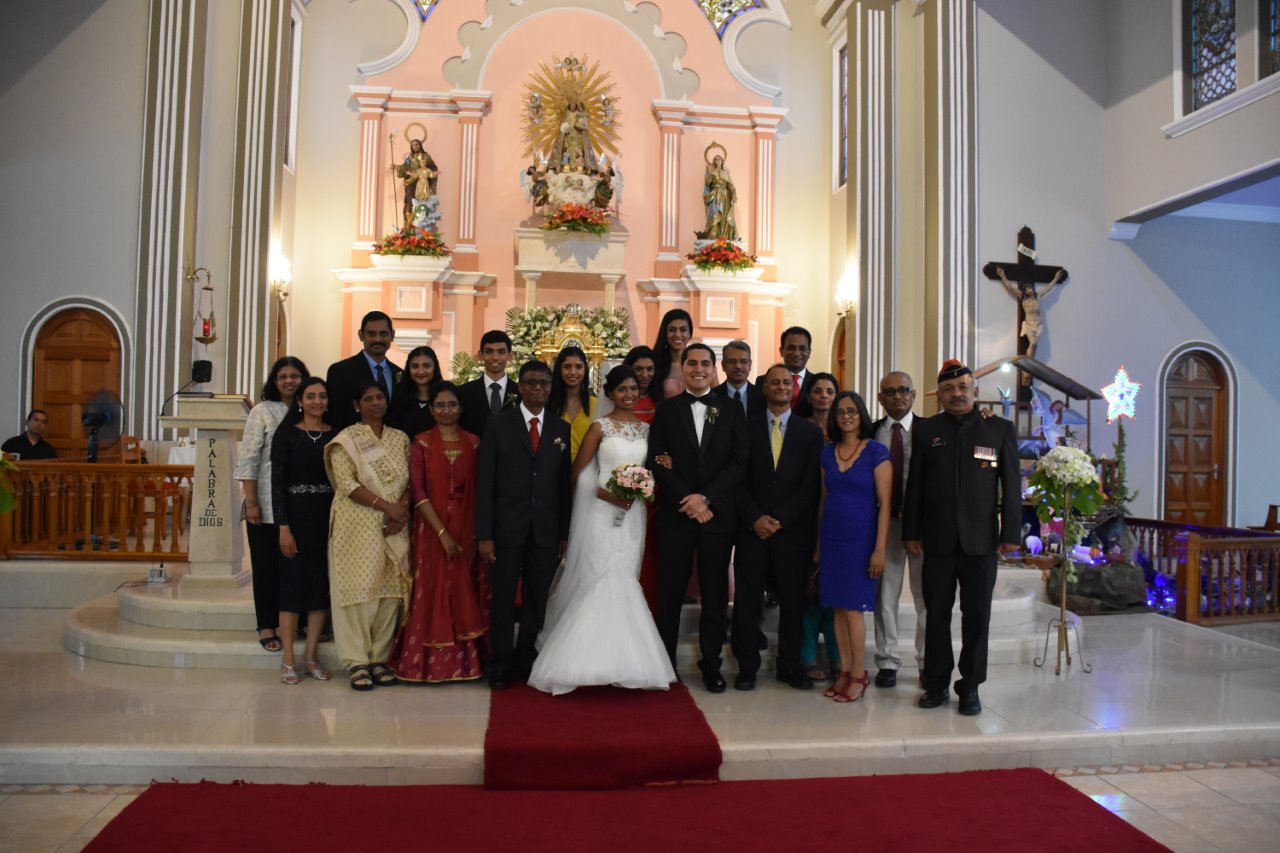
The wedding ceremony was solemnised  on 05 January Afternoon at the Catholic Church.  It was followed by a cocktail and a sumptuous dinner with all Peruvian delicacies thrown in.


We then danced our way through the night to Spanish and Bollywood music.

Remembering a Valiant Soldier


(Regimental Photograph of 1990 with Colonel Rajan Anand, Commanding Officer.  Captain KM Mistry standing in the centre and I seated extreme right.)

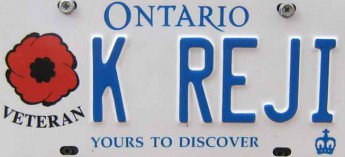
Major Khushru Meherji Mistry, a Parsi from Bombay (now Mumbai) was my subordinate at 75 Medium Regiment (Basantar River.)  He saw action in the Kashmir Valley for over a decade.

When Mistry joined our Regiment in 1988 as a young subaltern, my first question to him was whether he was related to Late Colonel KM Mistry, widely regarded as the first great Indian all-rounder and acclaimed by none other than the legendary Ranjitsinhji, who called him the ‘Clem Hill of India’.  In the 1894-95 Presidency fixture at Bombay, he showed what he was capable of with the ball as he recorded figures of 5/11 in the second innings to help the Parsis beat the shell-shocked Europeans – who were bowled out for just 24 – by 120 runs.  Second Lieutenant Mistry was a bit taken aback by my question but he confirmed that he was indeed his great-uncle.  Our journey together as soldiers began that day.


Recently, I came across this photograph of Lance Corporal William Kyle Carpenter who was awarded the United States’ highest military honor, the Medal of Honor.  His citation read For conspicuous gallantry and intrepidity at the risk of his life above and beyond the call of duty while serving as an Automatic Rifleman with Company F, 2d Battalion, 9th Marines, in Helmand Province, Afghanistan in support of Operation Enduring Freedom on 21 November 2010. Lance Corporal Carpenter was a member of a platoon-sized coalition force. Lance Corporal Carpenter and a fellow Marine were manning a rooftop security position when the enemy initiated a daylight attack with hand grenades, one of which landed inside their sandbagged position. Without hesitation, and with complete disregard for his own safety, Lance Corporal Carpenter moved toward the grenade in an attempt to shield his fellow Marine from the deadly blast. When the grenade detonated, his body absorbed the brunt of the blast, severely wounding him, but saving the life of his fellow Marine. By his undaunted courage, bold fighting spirit, and unwavering devotion to duty in the face of almost certain death, Lance Corporal Carpenter reflected great credit upon himself and upheld the highest traditions of the Marine Corps and the United States Naval Service.”

Acts such as the one above fully illustrate the expression “raw courage” Thoughts of Mistry came before me on reading about Corporal Carpenter. It was another time and another Kyle Carpenter. Mistry was a professional soldier who loved the men who served under his command.  When we were serving in the valley in 1988, his helper, a soldier from Thamizh Nadu, reported that his mother was admitted to a hospital in a medical emergency and that he wanted to rush home.  The Srinagar-Jammu highway was closed due to heavy snowfall and landslides and the only way to reach Delhi was by air. Mistry immediately bought an air ticket for the soldier from Srinagar to Chennai from his own pocket and saw him off.  Yes, he was rich in a monetary sense but far richer at heart.

Mistry was a great orator with exceptional command over the English language.  His English language skills, he owed it to Rishi Valley School.  He was tough, bold, honest and straight forward. We took a spontaneous liking for each other maybe because of our open hearted nature.

On a summer morning in 1995, I got the news that Captain Mistry had been evacuated to the Army Hospital, New Delhi due to injuries suffered by him in a grenade attack. At the time he was serving with a Rashtriya Rifles (RR) Battalion in the Kashmir Valley.   A terrorist had lobbed a grenade in front of the section of men he was leading.  Mistry dived forward and scooped the grenade with his right hand.  The grenade burst mid-air, taking the top two elements of the three fingers of his right palm.

I rushed to the Hospital to look him up and I found a cheerful Mistry sitting in the Veranda of the officers’ ward, reading a book. I enquired as to what happened and he said “Let me explain to you in the very same words that I used to tell my mother about the incident, Like Mom prunes her Bonsai collection at home, God did a Bonsai on my Hand. By the way, I have already sent my motorbike for modification so that I can drive it with my Bonsai Hand.”

I was shell-shocked by his reply and we both really laughed it out.

After 30 minutes, while we were having a cup of tea at his bedside, a senior General walked in to meet Mistry to enquire about his welfare. The General commended Mistry stating that it was indeed a brave act which saved the men under his command. Mistry, as curt as he could be, replied “Sir, I did it to save myself.” The General gave a stare and walked off and with that evaporated any possibility of a citation for any award! Obviously, Mistry did not get any award or commendation for his brave act.

On 12 December 1997, while I was posted at Sikkim, Mistry re-joined our Regiment from another one.  He straight away moved into my room and left his belongings there.  In the evening I got my wisdom tooth extracted and due to anesthesia, went to bed early.  At about 8PM, while all officers were at the Officers’ Mess for dinner, my neighbouring room caught fire and in no time my room too was engulfed in fire.  Our exchange operator was the first to react and he took me out of my room.  Everyone assembled to put off the fire.  Mistry and I lost most of our belongings other than my computer and TV which our exchange operator managed to salvage.

Next morning as everyone was rummaging through what the fire had not managed to engulf, I hit upon a few currency notes of Rs100 denomination.  They appeared to have been forming a bundle.  I never had that money on me and my brain went into overdrive trying to fathom as to from where it came.  My take-home-salary then was much less than a wad of Rs100 currency notes.   Suddenly I realised that Mistry had left his belongings in my room.  I summoned Mistry to enquire and he nonchalantly replied that it was a bundle of notes which his mother had given him as a birthday gift before he left Bombay for Sikkim.  “My mother will send me another bundle if I say I lost it.  I am not going to tell her about the fire so that I don’t have to lie to her about her gift

He passed away a decade later due to cardiac arrest. RIP my friend.

PS:  Have you noticed that both the heroes are ‘Carpenters‘; they share a common last name – the Indian ‘Mistry‘  translates to ‘Carpenter.’

Chai –My Favourite Brew


Recently I came across a video clip about TWG’s Yellow Gold Bud Tea.  This tea is believed to have been once the favourite of Chinese emperors and as precious and costly as gold.  In fact, each tea bud is lavished in 24-karat gold, which once infused, yields a delicately metallic and floral aftertaste.

In the Sixties, during our childhood days, back home in Kottayam, the regular morning brew was coffee.  Ripened red coffee beans were plucked from the coffee trees that grew in our homestead and after being sun dried their outer covering was removed.  The beans were then fried until they turned black and ground to a powder at the nearby mill, to be stored in airtight containers. The coffee powder was put into a copper vessel with boiling water and was left for a few minutes for the coffee to be infused and the thick powder settled at the bottom of the copper vessel.  The extract or decoction was now mixed with milk and sugar and then served to all. Just thinking about it makes one salivate.

The taste of that home-made coffee is now history.  With the advent of rubber plantations, all coffee trees were cut to make way for rubber. Thus, the end of home-made coffee powder. We now source our coffee powder from various commercially available brands in the market. Sad change.

Happy change. I took to drinking tea on joining Sainik School, Amaravathinagar, Thamizh Nadu, at the age of nine in 1971.  Tea was served to us early in the morning prior to Physical Training, at 11 o’ Clock between classes and in the evening prior to games.  Every cadet took a liking to this tea as everyone looked forward to it.  For many it served as a clock as none of us wore a wristwatch.  The tea had some magic in it as it had the innate quality to kick start all the important events in a cadet’s life!

CadetMessAmar22
What was so special about this magical concoction?  The taste of this tea is beyond words, and could never be replicated.  We tried hard to analyse the secret of this addictive tea. What was special about it? It could be the special blend of the tea leaves or the way in which it was cured. Or perhaps it was the sublime effect of the Amaravathi River waters, the vessel in which it was brewed, or the cloth used to filter it – the possibilities were endless.  It remains a mystery to all of us, but it attracts most alumni to the school every year and they gleefully indulge in consuming steaming cups of this divine tea. Some Cadets even claimed that it was made with donkey’s milk.

Another most memorable cup of tea that I have had was the tea served by soldiers at the Sadhna Post at Nastachun Pass.  This pass is located at about 10,000 feet Above Sea Level at the entrance to the Thangdhar Valley on the Indo-Pak border.  The narrow one-way road from Chowkibal (about 100 km from Srinagar) was cut along the mountains to Nastachun Pass and then down into Thangdhar Valley.  The road being narrow could only accommodate one vehicle either way.  To ensure a smooth flow of vehicles, all traffic was regulated by a convoy system. The up and down convoys left from Thandhar and Chowkibal at about 8 in the morning and 2 in the Afternoon respectively.  The vehicles on reaching Nastachun Pass parked there, awaiting all vehicles to fetch up from either side.

During this wait, soldiers manning Sadhna Post served tea to all.  It was real refreshing cup of tea as one was both physically and mentally tired traversing up through the treacherous roads with many hairpin bends. It was a magic potion that invigorated tired limbs and ebbing spirits.


During winter, the road and the mountains got covered with over ten feet of snow.  The only way to cross over was by foot columns.  The foot columns operated at night, two days after a heavy snowstorm to avoid avalanches.  The foot column consisted mainly of soldiers proceeding or returning from leave from their homes, porters carrying essential supplies – fresh vegetables and milk, mail, etc.

It took about four hours of strenuous climb to Sadhna Post and was a sure test of anyone’s mental and physical abilities. It was a kind of surreal experience.  On reaching Sadhna Post, everyone was welcomed by the soldiers with a hot ‘cuppa,’ a cup of tea that was the most refreshing and tasty – it simply was the best . To my mind, it could very well be compared to Amrit – the nectar of immortality in Hindu mythology. The climb down from the Sadhna post appeared easier but was just as treacherous, if not more, due to the tendency to slip and fall.

I have never tasted the Yellow Gold Bud Tea, the specialty of the Chinese emperors. But I am certain that it will pale into insignificance when compared with the Amravathi Special or the Sadhna Post Amrit!

Brigadier KN Thadani, VSM : An Accomplished Mountaineer


Brigadier KN Thadani and Mrs Sneh Thadani used to take me to the Defence Services Officer’s Institute(DSOI) at Dhaulakuan, Delhi every Sunday and we used to play cards and tambola (housie or bingo).  The evenings would invariably wind up with dinner in some classy restaurant in Delhi.

I also had some interaction with their two sons – Akash and Kailash. I remember signing the documents for Kailash for his adventure training at the Himalayan Mountaineering Institute, Darjeeling.  That was the day when Brigadier Thadani taught me as to why the old rubber stamps had a drawing pin on one side – One needs to always ensure that that correct side faced the document when you stamped one, lest it would turn out upside down!

Brigadier Thadani was also a skilled mountaineer and both passionate and knowledgeable about his craft.  Many years later, while he was commanding 3 Artillery Brigade in Leh, he led the very first expedition of 16 soldiers to conquer Apsarasas I peak. The Apsaras group of mountains lies to the North of Teram Shehr Glacier and consists of a large massif with the ridge line running from West to East. The highest point is Apsarasas I, height 7245 m with Apsarasas II (7240 m) and Apsarasas III (7230 m).


The expedition left Leh on 25 July 1980 (four years before the Indian Army occupied Siachen Glacier), moved across the Khardung La, 18,360 ft (which is reputedly the highest pass in the world over which a road has now been built), and thereafter descended, to the Shyok river and on to the Nubra valley in Ladakh.  The team set up four camps with the base camp at the snout of the Siachen glacier.  The advanced base camp was sited near the confluence of three glaciers, the Siachen, Teram Shehr and Lolofond at a height of about 5180 m (12,000 ft).


A number of parties were sent out on various approaches to determine a suitable route to Apsarasas I. The Western approach along the ridge line was found unsuitable as it had a formidable overhanging glacier on the route to the ridge line. The South-Eastern approach was selected and summit Camp 1 was established on 7 September and summit Camp 2 the next day.

At this stage the expedition was struck by bad weather; heavy snowfall with occasional blizzards prevented further progress on the mountain. The fixed ropes between the two summit camps were buried in the fresh snow and the members had to remain firm in their respective camps. For almost a week, they had to endure extreme privation in the sub-zero environment. Meanwhile, the route to these camps was obliterated by avalanches.

A party of eight moved up to summit Camp 3 having used 15 fixed ropes to secure the route. The following day they reconnoitred the route to the summit and on 18 September, seven of them made an early start and reached the summit of Apsarasas I at 11.12 a.m. They hoisted the Indian tricolour and the expedition flag. They stood in prayer, expressed their gratitude to the Gods of the mountains for having given them the strength to reach the summit and offered oblation. The second summit party of nine members, seeing that the weather was clear and the route to the summit had already been secured, climbed 3000 ft at that altitude. They were fully aware that they could at best return to the security of a camp only after nightfall. They reached the summit at 3.30 p.m., took a few photographs and as the clouds were gathering fast, they hurried back and reached the camp at 9 p.m.


This added another glorious chapter to the history of mountaineering by these 16 gallant men of the Indian Army led by Brigadier KN Thadani. These peaks are now in the enemy held areas of the Glacier. When the line of control was delineated it was not clearly defined in these areas and so the Indian and Pakistani perceptions of the LOC were quite divergent. In those days the ground was not occupied by either army and both countries allowed in mountaineering in these areas. Despite all these circumstances, it was still no mean feat for him and his team to enter what was then palpably Pakistani held territory.  What happened in the years to come with the Indian Army occupying most of the Siachen Glacier is etched in golden letters in the annals of Indian military history.

Even though both his war experience and mountaineering took a toll on his body and mind, like a true soldier, he rarely spoke about it and when he did it was in bits and pieces. He was a man of few words and I used to be ever on the lookout when those pearls of wisdom came from his lips.

Brigadier Thadani loved sports and was a passionate follower of Cricket.  I fondly remember the days when we together watched the Benson & Hedges World Championship of Cricket, a One Day International tournament held from 17 February to 10 March 1985 in Australia which India won.  The most crucial match was the semi-final with New Zealand – India had to make 207 runs in 50 overs.  In the 32nd over, India was 102 for 3 and needed 105 runs to win in the remaining 18 overs – a difficult task then.   It was Vengsarkar and Kapil Dev who took the team to victory, both scoring half centuries.  The match was nail-biting and intense, and caused Brigadier Thadani and I to smoke two full packets of Wills cigarettes. By the way, Brigadier Thadani, stylish as ever, in those days only smoked his pipe.

As Brigadier Thadani sitteth on the right hand side of God, let me reveal an incident that always remained a fascination with me. Brigadier Thadani, while commanding 3 Artillery Brigade in Leh, had been close to His Holiness Dalai Lama.  In April 1985, His Holiness came to our Officers’ Mess to meet his old friend.  I too had the opportunity to interact and dine with His Holiness and I will always cherish the meeting till my grave.  I was destined to witness this meeting of two great personalities and two best friends who ardently admired each other.

A Letter to Santa

Most children believe in the existence of Santa Claus just as our children did while growing up.  Why wouldn’t they? After all, they always found the Christmas gift they prayed for under the Christmas Tree every Christmas Morning.

During the Christmas of 1994, I was posted as the Brigade Major at Binnaguri.  Veteran Lieutenant General KR Rao, PVSM, AVSM, VSM was then our Colonel General Staff. Before coming to wish us ‘Merry Christmas‘ he called up and our daughter Nidhi, aged three, answered the phone and asked him as to who he was.  Colonel Rao with a tinge of humour said, “I am the Santa Claus.”  Nidhi was overjoyed and said “Thank you Santa, I got the Barbie which you sent across.  How did you know that I really wanted it?

Santa Claus – it all began with St Nicholas, saint of children and sailors, a Bishop who lived in the Fourth Century in Myra, Turkey.  He was a very rich and kind man with a reputation for helping the poor and giving secret gifts to people.  The legend has it that a poor man who had three daughters could not get them married as he could not afford dowry.  One night, Nicholas secretly dropped a bag of gold down the chimney and into the house which fell into a stocking that had been hung by the fire to dry.  It was repeated for the second and third daughters. Thus commenced the tradition of hanging stocking by children expecting Santa to drop their gifts down the chimney.

St. Nicholas became popular in the Victorian era when writers and poets rediscovered the old stories.  In 1823 the famous poem ‘A Visit from St Nicholas‘ was published by Dr Clement Clarke Moore.  The poem describes St Nicholas with eight reindeer and gives them their names. They became famous with the song ‘Rudolph the Red nosed Reindeer’, written in 1949. The other seven reindeer are named Dasher, Dancer, Prancer, Vixen, Comet, Cupid, Donner and Blitzen.

Are these reindeer male or female?  Obviously, they are females as female reindeer keep their antlers throughout winter whereas the males shed them. It’s a mystery, though, why many of them have obvious masculine names, Rudolph for instance.

Santa in England became ‘Father Christmas’ or ‘Old Man Christmas’, in France, he was called ‘Père Nöel‘, in Austria and Germany he was ‘Christ kind’ a golden-haired baby, with wings, who symbolised the newborn baby Jesus.

In North America his name was ‘Kris Kringle‘ (from Christkind). Later, Dutch settlers took the old stories of St Nicholas with them, and Kris Kringle and St Nicholas became ‘Sinterklaas‘ or as we now say ‘Santa Claus.’

Canada is home to the tradition of children writing letters to Santa.  Canada Post has been helping Santa with his mail for decades. Since the national program started in 1981, Santa’s North Pole Post Office has answered more than 27.8 million letters in 39 languages, including Braille.  Look at the Postal Code – it is ‘Ho Ho Ho‘ – Santa’s signature laugh.

Santa is assisted by volunteers called ‘Postal Elves‘ who help him with this monumental task. They volunteer more than 260,000 hours to make sure all the children who write to Santa get a reply before Christmas.

The first snowfall or the Santa Claus parades held in most cities and towns across Canada is a trigger for children to write their letters to Santa.  Schools, daycares and homes organise Santa letter writing.  One needs to include full return address for the Postal Elves to deliver a reply.  Postage is free, but Santa loves stickers.  Children are encouraged to write about their favourite sports, jokes, school activities or family fun with pictures and drawings.

A child normally writes two letters to Santa, one from school and the other from home.  In order to prevent a child from receiving inconsistent responses from Santa, all mails from schools and daycares are replied with a generic, poster-size group letter, which will include every child’s name.  A letter from home will get a personalised response from Santa.

Santa is often asked interesting questions by children – “Does Rudolph have a girlfriend?“; “How many cookies do you eat?” and so on.  Some even ask for reuniting their separated parents.  He also receives requests for toys, pets, dresses, etc. The advent of modern communication technology has not reduced the number of hand-written letters to Santa but has increased year to year.

Children dealing with issues write letters showing their concerns.  These ‘special letters‘ are dealt with by a team of trained Postal Elves — from psychologists and social workers to police — who help Santa handle them.  If they think the child is in danger, a process is set in motion to solve the issue.  These Elves are trained to give a appropriate reply that will help provide some reassurance that someone is listening.

We must appreciate Canada Post, Postal Elves, teachers, parents and children for these letters and for keeping the tradition alive.

Wishing all readers a Merry Christmas and a Happy New Year.

(Images Courtesy Google)

A Peerless Soldier : Remembering Late Brigadier KN Thadani, VSM


In 1985, Brigadier KN Thadani and Mrs Sneh Thadani moved into the Officers’ Mess of our Regiment, then stationed in Gurgaon. He had retired from the Army a few months earlier.  Our Mess was a hired house in DLF Colony in Sector 14, Gurgaon. Many years earlier in 1971, as the Commanding Officer (CO) of our Regiment, he had led the unit into battle.  They were getting their house constructed in Gurgaon and it was only natural they moved into our Officers’ Mess.  That was the first time I met this wonderful couple.


Mrs Sneh Thadani cutting the cake during the Golden Jubilee Celebrations of our Regiment – February 2018

In the army it is extremely rare that subalterns get an opportunity to closely interact with Brigadiers, retired or serving. I, then a Lieutenant, and the only bachelor, was the sole dining-in member of the Officer’s Mess. So, as mess mates, I therefore had a lot of interaction with Brigadier and Mrs Sneh Thadani. I really cannot fathom how or why I became an object of their benign indulgence. But oh, I was relishing it so much. They were excellent human beings; erudite, lively and animated conversationalists.  I learned a lot from them about soldiering, spirituality and myriad other facets of life. I fondly recall those days and reminisce about the couple  and their times.


Second Lieutenant Arun Khetrapal, Param Veer Chakra (Posthumous)

During the 1971 Indo-Pak War, Lieutenant Colonel KN Thadani had commanded our Unit – 75 Medium Regiment, which provided Artillery fire support to the legendary 17 HORSE, The POONA HORSE, in the famous Battle of Shakargarh.  This battle reminds everyone of the supreme sacrifice of Second Lieutenant Arun Khetrapal of this Regiment who was honoured by the nation with its highest gallantry award, the Param Vir Chakra. 

During the same battle, Captain Satish Chandra Sehgal of our Regiment, who was the Observation Post (OP) Officer (for direction of artillery fire) with POONA HORSE, also made the ultimate sacrifice. He was honoured with a Vir Chakra.


Mrs Sneh Thadani with Veteran Brigadier MS Brar, Sena Medal, during the Golden Jubilee Celebrations

Captain Madhu Mehububani, now a Veteran Brigadier, was the Observation Post Officer with 4 (HODSON’s) HORSE during the war.  He was Mentioned-in-Dispatches for his heroic actions and display of valour in the face of enemy.  Major MS Brar, his Battery Commander, was awarded Sena Medal for his gallant actions and his professional acumen in providing close artillery fire support for our armoured columns during their advance and the consequent battle with the enemy.


Brigadier Madhu Mehbubani remembers: “Colonel Thadani was our Commanding Officer, a thoroughbred gentleman, a saint at heart and a father to all young officers of the Regiment.  During the war I used to be an energetic young Captain with soldierly adrenaline pumping through all my veins, ready to bash on ahead, engaging enemy tanks with artillery fire.  I used to be very ‘vociferous’ on the radio net when calling for artillery fire.  Colonel Thadani would always come on the net, night or day, take over the net with his ‘cool’ demeanor and ensure that the guns fired as per my orders.”


Major Hoshiyar Singh, Param Vir Chakra
Our Regiment under then Lieutenant Colonel Thadani’s command was also involved in another famous battle, providing Artillery support for the Battle of Jarpal, where Major Hoshiyar Singh of 3 Grenadiers was awarded the Param Vir Chakra. In a gallant action, his C Company of 3 GRENADIERS captured Jarpal along the Basantar River inside Pakistan and then successfully repulsed many counterattacks.  It resulted in the enemy retreating, leaving behind 85 dead including their Commanding Officer and three other officers. Though seriously wounded, Major Hoshiyar Singh refused to be evacuated till the ceasefire.

Throughout the operation, C Company led by Major Hoshiyar Singh was provided with effective fire support by our Regiment. The artillery fire was directed  by Captain Mohan Krishnan who fought alongside Major Hoshiyar Singh as the Observation Post Officer.  Captain Mohan Krishnan was  Mentioned-in-Dispatches for displaying  conspicuous gallantry during the battle.


Veteran Colonel Mohan Krishnan  has this to say about his Commanding Officer.   “During my very first meeting with our new Commanding Officer, I realised that here is a leader who would stand by his command come hell or high water.  I soon realised that he encouraged his subordinates to take initiative and most importantly he taught us the value of morale.

His innovative thinking during the actual operations and his directions to us as – Forward Observation Officers (FOO) was instrumental in  our Regiment being conferred with the Battle Honour ‘BASANTAR RIVER.’

During the war I was attached to 47 Infantry Brigade of 54 Infantry Division as the  OP Officer.   On 4th Dec 1971, I was instructed to link up with 16 DOGRAS. While I was making preparations along with our soldiers, I decided to carry the wireless set, the heaviest equipment on my back and was trying it on and walking around to adjust to its weight.  In those days the radio sets were powered by a super-heavy Lead-Acid battery.  That was when Colonel Thadani landed up with a huge smile and handed over two newly introduced, much lighter ANPRC radio sets, batteries, ammunition and a few grenades. We heaved a great sigh of relief because carrying a heavy radio set and  moving about during the thick of battle was going to be extremely cumbersome to say the least. He then shook hands with all of us and bid us God speed and watched us go off into the night.  His timely action of handing us the lighter radio sets  and personal words of encouragement and advice really boosted our morale. It speaks volumes about this leader and his dedication and support for his subordinates.

Col Thadani initiated a novel method of counter bombardment. He instructed OP Officers who were up front, facing the enemy, to take bearings of the gun flashes whenever the enemy artillery opened up  and to record the time interval between the detection of the flash and the sound of the guns. With this data,  by triangulation, the  Gun Batteries of our Regiment were given fire orders which resulted in accurate and rapid engagement  of the enemy gun positions.  After the cease fire, during one of the flag meetings with the Pakistani officers they acknowledged that our Artillery fire was very effective. I am absolutely certain that this acknowledgement by our adversary was a result of our CO’s initiative, clear, precise instructions and outstanding  coordination of our Artillery fire.

Just before the Battle for Jarpal, I was with C Company of 3 Grenadiers as  their Forward Observation Officer.  Our CO came in person to bid farewell to me and my team as we launched into battle.  I was surprised as to how he could manage to locate us in the midst of the hectic activities and frantic troop movement that preceded the launch of such a major offensive.

He again had a wonderful and encouraging smile for all of us and said ‘Son, this battle that you are going into will be written in the annals of coordinated assaults by infantry and artillery and will also be written in our Regimental History. I wish you and your team all the best!’  He then shook our hands and watched us disappear into the night along with our Infantry comrades who were moving into the Assembly Area prior to the launch of the attack. This gesture of his made all of us very proud of him and our Regiment. It also brought a lump in my throat.

There was no need for our CO  to come personally to see us off. He could have wished us good luck over the radio net, but he chose to meet us in person negotiating  mine fields and braving enemy shelling.    HE WAS A TRUE WARRIOR.”


Lieutenant Colonel KN Thadani (extreme right) with Brigadier Ujagar Singh (Commander 74 Infantry Brigade), Major General WAG Pinto (General Officer Commanding 54 Infantry Division) and Brigadier AS Vaidya (Commander 16 Independent Armoured Brigade) during the war.

Then Lieutenant Colonel KN Thadani was the Artillery Advisor to Brigadier AS Vaidya, Maha Vir Chakra (later General and Chief of the Army Staff), Commander 16 Independent Armoured Brigade.  For his professional acumen in providing artillery fire support, planning of the operations, leadership and courage, Lieutenant Colonel KN Thadani was awarded the Vishishta Seva Medal.


Honorary Captain Mohinder Singh, our then Subedar Major  was also Mentioned-in-Dispatches for his dedication to duty and ensuring high morale of the Regiment during the war.  Gunner Premachandran, our Despatch Rider also laid down his life fighting for the motherland.

I joined our Regiment in January 1983 just after the Regiment was conferred the Honour Title ‘BASANTAR RIVER’ for the efforts of all officers and soldiers of this great Regiment during the war. It took over a decade of persistent effort by our Regiment and due to seven years of toil of our then Commanding Officer, Lt Col A N Suryanarayanan (now Veteran Brigadier), that it fructified and our Regiment was bestowed the Honour Title it aptly deserved.

Best Wishes to all readers on the occasion of  ‘VIJAY DIVAS’ and ‘BASANTAR DAY’.

Brigadier KN Thadani, VSM : An Accomplished Mountaineer follows

US Exports Oil


United States has joined the elite club of major oil exporting nations with nearly $22 billion worth of oil exports.  The US Congress lifted a 40-year-old ban on the export of crude oil following the 1973 OPEC oil embargo. The ban restricted crude oil exports from the US to all countries besides Canada.  The last time the US exported more oil than it imported was 1953.

The International Energy Agency estimates that American oil production between 2015 and 2025 would grow at a rate unparalleled by any country in history, with far-reaching consequences for the US and the world.

Technological advancements in drilling and fracking (hydraulic fracturing) helped US to extract huge reserves of gas and oil trapped in shale rocks.  Main contributor to shale oil production is from the Bakken Shale Formation in North Dakota and the Eagle Ford Shale in Texas. The oil that is being produced from these shale formations is sometimes incorrectly referred to as ‘shale oil.’

The oil in the Bakken and Eagle Ford formations actually exists as oil, but the shale does not allow the oil to flow very well. This oil is called ‘tight oil’ and advances in hydraulic fracking technology have allowed some of this oil to be economically extracted.


‘Tight oil’ refers to hydrocarbons that are trapped in formations that are not very porous.  This oil and gas cannot flow out into the pipe as easily as with traditional wells. This oil is extracted by drilling horizontally across the deposit, and then fracking to open up the rock and allow the oil to flow.

The price of oil is political and is set by the big players, particularly by the Organization of Petroleum Exporting Countries (OPEC), led by Saudi Arabia.  New fracking technology has resulted in flooding the oil market.   Oil prices had been above $100 per barrel up to 2014 and is now about $50 per barrel, all because of US shale oil.  The shale revolution has transformed oil tycoons into billionaires and the US into the world’s largest petroleum producer, surpassing Russia and Saudi Arabia.

As the oil market got flooded, Saudi Arabia initiated an economic oil war against the US by refusing to cut production in November of 2014 –  an attempt to drive US shale oil producers bankrupt.  The increased OPEC oil production drove oil prices down even more, eventually dropping to about $30/bbl in 2016, a price at which shale producers can’t break-even.

The oil wells used to flare out natural gas and was burned off as an unwanted by-product.  Now the gas is cooled to minus 162 degrees Celsius, to be condensed into a liquid – Liquefied Natural Gas (LNG) -to be used as a clean alternative to coal.  US is now a top producer of LNG, selling shiploads of the commodity to countries such as China.

Even though LNG is not a very ‘clean fuel’, US under President Trump has been exporting LNG from 2017.  US is expected to overtake Qatar and become the world’s biggest LNG exporter by the mid-2020s.

US may claim today that it is energy independent, but will still be exposed to global energy prices and still be affected by the geopolitics of the Middle East.  Though US sells more petroleum than it buys, American refiners continue to import  more than 7 million barrels a day of crude from all over the globe to feed its refineries, which consume more than 17 million barrels each day.  Thus the US has become the world’s top fuel supplier.

Why this sudden multi-fold increase in oil production?  Is it the re-emergence of US under President Trump?  Is it an attempt to control the world through the oil market?   These questions will find answers in days to come.

It could also be that US is exploiting all its oil reserves to be sold in the world oil market as some new engine  technology is in the offing with minimum dependence on fossil fuels.  You may soon find such a technology emerging in the market and what it could be is anyone’s guess.

Let us wait and watch.

The Last Evening in Heraklion


As the night set in, we walked from our hotel to the 25th August Street.  It is now a paved pedestrian street, and boasts the most beautiful Neoclassical buildings that house banks, travel agencies and tourist shops.   This street may have been first cut by the Arabs in the 9th or 10th century, the main thoroughfare of Heraklion, linking the town centre to the harbour. During the Venetian period it was called the Ruga Maistra (Main Street), while in Ottoman times it was known as Vezir Tsarsi (Vizir’s Market) after the Vezir Mosque. The modern name of the street relates to a tragic event. On the 25th of August 1898, during the feast of St Titus, fanatic Muslim mob slaughtered many Christians, including 17 British soldiers and the British Consul.


Walking down the street, we came to the Lions Square.  It holds the ornate Venetian fountain of four lions with water gushing from their mouths. The fountain is officially in ‘Eleftheriou Venizelou’ Square in the centre of Heraklion, but the inhabitants of the city never use the official name, usually referring to it as the Lions Square or the Lions for short. The Venetians built it in 1629 as a solution to the problem of supplying Heraklion with water, providing 1,000 barrels of water a day.


Opposite the Lions Square is one of the first and most important works of the Venetian settlers, the St Mark Church.    Next to the church on the South-West corner was a high bell tower with a clock. During the long Turkish siege of the city, the bell was used as a bomb alarm, resulting in the bell tower becoming the target of the Turkish cannons. When the Turks took over the city, the church was converted into a mosque.  The bell tower was demolished and in its place they built a minaret.  Restoration of the building commenced in 1956 and today it houses the Municipal Art Gallery.


Down the street is the Loggia (noblemen’s club), constructed in 1626-28 AD by Francesco Morosini, the same man who built the Lions Fountain. This is the fourth and final Loggia built during the period of Venetian rule. Very little information is available on the first three.  Venetian political and social customs demanded the construction of a public building in Heraklion, as a meeting-place for the nobles, rulers and feudal lords, where economic and commercial decisions were made. It was also a place for them to relax.   The building is a faithful reproduction of Palladio’s famous Basilica in Vincenza, demonstrating the significance the Venetians attached to the city of Heraklion.  . Today the Loggia has been restored to its former glory and houses the Town Hall.


In 961 AD, the Arabs were driven out from Crete, bringing the island back under Byzantine Empire. This is when the first Orthodox church of St Titus (Agios Titos in Greek) must have been built, to rekindle the Christian faith and tradition in Crete, which had declined due to the Arab conquest of the island.  Saint Titus was a disciple of the Apostle Paul and the first Bishop of Crete.  At the fall of Heraklion to the Turks, all relics were removed to Venice, where they still remain today. The single exception is the skull of St Titus, which was returned to Heraklion in 1966 and is now kept in a silver reliquary in the church.  During the Turkish rule, the church was converted into a mosque known as the Vezir Mosque.  The great earthquake of 1856 totally destroyed the church. It was rebuilt in its present form as an Ottoman mosque.  The minaret of the church was demolished in the 1920s, when the last Muslims left Heraklion   The church was further modified in 1925.


Heraklion, a city well known for its intense and vibrant nightlife, offers many a chance for a night out.  The night entertainment consists of modern and traditional spots to choose from. There is an interesting variety of bars and clubs and they stay open till 3 o’clock in the morning. These bars play lounge or loud music and on some live bands perform.   Many taverns host bands which play live traditional music, with dancing.  One can enjoy a dinner at the many taverns which offer delicious local Cretan delicacies, local wine and salads.


We observed that almost all restaurants had many tables outside, especially after the sunset.  Taverns and bars serve traditional local drinks like ‘tsikoudia’ and ‘ouzo’ and special snacks.


The beautiful narrow streets with its narrower lanes and by-lanes, are brimming with tourists and locals all through the night.  It may well be the most ‘fashion oriented’ city in the Greek islands.


Crete has one of the oldest and perhaps the most delicious gastronomic traditions in the world with Cretan olive oil as one of the basic ingredients of Cretan cuisine.  Archaeological excavations indicate that the ancient Cretans used to consume almost the same products as the contemporary islanders. Large jars for storing olive oil, cereals, pulses and honey we saw at Knossos palace possibly stand testimony to this tradition.   This storage habit would have helped them to survive many sieges the island experienced, mainly by the Arabs, the Venetians and the Ottomans.


We dined at a restaurant next to the Lions Square. The Menu was Greek Mussaka –  Oven baked Greek dish with layers of eggplant, zucchini, potato and minced meat; Shrimps Saganaki – shrimps with white Feta cheese cooked in spicy tomato sauce; slowly cooked goat with citrus fruits served with sautéed Cretan greens, carrot jello, Greek yogurt and tahini (a paste made from ground sesame seeds.)

On 17 June 2016, we took the Air Canada flight from Athens to return home. At the end of the journey I would like quote Douglas Noel Adams, an English author, humourist and satirist who said ” I may not have gone where I intended to go, but I think I have ended up where I intended to be.”

Swamiye Sharanam Ayyappa (Lord Ayyappa is the Only Hope)


Swamiye Sharanam Ayyappa
  – this is the chant every Lord Ayyappa devotee utters, especially on pilgrimage to Sabarimala, on the Western Ghats of Kerala, India, the abode of the  Lord Ayyappa.  He is revered by most Hindus of South India.  He is believed to be the son of Shiva (God of destruction) and Mohini – the female avatar of Vishnu (preserver and protector of the universe).  Any devotee undertaking pilgrimage to Sabarimala is expected wear a Rudraksha chain,  observe 40 days of fasting, penance and continence, walk barefoot, wear black dress, etc.

Another name of Lord Ayyappa is Sastha which means Buddha. Buddhism is believed to have entered in Kerala by 3rd Century BC.  The constant and repeated chants, especially the word Sharanam  is that of the Buddhists.  The chain the pilgrims wear comes from the Rudraksha chain of the Shaivites. The strict fasting, penance and continence is taken out of the beliefs of the Vaishnavites. Ahimsa is taken from the Jains.


Myth has it that the King of Pandalam, childless, got a baby from the forest and took him to his palace and called him Manikantan. Later, the Queen delivered a baby and the she wanted the adopted son to be thrown out. Conniving with the Minister, the Queen pretended to be ill with the royal doctor prescribing Tigress’ milk as cure.  Manikantan was tasked to procure Tigress’ milk from the forest.  Knowing the intent of Manikantan’s visit, the King of the Gods, Indra, transfigured into a Tigress.  Manikantan climbed on top of the tigress and led the way back to the Palace.  Manikantan pardoned everyone who plotted against him and nominated his younger brother to the throne.


He then took the King to the forest ,  blazed an arrow toward a hill and asked the King to construct a shrine for him where the arrow landed. He also requested his father to come annually to visit him at the shrine.

It is believed that the Pandalam Royal Family are descendants of the Pandya dynasty of Madurai, Thamizh Nadu. The Pandya King fled to Kerala after losing the battle against Malik Khafer, General of Delhi Sultan Alauddin Khilji and settled in Pandalam in 1202 AD.


There is an Islamic angle also to the belief in Lord Ayyappa.  Vavar, a Muslim forest brigand was shown the path of righteousness by Lord Ayyappa and he became the trusted lieutenant of the Lord.  When Lord Ayyappa took to his abode at the hilltop of Sabarimala, Vavar took up his position at the foothills in a Mosque at Erumeli.  Ayyappa devotees on pilgrimage first pay their respects to Vavar at the mosque before undertaking the trek uphill to the Temple.

What is the significance of Lord Ayyappa to me, a Syrian Orthodox Christian and an Indian Army Veteran?


In December 1982, I was commissioned as a Second Lieutenant to 75 Medium Regiment of Artillery.  A regiment in Artillery is divided into three gun Batteries.  A Battery operates six guns, manned by about 150 soldiers.  The Regiment then had an interesting class composition. One battery was of Brahmins (other than those from the Southern and Eastern States of India), the second had Jats and the third was manned by the soldiers from the four Southern States.  In those days, any Young Officer posted to the Regiment would serve with each of the batteries for one or two years in order to make them familiarise with the soldiers. I too went through this rotation beginning with the Brahmins, then with the South Indians and then with the Jats.  On promotion to the Rank of Major, I took over command of the Brahmin Battery with Major Joginder Singh, a Sikh, commanding the South Indian Battery.


The War Cry of the South Indian Battery was ‘Swamiye Sharanam Ayyappa.’  It is believed to have been introduced by Captain AN Suryanarayanan, who was the Adjutant of the Regiment in the early days of the Regiment.  He later rose to command the Regiment and is now a Veteran Brigadier.

‘Sawmiye Sharanam Ayyappa’ reverberated on the battlefield when the Regiment saw action during 1971 Indo-Pak war during the Battle of Basantar River.  Our Regiment was honoured with the Honour Title ‘Basantar River’ based on the Regiment’s performance in war.

Lord Ayyappa is a warrior deity and is revered for his ascetic devotion to Dharma – the ethical and right way of living, to deploy his military genius and daring yogic war abilities to destroy those who are powerful but unethical, abusive and arbitrary.  Hence ‘Swamiye Sharanam Ayyappa’ is an apt Regimental Battle Cry.  We said it loudly before we undertook any mission, before commencement of engaging the enemy with our guns, while on training, while on the playing fields, at any competitions, and so on; why it reverberated whenever we got together, while in service or post retirement.


Our Regiment might be the only Indian Army entity to have the War Cry ‘Swamiye Sharanam Ayyappa.’  Hindus, Sikhs, Christians, Muslims, Jains, Parsis – irrespective of our religious faiths, we all cried out loud  ‘Swamiye Sharanam Ayyappa.’

Island of Crete and City of Heraklion


The island of Crete in the past two thousand years has changed hands many times over.  The Romans arrived in Crete as mediators  in 67 BC and settled here as conquerors. After three years of fighting, Crete became a Roman province and enjoyed a period of prosperity.  During this period it is believed that Bishop Titus converted the population to Christianity by order of the Apostle Paul.  In 285 AD, with the division of Roman Empire into Roman and Byzantine Empires, Crete came under the Byzantine Empire.

From 824 to 961 AD Crete was occupied by the Arabs. After a struggle lasting for many years, Byzantines  succeeded in freeing Crete from the Arabs and the second Byzantine Period lasted from 961AD to 1204 AD.  During this period, Byzantium nobles, European merchants and Christians from eastern countries settled in Crete and attempts were made to destroy all traces of the Arabs.  Crete was then sold to the Venetians who occupied it for the next 450 years.

Turkish attempt to conquer the island started with a pirate raid against the coastal towns in 1645.   Turks captured Crete in 1669.  The entire Cretan population deserted the city  and settled on the neighbouring islands and in Venice.

Crete was ceded to the Egyptians in 1821 from whom the Turks took over again in 1840.  Crete was not part of Greece when Greece state was formed in 1832 as it was under Egyptian control. Crete became independent in 1898 after the ‘Great Cretan Revolt’.  Crete was  united with Greece in 1913.

With the outbreak of World War II, Germans occupied Crete in 1941 The Battle of Crete was the first airborne invasion using paratroopers in military history.  Commonwealth forces, mainly British and New Zealanders, supported by the local resistance, fought hard for a week before being forced to evacuate the island.  Germans used it as a naval base to control the sea lanes in the Mediterranean Sea.  It also served as a supply base in maintaining supplies to Rommel’s Afrikan Korps  fighting in North Africa, until vacated by the Germans in July 1945.


On June 16, we decided to familiarise with the city of Heraklion and the best method was to get on the ‘Hop on-Hop off’ open double-decker bus.  Onboard audio commentary available in English, Greek, German, Italian, French, Spanish, Russian, and Turkish, gave out information about various sites enroute.


We boarded the bus at this seaside Venetian fortress situated at the entrance of the old harbour, built by the Venetians to protect the port  between 1523 to 1540.  This two-floored fortress was built with big blocks of stone.  The ground floor used to house captains of ships and also to store food and ammunition.  The upper floor had canon emplacements.  The upper parts of the castle are Turkish additions.


Driving along the coast road, we came to the ruins of the Dominican Church of Peter and Paul. It was built in the 13th century, during the Venetian period.


This ruins are of the second church, built on the site of the original building after it was destroyed by an earthquake in 1508.  During the period of Turkish rule, this church  was converted into a mosque.  It is currently being restored by the Archaeological Service.


Opposite the church is the Natural History Museum, functioning under the University of Crete. It is aimed  to study, protect and promote diverse flora and fauna of the Eastern Mediterranean region.  The museum is based in a restored industrial building that housed an electric power plant.


The bus drove along the Venetian Walls  fortifying the city of Heraklion.  It is a series of defensive walls which surround the city with a perimeter of roughly 5 km, supplemented with a ditch without water and bastions.  The first city walls were built in the Middle Ages, but they were completely rebuilt by the Venetians.  The fortifications managed to withstand the longest siege in history for 21 years, before the city fell to the Ottomans in 1669.  The walls remain largely intact to this day, and they are considered to be among the best preserved Venetian fortifications in Europe.

The gate of St. George at the East of the city was demolished in 1917. The gate Jesus is at the South, the gate of Pantocrator (known and as gate of Chanias) was at the West.


St George gate on the wall connected the then Venetian town of Chandaka to Eastern Crete.   This gate was built in 1565. Its name comes from a relief decorative representation of St George, which is today exhibited in the historical museum of the city.


Gate of Jesus or New Gate (Kenourgia Porta) was built on the South side of the Venetian Walls in 1587.   The gate also hosted the pipeline which supplied water to the city.   An arched passage across the wall was constructed in the 1970s for cars.  On either side of the central doorway there are some openings corresponding to stairs, windows and secondary entrances to adjacent locations, and to rooms above and inside.  The rooms were used for storing weapons and for accommodating the guards of the gate.


We ‘hopped off’ the bus to visit the Tomb of Nikos Kazantzakis, the famous Greek writer born in Heraklion in 1883.  Throughout his life he received many critics, particularly from the Church, as he was trying to explain the notion of God and humans.  When his book, ‘The Last Temptation of Christ’ presenting Jesus Christ as a tragic figure who had been fighting all his life between the duty and mission on one side and the human desire to live a normal life on the other side, was published in 1951, the Roman Catholic Church banned it.  He left for the United States  in 1911.  As the Church had excommunicated him, he was not allowed to be buried in a cemetery when he died in 1957.  He was buried  outside the walls of his hometown as per his will.  His tomb is plain stonework and surprisingly it has a wooden cross on it.  Epitaph on his tombstone in Greek, when translated reads ‘I hope for nothing. I fear nothing. I am free.’

We hopped on to the next bus and got off to visit the Palace of Knossos built around 1900 BC.

Women Empowerment and the Dog

A judgement by the Supreme Court of India granted equal rights to women to enter a Kerala temple, where the deity is believed to be a Brahmachari (a man with the virtue of celibacy when unmarried and fidelity when married,) hence no woman must enter the temple.  The judges ruled in favour of allowing equal rights to both man in temple entry and woman as the Constitution of India ensures it.

During my morning walk with our dog Maximus on a bitterly cold Canadian winter morning, our neighbour, Mr Steve, a septuagenarian  asked “If you can  walk slowly, I can accompany you both.”  We commenced our walk slowly along the walkway cleared of snow that had fallen that morning.

After about five minutes of walking, we came to an intersection with traffic lights.  The ‘Green Man‘ signal for pedestrian crossing had just turned to flashing ‘Red Hand.’  Mr Steve said “Walk fast, we can get on to the other side before the traffic starts moving.”

“The signal has turned red, do we need to cross now?” I enquired.  “Do not worry, get going,” said Mr Steve.  On crossing the road, Mr Steve reminisced about his youth and said “In 1939, the Second World War commenced and I was only eleven years old then, studying in Grade 6.  Our family then lived a hundred miles North of Toronto.  We had a dairy farm with over two hundred cows.  On the outbreak of the war, like all able men of Canada, my father and two elder brothers joined the Canadian Army and moved to Europe to fight the war.  Running of our dairy farm was taken over by mother and my two elder sisters.

In those days most activities in Canada were taken over by women – from driving trucks and buses, running the banking and postal services, grocery shops and petrol pumps – anything and everything – as most men had joined the Armed Forces and had sailed off to Europe.

After the war, in 1945, my father and brothers returned home.  My mother did not allow them anywhere near the diary farm as it had become ‘hers’.  With the experience of digging trenches during the war and also in building roads and tracks towards the war efforts, my father and brothers started a road construction company in Toronto.  On my graduation in engineering from University of Toronto, I too joined my father’s company and retired as its CEO a few years back.

What all fields Canadian women took over during the war, they have not allowed the men folk to come near them.  That is why Canada is where it is today, all because of women empowerment.”

What does this story got to do with our jay-walking across the road?” I asked.

Mr Steve commenced his justification “It appears that you are not aware of priorities in Canada.  It begins with the children, then women, followed by dogs and then other pets, then is wildlife and then are the trees and plants, and last, but the least come the men.  If we two were only to cross the road I would have never in my wildest dreams thought of crossing the road.  Just because the dog was with us, I told you to get across.”

“Why so?” I asked.

In case two old men like us get struck by a vehicle, the Canadian courts will only grant may be forty to fifty thousand dollars.  If the dog even gets brushed by a vehicle, the driver will have hell to pay as the court will decree at least a million dollars.  That fear in every Canadian driver will never allow them to crawl an inch, even if the traffic light turns green,” Mr Steve explained.

In case real women empowerment has to come into the Indian society, some major catastrophe like what happened in Canada, USA or Europe during Second World War need to occur.  Supreme Court judgements, or forced entry of women to some temples is not going to give women equal rights they need to be given.  The Indian males need to accept this reality and change for the betterment of the society.

A Colourful Stroll Along Lake Ontario


Port Credit located ten kilometers from our home was an old trading port till the 1800s.  It is now a marina for boats.  Along the lake shore is a seven kilometer trail that turns into multitude of colours every fall.


Port Credit is located at the mouth of Credit River on Lake Ontario.  The ship Ridgetown was sunk here on June 21, 1974 to act as a breakwater.  After her decommissioning in 1970, she was loaded with stones, towed from Toronto Port to Port Credit and sunk at the entrance to the port  with her cabins and stack intact. She remains here, protecting the port from the forces of waves.  In the backdrop is the City of Toronto, about 20 kilometer away with its landmark CN Tower.


On a windy day, the waves rise up over a few meters.


Canadian Fall is well known for trees with splashes of red, orange and yellow that dot tree lines across the country.


Fall is the most photographed Canadian season of the year, with colours changing very fast until the leaves fall off.


Tender thin leaves are made up of cells filled with water sap and will freeze in winter. Any plant tissue incapable of surviving the winter must be sealed off and shed to ensure the tree’s survival.

IMG_6519
As sunlight decreases in fall, the veins that carry sap into and out of a leaf gradually close. A layer of cells called the separation layer forms at the base of the leaf stem. When this layer is complete, the leaf is separated from the tissue that connected it to the branch and it falls off.


Coniferous trees like pines, spruces, cedars and firs, don’t lose their leaves or needles in winter. The needles are covered with a heavy wax coating and the fluids inside the cells contain substances that resist freezing.

IMG_6412
These needles can live for several years before they fall off.


Ground along the trail is all covered with leaves of varying shades of yellow, orange and red.


Some of the leaves are yet to change their colours and some have done it already.


Old cycles and other artifacts are used to decorate the walkways.

There are many children’s parks along the trail.’


Picnic spots equipped with tables, benches and barbecue stands for the revelers dot the trail.

This is the Suncorp refinery located about ten kilometer away.


These Canadian geese have not migrated down South to USA.  It is neither that they have lost their passports nor have forgotten to migrate.  It is because they find enough food in various parks in the city and may have developed the art of surviving through Canadian winter.  May be they will fly South as soon as the temperature drops.

A Walk on a Wet Fall Evening


Every evening, I drive to the park near our home for an evening stroll.


The school buses would be returning to their depots after dropping children home.  The yellow coloured bus merges with the yellow coloured trees along the Road.


After parking my car, I get on to the trail.


The trail runs along Credit River which drains into Lake Ontario.


You are sure to meet some waterfowls, ducks etc enroute.


Fall offers a kaleidoscope of colours.


Woods are really, colourful and deep


And I have miles to go before I end my walk.


The green leaf colour comes from pigments of chlorophyll, used by the trees to make food with the help of sunlight. There are other pigments namely carotenoids and anthocyanins present in the leaves, but are overshadowed by the chlorophyll in spring and summer.


Carotenoids create bright yellows and oranges like in corn, carrots, and bananas.


In fall, trees break down the green pigments and nutrients stored in the leaves. The nutrients are shuttled into the roots for reuse in spring.


Some tree leaves turn mostly brown, indicating that all pigments are gone.


Trees respond to the decreasing amount of sunlight by producing less and less chlorophyll and eventually stops producing chlorophyll.


Now the carotenoid in the leaves show through and the leaves become a bright cascade of various shades of glowing yellows.
Anthocyanins impart red colour to fruits like cranberries, red apples, cherries, strawberries, etc.


The fall season being characterised by short days and longer and cooler nights. When a number of warm, sunny autumn days and cool but not freezing nights come one after the other, Maple leaves produce lots of sugar, but the cool night temperatures prevent the sugar sap from flowing through the leaf veins and down into the branches and trunk.

Anthocyanins are now produced by the leaves for protection. They allow the plant to move down the nutrients in the leaves to the roots, before they fall off. The nutrients stored in the roots help the trees to sprout out new leaves in coming spring. During this time, anthocyanins give leaves their bright, brilliant shades of red, purple and crimson.


Information boards and garbage cans are placed all along the trail.


You are never alone on the trail.


The 5 km trail ends with a flight of stairs to the parking lot.


The last leg of a long Sojourn: Heraklion, Crete

Crete is an island steeped in ancient history, lore and legend. It is the seat of the oldest civilisation in Europe. For centuries it has been attacked by many including the Romans, the Iberian Muslims, the Byzantines, the Venetians and the Ottomans. The locals met each of these aggressors with courageous and stiff resistance.  The architectural and cultural fusion of the various attackers and the locals could be seen everywhere by the discerning eye.

Crete tickled my military mind. Two facets from military history. One, the Siege of Candia (modern Heraklion). The venetian ruled city was besieged by the Ottomans for 21 long years from 1648 to 1669. The second longest siege in military history. Despite stiff resistance the Ottoman forces were eventually victorious. And then more recently the Battle of Crete. On 20 May 1941, the Germans launched Operation Mercury, the first ever Airborne invasion in military history. The Allies and Greek forces simply capitulated in 48 hours and the island of Crete fell into German hands.

After alighting from the bus, we walked a kilometer to the Minoan Knossos Palace, a city steeped in antiquity, which was inhabited continuously from the Neolithic period until the Fifth Century AD.  The palace was built on the Kephala hill and had easy access to the sea and the rest of the island.   According to tradition, it was the seat of King Minos.  The Minoan civilization was a Bronze Age civilization on the island of Crete and neighbouring islands which flourished from about 2600 to 1600 BC.

The first excavation of the site was conducted in 1878 and was followed by the long-term excavations (1900 to 1930) by Sir Arthur Evans, a British archeologist, who uncovered virtually the entire palace.  The palace was a multi-storey building with painted plaster, marble revetment and wall-paintings adorning the rooms and passages.  The palace also had a complex drainage and water-supply systems.


As we walked into the palace compound, we were welcomed by a dancing peacock.  The dance was obviously not to impress us, but the peahens in the vicinity.


Let me venture into a pictorial account. This is where the ‘West Porch’ of the palace stood, a roofed area opening onto the central court, supported by a column of which part of the gypsum base remains.


Here is a restored version of ‘South Propylaeum’ by Evans who put up a copy of the ‘Cup-Bearer’ fresco on the wall, depicting a man holding a libation vase.


The ‘Pitho’i (large storage jars) on the East side of the Propylaeum indicate that this area was used for storage.


The ‘Throne Room’ as per Evans is the room used for ceremonies with the king in his religious capacity. However, Evans believed that it was unlikely to have been a ‘Throne Room’ in the modern sense of the word.


The “Queen’s Megaron” at the South-Eastern part of the Palace is believed to be the apartment of a queen. The suite includes a toilet, bathroom, and store room, as well as a light well to provide the apartment with light during the day. This is famous for the Dolphin  Fresco,  reconstructed from fragments as a wall fresco by Evans.


The ‘East Wing Staircase’, was built into the side of the hill on top of which lies the rest of the Palace, with two storeys below the level of the Central Court. Today, a large part of it has been reconstructed in concrete.  Evans believed it to be the residential quarters of the Royal family.


The ‘Magazine’ to the north of the East wing staircase took its name from the pithoi that were found here. The jars have relief disk and rope decoration.


An open air paved narrow passage linked the Central Court with the North Entrance. On the right and left were two raised colonnades known as ‘Bastions’.  Evans reconstructed the Bastion on the West side with a copy of a restored relief fresco of a bull. The wall painting may have formed part of hunting scene.


We hopped on to the next bus at the Palace of Knossos and hopped off at Eleftherias Square to commence our walking exploration of the city centre.  In the Venetian period, Eleftherias Square was used as a training ground for the Venetian mercenary army, and was called Campo Marzio or Piazza d’Armi.   When the St George Gate was built in the 16th century, the square was renamed St George Square.   Eleftherias Square also housed circular underground granaries, in which the Venetians stored grain for emergencies such as sieges and houses a large water cistern.  During the Turkish period, Eleftherias Square was an open space.   Prior to World War II, British troops camped on the walls and trained in the square, as the Venetians had done centuries earlier. Any connections with ‘Game of Thrones?’

At the turn of the 20th century, the square was the inhabitants’ main recreation area.  The most recent restructuring was intended to give it a modern look and the air of a major European city.  The square, retaining some of its eucalyptus trees, was paved with marble and was decorated with metal pylons symbolising ships’ masts, reminiscent of the city’s maritime history. The people of Heraklion have never been happy with this new square and there are ongoing discussions about changing it and we all generally tended to agree with the locals.


In the centre of Eleftherias Square stands the statue of the Unknown Soldier, a 20th century creation.  On national days and on the anniversary of the Battle of Crete, the Heraklion authorities lay wreaths here in honour of those who sacrificed their lives for their motherland.


We then walked to Kornarou Square, named after the great Cretan poet Vincenzos Kornaros (1552-1613), who grew up in Heraklion and wrote ‘Erotokritos’. This is a romantic epic poem written in the Cretan language about the love of Erotokritos and Aretousa, often compared to ‘Romeo and Juliet’.  Kornarou Square is adorned with a fountain and a statue of Erotokritos on horseback, bidding farewell to his beloved Aretousa.  The statue was a bit confusing to us as we initially perceived it as a multi-headed and multi-legged horse with two horsemen.  On reading the information tablet we realised that it was the artist’s multidimensional depiction of the hero and his horse showcasing movement and drama of the scene.


We then moved to the Agios Minas Cathedral, the seat of the Archbishop of Crete of the Greek Orthodox Church, dedicated to Saint Minas, who was declared the patron saint of Heraklion during the Turkish period.  It was built over the time period of 1862 to 1895. The construction was interrupted during the Cretan Revolution of 1866 to 1869. The church has a cruciform architecture with a central dome.

The name Minas is rare in Heraklion, which sounds strange for a city whose patron saint he is. The reason for this is given in an old story.  During the Turkish rule, illegitimate children were often left on the steps of the church of Saint Minas. The church took care of the children and named the boys Minas.  Thus the Cretans preferred to avoid the name.


To the Left of the St Minas Cathedral stands the original little church of Saint Minas built in 1735.  It housed the Greek Orthodox Church’s Metropolitan of Crete for the first time after the Turkish occupation.

From the cathedral, we returned to our hotel for a wash, change and rest.


Wireless Electricity


(Image Courtesy SemiWiki.com)

We moved to Canada in 2004 and the house we purchased had telephone cables and co-axial TV cables running to all rooms.  We then used a dial-up modem connected to the telephone cable for accessing the Internet.  Any room which needed a telephone had an stand-alone machine.

With the availability of cheaper digital cordless telephone with four remotely connected handsets and also with multiple facilities like answering machine, call display, etc, the first set of cables to be decommissioned were the two-wire telephone cable that connected every room of the house.  We still had the coaxial TV cable running to all rooms.  Now the telephone handsets started communicating wirelessly and the handsets could be moved with its battery charger to any room as required.

With the introduction of cable modem, router, and Voice Over Internet Protocol (VOIP) telephone system few years later, the two-wire cable was terminated outside the house.  We had to now run Cat 5 cable all through the house where ever a computer was to be connected to Internet.  In an year in came a new Wi-Fi router and out went the Cat 5 cables.

Introduction of revolutionary Universal Serial Bus (USB) to connect anything and everything to a computer or a computer like device overhauled the cabling system of modern gadgets.  Most cellphones and electronic devices started using USB charging.  Most electrical outlets in hotels, airplanes, trains and buses came with USB ports built in to facilitate charging without an adapter.  Home improvement stores started selling electrical outlets with USB connectors.  Thus most of the electrical outlets at our home took a new avatar with USB port.

Introduction of Light Emitting Diode (LED) in home lighting, TV, computer monitors, displays on most home appliances has in effect reduced electricity consumption.  Now most devices at home (except appliances like fridge, dishwasher, laundry systems, oven, cooking range, microwave oven, etc) use 12 Volt Direct Current (DC) as power source.  Major weight and space consuming element of an LED bulb is the rectifier circuit which converts high voltage Alternating Current (AC) to 12 Volt DC.

With these 12 Volt DC appliances, mostly using USB to connect to power source, isn’t it time that we wire our home with 12 Volt DC cabling with USB ports?

At the end of the nineteenth century, ‘War of Currents’ between the American entrepreneurs Thomas Alva Edison and George Westinghouse resulted in AC being used in homes due to much reduced  costs and transmission losses in comparison to DC transmission which required booster stations every 10 km.  Nikola Tesla, then working with Edison, was in favour of AC and he disagreed with Edison about the use of DC current. Tesla resigned working for Edison and joined  Westinghouse.

Our sun transmits energy as radiation through air without any wire. If we can build solar cell that can give near 100%  or even 70% efficiency, it will usher in wireless power transmission.

Tesla dreamt of a global wireless power grid that any home, business, or vehicle could tap into.  In 1934 the above drawing of a large transmitter appeared in an article on wireless power transmission. The caption read, “Nikola Tesla, electrical wizard, foresees the day when airplanes will be operated by radio-transmitted power supplied by ground stations.”  The closest he ever came to realising his dream of wireless transmission was the Tesla coil, which he created in 1891.

Researchers at Stanford University have developed a wireless charging technology capable of transmitting electricity wirelessly to a moving object nearby. If the technology is upscaled, it may allow electric cars to recharge while in motion.  It is nowhere near Tesla’s dream of airplanes flying on electricity.


(Image Courtesy Sid Assawaworrarit/Stanford University)

As the team described in their recently published Nature Study, the transmission achieved was much smaller than would be needed to power vehicles. However, they did reach a kind of mid-range wireless power transfer based on magnetic resonance coupling. Electricity passing through wires creates an oscillating magnetic field, and it’s this field that causes a nearby coil’s electrons to oscillate. This in turn transmits power wirelessly. However, it’s a complex process and is only efficient when the oscillating coils are tuned with respect to the moving object.

Until now, this has been one of the primary problems for wireless energy transmission, because there hasn’t been a way to get the coils to automatically tune to moving objects. The researchers solved this problem by using a feedback resistor and voltage amplifier system to detect where it should be tuned to without help from humans.

This research is part of an overall push toward safer, clean energy highways with more manageable traffic that will eventually support self-driving cars.  If this dream fructifies,  you’ll be able to charge your electric car while driving on the highway. A coil in the bottom of the vehicle could receive electricity from a series of coils connected to an electric current embedded in the road.

With coils embedded in the roads, we could eventually enjoy a totally automated highway system. Self-driving electric vehicles could be wirelessly charged en route, and GPS and other navigation systems would also be powered wirelessly.

Stanford research team will pave way towards achieving Tesla’s dream of wireless electricity in near future.  In case they succeed in their mission, soon we will be using transmitted electricity to power our low powered DC appliances like home lighting, TV, computer monitors, etc.  This will allow lot of flexibility and reduce electrification cost.  LED lights will become much cheaper as they would have done away with the rectifier circuit.

Dreams pass into the reality of action. From the actions stems the dream again; and this interdependence produces the highest form of living.”   Anais Nin, French-American diarist, essayist and  novelist.