Hen’s Egg Song

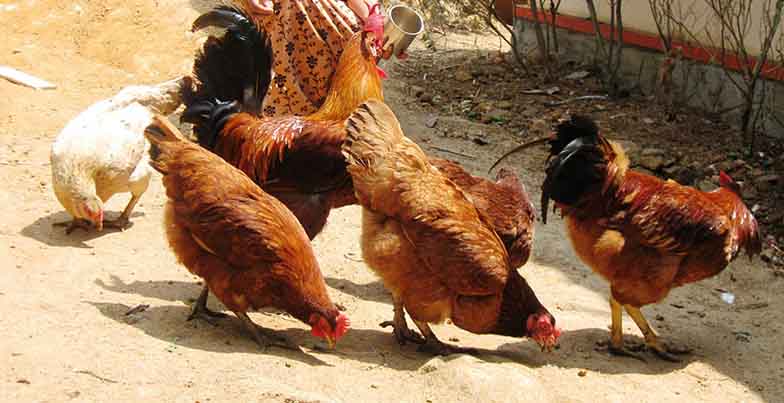
Every morning in our childhood, we were woken up by our rooster’s crowing.  The rooster crows to announce his supremacy in the territory and in the brood.  During the day, one often heard the hens crying loud “bak bak ba ko” after laying an egg. This is often referred to as the hen’s ‘egg song.’

Our house had a barn about 50 meters away from the main building.  It housed the cows and had a room to store hay, the main fodder for the cows.   The hens utilised the hay area to beat the afternoon heat or to save themselves from the heavy monsoon downpours.  The brooding hens stayed there most of the day, hardly ever going out.  Most of the hens laid their eggs too over the haystacks.  Some found their way into the house and lay their eggs in the storeroom where Amma stored the grains and other yields from the farm.  They would also use the area where old newspapers and magazines were stored to lay their eggs.

Hens often resort to ritual singing after she has laid an egg.  The hen’s song generally lasts for a minute or two and at times extend up to five minutes.  Many a times, it turned very irritable, and one wished they stopped their endless singing the earliest.  It appeared that the hens wanted to broadcast to the world that they had achieved something great.  It is a great event in the hen’s day to have laid an egg. 

But why do they do it?  Why does a hen feel the need to broadcast to the world that she has laid an egg? Would it not be sensible for them to be silent so as to protect their egg from predators and humans?

One possible explanation is that the hen is feeling proud of the achievement for laying an egg. So, in fact she must be crowing with pride about her accomplishment.  It may also be that she is feeling relieved to have it plop out.   Another possibility is that having gone off to lay her egg in private somewhere, she is calling to the rest of the flock to rejoin them.  It could also be that she is protecting her egg by moving away from it and distracting predators from the nest itself and focusing their attention to her instead to keep her egg safe.

The song could also be an invitation to the rooster for mating.  At the end of the song, the rooster often approached the hen with a dipped wing, waving his colourful tail feathers and dance around her in a circular pattern. It often culminated with a successful mating.  One mating can leave enough sperms to fertilize each egg for up to a week, hence it may not be a daily ritual.

The hens are not only vocal when they lay their eggs, they also make sounds of purring, growling, predator warnings, squawking and calling chicks to food. Certain breeds are more talkative than others and some chicken are louder or quieter depending on their breed and genetic constitution.

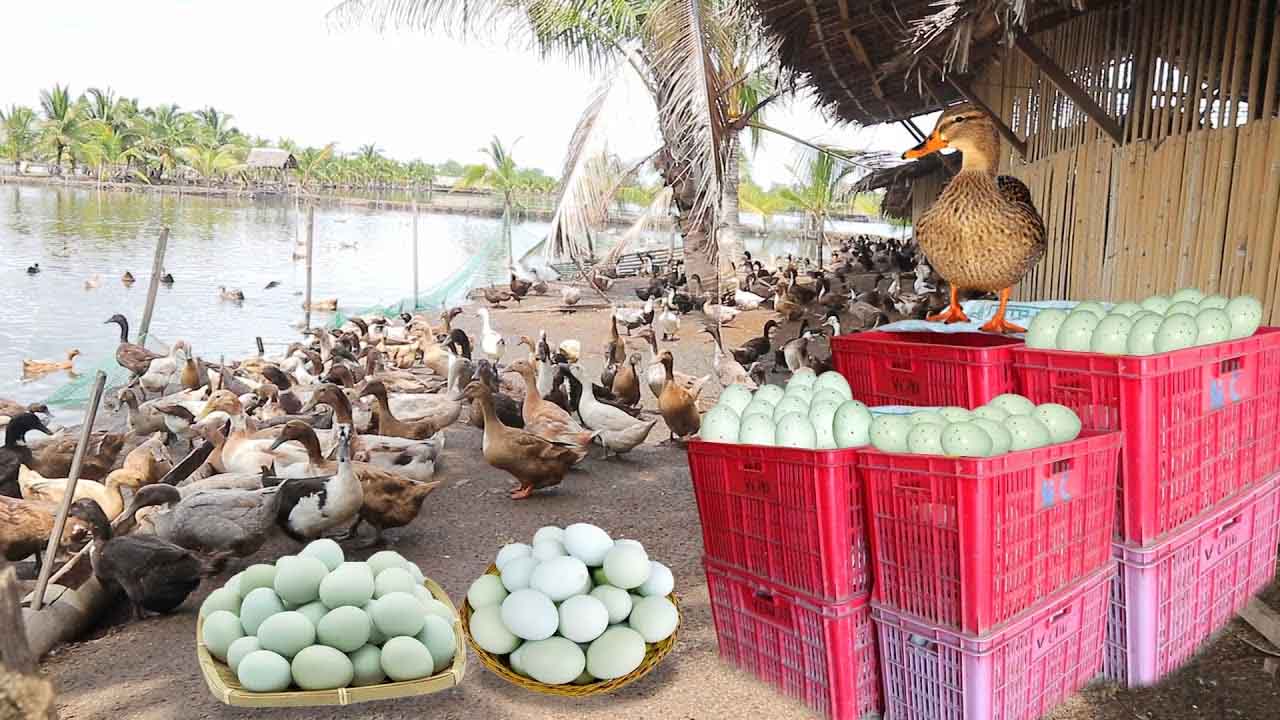
We also had a few ducks.  The ducks quacked all through the day and one could never fathom the reason for the ruckus they created.  There was hardly any pattern to it.  They normally laid their eggs at night and remained quite after their accomplishment.  Sometimes they laid their eggs early in the morning while being taken to the water filled paddy fields.  Mostly these eggs were lost.  Once the water was drained out from the fields to sow rice, we collected many eggs from there.

The duck’s egg is surely much bigger than hen’s.  Some claim that the duck eggs have twice the nutritional value of a hen’s egg and stay fresh for a longer period as compared a hen’s egg due to their thicker shell.    Duck’s eggs are rich with albumen, making cakes and pastries fluffier and richer, as compared to hen’s eggs.  Duck’s eggs have more Omega3 fatty acids. Omega 3 apparently prevents irregular heartbeat, reduce fatty plaques inside artery walls, decrease blood clotting, decrease triglycerides (blood fat), increase HDL (good cholesterol) and decrease inflammation.  That may the reason why the Chinese preserve duck eggs by soaking them in brine, or packing each egg in damp, salted charcoal. It is said to be a delicacy and have been known to remain edible for years.

The hens announce their accomplishment of laying an egg to the entire world around, but the duck, even though does a better job, keeps quiet after the accomplishment.  We as kids used to get into the hay stacks to look for an egg before the crows snatch it away on hearing the hen’s song.  A few times it turned out to be hoax, as some hens may sing without laying an egg.

The ducks do not brood and do not sit idle in one place, hence poor hatchers.  At our home, a brooding hen hatched the duck eggs.  The hen took care of the ducklings like her chicks.  After a week or two, the ducklings jumped into the water in the paddy fields and swam.  The poor mother-hen  ran  around crying, unable to get into water and swim and unable to get near ‘her chicks’ and protect them.  This event marked the end of the mother-chick relationship and the ducklings now went their way in a flock.

Perhaps, there is a human parallel to this comparison.  A few people execute difficult tasks and accomplish great deeds, but keep quite after all their hard work.  They do not announce it to the world and often their works are recognised many years after their death.    Galileo Galilei – a scientist, mathematician, and astronomer; Vincent van Gogh – Dutch Post-Impressionist painter; Johann Sebastian Bach –  a composer; Gregor Johann Mendel – who discovered the basic principles of genetics; and the list is endless.

Some people do announce to the world all their accomplishments and many make much noise about small feats.  Some fake it too; no job but only noise.

May be it’s better to be a hen than a duck in the present days of social media dominated world, where even the silliest activity is broadcast as a great accomplishment.

So, are you a ‘duck type’ or a ‘hen type’?

Nikhil’s Kerala Trip

In December 2012 our son Nikhil wanted to accompany me on my trip to Kerala as he had two weeks of Christmas vacation.  I asked him the reason behind such a decision and he said that it was to spend a few days with his grandmother, uncles and cousins.  He also wanted to visit all the old temples and churches in Kottayam and what interested him the most was Sree Padmanabha Temple at Trivandrum as he had read a lot about the billions worth of treasure the temple had.

fml

Accordingly we landed early morning in Trivandrum and checked into the Taj Hotel.  He was really astounded by the top quality service rendered by the Darwan (Person guarding the main entrance and receives the guests), the bell boy and the room service, the likes of which he had never experienced in all our travel across North America.  After visiting the temple we headed to Kottayam and stayed with my eldest brother, with whom my mother lived.

During every Kerala visit, I make a trip to Kochi to meet my Sainik (Military) School classmates, Veteran Commander Reginald and Mr Roy John (Collector, Customs) and this time too Reginald was gracious enough to arrange an evening at the Naval Institute.  Nikhil was again surprised that once he was about to empty his Coke glass, it was refilled by the waiter, a privilege he had never enjoyed.

Nikhil interacted with his cousins and became closer to them than before.  They saw a Hollywood movie on DVD.  At the end of the movie, one of the cousins commented that it was for the first time he enjoyed and understood a Hollywood movie.  Nikhil all through the movie paused the DVD, explained to them the context  of the scene with respect to the events in North America and its culture; replayed the scene.  Until then they said they never understood the inner meanings of many scenes and obviously never the subtle humour associated with them.  I told them that my plight is still the same and I do not get the essence of many scenes in the movies as I am not as well versed with the North American society as our children – they go to school in Canada.

Interacting with my elder brother who at that time was the Public Prosecutor and a Communist supporter, helped to enhance Nikhil’s knowledge about the legal system in India.  It also gave him an insight into the growth of Communism in India, especially Kerala, resulting in the first democratically elected communist regime under Mr. EMS Namboodirippadu in 1957.  They held many discussions about the relevance of Communism in the world today and how it played a great role in bringing social changes in Kerala.

They discussed as to how the term ‘Kerala Model’ of development was termed and how Kerala achieved improvements in material living conditions reflected in indicators of social development comparable to those of many developed countries, even though the  per capita income is low.  Achievements such as low levels of infant mortality and population growth, high levels of literacy and life expectancy, along with other factors responsible for such achievements were also discussed.  There was a discourse about contribution of various Communists governments in achieving such development when the rest of India lagged very much behind  (obviously not because of the ‘Gulf Money’ as many from North India think as consolation for their lack of progress).

On our way back to Canada, we came through Chennai as we had planned to spend an evening with Major General PK Ramachandran, who was our Commanding Officer and at that time serving with the Area Headquarters at Chennai.  On reaching his residence, the sight of the guards, the way the lawn was manicured and the fabulous garden, the way he was looked after by the General and his wife and all the services he received from the staff at the General’s home seem to have touched a nerve or two in the teenager.  When we went to bed, Nikhil asked me as to why did I leave all these luxuries behind and quit the army and whether I missed these.  To this I said that I really miss all these, but had to make a choice between the family and the army and hence I migrated to Canada to join the family.  Had I continued in the army, they would have visited me during their vacations for few weeks and I would have visited them for two or the most three months (including furlough) in a year.  I was touched by his reply “That is a real sacrifice for our sake”.
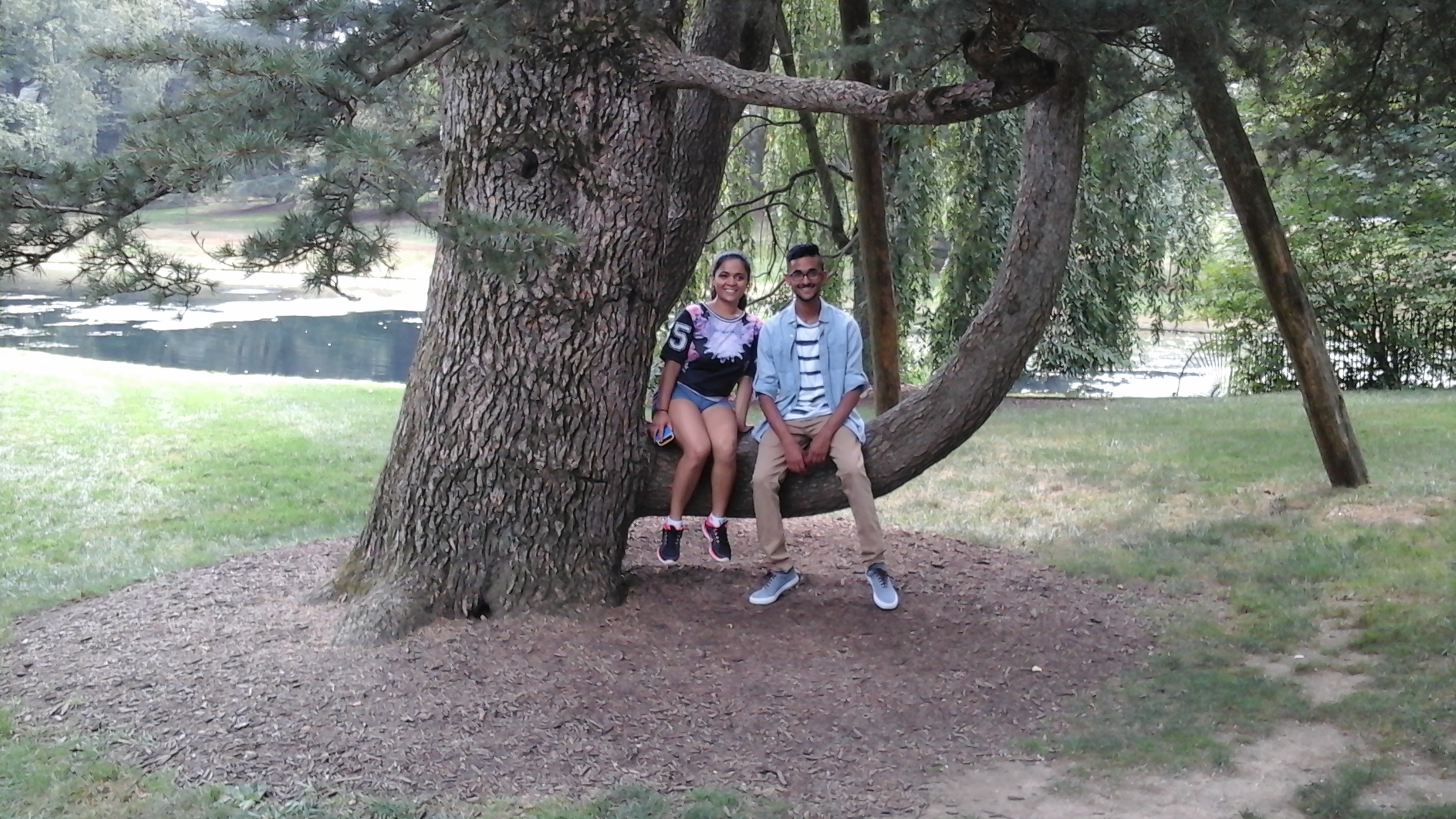
One day at Kottayam, we decided to set off on foot to visit the old temples and churches around my elder brother’s home.  Nikhil was finding it difficult to keep up with me and I asked him whether he was feeling good to walk or should we hire an auto-rickshaw.  He said that he had a heavy breakfast as his grandmother wanted him to put on a few kilos and hence piled up his plate.  He was upset that the granny did not realise that his body structure and metabolism did ensure that he remained thin and it was not that he did not eat enough and he added that granny being a school teacher, who is well read and well-traveled should realise these facts.  “You could have always refused her and could have left the meal half eaten”, I said.  “Your mother is too powerful and I can never say ‘no’ to her.  Look at your eldest brother who is four years elder to you and your elder brother, the city’s public prosecutor, they never said ‘no’ to her and instantly obeyed all what she said.  When she was in Canada with us, you never said ‘no’ to her.  How do you expect a little boy like me stand up to her and ever say a word,” said Nikhil.

 I then realised that this trip was worth more than a thousand times its cost. The value of knowing one’s roots is often incalculable.

Whom Will You Marry?

During lunch, on his return from classes while in Grade 12, our son Nikhil asked me “Why did you marry Mom?  You never dated her, you did not go to school with her, you did not know her from before.  Your parents selected her, you saw and spoke to her for five minutes and agreed to marry her.  What prompted you to take that decision?”

Marry

I said to him that once my parents selected her, they must have seen something good in her and her family.  Her parents and siblings were well educated and she was in her third year of Pharmacy graduation.  Her academic record till then was outstanding, from her high school days until her graduation.  Further, during her high school days, she was the Kerala State champion in 400 meters run.

Now Nikhil wanted to know how it made any difference to me  or to my family.  I explained to him that  by virtue of me  serving as a Major in the Indian Army then, I needed a partner who could cope up with the pressures of being an ‘Army Wife’.  Marina was doing her Pharmacy Graduation at Gulburga in Karnataka State (about 600 km from her home) and hence she had to be independent and ought to have travelled a lot on her own.  She had to be intelligent and hardworking, else she would not have done so well in her Pharmacy course.  Further, she ought to have been physically fit, else she would not have won those laurels in athletics.   She being bit adventurous (I realised after marriage that she was much more adventurous,) would be an ideal life partner  for me.

Now he wanted to know as to whether it has had any effect on the children.  I explained to him that both of us being physically fit and intelligent, the God has blessed us with two kids, intelligent, smart and physically fit.  The kids have no physical deformities like flat foot, knock knees, bow legs, etc, which has enabled them to do well in sports, music and dance. 

WhomWillMarry

With the volley of questions being fired at me, I realised that there had to something more to it.  I prodded him a bit and he said that Ms Kent, the English teacher, was holding a discussion the next day as to “Whom will you marry? A beautiful woman, a rich woman or an intelligent woman.”  The boys in the class had to present their cases and the girls would cross-examine them. 

I now asked Nikhil as to what his take was.  As expected he said he would marry an intelligent woman.  Now we discussed the pros and cons for each case and at the end I said to him not  to be surprised to find that he might be the only one supporting his case.  I advised him to be well prepared to take on the girls and use all his charms, wit, language skills and oratory skills to manage the situation.  

Next evening, at the family dinner, Marina asked Nikhil as to how the discussion in the class went.  Nikhil said that he was the only one supporting the case for an intelligent woman and the rest of the boys were mostly for a beautiful woman.  After everyone presented their cases, most of the questions from the girls were directed at Nikhil.  One girl asked as to whether he would accept a woman if her father offered him a million dollars.  Nikhil countered it by saying that in case the girl is intelligent, he would not stop at a million but would make billions.

Another girl asked him “If the woman is so ugly, then how can you move around with her.”  Nikhil’s point was that he wanted a woman who does neither hitch on to him nor he wanted to hitch on to her.  He was marrying her for companionship and not to show her off as a booty.  Also, he would not have to protect her from gazers.

The boldest among the girls asked “If the woman is so ugly, then how can you have sex with her.”  Nikhil explained that the pleasure of sex is mostly from the mind and hardly from the body.  Most animals during their intercourse do not look at their partners.  Most humans have sex either in the darkness or they mostly close their eyes during an intercourse.  Hence beauty  did not matter to him.

Ms Kent wanted to know the source of this piece of information and Nikhil said “It’s from my Dad”

Now Ms Kent said that she wanted to meet me.  After Nikhil said this, I found Nidhi walking away from the dinner table.  She came back after a few minutes, and I asked as to where she had been.  She said she was chatting with Ms Kent of the Facebook as to why she wanted to meet up with her Dad.  Ms Kent was Nidhi’s English teacher too and were friends after she graduated from high school.  That was when Ms Kent realised that Nikhil was Nidhi’s sibling.

Marina’s Canadian Journey

We got married in 1989 and Marina, my wife was on the third year of her Pharmacy degree at Gulbarga, Karnataka.  I a young Indian Army Captain, was undergoing the Long Gunnery Staff Course (LGSC) for a year at Devlali near Nashik, Maharashtra. She always came over to Devlali whenever she could manage a few days off, often travelling in trains without reservations. That used to be a monthly affair and I think the entire course knew when she came over as I invariably managed to skip classes on those days.

Marina111

In those days there were no cell phones and mind you, no (Subscriber Trunk Dialing) STD or long distance dialing facilities too at Devlali. One had to wait for 9 PM as thereafter the rates came down to a quarter, else it was expensive to make long distance calls. Whenever I thought I missed her, I sat outside the Telephone office next to the railway station, booked a call to the ladies hostel at Gulbarga and waited for the call to materialise. It took an hour for sure and the wait many a times seemed much longer, especially with the mosquitoes buzzing into one’s ears; their bites I did not seem to mind too much (created by the almighty, perhaps they too had a right to live), but never their music. At times there was some company.  A Young Officer trying to call up his girl friend/ fiancé or another officer missing his wife who had gone home for a few days, may be for a marriage in the family or to look up her parents.

Marina was the University topper and after completing her B Pharm degree, we got into ‘family’ life. Marina enjoyed the army wife’s life for a few years. Once the initial fun was over after getting too used to the army life, over the years she got really fed up with it. She found that the wives of many senior officers real dumb who had no interests other than making a career for their husbands.

One day, she decided that she had had enough and said “What use is my B Pharm Degree, for which I slogged for four years?” That is, after eight years of marriage and Army life, she decided to leave me and move to Delhi and try her hand at a business. The business, a joint venture with another Army lady, did not go the way Marina wanted and hence she applied for immigration to Canada.

After applying for immigration, she left the business to her partner and joined a Pharmacy College in Delhi to teach. The main aim was to get back to the subject proper, which she had not been in touch with for eight years. That was when I was posted to Delhi.

She got the books for the licensing exam for a Pharmacist in Canada from her sister in the US. Thus began her battle with the books all over again and I must say she slogged her way out. She got her Canadian Visa as a Permanent Resident in February 2002. At that time, coincidentally I was posted overnight to take over command of a Surveillance and Target Acquisition Regiment in the field during Operation Parakram  – an India–Pakistan military standoff that resulted in the mass mobilisation of both nations’ military forces along the India-Pakistan border and the line of Control (LOC) in Kashmir. This was the second major military standoff between the two countries since they both publicly declared their nuclear capabilities. The standoff was initiated by India after Pakistan sponsored militants attacked the Indian Parliament and as usual Pakistan rejected India’s allegations

A decision was made – to splinter the family- our son Nikhil, an LKG student, off to my parents in Kerala; our daughter Nidhi Grade 5 student to stay at Delhi with Brigadier GM Sankar, our family friend, until her final examinations in March and then off to Kerala; myself to Rajasthan and Marina to Canada, that too in February when the winter is at its worst in Canada. There was no other option and it had to happen and we simply had to cope.

After the operational deployment, our unit returned to Devlali in November 2002. Our children moved in with me and I became a single parent Commanding Officer.  By then I had established myself well in the Regiment.  All officers and soldiers were outstanding individuals with a lot of self-confidence.  They understood their tasks pretty well and executed them with finesse.  The unit was indeed a well-oiled machine.  Late Colonel Suresh Babu was the Second-in-Command, who along with other officers ran the Regiment exceptionally well. Our Regiment was clearly the best outfit in town.

Soon thereafter, I was in for a shock as Nikhil, then in Kindergarten, came back to me speaking only Malayalam as he lived in Kerala for six months.  He had completely forgotten Hindi and English, which he spoke very fluently while at Delhi and his brains were now reformatted in Malayalam.  It took a month and some special effort from me and the unit staff to teach him Hindi and English.

On landing in Canada, Marina worked eight hours a day and studied 10 hours a day and in a year cleared all the licensing exams in one go. A herculean effort. There are two written and a practical examination to be cleared and only about 5% of international pharmacy graduates clear it.

After two years of her landing in Canada, Marina obtained her license as a pharmacist after completing her studentship (four months) and internship (six months). Children joined her in March 2004. I bid farewell to arms six months later and moved to Canada in July 2004. Thus began the reunion of a splintered family. What began as a stray thought in Marina’s mind had eventually developed into a passionate endeavour resulting in a cataclysmic change for each member of the family.

Are we happy today as a family?  Mostly, it’s an emphatic YES. But sometimes we do miss our people, Kerala and above all the Indian Army environs.

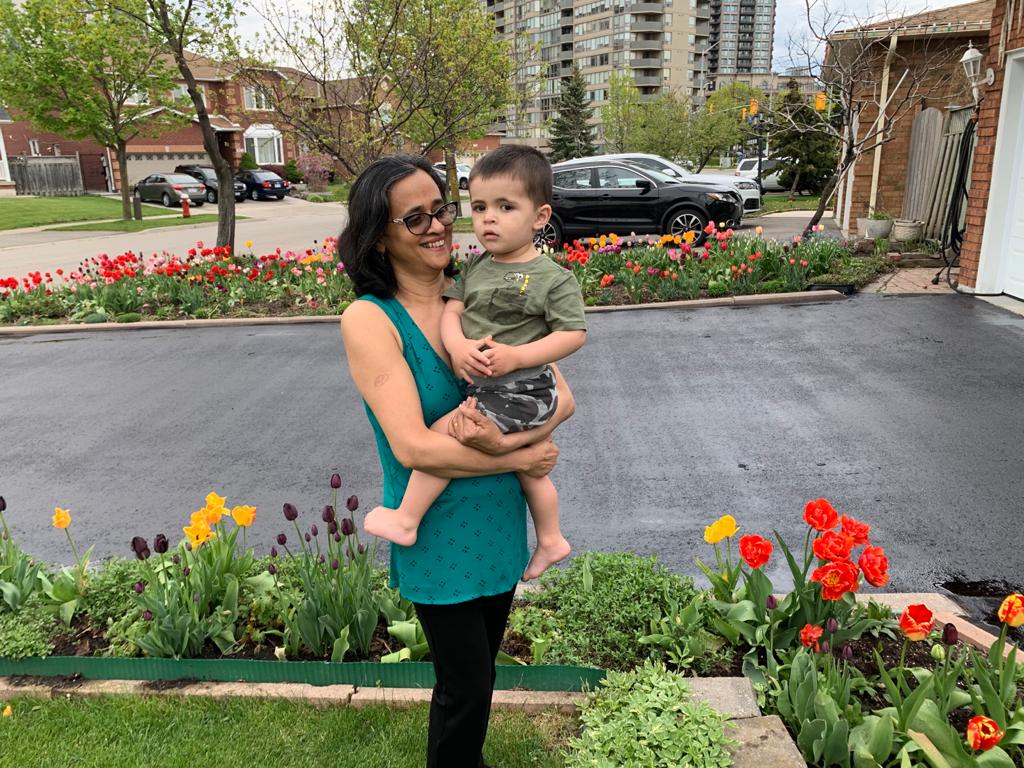
Marina with our grandson James

At that time, I asked Marina as to how she managed to pass all her licensing exams in a year when most people take a minimum of three years and many up to six. She said it was all hard work as she wanted to get children and me as fast as possible to Canada. Being alone in Canada facilitated her to put in those extra hours of hard work. Further, as she was an Army Wife, she was tough and ready to take on all challenges.  She said she was lucky that she never worked as a pharmacist in India and hence did not learn the ‘wrong’ things.  Thus, no unlearning was required prior to learning the Canadian way of pharmacy management. In her view, she started her studies as if she had not even done her B Pharm and hence could clear all the exams in one go.

Canadian Report Card

Competition we faced back home always prompted us to cross-examine our children when they came home with a report card or a test result.  We always wanted to know as to who got the maximum marks, where does our child stand in the class, etc.  At the end of Grade 3 of Nikhil, when he came home with the report card, he declared “Do not ask me how others did as I have no clue as I did not ask anyone about it.”

repc

It is indecent to ask someone their marks in Canada and the marks are confidential and is never announced in public.   The report cards are handed over to the students in a sealed envelope, obviously to ensure confidentiality.

The aim of a progress report in Canada is to enable the students to reach their potential, and to succeed. It is a real challenge for the school as every student is unique and they got to ensure each student gets adequate opportunities to achieve success according to his/her interests, abilities, and goals. The reporting is fair, transparent, and equitable for all students. It supports all students, including those with special education needs and all those learning the language of instruction (English or French). The curriculum is carefully planned to relate to the expectations, learning goals and cater to the interests, learning styles and preferences, needs, and experiences of all students.

All aspects of learning are communicated clearly to students and parents at the beginning of the school year and at other appropriate points throughout the school year or course.   The reporting provides a descriptive feedback that is clear, specific, meaningful, and timely to support improved learning and achievement. It also develops students’ self-assessment skills to enable them to assess their own learning, set specific goals, and plan next steps for their learning.

The high school report card looks more like the Annual Confidential Report (ACR) in the army – it appears as if it leaves no aspects of learning skills and work habit of the child uncovered.  The aspects covered in the report are Responsibility, Organization, Independent Work, Collaboration, Initiative and Self-Regulation.  Strengths and Steps for Improvement are listed out for each subject separately.

RepotCard33

My mind raced back to our Sainik School days and even our army course days, where no marks were ever kept confidential and were mostly put up on a notice board.  I always looked at the mark list on the notice board to make sure that I was not the last.  What an injustice, especially to those who did not fare well!

Once I perused his report card in Grade 11, I asked him a few questions to find out some details about the steps for improvement and we discussed in detail as to how he is going to prepare for his Grade 12.   After discussing the same, I casually asked our son as to how his friends did.  Our son theorised that students want to either show off their marks or feel a bit good when they have really done well or in case they haven’t, they are looking for someone who did worse.  He was not in either and hence did not find out how others did.  I realised that what he said was what I had been doing all throughout my life, either blow the trumpet, or look for someone who did worse to feel happy that you are not the worst.

Our son had done exceptionally well in French and the teacher rewarded him with a recommendation for a cultural and educational exchange program in France.  He went to  Paris (01 July 2014) and returned  on 31 Jul with a French Grade 11 Student, Guillaume Le Floch.  Nikhil stayed with the Le Floch family for a month in France.  Guillaume stayed with us and returned to France on 31 Aug.

While Nikhil was away for a month, I felt a vacuum, both in my mind and at home.  Our dog Maximus seemed pretty depressed and had been running all over the house looking for Nikhil.

We all got to get used to such absence of the kids and this will prepare us to learn to live without them in times to come.

Bringing Up Our Daughter Nidhi

On 20 March 1991, we were blessed with our daughter and we named her “Nidhi” and she was a treasure in the real sense.  She was christened “Susan” after my mother, in accordance with the customs of the Syrian Orthodox Christians of Kerala.

Nidhi22

After my tenure as a Brigade Major and prior to joining the Technical Staff Course at Pune, there was a three months gap and hence in September 1995, I moved to our parent regiment – 75 Medium Regiment, then located at Udhampur (Jammu & Kashmir.)  Marina, who was running a small business then and our daughter who was attending pre-school were stationed at Delhi.  During the Dushera holidays, Nidhi wanted to visit me and spend a week with me and so she was put on the Air India (then Indian Airlines) flight to Jammu as an unaccompanied minor.  Marina was not scared at all to send her all alone as Nidhi was pretty confident and Marina was pretty sure that Nidhi could handle herself well.  She felt butterflies in her stomach only after seeing her off with the airline ground-staff.

I was waiting at the Jammu airport and when Nidhi came out I asked her as to how the flight was and she said that she had put up an ‘about to cry‘ face and the air hostess got scared and stuffed her with lots of chocolates and cookies.  I was then staying in the single officers’ accommodation in the regimental premises and we dined in the Officers’ Mess.

How to keep a four year old daughter busy all day? That was the intriguing question that came to my mind.  Two people in the regiment came to my rescue.  The first was the Religious Teacher, who would take Nidhi to the Regimental Mandir and narrate all the Hindu mythological stories to her.  The next was the (RHM) Regimental Havildar Major (Sergeant Major) Sengole, who would take Nidhi around the unit with him.  She enjoyed watching the gunners carryout their gun drill practices on the Bofors Guns, the chef in the kitchen rolling out ‘Rotis’ in hundreds for the soldiers, the drill at the Quarter Guard, men maintaining their rifles in the armoury, vehicles being repaired in the workshop, etc.

A word about RHM Sengole.  He is six feet tall, dark and well built soldier with an imposing personality who hailed from Madurai in Thamizh Nadu.  As a Sepoy, he was the Light Machine Gun (LMG) handler when I was a young Lieutenant performing the duties of Gun Position Officer (GPO).  When he became a Naik (Corporal) he was the Commanding Officer’s stick orderly when any VIP visited and when he was promoted to a Havildar (Sergeant) he was special guard commander – all because of his blood red eyes and the moustache he had painstakingly grown, which would easily put forest brigand Veerappan to shame.  Sengole was initially a bit surprised to see a four year old girl smiling at him as all kids were literally scared at the sight of him.  He once confided that even his twins were also scared of him when he visited them during his vacations.  The secret was that after having spent over a decade with Sengole, I knew how soft at heart and calm this God-fearing and fierce looking person was.

Having grown up in a family of four sons and educated at the Military School and later at the Military Academies and having served all the while in a male only environment of the Indian Army, the only issue I had was to comb and set Nidhi’s hair.  She had long and thick tresses and when I tried to run the comb through, I realised how difficult it was to even get the comb down the thick growth.  That was when Mrs Jadeja, wife of Captain Vikram Jadeja, who was our Battery Second-in-Command, came to my rescue.  I would dispatch Nidhi to her house whenever she wanted her hair  done and she could also play with their two lovely daughters Rachna and Archana.

After a few days Nidhi walked up to me and asked “What is the difference between a Gola (गोला) and Goli (गोली)?”  I had no answer and she said that the Gola is as big as what she is and is fired from the Bofors Gun and Goli as big as her middle finger and is fired from a rifle.  After spending two weeks with me, she went back to Delhi, again as an unaccompanied minor with an ‘about-to-cry’ face.  That was my first experience of single-parenting.

Marina migrated to Canada in February 2002 and I moved to take over command of 125 (Surveillance and Target Acquisition (SATA) Regiment which was then operationally deployed in the Rajasthan Sector.  The children were sent to Kottayam, Kerala, to live with their grandparents and study there.  Nidhi immediately picked up Malayalam and started to read and write the language as Malayalam was the third language for her as part of the Grade 5 curriculum.

The children along with my mother moved in with me to Devlali, Maharashtra, as the regiment had moved back to its permanent location after the operational commitments.  There started my second round as a single parent.  Nidhi immediately readjusted to the military environment and she had continued with her fluency in Hindi language.  Our son Nikhil, then in Kindergarten, had completely forgotten Hindi and his brains were reformatted to Malayalam.

The regiment was real well oiled machinery and Late Colonel Suresh Babu was the Second-in-Command, who along with the other officers ran the regiment exceptionally well and was the best unit in town.  The soldiers in the regiment were totally self-disciplined and needed no supervision or ‘spoon feeding’.  It appeared that all they needed was directions with clean and trustworthy leadership.  This ensured that I could spend more time with the children as I had to spend under 10 hours a week in the regiment, and I had mastered the art of total delegation.

Preparing Nidhi for the life ahead in Canada, I wanted to make her totally independent.  She had to polish her shoes, press her school uniform and make her bed.  My helper Naik Santhosh would always help her out after ensuring my absence.  Nidhi had to cycle to and fro her school.  Our home was situated on a hillock and hence going to school on a cycle was bit easy, but the return trip on a warm afternoon was bit difficult.  She would at times call up the regiment to say that the cycle is punctured or the chain had come off and the soldiers in the regiment would gladly send her a truck to pick her up and the cycle and drop off at the home.  One day Nidhi asked me as to whether I was commanding a regiment or not.  I enquired as to from where that doubt had arisen.  “All the kids in the class say that you are not the Commanding Officer, otherwise I would have been dropped off to school in the Commanding Officer’s Vehicle,” she said.  I kept mum for a minute and told her that for the entire world I may not be commanding a regiment, but you know the truth.

That was the days when I got a jolt of my life.  Nidhi had attained puberty and as a dad who had all along lived in a male only world had no clue as to how to deal with the situation.  I immediately rushed to my mother for some tips and was in for a rude shock when she said she too had lived in a man’s world for the past fifty years – with my dad and four sons – and she had never dealt with such a situation and had fully forgotten how it was when she was a teenager.  I called up my wife and she spoke to Nidhi and gave all the motherly advise and how to cope with the changes.

The children joined their mother in Canada in 2004 and Nidhi went to join the school in Grade 8.  She was the fastest among all to adapt to the Canadian culture and environment (even faster than her mom who had spent two years in Canada by then).  During her Grade 9, she bagged a plum role in the high school musical drama ‘Leader of the Pack’ which involved rendering four solo songs and six group songs with over 16 costume changes.  Nidhi kept up with her linguistic skills in Hindi and Malayalam, but Nikhil who joined in Grade 1 has fully reformatted his brains to the Canadian English mode, overwriting all the Hindi and Malayalam.

Nidi11

Nidhi came out with flying colours from her high school and completed  her Bachelor of Sciences degree and is currently runs an event management company in Toronto.  I pray to God to ensure her success in life.

Challenges in Parenting Faced by Indian Immigrants In North America

Background
A nursing student, 22-year-old daughter of parents who had immigrated to the US from Kerala, was reported missing by her parents on February 24, 2014. She was last heard from by her mother who talked to her, on the phone.  The daughter claimed to be in the library at the university campus, whereas the police investigation revealed that she made the call from a fitness center.

The parents were in for a rude shock when they learned from police that their daughter, who was a nursing student, had not attended classes since May 2013.  All along, her parents believed that she was going to school, and her mother who was under the impression that her daughter was on track to follow in her footsteps. She had been living at home and telling her parents she was attending school all through the fall and winter. The father’s credit card was even charged $6,072 for the Fall 2013 semester. I had heard from our daughter about of a few students who enroll in courses using the parent’s credit card and later cancelling their enrollment and taking the money.

The parents had not been seeing their daughter’s progress card and when her father asked to see the report card, she said there was something wrong with the computer. The mother had noticed that that her daughter wasn’t bringing home college text books. On inquiry, she said that she was doing online reading. In hindsight, how could a mother, who is also a nurse by profession ever accept such an excuse.

On March 11, 2014, the police found her dead body in her car and as per the police, the cause of death appeared to be suicide, due to inhalation of a noxious substance.

Reality Check

This case study reveals the challenges in parenting faced especially by parents emigrating from India. This brings out the need for positive parent-child interactions, especially at teen and adolescence levels. Each age and stage of growth presents unique joys and challenges, and the teen and adolescence years are certainly no exception. In fact, parenting during these years will always present unique situations as a result of the physical, social and emotional changes taking place in your child’s life. The parents have a great deal of influence on the behaviour of their adolescents.

Majority of Indian immigrant parents’ relationships with their children are formal and vertical with regard to age and gender. Communication and authority flow downward consistent with a hierarchical order. Indian parents accept as their duty the care of their children and children’s reciprocated duty is to unquestionably respect and honour their parents. In this context, parents expect children to accede to parental wishes and to behave in ways that reflect well upon the family, and many times the community. Many Indian immigrant parents rely on the inculcation of guilt and shame to keep children, regardless of age, focused on the importance of family obligations and to behave in ways that do not ‘bring shame’ to the family. Anything and everything the child do is castigated with the often-heard remark that ‘it‘s against our culture.

For a majority of Indian immigrant parents in America, the desire for children to succeed educationally and economically is a very high (only doctors and engineers please.) Accordingly, children’s exceptional academic performance is often viewed by parents as an honour to them.

This also forces children to hide their actual performance/ report cards.  Parents are also culprits as they brag about their children’s academic achievements.  It is very significant at high school level and when the child does not secure admission in a worthwhile university, next lot of stories are spun out by the parents.  This further degrades the child’s confidence, and they end up feeling out of place – trying to live in a castle of lies.

Lives of many Indian immigrant children, especially those at high school and university level can well be compared to the Hindi movie ‘Ram Aur Shyam.‘ The children often end up leading a life of double role – one for university and one for home.  It is akin to maintaining two girlfriends at the same time – one should not meet the other.

Concerns of Indian Immigrant Parents in North America

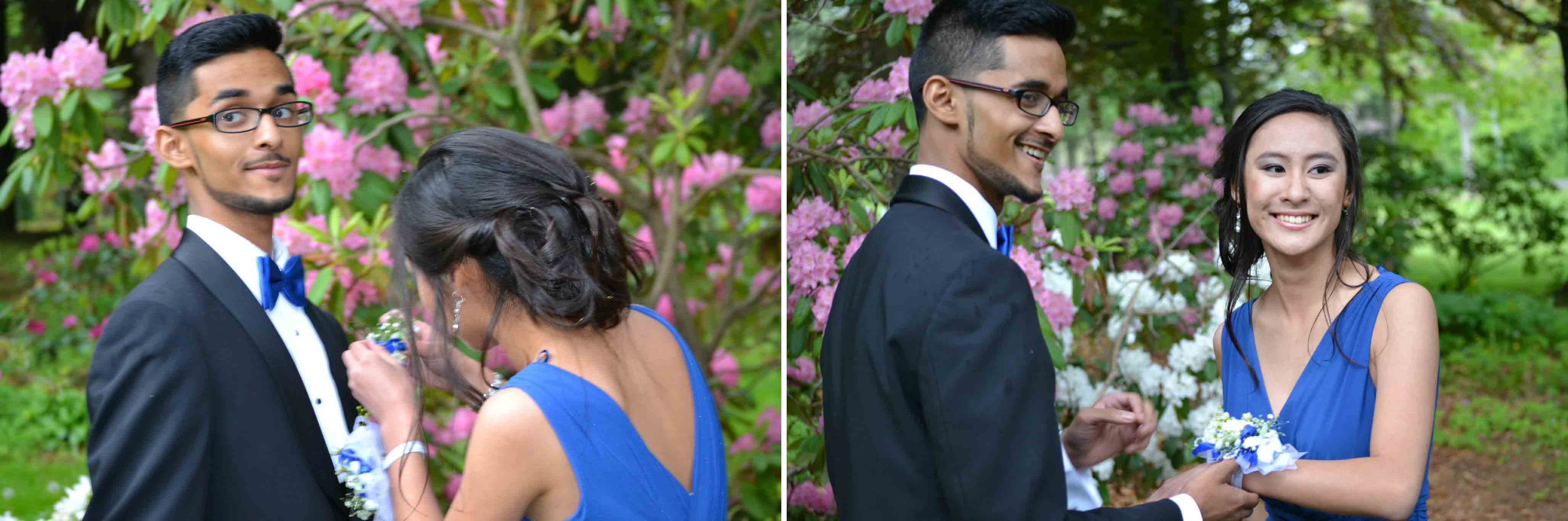
https://rejinces.net/wp-content/uploads/2015/07/prom1.jpg
  • Fear of Losing Children to the American Culture.     Most Indian parents migrate with the hope of making it good with many opportunities North America offers to them and their children. However, they fear that their children, especially those who entered adolescence or young adulthood subsequent to emigrating and those born in North America, are becoming more ‘Americans’ and abandoning the family’s cultural values.  Most of these parents fail to realise that the present young Indian society has changed and have adapted to the American culture of dating, live-in relationships, drugs, pubs, etc, (mostly kept under wraps.)  Some Indian parents often demand that children minimise their activities like dating based on personal choice, partying, using contraceptives, marrying for love vs accepting an arranged marriage, or reject the culture outright. Indian children often perceive their identification with the parental native culture to be a disadvantage to making it big in the American society.
  • Loss of Authority Over Children.           Indian parents become aware of two very painful post-immigration facts of life: that there are vastly different rules for parenting children, and the new rules significantly lessen their general authority over their children. Many parents complain that the children do not listen to them, and some are even scared of saying anything to their children. Parents also lament the ‘permissiveness‘ of the American society that condones children’s rights to challenge parental values and authority and often observe that raising children in North America is same as ‘living with strangers.’
  • Disciplining Children.       Many Indian parents feel restrained in their authority to discipline their children ‘appropriately‘ consistent with the usual and acceptable modes of disciplining children back in India. Many Indian parents used disciplinary practices that by American standards, are considered harsh and even abusive. For these parents, parenting in North America requires accommodation to new value systems, rules, and expectations.  As a result, Indian parents overwhelmingly tend to be cautious in disciplining their children because of their unfamiliarity with other disciplinary methods and fear of breaking the law
  • Loss of Authority to Select Children’s Mate.  Indian immigrant families represent a kaleidoscope of religions and cultures and consider it their right to select and to decide whom the children will (date and) eventually marry. They do not accept the fact that arranged marriages among Indians is on the wane. Notwithstanding the decline in the practice, however, many Indian immigrant parents continue to endorse arranged marriages. Some parents do not hesitate to send marriageable children home to seek a spouse in case there are few or no eligible candidates. Some parents may even ‘import‘ a potential spouse from India.  Some parents do permit culturally exogamous dating and marriages and most children prefer selecting, dating and eventually marrying someone of their own choosing, based on the North American criterion of romantic love. Parents complain that children’s refusal to accept an arranged marriage as a rejection of them and their values and negatively reflect upon them as parents within the community. They also reference the progressively increasing divorce rate among younger Indian immigrants and worry about their children’s ability to ‘make a good marriage.’
  • Loss of Face Within the Community.    Within the Indian community, parents are held responsible for their children’s behaviour and are criticised for their failing as parents, because children’s behaviour reflect negatively upon parents. They believe that it is the paramount duty of their children to enhance family pride by honouring their parents through their culturally appropriate behaviour and outstanding accomplishments. Consequently, when children behave out-of-culture, parents invariably complain that such behaviour dishonour them as ‘Indian Parents‘ and devalue their standing as ‘Indians‘ within the community.
  • Religious Institutions.       Indian parents seem to prove the adage of ‘being more loyal to the king than the king himself’ when it comes to their religious matters. They force their children to attend religious ceremonies, mostly without explaining the details of the ceremony and its significance in real life.  Religious teachers employed by these institutions are ‘fresh off the boat (FOB)‘ from India and do not connect to the North American society and the stresses the children undergo here.   They ensure to instill a feeling of ‘guilt and shame‘ in the Indian parents for not strictly adhering to the religious practices and the ‘sin‘ they are committing by not protecting their children from the ‘hazards‘ of the ‘evil‘ North American society. Their sermons are mostly archaic and have no place in the modern society. Luckily these sermons are in their dialects or in ‘Hinglish/ Punglish/ Manglish,‘ which these children do not understand. These religious heads will talk non-stop on the evils of the North American society but wants you to part with your dollars liberally at any instant.

The Way Ahead

  • Monitor and Supervise your Child.       Children want parents who listen and try to understand, set good examples, and offer guidance. A delicate balance of allowing your child freedom while still exercising a level of parental control is key to your child achieving independence.
  • Monitor Your Child’s Activities.  Show a constant and genuine interest in your child’s life.  Know where your child is at all times. Ask where they are going after school, when they will be home, and which friends they will be with. Parents who actively monitor and guide their children tend to have adolescents who experience positive relationships with peers and who are less likely to use drugs.
  • Check-in Regularly.           Talk to your child after school to ask about their day. If your child is scheduled to be at a friend’s house, call the friend’s parent to confirm the arrangement. Be involved without being overbearing. Your child may protest your monitoring behaviour, but setting boundaries and sticking to them will show your child that you love them.
  • Parent in an Authoritative Style.     Parent with warmth and respect, avoiding being overly controlling or overly lenient. Authoritative parents are warm but firm. They encourage their children to be independent, but as parents, they manage to keep limits and controls on their child’s actions. Authoritative parents openly discuss family rules with their children, which allows the children to express their views. Authoritative parents are nurturing, while providing the rules, guidelines, and standards that children need.

  • Encourage Your Children to Bring Home their Friends.     This will ensure that you meet your child’s friends and know the company he/ she keeps. Interact with your child to find out the activities and conversations that took place during their outing. This is easier said than done as you have to earn the confidence of your child, especially by not reacting to those uncomfortable issues that may crop up. This will provide some insight into the activity pattern of your child outside the school hours
    .
  • Eat Dinner Together.      Eating dinner or at least a meal together as a family provides an ideal opportunity to interact with your children. Talk to your child about their day, their friends, and current events. It also shows that you care enough to take time to listen and learn about their interests. Research finds that teens who eat dinner with a parent five or more times during the week are less likely to smoke, drink, use drugs, get into fights and engage in sexual activity.
  • College and University Students to Study with Education Loan.    The children must utilise the facility of the liberal educational loans, especially those funded by the governments. It not only satisfies the financial need to proceed with higher education but helps in saving income tax also while repayment. Tax benefits on education loan end up reducing overall cost of the loan. Most student loans offer lower interest rates, deferred payment options and a repayment grace period following graduation. This will ensure that the children are better focused on their education. It can also act as a monitoring tool for the parents as the next tranche of the loan would not be released unless the student has scored adequate marks and have the requisite attendance. In case the parents are financially sound, they can assist the child to repay the loan in full or in part upon graduation.

Wishing all parents ‘Great Parenting.’  Remember what Mayim Chaya Bialik, American actress, author, and neuroscientist said, “I came to parenting the way most of us do – knowing nothing and trying to learn everything.

(Photographs are of our daughter Nidhi and our son Nikhil)

First, Middle and Last Name

In school and during my service in the Indian Army, my name was recorded as Koduvath RejiKoduvath being our family name. (Please click here to read more about Koduvath family).

Names

 Among the Syrian Christians of Kerala, names traditionally consist of three parts: the family name, the father’s name, and the christened (given) name. However, my siblings and I had only two—the family name and our christened names. As a curious teenager, I once asked my father why our names were so short. Being a headmaster, he gave a characteristically practical reply: the most common question in primary language classes is “What is your name?” He didn’t want his children struggling with lengthy responses, so he kept our names simple. I often wonder how I’d have managed with a typical Syrian Christian name like KuruvillaPhiliposePunnoose, or Zachariah!

The Many Reasons for Name Changes

In Kerala’s Malayala Manorama newspaper, classified columns frequently feature name-change advertisements—mostly women altering their surnames post-marriage. Some adjust the order of their names, while others cite astrological or numerological reasons.

But motivations for name changes vary widely. Some dislike the name their parents gave them. Couples may hyphenate surnames, creating a double-barrel identity. Others anglicize their names to avoid mispronunciation or unintended meanings in foreign languages. Occasionally, a name becomes a professional liability, or a change is needed to counter identity theft.

A Family Tradition: Keeping One’s Name

My mother, Pallathettu Kurian Sosamma, married my father, Koduvath Varkey George, in 1956. Both were teachers, and neither changed their names. My father believed marriage shouldn’t demand the sacrifice of one’s identity. He also considered the bureaucratic hassle unnecessary. This principle extended to his daughters-in-law—my wife, Marina Mani, retained her name, derived from her father’s.

In the Indian Army, it’s common for officers to change their wives’ surnames post-marriage through Part II Orders (official documentation). Many were surprised when I insisted Marina keep her maiden name. Most officers didn’t realize that marriage alone doesn’t legally authorize a name change—proper legal procedures must be followed. Soldiers, too, often bypassed the process, relying on uninformed officers to approve their paperwork.

Naming Our Children: A Deliberate Choice

After marriage, Marina was often addressed as Mrs. Reji—a natural assumption in the Army, where Reji was mistaken for my surname. She disliked it but eventually accepted it. When we named our daughter Nidhi, Marina felt a single name seemed incomplete. I argued against adding my name to hers, avoiding future change of name complications.

Eventually, Marina named her Nidhi SusanSusan being the anglicized form of my mother’s name, Sosamma. Today, she goes by Nidhi Parkinson-Watson, adopting a hyphenated surname. When our son was born, Marina chose Nikhil George Koduvath, giving him a complete name.

The Passport Predicament: Two Identities

While emigrating to Canada, I swapped my first and last names for the passport, becoming Reji Koduvath instead of Koduvath Reji. This left me with dual identities—Indian and Canadian. Our daughter faced minor issues in Canada, where Susan (her last name) is typically a first name, often prompting double-checks during documentation.

Correcting Documentation in the Army

As a commanding officer, I noticed gaps in soldiers’ documentation, especially regarding marriage and children’s birth records. During a Sainik Sammelan (monthly address), I explained the legal name-change process in India (similar to many developed countries):

  1. Affidavit: File before a District Court or Magistrate.
  2. Newspaper Advertisements: Publish in two local newspapers.
  3. Gazette Notification: Finalize in the state’s Official Gazette.

One soldier from Rajasthan raised a concern: in his community, unmarried women used Kumari (virgin) as their second name, which changed to Devi post-marriage (e.g., Ritu Kumari → Ritu Devi). I quipped, “Until legally changed, she remains ‘Kumari’ for life!” I instructed all personnel to regularize any unofficial name changes.

The Canadian Quirk: Searching by Last Name

In Canada, medical searches often use last names. Since Nikhil and I share Koduvath, while Nidhi and Marina have different surnames, I ask clinics to search by our home phone number instead.

Once, a pharmacy technician pulled up five names under our number and remarked, “All three males share a last name, and the two females have different ones.” Puzzled, she asked who the third male was. The answer? Maximus Koduvath—our dog, who also gets his meds under our family file!

Names2

Nikhil’s Commencement

Comm1aCommencement is a very special event for the graduating class, teachers, staff and the families of graduating students. The occasion is used to celebrate the achievements of students with many special guests in attendance. It is a formal celebration that has associated with it a high level of maturity and respect for one another’s achievements.

US senator Orrin Hatch aptly said about High School Commencement that there is a good reason they call these ceremonies ‘Commencement’, as graduation is not the end; it is only the beginning.  It is one of the most important moments in a student’s life as it marks a transition from high school to university.  Nikhil’s Grade 12 Commencement of the Woodlands School, Mississauga, was held on August 08, 2015.

The high school graduation ceremony in many ways is considered a rite of passage. It commemorates making it through the early, grueling years of homework and science projects. It marks the beginning of a new educational adventure.

Comm2

The graduating students and the faculty wore the traditional black robe and the cap was not mandatory. The use of the graduation robe began in the Twelfth century. At this time no sufficient heating systems existed in universities. To ward off the cold, graduates started wearing long robes with hoods to prevent being cold during the long ceremony. Later on in that century, robes were made the official attire of academics.

The robes that students and faculty wear were modeled on priests’ traditional robes. Students once wore their robes to all classes and lectures (like Harry Potter and his friends at Hogwarts). Today robes are reserved for academic occasions, like graduations, but they still reflect particular academic achievements.

The square cap that graduates wear is called a mortarboard as it resembles to a tool used by masons to hold the mortar while applying it on to a wall. The term was first used in English in the 1850s . The caps became popular in the Fourteenth Century, when it was worn by artists and students, to signify superiority and intelligence. In those days the caps were commonly red in color to signify blood and life.

At the end of the graduation ceremony, many students toss their caps high in the air. This tradition was started by the US Naval Academy in 1912. Prior to the graduation of 1912, graduates of the academy were required to serve two years in the fleet as midshipmen before being commissioned as Navy officers, therefore they still needed their hats. The class of 1912 was commissioned from the time of graduation and received their officers hats, thus their hats were no longer needed, leaving the graduates free to toss their caps into the air and not worry about getting them back. The tradition then caught on at other institutions throughout the country. Now the action is regarded as a symbolic gesture of the end of a chapter in a graduate’s life.

The use of a tassel adorning a graduation cap only started in the last 40 to 50 years. The tassel was originally designed to decorate the graduate’s cap during the ceremony but it has come to have symbolism as well.

The gesture of moving the tassel from one side of the cap to the other symbolizes the individual’s movement from candidate to graduate. Prior to the ceremony the tassel is expected to be worn on the right. During the ceremony it should be moved to the left side after students receive their diploma.

Comm1The Commencement ceremony was a reunion for Nikhil and his friends as it was over a month into their university studies. Everyone appeared to be exchanging notes about their universities, classes and new friends. It began at 7 PM with the Academic procession, being lead by the Principal, followed by the two Vice-Principals, Heads of Departments, Ms Andrea Pils and Nikhil, being the valedictorian.

Ms Andrea Pils, Nikhil’s French teacher, was nominated by Nikhl to introduce him prior to his valedictory address. Ms Pils is the only teacher who taught him for all the three high school years and she was the one who recommended Nikhil for the cultural and educational exchange programme in France based on his performance in French. As per Nikhil, one month he spend in Nantes, France with the Le Floch family was very fruitful and memorable. It was not only an important career milestone, but also a personal one for him. It had a telling impact on Nikhil’s outlook and conduct.

The ceremony commenced with the Canadian Anthem followed by the Principal’s address. Then it was the distribution of degrees to the students who marched up the stage as their name was announced. It was a moment of pride for the student as well as the parents, who looked on with a sense of achievement as the first academic degree was conferred on their child. Along with the degrees, various prizes for outstanding achievements were also given to the students.

comm3The high school diplomas were presented to each student as a roll tied with a string. In the earlier days, diplomas were made of sheepskin, hand-written, rolled and tied with a ribbon and from here originated the saying ” hang your sheepskin on the wall”. It was a phrase to represent showing your education. Many academic institutions still continue with this tradition and some have changed to handing over the certificate in a folder.

Click Here to watch Introduction by Ms Andrea Pils

After all the diplomas and awards were presented to the students, Ms Pils introduced Nikhil as the Valedictorian for the graduating class of 2015.

The Valedictorian delivers a speech known as the ‘valediction’ to his fellow classmates on behalf of them. Nikhil’s speech covered the ups and downs they have all gone through, and provided a humorous and youthful insight of a hopeful future. At the end of the speech, there was a standing ovation as a recognition of his outstanding efforts and success in academic life.

Algonquin Park – A Riot of Fall Colours

alogqa1
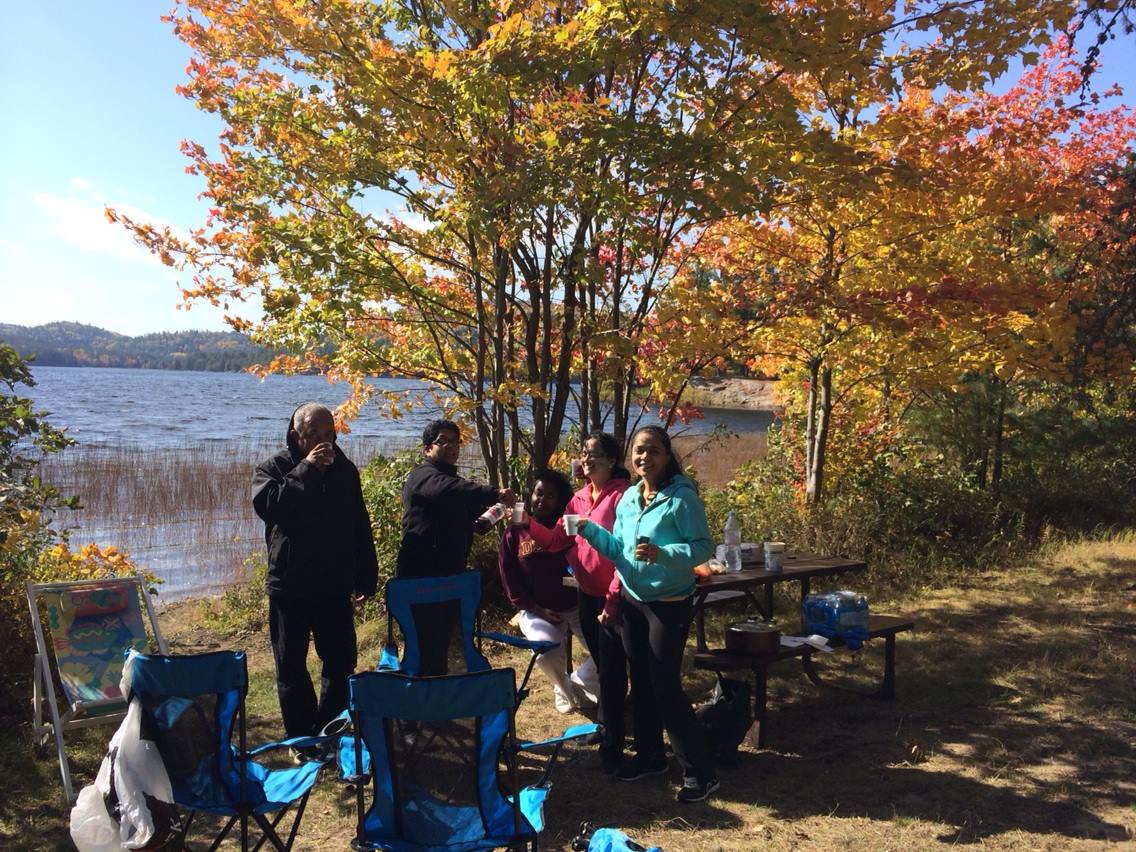
We along with Stephens went ahead with our plans to camp in the Algonquin Provincial Park and celebrate the Thanks Giving Day of 2015. (Please click here to read more about Thanks Giving Day). The children were excited about the camping and visit to the park to view the fall colours, especially after the good times they had in the summer camp in Northern Ontario.
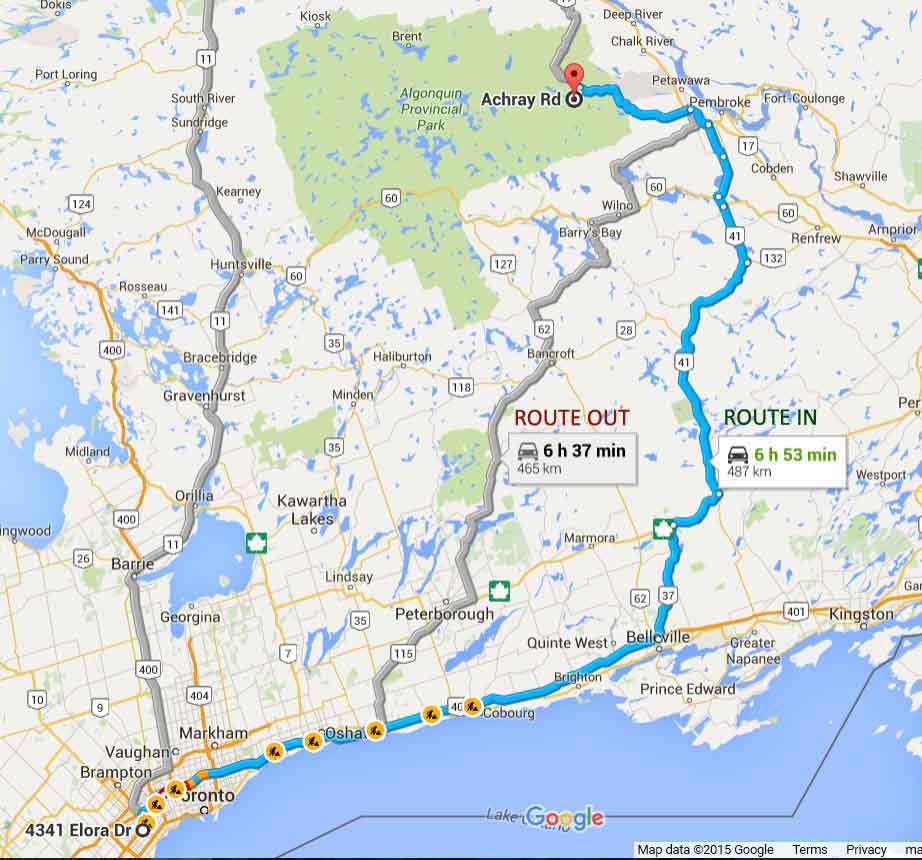
Algonquin Provincial Park, about 7,600 square kilometres in area, is located between Georgian Bay and the Ottawa River in Central Ontario, Canada. Over 2,400 lakes and 1,200 kilometres of streams and rivers, formed by the retreat of the glaciers during the last ice age, are located within the park. The park is in an area of transition between Northern coniferous forest and Southern deciduous forest. There are over 1,200 campsites in eight designated campgrounds. I booked the Campsite # 45 at Achray Campgrounds in July for the October camping. Most camping sites are booked well in advance as only the early birds will catch the prey. The best time to view the fall colours in the park is during the Thanks Giving long weekend and the traffic on the roads are heavy with campers and tourists. After this weekend, the camp is closed to visitors and campers.
alogqa2
(Image Courtesy Google)
Achray Campground was selected because it was well into the interior of the park with no electricity and cell-phone coverage and also for the view it offered. Achray Campground is located on the East side of Algonquin Provincial Park at the southeast end of Grand Lake. The drive from Toronto took about 7 hours with the last 50 km accessed via a gravel road.
On entering the park, all vehicles and visitors have to register at the main gate and obtain necessary permits and passes. The park staff will brief about the rules to be followed, Do’s and Don’t’s, procedure for garbage disposal, etc. After the registration, we drove about 25 kms on the gravel road to the Achray Campgrounds. The store in the campground, the ‘Stone House’, was part of a railway depot complex that was built in the 1930’s, made with stone quarried on the opposite shore of Grand Lake. The store offers canoe rentals, ice, firewood, chips, chocolate bars, camper’s supplies and park merchandise.
alogqa3
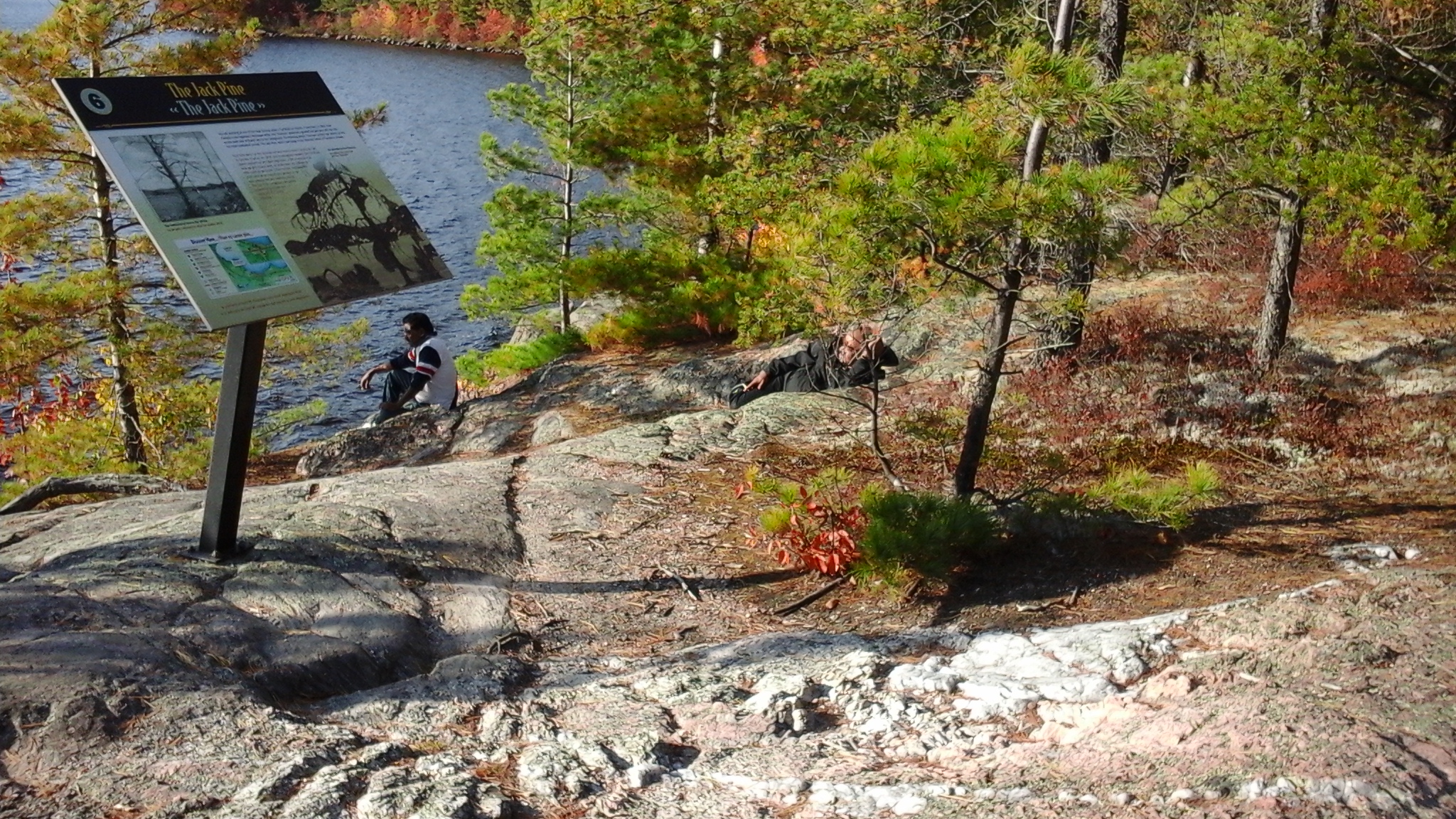
We settled down at our campsite and after a sumptuous lunch, embarked on to the Jack Pine trail, in search of the place where Tom Thompson painted his famous painting ‘The Jack Pine’ which hangs in the National Gallery. Thomson worked as a fire ranger at Achray in 1916. We reached the spot marked with a plaque where the pine was (tree has since died), which inspired the artist.
alogqa4
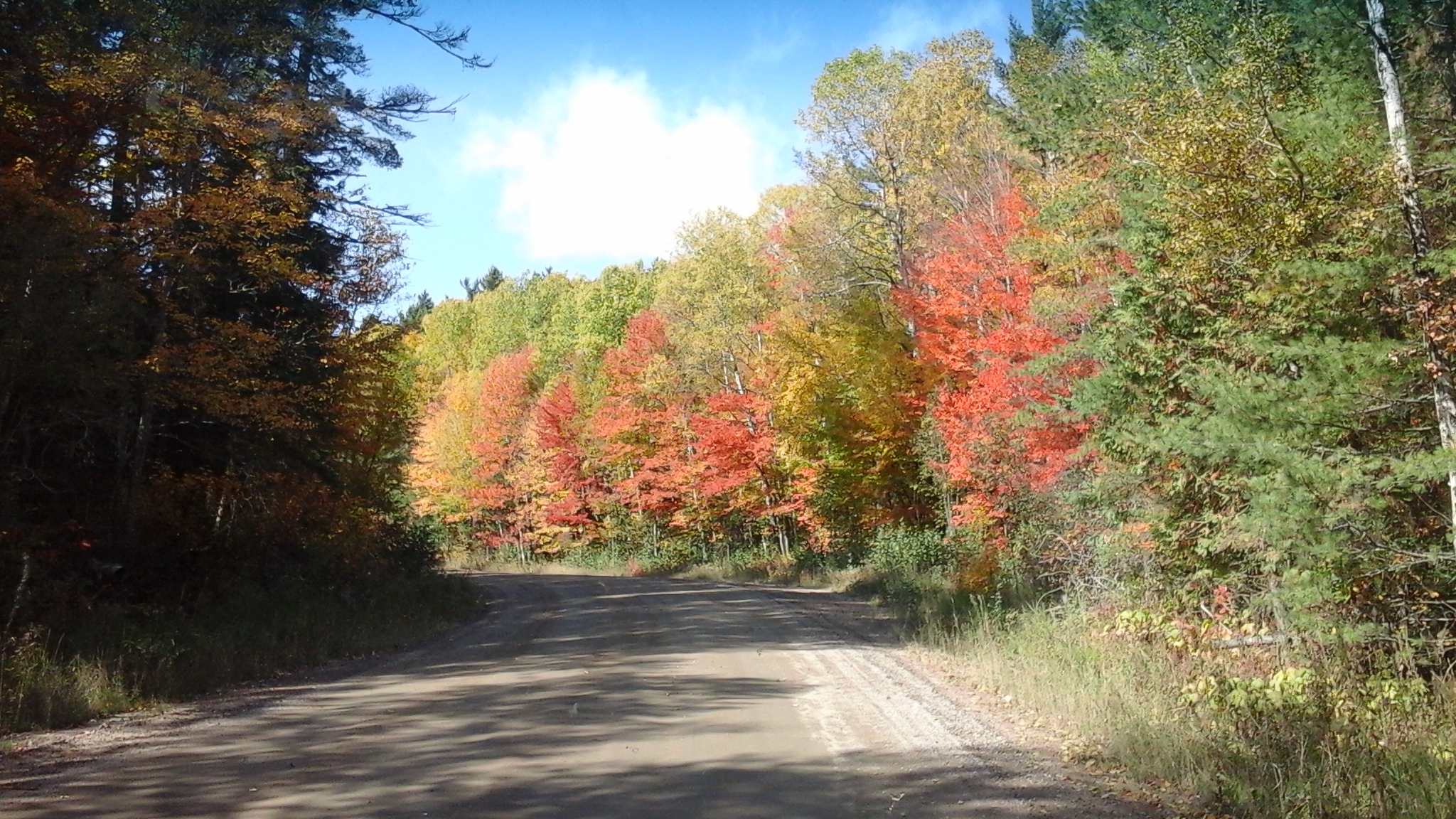
The walk up to the plaque was mesmerising with the vivid red, yellow and orange colours the leaves of the deciduous trees – maples, birches, poplars, tamarack, etc – had turned into. The coniferous trees with their green needles added variety. The varied colored leaves and the brown pine needles that had fallen on the ground and in the cracks in the rocks provided an interesting view.
alogqa5
The green leaf colour comes from pigments of chlorophyll, used by the trees to make food with the help of sunlight. There are other pigments namely carotenoids and anthocyanins present in the leaves, but are overshadowed by the chlorophyll in the spring and summer. Carotenoids create bright yellows and oranges like in corn, carrots, and bananas. Anthocyanins impart red colour to fruits like cranberries, red apples, cherries, strawberries, etc.
alogqa6
In the fall, trees break down the green pigments and nutrients stored in the leaves. The nutrients are shuttled into the roots for reuse in the spring. Some tree leaves turn mostly brown, indicating that all pigments are gone. Trees respond to the decreasing amount of sunlight by producing less and less chlorophyll and eventually stops producing chlorophyll. Now the carotenoid in the leaves show through and the leaves become a bright cascade of various shades of glowing yellows.
alogqa7
The fall season being characterised by short days and longer and cooler nights. When a number of warm, sunny autumn days and cool but not freezing nights come one after the other, the Maple leaves produce lots of sugar, but the cool night temperatures prevent the sugar sap from flowing through the leaf veins and down into the branches and trunk. The anthocyanins are now produced by the leaves for protection. They allow the plant to move down the nutrients in the leaves to the roots, before they fall off. The nutrients stored in the roots help the trees to sprout out their leaves in the coming spring. During this time, the anthocyanins give leaves their bright, brilliant shades of red, purple and crimson.
alogqa8
In a maple or a birch tree, the tender thin leaves, made up of cells filled with water sap, will freeze in winter. Any plant tissue incapable of living through the winter must be sealed off and shed to ensure the tree’s survival. As sunlight decreases in autumn, the veins that carry sap into and out of a leaf gradually close. A layer of cells, called the separation layer, forms at the base of the leaf stem. When this layer is complete, the leaf is separated from the tissue that connected it to the branch, and it falls. Coniferous trees like pines, spruces, cedars and firs, don’t lose their leaves, or needles, in winter. The needles are covered with a heavy wax coating and the fluids inside the cells contain substances that resist freezing. Evergreen leaves can live for several years before they fall off.
It is easy to track the changing colours on the Ontario Parks’ website with suggestions for the best viewing locations and links to ‘Great Fall Drives’ around each park. There’s also the Ontario Tourism’s fall colour report starting soon at http://www.ontariotravel.net.
alogqa9
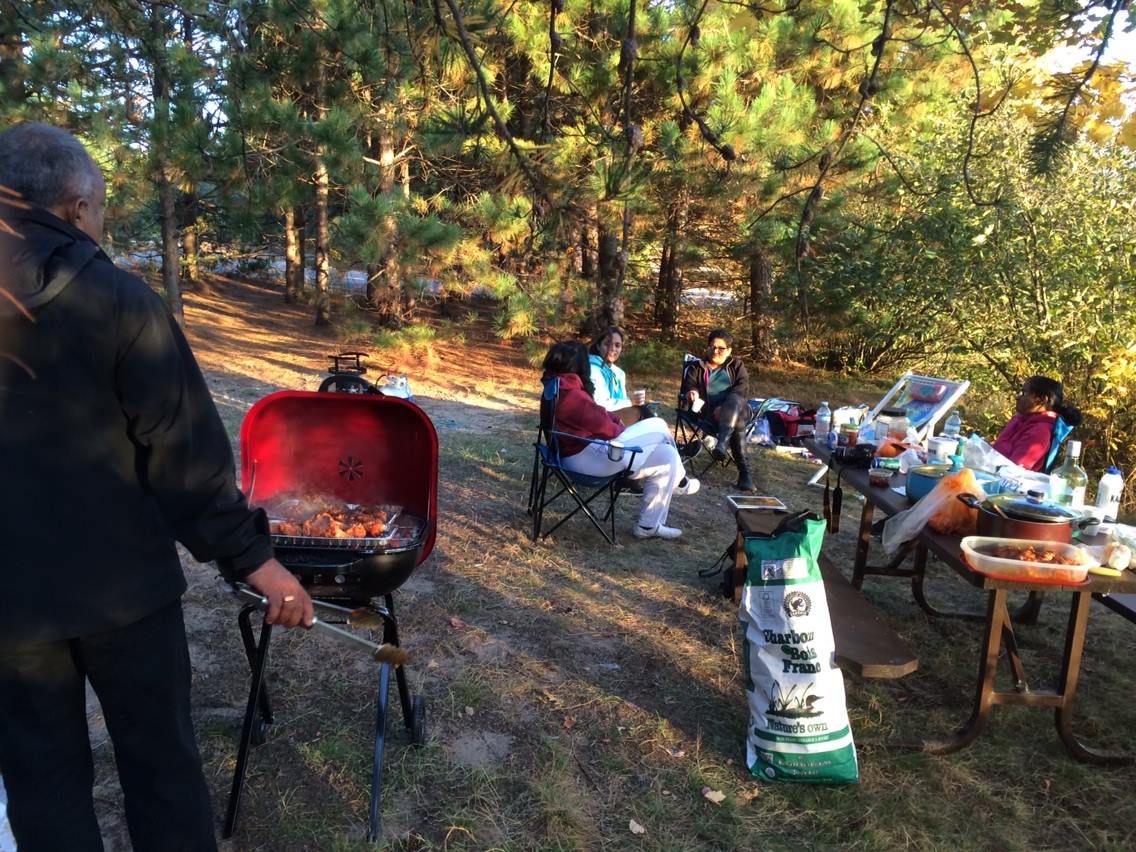
In the evening, we celebrated the Thanks Giving with a dinner – but not with the traditional Turkey Dinner, but with chicken barbeque.
As per the old military adage, I decided to take a different route on our way back home the next day. The route was mostly through the country roads up to Peterborough. The roads passed through many townships, all dependant on agriculture and diary interspersed with few timber mills to convert the abundantly available wood into lumber. The region was hilly with many streams and small lakes and again a spectacular display of fall colours.

The Longwood Gardens

Longwood2a
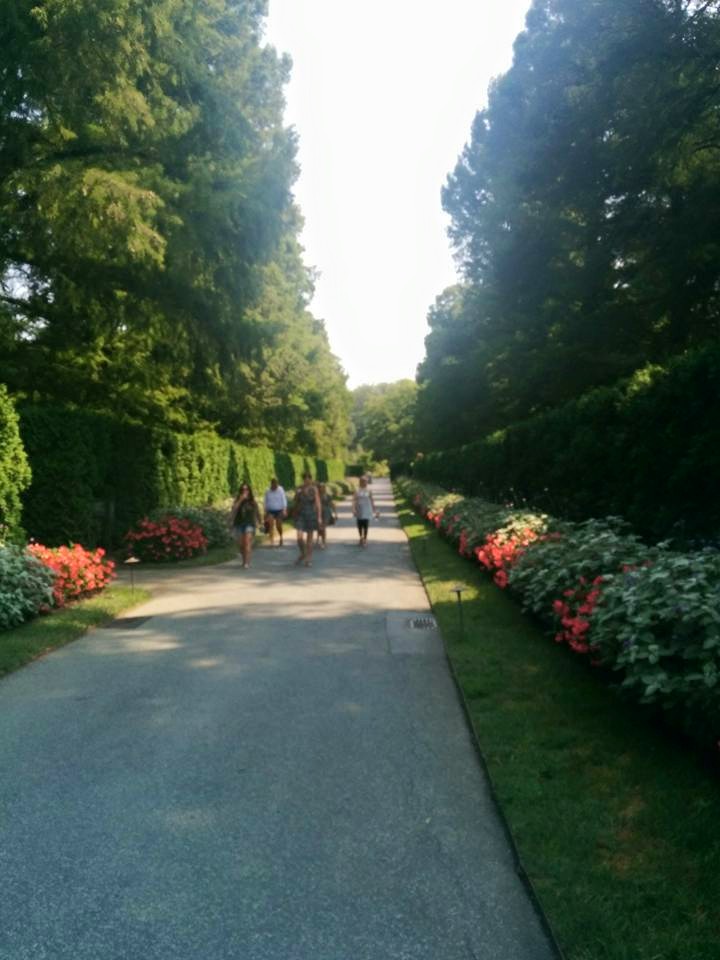
Visiting Marina’s sister Charm and her husband Cherian at Delaware, USA, every summer for the past decade, we always plan to visit the Longwood Gardens. The visit materialised only in the summer of 2015. The Longwood Gardens, one of the world’s greatest gardens of today, was established by Mr Pierre Du Pont when he purchased Peirce’s Park in 1906 in order to save the trees in the park. The park owner had contracted a lumber mill operator to remove the trees from the park.

Longwood2b
Mr Du Pont was born in 1870 in Delaware, USA. He was president of the world famous DuPont Company from 1915 to 1919, and served on its Board of Directors until 1940. He also managed General Motors from 1915-1920, became GM’s president in 1920 and served on GM’s Board of Directors until 1928.

During his early years in Wilmington, Delaware, he was influenced by the area’s natural beauty and by the Du Pont family’s long tradition of gardening. His jobs took him to Europe many a times and he was always exposed to a wide variety of garden settings, fountains, grand architecture and the latest technology.

longwood2d
After buying the Peirce’s Park at the age of 36, Pierre started to create a garden, which today is the Longwood Garden. He built the gardens piecemeal, beginning with the Flower Garden Walk and he followed no grand plan or design. He added an open-air theatre in 1912, inspired by an outdoor theatre near Siena, Italy. He then added the “secret” fountains that drenched the unaware visitors.

Longwood Flowrwalk
As a wedding gift to Alice Belin, whom he married 1915, he added a conservatory – Longwood’s first “winter garden” and planted exotic foliage and created a small marble fountain. In 1921, he opened the Conservatory, a perpetual Eden which used the latest technology of the day to heat, water, and power the complex. All the systems were hidden in tunnels so as not to detract from the grandeur of the glass-covered and surrounding rooms. He then opened the greenhouse to the public.

By the mid-1930s, Longwood had grown from the original 202 acres to over 1000 acres due to Pierre’s purchase of 25 contiguous properties over the years. Today the Longwood Gardens has a yearly budget of nearly $50 million and a staff of 1,300 employees, students, and volunteers. Longwood is continuously evolving to become one of the world’s greatest gardens.  The garden is open to visitors year-round to enjoy exotic plants and horticulture, events and performances, seasonal and themed attractions, educational lectures, courses, and workshops.

The Longwood Gardens consists of 20 outdoor gardens and 20 indoor gardens within 4.5 acres of heated greenhouses, known as conservatories It contains 11,000 different types of plants and trees, as well as fountains. The Gardens also has extensive educational programs including a graduate program, and extensive internships. It hosts 800 horticultural and performing arts events each year, from flower shows, gardening demonstrations, courses, and children’s programs to concerts, organ and carillon recitals, musical theatre, fountain shows, and fireworks displays. It also hosts an extensive Christmas light display during the holiday season.

Longwood2e
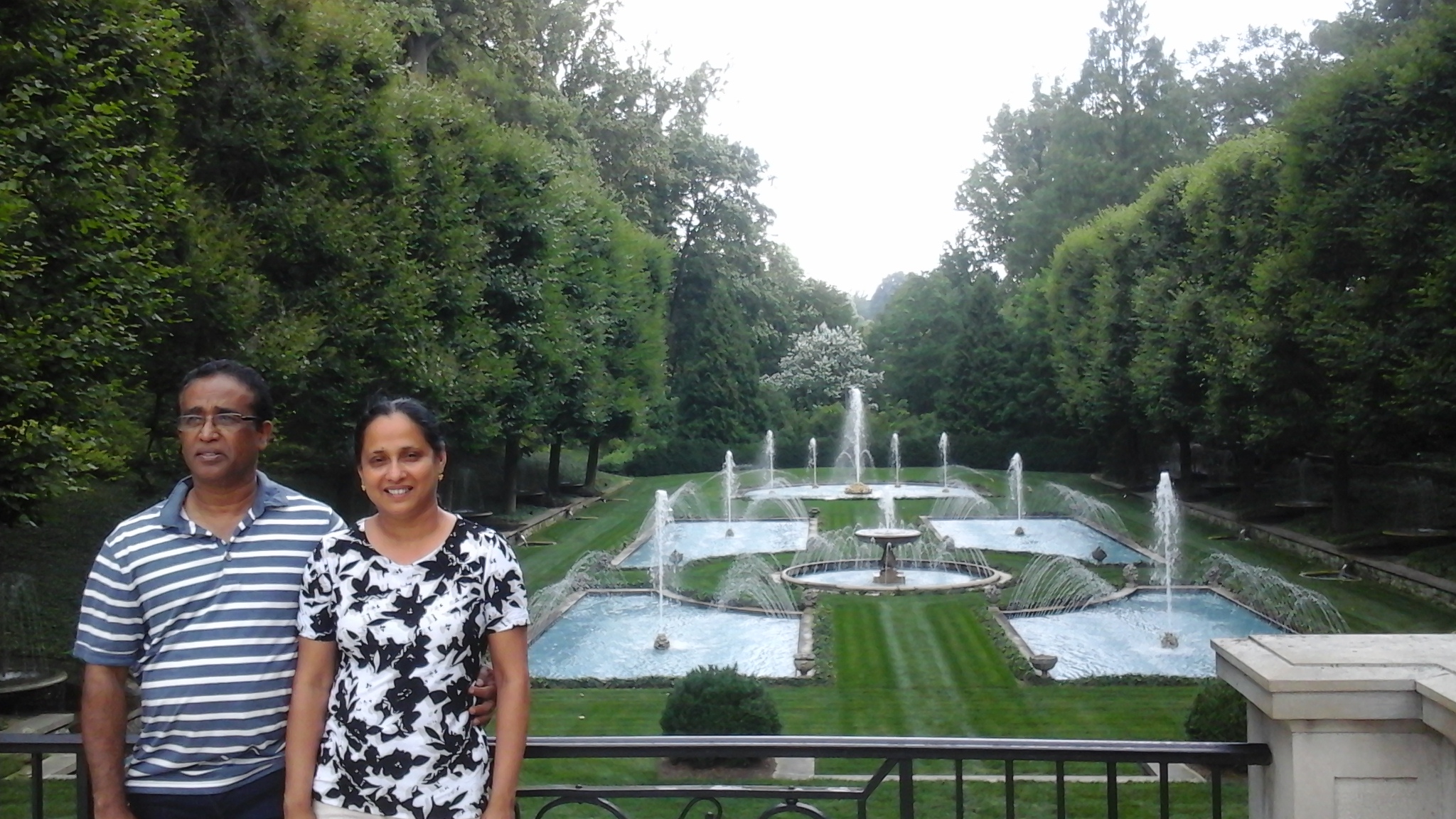
Longwood Gardens is renowned for its extraordinary fountains. The astonishing shows gather attention from far and wide, and are a favorite among visitors of all ages. Inspired by the success of the Italian water gardens and open air theatre fountains, Mr Du Pont unveiled the Main Fountain Garden in 1931. The goal was to rival the fountains he had seen in Europe. Today, this open air theatre conducts fountain shows featuring 750 jets in changing patterns, this showpiece comes alive with five-minute shows set to music. Since its 1914 Garden Party debut, this Italian-style outdoor theatre has expanded from its simple original fountains to the 750 jets that create the rainbowed curtain of water.

Longwood2c
Tucked into a protected courtyard (accessed via the Conservatory), this stunning outdoor garden features aquatic plants from all over the world. The garden is open from late May through mid-October. Peak bloom occurs mid-July through September (depending on weather). The water-lilies and tropical aquatic plants are displayed here in five large pools. The aquatic plants consists of lilies, lotus and incredible Victoria water-platters with leaves measuring up to four feet in diameter. This leaf might have been used to float the infant Lord Krishna, to be discovered by Markandeya. The same leaf could have been used by Kunti to float infant Karna and also may have been used in the case of infant Moses.

Longwood Orchids
The Orchid House displays a fraction of the 7,500 orchids at Longwood Gardens. To ensure a continuous display, the orchid grower hand picks and replaces the plants three times a week with others from the five orchid growing houses. Orchids were a passion of Pierre Du Pont and his wife, Alice. Orchids were one of the first plant collections—started in 1922. In 1948, the collection was greatly enlarged when Pierre  DuPont’s sister-in-law, Mrs. William Du Pont, donated her well-known and respected collection of more than 2,300 orchid plants to Longwood.

Longwood Palms
The Palm House opened on Palm Sunday, 1966 with a landscape of palms in all sizes and shapes from all around the world. Mr Du Pont preferred temperate houses because they were less expensive to heat and only the small conservatory in the Peirce House was warm enough for an occasional palm.

Longwood2f
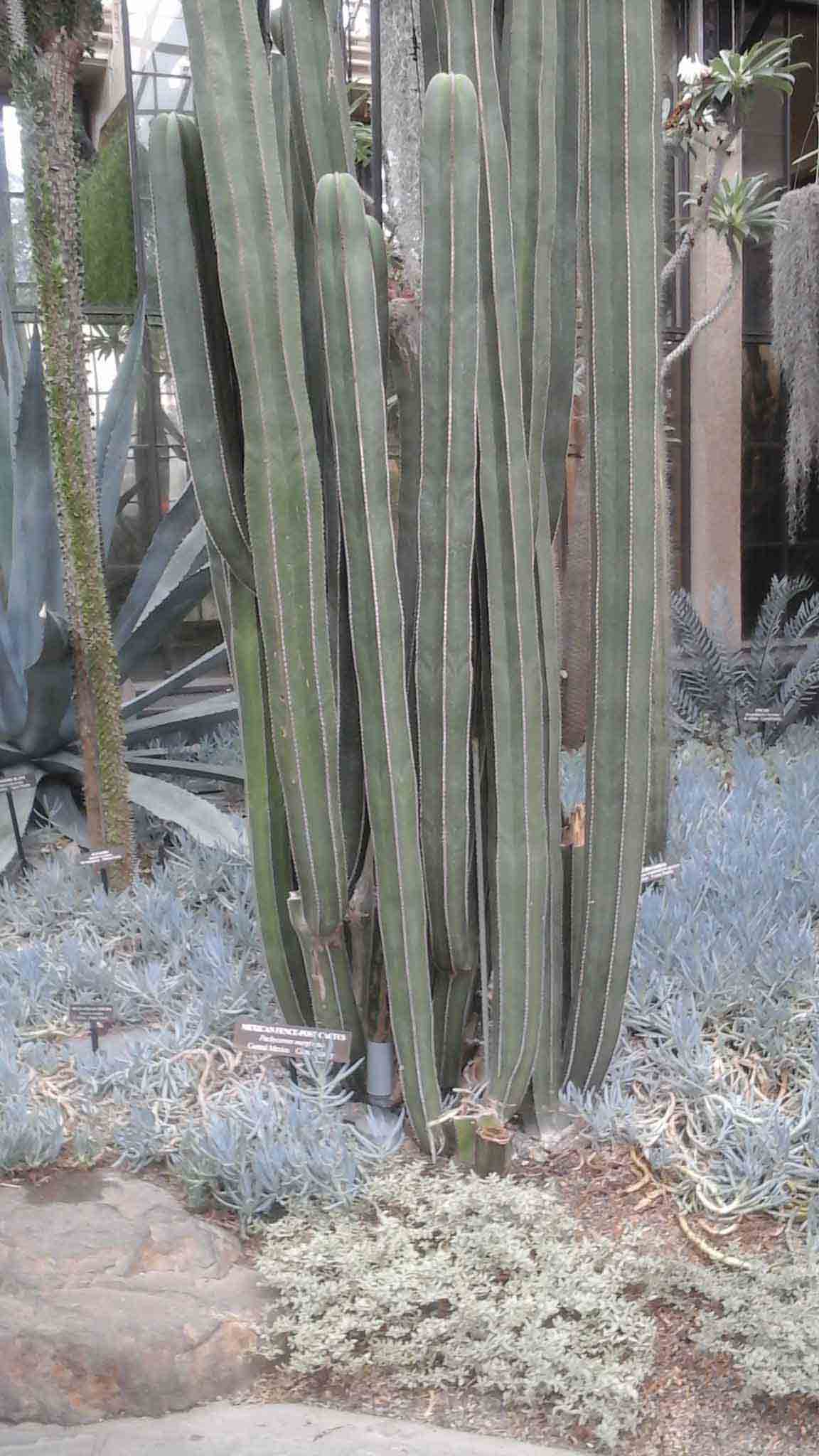
The Silver Garden houses the cacti collections. Through the glass roof the moonlight appear to bounce off the gray and silver-foliaged plants that fill this garden. This mimics the dry and arid landscapes found in Mediterranean and desert regions. Slate, rocky outcroppings, and exotic plants combine to create this multi-textured garden. The gray-blue slate pathway gives the impression of a dry streambed that would be found in a desert. The greenhouse containing this garden was built in 1921 and was originally used to grow peaches and nectarines. Following a major structural renovation, the Silver Garden came into being in 1989.

These are some of the few specialities of the Longwood Garden and must be included in the itinerary of anyone visiting this part of America.

The Burden of Pay

Our son Nikhil, a grade 12 student, applied for a position as a volunteer at the local hospital. The aim of joining the volunteer team at the hospital was to have a firsthand feel of the hospital environment as he intends to pursue a career in the medical field. Volunteering gave him a chance to explore different occupations in the hospital and he would be exposed to a wide range of health care workers, from front line nursing and medical staff to program administrators. He got to know the people, challenges and rewards involved and gain a better understanding of the roles and jobs available.

It was also intended to help him manage his time better. Statistics show that students who work or volunteer are better time managers and fare better in the universities. Volunteering provided him chance to meet new people and through them expand his network, opening up new opportunities. It also facilitated him to use the French language he had improved with a one month stay in France. It also provided him a chance to find out how other people viewed him and his strengths.

Nikhil was called for an interview by the volunteer coordinator at the hospital and motivated with the above factors, he faced the interview. The last question he was asked was about the difference between a job and a volunteer position. Nikhil answered “there is no difference at all except that there is no burden of pay being a volunteer.”

Nikhil  was also hired by the Mississauga City to be a swimming instructor and a life guard at the swimming pool. This job he got after volunteering as an assistant instructor at the pool for an year. To be a swimming instructor one got to be a certified lifeguard by the National Lifeguard Service. The certification involves about twelve levels of swimmer training and a swimming instructor course. Further one got to be certified in first-aid and cardiopulmonary resuscitation (CPR) by the Canadian Red Cross and also be certified in child psychology. All these certifications are valid for only a two year period after which he has to re-certify in all.
In many provinces of Canada and US, forty hours of community service is mandatory for graduating from high school. Nikhil had already completed this requisite as he had volunteered at the pool for over 100 hours. The purpose of the community involvement is to encourage students to develop awareness and understanding of civic responsibility and of the role they can play and the contributions they can make in supporting and strengthening their communities. This also gives the kids the opportunity for new experiences, whether it be visiting a senior-citizens’ home, volunteering in a hospital or working in the library.

Students who engage in community service have many opportunities for personal growth. They gain exposure to people and experiences that broaden awareness and understanding of the world around them. Most kids learn new skills in these situations and work with people of diverse backgrounds and lifestyles. This is often the first time some of them have worked for a boss, and it is helpful in learning how to follow orders on the job.

One of the biggest problem students face in school is lack of motivation. Many students are unable to fathom the gap between the curriculum and their everyday lives. Community service provides an opportunity to apply academic learning to real human needs and to make the knowledge gained usable. This would motivate a child to research further into the subject being taught.

Studies indicate that students who volunteer have demonstrated improvement in positive feelings and mental health, and have helped them to reduce depression and stress. Many students feel that it is ‘cool’ to volunteer and many flaunt their volunteer T-Shirts in the school. Many students have reported an increased sense of social responsibility, and a subsequent desire to “give back” to their communities. This attitude help create social capital, that is, social networks of trust and cooperation.

Most well paying jobs in the health related fields in North America is regulated and the licensing procedure is applicable to both immigrants and the North American students. This is mainly applicable to doctors, pharmacists and nurses. The licensing test consists of a written and a practical element and covers all real-life scenarios encountered in the profession. Most Canadian students are well versed with the system as they undergo on the job training, mostly as volunteers and thus qualify these tests with much ease. The immigrants find it pretty difficult as they are not well versed with the North American system and also they have learnt many an incorrect practices back home. The only way to learn the North American system is to volunteer and obtain some experience.

Most hospitals have over 500 volunteers on their role and some have even over a thousand. There is a long wait-list of people who want to enroll as volunteers. They are high school students and retirees; they are the veterans from the Canadian forces; they are university students, young professionals and seasoned executives. Some have an interest in health care, some are considering a medical profession, while others have spent much time in hospitals recuperating from some serious illness or accidents. To enroll into the volunteers corps at a hospital as a student, one got to get two recommendations from the teachers (not easy to come by) and after the interview with the volunteer coordinator undergo a medical examinations, mainly to ensure that they are not carriers of any communicable disease.

In North America one needs experience to get a job and the best way for gaining experience and showcasing one’s talents and skill is only through volunteering. This not only looks good on the resume, the recommendations by the supervisors at the volunteering organisation also gives one a better chance of getting the job. Volunteering is the only way a new immigrant can gain US/Canadian experience and many immigrants are reluctant to take up a volunteering position as it does not pay or there is no burden of pay.

Nikhil’s Grad Breakfast

GradBreak1

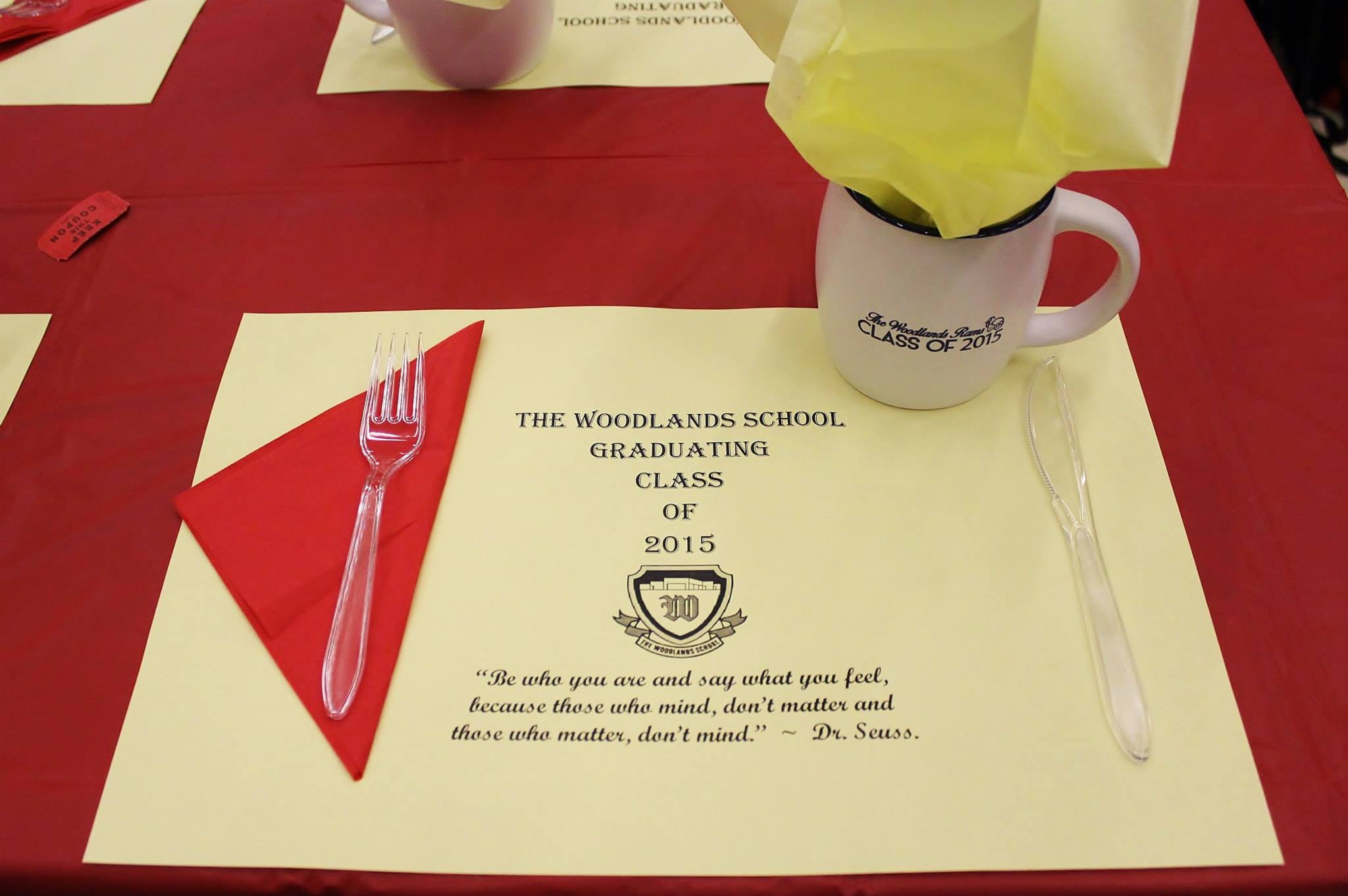
Grad Breakfast is a wonderful high school tradition where the graduating Grade 12 students get together one last time and enjoy breakfast as a group. This is an excellent opportunity to celebrate the hard work and achievements of the graduating students. The Grade 11 students serve the Grad Breakfast for the graduating Grade 12 students, generally during the last week of the class. It may also be a charity event and the money generated may be send to a deserving charity. This occasion also marks the passing of the mantle to the Grade 11 students, who will now be the seniors in the coming academic year.
GradBreak3

The Woodlands Secondary School from where our son Nikhil is graduating from, had their Grad Breakfast on Friday, June 12, 2015. The occasion is also used to select the valedictorian from a pool of applicants. The prospective candidates apply to run as a Valedictorian and the application got to be validated by two high school teachers. All candidates have to deliver a short speech at the Grad Breakfast, in front of the graduating Grade 12 students. The term ‘Valedictorian’ is an Anglicized derivation of the Latin ‘vale dicere’ meaning ‘to say farewell’, historically rooted in the valedictorian’s traditional role as the final speaker at the graduation ceremony. So the valedictory address generally is considered a final farewell to classmates, before they disperse to pursue their individual paths after graduating from the high school.

The major criteria for the Valedictorian applicants was that the valedictorian must be a well-rounded individual whose accomplishments reflect the values of the school community. The recipient of this honour would have to meet the requirements for Graduation with a minimum of 30 credits; must be a honour student (80% average) from Grade 9 to 12; have demonstrated respectful behaviour in school as well as in the community at large; have not been in any discipline cases; must be a positive role model for the junior students; must have demonstrated leadership in various aspects of school life throughout the school career; and be able to represent the entire graduating class.

Nikhil along with four other classmates had applied to be the Valedictorian. After the Grad Breakfast, all five candidates delivered their speeches. Nikhil spoke about the changes the graduating students are going to bring to the community, the country and the world. Click here to listen to Nikhil’s speech on YouTube.

The graduating students were asked to vote online to select their Valedictorian. This was not merely a popularity contest, but the chances of an unpopular candidate winning it despite an awesome speech is very slim. Nikhil was confident that he would win it. After a few days it was announced that Nikhil was selected as the Valedictorian for 2015.

Being a Valedictorian, it will surely confer one bragging rights and will also and a line to one’s resume and will also look good. It normally does not provide you any extra boost for your university admissions, but for sure, the admission panel will take a close look at it.

Now Nikhil had to nominate one of his teachers to introduce him as the Valedictorian at the Commencement. He chose Miss Pils, his French teacher. Ms Pils is the only teacher who taught him for all the four high school years. She was the one who recommended Nikhil for the cultural and educational exchange programme in France based on his performance in French. As per Nikhil, one month he spend in Nantes, France with the Le Floch family was very fruitful and memorable. It was not only an important career milestone, but also a personal one for him. It had a telling impact on Nikhil’s outlook and conduct.

The Valedictorian has to deliver the Valedictory address at the ‘Commencement’, to be held in October 2015. There is no greater recognition of a graduate’s achievements than a high school graduation ceremony, or Commencement. Diplomas are conferred or handed out to graduating students. Various award winning graduating students are honoured during the ceremony. The speakers selected for this event often include community dignitaries, alumni and the valedictorian. During our daughter Nidhi’s Commencement in 2009, it was Ms Hazel McCallion, the then Mayor of our city Mississauga (Please click here to read more about her), who delivered an inspiring motivational speech to the graduating students.

Commencement is a very special event for the graduating class, teachers, staff and the families of graduating students. The occasion is used to celebrate the achievements of students with many special guests in attendance. It is a formal celebration that has associated with it a high level of maturity and respect for one another’s achievements.

US senator Orrin Hatch aptly said about High School Commencement that there is a good reason they call these ceremonies ‘commencement exercises’, as graduation is not the end; it is only the beginning.

Nikhil’s Prom

Prom1Prom (promenade) is a semi-formal dance or gathering of graduating high school students. It is a celebration of hard work and friendship these teens underwent during their four years at the high school. The term ‘prom’ comes from the word ‘promenade,’ meaning a march of guests into a ballroom to announce the beginning of a formal event or ball. This event is typically held near the end of the year for the Grade 12 students. Prom is a major event among high school students and is believed to be the most important teenage event in Canada. Many teens feel this event to be an important event in their life, next to their wedding.

In the early 1900s, prom was a simple tea dance where high school seniors wore their Sunday best. In the 1920s and 1930s, prom expanded into an annual class banquet where students wore party clothes and danced afterward. In the 1950s, proms became more extravagant and elaborate, moving  to hotel ballrooms and country clubs from the school gymnasium, bearing similarity to today’s proms. With this, competition blossomed, as teens strove to have the best dress, the best mode of transportation, and the best looking date. In 1975, President Ford’s daughter Susan held her high school’s senior prom at the White House.

Our son Nikhil attended the Prom in June 2015 with his date Vivian Elizabeth as both were graduating from Grade 12. The preparation for the event started in full earnest in May after Vivian accepted Nikhil’s proposal to be his Prom Date. This event is called a ‘Promposal’ and can mimic marriage proposals. Nikhil with a bouquet in his hands, dropped down to one knee, and proposed to Vivian to be his Prom Date.

Many of Nikhil’s friends did come up with creative methods for Promposal. Some did a ‘Bhangra’ with a ‘Dhol’; some sang a song duly supported by chorus of friends; some proposed with flowers and special cup-cakes; some had flash-mobs; some had special T-Shirts with a message and the list is endless. With these creative methods, teens are making each other feel special. This trend can be attributed to the power of social media and every teen want to post something special about every important event and promposal is really important.

Nikhil wanted to wear a tuxedo for the event and we went to the store renting tuxedos to pick up one suiting him. He did not want to invest in the costly outfit as he realised that he is hardly ever going to wear it after the prom and in all probability will outgrow his tuxedo soon. He had to procure a bow-tie and a pocket square in Royal Blue colour to match with Vivan’s dress.

Two days before the event, Nikhil visited the barber for a stylish haircut and also procured a set of perfumes and creams to wear on the prom day. He went to the florist and placed an order for a corsage for Vivan. The boutonnières to be worn by the boys are procured by the girls. The entire exercise cost us around $400. When our daughter Nidhi had her prom seven years back, it cost us around $600.

In case of girls, they got to buy their evening gowns and the jewellery to go with it. They got to get a pedicure and a manicure done, got to do up the nails, put on an apt facial makeup and also get a hairdo for the occasion. All these cost handsomely and all appointments have to be booked well in advance and the father got to get her to each place well before the appointed time.

Prom2On the day of the prom, prom-couples gather at a park, garden, or their own and their dates’ houses for single and/or group photographs. In Nikhil’s case (and also Nidhi’s), the location for the photo-shoot was the Rhododendron Gardens located at Port Credit on Lake Ontario. The Rhododendron Gardens as the name suggest has about 60 different hybrids of Rhododendrons and are in full bloom by late June, as if to coincide with the high school proms. The park has a micro-climate that suits rhododendrons because of its acidic soil, the humidity from its exposure to Lake Ontario and its tree cover, which includes many white pine and oak.

Prom3

At the park, the prom couples gathered by 3 PM, exchanged the corsage and the boutonnière and after the photo-shoot, which took about three hours, proceeded to the banquet hall for the dinner and dance. The dinner and dance is organised by the school and is supervised by a few teachers.

The mode of transport for prom couples is another important aspect as everyone wants to make a grand entry. Normally the parents drop off the children to the venue. Some hire limousines for the event. One Nova Scotia student rented a helicopter for around $2000 to make a grand entry. One teen showed up in an ambulance as a ‘Sleeping Beauty’, to be kissed by her prince charming to wake her up (she later had to apologize after a severe social media backlash). The teens outdo each other by showing up to prom in vehicles such as fancy cars, horse chariots and even ox-pulled carriages.

The grand entry to the prom party will remind you of the Oscars. It is a red-carpet moment and the boys and girls really feel like a prince and a princess. It has all the glamour, glitz, camera flashes, etc.

After the dance and dinner, group of friends congregated at a student’s home for the after-party. Some moved from one after-party to another and we picked up Nikhil the next morning.

Since high school prom only happens once in a teen’s life, many feel it worth investing in it. Every teen wants to look back on pictures and remember the fun they had and how it was a night they felt and looked at their best. Everyone wants these memories to last forever, so they want to make sure they are the best ones.

High school prom with all its glamour surely contributes to the increased stress in the present day teenager’s already cooked up life. It also pinches heavily on the parent’s wallet. With every passing year, the marketing companies, media and the social media hypes the event and the pressure on the teens will surely keep increasing.

Matha Pitha Guru Deva (Mother Father Teacher God)

माता पिता गुरु देवा * மாதா பிதா குரு தெய்வம் * മാതാ പിതാ ഗുരു ദൈവം

‘Matha Pitha Guru Deva’ translates into most Indian languages as ‘Mother Father Teacher God’. It owes its origin to the Vedic times and is said to be the greatest truth. It is the order of reverence as laid down by the Hindu philosophy.

mataPitaGuruDeva

First comes the mother (Matha), obviously as she is the one who carried us in her womb for ten months, developed as into a human being from a mere cell, who gave her essence to create us and brought us into this world.

Then is the father (Pitha), as he has contributed 23 chromosomes. Nearly half your traits are inherited from the father. The mother and father then take us to the teacher (Guru), and it is the guru(s), through their teachings, develop our minds and channelize our thinking. All the three have a very important role in identifying our Gods (Deva) and bringing us closer to the God.

As per Hindu mythology, Lord Shiva and his consort Parvati received a ripe mango. Their children Ganesha and Karthikeya, both wanted it. To break the impasse, Lord Shiva asked them to go around the world and the one who returns first would win the mango. Karthikeya immediately set off to encircle the world on his mount, the peacock. Ganesha realising that his mount, the rat is no match for the peacock, went around his parents once and claimed the prize saying that the parents are the whole world to him and by going around them once, he had in effect gone around the world. The happy parents gifted the fruit to Ganesha. When Karthikeya returned after going round the world, he saw Ganesha with the fruit in his hand. His non-understanding of this simple truth upset him so much that he is believed to have gone away to live alone and meditate in the hills of Palani in Southern India.

Based on my earlier articles about our teachers at Sainik School and the National Defence Academy (NDA), Veteran Brigadier Azad Sameer expressed his views. He said that many of our teachers are unsung heroes who have mentored a generation of students and taught them values and ideals which are everlasting. He is reminded of many of teachers in school, especially those associated with English, maths, physics, boxing, football and so on. Besides the subject proper, many of them taught lessons that one carries for life.

Brigadier Sameer is of the opinion that essentially this reverence for teachers is born out of a typical Indian value. A special bond between the teacher and pupil. 5000 years of Indian history will bear testimony to this special bond and special value system. Elsewhere in the world, he wonders whether one get to see this emotional connect between the teacher and the taught.

In my opinion, in case such an umbilical cord between the teacher and the students did not exist in the entire world, we would never have had the novel and then the movie like ‘To Sir With Love.’  The reverence for teachers exist in all the societies across the world.

Jesus Christ in the bible is referred to as Lord, Savior, Master, and Redeemer. In the four Gospels, out of 90 times Jesus was addressed directly, 60 times he was called Teacher. As per St John (13:13), Jesus is supposed to have said that ‘You call me Teacher and Lord, and rightly so, for that is what I am.

The reverence for their teachers what students demonstrate here in Canada is very much the same as what the students do in India. Most of the Indian guru-shishya (teacher-student) relationship of today is mostly hypocritical and that was what many of my classmates on leaving our school realised. We always addressed our teachers as Mister Raman or Miss Murphy; we never added the typical ‘Sir‘ as what most Indian teachers expect the students to. When our classmates reached their universities, they addressed their teachers in the same way and they faced castigation not only from the teachers, but also from their peers. Many took offense to addressing the professor as ‘Mister.’.

The teachers in Canada, expect the students to address them as ‘Mister/Miss‘ and some even insist on being addressed with only their first name. The teachers in Canada are much more straightforward in their relationship with the students. Here the teachers earn the students’ respect rather than forcing themselves on the students.

I feel that the teachers in Canada give more freedom to the students for developing their ideas and thoughts.  The teachers are much more approachable and appear to be multi-talented and many have both formal and informal qualifications and experiences in varied fields other than the subjects they teach. The students discuss anything and everything under the sun with their teachers. We were lucky during our school days that we had similar teachers as in Canada.

The importance of high school teachers for the students are much more in Canada as the students need at least two teachers’ recommendations for university admission.  For any job as a teenager or even later, two high school teachers’ recommendation is mandatory, even if it is for an assistant’s job at a coffee or burger shop.  Our son Nikhil needed it while applying for the job of swimming instructor and lifeguard at the city’s swimming pool and also when he applied for a volunteer position at the city hospital.

About 70% of a high school student’s assessment is done by the teacher throughout the semester. The assessment is based on various assignments, presentations, written submissions, tests, quizzes, etc. The attitude and aptitude of the student and his organisational ability is also reported upon. The final semester examinations generally carry only 30% of the marks.   This demands real effort from the students to maintain a healthy relationship with their teachers.

The teacher-student relationship is celebrated during the valedictory address by the student valedictorian of Grade 12 and also at Grade 8 during the graduation ceremony.  You must have watched many valedictory addresses posted on the YouTube or social-media.

Teachers play an important role in nation building by developing young students into responsible citizens. Teachers through their perseverance, love and sacrifices has shown us the right path in which great men have built the nations. Any strong and powerful nation is endowed with committed and dedicated teachers, without whom these nations would never have achieved glory.

In the modern world of information overload, we may even define it as ‘Matha, Pitha, Google, Deva.’

Tulip Festival

IMG_5786

April rains bring in May flowers’ is a common saying in Canada, especially as everyone awaits the April rains to help wash away the winter snow that had been shoveled to form little mounds around their homes. Whether the plants, especially the tulips and daffodils, whether it rained or not, by end of April they sprout out to mark the beginning of spring.

This year around we did not receive many showers in April and it did have a telling effect on the quality and size of tulip plants and flowers. In our garden too, this effect was visible (Please refer image). The tulips and daffodils did not perform too well.

Tulips Originated in Persia and Turkey and were brought to Europe in the 16th century. They got their common name from the Turkish word for gauze (with which turbans were wrapped) – reflecting the turban-like appearance of a tulip in full bloom. By the 17th century, the popularity of tulips, particularly in the Netherlands, became so great that the price of a single bulb soared to new heights, causing markets to crash and putting into motion ‘tulip-mania’. Many are even said to have sold their houses and fortresses during the ‘tulip-mania’.

Different tulip colors denotes different aspects – yellow tulips symbolizing cheerful thoughts, white conveying forgiveness and purple representing royalty. The Red Tulip became associated with love based on a Turkish legend that a prince named Farhad was love struck by a maiden named Shirin.  When Farhad learned that Shirin had been killed, he was so overcome with grief that he killed himself – riding his horse over the edge of a cliff. It is believed that a scarlet tulip sprang up from each droplet of his blood, giving the red tulip the meaning ‘perfect love’. The eleventh wedding anniversary flower is also tulip. It is said that the tulip’s velvety black center represents a lover’s heart, darkened by the heat of passion.

For all our neighbours, friends and family, our garden becomes a place of celebration and many call it ‘Tulip Festival’. Close by in Ottawa, the Capital City of Canada, the largest tulip festival in North America and is held every year in May. This festival is a celebration founded on international friendship with Netherlands, the home of tulips. It all begun in 1945 with the presentation of 100,000 tulip bulbs from Princess Juliana of the Netherlands to Ottawa, Canada’s capital, given in appreciation of the safe haven that members of Holland’s exiled royal family received during World War II in Ottawa and in recognition of the role which Canadian troops played in the liberation of the Netherlands. Since then, the tulip has become Ottawa’s official flower and, each spring, the National Capital Region blooms with magnificent tulip beds planted by the National Capital Commission, attracting hundreds of thousands of visitors. As a thank-you gift, the Netherlands sends more than a million tulips to Ottawa every year.
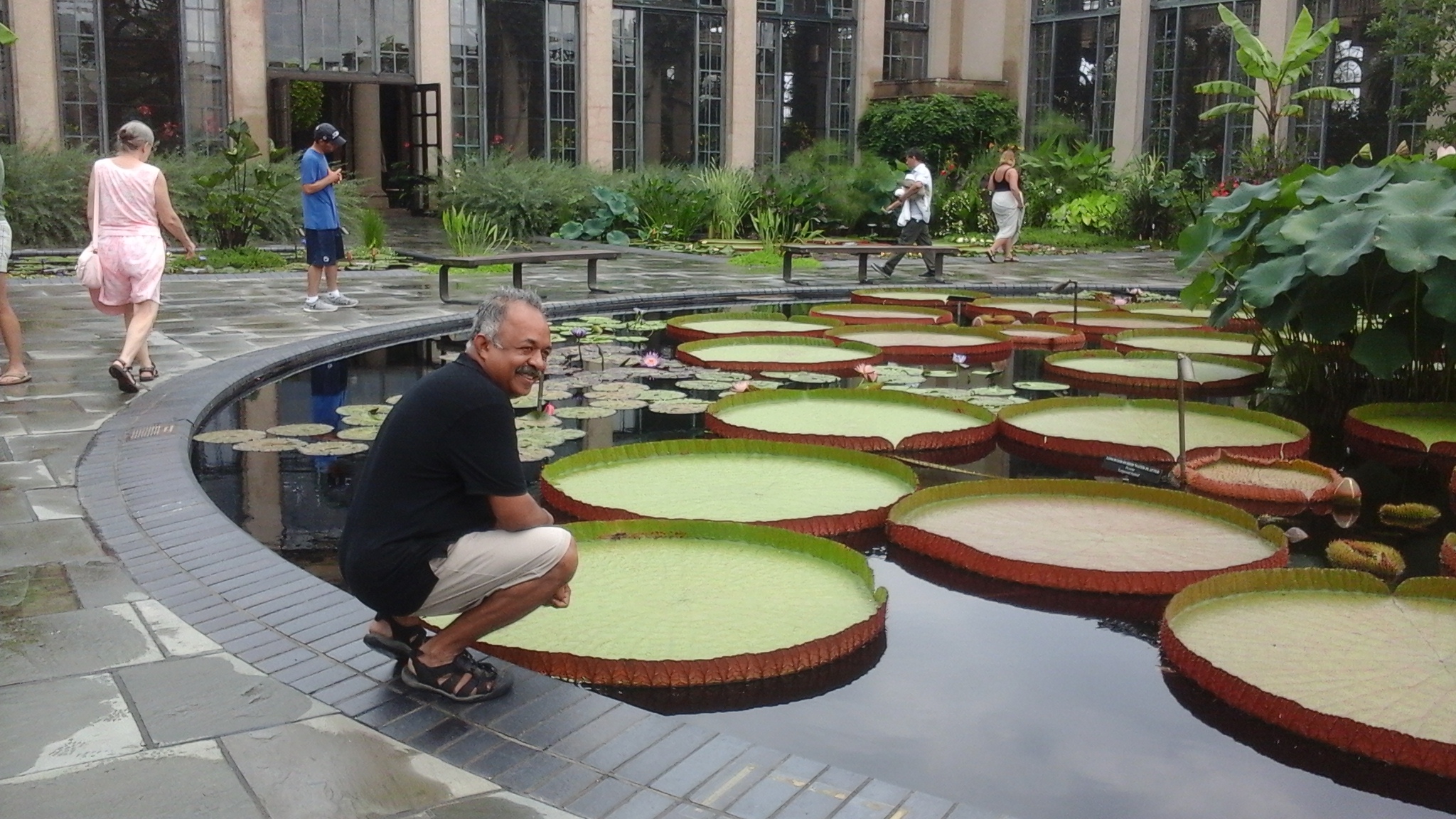
The Canadian Tulip Festival is also a celebration of the return of spring, with over a million tulips in 50 varieties blooming in public spaces across the National Capital Region. The highest concentration of tulips can be viewed in the flower beds of Commissioners Park, on the banks of Dow’s Lake, where 300,000 flowers bloom. During the Festival the international community adds to the pageantry and programming with cultural displays and performances reflecting the diversity of the National Capital community.

This year, during the Tulip Festival in Ottawa, an official Canadian delegation, lead by Prime Minister Stephen Harper, consisting mainly of veterans and their relatives, was in the Netherlands to attend a series of ceremonies and events honouring the sacrifices Canadian soldiers made when they liberated the Dutch from Nazi occupation 70 years ago. About a dozen veterans, 90s, and frail flew into Netherlands in a Canadian Armed Forces plane. The aircraft flew trans-Atlantic, unusually low, around 12,000 feet, to avoid a situation where a rapid cabin depressurization might irreparably harm an elderly passenger without the speed or strength to put on an oxygen mask.

KLM Royal Dutch Airlines flew Canadian Second World War veterans and their families from the airline’s five Canadian gateways – Toronto, Montreal, Vancouver, Calgary and Edmonton – to Netherlands for the commemorative celebrations. The biggest delegation consisting of 300 participants, including some 40 veterans left from Toronto on May 1. The youngest veterans was 88 (who was 15 when he fought the war as he had forged his documents) and the oldest 97. They were greeted in the boarding area by the flight crew for a pre-departure ceremony. Inside the aircraft, the airline had personalized the seat headrests with Canadian and Dutch flags. The group was acknowledged on numerous occasions during the flight with special announcements, and the crew handed out keepsake souvenirs to the passengers.

Tulip Vet1

This is John Gay, ready to board the KLM flight, a cook during WWII and at 97 years old, one of the oldest veterans who participated. He was part of the artillery and helped free up the city of Caen and the Falaise Gap. He cooked for the soldiers in England and Normandy, which got harder and harder because of food supplies and he had to make do with dehydrated potatoes, dehydrated cabbage and meat called “Spam”. He could cook up 6 gallons of stew and would distribute this amongst the soldiers in cans. John is visiting the Netherlands for the 10th time this year, travelling with his son and other family members.

To make this flight extra special and show the veterans how much we appreciate and respect them, arrangements were made to honour them. There were special cakes decorated with the Dutch and Canadian flags. Flight attendants handed out and pinned on Carnation Flowers with gratitude and respect. Every veteran got a Delftsblauw salt and pepper shaker set, there were special headrest covers and when we landed at Schiphol airport, the plane was escorted to the gate and the fire brigade welcomed the veterans with a water canon salute, also known as the ‘Shower of Affection’. Just before landing, bagpipe music filled the airplane.

Tulip Vet2 copy

On Monday May 04, 2015, the delegation of veterans attended a ceremony at the Holten Canadian War Cemetery. The cemetery is the final resting place for 1,393 Commonwealth soldiers who died during the liberation campaign, many of whom were killed in the late stages of the war as the allies cleared the Netherlands and pushed into Germany. The village of Holten was liberated by Canadians on April 8, 1945 after fierce house to house fighting. Harper said that the bond was forged between Canada and the Netherlands in those dark days still endures. He recalled that each headstone on each cemetery was a stark reminder that doing the right thing often comes at a great cost — but a cost that must be paid.

Harper spoke of the great sacrifices made by the now-dwindling war-time generation, saying they understood that some things were worth fighting and dying for; a sentiment that remains today. he added that the heroes who liberated the Netherlands, like the men and women who serve our country today understood that when there arises a great evil, a threat to all the things that define our existence as a free and just people, such enemies must be confronted.

I would conclude by quoting from the speech delivered by Prime Minister Stephen Harper during the visit “When tyranny threatens the free, when cruelty torments the innocent, when desperation overwhelms the human spirit, we choose to respond, we choose the high road forward, not the easy way out. We choose risk not for reward, but for righteousness, we choose to fight for freedom, we choose to defend the innocent, we choose to bring hope to the world.

Canadians will never forget the welcome our troops received in this country as the war ended. Canadians will never cease to marvel at how this starving and scarred land so quickly became the prosperous, progressive and generous country we know today, a partner in so many things, including Iraq.”

Organ Donation

Organ Donation

Our neighbour, a lady in her sixties, an ardent Christian from Kerala, India, called on us a few weeks back. The subject of organ donation and its importance cropped up during the discussion. Marina and I were supporting the need for organ donations and said that we have signed up for organ donation with Health-Canada and the same is reflected on our Health-Cards. The lady being a strong Christian put forth the case that as Christians, we need to be prepared for the second coming of Christ, when all will be judged, the still living and the resurrected dead. She stressed the need for being prepared, both spiritually and physically for the day. For the God to resurrect, one need to be buried with all the body parts in tact she said. I put forth the argument that God created Adam from the dust and in case the God is all too willing to resurrect me, he can do the same.

The importance of organ donation is well known to all. This act by one person can save the lives of as many as eight other people – and make a difference in the lives of many more. As per Statistics Canada, the data for 2012 showed that over 4,500 people were waiting for organ transplants, 2,124 organs transplanted and 256 people on those wait-lists died before receiving transplants. Unfortunately, only a fraction of Canadians are registered to donate. If you decide to become an organ and tissue donor, discuss it with your family and friends as they are always asked before donation happens, so it is important that they know your wishes.

The first successful living donor transplant was a kidney transplant performed in Boston in 1954 between 23-year-old identical twins.

Anyone can be considered as a potential donor. Age is less important than the health of your organs and tissues, a kidney, part of the liver, and a lobe of the lung. The only need is that you must be old enough to give consent and must be in good health.

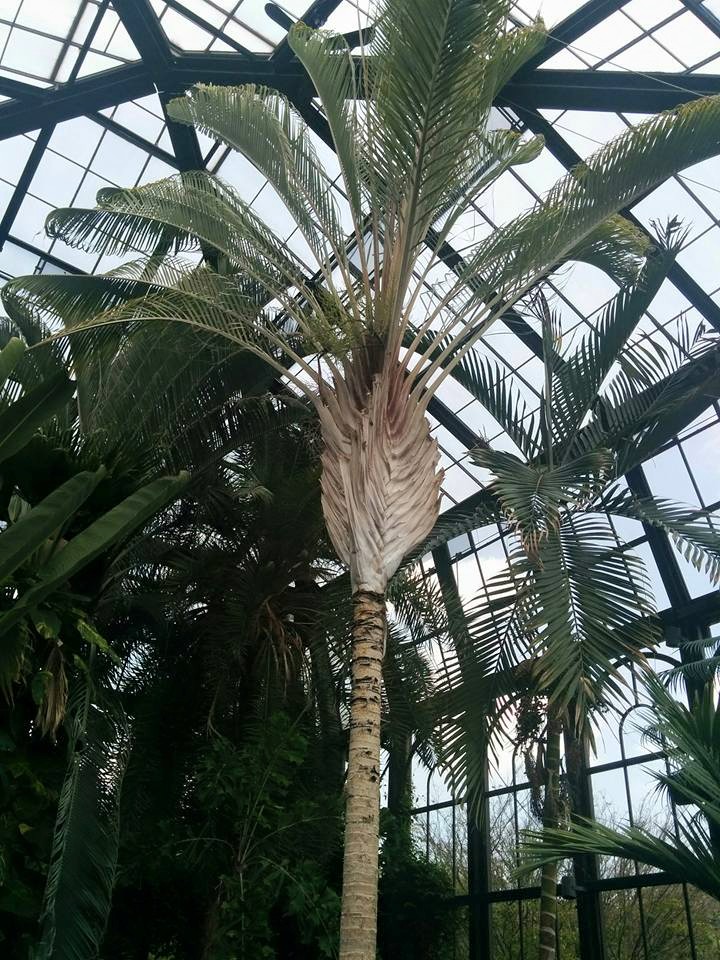
Organ donation is not only lifesaving but life giving. As an example, a kidney transplant will prolong the recipient’s life and vastly improve the quality of that life. Suddenly, someone who was tied to a dialysis machine has the freedom to travel, the energy to do what they want and the desire to again live life fully.

It is a difficult decision to be an organ donor, especially taking into consideration many myths surrounding the act. Many find it difficult to perceive about the state of one’s body after death. Always remember that being an organ donor is a generous and worthwhile decision that will always save a life or two.

Most common myth is that the hospital staff will not strive as hard to save one’s life in case they come to know that the patient is an organ donor. Social media, movies and  rumours, all have played their role in ensuring the veracity of this myth. The focus of any doctor would be to save the patient’s life and is mostly unaware about the patient’s organ donation status. As per a Canadian study, physicians are nearly 50 percent more likely than non-physicians to register as an organ donor.

Another myth is that in case of an organ donor, there is a haste in signing death certificate to facilitate organ harvesting. Although it is a popular topic in the tabloids, it has rarely ever happened. Most hospitals carry out more tests to determine that the donor is truly dead prior to removing any organ.

Religious myths and beliefs stand in the way of organ donations. Organ donation is consistent with the beliefs of most major religions like Hinduism, Christianity, Islam, Sikhism etc. In case one is uncomfortable with one’s faith’s position on donation, it would be prudent to discuss it with the clergy.

Hindu philosophy supports organ donation to a great extent and there are many references to support the concept of organ donation in Hindu scriptures. Daan, meaning selfless giving, is one among the ten Niyam (rules) laid down by Hinduism. Bhagavad Gita chapter 2:22 says ‘As a person puts on new garments, giving up the old ones; the soul similarly accepts new material bodies giving up the old and useless ones.’ Here the mortal body and the immortal soul is described as in the relationship between clothes and a human being.

Pope Francis has called for more people to donate their organs and the Pope said that the clergy needs to explain that donating organs is a gesture of love and each of us, for example, has two kidneys, and giving one of them to a relative or a person we love is a beautiful gesture. There is a case of religious unity from Kottayam, Kerala, India, where Father Sebastian, a 41-year-old Catholic priest, in May 2013, donated one of his kidneys to Rasad Mohammed, a 30 year old Muslim. Father Sebastian said that he was inspired by the story of Father Davis Chiramel, who had donated one of his kidneys to a Hindu. He motivates everyone for organ donation by saying that in keeping with his Catholic beliefs, there is nothing more than giving one’s life to someone and God has given the opportunity to give a part of the life to a person so that he gets a new lease of life.

There is a myth that an open-casket funeral is not possible for people who have donated organs or tissues. The donor’s body is clothed for burial prior to being placed in the casket and hence there are no visible signs of organ or tissue donation. For bone donation, a rod is inserted where bone is removed and for skin donation, a very thin layer of skin is taken from the donor’s back. Because the donor is clothed and lying on their back in the casket, no one can make out any difference.

Another myth is that the organs of older people are not accepted. No one is too old for donating organs. The decision to use the organs is based on strict medical criteria, not age. Only a very few medical conditions automatically disqualify one from donating organs.  It may turn out that certain organs are not suitable for transplantation, but other organs and tissues may be fine. Allow the doctors decide at your time of death whether your organs and tissues are suitable for transplantation.

There is a myth that the rich and famous are given priority when it comes to allocating organs. It may appear so because of the amount of publicity generated when celebrities receive a transplant, but they are treated no differently from anyone else in Canada.

In case of donors under age 18, there is a need for parental consent. Children are also in need of organ transplants, and they usually need organs smaller than those an adult can provide.

Based on the above facts, being an organ donor will make a huge difference, and not just to one person. By donating your organs after your death, you can save or improve as many as 50 lives. Many families say that knowing their loved one helped save other lives helped them cope with their loss.

Hindu-Arabic Numerals

Indian Numerals

The numerals in various languages interested me a lot. During our childhood, the Bible at home had chapters numbered with the Malayalam numerals and the verses with Indo-Arabic numerals. During our cadet days at the National Defence Academy, we travelled to Pune city by the municipal transit bus. The tickets were printed with the price shown with Devnagiri numerals and I had no clue of it. Once in the bus, the conductor gave me the ticket and I asked him as to what the cost was. He shot back saying that you dress in a suit and how come you cannot read. I came back and learnt the Devnagiri numerals immediately.

Our son Nikhil while in Grade 2, came home from school and asked me as to what has Hinduism to do with numerals. Taken aback, I asked him to narrate the context and he said the he was taught in the Math class that the common numerals are called Hindu-Arabic Numerals. In North America anything to deal with the country/sub-continent India is referred to as ‘Hindu’ (Hindustan) so as not to confuse with the American Aboriginals, commonly referred to as ‘Red-Indians’ or ‘Indians’.

My mind raced back to 1974, while in Grade 8 at Sainink School, Amaravathinagar, Thamizh Nadu, India, our math teacher, Mr Venkatesha Murthy had explained to us that the numerals we use every day would be known as Indo-Arabic Numerals and not as Arabic Numerals. These numerals were invented by mathematicians in India. They were later called ‘Arabic’ numerals by Europeans, because they were introduced in Europe by Arab merchants. The Europeans were intrigued by the speed at which these Arab merchants calculated mentally when the Europeans were struggling with their Roman numerals and their Abacus.

Mr Murthy also spoke to us in detail about important contributions made by mathematicians like Aryabhata, Bhaskara and Ramanujam. He also spoke to us about contributions of Indian mathematicians to the study of the concept of zero as a number, negative numbers, arithmetic, and algebra.  Mathematicians from Kerala (India) had developed trigonometric functions like sine, cosine, and tangent in the 15th century. They even had developed calculus two centuries before its invention in Europe. As usual, India being a timeless and record-less civilisation, no one formulated a systematic theory of differentiation and integration and there is no evidence of their findings being transmitted outside Kerala.

The Indian Science Conference of Jan 2015 had lectures about ancient knives so sharp they could slit a hair in two, 24-carat gold extracted from cow dung and even 7,000-year-old planes that could travel to other planets. Among other technologies, introduced at the congress there were polymers to build houses made of cactus juice, egg shells and cow dung; a cow bacteria that turns anything eaten by an animal into pure gold, and the curious procedure of an autopsy, conducted by leaving a dead body floating in water for three days. The surprising discoveries were said to be based on ancient Hindu texts, such as the Vedas and the Puranas, and were presented at a session on ‘Ancient Indian Sciences through Sanskrit’. There were some who claimed that Indians had travelled to other planets, and the helmet-shaped object found on the surface of Mars was the hair worn on the head by space travellers. These stories would not even have found a place in children’s comics. Surprisingly there were not one lecture about the mathematical contributions made by the Indians.

Providing a scientific platform in a prestigious science conference for a pseudo-science is appalling. It for the first time such a session is held in Indian Science Congress. Indian Prime Minister by saying to an audience of doctors and scientists that plastic surgery and genetic science existed and were in use thousands of years ago in ancient India and how the Hindu god Ganesh’s elephant head became attached to a human body. The Gujarat State school science books on various myths are now well known. These alarming developments happened after the change of government in Delhi. The scientific community should be seriously concerned about the infiltration of pseudoscience in science curricula with backing of the government. The accelerated pace with which it is being promoted will seriously undermine nation’s science and it will have a disastrous effect on the future generation.

With this at the back of my mind, while in India in Jan 2015, I decided to interact with my nephews and nieces, mostly engineering students. To my surprise none knew that the numerals were called Indo-Arabic and they had no clue of the achievements of Indian mathematicians. It appeared that the textbooks in Canada have been amended, but the Indian books still carried Arabic numerals.

Movember

Movember

The word ‘Movember‘ is derived from the combination of the word ‘mo, which is the Australian-English abbreviated form for ‘mustache‘ and ‘November,’ as the event takes place every year during the month of November. This involves growing of mustaches in order to raise awareness of different men’s health issues like prostate cancer, testicular cancer and mental health challenges. Using the mustache as a catalyst, Movember encourages men to invest in their own health by more openly talking about their health concerns and more proactively seeking necessary medical care. The idea is to bring about change and give men the opportunity and confidence to learn and talk about their health and take action when needed.

Participants of Movember are called “Mo Bros”. This year our son Nikhil decided to be a “Mo-Bro” at his high school and hence grew all facial hair for a month. At the end of it he decided not shave it off. The students did succeed in raising about the men’s health issues and also collect money during a charity event at the school.

The women taking part in Movember are called ‘Mo Sistas.‘ Mo Sistas are not necessarily encouraged to grow mustaches of their own, but to support the cause, spread the word and encourage guys to become a walking billboard for the charity.

The idea of Movember originated in 1999, when a group of men from Adelaide, Australia decided to grow their mustaches for charity during the month of November. Then the Movember foundation came into existence. The goal and motto of the foundation is to “change the face of men’s health.” The movement has gone global and today is well supported in New Zealand, the US, Canada, UK, Finland, Netherlands, Spain, South Africa and Ireland. From 30 Mo Bros in Melbourne, Australia in 2003 to 4 million Mo’s by 2013, Movember, through the power of the mustache, has become a truly global movement that is changing the face of men’s health.

Some of the celebrities who have endorsed the Movember movement are Australian World Surfing Champion Mick Fanning, 2009 F1 World Champion Jenson Button, UFC Lightweight Champion Frankie Edgar, New Zealand’s national rugby captain Richie McCaw and US actor Nick Offerman who worked on a series of videos for the movement. Indian cricketers Ravindra Jadeja and Shikhar Dhawan, and Bollywood actor Ranveer Singh have been the prominent faces of the movement in India.

The best part is that the shaving and razor supplier Schick, is one of the biggest partners of Movember.

As stated on Movember.com, the poor current state of men’s health can often be attributed more to lifestyle than biology. Some causes include:

  • Lack of awareness and understanding about men’s health issues
  • Men not openly discussing their health and how they’re feeling
  • Reluctance to take action when men don’t feel physically or mentally well
  • Men engaging in risky activities that threaten their health
  • Stigmas surrounding both physical and mental health

According to the World Health Organization’s International Agency for Research of Cancer, the number of prostate cancer cases is expected to nearly double to 1.7 million in less than 20 years. The Movember movement hopes to inspire more men around the world to better attend to their physical and psychological needs. Hence we can see an improvement on current statistics, like these:

  • 1 in 6 men will be diagnosed with prostate cancer in his lifetime.
  • Over 238,000 new cases of the disease will be diagnosed and almost 30,000 men will die of prostate cancer every year.
  • Testicular cancer is the most common cancer in males between the ages of 15 and 35.
  • Men who sit more than six hours a day have an 18 percent increased risk of dying from heart disease and a 7.8 percent increased chance of dying from diabetes compared with someone who sits for three hours or less a day.
  • Globally, 5.3 million deaths will be attributed to physical inactivity.
  • 24% of men are less likely to go to the doctor compared to women.

As a global men’s health movement, the Movember Foundation has the ambition to contribute to improving the lives of men around the world. This will be achieved through programs in the areas of – Awareness & Education, Living with Cancer, Research and Mental Health through:

  • Reduced mortality from prostate, testicular cancer and men’s suicide
  • Men living with prostate or testicular cancer being physically and mentally well
  • Men and boys understanding how to be mentally healthy and taking action when they experience mental health problems
  • Men and boys with mental health problems not being discriminated against

Some mustache trivia:-

  • An Indian man holds the record for the longest growing mustache. According to Guinness World Records, Ram Singh Chauhan has a mustache that spans 14 feet long. He has been growing it since 1982, after a friend with a 7-foot-long mustache suggested it,
  • A man spends an average of five months of his life shaving if he starts at the age of 14 – assuming that he lives until he’s 75 years old.
  • In a deck of cards the King of Hearts is the only king without a mustache.
  • Contrary to popular belief, Charlie Chaplain didn’t actually wear his mustache on a daily basis. It was removable, and he wore it only because, “Well, it’s amusing enough to add something to the routine, but it allows me to keep my facial expressions.”
  • William Taft was the first US President (1909-1913) to have a car and the last to wear a mustache in office


Arithmetic of Licence Plates

Our son Nikhil in his Grade 3 found division a bit difficult. Along with the division difficulty came the prime numbers and factors. We decided to solve the problem by making arithmetic interesting by me giving out various tips that I had learned while at school, especially from Mr Venkitesha Murthy, our Grade 7 mathematics teacher. Mr Murthy taught us mathematics through various stories, anecdotes and riddles. He also inspired us with the achievements of great Indian Mathematicians like Ramanujam, Bhaskara and Aryabhatta. It took me some time and effort to grasp the concept of factors and prime numbers even while in Grade 7 and hence Nikhil’s difficulty with the same was not at all surprising to me.

licenceplate

Everyday Nikhil and I spent almost half an hour in the car – dropping him off at school, picking up after school, commute to the swimming pool or tennis court or for music class in the evening. Nikhil called it a father-son time and used it to discuss all those which he thought would attract a comment or a spoof from his mother or sister. This practice continues to date, and the subject kept changing as Nikhil grew up to his current Grade 12.

To solve the riddle of division and factors, I came up with a game. In our province, Ontario, most licence plates on vehicles have four alphabets followed by three digits. Three digit numbers can be easily handled by a Grade 3 student. Any vehicle we came across on our drive, we used to analyse the number.

To begin with was to see whether the number was even or odd and hence conclude its divisibility by ‘2’. Then it was to add all the digits and if the resultant sum was either ‘3’ or ‘6’ or ‘9’, it was to be concluded that the number is divisible by three.

In case the number was an even one and the last two digits (ten and unit place) was divisible by ‘4’, then ‘4’ is a factor. If the unit place is either ‘5’ or ‘0’, the number is divisible by ‘5’. In case ‘2’ and ‘3’ are factors, then ‘6’ will also be a factor. If the sum of the digits resulted in ‘9’, the number is divisible by ‘9’. If the unit place has ‘0’, then ’10’ is a factor.

With this game on, every day we analysed about 10 licence plates and with that the difficulty of division, factors and prime numbers was resolved to a great extent.

The first car my wife bought for me on arrival in Canada was a new Honda Accord and when I went to take the delivery, the agency had already procured the licence plate for me. The number was ‘BBZW 139’. In North America, licence plates move with the owner, not with the vehicle. If you sell or change vehicles, you keep the licence plates and affix them on your new vehicle. Hence this number plate remained with me, though I changed three cars.

The number also reflects a bit on my personality as 139 is an odd number and also a prime number. It has only 1 and itself as a factor and is not fully divisible by any other number. I believe that I cannot be affected by any factors or divided by any other than 1 – the God Almighty – and myself.

The digits 139 fascinated me as it added to 13, my day of birth – 13 March. My school Roll Number was 931, which again added up to 13 and my Defence Account Number was 161005, which again added up to 13 and the list goes on. This is mere coincidence and has nothing to do with the unlucky 13 and it has never bought the lady luck to my side, and I cannot claim to be unlucky also. I do not believe in numerology or astrology and hence this trail of 13 never ever cast its bad luck on me.

’13’ is also known as Baker’s Dozen – instead of 12, bakers always packed 13 for a dozen in Britain. In the mid-thirteenth century, Britain enacted the statute of Assize of Bread and Ale, which set the relationship between the price of wheat and what the subsequent price of a loaf of bread from a certain quantity of wheat should be. If the baker accidentally cheated a customer by giving them less, they were subject to extremely severe fines and punishment. In order to avoid such accidents, bakers started to count 13 for a dozen.

Children turn teenagers when they turn 13 and we are all aware of what it means.   Apollo 13 is the only unsuccessful moon mission. An oxygen tank exploded and the survival of the astronauts on board was hanging in balance for several days, but they all came home safely. Many Christians believe that 13 is unlucky as there were 13 people in the Last Supper.

Triskaidekaphobia – the fear of number 13 (from Greek tris (three), kai (and), and deka (ten,) and Paraskevidekatriaphobia is the term used to describe the fear of Friday the Thirteenth – (Greek words paraskevi (Friday) and dekatria (thirteen) with –phobia as a suffix to indicate ‘fear’). Researchers estimate that at least 10 percent of the US population has a fear of the number 13, especially for Friday the thirteenth.

Mathematicians point out that 13 is not so unlucky, but it earned all its bad name as it is an odd number and a prime number. It is 13’s bad luck that it follows the perfect number 12. Many believe that 12 is perfect as it counts to a dozen, there are 12 months in an year, a day consists of two 12-hour cycles etc. The extend of Triskaidekaphobia in the US is so high that more than 80 percent of high-rise buildings do not have a thirteenth floor, and the vast majority of hotels, hospitals and airports avoid using the number for rooms and gates as well.

The number 13 may be lucky or unlucky, but one cannot blame the number for it and will always follow number 12 and precede number 14.

Vet Plate

PS.  Now I do not have the above licence plate.  The Government of Ontario, Canada, in recognition of my service with the Indian Army has given me a new Veteran Plate.  My gratitude to Canada for honouring a Veteran from another country.

11/11 @ 11:11

Every year on November 11, at 11 minutes past 11 AM, Canadians pause in a silent minute to remember the men and women who served, and continue to serve the country during times of war, conflict and peace. This moment coincides with the Armistice Day which marks the date and time when armies stopped fighting World War I on November 11 at 11 minutes past 11 AM in 1918. In the United States this day is called Veteran’s Day and is also observed on November 11. On this day in Canada at 11 minutes past 11 o’clock, all the buses and trains will stop, the fire engines will sound their sirens for a minute as a mark of respect to all the fallen soldiers.

During the Remembrance week- November 4 to 11, all the flags fly at half-mast; all the buses have ‘Lest We Forget‘ signboards, most of the shops, restaurants and malls display banners and posters to honour the soldiers and veterans.

The Remembrance Day is observed to honour veterans who fought for Canada in the First World War (1914-1918), the Second World War (1939-1945), and the Korean War (1950-1953), as well as those who have served since then. More than 2.3 million Canadians have served our country in this way, and more than 118,000 have died. They gave their lives and their futures so that we may live in peace.

Six rules of poppy protocol for Remembrance Day | The Star


On Remembrance Day, we acknowledge the courage and sacrifice of those who served their country and acknowledge our responsibility to work for the peace they fought hard to achieve. All the buses ply with the sign ‘Lest We Forget’; all the shopping malls and coffee shops put up posters in appreciation of the services rendered by our soldiers; cadets and veterans sell the ‘Red Poppy’ – made by disabled Veterans – to be pinned on the dresses.

Poppies are worn as the symbol of remembrance, a reminder of the blood-red flower that still grows on the former battlefields of France and Belgium. During the terrible bloodshed of the second Battle of Ypres in the spring of 1915, Lieutenant-Colonel John McCrae, a doctor serving with the Royal Canadian Army Medical Corps, wrote of these flowers which lived on among the graves of dead soldiers:

In Flanders Fields the poppies blow
Between the crosses, row on row,
That mark our place; and in the sky
The larks, still bravely singing, fly
Scarce heard amid the guns below.

In photos: Remembrance Day ceremonies across Canada to honour those we've lost - The Globe and Mail

Canadian Prime Minister and the entire cabinet appeared on media for the duration of remembrance week, wearing the Red Poppy. In India, on the Armed Forces Flag Day (07 Dec), children pin the flags on our President and the Prime Minister and Chief Minister, and for the next event you see them without the flags on their chests.

The national ceremony is held at the National War Memorial in Ottawa presided by The Governor General of Canada with the Prime Minister, other government officials, representatives of Veterans’ organizations, diplomatic representatives, other dignitaries, Veterans as well as the general public in attendance.

School is where the children usually first learn about who and what Remembrance Day is for. Schools go into why we need to give respect and they will usually have an assembly and a veteran or a serving soldier addresses the students. After the assembly, the first hour in class is spent on discussing the sacrifices made by the soldiers and the students are urged to come up with the details of family members, relatives or friends who served or are still serving with the armies around the world.

Our son Nikhil, studying in Grade 9 In 2010, was attending such a discussion. The class consisted of ‘Gifted Children’ and had about 70% of students of Oriental origin, 25% Caucasians and he was the lone Indian. Every other student were narrating the details of their parents, uncles, grandparents, granduncles, etc who served in the First and the Second World Wars and other military operations. Nikhil did not want to be left behind and he stood up to give his account.

Nikhil narrated the few instances of his life as a kindergarten student which he spent in Devlali and the interactions he had with the soldiers and also about various events he had witnessed like the artillery fire power demonstration.

Military history being taught in Canadian schools is based on the Canadian participation in the World Wars. He did a lot of research on the military history aspects and had bought a dozen books on the subject.  In those days, Nikhil earned $50 pocket money a month for helping me out with the household chores like vacuuming, cleaning, washing of dishes, laundry, gardening, garbage disposal, etc. He used to use up all the money to buy books and always ended up with a bill much higher than the limit and I always gleefully paid it as it was for books. Now days he does not want any pocket money as he earns about $100 a week working as a swimming instructor and life guard at the city’s swimming pool.

Anyhow, it proved my current theory that a better reflection of a high-school student comes from the books he keeps than the friends he keeps.

Fair & Lovely

Washington Post published a survey by the World Value Survey, which measured social attitudes of people in different countries. The survey asked citizens what types of people they will refuse to live next to, and counted how many chose the option ‘people of a different race’ as a percentage for each country. Jordan came out as the country with the highest proportion of ‘intolerant’ people with 51.4% and India with 43.5%.

anita

Look at the Fair & Lovely ad in India and it will prove one aspect of intolerance for the dark complexioned, especially among the fairer sex. The ad shows a miraculous change in the complexion of a girl from being dark skinned to very fair. The effect in the ad must have been achieved by the ‘digital touch-up’ and also by the effective use of light during photography.

Manufactured by Hindustan Lever, Indian arm of international giant Unilever, Fair & Lovely claims to offer dramatic change to fair complexion in just six weeks.  The packing of the cream displays one face six times, in an ever-whitening progression, and includes ‘before’ and ‘after’ photos of a woman who presumably used the product.

Do you think Unilever will ever market or package this product in US/Canada the way they do in India?

As per Indian laws, since Fair & Lovely is not categorised as a pharmaceutical product, Hindustan Lever is not bound to prove efficacy of the product. In India, litigation for not achieving advertised effect or social effect of the advertisement will take a long time and may not get the desired judgement.

Indian media is now trying to establish itself and is in the process of maturing. At this stage, to most the revenue matters and hence are ready to air ‘irresponsible’ news, discussions, advertisements, etc for ensuring better Target Rating Point (TRP) and raking in a few more bucks. Responsibility for ensuring that advertising is truthful is a shared responsibility among advertisers, agencies, and the media. The best regulation is self-regulation and one can expect it from the Indian media houses in the times to come.

Fair & Lovely is the largest selling skin whitening cream in the world, and was first launched in India in 1975. It held a commanding 50-70 % share of the skin whitening market in India. The product is marketed by Unilever in 40 countries in Asia, Africa and the Middle East, with India being the largest single market. One can see them in the shelves of many Indian grocery stores in Canada too.

Our children, both schooled in Canada, their friends with complexions ranging from the darkest to the fairest, have been dismayed with the Fair & Lovely’s television commercials aired on the Indian channels. The ad typically contains the message of a dark complexioned depressed woman, becoming fairer and getting a job or a husband. It also depicts the women becoming happier and more confident after the change of her complexion. The question from our children was as to how come no one is suing them in India for racialism.

The discussion further went on to belief in India that the skin colour is very powerful unlike in North America where the emphasis on a deep and glowing tan. The majority of Indian society still feels that a lighter color skin tone reflects a higher status and is more attractive. This gets further strengthened with the bride searching ads put up by Indian men mostly seeking out fair skinned women. Hence the target market for Fair & Lovely is predominantly young women aged 18-35.

As expected, the discussion moved on to their cousin Anita, an engineering graduate, now working with an IT firm in Trivandrum, Kerala. Anita is a dark complexioned girl and she is well aware of that. Heard her saying to her mother that it was not her fault that she was born with a darker skin.

Our daughter Nidhi always felt that Anita was trying to appear fair and hence was using all unhealthy products. This had a telling effect on her skin. Nidhi, during her visit to India in February 2014, decided to give a few tips to Anita about carrying herself confidently and beautifully with her natural complexion. She had seen many of her dark complexioned friends using cosmetic products and procedures to look beautiful.

The first lesson Nidhi gave Anita was that being dark complexioned is also beautiful and hence there is no need to look fair. Then she took Anita to the local cosmetic store and based on the ingredients, selected cosmetics which suited her skin tone and ensuring that it had no bleaching agent. It was followed by a lesson on how to apply the cosmetics and makeup tips to enhance her facial features.

In June 2014, I got a call from Anita, then a student at the Engineering College and she said that she wanted to run for the post of the Chairperson of the College Union. I felt that she had become really confident and appeared to have come out of the ‘complexion problem’. She won the students election and became  the Chairperson.

Fire! Fire! Fire!

Wedding

Fire! Fire! Fire!” with our exchange operator screaming at the top of his voice; woke me up from deep slumber. Our regiment was located in the higher reaches of Sikkim on 12 December 1997 when this incident occurred. The area was covered with about four feet of frozen solid snow with the temperature touching minus 20 degrees Celsius.

I paid a visit to the dentist in the evening as my wisdom tooth was troubling me and I was under immense pain. The dentist decided that the best way out was extraction and hence administered local anesthesia on my gums and did the extraction. He advised me to take rest for a day or two. I reached my room and I had a splitting headache as a result of the anesthesia. I decided to go to sleep and hit the bed.

At dusk, our Commanding Officer (CO) Colonel PK Ramachandran, wanted to talk to me and called up the Regimental Telephone Exchange to connect the call. The exchange operator tried the call many times but as I was in deep slumber, I did not answer the call. The exchange operator came to my room and saw me in deep slumber and informed the CO about my status. Our CO being a thorough gentleman, advised the operator to let me enjoy my sleep and to put through the call the moment I woke up.

At about 9 PM, the exchange operator noticed smoke and flames in the building I was sleeping. He came rushing into my room screaming and woke me up. He said that my room was on fire. By that time about five soldiers also came in. I ordered everyone to clear off and not get any burn injuries. The soldiers led by the exchange operator were salvaging my desktop PC, the TV and the VCR.

I stepped out of the room engulfed in flames wearing my sandals. Luckily my Identity Card was safe as it was in my uniform shirt’s pocket as I had slept off without changing my uniform. The fire started because the officer staying in the neighbouring room had forgotten to turn off his kerosene based room heating system – Bukhari. As I stood outside in the biting cold, I saw the entire building up in flames. The soldiers were in the act of salvaging everything from the adjacent buildings.

That was when we realised that the water tankers in the regiment were empty as the orders were to keep the tankers empty to prevent them from freezing. The solid frozen snow was of no use to douse the fire as it could not be lifted off the ground. The order was passed immediately that all water tankers will be kept three-fourth full every night to meet such eventualities.   Our CO came to me and asked as to how I felt and I replied that the only thing I could do was to enjoy the warmth the fire was providing on a freezing night.

Next morning the soldiers scouted through the ashes and Subedar (Warrant Officer) Balakishan came out with all my medals (given by the government in recognition of bravery, honour and sacrifice) and a photograph which was intact despite the raging fire. It was our marriage photograph dated 16 April 1989. I immediately said that “What God has united no raging fire, storm or hail can ever separate.

An Orthodox Syrian Christian wedding follows similar procedures as done by other Orthodox faiths like Greek, Slavic, and Egyptian. It begins with the Betrothal service where the Priest blesses the rings of the Bride and Groom, then places them on the ring fingers of their right hands. In the Bible, the right hand is the preferred hand, indicating good. The Betrothal dramatises the free decision made by the Bride and Groom, and is symbolized by the giving of rings.

The Marriage Ceremony begins immediately thereafter culminating in the crowning. It begins with the priest placing a crown on the groom’s head while reciting the crown blessing thrice. Then the crowning ceremony of the bride follows in the similar way. The Greek and Slavic Orthodox use crowns made from olive leaves and the Syrian Orthodox use a gold chain as a symbolic crown. The crowning is a sign of victory, just as athletes were crowned in ancient times at their triumphs. In this instance, the Bride and Groom are crowned on account of their growth as mature Christians, prepared for the responsibilities of a Christian marriage.

This is followed by a series of petitions and prayers with special reference to well known couples of the Old Testament, such as Abraham and Sarah. An epistle excerpt of Saint Paul is read, exhorting husband and wife to unconditional love and support of one another. Then an excerpt from the Gospel of Saint John is read, relating to the wedding at Cana when Christ performed the first of His miracles and blessed the institution of marriage.

The differences in the marriage ceremony between other Orthodox faiths and Kerala’s Syrian Orthodox faith begin here. The groom ties the ‘Minnu’ around the bride’s neck – tying the knot. This has been adopted from the Hindu traditions. the ‘Thali’ used in a Kerala Hindu marriage was in the shape of a leaf of the sacred banyan tree and Christians modified the Thali by superimposing a cross on the leaf and called it a ‘Minnu’. The Minnu is suspended on seven threads drawn out of the Manthrakodi. The seven strands represent the bride, the bridegroom, the couple’s parents and the Church.

The groom then places the ‘Manthrakodi’, a sari presented by the bridegroom and his family, which is draped over the bride’s head, symbolizing the groom’s pledge to protect, care for and cherish his wife The Manthrakodi is the adaptation from the earlier Kerala Hindu Nair traditions of ‘Pudavakoda’ where the marriage was a contract and handing over clothes for the bride indicated entry into a contracted marriage. At this point, the bride’s relative, who has been standing behind her, yields her place to a female member of the groom’s family as a sign that the bride is welcomed into her new family.

The ceremony ends with a benediction and prayer. The Priest uses the Bible to uncouple the hands of the Bride and Groom signifying that only God can come between them. It is always the priest who will preside over the actual marriage ceremony that is the tying of the Minnu. If a bishop is present, he will only bless the Minnu. This tradition may have emerged from the old Travancore Christian Marriage Acts wherein only the priest had the magisterial power to conduct a marriage.

Even though our marriage was not conducted in the presence of Fire God (Agni), our wedding photograph lived through an Agni Pareeksha (Trial by Fire.)

Nikhil’s Poems

nik

Here are some poems Nikhil wrote as part of Grade 10 English Assignments.

Order and Chaos
Discipline is the greatest strength
Restraint the greatest virtue
Control is the highest aspiration
Order the only truth
Order is what everyone seeks
Order: a utopian fruit
Disorder is the natural state
Anarchy is the final end
Lawless is the nature of the world
Into chaos we all descend
Chaos is past, present and future
Chaos we can achieve

Love
I am defenseless, I must surrender
I am under your enchantments
You speak and I hear Venus’ voice
You laugh at my inept replies
The philosophers deride
Those who lose to passion
Yet my soul knows what I don’t
I cannot deny this
You are perfect as the rose is perfect
In this game I am green as grass
You are the light which kisses my world
But soon you must be gone
You will move on
Leave me incomplete
I must simply trudge on thereafter
From one heartbreak to the next
In grief to grief, from dust to dust

Time Travel
I used to serve
obeying other’s commands
Now I have tasted command
I can never obey again
I used to plan
deciding on my future
I now live in the moment
planning as i go
I used to consume knowledge
to prove achievement
I now seek wisdom
for the sake of it
I used to fear failure
and facing disappointment
I now fear obscurity
dying not remembered
I used to believe
I knew what I wanted
I now know
I must be willing to change
I used to watch TV
so I could be entertained

I now use what I saw
to entertain others
I was once blind
Stumbling for the truth
But now I see

Bottom of the Bottle
Her love so fierce she couldn’t contain it
She expected to be happy so long
Letters of love so many were writ
Her love a great flag flapping
She could not have known the a lurking
For in the shadows he works
The tiger’s name was her love’s drinking
One of life’s horrid quirks
She forgave his smelling everyday like booze
He said he was sober yet she could tell
She thought life’s game in which I can’t lose
Now she’s in a hell wet not hot
When she has a child her greatest terror
Is he’ll follow his father and commit his error

The Desert Fox

DF

A Ballad composed by Nikhil as part of Grade 10 English curriculum. Based on the North African Campaign of World War II.

The third hunter Monty he comes from the East
He has finally defeated the beast
Unaccustomed to desert sands and rocks
He has now whipped the desert fox
The desert fox he tests the king’s patience
He leads the king’s hunters a merry dance
Moving swift across deserts running tall
He had best fear Monty or face his downfall

The first hunter let the fox come to him
He waited with patience, his outlook grim
The fox in a flurry of speed and dash
Attacked the hunter in a move considered rash
The fox had beat hunter the first
But underestimated the hunter’s king’s thirst
So the king sent in bold hunter the second
The sands of the desert with blood would now redden
The desert fox he tests the king’s patience
He leads the king’s hunters a merry dance
Moving swift across deserts running tall
He had best fear Monty or face his downfall

The second hunter set traps and snare
The fox would die if an attack he dare
Though when the fox came the traps did fail
The second hunter oh did he go pale
The king’s patience was now truly wearing thin
He removed the second hunter for defeat is a sin
He then sent a hunter he long hated
His relation with the king quite complicated
The desert fox he tests the king’s patience
He leads the king’s hunters a merry dance
Moving swift across deserts running tall
He had best fear Monty or face his downfall

The third hunter not as dashing as his prey
He chose a position well sited in which to stay
He held his ground well near the sea
He gathered around him a vast hunter army
Once he gathered more hunters than needed
He attacked the weary fox who retreated
All we shocked that fox had lost
Then all were shocked at the cost
Several hunters maimed and so much expense
So many tools broken it makes no more sense
It makes one wonder who was the better
The defeated fox or his bankrupt hunters
The desert fox he tested the king’s patience
He lead the king’s hunters a merry dance
Once moving swift across deserts running tall
He should have feared Monty his final downfall