
A Regiment of Many Classes
In January 1983, I joined the 75 Medium Regiment—my first posting as a freshly minted officer. The Regiment then had an intriguing class composition: one battery of Brahmins (excluding those from the Southern and Eastern States), a second battery of Jats, and a third manned by soldiers from the four Southern States. Managing each battery required a different approach—their reactions, languages, and needs were distinct. Today, the Regiment draws soldiers from every class and region across the nation.
I was allotted the Brahmin Battery, commanded by Late Major Daulat Bhardwaj. A Brahmin himself, his first advice to me was uncompromising: “To command Brahmin soldiers, you must be a Brahmin yourself. Beat them in all aspects—physical, mental, and spiritual. You must be mentally alert and morally straight, else they will never respect you. Once you earn their respect and confidence, they will follow you blindly.”
He continued, “You are a Christian from Kerala. You have to beat the Brahmins even in spiritual matters. Attend the Mandir Parade every evening, learn the aartis, slokas, mantras, and hymns by heart, understand their meaning, and apply them to your everyday life.”
Within a month, I could sing the aarti and recite the slokas fluently. I had become a Brahmin. Even though the first of the Ten Commandments declares, “You shall have no other gods before Me,” for any officer of the Indian Army, the religion of the soldiers they command comes before their own. While my lips moved to Hindu prayers, my heart prayed to my Lord and Saviour, Christ. In truth, I was praying to a God I did not believe in—for soldiers who believed in me.
The Lilliput Among Giants
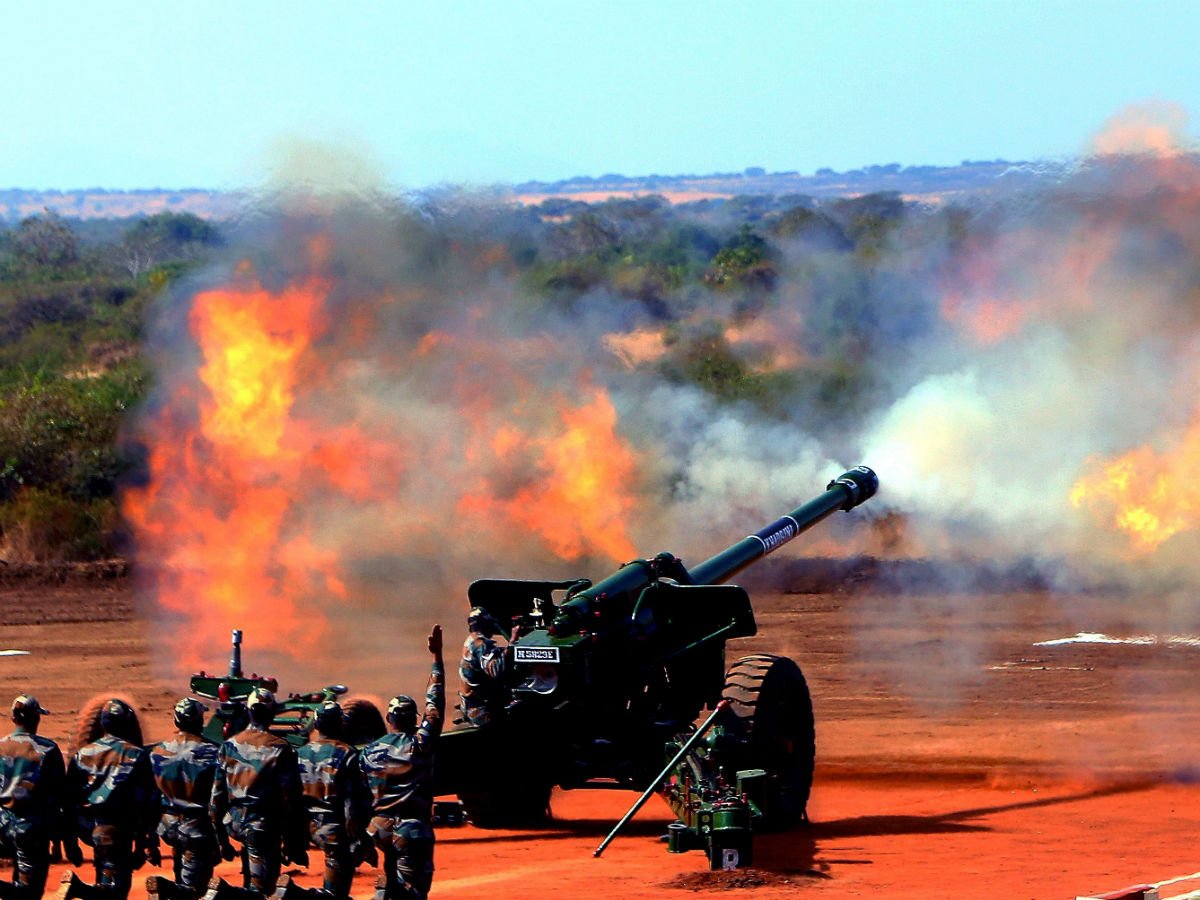
The soldiers of the Brahmin Battery—especially the Medium Gunners who manned the 8-ton 130mm Russian gun—were all well-built, nearly six feet tall. They were selected for their strength to handle the gun’s 50 kg shells, and for the physically punishing task of transitioning the gun from travelling mode to action mode. Among these giants, I stood as a Lilliput. I had to look up to meet their eyes when I spoke. Instead of them looking up to me, I was looking up to them.
Life in the Barracks
My first quarters in the Regiment were in the soldiers’ barracks. My bed was placed next to Havildar Brij Bhushan Mishra, better known among the soldiers as BB Major. He was the senior-most Gun Detachment Commander, renowned for his gunnery training abilities. He spoke softly, almost in a whisper, forcing soldiers to strain their ears. He believed little in talk, but the soldiers respected and feared him. He was tough, and he sported a ferocious handlebar moustache. He lived by the doctrine that soldiers and brass are alike—the harder you rub, the brighter they shine.
Gun Drill and a Humbling Lesson
I began gunnery training like any recruit—as Number 9 of the detachment, attending Gun Drill classes under BB Major’s watchful eye. With each passing day, I was promoted until, within two weeks, I became the Gun Detachment Commander.
I was impressed with my swift advancement—until I goofed up. During a drill, my omission could have jeopardised the safety of the crew. BB Major’s timely intervention saved me. He ordered “Stand Fast”—the command that freezes everyone when a commander senses risk. He pulled me out, shook me hard, and said, “Saheb, you must take care of the soldiers under your command. You must be alert at all times. You cannot risk their safety because of your carelessness.”
Major Daulat Bhardwaj, watching from the sidelines, called out: “BB, तेरे मूछों में दम है!” (There is strength in your moustache!)
I did not speak a word. I was shaken and deeply guilty.
Mutual Respect
That incident forged mutual respect between BB Major and me. In later training sessions, he often quoted it to young soldiers—and how well I had taken it in my stride. He added, “If I could do it to the Lieutenant Saheb, you guys better watch out.“
From that day onward, I understood: leadership is not about authority; it is about responsibility. And a leader who learns from his mistakes is one who earns the trust of those he leads. I also understood that in the Indian Army, respect is earned not by rank, but by the willingness to stand alongside your men—and sometimes, to look up to them.

