
The Offer
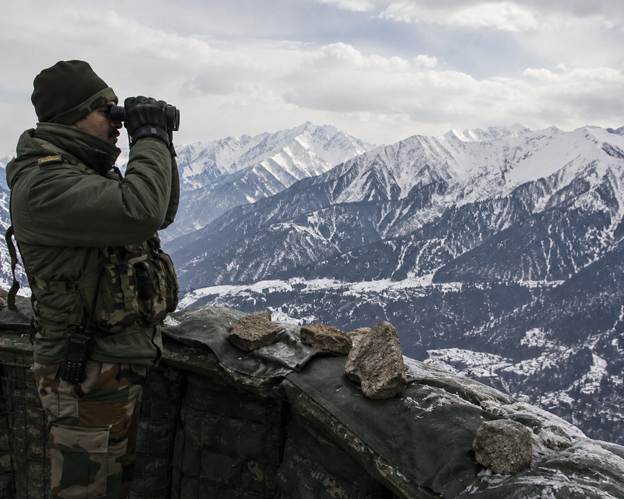
In January 1988, I was a young Captain serving as an Observation Post Officer in Kashmir, at an altitude of nearly 11,000 feet above sea level. One morning, our Commanding Officer called me and said, “Reji, you can go on a month’s leave now.”
I did not wait for him to finish.
“Yes, Sir!” I blurted out, unable to contain my excitement.
I immediately requested our Adjutant to arrange my travel. The itinerary was simple: Srinagar to Delhi the next day, and Delhi to Kochi the day after. In those so-called good old days, an air ticket cost more than a month’s salary, even after the military concession of nearly forty percent.
The Journey Begins
That very night, another officer relieved me of my duties. Before dawn, I descended from my post, drove to the Regimental Headquarters, collected my leave certificate, packed my belongings, and headed straight to Srinagar Airport. By evening, I was in Delhi.
The following morning, at 5:30 a.m., I boarded the Indian Airlines flight to Kochi. The aircraft made a scheduled halt at Dabolim, Goa, before continuing south. Air travel was still a luxury then, and the passenger list reflected that reality. Most of my fellow travellers appeared to be politicians, Members of Parliament, senior officials, or the very wealthy.
By early afternoon, the flight landed at Kochi. This was long before the days of Nedumbassery Airport; civil flights operated from the Naval Base Airport. We descended the ladder onto the tarmac and began walking towards the modest terminal building.
The Moment of Truth
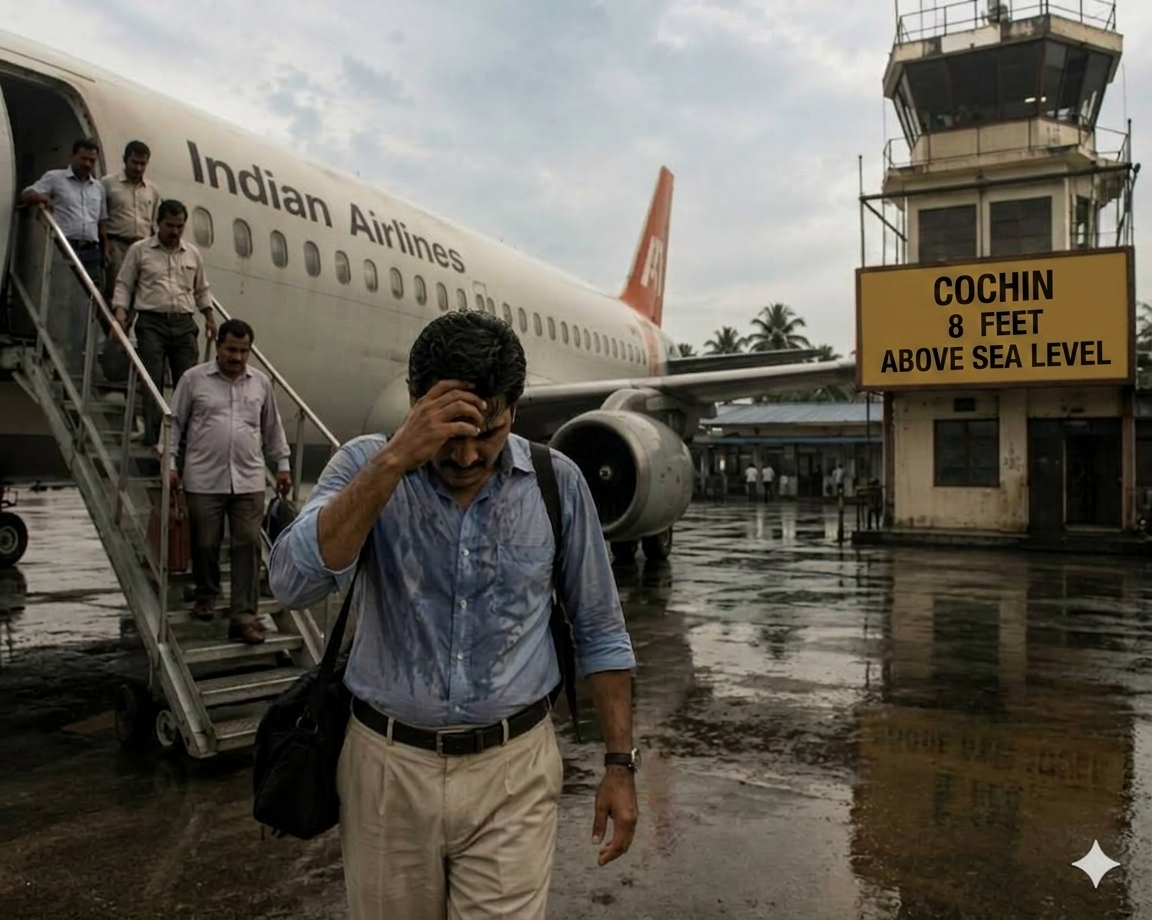
As I took a few steps across the tarmac, I suddenly stopped.
The world around me seemed to blur. Within seconds, I was drenched in sweat, as though I had stepped out of a shower fully clothed. For a brief moment, I felt disoriented and struggled to understand what was happening.
Then I looked up.
A board on the Air Traffic Control Tower caught my eye: COCHIN – 8 FEET ABOVE SEA LEVEL.
The significance hit me immediately.
In less than thirty hours, I had descended from nearly 11,000 feet to just eight feet above sea level. Only the previous day, I had been in the snow-covered mountains of Kashmir, enduring temperatures of minus 15°C. Now I was standing in Kerala’s humid coastal heat at around 35°C.
It was an extraordinary transition—one that only the Indian Army could make seem routine.
The Lesson
That experience reinforced a lesson I had heard throughout my service: acclimatisation drills in the Indian Army are not mere administrative procedures. They are based on hard realities of human physiology.
Whether moving to high altitude or returning to sea level, the body needs time to adjust. The mind adapts, the lungs adapt, and the entire system learns to cope with a dramatically different environment.
Somewhere between the thin, icy air of the Kashmir mountains and the dense, humid atmosphere of the Kerala coast, I realised that altitude is far more than a number on a map. It is a test of endurance, a lesson in humility, and an experience that remains etched in memory for a lifetime.
The Indian Army calls it acclimatisation – I call it one of the most unforgettable journeys of my life.
(Images Curtsey chatgpt.com)


Sir
You are not alone
Happened to many like us
After some time it becomes NORMAL – a part of life especially for the inf pers
Thanks for sharing
Brought back memories
Regards
LikeLiked by 1 person
Remembering the Patriots of India, we often think of Bhagat Singh, Netaji Subhas Chandra Bose, or Rani Laxmi Bai. But there is one soldiers who single-handedly fought against thousands of Chinese forces to protect his mother land. He is Jaswant Singh Rawat- the Martyr of 1962 Indo-Sino war. Here is his story and a glimpse of Jaswant Garh Memorial.
#patriots #indianarmy #freedomfighter #northeast #history
LikeLike