
The Media Circus
In early October 2021, Indian media exploded with headlines about Aryan Khan—son of Bollywood superstar Shah Rukh Khan—being arrested by the Narcotics Control Bureau (NCB) on a cruise ship. Many media houses celebrated the event with theatrical pomp, throwing in bits of masala and spice. Some even went berserk, particularly those active on social media.
Can such media glare and media trial be justified?
Shashi Tharoor summed it up with characteristic precision in a tweet: “I am no fan of recreational drugs and haven’t ever tried any, but I am repelled by the ghoulish epicaricacy displayed by those now witch-hunting Shah Rukh Khan on his son’s arrest. Have some empathy, folks. The public glare is bad enough; no need to gleefully rub a 23-year-old’s face in it.”
I needed a dictionary to decode that tweet—ghoulish (ugly and unpleasant, or frightening), epicaricacy (deriving pleasure from the misfortunes of others). That is Tharoorian English for you!
A Personal Note
I too am not a fan of recreational drugs and have never tried them. The smell of marijuana smoke puts me off—though I have been a cigarette smoker for over four decades. But the way the NCB, the Indian media, and the judiciary conducted themselves in dealing with this case leaves me equally unimpressed. It seems absurd—perhaps because I have lived in Canada for eighteen years, where a similar case would have been handled very differently.
Canada’s Approach to Cannabis
This prompted me to delve into Canadian cannabis laws. In our province of Ontario, one must be nineteen or older to buy, use, possess, or grow recreational cannabis—the same minimum age as for tobacco and alcohol. The law permits smoking and vaping cannabis in private residences, many outdoor public places (including sidewalks and parks), and designated smoking guest rooms in hotels, motels, and inns. However, it is prohibited in publicly owned sports fields, spectator areas, and public areas within twenty metres of such spaces.
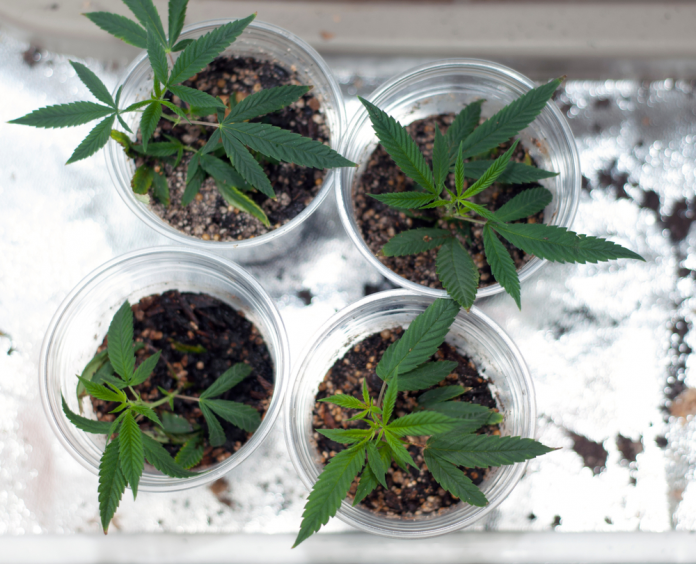
One may grow up to four cannabis plants per residence—not per person—if aged nineteen or older, for personal use only. Seeds must be purchased from the Ontario Cannabis Store or an authorised retail store, and the activity must not be forbidden by one’s lease or condo rules.
After the law was implemented in October 2019, I noticed a drastic decrease in the odour of marijuana smoke during my walks, especially at park corners. It appeared it was no longer “cool” to flaunt it.
The law also permits possession of a maximum of thirty grams of dried cannabis in public at any time. I also realised I could grow four cannabis plants at home for recreational purposes—if I ever chose to.
A Memory from Kerala
My mind raced back to the 1980s—to a television interview with a tribal chieftain from Kerala, India. In the early 1970s, when Indira Gandhi was Prime Minister, she visited the tribal area accompanied by K. Karunakaran, then Home Minister of Kerala. The chieftain was fortunate to have an audience with Mrs. Gandhi. She asked what she could do for the welfare of his people. He did not ask for a school, a hospital, a proper road, drinking water, or electricity. Instead, he promptly said: “Our people should be allowed to grow two cannabis plants per household.”
Mrs. Gandhi smiled. Mr. Karunakaran nodded. The chieftain later claimed that thereafter, the police and the State Excise Department accepted it as an unwritten law and never bothered them again.
A Reflection
The contrast is striking. In one country, a young man’s arrest becomes a national spectacle, his family’s name dragged through the mud. In another, cannabis is regulated, normalised, and largely stripped of stigma. In yet another, a tribal community quietly secures permission to grow what they have always grown, through a simple request to a visiting Prime Minister.
What is the difference? Not the plant. Not the person. But the culture of law enforcement, the role of media, and the appetite for public humiliation.
Perhaps the question is not whether cannabis should be legal or illegal. Perhaps it is: why do we treat some users as criminals, others as patients, and still others as mere inconveniences? And why, when a celebrity’s child is involved, do we turn a legal matter into a morality play?
The tribal chieftain may have asked for less than he deserved. But he understood something that the media and the NCB seem to have forgotten: that justice and dignity are not always found in the law. Sometimes, they are found in a smile, a nod, and a little bit of grace.

