
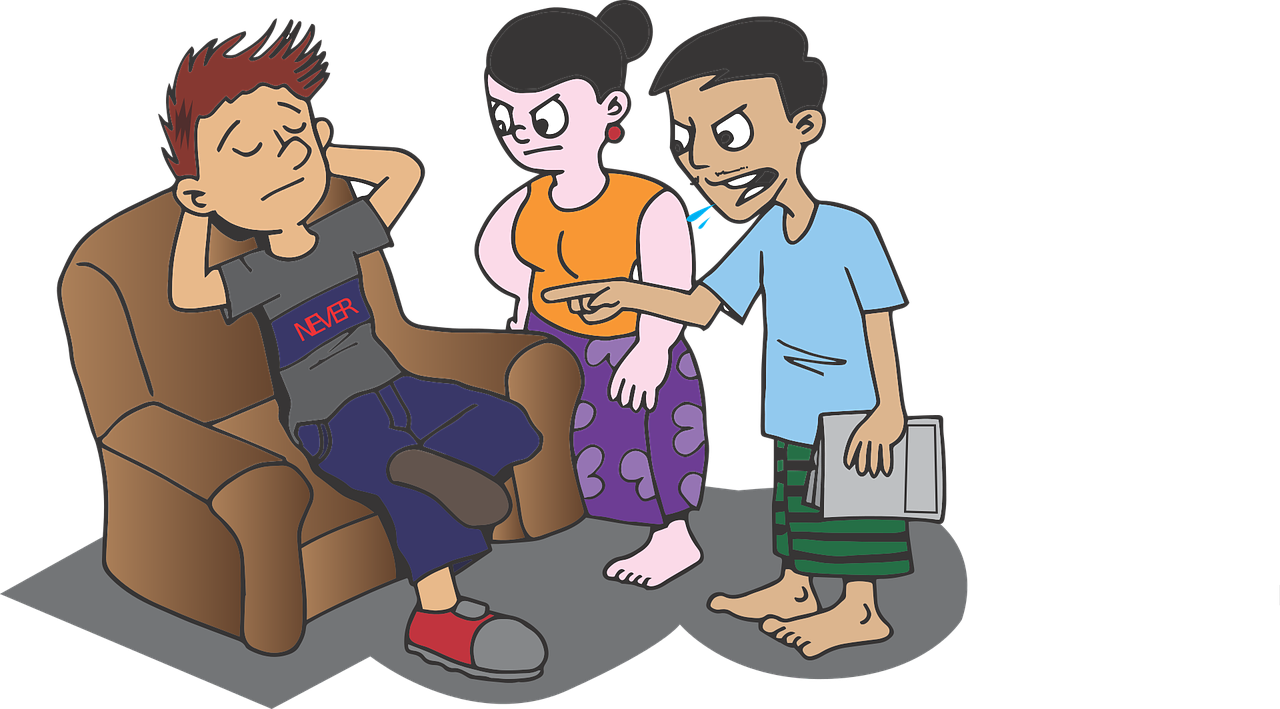
The Root of the Problem
Parents of university students often lament that their children no longer listen to them. It is a common refrain. But perhaps the explanation is simpler than we imagine. When those same children were young, their parents often lacked the time and energy to listen to them. Now, one cannot reasonably expect adult children to listen to parents who were once unavailable.
Communication plays an indispensable role in the parent-child relationship, especially in modern society. Having been an at-home father, having raised both a daughter and a son through their teenage years in Canada, and having observed countless other families, I offer the following reflections.
The Family as a Public Company
A family and a home are not a private limited company. They are a public company in which parents and children all hold equal stakes. Along with stakes come duties and responsibilities. Parents must ensure they do their part – and that children do theirs. Making children do chores, participate in family activities, succeed in academics, pursue hobbies and sports, and above all, communicating with them to achieve all this – these are the essential responsibilities of parenthood.
What follows is not a magic remedy, not a pill for success, not a Dummies for Parenting. These are practices that worked in our family, both in the Indian Army environment and now in Canada. You may accept some, modify others, and reject a few. Use your own judgment.
Show Genuine Interest
Convey to your child that you are interested, involved, and always available to help. Whenever the child speaks to you, turn off the television. Put down the newspaper. Avoid taking telephone calls, however important they may seem. For most of us, nothing is more important than our children.
Converse in Private
The best communication occurs when no one else is around. Take the child for a drive, to a quiet corner of a park, or to a coffee shop. Some children prefer to speak with only one parent; others are comfortable with both. Our son opens his mind while I drive him to school, swimming, guitar, or tennis lessons. He never discusses personal matters in front of his mother or sister, fearing ridicule. Our daughter, by contrast, identifies better with her mother.
Do Not Dictate
Putting a child down – especially in front of others – is both embarrassing and destructive. It leads only to resentment and hostility, never to good communication. Physically and mentally, get down to the child’s level. Then talk.
Never React Immediately
When you hear about behaviour or an incident that angers you, do not attempt communication until you regain your composure. You cannot be objective when you are angry. If you admonish the child immediately, you can be certain they will never report such incidents to you again.
Analyse the situation. Gather maximum details from the child, and sometimes from teachers and friends. Then deliver your judgment. Assist the child in planning specific steps toward a solution. Provide remedial actions and suggest how to handle similar situations in the future with more dignity and maturity.
Be a Patient Listener
If you are tired after a day’s work, you must make an extra effort to be an active listener. Coax and encourage your child to share more details. Teenagers tend to use slang and sometimes unparliamentary language. Do not fixate on these words – you will lose the true picture. Advise the child about curbing profanity at a later time. Listen carefully and politely. Do not interrupt. Be as courteous to your child as you would be to your boss.
Preach the Least
Preaching never helps open or maintain communication. Avoid sob stories about the difficulties and lack of facilities you endured in childhood. Avoid lines like: “You only talk when I am done.” “I know what is best for you.” “Do what I say.” “I never spoke like this to my parents.”
Establish a Reporting Procedure
Encourage the child to tell you about school, outings, movies with friends, parties, and so on. Always know where the child is going, who is accompanying them, and what time they must return home. Your questioning technique should be such that the child volunteers these details even before planning an outing.
On return from any event, seek feedback. Never ask why. Ask what happened. You will need to prod teenagers to speak, and what you get will only be the tip of the iceberg. The rest you must extrapolate. Your reactions should ensure that the child will report such events in the future without being asked. Nowadays, when I pick up our children after an event, they begin their briefing the moment they enter the car.
Encourage, Accept, and Appreciate
Show that you accept your child, regardless of what they have or have not done. Appreciate the 93% marks they scored rather than admonishing them for the 7% they lost. Encourage them and advise how they can do better.
Say a word of appreciation – Thank you or You did a nice job – whenever the child does chores at home. Never use put-down words like Stupid, that makes no sense at all or What do you know, you are only a child.
Once, our son made a cup of coffee and brought it to my table. I took a sip. I heard him say, “Welcome.” I realised my folly. I had failed to appreciate his effort. The least he expected was a “Thank you.” In India, we take many such actions for granted. We have never developed the habit of appreciation, believing that appreciation will spoil the child. That belief is mistaken.
Participative Decision Making
Involve children in as many decisions as possible: the colour scheme for the walls, flowers for the garden, restaurants and menus for family dinners, summer vacation plans, and so on. Try to accommodate their aspirations, even against your own interests and wishes. You may not get such opportunities later in life.
During our summer vacation to Chicago, our children wanted to go skydiving. Their main interest was being videographed during free fall without helmets—goggles were mandatory, but Illinois does not require helmets. At the skydiving centre, we discovered that our son was ineligible to participate, being under eighteen. So mother and daughter skydived. Father and son decided to undertake the adventure together after he turned eighteen.
Cultural and Family Barriers
Try not to invoke cultural or family reasons when discussing how teenagers dress, whom they befriend, or what activities they pursue. Many parents persuade their children to avoid short dresses or certain outings by declaring them against our culture. This approach tends to backfire. Teenagers become rebellious. Many end up taking rash and illogical decisions—not because they truly want to, but to prove to their peers that they are liberated, unbounded by parental culture or religious beliefs.
At a summer barbecue at an Indian friend’s house, a teenage girl was surprised to see our daughter wearing shorts. She asked whether our daughter’s parents had any objection. Our daughter explained that she had grown up in a military environment in India and was accustomed to wearing shorts at home.
The teenager then confessed that she was not permitted to wear shorts. So she wore them under her jeans to school. Once she arrived, she removed the jeans. It is not an uncommon sight outside high schools: girls arrive fully covered from head to toe, and minutes later, they can be found at the smokers’ corner wearing the skimpiest dresses.
Parent-Teacher Interactions
“How is my child doing?” is the standard question every parent asks. The standard teacher’s reply is “Very well.” Many parents fail to understand that this “very well” refers to the effort the child has put in – and to the parent’s involvement.
A wiser approach is to ask about the child’s behavioural and learning patterns, and about the topics that will be covered in class in the coming weeks. This way, parents can genuinely contribute to the child’s development.
Remove All Barriers to Communication
Modern gadgets – cell phones, iPods, iPads, handheld gaming consoles – are constant barriers to communication. Children fail to listen to what is being said and to observe what is happening around them. Parents must establish strict time slots for gadget use and never allow them during family time: meals, outings, get-togethers, and so on.
The rule in our home and car is simple: when in the company of any family member, no earphones are permitted. If music is to be played, it must be audible to everyone present.
Sex Education: The Most Difficult Conversation
Sex education is the subject that most parents dread broaching with their teenage children. Yet once you take the first bold step, it becomes easier – and it is always a rewarding experience.
Studies indicate that adolescents whose parents talk to them about sex tend to be less sexually active and more likely to use effective contraception when they do become active. Many parents are unable to provide all the information young people need. Only a handful ever received adequate guidance from their own parents to help them navigate sexual issues with partners.
Parents must be the primary source of information about sexual and reproductive health for their children—not friends, not media, not the internet.
Our son’s favourite line: “All my thirst for sex was quenched the day I discussed it with my dad.”
The Paradox of Parenting
We humans are a rare species when it comes to parenting. We are conflicted – between excessive care and the willingness to let them loose. We are eager to be their friends, yet also determined to set firm boundaries. We want their problems to vanish in an instant, yet we also want to prepare them to face hardships alone. We suffer when they make mistakes, but we do not let them see our suffering.
All these paradoxical behaviours build the barriers we face when communicating with our children.
A Parent’s Prayer
Dear Lord, make me a better parent. Teach me to understand my children, to listen patiently to what they have to say, and to answer all their questions kindly. Keep me from interrupting them, talking back to them, and contradicting them. Make me as courteous to them as I would have them to be to me. — Gary Myers


Thoughtful and well written article
LikeLiked by 1 person
Good one Reji.
LikeLiked by 1 person
Reji, all these things are absolutely irrelevant for most of the Indian (especially Mallu parents as I know). They are interested to hear that their kids are first in the class. Nothing else bothers them. Unfortunately we know only to compare and criticize.
LikeLiked by 1 person
Cool . Very true KK
LikeLiked by 1 person
What parents carry within them — their fears, their wounds, their unspoken struggles — becomes the invisible blueprint their children grow up with. Healing yourself is one of the most profound gifts you can give the next generation.
LikeLiked by 1 person