The Philosophy of Military Training
During most military training and courses, the underlying philosophy was simple yet profound: train every soldier and officer two levels up. Every individual was expected to function at a level higher than their own and remain aware of the functioning two levels above them. A Section Commander was expected to operate as a Platoon Commander and understand the responsibilities of a Company Commander. This principle ensured that the chain of command remained robust, resilient, and ready for any eventuality.
Testing the Philosophy
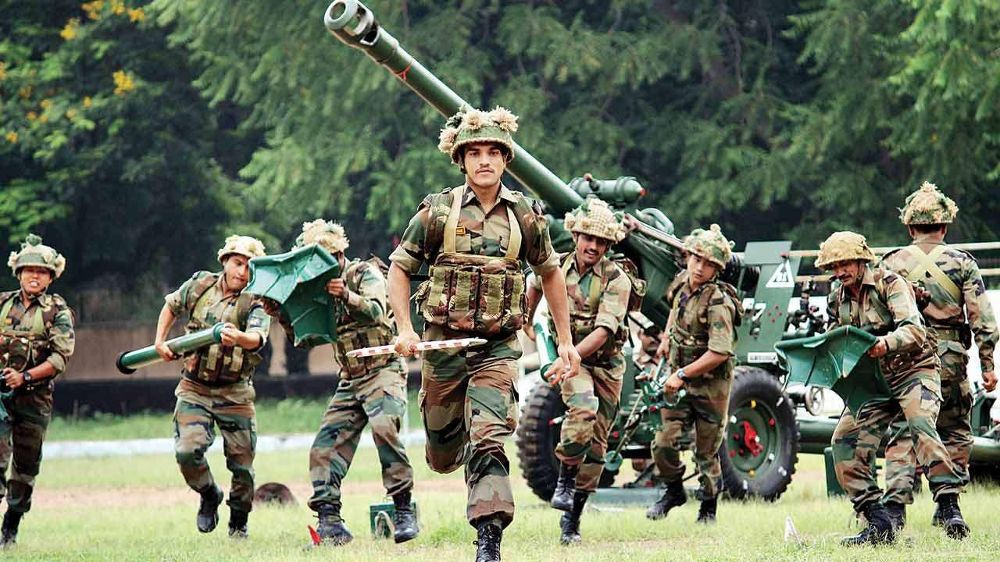
As a young Lieutenant, I served as the Gun Position Officer (GPO), responsible for deploying the six guns of the battery, calculating technical parameters for engaging targets at approximately 25 kilometres, managing ammunition, administering soldiers, and maintaining weapons, vehicles, and radio equipment. During an annual training exercise with live firing, our Brigade Commander declared me a casualty. Our Technical Subedar stepped in, took over my duties, and performed commendably – impressing the Brigade Commander and validating the training philosophy.
Four years later, as a Forward Observation Officer (Captain) during a similar exercise, our Brigade Commander declared our Battery Commander a casualty. I took over fire planning and target engagement in support of an Infantry Battalion attack. Again, the system worked. We were trained, tested, and proven capable of functioning a level up.
The Curious Drill: Officers as Gun Detachment
During the annual inspection after I joined our Regiment as a Second Lieutenant in 1983, our Brigade Commander – Brigadier S Padmanabhan – Later Chief of Army Staff (Please click to read more about the General) – issued an unusual order: all officers were to form a gun detachment. The senior-most Battery Commander acted as Detachment Commander, while the remaining eight officers – Captains and Lieutenants – served as the detachment. Together, we brought a medium gun into action and executed target engagement drills.
For a week, we trained under Subedar Amarjit (Please Click Here), a Punjabi Brahmin who spoke chaste Punjabi interspersed with taunting commentary and colourful punchlines. His instructions were sharp, his humour sharper. It was exhausting, enlightening, and unexpectedly enjoyable.
Curious about the Brigade Commander’s intent, I asked our Battery Commander why we were being put through this drill. “To build camaraderie among officers and make us well versed with the handling and functioning of the gun,” he replied. I was not entirely convinced – but I accepted the answer and continued training.
The Answer Arrives Decades Later
Fast forward to June 2002. I took over command of a Surveillance and Target Acquisition (SATA) Regiment. The unit was in the process of being equipped with modern radars, surveillance systems, and survey equipment. Military technology had advanced by leaps and bounds. Much of what I knew was outdated.
I began training earnestly alongside our soldiers, with our Subedars serving as instructors. It was learning of a different kind. The soldiers were visibly enthused to see their Commanding Officer training as a detachment member and radar commander – carrying the theodolite, setting it up, taking observations, operating the long-range optical surveillance system, and handling the Global Positioning System (GPS).
I enjoyed the training as much as I had as a Second Lieutenant. I learned a great deal, especially the shortcuts our soldiers had developed through hands-on experience. Those three morning hours spent training became the highlight of my day. It helped me know our soldiers better, and my confidence in them increased manifold. I suspect they felt the same about me.
My computer knowledge – both hardware and software – helped me assimilate the training quickly. Our soldiers were amazed at my speed of learning and impressed by my finesse in handling the equipment.
The Epiphany
It was then that the answer to my decades-old question finally surfaced. Why had General Paddy made us train as a gun detachment? Not merely for camaraderie. Not merely for familiarity with the gun. It was to prepare us – years in advance – to train two levels down.
If a Commander can step into the boots of those two levels below, they gain an understanding that no manual can provide. They learn the shortcuts, the struggles, the silent innovations of their soldiers. They earn respect not through rank, but through demonstrated competence.
A Suggestion for the Future
I propose that all commanders – from Brigade Commander downward – should train two levels down for at least one or two days each year. In an era of rapidly evolving military technology, this practice would be invaluable.
When I joined our Regiment in 1983, the soldier’s personal weapon was the 7.62mm Self-Loading Rifle. Over the years, we were equipped with 5.56mm rifles and the AK-47. In 1989, our Regiment received the Bofors Gun – a quantum leap in the use of computing power in gunnery. Until then, we had relied on cumbersome manual procedures involving logarithmic tables, range tables, graphical instruments, and calculators. The Infantry and Armoured Regiments underwent similar transformations.
Training two levels down – undertaken with a positive intent to learn – will go a long way in building camaraderie and helping soldiers know their commanders better. More importantly, it will help commanders never forget what it feels like to be on the ground, doing the work, serving the nation one hands-on task at a time.
Training two levels down – if done with a positive intent to learn – will go a long way in camaraderie and the soldiers knowing their Commanders better.


Well said about two levels down especially when you have two entry points for personnel in the system. ie: officers and junior officers. It gives a new perspective and understanding. We’ll said
LikeLiked by 1 person