On our very first day at the National Defence Academy, Captain Sajjan Singh Batti, our Divisional Officer addressed us on 12 January 1979. One sentence of that address still hangs in my mind – “All those from the Military/ Sainik Schools, don’t presume that you are ‘Smart Alecs’ and know all the tricks of the trade.”
That was the first time I heard the phrase ‘Smart Alec.’ From the context I made out its meaning to be a person trying to outsmart the system and get away with it.
Recently I researched into the etymology of Smart Alec.
Oxford English Dictionary defines a Smart Alec as ‘a person who behaves as if they know everything and likes to show people this in an annoying way.’
If Oxford defines so, what does Cambridge define it as – ‘someone who tries to appear smart or who answers questions in a funny way that annoys other people.’
Mariam Webster Dictionary In my view gives a better definition ‘obnoxiously conceited and self-assertive person with pretensions to smartness or cleverness.’
One must have come across many Smart Alecs and one must have turned into a Smart Alec in some situation. Generally Smart Alecs are known to be boastful, appear very friendly, giving out ‘expert advice’ on anything and everything under the sun. When the Smart Alec becomes a quite person, scheming his plans, keeping his cards close to his chest, he becomes dangerous.
Did you know that Smart Alec was a real man – a New York pimp named Alexander Hoag, who operated in connivance with his prostitute wife Melinda? The same is chronicled in ‘Studies in Slang’ by Missouri University professor Gerald Cohen.
In the 1840s, Alexander Hoag with his wife Melinda devised a ploy to hustle men Melinda enticed and brought to her apartment. Melinda made her victim remove and hang his clothes. Alexander who hid behind a secret panel entered the room and disappeared with all the valuables in the victim’s dress pockets.
After some time, Alexander banged on the door, and Melinda made her customer believe that her husband had returned early from some trip and was at the door. The victim grabbed his clothes and bolted out of the room through the window.
When her customers complained to the New York Police, Alexander bought out two corrupt police officers with an agreement to split the booty. The police soon discovered Alexander was cheating them out of their share by this new tactic and arrested Alexander and Melinda.
Investigators of New York Police were dumbfounded by the smartness of Alexander’s operations that they started referring to him as Smart Alec. Then it became a police slang for a criminal who was too smart for his own good, or whose cockiness led to his arrest. Its first known printed use was in an 1862 Nevada newspaper article, used the term to refer to a ‘know-it-all’ convict.
The term ‘Smart Alec’ got prominence in the early 20th century but became part of everyday speech as a slang only around 1950. A porn film Smart Aleck was released in 1951, justifying the slang’s origin to a pimp and a prostitute.
A Smart Alec has come out with an application for a smartwatch and aptly named it Smart Alec. The application it claims will control the level of stress the wearer endures.
Smart Alec Workbooks are available for young children up to grade 5 in almost all subjects. These workbooks are marketed as books developed by teachers in collaboration with administrators, designed to reinforce fundamental skills taught at each grade level. A real Smart Alec at work!
What do you call a woman with the Smart Alec traits? Call her Smart Alexa! Now you realise why Amazon christened its Smart Virtual Assistant as Alexa???
Mrs Hema Ramachandran, wife of Veteran General PK Ramachandran, posted this image on her Facebook of a Koel (Eudynamys Scolopaceus) who visits her garden.
I was reminded of our grandfather who narrated to us young children as to how the Koel laid her eggs in a House Crow’s (Corvus Splendens) nest. His narration was to teach us to be industrious as a crow and not be lazy and cunning as a Koel.
When we were in Grade 10 at Sainik School Amaravathi Nagar, Mr Paul Sathya Kumar (MPSK) taught us Biology. He explained various tactics in the bird/ animal/ plant kingdom to prove the survival of the fittest theory, and one such case was that of a smart Koel who laid her eggs in a crow’s nest.
The Koel is known as a brood parasite – a species that imposes the cost of rearing its offspring onto another species – the host (House Crow) – by laying its eggs in the hosts’ nests.
Is Koel Lazy? Is she more industrious than the crow? Is she crafty and cunning?
In Sanskrit and Telugu language it is called as Kokila, Thamizh, Kannada, Malayalam –കുയിൽ, குயில் (Kuyil), Hindi-कोयल (Koel.) Many good female singers are referred to as Koel or Kuyil. Does the female Koel sing? No! It is the mating call of the male bird to woo the female bird.
For almost nine months of the year, the Koel is seldom seen because it neither sings nor calls except in the breeding season – April to July. It is difficult to spot a Koel due to its shy nature and secretive behaviour. They mostly remain hidden inside leafy foliage and go undetected, by and large.
In their breeding period, birds mate, lay eggs, rear their offspring and protect them. In India, birds usually breed in summer because their chicks will have enough food in the following monsoon.
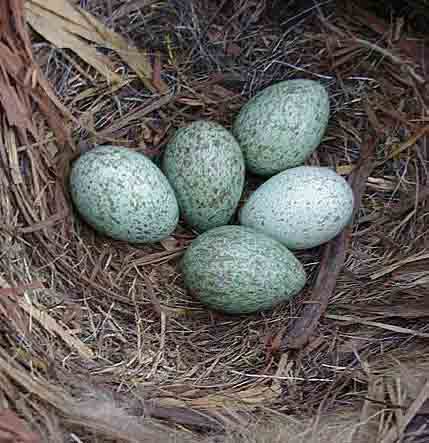
Koel is a case of mimicry in the bird kingdom. Its eggs resemble those of the crow in pattern and colour. The ground colour of the crow eggs presents different shades of bluish green while that of the Koel is olive green. Eggs of both host and parasite have similar brown markings in the form of blotches, specks, and streaks, which are more densely distributed towards the broader end. Although eggs of Koel are smaller in size, they exhibit remarkable mimicry with crow eggs.
To ensure a higher chance of clutch formation (clutch is the number of eggs laid,) the Koel cleverly lays an egg in the crow’s nest when the mother/father crow is not around and then throws away one of the crow’s eggs.
That means the crows can count and the mother crow is unaware of the replacement.
Another reason as to why the Koel leaves its egg in the crow’s nest is that the Koel is a vegetarian. Newborn chicks need a lot of protein to grow, and the crows will feed them non-veg protein.
This is a survival instinct and is basically inherent in the genes of organisms in nature. It further proves Darwin’s theory of ‘Survival of the Fittest.‘
There are other examples of brood parasites in the bird kingdom. The egg of the common Hawk Cuckoo (Hierococcyx Varius) mimics that of its host species, the Jungle Babbler (Turdoides Striata) in size and colour. Such mimicry is thought to have evolved to prevent the host from rejecting any eggs.
Host birds respond to brood parasites using different defence strategies. They attack the parasite outright at times, and at others issue warning calls, hide the nest, look for and remove the parasite’s eggs and aggressively defend their territories. I have often spotted female Koels being chased by crows even outside the nest when they spot each other.
A Koel is so crafty that to increase the chance of survival of its eggs, she lays her eggs in different nests. Remember the adage – ‘Never put all your eggs in the same basket!‘ When the Koel visits a crow’s nest, it also punctures or breaks eggs irrespective of the species so that her offspring isn’t starved of food even during a shortage. The Koel is too smart to ensure that the clutch size is optimum so that the crow can feed and take care of its chicks.
If a host happens to see a parasite laying an egg in its nest or recognises an intruding egg, it will abandon the nest or reject the egg.
Incubation period of the Koel’s egg is about 12 to 13 days and the crow’s 16 to 17 days. Thus, the Koel chicks emerge a few days before the first crow chick hatches. The poor crow hatches the eggs, feeds the Koel chick, and brings it to adulthood to hear the bird coo differently.
The Koel chick keeps chirping continuously. So, the mother crow feeds it more thinking that the chick is still hungry and not yet fed enough. The Koel chicks grow rapidly and become healthier than the crow chicks. They develop feathers and wings earlier than crow chicks and fly out earlier.
Isn’t the Koel industrious, crafty and cunning than the crow??
Can you fall in love at 60? Why not?? We got to be in love at all stages of our life – with someone or the other, to make our existence meaningful. At 60, it is more for companionship, after the children have flown to greater heights.
This is the essence of this book – The Old Man & She! – by Veteran Indian Air Force Officer Avinash Chikte. We trained at the National Defence Academy and he was a year senior – 59th Course – E Squadron.
The book tells the story of Liz and Ravi – she’s 55 and he’s 60. The story confirms that love can begin at any age and stage and there is no place today for cultural or religious barriers. The author has explored the tornadoes that go through the minds of people in a relationship – that too across religions, cultures, and race. I have experienced it and I vouch for the authenticity of most situations well crafted in this book.
A good read, and a feel-good book for those who have an open mind, and are not moored by the chains of religion, caste, and race.
Easter Monday, April18, 2022, 4 PM – we were in for a surprise – Snowfall after the onset of Spring with the Spring Equinox on 20 Mar 2022. This date marks the astronomical first day of spring around the Northern Hemisphere. In the Northern Hemisphere, March equinox (Spring Equinox or Vernal Equinox) is when the Sun crosses the Equator, heading North. This is Utttarayana as per Hindu Astronomy. After this date, the Northern Hemisphere is tilted more toward the Sun, resulting in increasing daylight hours and warming temperatures. Environment and Climate Change Canada (ECCC) dutifully announced the arrival of Spring on March 20 and I obediently put away the snow-blower and the snow shovels in the shed. The weather is expected to be warmer during the final days of April, but a cooler pattern is expected for early May.The snowfall predicted was for about eight inches, what came down may be a bit more. Blame it on Climate Change or Global Warming!It appears that Mother Nature too was tricked by the weather. Daffodils have already sprouted and grown over eight inches tall. They will all thrive through this Spring-Snow-Storm and will flower in a fortnight.It is a Canadian saying that ‘April rains bring in May flowers.’ Tulips in our garden are also getting buried under the snow. What will April snow bring this May?The Weeping Pussy Willow catkins flowered, and they will lose their pollens with the snow piling on them. Some of the flowers in the inside will survive this onslaught of snow. A tricky storm track and a delicate temperature gradient hovering around 2oC resulted in this unprecedented spring snowfall. During this time of the year, the difference between a snowfall and a chilling rain is only a few degrees Celsius.
Today, we live in a world impacted by pandemic and natural disasters. We are all going through a difficult phase of our lives. Many are coping with complex personal environments and circumstances. This is where we need spiritual support to fill that vacuum left by the absence of God in us.
“When the going gets tough, the tough get going” was the catch-line during our tough five week-long Commando training, considered amongst the toughest in the world, designed to push the trainees, testing our physical and mental toughness to an extreme. Our training began at 2 AM with physical training, obstacle crossing, long marches up to 40 km, and ended at midnight with night navigation marches, raids, and ambushes – all while carrying our personal weapon – the rifle weighing over 5 kg and a 30 kg backpack.
This was where I needed someone to hold my hand, pat me at the back, encourage me to complete the tough tasks, push me from the back through those long endurance marches, etc. Here my faith in Christ helped endure through it successfully. I found our Saviour, the Resurrected Christ there when and where I needed Him. Whatever physical and mental turbulence I was going through, He underwent many times more and emerged successful.
Timothy 2:3 says, “Endure hardness, as a good soldier of Jesus Christ.” The bible does not offer you space to complain or crib. St Paul was beaten, persecuted, betrayed, drowned, and thrown into a prison, still he never complained. Paul endured his perils by holding to his faith and belief in Jesus Christ. Did Jesus Christ ever complain even while He was dying on the cross?
The essence of resurrection is contained in the verse Luke 24: 5 where the angels at the tomb said to the women who went to anoint Jesus’ body: “Why do you seek the living among the dead?” It happens to be the first spoken word after the resurrection of Christ.
This question led the women to understand the reality of resurrection. We must realise how pertinent it is in our daily lives. Resurrection celebrates the moment death was defeated and hope came alive. If you are looking for Jesus among the dead, you will not find him, because he is not there.
We often end up failures, dissatisfaction, or burnout after the long and treacherous hours we put in. Often our efforts do not bring us a sense of achievement and fulfilment. This could be due to the lack of realisation as to how our effort may have helped others and not us. We place an unrealistic expectation on returns that will lead to frustration, anger, and disappointment. It is a way of seeking the living among the dead. Here we are not looking at the joy and happiness that our action has brought to someone else (living,) but we are more concerned about what we will receive in return (dead.)
We look for the dead weighing our success based on our achievements like bank balance, grades scored, promotions achieved, the brands of the clothes we wear, the car we drive and so on. We keep looking for self-worth in our personal image and some end up finding relief in drug and alcohol abuse, leading to addiction (further death) not liberty or freedom or solution to one’s problems (mirage of living.) For some, it leads to anxiety and fear, rather than joy and fulfilment of life.
Looking for the living among the dead also means looking for a spark or a ray of hope when everything around is grim and bleak. While on a military mission, driving on a Himalayan mountain road at about 12,000 feet above sea level, the pickup truck with two soldiers ahead of me suddenly toppled to the side, because the road caved in. The pickup with every tumble lost each of its wheels, finally rested on a tree at bout 1000 feet below. I ran out of the Jeep with my driver and two of my radio operators and we reached the vehicle to see the two soldiers badly injured, bleeding profusely. Upon seeing the state of the vehicle and the tumbles it took, I did not expect any survivors. Here I was ‘Looking for the living among the dead’ as hardly anyone survived such accidents in that area. We carried the two injured soldiers up the steep slope, evacuated them to the nearest first-aid post to be evacuated by the Army Helicopter and they survived.
Until today, I do not know how we rolled down that steep slope, brought those soldiers up the mountain. Everything appeared to be a miracle, where the Resurrected Christ gave me the strength to execute the task. It saved the lives of two soldiers, but for us who participated in it, it was all some bruises left on our body by the bamboo which grew on the mountain slope. No one complained. We were all happy that we could save two lives. That is what soldiering is all about – Risking one’s life to save others.
Whenever I passed on that road again, I felt the Resurrected Christ appearing before me.
This Easter, we must all look for our resurrected living Saviour, one who brings joy and life and hope, the one about whom the Prophet Isaiah said: “Those who hope in me will never be disappointed.”
The very first flowers that appear in our garden on the onset of Spring is on the Weeping Pussy Willow. The Salix Caprea ‘Pendula’ is commonly known as the Goat Willow or Weeping Pussy Willow, which belongs to the Caprea genus of flowering trees.The tree grows pendulous branches and can reach up to 8 feet, while the spread of the tree can also be around 6 feet.Fuzzy nubs start to appear along the branches, even before the leaves sprout. The reason for this is so that the leaves don’t get in the way of the pollen travelling on the wind, so the chances of pollination are increased. These nubs are flowers that sprout just before they fully bloom. The soft coating of hairs acts as insulation to protect these early bloomers from cold temperatures. Most other willows make similar flowers, and since they’re among the very first to bloom, they’re especially delightful—they signal the onset of spring. The tree derives its name from these soft silver tufts that resemble a tiny cats’ paws, feeling so much like fur.Even in full bloom, willow flowers hardly look like flowers at all. They have neither any petals nor any fragrance. Such flowers are called Catkins, derived from old Dutch word Katteken meaning a kitten. Alder, Birch, Beech, Hazel also produce catkins. Pussy willows are Dioecious, meaning there are both male plants and female plants. Only male plants produce the fuzzy flowers. The flowers on female plants look more like greenish hairy caterpillars. The male catkins begin to look yellow when the pollens develop on the tips of the anthers.Catkins usually don’t rely on pollinators to spread their pollen. Instead, they release it into the wind, where it may or may not land on the female flower parts. To hit their targets, the catkins produce a a large volume of pollen. Such massive quantity of pollens released in the atmosphere results in many humans developing allergies and breathing difficulties during this period.
Recently our friend’s son was getting married and he asked me for some tips.
Will I make my partner happy? What are her expectations? Does she belong to me? Will she accept me as is? Do I have to change in anyways to be more acceptable to her? Will I be able to perform? With the marriage day approaching, a lot of questions are going around a groom’s mind. These questions lingered in my mind a few weeks prior to our wedding.
What happens after marriage, especially on the first wedding night is always unpredictable. Hence do not be paranoid about it. It doesn’t matter if you are a virgin or have some experience. It is all about communication – both verbal and non-verbal and as to how well you can connect with your partner.
Communicating and making each other feel comfortable in each other’s presence helps in setting the tone. Asking questions about each other’s likes, dislikes in their day-to-day life, helps in starting a conversation. It is all about recognising each other, coming together, complimenting each other, and starting a life together. A simple compliment, such as, ‘How beautiful you look today!’ She has spent hours trying to look perfect on this big day. Expressing your love for an ‘I Love You’ at every opportune moment will pay rich dividends. I did none of these as I thought it was being too filmy or that I wasn’t confident about expressing it.
On that day, with all the ceremonies, friends, relatives, photographs, both of you hadn’t had any opportunity to eat or drink. Prior to your first night, ensure that both of you are well hydrated and have your stomach reasonably filled. It is wise to carry some snacks and water. I realised the importance of it on our first night.
Avoid being a Whisky-Dick. Your friends may advise/ force you to have a drink or two on the garb that it will give you confidence and a boost. Alcohol does no good and it only harms.
Your friends must have narrated many stories of their escapades with sex. You realise they were stories only after a few days of marriage. What you see in those porn movies are in fact not real. Some guys must have told you – “Kill the cat on the first night!” You must know that they themselves did not do it. I too tried it but failed miserably.
Don’t forget about personal grooming and take care of personal hygiene. Grooming is an integral part of wedding preparation. A well-groomed man with less body hair makes a better impression. Make sure to groom your facial hair properly and keep your body hair in check. You must also clean your nails and feet, and you must take care of your skin. Look out for ill-fitted or mismatched clothes. They can make you look shabby.
Begin your grooming session now and repeat it once every month. That is why you are the Groom. Fix an appointment with the spa and go for a complete pedicure and manicure session. You can also wax off the unwanted body hair. A complete body massage and a facial will do a lot of good. Repeat it once a month – even after the wedding. In my case, it was the Regimental barber who did it a fortnight before my wedding on the day I left the Regiment on leave. In those days there were no spas even for women at Kottayam. It was almost like Kamalahasan’s character in the Thamizh movie Guna, where he gets his pre-wedding grooming done by the village barber.
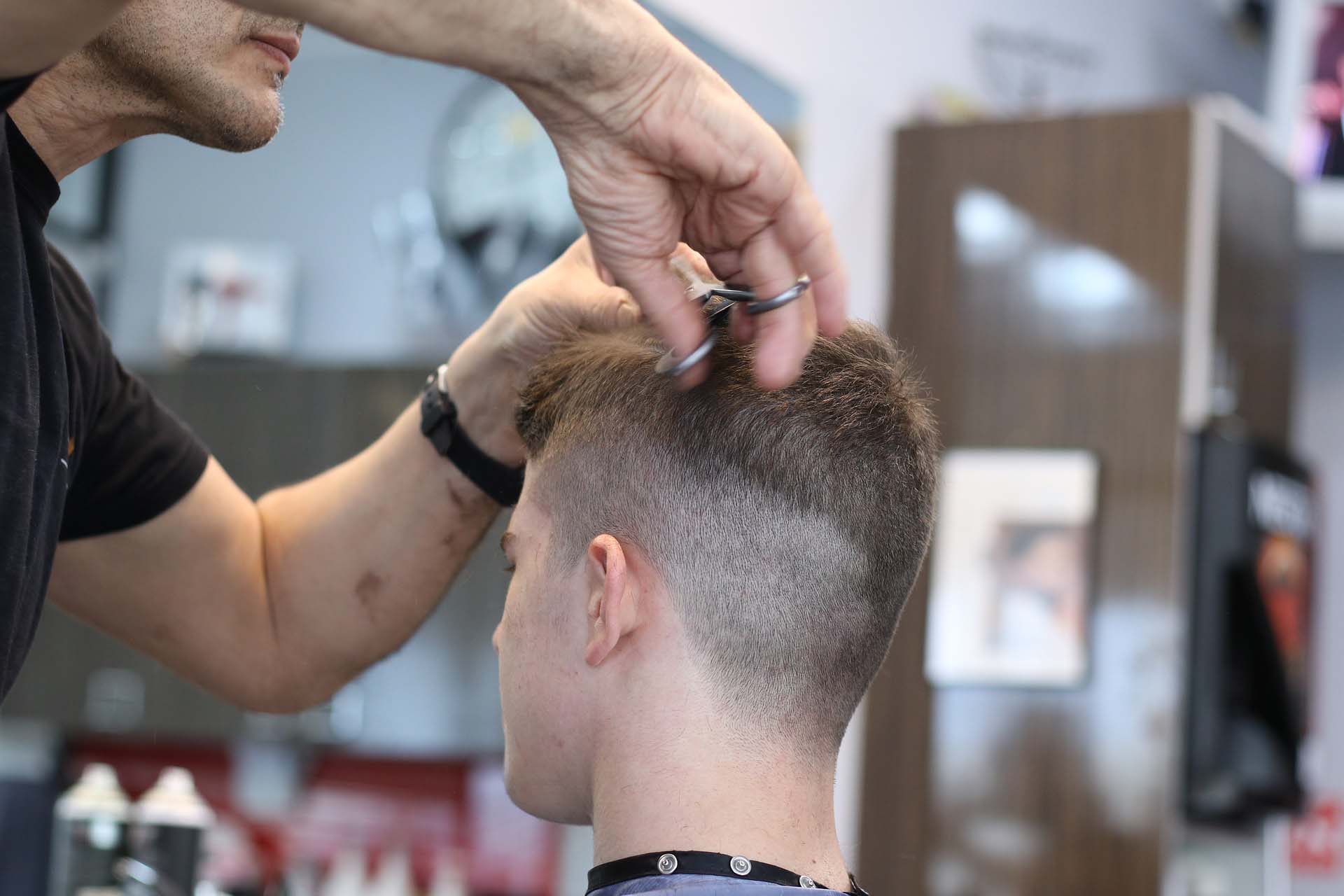
Make sure not to try a new barber for the wedding look. Do a trial of the wedding haircut a couple of months before the big day to see if it suits you. It is preferable to keep some hair spray/ gel handy in case you’re having a bad hair day. In case you are opting for groom makeup, ask for a very subtle one.
When you go through your wedding photographs, you will realise that your fingers and toes were the most photographed organ of your body in an Indian Wedding. So, keep them clean and looking their best!
Start washing your face properly, not just soap and water. Invest in a good cleanser and a weekly exfoliator and you’ll soon notice an extra polish to your complexion. Start a regular eight glasses a day water workout ahead of your wedding and your skin will be clear, clean, in time for your big day.
Your eyebrows should not end up as an angry unibrow. Pluck any stray hairs between your eyes a couple of days before your wedding. Invest in a trimmer to tidy up your ears and a separate trimmer for your nostrils.
Book your last haircut a week before your wedding. This will give enough time to let the style settle. A Hair spray might give you a better hold without looking stiff or shiny. Ensure that you try it out a few times before your weddings. Gels and waxes may become messy.
Always use whitening toothpaste and schedule a dentist appointment a month before. Professional teeth cleaning and whitening is also an option. Remember, brushing your teeth – both morning and evening – and using mouthwash is strictly vital.
If you don’t already have a workout routine in place, now’s the time to start! Even if you’re not worried about losing weight, it’s always great to get in better shape and consistent exercise will give you more energy.
Select a mild perfume and a deodorant. Your body odour is much worse than what you perceive. It should not end up as a put off for the bride. You do not want to give the nostrils of your wife a tough time! If feasible, find her choice of perfume – so do clothes.
Thumb Rule when you get to your long-awaited wedding night, Take Your Time.
You have just had a big day, and now it is the two of you alone. Maybe a bath together, or a message to help you relax. Stretch out on the bed and hold and kiss each other, slowly and gently. Contraceptives are the greatest invention of mankind after computers!
Getting out of the introverted zone and talking will be difficult for both. The groom must take the initiative. Silence on the first night after marriage between a couple can invite bigger emotional problems. Do not be lost for words. Instead, try to make small conversations about recent things. Talk about how beautiful she was looking; has she experienced any inconvenience or has anything she would like to talk about in her mind. Be patient. Do not interrupt. She may take a long time to complete a sentence. Always maintain intense eye contact and find words to fill in the silence.
You and your partner have never been sexually intimate, and both will harbour many apprehensions about your wedding night. She will be nervous- so do you. You start the conversation about what you both are feeling. Try and identify the exact nature of your fears.
It is advisable to ask her if she fears any potential pain that might occur with the first act of intercourse. Reassure her that you will be gentle and always listen to her if she asks you to stop or slow down. Explain that you anticipate the first act to be a bit painful and that you might be unable to perform or, to the contrary, reach orgasm too quickly to satisfy her. I did not do it and for both of us, it must have been the most horrible sex-act.
Never feel ashamed about communicating about sex as she is going to be your life partner. It is expected that you two will have many such conversations around sex and that’s a great to cement your relationship. Sex is a beautiful part of marriage, and you will always want to feel free to address this topic with each other.
On the first night, carry a tube or bottle of lubricant to help ease the act and make it less painful for both. If your wife did not have pain or bleed with the first act of intercourse, please do not doubt her virginity. Using a lubricant will ensure that things go smoothly and will enhance both of your pleasures. Don’t hesitate to apply again if necessary. I recommend a water based lubricant as it won’t stain your sheets, it’s easy on the skin, and it washes off easily in water.
It is normal for you to be concerned about erection and orgasm. The most common concern among grooms is climaxing too soon and not lasting long enough to bring your partner to climax. If you are used to self-pleasuring, you may want to practice that close to the wedding day, so you last a little longer than if you haven’t climaxed in a while. I practised it as advised by my senior officer.
If you orgasm too quickly, tell her exactly that. Then wait a bit and try it again. You’ll be pleasantly surprised at how fast you will get back to lovemaking after the first orgasm. The second orgasm will be better longer and will be a confidence builder for you that you can perform!
Human nervous system is very complicated and if you are anxious about this being your first time, your penis will get frightened even before you and let you down. One suggested method from my experience to overcome this fear is to explore your wife’s body with your eyes, hands, fingers, and mouth.
Sex is not all about penis and vagina and there need not be any penetration. There are plenty of ways to help her relax and reach an orgasm that does not involve your penis. Your brain will always want you to get there – your penis even more – but hold on.
Abstinence makes the penis grow stronger so does the vagina. Enjoy being newlyweds. Enjoy the parade of sex. Enjoy talking to each other, caressing each other, exploring each other’s body, and be imaginative.
Don’t feel any pressure to imitate the movie hero and thunder into the bedroom and start rattling the bed posts. Take some time to catch up. You’ve just spent many hours with hundreds of people; this might be your first chance to swap jokes and laugh at her mom’s antics. Take a time-out of the chaos and have a good look at her for the first time after she has been yours.
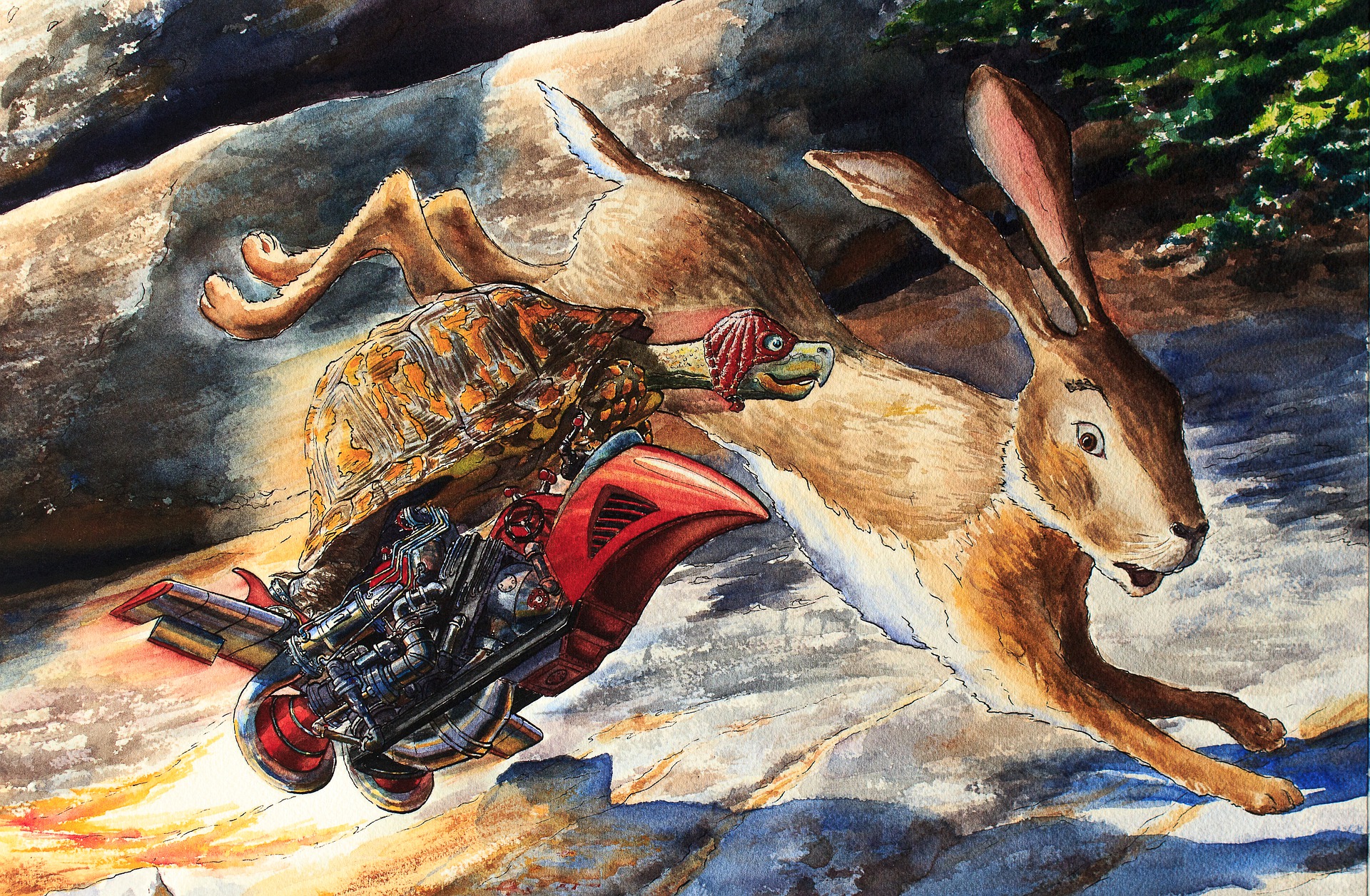
Always remember that the hare lost, and the tortoise won!
Indians are among the politest people in the world, coming from a four-thousand-year-old civilisation. How come others consider us as rude?
The question cropped in my mind when I read a news report about a Romanian Mayor calling an Indian Minister who was overseeing evacuation of Indian students from Ukraine arrogant and rude. Was the Minister arrogant or rude? Surely Not!
Most Indians do not undergo any vocal musical training at school, unlike in North America. They do not have to do presentations while at school. Hence most Indian kids end up with only volume control. I too have a similar problem in that I cannot modulate my pitch and tone. To enunciate or to put across a point, I tend to raise my volume and it becomes offensive to a Canadian listener. Some have told me off that I am rude. With practice and help from our children, I have improved a lot. Am I perfect in this regard? An affirmative No!
All Indian immigrants in Canada do not sound rude or arrogant, but the candidates I have interviewed recently, I am forced to change my opinion. These candidates give off an arrogant vibe and an arrogant look. They pad up their resumes to over a page with mostly redundant achievements and in some cases family lineage. They act as if they know it all, have achieved all and are ready to join the workforce. They blow their trumpets. Their claims and lies fall shattered when they are asked to handle a real situation or a process.
The way one is greeted, business processed, merchandise dispensed at the store or on the drive-through in Canada, it involves exchanging a few pleasantries. The conversation by the sales associate involves lot of those ‘magic words’ like please, thank you, have a nice day, etc. Driving through a coffee outlet, I could often make out the nationality of the associate from their accent coupled with the absence of those magic words. They do sound impolite and rude by Canadian standards.
Many Indian immigrants land with a false superiority or prestige. It is all because of the social-media propaganda that all of NASA’s scientists are Indians; Silicon Valley companies are being run by Indians; all doctors in America are Indians; Indians are doing very well in USA and Canada; and so on. Sorry, but it isn’t the truth!
Another opinion is that Americans or Canadians do not study and that it is all Indian students in universities, and they are the toppers. Look at the award lists or achievers list of any North American universities and you will realise the truth.
Next in line is the belief that North Americans are dumb. You must be right!!! That is why every time you switch on a computer or a cellphone or a tablet, look at the company which developed the software and that’s why they are the pioneers of modern technology and medical research.
Indians have only heard of a few hardworking and intelligent Indians in India or outside India. Other countries too have the same percentage of hardworking and intelligent people. The political/ religious leaders pepper their discourses with some history, some mythology, some twisted facts etc. This leaves an impression in the mind of the youth that Indians are the best and have all the solutions for all the problems the world faces today. This has made the youth less tolerant to the other religions/ castes/ creeds. This makes the youth less accepting of others, their viewpoints, their beliefs, and their cultures. A sure recipe to disaster!!
Various debates on national television are a clear indication of the arrogance of the anchors and the participants. Many foreign panelists in such discussions have pointed it out (I too feel the same.) These anchors and participants (some Veterans too) have indoctrinated the Indian youth to believe that the rude and arrogant way they put across their viewpoint is an acceptable one. This further adds to the rudeness and arrogance of the educated Indians without they themselves realising it.
Various propaganda or false information passed on to the Indian youth on social media have influenced their minds. Most youth do not read, but forward whatever they receive to others, believing them to be true. Many adults (including Veterans) too engage in such acts to show their presence on social media by proving that they are ‘Virtually Alive.’ When a Veteran or someone a youth respects forwards a message, they lap it up as true and forward it to their friends without any analysis. Lack of reading, analysis and opinion forming among university students make them narrow-minded. Thus, they become non-creative, lacking original ideas. Look at any Indian social-media groups – it is all about Forwards with hardly any Original work or opinions.
Many youths in Canada (including our children) hardly make any comments or post photos/ videos on social media. On inquiry they said that they do not want their prospective employer to reject them for their social media posts. They do not have friends too who post offensive or arrogant material because it should not surface during a background check. Our son Nikhil did not want his posts to haunt him later when he gets into Canadian Army and later politics.
Many North American students take up part time jobs during their high school onward. They work in restaurants, swimming pools, gyms, libraries etc. They must volunteer in community activities as part of the requirement for high school graduation. This exposes them to difficult situations where they observe or participate in customer management. This trains them about what not to speak and how to put across one’s concerns in a polite and civilised manner.
Politeness must be inculcated in children, and it must begin at home. Parents must set an example, especially when facing a difficult situation.
Kindness and politeness are not overrated at all. They’re underused. – Tommy Lee Jones – American actor and film director.
Good manners will open doors that the best education cannot. – Clarence Thomas – US Supreme Court Judge
Third Pay Commission fixed the soldiers’ pension to 50% of last pay drawn. To complicate it, a clause of 33 years of qualifying service was added – in effect reducing the pension of a soldier. Here the soldier was betrayed.
History of Military Pension
In 1873, the Indian Military Service Family Pension Fund was started. It was financed solely by compulsory contributions from officers of the Indian Army, who paid so much a month according to rank. There were what we would call to-day ‘special contributions’ on marriage, or when infants reported their arrival. That fund was used by the Government of India for financing various projects—for instance, the Kidderpore Docks on the Hooghly—and even to finance Frontier campaigns. The Government of India credited the fund with a rate of interest equal to current rates of interest on long-term Indian sterling securities. That pension fund was never popular, not because of what it did, or did not do, for widows and orphans, but by reason of the way in which it was administered. I think everyone had a grievance because they felt that a fund which was built up solely from their pockets ought to be treated as a trust fund, and that they should be represented on a board of trustees. Moreover, it was believed that if the fund had been invested in trustee securities in India, it would have received a higher rate of interest than was in fact accorded to it by the Government of India. (https://api.parliament.uk/historic-hansard/lords/1949/mar/09/indian-army-pensions)
Formula for computing pension was substantially liberalised since the time of First Central Pay Commission. The pension was earlier payable at the rate of 30/80 (37.5%) of the average emoluments. This was later revised to 41.25% (33/80). From 31/3/1979, a slab system for payment of pension was introduced, wherein pension was paid at various rates ranging from 50% to 42.86%. The formula was further liberalised by the Fourth Central Pay Commission and from 1/1/1986, the pension was payable at the rate of 50% of the average emoluments comprising basic pay, dearness pay, non-practicing allowance and stagnation increments. (http://aicgpa.org/content/resc/bulletin/topicid44.pdf)
As per the Pension Regulations for the Army 2008, pension was calculated on actual qualifying service rendered by the individual plus a weightage of 10 years in the case of Sepoy, 8 years in the case of Naik and 6 years in the case of Havildar and 5 years in the case of Junior Commissioned Officer subject to the total qualifying service including weightage not exceeding 30 years in the case of Sepoy, Naik and Havildar and 33 years in the case a Junior Commissioned Officer. In other words, a soldier who served for 17 years was given an additional 10 years, making it 27 years. Now his pension was calculated by a factor of 27/33. Thus the soldiers ended with 80% of their pension in effect. This anomaly has been rectified in 2016 after many court cases.
All these ‘shortchanging’ of soldiers commenced soon after the famous victory achieved by the defence forces in liberating Bangladesh in 1971. After the war, General Manekshaw was elevated to the post of Field Marshal for sure but was sidelined and send home unceremoniously. Generals who followed did not make any effort to even raise an issue with the government. It could be because the officers, especially the Generals ‘trusted’ the government and were ‘dreaming’ that the government would take ‘care’ of the soldiers. The irony is that many officers, especially Brigadiers and above, are virtually unaware of any aspect of their own pay & allowances, let alone the of their soldiers. Many of them were and are shrouded with a mask of ‘too complicated and technical’ and often remarked that they were not ‘babus’ (clerks) to work out pay & allowances.’
A Field Marshal never retires, but Field Marshal Manekshaw was eased out post 1971 victory. Still, he was entitled for pay and allowances for life. The bureaucrats and the government cut all his pay and allowances for the next 36 years of his life. This was an award to the General who led the Indian Army to victory in the 1971 war for India, for a man who led his life with at most dignity and served India with all respect. He was paid his dues only in 2007, that too on his death bed by the then Defence Minister AK Antony.
It required a junior officer, Major Dhanapalan who took up the matter of ‘Rank Pay’ with the Kerala High Court and got a favourable verdict. It was contested at all levels, even up to the Supreme Court by the government. Obviously, it had no support from the Army Headquarters and the Ministry of Defence as is evident from various submissions by the government. The Fourth Central Pay Commission, in 1986, while introducing running pay scale for officers in the ranks of Captain to Brigadier introduced a rank pay in addition to the basic pay. However, the bureaucrats who drafted the orders managed to have the rank pay reduced from the basic pay while fixing the basic pay thus denied all the officers serving at that time their lawful dues. Worse, none of the 50,000 odd officers serving in the armed forces then never realised the treachery and the senior officers never allowed anyone to speak up on the matter.
Cruelty dealt by the Seventh Central Pay Commission is the Military Service Pay (MSP.) It is a meager Rs 15,900 for officers and Rs 5, 200 for soldiers, which is a compensation for the various aspects e.g., intangibles linked to special conditions of service, conducting full spectrum operation including force projection outside India’s boundaries, superannuation at a younger age and for the edge historically enjoyed by the Defence Forces over the civilian scales, will be admissible to the Defence forces personnel only. (https://doe.gov.in/sites/default/files/7cpc_report_eng.pdf) Para 6.1.28 (Page 103)
To top it all there is a rider to it. MSP will continue to be reckoned as Basic Pay for purposes of Dearness Allowance, as also in the computation of pension. MSP will however not be counted for purposes of House Rent Allowance, Composite Transfer Grant, and Annual Increment.
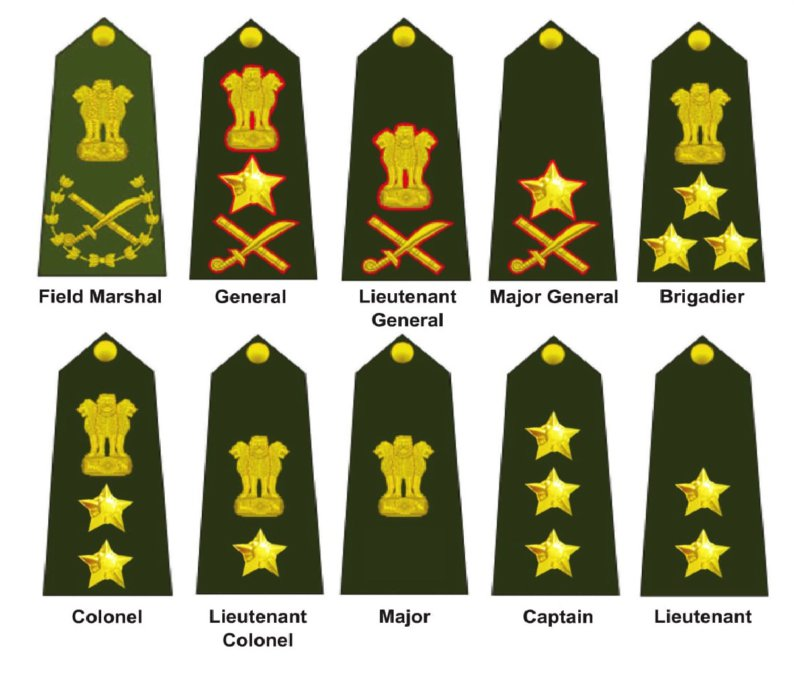
Now comes the One Rank One Pension (OROP.) The recent judgement will adversely affect the soldiers and officers below the rank of Colonel. In the early 1980s, Selection Grade Lieutenant Colonels were the Commanding Officers and many retired as Lieutenant Colonels as Colonel was an appointment then and not a rank. About a third of Lieutenant Colonels were promoted to Brigadier. In 2006, Lieutenant Colonels became a timescale promotion and there were no more Selection Grade Lieutenant Colonels in the Indian Army.
These Selection Grade Lieutenant Colonels who performed the duties of today’s Colonels and retired as Lieutenant Colonels are the most affected due to the current judgement of OROP and by the 6th & 7th Pay Commission. They should be clubbed with the Colonels for pension.
Has the soldier been betrayed by the Government or the Generals?
Graduation Ceremony from Middle School (Grade 8) of our daughter Nidhi was a year after we set foot in Canada. The very first question that came to my mind was – “Is this all necessary?” We became poorer by a few hundred Dollars in terms of her dress, visit to the beauty parlour and the florist.
“Is this all necessary?” Why do we think so? On analysis I realised that as children we were never appreciated for anything. In case you obtained 93% marks the question on everyone’s lips was “Where did the 7% go?” No one appreciated or complimented me for obtaining 93%. The story took a different turn in case Susikutty, our neighbour’s daughter scored 94%. Everyone played the same track “Look at Susikutty! See how she is focused? Learn to work hard like her….“
On landing in Canada, I realised that one was being appreciated for even little things like holding open the coffee shop’s door. That was when it dawned on me as to our rationing of compliments, even to our children, let alone subordinates or people unknown. The belief that was drilled into me was that in case you appreciated someone, his performance would go down, but in case you ‘rebuked’ him, he would try and do better. What a myth?
A Captain in the Indian Army who served with me asked me a question “Sir, in case you come back to command our Battalion, what changes would you bring in?” I said, “I will appreciate everyone for all their deeds, how insignificant it may appear to be.”
Grade 8 Graduation Ceremony may be bit more laid back than formal high school ceremonies (commencement,) but the move from junior to senior high school is still a monumental occasion that needs to be celebrated. Many schools in Canada do not insist on students wearing caps and gowns for middle school graduation but is mandatory for the High School Graduation. The students must wear dress clothes for the occasion – suits for boys and gowns for girls.
Many of us forget to give graduation gifts to our children. I did not for our daughter’s Grade 8 Graduation as I was unaware. Our daughter participated in her High School Musical Drama in a lead role and after the play I found every Canadian parent gifting their children for their outstanding performances – mostly bouquets and chocolates. I felt small as it was past 9 PM and I could not have procured any at that time as the shops had closed. After the event we went out for a family dinner to celebrate her performance.
After our son’s graduation after middle and high school where he was the valedictorian, I ensured that I did not repeat the mistake. I was ready with the gifts.
Giving Graduation Gifts to Middle School students is very important. A card filled with age-appropriate humour, or contain motivational or inspirational graduation sayings, or simply a message of congratulations is the minimum. You may also gift a small to moderate amount of money, school supplies the student might need for high school, journals or scrapbooks, favorite teen books, a watch or an item of jewelry, a cool backpack, or other carry-all, gift cards for movies, or other fun activities, etc.
We were commissioned as Second Lieutenants from the academies and joined our Regiments—eager to go, like unguided nuclear-tipped missiles, primed for detonation but uncertain of trajectory.
Years later, when I commanded our unit, our young officers often remarked on a peculiar aspect of my leadership. No matter how serious their mistake, my response was invariably the same: “That’s all. Don’t worry. I’ll handle it from here.”
They wanted an explanation. Why no rebuke? Why no fault-finding mission?
One day, in a lighter moment, I obliged.
“When I was a Second Lieutenant, I messed up more than all of you combined.”
They clamoured for details. Dil Mange More. And so I delivered.
The Gurgaon Incident
I joined our Regiment in 1983 at Gurgaon. During a battery deployment exercise, our 130mm gun, towed by a Kraz vehicle, needed to cross the Delhi-Jaipur Highway. In those days, the highway was narrow and followed a different alignment. Traffic was halted for the military convoy.
Enter the Superintendent of Police of Gurgaon, who demanded passage and was refused. The refusal escalated. Words were exchanged. Then fists. Whatever transpired—and the details remain mercifully hazy—I ended up facing a criminal charge of attempted murder using lethal weapons, alongside a Court of Inquiry.
I escaped both. Thanks to our Commanding Officer, Colonel Mahaveer Singh.
Teen Murti Bhavan: Three Days That Defined a Second Lieutenant
On 31 October 1984, Prime Minister Indira Gandhi was assassinated. By evening that day, our Battery received orders to assume security at Teen Murti Bhavan, where her mortal remains would lie in state.
Our Battery Commander resided in Delhi, so I marched the Battery forward and reported to General K. Balaram, the Adjutant General, who was in overall command. Those who served in that era will recall General Balaram’s formidable reputation—the first, and perhaps only, AG to be granted Vice Chief status.
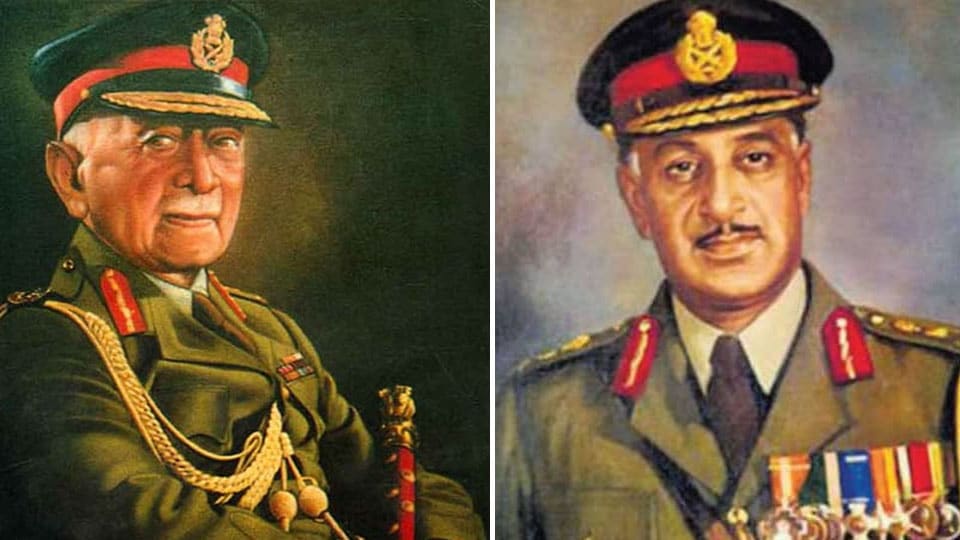
Late Lieutenant General K Balaram, PVSM
Our Battery Commander, then a student when General Balaram commanded at Wellington, warned me profusely. He narrated countless incidents of the General’s exacting standards—how he rode his own scooter after office hours, never touching his staff car. I braced myself for the worst.
Instead, I found an unexpected camaraderie. General Balaram and I smoked Capstan cigarettes together. In the chaos following the assassination, all cigarette shops in Delhi had shuttered. Naik Paul, my driver, inexplicably maintained a steady supply—to this day, I do not know how.
Whenever work pressure mounted, General Balaram summoned me to the Operations Room we had established inside Teen Murti Bhavan. He craved a deep inhale of smoke and a cup of tea—specifically, the tea brewed in steel glasses by our soldiers. Thus, every summons meant either the situation at the gate had spiralled, or the General simply needed a break.
The Gatekeeper’s Trials
We were responsible for the VIP entrance, through which every head of state passed. Whenever things went awry, General Balaram’s voice thundered across the compound: “Get that Second Lieutenant! Only he can solve this chaos.”
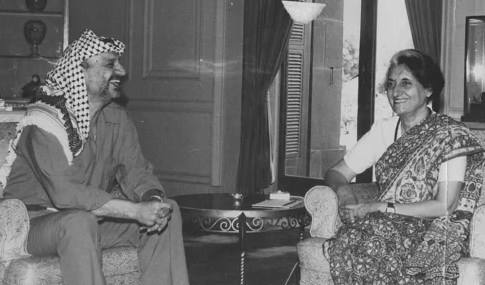
Enter Yasser Arafat, flanked by four bodyguards armed to their teeth. I refused them entry. “Our boys will ensure his security,” I declared. Arafat gave me a long, penetrating glance, then ordered his bodyguards to stay put with me. Even the Chairman of the Palestine Liberation Organisation thought better than challenging a Second Lieutenant.
Next came the Japanese delegation, led by Prime Minister Yasuhiro Nakasone. Over a hundred press personnel accompanied them—journalists, reporters, photographers. I informed their liaison officer that only five could enter with the Prime Minister. The officer pleaded helplessness. I solved the problem my way.
I assembled the entire press corps outside the entrance. When the Prime Minister arrived, I randomly called out five individuals and sent them inside. Chaos erupted. “My photographer is inside, but I’m the reporter!” “My reporter is inside, but I’m the photographer!” I announced calmly that whoever had entered would emerge with material for everyone to share.

Then came a man claiming to be the Commissioner of Police, Delhi. Denied entry through the VIP Gate, he exploded. “Who are you to stop me? What are you doing here?”
“If you had done your duty,” I replied evenly, “I wouldn’t need to be here.”
These were but a few highlights from those three unforgettable days.
With Veteran Colonel Mahaveer Singh during Golden Jubilee celebrations of 75 Medium Regiment in 2018
The Pattern Repeats
A few weeks later came another altercation with a senior Delhi police officer. Again, a Court of Inquiry. Again, our Commanding Officer saved me.
That was life as a Second Lieutenant.
The Extinct Species
When I assumed command in 2002, I realised something remarkable: the species of Second Lieutenant I had embodied—the unguided missile, the chaos magnet, the perpetual disciplinary problem—had apparently become extinct.
Or perhaps, like me, they had simply found Commanding Officers who remembered their own youth.
Now, when our young officers messed up, I saw not failures, but reflections. I heard not excuses, but echoes. And I understood that leadership is not about catching mistakes, but about catching people before they fall. “That’s all. Don’t worry. I’ll handle it from here.”
After a couple of years of my retirement from the Indian Army in 2004, my friend Colonel Josey Joseph, wanted to know what I would have done post-retirement had I been in India. I laid out my plans and he wanted to know why I did not implement a much smarter and better plan than immigrating to Canada.
My post retirement plan in case I had stayed in India was to become a Priest at our Church and start with many meditation sittings – all to impress the people.
In all mock seriousness, I replied “To begin with, there must be a few fair-skinned followers, especially good-looking blonde girls, in low cut blouses, and a few white guys. Whenever I paused during my sermons, they would chorus ‘Praise the Lord! Hallelujah!‘ Now watch the fun as to how my coffers fill up.”
“Why did you not work towards your plan?” Colonel Josey asked.
“The plan was great, but I just cannot sing! For such a plan to succeed, one has to be good at singing. Look at any of the ‘successful’ pastors or swamis – They are great singers and dancers too! A requirement to impress (fool) the poor masses and bhakthas,” I replied.
Colonel Josey said “Thank God! Your Dad did not put you through singing and dancing lessons, else you would have ended up selling your Dad first and then your God! Praise the Lord! Hallelujah!“
Now I laid my plan bare.
Syrian Orthodox Priests can marry, only those who aspire to be promoted as a bishop remain a bachelor. Fluent in English, Malayalam, Thamizh, Hindi, Punjabi, indeed a rare combination for a Mallu Priest, I will be invited to all the International and Pan-Indian (NRI/NRK) weddings and showered in moolah. With my vast military experience and having travelled all over India, I will be invited as a speaker, a motivational speaker, as I specialise in impressing people.
A Syrian Orthodox priest is often allotted a Parish and he may be the Vicar or the Assistant Vicar. A Parish means a small administrative district or village, including all religions, typically having its own church and a priest or pastor. Vicar is derived from the English prefix ‘vice,’ similarly meaning ‘deputy‘ and here he is the deputy to the Bishop.
The Parish will be benefited in that every need of the Parishioners would be presented effectively to the District Collector or the Superintendent of Police. Naturally, they would be compelled by courtesy and etiquette to never refuse an audience to the Reverend Father-Veteran Colonel Reji Koduvath. The least I could do is to draft various complaints and applications for the Parish members.
There are various projects by the Central and State Governments for the benefit of the citizens. Many of them do not reach the public as people are unaware of the paperwork involved. Having written many Statements of Case while in service, and following it up to the Defence Ministry level, who else can do it better?
Employment opportunities for the youth, military, police (both central & state), bank, railways, state transport, UPSC, state PSC… I could have provided effective guidance and mentorship to youth aspiring to enroll into all these. I would have conducted orientation training for each specific job at the church, conduct mock tests, interviews, group discussions, public speaking, etc as well. With more of the youth employed, obviously more money for the church (and me.)
I would also organise leadership training and adventure activities for the children and youth of the Parish. This would facilitate them to do better at the interviews.
I would motivate the children of the Parish to read by initiating little ones to the habit of reading, the biggest bugbear for the Indian youth. I would publish a Church magazine with children contributing their stories, poems and articles.
Upon hearing my narration, Colonel Josey remarked “I think your idea is not only novel, but simply brilliant. And in these times when most of the clergy across the board propagate hate; a message of love, an effort to help the helpless and instill self-confidence in children : that’s the core of what our nation and the world really needs. And, knowing you so well, I am quite certain that personal gain would hardly be your motivation. Also, more importantly, although every parish priest is not a Colonel Reji Koduvath, I am sure most of them can undertake some of the activities you suggested. Someone needs to take the lead.”
We were issued with a Housewife on joining the National Defence Academy (NDA) in 1979. Why a housewife to a 16-year-old cadet? That too an item which was neither male nor female, and wasn’t even a living being.
It was a simple Khaki pouch containing needles, thread, thimble, buttons, and a pair of scissors, meant for sewing on buttons, darning socks, and mending uniforms. It was called the Hussif by the officers at the Academy and Housewife by many Cadets and the soldiers who were the Havildar Quartermasters at the Squadron.
Housewife morphed into Hussif and first appeared in print in the Oxford English Dictionary in 1749 suggesting that it had already been in common use. Hussif was later shortened to Hussy.
However, the term is now banned in modern armies which acknowledges that the gender specific term is not only outdated but also offensive to women.
By the mid 19th century these rolled-up sewing kits became standard army issue. Before the invention of safety pins, for a quick fix, sewing needles were used to remove splinters and, at times, even sew up the soldier’s wounds!
When I joined Sainik School, Amaravathinagar, TN at the age of nine we had to carry a small plastic box with contents like the hussif.
I hardly used my hussif at the Academy during my three years other than for sewing some lost buttons. Behold! It had to be carefully maintained as it had to be produced during kit muster held at the beginning of each semester at the Academy and also during inspections. The hussif was part of the small pack we carried in the Field Service Marching Order (FSMO.)
The name hussif comes from a time when it was common for mothers, wives and fiancés in the 18th and 19th centuries to personalise these kits with embroidery for their menfolk to take to war. It was often packed in the holdall and stowed within the man’s haversack. Few hussifs of those days were covered with flowers or other feminine motifs if the hussif was a gift from a needlewoman in their life.
The humble hussif played an important role in both the World Wars. Embroidery was widely used as a form of therapy for wounded soldiers, especially those recovering at the hospitals. The bright environment of the hospital was the perfect place for them to engage in embroidery as an activity, which helped in their rehabilitation. The imagery and stories they stitched were often reflective of pride in their regiment, the battlefields they had fought in, or messages of love to a distant sweetheart.
Military museum around the world proudly display many hussifs of soldiers, especially from the World Wars. The National Army Museum in London, England displays an ornamental hussif of Drummer Yeates (1867) with beautiful embroidery and bead-work with the motifs of the Queen, Union Jack, his regimental insignia and battle honours, and a message of nostalgia for home.
Armies and Navies, from Britain to Australia to North America, issued hussifs as part of the standard kit to their soldiers, at least up to the Korean War era. The British Army continued to do so, well into the 1960s and the Indian Army until the early 80s.
Australian soldier Henry John Harris who participated in the First World War wrote about an ingenious use of the hussif. “Owing to the extreme cold conditions and as there were a store of sandbags in the pillbox, I decided to sew several of the sandbags together to make a blanket, and believe me those sandbags did keep me and a cobber [comrade] warm for the four nights we stayed in that pillbox.”
The standard Canadian Forces Sewing Kit from the 1990s is in green material with pockets inside and a piece of felt to which needles could be tacked. The cover is secured by by Velcro to the body of the kit. Inside the pockets are two plastic bags, one with buttons, and the other with thread, a thimble and a needle threader. Needles and safety pins are attached to the felt.
Another remarkable object that is etched in my memory is the Button Stick. These were used by the civilian bearers or orderlies to polish all the brass buttons, shoulder titles etc of our various Academy uniforms, though I never saw them later in my Army career.
Merriam-Webster Dictionary describes it as ‘a strip of metal or wood slotted in such a way that it will pass over a row of buttons (as on a military tunic) allowing each button to appear through a slit so that the buttons may be polished without soiling the cloth.’
These button sticks were used by soldiers to polish the buttons on their uniform without spilling any of the polish on the fabric. During WW I, when soldiers were out of the trenches, they often had to ensure that the buttons of their uniform were polished using Brasso. While tedious and time-consuming, soldiers used this brass button polishing guard to avoid staining the fabric with excess polish which left a nasty brown stain on their Khaki or Olive Green uniforms.
It could well be that the button sticks used by the orderlies of the NDA may date back to the World War days!
Why did the armies over the world have done away with the hussif? Repairing or darning the uniform, stitching a lost button… are still needs of the day!
I was the giant great and still, That sits upon the pillow-hill, And sees before him, dale and plain, The pleasant land of counterpane. From the Poem – The Land of Counterpane – by Robert Louis Stevenson (1850-1894.)
It was during the year 1971, when we, as nine-year-old kids, joined the fifth grade at Sainik School Amaravathi Nagar (located in Thamizh Nadu, India), that I first heard the word ‘Counterpane.’ For some of you too, it must be a Baader-Meinhof.
I have often been Baader-Meinhofed by Sashi Tharoor with his eloquent English vocabulary, many a times forcing my fingers to caress my cellphone to search for the meaning of the word.
Baader-Meinhof is the phenomenon where one stumbles upon some obscure piece of information – often an unfamiliar word or name – and soon afterwards encounters the same subject again, often repeatedly.
On the day that we joined the school, late Mrs Mercy Mathai, our Matron, ushered us into our dormitory. We were allotted a hall with 12 beds laid out with military precision. Every bed was covered with a thick cotton sheet with our school colours – a steel grey background with four blood red lines running near its four borders in such a manner that the inner lines fell along the border of the mattress. These lines caught my attention and I presumed that the four lines represented the four houses for cadets named after the four famous Thamizh Kingdoms – Chera, Chozha, Pandya and Pallava. I was assigned to the Pandya House.
Addressing her new wards, Mrs Mathai said “This is your bed and it is covered with a counterpane. Before you go to bed, each of you will fold it neatly and place it at the foot-board. You will not use it to cover yourself at night. For that there is a blanket near the foot-board.”
Was I Baader-Meinhofed? I did not understand a word as I knew only Malayalam.
I was introduced to the term ‘Counterpane‘ in Sainik School. I presumed that counterpane was of British origin, but, oddly, never came across the term later at the military academies in India. I was therefore, pleasantly surprised when my colleague Major Rajib Basu in 1989 at Devlali, Baader-Meinhofed me when he referred to his bed cover as a “counterpane!” He had graduated from the residential Lawrence School, Lovedale. The term was very common with many ‘public-schools’ in and around Ooty.
Counterpane is a modification of the word Counterpoint, from Old French word Contrepointe, meaning a quilted mattress.
The humid warm sultry days all through the year at Aamaravathi Nagar was a bit tough, especially without air conditioning. Why? There were no fans even. Windows were thrown open in our dorm to bring in whatever breeze we could catch. The breeze brought with it fine dust particles and there was the counterpane, discharging its duty to protect my bed from this dust.
We carried our counterpanes to our senior dorms in grade 9, where we had a cabin allotted for each cadet.
The counterpane protected the mattress and the blankets. How often do we clean or wash our mattress and blankets? Today the counterpane has been relegated to be an unnecessary addition that just ends up tangled at the bed’s foot-board.
Try using a counterpane to cover your bed during day and you will end up with a clean bed in the evening. You may find yourself having the best sleep of your life!
In those days many military stations were not authorised fans. Most military stations were established by the British and were at cooler and greener hill stations. Blame it on climate change or global warming, most military stations now are authorised air conditioners. I have seen it all.
We had to fold our counterpane every evening prior to retreating to our bed. It was a sin to use it to cover our body at night with it – all because it may lead to skin rashes due to aberration with the dust particles it carried.
Next morning, we had to neatly spread the counterpane on our beds, tuck it in at the rear end, ensuring that the four red lines ran all along the mattress border and leave our dorms for the Physical Training (PT.) Our mornings commenced with making our bed, spreading the counterpane and the last action before going to bed was folding the counterpane.
Veteran Colonel T Ravi (Roll No 556, 1974/Chera) reminisces:- In the late sixties and early seventies, counterpanes in school dorms came in varying colour combinations, but the patterns were pleasant and same.
Some of the nine- and ten-year-old 5th and 6th grade boys, still wetted their beds. The counterpanes were a great cover up, though sometimes the smell gave them away. As they grew older, the counterpanes again covered the sins of some of the adolescent kids, who had adolescent dreams or indulged in porn.
Lieutenant Colonel AC Thamburaj, Principal, introduced the system of inspections. Every alternate Mondays, the dorms and cabins were inspected by the Principal, Headmaster, and the dorm staff. Dusting of closets and bookshelves, sweeping out the dirt, hanging all dresses rolled and thrown under the beds and the over mosquito nets, tight hanging of the mosquito net, washing the socks that smelt like dead rats, blancoing the canvas shoes that were white two weeks ago, changing the pillow case and bed sheet and hiding away unauthorised toys, bugs, pets that lived in the closet…the list was endless; but always ended up with the neat spreading of counterpanes over the well-made bed without any wrinkles.
There were some good wardens like Krishnaswami, Narayanaswami and Govindarajan. There was one scoundrel we feared the most: ‘Karunakaran.’ In 1967, he was with Chozha House, and in 1968 became a shared one between Chera and Chozha Junior houses. He always found out the exact one item we tried to hide under the mattress or at the bottom shelf of closet. In later years at the military academy, Karunakaran’s training kept me safe from the Divisional Officers during cabin cupboard inspections.
The Counterpanes in School had a tag showing it was manufactured by ‘ChenTex‘ – a cooperative at Chennimalai near Tiruppur and Kangeyam. Chentex, a Weavers Cooperative Society was established in 1941 and is leading on manufacturer of bed covers, bed sheets, bed spreads, cotton bath towels etc. The Society sells within India and also exports to European countries.
We got so used to counterpanes, that a beds without them, always looked incomplete.
Veteran General PM Hariz (Roll No 579, 1974/Pallava) writes: – The legacy of counterpane continued right through our lives I would say … just that over the years it got transformed into a bed cover with greater elegance than the one we had at School …the purpose was the same!!
To me a more important lesson was that of making the bed as one got up early morn each day – at school as Reji said we had to make our bed and cover it with the ‘Counterpane’ before even we got to get going with the morning routine. Some of us left hastily, only to return from PT to find our matron frowning upon the ‘les miserable’ who had left his bed in the same state of rest!!!!
Soon the habit of making one’s bed kicked in and it became second nature to me … and have carried it till today … my wife Zarina and kids fail to understand why I remain paranoid with an unmade bed – and why I hurry to make the bed even as the sun is only just rising!!
That is a habit with a lesson!! In that, one commenced the day with a small doable task … it made it then mentally possible to continue doing small/big tasks through the day. Also importantly, when one returned late at night from work etc – one came back to a clean and made bed – which by itself was a blessing to crawl into after a long day at work!!
It has become so ingrained that I would make the bed even in a guest room or hotel room – at least set the bed in order and place all items at its designated place…. Believe me ..even as I got up this morn at 5.30 ..I first made my bed – my side of the bed !!!
For many of us even today – Amaravathi Nagar remains The PleasantLand of Counterpane.
Images courtesy Veteran Commander Vijayasarathy Natesan (Roll Number 244, 1969/Pandya,)M Balaajhi, (Roll Number 4574, 2010/Pandya) and Ashok Prabhu, (Roll Number 3499, 2002/Pandya.)
Congratulations to the author for a well researched book – fusing golf and leadership seamlessly. The book is worth a read, even for someone like me who hardly ever stepped into a golf course. If you have not stepped on to a Golf Course or does not understand the Golf jargon, this book is for you!!
The catchphrase of the book – ‘The Past is in Your Head and the Future is in Your Hands’ – showcases what the book is all about.
The author has used his distinctive narrative style to lead the reader through the 18 Holes of a Golf Course – the Life Course – all accompanied by a tinge of humour and at places sarcasm too. Owning a set of Golf Clubs, a membership to a Golf Club, or merely playing golf does not make one a golfer – far from being a good golfer. It is all about hard work, dedication and endless hours spent at the Golf Course. All to achieve that ever-elusive perfection.
The journey of life – how to deal with different situations and people – and what one can contribute to the society is well brought out. At every instance, the author delves into the need to ensure that one equips well with the best quality tools. There is no point in blaming the tools in hand. A poor artist ends up blaming his brush. What one achieves in life is all because of equipping correctly, planning well, and practising a lot. The author has chronicled this journey of life through the actions of an enthusiastic golfer Kay El who wants to achieve success, but not through hard work alone. One comes across many Kay Els in life, and one has also become a Kay El on many occasions.
The need to be fair – whether on the Golf Course or on the Course of Life – is well enunciated throughout the book. One quote that sums up this aspect which all readers would like to follow is ‘Anything that threatens your peaceful sleep, peace of mind and reputation, as a man of trust and credibility is not worth any wealth or reward.’
Leadership is all about being truthful to oneself, especially while no one is watching or umpiring. General Sengar has explained this aspect of being self-disciplined well.
The Mantra in this book is all about finding a cause and dedicating wholesomely for it and is sure to achieve success.
Worth a read and strongly recommended for anyone in a leadership role; also for anyone aspiring to be a leader or a golfer or both.
A Dosa is a thin pancake like a crepe originating from South India, made from a fermented batter of lentils and rice.
The paper-thin Dosa is the corrupted form of Dosa. In my childhood Amma made Dosa on a ten-inch dia ദോശക്കല്ല് (Dosakallu) stone girdle. It was thick – the least it was five times thicker, lighter and spongier than its paper-thin cousin. These Dosas were characterised by the holes left by the steam evaporating on cooking from the batter.
I joined Sainik School Amaravathi Nagar (Thamizh Nadu) in 1971 at the age of nine where Dosa was served twice a week – Sunday breakfast and Thursday diner. The Sunday Dosa was with Sambar and Chutney, but the Thursday Dinner was the best – rarest of rarest combination – Dosa with Chicken Masala Curry – one of the best combinations I have had in my life. Here too it was the thick and fluffy Dosa which combined well with the gravy.
My introduction to the paper-thin Dosa was at the National Defence Academy. It never tasted anywhere near what I had at home or at school. It was too crispy for my liking. I called it the ‘Corrupt version of the poor Dosa.’ Though corrupt, it was lapped up by the North Indians and the South Indians too followed suit and the thick and original Dosa disappeared from most South Indian restaurants and homes. Some restaurants now serve it as Set Dosa.
I recall an incident narrated by Veteran Colonel MA Mathai. After marriage, on settling in their first military abode in 1985, he and his wife Sainu decided to invite all officers of their Regiment for a Dosa Brunch. In the morning Sainu made Dosas the way her mother made them – thick and stout. Neither Captain Mathai nor the officers were too happy about it.
After our marriage, we established our first home at Devlali, Maharashtra in 1989. During our settling down days, Marina said she intended to make Dosa on the following Sunday and she inquired as to what I wanted with it. I asked for my most relished combination with Dosa – chicken masala curry. “What an unpalatable combination?” was Marina’s reply. I told her that the thick Dosa made on a granite griddle, served with chicken masala curry was the best combination for Dosa that I had ever had. She did not believe me until we relished it that Sunday evening.
During our Pan-India tour as part of the Long Gunnery Staff Course (LGSC) in 1990, at Jabalpur Railway Station, our coach was stationed adjacent to the main platform. After the industrial visits, while I was strolling on the railway platform in the evening, I came across tow young men from Kerala selling Dosas. They narrated their story as to how they came to Jabalpur and established their business.
The two unemployed high-school graduate lads landed at Jabalpur on the recommendation of a close relative who was employed with the Ordnance Factory. They searched for a job and joined the restaurant on the railway platform as dishwashers. Few months into their work, the restaurant owner was impressed with their dedication and asked them “Can you make Dosas? There is a lot of demand for it. There are no good Dosa vends in town.” They took the bait.
The two men travelled to Kerala to return with a heavy grinder, girdles and other utensils needed to make Dosa. They commenced their Dosa selling in the restaurant and soon the place became a favourite haunt of the powerful, wealthy and influential people of Jabalpur. The restaurant owner now came out with a new business model for them. “You sell your Dosas here and all the money is yours?”
Too tempting an offer to reject!! They again took the bait. They sold hundreds of Dosas every evening, collected the cash, went back to their home to soak the rice and lentil overnight. Next morning, they ground the rice and lentil and fermented it till evening. In the evening, they established their girdle on the platform, in front of the restaurant. People came in droves to buy Dosas. Many sent their tiffin carriers for home delivery.
The biggest question in their minds was “Why did the owner allow us to sell Dosas and take all the money?”
A month into the new venture, they gathered enough courage to ask the question to the restaurant owner. “Customers who buy Dosas from you buy coffee too. I sell over a hundred coffee every evening and I make a Rupee on every coffee. “
The restaurant owner did not kill the geese that laid golden eggs for him, he nurtured them!!!!
Two words – studying and learning – have always been interchangeable for me until I joined the Indian Army as a Second Lieutenant in 1982. That was when I commenced applying the knowledge I had gained – especially in trigonometry and physics – while calculating various ballistic parameters for the long range guns.
Studying was the formal education I received at school and at the Academy where I gained knowledge – the basics – which stood as the foundation for all my learning. Learning was all about applying the knowledge in many situations and there were many errors, mistakes, commissions and omissions. I learned more with every passing experience. While learning, there was always a chance of failure – I won some and lost many.
Let us examine the definitions of the two words:-
To Learn – to gain knowledge or skill by studying, practicing, being taught, or experiencing something. Learning is absorbing the information, testing its validity to the point of being able to understand the information.
To Study – to read, memorise facts, attend school, etc, in order to learn about a subject. Studying is the act of gathering the information and poring over it, deciding what is relevant and what is not.
One studies to learn. Many a times one studies a lot, but learns hardly anything. One tends to forget what one studied, especially when the aim was only to score a few marks in an examination. Here there is neither any addition to one’s knowledge nor development of any skills.
Studying is pushing and learning is pulling. The content is pushed to the students and learners pull the content what they want to learn. In order to increase one’s English vocabulary, reading the dictionary alone will not suffice. It is mere studying. Reading a book and referring to a dictionary is the ideal way as one learns more from the context the word is used than from its dictionary meaning. One may study English grammar for days, but without getting into real communication – both speaking and writing – it’s hardly of any use and one is learning neither the language nor the grammar. We learn the alphabets of a language by-heart, we learn to associate these alphabets to form words to read and write. We learn grammar, but study literature.
In mathematics there are only two digits – 0 and 1 – the rest are all combinations of these. There is only one mathematical operation – addition – subtraction is addition of a negative number, multiplication is continuous addition and division is addition of fractions. If a child learns this basic fact, rest will follow.
Doctors while at medical school memorise all Latin medical terms, and by constant usage familiarise with these terms. They apply their knowledge and learn to diagnose and also carryout a procedure or a surgery.
To be successful in any profession today, studying and earning a degree is not enough. A bachelor’s degree is the minimum educational requirement to become a Lieutenant in the Army, but the selection criteria is more about leadership qualities, empathy, problem solving ability, etc. In today’s digital world with machine learning, artificial intelligence (AI) and automation, these skills are more important than the marks scored and degrees earned.
For many, studying is associated with reading. It may be true as one grows into an adult, acquiring knowledge and understanding various concepts. Babies are constantly learning, but are neither studying nor reading. Learning occurs at random too – with one’s observations and correlating the same with the knowledge already gained. Listening to someone well experienced in the field, one learns a lot. It can be from a new experience, or from what one reads, analyses and perceives.
Studying at school (including home schooling) is vital because it teaches students essential life values. More than studying or learning, it is more about developing social skills and being a team player. Many students realised it during the pandemic.
School gives the students the basics – alphabets, numbers, sounds, arithmetic skills and social skills. It develops problem-solving skills in students. Expertise of the teacher helps students understand and gain knowledge. Schools also help develop many hidden talents in students. It guides and motivates students to bring the best out of them. It is also an avenue to interact with other people. It is a place to meet new friends and colleagues. School enhances social skills with students dealing with different kinds of people.
Learning never exhausts the mind – Leonardo da Vinci
For the things we have to learn before we can do them, we learn by doing them – Aristotle
The beautiful thing about learning is that nobody can take it away from you -B.B. King
Learning is a treasure that will follow its owner everywhere – A Chinese Proverb
For my morning stroll, I walk to the Square 1 Mall, a five-minute walk from our home. Square 1 Mall opens at 6 am, not for shoppers, but for the cleaning staff and for the salespersons to set up their stores. The aisles are nearly empty where it is always warm at +25°C with music and it never rains or snows. The ground is even and level and there is no chance of slipping and falling. Morning walkers, mostly senior citizens use the facility.
Square 1 Mall is the largest shopping centre in Ontario and the second largest shopping centre in Canada. It has over 2,200,000 square feet (200,000 m2) of retail space, with more than 360 stores and services.
As I entered the mall on a freezing December morning, the girl at the Santa-Photo Centre which comes up every Christmas Holidays, was setting up the place. This is where families take their Photo-with-Santa while they shop at the mall. Is there a better way to remember the holidays than having your picture taken with Santa?
Nearing completion of my walk, I felt an urgent need to empty my bladder, to wet the white porcelain throne in the washroom. I was lost in my thoughts as I entered one of the many washrooms in the mall. I went through the front door and turned left to the men’s washroom.
There it was, a spic and span, freshly cleaned washroom welcomed me in. I was a bit surprised to find the washroom a bit too spacious for a Canadian public washroom. Was it that it catered for turning of a wheelchair bound user? I presumed. The grab bars confirmed that the cubicle was meant for a differently-abled person. Still there was something amiss!
As I completed the nature’s call and turned, I saw the sanitary waste bin – a container that allows safe disposal of sanitary waste in washrooms. If washroom users continuously flush items that shouldn’t go down the toilet, it is bound to cause drain blockages and plumbing issues. Providing toilet paper and soap are essential in every washroom environment, but personal hygiene disposal units must be provided too.
It is a women’s washroom!! Reality dawned on me. When I entered, I saw only the last three letters of the signage. English language and its spellings can be really tricky! Not my fault!!!! I justified.
Why couldn’t there be Gender Neutral Washrooms?? A mother taking her son or a father taking his daughter to a washroom, where will they go?
Toronto Police Headquarters, The Royal Ontario Museum and many schools provide gender neutral washrooms. Four of the family washrooms in Square 1 Mall are gender neutral.
Slowly I stepped out and walked to the entrance of the washroom. Luckily for me I was the only one. I adjusted my mask to cover my entire face and walked out with my right leg first. Why with my right leg? Please click here to read the reason.
The Time magazine should have declared the Mask and not Musk as the person of the year 2021???
Wishing you all a Merry Christmas and a Happy New Year. Before we usher in 2022, me must examine the Terms and Conditions that come with it!!!!
2021 was one of the most challenging year for most of us. Let us be thankful that we are happy and safe and all set to enter into 2022.
Canada’s West Coast- British Columbia – was battered with heavy rainfall resulting in catastrophic flooding and landslides in November 2021. It is believed to have been caused by more than one Atmospheric Rivers (AR.)
The term AR was coined in 1998 by Massachusetts Institute of Technology (MIT) researchers Yong Zhu and Richard Newell, though ARs did play havoc earlier too. Until then AR was mostly referred to as tropical plume, tropical connection, moisture plume, water vapor surge, cloud burst and cloud band.
An AR is no river in the sky as the name suggests, but is a weather phenomenon. It is a narrow corridor of highly saturated moisture in the atmosphere that stretches to 1600 km long and about 600 km wide. Water an AR carries can be roughly compared to about 25 times carried by any major river like the Ganges or the Mississippi.
AR is born in the tropical ocean regions near the equator, and as it travels away from the equator, the warm air mass gets saturated with water vapour. As the AR makes its landfall, water vapour condenses into precipitation, resulting in heavy rain or snow.
ARs originate form eight oceanic regions around the world, some closer to continental coasts than others. One of those regions is just off North America’s western coast and can produce between one to two dozen ARs per year. ARs from the Indian Ocean caused havoc in Australia and in India, especially Kerala, Uttarakhand, Bengal in the recent years.
Has climate change caused the ARs to be lethal?
Scientists and climatologists believe that the frequency of ARs may reduce by 10% in the years to come, but they may increase in size by about 25%. This would result in ARs dumping more water on the land as years pass by. Global warming will cause the air in the AR to become warmer and warmer the air, more water vapour it carries. When the AR makes landfall, it will release more rain or snow than the previous one.
What caused flooding and land-slides in British Columbia?
The summer season in 2021 in British Columbia saw more than 1,600 fires charring nearly 8,700 square km of forest land. These forest fires bake the soil, making them more hydrophobic or making them to repel water. The coniferous trees in Canadian forests, when they burn, release a waxy compound that bind the forest soil, making it more hydrophobic. The water-repelling layer is typically found at or a few cm below the ground surface and is commonly covered by a layer of burned soil or ash.
When the ARs dumped heavy volume of water in areas burned during the 2021 wildfires, the runoff from these burned grounds was greater and more rapid because of the hydrophobicity of the soil. Burning down of the trees and vegetation binding the soil on the mountain slopes resulted in the soil becoming loose, causing many land-slides.
Let us now look at the mythological aspects.
The Abrahamic religions narrate the flood story of Noah’s Ark where the God became angry with the sins of mankind. He told his faithful servant, Noah, to build an ark large enough for his family and two of every creature on earth. God delivered the promised deluge, lasting 40 days, that killed everyone and everything on earth except the population of the ark. After the flood, the ark came to rest on a mountain top, indicating that the depth of the water was higher than the mountains.
As per Greek mythology, Zeus, the king of the Gods, was displeased with the humans. Zeus told Deucalion to construct an ark for himself and his wife. After nine days of flooding, the world was destroyed, and the ark rested on top of Mount Parnassus.
Hindu mythology too refers to such a flood. Lord Vishnu in the form of a fish appeared to Manu and told Manu that the world would be destroyed in a great flood. Manu built a boat and tied it to the fish. The fish guided Manu’s boat through the floods to the top of a mountain.
The Chinese too have many stories and myths about floods, Gods, dragons, and spirits. Like other flood stories, there are only a handful of survivors.
Could these floods have been caused by an AR? Some say it might have been caused by tsunamis or by comets or asteroids hitting the earth.
Flood stories are universal and is part of all religions and mythology where the God sent flood to destroy the sinners as punishment.. Hungarian psychoanalyst Geza Roheim hypothesised that dreams of the flood came when humans were asleep with full bladders!!
Are the Gods unhappy with the humanity that the next flood is near? Are we to pay for our sins of not caring for Mother Nature?
‘The Lord saw how great the wickedness of the human race had become on the earth, and that every inclination of the thoughts of the human heart was only evil all the time.’ Bible : Genesis 6:5
Mrs Mercy Mathai and Mr Mathai on extreme left with Mr PT Cherian and Mrs Sheila Cherian on the extreme right. Photo taken in 1969, courtesy Mr Steve Rosson (in the middle), who taught at our school in 1969 as a Voluntary Service Overseas teacher from England. The children in the pic are Mathais – Robin and Reena.
Facebook this morning brought the sad news from Veteran Colonel Sajan Moideen about the demise of Mrs Mercy Mathai, our Matron at Sainik School Amaravathinagar, Thamizh Nadu.
Death cannot take away Mrs Mercy, she will always remain alive in our hearts. Many cadets like me, owe their littledomestic skills to her. I feel lucky because I was one among her many wards, helped and developed by her, during our formative days at school. I pray he is in the good place now, watching us from the right side of the Creator.
When we, 30 of us from Kerala, joined the school in grade 5, at the age of nine in July 1971, armed with little communication skill in our mother tongue Malayalam, we were welcomed in at our dorm – the Feeder House – by Mrs Mercy. We were all happy that our Matron – Mrs Mercy – spoke Malayalam. Everyone of us will vouch that she was a mother to each one of us. Her love for each cadet and her devotion to duty made up for our mother’s care and love that hardly anyone felt home-sick.
Most of us, until we joined school, hardly ever wore shoes. It was Mrs Mercy who taught us how to wear the socks and shoes and the biggest bugbear for us was tying the shoelaces. In the Cadets’ Mess, she with Mrs Sheila Cherian taught us table manners – how to sit on a dining table, how to use the cutlery.
Making our bed in the morning was the first ritual of the day and it was Mrs Mercy who taught us how to execute the task with the counterpane covering the bed to protect it from dust.
Counterpane – the first complicated English word in our vocabulary – is a fifteenth century word meaning a quilt, coverlet, or outer covering of a bed. I have heard only cadets from our school and students from some public schools at Ooty (Udhagamandalam, Thamizh Nadu) use this word. I never heard it later while in service with the Indian Army.
She taught us many domestic skills like threading a needle, stitching a button, darning our socks, etc. We had to put the dirty linen and clothes in our pillowcase and place them at the designated place and after three days we picked them up washed and pressed. No one ever missed any of their garments. How she managed it still remains a mystery.
Mrs Mercy was very strict with us regarding personal hygiene. She taught us how to brush our teeth, how to bathe, how to flush the toilet, etc. She ensured that we clipped our nails – for the defaulters, she clipped them.
She ensured that we wrote a letter home every Sunday – the only means of communication then – and she posted them on Monday. When parents came to visit their sons, she made them confident that their son was in good care.
She was a great leader with exceptional organisational abilities. For our House Day, she made sure that each one of us participated in the cultural show. For many of us appeared on stage, it was our first stage experience. While others sang, danced and acted in skits, the likes of me without a tinge of musical or dramatic skills became trees on stage.
How can one forget the birthday bash she organised for our House Captain PM Hariz, who is now a Veteran General? Many of her wards served the Armed Forces of India and many served as doctors, engineers, lawyers and bureaucrats.
Rest in Peace Mrs Mercy Mathai – there are many like I missing our mother – who ensured that our dorm was a home away from home.
In July 1971, about twenty of us landed at Sainik School, Amaravathi Nagar, in Tamil Nadu. We arrived armed with little more than our mother tongue, Malayalam. English, Hindi, and Tamil were entirely alien to us.
Our medium of instruction was English. We began with the English alphabet under Ms. Sheila Cherian, gradually progressing to Wren & Martin’s grammar and Ridout’s English Today. It was a slow, painstaking journey into a new world of words.
The Language Gauntlet
Tamil as a second language was out of the question – it would have required us to cram Thirukkural and ancient poetry from the start. Tamil literature is not easily grasped by beginners. So we were assigned Hindi as our second language.
We fared predictably badly. Hindi became our nightmare, especially during the Grade 10 public examination. Only the Almighty and the examiner who evaluated our papers know how we managed to pass. Our method was simple: cram until the last alphabet and reproduce everything on paper. Fortunately, Grade 11 and 12 required no second language.
Tamil remained our third language, taught by Mr. M.V. Somasundaram and Mr. K. Ekambaram. We began with the Grade 1 Tamil textbook in Grade 5. The only saving grace was that our agony ended in Grade 8 with a Grade 4 textbook – four years of effort condensed into four grades of progress.
The 10+2 Revolution
Our 1979 batch became the first to face the newly introduced 10+2 education system under the Central Board of Secondary Education (CBSE) – an extra year of studies. The previous batch had graduated in 1977 after Grade 11.
Grade 12 loomed as a particular terror for those like me, academically undistinguished, never having achieved any scholarly glory throughout school.
The Escape Plan
Why did I join the National Defence Academy (NDA) and subsequently serve the Indian Army for over two decades?
The honest answer: I ran away from studies.
The bonus of clearing the NDA entrance examination was immediate: we joined after Grade 11. No Grade 12. No culminating public exam. What relief!
School had led us to believe that NDA training was predominantly outdoor activities – Physical Training, games, drill, weapon training, equitation, military tactics – with minimal academic demands.
Reality dawned upon arrival.
The Reckoning
We had to complete a Bachelor’s degree programme covering over thirty subjects, from Engineering Drawing to International Relations, culminating in a degree from the prestigious Jawaharlal Nehru University (JNU) – the only Bachelor’s degree this premier research university confers.
The Gods had not forgotten my academic transgressions, particularly in linguistics. How could they spare me from Hindi and Tamil?
Commission and Consequences
I was commissioned into the Regiment of Artillery – 75 Medium Regiment (Basantar River). The Regiment then had an intriguing class composition: one battery of North Indian Brahmins, another of Jats primarily from Haryana and Uttar Pradesh, and a third manned by soldiers from the four Southern states.
Now I had to master Hindi as spoken by Brahmins and Jats, and Tamil as the medium of communication for South Indian soldiers. The languages I had fled returned to haunt me.
The Irony of Escape
I had joined the military to escape studies. Two decades later, I retired having never stopped studying -and having never stopped running.
Even while commanding the Regiment, learning continued unabated. Modern high-tech radar systems, survey equipment, Unmanned Aerial Vehicles (drones) – all unfamiliar, all demanding mastery. Command required understanding, and understanding required poring over volumes of operational and maintenance manuals.
The Lesson That Lingers
My studies did not end when I hung up my military boots. They continued. They continue still. They will continue forever.
The boy who fled from textbooks discovered that learning cannot be outrun. It follows. It pursues. It eventually catches up, transforming the runner into a reluctant but perpetual student.
Perhaps that is the ultimate irony – and the ultimate gift. The escape artist became, despite himself, a lifelong learner. And in that transformation, discovered that the running itself was the education.
Anyone who stops learning is old, whether at twenty or eighty. Anyone who keeps learning stays young – Henry Ford.
On November 16, 2021, Indian Prime Minister Narendra Modi inaugurated Purvanchal Expressway in Uttar Pradesh after landing on the highway airstrip in an Indian Air Force (IAF) C-130 Hercules plane. Kudos to the IAF for executing such a mission. The 3.2 km long airstrip has been constructed on the expressway to facilitate emergency landing by fighter aircraft. IAF carried out a few trial landings on the strip prior to the mission with the Prime Minister on board. The questions that came to my mind were:-
Is it safe to execute such missions with the Prime Minister on board?
What was the intended aim from the military/ strategic point of view?
While in our Grade 11 at school, on November 4, 1977, a VIP flight on the Tupolev-124, the Russian-made aircraft which was christened as Pushpaka by the IAF, crash landed at Jorhat in Eastern India with the then Prime Minister Morarji Desai on board. The Prime Minister was accompanied by his son Sri Kanti Bhai Desai, the director of Intelligence Bureau Sri John Lobo and the Chief Minister of Arunachal Sri PK Thungan.
The aircraft was carrying 11 crew and nine passengers. Five of the crew in the front portion were killed while some of the passengers and other crew were injured. The Prime Minister was unscathed. The plane went down nose first – a deliberate act by the crew in the cockpit in the front part of the aircraft – to ensure they took the main impact of the crash, saving the VIP passengers.
Mr Desai is accredited as the first non-Congress Party Prime Minister of India, but he was the brunt of many teenage jokes at our school. The jokes revolved around his bizarre drinking habit and being born on the Leap Day – February 29, 1896. Babies born on the Leap Day are referred to as Leaplings, Leapers, or Leapsters. The Leap Year must be evenly divisible by 4. If the year can be evenly divided by 100, it is not a leap year unless the year is also divisible by 400.- Year 2000 is a leap years, but 1900 and 2100 are not.
The list of Indian senior politicians who survived such crash landings may interest the readers.
Babu Jagjivan Ram was seriously injured in a BOAC airline crash in Iran shortly before Independence. Babu was lucky to survive the accident in which several people were killed, but was unlucky that he was the only cabinet minister who was unable to attend the Independence celebrations on August 15, 1947.
Sardar Patel too had a miraculous escape. The aircraft carrying him to Jaipur to to attend the inauguration of the new state of Rajasthan, force-landed near Shahpura about 65 km north of Jaipur on March 29, 1949. Although the aircraft was completely damaged, the skill of the IAF pilot ensured that no one was injured.
Other prominent Indian politicians who did not survive an aviation accident are Mohan Kumaramangalam and Madhavrao Scindia. Many Chief Ministers of various Indian states had miraculous escapes – mostly helicopter accidents – with former Maharashtra Chief Minister Fadnavis surviving five of them.
Recent Canadian Incident
A small plane on a training mission was forced to make an emergency landing on a Canadian highway in Toronto on October 27, 2021at 11 AM. The instructor-pilot declared May Day after running into mechanical issues and realising that he would not make it back to the airport. The pilot with his trainee managed to land the plane safely on the highway.
Canadian highways have two aprons on either side. The one on the right is marked with a continuous white line and can be used to stop the vehicles in an emergency. The one on the left is marked with a continuous yellow line and is meant for the emergency services vehicles like police cruisers, ambulance and fire-trucks. This lane was used by the aircraft to make the emergency landing.
By 2 PM, the plane took a ride on a flatbed truck to clear the highway, ending one of the rare Canadian highway incident in recent history
Speaking to my Guru from the National Defence Academy days – Veteran General Raj Mehta – the need for designing a bathroom for his wife with reduced mobility came up. The discussion we had is summarised here.
Most of our friends – we over 60 years of age – with our mobility in and around our homes reducing with each passing year, will need a walker, a stick or a wheelchair to move. Are our homes designed for it?
The floors of the home got to be non-slippery and the doors curb-less to facilitate movement with a walker/ wheelchair.
Our discussion zoomed in to the bathroom, the most important space at any age – especially during old age. The bathroom needs special care and precision in furnishing choices and solutions.
Dimensions. The bathroom must be large enough to enable ease of movement. It should accommodate two persons as one may need assistance. Hence it must offer 2 meter free space on every side.
Door. There should be no curb at the bottom of the door frame protruding out from the floor. The door must open inwards and not outwards. It may also be a sliding door which disappears in the wall, or a folding door with a vertically-positioned handle to optimize space even more. The door must be made of material, strong enough to withstand the blows from a wheelchair. The door should be a minimum of 34” wide for wheelchair users. Install lever style door handles that are easier to use than doorknobs.
Floor. Must be non- tripping and non-slipping. Fast drying and anti-slip materials should be preferred, without steps, large grout lines or uneven joints. Make sure there are no loose bath mats on the floor. Bath mats are an obstacle for people on a wheelchair and a tripping hazard.
Grab Bars. These must be fitted firmly on to the wall in strategic locations to ensure that people using a space have something to grip onto for supporting their body weight. They help to prevent the user from slipping and also assist the user to move more easily without help from others. Grab bars, preferably circular, should have an outside diameter measuring 1.25 to 2 inches. They must be free from any sharp or abrasive elements, must not rotate, and should sustain at least 250 pounds (114 kg) of force. There should be a space or gap of at least 1 inch between the wall and the grab bar.
Washbasin. The consideration here is that a differently-abled person approaches the sink with the wheelchair and therefore must have the space to assume the most comfortable position at the sink. Adequate space must be left under the sink. The sink must ideally be placed with 34” maximum rim height with a 27” clearance for knees. The handles of the faucets must be long enough to make it is easier to reach and turn on the jet of water. The mirror should be broad and positioned in such a way that the person can have it at their height. Fix grab bars to maneuver around the sink.
Bath. An accessible bath needs to be 30” x 48” for mobility devices in front of each plumbing fixture and room to turn around in a wheelchair. Using a rolling shower seat or fixed shower seat at the height of 17” to 19” is a good idea. A small stool or plastic chair can allow the bather to sit while taking a shower and can be removed for users who don’t use the seat to shower. The opening to the shower is level with the floor and is sloped down to the drain. The shower should be about 60” wide for someone in a wheelchair to be able to turn around in or for an accompanying assistant. A minimum of two grab bars are recommended in the shower area. The controls to turn on the shower must ideally be near grab bars. Place items such as hair care, bathing products, soap, washcloth, etc, so they are easily reachable and do not fall on to the floor. Towel shelves or hooks should be installed within easy reach for drying off before exiting the shower to prevent wet floors.
Toilet. The toilet must be 17”to 19” high. A higher toilet seat makes it easier to lower, stand, or transfer from a wheelchair/walker to the toilet. Thicker toilet seats can be used to add height to existing toilet. Installing a bidet may allow for more privacy and good hygiene. Install at least one grab bar to one side of the toilet at the distance of 18” to nearest wall or fixture. The toilet must ideally be between two support bars that are 36” apart.
Lighting. Even lighting that avoids shadows and glares is preferred. Using natural light as much as possible is ideal. Easy to operate light switches must be placed at a lower height for a wheelchair user. Motion detector lights are preferred for individuals who have trouble accessing light switches.
All walks, halls, corridors, aisles and other passageways at home should be wide enough to allow ease of movement for a person on a wheelchair. The minimum clear width of an accessible route required is 36″ (915 mm) except at doors.
Modern bathroom design that blends attractive look, clever solutions, safe building materials and easy access are great for differently-abled people. The comfortable and functional layout enhance modern bathroom design for them.
“If I have to feel thankful about an accessible bathroom, when am I ever gonna be equal in the community?” – Judith Huemann – American disability rights activist.