‘Many Laughs and a Few Tears’ Without Any Tears

surya1

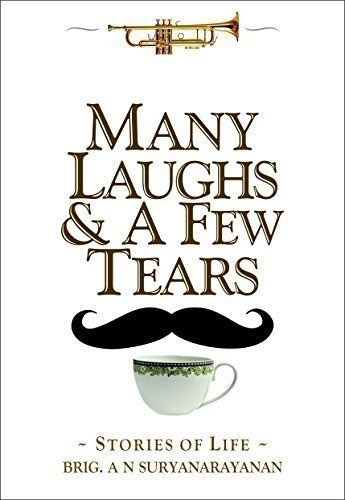
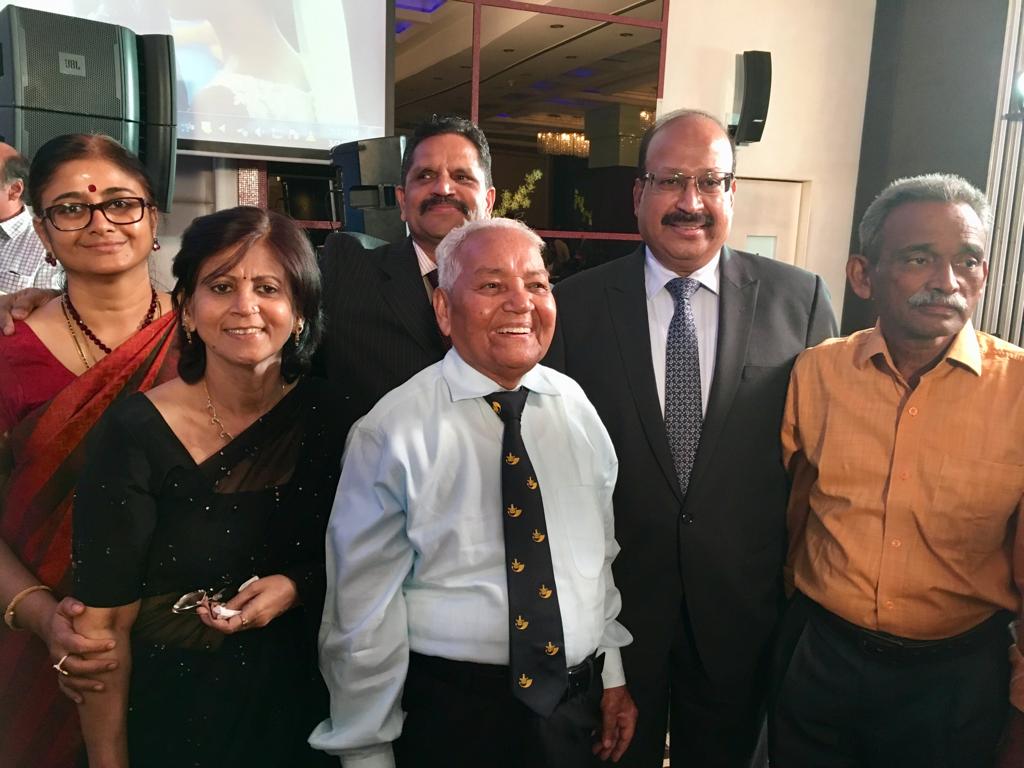
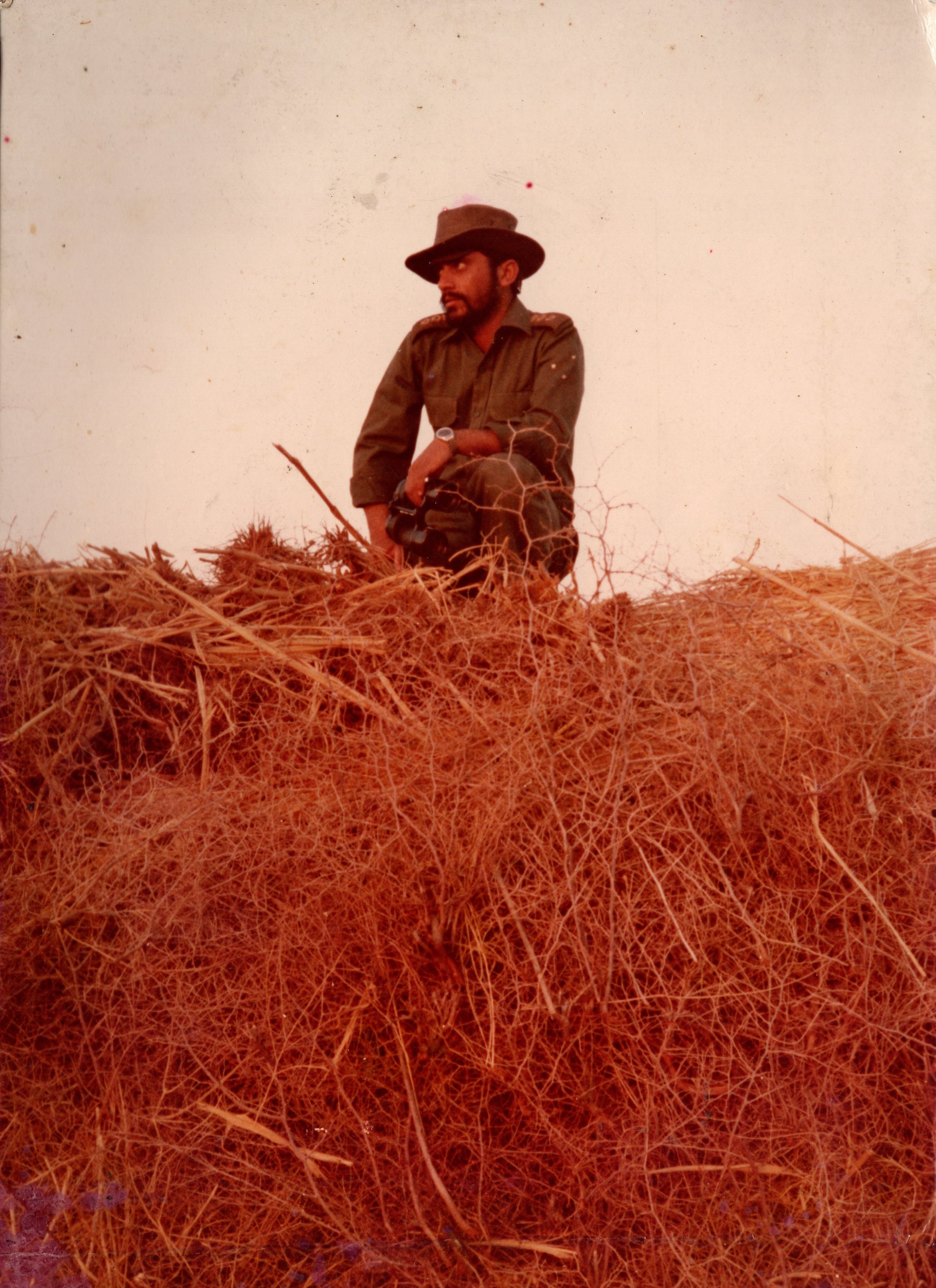
Our classmate, Chef Vijay Bhaskar, Le Meridian Hotel, Bengaluru, had a surprise guest. It was Veteran Brigadier AN Suryanarayanan, our Commanding Officer when I joined our regiment as a Second Lieutenant in January 1983. He handed Bhaskar a book authored by him ‘Many Laughs and a Few Tears’ for me. As the title suggests, the book is a fallout of humour in a soldier, especially when the going gets tough.

Yes, the book brings in laughs and it ensures that you end up reading it with no tears, but with lot of respect for the Indian Army and the author. The book from a soldier, well known for his elephantine memory and eye for details, is a great recall of various events in his life. The author has in fact put in his life and soul into his writing and for the reader, it is really captivating.

The well illustrated book elegantly portrays the journey of a soldier from his home at Tiruchirappalli to his retirement abode at Bengaluru, even though the book does not follow any pattern. Many soldiers would be able to correlate with all the incidents and all others would enjoy reading it.

Like in case of most soldiers, Appa (Dad) is the hero. Most soldierly and leadership qualities along with value systems have been embedded by the Dad. The author has brought out this aspect and has emphasised the need for good parenting to make good citizens. Further, the author has described through various anecdotes as to how he parented his two daughters to be valuable citizens.

The life in the Army is very unpredictable and it throws up many an opportunity for the soldier’s spouse to show her mettle. It also throws up many an interesting and comical situations and the anecdotes in the book are testimonies to them. I for one always wondered as to how these ladies, mostly from a civilian background with hardly any exposure to the Army, cope up with such stress.

The most obvious stresses on a military wife is when her husband is deployed on active duty in the field areas, during war and while moving on posting from one end of the country to another.  They are mostly worried about their husband’s safety while shouldering a large share of family responsibilities on their own.   They look forward to any communication they receive from their husbands in the form of phone calls and letters. Various reminiscences (with a humorous touch) brings out as to how the direct impact of war affects an active duty soldier and his immediate family members.

Most military narrators often come out with the clichéd tales about the ‘Good Old Days’ without realising that that it was not so ‘Good’. In this book, the author does not mince his words in bringing out the dire financial position of the army officers of the seventies and eighties. The account of the ‘failed mixie’ and ‘scooter without petrol’ aptly brings it out. It may be difficult for the present generation of army officers, armed with the best cars on offer, the best cell-phones, computers and modern home appliances to visualise it.

The author, well known for his mental mathematical skills and his mastery over the English language, has given an insight as to how he developed these soft skills. His recount of his childhood will surely bring in a lot of nostalgia. The author has recognised the role played by them – from the teachers to the postman – in making his childhood a memorable one.

The book is self published and all the money from the book goes towards helping a charity. Anyone buying this book will surely cherish it and would contribute to a great cause of educating a needy child.


Surya2

Exceptions Always Prove the Rule

The phrase is derived from a legal principle of republican Rome: exceptio probat regulam in casibus non exceptis (the exception confirms the rule in cases not excepted), a concept first proposed by Cicero. This means a stated exception implies the existence of a rule to which it is the exception.

Co

Group  Captain (Retired) TB Srivastava with our classmates and their ladies- 02 March 2019

mmenting on my previous blog “Education and Punishment”, many of our school mates referred to Wing Commander TB Srivastava, our Principal and Late Mr C Madhavan Nair (CMN), our Physical Education Instructor. They both are the exceptions to the blog.

Mr CMN was a retired Havildar (Sergeant) Major from the Indian Army, who joined the school from its inception. The day started with his Physical Training (PT) class early in the morning and in the evening it was the games. Most students remember him for his love for his students and always addressed them as “Mone (മോനേ)” in Malayalam meaning ‘My Son.’ It caught on especially as majority of the students hailed from Thamizh Nadu and thus spoke Thamizh and not Malayalam.

The organisational capabilities and leadership skills of Mr CMN were on display when he conducted the “Massed PT” for the School Day, involving all students from grade 6 to 12. He trained everyone, coordinated all their movements from entry till exit and the choreography will surely put Chinni Prakash (movie choreographer) to shame. All these he achieved by motivating each student to put in his best and by blowing a few notes using his whistle. One has neither seen him losing his cool nor using any ‘difficult’ language to the students.

CMN Grndsmen
Mr C Madhavan Nair with his Groundsmen – from the left – Maria Das, Achuthan, Kuppan and I cannot recollect the fourth one

As a Captain, I was entrusted with the task of marking the ground for an athletic meet. The effort I had to put in to mark the 400M track, especially the curves, that too with about 200 trained soldiers under command, reminded me of Mr CMN. With half a dozen illiterate groundsmen, he executed the same task in six hours and I took two full days with 200 soldiers.

Mr CMN trained the students in swimming, diving and life saving (his core area while serving in the army) and also all the games – football, hockey, volleyball, basketball and boxing. His knowledge of each of these games was immense and refereed all the in-school competition matches. His skill in refereeing to ensure fair play and sportsmanship was exceptional.

CMN with Family
Mr C Madhavan Nair with his family

His treatment to all his students as his ‘Sons’ must have been because he was a great father. His two daughters and son studied in the same school (senior to us) and that also added to his attachment to the school and the students, despite the low salary he earned.

Wing Commander TB Srivastava was our Principal from 1972 to 1975. Another great teacher who brought in many changes to the school’s day-yo-day functioning and a great motivator. He was a cause for many of our school mates to join the Indian Air Force. The fruit of his effort was that our school won the Defence Minister’s trophy for sending the maximum number of cadets to the National Defence Academy (NDA) from all Sainik Schools.

The Principal was seen participating in all activities the students indulged in – from morning PT to the evening dinner. He was a great orator, real good horseman, played all games pretty well and spoke with love and poise with the students. Unluckily we never had any other officer from the armed forces who came anywhere near Wing Commander TB Srivastava (many were real pathetic expressions of humanity) and that is why many of us do not even recall their names.

Hence the rule stands proved.

tb Wing Commander TB Srivastava

Writing Skills

For the Canadian youth, armed with Cell phones, Blackberries and Ipods, texting has become the order of the day. The language skills have been relegated and new acronyms, shortcuts and smilies have taken over. Children are also not learning and enjoying social niceties like please, thank you, or it is a pleasure meeting you. They enjoy the anonymity of communicating through technology and tend to say things in text that they would never say face to face.

This phenomenon is not unique to our children. The parents are almost as guilty. They communicate with their children through text messaging. Parents mistakenly think that they are in better contact with their children when the children respond to their messages.

The use of shortcuts while texting hinders a child’s ability to switch between techspeak and the normal rules of grammar. Free flow while writing is hampered, adversely affecting a child’s ability to write a paper, prepare a presentation or write an examination, resulting in poor grades.

The children are not confident enough to speak face-to-face, especially with adults. In many Indo-Canadian homes, I have observed that the children shy away and retreat to their rooms at home when someone comes calling on. The parents need to educate the children the need to come down and meet the guests and exchange a few pleasantries and then retreat to their rooms in case they have any work.

Hence there is an urgent need to go back to the drawing board – that is to write. May be letters to grand-parents and relatives back home or their friends. Another methodology to improve the writing skills is to encourage the child to maintain a journal. In the journal, they can write about anything and everything, like any incidence at school, about a TV programme they watched and so on. Encouraging the child to maintain a diary will surely improve writing skills.

When we joined Sainik School, Amaravathinagar (Thamizh Nadu) at the age of nine (Grade 5) in 1971, the only medium of communication with the parents was the most trusted Post-Card. So we started writing letters at that young age. It was a great fete I thought for a nine year old to write a short letter to his parents and siblings, describing as to how good he felt for being enrolled in a premier school and how good the food was. This was my first attempt at creative writing, not being guided as to what to write, not being corrected and marked by teachers. At the end of each letter writing session, I thought I did accomplish something. The language was Malayalam to start with, but gradually converted to English as I became better at it and could express ideas and thoughts properly. To begin with, the lines I scribbled on the postcard would go up and come down; how good I tried I could never make the letters follow a straight line.

Once we left home and returned to the school after the vacations, we used to write our status reports of our safe arrivals and post it on Monday and would reach home may be following Monday. That was the only time our parents would know that we reached the school safe. They had the trust and confidence in us that we would reach safely, despite change of three trains and bussing to Amaravathinagar. Compare it with today’s children in Canada– not of Grade 5, but even university students – the number of times the cell-phones would have gone-off, even for a trip of an hour. Has the technology made us to lose confidence in our children?  Is it that our parents, with the technology available then, could have only prayed to their Gods and may be that gave then the power not to panic or get pressurised?

fl

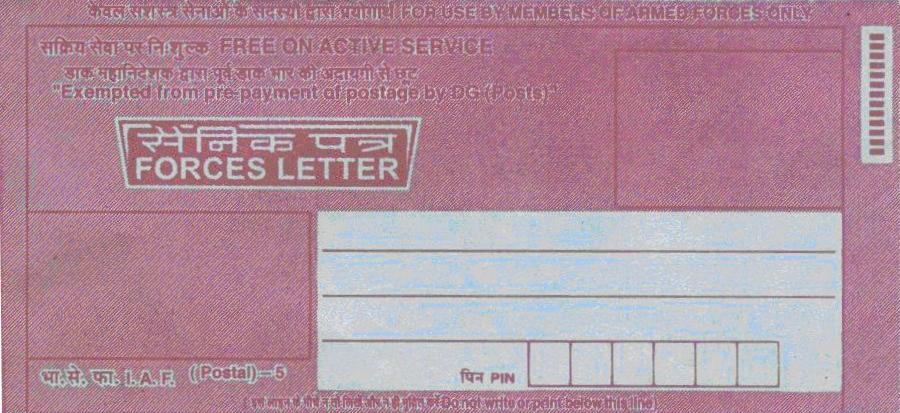
Still remember the days I spent at a remote post in Kashmir, cut-off from rest of the world and the only link to civilization was radio and the letters. We used to get a lot of those “Forces Letter” which did not need any postage and that’s when I wrote letters to anyone and everyone, whose postal address I had. Some addresses were wrong and was dutifully returned by the Postal Department.

From our base, one could see the road winding down from the pass and the convoy used to take about two hours to reach the base camp. The convoy was always lead by the mail vehicle, could be that the driver was very experienced with the curves and dangers of the route, or could be that everyone wanted the mail to be the first to reach the base camp. Memories linger of our Soldiers and Officers literally “tracking” the convoy with an expectant gaze, until the convoy reached the base camp. Our Dispatch Rider who used to collect the Dispatches (letters), would be waiting outside the Field Post Office (FPO). Once the Dispatch Rider returned to the post and distributed the letters, the expressions of those who did and did not receive any Dispatches can well be guessed. The next half hour was an undeclared Private time for everyone. Mood of each Soldier who received their Dispatches would depend on the content of each Dispatch. This mood continued to be hidden under their smiles sometimes until he received his next Dispatch; sometimes until he went home on leave, sometimes for months to come. During the snow covered winter months (we used to get 10 to 15 feet of standing snow and the roads were closed), the truck was replaced by a helicopter which used to come once or twice a week carrying the same Dispatches. Rest of the story remained the same but for the difference that the tracking period reduced drastically to less than five minutes.

The art of letter writing may be dead and buried and with it the writing skills of our young generation. Many cannot sit and write a page, with logical thoughts and cannot describe on paper a situation, an event or an experience. Leave alone spelling and grammatical mistakes, even the main idea does not reach the target person. With this reluctance to write, many do not maintain any journals or diaries. Letters, journals and diaries are one of best and cost effective method to develop creative writing skills and you will feel the same sense of achievement what I felt when I wrote those letters at the age of nine.

First, Middle and Last Name

In school and during my service in the Indian Army, my name was recorded as Koduvath RejiKoduvath being our family name. (Please click here to read more about Koduvath family).

Names

 Among the Syrian Christians of Kerala, names traditionally consist of three parts: the family name, the father’s name, and the christened (given) name. However, my siblings and I had only two—the family name and our christened names. As a curious teenager, I once asked my father why our names were so short. Being a headmaster, he gave a characteristically practical reply: the most common question in primary language classes is “What is your name?” He didn’t want his children struggling with lengthy responses, so he kept our names simple. I often wonder how I’d have managed with a typical Syrian Christian name like KuruvillaPhiliposePunnoose, or Zachariah!

The Many Reasons for Name Changes

In Kerala’s Malayala Manorama newspaper, classified columns frequently feature name-change advertisements—mostly women altering their surnames post-marriage. Some adjust the order of their names, while others cite astrological or numerological reasons.

But motivations for name changes vary widely. Some dislike the name their parents gave them. Couples may hyphenate surnames, creating a double-barrel identity. Others anglicize their names to avoid mispronunciation or unintended meanings in foreign languages. Occasionally, a name becomes a professional liability, or a change is needed to counter identity theft.

A Family Tradition: Keeping One’s Name

My mother, Pallathettu Kurian Sosamma, married my father, Koduvath Varkey George, in 1956. Both were teachers, and neither changed their names. My father believed marriage shouldn’t demand the sacrifice of one’s identity. He also considered the bureaucratic hassle unnecessary. This principle extended to his daughters-in-law—my wife, Marina Mani, retained her name, derived from her father’s.

In the Indian Army, it’s common for officers to change their wives’ surnames post-marriage through Part II Orders (official documentation). Many were surprised when I insisted Marina keep her maiden name. Most officers didn’t realize that marriage alone doesn’t legally authorize a name change—proper legal procedures must be followed. Soldiers, too, often bypassed the process, relying on uninformed officers to approve their paperwork.

Naming Our Children: A Deliberate Choice

After marriage, Marina was often addressed as Mrs. Reji—a natural assumption in the Army, where Reji was mistaken for my surname. She disliked it but eventually accepted it. When we named our daughter Nidhi, Marina felt a single name seemed incomplete. I argued against adding my name to hers, avoiding future change of name complications.

Eventually, Marina named her Nidhi SusanSusan being the anglicized form of my mother’s name, Sosamma. Today, she goes by Nidhi Parkinson-Watson, adopting a hyphenated surname. When our son was born, Marina chose Nikhil George Koduvath, giving him a complete name.

The Passport Predicament: Two Identities

While emigrating to Canada, I swapped my first and last names for the passport, becoming Reji Koduvath instead of Koduvath Reji. This left me with dual identities—Indian and Canadian. Our daughter faced minor issues in Canada, where Susan (her last name) is typically a first name, often prompting double-checks during documentation.

Correcting Documentation in the Army

As a commanding officer, I noticed gaps in soldiers’ documentation, especially regarding marriage and children’s birth records. During a Sainik Sammelan (monthly address), I explained the legal name-change process in India (similar to many developed countries):

  1. Affidavit: File before a District Court or Magistrate.
  2. Newspaper Advertisements: Publish in two local newspapers.
  3. Gazette Notification: Finalize in the state’s Official Gazette.

One soldier from Rajasthan raised a concern: in his community, unmarried women used Kumari (virgin) as their second name, which changed to Devi post-marriage (e.g., Ritu Kumari → Ritu Devi). I quipped, “Until legally changed, she remains ‘Kumari’ for life!” I instructed all personnel to regularize any unofficial name changes.

The Canadian Quirk: Searching by Last Name

In Canada, medical searches often use last names. Since Nikhil and I share Koduvath, while Nidhi and Marina have different surnames, I ask clinics to search by our home phone number instead.

Once, a pharmacy technician pulled up five names under our number and remarked, “All three males share a last name, and the two females have different ones.” Puzzled, she asked who the third male was. The answer? Maximus Koduvath—our dog, who also gets his meds under our family file!

Names2

Post-It Notes

Mr G Sivakumar, our senior at school commented on my earlier blog For your kind information and necessary action please, that he had worked for a boss who used to write PDTN on the noting and he thought it meant ‘Please Destroy This Note,‘ where as the boss intended ‘Please Do The Needful!‘ On Googling PTDN, I found ‘Professional and Technical Diversity Network‘ and ‘Please Do The Needful!‘ (India.)

The expression ‘Please Do The Needful‘ is currently used in Indian English. The expression was in vogue in both British and American English until the early 20th Century, but is now considered obsolete and improper.

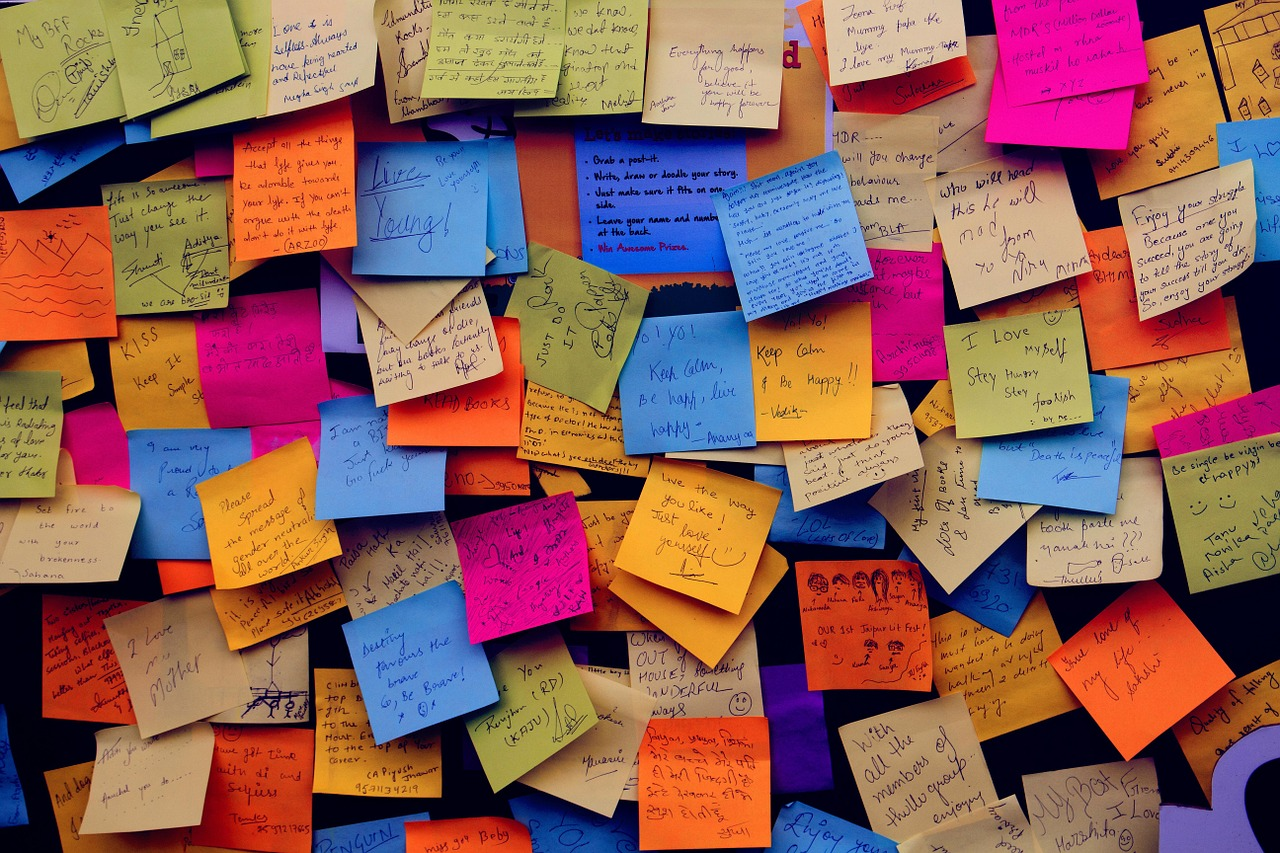
Please Destroy This Note‘ expression reminded me of my tenure with The Army Headquarters at New Delhi where the Post-It notes were used extensively by the senior officers. The yellow coloured piece of paper, which neither stuck nor stood, always irritated me, both in its colour and also in what was written on it. The senior officer when not in agreement with the junior’s noting on a file, or when he thought that noting may raise hackles with his seniors, resorted to sticking up the Post-It note with instructions to change the noting. I always thought that in case the senior officer felt that my line of thought was incorrect, he must put in a note saying so. As the days passed by, I realised that many of the seniors did not have the conviction to do so and hence resorted to much more use of the yellow paper.

Every time a file came back to me with a Post-It note, I removed it and returned the file without any changes to my original note. In most cases, I was summoned by the senior officer and in the end, the case was taken off from my responsibility as I failed to budge and tow someone’s lines. The files that went to the Ministry of Defence came back approved/sanctioned or with a query, but never with the yellow paper stuck on it.

Similarly, the noting sheets used at the Army Headquarters ranged from drafting paper to the photocopying paper. Many a time the noting of General Officers and even the Defence Minister was on a drafting sheet. However, the very same officers when commanding brigades or divisions end up demanding that all the documents put up to them must be on ‘Bond’ paper. Bond paper is a high quality durable writing paper having a weight greater than 50 g/m2. The name comes from it having originally been made for documents such as government bonds.

After the tenure at the Army Headquarters, I took over command of the Regiment and I ensured that the Yellow Post-It note and the ‘Bond‘ paper was banned from all the offices of the unit. I encouraged all the officers to place on record their thoughts, even if it was not in accordance with my thoughts or with the common military thoughts. In case anyone up the chain did not agree with the note, they had to record their disagreement on the same file. This ensured increased faith in the system by the junior commanders and also gave them a feeling that their opinions were heard and many a times adhered to.

My aversion for this poor yellow Post-It note made me research into its origin and development. It appears that the invention was a mere accident at the 3M lab. The 3M Company, formerly known as the Minnesota Mining and Manufacturing Company, has more than 55,000 products, including: adhesives, abrasives, laminates, dental and orthodontic products, electronic materials, car-care products, etc.

Spencer Silver in 1968, researching at the 3M lab to create super strong adhesives for use in the aerospace industry, ended up creating an incredibly weak adhesive. They found that the adhesive when stuck to any surface, can be peeled off without leaving any residue and was re-usable. 3M could not think of any practical and marketable use for this adhesive and hence the research was shelved.

In 1973, Silver came up with a bulletin board with the adhesive sprayed on it. One could then stick pieces of paper to the bulletin board without drawing pins or tape. The paper could subsequently be easily removed without any residue being left on the board or the paper. As the bulletin boards were not much in demand, the idea was dropped being uneconomical and unmarketable.

Chemical engineer Art Fry, worked for 3M and had attended one of Silver’s seminars on the low-powered adhesive. He realised that this adhesive could be used to stick page markers on his church choir book. This facilitated him to turn to the correct page using the markers and the markers never fell out of the book. From his experience, Fry suggested use of the adhesive on the paper than being used on the bulletin board. The early prototypes had the problem that the adhesive often detached from the paper and stayed on the object the paper was stuck to, or, at least, leave some of the adhesive behind.

post-it-305125_1280

Have you wondered as to why most of the Post-It notes are yellow in colour? The colour was never selected but was also an accident. It is believed that the lab next door to where they were working on the Post-It note had some scrap yellow paper and later the developers stuck with the colour. However, 3M’s official version is that good emotional connection with users and that it will contrast well stuck to white paper.

Post-It notes became extremely popular internally at 3M labs and in 1977, 3M began running test sale runs of the Post-It note, then called Press ‘n Peel. It did not become popular and after five years of rejection it slowly became a success and today is a mainstay in offices all over the world and is one of the top five best selling office supply products in the world.

There are many uses I found for the Post-It notes, but never the one as was being used at the Army Headquarters or by the many indecisive bosses in offices. Some of the uses I found are:-

  • Book marker.
  • Mark the notes or glossary at the back of a book for easy repeated access.
  • Coffee coaster.
  • Memory aid
  • Decorating tool.
  • To-Do List.
  • A reminder for the children to be left on their door-knobs.
  • An ideal tool to clean the gaps on the keyboards and other instruments.
  • To be stuck on the refrigerator door as a shopping list, wherein everyone can add their requirements so that I could buy them at the supermarket. The note can be removed and stuck on to the wallet when leaving for the supermarket and at the supermarket it could be peeled off and stuck to the handle of the shopping cart.

Thomas Alva Edison once said that “I never did anything by accident, nor did any of my inventions come by accident; they came by work.  It is mostly true with many inventions by the humanity, but some were mere accidents.

Cadet Yaseen’s Graduation Parade

Yasin CTC 11

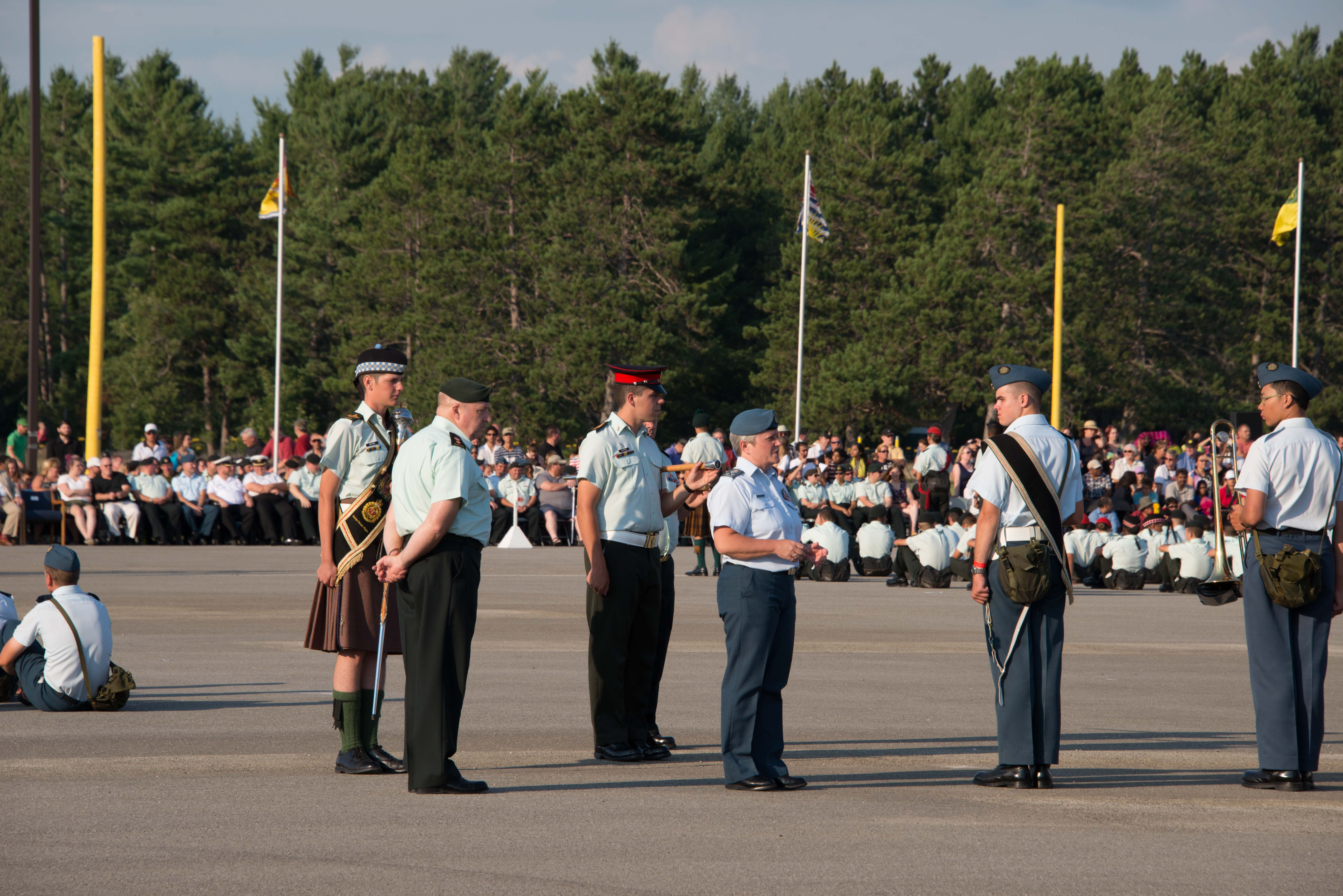
Our family friends – Hussain and Fatima, invited me to attend their son Cadet Yaseen’s Graduation Parade at the Cadet Training Centre (CTC) Blackdown, Ontario on August 14, 2015. CTC conducted a training camp for six weeks to train Cadet Instructors in Drill & Ceremonial, Survival Techniques, Adventure & Expedition, Fitness & Sports, Military Band and Pipes & Drums. Cadet Yaseen was attending the Drill & Ceremonial Instructor Course. The Graduation Parade marked culmination of their training.

On August 14, by 3 PM, I picked up Hussain from their home and drove towards the CTC. Fatima could not attend as she was indisposed. The CTC Blackdown is co-located with the Canadian Forces Base Borden (CFB Borden) and is about 100 kilometres North of Toronto, in the heart of Simcoe County, one of the major tourist areas in Ontario. The drive through the picturesque country side was breathtaking. Being a summer Friday evening, the traffic was heavy on the highways with vehicles towing boats and camper-trailers and cycles, heading to the cottage country to spend the weekend.

Vet Plate

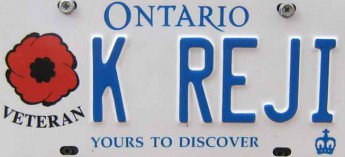
On reaching the CTC, the Military Police points-woman on duty directed my car to the parking lot adjacent to the parade ground as the vehicle had the Veteran’s plate. That was the first time I ever got a preferential treatment after receiving the Veteran’s plate.

The ceremonial parade was in keeping with any British Army parades, being followed by the armies of all the Commonwealth countries. The Reviewing Officer of the day was Lieutenant General Chris Whitecross OMM, CD, a Three-Star General. She is the first lady officer to hold the rank of a Lieutenant General in the Canadian Forces.

Yasin CTC LtGenWhitcross

Lieutenant-General Chris Whitecross enrolled in the Canadian Forces in 1982, joining the Canadian Military Engineers after spending 4 years in the Cadet program. Her postings have taken her from Germany to Afghanistan and almost every province in Canada. She had served with United Nations Protection Force in the Former Republic of Yugoslavia and Commanded 1 Construction Engineering Unit.

Lieutenant-General Whitecross has a Bachelors Degree in Chemical Engineering from Queen’s University and a Masters Degree in Defence Studies from the Royal Military College. She is a graduate of both the Command and Staff College and the Advanced Military Studies Course, both conducted at the Canadian Forces College. She is a recipient of the Order of Military Merit and was awarded the US Defense Meritorious Service Medal for her service at Kabul, Afghanistan. Currently, she is the Commander of the Canadian Forces Strategic Response Team on Sexual Misconduct. She was promoted to her current rank on 26 May, 2015.

Yasin CTC Prd

The graduating cadets smartly marched into the drill square in 14 Squadrons and after the General Officer received the customary General Salute, the reviewing of the parade took place.   There were 14 officers and veterans, mostly Lieutenant Colonels, who reviewed each of the squadrons. This allowed opportunity for the reviewing officers to speak with each of the graduating cadets.

Yasin CTC Review

The Cadets were well turned out and looked very smart. Boys and girls, Army, Navy and Air Force Cadets formed the Squadrons based on the type of course they underwent at the CTC. The Army cadets wore the berets of the Regiments to which their school’s Cadet Company was affiliated to. Cadet Yaseen wore the Red Beret with the Military Police Cap-Badge. Some cadets were wearing Regimental Kilts, Stockings, Belts, etc. This practise of wearing the Regimental accoutrements by the cadets will surely go a long way in inducing pride in the cadets.

Yasin CTC Band

The General Officer reviewed the Band Squadron and at the end of the review addressed all the Cadets of the Band and appreciated them for an excellent show. She reminisced the days she was a cadet in her teens, playing in the very same band and as to how the training she received at the very same place had stood in great stead with her till today. This gesture from the General Officer would have surely enthused the cadets of the Band Squadron.

The review, which took about 30 minutes was followed by the Reviewing Officer’s address. The General Officer was so roused by the spirit of the cadets that she spoke from the saluting base, without moving to the pre-designated rostrum. She opened her speech with the line that she was not going to follow the script that she had prepared and which was duly placed on the rostrum by her Staff Officer, but would speak from her heart. The speech was electrifying and inspirational – in its content and in delivery. She complimented the cadets for the successful completion of their training and exhorted them to carry what they learnt to their Cadet Companies back at school and impart the skills to other cadets there.

Yasin CTC MarchPast

The squadrons then marched past the saluting base, saluting the General Officer and each squadron was applauded by the audience with a standing ovation.

Yasin CTC Gnrs

On culmination of the Parade, Cadet Yaseen left to collect his Course Certificate, Movement Order and his belongings and Hussain and I met Lieutenant Colonel O’Leary from the Artillery Regiment (Gunner) of the Canadian Army. This marked the meeting of two Gunners from two different countries and we exchanged pleasantaries and notes about the life in both armies. A Gunner will always reamin a true Gunner in deed and in spirit, irrespective of the army they served was proved once again.

We bid goodbye to Colonel O’Leary, picked up Cadet Yaseen and drove home. Enroute I treated Cadet Yaseen to a sumptous dinner in appreciation of him graduating from a tough course and also for providing me an opportunity to attend such an august function (in August). We all enjoyed the dinner, especially Cadet Yaseen, as it was surely a welcome change from the usual camp food.

Photographs – Courtsey Hussain Chirathodi ‎

Evolution of Sainik School Amaravathinagar Through the Biology Department

ssa

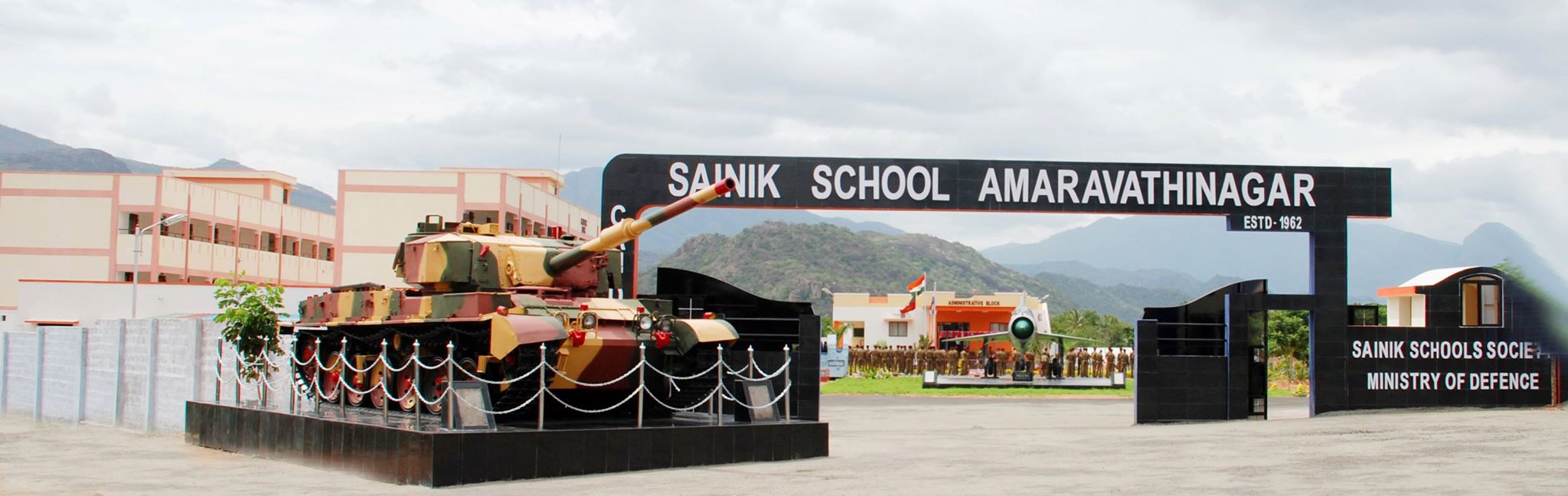
Sainik (Military) School Amaravathinagar in Thamizh Nadu state of India, where I did my schooling from grade 5 to grade 11, was established in 1962 as feeder institutes for the National Defence Academy(NDA).   There were about a dozen more such schools, one in each state, established at the same time. The aim was to attract youth from all the states of India and from all the classes of the society. The idea was mooted by Mr VK Krishna Menon, then Defence Minister of India. Sainik schools were meant to be the ordinary citizen’s public school where deserving students can get high quality education irrespective of their income or class background. These schools did achieve this aim – General Suhag, the present Army Chief is a Sainik School product.

Amaravathinagar was chosen as the site for our school as the area was on the foothills of the Western Ghats and adjacent to the Amaravathi Dam. The weather of area suited the school and the terrain provided ideal backdrop for various adventure activities. The dam ensured a constant supply of water and also a site for water sports like canoeing.

Another reason for choosing Amaravathinagar as the site was that there were many sheds, buildings, staff quarters left vacant on completion of the dam. One of the workshop buildings became the Cadet Mess, one a gymnasium. The administrative area of the dam construction became the administrative offices and the rest became class rooms. Some staff quarters, closer to the class rooms were turned into Cadets’ living and the rest became staff quarters.

Over the years, a new well equipped Cadet Mess, Academic Block, Cadet Dormitories, swimming pool and many other buildings were added. Today the schools stands out as one of best in India – both for quality of infrastructure and educational value.

When theses schools started in 1962, the teachers were paid a notch better than the UGC scale and over the years it hardly ever increased, making teaching in Sainik Schools less attractive. To compound the problem, all teachers join as teachers and retire as a teacher without any promotion in either status or appointment.

When we joined the school in 1971, the teachers were all-rounders; good at academics, sports and organising hobbies and clubs, extracurricular activities and adventure activities. We were taught sciences by Mr Venkiteswaran (Venky) in Grade 5 and Mr Raghavan in Grade 6. Mr Raghavan was better known as Mr Jiggs for his style and actions. Mr Venky taught zoology and Mr Jiggs botany and both were excellent teachers and also were very good at cricket and tennis. Mr Venky played in all sports teams of the school and was an excellent mentor cum coach for students. His afternoons began with playing French-Cricket with grade 5 students and later played football, basketball and hockey with senior students. His day ended with a round of tennis at the tennis court, mostly playing with Colonel Thamburaj, our Principal and Mr Raghavan.

As the remuneration of the teachers did not keep pace with the inflation, by 1973 many teachers of very high caliber left our school for greener pastures at various Public schools in Ooty and Kodaikanal as they offered better remuneration. That was when we bid goodbye to Mr Venky and Mr Raghavan. The only girl in our class was Sita, daughter of Mr Seshadiri, the English teacher. As Mr Seshadiri too left for similar reasons, our batch became all male.

Mr Paul Sathya Kumar and Mr AD George replaced Mr Venky and Mr Raghavan. They too had similar traits as they were not only outstanding teachers, but also great sportsmen. Mr Paul coached the school cricket team and Mr George the football team. Mr Paul was also an excellent musician who could play most instruments. He accompanted the school choir on his organ during the morning assembly and was an integral part of all plays and cultural activities the students staged.

Similarly, the exodus of teachers of 1973 affected most departments and there were many new teachers, majority of them as good or even a notch better than whom they replaced. The noteworthy exceptions were Mrs & Mr Cherian and Mr KG Warrier, for whom the call of the money would not have been all that important for obvious reasons.

The next exodus of teachers took place in 1985 after we left school. The Navodaya Schools were established in 1985 in every district of India to provide residential school level education for the common man. Most of the teachers, Mr Paul and Mr George included, moved out as principals to these schools – obviously for better pay and status. Further, the scheme being funded entirely by the centre (and states as in case of Sainik schools), most of these Navodaya schools got established with better infrastructure. Another advantage was that the children studying in their own district in most cases and the girls also get equal opportunity unlike the Sainik Schools.

Has the Sainik Schools achieved their goals? An often asked question. These schools are now deteriorating for sure, mainly because of lack of funds. The way out is for the Defence Ministry at the centre to take over these schools in entirety from selection of staff and students to providing scholarships as being done in case of the Navodaya Schools.

Another important issue that need to be addressed is of the Defence Officers posted to these schools as Principals, Headmasters and Registrars. The Army Education Corps (Navy and Air Force too) officers are normally posted and most are incapable of motivating the cadets – in any way – forget about joining the Army. Any of our batch mates from Sainik Schools will vouch for it. Today most regular officers are better qualified academically than these (un) Educated Officers and would any day be better academicians, organisers, leaders and motivators.

In case the army wishes to resuscitate these Sainik Schools, the way out is for the center government to finance the scholarships as in Navodaya Vidyalaya and also remove the Education Corps officers from the system.

Why Do Soldiers Break Step On A Suspension Bridge?

SuspBridge

Our son Nikhil and I had a discussion about the phenomenon of resonance about which he had a class that day. My mind wandered back to Mr PT Cherian’s high school physics classes. Mr Cherian had a knack of explaining basic principles of physics by citing real life examples which were simple and easy to assimilate. For more about Mr Cherian, please refer my blog https://rejinces.net/2014/07/15/guru-dakshina/.

Mr Cherian explained resonance by using a simple experiment.

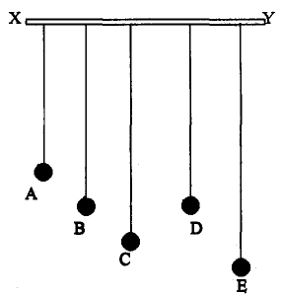
He had three pendulums of different lengths and two of the same length (B & D) tied to a rubber hose. He swung one of the two pendulums of equal lengths and after a few minutes, all the other pendulums begun to swing with the other pendulum of equal length swinging as much as the other. This he explained was as a result of resonance and the frequency of the two pendulums with equal lengths were same and hence they resonated.

Bridges and buildings have a natural frequency of vibration within them. A force applied to an object at the same frequency as the object’s natural frequency will amplify the vibration of the object due to mechanical resonance. Mr Cherian explained that while on a swing, one can go higher with a jerk of a bend knee or a swing of the legs and a car wobbles at a particular speed; are all examples mechanical resonance. The shattering of glass by singers with their voice is also by the same principle.

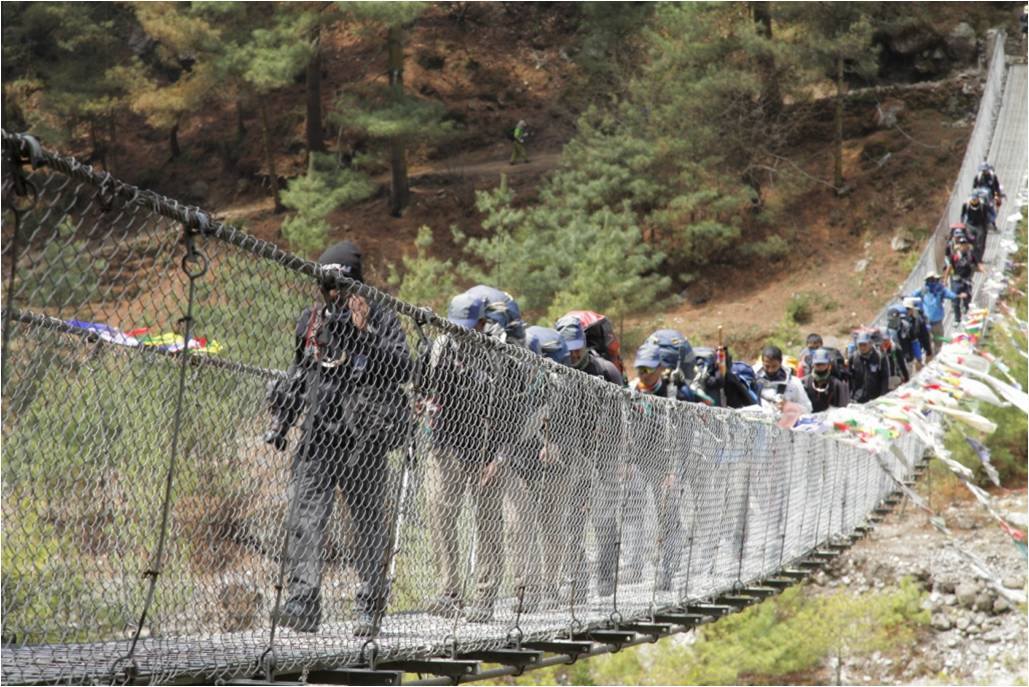
Mr Cherian then narrated an incidence which took place in 1831 when a brigade of soldiers marched in step across England’s Broughton Suspension Bridge. The marching steps of the soldiers happened to resonate with the natural frequency and the bridge broke apart, throwing dozens of men into the water. After this, the British Army issued orders that soldiers while crossing a suspension bridge must ‘break step‘ and not march in unison.

If soldiers march in unison across a,suspension bridge, they apply a force at the frequency of their step. If their frequency is closely matched to the bridge’s frequency, soldiers’ rhythmic marching will amplify the natural frequency of the bridge. If the mechanical resonance is strong enough, the bridge can vibrate until it collapses due to the movement.

A similar tragedy was averted in June 2000 when a large crowd assembled at the opening of London’s Millennium Bridge. As crowds packed the bridge, their footfalls made the bridge vibrate slightly. Many in the crowd fell spontaneously into step with the bridge’s vibrations, inadvertently amplifying them. The police swung into action to clear the crowd off the bridge. Though engineers insist the Millennium Bridge was never in danger of collapse, the bridge was closed for about a year while construction crews installed energy-dissipating dampers to minimise the vibration caused by pedestrians.

Another example of mechanical resonance was the destruction of Tacoma Narrows Bridge in Washington in 1940. Even though the bridge was designed to withstand winds of up to 200 kmph, on that fateful day the wind speed recorded was mere 60 kmph. A mechanical resonance resulted due to the wind at that particular speed hitting the bridge perpendicularly.   Continued winds increased the vibrations until the waves grew so large and violent that they broke the bridge apart.

In May 1999, two girls were drowned and 15 others injured when a suspension bridge across a river collapsed in Panathur, Kasargod in Kerala State of India. The incident occurred when a group of people taking part in a funeral procession entered the suspension bridge  The bridge tilted and collapsed, again due to mechanical resonance.

In a similar incident in February 2014, eight people died and more than 30 injured when a suspension bridge collapsed over a dry stream in the North-Western province of Lai Chau in Vietnam. The accident happened as a group of local residents walked across the bridge to bring the coffin of a local official to a graveyard. The group had walked 15 meters on the bridge when it suddenly collapsed.

What could have triggered off the mechanical resonance in the above two cases? The villagers participating in the two funerals were surely never drilled down by any Sergeant Majors.

It is felt that anyone while on a funeral procession walks slowly and is often accompanied by the drums or hymns being sung at a melancholic pace. The funeral participants tend to bunch together, mainly due to their sadness. These factors could have forced the funeral participants to march in step, without their knowledge. Another reason of marching in step could be that one does not want to step on another’s foot and the best way to avoid is to walk in step with the person in the front. In both the cases, the coffin was carried by the coffin bearers with their hands. This needed the coffin bearers to walk in unison.

In all probability, the frequency of walking of the mourners in the funeral procession could have resonated with the natural frequency of the bridge, causing the bridge to swing violently. The pandemonium that could have set out must have caused panic, resulting in the mourners rushing to get off the bridge causing a stampede.

Hence in future the rule must be that not only the soldiers need to break steps on a suspension bridge, but also a funeral procession.

Super Brats : Girls in the Forefront

Superbrats2

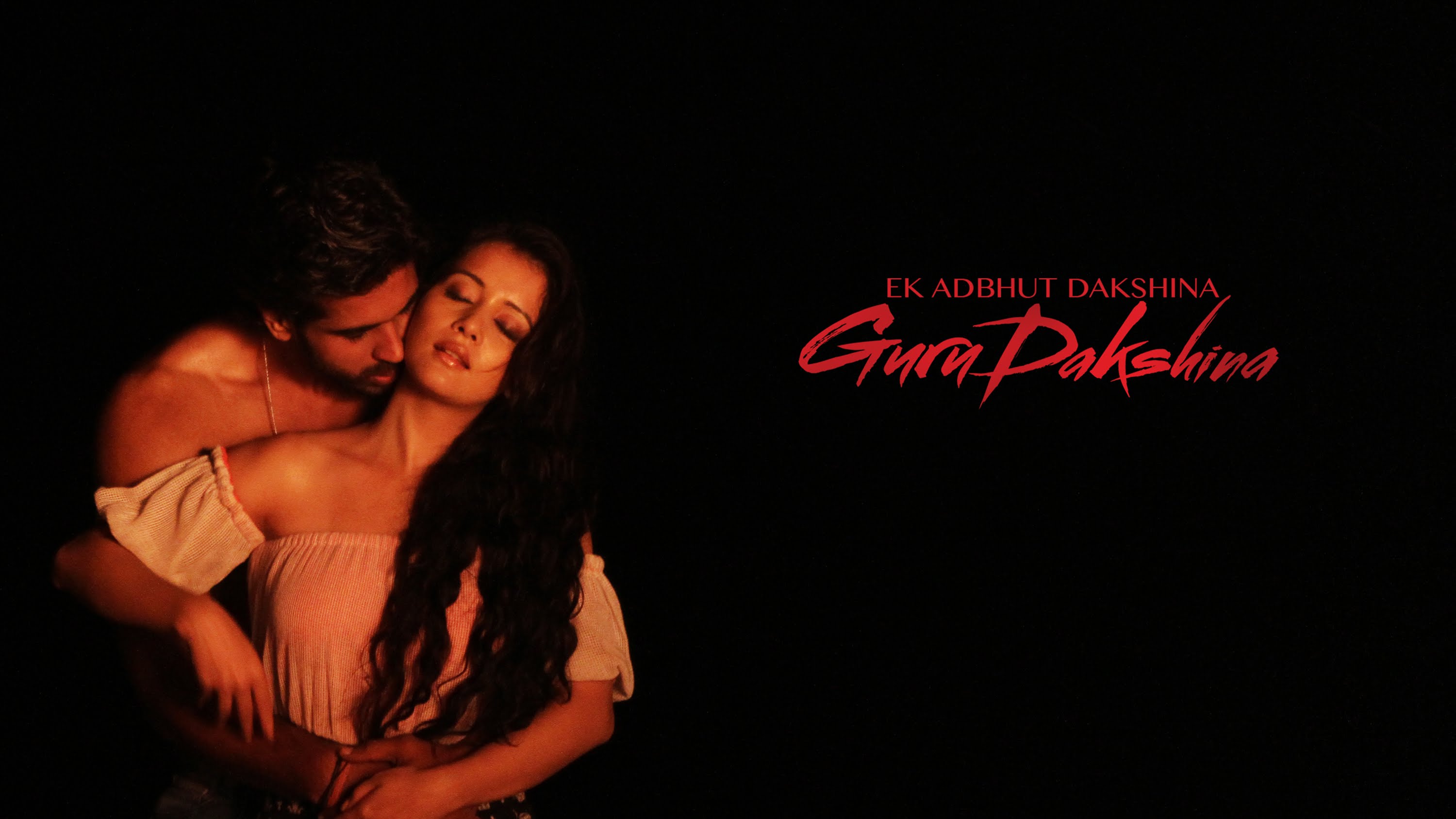
Sulagna Panigrahi, daughter of our coursemate Colonel Panigrahi, debuted in the leading role in the Hindi movie ‘Ek Adbhut Dakshina’. Colonel Ajay Sharma, another of our coursemates and my next room friend at the India Military Academy, his wife Ashima and their daughter Anushka Sharma (now a leading actress and celebrity) were present to encourage the young girl during a special screening of the movie.  It appears that acting, talent and confidence runs through the veins of the children of our coursemates and also all the defence personnel.

It is much more heart warming to see girls out performing the boys.  Navneet Kaur Dhillon was crowned Miss India 2013, comes from an Indian Army background and Sobhita Dhulipala adjudged the first runner-up, comes from an Indian Navy background. The list of women from defence background winning such pageants gets longer – from Sushmita Sen – (Air Force) in 1994 onwards to include Gul Panag – (Army), Priyanka Chopra – (Army), Lara Dutta – (Air Force), Celina Jaitly- (Army), Neha Dhupia – (Navy), the list goes on. These pageants are not only for the girls who are beautiful, but they also need to be intelligent, confident, well mannered and well groomed.

What gives them the edge over others? What really makes these defence children such inborn winners? These children, raised in military cantonments around the country, display a lot of grace, wit, confidence and poise – all at the same time.

The parents of these children- mostly the father (now-days both father and mother) – are serving defence officers. The selection process for these officers – with a written examination, a five-day interview which scientifically analyses each candidate’s potential, personality and intelligence tests, and a stringent medical examination has no comparison in the country, which tests one in all aspects of human development and behaviour. The selected candidates undergo a tough training where they are polished into better humans and leaders. When they select their spouses, its no surprise that they select the best to suit them – (if the spouse is a serving officer, the job has already been done by the defence). The children born to these parents have to be as good or even better than their parents. They are born in the military hospitals which provide the best of medical care and excellent hygiene conditions.   They are well natured into this world and the military society nurtures them really well to be better human beings and responsible citizens.

A typical army kid will claim to be natured in Srinagar, and nurtured in Siliguri, Coimbatore, Ferozpur, Allahabad, Bhatinda, Manipur, Imphal and Patiala. These children have grown up in small towns as well as big cities, they are used to the cold mountains of Kashmir to the hot deserts of Rajasthan, they amalgamate with Malayalee culture to Mizo culture, they learn Thamizh to Assamese during their school days.   In short they are adaptive, open-minded, a survivor and thus a winner.

The life in a typical military home for these kids is well organised and is set to the rules and standards dictated by the parents. They have to rise early, attend school and then participate in sports and cultural activities after school. In the evenings they have to attend social functions – both formal and informal. They need to welcome guests who come calling-on or to attend parties and keep everyone in good humour. Its a tough job for these kids as they must study well and obtain good grades at school and pass all entrance examinations. Hence, it is no wonder that these children develop great conversational skills and carry themselves with lot of confidence. They interact with a lot of people who belong to different age groups and cultures. They never hesitate to speak to a stranger or a new person. Ultimately, these communication skills help them to be winners.

Most of the military parents are avid readers, a habit developed mostly due to their intellect and also the loneliness of being posted in remote areas with no access to television. The mothers pickup this habit while living separately from their husbands while he is posted in remote areas or during the endless train travels – while on posting or while proceeding on vacations. The parents are also good with all aspects of communication and are capable of discussing all aspects of life – from spirituality to sports to movies. The children listen to these conversations and are active participants in many such discussions – mostly ending with the father shooing them off to bed when he has nearly lost his point of argument. Thus these children ought to have stronger personalities, and are also very disciplined and punctual. They are trained and groomed well as to — how to walk, how to sit, how to talk etc. They are taught grace and poise from an early age. It comes naturally to them

Along with every new posting of their parent – an event these children undergo once the least in three years- puts a lot of pressure on the children too. They got to adapt to a new place, a new culture, often a new language and above all to a new school. Making new friends, going to new schools make them ooze confidence. Most of these children  have seen at least half a dozen schools by the time they complete their higher secondary education.

When our son Nikhil landed in Canada in grade 1, his teacher said to him, “You may find it difficult to adapt to the Canadian culture as you are new to it.” Nikhil replied, “Until now to my grade 1, I studied in four states of India with diverse cultures, speaking three different languages.  I will quickly adapt to the Canadian culture.”

Children from the defence background are tougher, calmer, and in control of their emotions. When their parent is posted in remote areas of India, they naturally get trained to be tough survivors, adapt to new situations and people. Many children learn to be independent at a young age as their parent is posted in far-flung and inaccessible operational areas and the family has to look after themselves, with the children shouldering a lot of responsibilities.

These kids are excellent in stress management – a phenomenon unknown to the present day kids as they undergo a lot of stress in everyday life and a few succumb to these stresses and pressures. Most defence kids have seen off their parent on posting to hazardous areas and also to fight militancy – and many a times not knowing whether they will ever meet again. Every day passes with fear and uncertainties of their parent’s return and the role the mothers play to keep the household going and in bringing up the children needs to be commended.

The grooming and etiquette also come naturally to these kids, as they watch their mothers wear their clothes with grace, fathers adopt immaculate manners, the effort that goes into organising and conducting parties and get-togethers at home, etc. These kids are taught table manners and good etiquette from an early age at home.

The army cantonments provide a lot of sporting facilities like swimming, squash, tennis, golf, horse-riding etc. The children, without any sexual bias, are encouraged to participate in these activities. During these sports activities, people mingle with one another. The military stations organise summer adventure camps for the kids – from trekking to hang-gliding. These go a long way in developing physical fitness and also a sense of adventure- daily military life is by itself full of adventures for these kids.

A defence hub has a particular social culture, which becomes an integral part of the child’s personality. They pick up good etiquette and manners. They know how to talk and more importantly what to talk about. They know exactly how to avoid or get out of tricky situations. These are qualities imbibed by the children with defence upbringing of over 20 years and can never be learned over a month-long crash course. These assets help the children to stand out and win in every field of life.

Most military stations – even in the remotest places- have musical and dance schools – mostly run by the defence officers’ wives. They go a long way in nurturing the cultural aspects of these children. These children get many an opportunity to showcase their talents – both at home and also at military functions, clubs and messes. These make them very confident and they develop and master the art of presentation.

Contrary to popular belief, defence personnel are very religious and also spiritual. They celebrate all festivals and observe all religious occasions. They celebrate Holi, Onam, Pongal, Baisakhi and also Christmas, Dushera, Durga-Pooja, Eid and Guru-Purab. The kids attend all the religious functions in the station along with their parents and visit all religious places of worship – they are familiar with the rituals followed in the Mandir, Masjid, Gurudwara and the Church. It would be very common to see a Christian child singing the Arati or Slokas as fluent as they say the Lord’s prayer. They learn to respect all religions and accept everyone irrespective of their caste, creed, colour or religious beliefs. This facilitate the children to develop a multidimensional personality and hence adapt to various cultures and people with ease.
One reason attributed to the women-power in the military circles is due to the fact that the only society in the country where women are treated equally with men is the military. Many a times men complain that the women are often treated more equally than men. The General or a senior officer will always rise from their seats to receive a lady walking in though the lady may be a Lieutenant’s wife. The only place in India where the ladies are served first – whether at formal or informal or at-home functions – is in the armed forces. Even in the military’s religious places of worship, women are offered ‘prasad’ first. The officer on duty or the Captain of the Indian Navy ships will salute all ladies entering or leaving the ship irrespective of their social or military hierarchy. The ladies are always respected at home and outside by the defence service personal and the sexual discrimination is minimal in this society. That may be reason why we have defence service officers’ daughters performing extremely well in the society and winning many crowns and laurels.

The facilities like swimming, tennis, golf, libraries etc are available in all the cities of Canada at a real subsidised price or at times even free of cost. The government provides tax benefits for these activities. The need of the hour is to take time out of your schedules and take the children for these activities. The environment at home need to be upgraded to facilitate children’s development and the children must be trained to actively part-take in all the activities and chores at home. This will ensure that our next generation will turn out to be better citizens and human beings.

Terrorism Live

(Hold Fire; Advertisements of the sponsors are being aired; The nation wants to know!)

TerrorLive

Everyone must be a bit surprised to note the advisory by India’s Ministry of Information and Broadcasting asking all TV news channels not to broadcast live anti-terrorist operations to avoid any adverse impact. This advisory came in the wake of some TV channels covering live anti-terrorist operations in Jammu and Kashmir’s Kathua district on March 20, 2015, in which five lives were lost and 11 wounded.

The advisory is not to focus on location, strength, movement, strategy and other related operations being followed by security forces engaging with the terrorists so that no operations linked information reaches the terrorists and their handlers.

One presumed that during the 2008 Mumbai terror attacks, the Indian Home Ministry had issued a similar advisory to the news channels not to air the operations live as it was helping the Pakistani handlers of the terrorists. It is learnt that the home ministry wrote to the information and broadcasting ministry asking for amendments in the Cable Television Network rules, under which the private broadcasters operate in India. The home ministry cited that such live coverage not only affects the secrecy and effectiveness of the operation but also puts the safety of security forces, common people and journalists in jeopardy, official sources said.

After the 26/11 Mumbai attacks, the National Broadcaster Association put out a set of rules, including restriction on live reporting of terror situations, as part of a self-regulation exercise on the part of private broadcasters. The rules set seemed to be meant to be broken by the very same people who set it; all for a few TRPs.

Former British Prime Minister Margaret Thatcher very aptly called media publicity the ‘oxygen’ of terrorism (also for the news channels) and for good health of the news channels (higher TRPs), they need to breath in a good dose of this ‘oxygen’. Live reporting of terror attacks does provide a lot of it and hence why would any channel miss it.

The speed by which these news channels deploy their vans and crews, even in the remote towns like Kathua, appear as if the terrorists have given them prior notice before undertaking the operations. The terrorists also seen to have timed and choreographed the attacks in order to extract maximum media attention. In case had the media not covered the act, the impact would have been localised in the small town of Kathua, but now the media has helped it to be a national issue.

The timing of the attack, during the fortnight when the knockout stage of the Cricket World Cup 2015 is being played, is also very pertinent. When the entire nation and the media is gloating over the achievements of its cricket team (with Pakistan being knocked out), the terrorists struck to divert the media attention. It can be compared to the terrorist attack during the Munich Olympics in 1972, when the world and the media were focussing on the Olympic Games, the Palestinian terrorists carried out the infamous Black September attack on Israeli athletes. What followed was a hostage situation and a rescue attempt that was closely covered by all of those media, and watched by millions of people throughout the world.

The media coverage of the recent acts of terrorism – Lindt Chocolate Cafe hostage crisis in Sydney; attack on the office of Charlie Hebdo in France, the attack on the Canadian Parliament etc- were all in restrained so as to ensure that the deployment and actions of the forces were never divulged.

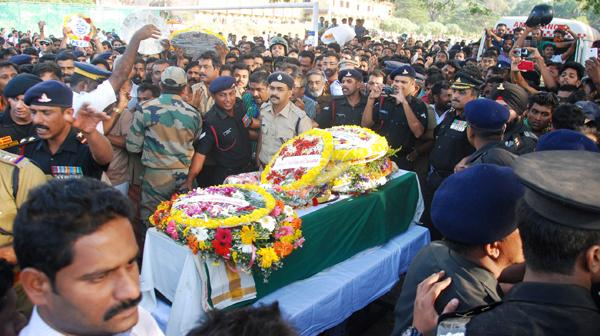
Another aspect of the media reporting is the sensationalising of the event and privacy of the affected parties. The coverage of the Canadian media during the funeral of Corporal Cirillo and the Indian media during the funeral of Colonel Rai; both victims of terror attacks, needs comparison. The Indian TV channels appear to have not given any space for the family members of the gallant soldier to express their grief. The entire fraternity of the news channels were more interested in cashing on the sentiments of the near and the dear ones of the hero.

Has anyone ever seen a photograph of the dead after the 9/11 World Trade Centre terror attack? Has anyone seen video clippings of the funerals of those who lost their lives in the attack? Has anyone seen how the near and dear ones of those who lost their lives reacted during the funerals? The American media seemed to have restrained itself, even though there was no media-policing.

In any democracy, the parliament is supreme and every citizen has the right to know what happens during the sessions. The proceedings inside the parliament in any country is telecast by providing only one feed to the entire media and no one seems to be questioning it. Based on it, some suggested methodology for covering terrorism based events is laid down.

  • Let there be only a single feed, which is not real-time and does not jeopardise the action of the forces.
  • Create or nominate a pool of available reporters to cover the event. The force responsible to carry out the operation must coordinate this media pool.
  • Clear guidelines about the lights and camera equipments to be used and their positioning to ensure safety of the camera crew.
  • Avoidance of interview of the commanders and troops participating in the operations to reduce additional pressures on them.
  • Providing a point of contact for the media in terms of a Public Relations Officer (PRO), who should be providing the apt information.
  • Avoidance of questioning of the PRO and commanders during the operations. The same can be done after the culmination of all events and a press conference can be organised for it.
  • Avoidance of reporting on sensational aspects of the incidents.
  • Not playing into the terrorists’ hands is also very important. All media reports must ensure that the readers/viewers are not terrorised further.
  • Ensure that the media does not become a propaganda tool in the hands of terrorists.

As per the latest directions of the Government of India, there is a blanket ban on airing live coverage of anti-terrorist operations. The broadcasters in such situations will have to restrict themselves to reporting periodic briefing given by designated officers.

It appears that terrorism is here to stay and acts of terrorism will continue to haunt us in times to come. Hence it is imperative that the media regulates itself or the governments are forced to regulate the media. It is the duty of every citizen to ensure that they do not become a propaganda tool in the hands of terrorists; meaning that what you speak about the act of terror is sure to have an impact on the listeners.

Cross Country Race

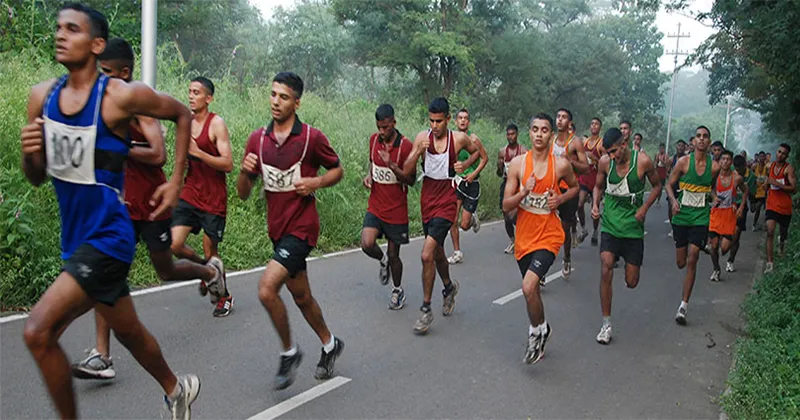
The first cross-country  race (Marathon in North America), I ran was as a Grade 5 student at Sainik (Military) School Amaravathinagar. It was a 5 km run along the base of the Western Ghats on the North side of the school. With every passing year, the distance increased. with it the difficulty. On joining the National Defence Academy (NDA), the cross country race became a ritual in every semester (half-year) and thus I ran six races in three years of about 14 km. During the first 10 years of service in the Army, I ran seven races. On reaching Canada, I ran two such races, in support of charitable causes.

Running a marathon is one of the largest physical challenges you can set, often it is more of a mental challenge – the mental strength to complete the race despite the panting, tiredness and pains. It results in an accomplishment every time, irrespective of your age. It does not matter even if you are the last, you are part of an elite club of people that have completed the race successfully.

At the NDA, the cross country race was more of a team event. The Squadron which won the trophy every semester claimed more bragging rights than the cadet who came first or second. It was a matter of pride for the cadets that their Squadron did well and hence every cadet put their heart, soul and body into doing well at the race.

The practice for the race at NDA began nearly a month prior with all cadets running a full race almost every evening and morning on Sundays and holidays. The final race was on a Sunday morning, starting at the famous Glider Dome and ending there. One witnessed cadets completing the race despite physical injuries – a cadet finished the race after he fractured his leg halfway. There have been many cadets running the race with fever. All to ensure that they do not bring in negative points for their Squadron and let the team down.
In 1987, our Regiment was located in Gurgaon near Delhi and we formed part of the Brigade stationed at Meerut – about 50 km from Delhi. Cross country race was a closely contested competition among the regiments and our unit had the rare distinction of winning it for the previous five years. 1987 was the final year at Gurgaon as the unit had received its move order to the Kashmir Valley.

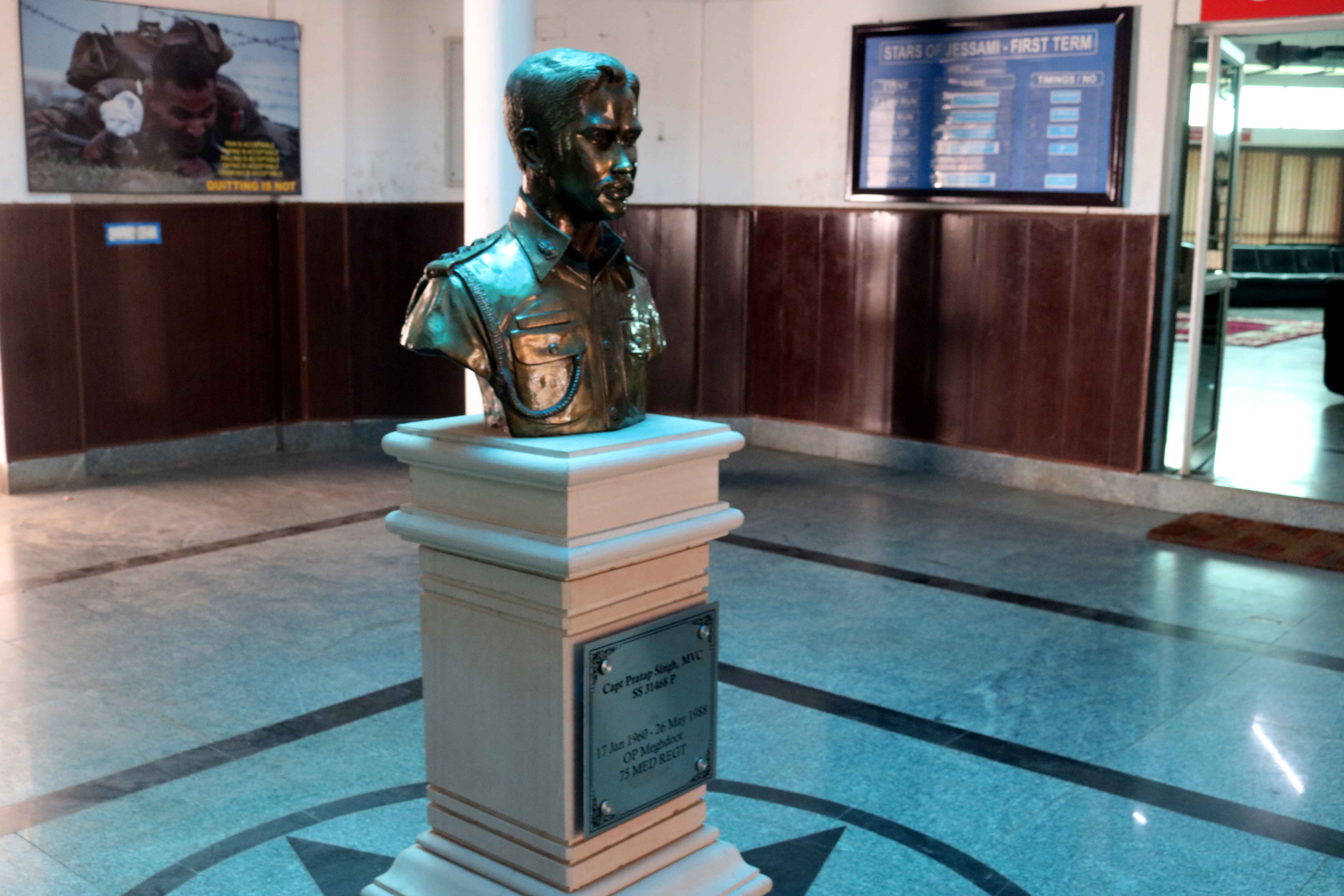
Our Commanding Officer, Colonel Mahaveer Singh called Late Captain Pratap Singh, Maha Vir Chakra and self to his office in March 1987 and briefed us that we had to win the cross country competition for him. We both were Captains then and by virtue of being the senior, I became the team captain. Among young subalterns, one was away on a training course and the other admitted in the Military Hospital.

The team to be fielded for the competition was to consist of one officer and 15 soldiers. We started practicing for the race – two officers and 20 soldiers. Every morning at 5 we were picked up from our residence and the team used to be dropped off about 20 km from the regimental location. Now everyone had no option but to run back to the regiment. The faster one did it, lesser the agony.

After a month’s practice, we decided to move to Meerut a week before the race to carry out a few practices there. The race was scheduled for 11 April, Saturday to commence at 6 AM. The day we had planned to leave, Pratap’s mother took seriously ill and he had to hospitalise her and take care of her. I told Pratap to reach Meerut by Thursday evening the latest.

As Pratap had not practiced for the last week, I had made up my mind to run the race. Pratap landed up in Meerut on his motorbike on Thursday evening. On Friday I showed him the route and told him to be stand-by.

In the evening we reached the Officers’ Mess for dinner and all the young officers participating in the race were there. Seeing the senior Captains set to run the race, Lieutenant Atul Mishra wanted to know as to who amongst us was running the race. Pratap said that the person who woke up first woke up the other and the latter will run the race. Everyone believed it as the same was narrated by Atul after a decade.

After the race, I received the trophy from the Brigade Commander and after a few minutes there was Pratap with his motorbike asking me to get on to the pillion. We rode off and as I was too tired, I hugged on to him and slept off. I woke up only on reaching our regimental location after over an hour of drive.

We handed over the trophy to Colonel Mahaveer, who appreciated us for the efforts and wanted to know where the rest of the team was. Pratap said “Please do not come out with your clichéd question as to who is commanding the unit, I have ordered them to relax at Meerut for the next two days and also to visit the Nauchandi Mela“, Colonel Mahaveer passed his unique smile as a sign of approval for Pratap’s actions.

Nauchandi Mela is held every year at Meerut in April-May. It is a rare symbol of communal harmony with Hindu and Muslim shrines – Nauchandi temple and the Dargah (shrine) of Muslim saint, Bala Mian. Visitors pay obeisance at both the shrines irrespective of the religion they belong to.  The mela, which originally brought sellers and buyers of utensils and domestic animals together, now includes various kinds of goods, entertainment and food.

Colonel Mahaveer had a knack of delegation and had immense trust in all of us. He always encouraged the young officers to be decisive and whenever we goofed it up, he always held our hands and took the responsibility for our actions.

Tubectomy VS Vasectomy

vasectomy

The death toll rose to over 12, three days after the sterilisation camp organised by the Chattisgarh state government in India, It was a case of mere medical negligence and violations of guidelines and procedures outlined for such operations. Of the 83 women who underwent laparoscopic tubectomies, over 50 were hospitalised with about 25 in a critical condition.

Amir Khan in his in his show explored the subject of ‘Male Chauvinism’ in India and on the phenomenon of ‘uncontrolled masochism’ that has plagued Indian society for a long time. This medical tragedy is also an outcome of a similar case of ‘masochism’,

Birth control is the need of the hour in India and there are many non-invasive methods available, but for sure they are costly, The poor cannot afford it and the governments cannot fund it. Hence the invasive procedures are needed.

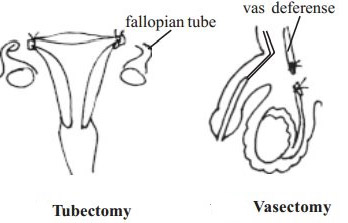
During a vasectomy, doctors numbs a man’s scrotum with local anesthesia and make one small incision. A part of the male anatomy responsible for transporting sperm from the testes is then severed, and the ends are stitched. .

During a tubectomy, a woman’s fallopian tubes are either blocked or cut entirely. This prevents her eggs from reaching the uterus, where they have the potential to be fertilized. This procedure uses spinal anesthesia and requires two incisions to be made below the navel, and cut through many layers, which allows doctors to have direct access to a woman’s fallopian tubes.

Vasectomies are not considered to be major abdominal surgeries and also much less invasive than tubectomies. Recovery times for vasectomies are shorter and the risk of complications is greatly reduced. Women who have undergone tubectomies are at a higher risk of bladder problems in the future, while there is no known increase of risk in men who have undergone vasectomies.

Overall, in terms of both cost and safety, vasectomies are a much smarter choice than tubectomies. Unfortunately, there are far fewer men getting vasectomies than women getting tubectomies worldwide. This comes from the unfair assumption that women should play more of a role in the birth control process than men.

On assuming command of our regiment, a regiment I had never served before and equipped with the modern surveillance equipment I had never seen. To familiarise with the soldiers, we captured all the data of our soldiers and developed an automated system for various administrative and training purposes. On analysing the data I found that most soldiers were not in receipt of the special increment for promoting small family norms even though they had two grownup children.

Further analysis revealed that the troops were very reluctant to undergo vasectomy and they had many an unfounded fears stemming from the usual misinformation passed on by the three ‘JIs’ of the regiment – the Pundit JI (Religious Teacher). Master JI and the Babu Ji (Clerk).

On further interactions with the affected soldiers I realised that many feared that their physical performance would be drastically reduced and would not be in a position to perform well in various Physical Efficiency Tests a soldier has to qualify. Some feared that their sexual performances would be drastically affected and the most significant fear was about the reactions of those back home when they learn that the man has undergone ‘castration’ and not the wife.

We were not posted with a Regimental Medical Officer (Doctor) and we had Naik (Corporal) Madhu, the Nursing Assistant, Thus he became the Commanding Officer’s advisor on health, hygiene and sanitation. Madhu had two children and was not in receipt of the special increment for promoting small-family norms. I called Madhu for a discussion and he confided that he wanted to get the vasectomy done, but has been procrastinating it. It was concluded that Madhu will get his vasectomy done the next week.

Sainik Sammelan (Commanding Officer’s Monthly address to all troops of the regiment), I presumed was the best platform to educate our soldiers. I believed in a short 10 minute interaction as I always felt that it was mostly boring and many a time disgusting to listen to a hour long sermon. Many of the soldiers in my younger days too shared the same thought. (Many Commanding Officers will never agree with me). In the 10 minutes I addressed the soldiers, the last five minutes was spent on educating them on various aspects of hygiene, sanitation, children education, parenting, medical concerns, etc. Post retirement many of the soldiers confided that they looked forward to the latter half of my address as it was both educative and thought provoking.

The Sainik Sammelan after Madhu had his vasectomy, I had him giving out his testimony. He explained the entire procedure and the little pain he had. He also said that it did not affect his physical efficiency in that he had secured ‘Excellent’ in the Physical Efficiency Test conducted the previous day and the procedure has in no way affected his family life or his relationship with his wife. Madhu added that he was granted 14 days of Sick Leave after the vasectomy, but he came back to work the third day as he had got bored lying on the bed in his home.

Now I explained to all the soldiers the agony their wives will have to undergo for a prolonged period after a tubectomy. I further said that no one back home will ever know that you have undergone vasectomy unless you tell them so.

Within six months we had all the soldiers who qualified for the special increment undergo the vasectomy operation and many said that they would not have done so if the Commanding Officer had not educated them about it.

Fire! Fire! Fire!

Wedding

Fire! Fire! Fire!” with our exchange operator screaming at the top of his voice; woke me up from deep slumber. Our regiment was located in the higher reaches of Sikkim on 12 December 1997 when this incident occurred. The area was covered with about four feet of frozen solid snow with the temperature touching minus 20 degrees Celsius.

I paid a visit to the dentist in the evening as my wisdom tooth was troubling me and I was under immense pain. The dentist decided that the best way out was extraction and hence administered local anesthesia on my gums and did the extraction. He advised me to take rest for a day or two. I reached my room and I had a splitting headache as a result of the anesthesia. I decided to go to sleep and hit the bed.

At dusk, our Commanding Officer (CO) Colonel PK Ramachandran, wanted to talk to me and called up the Regimental Telephone Exchange to connect the call. The exchange operator tried the call many times but as I was in deep slumber, I did not answer the call. The exchange operator came to my room and saw me in deep slumber and informed the CO about my status. Our CO being a thorough gentleman, advised the operator to let me enjoy my sleep and to put through the call the moment I woke up.

At about 9 PM, the exchange operator noticed smoke and flames in the building I was sleeping. He came rushing into my room screaming and woke me up. He said that my room was on fire. By that time about five soldiers also came in. I ordered everyone to clear off and not get any burn injuries. The soldiers led by the exchange operator were salvaging my desktop PC, the TV and the VCR.

I stepped out of the room engulfed in flames wearing my sandals. Luckily my Identity Card was safe as it was in my uniform shirt’s pocket as I had slept off without changing my uniform. The fire started because the officer staying in the neighbouring room had forgotten to turn off his kerosene based room heating system – Bukhari. As I stood outside in the biting cold, I saw the entire building up in flames. The soldiers were in the act of salvaging everything from the adjacent buildings.

That was when we realised that the water tankers in the regiment were empty as the orders were to keep the tankers empty to prevent them from freezing. The solid frozen snow was of no use to douse the fire as it could not be lifted off the ground. The order was passed immediately that all water tankers will be kept three-fourth full every night to meet such eventualities.   Our CO came to me and asked as to how I felt and I replied that the only thing I could do was to enjoy the warmth the fire was providing on a freezing night.

Next morning the soldiers scouted through the ashes and Subedar (Warrant Officer) Balakishan came out with all my medals (given by the government in recognition of bravery, honour and sacrifice) and a photograph which was intact despite the raging fire. It was our marriage photograph dated 16 April 1989. I immediately said that “What God has united no raging fire, storm or hail can ever separate.

An Orthodox Syrian Christian wedding follows similar procedures as done by other Orthodox faiths like Greek, Slavic, and Egyptian. It begins with the Betrothal service where the Priest blesses the rings of the Bride and Groom, then places them on the ring fingers of their right hands. In the Bible, the right hand is the preferred hand, indicating good. The Betrothal dramatises the free decision made by the Bride and Groom, and is symbolized by the giving of rings.

The Marriage Ceremony begins immediately thereafter culminating in the crowning. It begins with the priest placing a crown on the groom’s head while reciting the crown blessing thrice. Then the crowning ceremony of the bride follows in the similar way. The Greek and Slavic Orthodox use crowns made from olive leaves and the Syrian Orthodox use a gold chain as a symbolic crown. The crowning is a sign of victory, just as athletes were crowned in ancient times at their triumphs. In this instance, the Bride and Groom are crowned on account of their growth as mature Christians, prepared for the responsibilities of a Christian marriage.

This is followed by a series of petitions and prayers with special reference to well known couples of the Old Testament, such as Abraham and Sarah. An epistle excerpt of Saint Paul is read, exhorting husband and wife to unconditional love and support of one another. Then an excerpt from the Gospel of Saint John is read, relating to the wedding at Cana when Christ performed the first of His miracles and blessed the institution of marriage.

The differences in the marriage ceremony between other Orthodox faiths and Kerala’s Syrian Orthodox faith begin here. The groom ties the ‘Minnu’ around the bride’s neck – tying the knot. This has been adopted from the Hindu traditions. the ‘Thali’ used in a Kerala Hindu marriage was in the shape of a leaf of the sacred banyan tree and Christians modified the Thali by superimposing a cross on the leaf and called it a ‘Minnu’. The Minnu is suspended on seven threads drawn out of the Manthrakodi. The seven strands represent the bride, the bridegroom, the couple’s parents and the Church.

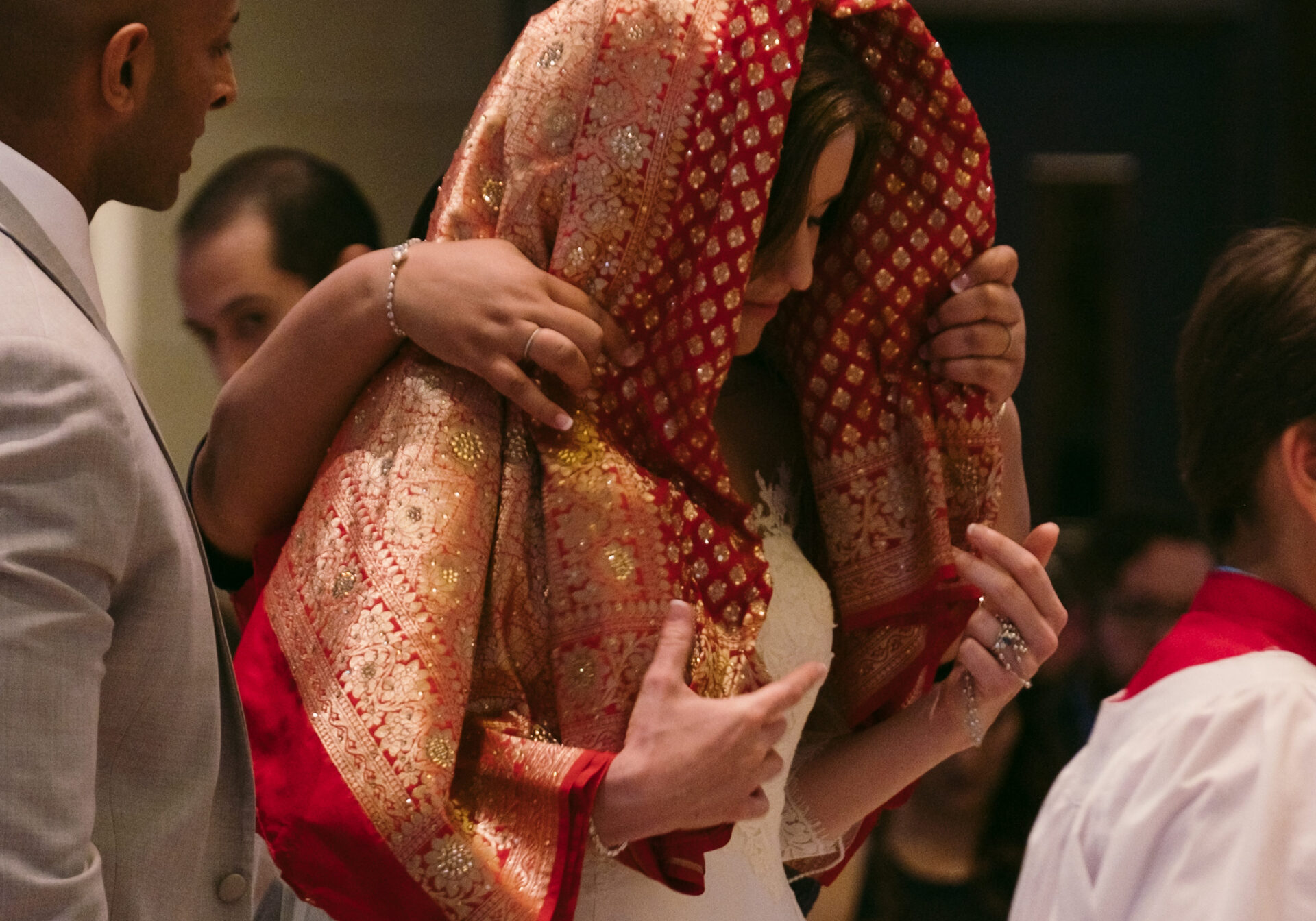
The groom then places the ‘Manthrakodi’, a sari presented by the bridegroom and his family, which is draped over the bride’s head, symbolizing the groom’s pledge to protect, care for and cherish his wife The Manthrakodi is the adaptation from the earlier Kerala Hindu Nair traditions of ‘Pudavakoda’ where the marriage was a contract and handing over clothes for the bride indicated entry into a contracted marriage. At this point, the bride’s relative, who has been standing behind her, yields her place to a female member of the groom’s family as a sign that the bride is welcomed into her new family.

The ceremony ends with a benediction and prayer. The Priest uses the Bible to uncouple the hands of the Bride and Groom signifying that only God can come between them. It is always the priest who will preside over the actual marriage ceremony that is the tying of the Minnu. If a bishop is present, he will only bless the Minnu. This tradition may have emerged from the old Travancore Christian Marriage Acts wherein only the priest had the magisterial power to conduct a marriage.

Even though our marriage was not conducted in the presence of Fire God (Agni), our wedding photograph lived through an Agni Pareeksha (Trial by Fire.)

Linguists

madras

In 1971, after the anti-Hindi agitation that raged through Thamizh Nadu, I joined Sainik School Amaravathinagar in the state then known as Madras.   The school almost resembled any British Military School as all the military words of command were in English like “Attention” and “Stand-at-Ease”. There I started to learn Thamizh and also English and Hindi.

Thamizh is one of the longest surviving classical languages in the world and the script has only 18 consonants unlike Devnagari script which has about 37 consonants. When Devnagari script has क, ख, ग, घ (ka, kha, ga, gha), Thamizh has only க (ka) and similarly for the other corresponding consonants. All the other South Indian languages namely Malayalam, Kannada and Telugu follow their own script similar to the Devnagari script. Further these three languages unlike Thamizh, have a lot of Sanskrit vocabulary. Hence learning of Hindi or any Devnagari script based language becomes difficult for a Thamizh in comparison to the people from the other states.

After the anti-Hindi agitation in Thamizh Nadu, the Official Languages Act was amended in 1967 by the Indian Government to guarantee the indefinite use of Hindi and English as official languages. This effectively ensured the current bilingualism and use of English in education in India. This bilingualism has helped the Indians to a great extent in ensuring acceptance all over the world.

Hindi as a national language was not accepted all over India due to the implementation issues. The Hindi Pundits coined many a difficult terms to replace commonly used English terms. Many of the terms coined were not even accepted by the Hindi speaking population. Lot of money and efforts were pumped in by the government for the enhanced use of Hindi as an official language, but it never had any results other than a few Members of Parliament making a foreign sojourn to study the use of Hindi in some country or the other and the practise still continues.

To further make the matter worse, all forms were printed in both Hindi and English and so also all the government publications. This resulted in higher production costs without serving any purpose. While serving in the Indian Army, I recommended all my subordinates to read and understand the pamphlet ‘Glossary of Military Terms’. The pamphlet was printed in Hindi on the left page and English on the right. I also used to advise them to read the Hindi side whenever they got bored – the Hindi equivalents were hilarious and many a times grossly incorrect.

In our school the English department was headed by Mr KG Warrier and the Thamizh department by Mr M Selvaraj. Both of them were strong linguists and always ensured that they spoke the language with purity in that when they spoke, they always used only one language. Both had excellent communication skills and were near perfect in their pronunciations. Both of them never taught me at school, but I had extensively interacted with them during various extra-curricular activities.

KGW

(Mr KG Warrier with our Class-mate AP Sunil Kumar at Kottakkal.  The photo is of 2013 when Mr Warrier turned 90)

Mr KG Warrier hails from the family of world renowned Ayurveda Physicians of Kottakkal in Kerala. He is currently enjoying his retired life at Kottakkal. He is staying with his daughter, Rathi. The Warrier community connected to the Vaidya Sala stay at ‘Kailasa Mandiram’ in the Vaidya Sala premises at Kottakkal, Malappuram District, Kerala.

His specialty was that he dressed in his starched and pressed cotton pants and shirt, wear a felt hat and hold a pipe in his hands. I was always intrigued as to how he managed to maintain the crease of his pants perfect even at the end of the day.

A few days before leaving school to join the National Defence Academy I met Mr KG Warrier and he asked me in Thamizh as to when I was joining the academy and how the preparations were progressing. My answer was in the usual ‘mixed language’ of Thamizh, Malyalam and English. To this he said “உனக்கு தமிழும் தெரியாது, மலையாளவும் தெரியாது, ஆங்கிலவும் தெரியாது. உனக்கு என்ன தெரியும்? (You do not know Thamizh or Malayalam or English. What do you know?)”.

I still recollect a few words of advice Mr KG Warrier had given us.  He said that everyone should always carry and use three books – a Dictionary, an Atlas and a Wren & Martin Grammar book.  At the beginning of each year at the school, these were the first set of three books we were issued with.  Later on during my army service I did carry these three books.  Nowadays with the power of the internet with browsing tools like the Google, most information is at one’s fingertips and these three books have become almost extinct.

Mr M Selvaraj was well known for his voice and his oratory skills which were showcased during all the cultural programmes at the school. His orations in both Thamizh and English will be remembered by all his students. I was very curious as to how he managed to handle the two languages independently and so effectively. During my final year in school, I did manage to summon enough courage and asked Mr M Selvaraj about the secret.

Mr M Selvaraj said that when he joined the school he had very little grasp of English having done his Masters degree in Thamizh. Major MMR Menon, then Headmaster of the school had advised him that to be a successful teacher in a school like this, mastery over English would go a long way. So with reluctance he approached Mr KG Warrier, but was surprised when Mr KG Warrier accepted to be his Guru and thus he started to learn English. He ended the chat by saying “the English I speak is all what Mr KG Warrier and Ms Sheela Cherian had taught me like any student who graduated under these great teachers.

Mr M Selvaraj left our school in 1987 to be the first Principal of Navodaya Vidyalaya at Mahe. After establishing the school, he moved as the Principal of Navodaya Vidyalaya at Pondichery and now leads a retired life in Trichy.

After leaving the school, I always tried to complete a sentence in one language and many a times I did fail. After joining the army, I picked up Hindi. Luckily for me, I served mostly with the Brahmin soldiers from North India and that helped me improve my Hindi to a great extent. Now with Hindi also joining the bandwagon of languages in my mind, maintaining purity of language became near impossible.

Hats-off to all those Thamizh news readers in any television channels, they speak pure Thamizh only and would use another language vocabulary only in case it is unavoidable.

madras1

For Want of a Nail

IndianSoldierFlood

Our son Nikhil wanted me to buy a whistle – Fox 40 ‘Sport & Safety’ Classic Whistle- to be used for his life-guard training at the city’s swimming pool. I went to the store and was a bit surprised when I looked at the price-tag on the whistle – it costs $5. Thinking that I may not have zoomed on to the correct product, I looked carefully at the label to reconfirm it. Out of curiosity, on reaching home I “Googled” the product to see its characteristics and why a simple looking whistle cost me so much. As per the manufacturer, this whistle is easy to use, very loud that it can be heard over a mile away, is waterproof and unbreakable. Being made of plastic one does not have to worry about rust. It works even after it is wet because it does not have a ball in it.

Aren’t such whistles required by our soldiers, especially those deployed on flood relief duties?

During my service with the Indian Army, we have been called out to help the civil administration many a times. On many occasions we were placed on high-alert for flood-relief duties. There are many standard operating procedures (SOPs) in the units for flood-relief, but there is hardly any equipment available to execute the tasks. The army heavily relies on the ingenuity of the officers and soldiers to execute the task.

Watermanship is an important aspect of military training. It comes handy while on war crossing water bodies, rivers and other obstacles. It becomes more important when dealing with natural disasters like Uttarakhand or Kashmir. There is hardly any attention paid to this aspect of training.  Many of our soldiers are non-swimmers and hence training in personal safety while dealing with fast flowing currents, floatation devices, rescue equipment, etc become very important. There is hardly any rescue equipment worth its name authorised to any army unit, but they are always called out to deal with such situations.

The biggest deficiency the army has is that there is no boats authorised to the army and our men are not trained in operating the outboard motors. Only some men from the Engineers are trained on it or those hailing from areas like the backwaters of Kerala have some experience.

The army units are not even authorised life-jackets and the risk we are forcibly putting our men to without the life-jacket is well known to all. There is no High-visibility safety apparel (HVSA) -clothing (e.g. vests, bibs or coveralls) that is worn to improve how well other people “see” them (their visibility). In any developed country, it is mandatory for anyone operating in these circumstances to wear them.

It is a pity to see our soldiers are without life-jackets and HVSA and all the personnel of the NDRF is fully geared. When will they equip all the soldiers of the Indian Army with these? Surely it does not cost much.

Hence it is suggested that all the army units (especially the Infantry, Cavalry, Artillery, Engineers and Signals) be scaled with inflatable boats, outboard motors (with about 50% as spare as the local boats will be much effective with one), ropes, winching equipment, harnesses, rope bridges, etc.

Further HVSA must be authorised as personal clothing for all ranks. This would be very useful for drivers, co-drivers and also passengers of military vehicles and also for anyone operating any plant or dozing equipment. This would also help while being deployed on aid to civil authorities for restoration of law and order.

It would be a pity that a soldier’s life is to be martyred because of our short-sightedness. No battle should ever be lost and we should never lose a soldier for want of a horseshoe nail (life-jacket).

Late Captain Pratap Singh, Maha Veer Chakra – My Hero

In August 1987, our regiment, 75 Medium Regiment was about to move out from Delhi to the Kashmir Valley. Captain Pratap Singh, being posted on compassionate grounds and having spent two years, the time had come for return to his parent regiment as per the norms in the Army. Captain Desh Raj and I moved with the advance party to the Kashmir Valley.

https://rejinces.net/wp-content/uploads/2020/03/pop035.jpg

Captain Pratap called me up to say that he had walked up to our Commanding Officer (CO) Colonel Mahaveer Singh and had requested him that he liked to continue with our regiment and wanted his parent regiment to be changed to 75 Medium. He also said that he had enjoyed the two years he served with our Regiment and that he had developed a special attachment to the soldiers and officers. Colonel Mahaveer accepted Captain Pratap’s request and contacted the Army Headquarters and thus Captain Pratap’s parent regiment was changed to 75 Medium Regiment, and he moved with the regiment to the Kashmir Valley in November 1987.

Our Regiment was to induct its first Observation Post team in Siachen Glacier in March 1988. The choice was between Captain Pratap and I. Colonel Mahaveer briefed us in December 1987 to select our team and also to prepare and train for the impending task. At that time the Brigade Headquarters wanted an officer to be attached with them as an administrative staff officer for six months and so Colonel Mahaveer said, “One of you will go to the Siachen Glacier and the other to the Brigade Headquarters.”

Siachen Glacier, one of the world’s largest glaciers, is situated North of Leh. This land, the world’s highest battleground located at about 5,750 m (18,875 ft), will test human endurance against the rigours of high altitude and turbulent terrain. Ever since Indian forces occupied the Siachen Glacier in 1984, both India and Pakistan have fought intermittent artillery duels and many attempts were made by Pakistan to capture the territory. In winter, temperatures here can plummet to minus 70 degrees Celsius and winds of up to 160 km an hour can come without warning. Over the past several years, soldiers have seen amputation of limbs lost to frostbite and death by pulmonary edema. Many soldiers have lost their lives to avalanches or falling into crevasses during patrols. According to some estimates, 90% of the casualties in Siachen have been due to weather and altitude, rather than actual fighting.

Captain Pratap, a Short-Service officer, commissioned in September 1983, had not opted for a permanent commission and had decided to take release from the army after serving five years. Armed with his application for release from the army, Captain Pratap walked into Colonel Mahaveer’s office in January 1988 and told him that he wanted release from the army and hence wanted to participate in an operation prior to his release. He managed to convince Colonel Mahaveer that he would take on the duties in the Siachen Glacier in March. Thus, Captain Pratap started with his training for the operations and I moved to the Brigade Headquarters.

On 27 May 1988, Brigadier DS Chowdhary, our Brigade Commander called me to his office to break the news that Captain Pratap had laid down his life while performing his duties. Immediately I called up Colonel Mahaveer to break the sad news and he did not utter a word. I rushed to the regiment and straight went into Colonel Mahveer’s office and that was the only time I ever saw tears in his eyes.

On 26 January 1989, the nation recognised the supreme sacrifice made by Captain Pratap Singh and decorated him with Maha Veer Chakra (MVC). The citation for the award read as under: –

“Captain Pratap Singh was deployed as an observation post officer Siachen area in April 1985.

The adversary made repeated attempts to retake a key post vital for our defences of Siachen, without success. Their last attempt to take a post was on 09 May 1988, when they fixed four ropes and a ladder-system on the ice-wall below the post for the purposes. This attack was successfully beaten back by our forces. The ropes and the ladder-system fixed by the adversary, however, remained in position, making it possible for them to use it again in their fresh attempts to take the post. It was imperative that the fixed ropes were cut, and the ladder unfixed to prevent fresh attempts. On the 18 May 1988, Second-Lieutenant Ashok Choudhary was able to reach and cut four of the ropes. On the 26May 1988, it was decided to cut the remaining two ropes and unfix the ladder. Captain Pratap Singh undertook this mission with the help of a jawan, descending the ice wall. On reaching the location, Captain Pratap Singh found a large quantity of ammunition and grenades lying at the head of the ropes. While examining the same, a grenade booby-trapped him, severely wounding his right arm and chest. Despite being badly wounded the brave officer crawled forward to the fixed ropes and cut them with his knife. Then he unfixed the ladder system and let it fall down the ice wall. Then the gallant officer inched back to his own rope to come up the ice wall to return to the post but collapsed due to his severe wounds and made the supreme sacrifice of his life for the nation.

Captain Pratap Singh thus displayed conspicuous gallantry in eliminating a great threat to a key post of our vital defence of Siachen Glacier at the cost of his life.”

Officers’ Training Academy (OTA) Chennai honoured its alumni and this valiant soldier by naming the Pipping Lawns where the newly commissioned officers wear their first pips as Pratap Pipping Lawns.

After over 25 years, Captain Pratap Singh, MVC, continues to be my hero and always has a special place in my heart.

Captain Pratap’ younger brother Shakti Singh can be reached @ +91 98100 67777

Late Captain Pratap Singh, Mahaveer Chakra – My Friend

During our recent visit to India, we stayed Colonel Pradeep and Dr Sridevi at Devlali and their house was located in Pratap Enclave.  The enclave was named after Late Captain Pratap Singh, MVC and at the main gate of the enclave there was a board with his photo and a brief write-up about his heroism.

Lieutenant Pratap Singh arrived on posting to our regiment, 75 Medium Regiment in January 1985 when we were located at Delhi.  A few months prior he had lost his elder brother Late Squadron Leader Gaj Singh of the Indian Air Force in an air crash in Rajasthan.  Lieutenant Pratap had come on a posting on compassionate grounds to take care of his aging parents who lived at Basai Darapur village, near Punjabi Bagh, New Delhi.  At that time, his elder brother Colonel Ran Singh was serving with an Air Defence Regiment of the Indian Army.  Captain Khazan Singh, father of Lieutenant Pratap was a World War II veteran.

Ever smiling Lieutenant Pratap joined our regiment and in no time got amalgamated with the regiment.  He was a good sportsman and a great leader and won the admiration of all the soldiers.  Despite all the problems he faced, he always looked cheerful and was cool as a cucumber at all times.

Lieutenant Kaushik, Pratap and self, we became the ‘trouble shooting trio’ of the regiment, who could be sent on any missions anywhere.  As Lieutenant Kaushik was married, Pratap and I generally took on all out-station tasks – mostly going to Meerut to participate in sports competitions with the Brigade.  Colonel Mahaveer Singh, our Commanding Officer (CO), took utmost care of all of us as his sons and had a major role in developing us into good human beings and leaders.

Lieutenant Pratap and self being bachelor boys dined in the Officers’ Mess.  The mess and the bachelors’ accommodation were located in Sector 14, Gurgaon and some of the married officers also lived there.  The Regiment was about 10 km away and we all used to travel to and fro the Regiment in one vehicle.  Every day at 1:30 PM we all would assemble in the Adjutant’s office for our travel back to Officers’ Mess.  Captain Rahul Gowardhan (now a retired Colonel) was our Adjutant (assistant to the Commanding Officer) and once he was busy closing up for the day and he accidentally tore off an important sheet of paper assuming it to be trash.  The Lieutenants were all immediately tasked to assemble all the torn pieces of paper and solve the jigsaw puzzle to retrieve the original document.  After that whenever we assembled at the Adjutant’s office for our return journey, Pratap would pick up all the torn papers from the wastepaper basket and start solving the jigsaw puzzles with us until one day Captain Gowardhan asked us as to what we were doing.  Pratap said, “we do not know when you will tell us to recover a document, so why not utilise the time”.

Captain Desh Raj (now a retired Colonel) was a great sportsman and appointed himself as the commander of the bachelors (he always considered himself as a youngster).  He would mostly accompany us and always guided us in our day-to-day duties and also joined us in most of our adventures.  Then we had Late Colonel Avinash Chandra, affectionately called by all of us as ‘Guruji‘ as he always had something to contribute about anything and everything.  He was always forthcoming to save us from all our misdeeds and also resolve many difficult situations.

Every day at 1 PM, the Mess Havildar (Sergeant) used to ring up the office to find out whether Pratap and I were coming to the Mess for lunch.  The aim was to decide on the quantity of food to be prepared as we both were in our early twenties and were famous in the Regiment for our gluttony.  Hats off to Mrs Chandra, Mrs Desh Raj, Mrs Gowardhan and Mrs Kaushik for standing to our gluttony whenever we landed at their homes, especially at mid-night.  All the ladies welcomed us and served us excellent dinners.

Major Mohan Krishnan, a 1971 war veteran, was our Second-in-Command and was a simple and jovial person.  Once he called Pratap and me to his office and admonished us about our late night at the Officers’ Mess.  He ordered that for dinner, one had to reach the Mess by 9 PM and the Mess had to be closed by 10 PM.  After a few days we reached around 9:10 PM and the Mess Havildar expressed his inability to serve us dinner as we were late.  We decided to go for the movie in the town and we landed back at the Mess at 1 AM.  Now Pratap told the Mess Havildar, “the Second-in-Command has only stipulated the time for closing the Mess, but he has not laid down any timing for the opening; hence now serve us breakfast as a new day has dawned.”  That was the end of the Mess closing timing.

We both got promoted to the rank of Captains and were appointed Observation Post (OP) Officers.  Our duty in war was to direct the artillery fire to the target.  The guns fire from about 10 km behind and it is the duty of the OP officer to direct the fire on to the target.  In case the shells do not land on the target, a correction is ordered in terms of “Go Left/ Right” or “Add/Drop.”  During our operational training with live artillery firing, Captain Pratap very often confused between Right and Left and many a times ended up giving the opposite corrections.  Colonel Mahaveer Singh our CO came up with a solution – with a marker pen he wrote ‘LEFT’ on the inside of his left wrist and ‘RIGHT‘ on the right wrist. He told Pratap to look at it prior to ordering a correction and the simple trick worked.  At the end of the day, I even advised Pratap to tattoo it on his wrists, never realising what was in store…….

Captain Pratap’ younger brother Shakti Singh can be reached @ +91 98100 67777

Bishnois and Khojis of Rajasthan

RJ

Rajasthan, the land of kings and royalty, has been a mesmerising experience for me during my stay in India. The Western desert state of the Indian Union is vibrant, and exotic where tradition and royal glory meet in a riot of colors against the vast backdrop of sand and desert. It has an unusual diversity in its entire forms- people, customs, culture, costumes, music, manners, dialects and cuisine.. The landscape is dotted with invincible forts, magnificent palace havelis, rich culture and heritage, beauty and natural resources. It is a land rich in music, Dance, Art & Craft and Adventure, a land that never ceases to intrigue & enchant.

We in the Indian Army, visited Rajasthan mainly during operational deployments on the border, artillery field firing practices and various tactical exercises. One has seen the state progressing and developing in all fields – education, social matters, communication infrastructure, industrial output, exploitation of natural resources, etc. However two features will ever remain in my memory.

Bishnois

While media and scholars have celebrated Indian women environmentalists and activists such as Medha Patkar and Arundhati Roy, you may not have herd of Imarti Devi and Begu Bai of Khejarli (Barmer District), the first proponent of Indian ecofeminism. They led a massive sacrifice for the protection of trees in February 1730 in Jodhpur. More than 300 Bishnoi men and women, sacrificed their lives to protect the trees from the soldiers of the king Abhay Singh of Jodhpur, who wanted to fell the trees to treat the lime stones for constructing his palace.  The dead were buried, not cremated and there is a temple at that site.


Bishnoi temple as it exist today,  commemorating the Khejarli massacre.

All of you must be familiar with the episode of, Salman Khan’s shikar of deer in Rajasthan. Salman Khan together with friends undertook a hunting excursion in Rajasthan. In doing so they rushed blackbucks until their exhaustion, shot endangered and strictly protected animals. The locals protested and the actor with his entire entourage was put behind the bars.

These people are the Bishnois of Rajasthan. They are seen as an example by the global environment community for their deep devotion to conservation of nature. The Bishnoi sect was founded by Lord Jambheshwar believed to be an incarnation of Vishnu, the preserver, and is probably the only religion in the world that’s based on principles of conservation. Legend has it that Jambheshwar, born into the warrior clan of Rajputs but chose a different life. Instead of developing hunting skills, he learned to communicate with living beings. He came up with the 29 principles that would govern the lives of his many followers, who would be called Bishnois — derived from ‘bees’ and ‘noi’, which means 20 and nine.

Here are some of the unique Bishnoi practices that show how their lifestyles are in a complete fit with their environment: Bishnois do not cut trees; instead they use dried cow dung as fuel. They do not cremate their dead as Hindus normally do, because it involves the use of firewood; instead, they bury them. Agriculture is the mainstay of the people; they also carve wood during the time they are not busy on their fields. The required wood comes from trees that have fallen during storms. Each Bishnoi family creates a tank in their field to provide water for black bucks and antelopes in the arid summer months. They maintain groves for the animals to graze and birds to feed. Solar energy is used to extract underground water to irrigate the groves. The region where they live is a desert, and these groves help to recharge rain water in the aquifers in the desert.

Not only do the Bishnois protect the deer from poachers, they also allow them to graze freely on their farmlands. It’s the belief of every Bishnoi that the first right to the harvest goes to the deer. Many Bishnoi temples doubles up as rescue shelters and the priests take care of injured animals. Some of these go back into the wild after they recover, while others roam about in the compound.

Many Bishnois believe that their fore-fathers take rebirth as deer and that is why many are attached to these animals.   The Bishnoi women have deep maternal affection for the rescued fawns. It is not uncommon for a Bishnoi woman to breastfeed a newly born, orphaned fawns..

Adapting to the modern times, the Bishnois have become ‘active conservators’ pursuing poachers and capturing them to be handed them over to the forest authorities. They now have what they call the Tiger Force, a 1000-strong brigade committed to wildlife protection, spread across hundreds of villages. The Tiger Force came into the spotlight when they chased and caught Salman Khan and his gang red-handed with the blackbucks they had killed.

Prior to induction into Rajasthan, all troops of the Indian Army are made well aware of the sentimentality of the Bishnois to the wildlife and the trees. All out efforts are made by the Army to provide all assistance to the locals in their conservation efforts.

Khojis

During one of my area familiarisation trips in the Rajasthan borders, I stopped at a Border Security Force Headquarters for lunch. There I met a frail and old man – may be in his late eighties. The company commander introduced him to me as a Khoji.- the tracker. Every day at sunrise, the Khoji’ diligently examines a stretch of sand running alongside the wire- fencing border with Pakistan, for any telltale signs of infiltration. The slightest indentation or disturbance in the sand raises the alarm for the tracker. It tells him whether any human or animal has crossed the three-tiered barbed wire fence.

He utilises his uncanny ability, which includes recognising the footprints of individuals camels, cows, goats or sheep from amongst hundreds of others to track them down, however far they may have strayed into the desert wasteland. One glance at a broken twig, a bent blade of dried grass or even the hint of a footprint in the sand are all that he requires to catch his prey. For the Khoji, eEach footprint has subtle but distinct differences which only a Khoji’s trained eye can spot.

He even predicts as to the type of animal that crossed, the weight on its back, the direction where the animal is headed to, and also the likely place it would have reached by then. The Khojis learn their craft as children by tracking camels, sheep and cattle which stray far from home in search of food across the vast desert. It’s instinctive and the ability to successfully pinpoint footprints increases with experience. And, unlike other professions in tribal, superstitious and caste-ridden Rajasthan, the Khoji’s do not belong to any one community. They also worship no deity or special Gods.

The Khoji’s are employed exclusively by the BSF which have around 100 of them in the desert districts of Rajasthan and neighbouring Gujarat state, where they monitor the 1,500 km long sandy stretch of border with Pakistan for smugglers and illegal aliens. An asset to each BSF battalion, their services are also called upon by the local police to track down criminals or missing livestock. They also organise tracking courses for BSF personnel.

Their rivals in Pakistan, known as Pugees, are similarly employed by the Ranger border guards. But over the past years, fencing and flood lighting of the Rajasthan border has greatly reduced the Khoji’s workload. Earlier, they not only tracked illegal immigrants and smugglers but also herds of cattle, camels and sheep which frequently strayed across the open border.

I was astonished by the capability of these Khojis and many a times we employed them to track down infiltrators which our modern radar systems and the supersensitive cameras of the drones could not identify, mainly due to the lie of the sand dunes in the deserts.

Honouring a Veteran

vets

This photograph is from an Anzac Parade for the veterans of the Indian Armed Forces in Sydney. The marching contingent of Indian Veterans was received with cheers and the applause from the enthusiastic spectators lining the streets braving the wet and cold weather. The Indian banner stood high and proud, ably and graciously carried by a scout. Joined by their families and friends, the retired officers from Army, Air Force and Navy marched in unison, their suits adorned with their service medals. While they matched step with step, ‘stomachs-in, chest-out’ as instilled during their training days, the different berets symbolised the Corps or the Arm they represented.

Will this ever happen in any Indian city? Will this remain a distant dream?

A few weeks back there was a post on the Facebook where the author was unduly perturbed that India and its Asian neighbours did not figure in the top 25 patriotic countries, across the world, listed in the study of New York-based International Social Survey Program (ISSP). The study throws up interesting points like erstwhile colonies of the British and Spanish ranking higher than both Great Britain and Spain, respectively. According to the study, the most patriotic countries were the US and Venezuela, which were tied-up for the number one slot. The author was apparently more concerned about the ” holier than thou attitude” of Uncle Sam and that the conclusion has no rational basis other than their whims and fancies and prejudices.

It is true.  We do not fly the national flag at half mast when a soldier is martyred unlike US/Canada. We do not line up the streets to pay homage to a fallen soldier as their mortal remains pass through our city/village/town. Our airlines do not even bother to show any respect to the coffins of the soldiers and handle them as ordinary cargo. The Captain of the flight never announces that the mortal remains of a soldier is being carried by them. (Latest being Major Varadarajan’s case).

We do not commemorate any Remembrance Day to pay respect for a fallen soldier as in the case of most Commonwealth and Western Countries. Our National leaders or citizens never wear the flags pinned on them by the children on the Flag Day. How can we say that we are patriotic?

Every Indian cries when the ball hit Sachin Tendulkar’s chest, but none even stops to think about the bullets hitting our soldiers’ chests. We call out the Army every time the Indian Police Force fails, but all the promotions and pay is given to them and the Army is forgotten, especially during the pay commissions. We remember the Army only when a calamity strikes us or when a child falls into a bore well and forget about them immediately. Our Parliament passes bills to ensure better pension benefits for all its MPs – whether they did anything or not; whether they attended the sessions or not: but the same Government does not want to implement the One Rank One Pension scheme for its Soldiers. Now show me our patriotism other than during the cricket matches????

This weekend we went to watch baseball game at the Rogers Centre, Toronto between the Toronto Blue Jays and the Tampa Bay Rays. The Rogers Centre is the home-ground of the Blue Jays. The atmosphere was as electric as the cricket matches of the Indian Premier League.

The stadium was fully wheel-chair accessible and there were ramps made so as to facilitate the wheel-chair bound fans to enjoy the game. Even the latest stadium in Pune is not wheel chair accessible, so forget about the rest.  The fans at the Rogers Centre fanned across all ages – children, teens, youth, seniors. One event during the two minute interval between the first innings really stood out.

A sixty year old Veteran from the Canadian Army who was a Captain and had served in many UN assignments was called on to the centre and the Team Management of the Blue Jays presented him with a team shirt with his name printed at the back and with the team captain’s signature in the front. The entire stadium stood up to give the veteran a standing ovation – no one instructed anyone to do it, but was spontaneous. This is what is called patriotism.

Our son then said that during all the matches, a veteran from the armed forces or the police forces, who is a registered fan of the Blue Jays, is honoured this way.

Can we ever expect such a gesture at Mohali from the Kings XI Punjab or at Chennai from the Chennai Super Kings? Why one veteran, we can always honour a dozen at every match.

Will this ever happen in any Indian city? Will this remain a distant dream?

General Salute at Niagara Falls

niagara banner 3

With its incredible power and beauty, Niagara Falls stands out as one of the natural wonders of the world. It should be visited at least once before you die. Located on the Niagara River, at the Canada-US International Boundary, Niagara Falls is comprised of three gorgeous waterfalls – the huge Horseshoe Falls that are situated in Canada, the American Falls which are just across the border in America and the Bridal Veil Falls.

The Niagara Falls is a sight to behold for all your senses. The thundering roar of the falls mixes with the sight of the water and rising mist, and the smell of the fresh, crisp air cooled by the torrent of water relentlessly spilling over the edge of the falls.

Niagara Falls is the second largest falls in the world based on the width. More than 6 million cubic feet of water falls over the crest line every minute in high flow.  The waters in the river are owned partly by Canada and partly by the USA. The international border runs through the middle of the river. The verdant green colour of the water flowing over the Niagara Falls is a byproduct of the estimated 60 tonnes/minute of dissolved salts and rock flour (very finely ground rock) generated by the erosive force of the Niagara River itself.

Everyone visiting us always visit Niagara and having been there umpteen times, I have become an expert tourist guide and can take you through a thrilling experience at Niagara. Once I took acclaimed Malayalam music director Sharreth and his team of musicians to Niagara. When everyone went for a boat cruise to the falls, Sharreth stayed back and I did not know how to spend the next hour as I had no clue about music and had nothing much to discuss with him. So we strolled along the falls and suddenly I asked Sharreth to sing some Raga with the sound of the falling waters as a backdrop. A Raga uses a series of five or more musical notes upon which a melody is constructed. He stopped, paused for a few minutes and said he got a Raga and he started singing it and I captured it using his cell phone. I handed over his cell phone and said you must be the first musician to sing a Raga like this and hence must treasure it.

A few years back we came to know that General Jambusarwalla and Mrs Hufreez Jambusarwalla were coming to the Niagara Falls, US side and we all decided to meet them there as they did not have a Canadian Visa. Our children were very excited to meet him as they had heard many an anecdotes and references about a great human being and a military leader from their dad. The General kept insisting that we should not undertake such an effort, but the decision had been made and we decided to comply with it.

On that day we drove from home, crossed the Canada-US border and reached the hotel where the couple were to check-in. We received them there, and on meeting us, the General said “What better can a retired General from the Indian Army ask for at the Niagara Falls than a General Salute from a Colonel and family”. We then had dinner, spoke for about two hours, and we drove back home at midnight. The children were overwhelmed by the couple’s warmth and love and were really impressed.

While driving back, our son Nikhil said that the General was so down-to-earth and that he did not fit into the frame of a General which he had in mind. He was expecting a rigid, tall and a perfect military figure from what he had heard about him, but what he experienced was a simple human being full of energy, wit and humour, who came down to a kid’s level to converse with him. Nikhil summed up his final opinion with a statement – He is very “Napoleonic”.

Great things in your life will mostly come in short packets. One got to look for them, identify them, explore them, imbibe them and learn from them” was my reply.


It was indeed a great honour for me to have had General Jambusarwalla gracing the occasion of release of my book in Bangaluru in March 2017.


Wild Life and the Indian Army

Prior to the Second World War the Indian Army encouraged shikar (hunting) as a way to develop stalking and shooting skills, although this activity was controlled by game laws. When Pandit Jawaharlal Nehru became Prime Minister, his love for wildlife and nature caused the brakes to be applied, gently, to illegal hunting and cutting of trees. The Indian Wildlife Act was passed in 1972 and brakes applied strenuously. It was during this period that the military became increasingly conscious of their role in wildlife protection. All Cantonments became environmental friendly – banning use of plastic bags, tree plantation drive, water conservation, rain harvesting, etc.

WL

There are many instances of Indian Army men saving wild life. Raising the bar on dedication towards the nation, the Indian Army personnel of Tenga Garrison in Arunachal Pradesh ‘literally’ went out of their way and rescued a bear cub from the clutches of poachers. A group of elephants were crossing the area when the young elephant fell into the water tank and got stuck near Silliguri in West Bengal.   Soldiers rescued the elephant using a bulldozer. The three-year-old elephant was only able to clamber out of the sunken pit when the dozer destroyed some of the tank’s surrounding wall.

During our Sikkim Tenure, we were located at about 10,000 feet above sea level near an Alpine Sanctuary. The region holds some of the most beautiful oak, rhododendron, and coniferous forests and alpine meadows. Leopard cats, black bears, and the endangered musk deer are found here, in addition to many rare high-altitude birds.

In this area we wore our woolen clothes throughout the year as the temperature would never go above 10 degrees Celsius and could come down to minus 30 degrees.   Most of the time it was either snowing or raining and “dry” days were a few. Lightning strikes were rampant and we were advised not to carry anything metallic on us resulting in us never wearing our metallic articles of the uniforms. The terrain was treacherous, with narrow winding roads moving up the mountains. Driving on these roads was very risky, especially on snowy and foggy days.

We all lived without our families and officers would get together in the evenings at the Officers’ Mess for dinner. Most winter evenings we used to be visited by our friends – a family of bears – father, the mother and three cubs in tow. They exactly knew where the store room of the mess was and the Mess Havildar (Sergeant) would throw a bag of atta (wheat flour) at them when they came calling on. These bears would carry this bag of atta and disappear into the shrubs and would come over few days later when this stock finished.

These bears came as a gift to us being handed over to our regiment from the regiment we relieved. The Indian Army is very concerned about the “Wild Life” and about the role required to be played to ensure conservation. Colonel PK Ramachandran (now a retired Major General), our Commanding Officer, had passed strict orders that these bears were to be treated as “Guests of Honour” and were made as “comfortable” as we could. We all felt happy about our contribution in preserving the wild life and we felt happier that at least someone could live with his family at this altitude also.

There was no reported instance of these bears ever attacking any army person in the garrison. They all appeared to be friendly and were very calm. Sometimes these bears would stand up and pose for photographs as if they could recognise a camera. We were all aware of the grizzly bears in North America attacking humans causing grievous injury, even death. We educated all our troops about the behaviours of the bears and the “Dos” and “Don’ts” were briefed to all by the Commanding Officer.

Deforestation, poaching and human encroachment onto their living areas have forced these bears to move out of their natural habitats in search of food and water. During the winters in Sikkim, the upper reaches of the Great Himalayas are snow covered and these bears are forced to move to lower attitudes in search of food. In case they venture into human habitat they are sure to be chased away, hurt or sometimes even killed. Where else can they find a safe haven – with adequate protection, food and above all love in this inhospitable terrain – other than an Indian Army Camp!

Dinner at the Dhaba

While commanding the unit in Devlali in 2002, Colonel Azad Sameer the Colonel General Staff with our Divisional Headquarters visited us. After the discussions in my office, as I was leaving for lunch at the Officers’ Mess, Captian Mitra, our Adjutant (staff officer who assists the Commanding Officer and is in charge of all organisation, administration and discipline of a unit) came to my office and asked me “Sir, have you invited Colonel Sameer for the dinner at the Dhaba?  Do I need to prepare an invitation card for the dinner?” (Dhaba is a roadside restaurant mostly frequented by the passing truck drivers.)  I replied, “Send him an invitation card card for the evening cocktails at our Officers’ Mess.”

TN

Colonel Sameer is a great thinker and we had many discussions varying from military subjects to parenting and also our outlook towards religion and politics. We both believed in our God, and did not believe in wearing our God on our sleeves or placing the images of our God in our vehicles in that many in the army never realised that Colonel Sameer was a Muslim and I a Christian.

Handing over the invitation card to Colonel Sameer I said “Sir, you are invited for a cocktails at our Officers’ Mess at 7 PM.  It will be followed by a dinner at the local Dhaba.” From the facial expressions and body language of Colonel Sameer, it was evident that he did not like the idea of the dinner at a Dhaba.  Being a thorough gentleman, did not utter a word and accepted the invitation.

During many tactical discussions and exercises we had, I had the opportunity of accompanying Colonel Sameer. He was a ever smiling, soft spoken soldier who easily passed off as a young Lieutenant. After preparations for the next day, in the evening we visited the bar at the Officers’ Mess. He ordered his favourite Old Monk Rum and I a peg of Teachers Whiskey. The barman assuming that Colonel Sameer to be a young officer, served me first. At last I had to request him “Sir, whenever we are together, we both will always move around in our uniforms.

After the cocktails at the Officers’ Mess, the vehicles lined up and all officers with their ladies and children got into them. I drove Colonel Sameer and we headed towards Nashik with neither speaking a word for the next fifteen minutes until we entered the Taj Hotel. That was when Colonel Sameer asked, “So this is your Dhaba.” Captain Mitra explained “Dhaba is the code word for such dinners and our officers and their families know what it meant.”

Colonel Sameer always approached a military problem with an open mind in a logical manner and I was associated with him in proposing many concepts and theories.

One such discussion on the effectiveness of a type of ammunition resulted in a probability theory we proposed to assess the terminal effect of that ammunition. After a few discussions we put the entire theory on a PowerPoint slide and explained it to all the officers and was accepted as the most probable result of employing that ammunition.

Five years passed by, and Brigadier Sameer was an Instructor at the prestigious Staff College and there was a presentation by the commander of the formation where we had proposed our theory. The very same slide we had prepared five years ago was flashed – behold – there was no change in it – even the colours remained the same.

May be someone is still flashing the same slide even now.

 Nehru – Gandhi Family

ng

Feroze Gandhi is a Parsi (not a Muslim as some claim), a politician and a journalist who served as the publisher of the National Herald and the Navjivan newspapers from Lucknow. His father was not any Khan, but Faredoon Jehangir from Bombay.

In 1930, Feroze met Kamala Nehru and Indira among the women demonstrators picketing outside Ewing Christian College, Allahabad. Kamala fainted with the heat of the sun and Feroze went to comfort her. The next day, he abandoned his studies to join the Indian independence movement. He was imprisoned in the same year, along with Lal Bahadur Shastri and lodged in Faizabad Jail for nineteen months.

Feroze first proposed to Indira in 1933, but she and her mother rejected it, saying that she was too young, only 16. He grew close to the Nehru family, especially to Indira’s mother Kamala Nehru, helping arrange her trip to Europe when her condition worsened in April 1935, and visiting her at the TB sanitarium in Europe, where he was at her bedside when she died. Kamala Nehru was so impressed by the conduct of Feroze that on her death-bed, she insisted on Indira marrying Feroze. In the following years, Indira and Feroze grew closer to each other and they married in March 1942 according to Hindu rituals.

The saree that Indira wore for the marriage was a khadi sari that Nehru wove and is pink, not red. It was worn by Indira on her wedding day, then by Sonia on her wedding day in 1968, and then by Priyanka too when she got married in 1996.  Red is generally the bridal colour in India and the Gandhis to choose the more low- key pink and leave the fiery red, a symbol of simplicity and tradition.

Feroze Gandhi won independent India’s first general elections in 1952, from Rae Bareli constituency in Uttar Pradesh. Indira came down from Delhi and worked as his campaign organizer. Feroze soon became a prominent force in his own right, criticizing the government of his father-in-law and beginning a fight against corruption. In 1957, he was re-elected from Rae Bareli. In the parliament in 1958, he raised the Haridas Mundhra scandal involving the government controlled LIC insurance company. This was a huge embarrassment to the clean image of Nehru’s government and eventually led to the resignation of the Finance Minister TT Krishnamachari.

This story was narrated to me by Ms Bimla Behn, who used to be the hostess of Teen-Murthy Bhawan when Nehru was the PM.   Further I had spoken to Mr Sharma, the caretaker of Teen-Murthi Bhawan from Nehru’s days. Our unit was responsible for VVIP security when Mrs Gandhi’s body was lying in state in Teen-Murthy Bhawan for viewing,  during the first week of November 1984, after her assassination on 31 October and there I met Bimla Behn and Sharma.

They further spoke to me in detail about the relationship between Nehru, Feroze and Indira and the role played by MO Mathai who was Nehru’s secretary. The rise of Mathai (a typical Syrian Christian like me, from the Central Travancore) from being a helper to the cook of Teen-Murthy Bhawan to be the PM’s secretary is another volume.

The aspect that Feroze and Indira lived separately after the birth of Sanjay is somewhat correct as by that time Mathai had succeeded in driving a wedge between Nehru and Feroze. Feroze was part of the fiery young Turks with Chandrasekhar (later PM) and Mohan Dharia and they opposed a lot of Nehru’s policies in the Parliament and party forums. So Feroze avoided any contact with Nehru, but used to enter the Teen-Murthy Bhawan from the Right Flank and go upstairs where Indira lived. This was narrated by Bimla Behn.

Bimla Behn further said that after the death of Nehru, Indira was appointed the communication minster in the Shastri’s cabinet. In those days she always suffered from common cold and a runny nose. If you observe the photographs of those years, one can always see Indira clutching a kerchief in her hand. That was when Indira came in contact with Dhirendra Brahmachari who advised yoga as a cure for her runny nose. She practiced yoga regularly and was rid of the problem.

Regarding the death of Sanjay, I had interacted with the President of the Delhi Flying Club in 1984 – (he was related to one of our unit officer). The aircraft was imported as CKD (Complete Knock-Down) kit and it came in boxes. A week before the fateful day, Sanjay ordered the President of the Flying Club to get the plane assembled. After assembly, even though it was not test-flown and certified by DGCA, Sanjay insisted on flying it. Some mal-function resulted in the accident and Sanjay Gandhi died instantly from head wounds from the air crash on 23 June 1980 near Safdarjung Airport.

So please do not get carried away by any propaganda taking rounds in the social media.

The Desert Fox

DF

A Ballad composed by Nikhil as part of Grade 10 English curriculum. Based on the North African Campaign of World War II.

The third hunter Monty he comes from the East
He has finally defeated the beast
Unaccustomed to desert sands and rocks
He has now whipped the desert fox
The desert fox he tests the king’s patience
He leads the king’s hunters a merry dance
Moving swift across deserts running tall
He had best fear Monty or face his downfall

The first hunter let the fox come to him
He waited with patience, his outlook grim
The fox in a flurry of speed and dash
Attacked the hunter in a move considered rash
The fox had beat hunter the first
But underestimated the hunter’s king’s thirst
So the king sent in bold hunter the second
The sands of the desert with blood would now redden
The desert fox he tests the king’s patience
He leads the king’s hunters a merry dance
Moving swift across deserts running tall
He had best fear Monty or face his downfall

The second hunter set traps and snare
The fox would die if an attack he dare
Though when the fox came the traps did fail
The second hunter oh did he go pale
The king’s patience was now truly wearing thin
He removed the second hunter for defeat is a sin
He then sent a hunter he long hated
His relation with the king quite complicated
The desert fox he tests the king’s patience
He leads the king’s hunters a merry dance
Moving swift across deserts running tall
He had best fear Monty or face his downfall

The third hunter not as dashing as his prey
He chose a position well sited in which to stay
He held his ground well near the sea
He gathered around him a vast hunter army
Once he gathered more hunters than needed
He attacked the weary fox who retreated
All we shocked that fox had lost
Then all were shocked at the cost
Several hunters maimed and so much expense
So many tools broken it makes no more sense
It makes one wonder who was the better
The defeated fox or his bankrupt hunters
The desert fox he tested the king’s patience
He lead the king’s hunters a merry dance
Once moving swift across deserts running tall
He should have feared Monty his final downfall

Education and Punishment

STThe rape of a first class student in school premises on July 17, 2014 in Bangalore added one more to the long list of child abuse cases, many of which remains unnoticed. It has brought back light on one of the worst perils that our country is facing today – child sexual abuse. It is a pity that most of such abusers are either close relatives or teachers of the children. In this case too, it was the physical education teacher. Most Principals let loose these physical education teachers (goons) on to the children to ‘discipline’ them, especially during assemblies or sports or cultural events. These teachers mostly end up misusing the ‘authority’ vested in them by the Principal and in many cases resulting into physical, sexual and mental abuse to the children. Majority of such physical education teachers have no qualification to be one.

Joshi Philip, our family friend, invited me to attend the prize distribution ceremony at their daughter’s primary school. Ann Maria, their daughter, a Grade 2 student, that day had the annual prize distribution ceremony at the end of the academic year. I accompanied Joshi to the school and at the reception we signed-in and were given a round yellow sticker which said “A Proud Parent”. I stuck it above my shirt’s pocket, close to my heart, as anyone will feel proud of it rather than hanging a visitor badge around the neck.

We entered the gymnasium where the award ceremony was to take place. Every primary school here has at least two such gymnasiums and we used to boast about the one we had at the National Defence Academy. We did not have one in the Sainik School. The gymnasium is a hardwood floored hall which serves as a basket ball court, assembly area, an auditorium and a lunch room or a cafeteria. At the end of the gymnasium was a stage where all the award winners were seated. The students marched in class wise with their teachers leading them and the students sat on the wooden floor while the teachers occupied their positions at the end near the wall. As expected of little children from Kindergarten to Grade2, they were talking and then the Principal appeared on the stage and raised her right arm. All children became silent and she said “eyes and ears towards me please” and introduced the two Masters of the Ceremony (MC) who were Grade 5 students.

The prize distribution ceremony went on beginning with the Kindergarten and any time when the children became noisy, the Principal would appear with her right hand raised and everyone became silent. During the entire proceedings not even a single teacher moved from their positions. At the end of the ceremony the Principal came on stage to thank everyone and to congratulate the prize winners and at the end wanted the children to do their usual “Silent Cheer”. I had no clue what it was. It was all the body and face expression of a cheer but done without a sound and was impressive and unique.

On leaving the school I realised that the self-discipline inculcated in these children will make them better citizens of the country and they do not need any “policing” to implement any laws or regulations.

Looking back to my Sainik School days, we mostly had the Principal and the Headmaster from the Education branches of the three services, and most of them one felt were the least ‘educated’. This was further reconfirmed during my training at the Academies and service tenures. Most of the Education Corps officers are masters in some discipline or the other and today we have many officers from the Arms and Services holding masters degree by virtue of undergoing the Staff College or the Long Gunnery or the Engineering degree courses. Some even hold Doctorates too. Academically these officers are many times better than their Education Corps counterparts.

Then why post such officers to the Military/Sainik Schools? Many of them behave no better than the physical education teachers of the Bangalore incident. Most are incapable of moulding and motivating the students to join the defence services and are pretty ordinary in teaching. Any officer in the Indian Army can conduct a better class than these Education officers. The only qualification these Education officers boast of is their Bachelor of Education (B Ed) degree. Most of the Haviladrs (Sergeants) who have attended any courses of instruction in various military training establishments (where they are luckily not trained by the Education officers) will beat them hollow in the art of teaching. Then why not even do away with the Education Corps, considering the education standards of the present recruits into the army.