Police

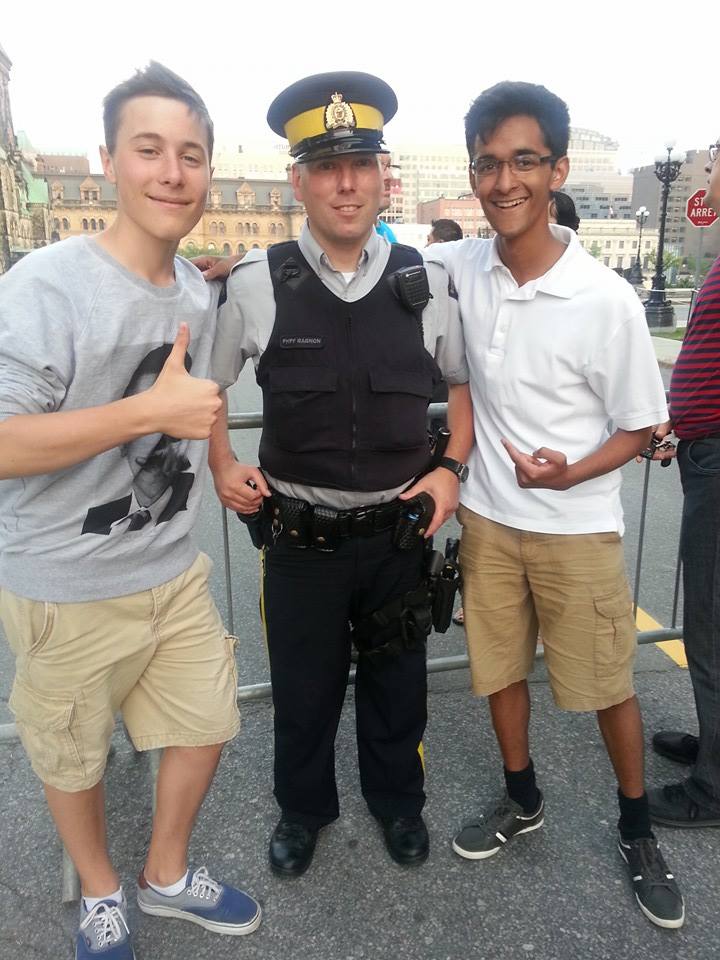
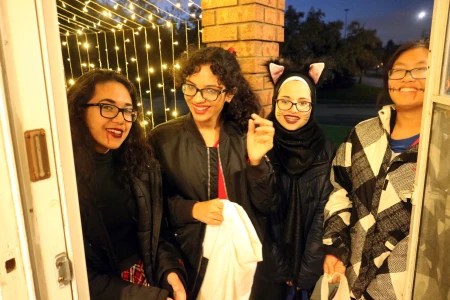
While on our trip to Ottawa, the Canadian capital city with Guillaume Le Floch,  French exchange student, we wanted to get to the National War Museum. We could not find the way. So Nikhil and Guillaume approached two police officers to find the way. A chat ensued between the police officers and the two teens and they ended up snapping photos with them.

Police

A few days later, on a long drive to visit a native aboriginal village, we wanted to stop at a coffee shop for a break. We did not spot one for a long time and hence I decided to pull off the road and search for one on the GPS. A police cruiser pulled up behind our car and an officer came to ask whether we needed any assistance. I rather sheepishly said that we were looking for a coffee shop to which the officer said that GPS will not help you as an outlet of Tim Hortons has recently opened and to reach there he advised us to turn back, drive 500 meters and turn right at the intersection. We thanked him and drove to the coffee shop for a much deserved break.

During the coffee break Guillaume said that he would never have asked a police officer in France for such an assistance. Modern police institution in France has remained an instrument of state, regardless of who happens to hold state power. During the Second World War (1940-45,) when France was occupied by Germany, the police became an instrument of suppression by the occupier. French police, from the time of the French Revolution to date have been used for handling various demonstrations by public and hence have an image of being unfriendly to the citizens. This has created a gap between the police and the people, especially the youth in France.

The first Canadian police officers recorded in the history books worked in Quebec City in 1651 and their duty was to act as night watchmen for the community. Today, policing in Canada is carried out at three levels: federal, provincial and municipal. The Royal Canadian Mounted Police (RCMP) operate at the federal level in all provinces and territories. At the provincial level, the Ontario Provincial Police, the Quebec Police and the Newfoundland Constabulary operate as provincial police services. Crime control and order maintenance are the primary role of police in which crime control activities occupy less than 25% of police time.

Community-based policing has gone a long way ahead in Canada and it involves a full partnership between the community and its police in identifying and reducing local crime. Crime prevention is the joint task of both the community and the police, and this joint effort is carried out within an interactive, cooperative and reciprocal relationship.

The increasingly multicultural nature of Canadian society is having an impact on Canadian policing. Complaints about the police by members of   visible minorities include over- policing of their communities, random stops and searches, discrimination in the use of police power, ‘blaming the victim’ when the victim is a member of a minority group and under-representation of minorities within police organisations. The governments at all levels have taken many initiatives that address police-minority relations.

One such initiative is the Youth Education Bureau of the police that works in partnership with the Health Department and the School Boards to create a positive and safe learning environment within the school system. The Officers of the Youth Education Bureau are responsible for initiating the SAFE (Schools Against Fearful Environments) programs in their individual schools. In this programme, the staff, parents and the police work together to ensure a safe environment at school and in the community. The programme ensures that the students are given a voice in their school. Any concerns raised is worked on through a focused plan of action. Each officer is assigned approximately 30 schools and they deliver various presentations and participate in special events hosted by their schools.

Project RAID (Reduce Abuse in Drugs,) is a seven-part drug education and awareness program delivered by a team of dedicated officers at all middle and high schools.  The police have established a Children’s Safety Village, which receives students on a fun educational trip in grades 1 to 5 to educate the students on road and personal safety.

The officers visit various schools and interact with the students. For Grades 1 and 2 they cover bullying, street proofing/ pedestrian safety and stranger awareness. For Grades 3, internet security is added to the above list. For Grades 4 and 5, introduction to dangers of drugs and tobacco is added. For Grades 6, 7 and 8, drug abuse prevention, youth crime, youth gangs are in addition to the above.

In addition the Neighbourhood Policing Officers work with the area high schools to maintain a presence with the youth. They work directly with teachers, parents and the community to ensure that the youth are on the right path to a great future.

There is a system of co-op placements with the police for students of Grade 12 as well as those in college or university. Co-op placements follow school semesters and are available for 15 weeks. To be eligible for the co-op placement program, students must be attending college or university and be enrolled in a co-op or work term program at their institution of learning.

Police and the Canadian Forces through Army Cadet Movement are long-time partners in developing the youth through the Cadet Organisation Police School (COPS.).The mandate of this programme is to develop the youth into leaders within the community. Many of these graduates have progressed to become active members of the Police, while others have succeeded in different areas of the community.

The interactions between students and the police have ensured that there exist a warm, welcoming and community-oriented relationship between the citizens and the police. The confidence built up through these programmes have ensured a high level of trust in the police.

It is common for people of all ages to seek police assistance in any eventuality, at times for routine route directions or even a help to change a flat tire. This is what every citizen of any country want their police to be.

The School Bus

Schoolbus
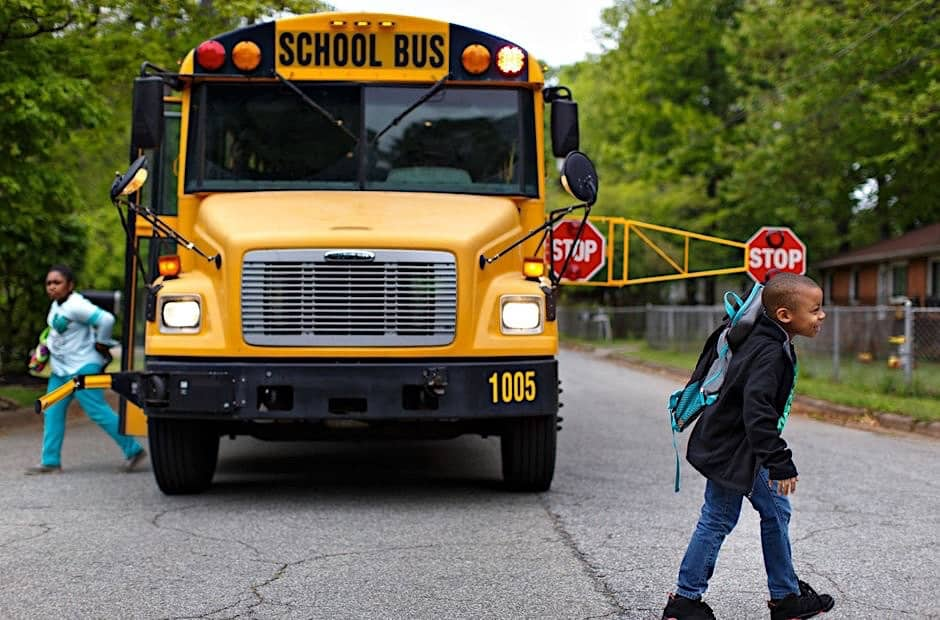
Driving through the residential area to work or to drop off children at the school, one got to cater for a few extra minutes to stop for school buses. The rule in Canada and US is that whether on a city street, highway or county road, and regardless of the speed limit and the number of lanes, motorists travelling in both directions must stop when approaching a stopped school bus with its upper red lights flashing. A flashing stop arm will swing out while passengers are boarding or leaving the bus. While stopping behind a school bus, the drivers got to ensure that they are at least 20 meters away. Once all passengers have boarded or disembarked, the ‘Stop’ arm will fold away. Any infringement to this rule fines ranging from $400 to $2,000. School bus drivers and other witnesses can report vehicles that have illegally passed a school bus. The modern school buses are fitted with cameras to record events inside and outside the bus.

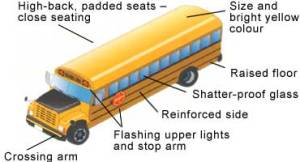
School buses have been specifically designed and equipped to carry students. Therefore, they are one of the only vehicles on the road with their size and design that maximizes safety for children. The highly distinguishable ‘National School Bus Chrome’ colour later renamed as ‘National School Bus Glossy Yellow’ as lead was removed from the pigment.  Black markings on an yellow background is meant to attract visual attention of any driver or pedestrian.

All school buses are equipped with flashing lights and a stop arm, which swing out whenever a child is picked up or dropped off. These signals indicate to traffic approaching from both sides of the road to come to a full stop and to remain so until the indicator is deactivated. The crossing arm when deployed, ensures that the students who have to cross the road before boarding or after leaving their bus, have to go around it and thus are always at a safe distance away from the front bumper. This enables the driver to see them or locate them in the bus mirrors. School bus design includes strategically placed grid of six mirrors, three on either sides (two convex and one plain mirror), that allow the driver 360 degrees visibility.

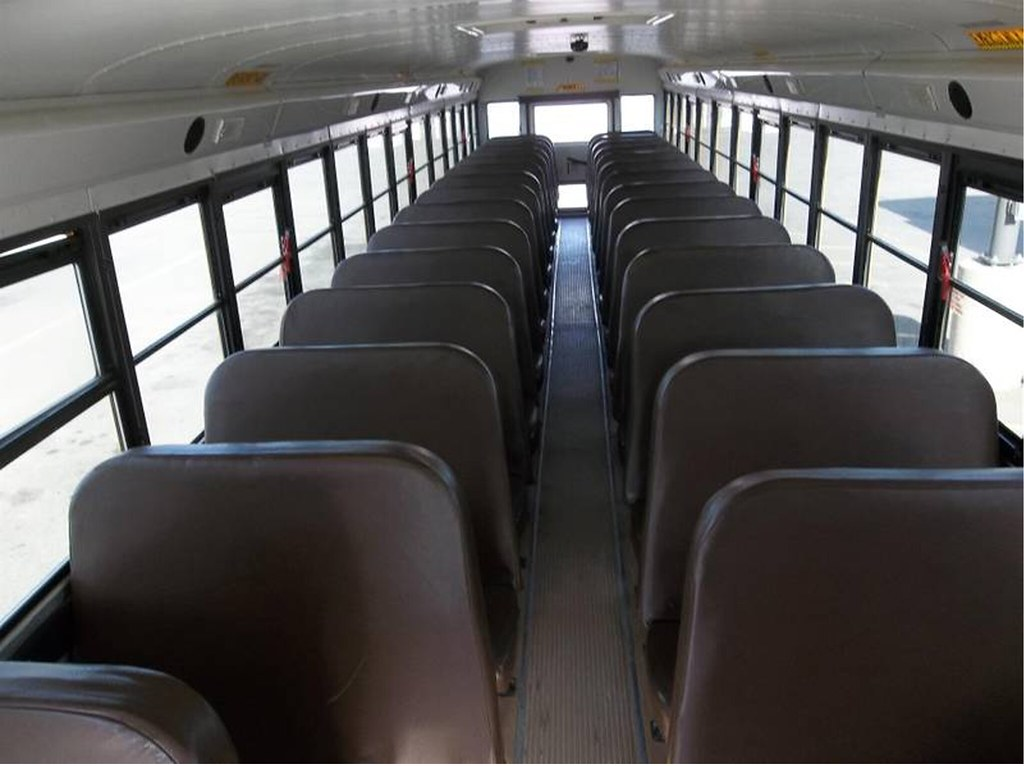
Transport Canada, after analysis of various accidents involving school buses have decided to do away with seat belts in school buses. The current school bus design provides a high level of protection to occupants and that seat belts may trap the children on school buses in case of an accident. School buses protect passengers through “compartmentalisation”, a design that includes seats filled with energy-absorbing material and high backs seats anchored strongly and placed close together to form compartments. In case of a collision, these special compartments would absorb the impact dispersing it throughout the entire body as opposed to solely the head and neck.

Studies have shown that adding seat belts to the current seating configuration of a school bus can increase the chance of head and neck injuries. For a seat belt to be effective, it must be worn correctly, snug and on the upper thighs. Because school vehicles carry passengers from the very young to high school students, if seat belts were used, they would need to be readjusted and their use monitored. A seat belt not worn correctly may cause serious injuries.

Raised floors in the school bus ensures that in the event a vehicle collides with a school bus, that vehicle will impact beneath the seated passengers, since the school bus seats are above the crash line. Structural strength and integrity of the joints between body panels of buses ensure protection in rollover-type accidents. Burn resistance form materials are used inside the school bus.  A protective cage is provided for the fuel tank to reduce the possibility of fuel leaks. The windows are made of shatter proof glass.

Most school buses employ GPS systems to provide the exact location and speed of a school bus at any time. They also have an on-board electronic reminder system that reminds drivers to check for sleeping children before leaving the bus.

For the purposes of evacuation, school buses are equipped with a minimum of at least one emergency exit in addition to the main entry door. The rear-mounted emergency exit door is a design feature retained from when school buses were horse-drawn wagons and the entrance door was rear-mounted to avoid frightening the horses.

Many cases were reported about the clothing of students getting entangled in the handrail at the entrance, resulting in a fall or a major accident. The most common piece of clothing that can be snagged on the handrail is a jacket with a drawstring at the waist. These drawstrings commonly have a large bobble or knot at the ends that can become lodged in the handrail. However, other articles of such as scarves, long straps on backpacks, or dangling key chains can also be snagged on the handrail. The redesigned handrails minimises entanglement by filling in the gaps with rubber washers.

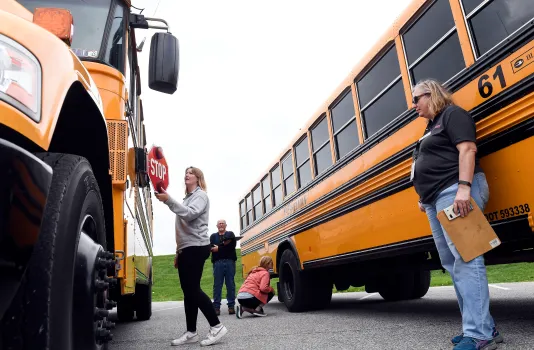
At the start of each day, the school bus driver has to conduct daily safety inspections, read instruments and gauges, perform routine tests, and confirm proper mirror adjustments. The inspection is recorded in a vehicle logbook to prevent and minimize mechanical breakdowns. Post-trip inspections are performed to verify that every child has exited the bus at the appropriate stop. In addition to regular mechanical maintenance and daily vehicle inspections by the driver, a Motor Vehicle Inspection Station will perform at least two mechanical inspections each year on every school bus in Ontario. School buses are also subjected to unannounced roadside safety inspections at their intended destination rather than at the roadside to avoid inconvenience to the students.

The prime need to keep our children safe at all times is a national responsibility. Redesigning the school buses to make them safer is an ongoing process and will continue to evolve to make our children safer.

110 Volt Vs 220 Volt

Electric Plugs

Travelling to Europe and India from Canada, one faces the problem of carrying adapters, plugs, converters etc, all because Canada uses 110 Volt while Europe and India operate on 220 Volt. Thankfully nowadays most electronic and electrical equipment come suitably modified to work on both the voltages.

The complicated system of plugs and sockets followed in different countries add to the vows international travellers face. Why can’t they design a system like the Universal Serial Bus (USB) used in all modern gizmos to make life easier? The switch positions as whether ‘up’ or ‘down’ is the ‘on’ position adds to the confusion. Why can’t they employ a system like Double Pull Double Throw (DPDT) switches like the ones used in computers and modern digital equipment? Why is no standard followed world over for a basic necessity?

In 1882, Thomas Edison’s General Electric Company was distributing Direct Current (DC) electricity at 110 Volt in North America. Transmission losses and generation costs led to the development of Alternating Currents (AC). Nikola Tesla was the first to devise a system of AC electricity at 220 Volt.   Most modern electronic systems like computers and cell phones all use DC. The charging systems in all these use AC as it is easy to convert AC to DC.

The original reason behind the decision to use 110 Volt was that the carbon filaments Edison used in his light bulbs lasted far longer at this voltage. As technology improved, metal filaments became more readily available for light bulbs. One of Germany’s first electric utility companies decided to up the voltage to 220 Volt. In doing so they increased their overall distribution capacity and also reduced transmission losses.

Europe too began with 110 Volt, like North America today. It was deemed necessary to increase voltage to 220 Volt to get more power with less losses and voltage drop from the same copper wire diameter. At that time the North America also wanted to change, but because of the cost involved to replace all electric appliances, they decided not to.  At that time (1950s-60s), average North American household already had a fridge, washing-machine, dishwasher, etc, but not in Europe.

In order to understand the power transmission system better, a look into the Ontario Province’s (where I live in Canada) electric supply system will benefit.

In Canada, electric supply is called ‘Hydro.’ Much of the initial electricity was generated by hydro-electric power plants. So, the term Hydro-Electric was shortened to Hydro.

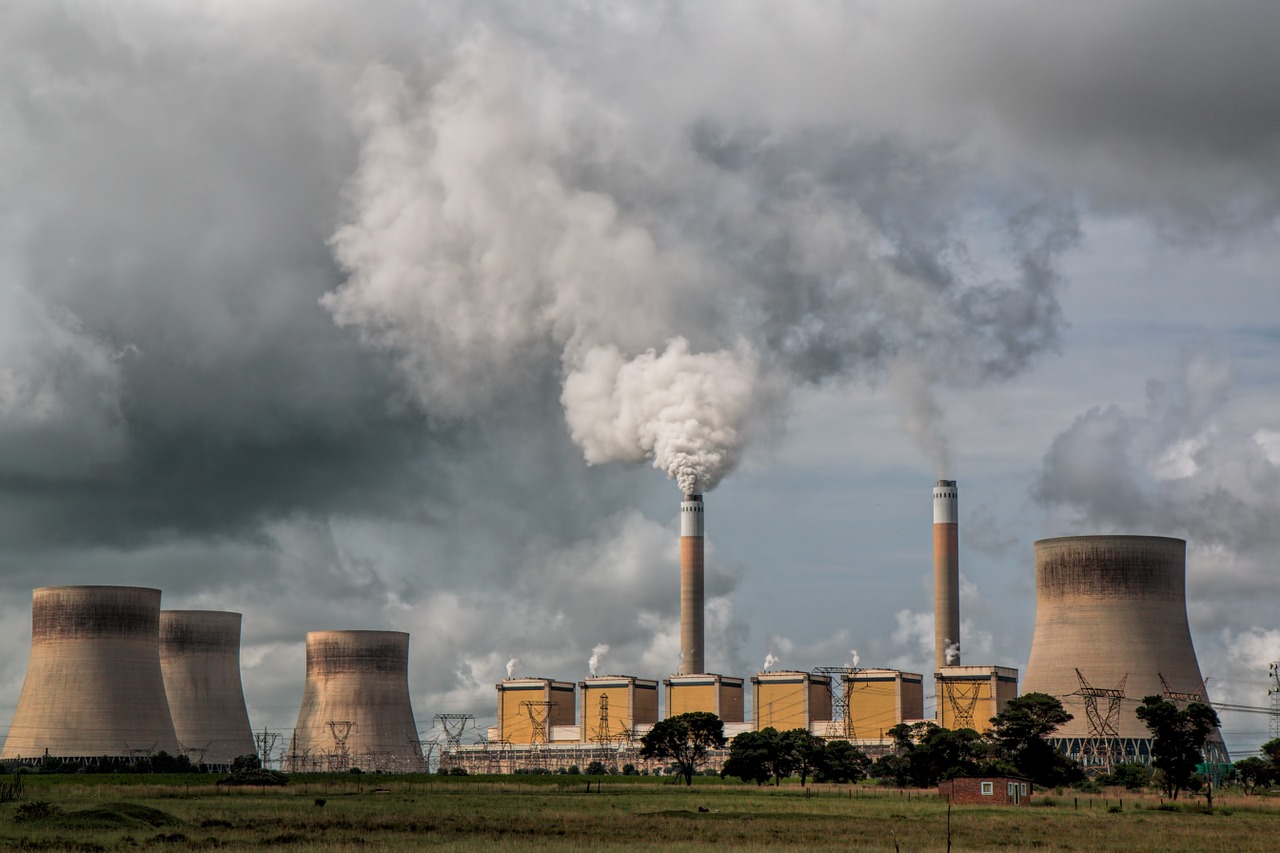
Ontario’s electricity supply has a diverse mix of sources – nuclear, hydro-electric, gas, coal, wind and, to a much smaller degree, solar, wood waste and biogas.   52% of our electrical power comes from nuclear generation, 23% from hydro-electric plants, 19% from gas, four percent from wind, one percent from coal and a very small amount from other sources.

The power plant produces three different phases of AC power simultaneously. There are four wires coming out of every power plant, the three phases plus a neutral or earth (ground) – common to all three phases.

The three-phase power leaves the generator and enters a transmission substation at the power plant. This substation uses large transformers to convert the generator’s voltage (which is at the thousands of Volt level) up to extremely high voltages for long-distance transmission on the transmission grid. Typical voltages for long distance transmission are in the range of 155,000 to 765,000 Volt in order to reduce transmission losses.

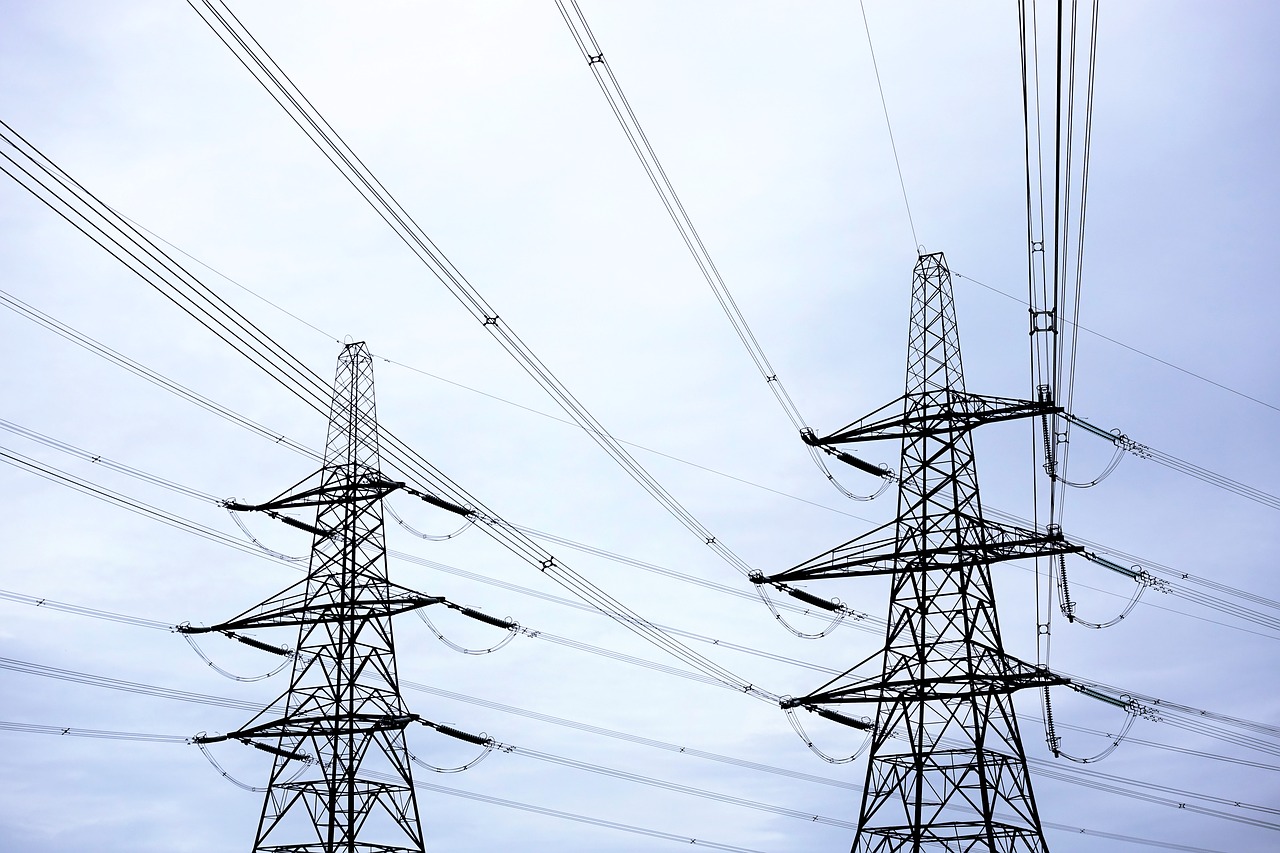
This high voltage power is transmitted from the generating station to the electric sub-stations using towers with three wires for the three phases. Many towers have extra wires running along the top of the towers. These are ground wires to attract lightning.

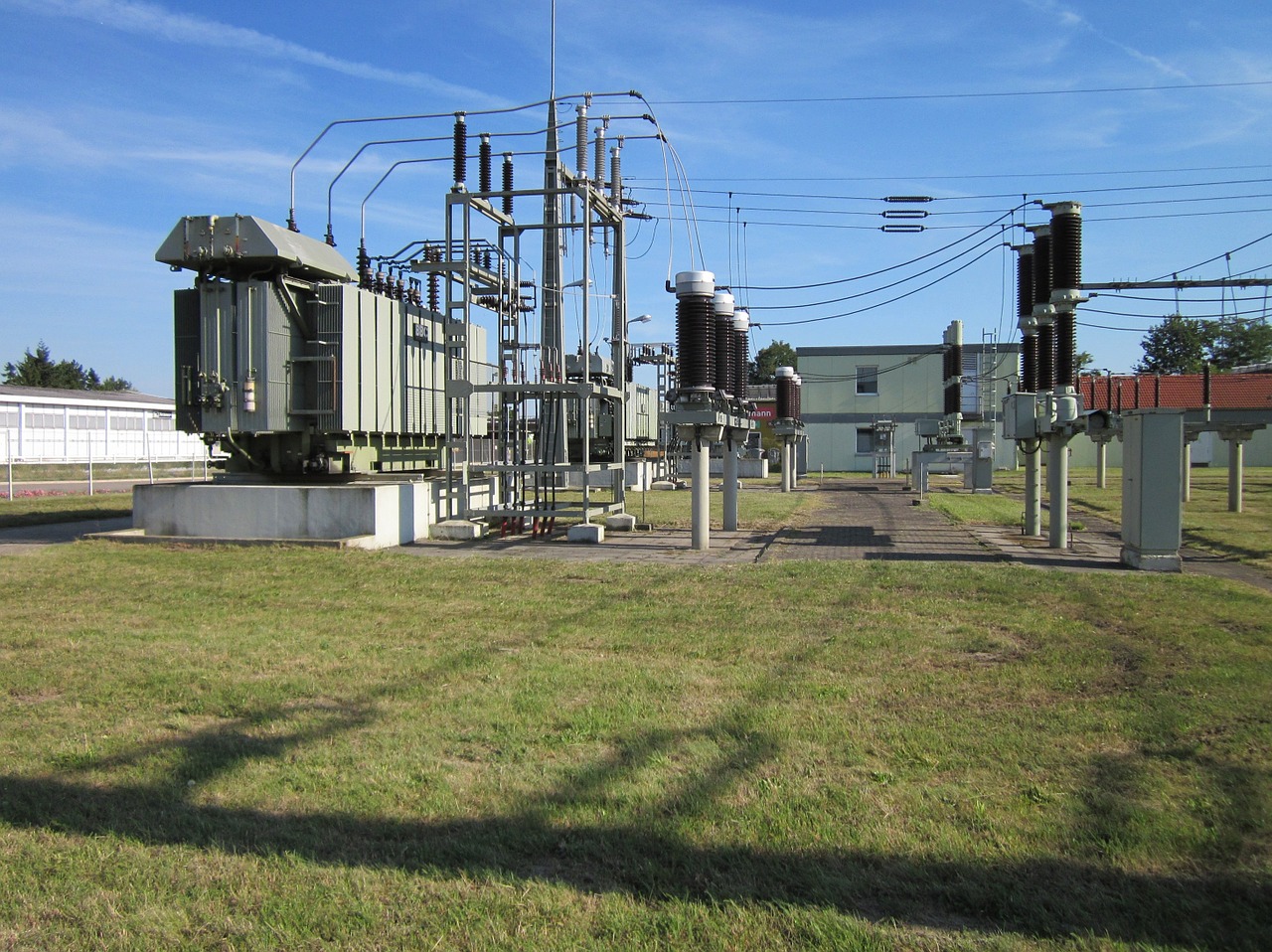
The electric sub-stations step down the voltage from transmission to distribution levels. The sub-station is equipped with transformers that step down transmission voltages to distribution voltages (usually 7,200 Volt.) It has a ‘bus’ that can split the distribution power in multiple directions. It has circuit breakers and switches so that the substation can be disconnected from the transmission grid or separate distribution lines can be disconnected from the substation when necessary.

The 7,200 Volt power is transmitted from the electric sub-stations by power lines to the transformers outside the homes. Modern sub-divisions have underground power supply systems. Outside four or five blocks of houses, the transformers are housed in green boxes. In rural areas and in thinly populated sub-divisions, the electric poles hold a transformer in white drums.

These transformers step down the power to two phases of 110 Volt. 110 Volt cannot be transmitted over long distances without acceptable losses. This calls for more transformers; nearly one per every four to five households. The 220 Volt system saves on the transformer costs.

There are two wires running out of the transformer and a ground wire running to the house. The two wires from the transformer each carry 110 Volt in two phases. This arrangement allows usage both 110 and 220-Volt (two-phases combined) for appliances like cooking ranges, dryers etc. 110 Volt system uses two phases with a phase difference of 180 degrees to create 220 Volt and the 220 Volt system uses three phases with a phase difference of 120 degrees to create 440 Volt for use with high power domestic and industrial equipment. As the 110 Volt system uses only two phases, the AC frequency is generally at 60 Hertz as compared to 50 Hertz in the 220 Volt system which uses three phases.

Customers in Ontario are billed based on the electricity consumed and the time it is consumed. It is achieved by using ‘smart meters’ which measures power usage based on three time-of-use periods:

  • Off-peak – when energy demand is low and less expensive sources of electricity are used
  • Mid-peak – when the cost of energy and demand are moderate
  • On-peak – when demand is highest and more expensive forms of electricity production are used.

Comparison between 220 Volt over 110 Volt

  • From the safety view-point, 110 Volt having lesser voltage results in lesser shock and thus less injuries or death due to electrocution.
  • 220 Volt generate more heat across a particular fault, thus more vulnerable to fire accidents. Burnt-out sockets where a plug is loosely fitted is a testimony to it.
  • 220 Volt circuits tend to use thinner gauge wire, thus saving copper/raw materials.
  • 110 Volt systems use less costly plugs and connectors when compared to the 220 Volt systems.

Until the standardisation is achieved, electricity, plugs and sockets will all remain a troubling element for any international traveller.

Movember

Movember

The word ‘Movember‘ is derived from the combination of the word ‘mo, which is the Australian-English abbreviated form for ‘mustache‘ and ‘November,’ as the event takes place every year during the month of November. This involves growing of mustaches in order to raise awareness of different men’s health issues like prostate cancer, testicular cancer and mental health challenges. Using the mustache as a catalyst, Movember encourages men to invest in their own health by more openly talking about their health concerns and more proactively seeking necessary medical care. The idea is to bring about change and give men the opportunity and confidence to learn and talk about their health and take action when needed.

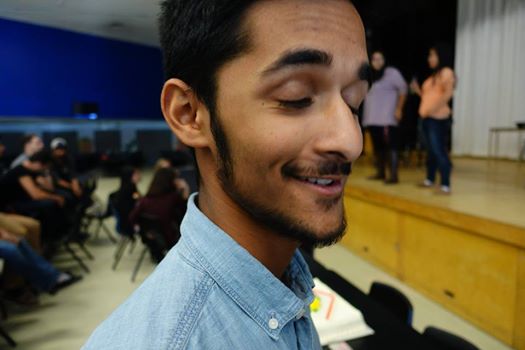
Participants of Movember are called “Mo Bros”. This year our son Nikhil decided to be a “Mo-Bro” at his high school and hence grew all facial hair for a month. At the end of it he decided not shave it off. The students did succeed in raising about the men’s health issues and also collect money during a charity event at the school.

The women taking part in Movember are called ‘Mo Sistas.‘ Mo Sistas are not necessarily encouraged to grow mustaches of their own, but to support the cause, spread the word and encourage guys to become a walking billboard for the charity.

The idea of Movember originated in 1999, when a group of men from Adelaide, Australia decided to grow their mustaches for charity during the month of November. Then the Movember foundation came into existence. The goal and motto of the foundation is to “change the face of men’s health.” The movement has gone global and today is well supported in New Zealand, the US, Canada, UK, Finland, Netherlands, Spain, South Africa and Ireland. From 30 Mo Bros in Melbourne, Australia in 2003 to 4 million Mo’s by 2013, Movember, through the power of the mustache, has become a truly global movement that is changing the face of men’s health.

Some of the celebrities who have endorsed the Movember movement are Australian World Surfing Champion Mick Fanning, 2009 F1 World Champion Jenson Button, UFC Lightweight Champion Frankie Edgar, New Zealand’s national rugby captain Richie McCaw and US actor Nick Offerman who worked on a series of videos for the movement. Indian cricketers Ravindra Jadeja and Shikhar Dhawan, and Bollywood actor Ranveer Singh have been the prominent faces of the movement in India.

The best part is that the shaving and razor supplier Schick, is one of the biggest partners of Movember.

As stated on Movember.com, the poor current state of men’s health can often be attributed more to lifestyle than biology. Some causes include:

  • Lack of awareness and understanding about men’s health issues
  • Men not openly discussing their health and how they’re feeling
  • Reluctance to take action when men don’t feel physically or mentally well
  • Men engaging in risky activities that threaten their health
  • Stigmas surrounding both physical and mental health

According to the World Health Organization’s International Agency for Research of Cancer, the number of prostate cancer cases is expected to nearly double to 1.7 million in less than 20 years. The Movember movement hopes to inspire more men around the world to better attend to their physical and psychological needs. Hence we can see an improvement on current statistics, like these:

  • 1 in 6 men will be diagnosed with prostate cancer in his lifetime.
  • Over 238,000 new cases of the disease will be diagnosed and almost 30,000 men will die of prostate cancer every year.
  • Testicular cancer is the most common cancer in males between the ages of 15 and 35.
  • Men who sit more than six hours a day have an 18 percent increased risk of dying from heart disease and a 7.8 percent increased chance of dying from diabetes compared with someone who sits for three hours or less a day.
  • Globally, 5.3 million deaths will be attributed to physical inactivity.
  • 24% of men are less likely to go to the doctor compared to women.

As a global men’s health movement, the Movember Foundation has the ambition to contribute to improving the lives of men around the world. This will be achieved through programs in the areas of – Awareness & Education, Living with Cancer, Research and Mental Health through:

  • Reduced mortality from prostate, testicular cancer and men’s suicide
  • Men living with prostate or testicular cancer being physically and mentally well
  • Men and boys understanding how to be mentally healthy and taking action when they experience mental health problems
  • Men and boys with mental health problems not being discriminated against

Some mustache trivia:-

  • An Indian man holds the record for the longest growing mustache. According to Guinness World Records, Ram Singh Chauhan has a mustache that spans 14 feet long. He has been growing it since 1982, after a friend with a 7-foot-long mustache suggested it,
  • A man spends an average of five months of his life shaving if he starts at the age of 14 – assuming that he lives until he’s 75 years old.
  • In a deck of cards the King of Hearts is the only king without a mustache.
  • Contrary to popular belief, Charlie Chaplain didn’t actually wear his mustache on a daily basis. It was removable, and he wore it only because, “Well, it’s amusing enough to add something to the routine, but it allows me to keep my facial expressions.”
  • William Taft was the first US President (1909-1913) to have a car and the last to wear a mustache in office


The Seven Books of Remembrance

BooksofRemembrance copy

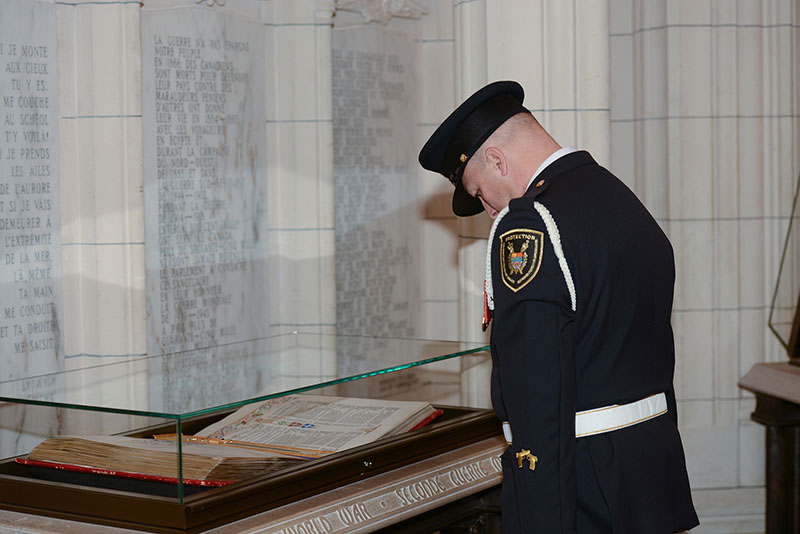
We took Guillaume Le Floch, the French exchange student to visit the Canadian Parliament building at Ottawa in August 2014. During the tour we entered the Memorial Chamber in the Peace Tower. The Memorial Chamber is a small, quiet room that houses seven Books of Remembrance which record the names of the men and women who have given their lives in military service to Canada. The Memorial Chamber is a beautifully crafted room with a vaulted ceiling, stained glass windows and intricate carvings depicting Canada’s record of war.


These books contain the names of more than 118,000 Canadians who fought in wars and died either during or after them. These men and women made the ultimate sacrifice while serving the country in uniform. The Government of Canada has always been in the forefront in honouring the men and women in uniform. The seven Books of Remembrance ensures that their names are etched in the history of the country and are always well preserved and cared for.

These Books of Remembrance represent the highest expressions of modern workmanship and artistry. The craftsmanship, heraldic illumination, calligraphy, water coloring, bookbinding and leather tooling give the books a special look and quality unequalled the world over.


The first book is the largest of the Books, containing 66,655 names, of those who died in is the First World War. The second book contains 44,893 names of those who did the extreme sacrifice in the Second World War. The third is the Korean War Book of Remembrance which commemorates the 516 men and women who died during the Korean War from 1950 to 1953.

The fourth book is the South African War/Nile Expedition Book of Remembrance, containing names of nearly 300 Canadian volunteers, who gave their lives in these early campaigns in the late 1800s This book was commissioned on May 31, 1962, the anniversary of the signing of the Peace of Vereeniging, which ended the war in South Africa.

The fifth is the Merchant Navy Book of Remembrance which commemorates the men and women of the Merchant Marine who died while serving Canada at sea during both World War I and II.


The sixth is the New Foundland Book of Remembrance which honours more than 2300 men and women who sacrificed their lives in both World War I and World War II, before Newfoundland became a Canadian province in 1949.

The seventh is the In Service of Canada Book of Remembrance This book records the names of those who died since October 1947 in military service to Canada (except in the Korean War), either in Canada or abroad.

On July 1, 1917 , then Prime Minister Sir Robert Borden dedicated a site in the Centre Block of the Houses of Parliament as a memorial to the debt of our forefathers and to the valour of those Canadians who fought in the First World War. Two years later the Prince of Wales laid the corner stone of “The Tower of Victory and Peace” as it was originally known. The intention was for all the names of the Canadian soldiers to be engraved on the walls of the chamber, but it was soon realized that there would not be enough space on the walls to contain more than 66,000 names.

Thus resulted the Book of Remembrance and the design of the Tower was altered to create a chamber to accommodate the Books. The Prince of Wales on August 3, 1927 unveiled the altar; a gift from the British Government, upon which the Book of The First World War rests this day.


James Purves was the artist chosen for the creation of the first book. James Purves died in 1940, at which time only the preliminary work had been done and only one page was fully illuminated and illustrated. Alan Beddoe, an assistant of Purves, took over and completed the book in 1942. By the time the first book was completed, Canada was already in the middle of the Second World War. Today this book lies open on the Altar in the centre of the Memorial Chamber, covered by a glass case and with kneeling statuettes of praying angels at its corners.


In 1948, Beddoe was selected to create the Book of Remembrance for the Second World War. He changed the script style and included approximately 75 names per page as compared to 125 names per page in the First World War Book. He also incorporated many pages commemorating particular actions, battles, and places that were significant to Canadians during the war. The Second World War Book of Remembrance was placed in the Memorial Chamber on Remembrance Day of 1957 (November 11).

The names of those lost are inscribed in the Korean War Book of Remembrance, which includes a page decorated with the United Nations symbol surrounded by the Arms of the 17 countries which participated in the United Nations Forces. The Book was dedicated in the Memorial Chamber on November 11, 1962.

The Nile Expedition in 1884 marked the first time Canada took part in a war overseas. Four hundred volunteers skilled in river navigation served in the expedition; sixteen gave their lives. The South African War broke out on October 11, 1899. This war marked the first occasion in which large contingents of Canadian troops served abroad. More than 7,000 Canadians volunteered to fight in the South African War. Almost 300 names are listed in the South African War / Nile Expedition Book of Remembrance. The Book was dedicated and placed in the Memorial Chamber on May 31, 1962, the sixtieth anniversary of the signing of the Peace of Vereeniging, which ended the war in South Africa.


Every morning, at eleven o’clock, the pages of the Books of Remembrance are turned by a member of the House of Commons Protective Service Staff. A calendar was devised so that each page of each book is turned once a year. Some pages are left exposed for several days at a time on or near a date of the anniversary of the actions they commemorate. During the ceremony a guard in marches in front of the First World War Book, bows and salutes and then marches over to the book on the right and turn the page. This process is repeated for all of the Books of Remembrance and is done in a counter-clockwise direction around the Chamber.

The seven Books of Remembrance are testaments to the valour, sacrifice and selflessness of those Canadians who have died in military service. Any country that honours its soldiers will always go a long way ahead as Canada has proved.

Cross Country Race

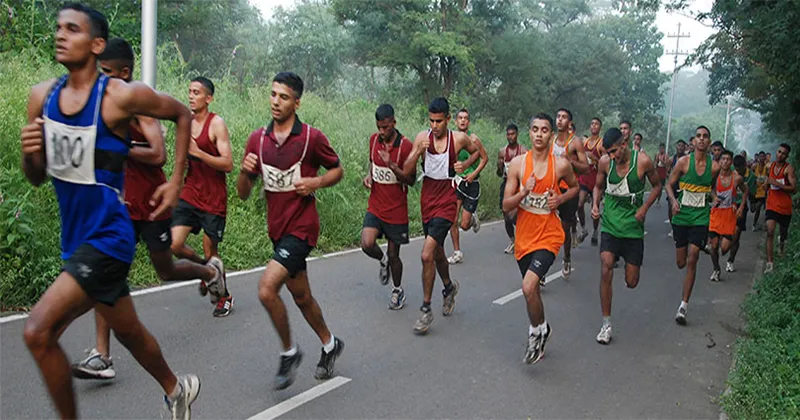
The first cross-country  race (Marathon in North America), I ran was as a Grade 5 student at Sainik (Military) School Amaravathinagar. It was a 5 km run along the base of the Western Ghats on the North side of the school. With every passing year, the distance increased. with it the difficulty. On joining the National Defence Academy (NDA), the cross country race became a ritual in every semester (half-year) and thus I ran six races in three years of about 14 km. During the first 10 years of service in the Army, I ran seven races. On reaching Canada, I ran two such races, in support of charitable causes.

Running a marathon is one of the largest physical challenges you can set, often it is more of a mental challenge – the mental strength to complete the race despite the panting, tiredness and pains. It results in an accomplishment every time, irrespective of your age. It does not matter even if you are the last, you are part of an elite club of people that have completed the race successfully.

At the NDA, the cross country race was more of a team event. The Squadron which won the trophy every semester claimed more bragging rights than the cadet who came first or second. It was a matter of pride for the cadets that their Squadron did well and hence every cadet put their heart, soul and body into doing well at the race.

The practice for the race at NDA began nearly a month prior with all cadets running a full race almost every evening and morning on Sundays and holidays. The final race was on a Sunday morning, starting at the famous Glider Dome and ending there. One witnessed cadets completing the race despite physical injuries – a cadet finished the race after he fractured his leg halfway. There have been many cadets running the race with fever. All to ensure that they do not bring in negative points for their Squadron and let the team down.

In 1987, our Regiment was located in Gurgaon near Delhi and we formed part of the Brigade stationed at Meerut – about 50 km from Delhi. Cross country race was a closely contested competition among the regiments and our unit had the rare distinction of winning it for the previous five years. 1987 was the final year at Gurgaon as the unit had received its move order to the Kashmir Valley.

Our Commanding Officer, Colonel Mahaveer Singh called Late Captain Pratap Singh, Maha Vir Chakra and self to his office in March 1987 and briefed us that we had to win the cross country competition for him. We both were Captains then and by virtue of being the senior, I became the team captain. Among young subalterns, one was away on a training course and the other admitted in the Military Hospital.

The team to be fielded for the competition was to consist of one officer and 15 soldiers. We started practicing for the race – two officers and 20 soldiers. Every morning at 5 we were picked up from our residence and the team used to be dropped off about 20 km from the regimental location. Now everyone had no option but to run back to the regiment. The faster one did it, lesser the agony.

After a month’s practice, we decided to move to Meerut a week before the race to carry out a few practices there. The race was scheduled for 11 April, Saturday to commence at 6 AM. The day we had planned to leave, Pratap’s mother took seriously ill and he had to hospitalise her and take care of her. I told Pratap to reach Meerut by Thursday evening the latest.

As Pratap had not practiced for the last week, I had made up my mind to run the race. Pratap landed up in Meerut on his motorbike on Thursday evening. On Friday I showed him the route and told him to be stand-by.

In the evening we reached the Officers’ Mess for dinner and all the young officers participating in the race were there. Seeing the senior Captains set to run the race, Lieutenant Atul Mishra wanted to know as to who amongst us was running the race. Pratap said that the person who woke up first woke up the other and the latter will run the race. Everyone believed it as the same was narrated by Atul after a decade.

After the race, I received the trophy from the Brigade Commander and after a few minutes there was Pratap with his motorbike asking me to get on to the pillion. We rode off and as I was too tired, I hugged on to him and slept off. I woke up only on reaching our regimental location after over an hour of drive.

We handed over the trophy to Colonel Mahaveer, who appreciated us for the efforts and wanted to know where the rest of the team was. Pratap said “Please do not come out with your clichéd question as to who is commanding the unit, I have ordered them to relax at Meerut for the next two days and also to visit the Nauchandi Mela“, Colonel Mahaveer passed his unique smile as a sign of approval for Pratap’s actions.

Nauchandi Mela is held every year at Meerut in April-May. It is a rare symbol of communal harmony with Hindu and Muslim shrines – Nauchandi temple and the Dargah (shrine) of Muslim saint, Bala Mian. Visitors pay obeisance at both the shrines irrespective of the religion they belong to.  The mela, which originally brought sellers and buyers of utensils and domestic animals together, now includes various kinds of goods, entertainment and food.

Colonel Mahaveer had a knack of delegation and had immense trust in all of us. He always encouraged the young officers to be decisive and whenever we goofed it up, he always held our hands and took the responsibility for our actions.

Tubectomy VS Vasectomy

vasectomy

The death toll rose to over 12, three days after the sterilisation camp organised by the Chattisgarh state government in India, It was a case of mere medical negligence and violations of guidelines and procedures outlined for such operations. Of the 83 women who underwent laparoscopic tubectomies, over 50 were hospitalised with about 25 in a critical condition.

Amir Khan in his in his show explored the subject of ‘Male Chauvinism’ in India and on the phenomenon of ‘uncontrolled masochism’ that has plagued Indian society for a long time. This medical tragedy is also an outcome of a similar case of ‘masochism’,

Birth control is the need of the hour in India and there are many non-invasive methods available, but for sure they are costly, The poor cannot afford it and the governments cannot fund it. Hence the invasive procedures are needed.

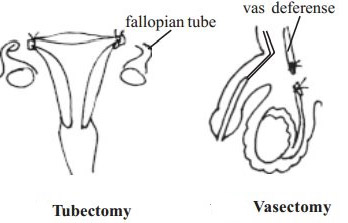
During a vasectomy, doctors numbs a man’s scrotum with local anesthesia and make one small incision. A part of the male anatomy responsible for transporting sperm from the testes is then severed, and the ends are stitched. .

During a tubectomy, a woman’s fallopian tubes are either blocked or cut entirely. This prevents her eggs from reaching the uterus, where they have the potential to be fertilized. This procedure uses spinal anesthesia and requires two incisions to be made below the navel, and cut through many layers, which allows doctors to have direct access to a woman’s fallopian tubes.

Vasectomies are not considered to be major abdominal surgeries and also much less invasive than tubectomies. Recovery times for vasectomies are shorter and the risk of complications is greatly reduced. Women who have undergone tubectomies are at a higher risk of bladder problems in the future, while there is no known increase of risk in men who have undergone vasectomies.

Overall, in terms of both cost and safety, vasectomies are a much smarter choice than tubectomies. Unfortunately, there are far fewer men getting vasectomies than women getting tubectomies worldwide. This comes from the unfair assumption that women should play more of a role in the birth control process than men.

On assuming command of our regiment, a regiment I had never served before and equipped with the modern surveillance equipment I had never seen. To familiarise with the soldiers, we captured all the data of our soldiers and developed an automated system for various administrative and training purposes. On analysing the data I found that most soldiers were not in receipt of the special increment for promoting small family norms even though they had two grownup children.

Further analysis revealed that the troops were very reluctant to undergo vasectomy and they had many an unfounded fears stemming from the usual misinformation passed on by the three ‘JIs’ of the regiment – the Pundit JI (Religious Teacher). Master JI and the Babu Ji (Clerk).

On further interactions with the affected soldiers I realised that many feared that their physical performance would be drastically reduced and would not be in a position to perform well in various Physical Efficiency Tests a soldier has to qualify. Some feared that their sexual performances would be drastically affected and the most significant fear was about the reactions of those back home when they learn that the man has undergone ‘castration’ and not the wife.

We were not posted with a Regimental Medical Officer (Doctor) and we had Naik (Corporal) Madhu, the Nursing Assistant, Thus he became the Commanding Officer’s advisor on health, hygiene and sanitation. Madhu had two children and was not in receipt of the special increment for promoting small-family norms. I called Madhu for a discussion and he confided that he wanted to get the vasectomy done, but has been procrastinating it. It was concluded that Madhu will get his vasectomy done the next week.

Sainik Sammelan (Commanding Officer’s Monthly address to all troops of the regiment), I presumed was the best platform to educate our soldiers. I believed in a short 10 minute interaction as I always felt that it was mostly boring and many a time disgusting to listen to a hour long sermon. Many of the soldiers in my younger days too shared the same thought. (Many Commanding Officers will never agree with me). In the 10 minutes I addressed the soldiers, the last five minutes was spent on educating them on various aspects of hygiene, sanitation, children education, parenting, medical concerns, etc. Post retirement many of the soldiers confided that they looked forward to the latter half of my address as it was both educative and thought provoking.

The Sainik Sammelan after Madhu had his vasectomy, I had him giving out his testimony. He explained the entire procedure and the little pain he had. He also said that it did not affect his physical efficiency in that he had secured ‘Excellent’ in the Physical Efficiency Test conducted the previous day and the procedure has in no way affected his family life or his relationship with his wife. Madhu added that he was granted 14 days of Sick Leave after the vasectomy, but he came back to work the third day as he had got bored lying on the bed in his home.

Now I explained to all the soldiers the agony their wives will have to undergo for a prolonged period after a tubectomy. I further said that no one back home will ever know that you have undergone vasectomy unless you tell them so.

Within six months we had all the soldiers who qualified for the special increment undergo the vasectomy operation and many said that they would not have done so if the Commanding Officer had not educated them about it.

Arithmetic of Licence Plates

Our son Nikhil in his Grade 3 found division a bit difficult. Along with the division difficulty came the prime numbers and factors. We decided to solve the problem by making arithmetic interesting by me giving out various tips that I had learned while at school, especially from Mr Venkitesha Murthy, our Grade 7 mathematics teacher. Mr Murthy taught us mathematics through various stories, anecdotes and riddles. He also inspired us with the achievements of great Indian Mathematicians like Ramanujam, Bhaskara and Aryabhatta. It took me some time and effort to grasp the concept of factors and prime numbers even while in Grade 7 and hence Nikhil’s difficulty with the same was not at all surprising to me.

licenceplate

Everyday Nikhil and I spent almost half an hour in the car – dropping him off at school, picking up after school, commute to the swimming pool or tennis court or for music class in the evening. Nikhil called it a father-son time and used it to discuss all those which he thought would attract a comment or a spoof from his mother or sister. This practice continues to date, and the subject kept changing as Nikhil grew up to his current Grade 12.

To solve the riddle of division and factors, I came up with a game. In our province, Ontario, most licence plates on vehicles have four alphabets followed by three digits. Three digit numbers can be easily handled by a Grade 3 student. Any vehicle we came across on our drive, we used to analyse the number.

To begin with was to see whether the number was even or odd and hence conclude its divisibility by ‘2’. Then it was to add all the digits and if the resultant sum was either ‘3’ or ‘6’ or ‘9’, it was to be concluded that the number is divisible by three.

In case the number was an even one and the last two digits (ten and unit place) was divisible by ‘4’, then ‘4’ is a factor. If the unit place is either ‘5’ or ‘0’, the number is divisible by ‘5’. In case ‘2’ and ‘3’ are factors, then ‘6’ will also be a factor. If the sum of the digits resulted in ‘9’, the number is divisible by ‘9’. If the unit place has ‘0’, then ’10’ is a factor.

With this game on, every day we analysed about 10 licence plates and with that the difficulty of division, factors and prime numbers was resolved to a great extent.

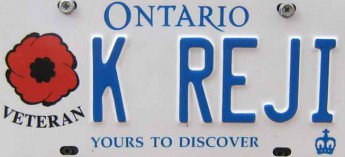
The first car my wife bought for me on arrival in Canada was a new Honda Accord and when I went to take the delivery, the agency had already procured the licence plate for me. The number was ‘BBZW 139’. In North America, licence plates move with the owner, not with the vehicle. If you sell or change vehicles, you keep the licence plates and affix them on your new vehicle. Hence this number plate remained with me, though I changed three cars.

The number also reflects a bit on my personality as 139 is an odd number and also a prime number. It has only 1 and itself as a factor and is not fully divisible by any other number. I believe that I cannot be affected by any factors or divided by any other than 1 – the God Almighty – and myself.

The digits 139 fascinated me as it added to 13, my day of birth – 13 March. My school Roll Number was 931, which again added up to 13 and my Defence Account Number was 161005, which again added up to 13 and the list goes on. This is mere coincidence and has nothing to do with the unlucky 13 and it has never bought the lady luck to my side, and I cannot claim to be unlucky also. I do not believe in numerology or astrology and hence this trail of 13 never ever cast its bad luck on me.

’13’ is also known as Baker’s Dozen – instead of 12, bakers always packed 13 for a dozen in Britain. In the mid-thirteenth century, Britain enacted the statute of Assize of Bread and Ale, which set the relationship between the price of wheat and what the subsequent price of a loaf of bread from a certain quantity of wheat should be. If the baker accidentally cheated a customer by giving them less, they were subject to extremely severe fines and punishment. In order to avoid such accidents, bakers started to count 13 for a dozen.

Children turn teenagers when they turn 13 and we are all aware of what it means.   Apollo 13 is the only unsuccessful moon mission. An oxygen tank exploded and the survival of the astronauts on board was hanging in balance for several days, but they all came home safely. Many Christians believe that 13 is unlucky as there were 13 people in the Last Supper.

Triskaidekaphobia – the fear of number 13 (from Greek tris (three), kai (and), and deka (ten,) and Paraskevidekatriaphobia is the term used to describe the fear of Friday the Thirteenth – (Greek words paraskevi (Friday) and dekatria (thirteen) with –phobia as a suffix to indicate ‘fear’). Researchers estimate that at least 10 percent of the US population has a fear of the number 13, especially for Friday the thirteenth.

Mathematicians point out that 13 is not so unlucky, but it earned all its bad name as it is an odd number and a prime number. It is 13’s bad luck that it follows the perfect number 12. Many believe that 12 is perfect as it counts to a dozen, there are 12 months in an year, a day consists of two 12-hour cycles etc. The extend of Triskaidekaphobia in the US is so high that more than 80 percent of high-rise buildings do not have a thirteenth floor, and the vast majority of hotels, hospitals and airports avoid using the number for rooms and gates as well.

The number 13 may be lucky or unlucky, but one cannot blame the number for it and will always follow number 12 and precede number 14.

Vet Plate

PS.  Now I do not have the above licence plate.  The Government of Ontario, Canada, in recognition of my service with the Indian Army has given me a new Veteran Plate.  My gratitude to Canada for honouring a Veteran from another country.

Wounded Warriors Park

WoundedWarrier

Canada’s first monument and park dedicated to wounded veterans and other uniformed personnel injured in the line of duty opened on 01 November 2014 at Whitby, a town about 50 kilometers from Toronto. The park has been aptly christened as ‘The Park of Reflection,’ which aims to be a living tribute to survivors and the families who care for them. The park was designed by Daimian Boyne, a Canadian Armed Forces veteran who served in Bosnia. Boyne believes that everyone remembers those who have fallen in the line of duty but have always forgotten those who became ill and injured.

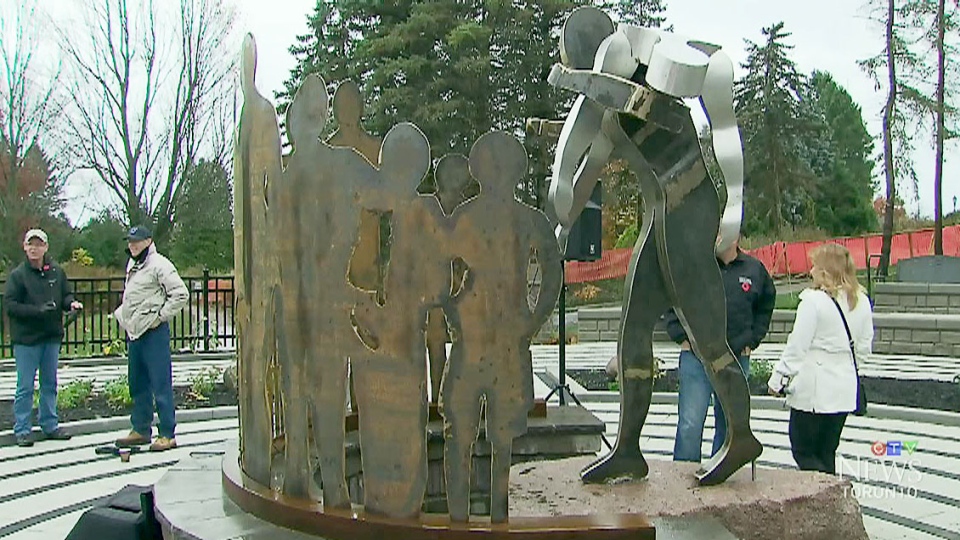
Boyne, who suffered severe post-traumatic stress, said it can be especially difficult for those with less obvious injuries and it is often their families who are left to cope. He is also of the opinion that post-traumatic stress creates disharmony in a family unit and this monument depicts a family and a community dealing with such veterans.

After leaving the military in 2006, Mr. Boyne struggled with depression, suicidal thoughts and other effects of post-traumatic stress disorder (PTSD). He went on to study horticulture at Algonquin College in 2009 with the help of a veterans’ transition program and found nature to be a key part of the healing process. Currently national events co-ordinator with Wounded Warriors Canada, Boyne said he has run many events across the country and watched nature return smiles to the faces of men and women, showing them there’s life after service.

On release from the military after being injured in the line of service there was a thought in Boyne’s mind as to how people are going to remember the sacrifices of him and his family. He thought of a the firefighter who runs into a house to save lives and ends up getting hurt. He or her, and their families, made the sacrifice for the community and as a token of paying them back and remembering them forever, he came up with the idea of this park.

Canadians pay wonderful tribute to those who have fallen in the line of duty but we have always forgotten those who became ill and injured on the line of duty. Many are left with lifelong scars – physical, emotional, psychological, etc. Some live a difficult and dreadful life post retirement. This park aims to be a living tribute to survivors and their families who care for them. This is a new way of showing the ill and injured that their service and sacrifice will never be forgotten.

The park, an initiative of Wounded Warriors Canada, features an amphitheater overlooking a circular plaza with a labyrinth walking path and healing garden. A central sculpture depicts a first responder carrying a wounded comrade back to society, with shapes surrounding it that represent community members. Tribute stones have been created to be inlaid in the pathway with the names of the ill and injured. Members of the public have been advised to purchase tribute stones for $500 each, with the name of a loved one who has been injured in service, to be placed at the park. The centerpiece was envisioned by Daimian Boyne with an aim to provide a tranquil place that serves both as a tribute and as a place of calm and healing.

The Wounded Warriors Canada hopes that the park will inspire other such parks in communities across Canada and also across the world. While this park will serve as a reminder of the wounded living among us, it would also become a place of laughter and joy, of community events and theater, and so become a celebration of life. If we can make the wounded veteran realise that their service and sacrifice will never be forgotten, one can honestly believe that it is going to bring up their heart and soul and it is going to give them the courage to get back into the community again.

Dozens of uniformed personnel — military, police and firefighters — as well as veterans, spectators and dignitaries were on hand for the formal opening that featured the pomp and ceremony of a marching band, bagpipes and ‘The Last Post’.

Toronto Police Chief Bill Blair was in Whitby on Saturday, where he said that such spaces are appreciated by those in uniform. He added that it gave them strength and just reminds them that their sacrifice and their effort on behalf of their fellow citizens is recognized and appreciated.

Corporal David Macdonald, a member of the Royal Regiment of Canada who was injured during a combat tour in Afghanistan and later suffered a stress disorder, said the new facility was important to him. He added that when a soldier comes home battered and broken, it is a long journey to recover.  The society often fails to recognize the toll taken on those with invisible scars or injuries. When asked about the war in Afghanistan, everyone appears to know the tally of the soldiers that were killed, but no one knows the mere numbers of soldiers maimed or wounded, some for life.

One of my Gurus during my Indian Army days, General Raj Mehta, was wounded while serving as a Brigadier in Kashmir, fighting the terrorists.   He wrote to say that a memorial for the wounded is something pretty unusual from the Indian context because we neglect our brave dead savagely, so cannot be expected to really bother about our wounded who are still alive…We have many many cases where the wounded are denied disability pension which both military as well as civil bureaucracy holds up on trivial grounds and contests in the courts for years.   When he got wounded, he was savagely criticised because it was felt that a Brigadier should not have got wounded as it gave the terrorists a moral ascendency.  Superficially, however, a veneer of concern was maintained by the hierarchy by sending “Get Well…We are proud  of you” messages, but in reality, most of this was disingenuous talk that was so easy to see through…

11/11 @ 11:11

Every year on November 11, at 11 minutes past 11 AM, Canadians pause in a silent minute to remember the men and women who served, and continue to serve the country during times of war, conflict and peace. This moment coincides with the Armistice Day which marks the date and time when armies stopped fighting World War I on November 11 at 11 minutes past 11 AM in 1918. In the United States this day is called Veteran’s Day and is also observed on November 11. On this day in Canada at 11 minutes past 11 o’clock, all the buses and trains will stop, the fire engines will sound their sirens for a minute as a mark of respect to all the fallen soldiers.

During the Remembrance week- November 4 to 11, all the flags fly at half-mast; all the buses have ‘Lest We Forget‘ signboards, most of the shops, restaurants and malls display banners and posters to honour the soldiers and veterans.

The Remembrance Day is observed to honour veterans who fought for Canada in the First World War (1914-1918), the Second World War (1939-1945), and the Korean War (1950-1953), as well as those who have served since then. More than 2.3 million Canadians have served our country in this way, and more than 118,000 have died. They gave their lives and their futures so that we may live in peace.

Six rules of poppy protocol for Remembrance Day | The Star


On Remembrance Day, we acknowledge the courage and sacrifice of those who served their country and acknowledge our responsibility to work for the peace they fought hard to achieve. All the buses ply with the sign ‘Lest We Forget’; all the shopping malls and coffee shops put up posters in appreciation of the services rendered by our soldiers; cadets and veterans sell the ‘Red Poppy’ – made by disabled Veterans – to be pinned on the dresses.

Poppies are worn as the symbol of remembrance, a reminder of the blood-red flower that still grows on the former battlefields of France and Belgium. During the terrible bloodshed of the second Battle of Ypres in the spring of 1915, Lieutenant-Colonel John McCrae, a doctor serving with the Royal Canadian Army Medical Corps, wrote of these flowers which lived on among the graves of dead soldiers:

In Flanders Fields the poppies blow
Between the crosses, row on row,
That mark our place; and in the sky
The larks, still bravely singing, fly
Scarce heard amid the guns below.

In photos: Remembrance Day ceremonies across Canada to honour those we've lost - The Globe and Mail

Canadian Prime Minister and the entire cabinet appeared on media for the duration of remembrance week, wearing the Red Poppy. In India, on the Armed Forces Flag Day (07 Dec), children pin the flags on our President and the Prime Minister and Chief Minister, and for the next event you see them without the flags on their chests.

The national ceremony is held at the National War Memorial in Ottawa presided by The Governor General of Canada with the Prime Minister, other government officials, representatives of Veterans’ organizations, diplomatic representatives, other dignitaries, Veterans as well as the general public in attendance.

School is where the children usually first learn about who and what Remembrance Day is for. Schools go into why we need to give respect and they will usually have an assembly and a veteran or a serving soldier addresses the students. After the assembly, the first hour in class is spent on discussing the sacrifices made by the soldiers and the students are urged to come up with the details of family members, relatives or friends who served or are still serving with the armies around the world.

Our son Nikhil, studying in Grade 9 In 2010, was attending such a discussion. The class consisted of ‘Gifted Children’ and had about 70% of students of Oriental origin, 25% Caucasians and he was the lone Indian. Every other student were narrating the details of their parents, uncles, grandparents, granduncles, etc who served in the First and the Second World Wars and other military operations. Nikhil did not want to be left behind and he stood up to give his account.

Nikhil narrated the few instances of his life as a kindergarten student which he spent in Devlali and the interactions he had with the soldiers and also about various events he had witnessed like the artillery fire power demonstration.

Military history being taught in Canadian schools is based on the Canadian participation in the World Wars. He did a lot of research on the military history aspects and had bought a dozen books on the subject.  In those days, Nikhil earned $50 pocket money a month for helping me out with the household chores like vacuuming, cleaning, washing of dishes, laundry, gardening, garbage disposal, etc. He used to use up all the money to buy books and always ended up with a bill much higher than the limit and I always gleefully paid it as it was for books. Now days he does not want any pocket money as he earns about $100 a week working as a swimming instructor and life guard at the city’s swimming pool.

Anyhow, it proved my current theory that a better reflection of a high-school student comes from the books he keeps than the friends he keeps.

Stand Up While You Work

In North America most of the cashiers at the banks or in the stores, hospital staff, pharmacy staff, airport staff – anyone and everyone who deals with customers you come across are standing and working. There is no chair or stool available to sit. It is perceived as a common courtesy to stand when the customer is also standing.

Marina at her Pharmacy

It is natural for human beings to stand in place and work. It is easier and faster to think from standing position. The tendency to procrastinate is reduced drastically while standing as there is hardly any note taking. When one stands up, one tends to believe that the task in front is much smaller. It is believed that Abraham Lincon, Winston Churchill, Ernest Hemingway, Leonardo da Vinci enjoyed working standing up.

Today most offices in the Silicon Valley have gone in for stand-up desks. Stand-up desks are the latest trend in office furniture. Some believe it improves productivity while some claim that if you stand for three hours a day, it is the equivalent of running 10 marathons over the course of a year. Standing is believed to convey availability and courtesy while sitting in the presence of customers may be rude. Apparently, one gets the feeling that the staff are more efficient while standing, but there is no scientific proof for it. Many managers and supervisors feel that their staff are more efficient while standing and performing as they do not waste time to get up to greet the customers.

In North American schools/universities/colleges, the teachers always stand and deliver their lectures and in case one goes through the YouTube showing classes being conducted, there is no chair on the stage or near the blackboard.

In Europe and Asian countries the cashiers do sit and carry out their jobs. The major difference is that in North America, the cashier is expected to lift heavy stuff, ring the cash register and also bag the purchase. They have no help or assistance unlike their counterparts in Europe or Asia.

The associate who checks the passengers at the airline counter at the airport has to check-in the customer, tag the baggage and place them on the conveyor belt – all by themselves without assistance. At many airports now there are self check-in kiosks where the passengers do all these and drop in their baggage at the counter.

People who stand up and work appear to be healthier, smarter, happier and more efficient than those who sit and work. Compare a bus conductor to the bus driver; compare the cabin-crew of any airline to the flight crew; the list goes on. There are many real health challenges brought on by long days in a seated position, which is not what humans were designed to do. We squatted, to eat; we ran, to hunt for food; we stretched to reach for berries and nuts. Today most humans are tied on to their chairs, while at office or at homes, with hardly any movement.

In order to make life more comfortable in offices, there are ergonomically designed furniture, screens with adapters to position it at eye level, specially designed mouse to overcome repetitive strain injuries (RSI), etc. These result in sitting down for long periods of time at the work desk, mostly using only the brain and giving hardly any movement to the limbs. This leads to monotony, boredom, reduced social interaction among the staff, increase in body mass and blood pressure, high stress levels, etc.

To break away from such a dreaded lethargy, identify opportunities throughout your day to walk. Even a long stroll through the office gardens will help you shed a few calories and clear your mind. Try to take a phone call standing up; you can sit down if you need to take notes or write. Going from standing to sitting and then standing again will help keep you active and burn additional calories. Deliberately take a short break every hour to walk around the office and back to your desk. Clean and organise the office before leaving each day – never leave it to others to clean it for you. More than relaxing your muscles and brains at the end of the day, this will be result in a clutter free office the next morning.

Standing is a natural human posture and by itself poses no particular health hazard. However, working in a standing position on a regular basis can cause sore feet, swelling of the legs, varicose veins, general muscular fatigue, low back pain, stiffness in the neck and shoulders, and other health problems. The use of well-designed anti-fatigue matting can play a huge part in injury prevention, the reduction of standing worker fatigue, and increased productivity.

Taking care of the feet is the most important aspect for all those standing for prolonged periods at work (equally applies for those who sit for prolonged periods). Always remember that your feet can only be as comfortable as the footwear permits. Some tips for selecting the apt footwear are:-

  • Wear shoes that do not change the shape of your foot.
  • Ensure that the shoes have a firm grip for the heel. If the back of the shoe is too wide or too soft, the shoe will slip, causing instability and soreness.
  • Find shoes that allow freedom to move your toes. Pain and fatigue result if shoes are too narrow or too shallow.
  • Ensure that shoes have arch supports. Lack of arch support causes flattening of the foot.
  • Wear shoes with lace-up fastenings. Tighten the lace firmly to prevent the foot from slipping inside the footwear.
  • Use padding under the tongue if you suffer from tenderness over the bones at the top of the foot.
  • Use a shock-absorbing cushioned insole when working on metal or cement floors.
  • Never wear flat shoes and always ensure that the heels always less than 5 cm (2 inches).
  • Always buy new shoes in the evening; that is when your feet are in the most swollen state.

Whether standing up and performing the tasks is better than sitting down and doing it or not, customers feel that a person who is standing is more approachable and effective.  In Canada, the only person whom I have seen sitting and working is the bus/ taxi/ truck driver.  If they had a way, they would have made her/him standup too.

Halloween

The word Halloween means hallowed evening or holy evening. It is believed to be of Scottish Christian origin, dating back to mid Eighteenth Century. Halloween falls on 31 October, the evening prior to the Christian All Saints Day, on 01 November.

IMG_1944.JPG

With regard to the evil spirits, on Halloween day, barns and homes were blessed to protect people and cattle from the effect of witches, who were believed to accompany the evil spirits. In the 19th century, in parts of England, Christian families gathered on hills on the night of Halloween. One held a bunch of burning straw on a pitchfork while the rest knelt around him in a circle, praying for the souls of relatives and friends until the flames went out. The idea of Halloween as the Devil’s holiday has been propagated by the modern day Christian Evangelists. They lecture their followers that scary costumes, huge fires and talk of dead spirits are the marks of the Devil and the Satan.

Halloween came to North America with the influx of Scottish and Irish settlers by early Nineteenth Century. It was gradually assimilated into mainstream society and by the first decade of the Twentieth Century it was being celebrated all over North America by people of all social, racial and religious backgrounds.

IMG_1997.JPG

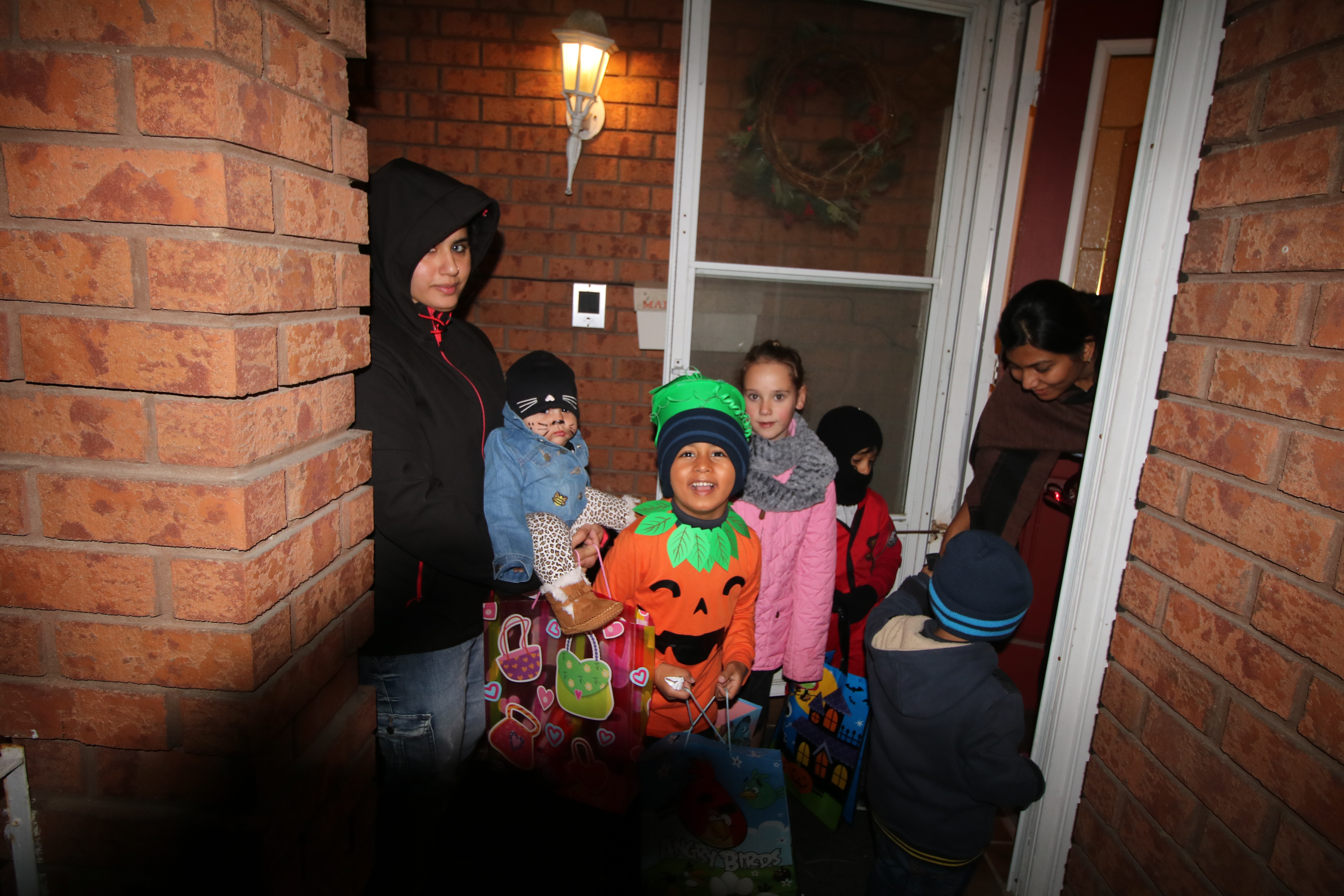
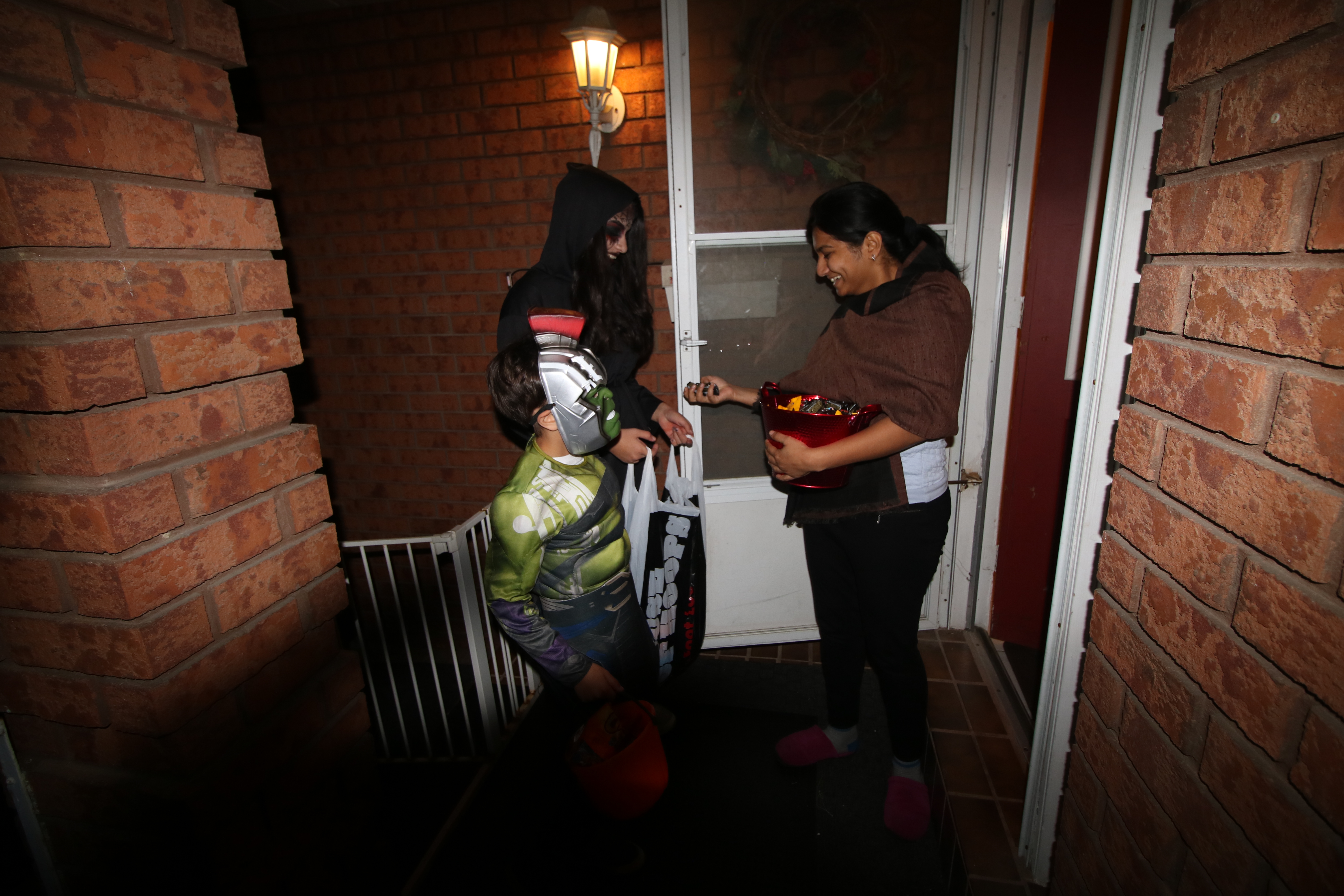
Trick-or-treating is a customary celebration for children on Halloween. Children go out in costume from house to house, asking for treats such as candy or sometimes money, with the question, Trick or treat? The word Trick refers to threat to perform mischief on the homeowners or their property if no Treat is given.

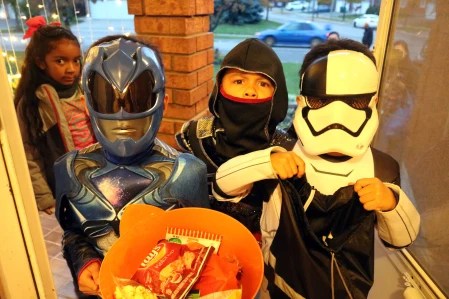
Halloween costumes are traditionally modeled after supernatural figures such as vampires, monsters, ghosts, skeletons, witches, and devils. Nowadays costumes come in the form superheroes like Batman, Spiderman, Superman, Captain America, GI Joe, etc. On Halloween day one can see most people – students, teachers, office goers, staff at the malls and the restaurants – all wearing some costume. Some offices and business houses have a particular theme for that year and everyone is expected to dress based on the theme.  It is thought that the colours, orange and black, became Halloween colors because orange is associated with harvests (Halloween marks the end of harvest) and black is associated with death.

Most homes put up Halloween decorations as what one sees in the Dracula movies with cobwebs, skeletons and various scary models. Most houses during the week carries a Haunted House facade.

The most common decoration is the Jack-O-Lanterns which originated in Ireland where children carved out potatoes or turnips and lighted them from the inside with candles. Its origin can be traced back to an Irish myth about a man nicknamed “Stingy Jack” who invited the Devil to have a drink with him and then didn’t want to pay for his drink. He tricked the Devil and drove him off by carving a cross on to a turnip and illuminating it with a lighted candle. In North America, pumpkins were cheaper and more readily available than turnips, thus carving them and making them into Jack-O-Lanterns lit by a candle inside became a North American Halloween tradition. More than 50% of the pumpkin grown in Canada gets converted into Jack-O-Lanterns to end up in landfills.

Some associate Halloween with vampires. The percentage of North Americans who believe in the existence of vampires is at a dangerously high today. Legend has it that vampires feed on human blood, and once bitten, the victim also becomes a vampire and starts feasting on the blood of others. This supposedly accounts for an exponential increase of these widely feared creatures.  The vampires are said to have come into existence from the turn of the Seventeenth Century. If one vampire would have bit a human a month, and that person and the original vampire would have bit two the next month, and so on, by the turn of the eighteenth century, the entire world population would have been bitten by a vampire.

IMG_1983.JPG

Whether Halloween is a devil’s holiday or not, the children really have a lot of fun and enjoy the evening going for Trick or Treat; the adults enjoy accompanying the children and also treating them at their homes.  People of all ages do have a lot of fun dressing up in the most grotesque way and they do not ever associate the Devil or Satan with what they do.

O Canada, We Stand on Guard for Thee


O Canada, we stand on guard for thee – goes the final line of the Canadian National Anthem. Kevin Vickers, the sergeant-at-arms of the House of Commons along with Constable Samearn Son and the entire security machinery that saved the day for Canada highlighting the essence of the national anthem. They protected the Prime Minister and Members of Parliament when gunman Michael Zehaf-Bibeau opened fire in the parliament building.

On Wednesday, October 22, 2014, after shooting Corporal Cirillo at the National War Memorial, Zehaf-Bibeau got into his car and made a U-turn in the direction of Parliament Hill, just a few hundred metres away. He abandoned the car outside the East Gate and commandeered one of those vehicles, which he drove right up to the front steps of parliament building with several RCMP vehicles in pursuit.

Zehaf-Bibeau engaged in a brief exchange of gunfire with House guards as he entered Centre Block. Inside the Centre Block, Const. Samearn Son, a 10-year veteran of the Commons security team, tried to stop him. Son immediately noticed the long rifle in Zehaf-Bibeau’s hand. and although he was unarmed, lunged at the shooter, grabbed the gun and pulled it toward the floor, screaming “Gun! Gun! Gun!”

That alerted the plainclothes officers inside the building, who carry weapons. During the ensuing struggle, Son was shot in the foot. He was taken to hospital later in the day, and released that night, but with a permanent souvenir — the bullet will stay in his foot, sources say, as it would do more damage to remove it.

Zehaf-Bibeau continued up the stairs, but by that time, the officers inside had been alerted by Son’s cries. The shooter went down the hall, at which point Sergeant-at-Arms Kevin Vickers shot him.

Kevin Vickers, the sergeant-at-arms of the House of Commons, routinely carries the ceremonial mace into the House as a symbol of authority. The kings of England and later the speakers of the House of Commons had sergeants-at-arms carrying large maces to protect them.

Vickers richly deserved the prolonged standing ovation he received in the House of Commons on 23 October, and the thanks of a long procession of MPs thereafter. Vickers issued a statement saying he was touched by the attention but gave full credit to the whole remarkable security team, which demonstrated professionalism and courage.

To Canadians he is being hailed as a hero. Despite the incident, Vickers was back at work first thing this morning as MPs returned to Parliament. Vickers, 58 years old, served the Royal Canadian Mounted Police (RCMP) for 29 years and on retirement he became the sergeant-at-arms in 2006. In his RCMP career, he rose up the ranks from a constable to chief superintendent.

OCnada
The image above showing flags flying at half-mast as a sign of respect for the fallen soldier, was taken in front of the McDonald’s outlet across the street from our home on 23 October 2014. Both the Canadian national flag and the McDonald’s flags are at half-mast. This brings out the real national character of the Canadians and exemplifies their regard for their soldiers.

Cana1
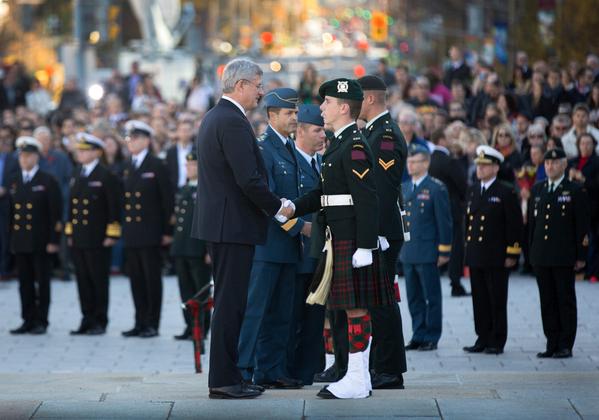
There was a special reinstatement ceremony of the Sentry Program at the National War Memorial on 24 October. Two soldiers took their posts as sentries on either side of the Tomb of the Unknown Soldier for the first time since Cirillo was shot in the same location on 22 October.   The ceremony was attended by Prime Minister Stephen Harper and he greeted the soldiers alongside General Tom Lawson, Canada’s Chief of the Defence Staff. Among those he greeted were the five passersby who tried to save Cirillo’s life after he had been shot.

can1
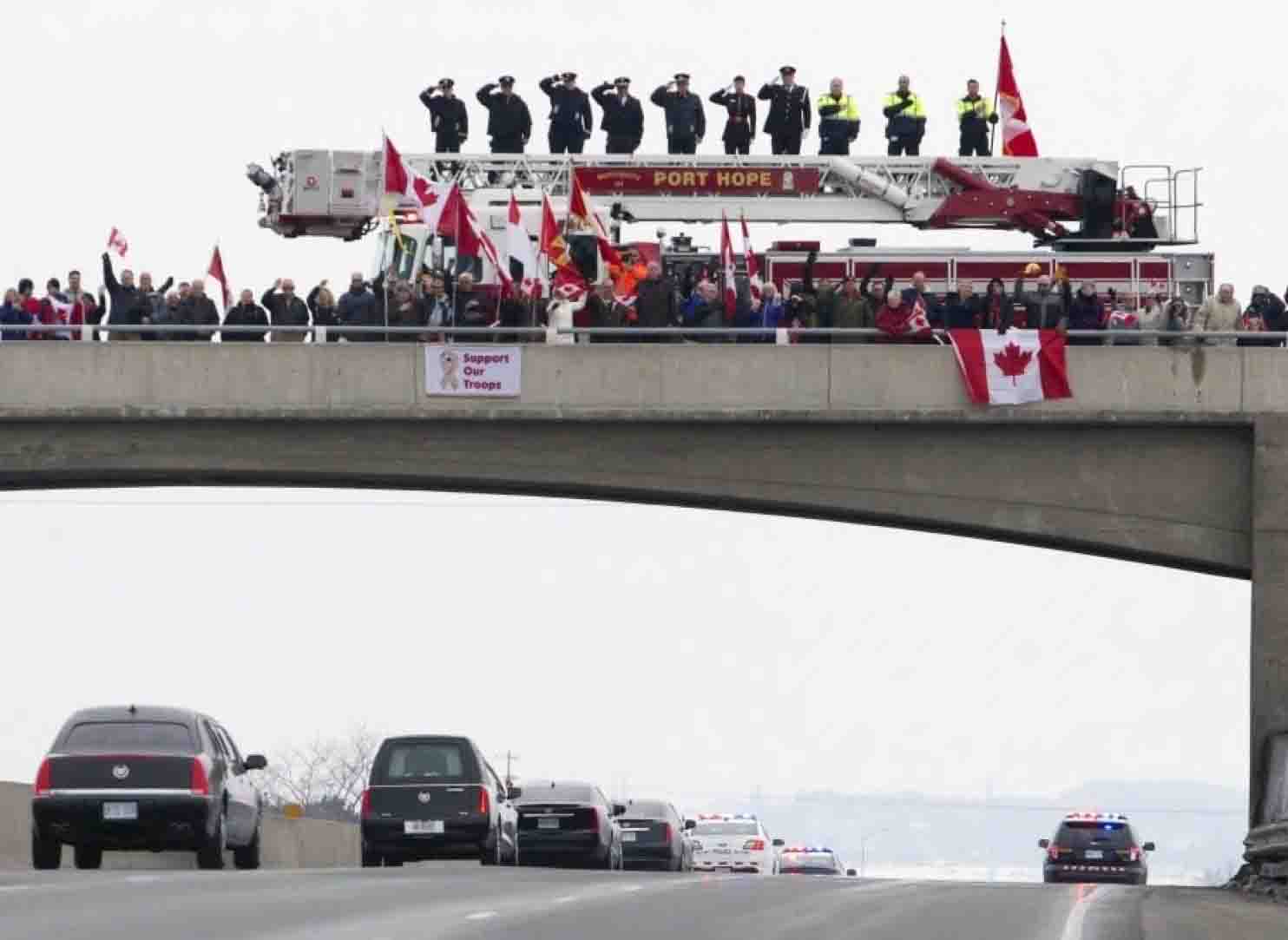
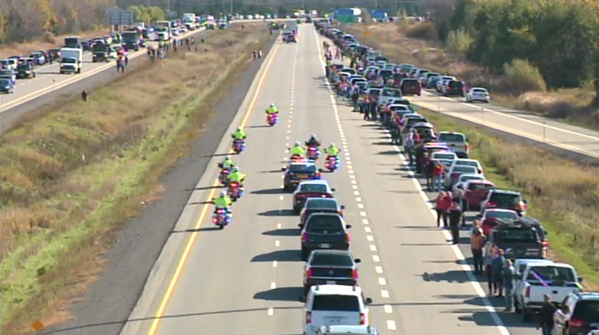
On 24 October 2014 afternoon, as Corporal Nathan Cirillo made his final journey home from Ottawa, thousands of Canadians lined the roads and highway overpasses from Ottawa to Hamilton, Ontario, to pay respect to the fallen young soldier.


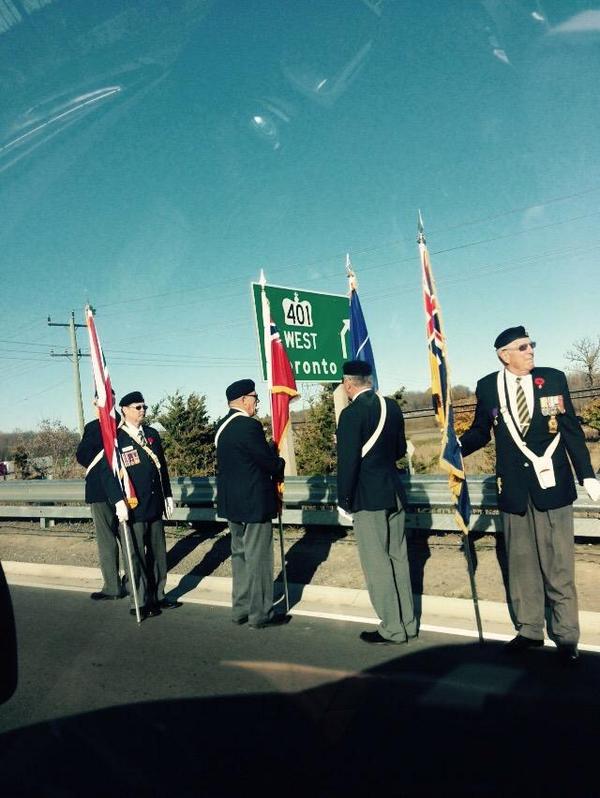
As the hearse carrying Cirillo’s remains travelled along the Highway of Heroes, a stretch of Highway 401 named in honour of all the soldiers who laid down their lives.

can2
Onlookers waved Canadian flags and clapped.

can9
The crowds included veterans, police officers, firefighters, military families and those who wanted to pay their respects. Some sang ‘O Canada’ as the hearse passed by.

cna7
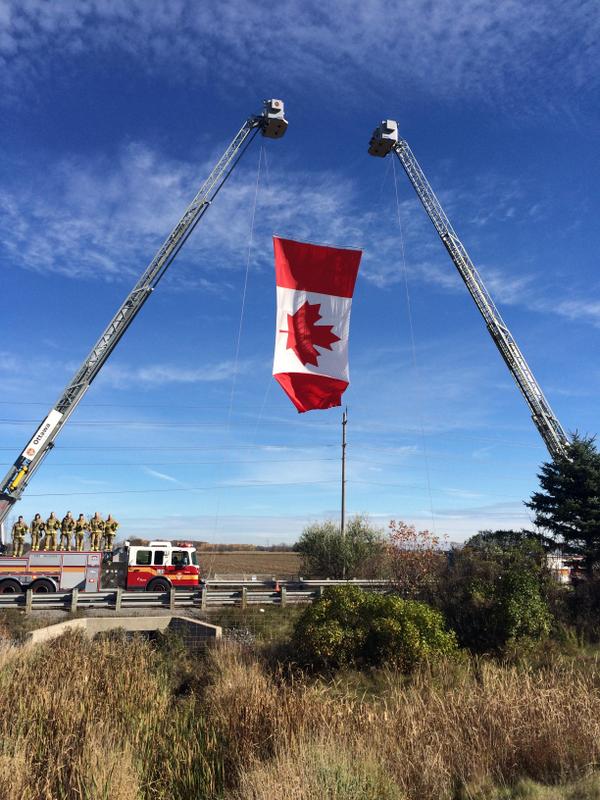
On all the overpasses, the fire fighters had raised the Canadian national flag atop the ladders of the fire trucks.

An Ottawa firefighter waves a Canadian Flag as crowds wait on an overpass at the Veterans Memorial Highway for a procession transporting the body of Cpl. Nathan Cirillo to pass by in Ottawa on Friday, October 24, 2014. THE CANADIAN PRESS/ Patrick Doyle
For more than 500 kilometers, other vehicles respectfully kept their distance from the motorcade or pulled over until the hearse was out of sight.

A Canadian Soldier salutes the hearse carrying the body of Cpl. Nathan Cirillo on the Veterans Memorial Highway in Ottawa on Friday, October 24, 2014. THE CANADIAN PRESS/ Patrick Doyle
There were no police to enforce any traffic control, the self-disciplined Canadians demonstrated the apt way to pay respect to a fallen soldier.

OTTAWA, ON - OCTOBER 24: Kathy Cirillo (center left), the mother of Cpl. Nathan Cirillo, follows the casket carrying her son, two days after he was shot dead by a gunman while he guarded the National War Memorial, during a precession from Ottawa to Cirillo's hometown of Hamilton, Ontario, on October 24, 2014 in Ottawa, Canada. After killing Cirillo the gunman stormed the main parliament building, terrorizing the public and politicians, before he was shot dead. (Photo by Andrew Burton/Getty Images)
When the procession arrived at the Hamilton funeral home around 8 PM, the large crowd that had been waiting outside for hours softly sang the national anthem and applauded.

cane
This demonstration of national pride and respect for a fallen soldier comes naturally to the Canadians. Canada does not have conscription and majority of the Canadians have not served with the military. The major contributor is the fact that Canadian military history forms a major part of the Canadian history curriculum from primary to high school level. The children learn about the heroics of Canadians in the first and the second World Wars and the role played by Canadians in various peace keeping missions across the world. It was Lester Bowles Pearson, former Canadian Prime Minister who is credited as the father of  United Nations Peace keeping when he suggested that the United Nations station a peacekeeping force in the Suez Canal during the crisis in July 1957.

To become a Canadian citizen one must pass the Canadian Citizenship Test which covers a major portion on the Canadian military history. This ensures that the naturalised citizens are well aware of the sacrifices and achievements of the Canadian soldiers.

Why can’s the Indian UPSC, various state PSCs, entrance examinations, bank staff and officers examination – all include at least 5% questions from  Indian Military History?

On the occasion of the Remembrance Day on November 11, the school children discuss about their relatives who served the military – both the past and the present. In all the schools and in many public places, ceremonies are conducted to honour the veterans and the serving soldiers. Above all, during the week running to the Remembrance Day, all Canadians wear a Red Poppy as a mark of respect to the soldiers.

Corporal Nathan Cirillo’s made his final journey home on 24 October, 18 days before the Memorial Day – 11 November.  During the Memorial Week, Canadians wear the ‘Red Poppy’ as a mark of respect to fallen soldiers.  Can you spot anyone in the images above not wearing a Red Poppy?

To read as to ‘Why we wear a red Poppy?’ please click here.

Whale Watching @ Bay of Fundi

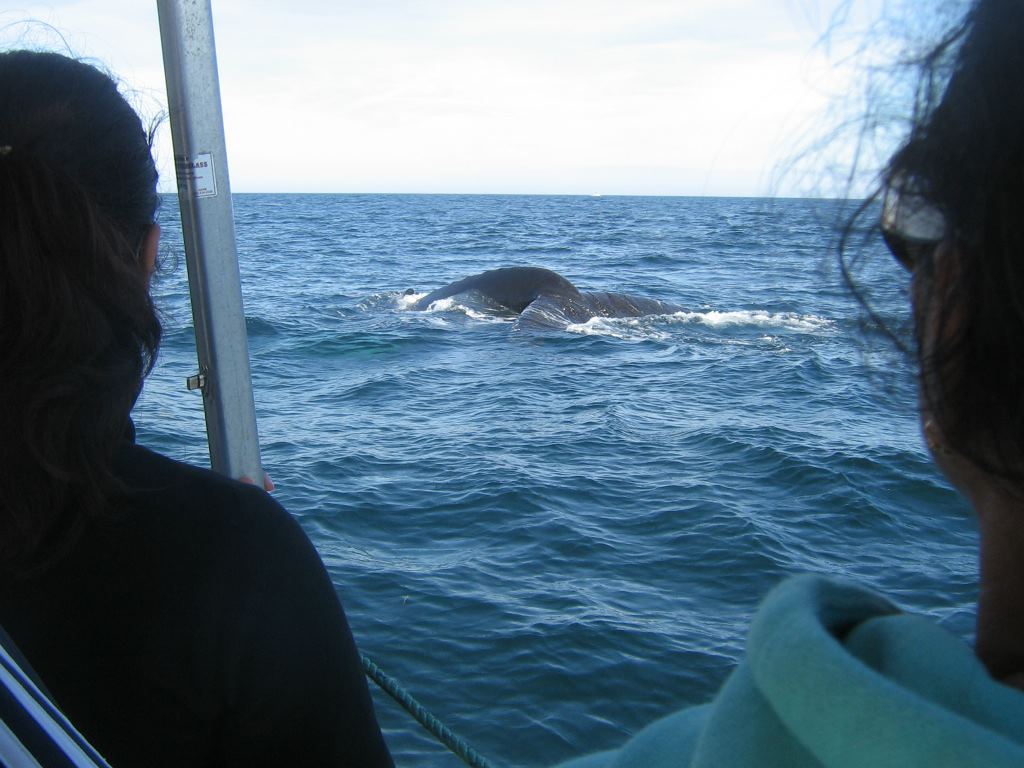
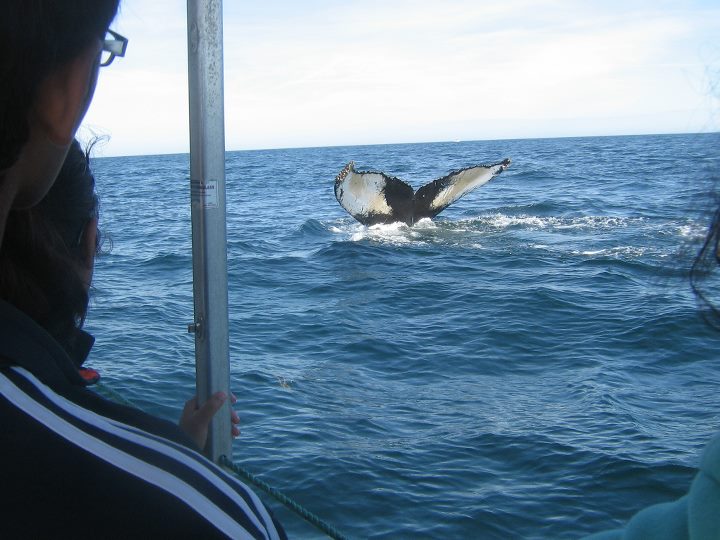
After spending three days on the Prince Edward Island (PEI), the Eastern most province of Canada, we decided to travel to the Bay of Fundy for Whale watching.

The Bay of Fundy is a bay on the Atlantic coast between the Canadian provinces of New Brunswick and Nova Scotia. Some sources believe the name ‘Fundy’ is a corruption of the French word ‘Fendu’, meaning ‘split’, while others believe it comes from the Portuguese ‘funda’, meaning ‘deep’. The Bay of Fundy is known for having the highest tidal range in the world and is said to be best place to watch the whales in the summer.


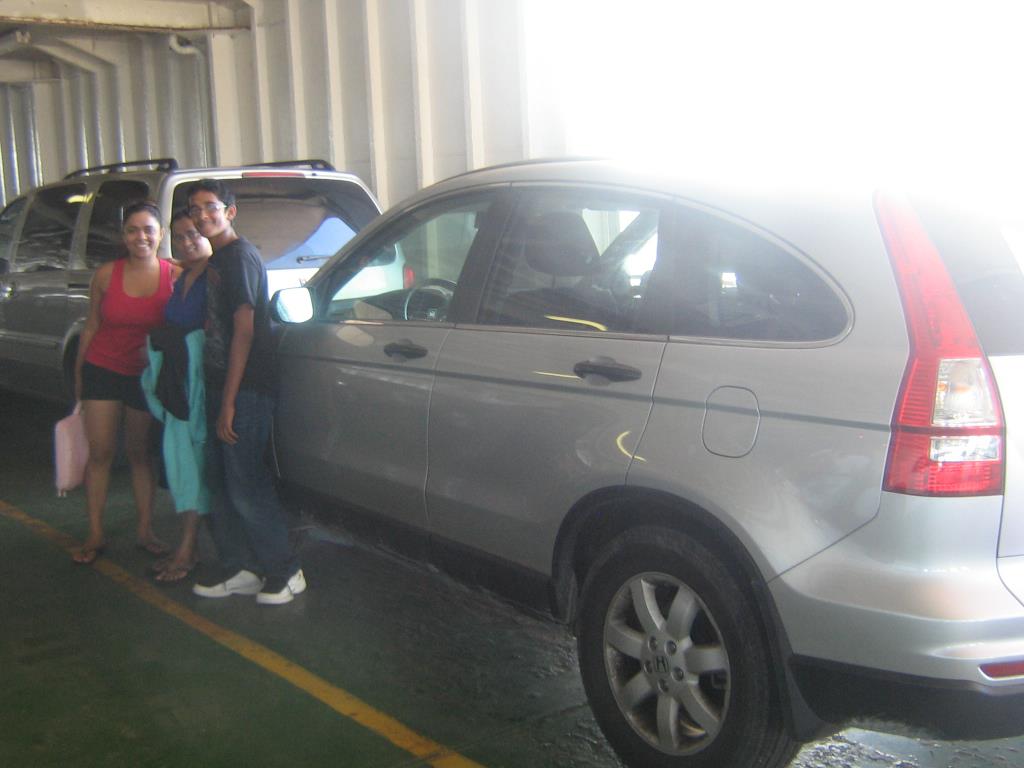
We had entered PEI through the Confederation Bridge and decided to take ferry for exiting the island. It could have been the resultant of my military mind which prompted the decision for a different exit route and also the eagerness for the experience of traveling by the ferry.

The ferry commences its voyage from Wood Islands, PEI and takes 75 minutes crossing the Northumberland Strait to Caribou, Nova Scotia. The bottom two decks of the ferry holds about 150 vehicles, which include 60 feet trucks, cars and motor cycles. The upper two decks are for passengers and there is Wi-Fi, movies, restaurants, lounges, children play area, etc on board.   We loaded our car into the ferry at about 2 PM and moved into the upper deck to enjoy the sea breeze. We reached Caribou by around 3:30 PM and drove off to Middleton.

We spent the night in a motel at Middleton and the next morning drove to Freeport in Nova Scotia and reached an yellow building – the Lavena’s Catch Cafe which also houses the booking office for the Whale Watching Tour operated by Captain Tim. He also doubles up as a lobster fisherman, when he is not operating the Whale Watching Tour. On reaching the cafe, Nidhi our daughter was quick to come up with the fact that this place had featured in the Food Network’s series Pitchin’ In, hosted by chef Lynn Crawford.

Lavena’s Catch Cafe established in 2000 is owned and operated by Tim Crockers’ sister Lavena and her husband Stanton. It is purely a family business and has been listed in Where To Eat In Canada since 2002. All dishes are prepared daily.  The menu boasts of delicious seafood entree’s and fabulous homemade desserts. The menu is somewhat dictated by what comes off the boat that day and the seafood is as fresh as you can get. We had breakfast and placed our order for lunch, mainly scallop chowder, baked haddock and salads.

At 10 AM we embarked on Captain Tim’s boat for the Whale Watching Tour. After the mandatory safety briefing, the boat steamed off into the Bay of Fundy – a 90 minute cruise. Captain Tim kept briefing us about the seas, the whales and all his previous experiences of encounters with the whales. He claimed that he had never missed sighting the whales in any of his tours and promised us that we will all meet the biggest mammals. Suddenly the boat broke into high speed and Captain Tim called everyone to look in the front and there they were – about eight Humpback whales swimming majestically. Captain Tim positioned the boat about 30 meters from the swimming whales and moved parallel to them so that we could see the whales. These “showmen” put on some spectacular shows, literally throwing their bodies out of the water (breaching). They come into the Fundy Bay to feed on the enormous amount of capelin (small smelt fish) that come in from the sea. The humpbacks are about 12-16 metres long with black dorsal colouring and large white pectoral fins. Their top looks like a hump and hence their names and another distinctive feature of the Humpback are their fluked tail. Flukes are the two lobes of the whale tail.

Whale watching tours follow the Marine Tour Operators Code of Ethics which include no chasing, harassing or herding the whales. This is to ensure that the whales are not disturbed from their natural routine or injured.

On returning to the Lavena’s Catch Cafe by mid-day, hot chowders were waiting for us. We enjoyed the fabulous seafood lunch and set out to the Digby Port to catch the ferry to St Johns in New Brunswick. We loaded the car into the ferry and set sail at 4 PM for a three hour journey across the Bay of Fundy.

The facilities in the ferry were similar to the earlier ferry and the duration being three hours, we decided to settle down in the lounge for a game of cards. After about two hours, the Captain announced that there were some killer whales sighted on the port side. We looked out and was about four killer whales emerging out of water, doing flips, turns and somersaults before landing back on the water. These killer whales are called Orcas and is a toothed whale, the largest of the Dolphin family. They are easily distinguished by their fin and their prominent black and white markings which can be seen from far. They are natural predators but as well, they are natural showmen.

We disembarked at the St John’s port at about 7 PM and drove off to the hotel and spent the night there. Early morning we drove to Quebec City and the next day to our home in Mississauga.

RCMP and the Muskrat Hat

Mink-Rcmp

The Royal Canadian Mounted Police (RCMP) called the ‘Mounties’, adorn hats made from the muskrat fur as part of their winter uniform. The hat keeps them warm in the extreme cold winters of Canada, especially when operating outdoors and also during ceremonial occasions and parades. Each RCMP winter hat requires pelts from at least three muskrats and each year approximately 3,000 hats are issued to officers.

The animal-rights activists in Canada have been clamouring for discontinuance of the muskrat hats by the RCMP. They wanted only those officers who work in the extreme cold would be allowed to wear fur hats that had pelts supplied by humane trapping methods. For others, hat with a synthetic and/or natural alternative was recommended.

The RCMP accepted the proposal and tested a tuque made of synthetic material that works well in normal winter conditions, and decided to supply the new hats to cadets as early as the fall of 2014. The Mounties said their time-honoured muskrat hat would continue to be issued to officers working in extreme cold, stressing that the force and its garment suppliers comply with an international agreement on humane trapping standards.

To kill muskrats, leg-hold or Conibear or traps are often used. The ‘Stop Loss’ leg-hold trap was created specifically for muskrats. This trap has an extra metal spring which slams onto the muskrats body, pinning it away from its trapped limb. This prevents the muskrats from chewing off their own limb, which many will do in an effort to escape. Muskrats are caught in body-gripping traps can leave them exposed to the elements and predators, and prone to dehydration, starvation and self-inflicted injuries before they die. Often, trapped muskrats drown. Drowning muskrats are conscious and experience all of the pain and distress associated with drowning. These deaths are deemed inhumane and unacceptable by the animal-right activists.

If the animals undergo sufferings when trapped, what about the crabs and lobsters trapped using a similar method?   What about the fish in the nets or on the hook? Don’t they also undergo a similar suffering? The fur trade supporters often ask these questions.

The fur trade is vital to the economy of many remote rural communities in Canada. These communities who often have few other economic options. Majority of Canada’s fur cultivation actually takes place on factory farms where hundreds of thousands of mink and fox are kept in tiny cages and slaughtered for their skin. There are close to 70,000 trappers in Canada who harvest muskrats and other animals. Many are the aboriginal trappers who use the trapped animals for food and bait as well as the pelt.

Muskrats reproduce at a prodigious rate and would cause problems if not culled regularly as a sustainable approach. These animals are abundant and plentiful in the Canadian environment and need to be trapped to protect the ecosystems and also the fur trade.

Canada’s fur trade contributes more than $800 million annually to the Canadian economy. Canada’s most important fur markets are China, Russia and the Ukraine, Europe (Italy, Germany, UK, Greece, France, Spain), Turkey and Korea. The Canadian fur trade directly employs 70,000 Canadians. Full and part time employment in various fur trade sectors is additional to spin off employment in the supply and services sector, including feed and equipment suppliers, veterinary and research services, by product production, marketers, business services, transport, crafts and design sectors.

Fur trade has been one of Canada’s oldest and most historically significant industries. Nearly four hundred years from its start, the commercial fur trade continues to use a plentiful sustainable Canadian resource in a responsible manner and is an important contributor to Canada’s economy and ecology. The development of the fur trade had exploded in the seventeenth century once the fashion demands of Europe had acquired an insatiable desire for felt hats made from the short hairs of the Beaver. The fur trade had formed an important part of the early economies of both the English and French colonies.

The initial system was based upon some Aboriginal groups trying to control the trade by playing the middleman between the European settlers and other Aboriginal groups. This developed into a system where the colonists began to travel to the hinterland to trade directly with the native groups and eventually the French Coureurs des Bois began to lay their own trap lines and would travel thousands of miles each year by canoe.

The English decided upon a different approach when they claimed the Hudson Bay and all of the lands that had waters which flowed into the Bay. This system fell under a private company – The Hudson Bay Company (HBC) – which was granted it’s charter by King Charles II in 1670. The HBC constructed trading posts called forts, factories or houses at the mouths of rivers, along the western shore of the Hudson Bay and initially relied on the natives travelling down the rivers to trade their furs. As sources and the quality of the furs began to deteriorate, the Bay men used the natives to help them explore and establish new forts further and further away from the Hudson Bay.

The expansion of these two fur trading systems inevitably brought them into contact and conflict. There were only so many furs and the question became who was going to secure and dominate the trade. It is an interesting fact that the furs from Canada were usually considered to be more desirable due to the colder winters and hence the greater development of the fur to keep the animals warm.

The Canadian government on 30 September 2014 has ordered the Mounties to reverse the plan, even though the force has already ordered 10,000 tuques to replace the muskrat hats. The political angle to the decision is that Minister Leona Aqlukkaq, who heads the Environment ministry, also hails from the fur-trapping northern territory of Nunavut. She would always love to keep her electorate happy.

Hurricane Hazel


Hazel McCallion the Mayor of Mississauga, I saw her the first time when she gave the graduation address to the students when our daughter Nidhi graduated from high school in 2009. She came driving her Chevrolet Malibu car bearing the licence plate ‘MAYOR1’. The graduation address was inspiring, motivating and would make any listener think. She peppered her address with wit and humour and made everyone laugh too. Immediately after delivering the address, she dashed off to the next high school in the city to address that school’s graduates. This proved that her nickname of ‘Hurricane’ Hazel suited her to the tee.

Hazel McCallion, has won every mayoral election contested in Mississauga since 1978. She is the longest serving mayor in Canada and has kept the city debt-free since her first term of office. McCallion began her political career in 1968 on the Streetsville municipality which she served as Chairman of the Planning Board, Deputy Reeve, Reeve and then Mayor of Streetsville. In 1974, Streesville got incorporated into the City of Mississauga.

In her first mayoral election in 1978 she narrowly defeated the incumbent mayor. In 1979 she came into world news when a public health and safety crisis occurred during the 1979 Mississauga train derailment. A train carrying toxic chemicals derailed in a heavily populated area of Mississauga. A large explosion and fire ensued as hazardous chemicals spilled. McCallion, along with the Police and other governmental authorities, oversaw an orderly and peaceful evacuation of the entire city of 200,000 residents. Despite having sprained her ankle, she continued to hold press conferences and update briefings. There were no deaths or serious injuries during the week-long emergency.

Her reputation has hinged on her financial acumen and political pragmatism, with her no-nonsense style endearing her to constituents and alienating some opponents. In 1991 she became the first mayor to submit their city’s budget to public scrutiny.

Mayor McCallion is well known for her love of hockey. She played for a professional women’s team while attending school in Montreal. One of her friends and a hockey commentator Don Cherry, who joked during her 87th birthday that while 98 per cent of the city voted for her, he was looking for the remaining 2 per cent that didn’t. She never campaigned for the elections, she never put up posters, she never delivered any elections speeches, but she always got over 90% of the votes.

Mayor McCallion was born in Port Daniel of Quebec on February 14, 1921 and educated in Quebec City and Montreal. She then began her career in Montreal with Canadian Kellogg, an engineering and contracting firm, and was transferred to Toronto in 1942 to help set up the local office. Mayor McCallion remained with the company for 19 years. In 1967 she decided to leave the corporate world and devote her career to politics.

Hazel was married to Sam McCallion on September 29, 1951. Sam passed away in 1997. Hazel’s in-laws on her marriage to Sam gifted a piece of land in the village of Streetsville. She still resides in Streetsville and believes that one got to have a life filled with purpose and meaning and living her life in a Christian-like manner helped to motivate her and keep her energized. She does everything around the house herself like cleaning, grocery shopping, gardening, etc. She likes to be self sufficient and thinks that housework and gardening are great forms of exercise and keep her humble.

Her principles are grounded in the belief that a city should be run like a business; thus, she encourages the business model of governance. Her family’s business background, her education, and her prior career in a corporation prepared her to approach government with this model.

Hazel’s Hope, a campaign to fund health care for children afflicted with AIDS and HIV in southern Africa is her charity initiative. Hazel became the poster girl for longevity and good health for Trillium Health Centre. On her 90th birthday, Dr. Barbara Clive, a geriatrician, marvelled at Hazel’s good health: “At 90 her gait is perfect, her speech is totally sharp and she has the drive to still run this city. She’s the poster child for seniors”.

In December 2014, Mayor McCallion will step-down and people of the city are feeling ‘bad’ about it. What an amazing woman, who has given her life to our great city. She is never going to be replaced, she is Mississauga. What an inspiration for all women and for those of a certain age, that they aren’t done yet and can still live happy very productive active lives. To the generations coming up behind, to work hard and make a name for oneself and make a difference.

After delivering her annual State of the City speech, her last as mayor, on September 23, 2014 Mayor McCallion had some advice for anyone who wanted to fill her coveted seat in Mississauga: “Don’t make promises you can’t keep. You have got to be honest with people. You can’t make promises when you haven’t got a hope to fulfil them”.

Hazel McCallion was appointed as special adviser to the principal of the University of Toronto Mississauga.  She is engaged in her passion project is to develop a course to teach people how to participate in public office.

Hazel McCallion has been such an amazing Mayor to the wonderful city of Mississauga, and no one will ever be able to live up to her amazing work . The people of Mississauga are grateful to have had such a strong and caring women take care of our beautiful city. Now she has left some big shoes to fill and in all honesty, there will simply never be another Mayor that can make the people of Mississauga feel the way the people feel for Hazel. Every now and then a person comes around and truly leaves a legacy, you Hazel have done more for the city than most world leaders have done in their lifetime.

Thank you Hazel for all your hard work, commitment and dedication to make Mississauga the place it is today.

Library

During childhood days, our village in Kerala had a public library, housed on the upper floor of the Post Office building. The library had a good collection of books, periodicals and newspapers. The library used to be bustling with activity in the evening. Students and youth came there to borrow books, many came to read newspapers and periodicals and above all, it had a radio connected to a public address system which beamed the news from All India Radio. Those were the days when most households did not own a radio and Television had not become a reality. Our village with its literate masses needed something to read as a source of information and entertainment and the library provided it. My brothers used to borrow the books from library and our grandmother who lived with us then used to read them after everyone went to school.  Now my mother, a grandma, watches the tear-jerking serials on the TV after everyone leaves the home to school or to work.

During my recent trip home, I found the library totally deserted. The reading habit seems to have died down. How can you expect children overloaded with assignments, tuition and above all entrance coaching to find time to read? Various tear-jerking serials have occupied the free time of housewives and senior citizens, which in those days was spend reading.

Sainik School Amaravathinagar, our school, also had a well stocked library. I started using the library only from my Grade 8 onward as I was not all that proficient in English till then. At that time Mr Stephen, our librarian had taken over. Untill then the librarian was a clerk or an administrative staff member who hardly had any clue about the real duties of a librarian.

Mr Stephen with an ever smiling pleasing personality was a graduate in Library Sciences. He was the first person to encourage many of us to use the facility of the library and also explain to us the wealth of information available there. He always used to remind us as to how lucky we were to have such a library which he said many colleges and universities in India did not have.

Other than being the librarian, Mr Stephen used to actively participate in all extra-curricular activities. One could always see him in the gymnasium helping students, playing all games with the students and also participating in adventure activities like trekking and rock-climbing. This helped him develop a special rapport with the students. I spend some of my free time in the library and also whenever I was made an ‘outstanding’ student in the classes, I straight away moved into the library.  Mr Stephen exactly knew what would have happened in the class, but never asked me a question and let me into the library.

On migration to Canada, we settled down in the city of Mississauga. The City runs  Mississauga Library System. It is one of the largest public library systems in Canada with over 300,000 registered users. There are 18 locations, including a multi-floor Central Library with material allocated by subject areas. Anyone who lives, works, attends school, or owns property in Mississauga can obtain a Library Card required to borrow materials.

All the library branches I visited were always full of customers, especially students and seniors. The library system has a large collection of books, DVDs, video tapes etc in 22 languages including Hindi, Thamizh and Punjabi. The excellent catalogue system followed by the library can be accessed online from the home. One can place a hold on a material through the online system. The moment the material arrives the customer is intimated by email or over the phone. In case a desired items not in the Library’s catalogue, it may be obtained through inter-library loan.

In case the library branch one visited does not have a desired material, but is available in another branch, the same is transferred to the library if you request for a hold. All materials borrowed from any branch of the library can be returned at any branch. The catalogue system caters for it.

The Library offers access to downloadable eBooks and audio books. One can download these to a computer or a mobile device.  One can also sign up to receive sample chapters from new books and newsletters about new books and authors.

Library staff are always available to help the customer to find information and choose materials. The Library offers extensive information on occupations, educational planning, career planning, training and job search strategies.

An extensive collection of fine, old and rare materials, dealing with the history of Mississauga City is available for in-library use at the Mississauga Central Library and includes scrapbooks, local archives, and a large collection of photographs. Genealogical materials are available through Ancestry at all Library locations. The Historic Images Gallery brings together the image collections of multiple institutions providing centralized access and is searchable online.

eResources provide access to reference eBooks, newspaper and magazine articles, scholarly journals, book reviews and more. Search over 30 eResources covering a wide variety of topics including health, business, world news, literature, sports, arts, and entertainment. With a valid Mississauga Library card, you can do your research from home, school or office.
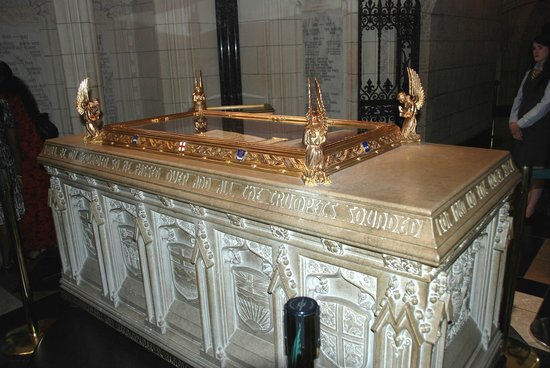
Children’s Dial-A-Story can be called as often as you want, any time of the day to listen to a new preschool story each week in the comfort of your home.

Public access to the Internet and Microsoft Office is available at all Library locations. One can book a session to use a Library computer with a valid Library card. Photocopiers are available at all Library locations at a minimal payment. Copying is subject to copyright laws.

Large Print Books are available from all library locations and rotate from library to library. In partnership with the Canadian National Institute for the Blind (CNIB) Braille Books are provided via mail.

Libraries store the energy that fuels the imagination. They open up windows to the world and inspire us to explore and achieve, and contribute to improving our quality of life.”   – Sidney Sheldon
Post Script :- My book ‘Suit, Boot and Tie‘ now finds a place with Mississauga Library System.
Search Results for suit boot (sirsidynix.net)

Fair & Lovely

Washington Post published a survey by the World Value Survey, which measured social attitudes of people in different countries. The survey asked citizens what types of people they will refuse to live next to, and counted how many chose the option ‘people of a different race’ as a percentage for each country. Jordan came out as the country with the highest proportion of ‘intolerant’ people with 51.4% and India with 43.5%.

anita

Look at the Fair & Lovely ad in India and it will prove one aspect of intolerance for the dark complexioned, especially among the fairer sex. The ad shows a miraculous change in the complexion of a girl from being dark skinned to very fair. The effect in the ad must have been achieved by the ‘digital touch-up’ and also by the effective use of light during photography.

Manufactured by Hindustan Lever, Indian arm of international giant Unilever, Fair & Lovely claims to offer dramatic change to fair complexion in just six weeks.  The packing of the cream displays one face six times, in an ever-whitening progression, and includes ‘before’ and ‘after’ photos of a woman who presumably used the product.

Do you think Unilever will ever market or package this product in US/Canada the way they do in India?

As per Indian laws, since Fair & Lovely is not categorised as a pharmaceutical product, Hindustan Lever is not bound to prove efficacy of the product. In India, litigation for not achieving advertised effect or social effect of the advertisement will take a long time and may not get the desired judgement.

Indian media is now trying to establish itself and is in the process of maturing. At this stage, to most the revenue matters and hence are ready to air ‘irresponsible’ news, discussions, advertisements, etc for ensuring better Target Rating Point (TRP) and raking in a few more bucks. Responsibility for ensuring that advertising is truthful is a shared responsibility among advertisers, agencies, and the media. The best regulation is self-regulation and one can expect it from the Indian media houses in the times to come.

Fair & Lovely is the largest selling skin whitening cream in the world, and was first launched in India in 1975. It held a commanding 50-70 % share of the skin whitening market in India. The product is marketed by Unilever in 40 countries in Asia, Africa and the Middle East, with India being the largest single market. One can see them in the shelves of many Indian grocery stores in Canada too.

Our children, both schooled in Canada, their friends with complexions ranging from the darkest to the fairest, have been dismayed with the Fair & Lovely’s television commercials aired on the Indian channels. The ad typically contains the message of a dark complexioned depressed woman, becoming fairer and getting a job or a husband. It also depicts the women becoming happier and more confident after the change of her complexion. The question from our children was as to how come no one is suing them in India for racialism.

The discussion further went on to belief in India that the skin colour is very powerful unlike in North America where the emphasis on a deep and glowing tan. The majority of Indian society still feels that a lighter color skin tone reflects a higher status and is more attractive. This gets further strengthened with the bride searching ads put up by Indian men mostly seeking out fair skinned women. Hence the target market for Fair & Lovely is predominantly young women aged 18-35.

As expected, the discussion moved on to their cousin Anita, an engineering graduate, now working with an IT firm in Trivandrum, Kerala. Anita is a dark complexioned girl and she is well aware of that. Heard her saying to her mother that it was not her fault that she was born with a darker skin.

Our daughter Nidhi always felt that Anita was trying to appear fair and hence was using all unhealthy products. This had a telling effect on her skin. Nidhi, during her visit to India in February 2014, decided to give a few tips to Anita about carrying herself confidently and beautifully with her natural complexion. She had seen many of her dark complexioned friends using cosmetic products and procedures to look beautiful.

The first lesson Nidhi gave Anita was that being dark complexioned is also beautiful and hence there is no need to look fair. Then she took Anita to the local cosmetic store and based on the ingredients, selected cosmetics which suited her skin tone and ensuring that it had no bleaching agent. It was followed by a lesson on how to apply the cosmetics and makeup tips to enhance her facial features.

In June 2014, I got a call from Anita, then a student at the Engineering College and she said that she wanted to run for the post of the Chairperson of the College Union. I felt that she had become really confident and appeared to have come out of the ‘complexion problem’. She won the students election and became  the Chairperson.

Fire! Fire! Fire!

Wedding

Fire! Fire! Fire!” with our exchange operator screaming at the top of his voice; woke me up from deep slumber. Our regiment was located in the higher reaches of Sikkim on 12 December 1997 when this incident occurred. The area was covered with about four feet of frozen solid snow with the temperature touching minus 20 degrees Celsius.

I paid a visit to the dentist in the evening as my wisdom tooth was troubling me and I was under immense pain. The dentist decided that the best way out was extraction and hence administered local anesthesia on my gums and did the extraction. He advised me to take rest for a day or two. I reached my room and I had a splitting headache as a result of the anesthesia. I decided to go to sleep and hit the bed.

At dusk, our Commanding Officer (CO) Colonel PK Ramachandran, wanted to talk to me and called up the Regimental Telephone Exchange to connect the call. The exchange operator tried the call many times but as I was in deep slumber, I did not answer the call. The exchange operator came to my room and saw me in deep slumber and informed the CO about my status. Our CO being a thorough gentleman, advised the operator to let me enjoy my sleep and to put through the call the moment I woke up.

At about 9 PM, the exchange operator noticed smoke and flames in the building I was sleeping. He came rushing into my room screaming and woke me up. He said that my room was on fire. By that time about five soldiers also came in. I ordered everyone to clear off and not get any burn injuries. The soldiers led by the exchange operator were salvaging my desktop PC, the TV and the VCR.

I stepped out of the room engulfed in flames wearing my sandals. Luckily my Identity Card was safe as it was in my uniform shirt’s pocket as I had slept off without changing my uniform. The fire started because the officer staying in the neighbouring room had forgotten to turn off his kerosene based room heating system – Bukhari. As I stood outside in the biting cold, I saw the entire building up in flames. The soldiers were in the act of salvaging everything from the adjacent buildings.

That was when we realised that the water tankers in the regiment were empty as the orders were to keep the tankers empty to prevent them from freezing. The solid frozen snow was of no use to douse the fire as it could not be lifted off the ground. The order was passed immediately that all water tankers will be kept three-fourth full every night to meet such eventualities.   Our CO came to me and asked as to how I felt and I replied that the only thing I could do was to enjoy the warmth the fire was providing on a freezing night.

Next morning the soldiers scouted through the ashes and Subedar (Warrant Officer) Balakishan came out with all my medals (given by the government in recognition of bravery, honour and sacrifice) and a photograph which was intact despite the raging fire. It was our marriage photograph dated 16 April 1989. I immediately said that “What God has united no raging fire, storm or hail can ever separate.

An Orthodox Syrian Christian wedding follows similar procedures as done by other Orthodox faiths like Greek, Slavic, and Egyptian. It begins with the Betrothal service where the Priest blesses the rings of the Bride and Groom, then places them on the ring fingers of their right hands. In the Bible, the right hand is the preferred hand, indicating good. The Betrothal dramatises the free decision made by the Bride and Groom, and is symbolized by the giving of rings.

The Marriage Ceremony begins immediately thereafter culminating in the crowning. It begins with the priest placing a crown on the groom’s head while reciting the crown blessing thrice. Then the crowning ceremony of the bride follows in the similar way. The Greek and Slavic Orthodox use crowns made from olive leaves and the Syrian Orthodox use a gold chain as a symbolic crown. The crowning is a sign of victory, just as athletes were crowned in ancient times at their triumphs. In this instance, the Bride and Groom are crowned on account of their growth as mature Christians, prepared for the responsibilities of a Christian marriage.

This is followed by a series of petitions and prayers with special reference to well known couples of the Old Testament, such as Abraham and Sarah. An epistle excerpt of Saint Paul is read, exhorting husband and wife to unconditional love and support of one another. Then an excerpt from the Gospel of Saint John is read, relating to the wedding at Cana when Christ performed the first of His miracles and blessed the institution of marriage.

The differences in the marriage ceremony between other Orthodox faiths and Kerala’s Syrian Orthodox faith begin here. The groom ties the ‘Minnu’ around the bride’s neck – tying the knot. This has been adopted from the Hindu traditions. the ‘Thali’ used in a Kerala Hindu marriage was in the shape of a leaf of the sacred banyan tree and Christians modified the Thali by superimposing a cross on the leaf and called it a ‘Minnu’. The Minnu is suspended on seven threads drawn out of the Manthrakodi. The seven strands represent the bride, the bridegroom, the couple’s parents and the Church.

The groom then places the ‘Manthrakodi’, a sari presented by the bridegroom and his family, which is draped over the bride’s head, symbolizing the groom’s pledge to protect, care for and cherish his wife The Manthrakodi is the adaptation from the earlier Kerala Hindu Nair traditions of ‘Pudavakoda’ where the marriage was a contract and handing over clothes for the bride indicated entry into a contracted marriage. At this point, the bride’s relative, who has been standing behind her, yields her place to a female member of the groom’s family as a sign that the bride is welcomed into her new family.

The ceremony ends with a benediction and prayer. The Priest uses the Bible to uncouple the hands of the Bride and Groom signifying that only God can come between them. It is always the priest who will preside over the actual marriage ceremony that is the tying of the Minnu. If a bishop is present, he will only bless the Minnu. This tradition may have emerged from the old Travancore Christian Marriage Acts wherein only the priest had the magisterial power to conduct a marriage.

Even though our marriage was not conducted in the presence of Fire God (Agni), our wedding photograph lived through an Agni Pareeksha (Trial by Fire.)

Linguists

madras

In 1971, after the anti-Hindi agitation that raged through Thamizh Nadu, I joined Sainik School Amaravathinagar in the state then known as Madras.   The school almost resembled any British Military School as all the military words of command were in English like “Attention” and “Stand-at-Ease”. There I started to learn Thamizh and also English and Hindi.

Thamizh is one of the longest surviving classical languages in the world and the script has only 18 consonants unlike Devnagari script which has about 37 consonants. When Devnagari script has क, ख, ग, घ (ka, kha, ga, gha), Thamizh has only க (ka) and similarly for the other corresponding consonants. All the other South Indian languages namely Malayalam, Kannada and Telugu follow their own script similar to the Devnagari script. Further these three languages unlike Thamizh, have a lot of Sanskrit vocabulary. Hence learning of Hindi or any Devnagari script based language becomes difficult for a Thamizh in comparison to the people from the other states.

After the anti-Hindi agitation in Thamizh Nadu, the Official Languages Act was amended in 1967 by the Indian Government to guarantee the indefinite use of Hindi and English as official languages. This effectively ensured the current bilingualism and use of English in education in India. This bilingualism has helped the Indians to a great extent in ensuring acceptance all over the world.

Hindi as a national language was not accepted all over India due to the implementation issues. The Hindi Pundits coined many a difficult terms to replace commonly used English terms. Many of the terms coined were not even accepted by the Hindi speaking population. Lot of money and efforts were pumped in by the government for the enhanced use of Hindi as an official language, but it never had any results other than a few Members of Parliament making a foreign sojourn to study the use of Hindi in some country or the other and the practise still continues.

To further make the matter worse, all forms were printed in both Hindi and English and so also all the government publications. This resulted in higher production costs without serving any purpose. While serving in the Indian Army, I recommended all my subordinates to read and understand the pamphlet ‘Glossary of Military Terms’. The pamphlet was printed in Hindi on the left page and English on the right. I also used to advise them to read the Hindi side whenever they got bored – the Hindi equivalents were hilarious and many a times grossly incorrect.

In our school the English department was headed by Mr KG Warrier and the Thamizh department by Mr M Selvaraj. Both of them were strong linguists and always ensured that they spoke the language with purity in that when they spoke, they always used only one language. Both had excellent communication skills and were near perfect in their pronunciations. Both of them never taught me at school, but I had extensively interacted with them during various extra-curricular activities.

KGW

(Mr KG Warrier with our Class-mate AP Sunil Kumar at Kottakkal.  The photo is of 2013 when Mr Warrier turned 90)

Mr KG Warrier hails from the family of world renowned Ayurveda Physicians of Kottakkal in Kerala. He is currently enjoying his retired life at Kottakkal. He is staying with his daughter, Rathi. The Warrier community connected to the Vaidya Sala stay at ‘Kailasa Mandiram’ in the Vaidya Sala premises at Kottakkal, Malappuram District, Kerala.

His specialty was that he dressed in his starched and pressed cotton pants and shirt, wear a felt hat and hold a pipe in his hands. I was always intrigued as to how he managed to maintain the crease of his pants perfect even at the end of the day.

A few days before leaving school to join the National Defence Academy I met Mr KG Warrier and he asked me in Thamizh as to when I was joining the academy and how the preparations were progressing. My answer was in the usual ‘mixed language’ of Thamizh, Malyalam and English. To this he said “உனக்கு தமிழும் தெரியாது, மலையாளவும் தெரியாது, ஆங்கிலவும் தெரியாது. உனக்கு என்ன தெரியும்? (You do not know Thamizh or Malayalam or English. What do you know?)”.

I still recollect a few words of advice Mr KG Warrier had given us.  He said that everyone should always carry and use three books – a Dictionary, an Atlas and a Wren & Martin Grammar book.  At the beginning of each year at the school, these were the first set of three books we were issued with.  Later on during my army service I did carry these three books.  Nowadays with the power of the internet with browsing tools like the Google, most information is at one’s fingertips and these three books have become almost extinct.

Mr M Selvaraj was well known for his voice and his oratory skills which were showcased during all the cultural programmes at the school. His orations in both Thamizh and English will be remembered by all his students. I was very curious as to how he managed to handle the two languages independently and so effectively. During my final year in school, I did manage to summon enough courage and asked Mr M Selvaraj about the secret.

Mr M Selvaraj said that when he joined the school he had very little grasp of English having done his Masters degree in Thamizh. Major MMR Menon, then Headmaster of the school had advised him that to be a successful teacher in a school like this, mastery over English would go a long way. So with reluctance he approached Mr KG Warrier, but was surprised when Mr KG Warrier accepted to be his Guru and thus he started to learn English. He ended the chat by saying “the English I speak is all what Mr KG Warrier and Ms Sheela Cherian had taught me like any student who graduated under these great teachers.

Mr M Selvaraj left our school in 1987 to be the first Principal of Navodaya Vidyalaya at Mahe. After establishing the school, he moved as the Principal of Navodaya Vidyalaya at Pondichery and now leads a retired life in Trichy.

After leaving the school, I always tried to complete a sentence in one language and many a times I did fail. After joining the army, I picked up Hindi. Luckily for me, I served mostly with the Brahmin soldiers from North India and that helped me improve my Hindi to a great extent. Now with Hindi also joining the bandwagon of languages in my mind, maintaining purity of language became near impossible.

Hats-off to all those Thamizh news readers in any television channels, they speak pure Thamizh only and would use another language vocabulary only in case it is unavoidable.

madras1

Walk for Water

toronto-73508_1280

A friend invited me to participate in a charity walk of 5 km on 29 August 2014, through a picturesque trail in the city to raise awareness about the problem of safe drinking water faced by millions worldwide and also to raise money. The Walk for Water was in support of Water Missions International’s response to the global water crisis through sustainable safe water and sanitation solutions around the world. Safe water is the source of life. It is the foundation for health, education and viable economies. The global safe water crisis is much more than just a lack of safe water. Providing those people with access to safe water gives them an opportunity  to go to school, work and play free from the stress of dirty, disease-filled water.

There were posters put up all along the path depicting the problems faced by people all over the world. There were posters saying how lucky the Canadians are as they have the Great Lakes and thousands of smaller lakes with clean potable water. Canadians are blessed with clean municipal water supply all through the day year around.

This prompted me to study the municipal water supply system in our City of Mississauga, which comes under the Peel Region.

water66aaLake Ontario is the source for the Peel Drinking Water System. As the lake water enters the intake, located about 2 km from the lake-shore, it is chlorinated. The chlorine kills bacteria and prevents mussels from growing in the intake pipe and obstructing the flow. As the water enters the treatment facility, it passes through travelling screens. The screens prevent items such as fish, sticks and aquatic plants from entering the treatment facility and damaging equipment. Water is then treated by means any one of the following treatments based on the age of the plant.

  • Conventional treatment.-
    • Alum, a coagulant is added to the water. The rapid mixer thoroughly mixes the coagulant with the water to help form sticky particles from the suspended particles in the water.
    • Slow mixing that helps the sticky particles collide with each other, forming larger and heavier particles called floc.
    • Floc particles are removed from the water by inclined plate settlers or the water is slowed down in large tanks to allow particles to settle to the bottom.
    • Removes remaining particles and chlorine-resistant bacteria and reduces the levels of compounds that can cause tastes and odours.
    • The water travels down by gravity through layers of granular activated carbon, sand and gravel.
  • Ozone Biologically Activated Carbon Contactor and Membrane Filtration (OBM) Treatment.
    • Ozone gas is bubbled through the water in the Ozone Contactors. Ozone kills bacteria and also helps to break down substances that cause tastes and odours so that they can be removed easily.
    • BACC Filters: These specially designed contactors remove the biodegradable organic matter produced by the activity of the ozone process. This removal process keeps the water stable after treatment by minimizing re-growth of bacteria in the distribution system.
    • Membrane Filters:   These are specially designed water filters with very small pores that the water is pulled through. The membrane filters remove microorganisms and producing water with very little turbidity.
  • The modern state-of-the-art Membrane Filtration, Ultraviolet Light, and Granular Activated Carbon Contactor (MUG) treatment.
    • Membrane Filtration.   Raw water is pulled through state-of-the-art Ultra Filtration Membranes with pores small enough to filter out particles and many microorganisms.
    • UV Light.   Filtered water then passes through UV Light Units, which inactivate microorganisms. These units also reduce taste and odour in the water by Advanced Oxidation. The Advanced Oxidation process uses hydrogen peroxide and a higher intensity of UV light to oxidize (break apart) compounds that cause unpleasant taste and odour. The Advanced Oxidation system is used seasonally, when taste and odour problems are at their peak due to lake and temperature conditions.
    • Granular Activated Carbon Contactor (GACC).   The water then flows down through a matrix of carbon granules into GACC. They eliminate any residual hydrogen peroxide from the Advanced Oxidation process.

Water treated by any of the three above processes is further treated prior to supply into the water supply system as under:

  • Chlorination for inactivation of bacteria/ disease causing organisms.
  • Fluoride  addition for better dental health and to protect teeth from cavities

The water is then supplied through the pipes, buried 10 feet below to prevent freezing in winter. The old ductile iron pipes (DIP) forming the water mains, running mostly below the municipal roads, are now being replaced with polyethylene encased DIP, which has a lifespan of up to 100 years.

Majority of the water main replacement projects are undertaken from March to October every year, in partnership with road and sewer renewal projects for improved cost effectiveness and minimized public inconvenience. This prompted a friend to remark that in Canada we have four seasons – winter, severe winter, winter and then construction.

How do they ensure water at the optimum pressure throughout?

A typical municipal water supply runs at between 50 and 100 psi (major appliances require at least 20 to 30 psi). Pumps at the water treatment plant pump water at about 100 psi and is connected to the main pipe lines. There are three water towers in the city which are also connected to the same pipeline. During low water usage hours, the tanks on the water towers get filled and they discharge into the pipeline when the pressure falls due to high usage during peak hours, thus maintaining the optimum pressure. There are no overhead tanks in the homes as the city guarantees 24 hours water supply at optimum pressure.

As the water in the pipelines is maintained under high pressure all throughout, there is hardly any chance of muddy water from the ground getting into the pipes. Mixing of dirty water or sewage is possible only when there is intermittent water supply and there is a crack in the pipe. The water in the pipe leaks into the soil around when under pressure. When the water supply is shut down, the pressure in the water pipes drop below the pressure of water in the soil, forcing the muddy water into the pipeline through the crack. When the water supply is restored, this muddy water in the pipes reaches the consumer.

How come the water in the water towers do not freeze in the cold Canadian winters?

They do freeze. They just don’t normally freeze solid. The central pipe that runs from ground level up into the bottom of the tank is called a riser. Many tank risers are wrapped with heat tape, covered with insulation and capped by an aluminum jacket. Ice forms on the surface of the tank, in many cases several feet thick. Normally, this ice layer floats on the surface as the water level rises and falls. Many times this ice remains stuck to the roof the tank and remains there.

This is why the City of Mississauga proclaims that the best drinking water is the municipal water.

For Want of a Nail

IndianSoldierFlood

Our son Nikhil wanted me to buy a whistle – Fox 40 ‘Sport & Safety’ Classic Whistle- to be used for his life-guard training at the city’s swimming pool. I went to the store and was a bit surprised when I looked at the price-tag on the whistle – it costs $5. Thinking that I may not have zoomed on to the correct product, I looked carefully at the label to reconfirm it. Out of curiosity, on reaching home I “Googled” the product to see its characteristics and why a simple looking whistle cost me so much. As per the manufacturer, this whistle is easy to use, very loud that it can be heard over a mile away, is waterproof and unbreakable. Being made of plastic one does not have to worry about rust. It works even after it is wet because it does not have a ball in it.

Aren’t such whistles required by our soldiers, especially those deployed on flood relief duties?

During my service with the Indian Army, we have been called out to help the civil administration many a times. On many occasions we were placed on high-alert for flood-relief duties. There are many standard operating procedures (SOPs) in the units for flood-relief, but there is hardly any equipment available to execute the tasks. The army heavily relies on the ingenuity of the officers and soldiers to execute the task.

Watermanship is an important aspect of military training. It comes handy while on war crossing water bodies, rivers and other obstacles. It becomes more important when dealing with natural disasters like Uttarakhand or Kashmir. There is hardly any attention paid to this aspect of training.  Many of our soldiers are non-swimmers and hence training in personal safety while dealing with fast flowing currents, floatation devices, rescue equipment, etc become very important. There is hardly any rescue equipment worth its name authorised to any army unit, but they are always called out to deal with such situations.

The biggest deficiency the army has is that there is no boats authorised to the army and our men are not trained in operating the outboard motors. Only some men from the Engineers are trained on it or those hailing from areas like the backwaters of Kerala have some experience.

The army units are not even authorised life-jackets and the risk we are forcibly putting our men to without the life-jacket is well known to all. There is no High-visibility safety apparel (HVSA) -clothing (e.g. vests, bibs or coveralls) that is worn to improve how well other people “see” them (their visibility). In any developed country, it is mandatory for anyone operating in these circumstances to wear them.

It is a pity to see our soldiers are without life-jackets and HVSA and all the personnel of the NDRF is fully geared. When will they equip all the soldiers of the Indian Army with these? Surely it does not cost much.

Hence it is suggested that all the army units (especially the Infantry, Cavalry, Artillery, Engineers and Signals) be scaled with inflatable boats, outboard motors (with about 50% as spare as the local boats will be much effective with one), ropes, winching equipment, harnesses, rope bridges, etc.

Further HVSA must be authorised as personal clothing for all ranks. This would be very useful for drivers, co-drivers and also passengers of military vehicles and also for anyone operating any plant or dozing equipment. This would also help while being deployed on aid to civil authorities for restoration of law and order.

It would be a pity that a soldier’s life is to be martyred because of our short-sightedness. No battle should ever be lost and we should never lose a soldier for want of a horseshoe nail (life-jacket).

Late Captain Pratap Singh, Maha Veer Chakra – My Hero

In August 1987, our regiment, 75 Medium Regiment was about to move out from Delhi to the Kashmir Valley. Captain Pratap Singh, being posted on compassionate grounds and having spent two years, the time had come for return to his parent regiment as per the norms in the Army. Captain Desh Raj and I moved with the advance party to the Kashmir Valley.

https://rejinces.net/wp-content/uploads/2020/03/pop035.jpg

Captain Pratap called me up to say that he had walked up to our Commanding Officer (CO) Colonel Mahaveer Singh and had requested him that he liked to continue with our regiment and wanted his parent regiment to be changed to 75 Medium. He also said that he had enjoyed the two years he served with our Regiment and that he had developed a special attachment to the soldiers and officers. Colonel Mahaveer accepted Captain Pratap’s request and contacted the Army Headquarters and thus Captain Pratap’s parent regiment was changed to 75 Medium Regiment, and he moved with the regiment to the Kashmir Valley in November 1987.

Our Regiment was to induct its first Observation Post team in Siachen Glacier in March 1988. The choice was between Captain Pratap and I. Colonel Mahaveer briefed us in December 1987 to select our team and also to prepare and train for the impending task. At that time the Brigade Headquarters wanted an officer to be attached with them as an administrative staff officer for six months and so Colonel Mahaveer said, “One of you will go to the Siachen Glacier and the other to the Brigade Headquarters.”

Siachen Glacier, one of the world’s largest glaciers, is situated North of Leh. This land, the world’s highest battleground located at about 5,750 m (18,875 ft), will test human endurance against the rigours of high altitude and turbulent terrain. Ever since Indian forces occupied the Siachen Glacier in 1984, both India and Pakistan have fought intermittent artillery duels and many attempts were made by Pakistan to capture the territory. In winter, temperatures here can plummet to minus 70 degrees Celsius and winds of up to 160 km an hour can come without warning. Over the past several years, soldiers have seen amputation of limbs lost to frostbite and death by pulmonary edema. Many soldiers have lost their lives to avalanches or falling into crevasses during patrols. According to some estimates, 90% of the casualties in Siachen have been due to weather and altitude, rather than actual fighting.

Captain Pratap, a Short-Service officer, commissioned in September 1983, had not opted for a permanent commission and had decided to take release from the army after serving five years. Armed with his application for release from the army, Captain Pratap walked into Colonel Mahaveer’s office in January 1988 and told him that he wanted release from the army and hence wanted to participate in an operation prior to his release. He managed to convince Colonel Mahaveer that he would take on the duties in the Siachen Glacier in March. Thus, Captain Pratap started with his training for the operations and I moved to the Brigade Headquarters.

On 27 May 1988, Brigadier DS Chowdhary, our Brigade Commander called me to his office to break the news that Captain Pratap had laid down his life while performing his duties. Immediately I called up Colonel Mahaveer to break the sad news and he did not utter a word. I rushed to the regiment and straight went into Colonel Mahveer’s office and that was the only time I ever saw tears in his eyes.

On 26 January 1989, the nation recognised the supreme sacrifice made by Captain Pratap Singh and decorated him with Maha Veer Chakra (MVC). The citation for the award read as under: –

“Captain Pratap Singh was deployed as an observation post officer Siachen area in April 1985.

The adversary made repeated attempts to retake a key post vital for our defences of Siachen, without success. Their last attempt to take a post was on 09 May 1988, when they fixed four ropes and a ladder-system on the ice-wall below the post for the purposes. This attack was successfully beaten back by our forces. The ropes and the ladder-system fixed by the adversary, however, remained in position, making it possible for them to use it again in their fresh attempts to take the post. It was imperative that the fixed ropes were cut, and the ladder unfixed to prevent fresh attempts. On the 18 May 1988, Second-Lieutenant Ashok Choudhary was able to reach and cut four of the ropes. On the 26May 1988, it was decided to cut the remaining two ropes and unfix the ladder. Captain Pratap Singh undertook this mission with the help of a jawan, descending the ice wall. On reaching the location, Captain Pratap Singh found a large quantity of ammunition and grenades lying at the head of the ropes. While examining the same, a grenade booby-trapped him, severely wounding his right arm and chest. Despite being badly wounded the brave officer crawled forward to the fixed ropes and cut them with his knife. Then he unfixed the ladder system and let it fall down the ice wall. Then the gallant officer inched back to his own rope to come up the ice wall to return to the post but collapsed due to his severe wounds and made the supreme sacrifice of his life for the nation.

Captain Pratap Singh thus displayed conspicuous gallantry in eliminating a great threat to a key post of our vital defence of Siachen Glacier at the cost of his life.”

Officers’ Training Academy (OTA) Chennai honoured its alumni and this valiant soldier by naming the Pipping Lawns where the newly commissioned officers wear their first pips as Pratap Pipping Lawns.

After over 25 years, Captain Pratap Singh, MVC, continues to be my hero and always has a special place in my heart.

Captain Pratap’ younger brother Shakti Singh can be reached @ +91 98100 67777

Late Captain Pratap Singh, Mahaveer Chakra – My Friend

During our recent visit to India, we stayed Colonel Pradeep and Dr Sridevi at Devlali and their house was located in Pratap Enclave.  The enclave was named after Late Captain Pratap Singh, MVC and at the main gate of the enclave there was a board with his photo and a brief write-up about his heroism.

Lieutenant Pratap Singh arrived on posting to our regiment, 75 Medium Regiment in January 1985 when we were located at Delhi.  A few months prior he had lost his elder brother Late Squadron Leader Gaj Singh of the Indian Air Force in an air crash in Rajasthan.  Lieutenant Pratap had come on a posting on compassionate grounds to take care of his aging parents who lived at Basai Darapur village, near Punjabi Bagh, New Delhi.  At that time, his elder brother Colonel Ran Singh was serving with an Air Defence Regiment of the Indian Army.  Captain Khazan Singh, father of Lieutenant Pratap was a World War II veteran.

Ever smiling Lieutenant Pratap joined our regiment and in no time got amalgamated with the regiment.  He was a good sportsman and a great leader and won the admiration of all the soldiers.  Despite all the problems he faced, he always looked cheerful and was cool as a cucumber at all times.

Lieutenant Kaushik, Pratap and self, we became the ‘trouble shooting trio’ of the regiment, who could be sent on any missions anywhere.  As Lieutenant Kaushik was married, Pratap and I generally took on all out-station tasks – mostly going to Meerut to participate in sports competitions with the Brigade.  Colonel Mahaveer Singh, our Commanding Officer (CO), took utmost care of all of us as his sons and had a major role in developing us into good human beings and leaders.

Lieutenant Pratap and self being bachelor boys dined in the Officers’ Mess.  The mess and the bachelors’ accommodation were located in Sector 14, Gurgaon and some of the married officers also lived there.  The Regiment was about 10 km away and we all used to travel to and fro the Regiment in one vehicle.  Every day at 1:30 PM we all would assemble in the Adjutant’s office for our travel back to Officers’ Mess.  Captain Rahul Gowardhan (now a retired Colonel) was our Adjutant (assistant to the Commanding Officer) and once he was busy closing up for the day and he accidentally tore off an important sheet of paper assuming it to be trash.  The Lieutenants were all immediately tasked to assemble all the torn pieces of paper and solve the jigsaw puzzle to retrieve the original document.  After that whenever we assembled at the Adjutant’s office for our return journey, Pratap would pick up all the torn papers from the wastepaper basket and start solving the jigsaw puzzles with us until one day Captain Gowardhan asked us as to what we were doing.  Pratap said, “we do not know when you will tell us to recover a document, so why not utilise the time”.

Captain Desh Raj (now a retired Colonel) was a great sportsman and appointed himself as the commander of the bachelors (he always considered himself as a youngster).  He would mostly accompany us and always guided us in our day-to-day duties and also joined us in most of our adventures.  Then we had Late Colonel Avinash Chandra, affectionately called by all of us as ‘Guruji‘ as he always had something to contribute about anything and everything.  He was always forthcoming to save us from all our misdeeds and also resolve many difficult situations.

Every day at 1 PM, the Mess Havildar (Sergeant) used to ring up the office to find out whether Pratap and I were coming to the Mess for lunch.  The aim was to decide on the quantity of food to be prepared as we both were in our early twenties and were famous in the Regiment for our gluttony.  Hats off to Mrs Chandra, Mrs Desh Raj, Mrs Gowardhan and Mrs Kaushik for standing to our gluttony whenever we landed at their homes, especially at mid-night.  All the ladies welcomed us and served us excellent dinners.

Major Mohan Krishnan, a 1971 war veteran, was our Second-in-Command and was a simple and jovial person.  Once he called Pratap and me to his office and admonished us about our late night at the Officers’ Mess.  He ordered that for dinner, one had to reach the Mess by 9 PM and the Mess had to be closed by 10 PM.  After a few days we reached around 9:10 PM and the Mess Havildar expressed his inability to serve us dinner as we were late.  We decided to go for the movie in the town and we landed back at the Mess at 1 AM.  Now Pratap told the Mess Havildar, “the Second-in-Command has only stipulated the time for closing the Mess, but he has not laid down any timing for the opening; hence now serve us breakfast as a new day has dawned.”  That was the end of the Mess closing timing.

We both got promoted to the rank of Captains and were appointed Observation Post (OP) Officers.  Our duty in war was to direct the artillery fire to the target.  The guns fire from about 10 km behind and it is the duty of the OP officer to direct the fire on to the target.  In case the shells do not land on the target, a correction is ordered in terms of “Go Left/ Right” or “Add/Drop.”  During our operational training with live artillery firing, Captain Pratap very often confused between Right and Left and many a times ended up giving the opposite corrections.  Colonel Mahaveer Singh our CO came up with a solution – with a marker pen he wrote ‘LEFT’ on the inside of his left wrist and ‘RIGHT‘ on the right wrist. He told Pratap to look at it prior to ordering a correction and the simple trick worked.  At the end of the day, I even advised Pratap to tattoo it on his wrists, never realising what was in store…….

Captain Pratap’ younger brother Shakti Singh can be reached @ +91 98100 67777

Bishnois and Khojis of Rajasthan

RJ

Rajasthan, the land of kings and royalty, has been a mesmerising experience for me during my stay in India. The Western desert state of the Indian Union is vibrant, and exotic where tradition and royal glory meet in a riot of colors against the vast backdrop of sand and desert. It has an unusual diversity in its entire forms- people, customs, culture, costumes, music, manners, dialects and cuisine.. The landscape is dotted with invincible forts, magnificent palace havelis, rich culture and heritage, beauty and natural resources. It is a land rich in music, Dance, Art & Craft and Adventure, a land that never ceases to intrigue & enchant.

We in the Indian Army, visited Rajasthan mainly during operational deployments on the border, artillery field firing practices and various tactical exercises. One has seen the state progressing and developing in all fields – education, social matters, communication infrastructure, industrial output, exploitation of natural resources, etc. However two features will ever remain in my memory.

Bishnois

While media and scholars have celebrated Indian women environmentalists and activists such as Medha Patkar and Arundhati Roy, you may not have herd of Imarti Devi and Begu Bai of Khejarli (Barmer District), the first proponent of Indian ecofeminism. They led a massive sacrifice for the protection of trees in February 1730 in Jodhpur. More than 300 Bishnoi men and women, sacrificed their lives to protect the trees from the soldiers of the king Abhay Singh of Jodhpur, who wanted to fell the trees to treat the lime stones for constructing his palace.  The dead were buried, not cremated and there is a temple at that site.


Bishnoi temple as it exist today,  commemorating the Khejarli massacre.

All of you must be familiar with the episode of, Salman Khan’s shikar of deer in Rajasthan. Salman Khan together with friends undertook a hunting excursion in Rajasthan. In doing so they rushed blackbucks until their exhaustion, shot endangered and strictly protected animals. The locals protested and the actor with his entire entourage was put behind the bars.

These people are the Bishnois of Rajasthan. They are seen as an example by the global environment community for their deep devotion to conservation of nature. The Bishnoi sect was founded by Lord Jambheshwar believed to be an incarnation of Vishnu, the preserver, and is probably the only religion in the world that’s based on principles of conservation. Legend has it that Jambheshwar, born into the warrior clan of Rajputs but chose a different life. Instead of developing hunting skills, he learned to communicate with living beings. He came up with the 29 principles that would govern the lives of his many followers, who would be called Bishnois — derived from ‘bees’ and ‘noi’, which means 20 and nine.

Here are some of the unique Bishnoi practices that show how their lifestyles are in a complete fit with their environment: Bishnois do not cut trees; instead they use dried cow dung as fuel. They do not cremate their dead as Hindus normally do, because it involves the use of firewood; instead, they bury them. Agriculture is the mainstay of the people; they also carve wood during the time they are not busy on their fields. The required wood comes from trees that have fallen during storms. Each Bishnoi family creates a tank in their field to provide water for black bucks and antelopes in the arid summer months. They maintain groves for the animals to graze and birds to feed. Solar energy is used to extract underground water to irrigate the groves. The region where they live is a desert, and these groves help to recharge rain water in the aquifers in the desert.

Not only do the Bishnois protect the deer from poachers, they also allow them to graze freely on their farmlands. It’s the belief of every Bishnoi that the first right to the harvest goes to the deer. Many Bishnoi temples doubles up as rescue shelters and the priests take care of injured animals. Some of these go back into the wild after they recover, while others roam about in the compound.

Many Bishnois believe that their fore-fathers take rebirth as deer and that is why many are attached to these animals.   The Bishnoi women have deep maternal affection for the rescued fawns. It is not uncommon for a Bishnoi woman to breastfeed a newly born, orphaned fawns..

Adapting to the modern times, the Bishnois have become ‘active conservators’ pursuing poachers and capturing them to be handed them over to the forest authorities. They now have what they call the Tiger Force, a 1000-strong brigade committed to wildlife protection, spread across hundreds of villages. The Tiger Force came into the spotlight when they chased and caught Salman Khan and his gang red-handed with the blackbucks they had killed.

Prior to induction into Rajasthan, all troops of the Indian Army are made well aware of the sentimentality of the Bishnois to the wildlife and the trees. All out efforts are made by the Army to provide all assistance to the locals in their conservation efforts.

Khojis

During one of my area familiarisation trips in the Rajasthan borders, I stopped at a Border Security Force Headquarters for lunch. There I met a frail and old man – may be in his late eighties. The company commander introduced him to me as a Khoji.- the tracker. Every day at sunrise, the Khoji’ diligently examines a stretch of sand running alongside the wire- fencing border with Pakistan, for any telltale signs of infiltration. The slightest indentation or disturbance in the sand raises the alarm for the tracker. It tells him whether any human or animal has crossed the three-tiered barbed wire fence.

He utilises his uncanny ability, which includes recognising the footprints of individuals camels, cows, goats or sheep from amongst hundreds of others to track them down, however far they may have strayed into the desert wasteland. One glance at a broken twig, a bent blade of dried grass or even the hint of a footprint in the sand are all that he requires to catch his prey. For the Khoji, eEach footprint has subtle but distinct differences which only a Khoji’s trained eye can spot.

He even predicts as to the type of animal that crossed, the weight on its back, the direction where the animal is headed to, and also the likely place it would have reached by then. The Khojis learn their craft as children by tracking camels, sheep and cattle which stray far from home in search of food across the vast desert. It’s instinctive and the ability to successfully pinpoint footprints increases with experience. And, unlike other professions in tribal, superstitious and caste-ridden Rajasthan, the Khoji’s do not belong to any one community. They also worship no deity or special Gods.

The Khoji’s are employed exclusively by the BSF which have around 100 of them in the desert districts of Rajasthan and neighbouring Gujarat state, where they monitor the 1,500 km long sandy stretch of border with Pakistan for smugglers and illegal aliens. An asset to each BSF battalion, their services are also called upon by the local police to track down criminals or missing livestock. They also organise tracking courses for BSF personnel.

Their rivals in Pakistan, known as Pugees, are similarly employed by the Ranger border guards. But over the past years, fencing and flood lighting of the Rajasthan border has greatly reduced the Khoji’s workload. Earlier, they not only tracked illegal immigrants and smugglers but also herds of cattle, camels and sheep which frequently strayed across the open border.

I was astonished by the capability of these Khojis and many a times we employed them to track down infiltrators which our modern radar systems and the supersensitive cameras of the drones could not identify, mainly due to the lie of the sand dunes in the deserts.