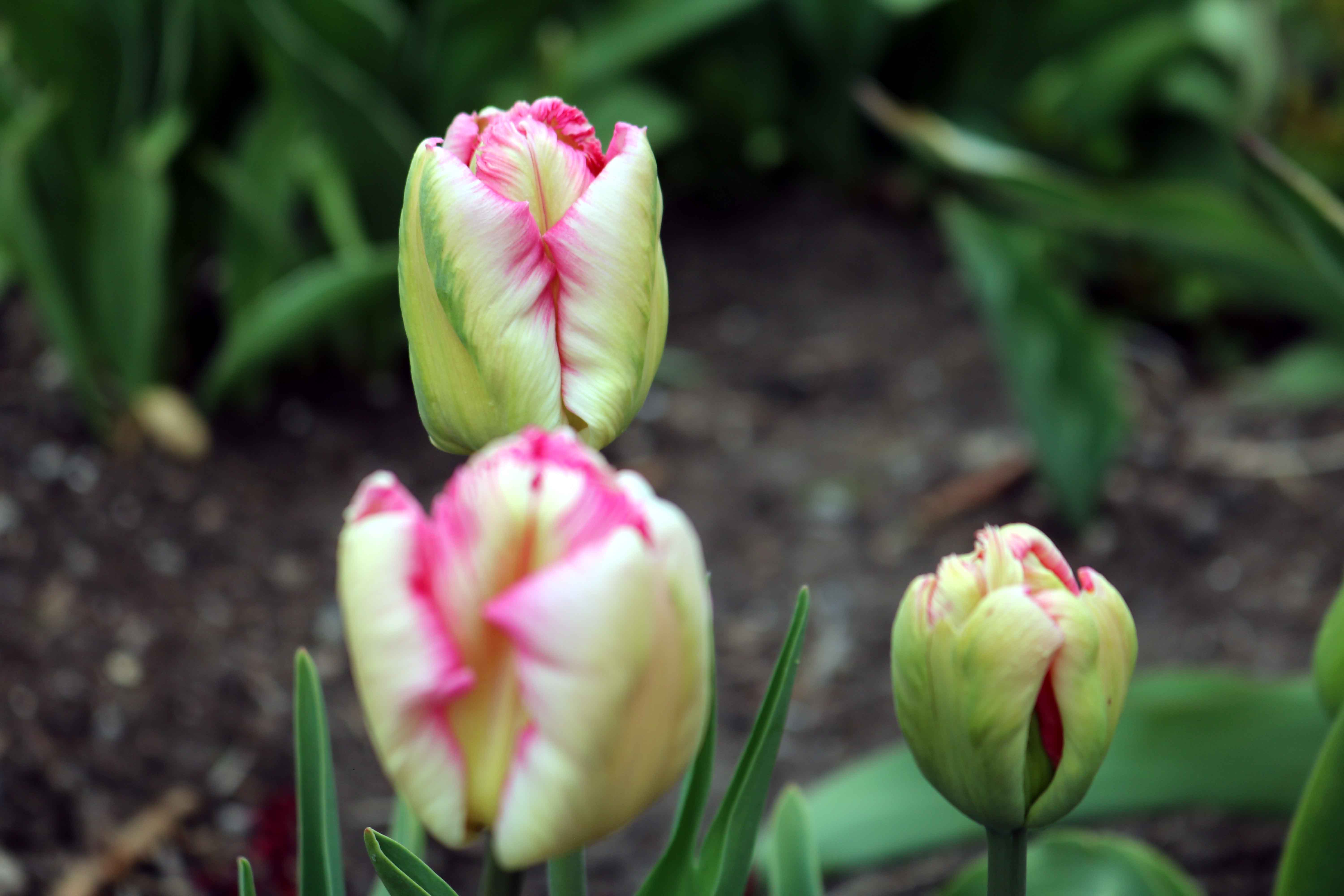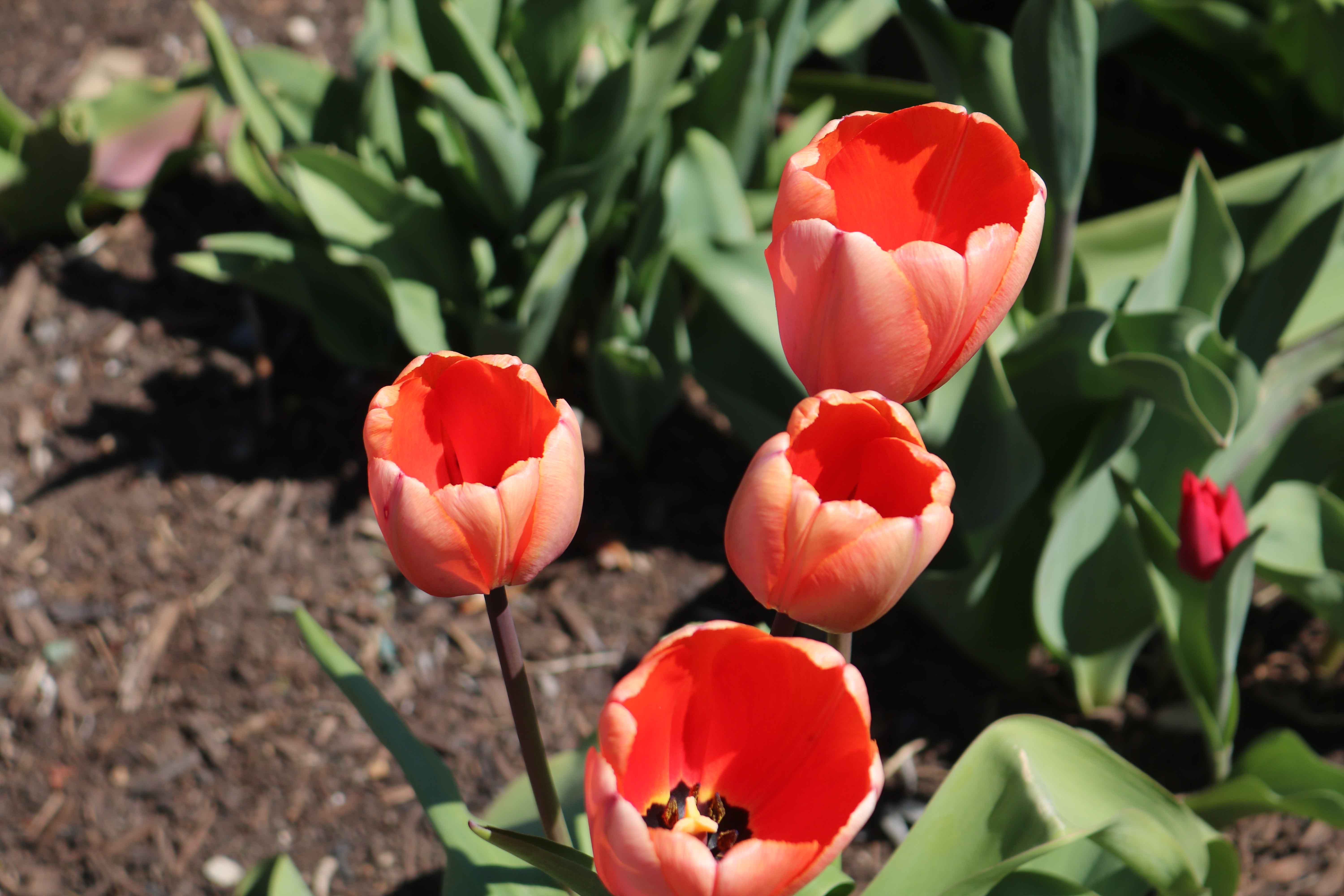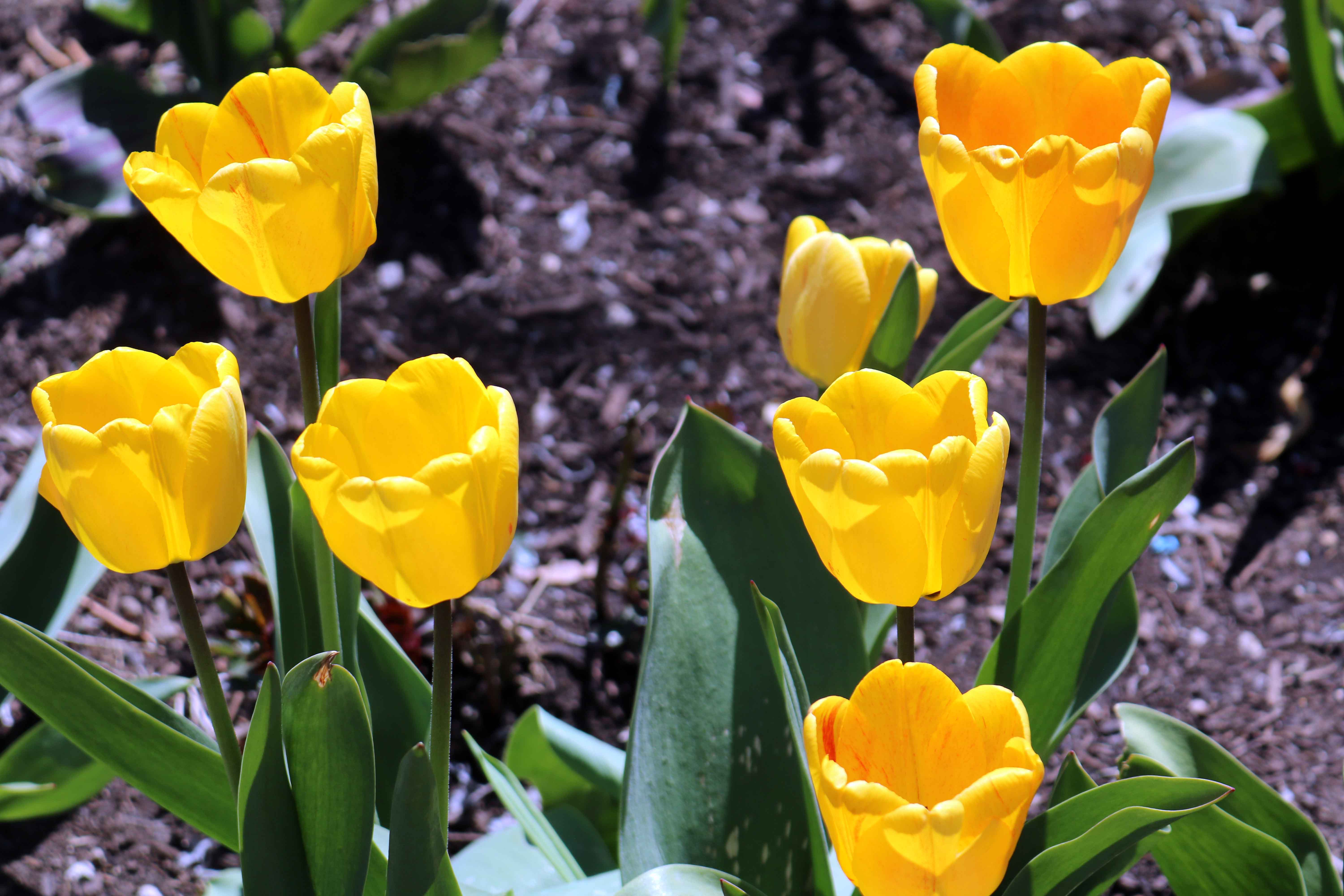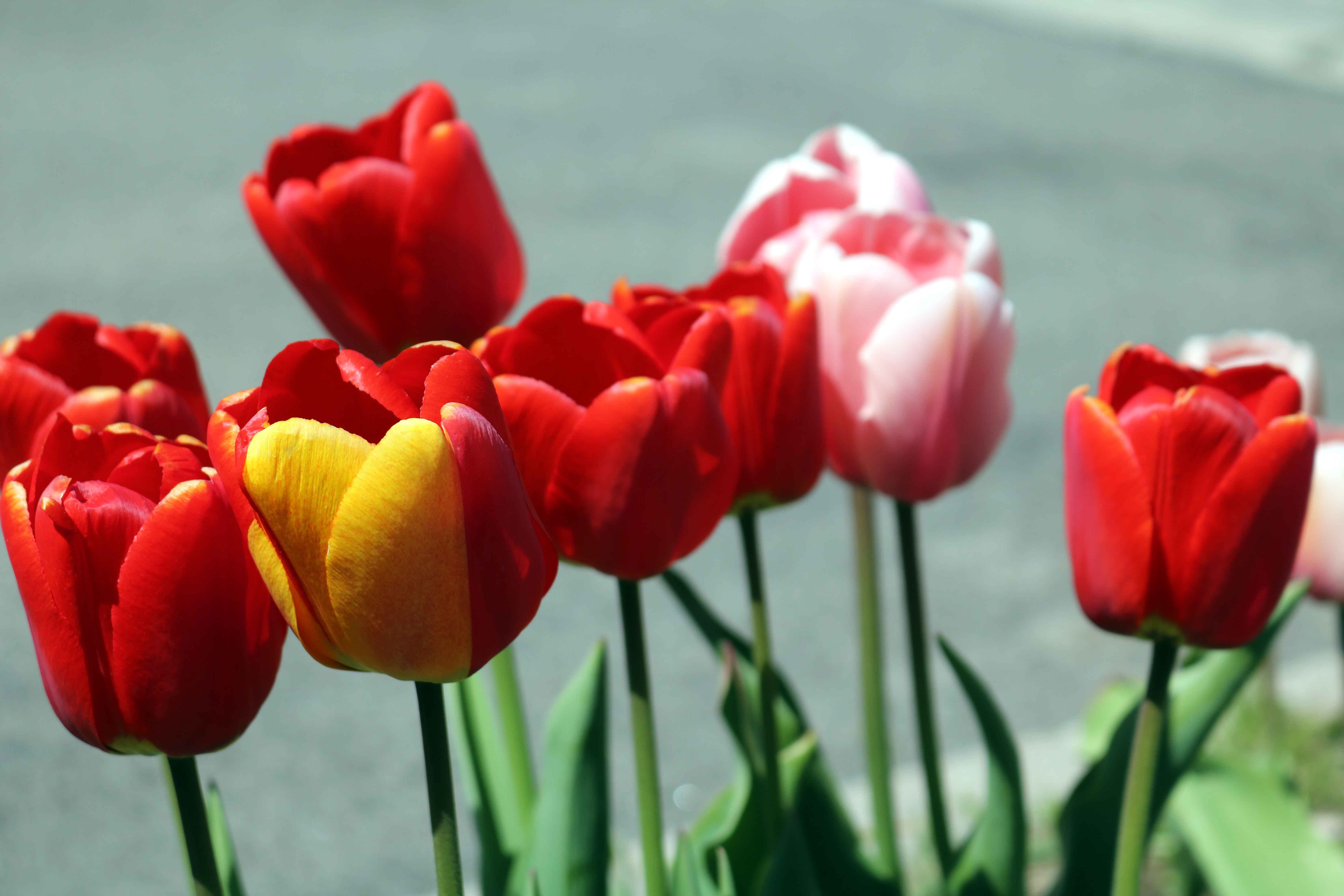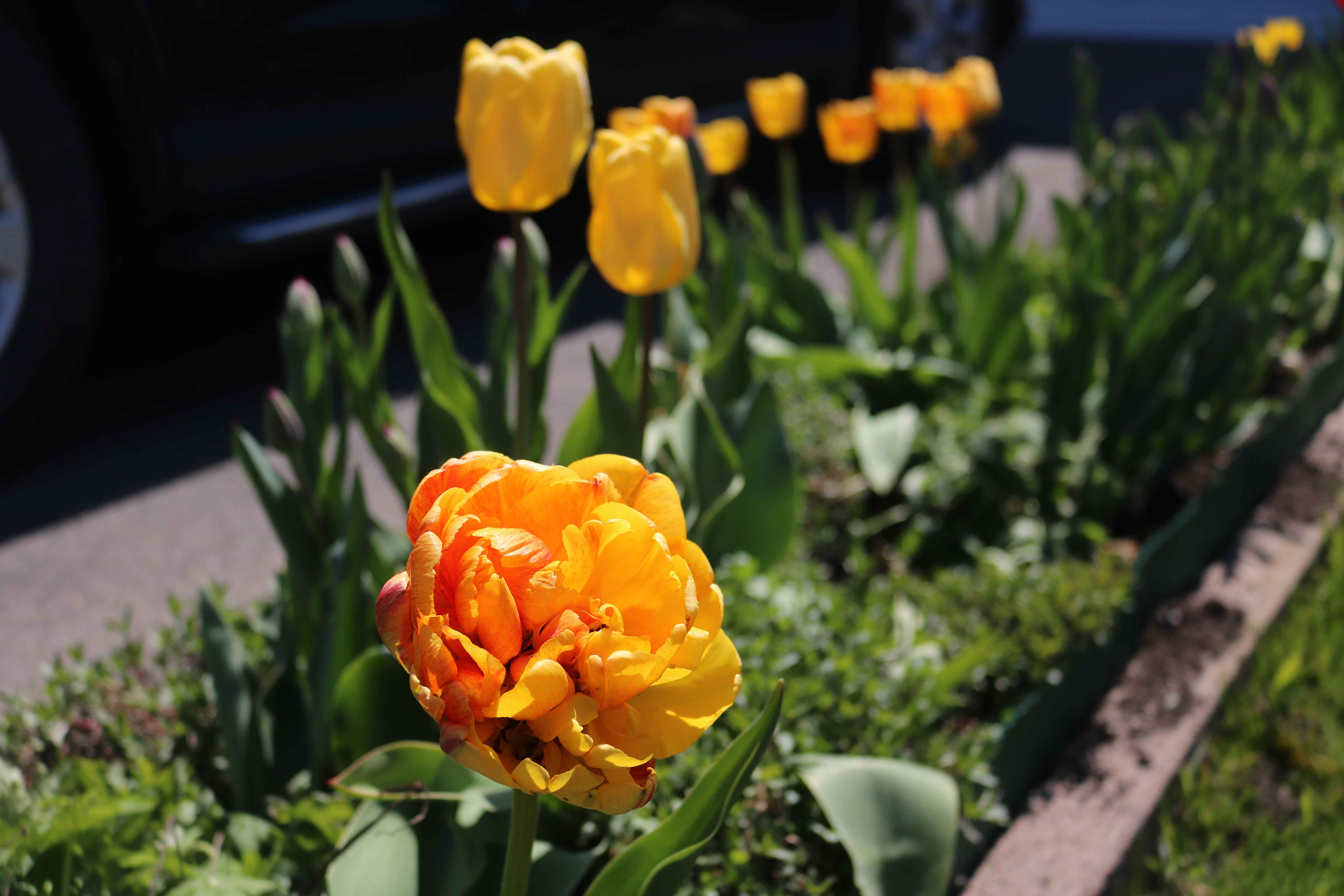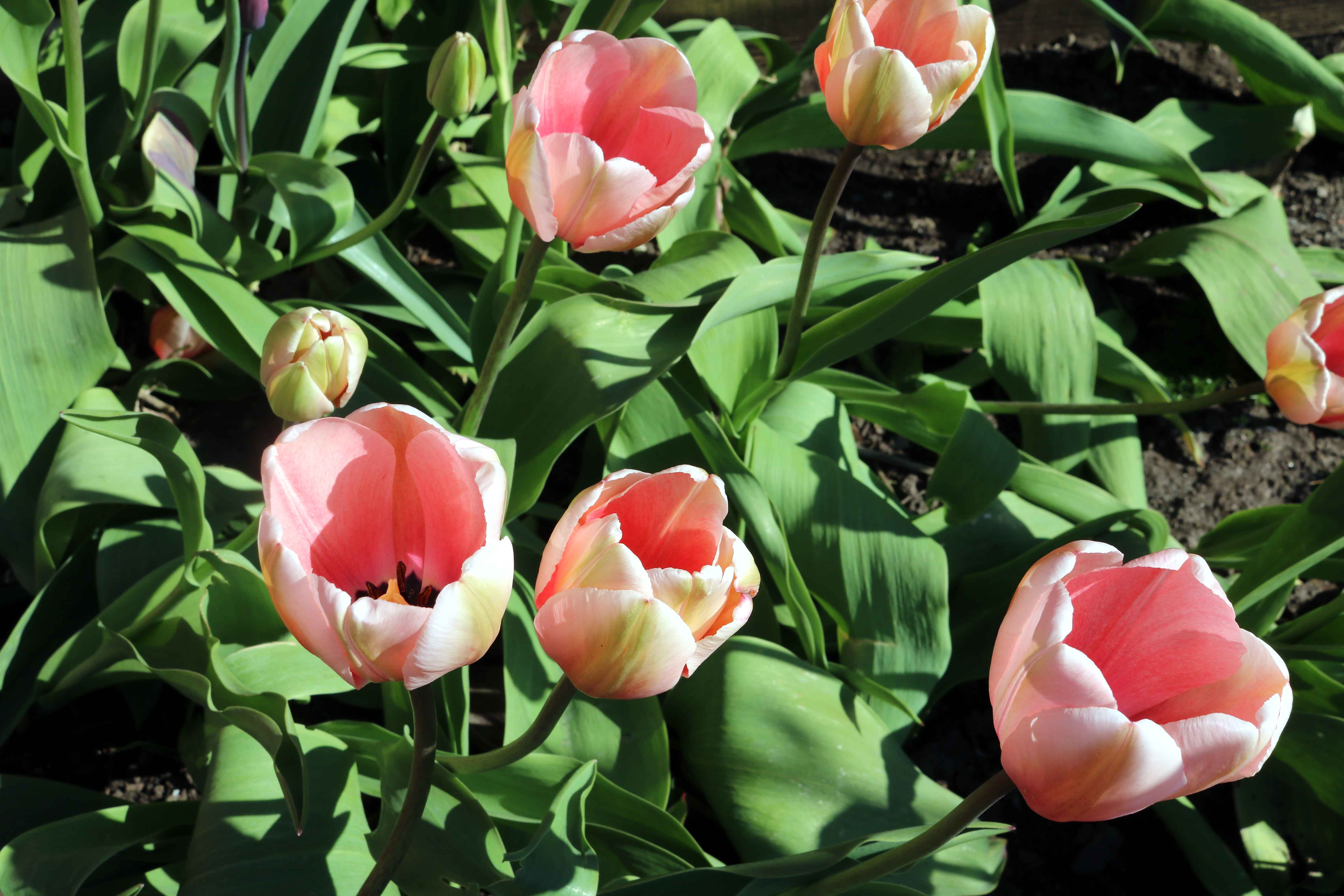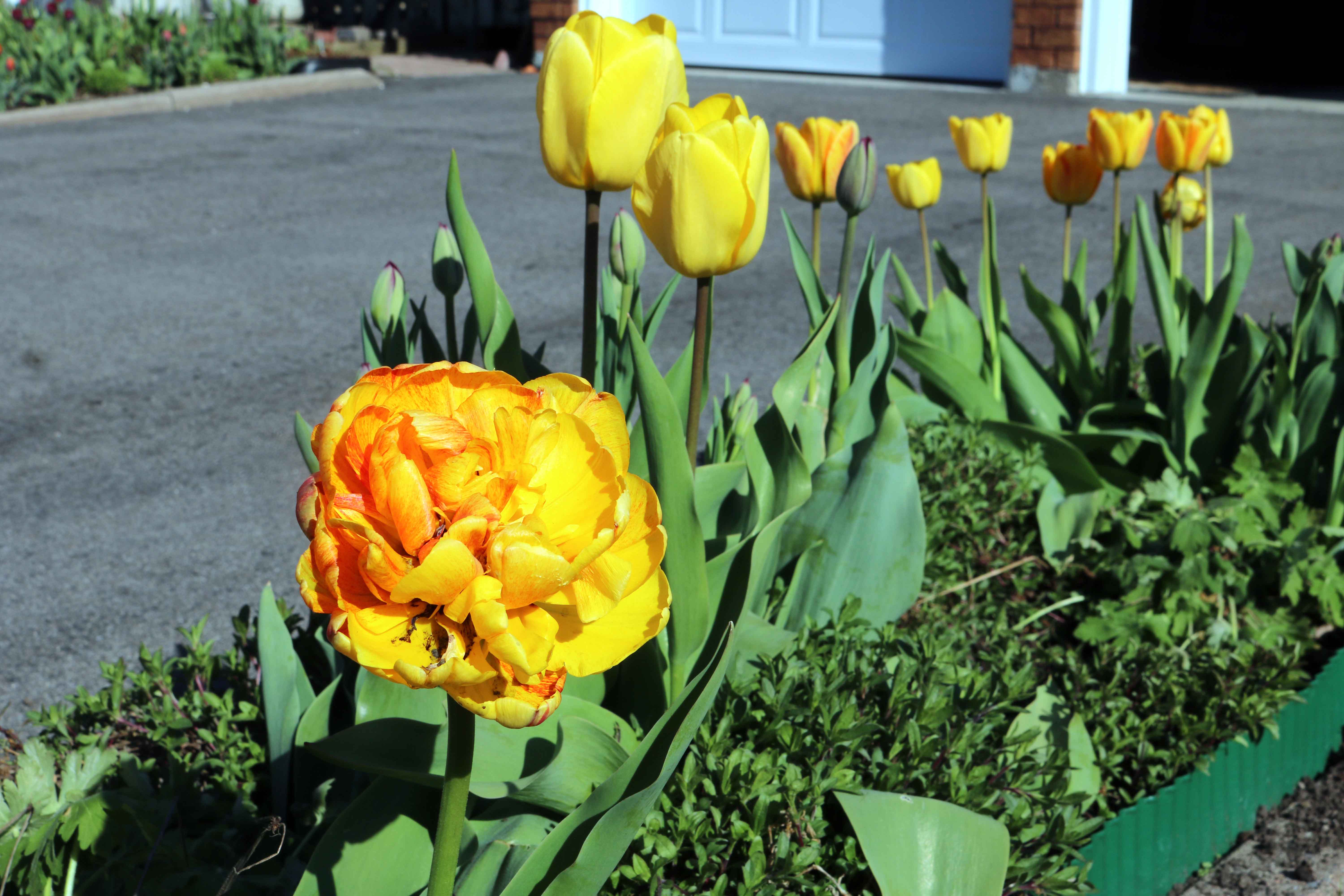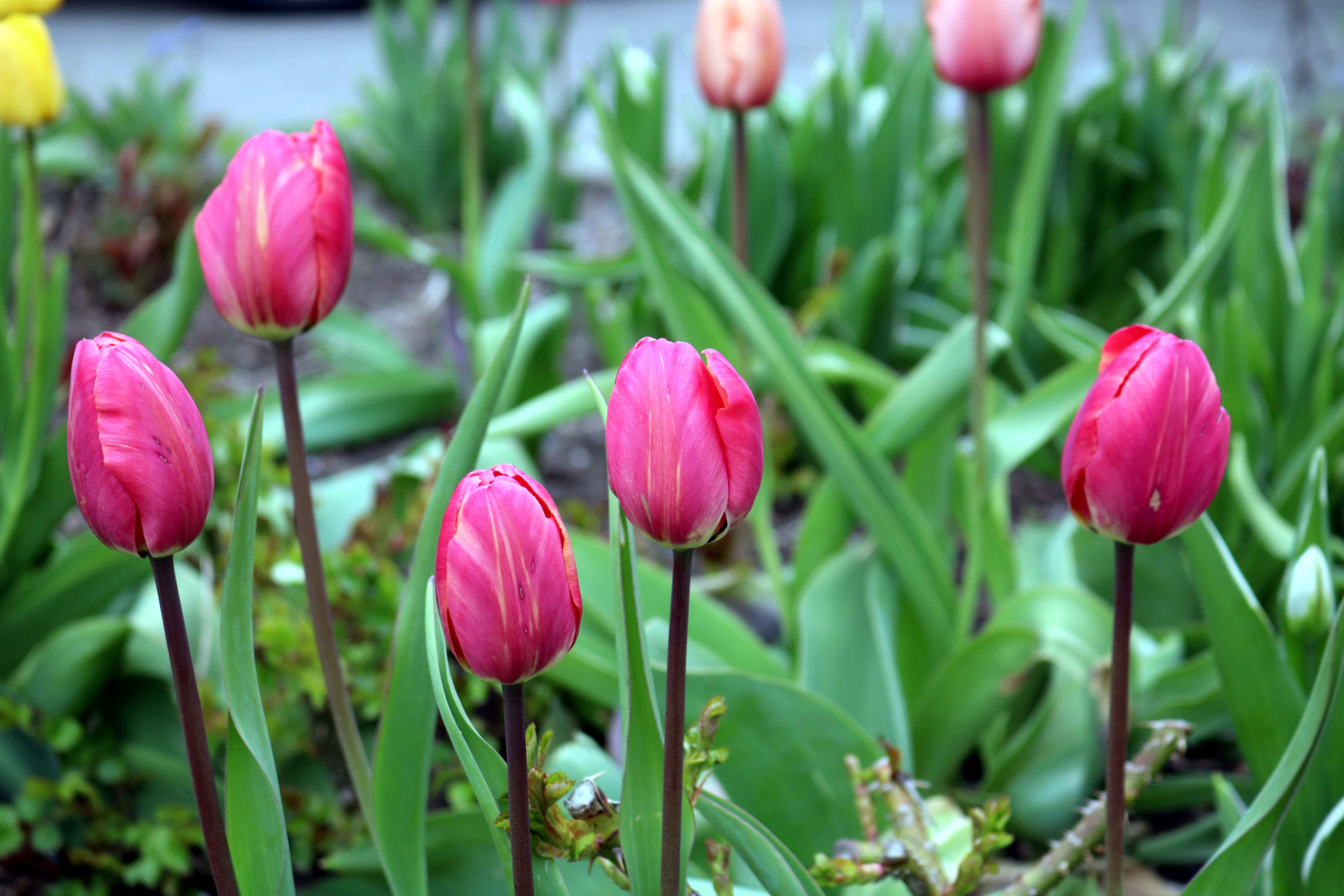
Welcome Spring 2020 with Tulips


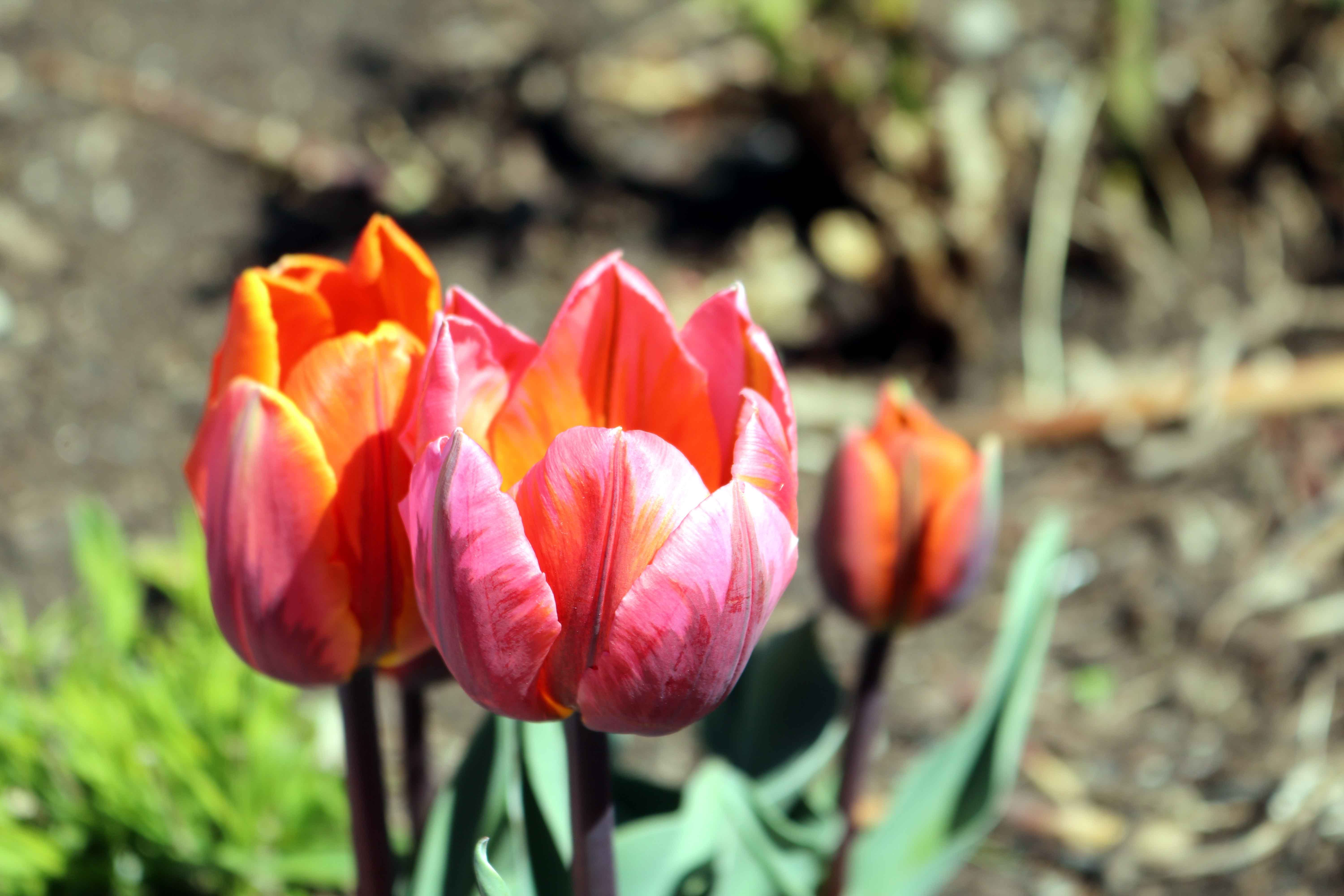
Every year, the cold winter snow melts away and we welcome spring, a new beginning.  This new beginning is marked in our garden by tulips.


April rains bring in May flowers‘ is a common saying in Canada. Tulips and daffodils do not wait for the rain and by end of April they sprout out marking the beginning of spring.


Tulip flowers last only a fortnight.

 
We have Early-Spring, Mid-Spring and Late-Spring varieties.  Thus we extent the Tulip flower season in our garden.
  
This year around we did not receive many showers in April and it did have a telling effect on the quality and size of tulip plants and flowers. It is said that the tulip’s velvety black center represents a lover’s heart, darkened by the heat of passion.
 
At least we were lucky to have the best flowers in the city as claimed by many visitors.

 
Tulips Originated in Persia and Turkey and were brought to Europe in the 16th century. They got their common name from the Turkish word for gauze (with which turbans were wrapped) – reflecting the turban-like appearance of a tulip in full bloom.
 
Canadian Tulips have a great history.  In 1945, the Dutch royal family sent 100,000 tulip bulbs to Ottawa in gratitude for Canadians having sheltered the future Queen Juliana and her family for the preceding three years during the Nazi occupation of the Netherlands in the Second World War. 
 
he eleventh wedding anniversary flower is also tulip, it conveys forgiveness too.   
Yellow tulips symbolises cheerful thoughts.
  
The Red Tulip became associated with love based on a Turkish legend.

 
Purple symbolizes royalty.

 
We have multi-colored varieties too.

With all of the history, sentiments and meanings of tulips, it’s not surprising that their popularity continues to endure. The wide range of colours and varieties available allows them to be used for many occasions.

CARS Without Scars

Critical Analysis and Reasoning Skills (CARS) test is designed to test comprehension, analytical skill, and reasoning power by comprehension and critical analysis of a given passage. Today, it forms an important part of most competitive entrance examinations for important universities the world over.  To develop this skill, the only mantra is to read more – that too from all disciplines across the board. Some of you may question how and why reading is connected to CARS? After all the answers to the questions are all there in the given passage!

The explanation is pretty simple. The more you read, the more is your ability to quickly comprehend. The more you read, greater is your vocabulary and greater is the speed of comprehension and less the chances of your not comprehending something in the passage. The more you read more will be the chances of your familiarity with the subject matter and with greater familiarity comes greater ease of analysis. So reading is fundamental to development of mental faculty …no escape!

CARS is a skill that needs to be initiated in a child as early as possible.  Parents and primary school teachers play a very important role in developing this skill in children.  Some of the tips for teaching critical thinking to children, as recommended by American Philosophical Association (APA), are as listed below: –

  • Start as Early as Possible. Children can be encouraged to give reasons for their decisions or conclusions rather than teaching them ‘formal’ logic.
  • Avoid Pushing. Whenever we tell our children to do things. it would be pertinent to give them reasons for the same. Some, they may understand; others, they may not.
  • Encourage Kids to Ask Questions. That is the only way to instill and encourage curiosity in children. They should never feel any pressure in asking questions to their parents or teachers.  Many a times, children are hesitant to ask a question due to this pressure from their peers or siblings.
  • Get Kids to Clarify Meaning. Rather than the rote system, encourage children to explain things in their own words.
  • Encourage Children to Consider Alternative Explanations and Solutions. Allow children to experiment or consider multiple solutions rather than always looking for the bookish right answer. This will enhance flexible thinking.
  • Talk About Biases. Children can understand how emotions, motives, cravings, religious leanings, culture, upbringing, etc can influence our judgments.
  • Don’t Confine Critical Thinking to Purely Factual or Academic Matters. Encourage kids to reason about ethical, moral, and public policy issues.
  • Get Kids to Write. Writing helps students clarify their explanations and sharpen their ideas. Only kids who read and analyse develop good writing skills.

When faced with preparing for a CARS test, you are what you are. In  case you have a few months or at best a year before you take the test, can you actually prepare for and improve upon your CARS score? Surely Yes. Let us see some of the aspects of preparation for CARS.

Reading Speed
Speed of reading is very important for any CARS test.  Generally, there are five to six passages and 60 questions to be answered in 90 minutes. Thus you have less than 15 minutes to read each passage, the set of associated questions and answer them.   The only way to increase your speed of is by reading and more reading. There are of course many speed reading techniques that one may try but eventually you must settle down to a particular reading technique.

Most of the modern-day CARS tests are computer based, the examinee needs to develop speed of reading onscreen.  Reading onscreen in a test environment calls for better training of your eyes and mind as it is 20% slower than reading it on paper.  If the test you are taking is onscreen, you must practice more onscreen.

Some tips to speed up your onscreen reading are: –

  • Do not Move Your Head – either up/down or left/right – to see an entire page on most computer screens. Practice shifting your focus between words and lines without moving your head.
  • Avoid ‘Sub Vocalization’ – also known as auditory reassurance. It is a common habit where readers say words in their head while reading, thus slowing down.  Your mind is capable of perceiving and analyzing text much faster than you think – at least double that of your speaking speed.
  • Never Stop in Between and Go Back and Forth. In case you do not fully understand a part of the passage or you lack clarity about what the inputs are, first read the complete passage and then look for what you need to clarify.
  • Practice Reading Phrases or Small Sentences Rather Than Reading Each Word. Remember that you are looking for the overall meaning and not referring to a dictionary. Reading word by word slows you down as you tend to pause between words.

Selective Reading
As part of your reading in preparation for CARS you need to read for pleasure and entertainment as well as concentrate on some dense and difficult prose. In both categories your reading should be only non- fiction and generally related to social sciences and humanities. The CARS passages are hardly ever science based. In the light reading category, a few national and international current affairs magazines would suffice such as Time, Newsweek, India Today, Frontline and so on. It is also important to read the editorials of daily newspapers and a few articles that appear on the editorial page. As for difficult prose try for example Edward Gibbon’s The History of the Decline and Fall of the Roman Empire or Adam Smith’s An Inquiry into the Nature and Causes of the Wealth of Nations. Reading such as this is essential so that you develop the ability to read and assimilate difficult prose.

Practice
While wide multidisciplinary reading is the best solution in the long run, if your preparation time is limited to a year or less, then the solution lies in relentless practice. Even if you do nothing else by way of preparation, just practice alone may well see you through. Repetitive practice will in the long run build up your stamina and help improve your reading speed and your analytical skills and above all your scores.   Roughly one mock test a day or five to six per week should suffice. After a month or so, if you are on the right track there should be improvement in your scores. If not there is something seriously wrong in your approach and you may need professional help to identify your weakness.

Vocabulary Improvement
A good vocabulary is a basic requirement for proficiency in the CARS test. If you have been a reader of storybooks since your childhood, generally your vocabulary ought to be good. However, if you have been a poor reader, your vocabulary will need to be supplemented in the short term. Some of the books or Audio-visual materials specifically meant for this purpose are readily available in the market. Some research on effectiveness must be done before you home in on what you need.

Adopt A Simple Strategy
During our Long Gunnery Staff Course (LGSC), the objective tests often contained a section where examinees are required to tick true/false on a series of statements. The questions had negative marking and often bamboozled a lot of us trainees. Eventually some someone came out with a strategy that proved to be effective for at least some of us: –

  • Those questions that you CLEARLY KNOW to be true/false should be first attempted.
  • Then, those that you FEEL are true should be ticked false and vice a versa.

Similarly, there are many strategies in attempting the CARS test. The simplest and the best strategy is to read the entire passage first and then answer questions in the given order. Some may advocate obviously stupid strategies such as reading the first and the last paragraphs and then answer the questions or even reading the questions first (not the answer choices) before you read the passage so that apparently you know where to focus when you read. These stupid options must be shunned. Some other strategies such as devoting a disproportionately longer time for reading and assimilation of the passage and then answering the questions may be useful to some. Yet another strategy may be to devote meaningful time only to say five out of six, or seven out of nine passages and apply pure guesswork on the remaining passage(s) without reading. First skimming through the passages with a view to and identify and attempt the easier passages first may also be another strategy. Early in your preparation time you need to firm in on your strategy and then practice relentlessly on the chosen strategy. If there is no noticeable improvement in scores after a period of time, you may need to think of changing your strategy.

How to Read the CARS Passage
Remember that the CARS test is basically aimed at testing whether you can see the big picture, not the minor detail. By the time you finished reading the passage and applying a few minutes of thought, a central theme should emerge, shouting from roof tops so to say. How do we reach that stage? Central to all prose writing is the point that a paragraph contains a central idea. When we complete each paragraph of the passage, we should ask ourselves what this central idea is and preferably jot this down on a scratch paper in just four or five words. We may call this a paragraph review. We may also jot down as part of the paragraph review, inferences and conclusions that we can draw, comparisons if any and the purpose of anything that is unique

Once you have completed this process for all the paragraphs of the passage, look at your scratch paper and go through the ideas jotted down. Try and link these together and form a central theme, which should also be jotted down on the scratch paper. Now give a thought on the authors tone. Is he light hearted, serious or matter of fact? Is he trying to sell a new idea? Is he emotional about the central idea? A clear understanding of the central idea and the author’s tone are essential to answer the following questions. Once this process is done you may answer the questions and there will rarely be a need to re-read any portion of the passage. If there is any question which cannot be answered now, it is better to guess rather than go back to reading the passage as this will only waste time and rarely find the answer.

Instead of using a scratch paper some may be more comfortable with highlighting a few words/sentence in the passage itself to bring out its central idea. To my mind his is an inferior technique but by all means use it if you are more comfortable with it.

Some Sample Questions

Question 1:  ‘Meter’ is a unit of measure derived from one millionth of the radius of the planet Earth. Based on this which of the following is true:

  • A) The radius of the planet is the perpendicular bisector of all the auxiliary latitudes
  • B) The first geodetic survey of the Meter was(?) done by Willebrord Snell.
  • C) The Nautical Mile is equal to Imperial Mile in meters.
  • D) It is impossible to derive the Meter using land based geodesy techniques and materials as was available in the 18th Century.
  • E) None of the above.

The answer is E as all of the other statements are red-herrings.  Do not get caught up looking for the red-herrings.  It may be prudent to skip such a question and revisit at the end time permitting.

Question 2

  • A) Some days are longer than others during the calendar year
  • B) A few of Da Vinci’s paintings were lost over time.
  • C) It is possible that there were no protests in Washington D.C. in 1946
  • D) All students writing the MCAT do well on the CARS section
  • E) None of the above.

Here there is neither a passage nor a question.  If you analyse, other than for statement D, all other statements are ‘some’, ‘a few’, ‘is possible’.  Statement D is the only specific sentence with ‘all’.  By elimination, the answer got to be D.  Can you now guess the question?

Question 3:  Gautier was indeed a poet and a strongly impressive one- a French poet with limitations as interesting as his gifts. Completeness on his own scale is to our mind the idea he most instantly suggests. Such as his finished task presents him, he is almost the sole of his kind. He has imitators who could not mimic his spontaneity and his temper. Alfred de Musset once remarked about him “at the table of poets his glass was not large, but at least it was his own glass”.

Why does the author quote de Musset in this passage?

  • A) To show that all of Gautier’s contemporaries were his fans.
  • B) To prove that Gautier’s poetry was objectively the best.
  • C) To show how different Gautier and his poetry were.
  • D) To show the weaknesses of the French style of poetry.
  • E) None of the above.

The answer is C.  The quote by Musset ending with ‘it was his own glass’ points to the answer.

CARS is not at all be the nightmare that it is made out to be. In fact, if your vocabulary and ability to see the big picture are okay, then half the battle is won. All that remains is to polish the skills by relentless practice, backed up by record keeping of your scores.

Identity Discs

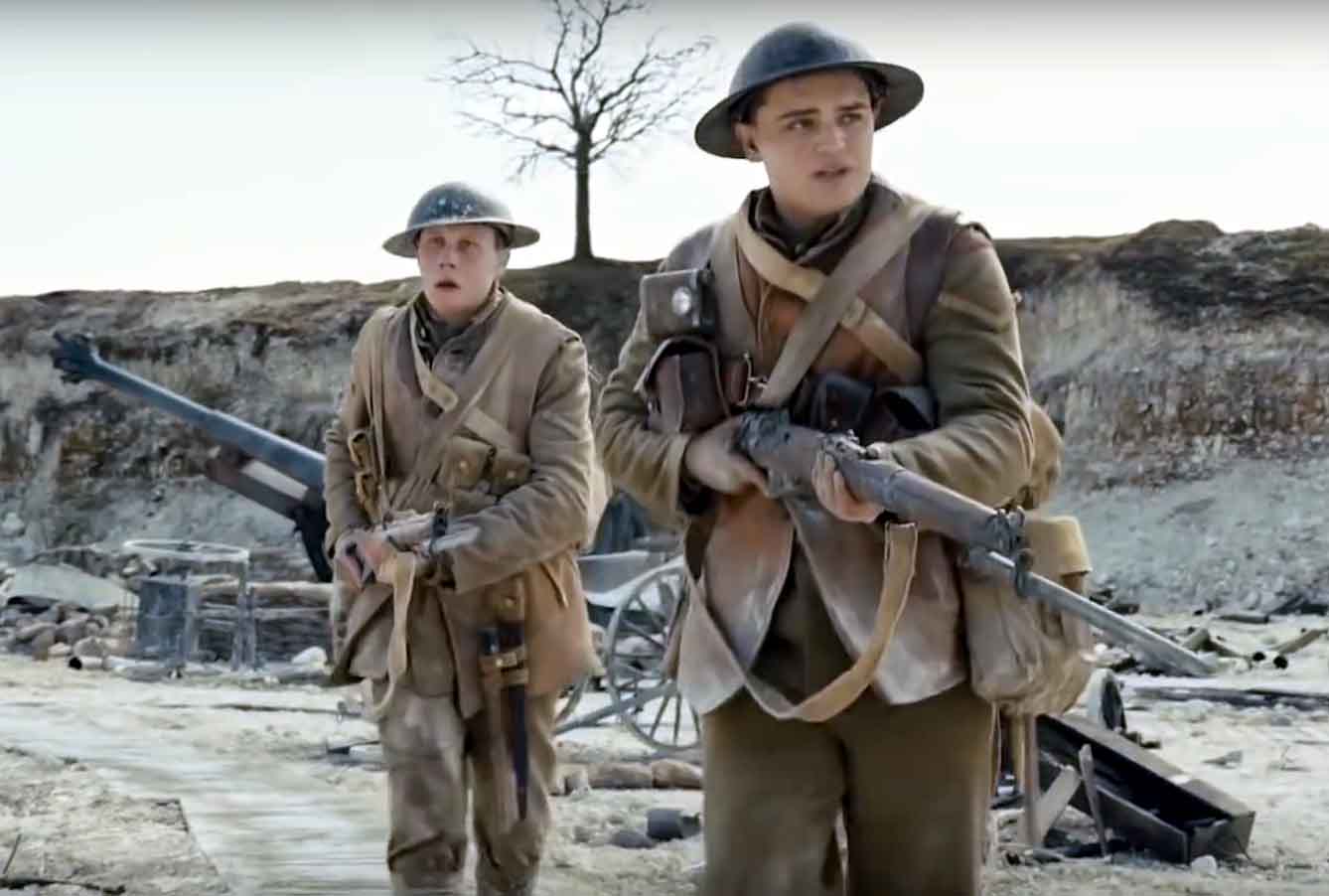
As I watched the movie 1917, I made a mental note to write a post on the identity discs worn by the soldiers.

In Canada and USA, some military spouses and fiances wear their partner’s Identity Discs as a symbol of love towards their partner deployed in a far away land. Some Veterans post retirement continue to wear their Discs.

The movie 1917, based on the First World War, tells the story of two young British soldiers, Lance Corporals William Schofield and Tom Blake who are ordered by General Erinmore to carry a message to Colonel Mackenzie on the war-front, calling off a scheduled attack that could jeopardise the lives of 1,600 men, including Blake’s brother Lieutenant Joseph Blake.

Schofield and Blake cross no man’s land to reach an abandoned farmhouse, where they witness a German plane being shot down.  They drag the burned pilot from the plane. However, the pilot stabs Blake and Schofield shoots the German pilot dead. Schofield promises Blake as he dies that he would complete the mission and to write to Blake’s mother.  He removes two rings from  Blake’s fingers  along with the round Identity Disc worn around his  neck.

Schofield succeeds in reaching Colonel Mackenzie, who reads the message and reluctantly calls off the attack. He meets Lieutenant Joseph who is upset to hear about his brother’s death, but thanks Schofield for his efforts. Schofield gives Joseph his brother’s rings and Identity Disc and requests him to write to their mother about Blake’s heroics.

On a philosophical note the Discs remind every soldier that martyrdom is just around the corner. However, at the practical level, it has a specific purpose. They bear the personal number, name, regiment, religion and blood group of the soldier and serve the twin purpose as both a recorded evidence of a soldier’s death in action as well as for the eventual recognition of the body, in case there is a need. When there are a large number of fatal casualties over a short duration, it serves a purpose of keeping a record of death.

It must be sounding a bit eerie to the uninitiated.

These discs hanging close to the soldiers’ chests, remind them as to who they are. It gives the soldier facing death, ready to make the ultimate sacrifice, the confidence that He will not be forgotten. Some spouses of US soldiers deployed in Afghanistan and Iraq wore their soldier-spouse’s disc as a a reminder of their true love and commitment.

In the Indian Army we had to wear these Identity Discs while on operations and during various training exercises.  Actually there are two discs – an oval disc with holes punched on either ends and a round one with a single hole.  Our soldiers wore the oval disc on their left wrist and the round one around their neck.  On inquiry they said that it is to ensure that one disc will remain with the body even if the hand shears off.  The logic did not appeal to me at all, but I could not find any instructions regarding the proper way of wearing the discs. Surely we were not fighting a battle with swords to have either our heads or hands to shear off. I had no difficulty wearing the round disc around my neck, but the oval disc around my wrist was always a worry.  I lost them during most training exercises and had to get a new one made every time.  Obviously there was something amiss – I thought.

In 1988, I had to appear for a promotion examination in which ‘Military Administration’ was a subject.  Disposal of the mortal remains of a soldier killed in action was an issue on which I often had many questions.  Our Battery Commander was Major VN Singh, a 1971 Indo-Pak War veteran.  He was well known for his knowledge and meticulous military administration skills and had just been posted to our Regiment after a stint as an administration and logistics staff officer of an infantry brigade.  I approached him and he clarified the mystery and explained to me the procedure and the proper way of wearing Identity Discs.

The oval disc, through one hole a cord 24 inches long  is passed through and the chain is worn around the neck.  Using a small cord of about six inches, the round disc is attached to the bottom hole of the oval disc.  In case of death in war, the round disc is removed to identify the dead and the oval disc is left on the body for identifying it whenever the body is recovered.  The round disc along with the soldier’s personal belongings is despatched to the Depot Regiment of the Regimental Centre of the soldier and the oval disc is removed at the time of cremation/ burial or despatch of the dead body to the soldier’s home and kept for records.

Identity Discs of Indian Army owe its origin to the British Army.  The first British ‘Disc Identity’ was introduced in 1907.  It was a single identity disc, fitted with a cord to be worn around the neck underneath the clothing.  The single-disc led to many postmortem problems in identification of the dead in that the disc was being removed for administrative purposes, leaving the body devoid of identification.

In May 1916 the second disc was introduced – octagonal in shape – known as “Disc, Identity, No.1, Green,” with the original disc becoming “Disc, Identity, No.2, Red.” The No.1 disc was to be attached to the long cord around the neck, with the No.2 being threaded on a 6 inch cord from this disc. No.1 Disc was intended to remain on the body whereas No.2 Disc was to be removed for administration.In the movie 1917, Lance Corporal Schofield is shown removing the Red Disc, leaving the Green Disc on  Lance Corporal Blake’s body. During World War II, British Army soldiers were issued with aluminum Identity Discs – oval and round.

US Army Identity Discs consist of two discs. One disc is on a 24 inch chain and the other is attached to the main chain by a four inch chain.

There is an interesting history to the US Army Discs. During WWII the discs were rectangular shaped with round ends and a notch at one end with name and details stamped by a machine. It was rumoured that the notch was put on the disc so that the disc could be placed in a dead soldier’s mouth and would hold it open so that the gasses would escape and prevent the body from bloating. In reality, the stamping machine required a notch to hold the blank disc in place while it was stamped. During the Vietnam War, new stamping machines were used and the notch was eliminated. Soldiers realised that the clinging of the metal discs gave away their location. Hence rubber covers were provided to keep the discs silent.

During the Vietnam War, some American soldiers tied one disc to their bootlaces. They believed that it could facilitate identification in case their body was dismembered.


Canadian soldiers’ Identity Disc is scored by a horizontal groove so that the lower portion may be detached. If the wearer becomes a fatal casualty, the lower portion of the disc shall be detached and returned to the Headquarters with the soldier’s personal documents. The chain and upper section of the disc shall not be removed from the body.

Identity Discs may become more symbolic in future as technology advances in the days of DNA sampling to identify deceased soldiers.

Soldiers can sometimes make decisions that are smarter than the orders they’ve been given.”   ― Orson Scott Card, Ender’s Game

A Look at Friendship From a Gender Perspective

For most of us, making friends is neither a difficult task nor an uphill climb.  If it were so, we would never have had so many friends at different stages of life.  The aim must be to keep it simple and not complicate it by thinking too much about it.

We make friends from kindergarten to this day in our life and we never really give any serious thought to it.  Some friends are long lasting, some casual and some are ‘once a while’, some have left for the heavenly abode, and many are forgotten down the lane.  It all depends on the manner in which we view our friendships. For a person like me, educated in a military school, graduated from two military academies and having served a lifetime in uniform, the bonds are very strong. Whenever I had to call up my friends for any assistance or advice, despite being out of touch for years, they have all responded way beyond my expectations. We may be out of touch for ages, but the bonds are glued all too well that when the link is renewed for whatever reason, the relationship blooms all over yet again.

Our son Nikhil wanted to do volunteer service at Mother Theresa’s Missionaries of Charity at Kolkata for a month.  He booked his air tickets and was planning to look for accommodation near the venue.  Without a second thought, I called Brigadier S Ramakrishnan, my friend since our school days who was then posted at Kolkata and requested him to help Nikhil to find a suitable place to stay. Without a second thought, he and his charming wife, Mrs. Vijaya Ramakrishnan welcomed Nikhil into their home and looked after him for the entire duration of his stay.


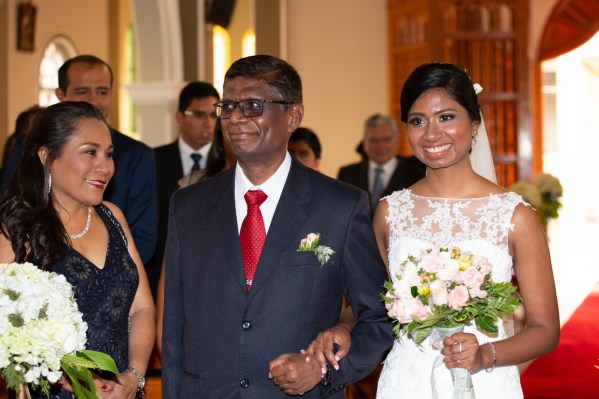
One day, in June 2018, my close friend and partner in teenage pranks and escapades at school, Vijayabhaskaran (alias Vijas), called me up right out of the blue. Even before he spoke a word, the memory of our many colourful escapades and the resultant punishments we endured together flashed through my mind. He went on to announce that their daughter Sandhiya, pursuing her engineering education in Germany had found her life partner in Ernesto, a Peruvian citizen.  The marriage was scheduled for 05 January 2019 at Piura, Peru.  I felt honoured as I was the first one outside the family that he was informing of this cross-cultural development.  “Surely, we will be there!” I assured him without a second thought. It was only later that the realisation dawned on me that a schoolboy friendship was now taking me to a new continent and a lost civilisation where I had not trodden before.

I had learnt about Peru in middle school geography and about the Inca civilisation in history.  I knew Peru was in South America, with Lima as its capital.  But where is Piura?  A Google search helped us to locate the venue enabling Marina and I to travel to Peru and attend the wedding.

Vijas and I shared nothing in common – a Thamizh Hindu and a Mallu (Malayalam speaking) Christian- brought up in different family and cultural settings, pursuing different professions- Vijas is a top Chef of India who features in the book ‘25 of India’s Biggest Chefs’ by Sagrika Ghoshal.   Our friendship blossomed at school and remains as strong till date, despite the geographic distance that separates us. After school, I served the Indian Army, later migrated to Canada, whereas Vijas is based in Bangalore. Distances, geography and professions don’t seem to matter much to our lasting friendship.

Now, here is a different perspective. Marina studied in a residential school and was in a hostel for graduation.  She was very excited to join the WhatsApp group of her school friends, but the excitement lasted barely a month.  She remembers most of her school friends but appears to have forgotten most of her university friends.  Our daughter Nidhi too seems to be treading the very same friendship path as her mother.

Our son Nikhil has four good friends from his school days who belong to different ethnicities around the globe.  They follow different passions and areas of studies – Patrick in literature, Nam in drama, Thomas in art & design, Kevin in music, Nikhil in Pharmacy with a career in the Canadian Military. The Five Boys, they ensure that they get together once a month at Toronto, just to toast their friendship.

Patrick’s grandmother recently passed away at the ripe old age of 91.  She meticulously maintained a dairy.  During her funeral, excerpts from her diary were read.  It contained many references to the Five Boys.  Surely, during their many visits to Patrick’s home, the boys would have kept the old lady in high spirits with all their charm and humour.

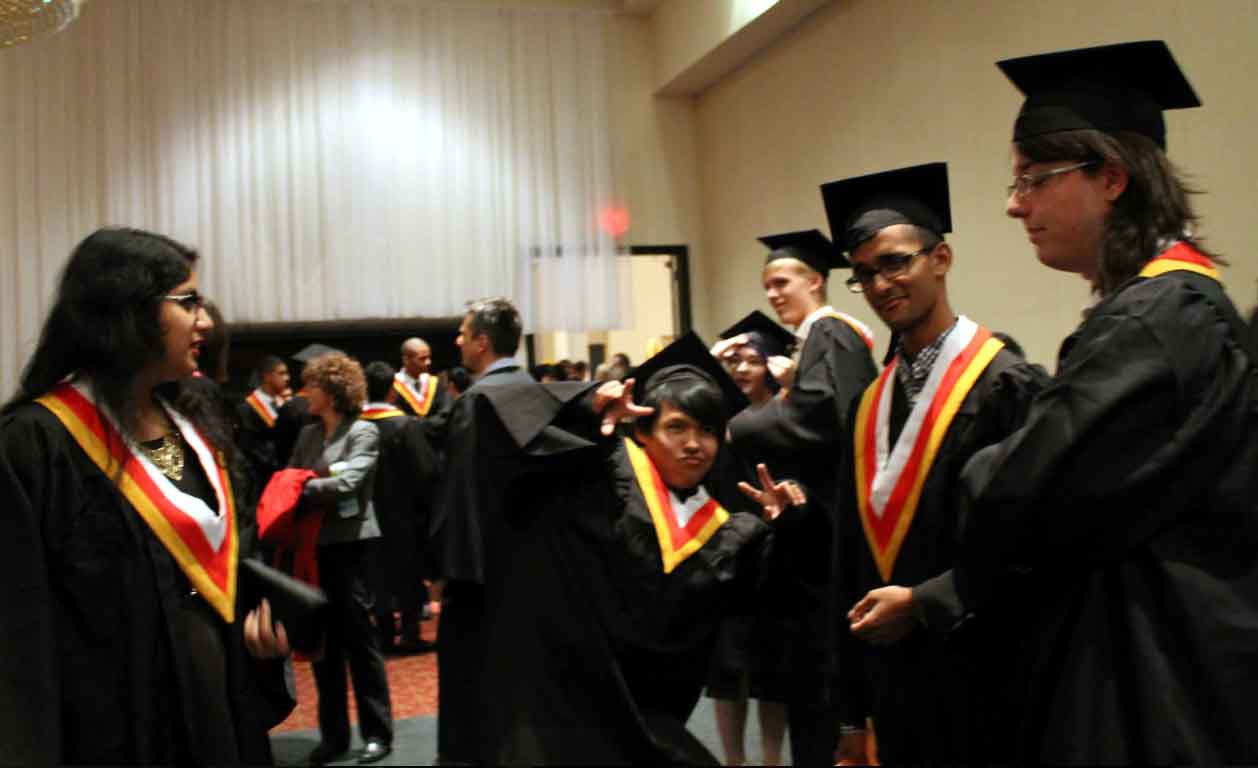
After Nikhil’s Graduation Dinner, there were ‘after-party’, ‘after-after-party’ and so on, with lots of alcohol flowing.  Next day noon I picked him up and while driving home he said “I did not know that these girls are so messed up with their friends.  Those we thought where the best of friends were getting at each other’s throats after a few drinks with their bitching and free flow of profanity.   We boys appear to have less complicated relationships.

You can very well call me a sexist, but I am pretty sure that the outlook is poles apart and gender specific.  As in many facets of life, even when it comes to friendship, ‘Men are from Mars and Women from Venus’!!

Developing Reading Skills in Children

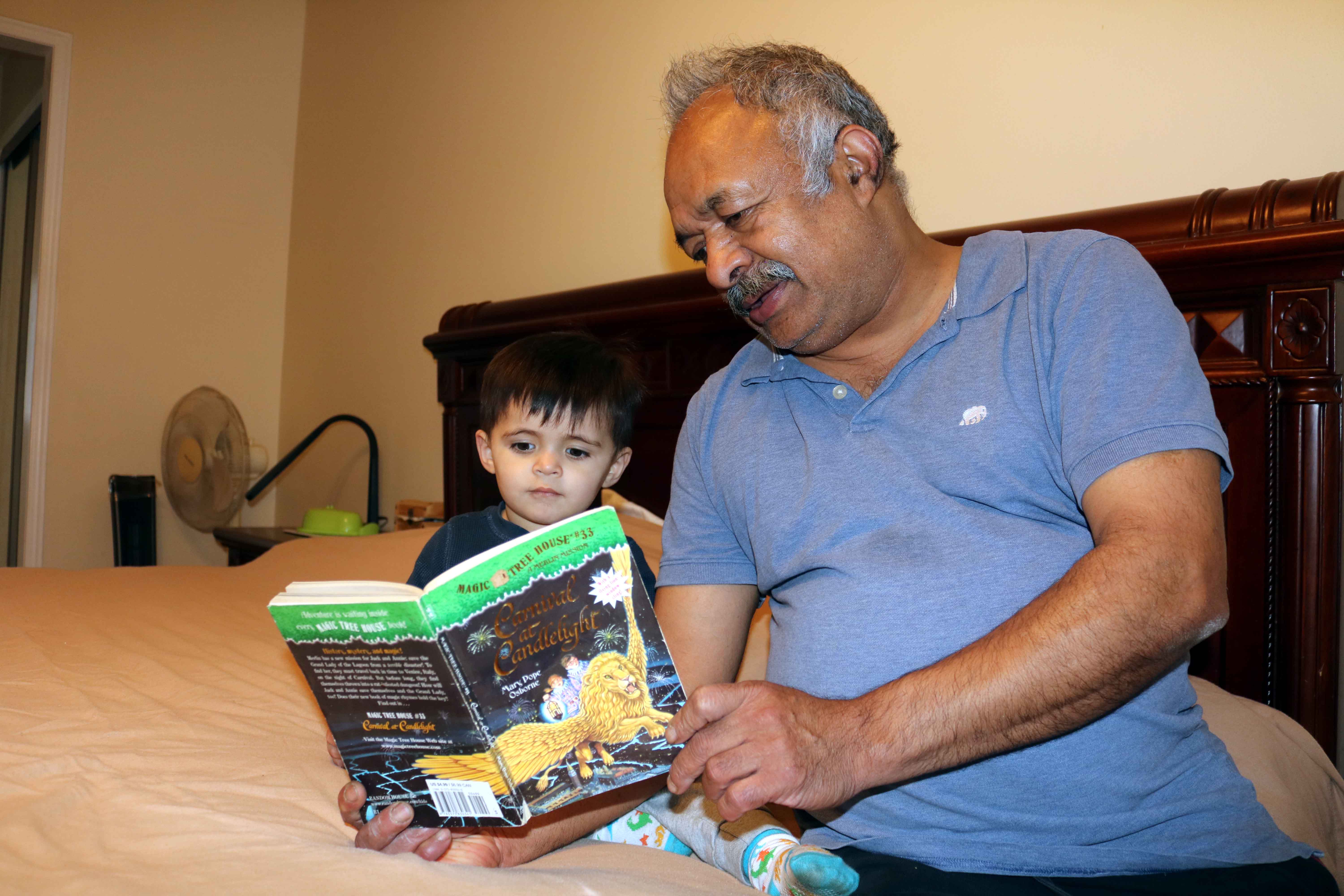
While on a family trip in our car, Marina asked our son Nikhil, then a University Student, as to how he developed reading skills.  The question was pertinent as Marina had migrated to Canada and I as a single parent had brought him up through his Kindergarten and Grade 1 while I was serving in the Indian Army.  Our daughter Nidhi was initiated into reading much earlier by Marina as she was a homemaker, and I was invariably tied up with my military duties.

Nikhil explained “While I was in Kindergarten every evening Dad read with me stories from many story books that I had inherited from Nidhi.  The story which interested me the most was ‘Three Pigs and a Wolf.’  The book was a well-illustrated one from a kid’s point of view and every page had a small sentence, thus easier for me to comprehend.  Dad used different voices for the three pigs.  The best was he named the third Pig the smartest one as Nikhil.  That held my interest.  Further he made changes to the story every time he read it and I used to be very inquisitive about it every time he read it to me.”

The four words माता पिता गुरु देवा (Matha Pitha Guru Deva) simply translates as ‘Mother Father Teacher God’. The word sequence originates in the Vedas, the scriptures that contain the essence of Hindu Philosophy. The four words contain an axiomatic truth regarding the order of reverence as laid down in the scriptures, which everyone needs to adopt. Irrespective of religion, down the ages, the idea has always been fundamental to Indian thought. It follows that as Parents You are your child’s first teacher.  Not that one needs a philosophical backing to comprehend this basic truth. It’s just that this basic tenet of human understanding had evolved thousands of years ago, at the very dawn of civilisation.

One of the first tasks of a Parent-Teacher is to develop reading skills in your child.  You’ve got to read with your child every day.  Children will always imitate their parents – children of parents who read turn out to possess better reading skills.  Children who are read to will end up loving to read.  It’s got to begin when your child is very young, as soon as you can make the child sit with you.

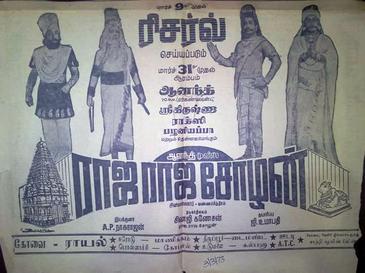
When I joined Sainik School, Amaravathi Nagar, Thamizh Nadu in Grade 5, I could neither speak nor read Thamizh, the native language of the state.  By interacting with our classmates, learning to speak Thamizh came very easily, but how to learn to read the language?  When I was in Grade 8, my buddy Vijas gave me an advice which hardly anyone would have heard of – “Look out there, it is the cinema poster for the movie ‘Raja Raja Chozhan’.   Read each letter of the Thamizh alphabet to form a word and continue the exercise whenever you see a poster while on the run to the dam every morning during Physical Training.”

I employed Vijas’ technique with Nikhil.  While driving – dropping him off at school, picking him up after school, commuting to the swimming pool or tennis court or for music class in the evening – I used to point out to various road signs, billboards, store and restaurant signs on the roadside and make him read them out aloud. Then we discussed the various aspects of displayed signs.  Every time we came across the McDonald’s logo, he reacted differently.

Here is the link to his reaction and reading.  McDonald’s logo is one of the most popular emblems in modern history.  It consists of an arched golden coloured ‘M‘ on a plain red background.  This simple one letter logo with two contrasting colours is bound to stay in the memory of any child, even without the gastronomic connection. Their eyes get promptly zoomed on to this simple logo from a long distance.  Whatever it is, the use of a single letter or the colours, everything homes on to a child’s imagination without making it look complicated.  The mantra is Just Keep It Simple.

What should your child be reading? Priority should obviously be given to what evokes his interest as obviously will sustain the reading habit and improve reading skills. Books about your country, other important places in the world, wild animals or dinosaurs – anything and everything, but age-appropriate.  Fiction – action, fantasy, science fiction, funny stories, comics, all of them foot the bill.  Adventure stories where the child can imagine to be the super-hero, princess, detective, and so on are ideally suited.

When your child raises questions?  Ensure that your child has time to think while he is reading, and this can be assessed by the questions that may be thrown at you.  Many a time it could be somewhat uncomfortable too.  Be prepared to answer all the questions and never snub the child.   While answering, instead of preaching, ask a question that will lead your child to talk about what he or she thinks.  That will give confidence to your child that you are listening.

Which language to communicate with your child?  A pertinent question mainly for the immigrants.  I recommend the language which you and your child are comfortable with.  It need not be English all the time.   Communicating in your mother-tongue will enthuse your child to learn more about your own cultural history.

With the effort you devote to developing your child’s reading skills, your child will grow up to become an excellent reader with strong writing skills. The knowledge gained will eventually transform him/her into and a valuable citizen.

Reading maketh a full man; conference a ready man; and writing an exact man (Sir Francis Bacon). It’s a gradual flow from one to the other. We all need to remember that even in today’s age of technology there is simply no substitute to reading skills. It will reflect on your child’s grades and will make a difference when he or she enters university or the workforce.

You don’t need a lot of special skills to help your child learn to read and write. You need not be super-parents.  Spending time with your child and doing everyday activities with a focus on the ‘written word’ makes all the difference in the world.

Public Address (PA) System

Can you hear me at the back?”  Queried the Reviewing Officer at the Passing Out Parade of our nephew, prior to commencing his address to the Cadets.  There was a seven second utter silence that followed – as if those seven seconds did not exist in this world for everyone gathered out there.

Did the Reviewing Officer not trust the Commandant of the Academy, a General Officer, who invited him to be the Reviewing Officer?  Would everyone at the Academy have not put their best foot forward to ensure successful conduct of the most important and venerated event at the Academy?  As Cadets during our own Passing out Parade in the past, haven’t we all seen the Herculean efforts put in by everyone, especially the team responsible for the PA system, to ensure that each word spoken is audible at every nook and corner of the Parade Ground and beyond?

Was the Reviewing Officer expecting a reply?  Was he expecting a Cadet lined up in front to acknowledge his query?  Did he expect the Adjutant mounted on his charger, with a sword in his right hand and reins of the horse in the other to raise his sword as an answer?  Did he expect the buglers standing on the ramparts of the fort behind to play a note in acknowledgement?

What if the address was not audible to the Cadets? Would it make a huge difference? No. They would have already been bored to death with the surfeit of advices from all and sundry.  I do not remember a single word of the address by the Reviewing Officer at our Passing Out Parade, though the Reviewing Officer was the most charismatic of them all, Field Marshal Sam Manekshaw.  So would be the fate of any lesser mortal here and now. Senior military officers could sometimes do well without recourse to ‘out of place clichés’.

My mind flashed back to my military service days.  Once a month in military service, it was the day of the ‘Sainik Sammelan’ (Address to Soldiers of the Regiment by the Commanding Officer (CO)), a monthly ritual, mostly held on the last Saturday of the month.  During my Regimental service, I observed that a Sergeant responsible for the PA System set it up well before everyone assembled, tested it by tapping his fingers on the microphone and saying “Testing, Testing, Testing.”

Once the Regimental Sergeant Major assembled all the soldiers, he also tested the PA System by tapping his fingers on the microphone and saying “Testing, Testing, Testing.”  After that the Sergeant Major gave his report to the Subedar Major (Master Warrant Officer.)  The Adjutant then received the report from the Subedar Major who then handed over the parade to the Second-in-Command (2IC.)  At every stage of reporting, no one seemed to trust the poor PA system and everyone tested its functionality.

Now came the auspicious moment of the arrival of the CO.  The 2IC gave  the report to the CO and the CO settled down on the dais.  As the CO was about to commence his speech, the PA system sabotaged itself and gave out a most shrill and unholy tone “Koooooooooooo  Thap” and refused to do its job. Pure and simple system generated retribution for the lack of faith!!

The CO now looked at the 2IC, who in turn gave a frowning look at the Adjutant, who gave a dirty look at the Subedar Major, who now gave a dirtier look at the Sergeant Major, who finally gave the dirtiest look at the hapless Sergeant who set up the PA system.  Obvious display of lack of trust at every level of command.

Sainik Sammelans have been an event for the CO to demonstrate his oratory skills.  Some COs believed that they could communicate all their ‘accumulated wisdom’ on to their captive audience during the Sainik Sammelan and often in such cases, it extended to several hours.  In effect there was no transmission/reception of wisdom, but it ended up with sore bottoms, numb feet and a few caricatures of the CO by the officers.

Captain Desh Raj was the self appointed commander for all young officers (Lieutenants and Captains) of our Regiment. One day, after the CO’s Regimental Sainik Sammelan, Captain Desh Raj summoned all of us, five young officers of the Regiment, and directed us to show him our note pads where we had noted down the points briefed by our Commanding Officer.  All of us, except one, were reluctant to display our pads.  We were all trying to hide our note pads, but Captain Desh Raj successfully managed to snatch them from us and glanced through them.  Soon thereafter he declared “None of you can make a good caricature of our CO.  Your artistic skills need to be toned up.  Look at my note pad and the next time I want to see a better caricature of our Commanding Officer from you all than this masterpiece of mine.

That was when I realised that all those serious note taking by all young officers were much the same and on similar lines to what Captain Desh Raj did!  When I became a Battery Commander and later a CO, I ensured that all my Sainik Sammelans were of less than ten-minute duration. Possibly, I was mortally scared of my subordinates drawing my caricature! So I resolved not to give them time for the act.

Whether the PA system is working or not, there is no need to raise the question “Can you hear me at the back?”  Every speaker must realise that nothing much can be done at the nick of time other than the speaker straining his vocal cords to make the speech audible to all.  It only shows lack of trust in the organisation or the person who invited you to speak. Above all, a routine and meaningless cliché that is best avoided!!

Abiding Faith

While commanding the Surveillance and Target Acquisition (SATA) Battery at Devlali in 2003, I received a call from the Colonel General Staff (Col GS) of the Artillery Division, our higher HQ, that he wanted our soccer team to represent the Division in the Corps level soccer tournament. The tournament was to commence in a week’s time and our Col GS knew that we had a very good soccer team.

The Col GS is in charge of the General Staff branch, responsible for training, intelligence, planning and conduct of operations, beside a host of other less important subjects. Most orders from the General Officer Commanding (GOC), pertaining to these issues are actually drafted and signed by him.

Our Col GS was Colonel Azad Sameer (now a Veteran Brigadier) and he was my friend, philosopher, mentor and guru while I was in command. Our relationship had started off on a strictly official level and evolved into a personal one of mutual respect and friendship at an emotional level. The entire Regiment knew this for sure, such that one day our Adjutant (the officer who acts as an administrative assistant to the Commanding Officer) came to me and said “We implicitly respond positively to all orders and instructions passed by the Col GS as we all know that you would always want them to be executed without a question.  Rather, there is no appeal against it even in the Supreme Court of India.” Now these words coming from an Adjutant who was fully aware that his Commanding Officer was no ‘yes man’ and invariably had issues with unfair/ incorrect orders or those that were either complicated or made no sense; these words quite simply summed up our professional and personal equation.

Colonel Sameer and I had never met before during our military career and our first meeting was when our Regiment became part of the newly raised Artillery Division.  We developed an instant liking for each other from our first meeting, a continuing equation as on date.

Our Regiment was then a cooperating unit of the School of Artillery, and as such we were not administratively under the Artillery Division.  The request for sending the soccer team came from the Col GS (who was also a soccer enthusiast and a very good player) and I had to take a decision whether to send the team, or politely tell him why it was not possible.  I was not obliged to do so, rather it was against the norms of the Indian Army. Also I was aware that if my response was negative, he would well understand.  But somewhere deep down I wanted to be positive in keeping with the ethos of our relationship. If I were to ask for approval from the School of Artillery, it would surely have been turned down.  The Regiment had immense training and administrative duties under the School of Artillery and manpower was always at a premium. The question was ‘will we be able to spare 14 soldiers for three weeks?  That too without proper military authority?‘ It’s also a case in point regarding some tough decision making that a Commanding Officer is required to do in a peacetime army.

Our Regiment Football Team at Elora Caves – Havildar Dharambir standing second from Left

I summoned Major Suresh Babu, our Second-in-Command to discuss the issue.  He led our soccer team to victory in the Station Tournament.  The most critical game of this tournament was with the team of officers attending Young Officers’ Course at School of Artillery for they were fresh out of the Military Academy and were fit as a fiddle.

After hearing me out, Major Suresh said “We got to send the team; it’s obvious from your words.  We can cover the soldiers’ move as a training event, but to send an officer we need explicit permission from School of Artillery which is near impossible.”

A decision was made – we will send 14 soldiers comprising the football team and the Col GS was to find an officer to lead the team from any of the other regiments of the Artillery Division and the same was conveyed to Col GS. Well, that was that.

It also meant that I will be without the services of my Radio-Operator-cum-Buddie – Naik Ranjith. He played as the Right Winger of the team and was also the reserve goalkeeper.

In the normal course, a divisional sports team would be drawn from the talent of all its dozen or so units, after a competition or trials and would have trained together for a while. So it is very seldom that a regimental team gets to represent a division. Sometimes in the Army, the Command and Control Hierarchy can be a strange animal. Here in this case while our Regiment was operationally under the Artillery Division, we were not under them for administration, sports or training. To that extent the orders to send the football team may even be viewed as illegal!! But having made the decision, more with my heart than with my mind, I got the team around, explained the overall situation and simply told them that they ought to do well. Being a Regimental team, we maybe a little short of talent, but that was well compensated by the ‘espirit de corps’.

After three weeks I got a call from Colonel Sameer – his voice brimming with excitement and pure elation.  He said “Reji, Congratulations!  Our team came runner-up in the Corps soccer tournament!  I never ever dreamt that this experiment would work the way it did and your boys would do so well!” Well I was a bit surprised too at the progress they made and thought to myself that although the orders were not entirely correct, I was happy with the decision I made and its outcome, both for the formation as well as the Regiment.

A few days later, we had a long chat over the phone about the soccer tournament.  Colonel Sameer was really thankful for our Regiment sending the team and said “Only you could have done it!”  I too was bit surprised about the laurels our team brought for the Artillery Division.

It turned out that a young subaltern from another regiment was appointed the team captain and as per his report it was very clear they would not have progressed to the finals of the tournament without the dedication and commitment of the soldiers from our Regiment.  He said that rather than he leading the team, they were forcing him to lead them.  They used to be up early morning and reached the ground for practise and he too had to follow them.  They devised strategies for each game and he only had to lead and implement them.

He reported that the senior Havildar (Sergeant) of the team, Havildar Dharambir had said to him “Our Commanding Officer has sent us on a mission having complete faith and confidence in us.  He spared us to play this tournament despite the heavy commitment of our Regiment.  Other soldiers in the Regiment had to put in extra hours to cover our absence.  We got to do our best as we cannot let down our Commanding Officer and the Regiment.  I am sure you will surely lead us to our aim.

Keep abiding faith in the men under your command. Laurels will surprise you. 

Trusting your soldiers will not diminish or vanquish the anguish, but will enable you to endure it. 

Passing Out Parade at Officers’ Training Academy (OTA) Chennai


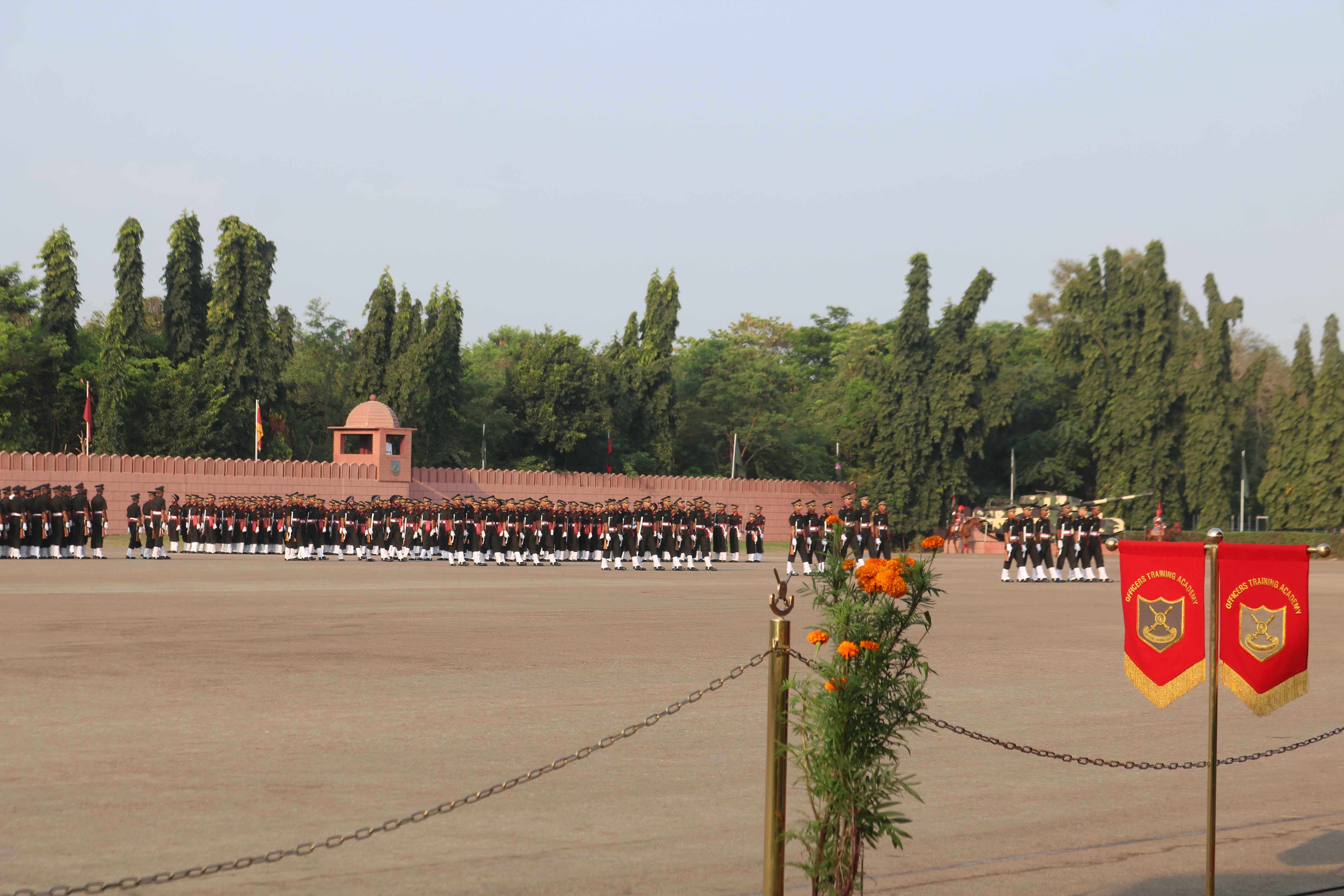
It was an important milestone for Gentleman Cadet Jerrin Koduvath who passed out from OTA Chennai on 07 March 2020.  The entire Koduvath family were there at the Parameshwaran Drill Square to witness the occasion and bless Jerrin on the auspicious moment of him stepping into being an Officer in 56 Engineer Regiment of Indian Army.


The Drill Square was smartly decked up befitting the ceremony with all military ornamentation.  The most conspicuous was the seating area for guests to witness the parade.  The witnessing area was covered with hydraulically operated awnings extending forward towards the Drill Square.  Under the covered space were rows of permanently fitted comfortable seats and under the awnings were four rows of removable chairs.  A bottle of mineral water was placed on all seats and that was really worth and refreshing.  The ceiling fans ensured a constant movement of air to ward off the Chennai heat and high humidity.


We were 24 family members and all of us ensured that we were at the Drill Square by 5 AM so as to get the seats that offered the best view of the proceedings.


Admiral Karambir Singh, PVSM, AVSM, ADC, reviewed the Parade.


The Cadets marched with precision at the Parameshwaran Drill Square and the proud parents and relatives of the Officer Cadets and dignitaries witnessed the mesmerising parade. 136 Gentleman Cadets and 31 Lady Cadets along with eight Gentleman Cadets and three Lady Cadets from friendly countries were commissioned as Officers following completion of vigorous training at the Passing Out Parade.


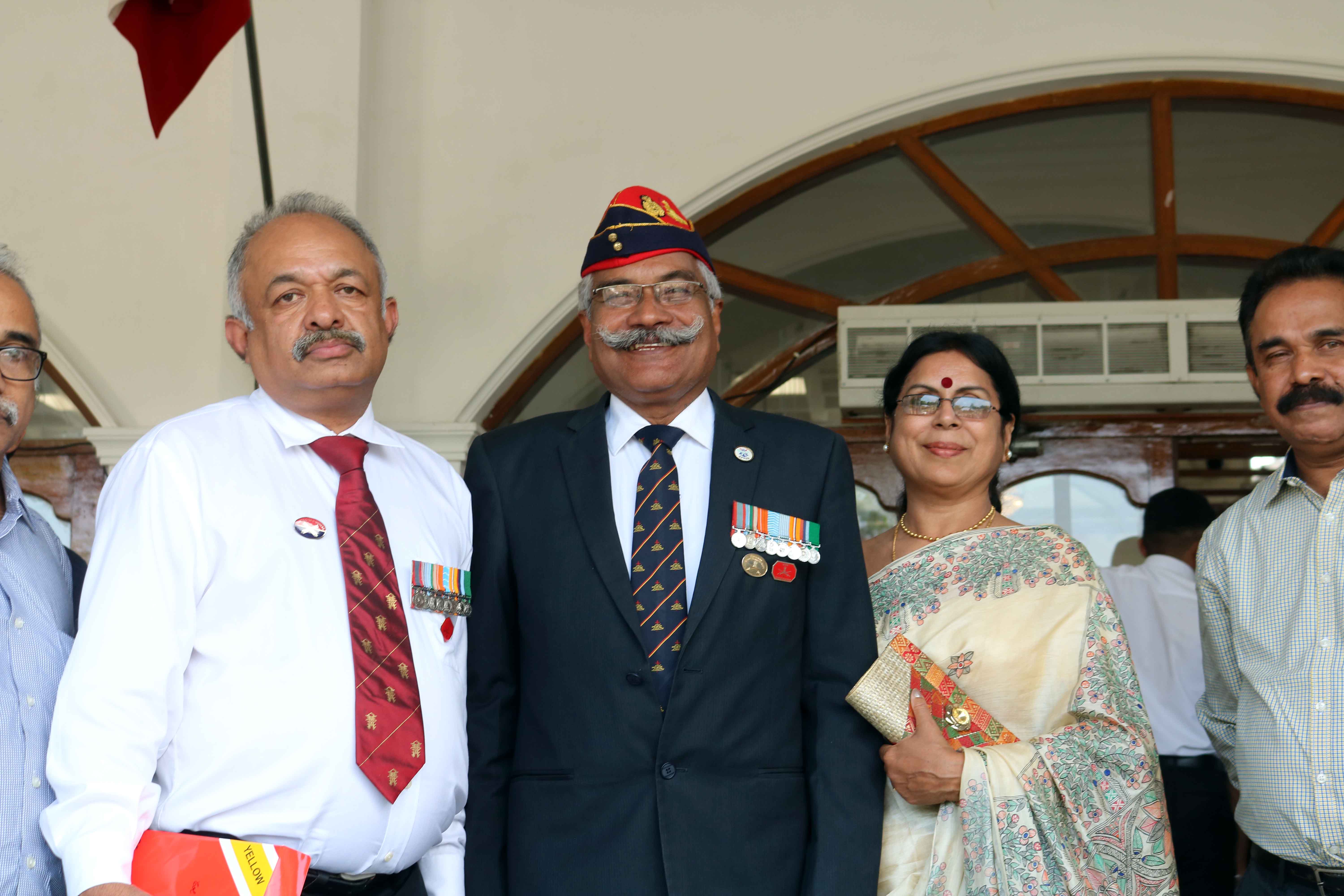
At the Parade, it was a pleasant surprise for me to meet Veteran Major General PK Ramachandran and Mrs Hema Ramachandran.  General Ramachandran commanded 75 Medium Regiment at Sikkim and Ambala.


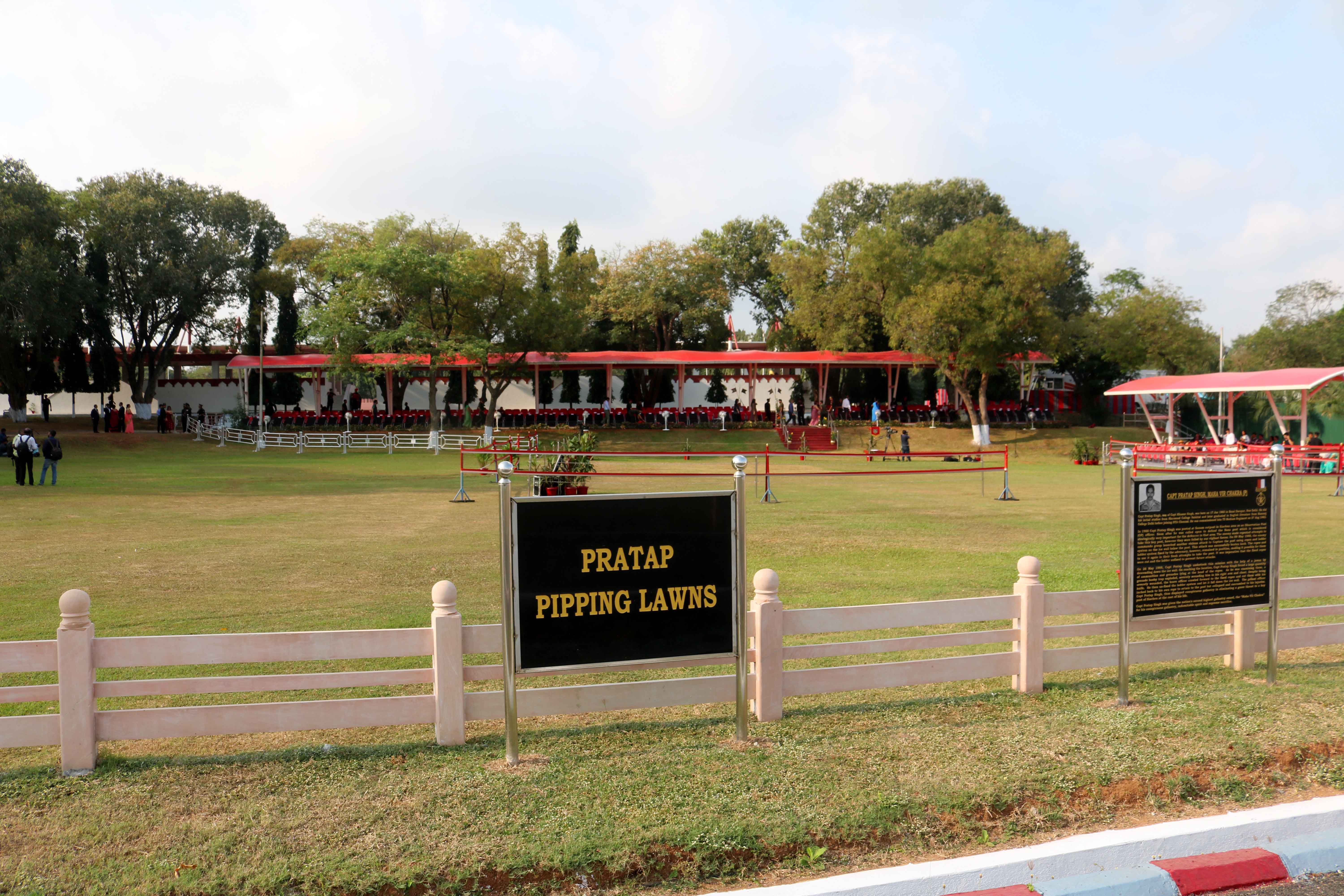
After the Parade, we had a sumptuous breakfast at the Cadets’ Mess and then we moved to Pratap Pipping Lawns for the Pipping Ceremony.  Pratap Pipping Lawns too had excellent seating arrangements facilitating everyone a clear view of the proceedings.


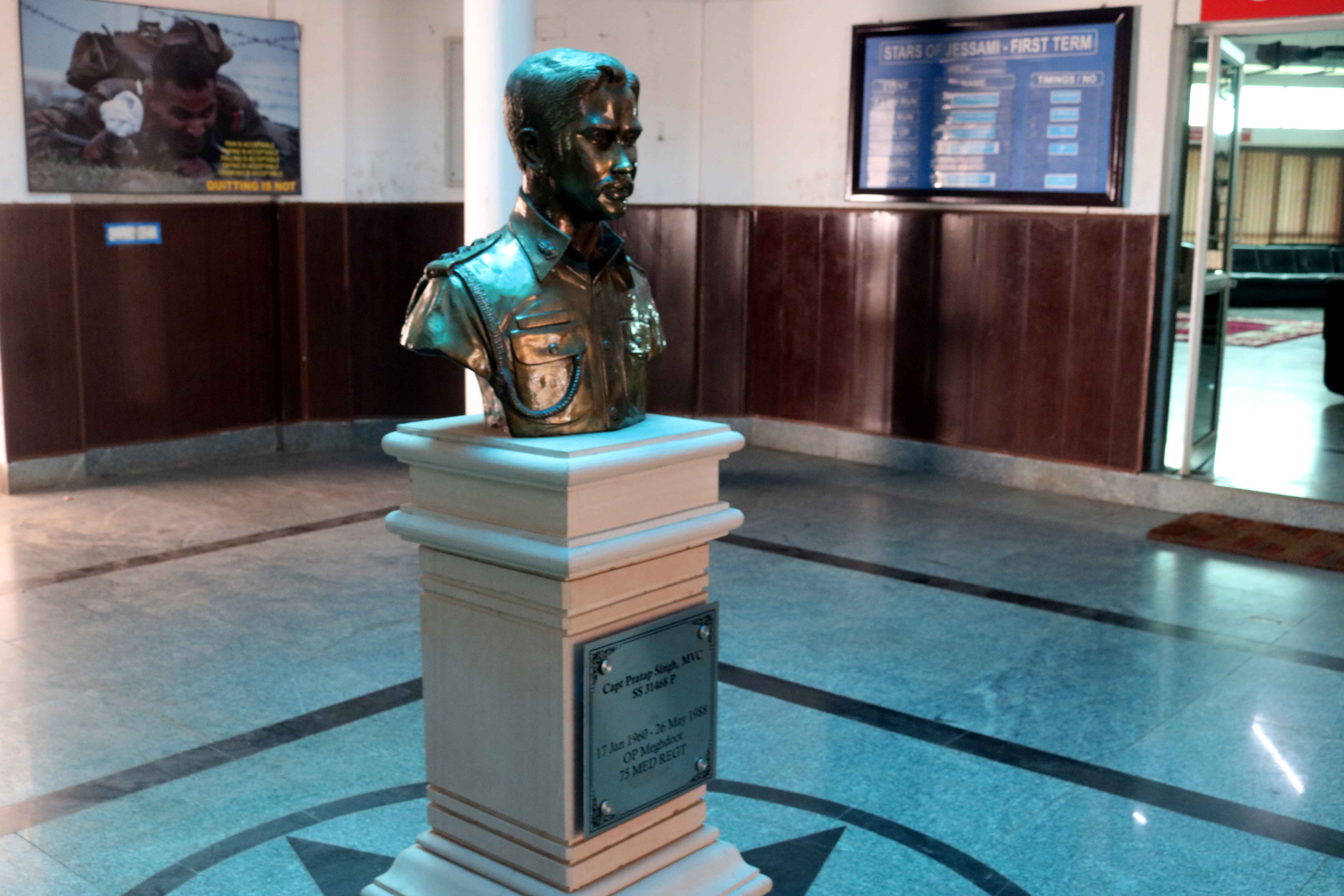
Late Captain Pratap Sing, MVC (P), and I grew up as Lieutenants together at 75 Medium Regiment (Basantar River) from 1983 to 1988.  In May 1988 he attained martyrdom at Siachen Glacier.  Hence, I was emotionally charged, with my heart thumping, to be at this place, to pip Lieutenant Jerrin Kodvath.  More about Captain Pratap, please click here.


On culmination of all ceremonies, I walked to the Jessami Company living area where a bust of Captain Pratap had been installed by his OTA course-mates.  While training as a Gentleman Cadet at OTA, Captain Pratap was in Jessami Company.  It was a bit disheartening to note that the bust had no resemblance to Captain Pratap.  May be, I would have been among a few who interacted with him closely during his last days in Indian Army.

The Commandant OTA, Officers and staff need to be complimented for exceptional organisational skills and administrative arrangements for conducting such a Parade and all other connected ceremonies.  Everything was as fit as a T.


After the ceremonies got over, a grand tea was hosted for us at the residence of Major Subhash Chander of 75 Medium Regiment, now posted as Instructor at OTA and his wife Preeti.  We, the Koduvath Family stand indebted to Major Subhash and Preeti in extending all-out support and guidance to us for attending all the events connected with the POP and making us extremely comfortable.


With gratitude we the Koduvath Family thank all the staff of Trident Hotel, Chennai for ensuring a comfortable stay for us for three days during the celebrations.  Special thanks to Sudharshan Iyer who recommended Trident Hotel  and Varun Sharma, Trident Hotels for coordinating all arrangements for us.

Trees : My Childhood Companions


Growing up as a child in the ‘God’s Own Country’, – Kerala – in Amayannoor village of Kottayam District, I was fascinated by the trees, mostly due to the variety that grew in our homestead. Our parents bought this land in 1958 as Amma was a teacher in the village school. Our father decided to move away from our ancestral village to Amayannoor, 15 km away. He wanted to be close to Amma’s school which was just five minutes walking distance – all to ensure her maximum presence at home as we children were growing up.

Some of these ‘companions’ of mine, on which we children climbed as exercise, entertainment and also to bring down their fruits for Amma to cook; their memories linger in my mind. Many of these trees are now uncommon even in rural Kerala.


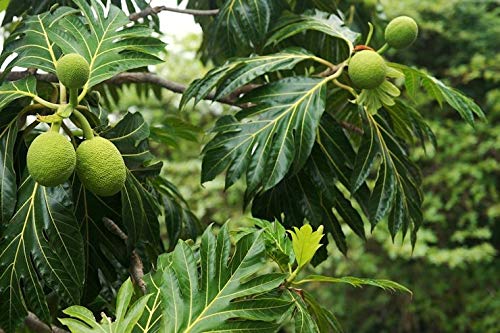
At the Western end of the homestead grew a Breadfruit (Artocarpus Altilis) tree. The Breadfruit tree in Malayalam is called Kadaplavu – loosely translated to be ‘tree of debt.’ From this name must have originated the local myth that if a Breadfruit tree grew in the homestead, the family might end up in heavy debt. As if to prove their point, many locals advised our father to cut down the tree saying that the previous owners were ridden with debt and it resulted in them selling the land and migrating to the hills of Wayanad. Our father being a rationalist refused to heed to their words. Fortunately, it remained a myth and we were never indebted to anyone as the Breadfruit tree grew luxuriantly and died a natural death about 30 years later.

The breadfruit tree is a fast growing tall evergreen tropical tree, reaching a height of 20 meters, with many spreading branches. The leaves are large which are deeply cut into lobes. It is believed to be native to New Guinea and is now cultivated throughout the tropics for its tasty fruits. A fully grown Breadfruit tree produces up to 200 fruits per year. The fruit is usually the size of a large cantaloupe, but looks like a smaller cousin of the Jack-fruit.


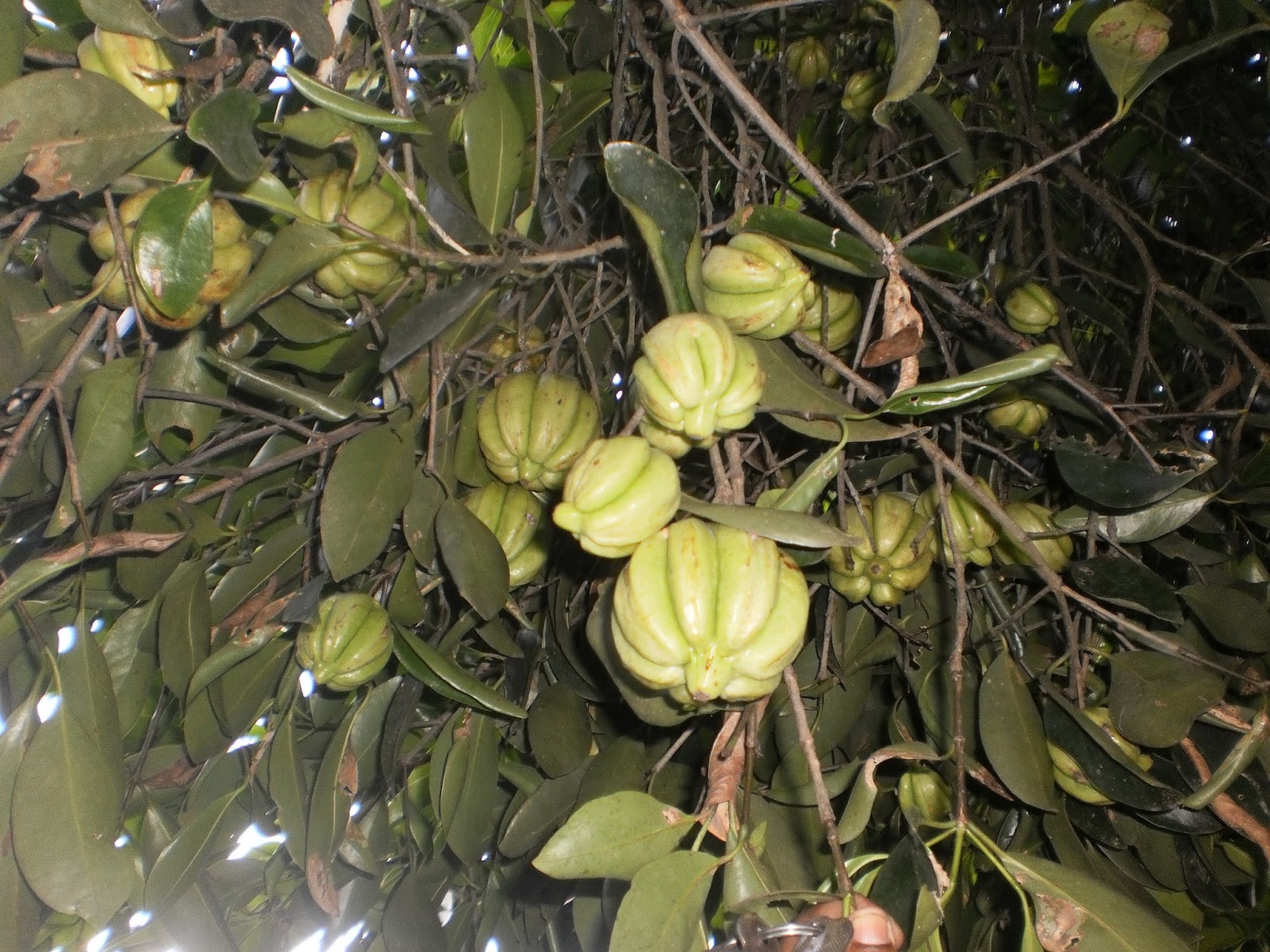
A key ingredient of the Syrian Christian Fish Curry, specially the Kottayam variety, is the Kudampuli (pot tamarind), also called the Malabar tamarind (Garcinia Gummi-Gutta), a special variety of tamarind that grows only in Kerala in India. A Kudampuli tree stood adjacent to the Breadfruit tree and its fruits ripened in May-June, well before the monsoons. On the garb of plucking the fruits, we children  climbed the tree in the evenings and various monkey tricks followed.

The fruit of the kudampuli looks like a multi-lobed pumpkin, the size of a tennis ball, yellowish-red when ripened. We used to break open the fruit to relish the tangy-sweet pulp around 12 seeds inside. The outer covering of the fruit is then sun-dried, smoked over the chimney and then stored.

When I landed in Canada in 2004, there were many Health Supplement stores selling extract of Kudampuli to help speed up weight loss, reduce appetite, and boost exercise endurance. It was claimed that this extract contained Hydroxy-Citric Acid (HCA) that may inhibit an enzyme that helps your body store fat.

This might have prompted a study by Columbia University College of Physicians and Surgeons, New York, which concluded that it had only a placebo effect to help lose weight. A word of caution; some other studies also found that the fruit extract contained some liver toxins. Be that as it may, we still use Kudampuli in Kerala and also here in Canada as an essential ingredient in our fish curry recipe.


Next to our house grew an Irumban Puli or Bilimbi (Averrhoa Bilimbi) tree, another tamarind variety. Its fruits were cooked as a curry and was also pickled for later use. The tree was about 10 meter tall with its leaves similar to curry leaves, mainly clustered at the branch tips. The fruits grew mostly on the main trunk and the thick branches that emanated from the trunk. We used to relish it raw with a bit of salt.

The tree being short, did not have much entertainment value for us kids, but the brood of hens we reared spent their night on this tamarind tree. In spite of all the tricks that we tried, they refused to go into the coop built for them. In the evenings they perched on this tree with the rooster on the top with the hens and other cocks below him; typically, echoing the idiom ‘ruling the roost’. The rooster crowed at the break of dawn, announcing to the world his presence and dominance in the brood. It also served as an alarm for our father, who woke us all up and commence the morning prayers.


Another interesting tree was Kudappana (Literal translation from Malayalam is Umbrella palm tree) or Talipot Palm (Corypha Umbraculifera), one of the largest palms in the world, growing to a height of 25 meter. The plant’s single trunk is straight, un-branched and cylindrical, one meter in diameter and ringed with prominent leaf scars. The top is a crown of immense, fan-like leaves; a single leaf-blade at full size being as much as 5 meter in diameter, with a leaf-stem 5 meter long. The leaves are used for thatching, making fans, mats and umbrellas.


We had three such trees growing in our homestead, but we were too scared to climb it being very tall and they did not offer any branches to rest during any such endeavour. These trees were cut down as we shifted to rubber cultivation from tapioca cultivation.

The Talipot Palm tree only flowers towards the end of its life, usually at around 80 years of age. It then produces a spectacular display with an inflorescence up to six meter long containing several million flowers. I have never witnessed this event in my life as almost all of the Talipot Palms in our village have been cut down before flowering. Talipot Palm is today categorised as ‘Threatened Species.’ In Trivandrum, there is a locality called Kudappana Kunnu (Umbrella Palm Hill); sadly, now there is not a single tree of the genre which gave the locality its name.

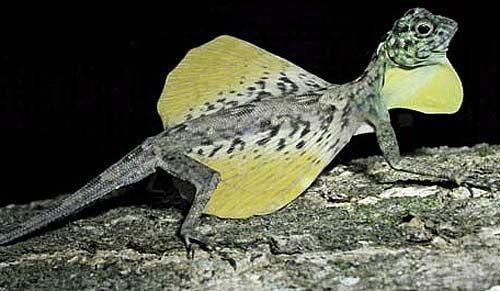
The fascinating aspect of Talipot Palm was not the tree itself, but the tiny Draco lizard or Flying Dragon (Draco Volans), flying from one Talipot Palm tree to another in search of insects, its main food. With the cutting down of Talipot Palms, these little creatures too vanished from our village.


These so-called flying dragons are wonders of evolution with elongated ribs, which extend and retract. Between these ribs are folds of skin that rest flat against the body when not in use, but act as wings when unfurled, allowing it to catch the wind and glide. These lizards use their long, slender tails to steer themselves, and each sortie can carry them up to 20 meter.

These brown coloured lizards have a spectacular flap of skin on the bottom of their necks called a dewlap. This is bright yellow in males and bluish gray in females. These dewlaps become visible when they make their shrill calls, either to chase away rivals or to attract their mates.

Trees are poems that the earth writes upon the sky.” – Khalil Gibran (Lebanese-American writer and poet)

HORN PLEAJ? OK

Mumbai has realised the menace of honking; at least Mumbai Police realised it.  They call Mumbai the ‘Honking Capital of India?‘   Do other cities and towns of India differ in any way??

A few weeks back, I rented a chain-saw from the store to cut a tree. Along with the chain-saw came the ear protection mufflers. On inquiry with the store man, he said that it was mandatory that the ear mufflers be issued with the equipment whose noise levels were higher than the prescribed limit, but it is up to the user to use it or not. My mind raced back to my young officer days in the Indian Army. It was considered not manly enough to wear the ear plugs while firing the heavy caliber guns. As usual, after every firing practice session, one heard a thousand bees buzzing in the ears for the next few days. We all got used to this sound as we got used to the firing, without realising that we were getting into a world of Noise Induced Hearing Loss. The effects of it still continue and I have a hard time listening to whispers or low noises.

horn
Recently I called up an old friend in India and he must have been on the road, I could make out from the ear piercing horn sounds of horns of the vehicles coming through my ears. A sound I missed for the good.

While driving our SUV, this SUV has been with us for the past seven years, our 14 year old son wanted to know where the horn was and how it sounded. I tried to blow the horn and pressed very hard in the middle of the steering wheel and nothing was heard. On reaching home, I pressed real hard applying all the force my body could place and the horn made a feeble noise, when compared to the screeching noises I heard over the phone. I now realised that I had never used the horn in my seven years of Canadian driving and may be that the springs in the center of the steering wheel might have been jammed.

My mind went back to an article which appeared a few years ago in a newspaper here by an old man who had been to Thiruvanathapuram, Kerala, as a medical tourist for a knee replacement surgery. He describes his taxi ride from the airport to the hospital, a 20 km drive which took an hour, with the driver honking twice as many times as what he had done in fifty years of driving in Canada.

Out here in North America, honking is considered indecent. It is done to alert some erring driver who has done some action that might have lead to an accident and you really want to abuse him with all your might. Else its only to attract the other driver’s attention to some thing serious like a not fully closed car door, deflated tyre etc which may lead to a fatality.

While driving in India, one always honked, required on not, or may be that was the only way to get ahead in the confusion that existed on our roads. For some it was a practice set out by the driving instructors in driving schools.

Can you for once imagine the noise pollution being created by the honking of the horn? May be its pretty irritating for me here as I have not been used to hearing this high pitched noise out here.

The rules that lay down the pitch, tone and volume of the horns may be same in India keeping with the world standards, as most car manufacturers provide you with a ‘weak’ horn and the noisy ones are add-ons.   May be in India to drive, the shrillness and volume of the horn may depict the size of your vehicle. That’s why the trucks have their horns sounding like an elephant trumpet.

Air-horns even though illegal is fitted on most of the buses and trucks in India. These shrill horns pose a direct threat to road safety as they embolden drivers to drive more rashly and negligently. Road rage incidents go up as it gives drivers a false self-confidence as they believe they can shove through the traffic and scare away pedestrians. Many bus and truck drivers use it as an effective tool to clear the road.

World Health Organisation in its report has stated that prolonged or excessive exposure to noise, whether in the community or at work, can cause serious permanent medical conditions like hypertension and ischemic heart disease. Noise can adversely affect performance, for instance reading, attentiveness, problem solving and memory. Use of air horn may cause severe physiological and psychological impacts on the pedestrians and can damage the eardrum.

The Indian Central Motor Vehicles Rules, 1989 specifies that all vehicles can be fitted with an electric horn or other devices, specified by the Bureau of Indian Standards for use by the driver of the vehicle and capable of giving audible and sufficient warning of the approach or position of the vehicle. The rules further specifies that no motor vehicle shall be fitted with any multi-toned horn or with any other sound-producing device giving an unduly harsh, shrill, loud or alarming noise except ambulance or fire-fighting or police vehicles. These rules are often broken and the police merely hear these shrill horns, many not realising the damage it has done to them, that they are welcome into my world of Noise Induced Hearing Loss.

May be that we in India are pretty used to this honking and it may be very difficult to drive on the roads, shared by hawkers, cycles, animals, pedestrians etc with all the potholes and with the density of traffic, without honking. At least you can try and limit the number of honks.

If everyone can reduce one honk a day, may be we will achieve less noise pollution on our roads in India.

Major General Dharmendar Singh Gill – A Soldier Friend

Though Dharmendar and I underwent training together at the National Defence Academy (NDA) and Indian Military Academy (IMA) and having being commissioned together as Second Lieutenants to Regiment of Artillery in December 1982, we hardly ever interacted.  Rather we hardly ever met during our Academy days or during our initial regimental service.

We got acquainted only during our Long Gunnery Staff Course (LGSC) in 1989-90 at School of Artillery, Devlali, Maharashtra.  Veteran Brigadier GM Shankar was my desk-mate, but he was a bachelor then, staying in the Officers’ Mess.  Dharmendar and I were living in Married Officers’ Accommodation close by.


Dharmendar and his wife Babita were the most friendly couple in the neighbourhood.  They were better known as parents of Honey, their chubby chirpy little daughter.  Honey was an adorable kid and every officer in the course knew who she was.  Marina and I being newly married looked forward for their company.

Dharmendar was a honest and hardworking student and he did put in his best efforts during the entire course.  He always admonished me for taking the course ‘cool.’  He often reminded me “You are very intelligent and will top the course if you put in little effort.  Why are you holding yourself back?”

After LGSC, I met him while travelling to India from Canada on vacation in 2015.  I had a stopover at Mumbai and whom will I call up – it was surely Major General DS Gill, then Additional Director General (ADG) National Cadets Corps (NCC), Maharashtra.  That evening he organised a get-together of all our course-mates stationed at Mumbai.  We had a grand dinner that evening.

It is pertinent to mention here that under the premiership of General Gill as ADG, the Maharashtra Contingent of the NCC struck gold in 2015  – the contingent has created history by winning the prestigious Prime Minister’s Banner for the sixth consecutive year at the Republic Day Camp held in New Delhi.  Maharashtra NCC was also adjudged the Champion Directorate from out of 17 NCC directorates in the country.  In 2017, the Directorate bagged the Runners-up Trophy.

Maharashtra NCC also has the unique distinction of winning the Prime Minister’s Banner and the Champion Directorate Trophy 17 times since its inception. The achievement is particularly remarkable since as many as 17 NCC directorates and 2070 Cadets from across the country participate in Republic Day Camp every year.

I am sure General Gill made a difference to many young cadets while serving with NCC.  They stand proof to his dedication and selfless service to NCC.  Performance of the Directorate when he was at the helm is commendable.

Soldiers like General Gill helped many soldiers and officers  to be groomed to be thoroughbred gentlemen and soldiers.   When a soldier as wonderful as General Gill finally hangs his boots, it makes many a heart melt, especially those who benefited under his guidance.   I am sure General Gill will continue to do well or may be even better post retirement.

General Gill , please think about it, now you never have to ask for a day off ever again.  You may presume that you are your own boss, but wait!  You now left your old boss and start a  life with your new boss, your wife.  You are now a ‘Go Getter’ – your wife will now order you to go get something and like an obedient husband, you will go and get it for her – which you never did in your life.

Now that you’re retired you can do all the things you enjoy;  all of the wonderful things in your bucket list – including a visit to Canada.   In reality after retirement only the body grows older, but the heart grows fonder and the mind becomes younger.  You in fact realise that all these years you were trying to be mature, but now  is the time when you can get back to being a child.

Happy retirement General Gill!  Retirement is when you stop living at work and start working at living.  Please also make sure you work just as hard at relaxing as you worked hard soldiering.

You’ll be missed but never forgotten!

The Christmas Tree

Having decorated our Christmas Tree this year, I stood beside it reminiscing about the many Christmas trees that we as children had decorated as we grew up in Kerala, India.  Kerala being in the tropical region is blessed with a cool climate in winter with a temperature of about 25oC and obviously not even the remote likelihood of snow.

Decorating homes with green plants, leaves and branches, mainly to ward off the monotony of snow covered winters, has been a tradition much before the birth of Christ.  In many regions, it is believed that evergreens kept away witches, ghosts, evil spirits, and illness.  Even if they did not, it brought cheer and festivity to the otherwise dull, indoor bound, bone chilling winter days and nights.

Germans are believed to have started the Christmas Tree tradition in the 16th century.  German settlers who migrated to Canada from the United States in the 18th century brought this tradition with them.  It became an official symbol of Christmas celebration in the Commonwealth when Queen Victoria’s German husband, Prince Albert, put up a Christmas tree at the Windsor Castle in 1848.  It then became a Christmas tradition throughout England, US, and Canada.

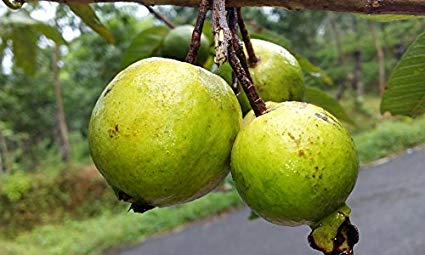
During our vacation to our native place in Kerala in October 2019, standing next to our ancestral home, I could see in my mind’s eye the front courtyard where once a Guava tree stood, leaning on to the roof.  I narrated to Marina as to how we as kids – I was less than ten years old – used to climb the Guava tree to leap on to the roof, may be to pick up a ball that had got caught on the roof tile or just for fun.  Marina then came out with a story of a similar Guava tree in her ancestral home and how she executed many similar ‘monkey tricks.’

The mere sight of the high roof sent a chill up my spine as I could not even fathom my climbing it now.  The thought struck me that perhaps I would never even have permitted our children the fun of climbing on such a tree and get on to the roof.  The question that intrigued me was ‘How come parents of those days allowed their children such (mis)adventures?‘   After we children grew up into our teens, our father cut the guava tree in 1976 as it was posing a threat to the very existence of the tiles on the roof. Moreover, we children had grown ‘too old’ to climb on the rooftop to clear the fallen leaves, a periodic ritual.

During our early childhood, this Guava tree was decked up by the four of us brothers, to be the Christmas Tree and the decorations were maintained until New Year which coincided with the annual festivity of our Parish Church.  We used to decorate the tree with paper buntings, electric lights and stars, all hand-made using bamboo and craft paper.  The ritual of star-making began a fortnight before Christmas.  We had to cut a reed-bamboo (Ochlandra Genera) from our neighbour’s farm, split it into thin veins and then assemble it to form five or six-cornered stars.  The exercise led by our eldest brother often resulted in physical bouts when one of us four brothers disagreed about the methodology or sometimes unintentionally undo the work done.  Whatever it was, it all ended up with the hoisting of the stars that we had painstakingly built, up onto the Guava Christmas Tree.

For the Christmas of 1976, after the guava tree was cut down, it was a Jamba (Eugenia Javanica) tree in the vicinity that we chose to be blessed as our Christmas Tree.  The Jamba tree in Malayalam is referred to as wax apple, love apple, java apple, chomphu (in Thai), bell fruit (In Taiwan), Jamaican apple, water apple, mountain apple, jamrul (in Bengali), jumbu (Sri Lanka) and jamalac in French.  Being rich in fibre, they ease digestion and is mostly eaten with salt to give a better taste.  The tree bears bell shaped pink fruits in early Winter.  With the pink fruits on a green leafy tree making a striking contrast, the Jamba is ideally suited to be dressed up as a Christmas Tree.

This Jamba tree also witnessed many events of our growing up years.  It must have been planted by Amma sometime in the mid-sixties. The tree being a slow grower, grew to about two feet by 1968.  That was when our youngest brother, then aged four, came up with an unusual request. He wanted someone younger to him. It was all because he was invariably at the losing end of our many childhood fights.  At the time, our parents solved the problem by getting him a kid, a real goat’s kid, a female one.  That was how goat rearing commenced at home.

This kid soon thereafter developed an immense liking for the leaves of the young Jamba tree.  Our Father tried every trick in his book to ensure the safety of the young tree.  He fenced the area around the tree with thorny branches, but this kid easily managed to break through and reach the much sought after leaves.  He then sprayed the leaves with cow dung and cow’s urine; come next rain, to be washed clean and the kid foraged on to it at the next opportune moment.  Thus the Jamba tree was cursed to be a stunted bonsai, but it was stubborn enough to manage a rudimentary existence in the front courtyard.

In 1974, the goats were sold off as we had shifted to rubber plantation from tapioca cultivation. This resulted in lack of forage and grass for the goats.  This ensured ‘Moksha’ for the Jamba tree and it grew in leaps and bounds with a kind of pent up vigour and in 1976 it was about ten feet tall, laden with the bell-shaped pink fruit by early December.  With the guava tree cut, our eldest brother designated the Jamba tree to be the Christmas tree for the year.  Fully decorated with all the pink fruits, it turned out to be the prettiest Christmas Tree that we ever had. As I pictured that decorated Christmas tree of 1976, I couldn’t help being swept aside by a flood of nostalgia.

(Images : Courtesy Google)

The Power of Reading: Unlocking Mind, Language, and Leadership

A Lesson from Dr. Shashi Tharoor

Recently, I watched a video clip of Dr. Shashi Tharoor – a Member of Parliament famously known for his idiosyncratic command of the English language. In it, a high school student asked him to offer a difficult word from his vast vocabulary, one she had never heard. He paused for a moment, then replied with a single word: “READ.”

The simplicity belied the profundity. Reading, he suggested, is the gateway to everything else.

Reading: Exercise for the Mind

Reading is to the mind what exercise is to the body, observed Joseph Addison, the celebrated essayist, poet, playwright, and politician. Who among us does not wish to exercise their mind? Reading sharpens intellect, stimulates critical and analytical thinking, assimilates new information, and enhances problem-solving abilities. The benefits are, quite literally, endless.

One who does not observe cannot paint. One who does not listen cannot sing. And one who does not read can never truly write. Shashi Tharoor attributes his legendary vocabulary and impeccable spelling not to rote memorisation, but to extensive reading. He rarely consults a dictionary, instead deducing the meaning of unfamiliar words contextually as they appear across different passages and paragraphs.

The CARS Challenge

Students aspiring for professional courses worldwide—Medical College Admission Test (MCAT), Pharmacy College Admission Test (PCAT), Law School Admission Test (LSAT), and various management entrance exams – must contend with the Critical Analysis and Reasoning Skills (CARS) section. For many, this section proves to be their personal Waterloo.

CARS is essentially an advanced form of the comprehension questions that have long been staple in English language examinations. But while traditional comprehension tested language skills alone, CARS evaluates knowledge, critical analysis, and reasoning power – all compressed within stringent time constraints.

Many students struggle with this section because it demands intuition and prior knowledge of diverse subjects. One must navigate difficult words and grasp their precise contextual meanings; failure to do so inevitably consumes precious time. Students accustomed to formulas, theorems, and scientific theories find CARS particularly uncomfortable. They may have mastered the art of cramming subject matter without truly understanding conceptual aspects – but CARS cannot be crammed for. It must be cultivated over time, through extensive reading and relentless practice.

Building the Reading Muscle

To develop the skills CARS tests, one recommended approach is regular reading of editorial pages in leading English newspapers and economic dailies. Even assimilating ten percent of what one reads expands knowledge base. Ultimately, it all comes down to reading.

Becoming a better reader requires reading more—and building reading stamina begins young. Children of parents who read invariably become better readers themselves; they imitate what they observe, and the habit becomes ingrained. So put down your mobile phone. Switch off the television when in your children’s company. Pick up a book instead. Everything from books to magazines builds reading stamina.

Notably, CARS passages rarely concern natural sciences—they encompass virtually everything else.

The Right Way to Read for CARS

When practising for CARS, read passages normally. Never skim. Never skip lines. You may think you are reading faster, but you will inevitably miss essential information—”missing the woods for the trees.” With deliberate, attentive reading, you will find yourself extracting relevant information more efficiently. Prior knowledge of passage subjects helps immensely but must never become a hindrance to answering questions objectively.

Consider this simple passage:

While Nelson Mandela is the father of South Africa, Mahatma Gandhi is our grandfather,” Harris Majeke, South Africa’s ambassador to India, said. “Mandela was inspired by the Satyagraha campaign led by Gandhi. It was a compelling act of passive protest against oppression. This would later inspire the formation of the African National Congress and strengthen Mandela’s belief in our shared humanity.” It is true that there is a direct connection between Gandhi’s campaign against discrimination in South Africa and the anti-apartheid movement there. “The African National Congress, which in 1952 launched the first mass movement against apartheid under the leadership of Dr. Albert Luthuli, had been founded in 1912 on the model of the Indian National Congress, with which Gandhi had been closely associated,” writes Claude Markovits in “The Un-Gandhian Gandhi: The Life and the Afterlife of the Mahatma.

A student unfamiliar with Mahatma Gandhi, Nelson Mandela, Claude Markovits, South African history, Satyagraha as passive protest, or the evils of apartheid will struggle to comprehend, analyse, and answer questions on this passage satisfactorily.

Reading for Pleasure, Learning for Life

The ideal preparation for CARS combines reading for pleasure with utilising what I call dead time – those interstitial moments spent travelling, waiting for someone, or anticipating an event. As Shashi Tharopor’s example demonstrates, one naturally acquires new words and phrases, practices forming opinions, and learns to reason beyond the text.

Reading for pleasure differs fundamentally from reading to learn. The latter – grasping concepts, retaining them permanently – varies among individuals but represents a common denominator among successful people who rely primarily on their intellect. Fortunately, this skill can be acquired, enhanced, and fine-tuned.

Kevin Horsley’s bestseller Unlimited Memory explores advanced learning strategies for faster learning, better retention, and enhanced productivity. Yet reading for pleasure remains primary; without this habit, reading to learn becomes nearly impossible. Like swimming and cycling, reading for pleasure grows increasingly difficult to acquire with advancing years.

A Practical Lesson

Our niece, commuting four hours by train from her Kerala university each weekend, once complained about ogling and eve-teeing from fellow male travellers. Both victim and perpetrators, I observed, lacked any concept of utilising dead time. I advised her to read during journeys – it would divert attention from the ogling Romeos, many of whom would be intimidated by the sight of a girl with an English book. Meanwhile, she would gain knowledge, improve vocabulary, and enhance language skills.

Within a month, she reported success. Five years later, she still carries a book while travelling and has evolved into a young woman of considerable general awareness.

Reading vs Television

A Kingston University, London study revealed that book readers demonstrate greater empathy than television viewers. When watching a film or show based on a book, one perceives it through the director’s lens. When reading, one controls the pace, makes assumptions, and shapes perception according to personal imagination. Television viewers, the study found, exhibited more anti-social behaviour than readers. Among readers, fiction enthusiasts showed the best social skills; comedy readers excelled at relating to people; romance and drama lovers demonstrated the greatest empathy and ability to see through others’ eyes.

Readers Become Leaders

Good readers make great leaders. Abraham Lincoln had merely one year of formal education; his reading compensated for the rest. Roosevelt reportedly read two books daily. Thomas Jefferson amassed one of the most exhaustive personal libraries of his era. Bill Gates reads approximately fifty books annually – as he puts it, Reading is absolutely essential to success.

Even in the military profession, I have observed that those who rise to the highest echelons possess varied qualities of head and heart – but reading remains an invariable common denominator.

Dr. Tharoor’s single-word answer READ encapsulates a lifetime of wisdom. In that one word lies the key to vocabulary, knowledge, critical thinking, empathy, and ultimately, leadership itself. The question is not whether we can afford to read, but whether we can afford not to.

  • Coming into contact with a good book and possessing it, is indeed an everlasting enrichment.”    Dr. APJ Abdul Kalam
  • “Reading maketh a full man; conference a ready man; and writing an exact man”  Francis Bacon
  • “Books are uniquely portable magic”    Stephen King
  •  “Time is a river and books are boats”     Dan Brown
  • “Any book that helps a child to form of a habit of reading, make reading one of his deep and continuing needs is good for him”  Maya Angelou
  • “It is what you read when you don’t have to that determines what you will be when you can’t help it”  Oscar Wilde

Exploring Downtown Montreal

Early in the morning on August 31, we drove to Mount Royal.  This hill at its 233 meters of altitude and 200 hectares in area, quite literally in typical tactical language of a young subaltern, ‘dominates’ Montreal.  Mount Royal owes its name to Jacques Cartier who then turned the name Mont Royal to name the city Montreal!    Mount Royal is nicknamed the ‘Mountain’ by Montrealers.   The park atop the mountain was created in 1876 and designed by the same landscape architect as the Central Park in New York, Frederick Law Olmsted.

We parked our car at the base of Mount Royal, next to the Notre-Dame-des-Neiges Cemetery and then We took a stroll inside the cemetery.  It stands as a celebration of Montréal’s religious, cultural, historical, architectural and environmental heritage.  It is Canada’s largest Catholic cemetery with over 900,000 people buried there since 1854.  Over the years, it has become not only a natural haven for local flora and fauna but also home to some rare tree species.

With the city thriving, a resting place for the departed had to be established far from the city, for reasons of health and hygiene, as well as for lack of space in the downtown area. In 1852 the first cemetery was created on Mount Royal and was used for burial of   Anglophone Protestants.  The Notre-Dame-des-Neiges Catholic cemetery followed in 1854.

We then trekked our way up the mountain, walking through a pine forest to the summit to the Mount Royal Chalet.  This building was commissioned in 1931 by the then Mayor, Camillien Houde to provide employment during the Great Depression.  It was designed by the Québec architect Aristide Beaugrand-Champagne with a stone facade, large windows and elegant doors.  Inside the chalet, are paintings depicting the history of Montreal.  It also houses a food counter and a souvenir shop.


Kondiaronk Lookout located outside the Mount Royal Chalet is the best-known lookout point on Mount Royal, offering an exceptional view of Montreal and its skyscrapers as well as the St. Lawrence River.

Our trek then continued to the Iron Cross.  It was erected in 1924, the cross atop Mount Royal to commemorate the day of January 6, 1643.  The cross stands 30 metres high and when lit, can be seen from nearly 80 kilometers away, weather permitting.

In December of 1642 Montreal was threatened by a dangerous flood. The city’s founder, Paul de Chomedey de Maisonneuve, prayed to the Virgin Mary, vowing to raise a cross to honour her if the settlement remained safe from the flood.  His prayer was answered and the water receded. He fulfilled his promise, carrying a wooden cross to the top of Mount Royal on January 6, 1643, raising it in the Virgin Mary’s honour.

In 1874 the Saint-Jean-Baptiste Society decided to raise a new metal cross to honor Maisonneuve. The project was funded by public subscription. However, the project ran into financial difficulties and soon came to a grinding halt.  Ultimately the project was completed 50 years later, in September 1924.  After five years, the cross was handed over to Montreal City.

After walking around Mount Royal, we drove to Parc Olympique, one of the most controversial structures in Montreal.  Built for the 1976 Olympic Games, it remained unfinished until the 1980s.  The Olympics cost $1.6 billion to the city (including $1.1bn for the stadium), 13 times over budget, with a string of officials convicted of breach of trust and the greatest white elephant of a stadium ever built.  The city was left with a debt that took 30 years to pay off.

The city had hosted one of the most successful World Fairs ever in 1967 -the Expo 67 – and the city, to add another feather in its cap, bid for the XXI Olympiad.

During the opening ceremony of the Olympics, out of sight of the cameras and the throng inside the stadium, the staff were frantically working to clear away the building debris. In the final scrambling months before the Games, 3,000 labourers had worked in teams 24 hours a day to make it possible for the Olympics to begin at all. They just about succeeded.

On culmination of the Olympics, the City realised that it might cost a lot to tear down the structure and also cost an enormous amount to operate.  It was also the only time in the history of the Olympics that the host nation did not win a single Gold Medal!


We then drove to St James United Church on Sainte-Catherine Street.  It is one of the city’s religious heritage gems built in 1889 by Methodist Loyalists who left New York City in the late 1700s.  The church is characterised by its spectacular stained-glass rose window, massive towers, gargoyles and High Victorian Gothic Revival architecture.

Montreal is a city that quite literally creeps under your skin and into your bloodstream. I had a sense of wanting to stay on and explore a lot more of the city’s history and heritage. But then plans are plans and we decided to stick to our schedule and accordingly, after lunch, we commenced our return journey to Toronto.

Montreal : Expo 67 & 1976 Summer Olympics


(Image Courtesy Google)
After the cruise on Saint Lawrence River, we drove to Saint Helena’s Island  and undertook an electric car ride to explore the island.  This ride traces the history of the island  from 1611 to the present day, highlighting its natural, cultural and military  heritage. City of Montreal came into world prominence with the conduct of Expo 67 and 1976 Summer Olympics.  Let me take you through this trip based on these two events which were mostly held on Saint Helena’s Island, also called Montreal’s baby sister island.


This island was named by Samuel de Champlain – founder of Montreal – in 1611 in honour of his wife, Hélène Boullé.  Located in the Saint Lawrence River, South-East of  the city of Montreal, it was purchased by the British government in 1812.  In 1870, the Canadian government acquired the island and converted into a public park.  Up until the construction of the Jacques-Cartier Bridge in 1930, it was only accessible by ferry.  The island was originally much smaller than it is today. In preparation for Expo 67, the City of Montreal consolidated several of the surrounding islands and enlarged it using earth excavated from the river bed and the construction of the Montreal Metro tunnels.


As a good soldier, let me begin with the Saint Helena’s Island’s buildings of military history value.  Above is the Fort built in 1824 by the British for protection against the United States.  It served as a storage and distribution centre for weapons and ammunition.  Today the Fort is home to the David M. Stewart Museum, where historical artifacts from Canada’s colonial past, particularly that of New France are displayed.


This is the Large powder magazine located in the centre of the Island, protected by a wall.  It had a storage capacity of 5,000 barrels of gun powder.


The Military Cemetery is home to over 1000 fallen soldiers. According to the commemorative plaque in the graveyard, there are a total of 58 known soldiers and many unknown buried here. The plaque says that “several wives and many children were also buried here”, but there is no mention whatsoever of 800 unknown soldiers buried in mass graves.

That was the military history aspect and now let me take you through what unfolded during Expo 67.  The name ‘Expo,’ which is simply an abbreviation of exposition, was coined by Montreal, and world fairs since have continued to call it ‘Expo.’  Expo 67 had pavilions from 62 participating nations.  Among the companies, Kodak and  the telephone industry had their own pavilion.  The pavilion visitors liked the most was that of telephone industry, followed by Czechoslovakia.

From the time of Expo 67, various art works were commissioned on the island.  Let us visit some of the artworks that impressed me.


This is the iconic sculpture ‘L’homme’ (The Man), commissioned in 1967 as a gift from the International Nickel Company, showcasing the theme of Expo 67- ‘Man and His World’.  It took five months to complete at a cost of $135,000.  Today it is  valued between 50 and 200 million Dollars.


The Iris sculpture was done in 1967 by Québec artist Raoul Hunter in conjunction with Expo 67.  It has four curved petals made of aluminum sheets.  All the concave surfaces converge towards each other, creating an enveloping effect.


La Ville Imaginaire is a sculpture made out of white granite.  It was a gift from Portugal in 1997 to commemorate the 30th anniversary of Montreal’s Metro subway system  and Expo 67.  It depicts reflection as to how humans create mythical spaces, both out of necessity and in response to challenges.


This sculpture, l’Arc, next to the Iris, is made of ultra-high performance concrete.  Inaugurated on September 11, 2009, it was built in honour of the Chilean president Salvador Allende, who died in 1973. It depicts a curved tree with its branches touching the ground.  It was designed by Michel de Broin as a complex symbol whose meaning was to be open to individual interpretation.

Main attraction of Expo 67 was that the visitors had to stamp their passports at the entrance to each pavilion.  It encouraged people to visit more pavilions than they would have otherwise, only to get more stamps in their passport.  Let me take you through some of pavilions as they stand today.


Montreal’s famous geodesic ball, the Biosphere, was the US Pavilion during Expo 67. Instead of using bolts, the structure was welded together due to time constraints and covered with an acrylic shell. In 1976, when the structure was being repaired, welding torches set fire to the Biosphere, completely burning off the acrylic shell in less than 30 minutes, leaving behind only the steel skeleton.  During Expo 67, the pavilion trumpeted America’s ‘Race to the Moon,’ and also the American  entertainment industry. The Biosphere was later purchased for $17.5 million and restored to become Canada’s first Ecowatch Centre on World Environment Day June 6, 1995.


French Pavilion from Expo 67 is now home to the Montreal Casino. According to the original Expo 67 description of the pavilion, it featured ‘aluminum sun-breaker strips, providing an attractive sculpture effect’ and ‘a steel arrow.’


Jamaican pavilion, a replica of a 19th century two-story Jamaican country shop was constructed of thick, sand-colored plaster walls with shuttered upper windows and a cedar shingle roof.  It has been completely renovated and is now a very popular wedding destination, surrounded by trees and nature.


Building off the success of the 1967 Expo, Montreal mayor Jean Drapeau wanted to cement Montreal’s place in the world as a truly International City.  Thus the city took on hosting the XXI Olympic Games in 1976.  Montreal Olympics was best known for Nadia Comăneci – the first person to score a perfect 10 at the Olympic Games – and also infamously for Canada becoming the first Olympic hosting nation not to win any Gold Medal.


This is the Olympic Basin which was used for canoeing and rowing competitions during the 1976 Olympic Games.  It extends over 2.2 kilometres in length; it is 110 metres wide and 2.5 metres deep. The Basin’s unique installations and it’s calm waters make it the pride of every rowing enthusiast.  The pavilions of Expo 67 of India,  Germany, Australia, Myanmar, Mexico and Thailand had to be demolished to make way for the Basin.  Today many competitive boating events are held here such as the Canadian Masters Championships and the Montréal International Dragon Boat Race Festival.


Circuit Gilles-Villeneuve is a 4,361-metre long car-racing track which has played host to the Formula 1 Grand Prix du Canada since 1978. The track is well-regarded for its smooth asphalt surface and the meticulous manner in which the track is maintained. These track conditions contribute to the high-calibre racing performances by the F1 cars.  When it is not hosting an event, the Circuit is where cycling, para-cycling, inline skating and running enthusiasts come to train.

From Saint Helena’s Island, we drove to our hotel in Montreal City for a well deserved rest and to explore the city next day.

A Cruise on the Saint Lawrence


After a sumptuous lunch, we walked down to the Vieux Port (Old Port) of Montreal to embark on our cruise boat – Le Beteau Mouche – meaning ‘The Riverboat.’  This 50 passenger boat is 37meter long and 7meter wide with two decks.  The terrace on top as well as the two decks offer a panoramic view of Montreal.  The Old Port stands at the very spot where the City of Montréal was founded.


The Old Port like most ancient docks around the world fell into decay, but today, thanks to the Old Port of Montréal Corporation, one can stroll, cycle, skate, rollerblade and eat along the waterfront.  Today the port is the starting point for many vessels offering a cruise on the Saint Lawrence River.


Our boat cast off from the Old Port at 3 pm on its journey up North, and under the Jacques-Cartier Bridge.  This steel truss cantilever bridge with a five-lane highway is 3,425.6 meter long, across the Saint Lawrence River and allows access to Saint Helena’s Island.  Originally named the Montreal Harbour Bridge (pont du Havre), it was renamed in 1934 to commemorate the 400th anniversary of Jacques Cartier’s first voyage up the Saint Lawrence River.


As the boat cruised away from the port, we could see the Old Montreal’s buildings, mainly Notre-Dame Basilica, Aldred Building, etc.


As we steamed out of the port, we came to the Clock Tower, a 45 metres tall structure.  It marks the entrance to the port and is a memorial to the sailors lost at sea in wartime.  The clock is still said to be extremely precise with its legendary accuracy.  The clock’s mechanism was made in England by Gillett and Johnston and is a replica of Big Ben in London.   The Clock Tower was the port’s time keeper in an era when wrist watches were not common.


Past the Clock tower is the Molson Brewery, a relic of the glorious industrial past of Montreal.  In 1782, at the age of 18, John Molson sailed on a leaking ship from England to Canada, with a thirst for a better beer in a new country. In 1786, he founded the Molson Brewery, the oldest brewery in North America, and subsequently, Canada’s second oldest company (the oldest company is Hudson’s Bay Company established in 1670).  Through expansion and rebuilding after Montreal’s Great Fire of 1852, the facility still stands in its original location.  John Molson who also built the first steamship and the first public railway in Canada, was a president of the Bank of Montreal, and he also established a hospital, a hotel, and a theatre in Montreal.


This is the entrance to the 306-kilometer long Saint Lawrence Seaway between Montreal and Lake Ontario, built in the 1950s.  It stands as a symbol of challenging engineering feats in history.  The seaway consists of seven locks – five Canadian and two US – in order to lift vessels 75 meters above sea level as they transit from Montreal to Lake Ontario.  Opening of the seaway diminished the importance of the Montreal Port as ocean going ships could now traverse through the Great Lakes and there was no requirement of offloading Great Lakes going smaller vessels from ocean going larger ones.


As we touched the Northern tip of Saint Helena’s Island, we saw La Ronde (Round)- Quebec’s biggest amusement park with more than 40 rides and attractions.  It was built as the entertainment complex for Expo 67.  (More about Expo 67 in a subsequent post.)


We then sailed to Habitat 67, a much sought after residential complex in Montreal.  It is considered an architectural landmark and one of the most recognisable and spectacular buildings in Montreal.  This housing complex was designed by Israeli-Canadian architect Moshe Safdie as part of his Master’s thesis in architecture at McGill University and then built as a pavilion for Expo 67.


We then came to Silo Number 5 and the boat took a turn on its return trip.  It was in 1906 that Silo Number 5, formerly known as Elevator B, came into operation.  At that time Montreal Port was known as a hub of the grain trade in North America.  It was built with brick and non-combustible materials to avoid the risk of explosions due to grain dust.  Grain dust which is highly combustible can form explosive clouds.  A fire or an explosion can happen at a large grain-handling facility if accidentally ignited.  The Silo consists of three distinct parts linked together by aerial galleries. Its floating elevators allowed offloading of grain from the holds of smaller lake going ships and the simultaneous loading of trans-Atlantic vessels without ever coming into contact with the quays.  Disused since 1994, the site is today plagued by vandalism and graffiti.


As the boat turned around we could see Bota Bota Spa.  Located on a ship anchored in the Old Port of Montreal, Bota Bota, offers its passengers the healing benefits of a spa while being lulled by the natural movements of the St Lawrence River.  Bota Bota consists of five decks, a floating terrace, restaurant, and a modern garden area which houses the various spa installations.


The Sixty-minute cruise on the Saint Lawrence River was educative and comfortable.  It is surely one of the best ways to learn more about Montreal as an island. Our tour guide gave very many details of all landmarks as we cruised along.  We were amused by many of her fun facts, trivia and anecdotes.


From the church we drove to Saint Helena’s Island, crossing Saint Lawrence River over Jacques-Cartier Bridge.  Our exploration of Saint Helena’s Island is covered in the next post.


Major General Sanjay Thapa VSM – My Good Old Friend

Sanjay and I came to know each other during our Long Gunnery Staff Course (LGSC) in 1989-90 at School of Artillery, Devlali, Maharshtra.  In fact it was we both moved into in Married Officers’ Accommodation in the same area.  Thus we became travel buddies, travelling from home to our training classes, he riding his motorcycle and I a scooter.

Sanjay was a honest and hardworking student and he did put in his best efforts during the entire course.  He always admonished me for taking the course ‘cool.’  He often reminded me ‘You have the ability and intelligence to even top the course, but you never put in the best.  Why are you holding yourself back?”

Sanjay was a strict disciplinarian, obviously his Veteran Dad must have inculcated military discipline in him from childhood.  He never accepted any slackness from anyone, even if he was remotely connected with him.  Our early morning ride to the classes always was interrupted by Sanjay stopping his motorcycle to ‘set right’ young officers riding their cycles not befitting proper military discipline.

He was always meticulously turned out with a proper military haircut, even though his hairline had receded.  He was punctual always and that made me punctual too as he expected us to leave well ahead of time to reach our classes, at least five minutes ahead of schedule.  We often found that we were the first ones to reach, even before our Havildar (Sergeant) Major- Assistant Instructor-in-Gunnery (AIG) had even opened the class room.

As expected, at the end of the course, Sanjay came out with flying colours and was rewarded with an instructional tenure at School of Artillery and I returned to our Regiment.  Sanjay turned out to be one of the finest instructors from our course, all because of his dedication and commitment to his students.

After three months of completing LGSC, I returned to School of Artillery for a computer course (ADP).  Whenever I visited Sanjay’s those days, he was always closeted with his books preparing for the next day’s classes he was to conduct or was correcting papers of the student officers.

Then I met Sanjay while he was commanding a Medium Regiment at Bhatinda, Punjab in 2004, prior to me hanging up my military uniform.  He was staying in the Officers’ Mess, in a single officers’ suit.  There was nothing special to call it a CO’s Residence – it had nothing ‘special befitting a CO.’  His residence was a testimony to his concept of ‘Simple Living with High Thinking.’

General Sanjay Thapa, I know you are the most hardworking person and is now time to take a break – even your heart works with pauses, so you also have to learn how to ‘relax’.  Your retirement will make you proud of yourself and also make each one of us associated with you proud.

Retirement does not make you feel that  you are old. It means that you have been working real hard to deserve the longest vacation of your life. Wishing you a lot of beautiful adventures and happy moments with the ones you love.

Gods’ Speed and Good Shooting all the way ahead.

Exploring Montreal on a Calèche

From the Place d’Armes square, we embarked on a horse drawn chariot (Calèche) ride with our hostess Sue to explore the area of Old Montreal. The city of Montreal has decreed that Calèches will be off the city’s cobblestone paved pathways from the New Year Day of 2020.   There have been cases of horses being mistreated and horses dying while drawing carriages. The lawmakers felt that the resources employed to ensure safe operations of Calèches were causing a heavy drain on its budget.  The city plans to replace Calèches with electric vehicles.

Sue, an incessant chatterbox, kept us engaged throughout the tour with her commentary on the history of Montreal and the significance of each street and building, while simultaneously cursing motorists who blocked our way.  Most of her ‘constant cacophony’ was historically accurate, but every now and then she came out with something outrageous which indeed needed the proverbial pinch of salt to digest


We rode through Notre-Dame street. On either side were shops selling their wares, mostly to attract tourists.  This is a historic street created in 1672 that runs parallel to the Saint Lawrence River.  The shops have large entry gates – these were meant for the horse-drawn carriages to pass through.


We came to the Old Courthouse, built in 1857, which today houses Montreal’s financial services.


Adjacent to it stood the modern Palais de Justice or Court House inaugurated in 1971.


Opposite to the court houses stood the Ernest-Cormier Building of 1926, from where once the Criminal Court operated.  The building features monumental granite, limestone and an imposing portico of 14 columns. The building now houses the Quebec Court of Appeal.


Next we came to the seat of Montreal’s local government, referred to as the Hôtel de Ville de Montréal – an imposing five-story building, constructed between 1872 and 1878.


We then came to Place Jacques-Cartier.  By the early 1800s Montreal was expanding and it had outgrown the old market square. In 1803 a fire destroyed dozens of buildings. This newly freed-up space became a public market square, Place Jacques-Cartier.  The market operated from here up until the 1950s.


At the North end of the Place Jacques-Cartier stands the Nelson’s Column, about a third of the size of the original.  It was erected by Montreal’s Anglophiles to celebrate Lord Nelson’s defeat of the French at Trafalgar in 1805.  It is also the city’s oldest monument and is the oldest war monument in Canada.  The monument caused plenty of angst and the local government proposed moving Nelson to some far off suburb but newer generations of Anglophiles fought tooth and nail to ensure that the idea was dumped.


Opposite the Nelson Monument is the Francophiles answer to the Nelson’s column, the statue of the French Naval Commander Jean Vauquelin.  He fought many battles in the mid 1750s against the British Navy.  The Francophiles honoured him with a square bang opposite the Nelsons.


The next point that we saw was the Place du Marché – or market place.  Prior to building of the Notre-Dame Basilica and the Place d’Armes square, this was the commercial hub of Montreal and also the gathering spot of the community.


Adjacent to the Place du Marché is the Old Customs House, now part of the Pointe-à-Callière museum. It was called Place du Vieux Marché until 1892.  On the 250th anniversary of Montreal’s foundation, it was renamed Place Royale.


As we rode through the cobblestone paved streets, Sue pointed to this building and said that most buildings in Old Montreal had windows of varying shapes that decrease in size and height with each higher storey.  According to her, it was to avoid the ‘Window Tax‘ being levied by the City of Montreal in those days.  I could not find any reference to any ‘Window Tax’ in Canada, however, a system of window tax, based on the number of windows in a house was in vogue in England and France.  In England this tax was first imposed in 1696, and was repealed in 1851 as it was more of a ‘tax on health, light and air’


This is one of the oldest churches in Montreal, the Notre-Dame-de-Bon-Secours Chapel, also known as the Sailors’ Church, since many sailors prayed here for safe passage.  In 1655, Marguerite Bourgeoys, a teacher, in return for her unpaid work, requested the construction of a new chapel dedicated to Virgin Mary.  The church was completed 13 years later.  This church burned to the ground in 1754 and the present church was built in 1771 over its ruins.


We then rode past one of the first fire stations in Old Montreal, now home to the Museum of Montreal History. The exhibits showcases the history of the building itself and how it transformed from a stable for horse drawn fire equipment to motorised trucks..


Next we came to the Customs House, erected in 1912, is closely associated with the growth of Canadian trade during the first decade of the 20th century. With Its responsibilities enhanced in 1916 with the introduction of direct taxation, this building gained prominence.


This building caught my attention, more for Sue’s commentary.  The inscription ‘Grand Trunk‘ and the accompanying GT monogram on this five-storied building indicates that it belonged to the Grand Trunk Pacific Railroad Company.   The building was built in 1902 by Charles Hays, the President of the company.  Unfortunately, he was aboard the Titanic that sank on 15 April 1912, with his wife, Clara, daughter Orian and son-in-law Thornton Davidson.   The materials used are grey granite, beige limestone and chamois sandstone from India.

Sue commented that after the Grand Trunk Company closed down its Canadian operations in 1923 after its acquisition by the Canadian Government, the company moved its operations to India.  Again, I could not find any reference to this claim, but possibly the name ‘Grand Trunk’ being a proprietary trade name, could not have been used by the British-Indian Railway, unless the Grand Trunk Company had some association with it. So, Sue may have a point here.  The Grant Trunk Express, the legendary train in India may provide the link if any.


Thanking Sue and tipping her well for her ‘stories’, we alighted from her carriage and walked to Place Jacques-Cartier for lunch.  While waiting for the lunch to be served, I booked tickets for a boat cruise along Saint Lawrence River, for a story that follows.

Montreal : The Canadian Paris


When my eldest brother and sister-in-law came calling, how could we miss a trip to the great city of Montreal – even though it was my third trip to the city.  Montreal, a Canadian city in Quebec province is the third largest French speaking city.  The first would surely be Paris, but the second, you would not guess it in your wildest dreams!  It is Kinshasa, the capital city of the Democratic Republic of Congo.  It seems virtually everyone speaks French in Kinshasa.


In 1603, explorer Champlain made his first of many voyages across the Atlantic to the St. Lawrence and planted the French flag here in 1603. Then the British and French fought over this land with the British victory in the 1760’s, Montreal was under British control. The French and Brits lived together but anger and warring was never far from the surface.

French was declared as  Québec’s only official language in 1974 when Charter of the French Language, commonly known as Bill 101 was passed by Canadian Parliament.  The primary purpose of the bill  was to encourage non-French-speaking immigrants to integrate into the francophone community.  For a traveller it gets trickier to read the road signs as they are only in French and most staff at hotels and restaurants tend to speak only French.  These were two handicaps I suffer whenever I travel to Quebec province, but has still not managed to learn French.


We set off from Toronto early morning and after seven hours of drive reached  Montreal’s old town, Vieux-Montreal.  Driving through the narrow cobblestone streets with lot of pedestrians, spotted with Victorian lamp posts, accompanied by horse-drawn carriages transported us into a different world, but driving through these narrow roads was bit uncomfortable for me being used to multi-lane roads of suburban Toronto.. Once Montreal’s financial hub, Vieux-Montreal is now home to hotels, restaurants, pavement cafes and art galleries.


How did these Scottish cobblestones came to be paved on Montreal’s streets?  They came over as ballast in the late 1700s in ships that returned to Montreal after unloading its cargo of fur and blubber.


We parked our car and set off on foot to explore Vieux-Montreal like most tourists.  We headed straight to the Place d’Armes square -said to be the heart of the city, though it mostly consists of office buildings.


The square is always bustling with activity, with musicians playing.   The monument in the center of the square is dedicated to Paul de Chomedey, founder of Montreal


In the Place d’Armes square, two tall bronze sculptors caught my attention.  These sculptors have been inspired by two snobs in the novel ‘Two Solitudes’ by Hugh Mac Lennon.  The two snobs depict the cultural distance between English and Francophone Canadians.  On the left is an Englishman holding his pug, staring at the Notre-Dame Basilica, a symbol of religious influence on Canadians.  On the right, two hundred feet away, stands a French lady with her poodle in her hand, giving an offended look at the Head Office building of Bank of Montreal, symbol of English financial power.


On the Eastern side of the Place d’Armes is the majestic Notre-Dame Basilica – built between 1824 and 1829 with two  towers reminiscent of Notre-Dame-de-Paris.  At that time,  the church was the largest in North America and remained so for over fifty years.


Entry into the church costs $5 – a token to help maintain the Basilica in pristine condition.  You will not repent paying $5 for a glimpse inside.  The interior of the church, based on Gothic Revival architecture. is decorated with golden stars, reds, purples, silver, and gold – all on a blue background.  It is filled with intricate wooden carvings and several religious statues.


The stained glass windows along the walls of the sanctuary do not depict paintings from the religious history of Montreal.


Rear top of the church houses a pipe organ, built in 1891.  The organ comprises four keyboards, 7000 individual pipes and a pedal board.


Adjacent to the Basalica is the Saint-Sulpice Seminary, a U-shaped building.  The building was completed in 1687and the clock added in 1713.


As we walked out of the Basilica, on our front left, across the Place d’Armes square, stood the Head Office building of Bank of Montreal,  Canada’s first bank –  Bank of Montreal  was founded in 1817.  This building was built in 1847, designed by British architect John Wells, resembling the Pantheon. On the bottom left,you can see the French lady with her poodle.  The building is in operation today as BMO’s main Montréal branch.


On to our right stood two classical buildings.  The white building called the Aldred Building built in 1931, designed by Ernest Isbell Barott, with a height of 96 metres or 23 storeys.  The building’s setbacks at the 8th, 13th, and 16th floors to allow more light on the square and create a cathedral-like effect, like the adjacent Notre-Dame Basilica.

The red building with a clock tower is Montreal’s New York Life Insurance Building (also known as the Quebec Bank Building) and was built in 1887. It was the tallest commercial building in Montreal at the time.


We now set out to explore Old Montreal on a horse-drawn carriage ride (calèche).  In recent years calèche has drawn the ire of animal rights activists and lobby groups.  The calèche will not be there with the turn of next year as the city has banned them from 2020.

Lavender: The Flower of Purity


On August 07 we visited Terre Bleu lavender farm in Milton, Ontario with my brother and sister-in-law.  Terre Bleu farm was started by Ian and Isabelle Baird who were enchanted by the spectacular fields of purple and the fragrant air that swirled all around, while vacationing in Quebec.  They moved from downtown Toronto, with their young children William and Madeline, to rural Milton and began farming organic lavender.


In 2011 the Bairds planted their first 10,000 lavender plants. After years of careful planning and cultivation the farm opened to the visiting public in 2014. Today, this is the largest lavender farm in Ontario and is home to over 50,000 lavender plants and many other herbs and flowers spread over 160 acres. Thousands of visitors throng Terre Bleu every summer to share the experience of sustainable organic farming.


Lavender is believed to have originated from the Mediterranean, dating back some 2500 years. It is a flowering plant of the mint family known for its beauty, fragrance and its multiple uses.  Today Lavender is cultivated across Europe, Australia, New Zealand, North and South America.

Lavender is amongst the world’s most ancient documented plants. Hieroglyphic texts from Ancient Egypt mentions the use of lavender in embalming and cosmetics.  When the tomb of Tutankhamen was opened, jars filled with ointments resembling lavender were found.


The ancient Greeks called Lavender Nardus (commonly called Nard), after the Syrian city of Naarda. Nard, or ‘Spikenard,’ its Greek name, is referenced throughout the Bible.

“While the king sitteth at his table, my spikenard sendeth forth the smell thereof” (Song of Solomon 1.12)


Lavender derives its name from the Latin ‘lavare’ meaning ‘to wash’. The Romans used lavender to scent their baths, beds, clothes and even hair. They also discovered its medicinal properties.  In ancient times, bundles of dried lavender were given to women in labour for squeezing during contractions as the fragrance released was known to alleviate the pain and facilitate an unencumbered birth.


On reaching the farm we embarked on a farm tour.  Our tour guide was a smart enthusiastic young lady pursuing her university degree in life sciences.  She said she loved working on the lavender farm for the fresh scented air she could breathe as it rejuvenated her and also that she could put into practice what she learned at school.  Obviously, it did provide her monetary benefits, especially during her summer vacation.


Walking through the farm we saw women harvesting lavender flowers.  At Terre Bleu, they harvest the flowers manually.  Here they grow the French and English lavenders. Both are lookalikes with the French lavenders a bit taller than their English counterparts.  English lavender in comparison produces less oil, but is more in demand due to its aroma.  French lavender has more camphor in its oil which has a soapy taste. Hence, English lavender oil is preferred over French lavender oil in cooking.


Enjoying the aroma filled air of the farm as we walked a few minutes, we entered the distillation plant.   Lavender oil is distilled here by steam distillation.  This copper still (pot) distillation plant was imported from Portugal to facilitate distillation through the age old European traditions.  The still is packed with lavender flowers to the top avoiding air pockets between the lavender and water at the bottom.  The top of the still is connected to a condenser.  The still is heated and the water boils to form steam.  The steam rises and passes through the still stuffed with lavender flowers.  As the steam passes through the lavender, the pressure inside the sealed kettle along with the high temperature of steam causes the buds of the lavender to release its oils.  The lavender buds hold most of the oil and not the actual flowers.

In the condenser, the steam gradually cools down and turns to liquid that drips out.  As oil and water do not mix, oil floats on water because water is denser.  Oil is drained out from the top spout of the condenser and lavender hydrosol (mixture of oil and water) is removed from the bottom spout.  Hydrosol is used for removing makeup, and in the manufacture of body sprays, deodorants, linen sprays etc.


We then walked to the Apiary being maintained by the farm. The relationship between flowers and bees is only too well known.  Terre Bleu promotes organic cultivation, free from pesticides that are harmful to the bees.  This ensures many healthy bee colonies in the farm.


Lavender is definitely more than just a pretty purple bloom. It has many health and wellness benefits.  Lavender is a good sleep aid and can calm your stress and anxiety.  It is naturally anti-inflammatory, antiseptic and anti-bacterial and can cure dandruff.  It fights congestion and can relieve sore muscles and headaches.

Our farm tour ended at the farm-store where we enjoyed lavender flavoured ice-cream.

The Fall Equinox


The Fall Equinox of 2019 was very special. We were honoured to host for lunch Air Marshal Manvendra Singh, AVSM, VrC, VSM, his wife Ambika and their elder son Abhijith. The Manvendras, proud grandparents, had come to Toronto to be with their newborn grandchild.


Air Marshal Manvendra is the highest decorated serving officer from our Course (61 NDA). He is presently Senior Air Staff Officer of Southern Air Command, Thiruvananthapuram. He has clocked over 6600 hours of flying and for him the glorious moment was on October 1, 2016 when he flew a MI 17 Helicopter with his younger son Flight Lieutenant Siddharth Singh as a co- pilot – a record of sorts.

After lunch as our esteemed guests left, on the social media I posted a photograph with a caption ‘Honoured to have hosted Ambika, Air Marshal AVSM, VrC, VSM and their son Abhijith for lunch on the last day of Canadian Summer – 22 Sep 2019.’ The response from our course mates was overwhelming. One read ‘The man speaks for himself. Some people need not be named. The whole world knows that.’

It was then that I noticed that I missed Manvendra’s name in my post. How did this blunder creep in? Like a good NDA course mate, I initially wrote ‘Manvendra (F/61)‘, but then some how felt that it was inadequate, as I thought that I got to honour his rank and his well deserved decorations. Finally, when I rewrote it, I missed the obvious – his name. So I was missing the proverbial woods for the trees. In Indian Army terms, my Minor Staff Duties (SD) was correct, but I missed out on the Major SD – a cardinal sin in military values.

You cannot take out the Indian Soldier in me despite 15 years of my Canadian citizenship. The virus lies inconspicuously, deep within, ready to erupt when you least expect.


The Fall (Autumnal) Equinox is when the Sun is exactly above the Equator and day and night are approximately equal all over the globe. It falls on September 22 or 23. The word ‘Equinox’ is Latin meaning ‘Equal Night.’ In reality, it isn’t exactly equal on an Equinox – for Torontonians the Sun rose at 7:04 AM and set at 7:17 PM. The spring Equinox is on March 22. Of course for those in the Southern hemisphere, the Spring/ Autumnal Equinoxes are reversed.

I love my astronomy – so let me elaborate. For most of us the Sun rises in the East and sets in the West. In reality it does so exactly in the East/ West on only two days in the year, on the two Equinoxes. The phenomenon of the apparent Southward/ Northward movement of the Sun is caused by the combined effects of the revolution of the Earth and the tilt of the Earth’s axis (the plane of the ecliptic). Ancient Indians called this apparent Northward/ Southward movement of the Sun as Uttarayanam and Dakhinayanam.

As the days progress to Winter Solstice marking the beginning of Winter on December 22 with the longest night, we lose daylight everyday. From now on every day Torontonians lose about 3½ minutes of daylight. The Sun will rise a tiny bit further South-East everyday until it reaches a maximum South-East position on the day of the Winter Solstice. Then on it will rise a tiny bit Northward everyday, commencing the Uttarayanam.  On March 22 (Spring Equinox), it will again rise exactly due East and we will experience nearly equal day/night. From then on the Sun will move a tiny bit North-West everyday until it reaches its extreme North-West position on the day of the Summer Solstice on June 22, a day when we experience the longest day and shortest night of the year.   Dakshinayanam commences thereafter.

There is a Chinese myth that it is easier to balance an egg vertically on its end on a flat surface on Equinox than on other days of the year. It is believed that the Moon and Earth are in exactly the right alignment on Equinox and the celestial bodies generating the perfect balance of forces needed to make it possible. In reality, it is a myth and the position of the Moon and other celestial bodies will vary from Equinox to Equinox. You can perhaps balance an egg just as well on any day of the year.


This loss/gain of daylight and the change of the seasons is less significant for those living closer to Equator like my kin from the God’s Own Country. In Canada and the extreme latitudes, the changes are very significant and results in daylight saving time setting, changing our clocks twice a year. The Autumnal Equinox marks the beginning of Fall with the leaves turning yellow, later red and falling off. In Canada the maple tree will assume different shades of yellow, orange, red and pink during the autumn as the photo depicts, before they finally fall off. This phenomenon can be experienced in Kashmir as well.

An Evening in Lisbon


After a sumptuous lunch and enjoying some Japanese cultural events, we set out to visit the Monastery of St. Jerome.  The monastery was populated by monks of the Order of Saint Jerome, whose spiritual job was to give guidance to sailors and pray for the king’s soul and success of many explorations the Portuguese explorers undertook.

Commissioned by King Manuel I in 1501, to celebrate Portuguese voyages around the world and in particular to commemorate Vasco Da Gama’s voyage and give thanks to the Virgin Mary for its success.  The decorative style of stonework that incorporates maritime motifs such as twisted rope and the armillary sphere (a spherical framework of rings, centred on Earth or the Sun, that represent lines of celestial longitude and latitude and other astronomically important features).

The monastery lies on the site of a former chapel built by Prince Henry the Navigator and dedicated to St Mary where Vasco da Gama is thought to have prayed in 1497 before his epic voyage to India. Construction of this building took a century to complete.


We entered the monastery through the 32-meter high door in the center of the façade of the stunning and exuberant South portal.  The ornate stonework contains over 40 statues set into the pillars that flank the door which includes the twelve Apostles of Christ.


At the centre of the portal, between the two doors, on a pedestal stands the statue of Henry the Navigator.


The Madonna (St Mary) is on a pedestal on top of the arch doorway, surmounted by the archangels.


The Church is made up of three halls with a width of 30 meters of the same height united by a single vaulted ceiling supported by six pillars with a circular base.  This design enabled the church roof to withstand the 1755 earthquake which brought down many buildings in Lisbon.


Hailing from Kerala,  this was what I was in search of during my explorations of Lisbon city – the Tomb of Vasco da Gama.

Vasco da Gama, discovered the sea route from Europe to India, circumnavigating Cape of Good Hope and landed at Kappad near Kozhikode (Calicut), in 1498.  He died at Cochin (Kochi) in 1524, on the Christmas day during his third voyage.  He was buried at the St Francis Church. Kochi (at that time the church was called St Anthony’s.)  In 1538 Vasco Da Gama’s remains were taken to Goa and then to Portugal. This tomb in the monastery is the final resting place of Vasco Da Gama.


From the church, we walked into an open lawn in the centre of the monastery, covered from all sides by the two level of cloisters.. These covered halls of the cloisters were architectural masterpieces and full of so many sculptural details.


The cloisters are magnificent, with each column and arch differently carved with coils of rope, sea monsters, coral, and other sea motifs, representing Portuguese exploration at sea.


From the monastery, we walked on the road that ran along the river.  Here we came across this crane.  This crane is installed at the very site of the Air Base from where the Seaplanes operated to patrol Portuguese coast during World War II.  This was also the base from where two pilots Gago Coutinho and Sacdura Cabral departed in their Seaplane on March 30, 1922 on their first successful trans-South-Atlantic flight to Rio-de-Janerio.


As we walked another hundred meters from the crane, there stood a steel replica of the Seaplane ‘Santa Croz’ which flew the last leg of the trans-South-Atlantic flight.


We continued our walk along the river front to reach Belem Tower.  This tower was constructed between 1514 and 1520 as part of the Tagus estuary defence system. Years later, it was transformed into a lighthouse and customs house.  The tower has two distinct parts – the taller one a keep tower and the other with two artillery levels to house cannons.  There were pits in the lower level where the prisoners were thrown into.


On the western façade of the Tower of Belém, is a rhinoceros head.  How did this rhino find a place on a tower in Lisbon?.

In 1514 Afonso de Albuquerque, the Governor of Portuguese India wanted to build a fortress in Diu, governed by Sultan Muzafar.  The Sultan did not grant his wish, instead gifted a rhinoceros. Albuquerque decided to gift the rhino to King Manuel I.  The animal was shipped to Lisbon and it roused curiosity in entire Europe. It was the first live rhinoceros to be seen in Europe since the 13th century.  The King wanted to gift the rhino to the Pope.  A ship carrying the rhino left Lisbon in December 1515 but sailed into a violent storm and sank, killing the entire crew.  As the rhino was tied up it also died, however, its body was recovered.  The King ordered the rhino to be stuffed and sent to the Pope, as if nothing had happened.


How to convert a tuk-tuk into a piece of art?  A bird skimming on water, standing in front of Modern and Contemporary Art Museum.  This artwork caught my attention as we walked to catch a tuk-tuk from the Belem Tower.


We got into a tuk-tuk on our journey through Lisbon to Kerala Restaurant we chose for dinner.  Lisbonites advice that in case you wish to have a smooth ride, select tuk-tuk driven by a woman.  This ride did prove the saying.


We passed by Monsanto Forest Park, a municipal protected forest in the middle of  Lisbon covering 10 km2.  It offers a well diversified tree-covered area to the Portuguese capital and also acts as the city’s ‘air purifier.’


We then drove through the Alcantara valley passing by the Aqueduct.  Built in 1746 to supply clean drinking water.  This 58 km aqueduct is made up of 109 stone arches, which were the tallest stone arches in the world when they were built. Luckily, it too survived the 1755 earthquake.


We landed at the Kerala Restaurant and we were in for many surprises.  We were ushered in by Thrineesha, co-owner and wife of Chef Vijeesh Rajan.  She is an IT Professional who works during the day, pursuing her higher studies and assists her husband in the restaurant in the evenings.  Every aspect of the restaurant – from decor to the food being served – had her signature.


It was in fact after a long time that we from North America had authentic Kerala food – we had to travel all the way to Portugal for it.  We really enjoyed our dinner and bid goodbye to Thrineesha and Vijesh.

We returned to pack up our belongings and prepare for our return flight to Canada.

The only impossible journey is the one you never begin.”  Tony Robbins, American author, philanthropist, and life coach.
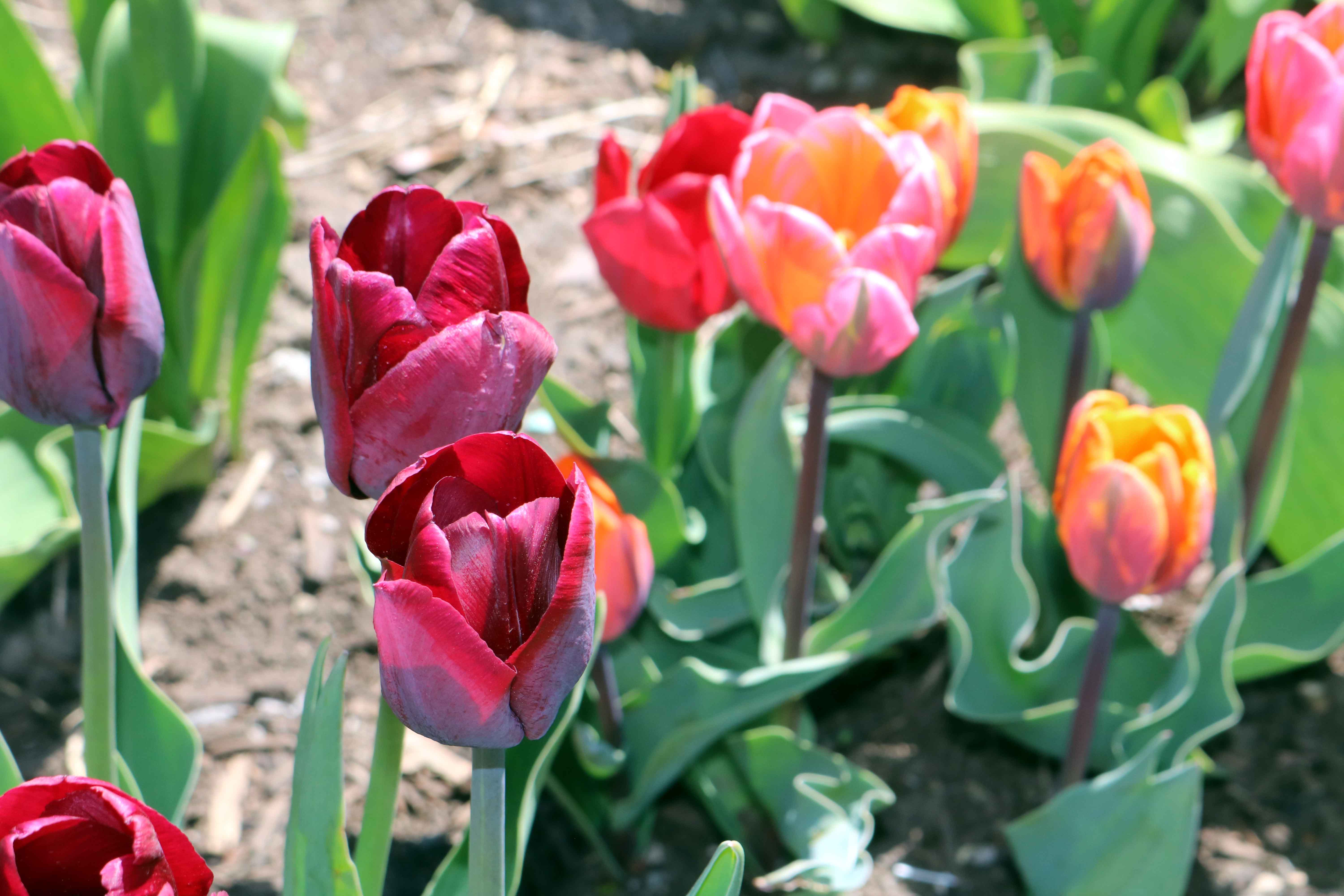
 

Harvest Moon


Today is September 13, 2019, Friday.  You must have read in my earlier blog about ‘Triskaidekaphobia’ the fear of number 13 (from Greek tris (‘three’), kai (‘and’), and deka (‘ten’), and ‘Paraskevidekatriaphobia’ is the term used to describe the fear of ‘Friday the thirteenth’  – (Greek words paraskevi (‘Friday’) and dekatria (‘thirteen’) with –phobia as a suffix to indicate ‘fear’).

There is another astronomical significance for this Friday the 13th  – it coincided with Full Moon.   Last time a full moon appeared on Friday the 13th was in October of 2000.   This Full Moon is also called a ‘micro-moon’  because it is at its farthest point from Earth  – also known as its apogee.  Being at the farthest point, the moon appeared  around 14% smaller than usual and much dimmer than a normal Full Moon.

As this Full Moon fell immediately before Fall Equinox, It is called a Harvest Moon.

The term ‘Equinox’ comes from Latin meaning ‘equality of night and day.’   It occurs twice in a year – one in Spring (22 March) and one in Fall (22 September), that is when the Sun crosses the celestial equator, causing day and night to be of 12 hours each.   In Canada, Fall Equinox marks the beginning of Fall season.

‘Harvest Moon’ is an old European term applied to a full moon that rises closest to the beginning of fall.   In the earlier days when the farmers could not illuminate their farmland, the bright light of the moon facilitated farmers to work a little later into the night to bring in their crops well before Fall set in.

As if to facilitate harvest, the harvest moon rises 10 to 30 minutes after the sun sets, whereas most moons rise approximately 50 minutes after sunset.  In Toronto,  on September 13, the sun did set at 7:31 PM and the moon rose at 7:46 PM. This time gap between sunset and moon-rise was even shorter as one moved closer to the North Pole.

The next Full Moon on a Friday the 13th  will appear in August 2049.

Discovering the City of Discoverers


On the morning of June 22 we decided to explore the Tagus River front of Lisbon.  We walked to the Vasco da Gama Garden on the Northern bank of Tagus River. The garden is a lovely green space situated in one of the noble areas of cosmopolitan Lisbon.  The garden features a wave-shaped lake on the lower level of the garden and a fountain with waterspouts.


The most prominent landmark visible from the garden is the 25th April Bridge, the longest suspension bridge in Europe. The 2277 meter long bridge has two levels, the top level with six lanes is for cars and the lower, which was added in 1999 carries double electrified railway tracks.  The bridge was inaugurated on 06 August 1966 and was named Salazar Bridge, after António de Oliveira Salazar, dictator of Portugal until 1974. After the Carnation Revolution that took place on 25 April 1974, Salazar’s regime was overturned, the Bridge was named 25th April Bridge.


On the Southern bank of the river is the municipality of Almada and there stands Cristo Rei, one of Lisbon’s most iconic monuments. This statue depicts Christ with open arms raised, blessing the city.  Its construction commenced in 1950 in reverence for Portugal being saved from the horrors of World War II.  Lisbon’s Cristo Rei has many similarities to the Christ the Redeemer statue in Rio, and the Brazilian statue was the original inspiration.


In the centre of the garden stands the Monument to the Discoveries, originally built for the 1940 World Exhibition.  It commemorates the achievements of explorers during the Age of Discoveries and the creation of Portugal’s empire.  The monument was only built as a temporary structure and it was demolished a couple of years after the closure of the exhibition.  The monument of today is an exact replica of the original one. It was built in 1960 on the occasion of the 500th anniversary of Henry the Navigator’s death.  Henry the Navigator was a driving force behind the overseas exploration and he financed many of the Portuguese expeditions.

The fifty meter tall monument, shaped like a ship’s bow, stands where in 1493 a storm forced Christopher Columbus to anchor here on his way back to Spain after his discovery of the Americas and in1497 Vasco da Gama embarked on his voyage to India.  The monument has thirty-three statues of people who played an important role in the Portuguese Age of Discovery.  Each statue is designed to show movement towards the front (the unknown sea), projecting a direct or indirect synthesis of their participation in the events after Henry the Navigator.


At the tip of the bow stands Henry the Navigator holding a model of a Caravel.  The Caravel was a small, highly manoeuvrable sailing ship developed in the 15th century by the Portuguese to explore along the West African coast and into the Atlantic Ocean.

On the port side of the ship, behind Henry are King Afonso V who supported the exploration and colonization of Africa  and the explorers Afonso Baldaia who explored the coast of Western Sahara, Vasco da Gama, Pedro Álvares Cabral (discoverer of Brazil) and Ferdinand Magellan (the first explorer to circumnavigate the world). They are followed by navigators, writers, missionaries, a mathematician, a cartographer and other figures from the era of the discoveries.


On the starboard side, Henry is followed by Prince Fernando, brother of Henry, and explorers João Gonçalves Zarco who established settlements on the Madeira Islands, in the Atlantic Ocean, South-West of Portugal.  They are followed by a Queen, a writer, a poet, a painter,  chroniclers and pilots of Caravels.


We entered the monument, and purchased the entry tickets.  The monument houses a museum, exhibition halls and other rooms spread over seven floors.  An elevator leads to the rooftop, but I climbed to the rooftop through the stairs.  The rooftop offered a stunning view of the city and Tagus River.


At the foot of the Monument to the Discoveries is a giant 14 meter wide marble wind rose embedded in the pavement – the Mappa Mundi – a gift from South Africa in 1960.  A map of the world at the center of the wind rose charts the Portuguese explorations.  The map shows the most important dates in the history of the discoveries and ships mark the locations where Portuguese explorers first set foot on land.


I was more interested in the exploration of India.  Calicut (Kozhikode), Goa and Daman find a place on the map so is Ceylon (Sri Lanka).  Portuguese led by Vasco da Gama were the first to land at Kozhikode, sailing from Europe, circumventing the Cape of Good Hope in search of spices.  I was fascinated more by the spellings of various places on this map.


We climbed down the stairs of the Monument to the Discoveries and walked to the East end of the Vasco da Gama Garden where the Japanese Festival was being held.  The Portuguese were the first Europeans to arrive in Japan in 1543.  Now more than 400 years past that first sparkle of friendship, this event is held in June to celebrate the friendship between two countries and their cultures.  This annual festival is organised by the Japanese embassy and Japanese Trading Commission among others.

We enjoyed various cultural performances by Japanese artists while savouring authentic Japanese dumplings and sushi for lunch.

After lunch, we continued with our explorations of the city of Lisbon.