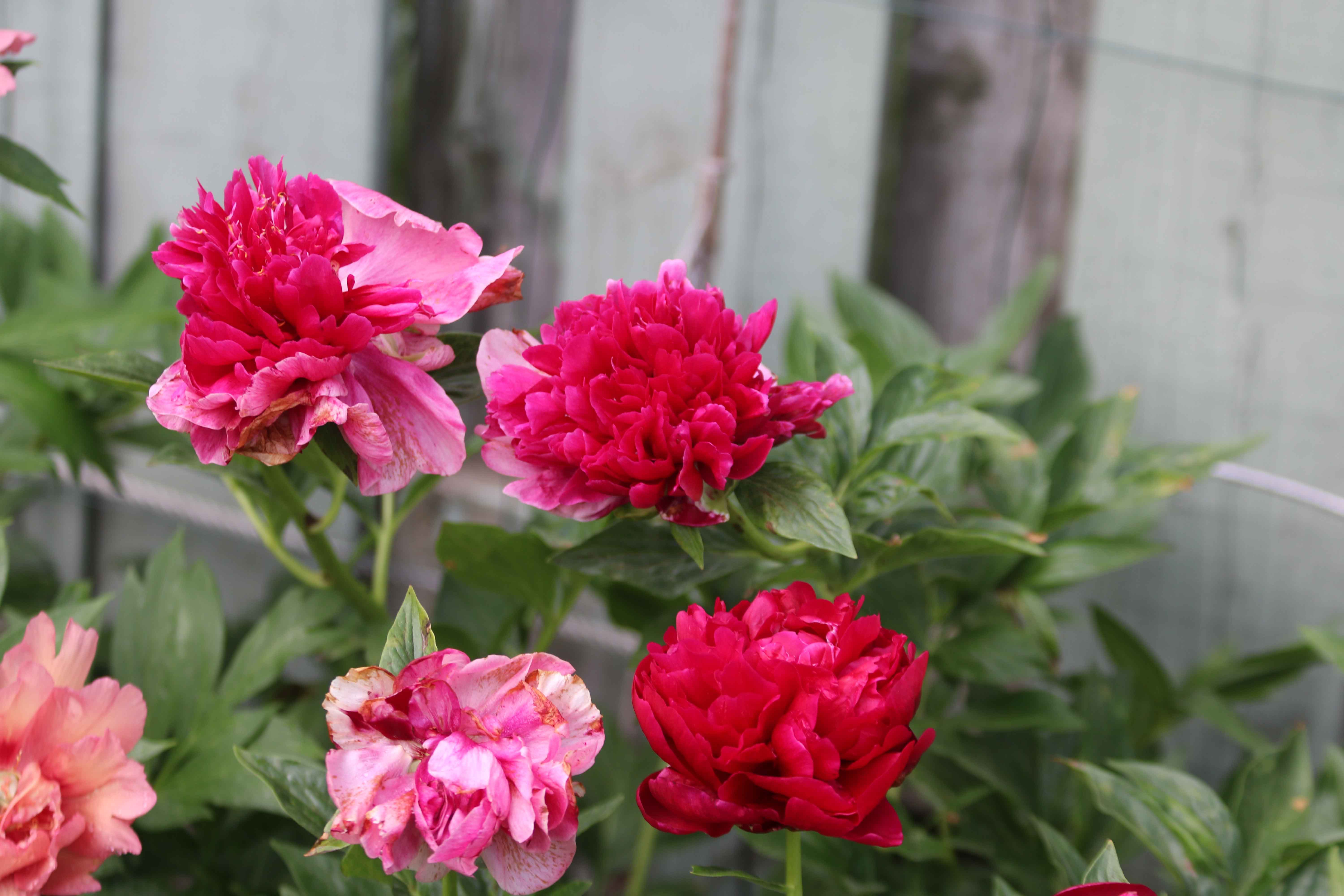
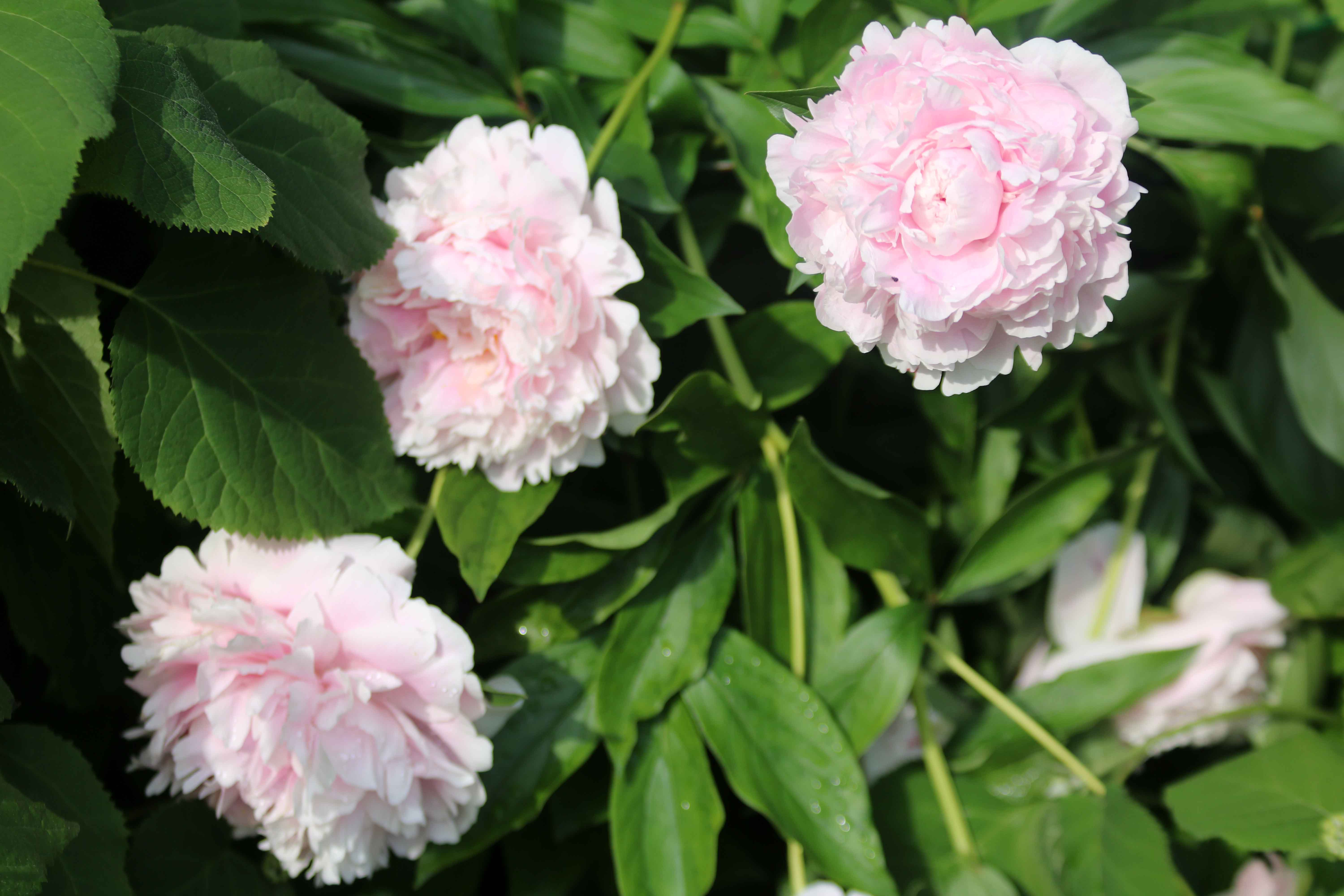
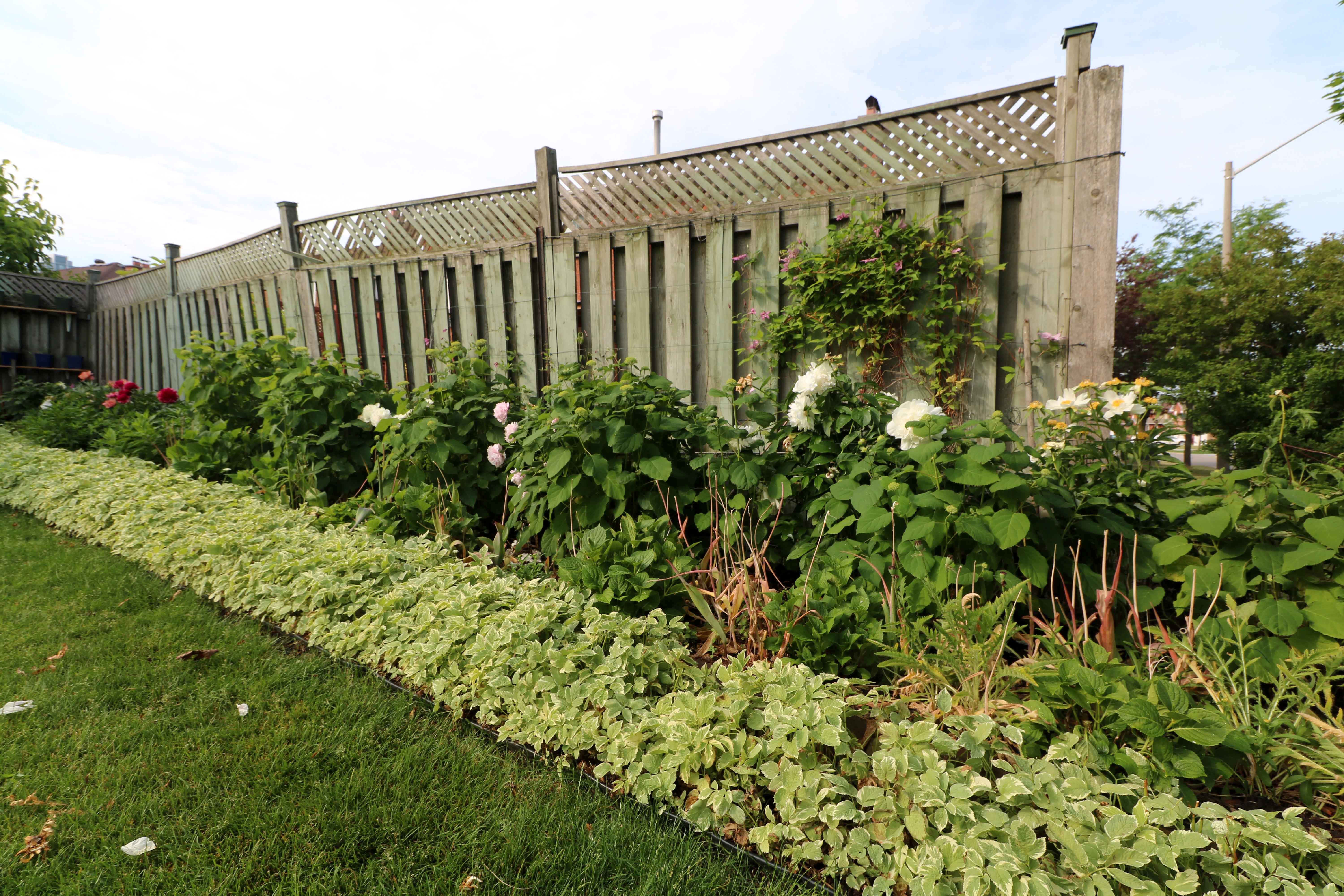
Peonies are outrageously beautiful in bloom, with lush foliage. They bloom from late May through June in Toronto. The flowers last only two weeks.
Their stems are not strong enough to support the heavy blossoms, hence they need support. Peony cages are placed in spring around the plant as they grow.
Peony is named after Paeon (also spelled Paean), a student of Asclepius, the Greek god of medicine and healing. They are also the 12th anniversary flower – because the peony symbolises honour, fortune, and a happy relationship.. It is the state flower of Indiana.
Peonies are native to China. They are highly valued there, and are often referred to as the “king of flowers”. They were the national flower prior to 1929, when they were replaced by the plum tree. Chinese name for the peony is ‘Sho Yu’ meaning “most beautiful”.
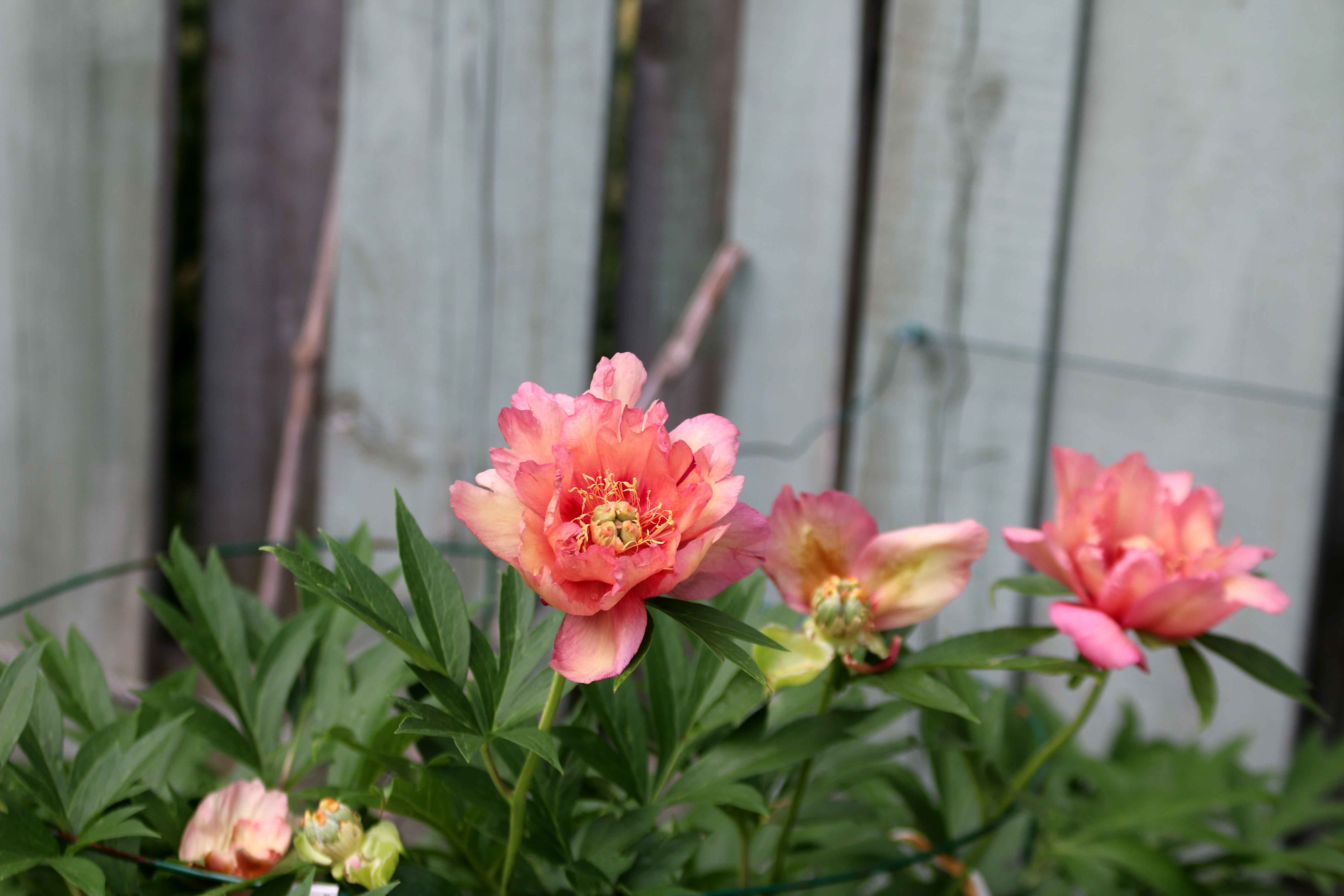
Peonies of three types grow in our garden- Tree Peonies, Herbaceous Peonies and Itoh peonies.
Herbaceous peonies (also known as bush peonies) die to the ground in Winter. They re-emerge in March, or when the snow melts. Many find that they are deer resistant, but not always. Peonies are long lived, minimal care plants.
Tree peonies are called tree peonies for the woody stems that they have. Tree peonies have woody stems that defoliate in the fall, but the woody stems stay intact, above the ground. They tend to bloom earlier and with larger flowers than the bush peony.
Itoh or Intersectional peonies are a cross between the herbaceous (or bush) peony and the tree peony. These crosses have produced new, exciting colors. The plants have the lovely leaf form of the tree peonies, but die to the ground in the Winter. Since they are recent introductions and are still in short supply they command a high price.
Itoh Peonies derive its name from Japanese horticulturist, Dr. Toichi Itoh, who successfully created seven peony hybrids from a tree peony bred with an herbaceous peony. Dr. Itoh passed away before ever seeing his creations bloom. Years later, American horticulturist, Louis Smirnow bought some of these original Itoh peonies from Dr. Itoh’s widow and continued Itoh’s work.
Peonies like full sun, and though they can manage with half a day, they bloom best in a sunny spot. They come in every color except for blue. Pink, and white, are the most popular colours. Peonies can live upto a hundred years. In ancient times peonies were believed to relieve headaches and help with asthma.
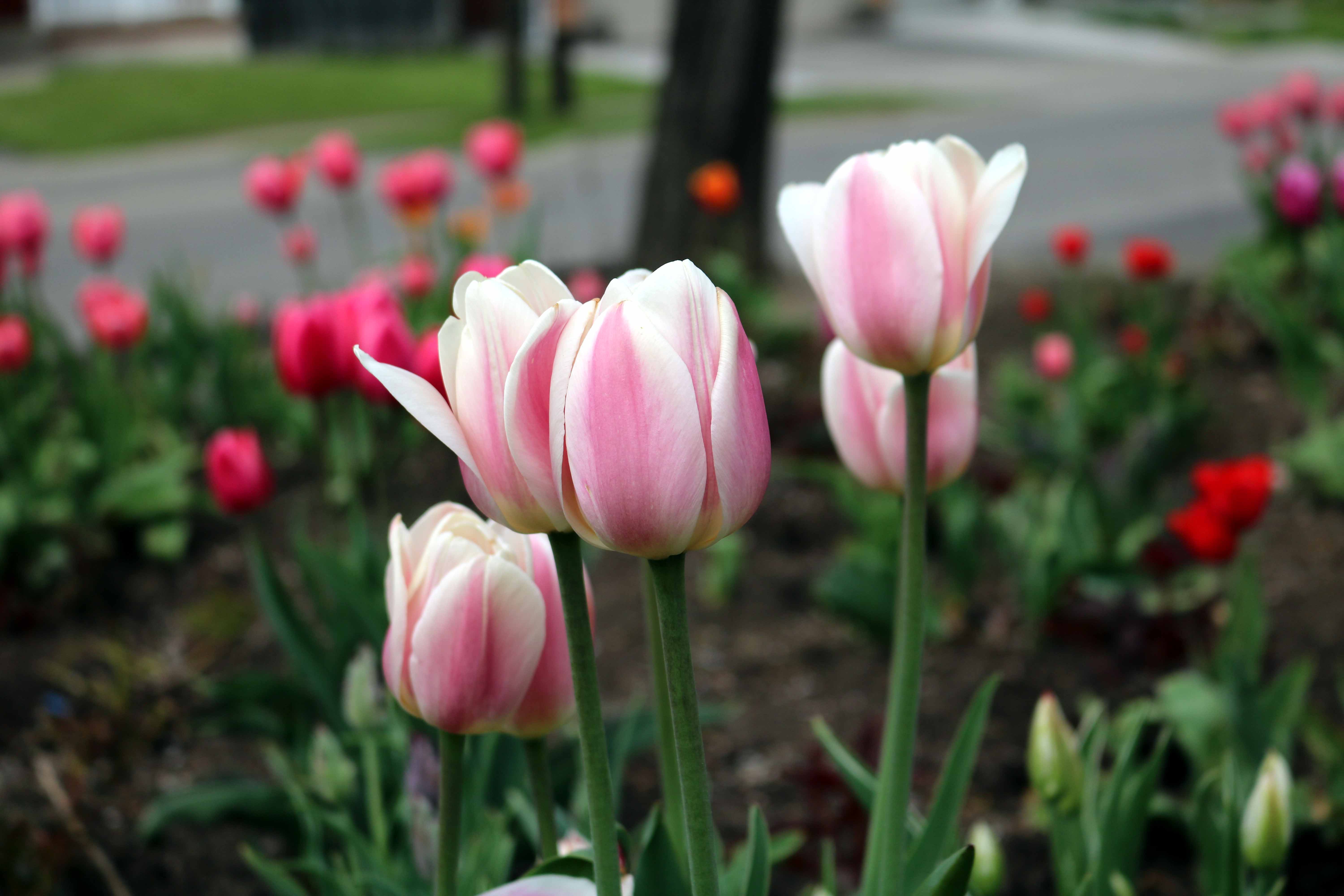
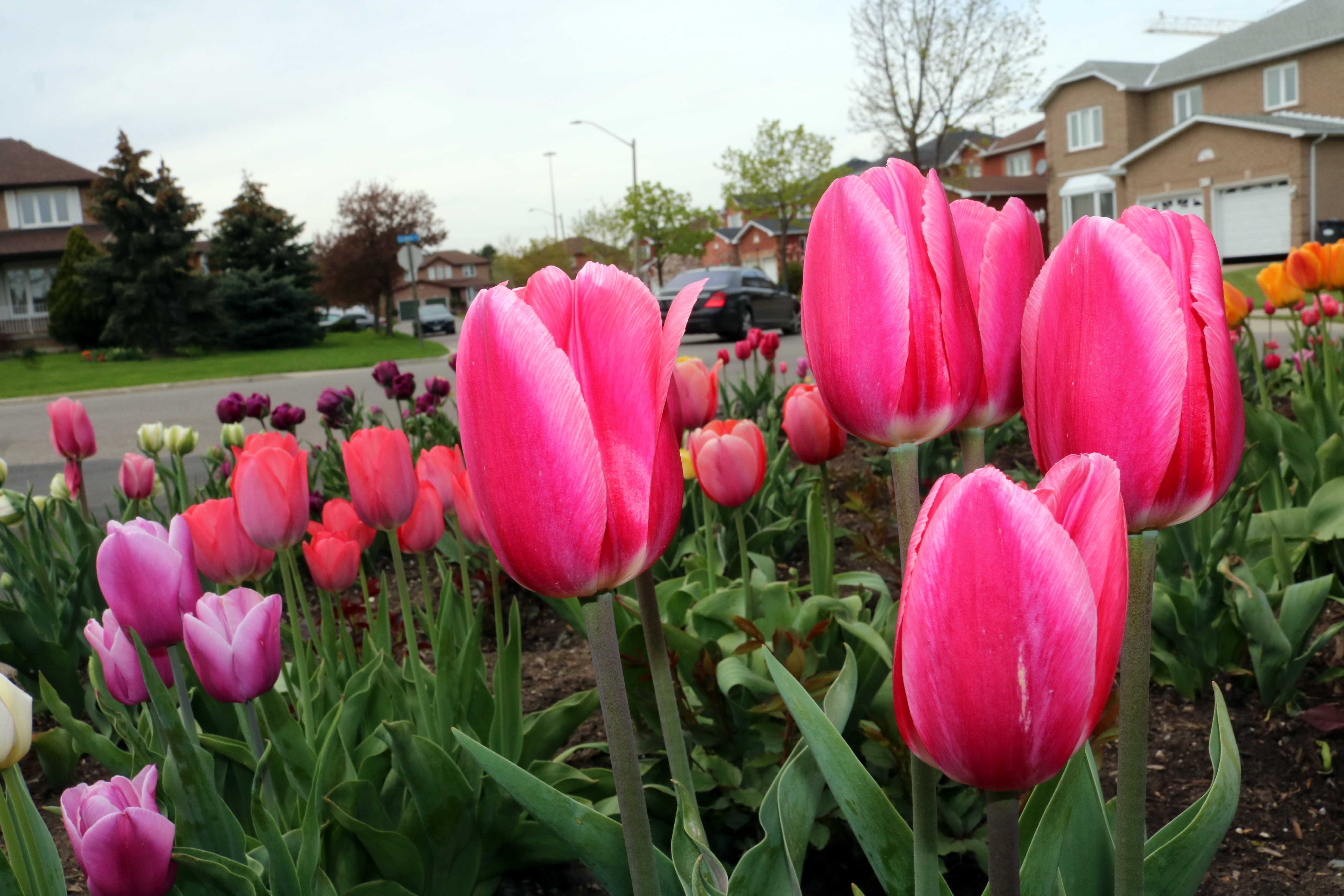
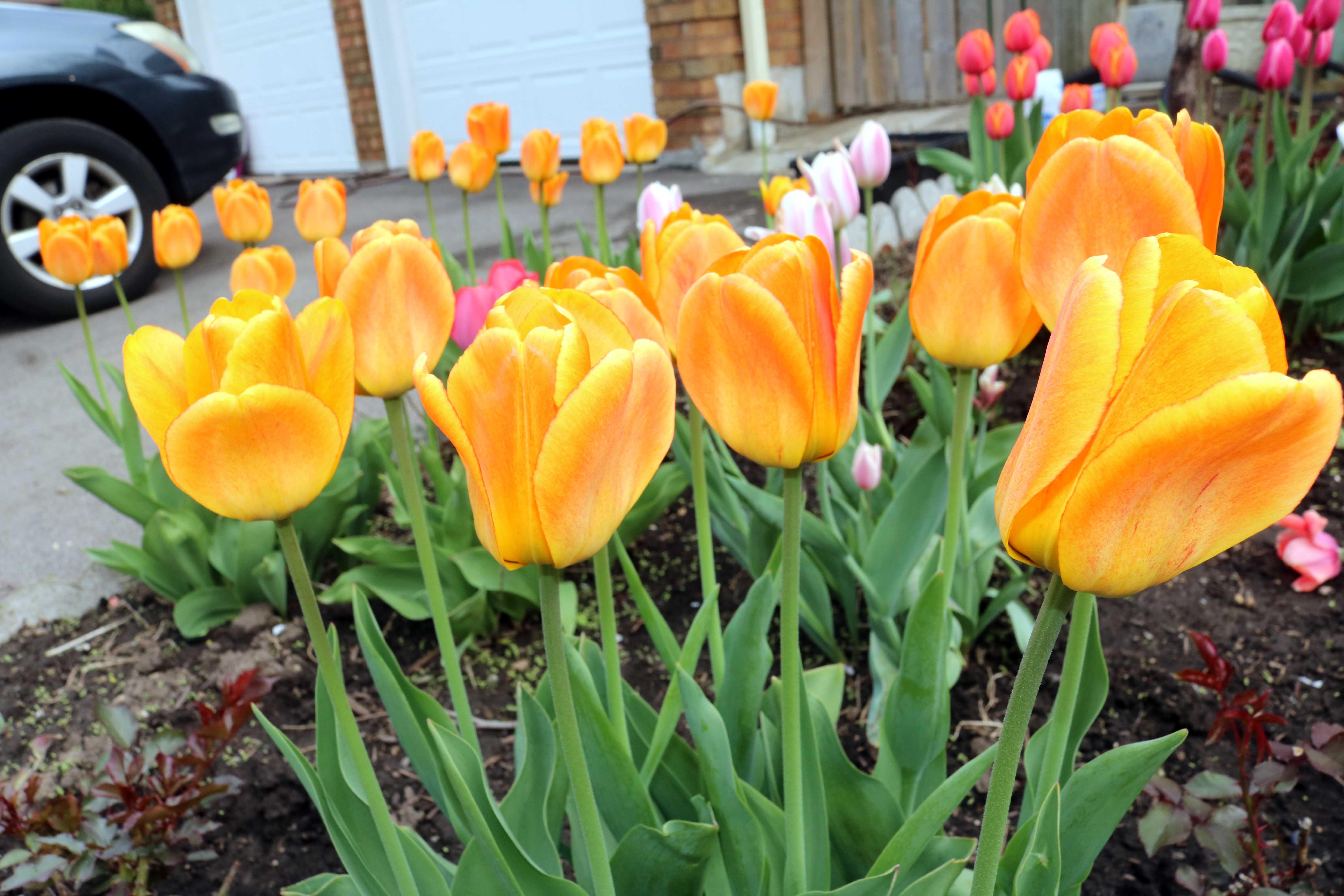
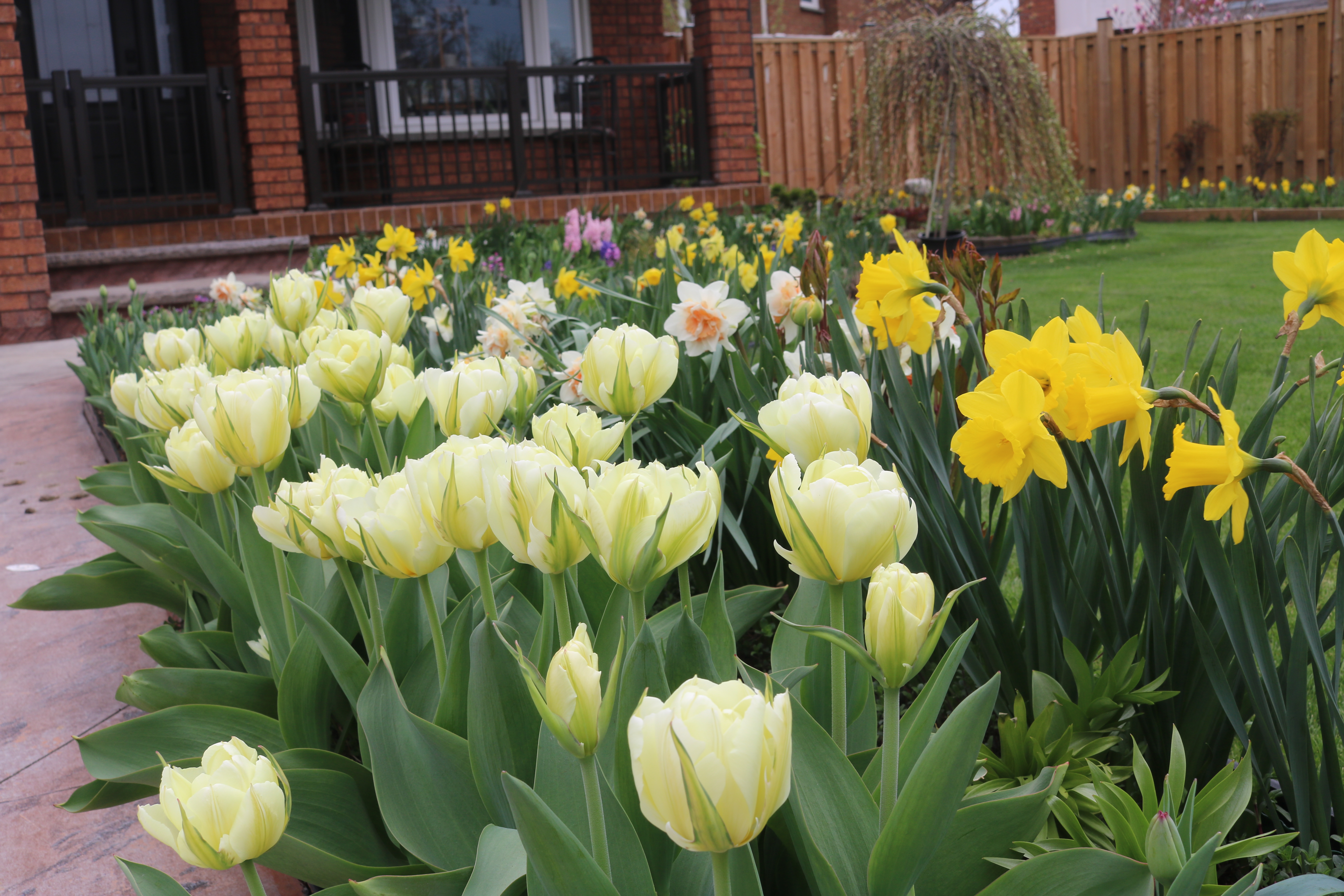
‘April rains bring in May flowers’ is a common saying in Canada. This year, tulips sprouted as the days warmed up in April, but we had two snowfalls thereafter. Many plants either died or did not grow properly, but we still boast of the best Tulip Garden in Town.
Tulips Originated in Persia and Turkey and were brought to Europe in the 16th century.
Cultivated varieties, referred to as ‘Dutch tulips,’ originated in the Netherlands.
They got their common name from the Turkish word for gauze (with which turbans were wrapped) – reflecting the turban-like appearance of a tulip in full bloom.
Yellow tulips symbolises cheerful thoughts.
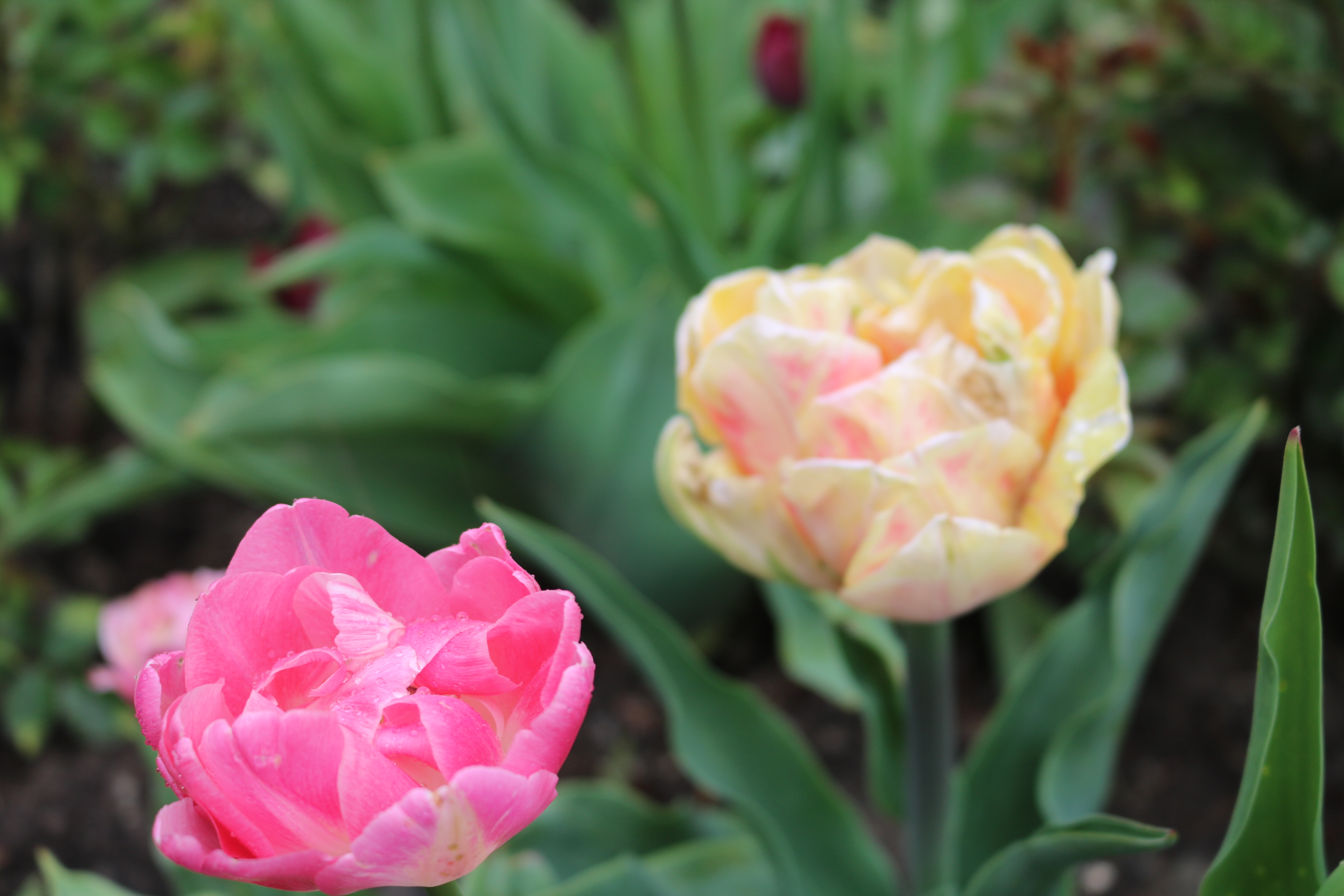
The brightly colored, upright flowers may be single or double, and vary in shape from simple cups, bowls, and goblets to more complex forms.
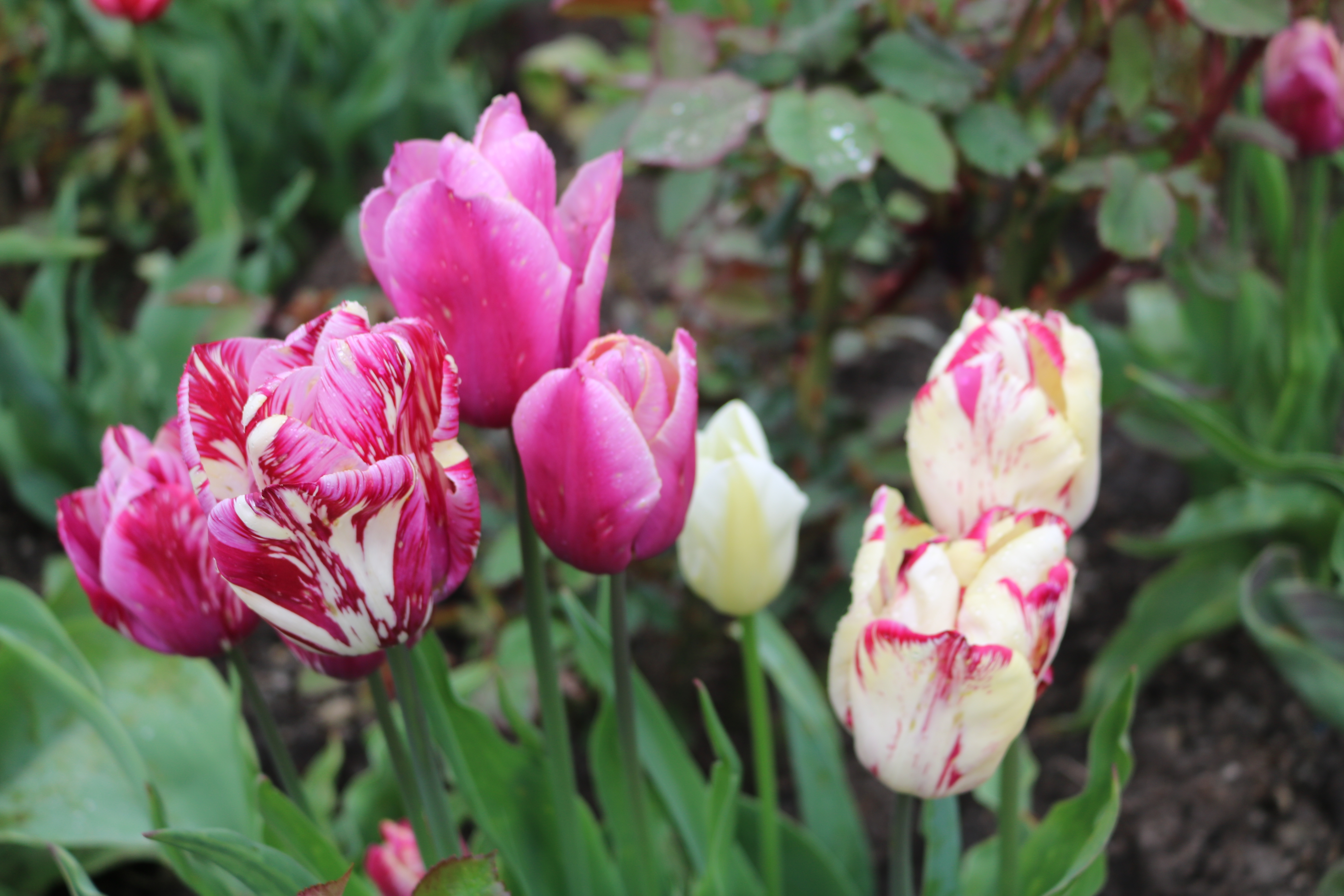
Tulips typically bear cup-shaped flowers in almost every shade but true blue. They can be double or single, fringed or twisted, perfumed or non-scented.
Purple symbolises royalty.
The eleventh wedding anniversary flower is also tulip. It conveys forgiveness.
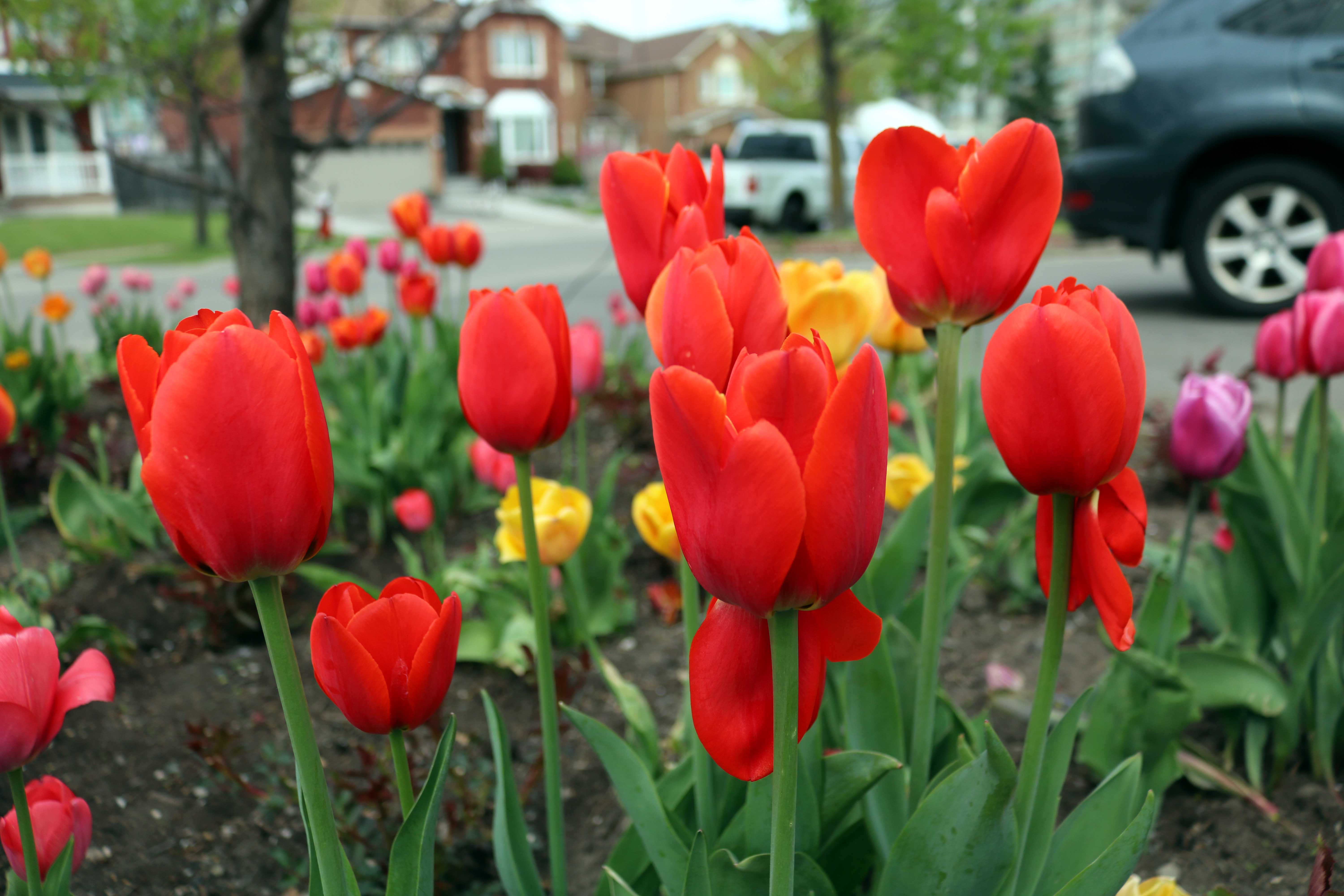
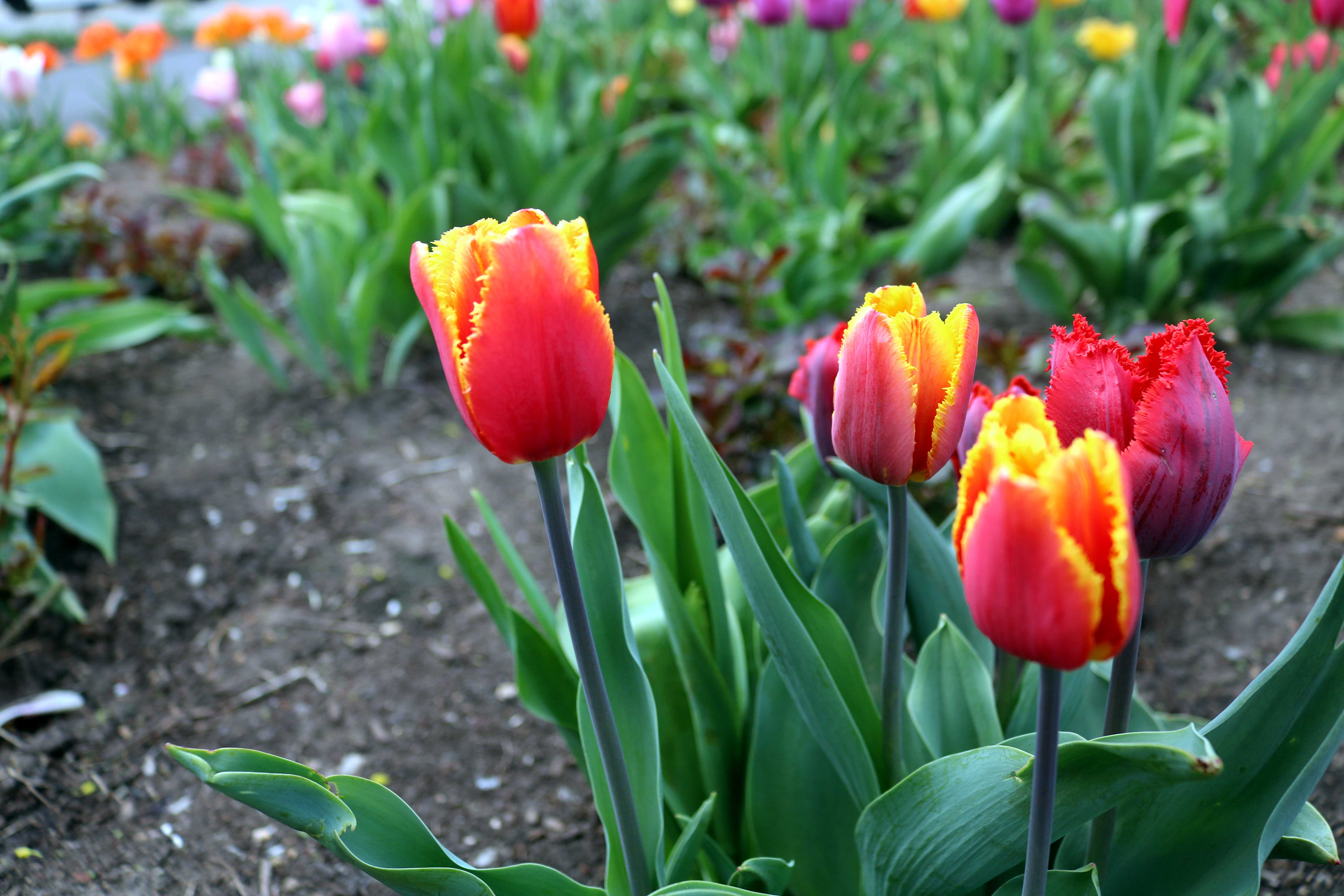
These are different shades of Red Tulips in our garden. Red tulips are most strongly associated with true love.
Tulips are spring flowers and it arrival signals the coming of a new season. Most tulips have six petals, but some can have many more.
Some of the Tulips are still blooming – may be due to the late setting in of spring.
Red tulips are the hue of choice to express that you are deeply in love. The color red evokes passion and romance.
They are gone in two weeks – and that’s the saddest part.
“So God created man in his own image, in the image of God he created him. God blessed them and said to them, ‘Be fruitful and increase in number; fill the earth and subdue it. Rule over the fish in the sea and the birds in the sky and over every living creature that moves on the ground.” (Genesis 1:27–28)
God granted humanity the right to rule over everything on earth. Yet this dominion must not translate into exploitation of nature. Rather, it calls us to be fruitful – to participate in the ongoing work of creation. This is the power of creativity with which we have been blessed. One of the finest ways to honour this divine command is simply to tend to your garden. Whether a few indoor pots, a modest home garden, or a sprawling farm, the act of cultivation connects us to the sacred rhythm of growth and renewal.
Garden Meditation Day
May 3 is Garden Meditation Day—a time to step away from the noise of daily life, to relax, to reflect. If you are fortunate enough to own a garden, spend the day there. If not, visit one. It is a day for hands-on work: digging, planting seeds, pruning, weeding. These simple acts can become a form of meditation, grounding us in the present moment.
The Science of Soil and Soul
Research has shown that physical activities involving creativity, planning, problem-solving, and labour reduce stress, anxiety, and depression. Gardening can even serve as effective exercise for weight loss. The simple acts of tending plants, removing weeds, and nurturing saplings invariably lift the spirit. They make you feel better—and they connect you to the primal experience of being part of creation, close to mother nature.
Even a brief gaze at a garden or a cluster of indoor plants can trigger positive emotional changes. Studies confirm measurable effects on blood pressure, heart activity, muscle tension, and neural activity. Gardening calms the nerves, soothes emotions, and yields genuine happiness.
Going Green, Living Well
Today, we have taken God’s word of ruling over the earth to extremes – often forgetting the stewardship that dominion implies. Gardening is one of the most effective ways to go green and support the natural world. A well-kept garden – or even a few indoor plants – improves indoor air quality, helps keep the home warm in winter and cool in summer, reduces your carbon footprint, and saves you money.
A vegetable garden in your backyard provides fresh, high-quality produce. If you choose organic methods – avoiding artificial fertilisers and pesticides – you will enjoy regular, bountiful harvests of healthy, chemical-free vegetables.
A Real-Estate Perspective
One summer morning, as I tended to my roses, an octogenarian stopped his car and stepped out to compliment my garden. “Your work has increased your home’s property value by a hundred thousand dollars,” he said, “and your neighbour’s by at least fifty thousand. I retired after forty years as a real-estate agent, and I can vouch for this from experience.“
A garden or landscape is an investment in the future. A well-manicured lawn, carefully maintained flowerbeds, and properly pruned trees all enhance your home’s curb appeal. If you ever decide to sell, a beautiful garden is a surefire way to attract buyers – and a higher price.
An Art and a Lifelong Hobby
Gardening and landscaping are truly becoming art forms. Planning, planting, and watching your own garden grow fills you with satisfaction and pride. It is a lifelong hobby: the more you learn, the more proficient you become, and the possibilities are endless.
It all begins with a first step – getting your hands dirty and your shoes soiled. As time passes, you will surely enjoy it, especially after retirement.
So, What’s Stopping You?
Whether you start with a few indoor plants, a balcony container garden, or a full landscape design, the benefits are immediate and lasting. Gardening is not merely a pastime; it is a meditation, a science, an art, and a spiritual practice—all rolled into one.
So take that first step. Dig. Plant. Water. Watch.
You might just find that in tending the earth, you also tend your soul.
April rains bring May flowers\” is a common saying in Canada, especially as everyone awaits the spring showers to help wash away the winter snow that had been shoveled into little mounds around their homes. Whether it rains or not, the plants—especially tulips and daffodils—sprout by the end of April, marking the beginning of spring.
In 2015, however, we did not receive many showers in April, and it had a telling effect on the quality and size of the tulip plants and flowers. In our garden too, this effect was visible. The tulips and daffodils did not perform too well.
The Origins of Tulips
Tulips originated in Persia and Turkey and were brought to Europe in the 16th century. Their common name derives from the Turkish word for gauze (with which turbans were wrapped), reflecting the turban-like appearance of a tulip in full bloom. By the 17th century, the popularity of tulips—particularly in the Netherlands—soared to such heights that the price of a single bulb skyrocketed, causing markets to crash and giving rise to ‘tulip mania’. Many are said to have sold their houses and fortresses during this frenzy.
The Language of Tulips
Different tulip colours carry different meanings: yellow symbolises cheerful thoughts, white conveys forgiveness, and purple represents royalty. The red tulip became associated with love through a Turkish legend in which a prince named Farhad was love-struck by a maiden named Shirin. When Farhad learned that Shirin had been killed, he was so overcome with grief that he rode his horse over the edge of a cliff. It is believed that a scarlet tulip sprang up from each droplet of his blood, giving the red tulip the meaning of “perfect love”. The tulip is also the flower for the eleventh wedding anniversary. It is said that the tulip’s velvety black centre represents a lover’s heart, darkened by the heat of passion.
Our Garden Festival
For all our neighbours, friends, and family, our garden becomes a place of celebration; many call it the Tulip Festival.
The Canadian Tulip Festival
Close by in Ottawa, Canada’s capital, the largest tulip festival in North America is held every May. This festival is a celebration founded on international friendship with the Netherlands, the home of tulips. It all began in 1945 with the presentation of 100,000 tulip bulbs from Princess Juliana of the Netherlands to Ottawa, in appreciation of the safe haven that members of the Dutch exiled royal family received during World War II in Ottawa, and in recognition of the role Canadian troops played in the liberation of the Netherlands. Since then, the tulip has become Ottawa’s official flower. Each spring, the National Capital Region blooms with magnificent tulip beds planted by the National Capital Commission, attracting hundreds of thousands of visitors. As a thank-you gift, the Netherlands sends more than a million tulips to Ottawa every year.
The Canadian Tulip Festival is also a celebration of the return of spring, with over a million tulips in fifty varieties blooming in public spaces across the city. The highest concentration of tulips can be viewed in the flower beds of Commissioners Park on the banks of Dow’s Lake, where 300,000 flowers bloom. During the festival, the international community adds to the pageantry and programming with cultural displays and performances reflecting the diversity of the National Capital community.
A Hero’s Journey: The 2015 Delegation
In 2015, during the Tulip Festival, an official Canadian delegation led by Prime Minister Stephen Harper—consisting mainly of veterans and their relatives—travelled to the Netherlands to attend ceremonies honouring the sacrifices Canadian soldiers made when they liberated the Dutch from Nazi occupation seventy years earlier. About a dozen veterans, most in their nineties and frail, flew to the Netherlands in a Canadian Armed Forces plane. The aircraft flew transatlantic at an unusually low altitude—around 12,000 feet—to avoid a situation where rapid cabin depressurization might irreparably harm an elderly passenger without the speed or strength to put on an oxygen mask.
KLM Royal Dutch Airlines also flew Canadian Second World War veterans and their families from the airline’s five Canadian gateways—Toronto, Montreal, Vancouver, Calgary, and Edmonton—to the Netherlands for the commemorative celebrations. The biggest delegation, consisting of 300 participants including some forty veterans, left from Toronto on May 1. The youngest veteran was eighty-eight (he had been only fifteen when he fought, having forged his documents), and the oldest was ninety-seven. They were greeted in the boarding area by the flight crew for a pre-departure ceremony. Inside the aircraft, the airline had personalised the seat headrests with Canadian and Dutch flags. The group was acknowledged on numerous occasions during the flight with special announcements, and the crew handed out keepsake souvenirs to the passengers.
John Gay: A Cook’s Story
John Gay, pictured above, a cook during WWII, was one of the oldest veterans on that flight, aged ninety-seven. He was part of the artillery and helped liberate the city of Caen and the Falaise Gap. He cooked for soldiers in England and Normandy, which grew increasingly difficult due to food supplies; he had to make do with dehydrated potatoes, dehydrated cabbage, and a meat called Spam. He could cook six gallons of stew and would distribute it to soldiers in cans. John was visiting the Netherlands for the tenth time that year, travelling with his son and other family members.
Making the Flight Special
To make this flight extra special and show the veterans how much they are appreciated and respected, arrangements were made to honour them. Special cakes decorated with Dutch and Canadian flags were prepared. Flight attendants handed out carnation flowers and pinned them with gratitude and respect. Every veteran received a Delftsblauw salt and pepper shaker set. There were special headrest covers. When they landed at Schiphol Airport, the plane was escorted to the gate, and the fire brigade welcomed them with a water cannon salute—also known as the “Shower of Affection.” Just before landing, bagpipe music filled the aircraft.
The Ceremony at Holten
On Monday, May 4, 2015, the delegation of veterans attended a ceremony at the Holten Canadian War Cemetery. The cemetery is the final resting place for 1,393 Commonwealth soldiers who died during the liberation campaign, many of whom were killed in the late stages of the war as the Allies cleared the Netherlands and pushed into Germany. The village of Holten was liberated by Canadians on April 8, 1945, after fierce house-to-house fighting.
Prime Minister Harper said that the bond forged between Canada and the Netherlands in those dark days still endures. He recalled that each headstone in every cemetery is a stark reminder that doing the right thing often comes at a great cost—but a cost that must be paid. Harper spoke of the great sacrifices made by the now-dwindling wartime generation, saying they understood that some things were worth fighting and dying for—a sentiment that remains today. He added that the heroes who liberated the Netherlands, like the men and women who serve our country today, understood that when a great evil arises—a threat to all the things that define our existence as a free and just people—such enemies must be confronted.
Conclusion: A Timeless Promise
I would conclude by quoting from the speech delivered by Prime Minister Stephen Harper during that visit:
“When tyranny threatens the free, when cruelty torments the innocent, when desperation overwhelms the human spirit, we choose to respond. We choose the high road forward, not the easy way out. We choose risk not for reward, but for righteousness. We choose to fight for freedom. We choose to defend the innocent. We choose to bring hope to the world.
Canadians will never forget the welcome our troops received in this country as the war ended. Canadians will never cease to marvel at how this starving and scarred land so quickly became the prosperous, progressive, and generous country we know today—a partner in so many things, including liberty itself.”