Nikhil’s Kerala Trip

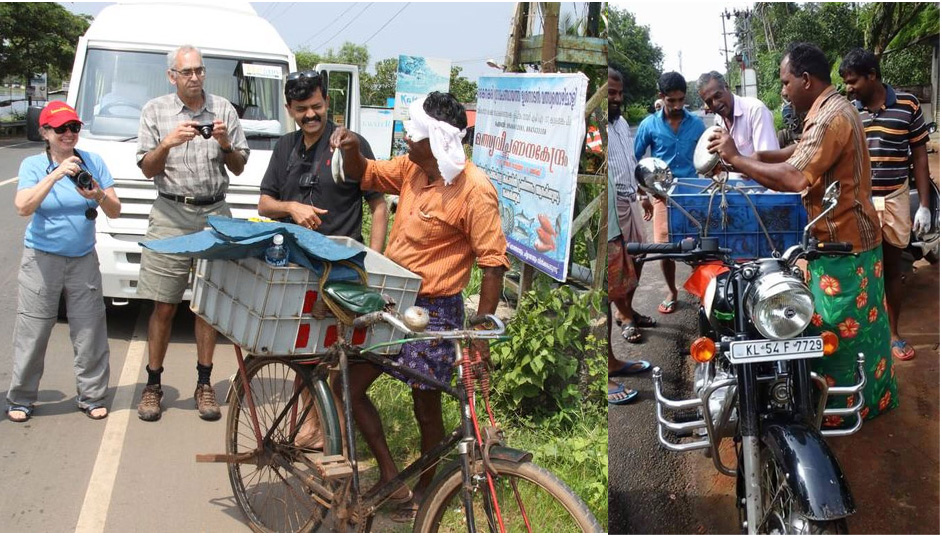
In December 2012 our son Nikhil wanted to accompany me on my trip to Kerala as he had two weeks of Christmas vacation.  I asked him the reason behind such a decision and he said that it was to spend a few days with his grandmother, uncles and cousins.  He also wanted to visit all the old temples and churches in Kottayam and what interested him the most was Sree Padmanabha Temple at Trivandrum as he had read a lot about the billions worth of treasure the temple had.

fml

Accordingly we landed early morning in Trivandrum and checked into the Taj Hotel.  He was really astounded by the top quality service rendered by the Darwan (Person guarding the main entrance and receives the guests), the bell boy and the room service, the likes of which he had never experienced in all our travel across North America.  After visiting the temple we headed to Kottayam and stayed with my eldest brother, with whom my mother lived.

During every Kerala visit, I make a trip to Kochi to meet my Sainik (Military) School classmates, Veteran Commander Reginald and Mr Roy John (Collector, Customs) and this time too Reginald was gracious enough to arrange an evening at the Naval Institute.  Nikhil was again surprised that once he was about to empty his Coke glass, it was refilled by the waiter, a privilege he had never enjoyed.

Nikhil interacted with his cousins and became closer to them than before.  They saw a Hollywood movie on DVD.  At the end of the movie, one of the cousins commented that it was for the first time he enjoyed and understood a Hollywood movie.  Nikhil all through the movie paused the DVD, explained to them the context  of the scene with respect to the events in North America and its culture; replayed the scene.  Until then they said they never understood the inner meanings of many scenes and obviously never the subtle humour associated with them.  I told them that my plight is still the same and I do not get the essence of many scenes in the movies as I am not as well versed with the North American society as our children – they go to school in Canada.

Interacting with my elder brother who at that time was the Public Prosecutor and a Communist supporter, helped to enhance Nikhil’s knowledge about the legal system in India.  It also gave him an insight into the growth of Communism in India, especially Kerala, resulting in the first democratically elected communist regime under Mr. EMS Namboodirippadu in 1957.  They held many discussions about the relevance of Communism in the world today and how it played a great role in bringing social changes in Kerala.

They discussed as to how the term ‘Kerala Model’ of development was termed and how Kerala achieved improvements in material living conditions reflected in indicators of social development comparable to those of many developed countries, even though the  per capita income is low.  Achievements such as low levels of infant mortality and population growth, high levels of literacy and life expectancy, along with other factors responsible for such achievements were also discussed.  There was a discourse about contribution of various Communists governments in achieving such development when the rest of India lagged very much behind  (obviously not because of the ‘Gulf Money’ as many from North India think as consolation for their lack of progress).

On our way back to Canada, we came through Chennai as we had planned to spend an evening with Major General PK Ramachandran, who was our Commanding Officer and at that time serving with the Area Headquarters at Chennai.  On reaching his residence, the sight of the guards, the way the lawn was manicured and the fabulous garden, the way he was looked after by the General and his wife and all the services he received from the staff at the General’s home seem to have touched a nerve or two in the teenager.  When we went to bed, Nikhil asked me as to why did I leave all these luxuries behind and quit the army and whether I missed these.  To this I said that I really miss all these, but had to make a choice between the family and the army and hence I migrated to Canada to join the family.  Had I continued in the army, they would have visited me during their vacations for few weeks and I would have visited them for two or the most three months (including furlough) in a year.  I was touched by his reply “That is a real sacrifice for our sake”.

One day at Kottayam, we decided to set off on foot to visit the old temples and churches around my elder brother’s home.  Nikhil was finding it difficult to keep up with me and I asked him whether he was feeling good to walk or should we hire an auto-rickshaw.  He said that he had a heavy breakfast as his grandmother wanted him to put on a few kilos and hence piled up his plate.  He was upset that the granny did not realise that his body structure and metabolism did ensure that he remained thin and it was not that he did not eat enough and he added that granny being a school teacher, who is well read and well-traveled should realise these facts.  “You could have always refused her and could have left the meal half eaten”, I said.  “Your mother is too powerful and I can never say ‘no’ to her.  Look at your eldest brother who is four years elder to you and your elder brother, the city’s public prosecutor, they never said ‘no’ to her and instantly obeyed all what she said.  When she was in Canada with us, you never said ‘no’ to her.  How do you expect a little boy like me stand up to her and ever say a word,” said Nikhil.

 I then realised that this trip was worth more than a thousand times its cost. The value of knowing one’s roots is often incalculable.

Whom Will You Marry?

During lunch, on his return from classes while in Grade 12, our son Nikhil asked me “Why did you marry Mom?  You never dated her, you did not go to school with her, you did not know her from before.  Your parents selected her, you saw and spoke to her for five minutes and agreed to marry her.  What prompted you to take that decision?”

Marry

I said to him that once my parents selected her, they must have seen something good in her and her family.  Her parents and siblings were well educated and she was in her third year of Pharmacy graduation.  Her academic record till then was outstanding, from her high school days until her graduation.  Further, during her high school days, she was the Kerala State champion in 400 meters run.

Now Nikhil wanted to know how it made any difference to me  or to my family.  I explained to him that  by virtue of me  serving as a Major in the Indian Army then, I needed a partner who could cope up with the pressures of being an ‘Army Wife’.  Marina was doing her Pharmacy Graduation at Gulburga in Karnataka State (about 600 km from her home) and hence she had to be independent and ought to have travelled a lot on her own.  She had to be intelligent and hardworking, else she would not have done so well in her Pharmacy course.  Further, she ought to have been physically fit, else she would not have won those laurels in athletics.   She being bit adventurous (I realised after marriage that she was much more adventurous,) would be an ideal life partner  for me.

Now he wanted to know as to whether it has had any effect on the children.  I explained to him that both of us being physically fit and intelligent, the God has blessed us with two kids, intelligent, smart and physically fit.  The kids have no physical deformities like flat foot, knock knees, bow legs, etc, which has enabled them to do well in sports, music and dance. 

WhomWillMarry

With the volley of questions being fired at me, I realised that there had to something more to it.  I prodded him a bit and he said that Ms Kent, the English teacher, was holding a discussion the next day as to “Whom will you marry? A beautiful woman, a rich woman or an intelligent woman.”  The boys in the class had to present their cases and the girls would cross-examine them. 

I now asked Nikhil as to what his take was.  As expected he said he would marry an intelligent woman.  Now we discussed the pros and cons for each case and at the end I said to him not  to be surprised to find that he might be the only one supporting his case.  I advised him to be well prepared to take on the girls and use all his charms, wit, language skills and oratory skills to manage the situation.  

Next evening, at the family dinner, Marina asked Nikhil as to how the discussion in the class went.  Nikhil said that he was the only one supporting the case for an intelligent woman and the rest of the boys were mostly for a beautiful woman.  After everyone presented their cases, most of the questions from the girls were directed at Nikhil.  One girl asked as to whether he would accept a woman if her father offered him a million dollars.  Nikhil countered it by saying that in case the girl is intelligent, he would not stop at a million but would make billions.

Another girl asked him “If the woman is so ugly, then how can you move around with her.”  Nikhil’s point was that he wanted a woman who does neither hitch on to him nor he wanted to hitch on to her.  He was marrying her for companionship and not to show her off as a booty.  Also, he would not have to protect her from gazers.

The boldest among the girls asked “If the woman is so ugly, then how can you have sex with her.”  Nikhil explained that the pleasure of sex is mostly from the mind and hardly from the body.  Most animals during their intercourse do not look at their partners.  Most humans have sex either in the darkness or they mostly close their eyes during an intercourse.  Hence beauty  did not matter to him.

Ms Kent wanted to know the source of this piece of information and Nikhil said “It’s from my Dad”

Now Ms Kent said that she wanted to meet me.  After Nikhil said this, I found Nidhi walking away from the dinner table.  She came back after a few minutes, and I asked as to where she had been.  She said she was chatting with Ms Kent of the Facebook as to why she wanted to meet up with her Dad.  Ms Kent was Nidhi’s English teacher too and were friends after she graduated from high school.  That was when Ms Kent realised that Nikhil was Nidhi’s sibling.

Sitting Position

Walking down our city’s (Mississauga, Canada) streets, one can see many Yoga studios that have sprung up in all the malls.  Anyone will be fascinated by some of the names the studios had – Moksha Yoga, Power Yoga. Parivartan Yoga. Bikram Yoga (named after Bikram Choudhury, the India-born, Beverly Hills-based Yogi,) Infinite Yoga, Hot Yoga, Organic Yoga, etc.  It seems the city has now got into a Yoga craze.  Most gyms in the city offer Yoga classes as part of their fitness regimes.  Our children regularly attended them and are most amused by the Yoga instructors speaking out Sanskrit Yoga terms with their accents.   Most Yogis who teach are non-Indians and the students also cuts across the class divide, with hardly any Indians, as is seen in any outdoor, voluntary, adventure or physical activity in the city.

yyy

Are you familiar with this sign?  Seen it anywhere?  This is the new sign for a Yoga Room, mostly at airports, hotels, gymnasiums across Canada and US.

Think of any busy international airport and you probably think of delays, long lines, hectic and noisy. San Francisco International Airport, however, hopes that those will be replaced by Om and chill because of its new addition: A yoga room, in January 2012.  The facility is open 24-hours a day and is free of charge.  Dallas Fort Worth International Airport opened their Yoga Room in 2012 with Chicago International airport following suit and opened a Yoga Room in 2013.

On a recent trip to India, our connecting flight was delayed by two hours at the Brussels Airport due to inclement weather. As usual the airport lounges were overflowing with stranded passengers. All possible seating were  occupied. There were passengers all over the floor, young and old, some reading, some listening to music, some surfing the Internet on their laptops and some chatting. My attention immediately caught a few children in their early teens from Canada, sitting on the floor with their legs crossed (Chaukadi/ Chamram – Lotus Position) and talking.

I thought with the limited space available, I should take up that position and continue to read the novel I had, to spent the next two hours. My attempt to sit like the children failed miserably in half a minute. I just couldn’t sit like those children. My legs and back were paining and I thought all my muscles had cramped in unison. Then I moved my position next to the wall and with the support of the wall and with my legs stretched out, I could sit and read for five minutes and then I felt I did not have any control over my legs. My attempt to stand took a miserable half minute.

This led me to ponder as to why I had such a problem sitting in Chaukadi position. I travelled through the time graph back to my childhood. I remembered that I could sit like that in the kitchen floor with our father and siblings and we used to eat the meals our mother served. As the economic situation of the family improved over the years, we added a dining room and with it came a dining table and the habit of eating our meals sitting on the floor in lotus position went out of the window.

The only place where I sat on the floor was during the few minutes of sitting interludes we had during the Kurbana (Holy Mass) at the Orthodox Syrian Christian Church. Most of the Mass was offered in our church standing (unlike the catholic churches) and we never had any seating arrangements other than for the old and infirm. The only other time we sat in the church was during the sermon by the priest – I always thought why it had to be that long and mostly repetitive.

In the school we always had a bench and a desk and our father used to tell us as to how privileged we were and that during his school days they always had to sit on the floor, even in high school. Was it a privilege? I started to ponder?

yoga11

On return to Canada, I had to visit our son Nikhil’s Primary school to meet the teacher. As I walked through the aisle, I observed that in all the classrooms, the children and the teachers were sitting on the carpeted floor. Only half the classroom was filled desks and chairs. On enquiring from Nikhil, he said that most of the class time were spent on the carpet.  The children always removed their shoes and placed them in the cupboard outside before entering their classes.  In case someone wanted to wear shoes in the class, the student had to get an ‘indoor’ shoes and had to be kept inside the classroom.  Now I found the answer to my question at the Brussels Airport – as to how the Canadian teens could manage to sit in lotus position for such a long time.

In the school cafeteria, fast-food is banned and pop/ beverages are strict ‘No Go.’  Students are mostly casually dressed and there are no ties and coats/blazers, in most schools there is no uniform.  There is a lot of stress to educate children about the ill-effects of these junk food and pop and the results are showing in the fall of business for these stores.  In India one sees long queues in front of the franchises of American Fast Food Chains.

Later I called up a friend of mine, who is a principal at a private school in Kerala and tried to explain to him the importance of making the children sit on the floor – at least in primary classes. I reasoned with him our old traditions of ‘Ashan Kalari‘ and ‘Gurukulam‘ and as to how children learned to write and read sitting on the floor. The principal said that he could see the advantages of it, but to convince the parents about it would be next to impossible.  In case he implemented my idea, he is sure that his school will face closure as no parent would like to send their children to a school where the students sat on the floor in lotus position.

May be Indians’ loss is Canadians’ gain and Indians are picking up all that the Western World is now rejecting.

Annamalai – The Lord of Mountains

KE1

Most of our classmates of the 1979 batch of Sainik School Amaravathinagar would remember Mr Kannayiram Ekambaram (KE), the Thamizh teacher as the ‘Goonda (goon) of Annamalai’. That was how he introduced himself when he joined our school in 1973 (we were in Grade 6 then), as a temporary teacher, soon after completing his master’s degree in Thamizh. He often used this tag line to wriggle out of difficult situations when he was at the losing side of any argument or confrontation with us. He then went on to complete his degree in education and rejoined as a permanent Thamizh teacher.

Mr Ekambaram, five feet tall, always wore white pants and a white shirt with black goggles. He came to our class, the section with Thamizh as third language, a few times as a relief when our teacher was unavailable. Hence my interaction with him was limited and was mostly during the drama practises as I was responsible for the audio system under the guidance of Mr. PT Cherian.

In 1978, during the Inter-House English Debate competition, the stage was thrown open to the audience to speak for or against the motion. The time was to be used for compiling the results. During the previous competitions, one of the staff members spoke to cover this interlude. Mr George Joseph (GJ), our English teacher, was the Master of Ceremony. (You can read more about GJ from my earlier article by clicking here.) Immediately, two cadets (one of the two was Madavan) from Grade 8 walked up to the podium and spoke about their points of view. They were from Mr GJ’s class and by the time the second speaker was speaking, I realised that Mr GJ had set them up well in advance and I felt ‘cheated’.

At that time, I was on cloud nine having cleared the Entrance Examination for the National Defence Academy (NDA) and was all set to proceed for the Services Selection Board (SSB) interview in two days. I was then well known in the school formy notoriety and also for the consequent punishments that came as a reward for them. I summed up all the courage and my thoughts and walked up to Mr GJ on the stage and informed him that I too wanted to speak. He agreed, but on a condition that I would not exceed three minutes.
Now the dilemma for me was that I had not read much about the subject being debated and that most points I knew had already been covered by the speakers in the debate. As I was all set to go for the SSB Interview, I spoke about the preparations we had done for the interview and what all needed to be done to facilitate cadets to clear the interview. I proposed that all cadets who qualify the NDA Entrance Examination be made House Captains and Prefects, to facilitate them develop leadership qualities. Such a step would surely boost the self-confidence of these cadets and would facilitate them in clearing the SSB. (Till date I subscribe to this view).

I well exceeded the three minutes limit and Mr GJ kept ringing his bell every 15 seconds for the next minute, until I concluded. The applause I received at the end of the speech, indicated that I had struck the right note with cadets and teachers. Mr GJ then came up and complimented me for my extempore effort and also for the subject I covered. After the results were announced, all the cadets marched off to the Cadets’ Mess for dinner and I stayed back to pack up the audio system.

As I walked all alone to the Cadets’ Mess, from a distance I could recognise the silhouette of Mr. Ekambaram standing outside his residence, dressed up in his usual all white attire. As I came close to him, he took me aside and spoke to me in detail about his life, from school days to the university days and also said that he was probably more notorious as a student than I was. By the time we reached the mess, he said that he saw some spark in me and that he was pretty sure that I would clear my SSB. He wished me all the best for the interview and we both left to take our seats for dinner at our tables.

As I was about to take my seat for dinner, Mr M Selvaraj, the Head of Thamizh Department called me. (To read more about Mr Selvaraj please click here). He complimented me for an excellent speech and said that the points I had raised had merit and need consideration. He appreciated me for my confidence to speak on a subject which many students or even teachers would have feared to attempt. He concluded by saying that I had it in me and I had to clear the SSB and he was pretty sure that I would be successful.

At that time, I felt as though the Thamizh Department had had a conference after the debate as both of them spoke nearly the same words. It really boosted my self-confidence and from then on I started to believe that I would surely crack the SSB Interview. What triggered my confidence was perhaps the fact that the words of encouragement came from the most unexpected quarters, the Thamizh Department. The rest is all history.

During my Army days and later, many a times I reminisced about this incident and about Mr Ekamabaram’s pep-talk and the effect it had on a naughty cadet, to turn him around. Mr Ekambaram, for me, will always remain a hero and a well-wisher who spurred me on to achievements that I wasn’t sure I was capable of.

KE2

Crossing the Highway

On a summer afternoon of 2008, I drove to a town about 250 km away to meet a friend.   I started off on the Expressway and after driving for about an hour at 100 kmph, the eight-lane road narrowed down to a four lane road, two lanes each on either side, uptown and downtown, separated by a 10 meter wide grass covered mound.  The urban concrete jungle I left behind had given way for the cultivated countryside dotted with a few farmhouses, stud farms and dairy farms.

(Illustration by Thomas Graham)

While on a long drive, especially when driving alone, I listen to the news channel on the radio.  It gives me company ensuring that I do not doze off, keeps me informed of what is happening around the world.  The channel updates me every ten minutes with the traffic and weather report.  Suddenly I saw the car 200 m ahead of me and the 70 feet long truck in the right lane, coming to a screeching halt.  I immediately applied the brakes and halted behind the car with the truck on my right.

I looked out in front and saw two geese and about a dozen goslings crossing the road from the grass on the left to the farm on the right, must be in search of food.   Seeing the sizes of the goslings, it became evident that they belonged to two different mothers.  The ganders must have flown out in search of food, leaving the mothers to look after the goslings.

After about two minutes of halting, the radio was reporting the hold-up on the highway caused by the goslings.  The channel was giving a running commentary, giving out every detail of the event.  Looking to my right I saw the news reporter who was responsible for the live broadcast – it was the truck driver on his cell-phone; he must  have called up the news channel.  The news channel as usual must have been hungry for news, especially in a country where there is hardly any political rallies or hartals or bomb-blasts or scams or rail/ road accidents to report.

gc

It took the crossing operation about ten minutes and there was a mile long lineup of vehicles on the highway.  Once the geese and the goslings had crossed the road, the traffic started to roll.

I returned home by about 11 PM and as I steered the car into the driveway of our home, I found our daughter walking in.  She generally is home by 10:30 PM after her classes in the university getting over by 10 PM followed by a 20 minute bus ride.  I inquired about the delayed arrival and she had her story to narrate.

The bus she took from the university, while traveling on the highway, the driver noticed a crack on the windscreen.  He pulled the vehicle off the road to the apron on the right and parked it with the flashers on.  The driver briefed the passengers about the situation and advised everyone to remain calm and remain seated until the replacement bus arrived.

gooslings111

The highways have two aprons on either side.  The one on the left is marked with a continuous yellow line and is meant for the emergency services like police, ambulance or firefighters.  The one on the right is marked with a continuous white line and can be used to stop the vehicles in an emergency like this or may be used by the emergency services.

After about three minutes of halting the bus, two police cruisers pulled up behind the halted bus with their lights flashing.  One parked about 10 meters behind and the other about 400 meters behind the halted bus. The policeman in the second cruiser closed off the right most lane with flares.

After about 15 minutes, the replacement bus arrived which was parked in front of the halted bus.  The police gave an all clear signal after ensuring the safety and the bus driver briefed all passengers to alight from the bus and move into the replacement bus.  That was the time when the driver opened the door.  The two police men were guiding the passengers to the replacement bus.  After everyone boarded the bus, the policemen signaled the bus to go.

One evening I was crossing a busy traffic signal in the city center while walking our dog Maximus. The collar came off the neck of Maximus, who was following me and without realising that Maximus was not there at the other end of the leash. I crossed over. Maximus kept standing in the middle of the road and when I reached the other end of the road and turned back, the signal at the intersection had changed.

No traffic moved and no one honked. I ran to Maximus and held him by his ear and ran to the other end of the road. Lucky for Maximus that no one honked, otherwise he would have ran in panic causing major chaos.

In Canada, the Criminal Code of Canada controls human behavior in relation to animals.  As per the Canadian laws,  animals are considered property. Property rights include the rights of possession, the rights of use, and the enjoyment of property. The original animal cruelty sections of the Criminal Code were enacted in 1892 with only minor amendments made in the mid-1950’s.  It is an offence to wilfully cause or, being the owner, wilfully permits to be cause unnecessary pain, suffering or injury to an animal or a bird.

All lives are precious – whether it is of humans, animals or birds.

Beast – The Wildfire

BEASTAA
(Illustration by Thomas Graham)

Enormous flames are no longer consuming the city of Fort McMurray, but the wildfire is still active and classified as ‘out of control’ by the Alberta government.  The wildfire travelled 25 to 30 km East and as of 03 May afternoon, it covered about 2300 square kilometres of boreal coniferous forests.  The wildfire of Fort McMurray was christened ‘Beast’ by the firefighters.

The main reason the fire got bigger is that the main Fort McMurray fire merged with a much smaller, separate fire that had been burning to the North-East.  The fire grew due to the favourable weather conditions of heat, dryness and wind.  The firefighters were in the lookout for less windy days, rain, cooler temperatures and more humidity in the air in order to bring the wildfire under control.

Beast2

Flames were only visible at the front of the large active wildfire, and he rest was ‘fields of just black ash’ left behind.  That huge burnt area is extremely dangerous and firefighters have months of work ahead of them.  They are carrying out infrared scans from the air to find ‘hot spots’ where smoke continues to smoulder underground.

About 700 firefighters were working on the Fort McMurray wildfire.  Twenty-six helicopters were being used to transport crews and to pick up and drop water.  13 air tanker planes (water bombers) were carrying water or fire retardant.  It is estimated that there is a total of 1,547 firefighters, 121 helicopters and 28 water bombers battling 25 wildfires across Alberta right now.

Most of those fires are classified as ‘under control.’  Only the Fort McMurray wildfire remained ‘out of control.’

Displaced Fort McMurray residents are getting more resources to help ease their predicament. The Canadian government says it will work to speed up employment insurance claims; Canada Post has announced a mail forwarding program free of charge for Fort McMurray and area residents; and Western Union is waiving money-transfer fees so Canadians can send money to Alberta more easily. Many retailers, pharmacists and others are offering services for those in need.

The evacuation of over 80,000 residents was carried out in an orderly manner.  Police officers helped re-fuel vehicles and generous residents offered these families a place to stay for the night.  The bright lights of RCMP cruisers helped the drivers to remain on road, while above, Canadian Forces helicopters searched for any signs of danger to the fleeing traffic.  There was also a massive airlift of more than 16,000 people.  Wildfire evacuees were mainly accommodated at the University of Alberta residences.

The hospital in Fort McMurray was evacuated – 73 acute care patients and 32 continuing care patients – were flown to Edmonton health care facilities to receive care.

Beast3

Cooler temperatures, higher moisture in the air and lighter winds helped efforts to suppress the fire.   The fire was moving away from Fort McMurray in a South-East direction and unlikely to be a threat as the area is mainly wild land and away from habitation.

An average of 1,200 wildfires are reported in Alberta each year, and half of those fires are caused by humans, according to the National Fire Database.  Lightning is the second-leading cause with 47 per cent.  The fire’s proximity to the city, as well as data that shows that there were no lightning strikes in the area, directly leads to the inference that the cause of the fire was most likely human.

Weather is a crucial enabler of wildfires.  In the days before the wildfire, the weather in Fort McMurray was unseasonably warm, with strong winds and lack of rains.  All combined, it was the ideal scenario for a small fire to grow and spread.  The high temperatures were part of a year-long pattern attributed to El Nino, a periodic warming of waters in the East-Central Pacific Ocean that was at its strongest in recent months since 1997-98.

With summer-like temperatures and continuing tinder-dry conditions, the Alberta Province has banned the use of off-highway vehicles on public lands and provincial parks.  Flying of helicams and drones is banned as it may cause hindrance to the many fire-fighting aircrafts operating in the area.  A province-wide fire ban is in effect.  All open fires, including campfires and charcoal briquettes are prohibited.

In the fight against climate change, forests play a critical role — drawing more greenhouse gases out of the atmosphere than they emit.  But when they burn, much of those stored gases are released back into the atmosphere.  For 6,000 years boreal forests have operated on a cycle of growth, fire, and re-growth.  It will take at least a decade before the forests destroyed by the fires in Fort McMurray are storing more carbon than they are releasing.

Such big wildfires affect plant succession and result in rejuvenation of the process of the maturation of plant systems.  Plant succession refers to changes in vegetation in a specific area over a period of time and is dependent on factors like disasters, changing conditions or human activity. While area of wildlife will adjust to these changes over time, the fire would have been catastrophic to most animals in the area.  The bears and the wolves are going to be destroyed in the first instance but it won’t be long for them to be back in the system

Within one to three years, bears are actually likely to benefit from the fires as there will be a good chance of massive berry crops like blueberries emerging, allowing bears to return and do quite well. Wolves’ success would depend on species like moose and deer that are found in the early stages of the evolution of the forest.

Beast1
Forest fires are a natural phenomenon, and are beneficial ecologically, returning valuable nutrients to the soil that helps a natural rebirth.  Such fires naturally occur in forests every 150 to 250 years.  With changing global weather patterns, the scientist fear that the frequency of wildfires occurring may even reduce to 50 years.

At least nine major oil companies, including Syncrude and Suncor, suspended operations after the wildfire broke out, leaving Alberta’s oil production down by more than a million barrels per day – half of the province’s daily output and one third of Canada’s.  8,000 oilsands workers were evacuated on 16 May as the fire was approaching the oil production facilities.  The fire is not expected to create much havoc as these facilities have some fire treatment in place that will hopefully prevent them seeing too much impact from the fire.

The Russian President Vladimir Putin offered the services of IL-76 water bombers, capable of dumping 42 tons of fire retardant into fire spots.  Canada, however, turned down the offer.  The most difficult part of fighting a forest fire is coordinating smoky skies filled with low-flying helicopters and water bombers.  It is why, over the past few years often the only fatalities in major fires have been due to air crashes.  It would be difficult for the Russian pilots to communicate with the Canadian English speaking firefighters on ground, pilots operating in the area and air effort coordinators.

A pilot died in 2011 when his firefighting helicopter crashed, and another pilot died in 2015 in a water-bomber crash while fighting a wildfires in Alberta. However, there have been no civilian fatalities because of a forest fire since 1938.

Fort McMurray has been sealed off for days, for other than those involved in the firefighting efforts.  Media persons accompanied the Alberta Premier Rachel Notley on her first visit to the area on 09 May; six days after the area was evacuated.  The Canadian Prime Minister Justin Trudeau, visited the area to compliment the firefighters for their efforts to combat the fire only on 13 May.  The PM was of the opinion that when firefighters were busy trying to contain a massive raging wildfire, it is not a helpful thing for him to pay a visit.  Such visits would cause a drain on the firefighting resources and would only prove to be a hindrance.  Are other world leaders listening?

There were many rumours taking round about the wildfire.  A post in Facebook claimed “Eco-Terrorism suspected in Fort McMurray fire.”  The next was of an arsonist setting the fire.   This rumour actually attracted RCMP attention and asked firefighters in the area to keep on guard for lone wanderers. The mysterious fires that prompted the rumour were later found to be flaring up hotspots, a common phenomenon in forest fires.  Also, Fort McMurray is a remote city now populated almost exclusively by police, utility workers and firefighters just waiting to get their hands on a suspected arsonist.  The website ConservativeFans.com ran with the recklessly unsourced allegation that a man with purported ISIL connections had taken responsibility for the fire.

While the full extent of the damage isn’t yet known, we certainly do know that, for those who have been affected by this fire, it is absolutely devastating. It is a loss on a scale that is hard for many of us to imagine.  The biggest lesson learned for any community in preparing for disaster, is to have connections and know the people.  There is a need for everyone to be familiar with the disaster plan in their area and have an emergency bag packed.  The stronger the community is beforehand the better they are going to do after in the recovery.

More than 80,000 residents of Fort McMurray, its entire population, are now entering their third week away from home with no word on when they may be able to return.

Moving Into A New Division

While our Regiment was deployed in the operational area, we received an order to move forthwith to be part of a newly raised Artillery Division. Within about six hours of receiving the orders, our unit arrived at the new location, surprising everyone in our new Divisional Headquarters as they never expected such a quick response. The move was executed real smooth as the unit was at its peak of operational preparedness, mainly due to the training and the relaxed time our soldiers had.

41

The Division was commanded by Major General RS Jambusarwalla and Colonel Azad Sameer (now Veteran Brigadier) was his Colonel General Staff (the main advisor and assistant to the Divisional Commander on operational matters.) Both were handpicked by the Army Headquarters for the new Artillery Division, and I had never served with either of them.

Luckily, Late Colonel Suresh Babu, our Second-in-Command, had served with both and knew both of them pretty well. Prior to the move, Colonel Babu briefed me well about both with a closing advice “when you meet themthe swords would clash, but please ensure that the sparks do not fly”.

General Jambusarwalla and Brigadier Sameer – both great human beings and real soldiers – with a very sharp and logical mind.  Obviously, great teachers and orators. Both accepted any views; however they were in disagreement with, discussed them with an open mind and came to an apt decision. They did not believe in turning the pages back and always encouraged creative thinking and welcomed new ideas.

After the unit settled in its new location, the next day we attended a tactical discussion at the Divisional Headquarters, conducted by General Jambusarwalla. Colonel Babu briefed me “Please do not fire on all cylinders on the very first day.  Remember that you are also the junior most Commanding Officer of the formation.

As the discussions progressed, I could not hold on to my horses and did take off on a few issues. Whenever Colonel Babu thought that the ‘sparks would fly‘, he gestured and I backed off. This parrying continued for the next three days and often became a close circuited discussion between General Jambusarwalla, Brigadier Sameer and self.

During these discussions I used Malyalam too, especially with Brigadier Sameer being a Malayalee, I knew that he would explain the meaning to the General. One such discussion was about engaging targets in depth with the long range guns, rockets and missiles and all the commanding officers were explaining their own theories. I was mostly in disagreement with them as engaging targets in depth without employing any of our surveillance devices to observe where the shells have fallen and the damage caused, would be sheer waste of effort.  Whatever I said was falling on deaf ears I thought. So I rose up and said it was like “പൊട്ടക്കണ്ണന്റെ മാവേൽ ഏർ (pottakkannante mavel er)”. My sudden unexpected outburst in Malayalam took many by surprise and immediately General Jambusarwalla wanted me to explain it to the entire audience. Three words in Malayalam meant three sentences in English, I realised then. I explained “it is like a blind man trying to throw stones at a mango tree, expecting mangoes to fall.”  It killed the discussion then and there.

After we moved back to our peacetime location at Devlali from our operational deployment, General Jambusarwalla paid a visit to our unit. The unit was becoming fully automated in the administrative functioning and I was facing shortage of funds and computer hardware. General Jambusarwalla alighted from his car and ordered his driver to open the boot of the car and there he had a computer and a printer as a gift for the unit. That was General Jambusarwalla, who knew exactly what the unit needed and it was the first time in my entire military career that I saw a visit by a General beginning with a gift rather than……….

After the visit I called up Brigadier Sameer to find out about the opinion the General had about the unit. Brigadier Sameer said that the General was really pleased with everything but had only one issue. It was that I had misspelled the General’s name on a board outside the guest room with only one “L” in the “WALLA”. I immediately apologised and said, “I never realised that General Jambusarwalla’s ‘Vaal (വാൽ/ வால்)‘ had only one ‘eL (എല്ല്/ எல்லு)’”. ‘Vaal‘ in Malayalam/Thamizh means the tail and ‘el‘ means a bone. I am very sure that Brigadier Sameer must have explained it to the General and they both would have had a big laugh.

Once I wrote the above, I wanted the approval of General Jambusarwalla prior to placing these in a public domain. As a typical soldier, old habits die hard; I forwarded it to Brigadier Sameer, to seek the General’s approval. Literally “Fired it from Brigadier Sameer’s shoulders” and Brigadier Sameer did lent his shoulder and as a good old Colonel General Staff, put his initials and forwarded the same to the General.

I was least surprised by the reply I received from the General – “So he can go ahead and write whatever he feels like, especially when it pertains to padding my ego! Not to mention my boneless tail!”. This showed that the General is in good health and his sense of humour is still intact – may be it has sharpened a bit more – post retirement.

During my visit to Pune on 22 December 2015, I was staying with our friend Colonel John.  In the evening General Jambusarwalla with Mrs Hufreez Jambusarwalla came to Colonel John’s place to pick me up for dinner at the Pune Turf Club.  Colonel and Mrs John had to attend a formal event at their Officers’ Mess and we were all ready by 7 PM.  Colonel John’s  house was on the upper floor. There was a knock on the door and General Jambusarwalla was there to escort me to his car.  Colonel & Mrs John were surprised to find the General walking up the stairs to pick up a Colonel.

That is General Jambusarwalla for you, a true soldier, a great General, with all the humility and a heart of gold.

4472 Missing Girls

A study report published on 11 April 2016 in the Canadian Medical Association Journal (CMAJ) by a team of doctors lead by Dr Marcelo Urquia, from St Michael’s Hospital, Toronto about variations in male-female infant ratios among births to Canadian and Indian-born mothers, has caught the eye of many and raised a few eye brows.  Dr. Marcelo Urquia is an epidemiologist with a special interest in improving perinatal health, particularly for immigrant mothers and their children.

(Illustration by Thomas Graham)

The study examined birth certificate data of 5.8 million singleton live births to Canadian-born women and 1,77,990 similar births to Indian-born women. The data pertained to births between 1990 and 2011.  The study did not examine the cases of abortions or feticides.  The results of the study are indeed quite alarming.  The study reports that women who emigrated from India and already had two children gave birth to 138 boys for every 100 girls. If they already had three children, they gave birth to 166 males for every 100 females. That ratio rises to 326 boys per 100 girls for those with two daughters who had an abortion preceding her third birth. In some cases, the number of abortions these mothers have undergone would surprise many.  Among Canadian-born mothers, male-female ratios were about 105 males for every 100 females, with negligible fluctuations by birth order, year and province.

The study also noted that children born to an Indian-born fathers skewed the ratio towards more boys per 100 girls at the second and higher birth orders immaterial of whether the mother was  of Indian origin or otherwise.

In Canada, it is a woman’s right to undergo an abortion and is legal and government funded.  No questions are asked regarding the reasons.  It appears that this option has been unduly exploited by the group under study.  Abortion of female fetuses after prenatal ultrasonography, is the most commonly cited explanation in settings where son preference and strong patriarchal cultures are prevalent.  Indians in Canada celebrate the birth of a boy and the celebrations begin from the birthing room.  In contrast, birth of a girl spreads a pall of gloom among family members.

Until 1988, Canada’s Criminal Code required women who wished to have an abortion to satisfy a therapeutic abortion committee, established by a hospital, that the continuation of her pregnancy would be likely to endanger her life or health.  However, in the case of Dr. Henry Morgentaler, Dr. Leslie Frank Smoling and Dr. Robert Scott Vs Her Majesty The Queen, the Supreme Court held that this provision violated the Canadian Charter of Rights and Freedoms.  The Charter provides that “everyone has the right to life, liberty and security of the person and the right not to be deprived thereof except in accordance with the principles of fundamental justice.”

Since 1988, Canada has not had a law prohibiting any type of abortions including abortions for the purpose of sex selection.  Physicians in Canada normally do not perform abortions after the twenty-fourth week of a pregnancy, unless the health of the woman is in serious jeopardy even though they cannot be prosecuted for doing so.

4472 Missing Girls

As per the study, the skewed sex ratio among Indian immigrants in Canada has resulted in about 4,472 missing girls. The actual number of missing girls may be much higher in case repeated induced abortions of female foetuses by this group are taken into account.  These missing girls translate into a deficit in the number of newborn girls to Indian immigrants in Canada to around 200 per year.

Sex Ratio is a term used to define number of females per 1000 males. In most developed countries, the ratio is about 1001 to 1007.  Europe has the best ratio, mostly among the erstwhile Soviet Bloc countries.  The Asian countries, Qatar, United Arab Emirates, Oman, Bahrain, Kuwait, Saudi Arabia, Bhutan, China and India have more male population compared to females.

A study of the Census of India 2011 would throw some light into this skewed sex ratio which stands at 940.  Among the States, Kerala has the highest sex‐ratio of 1084 and Haryana has the lowest of 877.  Considering various religious groups, Sikhs have the lowest sex ratio (786) followed by Jains.  It is interesting to note that the sex ratio is much higher among the tribal groups (976,) although they have the lowest literacy rate (47%) among all ethnic groups.  On the other hand, Jains have the highest literacy rate (94.1%), yet they have the second lowest sex ratio (870,) next only to Sikhs.

This should be a pointer enough to gauge the reasons for the skewed sex ratio among Indo-Canadian children with the highest single ethnic group being Sikhs followed by Gujaratis.  The Indian ethnic groups that contribute to the skewed ratio are obviously more in Canada when compared to the Indians in USA. Also the abortion laws in many of the states in USA are not as liberal as in Canada.

Let me cite a personnel anecdote in this connection. Sitting outside the operation theatre during the C-Section for Nikhil’s birth, the Gynecologist wanted a final confirmation whether to conduct the tubectomy operation too.  I signed the document to confirm the same and handed it over to the Gynecologist.  My mother who was with me asked me whether I would feel bad in case it is a daughter this time too, to which I replied “Never.”  I asked her as to how she had four sons and she said that my father very much wanted a daughter after two sons and when my mother was pregnant with me, they all thought it would be girl.  After I was born and my mother was pregnant the fourth time, my father still held hope that it would be a girl, but my mother said that she always knew it would be another boy.  After my younger brother’s birth, my mother called it a day and got her tubes tied.

During my service with the Indian Army, I always perceived that the girls in the cantonments always outnumbered the boys.  Among the Gunners (Artillery), the saying was that good Gunners always had a daughter as their first child and the better Gunners had two daughters.    It is obviously the girls who are in the forefront among the Indian Army kids.  Please Click Here to read my earlier blog about their achievements and reasons for the military girls in the forefront.

Doughnut & Coffee

CofeeDoghnut11
(Illustration by Thomas Graham)

In 2006 my mother expressed her desire to spend a few months with us in Canada.  Nidhi and Nikhil were thrilled about the arrival of Granny, but Marina and I were a bit apprehensive.  My mother is a diabetic patient and also has complications with her heart.  My brothers were also a bit apprehensive, keeping in mind her medical conditions and her age (72 years then).  My mother, a strong lady that she is, was totally determined to undertake the journey across the seven seas and told everyone in the family that she would be back for Christmas.

She had stayed with us for over two months at almost all our stations of posting, Jammu & Kashmir, Sikkim, Assam, Bengal. Delhi, Pune and Devlali (Maharashtra).  While commanding the unit at Devlali, with Marina away in Canada, my mother  effectively and efficiently discharged the duties of the ‘First Lady’ and chief hostess at home.

Come what may, we decided to get Granny across to Canada and we got her Visa formalities completed.  On 30 June 2006, Marina and kids took off to Kerala and stayed there for two weeks and on their return trip, they were accompanied by Granny.  Both the children took extra care of the Granny throughout the 20 hours of the flight to Toronto from Kochi and also during her stay here.  Nidhi, a fifteen year old teen, accompanied her Granny umpteen times to the washroom, held her hand and walked with her in the malls, while visiting places of interest, calling on friends etc.  At night Nidhi had Granny sleeping with her and she got up at the middle of the night or whenever Granny wanted to visit the washroom.

My mother was a middle school  teacher who taught English and Maths.  The school being Malayalam medium, English lessons would commence from Grade 5.  My mother had done two years Teacher Training Course (TTC) after passing Grade 10.  She started teaching when she was seventeen (1949) and she then had many students much elder to her, some married and some even with children.  Most of the teachers belonged to our village and many were distantly related to our family.

A week after her arrival in Canada, we decided to visit Montreal and take a boat cruise through the St Lawrence River to see various places where pitched battles were fought between the English and French and also historic buildings in Old Montreal.  Montreal is about 550 km (about 6 hours by car) from Toronto and is located in Quebec Province with French as the main language.

We set off for Montreal on a Saturday morning and after two hours of drive, we decided to have a break and drove into a restaurant.  I ordered coffee and doughnut and my mother too wanted the same.  I advised her that doughnut is pretty high in sugar and would do no good to her diabetics.  My mother was very adamant (once she becomes adamant, there is no way out) and Nidhi picked up a dozen assorted varieties of doughnuts and coffee for everyone.  Nidhi explained to her Granny as to what each doughnut was and what they contained (I cannot name more than a couple).  Granny had a look, felt her fingers over a few doughnuts and started sipping her black coffee.  I asked her as to why she was not eating the doughnut she replied that she only wanted to see what a doughnut was and then burst out laughing.

The children became curious about Granny’s laughter and immediately wanted to know the reason for such an unexpected outburst.  My mother started off with her narrative.

One day at school, the high school English teachers asked her as to what a doughnut was.  Such queries always came to her being the senior-most in the middle school and also being better read and travelled than most teachers in the school.  That was the first time she heard the word doughnut and she did not have any clue.  She asked for the context where it appeared and she was told that the line in the text book read “He had doughnut with coffee.”  Now she thought for a while and applying her logical mind said that it may be a nut as it was being taken with coffee.  It was now that she realised what an actual doughnut was.

After exploring the area around and visiting Niagara Falls, it was time for her to get back to Kerala as the severe Canadian winter was fast approaching.  By first week of November, I accompanied her on her return journey.  That was when I realised how difficult it would have been for Marina and Nidhi to manage her during the 20 hour flight.

On reaching Kochi airport all the grand children were there to receive their Granny, whom they missed for five months.  One of them remarked “Till date Granny was National, now she has become International”.

Thomas  Thomas Graham is a young artist from Mississauga, Canada.  He after graduating from Grade 12 in June 2015, is selected to join the prestigious Ontario College of Art and Design (OCAD) University, Toronto, to pursue a degree in illustration and is looking to become an illustrator by profession. 

Idli-Vada At Thughlakabad Ranges

IdliVada

The first Field Firing Exercise that I participated in as a Gun Position Officer (GPO) – Second Lieutenant – was on 28 December 1983.  It was a Battery level exercise for 753 Medium Battery.  Our Battery Commander was Major Ashok Sikka, with Captain Firoze Allavalli as his Second-in-Command.  Captain Avinash Chandra was attached to our battery as the Observation Post officer from the Regimental Headquarters.  We had four 130mm Russian Medium Guns and the exercise was to practice engagement of targets and fire planning at the Thughlakabad Field Firing Ranges. 

75 Medium Regiment then had three batteries with fixed class composition.  751 Medium Battery consisted of Brahmins from North India, 752 Medium Battery had Jats and our 753 Medium Battery had South Indians. 

The Thughlakabad Ranges was located South-West of Qutab Minar, North-West of Faridabad and South-East of Gurgaon.  The range was closed down in 1988 as it posed hazards to the aircrafts landing at the Indira Gandhi International Airport close by and also because the area around it was being developed into residential colonies.  

On 28 December we carried out tactical manoeuvres of the battery in the area around Gurgaon (then it was hardly developed as one sees it today) and by evening deployed in the Field Firing Ranges.  By dusk, we practiced engagement of targets with live firing up to 8PM.  

At the end of the shooting, I received a message from Major Sikka that a team of about 100 people, mainly press photographers and reporters from various print media houses, and the camera crew from Doordarshan (India’s national TV broadcaster) were scheduled to visit us in the gun area by 10AM on 29 December.  They were to witness the firing of medium guns.  Major Sikka also instructed me to ensure that they were well cared for as per the norms of our battery.

IdliVada22

Subedar (Warrant Officer) Chinnappa was in charge of the administration of the gun area and I immediately summoned him.  I asked Subedar Chinnappa as to how he intended to take care of the visitors and without winking an eyelid he said “We will serve them Idli (four to five inches in diameter cake made by steaming a batter of fermented de-husked black lentils and rice), Vada (spicy doughnut shaped deep fried snack made from black grams and Bengal grams), Sambar (spicy a lentil-based vegetable stew ) and Chutney (side dish made using  a combination of coconut, garlic, ginger, tamarind, chili,  cumin and fenugreek.) 

I was surprised with Subedar Chinnappa’s answer as I knew that fermenting the batter for Idli overnight in the cold winter of Delhi was near impossible, but Subedar Chinnappa seemed pretty confident of executing it.  I summoned all the soldiers and explained to them about the impending visit by press reporters next day and instructed all of them to be smartly turned out and answer all the queries with confidence.

Now I summoned my ‘Commando Team’.  This team consisted of the Limber Gunners from the gun detachments – Naik (Corporal) Achuthan (very good at cooking, better than any chef), Naik Sengole, Naik Prasannan and Naik Mathukutty – and the Machine Gun Operator – Naik Gopalakrishna Pillai and driver Naik Venson.  The Limber Gunner of a detachment is generally the Deputy to the Detachment Commander, one skilled in the basics of the Gunners’ trade, more especially in the care and maintenance of the gun and its ammunition.    They all sported terrorising handlebar moustaches (Major Sikka had a liking for it), including Subedar Chinnappa, which would send tremors up the spine of even Veerappan, the forest brigand.  They were ever ready to execute any ‘difficult’ task at any time and used many ingenious methods to achieve excellent results.

The task in hand was explained to them and they held a mini-conference among them to decide on the plan of action.  Around 8:30 PM they drove to the Regimental location to grind the lentils and rice for the batter.  They returned to the gun area by about 2 AM with the batter.

I still was trying to work out in my mind the difficult proposition of fermenting the batter in a cold night.  It requires around 25 degrees Celsius temperature for fermentation and I had only eight hours in hand.  Neither Subedar Chinnappa nor my Commando Team appeared least worried about it.  They asked me to sleep for a few hours as I had to conduct the firing in the morning and also brief the visitors.  They assured me not to worry about the Idli-Vada problem.

The press team consisting of about 100 people arrived at the gun area at stroke of 10 and Subdear Chinnappa with his characteristic smile received them and escorted them to the gun position.  He had ensured that the members of the commando team were by then positioned around my command post. 

I welcomed the visitors and before I could commence the briefing, a senior press reporter remarked that he was impressed with the turnout and smartness of the soldiers, especially their moustaches.  Everyone in the crowd nodded and some added a few words of approval.  Subedar Chinnappa won the first round and I glanced at him with a smile of appreciation.

Firing of guns was demonstrated and everyone took photographs and the camera crew recorded the events.  They interacted with the soldiers at the guns and at the command post and were briefed well by everyone.  By around 11 o’ clock, Subedar Chinnappa invited everyone for a cup of tea.  They were surprised to see Idli-Vada being served in the jungles and were really appreciative of the snacks.  They wanted to know as to how we made it.  Many of them went on to remark that they never had eaten such soft and tasty Idli-Vada in their life.

Before bidding goodbye, the news producer of Doordarshan was really appreciative of the Idli-Vada and said that I must watch the 9 PM newscast as this event would be part of the headlines.  The print media reporters said that the photographs and the news report would find a place on the front pages.  I did not take them that seriously and saw them off.

Now I summoned the Commando Team to appreciate them for their special efforts.  I was curious to know as to how they fermented the batter.  Naik Venson was responsible for this task and he took the Team to the Regiment location in the Gun Tower – the Kraz vehicle.  Kraz being of Russian origin has driver-cabin heating system.  When they returned with the batter to the gun area, the Kraz’s cabin was already at about 25 degrees Celsius.  Naik Venson kept the Kraz in static run mode till next morning.  This ensured that the cabin temperature remained at optimum level for the batter to ferment.  What an idea Sir-ji.

After the firing exercise, I returned to the Officers’ Mess by evening.  I asked for a drink and sat in the TV room.  In those days we had only the Doordarshan channel and the news headlines said “75 Medium Regiment conducted their field firing exercise today” and the visuals of the firing practice were shown.  Next morning all the leading dailies published from Delhi carried the same news item with a photograph in their front page.  The photographs and news reports were placed in the Regimental History Book. 

So, the Idli-Vada did play a vital role in impressing the media persons. The story is a testimony to the versatile ingenuity of the soldiers of the Indian Army.

Idlivada 333
F
ront page report that appeared on the Indian Express

Volunteer – To Give Back to the Society

Volunteering

“Service to Mankind is service to God” is the proverb highly prevalent all over the world.

“The best way to find yourself is to lose yourself in the service of others” – Mahatma Gandhi

“One should perform karma for the benefit of humanity.” – Rig Veda

“Truly I tell you, just as you did not do it to one of the least of these, you did not do it to me.” Bible – (Mathew 25: 45)

A friend was admitted in the Intensive Cardiac unit of a hospital in Toronto and I had gone there to give moral support and a few soothing words to the members of the patient’s family. I went there with the pretext that the ICU will be as neat, clean and well looked after like the Military hospitals in India. To my unfathomable surprise what I saw made realize how the Canada government cared for its citizens. In Canada, health-care is all government and there are hardly any private medical services.

The patient had suffered a cardiac arrest and his wife called the Emergency Services, who dispatched an ambulance, a police cruiser and a fire engine. Meanwhile, the person attending the call was giving out instructions to help the wife perform CPR. First to arrive on site was the police cruiser and the police officer immediately took on the task of CPR. The ambulance arrived and the patient was immediately moved to the hospital.

In the ICU, the patient was in a coma and in order to control his metabolic activities, his body temperature was reduced by a degree or two. All modern hi-tech medical instruments were employed to monitor the body parameters – many instruments I had neither seen nor heard of. There was one dedicated nurse manning the station 24 hours, each doing 8 hour shifts. (there were eight other beds in the vicinity and each bed had a dedicated nurse). He briefed me in detail about the patient’s medical condition and the parameters being monitored by him.

While leaving the hospital, I noticed that the person who controlled traffic at the entrance, the old lady on a wheel-chair guiding visitors to various wards, the veteran manning the reception at the ICU – all were volunteers. Then I remembered as to the tough procedure our daughter and son had to undergo to get a volunteer position at the local hospital – medical check-up, police verification and recommendations from two high-school teachers. In Canada 40 hours of community service is mandatory to graduate from high school.  It  is sure to carry you miles when applying for university admissions and also would always look much better on one’s resume.

On my next visit to the hospital, I was greeted by a cheerful man in his late seventies, controlling traffic. I was forced to stop and chat with him as to why he is so cheerful and doing a voluntary service. He said that he had to give back to the society what the society had given him. He further added that he commutes by the subway and bus for an hour each way and does a four hour stint at the gate.These six hours is spent fruitfully by him rather than lying on the bed and cursing the world, the people around him and the God. What a great philosophy?

Many of the volunteers I spoke to had similar explanations for their drive to volunteer. One can see senior citizens volunteering at crossings in front of the schools. They ensure safe passage of children for about an hour in the morning, during lunch-break and when the school session ends. In India such services are available to only political leaders and VIPs, both in civil and the military. The points-men lining up the roads to ensure safe passage of the VIP can effectively be utilized to ensure safety of the children, who are a better investment than the VIP.

These volunteers manning these crossings also had a similar point of view regarding volunteering. One retired police officer manning such a crossing said that the city would have to pay heavily in case the city took up task of manning these crossings and the police force will never be available at the peak hours for ‘real’ policing duties.

During field-trips and outdoor visits by the school children, along with the consent form comes a volunteering sheet, which the parents may fill-up in case they are available to help the teachers in smooth conduct of the event. Visualize one teacher handling 30 children on a field-trip? Generally one found about five to six parents accompanying the kids.

As usual people from our sub-continent are hardly seen volunteering. During one of my hospital visits, I met a senior citizen who had immigrated from India at the coffee shop. I inquired as to why our children and seniors do not engage in such volunteer services. He said that our people also do volunteer services – at religious places of worship where they clean the shoes, sweep the floor, cook food, clean utensils etc. To my surprise and disgust he had his philosophy and justification in place – “there we do service to God directly”.

People volunteer their time to an organization because they want to support their community. As per Statistics Canada, in 2010, almost all (93%) volunteers said that making a contribution to the community was a key motivating factor in their decision. Although most volunteers get involved with a charitable or non-profit organization for altruistic reasons, most also believe that they receive substantial benefits themselves. Many stated that their volunteer activities had given them a chance to develop new skills; for example, about two-thirds said their interpersonal skills had improved. Volunteers also thought their volunteer experience had given them better skills in communications (44%), organizing (39%), fundraising (33%) and technical or office work (27%). One-third (34%) also reported that working as a volunteer had increased their knowledge of such subjects as health, women’s or political issues, criminal justice or the environment.

Now think of the vast pool of human resource available in any community in India, who can contribute back to the society. In India, most people retire from their active employment by the age of 60 unlike in Canada where retirement is generally after 70.

Whether you donate money or time, giving back is beneficial–and not just for the recipients. It’s better to give than to receive. Besides feeling good about yourself for doing something for others, giving back is also good for your physical health. Canadian study found 85% of Ontario volunteers rated their health as “good,” compared to 79% of non-volunteers.

Studies have shown a relationship between volunteering and increased self- esteem, with volunteers reporting both greater personal empowerment and better health. Doing for others may stimulate release of endorphins, which has been linked to improved nervous and immune system functions, too.

Helping others can help take your mind off your own problems and enable you to see the bigger picture. Once you see the difference you can make in another person’s life, your own problems can seem smaller and more manageable.

If you wait until you can do everything for everybody, instead of something for somebody, you’ll end up not doing nothing for nobody.” ~ Malcom Bane

A Shainamol

shaina_mol

The image above is of A Shainamol, District Collector of Kollam District, Kerala, holding in arms the infant of Martyr Lance Naik B Sudheesh, who hailed from Kollam.  Martyr Lance Naik Sudheesh made the ultimate sacrifice in Siachen on 03 February 2016.  (Please Click Here to Read More).  From the way Shainamol is dressed, her expression, her body language and the way she is carrying the infant, it is evident that it was not for a photo op. 

My gratitude to Veteran Commander MS Vinod Kumar of Indian Navy for prompting me to write an article on Shainamol.  

shaina_mol11

The fireworks accident at Puttingal temple in Kollam District on 10 April 2016 was the deadliest in the state’s history, but surely will not be the last. Fireworks and accidents are associated not only with the Hindu Temple festivals, but also Christian Churches, who are not lagging behind; in some places, they would out do the Temples. 

The first major fireworks accident reported was way back in 1952 at Sabarimala in which 68 people died and many were maimed. Rough estimates show that in the last 50 plus years, there have been more than 400 such accidents and they have claimed at least 500 lives.  The famous Trissur Pooram in Central Kerala, sponsored by the State run Kerala Tourism, is known for its multiple rounds of competitive firework displays, has been hit thrice with high casualties and injuries.

In 1987, 27 people who were watching a fireworks display at the Jagannatha Temple at Thalassery got run over by a train.  As the fireworks proceeded, the crowd kept retreating until they reached the nearby railway track.  Due to the high decibel levels, they suffered from a temporary Noise Induced Hearing Loss (NIHL) and did not hear the approaching train, even though the engine driver of the train had sounded the siren. 

The next malady is parading elephants during these festivals, ending in accidents, resulting in causalities.  The elephants get disoriented with the high decibel sound from the fireworks and the crowds cheering and jeering.  These elephants run amuck, killing or injuring people and damaging property. In some cases causalities have been caused by stampedes. 

Whom are these devotees trying to please?  Which God wants animals to face hardships?  Even the Gods would tremble at the high decibel levels and fire?  Why do all places of worship, irrespective of religion, blare their prayers and hymns at high volume? Else the Gods may not hear! – The Gods possibly suffer from NIHL by now!

The same story gets repeated over the years.  Neither the religious authorities, nor the political leadership want to take any step to curb the practice.   In Indian democracy who would like to antagonise the Gods, taking into account the imperative needs of the vote bank politics.  The only way out is for the Judiciary to step in. 

The judiciary did step in.  The Kerala High Court on 12 April 2016, banned the display of sound-emitting firecrackers in all places of worship in the state after sunset.  It, however, allowed the use firecrackers, not more than 140 decibel, during daytime.  The very same High Court, on 14 April 2016, ruled permitting fireworks display for Trissur Pooram provided there was no unauthorised chemicals used and the sound level not to exceed 125 decibels.  The reason cited for the ruling was that the Pooram celebrations was part of the social and cultural fabric of Trissur.

The irony is that the High Court is well aware that neither the administration nor the police is equipped with any equipment or instruments to monitor the clauses of high decibel or unauthorised chemicals.  In case of any disaster, the Kerala Police is untrained to deal with it, the Fire Department is ill equipped and the Emergency Ambulance services  inadequate.  To compound the problem further, the exit routes would invariably be clogged by various vendors or vehicles parked illegally.

Here too the Judiciary lost and the Gods won.

The developed world too have fireworks display, at a much grander scale, but they employ advanced pyro-techniques.  They have strict regulations on the decibel levels and the chemicals being used.  The regulators are well equipped and ensure applications of the rules.   The Emergency services – Police, Fire and Ambulance – are all stand-by mode in more than adequate numbers.   The area is cleared of any bottlenecks for exit and entry of people.

It is obvious that any social evil cannot be stopped by rules and regulations, but only by self-restraint.   Kerala state boasts of near 100% literacy, but has failed to make its people aware of the disasters awaiting them.  To add fuel to the fire, the emergence of the ‘Hindutva’ Brigade, duly supported by the political party in power at the centre has set their own propaganda machinery.  These propagandists claim that the rules to curtail the celebration of Hindu festivals are the deliberate works of the political leadership and administration, to belittle the majority population!

In the case of the fireworks accident at Puttingal temple, the state was ruled by a Christian Chief Minister; local Member of the Legislative Assembly (MLA) is a state minister and also a Christian; District Collector is a Muslim, so also  the Additional District Magistrate.

With the state going to the polls in the following month, can anyone stop the social evil of the fireworks display at a Hindu Temple?

Shainamol, the District Collector and Shanavas, the Additional District Magistrate had denied permission for the fireworks at Puttingal temple.  They were reportedly bullied and threatened by local politicians and Hindu groups, with communal motives attributed to their actions.  The temple authorities managed to get the support of political parties and coerced the Police and went ahead with the fireworks, despite the ban from the collector.  Since it was election time, the temple authorities were confident that no one would stop them.  It left over 100 devotees dead and over 300 injured. 

Kerala Police was quick to transfer the blame for the accident on to the District Administration.  Shainamol courageously stood her ground and went public through the media, explaining her position.  The political masters did not digest this act and the State Cabinet censured Shainamol for airing her views in public.  She did not relent and did not budge from her position.

shaina_mol22

Shainamol comes from a devout Muslim family in Kerala.   Her father S Abu and mother PK Sulekha are proud parent today, as three of their children qualified the civil services exams.  Her elder sister A Shaila is the Mumbai District Collector and her elder brother A Akbar is the Superintendent in Kerala Police Crime Branch.

Her father Abu, a retired school teacher, is all praise for his three children, crediting their determination, hard work and constant prayers for their success. He is ever thankful to Allah for letting his children reap the benefit of their hard work.  Abu’s advice to parents is that the children should be given ample opportunity for studies, a congenial atmosphere at home, time and basic amenities.

The Muslim community of Kerala are now realising that advancement in social and economic fields can come through education.  Shainamol believes that the future belongs to young people and therefore there is an urgent need for the Muslim community to get rid of its backwardness. She opines that there is a need for an attitudinal change with more emphasis on education and employment generation programmes.

Let us all stand together and support Shainamol in all her future endeavours. 


Where did the Air Conditioner Go?

On reaching Devlali, our Regiment’s permanent location after the deployment in  operational area for about 10 months in November 2002, I ordered the purchase of a window air-conditioner (AC). After two days the AC arrived and was placed in front of the main office complex. That day I went to the Regiment and the Subedar Major (Senior Warrant Officer) with the Regimental Havildar Major (Sergeant Major) and the Second-in-Command (2IC) Late Col Suresh Babu were waiting for me.

My question to everyone present was “Where will this AC go?”  Subedar Major Thangaswamy said “As per the norms of the Indian Army, it is meant for the Commanding Officer’s office, but knowing you well, surely not to your office, sir – we need to find a place for it.” Someone suggested the Medical Inspection (MI) Room and someone else suggested the Regimental Information Room and someone pointed at the Dining Hall of the soldiers.

bs

My contention was that one window AC will not suffice for either the Information Room or the Dining Hall and the MI Room, the Nursing Assistant will lock it up and leave early morning with the sick parade to the Military Hospital and hence no one will be able to use it. Anyhow, I told everyone to ponder over the question and come out with an answer after consulting their men, the next day.

We had a nice barber’s chair in the Barber Shop and by that time I had received the consignment consisting of a hair-washing station, blow dryers, latest electrically operated hair clippers, set of cosmetics, etc through an old colleague and dear friend from 75 Medium Regiment (my Parent Regiment) – Veteran Major GR Kaushik. After hanging up his boots, he is running a high-end hair replacement business at Delhi called “The Marchers International (http://www.marchers.in/ )”.

I took the consignment I had received from Major Kaushik along and headed straight to the barber shop with Colonel Babu. I instructed everyone about the layout of the barber shop and the usage of all the new equipment and cosmetics. The package had a high powered music system and a television too. I then pointed to the window and said that the AC will find a place there. It surprised everyone.

My logic was that it is only the barber shop that any soldier can enter at anytime without any formalities and either of the barbers would be available in the Regiment all throughout. The soldiers really enjoyed the cool air from the AC and also the haircuts with the hair-wash becoming an instant hit.

The barber shop was provided with all sorts of creams – face, skin and hair creams and also shampoo and conditioners.  The SM’s contention was that the soldiers are likely to misuse it.  My view was that they may misuse it once or at most twice, after which they will get used to it.  The barber was instructed to refill anything and everything that ran out from the regimental Canteen and the same was to be charged off from the Regimental fund.  As time progressed, the expenditure on creams and shampoos came down drastically after the initial two months.

After a year, Captain Nagaraj Shetty Jayaram was posted to the unit. He being a bachelor, moved into the Officers’ Mess and I found him ideal to be appointed the Adjutant of the unit. Adjutant is a staff officer who assists the Commanding Officer and is in charge of the organisation, administration and discipline of a unit. Adjutant has to be available at all times and is generally always on the run. Who else would fit in the role of an Adjutant better than a hardworking, enthusiastic and intelligent bachelor Captain.

After meeting me on arrival, Captain Jayaram went to his room in the Officers’ Mess. Prior to leaving the unit, he called our Barber, Naik (Corporal) Puran Singh. Puran Singh walked in smartly, saluted the new Adjutant to be told “Please report to my room at 3 PM and give me a nice soldierly haircut.”

Naik Puran Singh replied, “You must come to my ‘office’ for a haircut.”

This shocked Captain Jayaram, but he maintained his cool.  Being the very first day in a new unit, he decided to visit Naik Puran Singh’s ‘office’ at the appointed time. On reaching the ‘office’ Captain Jayaram realised why Naik Puran Singh had summoned him there. Captain Jayaram had never in his life seen such a luxurious and well-equipped barber shop, even in five-star hotels he had been to.

This incident was narrated to me by Captain Jayaram two years after I reached Canada. He said that on the very first day he realised that this Regiment was something ‘different’ and all men were really motivated, confident and professionally skillful.

After I moved out of the Regiment in 2004 and immigrated to Canada, the AC moved out of the Barber Shop.  You all can guess as to where it went.  In the end Subedar Major Thangaswamy was proved right.

Srinivasan Ramanujan : Mathematical Genius

SRamanujan

Srinivasa Ramanujan, the Indian mathematician of the early twentieth century,  whose contributions to number theory, continued fractions, and infinite series revolutionised the field of mathematics.  Mathematician across the globe are even today trying to prove or disprove many theorems left behind by him.

While at Sainik School Amaravathinagar, we had Mr. Venkitesha Murthy (VM) teaching us mathematics in 1977 in Grade 11.  He was a great fan of Srinivasa Ramanujan and had taken up extensive study of his works and life.  The effort would have been really painstaking in those days (without internet and Google) to collect such enormous data, that too sitting in a remote village of Thamizh Nadu, called Amaravathinagar.

In 1977, to mark the ninetieth birthday of Ramanujan, Mr. Murthy staged a one hour play on his life and achievements.  Veteran Commander Reginald was responsible for the light effects and I did the sound effects.  We both sat through many rehearsals and the personality of Ramanujan left a deep impression on us.  Teachers and students enacted different roles with Mr. Murthy as Ramanujan leading from the teachers’ side and Ashok Kumar (now Vice Admiral) from the students’ side.

SRamanujan Skit Gp Photo
Group Photo of the Play on Ramanujan- Extreme Left :  Mr K Ekambaram as Ramanujan, Vice Admiral G Ashok Kumar as Komalambal (Mother of Ramanujan), Mr KM Koshy as Professor Hardy, Mr Venkatesha Murthy as Collector of Nellore, Mr M Selvaraj as Father of Ramajujan, Mr AKR Varma, Mr R Subramanium as Professor EH Neville (Photo Courtesy Mr Venkatesha Murthy).  You may click on the names of our teachers to read more about them.

Mr Murthy helped his students to be aware of the achievements of Ramanujan, when many in India (including my siblings) had not even heard of him.  This post is based on some of the scenes from Mr. Murthy’s play.  The announcement of the release of a movie ‘The Man who knew Infinity’ rekindled my thoughts about Ramanujan.  I hope the movie will bring in significant awareness about a mathematical genius from India.

Ramanujan was born in Erode (1887), and schooled in Kumbakonam (Thamizh Nadu), where his father worked as a clerk in a cloth merchant’s shop.  Until high school, Ramanujan was a ‘good’ student, interested in the curricula.  During his high school days, he began to display his immense mathematical sense; worked on his own on summing geometric and arithmetic series.  He had a great memory and could rattle out the value of the constant ‘pi’ to any number of decimal places.  Here he came across a book ‘ Synopsis of elementary results in pure mathematics’ by GS Carr.  This book is said to have moulded the mathematical thought process of Ramanujan and had a great influence on his early works.  The irony was that the book, published in 1856, was out of date by the time Ramanujan used it.

In 1904, Ramanujan joined Government College in Kumbakonam. The following year his scholarship was not renewed because Ramanujan devoted most of his time to mathematics and neglected all other subjects.  In 1906 Ramanujan joined Pachaiyappa’s College at Chennai (then Madras). His aim was to pass the First Arts examination, ended up passing only in mathematics and failing is all others.  In the following years he worked on mathematics, developing his own ideas without any help .  The only guidance he had was Carr’s book, which had theorems, but hardly any proofs.  Ramanujan is said to have developed his theorems using a slate as he could not afford paper.  This aspect along with the proof-less theorems in Carr’s book might have influenced Ramanujan in that he noted mostly the results and hardly any proofs.  He married on 14 July 1909 to a ten year old S Janaki Ammal.  

Ramanujan continued to develop his mathematical ideas and began to pose problems and solve problems in the Journal of the Indian Mathematical Society.  He became well known among the mathematicians of Madras area after he published a research paper on Bernoulli numbers in 1911 in the Journal of the Indian Mathematical Society.

In 1911 Ramanujan approached the founder of the Indian Mathematical Society for advice on a job. He got a temporary post in the Accountant General’s Office in Madras and in 1912.   Ramanujan later became a clerk in the accounts section of the Madras Port Trust.  

In January 1913 Ramanujan wrote to Professor GH Hardy of Cambridge, having read his book ‘Orders of infinity.’  He had enclosed some unproved mathematical theorems and some proofs.  Hardy, together with his colleague, Professor JE Littlewood, studied the theorems.  It seems that Hardy initially thought him to be a crank or a prankster as most of the 120 theorems had no proofs.  Hardy replied to Ramanujan that he wanted proof for the theorems.    

Ramanujan was delighted with Hardy’s reply and then he wrote to him “I have found a friend in you who views my labours sympathetically. … I am already a half starving man. To preserve my brains I want food and this is my first consideration. Any sympathetic letter from you will be helpful to me here to get a scholarship either from the university or from the government.”

Madras University awarded Ramanujan a scholarship in 1913 for two years and, in 1914, Hardy brought Ramanujan to Cambridge, to begin an extraordinary collaboration – between a believer and an atheist – an educated and an uneducated genius.  Ramanujan, being an orthodox Brahmin and a strict vegetarian, did not want to cross the seven seas (a taboo in Hindu culture).  He was convinced by Professor EH Neville, Hardy’s colleague, who met with Ramanujan while lecturing in India.

Hardy entrusted Littlewood with the task of teaching Ramanujan ‘formal’ pure mathematics.  Littlewood failed miserably as the classes would end up with volley of questions from Ramanujan.  World War I took Littlewood away on war duty but Hardy remained in Cambridge to work with Ramanujan.  He remained sick, mainly due to the cold winter – a difficult proposition for anyone from Chennai even today.  He had problems with his diet as the outbreak of the war resulted in a scarcity of vegetables which worsened his health.

Ramanujan credited his mathematical gift to Goddess Mahalakshmi-Namgiri who he said appeared to him in his dreams.  He claimed that he had unusual experiences and dreams while asleep and Goddess Mahalakshmi would appear to him and show him the answers to the puzzles in his mind. As soon as he woke up, he would write them down.

On 16 March 1916 Ramanujan graduated from Cambridge with a Bachelor of Science by Research (the degree was called a Ph D from 1920).  Ramanujan’s dissertation was on Highly composite numbers and consisted of seven of his papers published in England.

Ramanujan fell seriously ill in 1917 and his doctors feared that he would die. Hardy went to see him when he was ill.  On reaching Ramanujan’s bed, Hardy said that he rode a taxi cab with a dull number 1729 .  Ramanujan said that it is a very interesting number as it is the smallest number expressible as the sum of two cubes in two different ways 1729 = 13 + 123 = 93 + 103Click here to read my earlier post ‘Arithmetic of Licence Plates’, inspired by this anecdote.

On 18 February 1918 Ramanujan was elected a fellow of the Cambridge Philosophical Society and then three days later, the greatest honour that he would receive, his name appeared on the list for election as a fellow of the Royal Society of London and on 10 October 1918 he was elected a Fellow of Trinity College Cambridge.

Ramanujan returned to India in 1919 and died the following year.  His birthday, 22 December, is celebrated as the National Mathematics Day in India.

‘The Man who knew Infinity’  – the movie is being released world-wide on 29 April 2016.  Waiting to see what the movie offers beyond the Mr. Murthy’s play of 1977.  Review of the movie follows (after I watch it).

VMwithCVRaman
Here is a photograph (1968)  of Sir Dr CV Raman with  Mr. Venkitesha Murthy and Cadets of  Sainik School, Amaravathinagar.  Photo Courtesy Vetran N Vijayasarathy

The Metallurgist

Across the street from our house lived Shankara Panikkan, the village blacksmith.  He had a foundry adjacent to his home.  The foundry flooring was covered with fine sand, black in colour over years of heating and cooling and the charcoal powder from the furnace mixing with it.  The furnace had a leather airbag at one end, which was compressed and released to force air to the burning charcoal.   The compression was done by way of pulling a rod about six feet long projecting over the Panikkan’s head, when he was seated in front of it.  The other end of the rod was connected to the bottom of the leather airbag with an iron rope as shown in the image.  On the right of the furnace was a small water tank, to quench the heated metal and to the left was a small anvil.

Shankara11

Everyone in the village used to come to the Panickan to get their kitchen knives and farm tools sharpened and he used to charge a rupee per item.  At the age of three (1965), I was attending the village Anganvadi (Kindergarten) and the classes used to end by afternoon.  In the evening I used go to the Panickan’s foundry and watch him at work or play with his youngest son Krishnan, who attended the Anganvadi with me.

Watching Panickan at work was quiet entertaining for me as I enjoyed the sound the forced air from the foundry’s air bag made while it hit the burning charcoal.  I used to observe Panickan heating the edge of an implement to be sharpened until it became bright red or yellow, then move it to the anvil and bang it a few times with his hammer and again heat it on the furnace.  At times he buried the heated metal in the sand and wait for it to cool.  The final action was the one I enjoyed the most.  Panickan heated the piece and then immersed it in water.  The enjoyable part was the hissing sound it made when the hot metal touched water.  The entire operation was executed with  Panickan sitting in the same position in front of the furnace and he never moved until he quenched the metal in the water tank.  At that age I never understood why the Panickan did all these, just to sharpen a small sickle or an axe, that too for a rupee.

The main source of income for Panickan was not from sharpening tools, but from his lathe, housed in a shed between his house and the foundry.  To turn the lathe there was a wheel of a bullock cart attached at one end, which had to be rotated manually at a particular speed.  Panickan’s elder son Thankan, was an expert at the task.

Villages around our area grew sugarcane as a major crop (rubber plantations now).  The customers at the lathe were the sugarcane crusher owners.  In those days the crusher had two vertical steel rollers, rotated by a bull going around it in circles.  The metallurgy was not that well developed and the rollers used to get worn out, especially in the middle, due to the extensive pressure the passing sugarcane exerted.  As the rollers lost their cylindrical shape, their effectiveness reduced drastically and had to be turned on the lathe, especially at the two ends to make them cylindrical.  Panickan used to charge 20 rupees per roller he turned on his lathe, but this bonanza came to Panickan on a few days, that too only during the crushing season.

The day Panickan got the bonanza, the evenings were more entertaining, especially for the neighbourhood (no one had a radio then.)  Panickan that evening visited the ‘Kallu Shop (Toddy bar)’.  (Toddy is an alcoholic beverage made from the sap of palm trees by fermentation).  He returned home drunk by nightfall and sang folk songs and Hindu devotional songs.  The way he used to sing will put any of today’s professional singers to shame.  His favourite songs were the one he sang in praise of Lord Aiyyappa of Sabarimala.  Panickan never undertook the pilgrimage to Sabarimala, but I remember Thankan and Krishnan undergoing the ritual.

In 1971, I joined Sainik (Military) School in Thamizh Nadu and my evenings at the Panickan’s foundry came to an end.  After four years, Panickan passed away and the foundry became silent.  His elder son Thankan now runs a metal fabrication unit with modern welding and cutting machines in the very same place the foundry stood.  The younger son Krishnan runs an auto repair garage in the town.

In 1996, while attending the Technical Staff Course at Pune, we had metallurgy as a subject and was taught by the head of the department Dr Kulkarni.  That was when I learnt that steel is a solid solution of carbon in iron and it is impossible to produce 100% iron like we cannot get 100% alcohol (Chemistry students will understand).  The closest to 100% iron the humanity has ever made stands in the form of the Ashoka Pillar located next to Qutab Minar in Delhi.  100% iron will never rust as there is no carbon in it, but the technology of making it has been lost as neither it was passed down the generations nor documented.  In case the technology was available today, iron would have neither rusted nor corroded and the paint industry would have not survived.  The ship’s hull would have remained intact and would not have suffered corrosion from the saline sea water and hence the ship-breaking industry would not have flourished.  Bridges and buildings would have had longer life as steel used in them would not degrade.

Dr Kulkarni taught us about various types of steels like ferrite, austenite, cementite, pearlite, etc, all based on their molecular structure and carbon content.  Then he came on to the applications of these types of steel and the first one discussed was making of a sword.  He explained that to get a sharp, strong and fine edge, one got to heat it to certain degree (over 500 degrees Celsius) and then cool it under certain pressure and the heat it to a certain degree and then cool it in the absence of oxygen, then heat it and cool it under a certain pressure, then heat it and quench it in water.  Dr Kulakarni went into details of each action describing the temperature to be attained in degrees Celsius and the pressure to be exerted in kilo Pascal, the tools to be used and so on.

At the end of the class, my question to Dr Kulkarni was that how come Shankara Panickan could execute all these tasks, sitting in one position, without using any of the gauges or pressure hammers, but achieve the very same results.  Dr Kulkarni explained that Panickan had done everything exactly as what he had taught.  His eyes could recognise the temperature of the metal with the shades of red and yellow glow the hot iron emitted.  His pressure hammer was his hand as he exactly knew how much pressure should be exerted on to the hot metal.  He cooled the metal in the absence of oxygen by pushing it down into the sand on the foundry floor.  Then Dr Kulkarni asked me whether Panickan’s sons know the technique, I said “no”.  Then Dr Kulkarni said that the mistake of the Panickan was that he never documented what he knew.

Self Help – The Best Help

Deck

यात्री अपने सामान केलिये ख़ुद जिम्मेवार है” (Passengers are themselves responsible for their belongings) is the line written on most state transport buses in India, but this was the first sentence spoken to me when I joined the Military Intelligence Directorate at Army Headquarters by our team leader Major Jawahar Lal Malik.  I never fathomed the depth of the advice at that moment, but was always thankful to Major Malik as I carried it with me for the rest of life – during the days when I commanded the regiment and especially after landing in Canada.

In the Army Headquarters, there is only just adequate resources for doing your official job.  Your  clerk will also have to come in and leave with you; else he will miss his bus back home.  All personal and private tasks have to be done by everyone themselves – making various pay & allowances claims, leave certificates, various applications, etc.  Official noting and letters need to be written by the officer at most times.  Neither there will be anyone to receive you in front of the office, nor to see you off in the evening.  If you intend to sit late, you got to switch off all lights, lock the door and deposit the key with the security and then leave.  All these are thrown out of the window the moment the officer steps out of the Army Headquarters and everything is back to normal when they take up command of the units or formations.  The only reason I could attribute to this behaviour is that most are unsure of their status as commanders and need self assurance at all times – in terms of someone receiving in front of the office, someone to carry the brief case, etc.

Each and every officer posted at the Army Headquarters carried a brief case and since I never had one, the first addition to my personal inventory was the brief case.  The only thing I had in it was the lunch box, another never used before addition.  I had never carried a brief case as I never believed in carrying home to office or vice versa, and I never knew what to carry in it.  During one of the courses I really made an effort to carry a brief case (to give the look of a serious student) and I stuffed it with pens of different shades, shapes and purpose and a notebook.  I never found any use for the contents of the brief case and discarded it forever.

Carrying a pad with me as expected by the seniors, to note down anything and everything that was being said, was one I hated most.  I went through all my Army courses like the Technical Staff Course, Long Gunnery Staff Course, etc all without a pad or a notebook.   As a Brigade Major, the Brigade Commander was always peeved at me not carrying a pad to the morning ritual of staff conference.  Once he ticked me off and asked me where my pad was.  I had to politely say that only cricket players used pads.

On assuming command, I had banned the use of pads in Sainik Sammelans ( I had banned conferences too) – mainly due to the fear that everyone sitting before me would be making my caricatures on their pads – the same way I used to do.  I always believed that what is said must be perceived, understood and acted upon by the soldiers and not to be confined to the pages of a pad.  As a young officer, I realised that long Sainik Sammelans (I have gone through the torture for three hours) resulted in cramped legs and sore bottoms for the soldiers and a few caricatures for the officer.   Could be that some Commanding Officers liked listening to their voices or they thought they could pass down all the wisdom to their men in one go.

Major Malik’s advice came really handy on reaching Canada.  Here everyone does everything themselves –gardening, cleaning the cars, all household chores, plumbing/ masonry/ carpentry, maintenance tasks of the house and the list goes on.  In case you want help, you got to pay through your nose.  The material cost of any household project will only be a third of what a contractor would charge you, rest is all labour.

The greatest advantage one enjoys to practice self help here is the benefits of standardisation in everything you put your hands on.  The doors and windows all come in standard sizes and even the hinges are placed to the standard.  In case you need to change a door, you buy a new one of the correct size and the hinges would be so placed that they will always match with the one already drilled on the frame.  The only standardisation I found in India was for the light bulb and holder – even the electric sockets are never to a standard as you realise that you really need to push it in with all your might or modify the distance between its legs to pass into the socket, when you buy any new appliance.

The do-it-yourself videos on YouTube on repairing a leaking flush tank or a tap, building a deck, paving the drive way etc – are a real boon.  Most of them are well made and demonstrates all steps involved in an easy to understand format.  It also gives out the materials required, tools needed and the time required to execute the project.

We buy most of our home hardware from the Home Depot – a North American retail chain.  The staff there are really helpful, especially the experienced ones.   They will happily explain you everything and help you select the required material from the store’s aisles.  There is no fear of ‘over purchase’ as they have a very convenient return policy – anything unused – other than paint and cut lumber – would be taken back without winking an eyelid and full reimbursement is done without a penny being deducted.

The store also has a tool rental section, where in you can rent any tool at nominal rates.  You got to ensure that is clean when you return it (else they will charge you cleaning charges). They rent you a cargo van also in case you got to transport material that cannot fit into your van/car.

My wife suggested that we build a deck at the back of the house to facilitate sitting outside during the summer evenings for barbeque.  There were two options – call in a contractor or remembering Major Malik – do it yourself.  We took the second option – to reduce the cost to a third and also have fun as we took up the project as a family activity.  Children made the plans, duly approved by their mother, the materials  and tools needed list was prepared.  We marked the layout on the ground and dug the holes on the ground for the poles to set in.  Hired a cargo van from the store and purchased the necessary materials and brought them home.  In the next two days was laborious effort by the entire family and we completed the deck, less painting.  That was the time I realised why we were taught carpentry, tin-smithy, turning, milling etc at the National Defence Academy (NDA).

Thank you Major Malik and thank you NDA.

Ayyappan Kovil

Ayyappancoil11
(Suspension Bridge in August with the catchment area filled after monsoons)

During my Kerala visit in December 2015, along with my elder brother and sister-in-law, we visited our cousin Raju at Kattappana in Idukki District. He cultivates cardamom and pepper, the main cash crops of the region. Kattappana, the largest town of Idukki District, is the main trading centre for cardamom and pepper. The Spices Board of India has its office here and also a Spices Park. There are many tea-estates too in the area.

Ayyappancoil22

The drive from Kottayam (3m above sea level) to Kattappana (1100m above sea level), is about 100 km and the road winds its way through the Western Ghats, revealing an uncanny mystic beauty of the countryside side all around. At the lower levels of the hills is mostly rubber plantations and as you gain altitude, the cultivation turn into pepper, ginger, cardamom, coffee and tea. The natural beauty that the drive offers will surely mesmerise and captivate the beholder and the only colour one gets to see is Green.

During our Sainik School days in the 70s we often trekked to Munnar, Thekkady and Idukki. In those days, the area in and around Kattappana had only jeepable dirt track connecting a few villages and homes were not electrified. The scenario has changed a great deal today with all homes electrified and most villages connected with black-top roads.

At lunch, Raju said that we must see the suspension bridge at Ayyappan Kovil (Temple of Lord Ayyappa) on our way back. After lunch, Raju took on to the wheels and we drove to Thoppippala, a village along the Kottayam-Kattappana road. In the 80s, Raju ran a jeep taxi service in the area with a rickety jeep. The jeep used to carry about two dozen people with the stuff they bought from Kattappana Market to their homes in the remote villages, connected through the dirt tracks. I was once a passenger in his jeep and the way he negotiated the hair-pin bends and near 60 degrees slopes still lingers in my memory.

Ayyappankoil22

The car veered off from Thoppippala, to a stone-topped dirt track through the reserve forest, home to teak and rose wood trees. Only the local jeep drivers can drive through such a road and with the expertise of Raju, the ride was very smooth. After driving about 5 km, we reached the suspension bridge, the longest one in Kerala State. The bridge about 200 m in length and about a meter wide, facilitates the locals to cross the Vellilamkandam River which flows under it.

Ayyappancoil444
(Suspension Bridge in December when the waters recede)

The need for the suspension bridge arose as the catchment area of the Idukki Dam, constructed in the 70’s with Canadian aid, covered Ayyappan Kovil Village. The area was home to about 500 families then, who were relocated as the entire area got submerged during the next monsoons (June to October).

Ayyappancoil555
(View from the Suspension Bridge – North East Side with a bridge on the old road)

The old alignment of the Kottayam-Kattappana road traversed through this submerged area and the old road with a bridge is visible when the waters recede. The suspension bridge provides a stunning view of the mountains of the Western Ghats with its forests and plantations. The beauty of the surrounding region is exquisite and any visitor would be drowned in its pristine glory. I couldn’t help feeling that the tagline for Kerala Tourism, “Gods Own Country” must have been coined by someone who visited this area.

Ayyappancoil666
(View from the Suspension Bridge – North West Side)

Ayyappancoil777
(View from the Suspension Bridge – South Side)

The area does not attract many tourists, possibly due to its limited accessibility and hence not disturbed and littered. Some locals run a raft boat made of bamboo for tourists, but has not yet been commercialised. The suspension bridge is undoubtedly an attraction that should be visited before it becomes popular amongst tourists. The area surrounding the suspension bridge is undoubtedly a paradise for the romantics, an adventure terrain for the outdoor enthusiasts and a serene land for a nature lover. The best way to reach here would be to hire a jeep at Kanchiyar on the Kottayam-Kattappana road and drive to the suspension bridge through the forest track.

Ayyappancoil11888

About 5 km from the suspension bridge is located Kovilmala (Temple Hill), the only area in Kerala to be ruled by a ‘King’. The current King, Raja Raman Mannan ascended the throne in 2012. He is an economics graduate from Maharaja’s College, Kochi and worked in the Forest Department before he ascended the throne. The area attracts a lot of visitors, especially with the recent media coverage about the King and the tribe. Mammootty, Malayalam movie star visited the King and the tribe in 2012. The King discussed the current situation of his community with the superstar and sought his support for higher education of the children of his tribe. Mammootty promised that he would do his best to help the tribe.

The Mannan Tribe is a peace loving community which has joined the mainstream. When they were with Travancore Kingdom (pre-independence), they had the sole right over harvesting wild cardamom and other spices and hill produces, which were the key sources of income. Today, the tribe has lost its special rights over cardamom and spices and is generally dependent on collecting forest produce for their livelihood. Some of them have taken to other jobs and agriculture.

The tribe, currently around 50,000 and dwindling, has a rich legacy. Goddess Meenakshi, principal deity of Madurai Meenakshi temple, is their deity. There are many folklores about their association with the Pandya kings who ruled from Madurai during 13th century. Later they are believed to have enjoyed the patronage of Poonjar and later Venad Kingdoms. Annexation of Venad by Travancore brought the Mannans under their control. Travancore kings gave Mannan Kings special titles and the right to wear bangles and carry a cane as mark of their position. As per the Kerala State Government’s policy of allowing the tribe to preserve its customs, the position of king is accepted on certain matters. The Kerala government had built a house for the former Mannan King Ariyan at Kovilmala. The funeral of former king was held with state honours.

The King is respected in public society as the leader of the tribe. He is believed to be the protector, administrator and spiritual leader of the tribe. The King commands a lot of respect and also settles disputes among members.   He has power to ostracise members of the community who fail to obey orders. The king is assisted by nine ministers who help him arrive at decisions and implement them. When it comes to criminal and civil disputes, they follow the Indian laws.

Despite claims of government officials of spending huge amounts of money for the upliftment of the Mannan tribe, locals say a majority of Mannans still continue to lead a primitive life. Large sections of the community are addicted to liquor and there are reports that Ariyan, the king who recently died, had developed liver complications from heavy drinking.

In case you plan for holidays in Munnar or Thekkady, you must take a detour and visit Kattappana and Kovilmala. There are many resorts that have sprung up in the area to cater for tourists. These resorts are pretty comfortable and mostly located adjacent to rivulets or streams. The area, having temperate climate, can be visited all through the year. The monsoons (June to October) brings in a lot of rains and in case you do not enjoy the showers, these months may be avoided.

Hand-Washing : A ‘Do-It-Yourself’ Vaccine

HW

Induction of the 155mm Bofors Guns in the Indian Army in 1987 was seen as a quantum jump in using the computing power in the field of gunnery.  We were till then used to the cumbersome manual procedures involving logarithmic tables, range tables, various graphical instruments and the calculator to calculate various gunnery parameters.

With the Bofors guns came the computers which could in matter of seconds compute various parameters and transmit the data electronically to the guns.  A machine which eliminated the work of about five different soldiers calculating different data and the young subaltern shouting the orders to the guns, and the gunners applying these parameters on the guns.  These computers made life easy at the gun position, drastically reduced response time and surely increased accuracy.

On return to the unit after the Long Gunnery Course, I took on the responsibility to train our soldiers on the computers.  The soldiers were mostly from rural background in India and had the basic matriculation (Grade 10) as their educational qualification.  As per the old military adage that ‘it is easier to put in a new idea into a military mind, but next to impossible to take out an old one;‘ I selected all the young soldiers to train first rather than the experienced Havildars and Naiks (Sergeants and Corporals).

The class started with full earnest and we all were eager to learn more about the computers and its by then unheard of capabilities and see it being put into real effect.  Sepoy Nem Pal was also in the class, a very intelligent and fast learning soldier with nimble fingers, who always wanted to excel in what he did; an ideal candidate for learning about the computer system.

After a few days, we went into the procedure for engaging targets.  I demonstrated the procedure to all and each soldier was asked to practice it there after.  At that moment I was summoned by our Commanding Officer and had to leave the class.  On my return to the class after fifteen minutes, I found Sepoy Nem Pal quiet worked up and came to me and said that “it is all good when you do it on the computer, but when we do it, nothing happens.  What is the reason for it?”  I had no logical answer to such a query, but immediately shot back “it is so because you guys do not wash your hands in the morning with soap and water and when you touch the computer with dirty hands, the computer God gets displeased with you and hence you end up unsuccessful.” 

Sepoy Nem Pal went out of the class for a few minutes and came back and started trying his hand again on the computers.  After fifteen minutes he came back to me and said “I did wash my hands properly with soap and water, still I do not get the desired results from the computer”.

That was the Indian military side of hand-washing; let us now discuss some serious aspect of hand-washing.  When your hands come in contact with germs, you can unknowingly become infected simply by touching your eyes, nose or mouth.  Once you are infected, it is usually a matter of time before the whole family comes down with the same illness. Good hand-washing is the first line of defence against the spread of many illnesses, from the common cold to more serious illnesses such as meningitis, bronchiolitis, influenza, hepatitis A, and most types of infectious diarrhea.

Hand-washing is like a ‘do-it-yourself‘ vaccine—it involves five simple and effective steps (Wet, Lather, Scrub, Rinse, Dry) you can take to reduce the spread of diarrheal and respiratory illness so you can stay healthy. Regular hand-washing, particularly before and after certain activities, is one of the best ways to remove germs, avoid getting sick, and prevent the spread of germs to others.

When should you wash your hands?

  • Before, during, and after preparing food
  • Before eating food
  • Before and after caring for someone who is sick
  • Before and after treating a cut or wound
  • After using the toilet
  • After changing diapers or cleaning up a child who has used the toilet
  • After blowing your nose, coughing, or sneezing
  • After touching an animal, animal feed, or animal waste
  • After handling pet food or pet treats
  • After touching garbage

How should you wash your hands?

  • Wet your hands with clean, running water (warm or cold), turn off the tap, and apply soap.
  • Lather your hands by rubbing them together with the soap. Be sure to lather the backs of your hands, between your fingers, and under your nails.
  • Scrub your hands for at least 20 seconds. Need a timer? Hum the “Happy Birthday” song from beginning to end twice.
  • Rinse your hands well under clean, running water.
  • Dry your hands using a clean towel or air dry them.

What should you do if you don’t have soap and clean, running water?

Washing hands with soap and water is the best way to reduce the number of microbes on them in most situations. If soap and water are not available, use an alcohol-based hand sanitizer that contains at least 60% alcohol. Alcohol-based hand sanitizers can quickly reduce the number of microbes on hands in some situations, but sanitizers do not eliminate all types of germs.  Hand sanitizers are not as effective when hands are visibly dirty or greasy.

How do you use hand sanitizers?

  • Apply the product to the palm of one hand (read the label to learn the correct amount).
  • Rub your hands together.
  • Rub the product over all surfaces of your hands and fingers until your hands are dry.

Keep in good health in future by constant hand-washing and also by educating others around you about the importance of hand-washing, else, the Computer God will always remain displeased with you.


Silencing the Roar of the Niagara Falls

NiagaraScilence11(Image Courtesy Google Maps)

Niagara Falls is the aggregate name for three waterfalls that structure the Southern end of the Niagara Gorge; the Horseshoe Falls on the Canadian side and the American Falls which includes the Bridal Veil Falls, on the American side.

Niagara Falls is over 12,000 years old and were formed at the end of the last Ice Age, when the melting glaciers formed the Great Lakes. Water from Lake Erie at an elevation of 175m above sea level, flowed downhill towards Lake Ontario which is at an elevation of 75m. While the water rushed from one lake to another, the Niagara River, about 58 km in length; was carved out. At one point, the river had to rush over a large cliff (the Niagara Escarpment). As the falls eroded over time, the Niagara Gorge of about 11 km from where the falls were initially formed.

About 800 years ago, only one fall existed. Due to erosion, Goat Island got carved out, separating the flow of the Niagara River into two channels. The larger channel formed the Horseshoe Falls and carried 90% of the water and the smaller channel, now known as the American channel carried 10%. Please click here to read more about the Niagara Falls.

The New York State Parks have now proposed to shutdown the American Falls for nine months to replace the two 115-year-old pedestrian stone bridges that connect the mainland to Green Island and Green Island to Goat Island and also to repair a concrete bridge that connect the mainland to Goat Island. The State has placed two proposals for the impending task.

The first is a two-year construction which would divert water from the American Falls for five months in the first year, from August to December. The bridges would be demolished and new piers would be anchored to the bedrock and the water flow would be restored in late December. Construction would continue in the second year with the water flowing over the Falls.

The second option is an accelerated one year construction, where in water would be diverted from the American Falls for nine months, April through December. It would affect the entire summer tourism season and require 24-hour-a-day construction.

NiagaraScilence22

Earlier from 12 June 1969, The flow over the American Falls was stopped completely by the US Army Corp of Engineers. It was to remove the large amount of loose rock from the base of the falls to enhance its appearance. When the Falls were shut off, it attracted a drove of tourists. In case the event repeats, tourists from the world over are sure to congregate at the Niagara Falls and the social media would be filled with images and videos of the spectacle.

The erosion of the American Falls resulted in major rock falls in 1931 and 1954 had dumped heavy boulders at the base of the Falls. It was felt that further erosion of the American Falls would result in more rock falls and ultimate death of the American Falls. The Horseshoe Falls is yet to experience such major rock falls.

With a view to save the American Falls, the Army Engineers contracted Albert Elia Construction Company to construct and remove a cofferdam to stop the water flow in the American Channel. In addition, they were required to clean the surface of the river bed and remove loose rock from the face of the Falls. A cofferdam is a temporary barrage built within across a body of water to divert the water or to allow the enclosed area to be pumped out, creating a dry work environment for the major work to proceed.

NiagaraScilence33

Construction of the cofferdam began at midnight of 09-10 June 1969 and was completed by 2:40 AM on 12 June. It took 1,264 truckloads, consisting of 27,800 tons of rock and earth, to stop the flow. As the water flow sopped, a fence was erected to prevent onlooker from falling into the gorge.

As the Falls dried, the Niagara Police recovered the remains of a man, a woman and the carcass of a deer amongst the rocks. Closing of the American Channel resulted in heavier flow into the Horseshoe Falls. The boulders deposited at the base of the American Falls was estimated by Army Engineers at 358,000 tons, reaching 41m high in places, reducing the water fall from 30m to a mere 14m.

After studying the rock-falls at the American Falls, the International Joint Commission of the US and Canada came to five conclusions:-

  1. While it is technically feasible to remove the boulders collected at the base of the American Falls, it is not desirable to do so at the present time.
  2. While structural solutions are available to arrest erosion at the crest of the American Falls, the Falls should not be stabilized by artificial means.
  3. A broad environmental study should be jointly carried out by Canada and the US to identify and give priority to those measures which best enhance the total setting and beauty of the Niagara Falls area.
  4. The two flanks of the American Falls and the Goat Island flank of the Horseshoe Falls are sufficiently stable to warrant remedial action.
  5. A statistically minor element of risk from unpredictable rock movement will remain and must be accepted by the viewing public.

On 25 November, 1969 at 10:05 AM a drag-line lifted out the first scoops of earth and rock from the 180m long cofferdam that had been in place since 12 June. There was a little ceremony to mark the beginning of the return to normalcy. David Kennis, age 11, symbolising the next generation, pulled a cord which operated a horn. The blast from the horn signaled the drag-line operator to begin work. By 10:43 AM, the first trickle of water flowed through the dam. The first gush of muddy water spurted through the dam at 11:05 AM, but it was mid afternoon before water once again plunged over the falls. About 2,650 people watched from various vantage points with cameras and newsreels as workers began removing the dam. By the evening of 25 November 1969, the roar of Niagara returned to normal.

In case the water flow of the American Falls is stopped, it would be a breathtaking sight and a spectacle not to be missed, likely to be in 2019 if federal, state or private funding is found right away.

My First Command Order

The Posting Order

The posting order for me to take over command of 125 SATA Regiment – was issued on a Friday evening in June 2002 by the Military Secretary’s Branch of Army Headquarters. The first to learn of the order was our Second-in-Command (2IC), the late Colonel Suresh Babu, who knew me from our days at the Indian Military Academy (IMA). He called me immediately.

Sir, please do not get this posting cancelled,” he urged. “This is an excellent unit, and you will enjoy commanding it. We are currently deployed in our operational area in Rajasthan.”

At that time, I was serving at Army Headquarters. On Monday morning, I was summoned by our boss, General Mohinder Puri. His words were direct and emphatic.

Reji, it is a matter of pride – a God-sent opportunity – to command a unit. You must move immediately, as the posting is ‘forthwith.’ Please look after the soldiers under your command. There is a lot of hype going around in our field formations.”

After that meeting, I called General Raj Mehta – my mentor from National Defence Academy (NDA) days and throughout my Army service – who was then serving at Army Headquarters. His advice was no different.

The soldiers of the unit you are going to command are fortunate,” he said. “You should not deny them the opportunity to serve under you. Your task is to ease the hype and pressure the soldiers are undergoing in their operational area.

Arrival in the Operational Area

I understood what the Generals meant soon after reaching our unit in the operational area. It appeared that most Commanding Officers (COs) and Brigade Commanders were in an overdrive to prove the ‘combat readiness’ of their battalions and regiments.

A total makeover was underway across the units. Everything – movable or immovable – sported disruptive camouflage covering. Soldiers were dressed in disruptive combat dress twenty-four hours a day. Chairs had disruptive covers on their fine velvet tops. The dining table wore new tablecloths and matching table mats—all in camouflage. Tea cosies, coasters – all bore disruptive patterns. Some battalions had even covered their teacups and glasses with camouflage cloth. If they could have, many would have procured disruptive crockery and cutlery. Even the pencils and pens in the holders were camouflage-patterned. The list seemed endless.

Some commanders, I suspected, would have even contemplated issuing disruptive undergarments – though disruptive vests were already being issued. That was the height of ‘combat readiness’ in vogue at that time.

The Evening Walk

The evening after I assumed command, our 2IC took me on a walk to familiarise me with the surrounding area. He showed me the unit layout, neighbouring units, roads and tracks, villagers’ hutments, and the local wildlife – deer, peacocks, and more. At the end of the walk, as we returned to the Regimental Headquarters, we saw the evening roll call in progress.

Subedar Major (SM) Thangaswamy was conducting the roll call. Spotting us, he came running and reported.

Do you conduct the evening roll call with our soldiers dressed in disruptive combat uniform?” I asked.

Our unit is set to move into combat at any moment,” SM Thangaswamy replied. “Our soldiers even sleep in combat dress.”

That was when I understood the depth of the hype the Generals had described.

The First Order

fco

Out of the blue, I gave my order: “After forty-eight hours, I want to see the roll call with all ranks wearing the most colourful T-shirts and Bermuda shorts.

As I said it, I realised this was the first order I had issued since assuming command.

After the walk, I retired to my caravan, had a bath, and picked up a book to read. The commotion my first command order had created was immediately visible. All section commanders – Havildars and Subedars – were already closeted with their troop commanders outside their tents, mostly discussing how to execute the order. The 2IC was busy arranging transport for the men to visit the nearest city to procure their new outfits.

During the evening get-together at the Officers’ Mess, I said, “This evening, you are all dressed in disruptive combat uniform. Tomorrow onwards, we will have dinner in civvies.”

Our officers pressed for the reason behind my orders. I tactfully dodged their questions – a practice that continued for the next two days.

The Result

After two days, SM Thangaswamy appeared at my caravan wearing a bright yellow T-shirt with red and blue flowers printed on it, paired with vivid blue Bermuda shorts. He reported, “Sir, the entire Regiment is assembled for roll call in this dress, as per your orders.”

I complimented his attire. “Rajanikanth,” I said, “the Tamil movie hero, will have a run for his money seeing you now.” SM Thangaswamy blushed.

I explained to him: “Though my order might sound illogical, my aim is to ease the pressure and the hype.”

I added, “If you sleep in combat dress, you will only have combat dreams. If you sleep in colourful clothes, you are more likely to have colourful dreams.”

SM Thangaswamy left my caravan, trying his level best to suppress a broad smile – but failing. The hype had begun to lift. The soldiers, for the first time in months, looked relaxed. And somewhere in that colourful roll call, I knew the first order had been the right one.

Canadian Woman on Banknotes

Canwomen111

Canadian Prime Minister Trudeau, on the Women’s Day –  08 March 2016 – announced that the image of an iconic Canadian woman will appear on the next issue of banknotes, on the very first of the next series of bills expected in 2018.

The Bank of Canada is taking the first step by launching public consultations to select an iconic Canadian woman to be featured on this new bill.  The government and the Bank of Canada did not indicate which denomination would showcase the iconic female Canadian.

Over the next several weeks, up to 15 April 2016, the public can nominate possible female candidates to be the newest face of a banknote, but there are a few stipulations: The individual must be a Canadian citizen who has demonstrated outstanding leadership, achievement in any field, benefiting the people of Canada, or in the service of Canada; the individual cannot be fictional; and the individual must have been deceased for at least 25 years, that is, prior to April 15, 1991.  An Advisory Council comprised of Canadian academic, cultural, and thought leaders will review the submissions and create a short list of qualified candidates for the Bank of Canada to choose from.

Banknotes are cultural touchstones, and are being used to celebrate and reflect the diversity of the Canadian society. With this proposed note, Canadians can honour the achievements of Canadian women and inspire future generations to learn more about the significant contributions women have made to Canada.

In 2011, the Bank of Canada began releasing a new series of polymer bills. In these banknotes, portraits of five former Prime Ministers are featured in the following denominations: $100 (Robert Borden), $50 (William Lyon Mackenzie King), $10 (John A. Macdonald), and $5 (Wilfred Laurier). Queen Elizabeth II appears on the $20 note.

When the new polymer notes were issued, the popular $50 bill featuring five women from Canadian history was replaced by a new polymer depicting a coast guard icebreaker. The old $50 bills were the only ones depicting women other than $20 bills Queen Elizabeth II.

On October 13, 2004, the Bank of Canada unveiled a new $50 banknote on the theme of nation building. For the first time in Canadian history, Canadian women were featured on the note. The bill featured images of the Alberta women known as the Famous 5, as well as the renowned activist Thérèse Casgrain.  The Famous 5 were petitioners in the groundbreaking Persons Case, a case brought before the Supreme Court of Canada in 1927 and later decided by the Judicial Council of Britain’s Privy Council (1929), Canada’s highest court at that time. Led by judge Emily Murphy, the group included Henrietta Muir Edwards, Nellie McClung, Louise Crummy McKinney and Irene Parlby. Together, the five women had many years of active work in various campaigns for women’s rights dating back to the 1880s and 90s.

The Persons Case was a constitutional ruling that established the right of women to be appointed to the Senate.   In 1928, the Supreme Court of Canada ruled that women were not ‘persons’ according to the British North America Act and therefore were ineligible for appointment to the Senate. However, the Famous 5 appealed to the Privy Council of England, which in 1929 reversed the Court’s decision. The Persons Case opened the Senate to women. Moreover, the legal recognition of women as ‘persons’ meant that women could no longer be denied rights based on a narrow interpretation of the law.

At the time of their victory, the media dubbed the group the ‘Alberta Five’ as they hailed from the Province of Alberta.  Over time, as the case took on a privileged position in Canadian women’s history, the group became popularly known as the ‘Famous 5.’ They have come to represent an entire generation’s political activism, including an earlier, nationwide campaign for women’s voting rights.

Canadian women, aged 21 and over, obtained the right to vote in the  Federal elections in 1918, more than two years after the women of Manitoba became the first to vote at the provincial level in 1916.  Other Provinces then followed suit.  Saskatchewan on 14 March and Alberta on 19 April 1916 gave voting rights to women. British Columbia approved women’s suffrage on 5 April 1917 and Ontario a week later on 12 April 1917.

The provincial franchise for Nova Scotian women came on 26 April 1918.  New Brunswick  approved women’s suffrage on 17 April 1919. Prince Edward Island (PEI) amended its Election Act to include women on 3 May 1922, and Newfoundland women gained the vote on 13 April 1925. In Nova Scotia, PEI and Newfoundland, the right to stand for provincial office accompanied voting rights, but New Brunswick avoided that radical step until 9 March 1934. In Québec, under the courageous leadership of Thérèse Casgrain, the struggle continued until 25 April 1940, when women finally achieved the provincial counterpart to the federal vote they had been exercising for over 20 years.

Reactions to the Famous 5 have varied widely, but the significance of their contribution to the development of women’s rights in Canada was underscored in 2000 with the dedication of a bronze statue called “Women Are Persons!” by Edmonton artist Barbara Paterson in Ottawa and Calgary (1999). The Famous 5 Foundation was established in 1996.

As on the Women’s Day of 2016, as a testimony to women power in Canada, the country boasts of 26% of elected women members of the House of Commons – 88 women out of a 338 total members.  For the first time the greatest number (15 out of 30) of women have been appointed as Cabinet ministers, 50 per cent of Cabinet. On the very Women’s Day,  three provincial premiers are  women –  Kathleen Wynne of Ontario, Rachel Notley of Alberta and Christy Clark of British Columbia. 

In Canada’s nearly 150 year history, women, with the notable exception of the Queen, have largely been unrepresented on the banknotes.  2018 will usher in real change to a new generation of women who will carry with them constant reminders that they are not only Canada’s future, but a celebrated part of history.

Stone Age Days of My Life

When our son had accompanied me  on our trip to India in 2012, we stayed at our ancestral home, inherited by my younger brother (a Syrian Orthodox Christian tradition, also followed by most Christian households in Kerala), wherein the youngest son inherits the ancestral home and along with it the responsibility to look after the aging parents.  This could be because he is the one most likely to outlive the parents as in the olden days marriages were consummated at an early age and the prevalence of deadly diseases with poor healthcare, in some cases the parents outlived their children.

We spent a few days there and our son, prowling around the backyard, was trying to place the tamarind trees, jack-fruit trees, breadfruit tree, chicken pen, cow shed etc (almost all of them have disappeared now), based on all the stories I had narrated to him about our growing up days.  He suddenly found a stone, looking more like a ‘Shiva Ling‘ as per his perception and knowledge of Hindu mythology.  He imagined that the earlier owners of the property could have been Hindus and they must have left the stone and our family might have stowed it away safely in the backyard.
He called me out and sought my explanation about the origin of this stone.  I explained to him that it was the ‘Aattu Kallu’, a circular base stone with a hole, six inch in diameter and depth, chiselled out to make space to put in soaked rice and lentils to be ground for making batter for Dosa and Idli.  The cylindrical stone applies pressure while being manually churned around in the hole on to the rice and lentils, thus crushing it into a smooth paste.

The kid could not grasp the entire operation as I could make out from his expressions.  The only way to make him understand was to hold a demonstration (experiences in conducting lecture-demonstrations while in the army came handy).  I requested my sister-in-law to soak some rice and lentils overnight for the demonstration scheduled next morning.

Seeing his curiosity, I decided to introduce  a few more items of interest.  Outside the kitchen in the work area, there was the ‘Ammi Kallu’. I took him there to explain as to how the wet-grinding of shredded coconut and spices was done on a two feet by a foot rectangular stone platform with the help of stone cylinder of about six inches diameter and a foot in length.  It is an art to move the stone cylinder over the platform without rotating it.  Rotating the stone cylinder meant less pressure on the material to be ground and hence additional time spent.  My sister-in-law was gracious enough to conduct a demonstration of its utilisation (after she kept aside the Sumeet Mixie), and I conducted the accompanying lecture.

StoneAge115

There is also an interesting cultural association.  The Thamizh Brahmin groom inserts the toe ring (Metti) on the bride’s toes when the bride places her foot on the Ammi Kallu.  It is believed that as per the Indian myths that the Ammi Kallu is a magical stone, and the coconut and spices ground on its surface is believed to be healthier than the ones done in an electric grinder.

Ural

In the corner of the work area was the ‘Ural‘, unused for many years, given way again for the more efficient modern electric mixer grinder.  Ural is again a stone cylinder about two feet tall and two feet in diameter.  On the top surface, similar to the Attu Kallu, a hole, six inch in diameter and depth, chiselled out to hold rice, or coffee beans.  De-husking of raw or boiled and sun-dried rice was done in the Ural.  Powdering of rice or the coffee beans or spices was also executed here.  It was strictly meant for dry grinding only.  There is a five feet tall baton made of hardwood, with a metallic cover at the base, which is lifted up and pounded on the material inside the hole.  Perfecting the art of not spilling the contents while pounding is developed over time – to start with for any learner, the speed of pounding is a bit slow, but with practice, the speed really picks up.  In my younger days I have seen two ladies doing this in tandem.  Real precision timing and coordination is required for each pounding, else it could spell disaster.  With a small quantity of rice, I did a demonstration, but the contents did spill out.

StoneAge22

According to the Hindu mythology, one day Yashoda,   lost her motherly patience after a few pranks by little Lord Krishna.   To keep him quiet, she tied him to an Ural and went into the kitchen to attend to her chores.  Now alone, Krishna dragged the Ural and passed between two large trees. The Ural got stuck between the trees and with one yank, he succeeded in freeing himself and also in bringing down the trees. The trees were in fact two Gandharvas (male spirits with superb musical skills, husbands of the Apsaras [beautiful, supernatural female beings]), who were transformed into trees by a curse by the sage Narada, with a condition that they would be reincarnated by the touch of Krishna.

Next morning, we did the wet grinding practice; I demonstrated the activity and our son followed it up.  Here again coordination is required to rotate the stone cylinder with one hand and push the material into the hole with the other.  We used to take turns, in teams of two, one doing the cylinder rotation and the other pushing the material.  I explained to our son that the secret behind the well toned arm muscles of his dad and the three uncles were courtesy these stone implements.

Marina’s Canadian Journey: From Army Life to a New Life in Canada

The Early Years: A Young Couple’s Struggle

We married in 1989. Marina, my wife, was in her third year of Pharmacy at Gulbarga, Karnataka. I, a young Indian Army Captain, was undergoing the year-long Long Gunnery Staff Course (LGSC) at Devlali, near Nashik, Maharashtra.

Marina111

She travelled whenever she could manage a few days away from her studies, often in trains without reservations – a monthly affair. The entire course knew when she arrived, as I invariably found reasons to skip classes on those days.
Those were times before cell phones, before even STD (Subscriber Trunk Dialing) facilities at Devlali. Long-distance calls were expensive, so one waited until 9 PM when rates dropped to a quarter. Whenever I missed her, I sat outside the Telephone office near the railway station, book a call to the ladies’ hostel at Gulbarga, and wait. An hour, at least. The wait often stretched longer, especially with mosquitoes buzzing in my ears. Their bites I could tolerate – after all, even mosquitoes have a right to exist – but their music was unbearable. Occasionally, I found company: a young officer trying to reach his girlfriend or fiancée, another missing his wife who had gone home for a family wedding or to visit her parents.
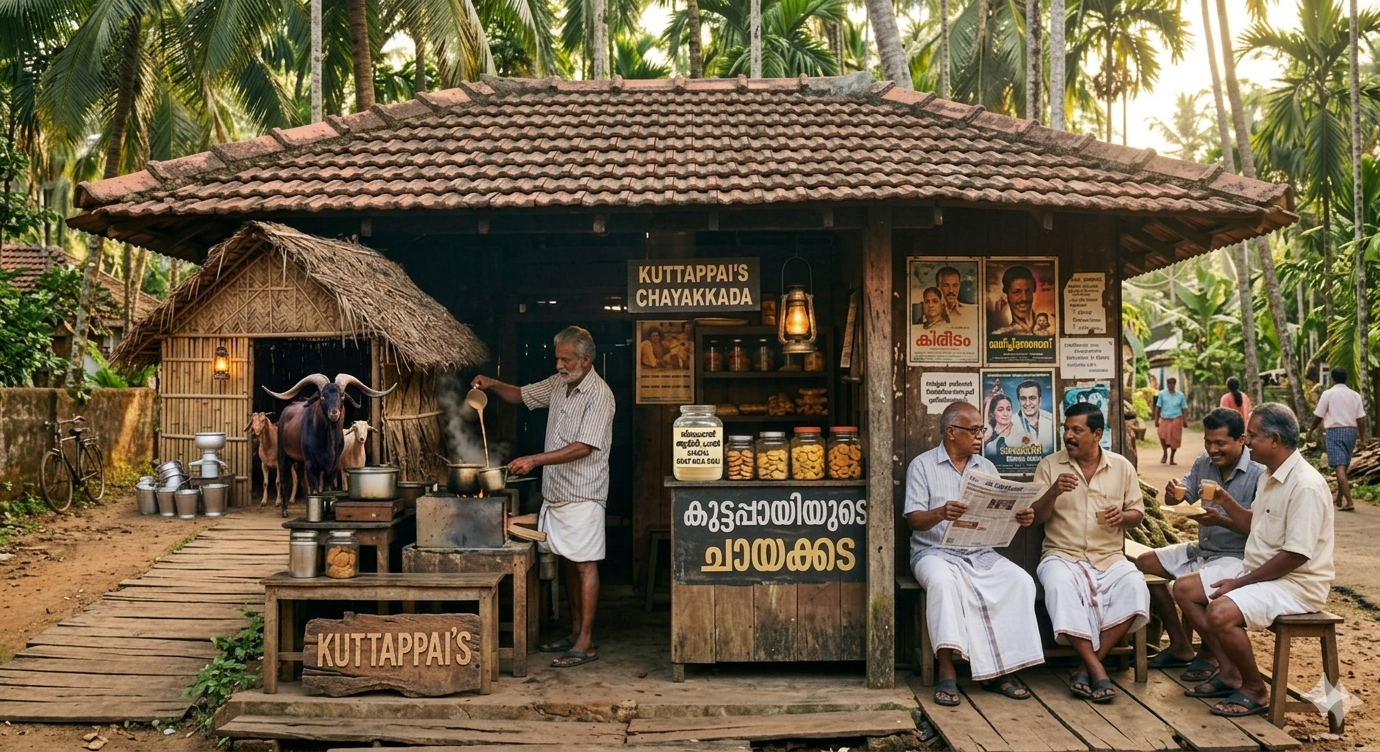
The Army Wife’s Life

Marina graduated as university topper, and we settled into family life. She enjoyed being an army wife – for a while. But as the years passed, the initial novelty faded. She grew increasingly frustrated, finding many senior officers’ wives uninterested in anything beyond advancing their husbands’ careers.

One day, after eight years of marriage, she declared, “What use is my B Pharm degree, for which I slogged four years?” She had made a decision: she would leave me, move to Delhi, and try her hand at business.

The business, a joint venture with another army lady, did not unfold as Marina had hoped. She then applied for immigration to Canada.

While waiting, she left the business to her partner and joined a Pharmacy College in Delhi as a teacher – her primary aim being to reconnect with a subject she had not touched for eight years. I was posted to Delhi around this time.

The Battle Begins

Marina obtained licensing exam books for Canadian pharmacists from her sister in the United States. Thus began her renewed battle with academics – a battle she fought with extraordinary determination.

In February 2002, she received her Canadian Permanent Resident visa. Coincidentally, I received overnight orders to assume command of a Surveillance and Target Acquisition Regiment during Operation Parakram – the intense military standoff between India and Pakistan following the terrorist attack on the Indian Parliament. Mass mobilisation along the border and the Line of Control demanded every officer’s presence.

A Family Splintered

A difficult decision was made – the only possible one. Our son Nikhil, then an LKG student, went to my parents in Kerala. Our daughter Nidhi, in Grade 5, stayed in Delhi with Brigadier GM Sankar, our family friend, until her final examinations in March, then joined Nikhil in Kerala. I departed for Rajasthan. Marina flew to Canada – in February, when Canadian winter is at its harshest.

No other option existed. We simply had to cope.

Reunion and Readjustment

After operational deployment ended, our Regiment returned to Devlali in November 2002. The children moved in with me, and I became a single-parent Commanding Officer. By then, I had established myself well in the Regiment. Our officers and soldiers were outstanding – confident, competent individuals who understood their tasks and executed them with finesse. The Regiment ran like a well-oiled machine. Late Colonel Suresh Babu, our Second-in-Command, along with other officers, managed exceptionally well. Our Regiment was clearly the best outfit in town.

Then came a shock. Nikhil, after six months in Kerala, returned speaking only Malayalam. He had completely forgotten the Hindi and English he once spoke fluently – his brain reformatted in Malayalam. It took a month of concentrated effort from me and the Regimental staff to reteach him both languages.

Marina’s Canadian Triumph

Marina with our grandson James

Meanwhile, Marina worked eight hours daily and studied ten hours daily in Canada. Within a year, she cleared all licensing examinations in a single attempt – a herculean feat. Two written exams and a practical examination stand between international pharmacy graduates and licensure; only about five percent clear them on first attempt.

Two years after landing, she obtained her pharmacist license, completing four months of studentship and six months of internship.

In March 2004, the children joined her in Canada. I bid farewell to arms six months later and arrived in July 2004. The splintered family reunited.

What began as a stray thought in Marina’s mind had developed into a passionate endeavour, catalysing cataclysmic change for every family member.

Reflections

Are we happy today as a family? Mostly, an emphatic YES. But sometimes we miss our people, Kerala, and above all, the Indian Army environs.

I once asked Marina how she managed to pass all licensing exams within a year when most take three years, many up to six. Her answer was simple: hard work. She wanted children and me in Canada as quickly as possible. Being alone facilitated those extra hours of study. Moreover, she said, being an army wife had made her tough – ready to take on any challenge. She considered herself lucky never to have worked as a pharmacist in India, thus avoiding the need to unlearn wrong practices before adopting Canadian standards.

The journey from army wife to Canadian pharmacist was arduous, but Marina’s determination transformed a splintered family into a reunited one. Her story stands as testament to what passion, perseverance, and an army wife’s resilience can achieve.

Helping Teens to Overcome Profanity

rrr

Picking up our son Nikhil one afternoon from school (he was in Grade 12), I noticed that he did not look his normal self.  After driving for a few minutes, I enquired as to what went wrong at school.  A bit surprised with my question and being in no mood to give the answer, he said it was OK.  The answer by itself was evidence enough that it was not all that good.

After a few minutes he came out with the agony he had to face during the group presentation that morning.  Two of the students in the group came unprepared and they had a bad presentation.  He was not feeling good about the entire incident.

There were four students in the group and two of them had really put in a lot of efforts and two had not.  During the lunch break, after the presentation, the boy who had put in a lot of effort literally had the unprepared two on the mat and Nikhil said he did enjoy the show, but did not speak a word.  He added that he wanted to see how silence is golden and also to accept a failure, (even though not due to his fault) with all the humility and also enjoy the way the other student was castigating the other two.

He explained all these with a lot of North American teen adjectives and prepositions – all those spicy words which most sons would not throw at their dads.  I listened patiently and did not utter a word.  I was not all that happy about the coarseness of the language being used, but decided not to react.  I try and avoid immediate reaction as the children at that stage are never ready to listen and see any logic in what we say and will only help to push up our blood pressure and leave a bad after-taste.

While having lunch on reaching home, I said to him that yes, he did not have all that a good day at school and he had been wise enough to accept the failure, but the language he used to explain the same should be avoided as much as possible.  I explained to him that bad language is never a problem solver, but will always end up as a frustration enhancer.

To this he said “Dad, the hormones are kicking in, and as a Teen, I have no control over it”.  My mind went back to the National Defence Academy (NDA) days, where we used the same expressions with our friends to vent out all the frustrations we had after a horrible event or a bad day.

As children grow up, they tend to experiment with inappropriate language and dirty jokes. In most cases, it is an imitation of an adult whom these children have seen at home, in movies, in television shows, or in the community. The need of the hour is to make the children realise the appropriateness of language they use and its impact on the listeners.

Many teens resort to inappropriate language to demonstrate that they  have turned into a matured adult. Parents have to explain to the children that inappropriate language is never an impressive trait and would never fetch any credit, but only disrespect. It is very easy to preach, but when a careless driver cuts you off or when a heavy object falls on your foot, some profanity is sure to slip out of your mouth. As a matured parent, it is one’s duty to acknowledge that one used an inappropriate word and must have avoided it in itself is a good learning for any kid.

Over-bearing and over-controlling of teenagers by the parents results in the children wanting to break the rules and to release the parental pressure. Also to prove that they are ‘cool’ in front of their peers, these children mostly end up using swearwords.

It is the parent’s duty to train their kids in appropriate and correct language use. Some tips which I effectively used are:-

  • Listen, Listen and Listen.  Always make it a point to give a patient listening to your children.  Show keen interest in what they are speaking and provide them with feedback.  If you do not listen to your children, please do not expect them to listen to you when they are teens or youths.
  • Never Laugh it Off. Most children would take it as an approval and will ensure a repeat when the child wants to steal the spotlight.
  • Do Not Over-React.   Your over-reaction will only help to reinforce the behaviour. The child is most likely to use it again to gain attention or to irritate you.
  • Do Not Confront. Anything said to an angry person will only upset him further. Hence it is advisable to explain to the kid an alternative to inappropriate language at a calmer time.
  • Watch Your Words.   When at home or while going out with kids, ensure that you use the most dignified language. Always remember that your kid will pick up your one swearword a thousand time faster than a hundred good words you uttered.
  • Beginners Do Not Realise.   Any kid beginning to talk, often does not realise the meaning or inappropriateness of a swearword. Scolding them or punishing them would serve no purpose. It would be prudent to ignore it and generally they do not repeat.
  • Explain to a Grownup. A simple explanation to a middle or high school kid about the inappropriateness of the word would often ensure good results.
  • Punish Only When Needed. Award of a time out, suspension of certain privileges or grounding for profanity will surely reduce the use of swearwords, especially by the teens.
  • Create Expressions. Encourage the teens to develop a collection of effective expressions to use in place of swearwords and apply it to inescapable situations.

Parents got to set examples for the children at home and help them overcome the need to use swearwords.

Under certain circumstances, profanity provides a relief denied even to prayer.” Mark Twain

Reposing Trust

A few months into the command of our Regiment at Devlali, Maharashtra, I had an interview scheduled in the afternoon with Naik (Corporal) Ranjit Kumar. My interviews with the soldiers were mostly scheduled in the afternoons as I was a single parent, bringing up our two children aged 11 and five as my wife had already migrated to Canada. As a Commanding Officer I interviewed only those soldiers who proceeded on or returned from courses of instruction, posting in/out and those deputed on important missions.

Repose

Ranjith, an accomplished Radio Operator, was selected to undergo the Regimental Signal Instructor (RSI) course at Military College of Telecommunication Engineering (MCTE), Mhow. Now, Ranjith was sitting in front of me, at 3 PM, waiting to be spoken to by his Commanding Officer. On speaking with him, I realised that he wanted to attend Long Gunnery Staff Course and getting a good grade at an Army course would enhance his chances of getting selected for the prestigious course.  Hence, he had put in a special request to be detailed for the course.

The problem I visualised for a Naik attending such course is that the solders below the rank of a Havildar (Sergeant) are given many additional tasks like area cleaning, sentry duties, etc at most Army Schools except at the School of Artillery. The common saying amongst the soldiers of our Regiment at that time was that at MCTE and Army School of Mechanical Transport (ASMT), the soldier students are issued with a broom along with their books. While doing the Regimental Signal Officers Course at MCTE in 1985, I have witnessed it as one Naik from our Regiment was attending the RSI course at the same time and in the evenings, he was often seen doing mundane tasks.

How to get over this dilemma? I looked at Ranjith for about half a minute and did not utter a word. In effect my mind went blank as I had no solution at hand. I visualised Ranjith spending more time in cleaning the area around and on sentry duties and not getting adequate time to study and do well in the course. I was literally feeling helpless.

Eureka! A brainwave stuck me suddenly and I said “Ranjith, I appoint you as an Acting Lance Haviladar. In case you return from the course with an ‘A’ grading, you can continue wearing the rank, else, on termination of the course, return to the unit as a Naik.” Lance Havildar is an appointment given to a Naik who discharges the duties of a Havildar and in the Indian Army, there is no rank or appointment called Acting Lance Havildar. It was indeed a creation of my mind. The said notional promotion had no effect on his seniority or his pay, but he would wear the rank badge of a Havildar on his right sleeve. A Havildar in the Regiment of Artillery wears a white dot – depicting a bursting shell – in addition to the standard three stripes of a Havildar. It is known among the Gunners as the three and a half stripes.

I summoned the duty clerk and ordered all documents – course nominal roll, movement order, last ration certificate etc – to be retyped showing Ranjith as a Lance Havildar. I instructed Ranjith to take all his uniforms to the Regimental tailor and affix the three and a half stripes on them.

After about two months, I got a call from our then Second-in-Command – Late Colonel Suresh Babu – at my home at about 11 AM that Havildar Ranjith has returned from his course not only with an ‘A’ grading, but also has topped the course. I immediately rushed to the office and there I found Havildar Ranjith proudly holding the best student trophy and smiling at me. I called him into my office and complimented him for his achievement. I asked him as to how he achieved such a great result.

Ranjith said that the moment he left my office after the interview, he was determined to top the course, come what may. The Havildar stripes ensured that he did not get any of the mundane duties and hence got much more time to study. He studied till late night every-day and after a few hours of sleep, he woke up to find the three and a half stripes on the uniform staring at him. This made him leave his bed and resume his studies. He did not go out of his living lines, even on weekends and never saw any movie. The only entertainment for him was watching the Television while partaking his meals in the dining hall.

He concluded his narration by saying “How could I ever let down the trust reposed in me by my Commanding Officer? Hence whenever I felt tired, I looked at the three and a half stripes and I was back in action.

I asked Ranjith as to why he did not request for his two months annual leave at the end of the course as he would be very tired. He said that he wanted to show to everyone that he had achieved and then only would proceed on annual leave.

Ranjith set the trend and many other soldiers of the unit followed suit.  In two years, six soldiers from our unit attended the prestigious Long Gunnery Staff Course.

In order to repose faith in others, whether its your children or your subordinates; you got to have faith and belief in yourself.