
One day, our teenage son Nikhil walked up to me and asked if he could borrow my wife-beater.
I completely lost my composure. Shocked, I immediately told him that I had never beaten his mother, nor did I ever intend to do so! (I stopped short of admitting that while the idea had sprouted in my mind once or twice during a few heated moments, good sense had always prevailed over impulse).
Seeing my utter predicament, our son burst out laughing and explained the terminology. He just wanted the sleeveless white vest I used to wear back in India. You hardly see anyone wearing them here in Canada—likely due to the colder weather and significantly lower perspiration levels.
He explained that the American TV show COPS had a lot to do with popularising the term. Every time the show featured a man being arrested for domestic violence, he seemed to be wearing that exact style of sleeveless vest.
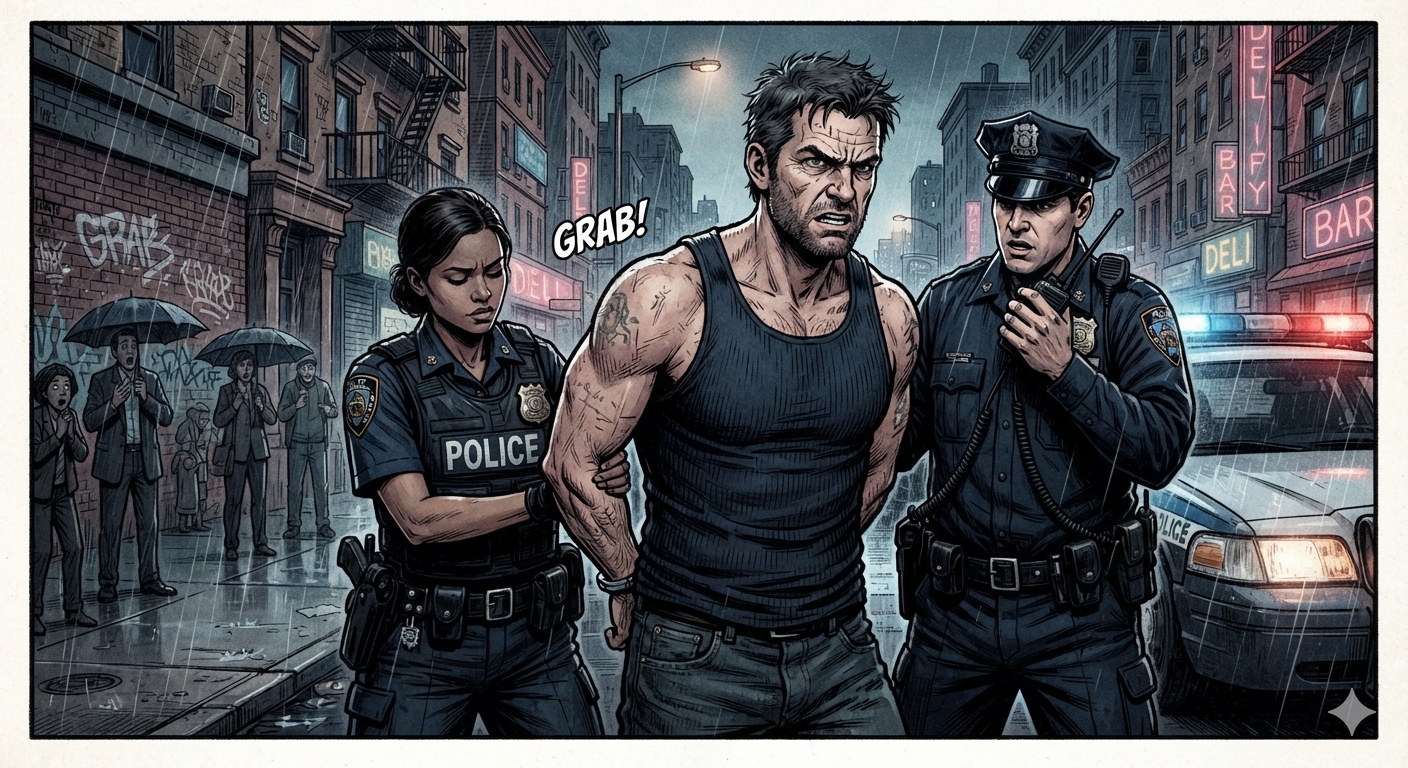
As the story goes, the term traces back to 1947 in Detroit, Michigan. A local man named James Hartford Jr was arrested for beating his wife to death. The media aired his mugshot for months—showing him in a sleeveless undershirt—constantly branding him the wife-beater. The name, unfortunately, stuck to the garment.
To me, however, that simple white sleeveless vest—the humble banian—was a marvel of utility. I always admired it for the immense service it rendered. It never cared where it ended up, even after its owner had exploited it to the hilt and thrown it out. In an Indian household, a retired banian achieves a second life, usually reincarnating as a shoe-shining cloth, a mop, or a kitchen duster. After all, why discard such high-quality, pure white cotton?
I never understood why people in hot climates wore more layers than absolutely necessary, but the banian proved its worth by absorbing sweat. Sure, it got wet and felt momentarily uncomfortable, but it acted as an impregnable barrier. It stopped sweat from seeping through to the outer layer of my Olive Green (OG) uniform. Leaving white salt stains on a uniform shirt after the sweat dried was considered highly un-soldierly. Moreover, my skin hated the scratchy texture of the heavy OG fabric; the faithful banian maintained a comfortable buffer between the uniform and my skin.
Some of my army friends preferred banians with sleeves, but I always stuck to the sleeveless version to avoid the dreaded Sunday is longer than Monday syndrome. This happens when the sleeves of your undershirt creep out from underneath the shorter sleeves of your uniform or T-shirt—a terrible look for a soldier.

My relationship with the garment started early. When I joined Sainik School Amaravathinagar in Tamil Nadu at the tender age of nine, my trunk packed by my parents contained a dozen banians. We had to wear them for morning Physical Training (PT) so the instructors could monitor our physical growth and check for skin infections. This strict PT dress code followed me through the National Defence Academy (NDA) and the Indian Military Academy (IMA). It was only when I was commissioned as an officer that I transitioned to wearing a white T-shirt for PT, while the jawans continued training in their faithful banians. Even so, I loved the feel of the banian clinging to my skin and wore one under my clothes at all times.
When I joined my regiment, my Buddy (helper) was Sepoy Hukum Chand. He served me with the utmost dedication, love, and care. Hukum Chand was my accountant, personal assistant, bodyguard, radio operator, and buddy rolled into one. He managed my entire life: waking me up, preparing my morning tea, keeping my cigarettes stocked, and prepping my uniform, room, wardrobe, and evening attire.
This seamless arrangement lasted for seven years—until the seven-year itch erupted. I got married.
Suddenly, Hukum Chand’s authority over my wardrobe was challenged. One evening, my wife Marina flatly disapproved of the suit Hukum Chand had laid out for a party, noting that it clashed with her saree. A silent battle of wills ensued. My wife won, Hukum Chand lost, and the dynamic of my wardrobe changed forever.
During our bachelordom years, Hukum Chand had closely observed my habit of wearing a banian at all times. Every six months, he purchased a fresh dozen from the regimental canteen. Since he was my accountant, he paid for them using my money, leaving me completely oblivious to the expense.
When I finally asked why on earth we needed new banians every six months, he explained his logic. The brackish water used by the washerman turned the white fabric yellow after repeated washes. Instead of throwing them out, Hukum Chand snipped off the shoulder straps, cut open the torso, and repurpose them into polishing rags.
He used them to shine my leather boots, Sam Browne belt, and brass rank badges. He pointed out that the standard yellow polishing cloth sold at the canteen left lint all over my black boots and OG uniform, requiring double the effort to clean up. A well-washed, soft white banian was superior in every way, and best of all, it didn’t cost a penny extra. He used the thinner, worn-out sections for the leather and the thicker seams for the brass. It was a masterclass in military budgeting: a costly saving!
Years later, after completing various staff postings and long courses, I returned to the regiment in Sikkim as a Battery Commander. This time, Sepoy Sri Chand was assigned as my Buddy, while Hukum Chand had climbed the ranks to become a Havildar.
A few days after my arrival, while I was taking an afternoon siesta in my bunker, I overheard Havildar Hukum Chand marching in. He began fiercely admonishing young Sri Chand for not maintaining the Saheb’s bunker up to standard. Hukum Chand proceeded to lecture him on my exact likes and dislikes—my tea preferences, my food, my clothes, and my cigarettes.
He concluded his lecture with authority: “Saheb likes wearing a banian at all times, even when he is sleeping.”
Glancing down, I realised I was indeed napping in my favorite lungi-banian combination. Hukum Chand added one more detail: “He prefers the thick banians under his uniform and the thin ones under his civil clothes.”
That was news to me. It was a preference I didn’t even know I had! In reality, it was a habit completely engineered by Hukum Chand years prior, ensuring he always had a steady, rotating supply of thick and thin cotton cloths to keep my brass and leather gleaming.
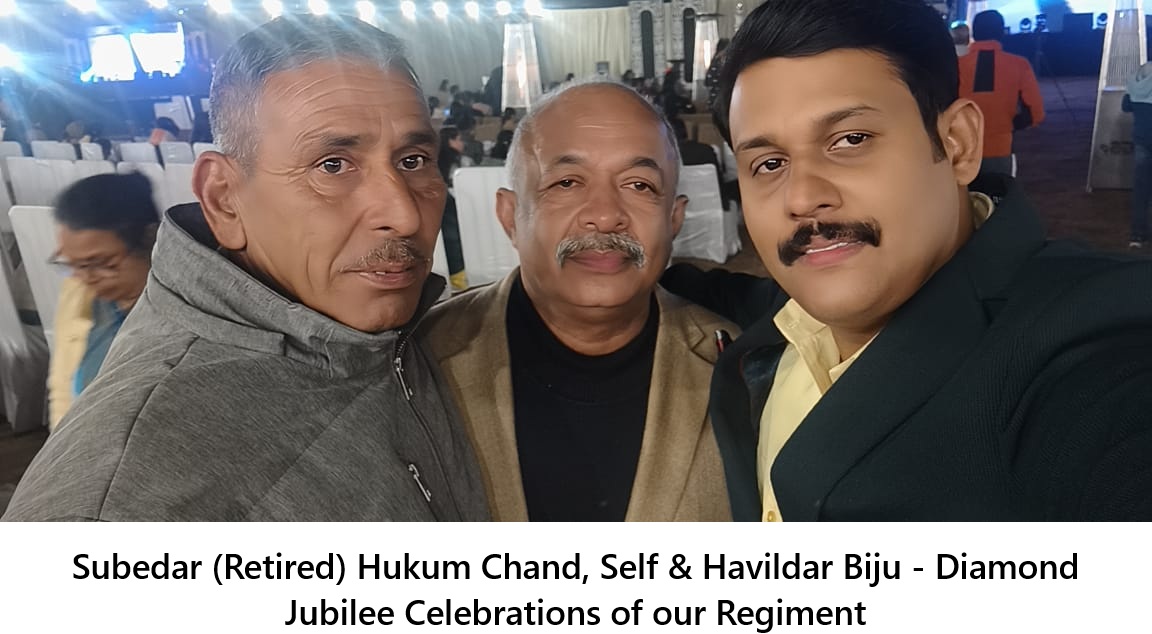
Today, Hukum Chand is a retired Subedar enjoying his well-deserved post-military life, while both of his children work as IT professionals. We recently crossed paths in December 2025 during our regiment’s Diamond Jubilee celebrations, sharing a laugh over old times.
It made me realise that many of our deeply ingrained habits and preferences are not self-developed at all. They are quietly thrust upon us by our environment—and sometimes, by a very clever Buddy.

