Three Musketeers

by Veteran Colonel RB Gowardhan

I was commissioned into 75 Medium Regiment (Basantar River,) a great unit which participated in 1971 war with elan and earned laurels. The Regiment had a unique combination of soldiers, Brahmin, Jat and South Indian Class. Being a Medium Regiment, the unit had all tall and well-built gunners. The unit won most of the sports trophies and excelled in all training competitions. The unit had moved from J & K to Gurgaon. Due to its proximity to New Delhi, unit was posted with full complement of officers. During those days it was an honour and privilege to be the Adjutant of the Regiment.

Adjutant of the Artillery unit is responsible for administration and assist the Commanding Officer in administration, training and discipline. In the battle and training, the Adjutant’s duty is to control and coordinate fire of 18 guns of the Regiment.

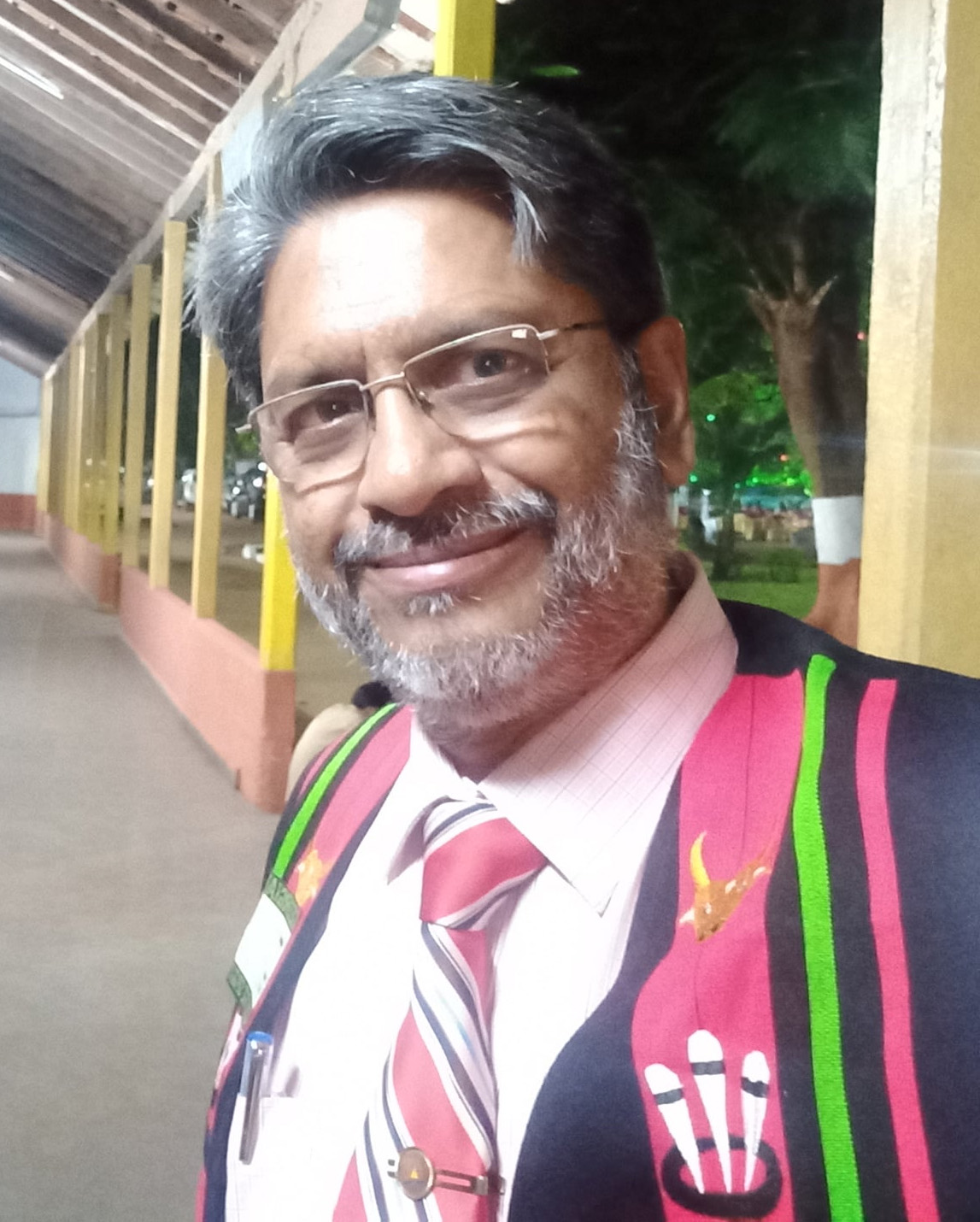
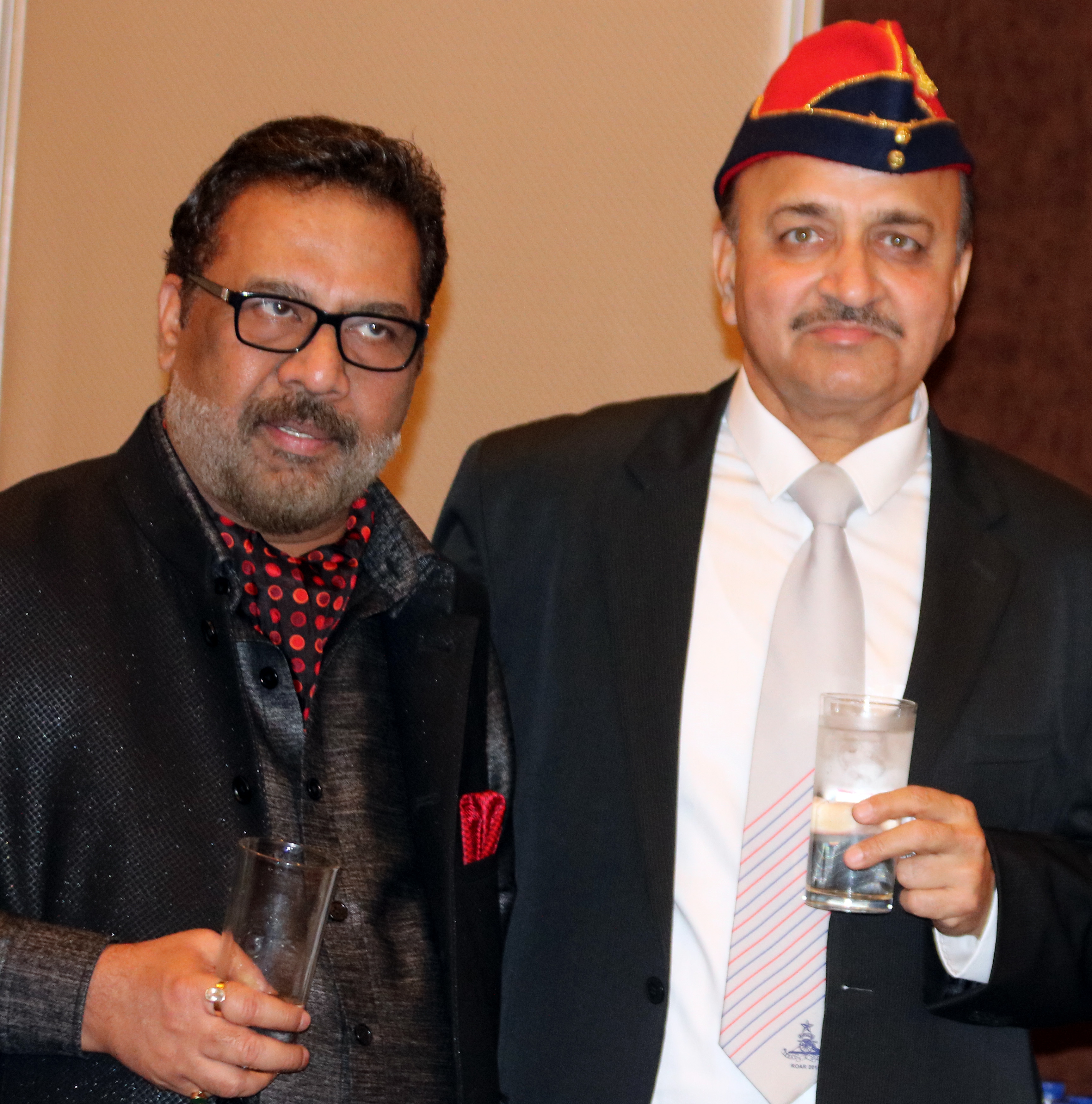
I was lucky to have all three officer GPOs (Gun Position Officers) responsible to control fire of each battery and ready to assist me in all regimental duties. The first one was Captain Paramjit Singh Ralhan, a handsome sardar who graduated from IMA as Direct Entry. He had decent manners and a smiling face. Second was Lieutenant Koduvath Reji, Sainik School and NDA brat, who was enthusiastic and bubbling with energy, sometimes exceeded limit of his enthusiasm. The third one was Lieutenant Gulshan Rai Kausik, matured service entry officer with boxer built and red eyes. His looks were sufficient to make any soldier to behave. All three were josh machines and when ordered can produce anything.

Ralhan was of a great help to control discipline of Brahmin battery and to organize any event in the unit or officer’s mess. Ralhan with his diligence and demure resolved any kind of situation or indiscipline with his cool mind and report “Sir, no problem, matter is resolved.” I remember one incident, where the problem was created by a rogue soldier. Ralhan handled the situation exceedingly well and disciplinary action was taken against the defaulter.   

Reji used to follow the dictum that as youngster commit any mistake but keep Adjutant informed. Therefore, it was quite often that I used to jump from the chair when he used to come and inform “Sir, chhotasa galati ho gaya.(Sir,I Committed a small mistake.)” The so-called small mistake used to be slapping Superintendent of Police or bashing up BSF Dy Commandant. It wasn’t for the wrong reasons, but we had to sort out the issues.

On 31 Oct 1984, Regiment’s column was ordered to move and take responsibility of security of Teen Murty Bhawan, where mortal remains of our late Prime Minister, Mrs Indira Gandhi were kept. Regiment was also responsible for controlling VIP visitors, who came there to pay homage to late Prime Minister. Reji, stopped Inspector General of Delhi Police, who along with family was sneaking through VIP gate. This resulted into arguments with the Police Officer asking, “What are you doing here and who are you to stop me?”  Reji told that officer, “Had police been working properly, Army would not have come to control this.” This was being heard and observed by Minister-in-Charge there Mr Shivraj Patil and he appreciated Reji for his dedication to duty and rebuked Police Officer. Later, the Regiment received an appreciation letter and cash prize from the Minister.
Kaushik, with his presence of mind could handle any situation. Once the Regiment was playing final match of Kabaddi with Rocket Regiment, the hosts. They had arranged referees who were biased and obvious that they were helping Rocket Regiment. Our soldiers could not tolerate that injustice and warned referees. But referees again gave a wrong decision in favour of Rocket Regiment and our soldiers could no longer bear this injustice. They entered ground and caught hold of one of the referees. This resulted into commotion and big fight broke out between the soldiers of both Regiments. Adjutant of Rocket Regiment and I intervened to control the situation but we too faced the wrath of fighting soldiers. Lieutenant Kaushik fearlessly entered mob and with his commanding voice ordered Savdhan. To everyone’s surprise, we found all soldiers stood to attention. Then he ordered “Rocket Regiment dahine mood and Medium Regiment baye mood; tej chal.(Rocker Regiment Right Turn and Medium Regiment Left Turn; Quick March.)” Soldiers followed the orders and moved out of the field. The worst was averted.

All three officers were real assets in our Regimental life and during the training too. During firing of those monster 130 mm guns, I had to be careful and watchful as in Artillery they say that, once ordered and fired round/rounds of gun/guns cannot be corrected and result is depicted on the target. As an Adjutant, whenever all guns were ordered to fire together, I had to control my GPOs to ensure all guns fired accurately and in unison. As soon as I used to pass order for firing and report ready. Reji, who was most chatak(quick,) reacted and made his guns ready and report, thereafter, would not stop to point out mistakes of others if any. Ralhan, who was as cool as penguin checked, rechecked and took his time. To keep an atmosphere warm in his command post, I used to pass on heat online of fire control net.  Kaushik, with good sense of hearing and watchful eyes used to take time and get ready. The end result was accurate and coordinated fire.

There is lot to write about them. I can never forget their contribution to maintain josh, discipline, and winning competitions. All three are now well settled – Ralhan in USA, Reji in Canada, and Kaushik in South Delhi. I wish them very best for their endeavours.     

Human Instruments

Can you ever imagine that the survey of the Trans-Himalayan Region was done mostly on foot? That a human being walked all the way through the Himalayas, while counting each step he took to calculate the distances between places.

Reading a 36-page document by Dr Kapil Raj, When Human Travellers Become Instruments: The Indo-British Exploration of Central Asia in the Nineteenth Century, I was fascinated by the ability of the human body and mind to find methods to overcome any difficult situation.

British India in the aftermath of the 1857 mutiny went into mapping and stabilising its surrounding territories. The British needed to bring the Trans-Himalayan region into the ambit of British trade, followed by military intervention. The first step was to map the area of the Kashmir Kingdom, some surrounding areas under the Chinese Empire and some areas in Tibet, Nepal, and Bhutan.

Captain Thomas George Montgomerie of the Royal Engineers was entrusted with the task of mapping Kashmir. He was commissioned as a Second Lieutenant in 1849, arrived in India in 1851, and joined the Great Trigonometrical Survey. The Great Trigonometrical Survey was a project which aimed to survey the entire Indian subcontinent which was begun in 1802 by William Lambton. Under his successor, George Everest, the project was made the responsibility of the Survey of India.

After the survey of Kashmir, Montgomerie had to survey and map Tibet, an autonomous region. Tibetans were very suspicious of the Europeans. Thus, he had to enroll the services of locals who could travel as part of trade caravans to Tibet.  Even if he found locals for the task, how could they be trained to use conventional surveying techniques and instruments?

Captain Montgomerie trained the natives, drilled them night and day for weeks, to take a stride of exactly 31.5 inches whatever the terrain or incline. At 63360 inches to a mile, every 2,000 such paces marked a mile.

As his first ‘human instrument’, Montgomerie nominated Mahomed-i-Hameed, aka Moonshee who reached Leh on 4 July 1863 after meticulously mapping his route from Kashmir. On 24 August Hameed, disguised as a merchant and accompanied by two servants and a pony-load of merchandise, joined a caravan heading for Yarkand, a major oasis city on the trade route between China, India, and Central Asia.

The party arrived at Yarkand on 30 September. Hameed had precisely traced the entire route, carefully noting all that he had observed, especially the vegetation and human dwellings. He drew a map of the city and the region and transcribed the history of the region as narrated by locals.

On 27 March 1864 the party commenced their return journey to Leh, but Hameed died en route, after eating poisonous rhubarb, according to his companions. Montgomerie’s assistant, William Johnson, was the first to reach the scene of the tragedy. Hameed’s entourage had meanwhile made off with his most saleable belongings. Fortunately, no one had touched his notes.  Armed with Hameed’s notes, Montgomerie sailed for England on 20 February 1865 after thirteen years in India. Using this leisure, he drew a map of the route between Leh and Yarkand.

This new mission was entrusted to two Kumaoni Bhotiya cousins, schoolteacher Nain Singh, and Mani Singh, the patwari, the village record-keeper. They had already taken part in topographical surveys and were familiar with geodesic and astronomical instruments and could handle any hurdles in crossing the frontier from Kumaon. 

Disguised as Lamas, they carried a prayer wheel and a rosary, perfectly normal adjuncts for the pilgrimage to the holy city of Lhasa. The prayer wheel concealed a small compass, and other miniature survey instruments. Rudraksh Rosary helped count paces, one bead for every hundred paces. The Buddhist rosary has 108 coral beads; those of the cousins only had a hundred, every tenth bead being much larger than the others. A complete round of the Rosary represented exactly 10,000 paces or five miles.

After months of rigorous drilling in the use of the sextant, compass and other survey instruments and techniques, Nain Singh and Mani Singh left for Tibet in March 1864 and returned to DehraDun on 27 October 1866. They were turned back at the Tibeto-Kumaoni border, so they tried to enter Tibet through Nepal, all the while charting the route they followed. Despite the advantage of their origin, they had to adopt different guises and resort to devious ploys for entering Tibet: passing off as merchants with the survey instruments cleverly hidden in their wares, or even as healers curing people of minor ailments! 

During a two-and-a-half-year expedition, Nain Singh walked 1,200 miles at a steadily maintained pace. He counted 2.5 million paces on his rosary! He not only succeeded in pinpointing the location of Lhasa, but also measuring the distance between several important Tibetan cities, thirty-one stations in all. He also mapped the 700-mile upper-course of the Tsangpo River from its source to Lhasa and reported that Tsangpo and the Brahmaputra were the same river.

Nain Singh also gave a detailed account of Tibet’s general climatic conditions, demographics, its cities and monasteries, army, agricultural production, economy, the state of its roads, transportation, communications, and most importantly, Tibet’s trade with China and Kashmir. . The Royal Geographical Society awarded Nain Singh a gold watch in 1868 and the Victoria gold medal in 1875.

Kishen Singh, alias AK, a cousin of Nain Singh, travelled across the Tibetan plains and the Kunlun Mountains between 1878 and 1882. In Lhasa, AK was delayed for over a year waiting for his caravan to leave. He was robbed twice, and even imprisoned by the Mongolians!  He was freed by a Tibetan merchant who forced him. to ride a horse, which prevented him from counting his strides. Undeterred and innovative, he got round the problem by measuring the length of the horse’s pace and counting each time the right foreleg hit the ground. When he returned to British India in 1882, he had travelled 2,800 miles and counted an incredible 5.5 million paces!

This confidence in natives to record and narrate facts so vital for the survival of the British Empire is especially surprising when one remembers that geography in the nineteenth century consisted not only in taking topographical readings but also in collecting cultural, ethnolographic, political, and commercial information.

Though the survey instruments used then have long become museum pieces, these measurements are accurate and still the basis on which the maps are made in times of GoogleEarth, GPS, and satellite,

Back to School

Back-to-School period usually starts and ends in August before the school year starts in Canada, United States, and Europe. In Australia and New Zealand – being in the Southern Hemisphere, this occurs in February, after their summer break.

In merchandising, Back-to-School is the period in which students and their parents purchase school supplies and clothes for the coming school year.  At many Canadian Malls, Back-to-School sales are held for school supplies, children and young adults’ clothing, office supplies, back-packs, laptop computers and so on. 

Labour Day, which falls on the first Monday of September, a holiday in Canada and the US, marks the end of Back-to-School shopping. Labour Day also marks the unofficial end of summer, though Fall (Autumn) begins only on September 22 – Fall Equinox. The day after Labour Day – first Tuesday of September – marks the beginning of a new school year.

Back-to-School shopping tradition caught on in North America as women flocked to colleges and universities in the early twentieth century.  These young women were trend setters for new fashions. Many clothing stores started special lines to cater to college going women. Every September, college these women shopped for their clothing needs and the stores obliged by setting up discounted sales. 

Every student is excited about the new academic year they are entering.  The first day of school is one of the most important day in the academic year as they show off their latest clothing and discussing as to what about their escapades during the summer holidays. Gossips too are as important.

There is an inherent discomfort at the bottom of the stomach of each student on the first day at school. About 2.5% of school children suffer from acute fear of going to school and this fear is called Didaskaleinophobia– derived from Greek Didasko meaning to teach and Phobos meaning fear. Equivalent Latin term is Scholionophobia.

Am I competing with Mr Tharoor?? No way!!!

It is a North American tradition to gift an apple to the teacher by the students on the first day of school when school opened in September as it coincided with the ripening of apples in North America. This tradition of gifting apples to teachers dates to the 16th century when parents in Denmark and Sweden often gifted teachers with baskets of apples and other food to help compensate for their low wages. Tradition of bringing apples to teachers carried on even after schools were modernised.

In the 1920s, apple polishing was used as a slang for trying to curry favour to the teacher. Bing Crosby and Connie Boswell sang in 1939:-

 “An apple for the teacher that seems the thing to do because I want to learn about romance from you.

An apple for the teacher to show I’m meek and mild If you insist on saying that I’m just a problem child.

An apple for the teacher will always do the trick when you don’t know your lesson in arithmetic.

We have other words that mean the same thing. We also call this type of person a kiss-up, toady or boot-licker. Another popular one is teacher’s pet.

It is an apple-polisher’s dream to become the teacher’s pet – much to the anger of fellow classmates.”

Nothing much has changed to this day. We were all mortally scared on our first day of school. Our stomachs were churning. We all went through it and so did our children. Now it is the turn of our grandchildren.

The only change is that today Apple denotes not the fruit for the young generations.

On assuming command of our Regiment in June 2002, I gifted an umbrella to all school going children of our Regiment when the schools opened. Please Click Here to read about it. At that time, I was unaware of the Back-to-School traditions.

In 2003, I ordered our Religious Teacher [Regimental Chaplin- a Hindu Pundit] to prepare a packet for each school going children of the Regiment with necessary school supplies and gift the same to the children. Our Religious Teacher was a bit reluctant initially, having never heard of such a practice during his two decades of military service. On completion of the assigned task, he reported, “Sir, this is the apt method to spend the Mandir Fund. It will inspire all our children to put in their best at school.”

“Education is the most powerful weapon which you can use to change the world.” – Nelson Mandela

Selections @ Devlali

Those were the days when Selections ruled the roost at School of Artillery Devlali.  It was skimming at the highest level of the Regiment of Artillery.

When we passed out of Indian Military Academy in 1982, we were forced to return our Blue Patrols for mere Rs 100 – all because the Artillery version had a red stripe on the trousers’ side which was half an inch thicker than what was provided by Kapoor & Co at the Indian Military Academy, Dehradun. While officers commissioned to all other arms/ services retained their Blue Patrols, we the Gunners had to return them to Kapoor & Co.

On joining Young Officers Course at School of Artillery, Devlali, every student officer had to get a new pair of Blue Patrol and winter ceremonial uniform or Service Dress (SD) stitched – costing over a thousand rupees those days – only from Selections.  The reasons – obvious. A Second Lieutenant’s pay was much less than a thousand rupees a month then. Free rations was not entitled then and monthly mess bill ate into over half a month’s salary.

Service Dress is the style of khaki serge dress uniform introduced by the British Army for use in the field from the early 1902, following the experiences of a number of imperial wars and conflicts, including the Second Boer War. The uniform was originally issued as a field uniform, later designated as SD. Variant of this uniform continues to be worn today, although only in a formal role, as No. 2 Pattern dress by the British and the Commonwealth Armies. Indian Army too continued with a similar winter SD for the officers until 1990s. Today the Indian Army officers wear a similar uniform designated as Dress No. 5SD.

No. 1 Dress , sometimes referred to as ‘blues’ or ‘blue patrol,’ is a universal ceremonial uniform which is almost consistent throughout the Commonwealth Armies. For most regiments and corps, this No. 1 dress consists of dark blue tunic and trousers. Different units are distinguished by the colouring of the cap, piping on the tunic and of the welts or stripes on the trousers, as well as badges and in certain Cavalry Regiments by the colour of the collar.

Indian Army Blue Patrol consists of a ‘bandgala’ tunic and a trouser. The shoulder pips are embroidered along with ranks on the coat except for Armoured Corps officers who wear a chain mail along with their ranks on the shoulders.

Veteran Colonel SP Mudholkar. He now leads a retired life at Pune

It was not until 1981 when Second Lieutenant SP Mudholkar issued a show-cause notice and raised the issue with the School of Artillery against the order of getting the SD and Blue Patrl stitched only from Selections, inclusion of a private firm in the Offices’ Mess Bills for recovery .  In those days, Mess Bills of various messes at School of Artillery had a serial dedicated to Selections.  You can well imagine as to the patronage Selections enjoyed from the highest levels of the Regiment of Artillery – mostly occupied by officers belonging to the Khlan.

By the time we went to Devlali to attend our Young Officers’ Course in 1983, Blue Patrol and SD procurement was done away with – thanks to Second Lieutenant SP Mudholkar – else I too would have succumbed to the pressure from the Chief/ Senior Instructor.  In those good-old days, any Young Officer refusing to procure their SD and Blue Patrol were marched up to the Chief/ Senior Instructor until they relented. Another tactic was to blackmail the Young Officer with a poor grading, though most ended up with a C grading. The Great Good-Old Days!!! Who wants to begin their military career on the wrong foot?

Selections appeared on the Mess Bills during our course- luckily for us it remained at zero value.

Three years later, Lieutenant General Sood, Commandant, School of Artillery, was appointed the Director General of Artillery – and away went Selections.  The ‘baby‘ of the erstwhile higher-ups of Regiment of Artillery was thrown out with the tub, water, soap, and loofah to land in Devlali market. 

Disc Identity – The Disc That Defines a Soldier: Identity, Memory, and Sacrifice

A Discovery After Thirty-Eight Years

On August 13, 2022, the mortal remains of Lance Naik Chandra Shekhar of the 19 Kumaon Regiment were found in an old bunker on the Siachen Glacier. He had died in May 1984 – thirty-eight years earlier.

Chandra Shekhar was part of a team tasked with capturing Point 5965, one of the earliest actions under Operation Meghdoot, India’s mission to occupy the Siachen Glacier. The team halted for the night and was caught in a devastating avalanche. Eighteen soldiers, led by Second Lieutenant P.S. Pundir, perished. Chandra Shekhar’s body was discovered at an elevation of over 16,000 feet, identified only by a small metal disc bearing his army number.

That disc proved its purpose. It provided a name to skeletal remains that otherwise would have remained anonymous forever.

The Twin Purpose of the Identity Disc

Identity discs are worn by soldiers worldwide. They bear the soldier’s personal number, name, regiment, religion, and blood group. They serve two essential purposes: they provide recorded evidence of a soldier’s death in action, and they enable the eventual recognition of a body when recovery is delayed.

When mass casualties occur over a short duration, identity discs become indispensable for keeping accurate records of the fallen.

On a philosophical level, the disc reminds every soldier that martyrdom may be just around the corner. On a practical level, it has a very specific, life-saving function.

To the uninitiated, this may sound eerie. But to a soldier, the disc hanging close to the chest is not morbid – it is reassuring. It reminds him who he is. It gives him the confidence that if he makes the ultimate sacrifice, he will not be forgotten.

In the United States, some spouses of soldiers deployed to Afghanistan and Iraq wore their partner’s identity discs as a symbol of true love and unwavering commitment.

The Mystery of Wearing the Discs

In the Indian Army, identity discs are worn during operations and training exercises. The set consists of two discs: an oval disc with holes punched at either end, and a round disc with a single hole.

For reasons no one could explain, our soldiers wore the oval disc on their left wrist and the round disc around their neck. When asked why, they said it was to ensure that one disc would remain with the body even if the hand sheared off. The logic did not appeal to me – surely we were not fighting battles with swords where hands would be severed. Yet I could find no official instructions on the proper way to wear them.

I had no difficulty wearing the round disc around my neck, but the oval disc on my wrist was a constant worry. I lost it during most training exercises and had to get a new one made each time. Something was clearly amiss.

The Armourer’s Art

When we joined the Regiment, the Armourer had a punching set for stamping blank identity discs with each soldier’s particulars. Later, soldiers began getting them engraved by the unit contractor – the same engraving tool used for steel vessels.

The Mystery Solved

In 1988, I was preparing for a promotion examination. Military Administration was one of the subjects, and the disposal of mortal remains of soldiers killed in action was a recurring question.

I approached Major VN Singh, our Battery Commander, a veteran of the 1971 Indo-Pak War. He was renowned for his meticulous administrative knowledge, having served as an administration and logistics staff officer in an infantry brigade.

He clarified the mystery.

The oval disc is threaded with a 24-inch cord and worn around the neck. The round disc is attached to the bottom hole of the oval disc using a six-inch cord.

In the event of death in war, the round disc is removed immediately for identification. The oval disc remains with the body, ensuring identification whenever the body is eventually recovered. The round disc, along with the soldier’s personal belongings, is dispatched to the Depot Regiment of the Regimental Centre. The oval disc is removed only at the time of cremation, burial, or dispatch of the body to the soldier’s home – and is then kept for official records.

British Origins

The Indian Army’s identity discs trace their origin to the British Army. The first British identity disc was introduced in 1907 – a single disc worn around the neck under clothing. The single disc created post-mortem problems: when it was removed for administrative purposes, the body was left without any identification.

In May 1916, a second disc was introduced. It was octagonal, known as Disc Identity, No.1, Green. The original disc became Disc Identity, No.2, Red. The No.1 disc was attached to the long cord around the neck, and the No.2 disc was threaded on a six-inch cord from the No.1. The No.1 disc remained on the body; the No.2 disc was removed for administration.

The American Experience

US Army identity discs also consist of two discs: one on a 24-inch chain and the other attached by a four-inch chain.

During World War II, the discs were rectangular with rounded ends and a notch at one end. A rumour circulated that the notch was designed to be placed in a dead soldier’s mouth to hold it open, allowing gases to escape and preventing the body from bloating. In reality, the stamping machine simply required the notch to hold the blank disc in place while it was stamped.

During the Vietnam War, new stamping machines eliminated the notch. Soldiers also discovered that the clinking of metal discs gave away their positions – so rubber covers were introduced to keep them silent.

Some American soldiers tied one disc to their bootlaces, believing it would facilitate identification if their body was dismembered.

The Canadian Practice

Canadian identity discs are scored with a horizontal groove so that the lower portion can be detached. If the wearer becomes a fatal casualty, the lower portion is detached and returned to Headquarters with the soldier’s personal documents. The chain and upper section remain with the body.

A Modern Reflection

In the case of Lance Naik Chandra Shekhar, the identity disc proved its enduring value. It identified skeletal remains nearly four decades after death.

As technology advances, DNA sampling may one day replace metal discs for identifying fallen soldiers. Yet the symbolic value of the identity disc will likely endure. In Canada and the United States, military spouses and fiancés wear their partner’s discs as symbols of love and commitment. Some veterans continue to wear their discs long after retirement.

A Question Worth Asking

Having examined the identity discs worn by soldiers across the world, one question lingers: Isn’t it time the Indian Army designed a meaningful identity disc – one worthy of being worn with pride by its soldiers, and perhaps even by their spouses?

The disc is more than metal. It is memory. It is identity. It is the last promise a nation makes to those who give everything: that they will not be forgotten.

Jerrycans

An object that fascinated me while in military service was the Jerrycan.  This 20 Litre can was used for storage of fuel and lubricants and at times for water.  As a young officer in 1984, it was the time of Operation Meghdoot when India gained dominance in Siachen Glacier, the world’s highest battlefield. In the glacier, kerosene is the lifeline and was delivered in jerrycans by helicopters to various posts. The cost of each jerrycan with its precious contents can well be calculated with each helicopter sortie ferrying about 10 jerrycans. It must be the costliest fuel in the world!!

Jerrycans get their name from the Germans who invented them. The original steel fuel cans (Wehrmacht-Einheitskanister, in German for Armed Forces Unit Canister) were a huge improvement over the square cans used by Allied Forces.  These jerrycans were easier to carry, easier to pour and more durable.

The term ‘Jerry,’ is a slang term for Germans used by Allied forces. In preparation for the war, the Germans had thousands of jerrycans in stock and they effectively used them during the war. In 1942 the British Army in North Africa captured some of these cans from the Germans. These cans were sent to England, where they were soon reverse-engineered and put into production. 

In preparation for the war, Hitler came up with a novel idea of holding a design competition for the slickest can for carriage of fuel and water.  Hitler realised the need to keep his men and machines effectively lubricated and hydrated.  He also knew how critical a smoother, more efficient way to move fuel and water would be to win the war.

Vinzenz Grünvogel, chief engineer with the firm Müller of Schwelm, is credited with devising the winning can.  This simple looking can has more to the design than meets the eye.  Developed under the utmost secrecy, the jerrycan featured flat sides that were rectangular in shape and was made in two halves that were welded together like an automobile fuel tank.

It had three handles, which allowed it to be easily passed from one man to another.  The handles were designed in a way of enabling four empty cans to be carried by one person using the outside handles, or two full cans using the middle handle.

An air chamber at the top ensured buoyancy and a short spout which was secured by a snap cover and could be popped open for pouring, eliminating the need for a funnel. A gasket made the mouth leak-proof.  An air-breathing tube from the spout to the air space facilitated easy and smooth pouring.

The design ensured that it was easy to make, easy to handle, easy to stack, easy to transport, durable, and efficient. 20 liters capacity made it easy to calculate bulk amounts.

The two flat sides of the can were stamped with a large X shape, providing better strength and ability to weather changing temperatures, along with the gas volume fluctuations that came with them.  It facilitated up to five jerrycans to be stacked in a row.

The Allied forces used containers nicknamed flimsies. It was made of light-gauge sheet metal pieces poorly welded together. They were a hassle to carry and ruptured quite easily.  The flimsies required a wrench to open, a spout to pour and a funnel to receive the liquid.

There is an Indian connection to the jerrycans landing in Washington. Paul Pleiss, an American engineer who worked in Berlin, persuaded his German colleague to join him on a vacation trip overland to India by car. As they prepared to leave on their journey, they realised that they had no provision for emergency water. The German engineer took three jerrycans stored at Tempelhof Airport and mounted them on the underside of the car.

When the two were halfway across to India, Field Marshal Goering sent a plane to take the German engineer back home. Before departing, the engineer gave Pleiss complete specifications for the jerrycan’s manufacture. Pleiss continued alone to Calcutta where he put the car in storage and returned to Philadelphia.

Back in the US, Pleiss told military officials about the container, but without a sample can, he could stir no interest.  The risk involved in having the cans removed from the car and shipped from Calcutta seemed too great, so he eventually had the complete vehicle shipped.  It arrived in New York in the summer of 1940 with the three jerrycans intact. Pleiss immediately sent one of the cans to Washington. The War Department looked at it but unwisely decided that an updated version of their container would be good enough.

As the Americans did not listen to Pleiss, the British showed keen interest as they were scavenging all the jerrycans they could.  Pleiss got the second of his three jerrycans flown to London. The British immediately reverse engineered the jerrycan and commenced production on a war footing.

Meanwhile, the US was using flimsies with slight modifications to the previous versions, but they still leaked and exploded and required a wrench to open and a funnel to pour.

It was reported that 40 percent of fuel was lost in transport because of the cans. It raised an alarm and the flimsies were scrapped as the US conceded production to Britain, which by 1944 had set up many factories manufacturing jerrycans out in the tens of millions.

In 1944, President Roosevelt stated that “without these cans it would have been impossible for our armies to cut their way across France at a lightning pace, which exceeded the German Blitz of 1940.”

For want of a nail, the shoe was lost.
For want of a shoe, the horse was lost.
For want of a horse, the rider was lost.
For want of a rider, the battle was lost.
For want of a battle, the kingdom was lost,
And all for the want of a horseshoe nail.

Benjamin Franklin included a version of this proverb, preceded by the words, A little neglect may breed great mischief, in Poor Richard’s Almanack in 1758.

During World War II, this verse was framed and hung on the wall of the Anglo-American Supply Headquarters in London to remind everyone the importance of seemingly trivial repair
parts and inventory replenishment.

Reasonable Reasons

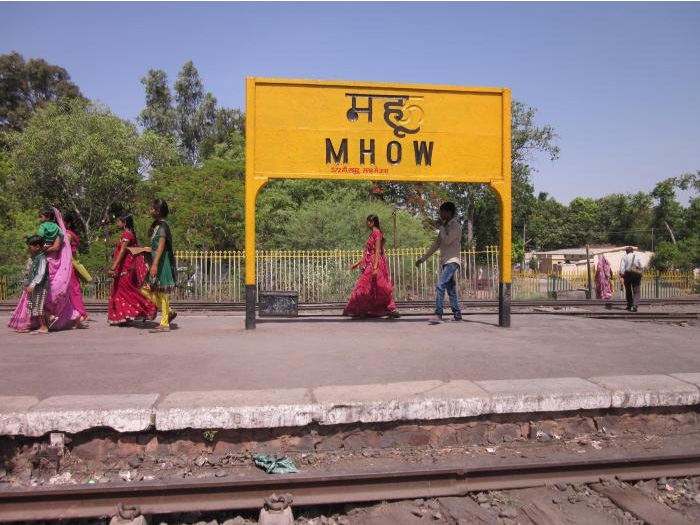
We attended the Junior Command Course at Mhow, India in 1993 and after the course went to our home at Kottayam, Kerala for a month’s vacation. In those days, we travelled on vacation by train and the journey took over 48 hours and two train changes at the most awkward hours of night.  You can imagine my plight with Marina and our two-year daughter Nidhi in tow, with paraphernalia of assorted baggage – in all sizes and shapes.

We reached home and my next ordeal was to get a return reservation from Kottayam to Delhi and onward to Jammu.  During summers, the seats in the trains from Kerala to anywhere in the country were lapped up the moment the reservation counters opened on the exact 60th day before the date of journey.  The only option for me was to contact our Member of Parliament, Mr Suresh Kurup, who always obliged with his emergency quota.  Mr. Kurup is well known for his soft corner and respect for all soldiers.

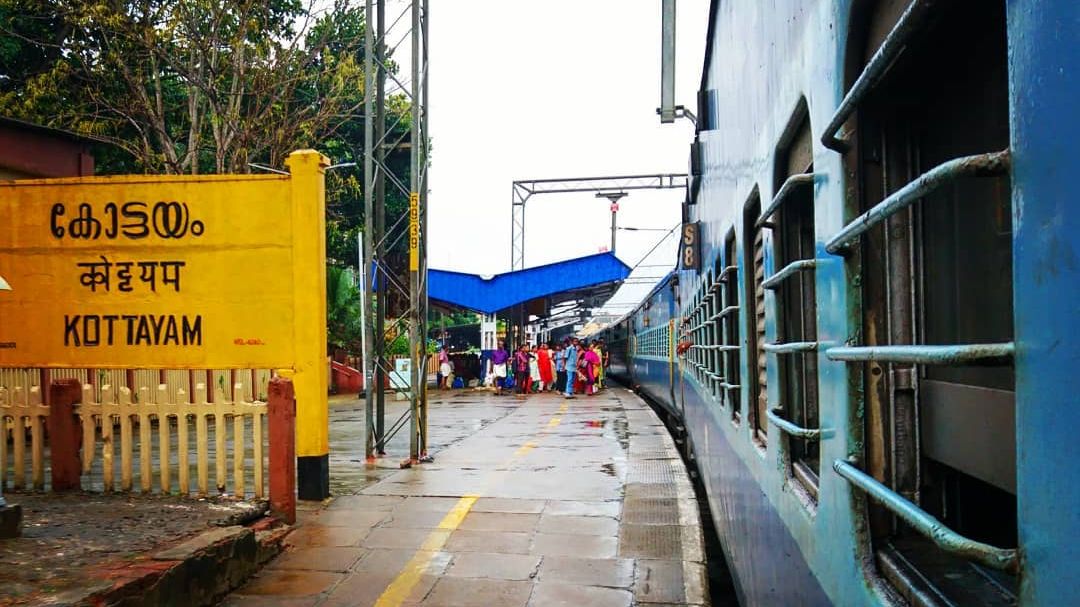
Armed with the allotment of Emergency Quota and my Warrant (Military form authorising travel by Indian Railways,) I reached Kottayam railway station.  At the reservation counter the booking clerk refused to book the seats – Why?  Our Regimental clerk had committed a grave sin!! He spelt KoTTayam with one T.

I contacted the Station Master and the Reservation Supervisor.  All expressed both sympathy and empathy a soldier deserved, but the cardinal sin of spelling KoTTayam with only one T, they could not condone.

While at Sainik School Amaravathinagar, Thamizh Nadu, our nearest railway station (NRS) was Udumalaipettai – with one P and two Ts. In Thamizh and Hindi, it has two Ps, but in English only one – Any reasonable reasons?

 The town was known amongst the locals as (உடுமலை) Udumalai and all the bus boards read so.  The British called it Udumalpet and that too caught on, but no one ever used Udumalipettai, other than the Indian Railways and some Military clerk sitting in the remote border, preparing a warrant for a soldier from Udumalpet – counting the Ps and Ts.

When we filled our application for the National Defence Academy (NDA,) our teachers insisted that we spelt Udumalaipettai with the correct number of Ps and Ts as the Indian Railways insisted.

To return to the Regiment on time, the only option to me was to buy two tickets and claim the cost later from the Comptroller Defence Accounts (CDA.) I requested the Reservation Supervisor to block the seats until I either got a fresh warrant or bought the tickets by paying cash. He agreed saying that he got to finalise the reservation chart two days before the date of journey.  

I shot off a letter to our Adjutant, narrating my agony.  Major Ranjan Deb (now a Veteran Colonel,) an Aviator with an uncanny sense of humour was in chair and he despatched a soldier to Kottayam with a fresh warrant with two Ts for KoTTayam. Unfortunately, the soldier could reach Kottayam a day prior to my journey and by that time, I had to buy the tickets by paying cash.

On reaching the Regiment stationed in Jammu & Kashmir, I sent the forms for claiming the cost of the tickets to CDA, explaining the reasons as to why I had to buy the railway tickets by paying cash.  The reasons I stated appeared beyond reasonable doubt to the powers at the CDA, but how can they allow such a claim without raising any objection?  It will go against the ethos of the Accounts Department anywhere in India. 

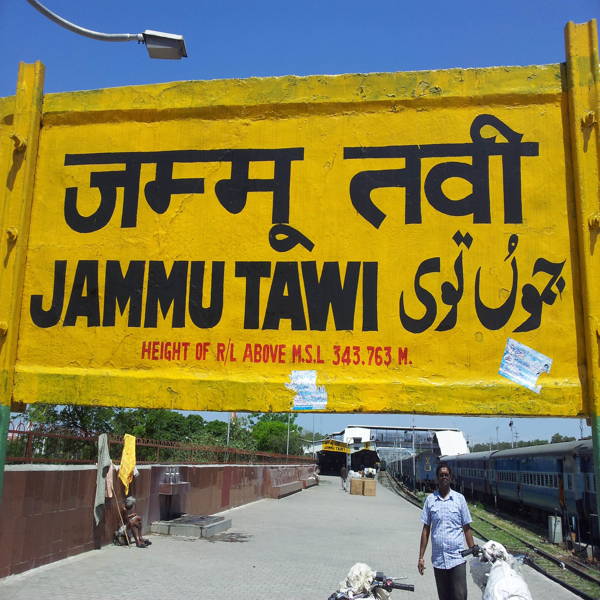
My claim was approved in principle, but the CDA raised a query “How did the Officer and his wife make the onward journey from Jammu Tawi to Kottayam?”

Beyond reasonable doubt, Major Ranjan Deb promptly replied “By walking.”  In a week’s time my bank account was credited with full reimbursement for the cost of tickets.

Now let us fast forward to 2016.  Our family is in Canada – Marina, Nidhi, Nikhil and myself – all Canadian citizens. 

Nikhil decided to travel to Kolkata to serve in Mother Teresa’s Ashram for a month.  I said to him “If you find time, visit Veteran Colonel Ranjan Deb, our Regimental Officer who lives in Barrackpore.”  I had narrated many incidents about Colonel Deb, especially when he was our Battery Commander with 75 Medium Regiment (Basantar River.) 

On a Wednesday, when Nikhil had a day off from Mother Theresa’s Ashram, he took a cab to Barrackpore.  Colonel Deb and Nikhil spend a day together and at the end of it Colonel Deb remarked “Reji, I spent a few hours with Nikhil. I was amazed at his all-round development at his age. No Indian student will be able to match up with Nikhil’s thought process. His education in Canada stands out distinctly. I am 63 and he is 19 years of age. I did not get bored for even a second of the six hrs we were together. Healthy engrossing discussion.

This is what is called Regimental spirit.  A kid, not born – why – not even planned while we served together, comes all the way from Canada to meet us – a Veteran Colonel and his wife.  What else can we ask for in life?  What other recognition do we need? He made our day!!”

Parade State

A Different Kind of Command

While commanding our Regiment – 125 Surveillance and Target Acquisition (SATA) Regiment – I attended office mostly on Friday afternoons. That was when I signed the official documents requiring the Commanding Officer’s signature, most notably the Daily Parade State.

At the time, I was a single parent CO. Marina had already migrated to Canada, and the responsibility of bringing up our two primary school–going children – feeding them, sending them to school, ensuring homework was done, making them bathe – all fell on my shoulders. Command had to coexist with parenthood.

What Is the Daily Parade State?

For the uninitiated, the Daily Parade State is a large table detailing every officer and soldier authorised and posted to the Regiment, along with their daily whereabouts. Compiled each evening by the Regimental or Battery Havildar Major (RHM or BHM), it shows the status of all personnel as of 8 AM the following morning.

The Detail Master, the understudy to the RHM or BHM, is responsible for compiling the Parade State. Typically a soldier with good handwriting and skill at mental arithmetic, he provides all secretarial support to the RHM and BHM. Battery Detail Masters prepare their Battery’s Parade State in the evening and hand it over to the Regimental Detail Master, who then compiles the Regimental Parade State.

The Challenge of Cooperation

Our Regiment was then a cooperating unit with the School of Artillery, Devlali, carrying both station commitments and training commitments – collectively called Range Detail. Unlike at many other Schools of Instruction in the Indian Army, at the School of Artillery, student officers and soldiers do not draw, clean, or maintain equipment. That responsibility falls entirely on cooperating Regiments.

Details of manpower and equipment to be provided – along with administrative arrangements such as pitching tents and preparing Observation Posts – were issued a week before the beginning of each month. Soldiers were thus well aware of their commitments and duties.

We were always short of manpower, as soldiers also needed to avail their leave. Yet our Section and Platoon Commanders managed the show admirably, often with radio operators or drivers doubling as radar operators or surveyors. Clerks were utilised as radio operators, surveyors, or kitchen assistants. Tradesmen pitched in. Even the Religious Teacher was not spared.

Failure or shortfall in Range Detail resulted in the CO being summoned by the General – the Commandant of the School of Artillery. Our RHM and BHMs ensured that all Range Details were executed flawlessly. They had their own methodologies for dealing with shortcomings. Whatever they did, I was never summoned by the General.

The Daily Ritual

Every morning, BHMs presented their Parade State to their Battery Commander, while the RHM presented the Regimental Parade State to the Adjutant, then to the Second-in-Command, and finally to the CO. The Daily Parade State is an auditable document used to account for rations drawn from the Supply Depot for the soldiers. Hence, the CO’s signature is mandatory.

Three months into command, RHM Kaptan Singh summoned enough courage and asked, “Sir, how come you do not ask any questions while you sign the Parade State? You simply tell me to turn the pages and place my finger where you are to sign. You do not even look at it.“

“Why this question now?” I asked, knowing the answer well.

“Your predecessor used to grill me for over ten minutes every morning about various figures in the Parade State – number of soldiers on leave, soldiers on various out-station duties, and so on. I know that you know about every soldier,” RHM Kaptan Singh explained.

‘Thank God! You had to suffer this agony for only ten minutes; I had to endure over thirty,‘ I thought.

A Painful Memory

My mind raced back to my Battery Commander days. Even then, I had hardly paid attention to the figures on the Parade State. But our CO then was not of the same disposition. He believed that every figure on the Parade State was gospel truth.

He summoned each Battery Commander and questioned us about the number of soldiers on leave or on out-station details. I always rattled off some numbers. Then he summoned our BHM and asked the very same questions. What a pathetic example of command!

Our BHM’s figures never tallied with mine, and the thirty-minute ordeal ended with our CO’s remark: “You do not know what is happening in your Battery.”

This continued daily, and my figures never matched our BHM’s. Other Battery Commanders, I later learned, coordinated their figures with their BHMs before being summoned. I had no such coordination. Fortunately for me, I moved out of the Regiment within two months to attend the Staff College Course.

The Explanation

Now I had to justify my blind signing of the Parade State to RHM Kaptan Singh.

“This document is a proverbial elephant’s teeth – for show only,” I began. “This Parade State was prepared by your Detail Master the previous evening, giving out the likely state of all personnel of our Regiment, including me, the next morning. He put in herculean effort, with much erasing and rewriting, to tally all the figures.

If this is accurate, then your Detail Master must be a genius – hell of a Prediction Master. Last evening, I did not know where I would be this morning. Hence these figures can never be accurate. If they are accurate, then the Detail Master must be sitting in my chair.

Do you want me to grill you on it now?”

RHM Kaptan Singh broke into his characteristic smile, saluted, and walked away – fully convinced. The Parade State continued to be signed on Friday afternoons, and our Regiment continued to function without I ever being summoned by the General.

36 (Maratha) Medium Regiment

When I wrote about 37 (Coorg) Medium Regiment, I would be failing in my duties if I did not write about its sibling unit – 36 (Maratha) Medium Regiment.

When I joined our Regiment – 75 Medium Regiment (Basantar River) as a second Lieutenant in 1982, 36 (M) Medium was part of the same Artillery Brigade.  They were located at Meerut and we at Gurgaon. The young officers of both regiments bonded well in that we stayed with the young officers of 36 (M) Medium whenever we visited Meerut.  It was mostly for various competitions – both professional and sports.

The two Regiments competed vigorously on the field, but at the end of the day, we were friends again.  I still cherish the nicest memories of our association with 36 (M) Medium, especially Veteran Colonels Manu Satti, Atul Mishra, Mitra and Mukherjee. 

36 (M) Medium, well known among the Gunner fraternity as Chathis, meaning 36, is also known for most conversions an Indian Regiment has ever been through.  The Regiment was raised as 7/5 Maratha Light Infantry at Faizabad on October 10, 1940, by Lt Col AL Collingwood.

Like all Maratha Infantry Battalions, 36 (M) Medium too have the battle cry – Bol Shivaji Maharaj ki Jai,, meaning ‘ Victory to Emperor Shivaji.’  This war cry is believed to have been conceived while the Marathas were fighting Italian forces in World War II in Gallabat, Sudan. It was in January 1941. An attack on an Italian garrison was not going as per plan with the Marathas on the verge of losing the battle. It was then that Captain Boomgart, the officer in charge, was advised to inspire the Marathas by reminding them of the Emperor Shivaji, the famous Maratha king who had the courage to stand against the Mughals’ misrule. Thus was coined the famous war cry, “Bol Shivaji Maharaj ki Jai.”  Hearing the war cry, the Marathas lept forward with great aggression and overcame the Italian garrison.

Soon after raising, in 1942 the Regiment converted from an Infantry Battalion to 51 (M) Armoured Regiment. It was part of the 268 Indian Infantry Brigade which saw operations on the Japanese front during World War II.

During the war, in 1943, the Regiment became 8 (M) Anti-Tank Regiment and served under 44 Indian Armoured Division, in Burma.  The Regiment in 1944-45 was part of 33 Corps Troops and later participated in the Burmese operations in 1945 as part of 7 Indian Infantry Division.

At the end of 1945, 2 Indian Airborne Division was reorganised in preparation for the independence of India.  This resulted in Indianisation of the Division. All British soldiers moved into 6 (British) Independent Parachute Brigade, though it remained part of the 2 Indian Airborne Division. 36 (M) Parachute Anti-Tank Regiment (Royal Indian Artillery) joined the Division in 1946.

On Indian independence, the Regiment was rechristened as 36 (M) Anti-Tank Regiment of the Regiment of Artillery of the Indian Army.  In 1956, the Regiment converted to become 36 (M) Heavy Mortar Regiment.

The Regiment saw action in the Tsangdhar-Zimithang and the Tawang – Sela Sectors in the 1962 Sino-Indian conflict.  62 Bravehearts of the Regiment laid down their lives during this war.

In 1965 the Regiment converted to 36 (M) Light Regiment, equipped with 120 mm Mortars and was deployed in the Dera Baba Nanak and Amritsar sectors. The Regiment participated in the operations to occupy areas up to the Icchogil Canal and in the Battle of Dograi.

Before the 1971 Indo-Pak war, the Regiment reconverted to be 36 (M) Heavy Mortar Regiment with Tampella 160 mm Mortars and participated in operations in the Shakargarh Bulge and Sialkot sectors.

In 1981, the Regiment was equipped with the Russian made M-46 130 mm Medium Gun and subsequently converted to the 155mm Bofors gun.

Coorgis

When I joined our Regiment – 75 Medium Regiment (Basantar River) – in 1982, we had Subedar Chinnappa, Subedar Bidappa, Havildar Muthanna, etc in the South Indian Class (SIC) Battery. These Coorgis (Kodava community) were great soldiers and outstanding hockey players.  By 1986, Coorgis stopped joining our Regiment and we did not have any Coorgi when I left the Regiment in 1997. It appeared that for the Coorgis, Indian Army was no more attractive.

Kodagu, also known as Coorg, is a rural district in the southwest Indian state of Karnataka.  It is the birthplace of Cauvery, a river that local Kodavas consider sacred. Located on the Western Ghats, Kodagu is also referred to as the Scotland of India for its salubrious weather. Kodagu is the most beautiful hill station of Karnataka and is well known for its coffee, especially Robusta variety.

Most of the Coorgi soldiers in our Regiment came from 37 (Coorg) Medium Regiment. Until 1901, this Regiment was designated as the 11 Madras Infantry and in 1902, the Regiment was reorganised and the basis of recruitment changed from Thamizh and Telugu to only Coorgi soldiers.

In 1903, the restructured Regiment was then renamed the 71 Coorg Rifles. The Regiment was disbanded in 1904 because of insufficient recruits. In 1942, Coorgis were again recruited into the newly raised 1st Coorg Battalion. In 1946, it was converted to 37 Coorg Anti-Tank Regiment of the Royal Indian Artillery.

Today, the 37 (Coorg) Medium Regiment is part of the Regiment of Artillery with their war cry “Cauvery Mata ki Jai.”

Up to 1970s, this Regiment was manned by soldiers from Coorg. Now this Regiment is manned by soldiers from the South Indian States with hardly any Coorgis – still the name persists.

I did come across a few officers in the Indian Army from Coorg, and they proved their metal as most became Generals.  Field Marshal K M Cariappa, the first Indian General and first Commander-in-Chief of India, first comes to my mind, followed by General Kodendera Subayya Thimayya. All the more because two Battalions of the Indian Military Academy (IMA) are named after them.

Lieutenant General PC Thimmaya, Lieutenant  General  CB Ponnappa and Lieutenant  General  CP Cariappa were all at the National Defence Academy and we trained together. 

A total of eleven officers from Kodagu became Lieutenant Generals in the Army so far. This apart, from twenty  Major Generals and four Air Marshals, which undoubtedly makes Kodagu, the Land of Generals.

Indian Hockey team too had many Coorgis, but now hardly anyone. Coorg produced more than 40 Hockey internationals and some of them like M P Ganesh and MM Somaiya captained the Indian team.

37 (Coorg) Medium Regiment maintains many of the traditions of the Kodava community. On the Regiment’s raising day, officers and soldiers, regardless of their ethnicity, wear the traditional ‘Kupya Chele’, which consists of a traditional jacket and headgear. The officers wear Peeche Kathi (a traditional dagger.)  The ladies wear Kodava Podiya or Coorgi style saree.

The Coorg style of draping a sari involves tucking the pleats at the back of the waist, instead of the front. The end of the sari is brought below the left shoulder and secured over the right shoulder in a firm knot called ‘Molakattu.’

Peeche Kathi has a handle shaped like a parrot or peacock. The sheath may be made of pure silver, silver and wood, or silver/gold embedded with precious stones. The sheath is linked to an intricately designed long silver chain, which ends in an assortment of miniature replicas of Kodava weapons.

Unlike ‘Change of Baton’ followed by other artillery Regiments when a new the Commanding Officer takes over, a Peeche Kathi is handed over as a sign of change in command.  The residence of the Commanding Officer is called Mercara house, named after the Mercara town in Coorg

37 (Coorg) Medium Regiment is so closely affiliated with the Kodagu community that it is a tradition for the unit to take part in the annual hockey tournament in Kodagu.  For the Kodavas, the annual hockey tournament is very important it is part of their culture. In this tournament, various families of Kodagu compete against each other. The Regiment gives an award for the first goal scored in the tournament and it is a matter of pride for the people because the Regiment named after their community is taking keen interest.

Mess Tin

During an outdoor tactical training exercise at the National Defence Academy, Captain Raj Mehta (now a Veteran Major General) was our instructor.  It was all about section tactics in defence and we were expected to dig a three-man trench – four feet long and in depth and two feet wide.  With the pickaxes and shovels, it was near impossible to dig on the stony mountains of Pune.

In the evening when Captain Mehta came on his rounds, he found our progress real slow.  We blamed it on our blunt pickaxes and shovels and on the hard surface.  Captain Mehta, not too pleased said “When bullets fly, you will dig down with your mess tins! Why? You will do it with your bare hands and dig much deeper than this rat hole in minutes!!”

Now what is this wonder tool called a Mess Tin?

A mess tin is an item of a soldier’s mess kit, designed to be used over a portable cooking apparatus. It’s a pair of rectangular-shaped tins of similar depth, one fits inside the other, both having extendable handles that are fixed to the tins by brackets. Mess tins were originally a military design but are also popular among civilian campers.

Mess tins are generally rectangular with rounded-off edges as the rounded edges make it easier to clean inside than sharp corners. Most mess tins are supplied as a set, with one slightly larger than the other, allowing them to nestle together for easy packing. This arrangement is also useful when using the tins for boiling, as the smaller tin can be used to hold the liquid, with the larger tin placed on top to act as a lid. It also uses space as efficiently as possible, especially as the space and weight are premium in a soldier’s haversack. The nesting mess tins in use with the British Indian Army during World War II, making them one of the longest serving items of equipment in the Indian and British Army.  

The word ‘mess’ in the 14th Century meant ‘a supply or provision of food for one meal.’ The word came from Old French ‘mes’ meaning ‘portion of food, course at dinner,’ and was spelt ‘mes.’ By the 16th Century the word was spelt ‘mess’ with its meaning evolving from ‘a company of persons eating together at the same table’ to the current meaning ‘a communal eating place (especially a military one.)’

In a book published in 1916 ‘Camps, Billets, Cooking, Ceremonial,’ written by an Officer of the British Army and edited by Captain E John Solano lays out rules regarding health and hygiene; water supply; the inspection of food; preserving food, milk, and water from contamination; personal cleanliness and sanitation in billets, camps, and bivouacs. This is the most comprehensive document I read about camping and how to use the mess tin.  I followed it post-retirement during various camping trips we undertook with our children. An extract from the book says:-

‘It is especially useful that men and cadets should know how to cook various articles of food in their service mess -tins, which are so designed that, besides serving as a cup or dish and plate to eat from, they can also be used to cook certain rations in the same manner as in the camp kettle of the field-kitchen.

Cooking in Mess Tins. – The capacity of the mess tin is 1 quart, and it will cook sufficient food for one person if the diet consists of meat and vegetables cooked together, as in the case of Irish stew or sea- pie. Variety in diet is both essential and desirable, and it can be obtained to some extent when cooking in mess -tins by dividing up the rations of, say, two men, so that one mess -tin is used for cooking their meat, and another mess -tin is used for cooking their vegetables. It will be possible in this manner to vary the food slightly, provided such dishes as meat puddings, plain stews, stewed steak, or curry and rice, are given.  When this is done, the front -rank men prepare the meat, and the rear-rank men prepare the vegetables.’

As Cadets at the Academy, the mess tins were our best companions during tactical exercises as we collected our meals in them, ate in them, brewed our tea in them, etc.  It was the most sacred place for the smokers to hide the cigarette packs during tactical exercises. 

Mess Tin may be from the World War but is still popular with campers for similar reasons.  It is unbreakable, light and occupies minimum space.  You can use them to cook and eat out of, and they can be cleaned easily.  You can barbecue, fry and cook in it. 

Book Review: The Old Man & She by Veteran Avinash Chikte

Can you fall in love at 60?  Why not?? We got to be in love at all stages of our life – with someone or the other, to make our existence meaningful.  At 60, it is more for companionship, after the children have flown to greater heights.

This is the essence of this book – The Old Man & She! – by Veteran Indian Air Force Officer Avinash Chikte.  We trained at the National Defence Academy and he was a year senior – 59th Course – E Squadron.

The book tells the story of Liz and Ravi – she’s 55 and he’s 60. The story confirms that love can begin at any age and stage and there is no place today for cultural or religious barriers.  The author has explored the tornadoes that go through the minds of people in a relationship – that too across religions, cultures, and race.  I have experienced it and I vouch for the authenticity of most situations well crafted in this book.

A good read, and a feel-good book for those who have an open mind, and are not moored by the chains of religion, caste, and race.

Here is the Author for you.

You can buy the book by clicking the link:

In India –  The Old Man & She! (Ebook) – Avinash Chikte

In other countries – https://books2read.com/theoldmanandshe

Great Betrayal of Indian Soldier

Third Pay Commission fixed the soldiers’ pension to 50% of last pay drawn.  To complicate it, a clause of 33 years of qualifying service was added – in effect reducing the pension of a soldier.  Here the soldier was betrayed.

History of Military Pension

In 1873, the Indian Military Service Family Pension Fund was started. It was financed solely by compulsory contributions from officers of the Indian Army, who paid so much a month according to rank. There were what we would call to-day ‘special contributions’ on marriage, or when infants reported their arrival. That fund was used by the Government of India for financing various projects—for instance, the Kidderpore Docks on the Hooghly—and even to finance Frontier campaigns. The Government of India credited the fund with a rate of interest equal to current rates of interest on long-term Indian sterling securities. That pension fund was never popular, not because of what it did, or did not do, for widows and orphans, but by reason of the way in which it was administered. I think everyone had a grievance because they felt that a fund which was built up solely from their pockets ought to be treated as a trust fund, and that they should be represented on a board of trustees. Moreover, it was believed that if the fund had been invested in trustee securities in India, it would have received a higher rate of interest than was in fact accorded to it by the Government of India.  (https://api.parliament.uk/historic-hansard/lords/1949/mar/09/indian-army-pensions)

Formula for computing pension was substantially liberalised since the time of First Central Pay Commission.  The pension was earlier payable at the rate of 30/80 (37.5%) of the average emoluments.  This was later revised to 41.25% (33/80). From 31/3/1979, a slab system for payment of pension was introduced, wherein pension was paid at various rates ranging from 50% to 42.86%.   The formula was further liberalised by the Fourth Central Pay Commission and from 1/1/1986, the pension was payable at the rate of 50% of the average emoluments comprising basic pay, dearness pay, non-practicing allowance and stagnation increments. (http://aicgpa.org/content/resc/bulletin/topicid44.pdf)

As per the Pension Regulations for the Army 2008, pension was calculated on actual qualifying service rendered by the individual plus a weightage of 10 years in the case of Sepoy, 8 years in the case of Naik and 6 years in the case of Havildar and 5 years in the case of Junior Commissioned Officer subject to the total qualifying service including weightage not exceeding 30 years in the case of Sepoy, Naik and Havildar and 33 years in the case a Junior Commissioned Officer. In other words, a soldier who served for 17 years was given an additional 10 years, making it 27 years.  Now his pension was calculated by a factor of 27/33.  Thus the soldiers ended with 80% of their pension in effect.  This anomaly has been rectified in 2016 after many court cases.

All these ‘shortchanging’ of soldiers commenced soon after the famous victory achieved by the defence forces in liberating Bangladesh in 1971.  After the war, General Manekshaw was elevated to the post of Field Marshal for sure but was sidelined and send home unceremoniously.  Generals who followed did not make any effort to even raise an issue with the government.  It could be because the officers, especially the Generals ‘trusted’ the government and were ‘dreaming’ that the government would take ‘care’ of the soldiers.  The irony is that many officers, especially Brigadiers and above, are virtually unaware of any aspect of their own pay & allowances, let alone the of their soldiers.  Many of them were and are shrouded with a mask of ‘too complicated and technical’ and often remarked that they were not ‘babus’ (clerks) to work out pay & allowances.’

A Field Marshal never retires, but Field Marshal Manekshaw was eased out post 1971 victory.  Still, he was entitled for pay and allowances for life. The bureaucrats and the government cut all his pay and allowances for the next 36 years of his life. This was an award to the General who led the Indian Army to victory in the 1971 war for India, for a man who led his life with at most dignity and served India with all respect.  He was paid his dues only in 2007, that too on his death bed by the then Defence Minister AK Antony.

It required a junior officer, Major Dhanapalan who took up the matter of ‘Rank Pay’ with the Kerala High Court and got a favourable verdict. It was contested at all levels, even up to the Supreme Court by the government.  Obviously, it had no support from the Army Headquarters and the Ministry of Defence as is evident from various submissions by the government.  The Fourth Central Pay Commission, in 1986, while introducing running pay scale for officers in the ranks of Captain to Brigadier introduced a rank pay in addition to the basic pay. However, the bureaucrats who drafted the orders managed to have the rank pay reduced from the basic pay while fixing the basic pay thus denied all the officers serving at that time their lawful dues. Worse, none of the 50,000 odd officers serving in the armed forces then never realised the treachery and the senior officers never allowed anyone to speak up on the matter.

Cruelty dealt by the Seventh Central Pay Commission is the Military Service Pay (MSP.)  It is a meager Rs 15,900 for officers and Rs 5, 200 for soldiers, which is a compensation for the various aspects e.g., intangibles linked to special conditions of service, conducting full spectrum operation including force projection outside India’s boundaries, superannuation at a younger age and for the edge historically enjoyed by the Defence Forces over the civilian scales, will be admissible to the Defence forces personnel only.  (https://doe.gov.in/sites/default/files/7cpc_report_eng.pdf) Para 6.1.28 (Page 103)

To top it all there is a rider to it.  MSP will continue to be reckoned as Basic Pay for purposes of Dearness Allowance, as also in the computation of pension. MSP will however not be counted for purposes of House Rent Allowance, Composite Transfer Grant, and Annual Increment.

Now comes the One Rank One Pension (OROP.) The recent judgement will adversely affect the soldiers and officers below the rank of Colonel.  In the early 1980s, Selection Grade Lieutenant Colonels were the Commanding Officers and many retired as Lieutenant Colonels as Colonel was an appointment then and not a rank.  About a third of Lieutenant Colonels were promoted to Brigadier.  In 2006, Lieutenant Colonels became a timescale promotion and there were no more Selection Grade Lieutenant Colonels in the Indian Army.

These Selection Grade Lieutenant Colonels who performed the duties of today’s Colonels and retired as Lieutenant Colonels are the most affected due to the current judgement of OROP and by the 6th & 7th Pay Commission. They should be clubbed with the Colonels for pension.

Has the soldier been betrayed by the Government or the Generals?

Second Lieutenant – The Extinct Species

The Unguided Missile

We were commissioned as Second Lieutenants from the academies and joined our Regiments—eager to go, like unguided nuclear-tipped missiles, primed for detonation but uncertain of trajectory.

Years later, when I commanded our unit, our young officers often remarked on a peculiar aspect of my leadership. No matter how serious their mistake, my response was invariably the same: “That’s all. Don’t worry. I’ll handle it from here.”

They wanted an explanation. Why no rebuke? Why no fault-finding mission?

One day, in a lighter moment, I obliged.

“When I was a Second Lieutenant, I messed up more than all of you combined.”

They clamoured for details. Dil Mange More. And so I delivered.

The Gurgaon Incident

I joined our Regiment in 1983 at Gurgaon. During a battery deployment exercise, our 130mm gun, towed by a Kraz vehicle, needed to cross the Delhi-Jaipur Highway. In those days, the highway was narrow and followed a different alignment. Traffic was halted for the military convoy.

Enter the Superintendent of Police of Gurgaon, who demanded passage and was refused. The refusal escalated. Words were exchanged. Then fists. Whatever transpired—and the details remain mercifully hazy—I ended up facing a criminal charge of attempted murder using lethal weapons, alongside a Court of Inquiry.

I escaped both. Thanks to our Commanding Officer, Colonel Mahaveer Singh.

Teen Murti Bhavan: Three Days That Defined a Second Lieutenant

On 31 October 1984, Prime Minister Indira Gandhi was assassinated. By evening that day, our Battery received orders to assume security at Teen Murti Bhavan, where her mortal remains would lie in state.

Our Battery Commander resided in Delhi, so I marched the Battery forward and reported to General K. Balaram, the Adjutant General, who was in overall command. Those who served in that era will recall General Balaram’s formidable reputation—the first, and perhaps only, AG to be granted Vice Chief status.

Late Lieutenant General K Balaram, PVSM

Our Battery Commander, then a student when General Balaram commanded at Wellington, warned me profusely. He narrated countless incidents of the General’s exacting standards—how he rode his own scooter after office hours, never touching his staff car. I braced myself for the worst.

Instead, I found an unexpected camaraderie. General Balaram and I smoked Capstan cigarettes together. In the chaos following the assassination, all cigarette shops in Delhi had shuttered. Naik Paul, my driver, inexplicably maintained a steady supply—to this day, I do not know how.

Whenever work pressure mounted, General Balaram summoned me to the Operations Room we had established inside Teen Murti Bhavan. He craved a deep inhale of smoke and a cup of tea—specifically, the tea brewed in steel glasses by our soldiers. Thus, every summons meant either the situation at the gate had spiralled, or the General simply needed a break.

The Gatekeeper’s Trials

We were responsible for the VIP entrance, through which every head of state passed. Whenever things went awry, General Balaram’s voice thundered across the compound: “Get that Second Lieutenant! Only he can solve this chaos.”

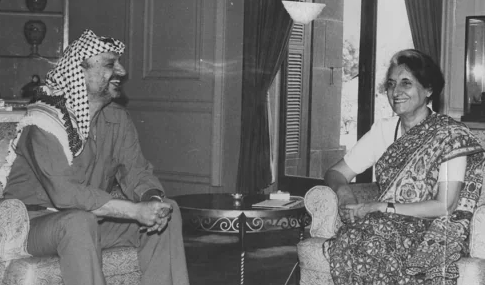
Enter Yasser Arafat, flanked by four bodyguards armed to their teeth. I refused them entry. “Our boys will ensure his security,” I declared. Arafat gave me a long, penetrating glance, then ordered his bodyguards to stay put with me. Even the Chairman of the Palestine Liberation Organisation thought better than challenging a Second Lieutenant.

Next came the Japanese delegation, led by Prime Minister Yasuhiro Nakasone. Over a hundred press personnel accompanied them—journalists, reporters, photographers. I informed their liaison officer that only five could enter with the Prime Minister. The officer pleaded helplessness. I solved the problem my way.

I assembled the entire press corps outside the entrance. When the Prime Minister arrived, I randomly called out five individuals and sent them inside. Chaos erupted. “My photographer is inside, but I’m the reporter!” “My reporter is inside, but I’m the photographer!” I announced calmly that whoever had entered would emerge with material for everyone to share.

Then came a man claiming to be the Commissioner of Police, Delhi. Denied entry through the VIP Gate, he exploded. “Who are you to stop me? What are you doing here?”

“If you had done your duty,” I replied evenly, “I wouldn’t need to be here.”

These were but a few highlights from those three unforgettable days.

With Veteran Colonel Mahaveer Singh during Golden Jubilee celebrations of 75 Medium Regiment in 2018

The Pattern Repeats

A few weeks later came another altercation with a senior Delhi police officer. Again, a Court of Inquiry. Again, our Commanding Officer saved me.

That was life as a Second Lieutenant.

The Extinct Species

When I assumed command in 2002, I realised something remarkable: the species of Second Lieutenant I had embodied—the unguided missile, the chaos magnet, the perpetual disciplinary problem—had apparently become extinct.

Or perhaps, like me, they had simply found Commanding Officers who remembered their own youth.

Now, when our young officers messed up, I saw not failures, but reflections. I heard not excuses, but echoes. And I understood that leadership is not about catching mistakes, but about catching people before they fall. “That’s all. Don’t worry. I’ll handle it from here.”

Because someone once handled it for me.

The Gospel According to Reji Koduvath

A couple of years after I hung up my Indian Army uniform in 2004, my dear friend Colonel Josey Joseph cornered me with a loaded question: What would you have done after retirement if you hadn’t packed your bags for Canada?

I told him I had a foolproof master plan. He listened, raised an eyebrow, and demanded to know why on earth I didn’t stay back and execute it—especially since it sounded vastly more profitable than shovelling snow in Canada.

My grand post-retirement strategy was simple: become a priest at our Church, launch a few high-profile meditation sessions, and dazzle the masses.

Putting on my most solemn, spiritual face, I explained the business model to him.

“First, you need the right optics,” I said. “I would recruit a few fair-skinned followers—specifically, good-looking blonde women in strategically low-cut blouses, flanked by a couple of earnest-looking white guys. Every time I paused for dramatic effect during my sermons, they would leap up in unison and shout, ‘Praise the Lord! Hallelujah!’ After that, Josey, you just sit back and watch the coffers overflow.”

Josey stared at me. “That’s brilliant. Why didn’t you do it?”

“A tragic flaw,” I sighed. “I can’t sing. Look at any wildly successful televangelist, pastor, or godman today—they are practically Broadway performers. Singing and dancing are mandatory prerequisites for hypnotizing the gullible masses. Alas, I am tone-deaf.”

Josey burst out laughing. “Thank God your father never sent you to music and dance classes! Otherwise, you would have sold your father first, and your God right after. Praise the Lord! Hallelujah!“

Once the laughter died down, I stripped away the comedy and laid out my actual vision.

Unlike Catholic priests, Syrian Orthodox priests are allowed to marry—celibacy is strictly reserved for those angling for a promotion to Bishop, and I had already had enough of chasing ranks in the Army.

Plus, I held an unfair linguistic advantage. Being fluent in English, Malayalam, Tamil, Hindi, and Punjabi—a rare combo for a Mallu priest—I would have been the undisputed darling of the NRI and pan-Indian wedding circuit. Picture me officiating cross-cultural destination weddings and getting showered in moolah. Add my military background and travels across India, and I would have easily doubled as a motivational speaker. After all, impressing people is my specialty.

Beyond the weddings and the moolah, though, there was a serious mission.

In our tradition, a priest is appointed as the Vicar—essentially the Bishop’s deputy—of a parish, which functions much like a small administrative village encompassing everyone in the community. Having spent decades navigating the labyrinth of Indian military bureaucracy, I realized I could turn the parish into a powerhouse of civic action:

  • Cutting Through Red Tape: When the Reverend Father, Veteran Colonel Reji Koduvath walks into the office of the District Collector or the Superintendent of Police, basic etiquette prevents them from turning him away. I could have championed every genuine grievance of my parishioners and drafted watertight applications on their behalf.
  • Unlocking Government Schemes: Both the Central and State governments roll out dozens of welfare projects that never reach the poor simply because the paperwork looks like rocket science. Having drafted countless Statements of Case all the way up to the Ministry of Defence, who better to wrestle Indian bureaucracy to the ground?
  • Operation Youth Employment: The church hall would have doubled as a boot camp for job seekers. From the Armed Forces and Police to UPSC, banks, and railways, I would have run mock interviews, group discussions, public speaking drills, and orientation classes. (And let’s be honest: the more youth I got employed, the bigger the Sunday collection plate!)
  • Boot Camp for Kids: I wanted to organise leadership and adventure camps to build grit and confidence in our youth—and tackle India’s biggest epidemic: the death of reading. I would have launched a parish magazine featuring stories, poems, and articles written entirely by the kids.

Josey went quiet for a moment, the humour fading into genuine reflection.

“You know, Reji,” he said softly, “that isn’t just a novel idea—it’s brilliant. At a time when far too many clergy across the board are busy peddling division and hate, a gospel of love, practical help for the helpless, and confidence-building for children is exactly what our country needs. Knowing you, personal gain was never the real motive.“

He paused, smiling again. “Of course, not every parish priest is a Colonel Reji Koduvath. Still, there’s no reason they couldn’t borrow a page or two from your playbook. Someone just needs to take the lead.”

Hussif and Button Stick

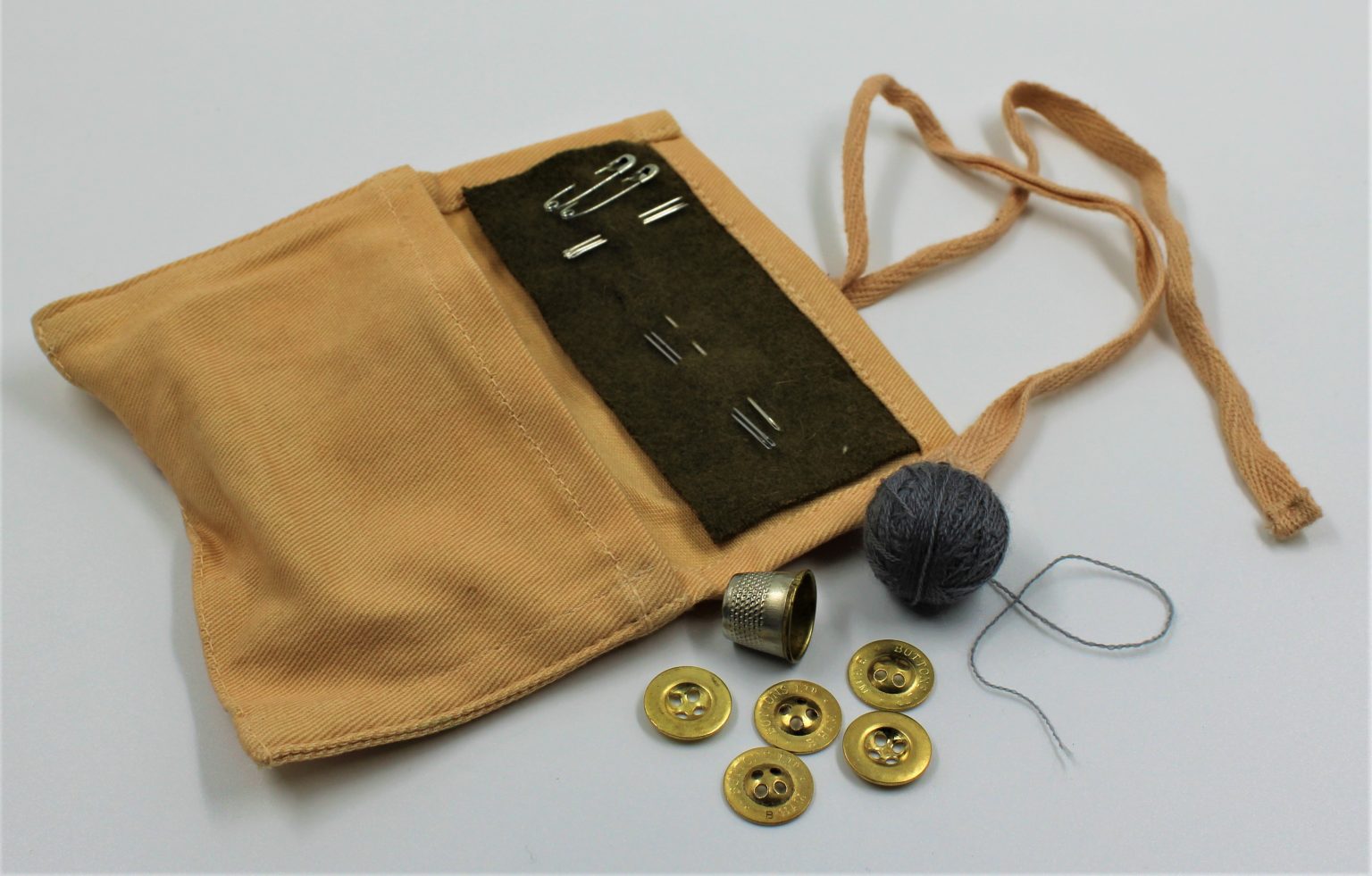
We were issued with a Housewife on joining the National Defence Academy (NDA) in 1979.  Why a housewife to a 16-year-old cadet? That too an item which was neither male nor female, and wasn’t even a living being.

It  was a simple Khaki pouch containing needles, thread, thimble, buttons, and a pair of scissors, meant for sewing on buttons, darning socks, and mending uniforms. It was called the Hussif by the officers at the Academy and Housewife by many Cadets and the soldiers who were the Havildar Quartermasters at the Squadron.

Housewife morphed into Hussif  and first appeared in print in the Oxford English Dictionary in 1749 suggesting that it had already been in common use. Hussif was later shortened to Hussy.

However, the term is now banned in modern armies which acknowledges that the gender specific term is not only outdated but also offensive to women.

By the mid 19th century these rolled-up sewing kits became standard army issue. Before the invention of safety pins, for a quick fix, sewing needles were used to remove splinters and, at times, even sew up the soldier’s wounds!

When I joined Sainik School, Amaravathinagar, TN at the age of nine we had to carry a small plastic box with contents like the hussif. 

I hardly used my hussif at the Academy during my three years other than for sewing some lost buttons. Behold! It had to be carefully maintained as it had to be produced during kit muster held at the beginning of each semester at the Academy and also during inspections. The hussif was part of the small pack we carried in  the Field Service Marching Order (FSMO.)

The name hussif comes from a time when it was common for mothers, wives and fiancés in the 18th and 19th centuries to personalise these kits with embroidery for their menfolk to take to war.  It was often packed  in the holdall and stowed within the man’s haversack. Few hussifs of those days were covered with flowers or other feminine motifs if the hussif was a gift from a needlewoman in their life.

The humble hussif played an important role in both the World Wars. Embroidery was widely used as a form of therapy for wounded soldiers, especially those recovering at the hospitals. The bright environment of the hospital was the perfect place for them to engage in  embroidery as an activity, which helped in their rehabilitation. The imagery and stories they stitched were  often reflective of pride in their regiment, the battlefields they had fought in, or messages of love to a distant sweetheart.

Military museum around the world proudly display many hussifs of soldiers, especially from the World Wars. The National Army Museum in London, England displays an ornamental hussif of Drummer Yeates (1867) with beautiful embroidery and bead-work with the motifs of the Queen, Union Jack, his regimental insignia and battle honours, and a message of nostalgia for home.

Armies and Navies, from Britain to Australia to North America, issued hussifs as part of the standard kit to their soldiers, at least up to the Korean War era. The British Army continued to do so, well into the 1960s and the Indian Army until the early 80s.

Australian soldier Henry John Harris who participated in the First World War wrote about an ingenious use of the hussif. “Owing to the extreme cold conditions and as there were a store of sandbags in the pillbox, I decided to sew several of the sandbags together to make a blanket, and believe me those sandbags did keep me and a cobber [comrade] warm for the four nights we stayed in that pillbox.”

The standard Canadian Forces Sewing Kit from the 1990s is in green material with pockets inside and a piece of felt to which needles could be tacked.  The cover is secured by by Velcro to the body of the kit. Inside the pockets are two plastic bags, one with buttons, and the other with thread, a thimble and a needle threader. Needles and safety pins are attached to the felt.

Another remarkable object that is etched in my memory is the Button Stick. These were used by the civilian bearers or orderlies to polish all the brass buttons, shoulder titles etc of our various Academy uniforms, though I never saw them later in my Army career.  

Merriam-Webster Dictionary describes it as ‘a strip of metal or wood slotted in such a way that it will pass over a row of buttons (as on a military tunic) allowing each button to appear through a slit so that the buttons may be polished without soiling the cloth.’

These button sticks were used by soldiers to polish the buttons on their uniform without spilling  any of the polish on the fabric. During WW I, when soldiers were out of the trenches, they often had to ensure that the buttons of their uniform were polished using Brasso. While tedious and time-consuming, soldiers used this brass button polishing guard to avoid staining the fabric with excess polish which left a nasty brown stain on their Khaki or Olive Green uniforms. 

It could well be that the button sticks used by the orderlies of the NDA may date back to the World War days!

Why did the armies over the world have done away with the hussif? Repairing or darning the  uniform, stitching a lost button… are still needs of the day!

Book Review : Golf and Life : by Veteran Major General Anil Sengar

Congratulations to the author for a well researched book – fusing golf and leadership seamlessly.  The book is worth a read, even for someone like me who hardly ever stepped into a golf course. If you have not stepped on to a Golf Course or does not understand the Golf jargon, this book is for you!!

The catchphrase of the book – ‘The Past is in Your Head and the Future is in Your Hands’ – showcases what the book is all about.

The author has used his distinctive narrative style to lead the reader through the 18 Holes of a Golf Course – the Life Course – all accompanied by a tinge of humour and at places sarcasm too.  Owning a set of Golf Clubs, a membership to a Golf Club, or merely playing golf does not make one a golfer – far from being a good golfer.  It is all about hard work, dedication and endless hours spent at the Golf Course. All to achieve that ever-elusive perfection.

The journey of life – how to deal with different situations and people – and what one can contribute to the society is well brought out.  At every instance, the author delves into the need to ensure that one equips well with the best quality tools.  There is no point in blaming the tools in hand.  A poor artist ends up blaming his brush. What one achieves in life is all because of equipping correctly, planning well, and practising a lot.  The author has chronicled this journey of life through the actions of an enthusiastic golfer Kay El who wants to achieve success, but not through hard work alone.  One comes across many Kay Els in life, and one has also become a Kay El on many occasions.

The need to be fair – whether on the Golf Course or on the Course of Life – is well enunciated throughout the book.  One quote that sums up this aspect which all readers would like to follow is ‘Anything that threatens your peaceful sleep, peace of mind and reputation, as a man of trust and credibility is not worth any wealth or reward.’

Leadership is all about being truthful to oneself, especially while no one is watching or umpiring.  General Sengar has explained this aspect of being self-disciplined well. 

The Mantra in this book is all about finding a cause and dedicating wholesomely for it and is sure to achieve success.

Worth a read and strongly recommended for anyone in a leadership role; also for anyone aspiring to be a leader or a golfer or both.

The book costing ₹395 is available @ https://notionpress.com/read/golf-and-life and on amazon.in @ https://www.amazon.in/dp/B09QQKNMT2/

Learning and Studying

Two words – studying and learning – have always been interchangeable for me until I joined the Indian Army as a Second Lieutenant in 1982.  That was when I commenced applying the knowledge I had gained – especially in trigonometry and physics – while calculating various ballistic parameters for the long range guns.

Studying was the formal education I received at school and at the Academy where I gained knowledge – the basics – which stood as the foundation for all my learning.  Learning was all about applying the knowledge in many situations and there were many  errors, mistakes, commissions and omissions. I learned more with every passing experience.  While learning, there was always a chance of failure – I won some and lost many.

Let us examine the definitions of the two words:-

  • To Learn – to gain knowledge or skill by studying, practicing, being taught, or experiencing something. Learning is absorbing the information, testing its validity to the point of being able to understand the information.
  • To Study – to read, memorise facts, attend school, etc, in order to learn about a subject.  Studying is the act of gathering the information and poring over it, deciding what is relevant and what is not.

One studies to learn.  Many a times one studies a lot, but learns hardly anything.  One tends to forget what one studied, especially when the aim was only to score a few marks in an examination.  Here there is neither any addition to one’s knowledge nor development of any skills.

Studying is pushing and learning is pulling. The content is pushed to the students and learners pull the content what they want to learn.  In order to increase one’s English vocabulary, reading the dictionary alone will not suffice.  It is mere studying. Reading a book and referring to a dictionary is the ideal way as one learns more from the context the word is used than from its dictionary meaning. One may study English grammar for days, but without getting into real communication – both speaking and writing – it’s hardly of any use and one is learning neither the language nor the grammar. We learn the alphabets of a language by-heart, we learn to associate these alphabets to form words to read and write. We learn grammar, but study literature.

In mathematics there are only two digits – 0 and 1 – the rest are all combinations of these. There is only one mathematical operation – addition – subtraction is addition of a negative number, multiplication is continuous addition and division is addition of fractions. If a child learns this basic fact, rest will follow.

Doctors while at medical school memorise all Latin medical terms, and by constant usage familiarise with these terms. They apply their knowledge and learn to diagnose and also carryout a procedure or a surgery.

To be successful in any profession today, studying and earning a degree is not enough. A bachelor’s degree is the minimum educational requirement to become a Lieutenant  in the Army, but  the selection criteria is more about leadership qualities, empathy, problem solving ability, etc.  In today’s digital world with machine learning, artificial intelligence (AI) and automation, these skills are more important than the marks scored and degrees earned.

For many, studying is associated with reading.  It may be true as one grows into an adult, acquiring knowledge and understanding various concepts. Babies are constantly learning, but are neither studying nor reading. Learning occurs at random too – with one’s observations and correlating the same with the knowledge already gained. Listening to someone well experienced in the field, one learns a lot.  It can be from a new experience, or from what one reads, analyses and perceives.

Studying at school (including home schooling) is vital because it teaches students essential life values. More than studying or learning, it is more about developing social skills and being a team player. Many students realised it during the pandemic.  

School gives the students  the basics –  alphabets, numbers, sounds, arithmetic skills and social skills. It develops problem-solving skills in students.  Expertise of the teacher helps  students understand and gain knowledge. Schools also help develop many hidden talents in students. It guides and motivates students to bring the best out of them. It is also an avenue to interact with other people. It is a place to meet new friends and colleagues. School enhances social skills with students  dealing with different kinds of people.

Owl, Reading, Book, Bird, Study, Animal, Line Art

Learning never exhausts the mind – Leonardo da Vinci

For the things we have to learn before we can do them, we learn by doing them – Aristotle

The beautiful thing about learning is that nobody can take it away from you -B.B. King

Learning is a treasure that will follow its owner everywhere – A Chinese Proverb

Running Away From Studies

The Arrival: Twenty Cadets from Kerala

In July 1971, about twenty of us landed at Sainik School, Amaravathi Nagar, in Tamil Nadu. We arrived armed with little more than our mother tongue, Malayalam. English, Hindi, and Tamil were entirely alien to us.

Our medium of instruction was English. We began with the English alphabet under Ms. Sheila Cherian, gradually progressing to Wren & Martin’s grammar and Ridout’s English Today. It was a slow, painstaking journey into a new world of words.

The Language Gauntlet

Tamil as a second language was out of the question – it would have required us to cram Thirukkural and ancient poetry from the start. Tamil literature is not easily grasped by beginners. So we were assigned Hindi as our second language.

We fared predictably badly. Hindi became our nightmare, especially during the Grade 10 public examination. Only the Almighty and the examiner who evaluated our papers know how we managed to pass. Our method was simple: cram until the last alphabet and reproduce everything on paper. Fortunately, Grade 11 and 12 required no second language.

Tamil remained our third language, taught by Mr. M.V. Somasundaram and Mr. K. Ekambaram. We began with the Grade 1 Tamil textbook in Grade 5. The only saving grace was that our agony ended in Grade 8 with a Grade 4 textbook – four years of effort condensed into four grades of progress.

The 10+2 Revolution

Our 1979 batch became the first to face the newly introduced 10+2 education system under the Central Board of Secondary Education (CBSE) – an extra year of studies. The previous batch had graduated in 1977 after Grade 11.

Grade 12 loomed as a particular terror for those like me, academically undistinguished, never having achieved any scholarly glory throughout school.

The Escape Plan

Why did I join the National Defence Academy (NDA) and subsequently serve the Indian Army for over two decades?

The honest answer: I ran away from studies.

The bonus of clearing the NDA entrance examination was immediate: we joined after Grade 11. No Grade 12. No culminating public exam. What relief!

School had led us to believe that NDA training was predominantly outdoor activities – Physical Training, games, drill, weapon training, equitation, military tactics – with minimal academic demands.

Reality dawned upon arrival.

The Reckoning

We had to complete a Bachelor’s degree programme covering over thirty subjects, from Engineering Drawing to International Relations, culminating in a degree from the prestigious Jawaharlal Nehru University (JNU) – the only Bachelor’s degree this premier research university confers.

The Gods had not forgotten my academic transgressions, particularly in linguistics. How could they spare me from Hindi and Tamil?

Commission and Consequences

I was commissioned into the Regiment of Artillery – 75 Medium Regiment (Basantar River). The Regiment then had an intriguing class composition: one battery of North Indian Brahmins, another of Jats primarily from Haryana and Uttar Pradesh, and a third manned by soldiers from the four Southern states.

Now I had to master Hindi as spoken by Brahmins and Jats, and Tamil as the medium of communication for South Indian soldiers. The languages I had fled returned to haunt me.

The Irony of Escape

I had joined the military to escape studies. Two decades later, I retired having never stopped studying -and having never stopped running.

Even while commanding the Regiment, learning continued unabated. Modern high-tech radar systems, survey equipment, Unmanned Aerial Vehicles (drones) – all unfamiliar, all demanding mastery. Command required understanding, and understanding required poring over volumes of operational and maintenance manuals.

The Lesson That Lingers

My studies did not end when I hung up my military boots. They continued. They continue still. They will continue forever.

The boy who fled from textbooks discovered that learning cannot be outrun. It follows. It pursues. It eventually catches up, transforming the runner into a reluctant but perpetual student.

Perhaps that is the ultimate irony – and the ultimate gift. The escape artist became, despite himself, a lifelong learner. And in that transformation, discovered that the running itself was the education.

Anyone who stops learning is old, whether at twenty or eighty. Anyone who keeps learning stays young – Henry Ford.

Aircraft on a Highway

On November 16, 2021, Indian Prime Minister Narendra Modi inaugurated Purvanchal Expressway in Uttar Pradesh after landing on the highway airstrip in an Indian Air Force (IAF) C-130 Hercules plane.  Kudos to the IAF for executing such a mission.  The 3.2 km long airstrip has been constructed on the expressway to facilitate emergency landing by fighter aircraft.  IAF carried out a few trial landings on the strip prior to the mission with the Prime Minister on board. The questions that came to my mind were:-

  • Is it safe to execute such missions with the Prime Minister on board?
  • What was the intended aim from the military/ strategic point of view?

Who can answer my queries the best other than Veteran Wing Commander Avinash Chikte of the IAF, our senior at the National Defence Academy (NDA) – E Squadron?  He is former fighter pilot and now a commercial airline pilot. He is the author of two books and many blog posts.  He answered my questions. Please read his blog about the incident @ https://www.indiatimes.com/explainers/news/purvanchal-expressway-why-some-highways-are-built-like-runways-554391.html

Why did these questions erupt in my mind?

While in our Grade 11 at school, on November 4, 1977,  a VIP flight on the Tupolev-124, the Russian-made aircraft which was christened as Pushpaka by the IAF, crash landed at Jorhat in Eastern India with the then Prime Minister Morarji Desai on board.  The Prime Minister was accompanied by his son Sri Kanti Bhai Desai, the director of Intelligence Bureau Sri John Lobo and the Chief Minister of Arunachal Sri PK Thungan.

The aircraft was carrying 11 crew and nine passengers. Five of the crew in the front portion were killed while some of the passengers and other crew were injured. The Prime Minister was  unscathed. The plane went down nose first – a  deliberate act by the crew in the cockpit in the front part of the aircraft – to ensure they took the main impact of the crash, saving the VIP passengers.

Mr Desai is accredited as the first non-Congress Party Prime Minister of India, but he was the brunt of many teenage jokes at our school. The jokes revolved around his bizarre drinking habit and being born on the Leap Day – February 29, 1896. Babies born on the Leap Day are referred to as Leaplings, Leapers, or Leapsters. The Leap Year must be evenly divisible by 4. If the year can be evenly divided by 100, it is not a leap year unless the year is also divisible by 400.- Year 2000 is a leap years, but 1900 and 2100 are not.

The list of Indian senior politicians who survived such crash landings may interest the readers.

Babu Jagjivan Ram was seriously injured in a BOAC airline crash in Iran shortly before Independence. Babu was lucky to survive the accident in which several people were killed, but was unlucky that he was the only cabinet minister who was unable to attend the Independence celebrations on August 15, 1947.

Sardar Patel too had a miraculous escape.  The aircraft carrying him to Jaipur to to attend the inauguration of the new state of Rajasthan, force-landed near Shahpura about 65 km north of Jaipur on March 29, 1949.  Although the aircraft was completely damaged, the skill of the IAF pilot ensured that no one was injured.

Other prominent Indian politicians who did not survive an aviation accident are Mohan Kumaramangalam and Madhavrao Scindia.  Many Chief Ministers of various Indian states had miraculous escapes – mostly helicopter accidents – with former Maharashtra Chief Minister Fadnavis surviving five of them. 

Recent Canadian Incident

A small plane on a training mission was forced to make an emergency landing on a Canadian highway in Toronto on October 27, 2021at 11 AM.   The instructor-pilot declared May Day after running into mechanical issues and realising that he would not make it back to the airport. The pilot with his trainee managed to land the plane safely on the highway.

Canadian highways have two aprons on either side. The one on the right is marked with a continuous white line and can be used to stop the vehicles in an emergency. The one on the left is marked with a continuous yellow line and is meant for the emergency services vehicles like police cruisers, ambulance and fire-trucks. This lane was used by the aircraft to make the emergency landing.
By 2 PM, the plane took a ride on a flatbed truck to clear the highway, ending one of the rare Canadian highway incident in recent history

Honouring A Fallen Soldier

Sepoy Vaishakh H, an Indian army soldier from Kerala, made the ultimate sacrifice during an encounter with terrorists on October 11, 2021.  His mortal remains arrived in Kerala on October 13 and  was cremated on October 14 amidst heavy rain with full military honours.  Sepoy Vaishakh was among the five Army personnel who died in a gunfight with terrorists during an operation in Poonch district of Jammu and Kashmir on October 11.

The operation was launched in a village close to Dera Ki Gali (DKG) in Surankote (Jammu & Kashmir) in the early hours following intelligence inputs about the presence of terrorists who had infiltrated from across the Line of Control (LoC).

Prior to the funeral, his body was kept at his childhood LP school in Kudavattoor village and then at his home for public viewing. A huge crowd, including those who had no connection with the soldier, turned up to pay their last respects.

Kerala Finance Minister KN Balagopal, who was representing the state government, Mavelikkara MP Kodikunnil Suresh and state Animal Husbandry Minister J Chinchu Rani and several senior government and Army officials were also present at the soldier’s home to pay their last respects.

Please spare a moment and take a look at the coffin. 

A fallen soldier deserves much more than this!!!!

Guns, Generals, and Gunner Mathukutty’s Magical Tea

Fresh out of the Artillery Young Officers Course, we newly minted Second Lieutenants were unleashed upon our Regiments as Gun Position Officers (GPOs). In theory, the GPO is the grand commander of the gun group—responsible for the reconnaissance and deployment of six massive artillery guns, and for calculating the precise bearing and elevation needed to lob shells at targets miles away.

In reality, a Second Lieutenant GPO is a glorified track-and-field athlete with a map board.

Deploying a battery begins with a reconnaissance recce of the allotted Gun Area. You drive in, find a promising patch, and hop out to mark the exact spots for the six guns and the Command Post. The second my boots hit the ground, my driver sped off to hide the vehicle under the nearest bush to avoid enemy air detection, leaving me to run around like a headless chicken.

This image has an empty alt attribute; its file name is lmg005.jpg

Immediately, my personal security detail would materialise: the Light Machine Gun (LMG) detachment. Their solemn duty was to protect the Recce Party from both ground and air attacks.

In the Battery, the LMG detachment was a fascinating duo. The LMG Gunner was usually the Battery’s Detail Master—the Battery Havildar Major’s (BHM) right-hand man, chosen not for his Rambo-like instincts, but because he had neat handwriting and could do mental math without using his fingers. His assistant was typically a tradesman, like the unit Tailor or the Janitor, who had been handed an ammo box and told to look fierce.
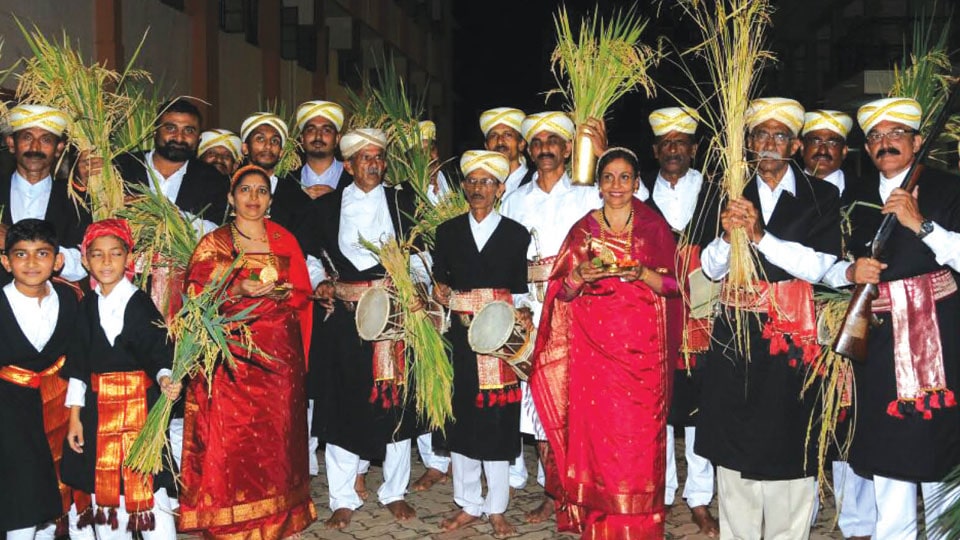
Once I pointed out where the LMG should go, the real madness began. In the Artillery, walking during a deployment is a cardinal sin. You run, you sprint, you sweat, and you shout until all six guns are in place, aligned, and mathematically ready to rain fire.

The exact second I confirmed the guns were set and barked out the Ready Report, a miracle occurred.

Out of nowhere, Gunner Mathukutty—my fierce LMG Gunner—materialised at my elbow holding a steaming, fragrant cup of chai.

After sprinting across the scorching Rajasthan desert in full gear, drenched in sweat, that cup of tea didn’t just taste good; it was a religious experience. During training exercises, we packed up and redeployed up to eight times a day. And eight times a day, the moment the Ready Report left my lips, Gunner Mathukutty appeared with that exact same, piping-hot brew.

I began to suspect sorcery. How was a soldier supposed to be scanning the skies for enemy fighter jets while simultaneously brewing Michelin-star masala chai in the middle of a desert?

During one deployment, I decided to conduct a covert recce of my own. I watched closely as the BHM’s vehicle screeched to a halt. Gunner Mathukutty leapt out heroically clutching the LMG. Right behind him scrambled his assistant—the unit Tailor—heroically clutching a kerosene stove and a kettle.

I pointed to a mound and ordered, “LMG, deploy there!” They dutifully set up the LMG. The moment I turned my back to measure gun platforms, the dynamic duo executed a secondary tactical manoeuvre: they recced a nice, wind-sheltered bush nearby to fire up the stove. Priority one was air defence; priority two was beverage logistics.

After two weeks of this, we reached the grand finale: the Practice Camp, culminating in live firing on the ranges. On the final day, the General Officer Commanding (GOC) of our Division arrived to inspect our Gun Area.

I delivered a crisp, textbook briefing on our tactical deployment. The General nodded along, looking thoroughly impressed—until his eyes landed on my LMG.

Being a true Infantry General at heart, he frowned. “Your LMG is not deployed correctly,” he declared. “It needs to move twenty metres to the left.”

I bit my tongue. Back at the National Defence Academy, our Tactics Instructor, Captain Raj Mehta (now a Veteran Major General), had drilled section tactics into our skulls so aggressively that I could deploy an LMG in my sleep. I placed that LMG in under ten seconds, I thought indignantly. Clearly, the General didn’t appreciate the dual-role brilliance of my positioning for both ground and air defence.

Though, looking back, I’m rather glad no planes flew over us that day. Knowing Gunner Mathukutty, he wouldn’t have known a friendly Indian Air Force jet from an enemy fighter—and he likely would have emptied an entire magazine into the sky before realizing he’d left his tea kettle boiling unattended.


Homecoming

Tears and Triumph on Screen

We all love watching surprise homecoming videos on YouTube, especially those featuring American and Canadian soldiers. Our eyes fill with tears as we watch service members being embraced by their loved ones after long deployments. A picture of a father in uniform holding his baby for the very first time – how can you not be emotional? These moments are undeniably powerful, stirring feelings of patriotism and deep respect for those who sacrifice so much.

Yet only those of us who have actually been on the other side of the camera know that while homecomings are fabulous in their own right, they also present unique and often surprising challenges.

Have you ever tried to fathom the stress that soldiers and their families endure – not just during deployment, but during the homecoming itself?

The Decompression Chamber

For me, coming home was like emerging from a deep-sea diver’s decompression chamber. The journey typically began seventy-two hours earlier in a bunker at twelve thousand feet above sea level in Kashmir or Sikkim, ending finally at my family home in Kottayam, a mere ten feet above sea level. The transition was jarring. It took time to accept that I was safely home, surrounded by loved ones, breathing the air of my childhood.

It took even longer to accept the new reality: I was no longer in an intense, life-threatening combat zone, but in the protective nest of my mother’s care. That adjustment brought its own share of stress, anxiety, and fear—for my family members and for me.

The depth of my stress was directly related to the dangers I faced while deployed, the length of time I was away, and was significantly worsened if I had lost any soldiers or if any had been injured—whether by enemy action or the vagaries of extreme weather. There was also the nagging fear of being unaware of changes in family dynamics, neighbourhood developments, shifting relationships with relatives, and even the comings and goings of animals and poultry at home. Nothing was too small to add to the anxiety.

A Mother’s Sigh of Relief

For my mother, my arrival was always a moment of profound relief. She would heave a long sigh, rush to thank God for bringing her son home safely, and then say, “Why did you write that you would be home next week? I always knew you would come earlier.”

Throughout this emotional welcome, our father maintained a stoic silence—until finally breaking it with a simple, “Welcome home.”

The Statue of Homecoming

The statue pictured above commemorates the homecoming of a sailor. It was unveiled on 4 May 2010 in Victoria, the capital of British Columbia, to mark the hundredth anniversary of the founding of the Canadian Navy. The image captures the essence of reunion – the joy, the relief, the unspoken understanding between those who leave and those who wait.

A Lesson Learned Early

My journey of homecomings began when I joined Sainik School, Amaravathi Nagar, in Tamil Nadu. Traveling home on vacation was a day-long ordeal in the 1970s, owing to India’s poor rail and road connectivity. I would write a letter home a fortnight before my planned departure, then travel in a group with friends.

While I was in grade eight, my eldest brother offered me advice that I have followed faithfully ever since. “Never write the correct date of your arrival,” he said. “Always give a date a few days or a week later. Amma gets very stressed thinking about you on the train – whether you might miss a connection, whether you’ll get good food. Spare her that anxiety.”

I followed that advice through decades of military service, right up to my last homecoming from Canada. I never gave the exact date of my arrival. Often, I told no one at all about my travel plans.

The Taxi Ride That Gave Me Away

In 2015, I flew into Kochi Airport and took a taxi home. While still in the taxi, I called my eldest brother.

“How far away are you?” he asked.

“About forty-five minutes,” I replied.

My brother immediately announced to the household, “Reji will be home in forty-five minutes. Get lunch ready for him.”

My mother was utterly surprised and thrilled. “Which Reji?” she exclaimed. “Our Reji? I spoke to him in Canada yesterday. How can he be home in forty-five minutes?”

After lunch, I asked my brother how he had known I had landed in Kochi and was on my way home – before I could even say anything.

“The traffic horns,” he explained. “Blaring, chaotic. I know that in Canada you never hear that sound. So I guessed you were in a taxi, coming home.”

A Nephew’s Realisation

Our nephew serves as a Captain in the Corps of Engineers. After completing a gruelling six-month Young Officers’ Course in Pune, he and his friends vacationed in Goa for a week. Only then did he return home.

He called me shortly after arriving. “Now I realise why you never disclosed your travel plans,” he said. “My mother called constantly, demanding that I come home immediately.”

My eldest brother, now head of the family, offered him the same advice he had given me decades earlier: “Never write the correct date of your arrival. Always give a date a few days or a week later.”

The Unseen Side of Reunion

Homecoming videos capture only the embrace, the tears, the joy. They do not capture the decompression, the anxiety, the careful management of a mother’s worry, or the strategic withholding of arrival dates. They do not show the soldier learning to breathe again at sea level, or the family learning to accommodate a person who has been living in a different world.

Homecomings are wonderful. But they are also complicated. And for those of us who have lived through both sides of the camera, the real story is always richer – and more challenging – than the two-minute clip suggests.

Oral Rehydration Salts (ORS)

On July 29, a notification on my cellphone read ‘Today is the World ORS Day.’ When there is a Left Handers’ Day (August 13,) a Sandwich Day (November 3,) a Puppy Day (March 23,) and also a Nothing Day (January 16;) I wasn’t surprised to find an ORS day!

ORS Day is observed each year on July 29 to emphasise the importance of ORS as an affordable and highly impactful healthcare method to treat dehydration and diarrhea. This year too it was celebrated, but without much fanfare, throughout the world.  I have failed to find the significance of the date – July 29 – connecting to ORS. Hence I decided to dwell a bit deep.

For more than 25 years WHO and UNICEF have recommended a single formulation of glucose-based ORS to treat or prevent dehydration from diarrhoea and cholera for all ages.  ORS has been used worldwide and has contributed substantially to the dramatic global reduction in mortality from diarrhoeal diseases.

ORS is an oral powder–containing mixture of glucose, sodium chloride, potassium chloride, and sodium citrate. After dissolving in requisite volume of water, it is used for the prevention and treatment of dehydration, especially due to diarrhea.

ORS and zinc are recommended by the WHO and UNICEF to be used collectively to ensure the effective treatment of diarrhea. ORS replaces the essential fluids and salts lost through diarrhea.  Zinc decreases the duration and severity of an episode and reduces the risk of recurrence in the immediate short term.

Captain Robert Allan Phillips (1906–1976) of the US Navy in 1946 first successfully tried oral glucose saline on two cholera patients. As a Navy Lieutenant at the Rockefeller Institute for Medical Research during World War II, Phillips developed a field method for the rapid assessment of fluid loss in wounded servicemen.  Captain Phillips embarked on cholera studies during the 1947 Egyptian cholera epidemic and developed highly effectives methods of intravenous rehydration. Later he developed a of glucose-based oral rehydration therapy.

The typical Indian Jugaad  (जुगाड़) by Dr Dilip Mahalanabis – a paediatrician and a clinical scientist working with Johns Hopkins University Center for Medical Research and Training (JHCMRT) – who treated multitudes of Bangladeshi refugees who were suffering from diarrhea with rehydration salt sachets or ORS.  He has not received any recognition, either from the international community or from the Indian government.

Oxford Dictionary defines Jugaad as ‘A flexible approach to problem-solving that uses limited resources in an innovative way.’  In effect, there is no real word in English that captures the essence of the real Jugaad. 

In 1971, an estimated 10 million refugees crossed the border from East Pakistan into India as per UNHCR.  This was the largest single displacement of refugees in the second half of the 20th century.  The refugees were severely malnourished, especially the children and the Indian government took all efforts to take care of the refugees, despite meager support from the international community.

After walking long distances on foot to escape from the ruthless atrocities of the Pakistan Army, this starved and frightened mass of people sought refuge in India. A cholera outbreak in the refugee camps badly affected the already exhausted and starved refugees.  The monsoon was in full fury, and for the refugees living in tents and other make shift arrangements, it was hell.  It is estimated that about 30% of the refugees died from cholera and diarrhea.

This called for a huge amount of intravenous fluids and coupled with problems of transport and lack of trained personnel for their administration, effective treatment was near impossible.  Dr Mahalanabis suggested use of oral fluids as the only recourse in this situation.  He recommended an electrolyte solution with glucose which could prevent fatal dehydration.

The ORS recipe he used consisted of 22 gm glucose, 3.5 gm table salt and 2.5 gm baking soda per liter of water. This is the simplest formula, containing the minimum number of ingredients, that saved the day for many refugees and they lived to narrate the horrors they faced.

He organised two teams for cholera therapy including oral rehydration. Both teams worked along the border between India and Bangladesh.  He established a treatment centre at the sub-divisional hospital in Bongaon with 16 beds.  He organised  a continuous shuttle of vehicles on the 80 km run from Calcutta to Bongaon, carrying personnel, medication, food and supplies to the centre.  The reserves of intravenous saline-lactate solution stocked originally for cholera research soon depleted.   He had to now used Juggad to make ORS.

To make the ORS, glucose-and salt packets were prepared in Calcutta; first in the JHCMRT library room. Each of the three components of the mixture were carefully weighed by separate technicians and poured into a small polyethylene bag in an assembly-line fashion. Another technician inserted a descriptive label with instructions for dissolving in water; then he sealed one end of the bag with a hot iron. In the field, the dry powder was added to clean drinking water and dispensed from drums directly into the patients’ cups.  The cost was calculated to be 11 Indian paise, (about 1.5 US cents) then per liter of fluid.

Later in 1978 during the cholera epidemic in Manipur, ORS was extensively used, especially in children with diarrhea and cholera. The WHO in 1978 launched the global diarrhea diseases control program with ORS.  In 1979 WHO approved ORS.

Today, ORS is included in WHO’s Essential Medicines List, and Priority Medicines for mothers and children. ORS is also listed as a lifesaving commodity identified and targeted for scale-up and access by the UN Commission on Life-Saving Commodities for Women and Children.

India faced a dire financial situation after the 1971 Indo-Pak war and taking care of the refugees.  To shore up some money, the Government of India applied Jugaad and imposed the Refugee Relief Tax (RRT) throughout the country that came into force on November 15, 1971. It meant a separate five paisa stamp to be affixed on all postal articles to show payment of the tax.

The post offices immediately applied Jugaad and came up with hand-stamps marked ‘Refugee Relief Tax Prepaid in Cash’ on all postal stationery.  On December 1, 1971 the new five paisa stamp, showing an image of a refugee family fleeing persecution was released. RRT was repealed in effect from April 1, 1973.

Women at the National Defence Academy (NDA)

India’s Supreme Court on August 18, 2021, allowed women candidates to appear for NDA entrance exam scheduled on September 5, saying debarring them amounted to gender discrimination.

There has been a raging debate over the judgement among the Veterans community, with many voicing against the court ruling.  Some passed some scathing attacks on women while some came out with interesting memes and jokes.

Some questioned the physical abilities of Lady Cadets.  One theorised that the larger number of cases of stress fractures among Lady Cadets in comparison to their male counterparts was attributed to the difference in bone structure of women that the female hips are not meant to take the same stress as males because they have widened pelvis to enable child bearing.

With all these inputs, I decided to study the Royal Military College of Canada (RMC), the military college of the Canadian Armed Forces and, since 1959, a degree-granting university training military officers.  Like the NDA, the RMC mission is to educate, train and develop Officer Cadets for leadership careers of effective service in the Royal Canadian Air Force, the Royal Canadian Navy and the Canadian Army.

RMC opened its doors for the Lady Cadets in 1980.  The program introducing female cadets has worked well, mainly because the move was carefully planned, integrating both men and women. Lady Cadets are required to maintain the same exacting standards as Gentleman Cadets. They run the same obstacle course – a mandatory ordeal for which first-year recruits earn the right to wear the RMC uniform. They also compete in mixed inter-squadron sports.

2.4km Run – The Aerobic Component.   This portion consists of running 3 laps of an 800m course in the fastest time possible. 

Push-ups – The Upper Body Muscle Endurance Component.  During the test the candidates are required to perform their maximum push-up repetitions. There is no time limit and the push-up execution must comply with the Canadian Armed Forces push-up protocol

Agility Run – The Speed Component.  This test consists of sprinting 6 x 9 m by weaving around four obstacles (chairs) without touching any of them. Two trials are permitted and the best result is compiled. 

Sit-ups – The Mid-core Muscle Endurance Component.   This test consists of a two minute evaluation during which the candidates must perform their maximum repetitions of sit-ups according to Canadian Forces protocol. 

Standing Long Jump – The Leg Power Component.  The candidates are required to jump from both feet without hopping. Two trials are permitted and the best result is compiled.

RMC Physical Performance Test (RMC PPT.)  As part of the program, the students are being physically assessed two times a year. The completed evaluation is being scored out of 500 points where each item is worth a maximum of 100 points. A minimum of 250 points is required to successfully complete the RMC PPT. Five physical fitness components are evaluated through different testing items: the 2.4km Run, push-ups, agility run, sit-ups and a standing long jump.

 Male Female
 Pass100%Pass100%
Push-ups28771438
Sit-ups3510035100
Agility Run17.8 sec15.2 sec19.4 sec16.2 sec
Standing Long Jump195 cm277 cm146 cm229 cm
2.4km Run10:347:5812:129:05

Fitness for Operational Requirements of CAF Employment (FORCE) Evaluation

The FORCE Evaluation is a reflection of the CAF minimal physical employment standard related to common defence and security duties known as the Universality of Service principle, which stipulates that “CAF members are liable to perform general military duties and common defence and security duties, not just the duties of their military occupation or occupational specification.

FORCE was developed by experts who looked at more than 400 tasks performed by CAF personnel in all environments over the past 20 years. Using the data collected from CAF personnel, subject matter experts, laboratory and field measurements, the research team developed a revised fitness component of the minimum operational standard required based on the following six common tasks:

  • Escape to cover.
  • Pickets and wire carry.
  • Sandbag fortification.
  • Picking and digging.
  • Vehicle extrication.
  • Stretcher carry.

Some trades within the CAF require higher levels of fitness or operational readiness, but the minimum standards for the FORCE Evaluation are meant to reflect the baseline CAF physical employment standard that everyone must meet.

The FORCE Evaluation is designed to capture the movement patterns, energy systems, and muscle groups recruited in the performance of the Common Military Task Fitness Evaluation (CMTFE).

The FORCE evaluation comprises of three sections, which are as follows:

  • A health appraisal questionnaire where the candidates complete a health appraisal evaluation and the evaluator records vitals (heart rate and blood pressure).
  • An operational fitness evaluation. Four job related simulations are evaluated during the FORCE evaluation.
  • An exercise prescription where the evaluator provides the candidates with a program detailing the activity frequency, duration, intensity and rate of progression.

The FORCE Evaluation consists of four test components, each designed to measure different physical capabilities:

  • Sandbag Lift:   30 consecutive lifts of a 20 kg sandbag above a height of 91.5 cm, alternating between left and right sandbags separated by 1.25 m. Standard: 3 min 30 sec Intermittent
  • Loaded Shuttles:  Using the 20 m lines, complete ten shuttles (1 shuttle = 20 m there, 20 m back), alternating between a loaded shuttle with a 20 kg sandbag and an unloaded shuttle, for a total of 400 m. Standard: 5 min 21 sec 20-metre
  • Rushes:  Starting from prone, complete two shuttle sprints (1 shuttle = 20 m there, 20 m back) dropping to a prone position every 10m, for a total of 80 m. Standard: 51 sec
  • Sandbag Drag:  Carry one 20 kg sandbag and pull four on the floor over 20 m without stopping. Standard: Complete without stopping
  • If a member has not met the minimum fitness standards, a re-test can be attempted three months later.

Isn’t it high time the Indian Armed Forces take a re-look at the Physical Standards requirements for its cadets and recruits, considering women making their entry at all levels?

It may be pertinent for those in power and the Veterans to read The Stone Frigate: The Royal Military College’s First Female Cadet Speaks Out by Kate Armstrong, one of 32 women to first enter RMC in 1980 and graduate four years later. Her memoir captures the dominating, misogynistic world of one of Ontario’s most patriarchal institutions and her experience challenging it.