French lady, Madame Anna Guérin, is accredited as ‘The Poppy Lady,’ who was inspired by John McCrae’s ‘In Flanders Fields.’ She distributed the Red Poppy on Armistice Day to raise money for Veterans’ needs and to remember those who had given their lives during the First World War. In July of 1921 the Great War Veterans Association adopted the Poppy as the flower of Remembrance – and begun a glorious tradition of pinning the Red Poppy during the Remembrance Week.
At 11 AM on November 11, 1918, the guns fell silent after more than four years of World War I when the Germans called for an armistice to secure a peace settlement. They accepted allied terms of an unconditional surrender.
Thus the 11th hour of the 11th day of the 11th month attained a special significance and became universally associated with the remembrance of those who had died in the war. The allied nations chose this day and time for the commemoration of their dead soldiers.
On the first anniversary of the armistice in 1919, two minutes’ silence was instituted as part of the main commemorative ceremony at the new Cenotaph in London. The silence was proposed by Australian journalist Edward Honey, who was working in Fleet Street. At about the same time, a South African statesman made a similar proposal to the British Cabinet, which endorsed it.
The tradition of Remembrance Day evolved out of Armistice Day. The initial Armistice Day began at Buckingham Palace, with the King hosting a banquet honoring the French president. Later, during World War II, many countries changed the name of the holiday. The US chose Veterans Day.
Remembrance Day in Canada, known as ‘Jour du Souvenir,’ remains a statutory holiday in six of the 10 provinces. The Armistice Day Act, which was held throughout the 1920s, declared that Canada’s Thanksgiving would also be observed on Armistice Day — the Monday of the week in which November 11 fell. The government, in 1931, officially changed the date to November 11. The name also changed to Remembrance Day.
Canada has declared that the date is of remembrance for the men and women who have served, and continue to serve our country during times of war, conflict and peace, particularly the First and Second World Wars, the Korean War, and all conflicts since then in which members of the Canadian Armed Forces have participated.
Some Canadian facts on the Remembrance Week:-
118,000 Canadians made the ultimate sacrifice during times of war and conflict.
82% of Canadians still find the annual tribute important.
54% of Canadians feel today’s youth do a great job of honouring veterans.
46% Canadians think young people understand the sacrifices of those who have died in conflict.
91% believe Canada should do more to honour its veterans.
The word ‘Movember‘ is derived from the combination of the word ‘Mo‘, which is the Australian-English abbreviated form for ‘Mustache‘ and ‘November,’ as the event takes place every year during the month of November. This involves growing of mustaches in order to raise awareness of different men’s health issues like prostate cancer, testicular cancer and mental health challenges.
Using the mustache as a catalyst, Movember encourages men to invest in their own health by more openly talking about their health concerns and more proactively seeking necessary medical care. The idea is to bring about change and give men the opportunity and confidence to learn and talk about their health and take action when needed. Participants of Movember are called ‘Mo Bros’ and the women who support are called ‘Mo Sistas.’
The idea of Movember originated in 1999, when a group of men from Adelaide, Australia decided to grow their mustaches for charity during the month of November and the Movember Foundation came into existence. The goal and motto of the foundation is to ‘change the face of men’s health.’ The movement has gone global and today is well supported in New Zealand, the US, Canada, UK, Finland, Netherlands, Spain, South Africa and Ireland.
The Movember Foundation aims to prevent men dying too young from a range of health issues including prostate and testicular cancer, mental health and suicide. Their efforts have impacts on a global scale and have funded more than 1,200 men’s health projects around the globe.
Globally, men die on average five years earlier than women, and for reasons that are largely preventable. The world loses a man to suicide every minute of every day. The reason for the poor state of men’s health are numerous and complex and include:-
Lack of awareness and understanding of the health issues men face.
Men not openly discussing their health and how they’re feeling.
Reluctance to take action when men don’t feel physically or mentally well.
Men engaging in risky activities that threaten their health.
Stigmas surrounding mental health.
Canadian statistics indicate that:-
1 in 9 Canadian men will be diagnosed with prostate cancer in their lifetime.
Testicular cancer is the most commonly diagnosed cancer in young Canadian men.
In 2019, over 3,050 men died by suicide, nearly 60 men per week.
In Canada, 3 out of 4 deaths by suicide are men.
Suicide is the second leading cause of death among Canadian males aged 15–44 years.
Here are some fun-facts to tickle your mustache!!!
The King of Hearts is the only king in a deck of cards without a mustache.
Noblemen in the Victorian era ate soup with special ‘mustache spoons’ equipped with small barriers to protect their mustaches.
Ram Singh Chauhan holds the Guinness world record with a mustache that spans 14 feet long.
There are between 10,000 and 20,000 hairs on a man’s face, and the average mustache has 600.
The average man spends six months of his life shaving and mustache grooming.
The average man will touch his mustache upwards of 750 times per day, averaging 31.25 times per hour.
Will you participate in Movember? Will you educate your peers, friends and family about men’s health issues?
In early October 2021, Indian media exploded with headlines about Aryan Khan—son of Bollywood superstar Shah Rukh Khan—being arrested by the Narcotics Control Bureau (NCB) on a cruise ship. Many media houses celebrated the event with theatrical pomp, throwing in bits of masala and spice. Some even went berserk, particularly those active on social media.
Can such media glare and media trial be justified?
Shashi Tharoor summed it up with characteristic precision in a tweet: “I am no fan of recreational drugs and haven’t ever tried any, but I am repelled by the ghoulish epicaricacy displayed by those now witch-hunting Shah Rukh Khan on his son’s arrest. Have some empathy, folks. The public glare is bad enough; no need to gleefully rub a 23-year-old’s face in it.”
I needed a dictionary to decode that tweet—ghoulish (ugly and unpleasant, or frightening), epicaricacy (deriving pleasure from the misfortunes of others). That is Tharoorian English for you!
A Personal Note
I too am not a fan of recreational drugs and have never tried them. The smell of marijuana smoke puts me off—though I have been a cigarette smoker for over four decades. But the way the NCB, the Indian media, and the judiciary conducted themselves in dealing with this case leaves me equally unimpressed. It seems absurd—perhaps because I have lived in Canada for eighteen years, where a similar case would have been handled very differently.
Canada’s Approach to Cannabis
This prompted me to delve into Canadian cannabis laws. In our province of Ontario, one must be nineteen or older to buy, use, possess, or grow recreational cannabis—the same minimum age as for tobacco and alcohol. The law permits smoking and vaping cannabis in private residences, many outdoor public places (including sidewalks and parks), and designated smoking guest rooms in hotels, motels, and inns. However, it is prohibited in publicly owned sports fields, spectator areas, and public areas within twenty metres of such spaces.
One may grow up to four cannabis plants per residence—not per person—if aged nineteen or older, for personal use only. Seeds must be purchased from the Ontario Cannabis Store or an authorised retail store, and the activity must not be forbidden by one’s lease or condo rules.
After the law was implemented in October 2019, I noticed a drastic decrease in the odour of marijuana smoke during my walks, especially at park corners. It appeared it was no longer “cool” to flaunt it.
The law also permits possession of a maximum of thirty grams of dried cannabis in public at any time. I also realised I could grow four cannabis plants at home for recreational purposes—if I ever chose to.
A Memory from Kerala
My mind raced back to the 1980s—to a television interview with a tribal chieftain from Kerala, India. In the early 1970s, when Indira Gandhi was Prime Minister, she visited the tribal area accompanied by K. Karunakaran, then Home Minister of Kerala. The chieftain was fortunate to have an audience with Mrs. Gandhi. She asked what she could do for the welfare of his people. He did not ask for a school, a hospital, a proper road, drinking water, or electricity. Instead, he promptly said: “Our people should be allowed to grow two cannabis plants per household.”
Mrs. Gandhi smiled. Mr. Karunakaran nodded. The chieftain later claimed that thereafter, the police and the State Excise Department accepted it as an unwritten law and never bothered them again.
A Reflection
The contrast is striking. In one country, a young man’s arrest becomes a national spectacle, his family’s name dragged through the mud. In another, cannabis is regulated, normalised, and largely stripped of stigma. In yet another, a tribal community quietly secures permission to grow what they have always grown, through a simple request to a visiting Prime Minister.
What is the difference? Not the plant. Not the person. But the culture of law enforcement, the role of media, and the appetite for public humiliation.
Perhaps the question is not whether cannabis should be legal or illegal. Perhaps it is: why do we treat some users as criminals, others as patients, and still others as mere inconveniences? And why, when a celebrity’s child is involved, do we turn a legal matter into a morality play?
The tribal chieftain may have asked for less than he deserved. But he understood something that the media and the NCB seem to have forgotten: that justice and dignity are not always found in the law. Sometimes, they are found in a smile, a nod, and a little bit of grace.
Recently there has been many reports on the media about suicides by young university students and young adults. Some media houses, and some social media activists have gone on an overdrive to report such incidents with all its fury.
Evidence suggests that the media can influence societal attitudes and beliefs to various social issues. This influence is especially strong for mental health issues, particularly suicide. Canadian newspaper coverage of the popular fictional Netflix series 13 Reasons Why, wherein the lead character dies by suicide in the final episode, generally adhered to core best practice media recommendations, and sensitively discussed suicide from various angles, prompting productive discussion and dialogue about youth suicide. These findings suggest that the media can be an ally in promoting dialogue and raising awareness of important public health issues such as suicide.
J.K. Rowling, Oprah Winfrey and Lady Gaga all figure among celebrities who have contemplated suicide but found help and stepped back from the brink. U.S. study found a 10 percent increase in suicide mortality after the 2014 death of Robin Williams, American actor and comedian, which was partially attributed to inappropriate media coverage. Similar increases in suicide mortality were witnessed in Canada and Australia after the death of this well-known celebrity.
This phenomenon is known as ‘suicide contagion’ or ‘copycat suicide.’ Research has found that media coverage with details as to how a person died by suicide, may prompt someone vulnerable to identify with the individual and copy actions described in media coverage.
Greater the coverage of a suicide story higher the chances of finding a copycat.
WHO statistics indicate that more than 700 000 people die world over by suicide every year. Furthermore, for each suicide, there are more than 20 suicide attempts. Suicides and suicide attempts have a ripple effect that impacts on families, friends, colleagues, communities and societies. 77% of global suicides occur in low- and middle-income countries. Ingestion of pesticide, hanging and firearms are among the most common methods of suicide globally.
While the link between suicide and mental disorders (in particular, depression and alcohol use disorders) is well established in high-income countries, many suicides happen impulsively in moments of crisis with a breakdown in the ability to deal with life stresses, such as financial problems, relationship break-up or chronic pain and illness.
In addition, experiencing conflict, disaster, violence, abuse, or loss and a sense of isolation are strongly associated with suicidal behaviour. Suicide rates are also high amongst vulnerable groups who experience discrimination, such as refugees and migrants; indigenous peoples; lesbian, gay, bisexual, transgender, intersex (LGBTQ2S+) persons; and prisoners. By far the strongest risk factor for suicide is a previous suicide attempt.
Suicides are preventable. There are a number of measures that can be taken at every level – school, university, community, family – to prevent suicide and suicide attempts. World Health Organisation’s (WHO)’s approach to suicide prevention, recommends:-
limit access to the means of suicide (e.g. pesticides, firearms, certain medications);
foster socio-emotional life skills in adolescents;
early identify, assess, manage and follow up anyone who is affected by suicidal behaviours.,
interact with the media for responsible reporting of suicide;
Is there a need to regulate such reporting?
In Canada, Canada Suicide Prevention Service (CSPS) provides suicide prevention and support to the people of Canada. They have laid down best practices and recommendations geared to media and other organisations with suggested guidelines and practices on how to report and comment on suicide activities, whether in the media, social media sites or internal communiques. They recommend:-
Health reporters, not crime reporters, are best positioned to cover suicides.
Reports should generally avoid details of suicide methods, especially when unusual or novel methods are involved.
Emergency resource links should be included in all articles that deal with suicide.
Specific for social-media:
Providing information and resources to people who make suicide-related queries or posts;
Including panic buttons that allow for rapid access to crisis services/hotlines;
Providing mechanisms for users to report if they are concerned about someone with the possibility for rapid intervention; and
Moderating forums that frequently include suicide-related postings and making sure to remove inappropriate posts.
CSPS Recommends
Ongoing collaboration between journalists and mental health professionals, acknowledging scientific evidence and the autonomy of journalists;
All journalism schools include teaching of how to report responsibly and respectfully on the topic of suicide, including attention to issues related to ethics and social justice;
Media training for mental health professionals who are likely to be called on to comment on suicide in the press; and
Education for policy-makers and other prominent figures who may be asked to comment publicly on the topic of suicide.
The Austrian journalists recently altered the way they reported about suicide. Studies of that experience showed that after the changes, there was a significant reduction in suicide deaths across the country. Since then many other countries have put out recommendations.
We all love watching surprise homecoming videos on YouTube, especially those featuring American and Canadian soldiers. Our eyes fill with tears as we watch service members being embraced by their loved ones after long deployments. A picture of a father in uniform holding his baby for the very first time – how can you not be emotional? These moments are undeniably powerful, stirring feelings of patriotism and deep respect for those who sacrifice so much.
Yet only those of us who have actually been on the other side of the camera know that while homecomings are fabulous in their own right, they also present unique and often surprising challenges.
Have you ever tried to fathom the stress that soldiers and their families endure – not just during deployment, but during the homecoming itself?
The Decompression Chamber
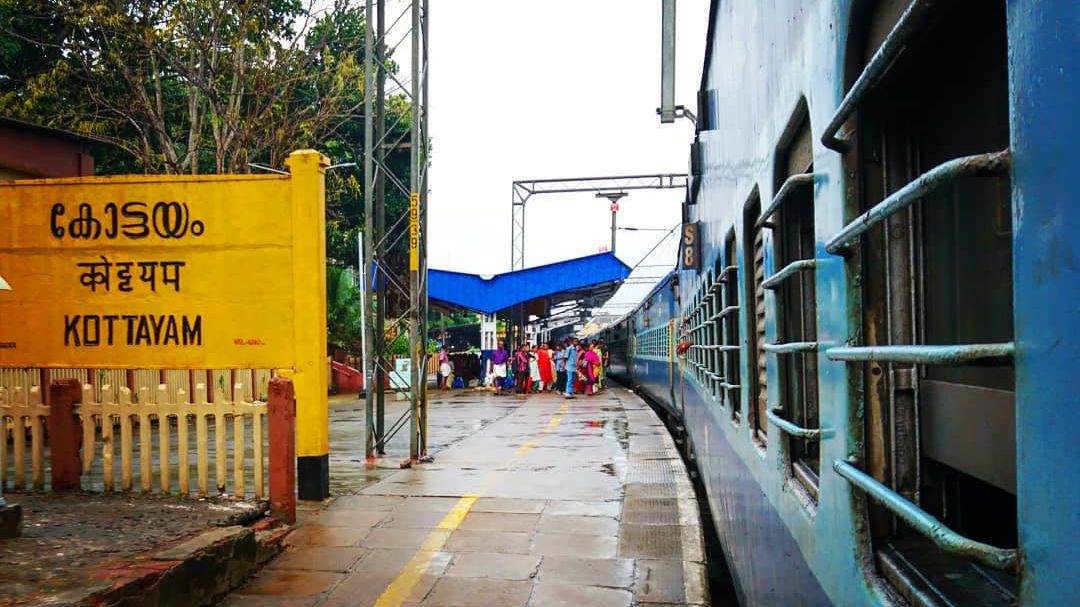
For me, coming home was like emerging from a deep-sea diver’s decompression chamber. The journey typically began seventy-two hours earlier in a bunker at twelve thousand feet above sea level in Kashmir or Sikkim, ending finally at my family home in Kottayam, a mere ten feet above sea level. The transition was jarring. It took time to accept that I was safely home, surrounded by loved ones, breathing the air of my childhood.
It took even longer to accept the new reality: I was no longer in an intense, life-threatening combat zone, but in the protective nest of my mother’s care. That adjustment brought its own share of stress, anxiety, and fear—for my family members and for me.
The depth of my stress was directly related to the dangers I faced while deployed, the length of time I was away, and was significantly worsened if I had lost any soldiers or if any had been injured—whether by enemy action or the vagaries of extreme weather. There was also the nagging fear of being unaware of changes in family dynamics, neighbourhood developments, shifting relationships with relatives, and even the comings and goings of animals and poultry at home. Nothing was too small to add to the anxiety.
A Mother’s Sigh of Relief
For my mother, my arrival was always a moment of profound relief. She would heave a long sigh, rush to thank God for bringing her son home safely, and then say, “Why did you write that you would be home next week? I always knew you would come earlier.”
Throughout this emotional welcome, our father maintained a stoic silence—until finally breaking it with a simple, “Welcome home.”
The Statue of Homecoming
The statue pictured above commemorates the homecoming of a sailor. It was unveiled on 4 May 2010 in Victoria, the capital of British Columbia, to mark the hundredth anniversary of the founding of the Canadian Navy. The image captures the essence of reunion – the joy, the relief, the unspoken understanding between those who leave and those who wait.
A Lesson Learned Early
My journey of homecomings began when I joined Sainik School, Amaravathi Nagar, in Tamil Nadu. Traveling home on vacation was a day-long ordeal in the 1970s, owing to India’s poor rail and road connectivity. I would write a letter home a fortnight before my planned departure, then travel in a group with friends.
While I was in grade eight, my eldest brother offered me advice that I have followed faithfully ever since. “Never write the correct date of your arrival,” he said. “Always give a date a few days or a week later. Amma gets very stressed thinking about you on the train – whether you might miss a connection, whether you’ll get good food. Spare her that anxiety.”
I followed that advice through decades of military service, right up to my last homecoming from Canada. I never gave the exact date of my arrival. Often, I told no one at all about my travel plans.
The Taxi Ride That Gave Me Away
In 2015, I flew into Kochi Airport and took a taxi home. While still in the taxi, I called my eldest brother.
“How far away are you?” he asked.
“About forty-five minutes,” I replied.
My brother immediately announced to the household, “Reji will be home in forty-five minutes. Get lunch ready for him.”
My mother was utterly surprised and thrilled. “Which Reji?” she exclaimed. “Our Reji? I spoke to him in Canada yesterday. How can he be home in forty-five minutes?”
After lunch, I asked my brother how he had known I had landed in Kochi and was on my way home – before I could even say anything.
“The traffic horns,” he explained. “Blaring, chaotic. I know that in Canada you never hear that sound. So I guessed you were in a taxi, coming home.”
A Nephew’s Realisation
Our nephew serves as a Captain in the Corps of Engineers. After completing a gruelling six-month Young Officers’ Course in Pune, he and his friends vacationed in Goa for a week. Only then did he return home.
He called me shortly after arriving. “Now I realise why you never disclosed your travel plans,” he said. “My mother called constantly, demanding that I come home immediately.”
My eldest brother, now head of the family, offered him the same advice he had given me decades earlier: “Never write the correct date of your arrival. Always give a date a few days or a week later.”
The Unseen Side of Reunion
Homecoming videos capture only the embrace, the tears, the joy. They do not capture the decompression, the anxiety, the careful management of a mother’s worry, or the strategic withholding of arrival dates. They do not show the soldier learning to breathe again at sea level, or the family learning to accommodate a person who has been living in a different world.
Homecomings are wonderful. But they are also complicated. And for those of us who have lived through both sides of the camera, the real story is always richer – and more challenging – than the two-minute clip suggests.
India’s Supreme Court on August 18, 2021, allowed women candidates to appear for NDA entrance exam scheduled on September 5, saying debarring them amounted to gender discrimination.
There has been a raging debate over the judgement among the Veterans community, with many voicing against the court ruling. Some passed some scathing attacks on women while some came out with interesting memes and jokes.
Some questioned the physical abilities of Lady Cadets. One theorised that the larger number of cases of stress fractures among Lady Cadets in comparison to their male counterparts was attributed to the difference in bone structure of women that the female hips are not meant to take the same stress as males because they have widened pelvis to enable child bearing.
With all these inputs, I decided to study the Royal Military College of Canada (RMC), the military college of the Canadian Armed Forces and, since 1959, a degree-granting university training military officers. Like the NDA, the RMC mission is to educate, train and develop Officer Cadets for leadership careers of effective service in the Royal Canadian Air Force, the Royal Canadian Navy and the Canadian Army.
RMC opened its doors for the Lady Cadets in 1980. The program introducing female cadets has worked well, mainly because the move was carefully planned, integrating both men and women. Lady Cadets are required to maintain the same exacting standards as Gentleman Cadets. They run the same obstacle course – a mandatory ordeal for which first-year recruits earn the right to wear the RMC uniform. They also compete in mixed inter-squadron sports.
2.4km Run – The Aerobic Component. This portion consists of running 3 laps of an 800m course in the fastest time possible.
Push-ups – The Upper Body Muscle Endurance Component. During the test the candidates are required to perform their maximum push-up repetitions. There is no time limit and the push-up execution must comply with the Canadian Armed Forces push-up protocol
Agility Run – The Speed Component. This test consists of sprinting 6 x 9 m by weaving around four obstacles (chairs) without touching any of them. Two trials are permitted and the best result is compiled.
Sit-ups – The Mid-core Muscle Endurance Component. This test consists of a two minute evaluation during which the candidates must perform their maximum repetitions of sit-ups according to Canadian Forces protocol.
Standing Long Jump – The Leg Power Component. The candidates are required to jump from both feet without hopping. Two trials are permitted and the best result is compiled.
RMC Physical Performance Test (RMC PPT.) As part of the program, the students are being physically assessed two times a year. The completed evaluation is being scored out of 500 points where each item is worth a maximum of 100 points. A minimum of 250 points is required to successfully complete the RMC PPT. Five physical fitness components are evaluated through different testing items: the 2.4km Run, push-ups, agility run, sit-ups and a standing long jump.
Male
Female
Pass
100%
Pass
100%
Push-ups
28
77
14
38
Sit-ups
35
100
35
100
Agility Run
17.8 sec
15.2 sec
19.4 sec
16.2 sec
Standing Long Jump
195 cm
277 cm
146 cm
229 cm
2.4km Run
10:34
7:58
12:12
9:05
Fitness for Operational Requirements of CAF Employment (FORCE) Evaluation
The FORCE Evaluation is a reflection of the CAF minimal physical employment standard related to common defence and security duties known as the Universality of Service principle, which stipulates that “CAF members are liable to perform general military duties and common defence and security duties, not just the duties of their military occupation or occupational specification.
FORCE was developed by experts who looked at more than 400 tasks performed by CAF personnel in all environments over the past 20 years. Using the data collected from CAF personnel, subject matter experts, laboratory and field measurements, the research team developed a revised fitness component of the minimum operational standard required based on the following six common tasks:
Escape to cover.
Pickets and wire carry.
Sandbag fortification.
Picking and digging.
Vehicle extrication.
Stretcher carry.
Some trades within the CAF require higher levels of fitness or operational readiness, but the minimum standards for the FORCE Evaluation are meant to reflect the baseline CAF physical employment standard that everyone must meet.
The FORCE Evaluation is designed to capture the movement patterns, energy systems, and muscle groups recruited in the performance of the Common Military Task Fitness Evaluation (CMTFE).
The FORCE evaluation comprises of three sections, which are as follows:
A health appraisal questionnaire where the candidates complete a health appraisal evaluation and the evaluator records vitals (heart rate and blood pressure).
An operational fitness evaluation. Four job related simulations are evaluated during the FORCE evaluation.
An exercise prescription where the evaluator provides the candidates with a program detailing the activity frequency, duration, intensity and rate of progression.
The FORCE Evaluation consists of four test components, each designed to measure different physical capabilities:
Sandbag Lift: 30 consecutive lifts of a 20 kg sandbag above a height of 91.5 cm, alternating between left and right sandbags separated by 1.25 m. Standard: 3 min 30 sec Intermittent
Loaded Shuttles: Using the 20 m lines, complete ten shuttles (1 shuttle = 20 m there, 20 m back), alternating between a loaded shuttle with a 20 kg sandbag and an unloaded shuttle, for a total of 400 m. Standard: 5 min 21 sec 20-metre
Rushes: Starting from prone, complete two shuttle sprints (1 shuttle = 20 m there, 20 m back) dropping to a prone position every 10m, for a total of 80 m. Standard: 51 sec
Sandbag Drag: Carry one 20 kg sandbag and pull four on the floor over 20 m without stopping. Standard: Complete without stopping
If a member has not met the minimum fitness standards, a re-test can be attempted three months later.
Isn’t it high time the Indian Armed Forces take a re-look at the Physical Standards requirements for its cadets and recruits, considering women making their entry at all levels?
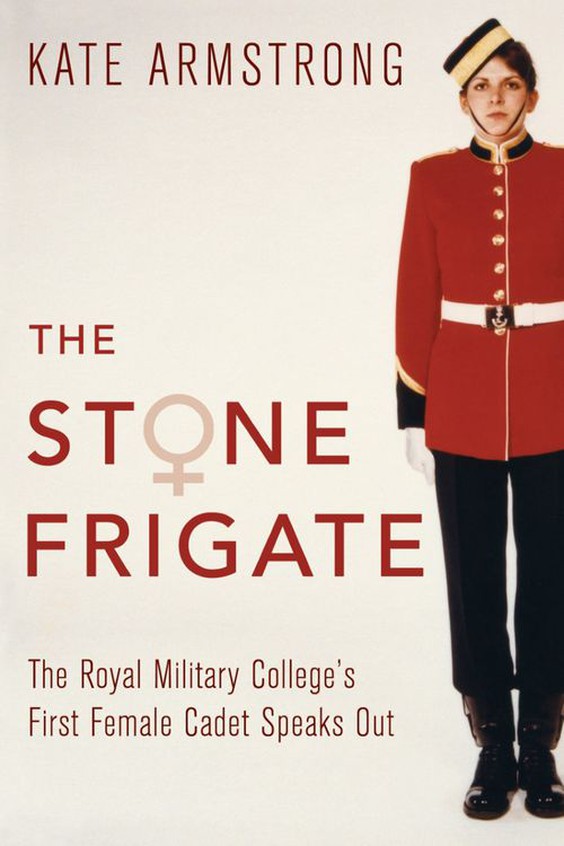
It may be pertinent for those in power and the Veterans to read The Stone Frigate: The Royal Military College’s First Female Cadet Speaks Out by Kate Armstrong, one of 32 women to first enter RMC in 1980 and graduate four years later. Her memoir captures the dominating, misogynistic world of one of Ontario’s most patriarchal institutions and her experience challenging it.
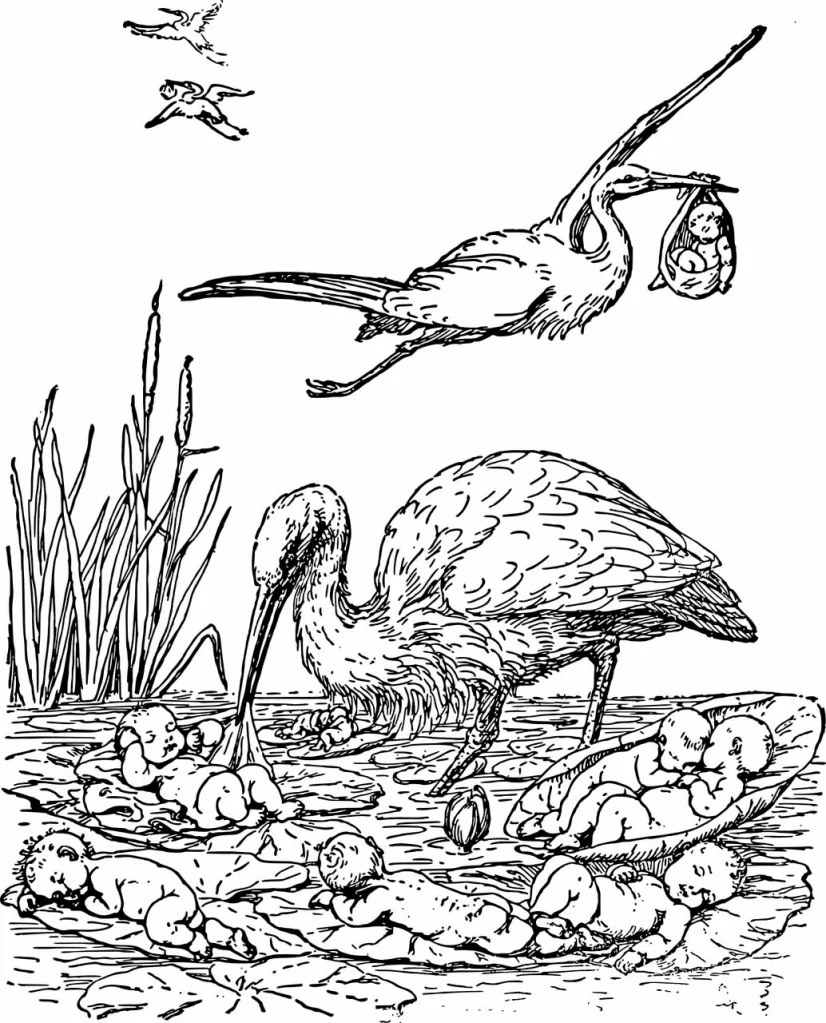
In the Netherlands, Germany, and parts of Eastern Europe, there is a charming myth: storks nesting on rooftops brings good luck – and the possibility of new birth – to the family living below.
When Marina broke the news of her pregnancy to our five-year-old daughter, Nidhi, she said, “There is a little baby growing in my belly. We will have a baby in March.“
Nidhi’s inquisitive mind immediately fired back: “How did the baby get into your belly? And how old is the baby now?“
“God placed the baby in my belly,” Marina replied. “It is three months old.”
Nidhi thought for a moment and said, “I didn’t see God in our home. But Dad came home four months ago from his military posting in Sikkim. Whatever it is, I want a sister – not a brother. Boys are bullies.“
How to Break the News of a Sibling’s Arrival
Young children are not equipped to process complex information about conception and childbirth. When breaking the news, keep it straightforward and simple. Be ready to answer questions – but do not pre-empt the child with long explanations. If they are not asking, it is not yet on their mind. Wait for their cues. If they ask for more detail, you can expand.
A good approach is to frame it as a story: Mom and Dad make a baby, the baby grows inside Mom’s womb, and after about nine months, the baby is ready to be born. Ask gentle probing questions to gauge your child’s understanding. This will help you choose the right words.
You can begin with the idea of seeds and growth – like a fruit growing from a seed – and explain how the baby develops, moves, feeds, and sleeps. If your child is school going, ask them what they already know and follow their lead. Always use accurate anatomical language – like womb or uterus instead of belly.
The Importance of Using Accurate Anatomical Terms
Most of us grew up with euphemisms for private parts – tuckus, tush, peepee, peekki, and so on. Parents often use these for propriety or to avoid embarrassment. But imagine a child screaming in a busy shopping mall, “My penis hurts!” or “My vagina is itching!” It is not an embarrassment; it becomes one only if we treat it as such.
In Canada, children are taught proper anatomical terms – penis, testicles, vagina, vulva—in Grade 1 as part of the sexual health education curriculum. By using alternative names, we do our children a disservice. This education must begin at home, so children are not surprised at school. Studies have shown that children who easily grasp these terms are those whose parents use the correct language at home.
Using proper terminology helps children develop a healthy, positive body image, rather than feeling that their genitals are shameful or bad. It also encourages them to understand their bodies better and ask questions about sexual development. It enhances body awareness, self-esteem, and confidence.
Children who are comfortable talking about their bodies are more likely to disclose if something worrisome or uncomfortable happens to them. They can confidently tell doctors about itching or pain in private areas. They can also inform their parents if someone touches them inappropriately.
Child-sex predators are less likely to target confident, informed children who clearly talk openly with their parents and are aware that inappropriate touching must be stopped and reported immediately.
A study found that even when pre-schoolers learn the proper names for their body parts at school, only those with parents who reinforced those terms at home truly internalised them. So, do not leave this important task to teachers alone. You can begin using proper terminology when changing diapers, bathing your child, or whenever the subject naturally arises.
Sex Education Starts at Home
Sex education must begin at home and be age appropriate. You can seek assistance from your paediatrician if needed. Many of us are uncomfortable using anatomically correct terminology—so practice before you talk to your children. If they sense your discomfort, the lesson will not land. Every question about their body should be answered as accurately, honestly, and age-appropriately as possible. Never make it a big deal.
For me, my first sex education teacher was my Amma.
Recommended Books
To help you navigate these beautiful but often surprising conversations, here are two highly recommended, well-illustrated guides:
Amazing You! An Explanation of Birth and Babies by Dr. Gail Saltz: Perfect for younger children, using warm imagery and correct terms.
It’s Not the Stork! by Robie H. Harris: A fantastic, trusted book that answers basic biology questions honestly and age-appropriately.
These are two well illustrated books I recommend for parents and grandparents. The books will help you answer young children’s delightful, thoughtful, and often non-stop questions about their own bodies and about how girls’ and boys’ bodies are the same and are different questions that are seemingly simple, but often not easy to answer.
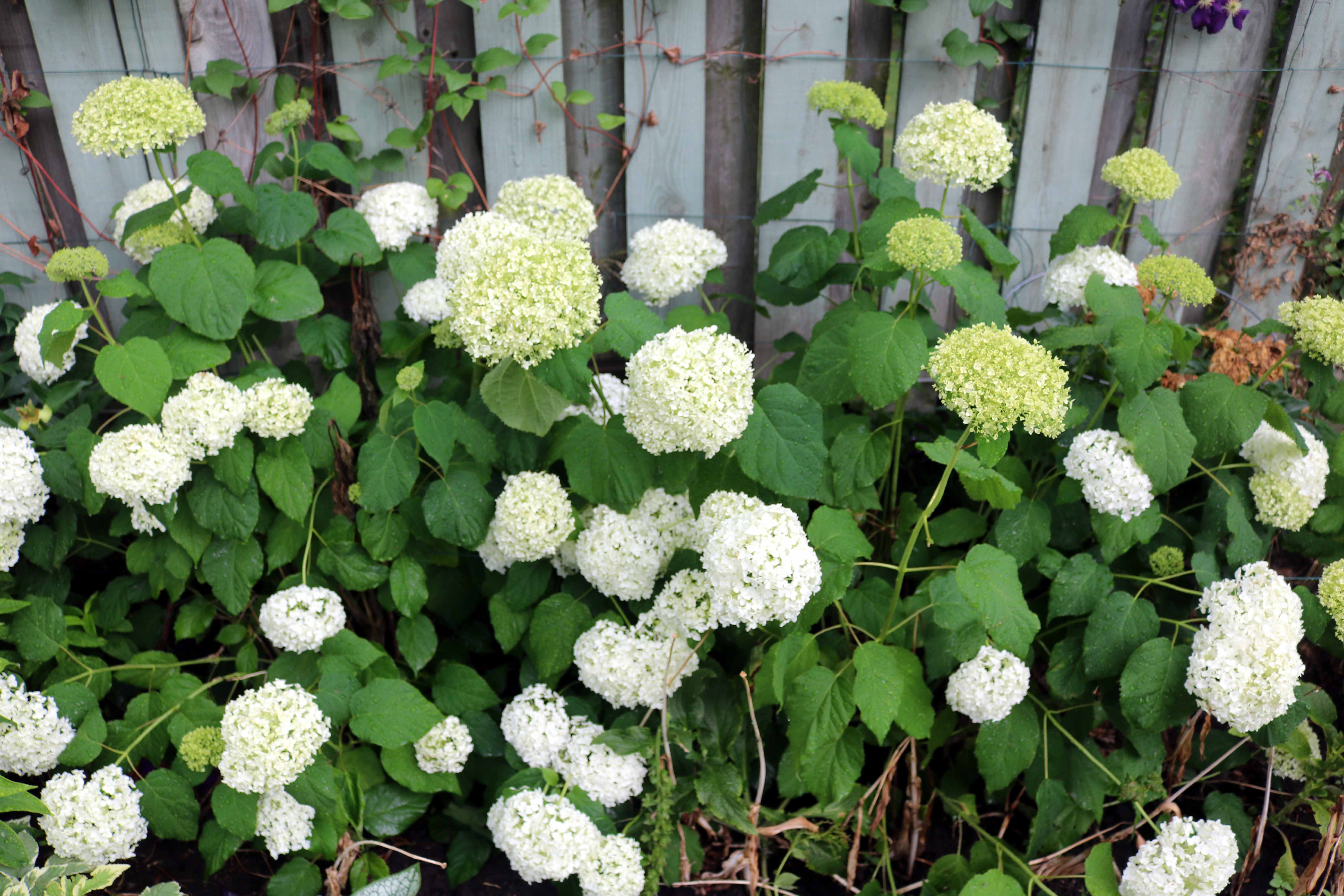
We all love to see colourful blossoms in our garden. These blooms are meant to attract pollinators. This completes the Mother Nature’s cycle of sex and reproduction. Insects, the major pollinators, their activity in our garden picks up in late June, July and early August and as a result she has planned things nicely: this is the most intense flowering period in the garden. Perennials that flower for the longest period of time and attract the greatest number of insects.
Hydrangeas come in various shades of blues, vibrant pinks, frosty whites, lavender, and rose—sometimes all blooming on the same plant! The colour of the blooms depend largely on the pH value of the soil – Acidic soils with a pH of less than 5.5 produce blue flowers; soils with a pH greater than 5.5 produce pink flowers. White flowers are not affected by pH.
Smooth hydrangeas are among the most popular hydrangeas that are white such as ‘Annabelle,’ ‘Incredi-ball,’ and ‘Invincibelle Wee White.’
The Daisy gets its name from the Sun. Daisy is a feminine given name that comes from the day’s eye. They are known for blooms that are flat and disc-shaped, with petals that form rays projecting outward from a central hub.
Daisies are composite flowers composed of 15 to 30 white ray petals surrounding a centre consisting of bright yellow disk, though other colour combinations are common.
Shasta Daisies bear all-white daisy petals, yellow disk florets, and contrasting glossy, dark green leaves. It was bred by American horticulturist Luther Burbank and named it after the snow-capped Mount Shasta, in California.
Blanket-Flower, the daisy-like flowers of rich reds and yellows in circular concentration, blooms throughout the summer.
Named after the Native Indian’s blankets – the colour the flowers resemble, attracts humming birds and butterflies.
Cone-flowers are popular perennials, come in glorious shades of pink, orange, yellow, and red.
Purple cone-flower (Echinacea Purpurea), is most common, there are other varieties too.
It’s from herbaceous flowering plants in the daisy family. and are found only in eastern and central North America.
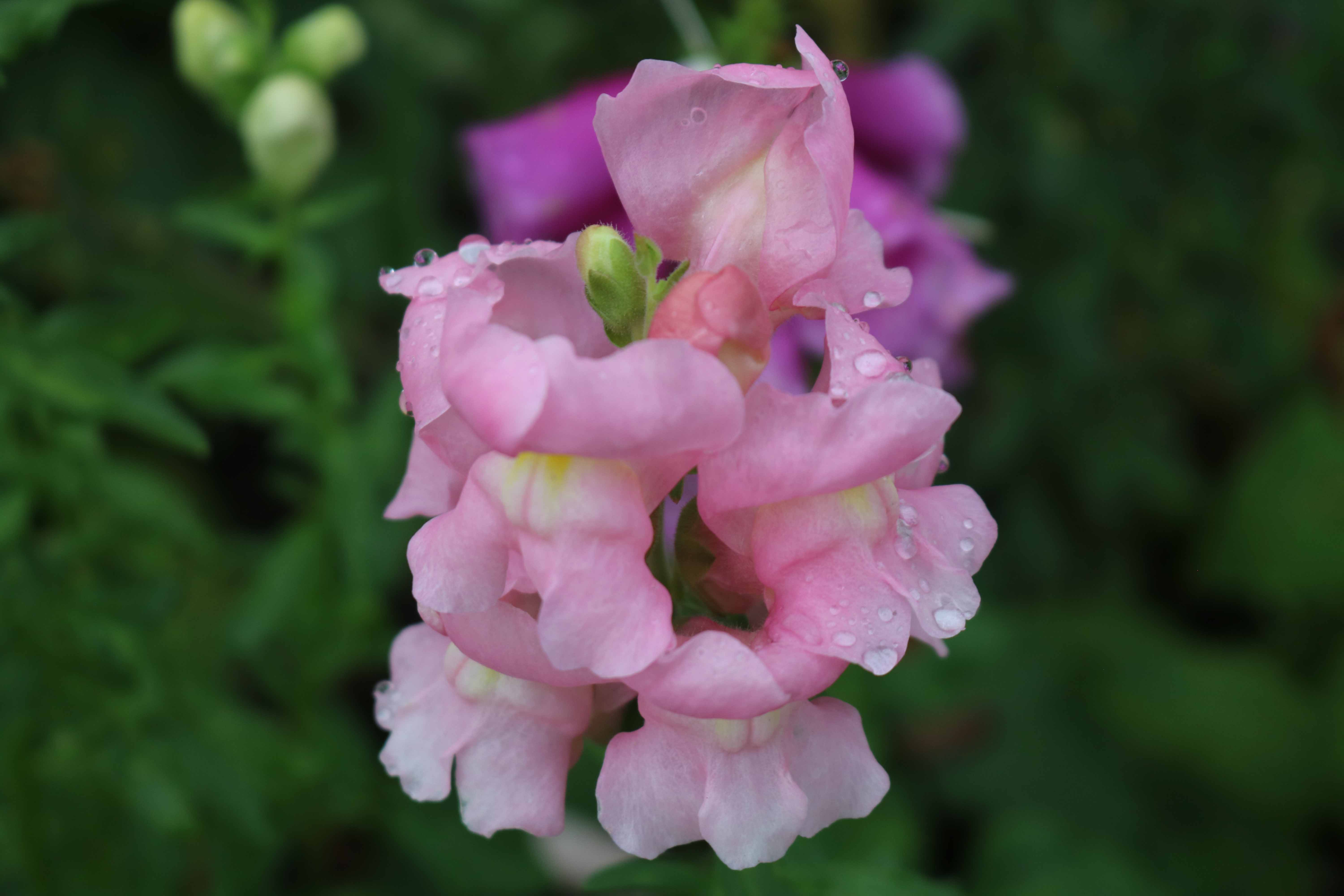
Snapdragons have tall spikes of brightly coloured flowers that bloom profusely in cooler weather. Most are intensely coloured and real standouts in our garden. Snapdragon flowers start blooming at the bottom of the stalk and work their way up, making for a long period of bloom.
Numerous varieties of snapdragon exist with dwarf, intermediate and tall flowering stems that provide a range of colors to work with in the garden.
Snapdragons are available in most colours except blue. There are approximately 40 different species of snapdragons, and they are from the family Plantaginaceae, the family of plantains.
The origin of snapdragons is uncertain but it is believed to have been from countries such as Spain and Italy. Snapdragon may reach up to 3 feet or as short as 6 inches. They are also known as ‘dragon flowers’, and the Latin name ‘Antirrhinum’ means ‘counterfeiting nose’ or ‘like a snout’.
The common name derives from the shape of the individual flower heads, which resemble the snout of a dragon, and which even open and close in a snapping motion, as often happens when pollinators open the jaws to reach the pollen.
Snapdragons come in different variations of pink, purple, lavender, white, yellow, orange or burgundy. They are the perfect flowers for the spring and summer seasons since they are usually available at around this time of year!
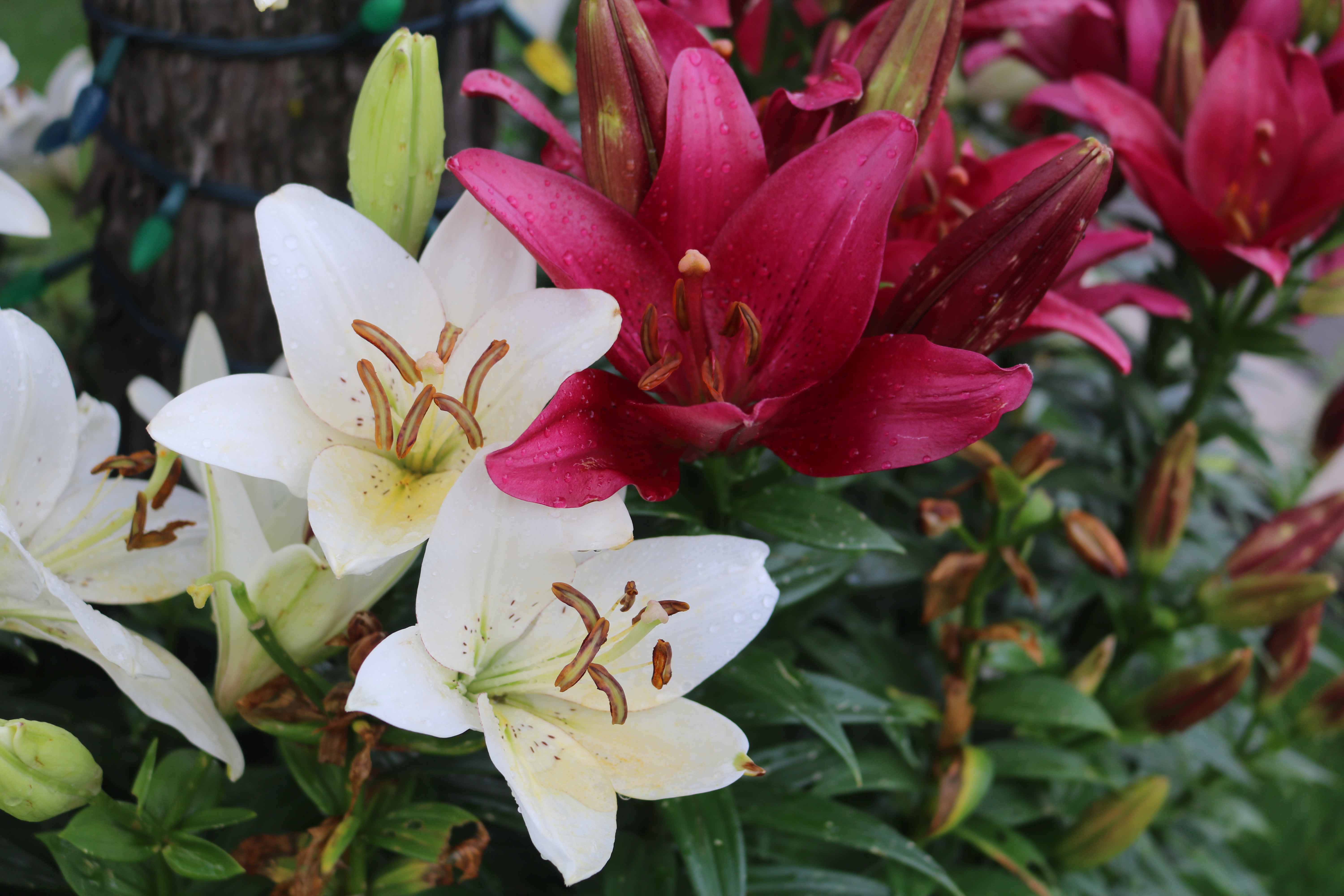
Lilies (lilium,) come in many colours and types, from exotic-looking stargazer lilies with painted petals speckled in both light and dark dots, to elegant white lilies that sparkle with pure white petals and red stamens.
All lilies comprises large, brilliantly coloured triangular petals that open wide and curl back to reveal delicate stamen in the center of the bloom. They produce intoxicating fragrance.
The lily is ranked as the fourth most popular flower across the world. The blooms open at various times, most lilies live one to two weeks. They come in various colours – white, yellow, pink, red and orange.
White lily signifies, modesty and virginity while Red lilies symbolise passion.
Orange lily stands for passion
Yellow lilies symbolise thankfulness and desire for enjoyment.
Tiger lily, named for its orange with brown spots, in Buddhism represents mercy and compassion
Pink lilies symbolise prosperity and abundance.
Lilies are social plants, growing best in groups of three to five.
Lilies have one of the longest in-vase life spans of any cut bloom, to keep them longer is to clear out the pollen from their centers. This will also prevent staining on the petals.
Let life be beautiful like summer flowers and death like autumn leaves. Rabindranath Tagore
Teach your children to do chores at home—and you will gift your future daughter-in-law or son-in-law a partner who can wash dishes, chop vegetables, and clean toilets with ease.
You have likely seen it: a child tearing a shop apart because they were refused a toy; a teenager holding parents hostage for the latest gadget; a young adult threatening dire consequences if they do not get a motorcycle; a child screaming because they could not get a window seat on a plane or bus. These are entitled children. They grow into entitled adults. And somewhere along the way, they never learned to do a single chore – except perhaps rearranging the cushions on the couch.
An entitled child expects food to appear on the table—on demand, restaurant-style. They expect snacks and drinks at their beck and call. Someone else will make their bed, clean up their mess, and follow their schedule – or lack thereof.
Most of us did not enjoy doing chores as children. I certainly did not. But in a Sainik School from age nine, we had no choice. We made our beds, polished our shoes, kept our dorms clean—the list was endless. And we grew up totally unentitled.
When Should Kids Start Doing Chores?
The latest research suggests as early as two years old. Children can begin with age-appropriate tasks—under parental or sibling supervision—such as tidying toys, arranging books, and putting on clothes. They are not born with these skills; guidance and encouragement are essential. This early start ensures they grow up unentitled and do not become entitled adults. No parent wants that.
A Family Is a Public Company
A family is not a private limited company of the parents. It is a public company where parents and children all have equal stakes. With stakes come duties and responsibilities. Parents must do their part—and ensure children do theirs. Making children do chores and participate in family activities is not optional; it is essential. Let your kids feel they are part of the team and must pitch in. Working together builds connection and belonging.
What Chores Teach
Chores teach children to take care of themselves—to clean, cook, and maintain their environment. Simple responsibilities instil self-reliance and accountability. They also give parents a much-needed break.
Children are not born perfectionists. Expect them to whine. Expect tasks to take too long. The results will rarely meet your standards—not yet. But with encouragement and guidance, they will improve. Sometimes, you will end up doing it all over again. Take it as training. Ultimately, isn’t it easier to do it ourselves? But everything begins at home.
Observation Is Not Enough
Children will never learn by mere observation; they must do it themselves. Parents must show the way and explain how. And when they try, thank them—and tell them how their contribution helped the household. This teaches them the importance of helping others.
Don’t Rob Them of Responsibility
Have you ever written a note to a teacher explaining why your child did not complete an assignment—the dog ate it, the hard disk crashed, the laptop died? You have robbed your child of an opportunity to be responsible and advocate for themselves. This is a sure way to set them up for failure. We all want our children to scale greater heights, to become valuable citizens and proud members of society. That requires hard work—from both parent and child. It is not easy.
When We Do Everything, They Learn Nothing
When we do things for our children all the time, we hinder their development. We send the message that we do not believe in their abilities. If you raise an entitled teenager or adult, they will expect their spouse, their roommate, or you to do everything for them.
If your child has not consistently done chores, it is never too late to start—especially if you are open about why you are making the change and what your new expectations are. Experts recommend linking chores to future behaviours: tell a teen they are learning to cook so they can feed themselves in college—or their future partner.
Kids Will Nag, but Stay the Course
Children are never happy when reminded about chores. Parents are not always happy either. But chores should never be used as a tool for discipline. Be flexible; allow children to choose which chores they prefer. Reward their efforts—consistently and with rewards you are comfortable with.
Prepare the Child for the Path
Ultimately, the goal is not to clear the path for the child—but to prepare the child for the path. That is the greatest gift you can give them. And it begins with a simple chore, a little patience, and a lot of love.
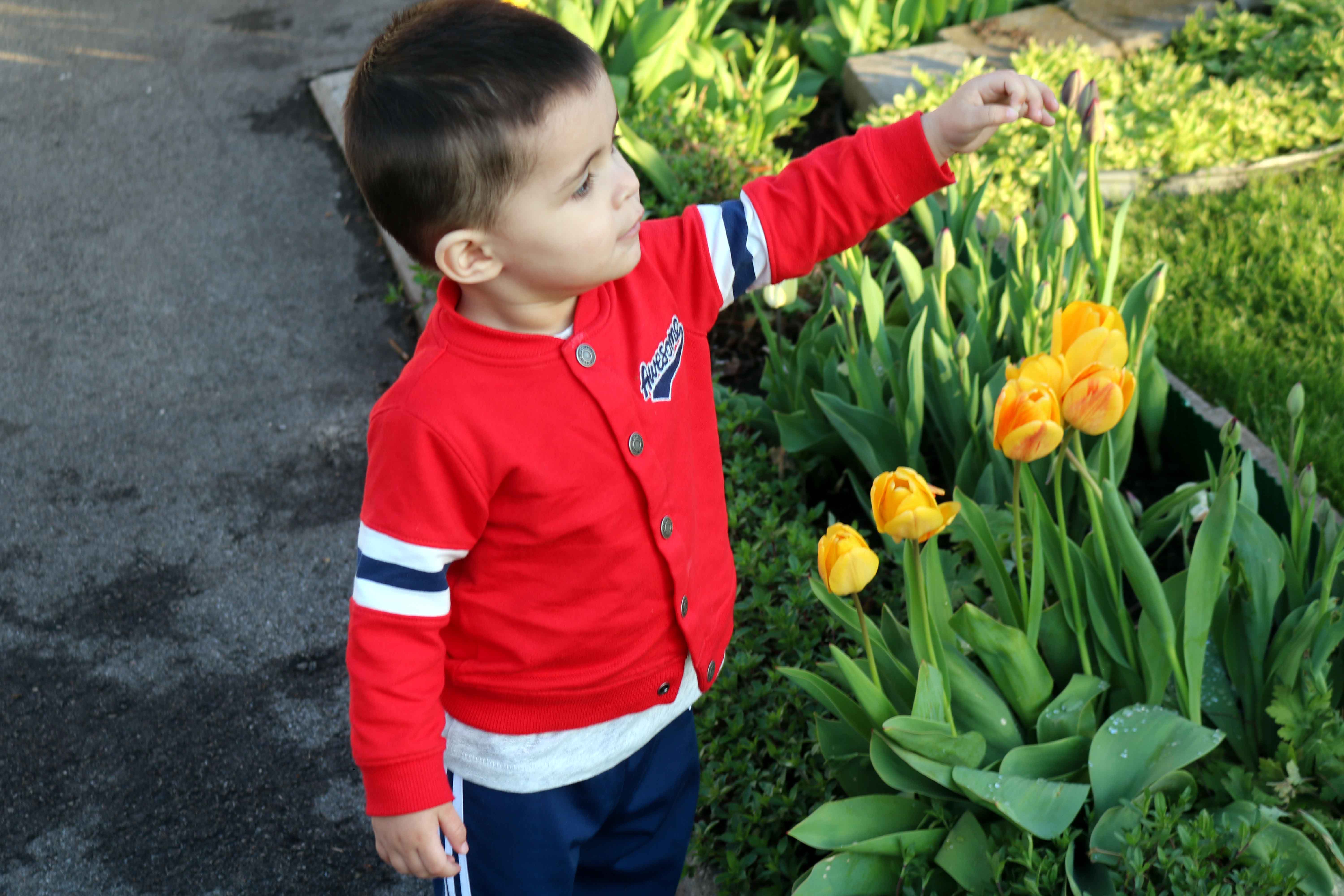
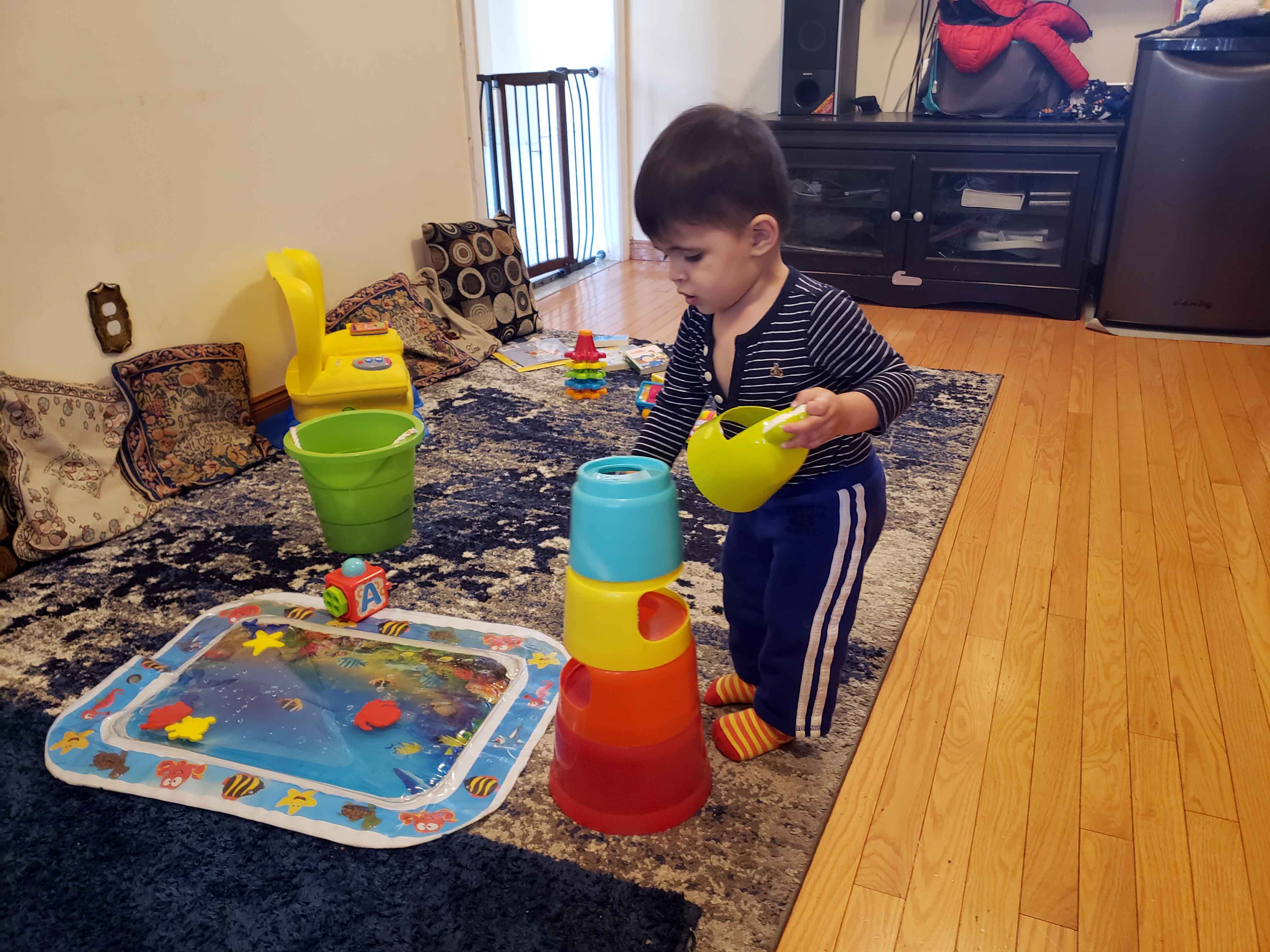
(Images are of James Carter Parkinson, our grandson when he was two-year-old)
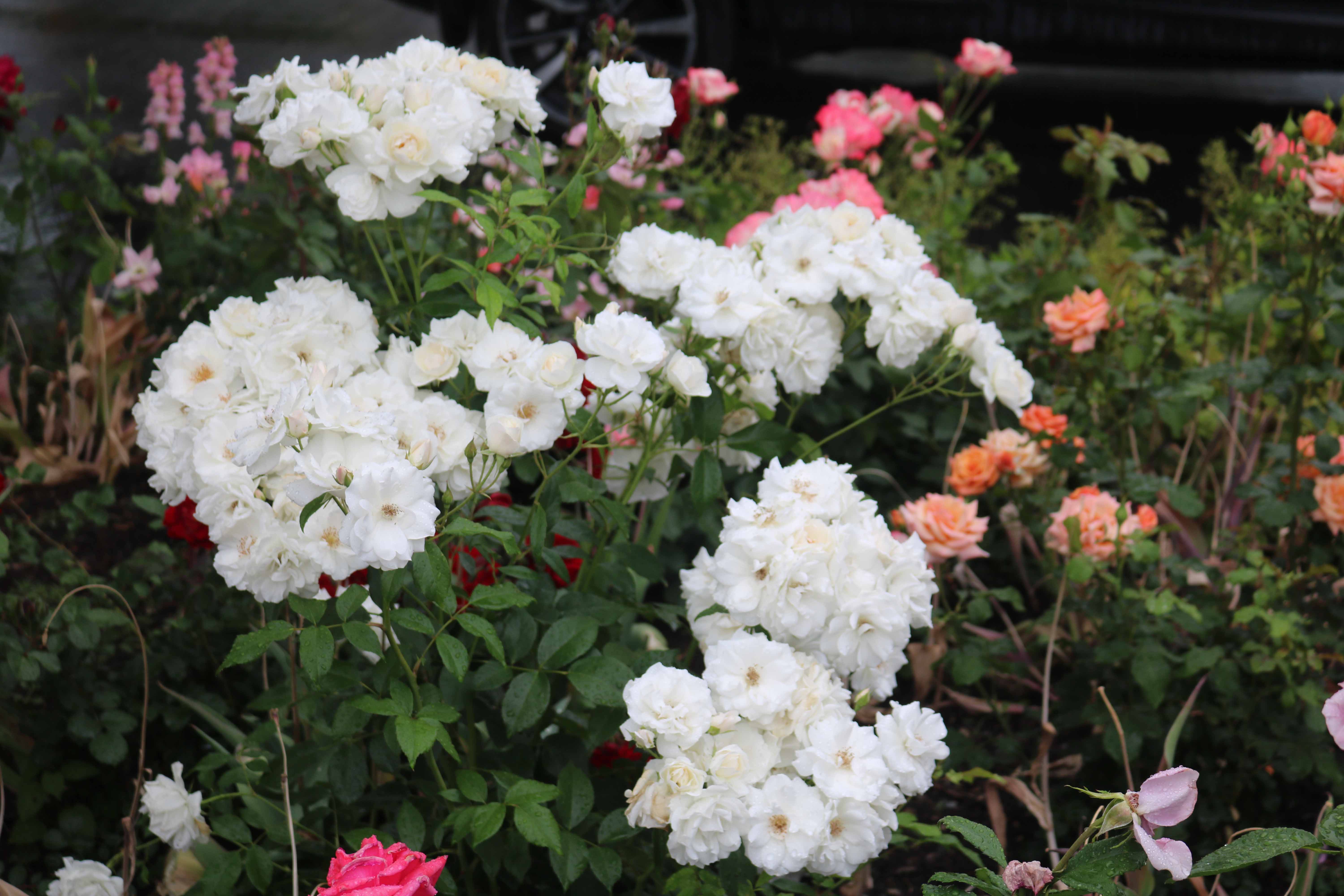
Roses bloomed in our garden with the onset of summer.With the summer setting in Canada with the Summer Solstice on 20 June, 2021, the roses in our garden came to full bloom.For hundreds of years the rose has been widely recognised as a symbol of love, sympathy or sorrow.The world’s oldest living rose is believed to be 1,000 years old. It grows on the wall of the Cathedral of Hildesheim in Germany and its presence is documented since A.D. 815.Jawaharlal Nehru, the first Prime Minister of India, is associated with his attire of pinning a fresh red rose to his coat every day. He made it a point to wear a rose as a remainder of his life with his wife Kamala, who passed away in 1938 after a prolonged illness.Roses are said to be the favourite flower of Venus, the Roman goddess of love.The rose is one among the only three flowers mentioned in the Bible. The others are lilies and camphire – akin to henna.Rose is England’s National Flower and the United States’ national flower since 1986.George Washington, the first president of USA, was also the first US rose breeder.Roses have been a beautiful symbol of celebration in all cultures. Nothing expresses personal sentiments better than roses, and they’re always in style.Ancient Romans cultivated the flowers to decorate buildings and furniture, and even laid rose petal carpets.According to the Guinness Book of World Records, roses are the oldest species of plant to be grown as decoration.Roses are edible. Their petals can be used to make jams, syrups, and rosewater.About 100 million roses – mainly red – are grown for Valentine’s Day each year.The other popular rose holidays in Canada are Mother’s Day and Christmas.Colour of the rose depends on the species. Roses can be found in different shades of white, yellow, pink, orange and red colors.Red roses are a symbol for love and affection.Pink roses convey poetic romance and gentleness.White rose symbolised innocence and purity, which is how it became associated with weddings and bridal bouquets.Peach coloured roses signal modesty.Orange coloured Roses imply fascination.The colour yellow conveys happy thoughts and a positive feelings of warmth. Though yellow roses signifies friendship, the color once signified the negative traits of jealousy and greed.There are neither any black roses nor blue roses.What might sometimes be referred to as a black rose is actually a dark red rose.Roses do not bloom hurriedly; for beauty, like any masterpiece, takes time to blossom. – Matshona Dhliwayo (Canadian Philosopher, Entrepreneur, and Author)
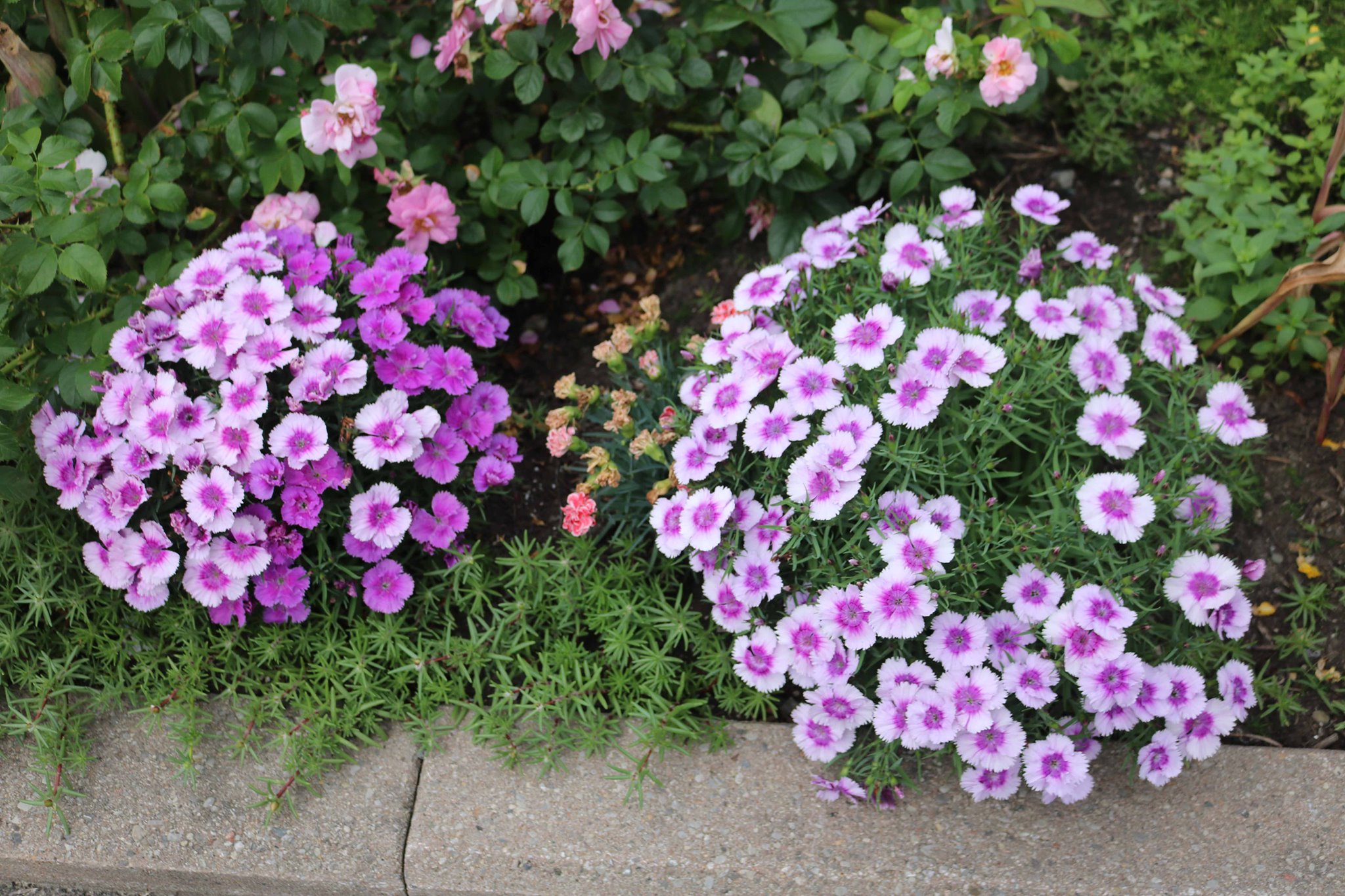
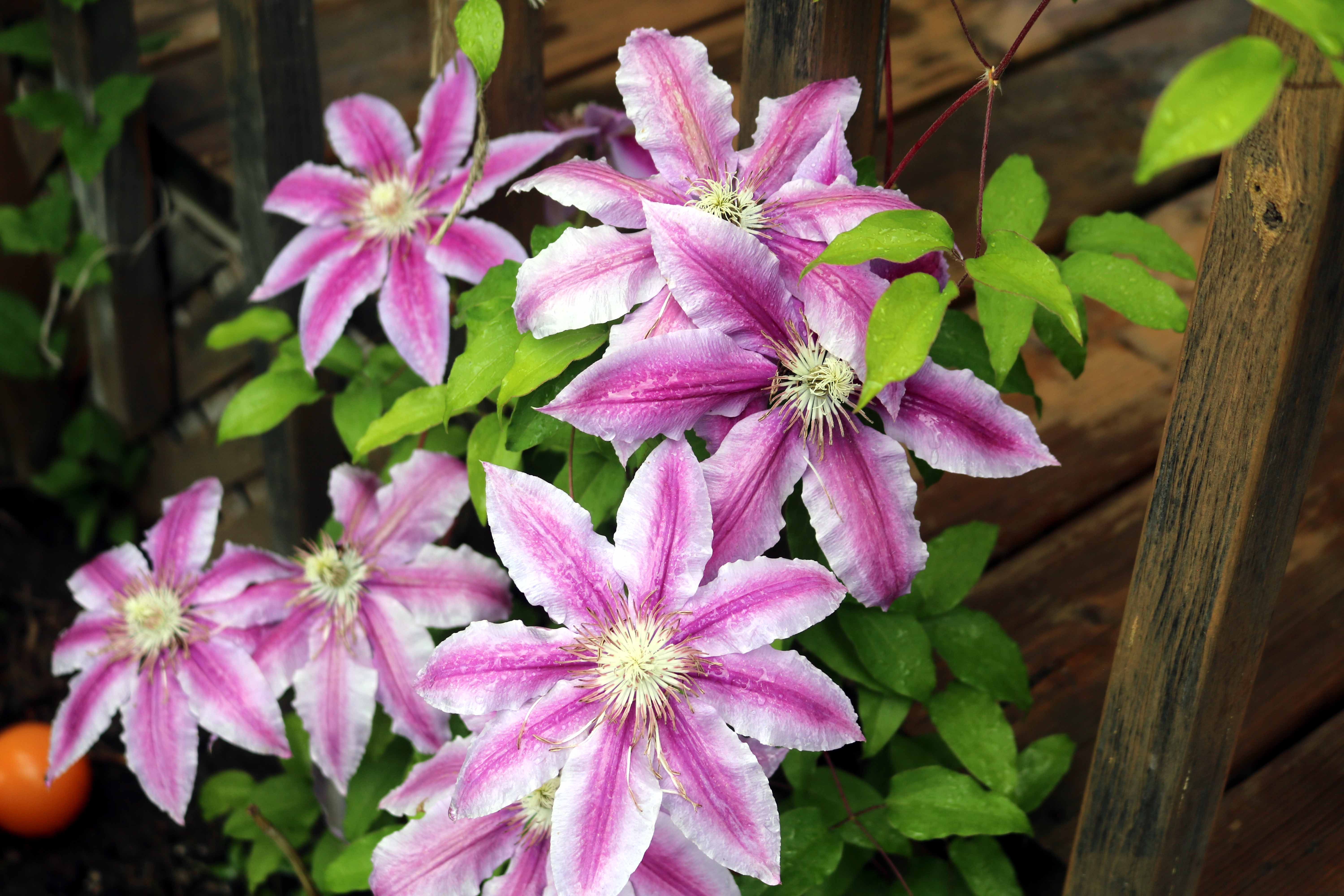
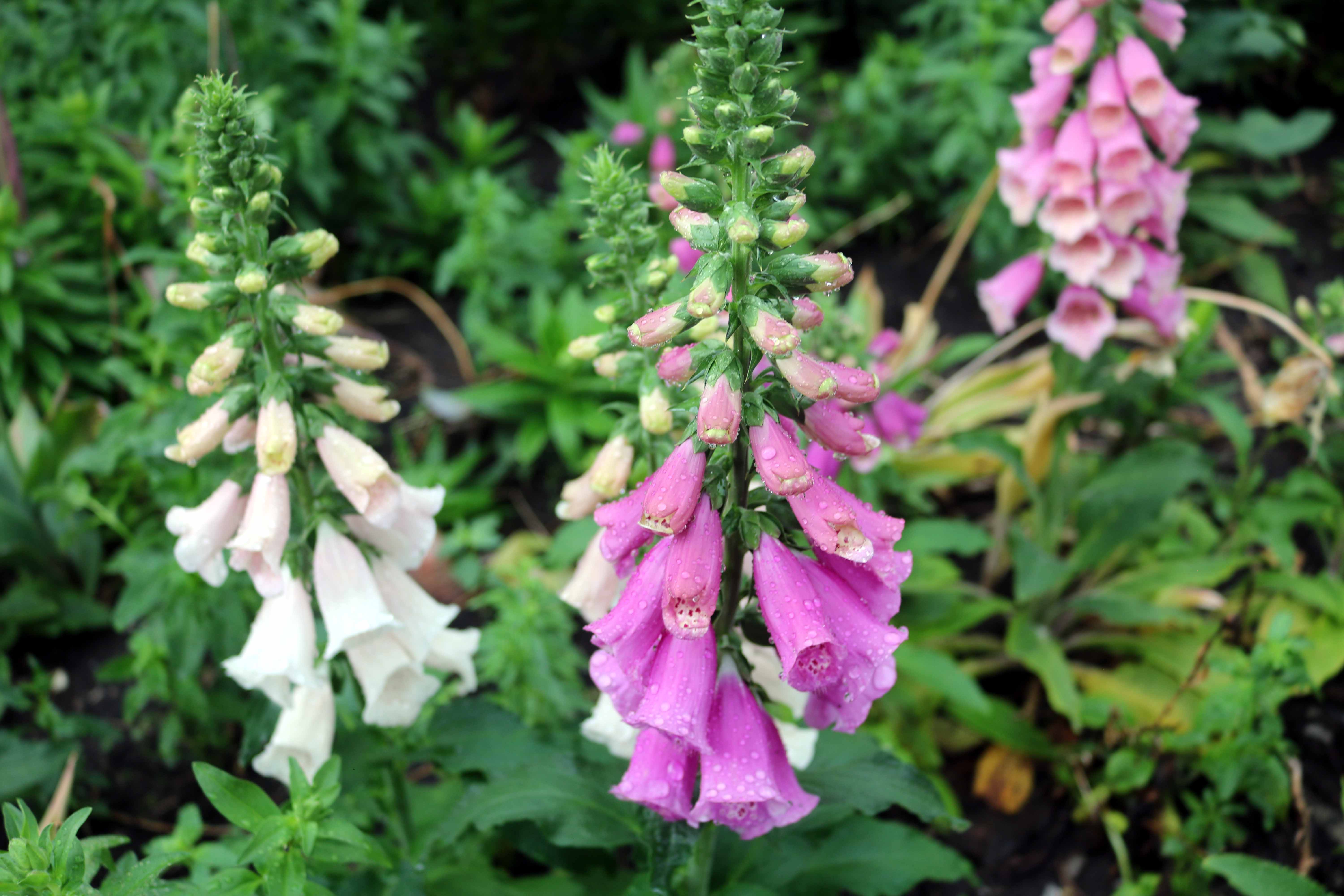
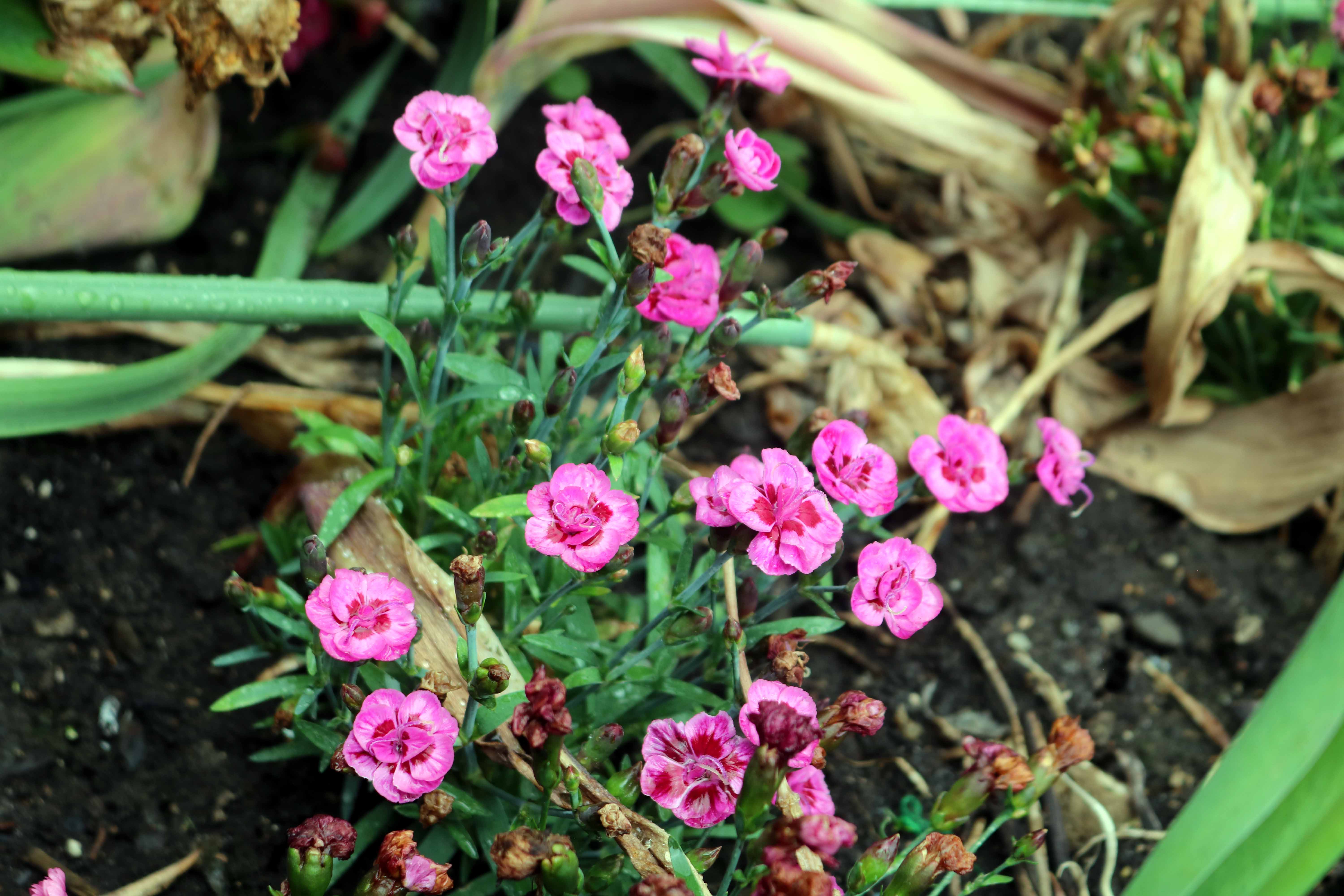
June marks the end of the Tulip season in our garden. June is the month of Pinks and Peonies. The pink colour stands out on the lush green background of the lawn.Neon Star- characterised by their fragrant fluorescent pink blooms, used as edging plants in our garden. The vibrant pink flowers cover the evergreen, blue-grey foliage.Rock Soapwort is a vigorous, low creeping plant. Plants form a low mound of bright-green leaves, smothered by starry bright-pink flowers.Clematis is one of the showiest vines you can grow. With many types of shapes and colours, these plants dress up any kind of structure they climb.Lonicera Keckrottii, named after German botanist Adam Lonicer (1528 – 1586)- commonly called gold-flame honeysuckle, this creeper features extremely fragrant rose pink flowers with yellow interiors. Here it forms a screen for our front sit-out.Thyme flowers are typically lavender-colored and edible. They grow at the top of the stems in a sphere-shape with elongated vertical spikes.Foxgloves are eye-catching tall, slender flowering plants with flowers in clusters of tubular shaped blooms in colors of white, lavender, yellow, pink, red, and purple.Dianthus, also called pinks, is treasured for its grass-like, blue-green foliage and abundant starry flowers. They attract butterflies and hummingbirds, as well as pollinating insects.Peony is named after Paeon (also spelled Paean), a student of Asclepius, the Greek god of medicine and healing.Marco Polo described Peonies, when he first saw them as ‘Roses as big as cabbages.’They are also the 12th anniversary flower – because the peony symbolises honour, fortune, and a happy relationship.. It is the state flower of Indiana.Peonies are native to China. They are highly valued there, and are often referred to as the “king of flowers”. They were the national flower prior to 1929, when they were replaced by the plum tree. Chinese name for the peony is ‘Sho Yu’ meaning ‘most beautiful.’ Chinese have an annual celebration to honor the Peony – the Luoyang Peony Festival.They are regarded as a symbol of good fortune and a happy marriage. Which are important things for your future life! That is why you find them in all the marriage bouquets in North America. Pink: is most romantic form of Peony, making it the ideal color for wedding bouquets and table arrangements.Peonies come in every color except for blue. Pink, and white, are the most popular colours. The Peony features five or more large outer petals called guard petals. At the center of the Peony are the yellow stamens or modified stamens.Deep Red: is most prized in China and Japan, and has the strongest ties to honour and respect. It’s also the most symbolic of wealth and prosperity in those cultures.White or Very Pale Pink: symbolise bashfulness, making it a good choice for communicating your regret over embarrassing yourself or someone else. Ideal for those times when you’ve said or done something wrong and want to apologise. Who can hold a grudge when a beautiful bouquet of white peonies shows up at their door??June 20, 2021 – Summer Solstice – marks the beginning of Canadian Summer. It is the time when the roses come to full bloom.
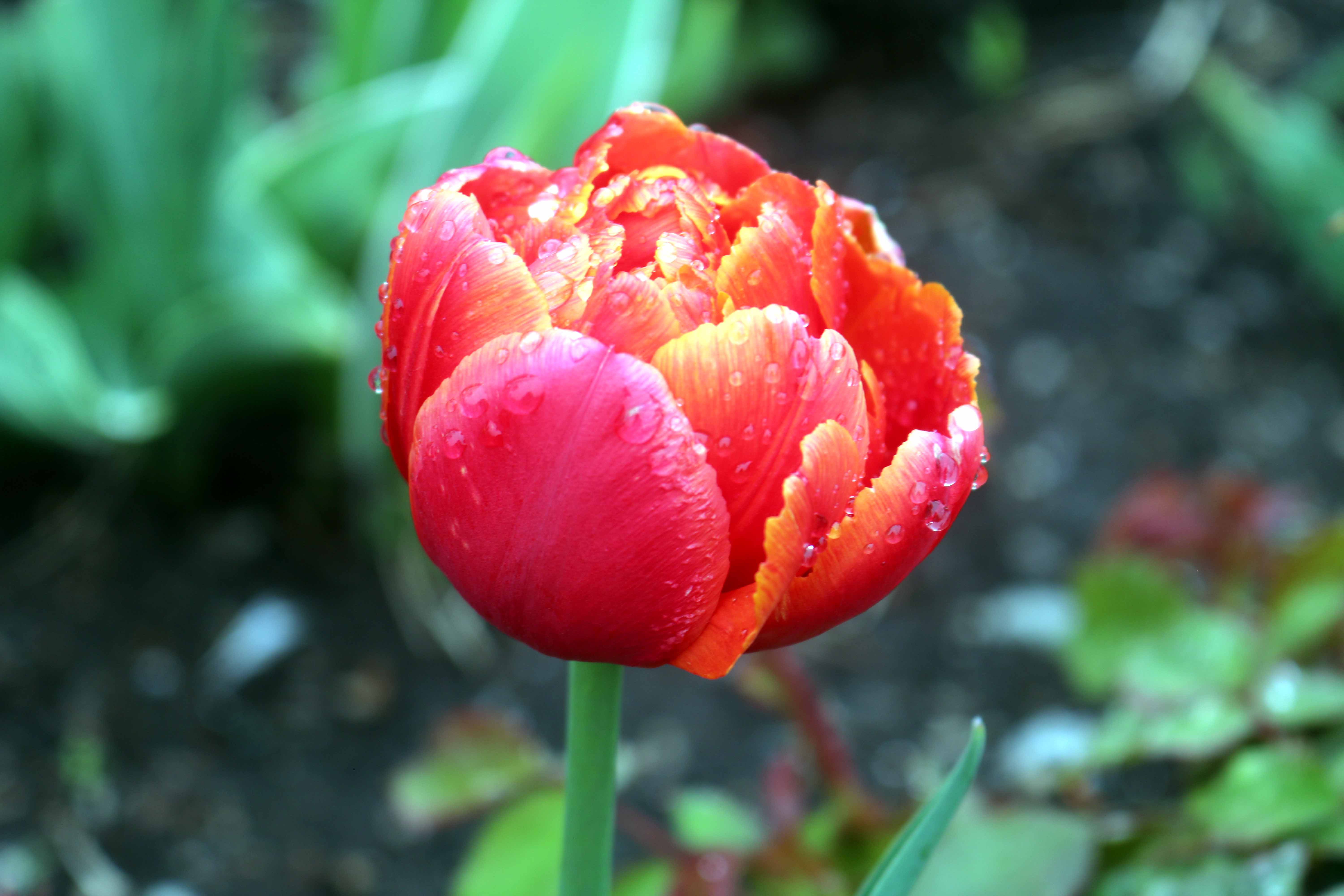
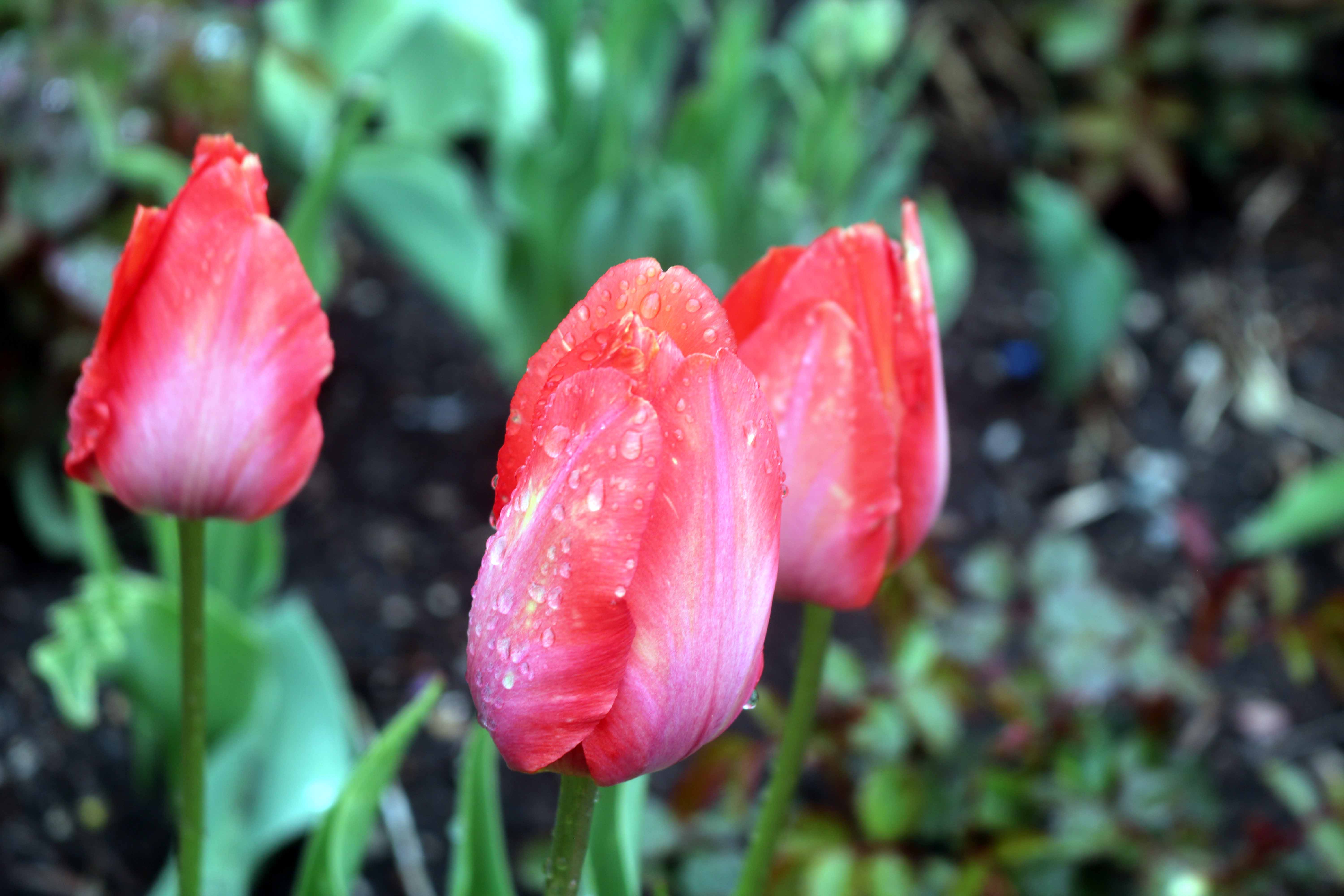
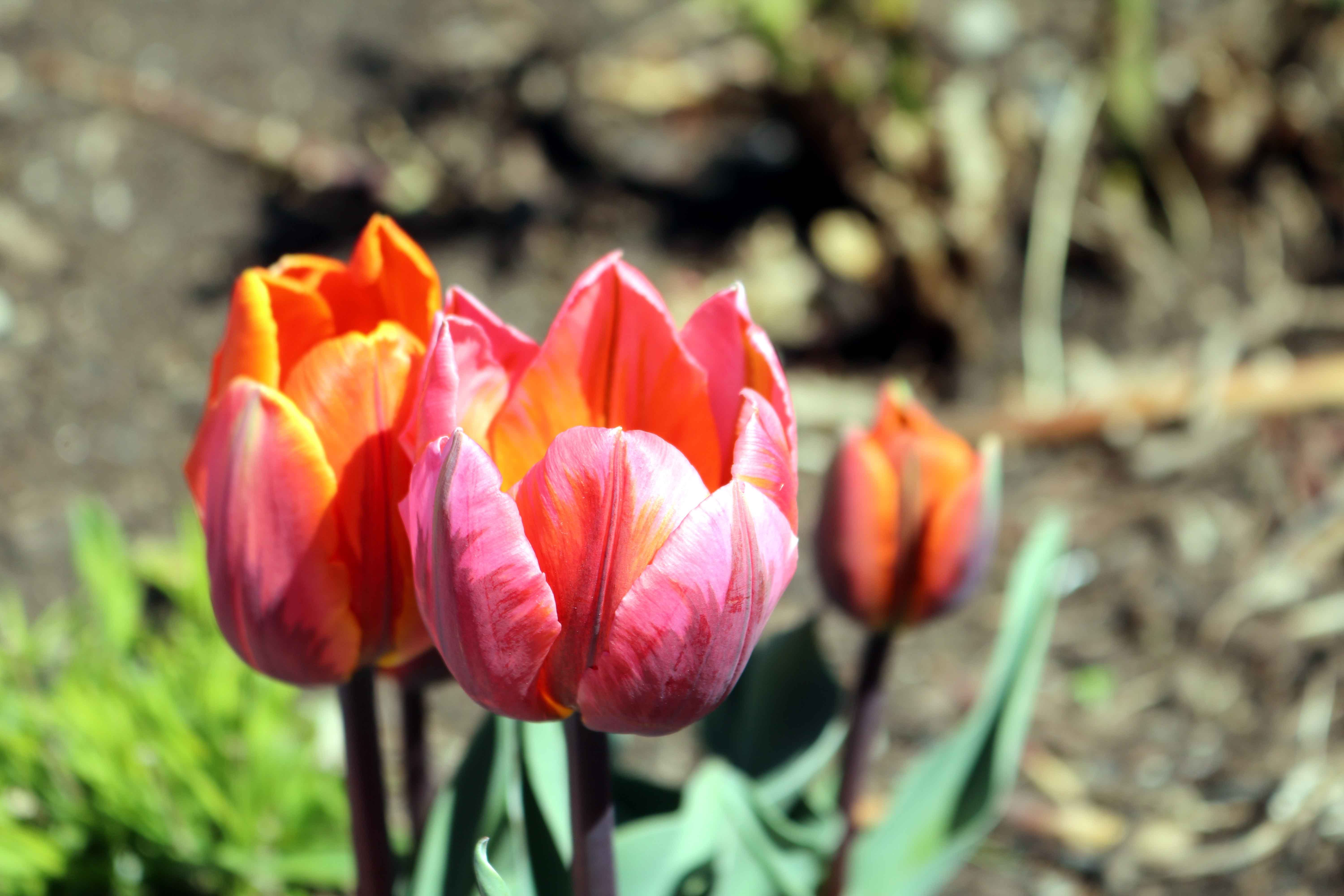
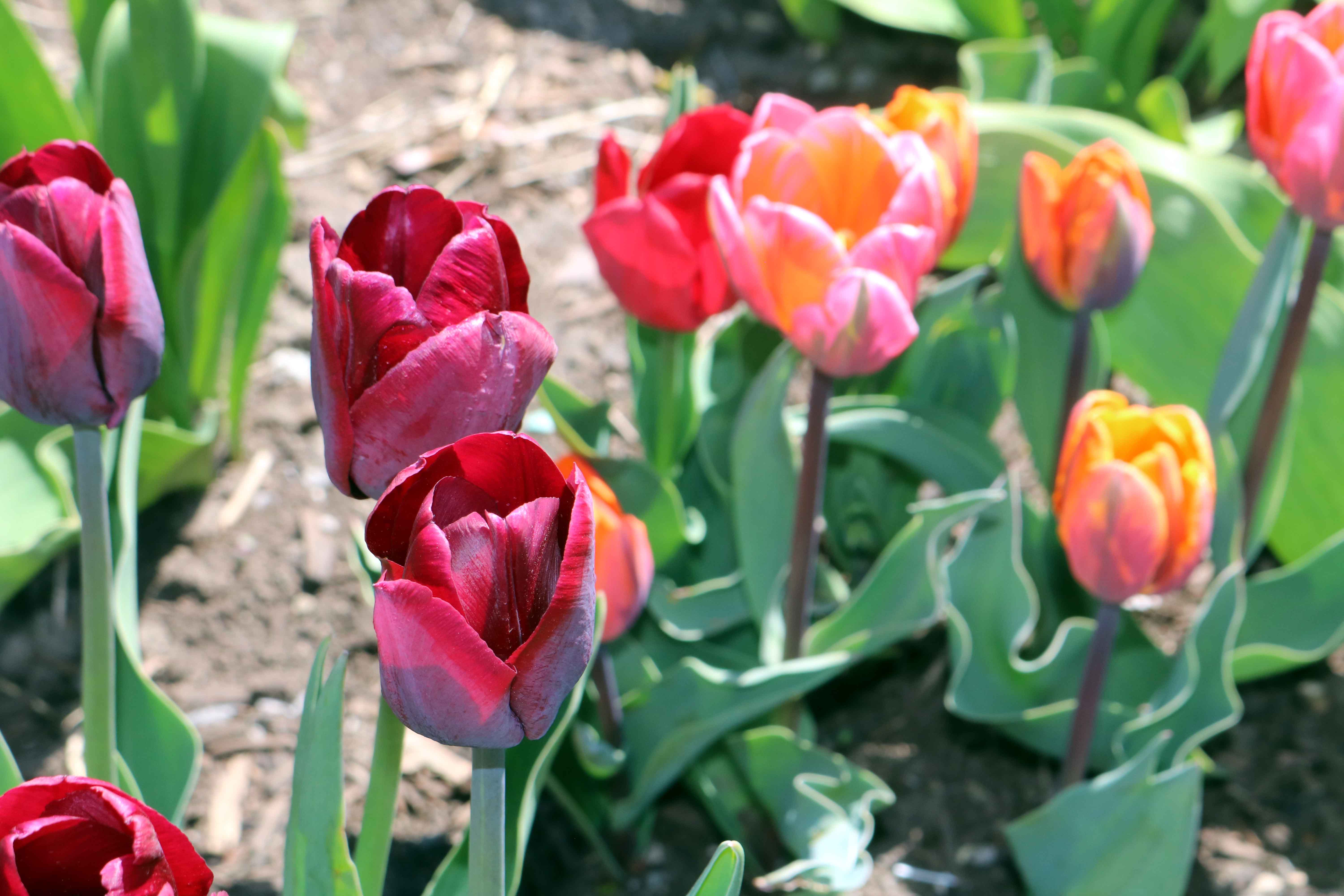
Our Garden – All set for the Spring.I wandered lonely as a cloud That floats on high o’er vales and hills, When all at once I saw a crowd, A host, of golden daffodils; Beside the lake, beneath the trees, Fluttering and dancing in the breezeFor oft, when on my couch I lie In vacant or in pensive mood, They flash upon that inward eye Which is the bliss of solitude; And then my heart with pleasure fills, And dances with the daffodils. (I Wandered Lonely as a Cloud By William Wordsworth) As I walked through the tulips this May morning;I was welcomed by the nature with its colourful awning;It struck a gleaming chord in my mind;My camera recorded it with a wind;I watched every morning in quiet admiration;The dew drops on soft petals my appreciation; The tulip flowers in the cool breeze swayed,It brought a cheer and my mind braid.I love my tulips, they grace us and wilt away;If only people too grace this world and fade away.
Prime Minister Justin Trudeau called it the “greatest mobilisation effort Canada has seen since the Second World War.”
Thousands of Canadians, with a wide variety of experiences and expertise, have volunteered their time to help track COVID-19 cases across the country. The voluntary task force members were assembled by the federal government in late May and early June of last year. The task force then began to evaluate the scientific, technical and logistical merits of potential vaccine suppliers. Volunteers were called on to help with three key areas: case tracking and contact tracing, assessing health system surge capacity, and case data collection and reporting.
The next task for the volunteer force was vaccination. St John Ambulance was the leading organisation delivering training to those who signed up as volunteers . The only criteria is that the volunteer be between the age of 18 and 69, have at least two or more A-levels or equivalent, be at low risk of Covid-19 and be prepared to undergo a reference check. In October, the Joint Committee on Vaccination and Immunisation recommended the Government introduce a new national protocol to allow non-medics to administer the Covid vaccine. Then, thousands of volunteers with no medical background were also trained to administer the vaccine. The law facilitated more healthcare workers – such as paramedics, physiotherapists or student doctors and nurses, to vaccinate.
The volunteers were assigned the task of:
Supporting patients before or after their vaccination.
Providing reassurance.
Dealing with any medical emergencies.
React to any immediate adverse reactions.
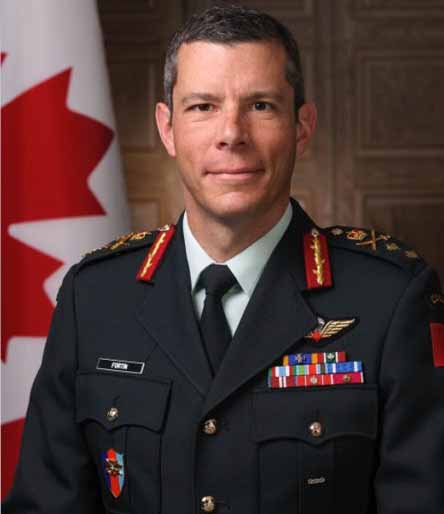
Major General Dany Fortin, with nearly 30 years of military experience is responsible to oversee the herculean logistical effort to ensure vaccines reach across the country and into the arms of millions of Canadians. General Dany is one of the best operationally-experienced leaders. Canadians could not have asked for somebody better; somebody who understands the leadership challenges, the planning challenges and the logistics challenges. The effort has been underway for some months now, where they have been working out what they predict will be the supply line bottlenecks and difficulties. Previous US President Donald Trump appointed four-star Army General Gustave F Perna to be the chief operations officer for that country’s ‘Operation Warp Speed’ in May.
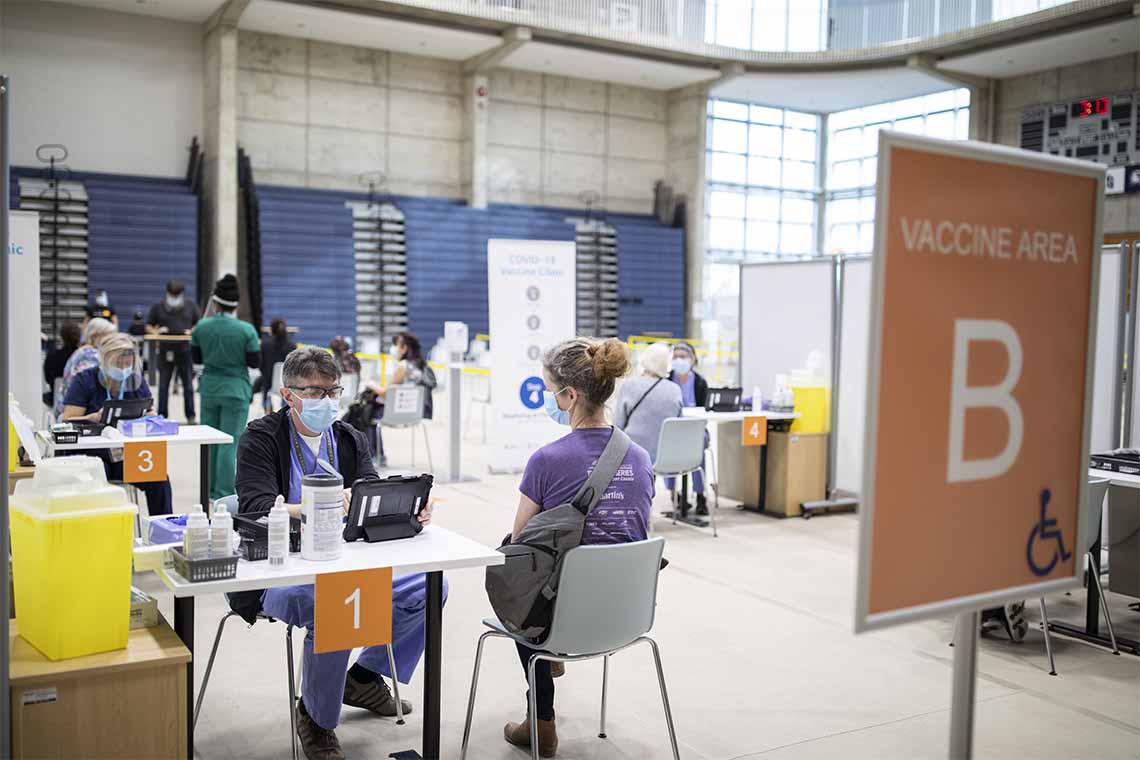
On 20 April, I was scheduled for my vaccination at University of Toronto Mississauga (UTM) campus at 11:15. I was advised to reach there only ten minutes before the scheduled time. UTM joined forces with Trillium Health (our public health agency,) to open a mass vaccination clinic in the campus’s Recreation, Athletics & Wellness Centre on March 1. It’s expected that the clinic could ultimately vaccinate up to half a million people. UTM offered space and equipment, such as ultra-cold storage freezers, to support these critically important initiatives.
As I parked my car, there were volunteers – mostly university students, to guide us to the vaccination centre. We were then requested to answer a questionnaire on the Trillium Health website using our cellphone. Those not in possession of a cellphone were helped by the volunteers using their PDAs.
As we entered the centre, our temperature was recorded and there were about ten counters manned by volunteers who carried out necessary documentation in less than five minutes. After that we were ushered into the gymnasium where I was administered the vaccine by a sexagenarian lady volunteer.
After the vaccine was administered, I thanked her and said “I did not realise that you did it so fast and that too with no pain.”
“Over forty years of experience as a nurse, young man! Our children and grandchildren are proud that I volunteered for this,” she replied with a smile.
We were then ushered into a waiting area with chairs placed maintaining social-distancing norm. We had to wait for 30 minutes and at the end of it we were issued with our vaccination certificate bearing the Trillium logo of Ontario Ministry of Health
On social-media, a friend, an Indian, now settled in UK commented “For Indians the mode of transport is a status symbol. When my uncle became a Sub-Lieutenant from a Naval rating, the first thing he did was replace push bike for a scooter. In U.K. I have seen Lord Chancellor Hailsham and Prime Minister David Cameron riding bike to the Parliament.”
Indians carry the very same attitude it to the North American shores too – all riding BMW/ Mercedes/ Audi. You will hardly find Indians driving any other brand – even if their salaries are meager.
One Sunday, at the Malayalam Syrian Orthodox Church in Canada, a man told me “Why are you driving on a Honda? You can easily afford a BMW!“
With Veteran General Hariz at Niagara
“I’m comfortable driving a Honda, Why invest so much in a BMW? The gasoline needed is the higher grade which is costlier and the cost of maintenance too is high,” I replied.
I was taken aback by his reply “If you want people to respect you in this church, then you must drive a BMW.“
Remember – Jesus went to the church riding a poor donkey!!! No one should have valued him then!!!!
I said “My ‘VETERAN’ license plate is much more valuable than your BMW. There is many BMWs in the parking lot. Show me another car with a Veteran plate???”
The Veteran Licence plate is available to those who have honourably served in in the Canadian Armed Forces, including Reserve Forces, the forces of the Commonwealth, or its wartime allies. Indian Army Veterans too fall in this category. Indian Army fought the two World Wars alongside the Canadians as part of the Commonwealth and they respect that association.
Canada values Veterans’ contribution, dedication and commitment to serving and protecting our country. The licence plate features a Red Poppy with the word ‘VETERAN.’ The poppy has been a symbol of those who died while fighting for peace since it was first distributed in Canada in 1921. The plate can only be used by the veteran and is non-transferable. In demise of the Veteran, the plate can be held by the family as a souvenir.
Veteran licence plate holders can park for free at on-street metered parking spaces and in municipal paid parking lots in many municipalities. Some parking lots have parking spaces earmarked for Veterans.
With Veteran Air Marshal TD Joseph at Niagara Vinery
In Ontario province of Canada, a regular car licence plate consists of four alphabets and three digits with a crown in between. One can choose to include graphics such as the loon, a trillium, or the logo of your favourite professional sports team, community organisation or university on your personalised licence plate. A personalised licence plate or a Vanity Plate may contain 2 to 8 characters (letters and/or numbers) without a graphic and with a graphic, the maximum is six characters. Thus a personalised licence plate for a veteran can have only six characters as the Red Poppy graphic is to be placed. Offensive meanings or derogatory, profane, racist, sexual, religious, as well as references to a variety of subjects, drugs and alcohol, political opinions, criminal activity, etc are considered objectionable.
With Veteran Brigadier Ram Chillar at Toronto Lake shore
The story of the Triumphal Entry is so pivotal that it appears in all four Gospel accounts (Matthew 21, Mark 11, Luke 19, and John 12). It depicts Jesus riding into Jerusalem on the back of a donkey’s colt—an animal that had never been ridden before.
Today, Christians worldwide celebrate this event as Palm Sunday, the beginning of Holy Week. It sets the stage for the Passion: the journey toward Good Friday’s crucifixion and the eventual victory of Easter Sunday. Jesus entered Jerusalem fully aware that this path would end in a sacrificial death for the sins of humanity.
The date of the first observance of Palm Sunday is uncertain. A detailed description of a palm processional celebration was recorded as early as the 4th century in Jerusalem. The ceremony was not introduced into the West until much later in the 9th century.
Many churches, distribute palm leaves to the congregation on Palm Sunday to commemorate the Triumphal Entry. The worshipers take home the venerated palm leaf and display it near a cross or crucifix or place it in their Bible until the next year’s season of Lent. Some churches collect baskets to gather the old palm leaves to be burned for Ash Wednesday or Christmas.
Why did he ride on a donkey?
Mathew 21 says ‘Jesus sent two disciples, saying to them, “Go into the village in front of you, and immediately you will find a donkey tied, and a colt with her. Untie them and bring them to me. If anyone says anything to you, you shall say, ‘The Lord needs them,’ and he will send them at once.”
In those days in that land, horses were owed by the nobility and donkeys by the lower society – often animals of burden used by the potters, washermen, load or water carriers, etc. No one owning a donkey would have had the courage to refuse or fight against the noble looking disciples. Irony of the narration in all the Gospels is that none speaks about returning the donkey to its owner.
All the prophets before Jesus were military Generals and they all must have rode on a horse, dressed in complete nobility, carrying a sword. Here came Jesus, on lowly donkey, with neither any military ceremonial uniform nor a sword. He came with a smile on his face and heart pouring out with his Godly love. Now compare Jesus triumphant entry with that of our Bishops – riding on a luxury sedan with a flag flying on their cars, dressed in all gold and finery!!!!!As He rode, the crowds cut palm branches – symbols of goodness and victory – waving them in the air and laying them on the path. They shouted, “Hosanna to the Son of David! Blessed is he who comes in the name of the Lord!” (Matthew 21:9).
Riding a donkey or a horse that has never been rode upon is a very difficult task. The animal did not have a saddle, hence the disciples removed their cloaks and spread it on the animal’s back to act as a saddle. Still, it is a very difficult ride – Ask anyone who ever rode a bare-back horse!! When we were cadets at the National Defence Academy, during horse-riding classes, bare-back riding (without a saddle, but with a blanket,) was the most dreaded one.
Jesus’ purpose in riding into Jerusalem was to make public His claim to be their Messiah and King of Israel in fulfillment of Old Testament prophecy. Matthew says that the King coming on the foal of a donkey was an exact fulfillment of Zechariah 9:9, “Rejoice greatly, O Daughter of Zion! Shout, Daughter of Jerusalem! See, your king comes to you, righteous and having salvation, gentle and riding on a donkey, on a colt, the foal of a donkey.”
It is the story of the King who came as a lowly servant on a donkey, not a stallion, not in royal robes, but on the clothes of the poor and humble. Jesus Christ came not to conquer by force as earthly kings but by love, grace, mercy, and His own sacrifice for His people.
A Modern Reflection When we compare the Triumphal Entry to the entries of modern religious leaders, the contrast is stark. While Jesus rode a borrowed beast of burden, many of today’s bishops traverse their cities in luxury sedans with flags flying, dressed in gold and finery.
Palm Sunday reminds us that the true King did not demand a throne; He borrowed a donkey. He did not carry a sword; He carried a heart full of Godly love.
Our family friend and travel partner, Jijo Sptephen, he is a nurse with a Long-Term-Care-Center, catering for senior citizens. It was chivalrous of Jijo that during the pandemic he did not miss a day’s work and has been a great motivator for the staff at the Care-Center. With his wit and humour, he has a knack of keeping every one in high spirits. We have experienced it many times during various trips together.
As he is in the front-line taking care of seniors, he was amongst the first few to receive the COVID19 vaccine in Canada. He called me up after vaccination and said that he is safe now and there are no side-effects as being propagated in the social media.
The literature handed over to him said ‘Some people may experience side effects from the vaccine, but they will likely be mild to moderate and resolve after a few days. Some of the symptoms are part of the body’s response to developing immunity.
Serious side effects after receiving the vaccine are rare. Should you develop any serious symptoms or symptoms that could be an allergic reaction, seek medical attention right away. Symptoms of an allergic reaction include:
Hives (bumps on the skin that are often very itchy.)
Swelling of the face, tongue or throat.
Difficulty breathing.
After his vaccination, he picked up his wife Annie from work. On reaching home, Jijo called me over the phone and said ”Reji, Please don’t get vaccinated for COVID!”
A bit surprised and assuming that he had had some sever side effects, I asked “Hope everything is fine?‘
“I,m fine, but you don’t get vaccinated before Marina,” he advised.
“Why so?” I enquired.
While they were driving home after Jijo picked up Annie, she asked Jijo to stop at the grocers to buy vegetables. After he parked the car, she handed him the shopping list and said “You go and buy everything as per this list. I’m staying in the car. You are protected against COVID19 as you are vaccinated!!!!”
Every morning after seeing off my wife to her pharmacy at 8:30, I drive to the Square 1 Mall, about 400 meter from our home. I drive to the mall only in the winter as the walkways are slippery
One morning Mr Mark, our neighbour inquired, “I always see you with a backpack. What do you carry in it?” Old habits die hard, and you can never take the soldier out of me.
“Two bottles of water, three energy bars, a packet of tissues, a bottle of moisturising lotion, a tube of hand cream, a cap, a pair of gloves, a neck warmer, a face mask and some cash,” I said, reminiscent of our cadet days when we had to rattle out the contents of the backpack of our Field Service Marching Order (FSMO.)
This morning as I stepped out of my room with my backpack, our son asked, “What do you do while walking? Why don’t you get a pair of earphones? You can listen to either music or a podcast while you walk.” A wise idea! I thought and I immediately placed an online order for a pair of earphones.
The Square 1 Mall opens at 6 am, not for shoppers, but for the cleaning staff and for the salespersons to set up their stores. The aisles are nearly empty where it is always warm at +25°C with music and it never rains or snows. The ground is even and level and there is no chance of slipping and falling. Morning walkers, mostly senior citizens use the facility.
Another attraction to walk in the mall are the washrooms at every turn, all spic and span, providing various options.
Square 1 Mall has two levels, the upper and the lower. Walking fast through the aisles at each level takes me about 15 minutes. I walk on the upper level for 15 minutes, come down to the lower level and walk for 15 minutes and repeat it.
What do I do while I walk for 60 minutes?
Thanks to Whatsapp, I use this time to call up my friends and relatives in India to exchange pleasantries. It is the most convenient time – between 6 and 7 pm in India.
While walking, I enjoy the window displays of various stores, especially fashion, attire, accessories, shoes and perfume stores. While great products and excellent customer service can keep customers coming back, visuals and branding are the elements that get people to walk into a store and the store’s window display plays a big part in this. It got to be fresh and attention-grabbing as possible, positioned at eye level to draw customers’ attention. The message got to be conveyed to a stroller in three seconds and it is not nearly enough time to read anything.
As this is the Holiday Season with the Christmas and the new Year around the corner, it is the time most stores in the mall do maximum business, notwithstanding the pandemic. Thus, all stores put up their best window displays, and it keeps changing too. I look for the changes like the game where one got to identify ten differences in two similar images.
During the walk, I plan out various activities for the day, many based on instructions from Marina in the morning. It is all about grocery shopping or a visit to our family doctor, buying the correct cut of meat at the butcher’s, trying to figure out the ingredients of the marinade for the meat to be cooked that evening – the list is endless.
I often get calls from her after she reaches her pharmacy about an impending medication delivery with instructions regarding the time of delivery based on the patient’s availability at their home. Sometimes, it is a query about a report, an invoice or a payment. In fact I am the CEO, accountant and delivery boy of our company with Marina and I as partners.
These days it is all about Christmas with the mall and the stores all decked up with Christmas themes with red and green – the Christmas colours. I enjoy all the Christmas trees put up all around the mall.
Last week while walking I observed various advisory and warning signs put up in view of the pandemic. Many a thought flashed through my mind. Why can’t they be creative? Why do they have to make it on a drab grey background instead used the Christmas colours? Why can’t they base it on a Christmas theme with the Santa and his eight reindeer to depict social distancing?
A couple of days ago, I tried to measure my ‘lateraldeviation’ while I walked. In medical terms, it may be classified as gait dynamics. The first time I attempted it was as a cadet to measure my deviation from a straight line as I walked on a pitched dark night during various navigation exercises. I walked along the side lines of the soccer field, and it was about a quarter meter to my right when I traversed 100 meters.
Here I walked along the line made by adjoining tiles on the aisle floor for 100 meters and it was still about a quarter meter to my right. Neither age nor my being in the Western hemisphere altered it. I should have measured it while vacationing in Peru in the Southern hemisphere. May be, it could be to my left. Anyhow I reserved it for my next trip to Australia and New Zealand.
Recently the social media was abuzz with the news of Indian soldiers’ pension being cut by 50% for those seeking voluntary retirement after 20 years of service. One suggested methodology is to follow the Canadian Armed Forces Pension scheme. Canadian Armed Forces Pay scales are second only to the Australian.
It is a well established fact that the Armed Forces have a steep pyramidcal structure – more at the officers level – and also at the soldiers level. The need is to have a young and large base – Lieutenants, Captains and Majors for officers and Privates for soldiers.
Canadian Armed Forces offers 50% pension on completion of 10 years of service. Officers who continue further are only put through command and staff courses and they rise up to command battalions/ regiments. This results in:-
Those wishing to retire after 10 years of service are generally about 35 years old and many even get married and raise their families on retirement.
The 50% pension assures them a constant income and facilitate them to embark on a new career.
The pyramidical structure of the Forces is considerably reduced.
Those wishing to serve beyond 10 years receive their pension on a sliding scale to be 100% with 20 years of service.
Among those invalidated out or those who sought voluntary retirement due to medical disabilities, about 40 per cent were for mental health, about half of those were diagnosed as post-traumatic stress disorder (PTSD).
Most Indian Army soldiers and officers do suffer from PTSD due to intense combat situations they face – Canadian Armed Forces hardly face any such situation. Luckily the military echelons never accepted the existence of PTSD in the Indian Army – hence no claimants for disability pension.
Canadian Veterans who qualify for disability benefits receive up to 75 per cent of the salary they were earning when they left the Forces. They are guaranteed benefits for 24 months initially, or until age 65 for those completely disabled, after which the Canadian Pension Plan (CPP) kicks in.
The rise of mental health claims is often chalked up to Canada’s difficult 2002-11 combat mission in Afghanistan. The Treasury Board of Canada Secretariat (TBCS) noted that the Afghanistan mission was far from the only source of mental health risks. Even at home in Canada, military service means moving often and spending time on duty far from family – a standard practise for most Indian soldiers.
Common disability among Canadian soldiers for Fiscal Year 2018–19 were:-
TINNITUS 6,726
HEARING LOSS 6,139
PTSD 2,440
ARTHROSIS OF KNEE 842
OSTEOARTHRITIS KNEE 781
DEPRESSIVE DISORDERS 721
LUMBAR DISC DISEASE 629
OSTEOARTHRITIS HIP 617
CERVICAL DISC DISEASE 578
FACET JOINT SYNDROME 50
Tinnitus is defined as the perception of a sound in one or both ears or in the head when it does not arise from a stimulus in the environment. A single indication or complaint of tinnitus is not sufficient for diagnostic purposes. The condition must be present for at least 6 months. Individuals who experience tinnitus have provided many different descriptions of what the tinnitus sounds like to them. Descriptions include high-pitched sound, ringing sound, whistle, squealing sound, hum, pulse-like sound, etc
There are two general types of Hearing Loss – sensorineural (sometimes called perceptive) and conductive hearing loss. Sensorineural hearing loss is hearing loss due to a defect in the cochlea or the auditory nerve whereby nerve impulses from the cochlea to the brain are attenuated. Conductive hearing loss means the partial or complete loss of hearing due to defective sound conduction of the external auditory canal or of the middle ear. A mixed hearing loss is a combination of sensorineural and conductive. A hearing loss disability exists when there is a Decibel Sum Hearing Loss (DSHL) of 100 dB or greater at frequencies of 500,1000, 2000 and 3000 Hz in either ear, or 50 dB or more in both ears at 4000 Hz.
Most Indian Soldiers and Veterans will vouch that a great chunk of them are suffering from Tinnitus or Hearing Loss and also that most soldiers under their command suffered from it – especially those from the Armoured Corps, Regiment of Artillery, Aviation and also Mechanised Infantry.
Will the Indian Military hierarchy ever be willing to accept the existence of Tinnitus, Hearing Loss or PTSD?
With the convergence of a full moon, a blue moon, daylight saving time and Saturday celebrations with the pandemic with high transmission rates, Halloween 2020 is bound to be remembered in Canada.
The word ‘Halloween’ means ‘hallowed evening’ or ‘holy evening.’ It is believed to be of Scottish Christian origin, dating back to mid Eighteenth Century. Halloween falls on 31 October, the evening prior to the Christian All Saints Day on 01 November.
Halloween came to North America with the influx of Scottish and Irish settlers by early Nineteenth Century. It was gradually assimilated into mainstream society. By the first decade of the Twentieth Century, it was being celebrated all over North America by people of all social, racial and religious backgrounds.
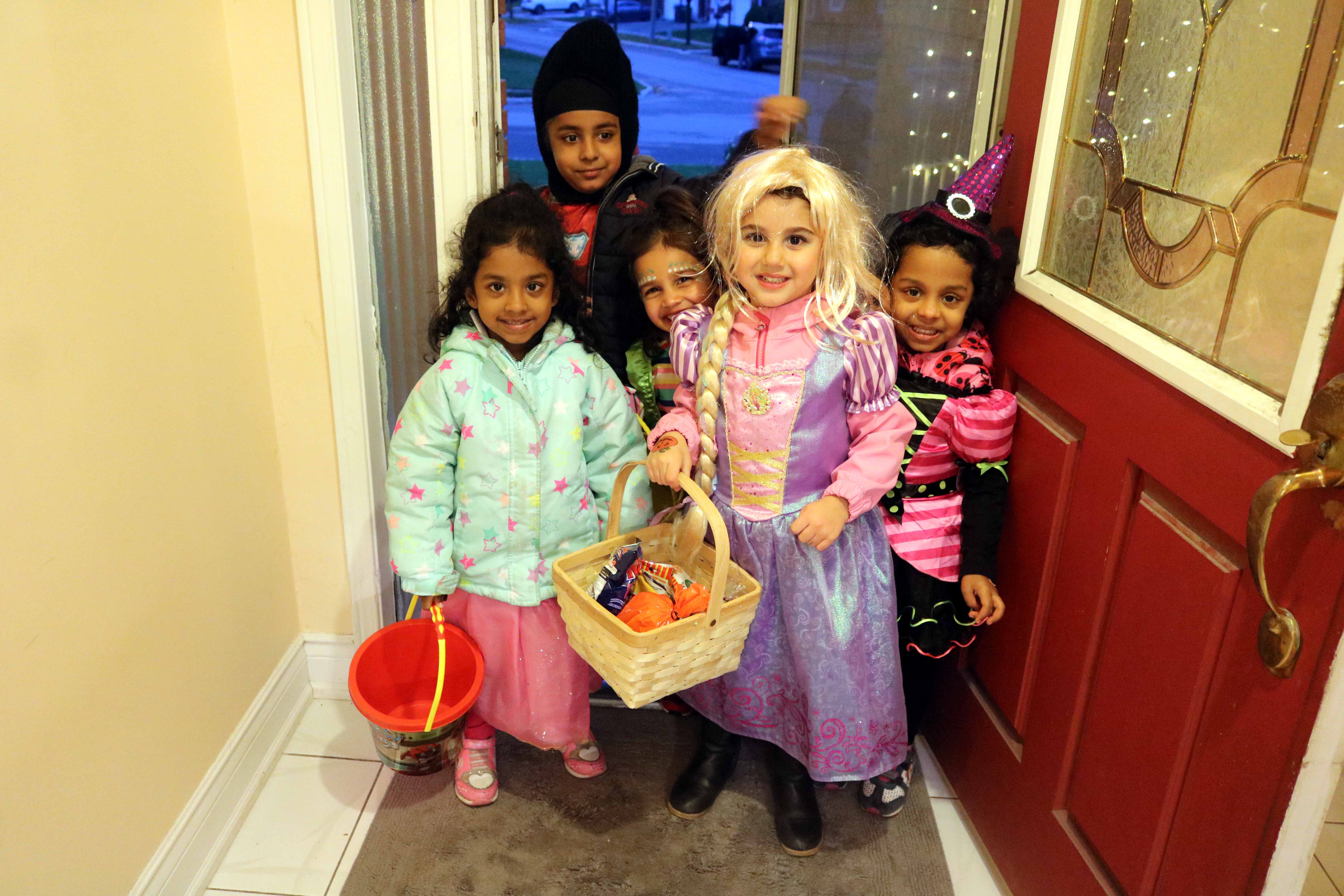
Trick-or-Treating is a customary celebration for children on Halloween. Children go out in costume from house to house, asking for treats such as candy or sometimes money, with the question, “Trick or Treat?” The word ‘Trick’” refers to ‘threat’ to perform mischief on the homeowners or their property if no ‘treat’ is given.
Chief Medical Officer of Health of Ontario Province recommended against trick or treating door-to-door this Halloween for Toronto, Ottawa and also our city of Mississauga. Prime Minister Trudeau has declared that his three children will not venture out this Halloween for ‘Trick or Treat.‘
Most homes put up Halloween decorations as what one sees in the ‘Dracula’ movies with cobwebs, skeletons and various scary models. The most common is the ‘Jack-O-Lanterns’ which originated in Ireland where children carved out potatoes or turnips and lighted them from the inside with candles. In North America, pumpkins were cheaper and more readily available than turnips, thus carving them and making them in to Jack-O-Lanterns lit by a candle inside became a North American Halloween tradition. Whether Halloween is a devil’s holiday or not, the children really have a lot of fun and enjoy the evening going for ‘Trick or Treat’; the adults enjoy accompanying the children and also treating them at their homes. People of all ages do have a lot of fun ‘dressing up’ in the most grotesque way and they do not ever associate the devil with what they do.
31 October 2020 night happens to be a ‘Full-Moon Night’ and also a ‘Blue-Moon.‘ The idiom ‘once in a blue-moon‘ refers to a rare occurrence, but in fact it appears once every 2.7 years, because the lunar month – from new moon to new moon- is 29.53 days compared to 30 or 31 days of our calendar month. Hence February (with 28 or 29 days) can never witness a blue-moon. Last blue-moon occurred on March 31, 2018.
Now comes the Daylight Saving Time (DST) when we turn our clock by an hour on the first Sunday of November. This year, the day falls on 01 November. It reduces one hour to standard time with the purpose of making better use of daylight and conserving energy. Even though the Sun will rise and set as before, the clocks will show the time one hour earlier than the day before. The first to use DST was Thunder Bay in Ontario, Canada In July, 1908. Other cities and provinces followed suit by introducing DST bylaws.
DST is now in force in over 70 countries worldwide and affects over a billion people every year. The beginning and end dates vary from one country to another. In 1996, the European Union (EU) standardized an EU-wide DST schedule, beginning last Sunday in March and ending last Sunday in October. It is believed that DST showed a decrease in road accidents by ensuring that the roads are naturally lit during the peak traffic hours.
The news is ripe with Indo-China border stand-off these days. How does Canada fare in border management?
Canada and the United States share the world’s longest undefended border, running along the 49th parallel from the west coast to Lake Superior and following natural boundaries for the remainder.
Denmark and Canada share maritime boundary in the Arctic and it runs in the middle of Nares strait through which runs Kennedy Channel. This 35 km wide strait separates Ellesmere Island from northern Greenland. The strait is home to two islands – Franklin and Crozier – which falls within the territorial waters of Denmark
The third and the contested island is within the territorial waters of both Canada and Greenland, an uninhabited barren rock of 1.3 Sq km, named after Hans Hendrik, an Arctic traveller. A theoretical borderline in the middle of the strait goes through the island. According to an international treaty, any island which is in 12 miles of mainland comes under the territory of that country which technically allows both Denmark and Canada a claim over the island.
The Permanent Court of International Justice of the League of Nations in a landmark judgement of 1933 ruled the island to be a sovereign part of Denmark. The League of Nations was replaced by the United Nations after World War II and Canada claims that this decision became irrelevant with the demise of the League of Nations.
The dispute between Canada and Denmark re-emerged in 1973 when Denmark and Canada started demarcating their borders through negotiations. They agreed on all other disputes except Hans Island which was then decided to be resolved later.
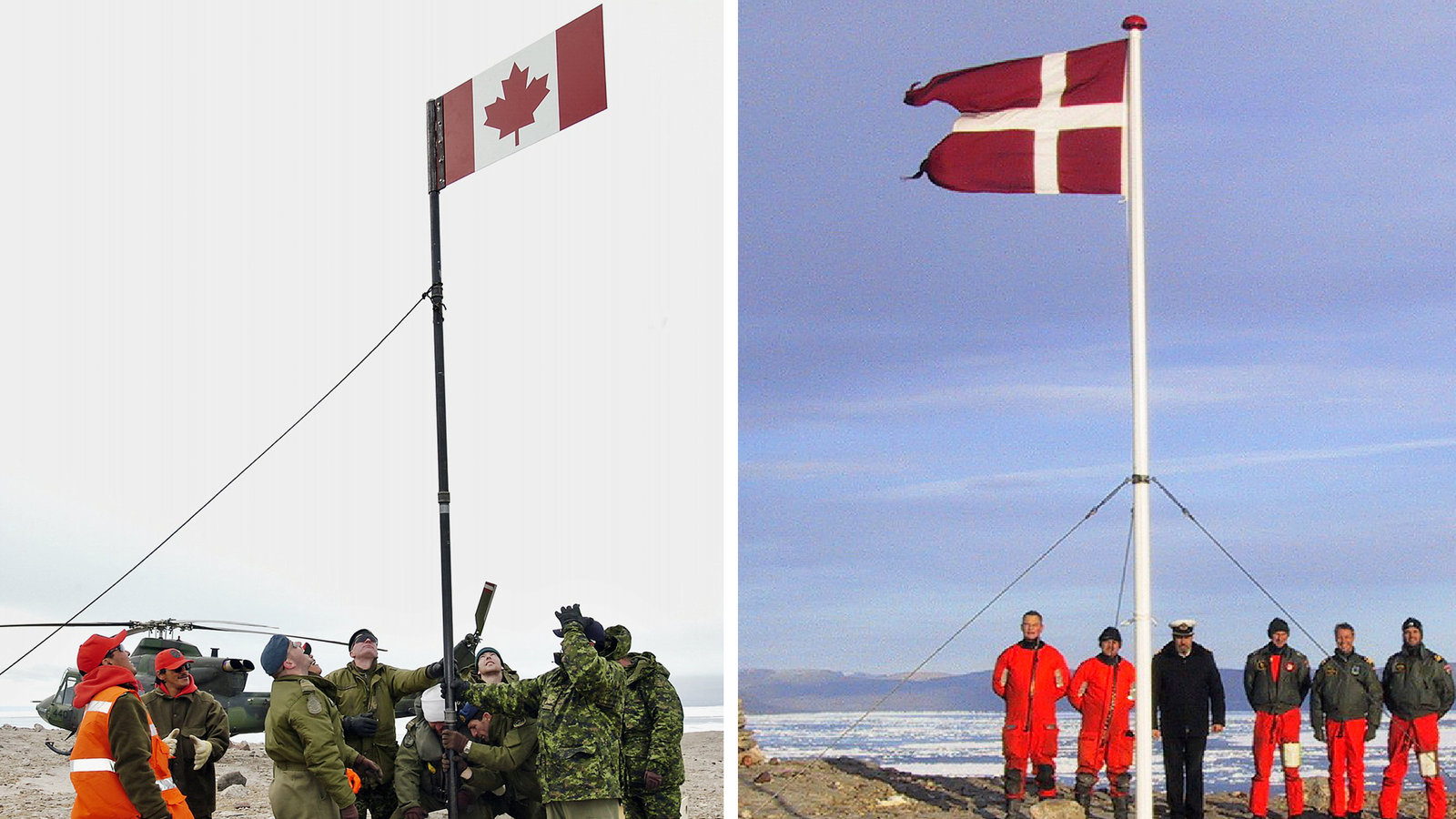
The Whisky War commenced in 1984 when Canadians sailed to the island and erected the Red Maple Flag on the island and kept a famous Canadian whiskey as a symbolic expression.
In return, the Danish Minister of Greenland visited the island and replaced the Canadian flag with the Danish flag. He took the Canadian whisky and replaced it with world-famous Danish schnapps.
This Whisky War continued until 2015, with both the armies taking turns in unfurling their national flags and placing their famous whisky for the other.
Canada and Denmark, both NATO allies, agreed to resolve dispute citing the presence of the Russian Army in the Arctic region during the cold war. On 04 May 2008, an international group of scientists from Australia, Canada, Denmark, and the UK installed an automated weather station on Hans Island. On 23 May 2018, Canada and Denmark announced a Joint Task Force to settle the dispute over Hans Island. A committee of Arctic experts was constituted to resolve the dispute peacefully. One of the main resolutions, they are thinking of, is to declare the barren stone island into condominium.
A condominium does not mean that the two countries are going to build a high-rise apartment building on the island, but it means that the island will be co-owned and co-managed by both the countries . Thus the will have both Canadian and Danish flags on it.
Marine Master Sgt. William H. Cox and Marine First Sgt. James ‘Hollie’ Hollingsworth first met as Privates, taking cover from rockets and shells raining all around them in a bunker in the Marble Mountains of Vietnam in 1968.
They made a pact: “If we survived this war, we will contact each other on every New Year’s eve“.
They did that every New Year for the next five decades.
In January 2017, 83-year-old Cox made the trip from his home in South Carolina to say goodbye to his dying friend, Hollingsworth, 80, in Georgia. That day he made a final promise to his Vietnam buddy – to stand guard over his coffin and deliver the eulogy at his funeral.
In October 2017, Hollingsworth passed away and keeping his word, the 83-year-old Cox put on his blue Marines’ uniform and turned up at his buddy’s funeral service on October 20, without the cane that the 83-year-old normally used. He stood without his cane during his vigil at the casket and at the funeral.’
They both were door gunners with a Marine Helicopter Squadron and flew many combat missions together. At the end of each mission, they had a saying, which Cox repeated at the end of Hollingsworth’s eulogy: “Hollie, you keep ‘em flying, and I’ll keep ‘em firing.”
In 1993, I met with an accident fracturing my right arm, resulting in my right arm in a cast for three months. At that time, I was posted as a Brigade Major at an artillery brigade headquarters. I owned a Yamaha Rajdoot Motorcycle then. The accident resulted in the motorcycle resting in a corner of our garage. A few weeks into this sedentary state of my motorcycle, Marina, very nonchalantly asked me whether she could ride it. She until then was riding her moped and I never took her question very seriously. I casually explained to her the gears, clutch, brake, accelerator etc and also the methodology to start and ride the motorcycle.
Little did I realise that she will take off immediately, but she did. She was the champion athlete in her school days and had represented her district at Kerala State level – no mean achievement. I did not appreciate that she was still enthralled by speed, now of a different variety. That was it – like fish to water, she took on to driving the motorcycle and I, on to the pillion with my hand in a cast, fearing the worst for my hand that wasn’t in a cast!
After three months, I was accompanying our Brigade Commander to the Field Firing Ranges. As we entered the Cantonment on our return journey, a motorcycle zipped past us. Marina was driving my Yamaha with the Brigade Commander’s wife on the pillion. Our Brigade Commander looked at me in askance and said “Your wife can drive the motorcycle, but not with my wife on the pillion. Please tell her to maintain speed limits. If some mishap happens, you can well imagine the station gossips.” I secretly wished that I could tell him that he should restrain his wife. But then, boss is boss!!
Speed in general and other activities that cause an adrenaline rush were an integral part of Marina’s DNA. She migrated to Canada in 2002 and the family followed suit in 2004. While on a family vacation to San Francisco in 2006, Marina was booked by the cops for driving at 100 miles per hour (mph) on a 65-mph highway. With the consequent heavy fine, she had to pay and a steep rise in the insurance premium, I thought she had come to terms with her obsession for speed.
During our vacation to Chicago, Illinois, in 2009, Marina went Skydiving (in tandem) from 18,000 feet, a free-fall of a minute and a half. The advantage of skydiving in the State of Illinois is that it is not mandatory to wear a helmet (even on motorcycles), but the safety goggles is a must to protect the eyes. Thus, the videos come out much better without the helmet on.
She had to prove my heavy fine hypothesis wrong when in 2010 she expressed her long cherished dream to own a motorcycle. I tried to dissuade her saying that motorcycles are not cheap and would cost a small fortune, much more than our cars. They require more maintenance and insurance is much more expensive. Also, you can drive it only for six months in Canada. In addition, we also need to procure very expensive associated gear such as helmet, jacket, pants, gloves and footwear over and above the purchase of the bike.
Unable to convince her, I was out with the ultimate weapon, statistics. I warned her that according to the U.S. National Highway Traffic Safety Administration, your chances of dying on a motorcycle are 35 times higher than in a car! Canadian Medical Association Journal says that motorcycles are the cause of 10% of motor vehicle deaths in the country, even though they only make up 2% of what’s on the road.
Her pharmacist friends and her elder sister who too is a pharmacist advised her that riding a bike to work may not be befitting a Pharmacy Manager and possibly look very unprofessional.
All sane advice from well-wishers and yours truly did not deter her a wee bit from her avowed intention to own and ride a motorcycle. Throwing all caution to the winds, she went ahead and passed the eye test and written examination to obtain a M1 licence – the first step to riding a bike in Canada.
The next step was to buy a motorcycle. To ride on a Canadian Highway where the speed limit is 100 kmph, a bike with an engine capacity of at least 250cc to 400cc is needed. We visited all motorcycle showrooms from Harley Davidson to Honda – much to her great disappointment, no one was willing to sell Marina a motorcycle. But Why?
In Canada, in order to buy a motorcycle, the buyer must sit on the bike with both feet flat on the ground while comfortably holding the handlebars.
They all agreed to sell her a smaller motorcycle – 100cc to 150cc which can be taken only on city streets – but she would not settle for not riding on the highways. And why would they not allow a light motorcycle on the highways? While driving on Canadian highways with a speed limit of about 100 kmph, the motorcyclists need to share the road with sixty feet long commercial trucks which are also is cruising at about 100 kmph. Due to various factors such as air pressure and airflow, a large vehicle can create heavy air turbulence. In case your motorcycle is not heavy and powerful enough, this turbulence may affect your ability to control your vehicle when passing a large one.
Well, that was the end of her motorcycle ambitions. Or was it? Perhaps, like a dreaded virus, it lies dormant in some corner of her brain to re-emerge at some opportune moment in a not-so-distant future!
Every year, the cold winter snow melts away and we welcome spring, a new beginning. This new beginning is marked in our garden by tulips.
‘April rains bring in May flowers‘ is a common saying in Canada. Tulips and daffodils do not wait for the rain and by end of April they sprout out marking the beginning of spring.
Tulip flowers last only a fortnight.
We have Early-Spring, Mid-Spring and Late-Spring varieties. Thus we extent the Tulip flower season in our garden.
This year around we did not receive many showers in April and it did have a telling effect on the quality and size of tulip plants and flowers. It is said that the tulip’s velvety black center represents a lover’s heart, darkened by the heat of passion.
At least we were lucky to have the best flowers in the city as claimed by many visitors.
Tulips Originated in Persia and Turkey and were brought to Europe in the 16th century. They got their common name from the Turkish word for gauze (with which turbans were wrapped) – reflecting the turban-like appearance of a tulip in full bloom.
Canadian Tulips have a great history. In 1945, the Dutch royal family sent 100,000 tulip bulbs to Ottawa in gratitude for Canadians having sheltered the future Queen Juliana and her family for the preceding three years during the Nazi occupation of the Netherlands in the Second World War.
The eleventh wedding anniversary flower is also tulip, it conveys forgiveness too.
Yellow tulips symbolises cheerful thoughts.
The Red Tulip became associated with love based on a Turkish legend.
Purple symbolizes royalty.
We have multi-colored varieties too.
With all of the history, sentiments and meanings of tulips, it’s not surprising that their popularity continues to endure. The wide range of colours and varieties available allows them to be used for many occasions.
Critical Analysis and Reasoning Skills (CARS) test is designed to test comprehension, analytical skill, and reasoning power by comprehension and critical analysis of a given passage. Today, it forms an important part of most competitive entrance examinations for important universities the world over. To develop this skill, the only mantra is to read more – that too from all disciplines across the board. Some of you may question how and why reading is connected to CARS? After all the answers to the questions are all there in the given passage!
The explanation is pretty simple. The more you read, the more is your ability to quickly comprehend. The more you read, greater is your vocabulary and greater is the speed of comprehension and less the chances of your not comprehending something in the passage. The more you read more will be the chances of your familiarity with the subject matter and with greater familiarity comes greater ease of analysis. So reading is fundamental to development of mental faculty …no escape!
CARS is a skill that needs to be initiated in a child as early as possible. Parents and primary school teachers play a very important role in developing this skill in children. Some of the tips for teaching critical thinking to children, as recommended by American Philosophical Association (APA), are as listed below: –
Start as Early as Possible. Children can be encouraged to give reasons for their decisions or conclusions rather than teaching them ‘formal’ logic.
Avoid Pushing. Whenever we tell our children to do things. it would be pertinent to give them reasons for the same. Some, they may understand; others, they may not.
Encourage Kids to Ask Questions. That is the only way to instill and encourage curiosity in children. They should never feel any pressure in asking questions to their parents or teachers. Many a times, children are hesitant to ask a question due to this pressure from their peers or siblings.
Get Kids to Clarify Meaning. Rather than the rote system, encourage children to explain things in their own words.
Encourage Children to Consider Alternative Explanations and Solutions. Allow children to experiment or consider multiple solutions rather than always looking for the bookish right answer. This will enhance flexible thinking.
Talk About Biases. Children can understand how emotions, motives, cravings, religious leanings, culture, upbringing, etc can influence our judgments.
Don’t Confine Critical Thinking to Purely Factual or Academic Matters. Encourage kids to reason about ethical, moral, and public policy issues.
Get Kids to Write. Writing helps students clarify their explanations and sharpen their ideas. Only kids who read and analyse develop good writing skills.
When faced with preparing for a CARS test, you are what you are. In case you have a few months or at best a year before you take the test, can you actually prepare for and improve upon your CARS score? Surely Yes. Let us see some of the aspects of preparation for CARS.
Reading Speed Speed of reading is very important for any CARS test. Generally, there are five to six passages and 60 questions to be answered in 90 minutes. Thus you have less than 15 minutes to read each passage, the set of associated questions and answer them. The only way to increase your speed of is by reading and more reading. There are of course many speed reading techniques that one may try but eventually you must settle down to a particular reading technique.
Most of the modern-day CARS tests are computer based, the examinee needs to develop speed of reading onscreen. Reading onscreen in a test environment calls for better training of your eyes and mind as it is 20% slower than reading it on paper. If the test you are taking is onscreen, you must practice more onscreen.
Some tips to speed up your onscreen reading are: –
Do not Move Your Head – either up/down or left/right – to see an entire page on most computer screens. Practice shifting your focus between words and lines without moving your head.
Avoid ‘Sub Vocalization’ – also known as auditory reassurance. It is a common habit where readers say words in their head while reading, thus slowing down. Your mind is capable of perceiving and analyzing text much faster than you think – at least double that of your speaking speed.
Never Stop in Between and Go Back and Forth. In case you do not fully understand a part of the passage or you lack clarity about what the inputs are, first read the complete passage and then look for what you need to clarify.
Practice Reading Phrases or Small Sentences Rather Than Reading Each Word. Remember that you are looking for the overall meaning and not referring to a dictionary. Reading word by word slows you down as you tend to pause between words.
Selective Reading As part of your reading in preparation for CARS you need to read for pleasure and entertainment as well as concentrate on some dense and difficult prose. In both categories your reading should be only non- fiction and generally related to social sciences and humanities. The CARS passages are hardly ever science based. In the light reading category, a few national and international current affairs magazines would suffice such as Time, Newsweek, India Today, Frontline and so on. It is also important to read the editorials of daily newspapers and a few articles that appear on the editorial page. As for difficult prose try for example Edward Gibbon’s The History of the Decline and Fall of the Roman Empire or Adam Smith’s An Inquiry into the Nature and Causes of the Wealth of Nations. Reading such as this is essential so that you develop the ability to read and assimilate difficult prose.
Practice While wide multidisciplinary reading is the best solution in the long run, if your preparation time is limited to a year or less, then the solution lies in relentless practice. Even if you do nothing else by way of preparation, just practice alone may well see you through. Repetitive practice will in the long run build up your stamina and help improve your reading speed and your analytical skills and above all your scores. Roughly one mock test a day or five to six per week should suffice. After a month or so, if you are on the right track there should be improvement in your scores. If not there is something seriously wrong in your approach and you may need professional help to identify your weakness.
Vocabulary Improvement A good vocabulary is a basic requirement for proficiency in the CARS test. If you have been a reader of storybooks since your childhood, generally your vocabulary ought to be good. However, if you have been a poor reader, your vocabulary will need to be supplemented in the short term. Some of the books or Audio-visual materials specifically meant for this purpose are readily available in the market. Some research on effectiveness must be done before you home in on what you need.
Adopt A Simple Strategy During our Long Gunnery Staff Course (LGSC), the objective tests often contained a section where examinees are required to tick true/false on a series of statements. The questions had negative marking and often bamboozled a lot of us trainees. Eventually some someone came out with a strategy that proved to be effective for at least some of us: –
Those questions that you CLEARLY KNOW to be true/false should be first attempted.
Then, those that you FEEL are true should be ticked false and vice a versa.
Similarly, there are many strategies in attempting the CARS test. The simplest and the best strategy is to read the entire passage first and then answer questions in the given order. Some may advocate obviously stupid strategies such as reading the first and the last paragraphs and then answer the questions or even reading the questions first (not the answer choices) before you read the passage so that apparently you know where to focus when you read. These stupid options must be shunned. Some other strategies such as devoting a disproportionately longer time for reading and assimilation of the passage and then answering the questions may be useful to some. Yet another strategy may be to devote meaningful time only to say five out of six, or seven out of nine passages and apply pure guesswork on the remaining passage(s) without reading. First skimming through the passages with a view to and identify and attempt the easier passages first may also be another strategy. Early in your preparation time you need to firm in on your strategy and then practice relentlessly on the chosen strategy. If there is no noticeable improvement in scores after a period of time, you may need to think of changing your strategy.
How to Read the CARS Passage Remember that the CARS test is basically aimed at testing whether you can see the big picture, not the minor detail. By the time you finished reading the passage and applying a few minutes of thought, a central theme should emerge, shouting from roof tops so to say. How do we reach that stage? Central to all prose writing is the point that a paragraph contains a central idea. When we complete each paragraph of the passage, we should ask ourselves what this central idea is and preferably jot this down on a scratch paper in just four or five words. We may call this a paragraph review. We may also jot down as part of the paragraph review, inferences and conclusions that we can draw, comparisons if any and the purpose of anything that is unique
Once you have completed this process for all the paragraphs of the passage, look at your scratch paper and go through the ideas jotted down. Try and link these together and form a central theme, which should also be jotted down on the scratch paper. Now give a thought on the authors tone. Is he light hearted, serious or matter of fact? Is he trying to sell a new idea? Is he emotional about the central idea? A clear understanding of the central idea and the author’s tone are essential to answer the following questions. Once this process is done you may answer the questions and there will rarely be a need to re-read any portion of the passage. If there is any question which cannot be answered now, it is better to guess rather than go back to reading the passage as this will only waste time and rarely find the answer.
Instead of using a scratch paper some may be more comfortable with highlighting a few words/sentence in the passage itself to bring out its central idea. To my mind his is an inferior technique but by all means use it if you are more comfortable with it.
Some Sample Questions
Question 1: ‘Meter’ is a unit of measure derived from one millionth of the radius of the planet Earth. Based on this which of the following is true:
A) The radius of the planet is the perpendicular bisector of all the auxiliary latitudes
B) The first geodetic survey of the Meter was(?) done by Willebrord Snell.
C) The Nautical Mile is equal to Imperial Mile in meters.
D) It is impossible to derive the Meter using land based geodesy techniques and materials as was available in the 18th Century.
E) None of the above.
The answer is E as all of the other statements are red-herrings. Do not get caught up looking for the red-herrings. It may be prudent to skip such a question and revisit at the end time permitting.
Question 2
A) Some days are longer than others during the calendar year
B) A few of Da Vinci’s paintings were lost over time.
C) It is possible that there were no protests in Washington D.C. in 1946
D) All students writing the MCAT do well on the CARS section
E) None of the above.
Here there is neither a passage nor a question. If you analyse, other than for statement D, all other statements are ‘some’, ‘a few’, ‘is possible’. Statement D is the only specific sentence with ‘all’. By elimination, the answer got to be D. Can you now guess the question?
Question 3: Gautier was indeed a poet and a strongly impressive one- a French poet with limitations as interesting as his gifts. Completeness on his own scale is to our mind the idea he most instantly suggests. Such as his finished task presents him, he is almost the sole of his kind. He has imitators who could not mimic his spontaneity and his temper. Alfred de Musset once remarked about him “at the table of poets his glass was not large, but at least it was his own glass”.
Why does the author quote de Musset in this passage?
A) To show that all of Gautier’s contemporaries were his fans.
B) To prove that Gautier’s poetry was objectively the best.
C) To show how different Gautier and his poetry were.
D) To show the weaknesses of the French style of poetry.
E) None of the above.
The answer is C. The quote by Musset ending with ‘it was his own glass’ points to the answer.
CARS is not at all be the nightmare that it is made out to be. In fact, if your vocabulary and ability to see the big picture are okay, then half the battle is won. All that remains is to polish the skills by relentless practice, backed up by record keeping of your scores.